
Latest On Jason Castro’s Market
Jason Castro has been the most frequently discussed free-agent catcher to this point, and multiple reports today have continued to shine a light on his market. Earlier today, ESPN’s Buster Olney again linked Castro to the Twins and added that there’s an expectation that Castro will get “at least” a three-year deal in free agency. Olney followed up that report with a tweet indicating that the Braves are among the “most serious bidders” for Castro’s services. That’s not the first time that Castro has been tied to Atlanta, but Olney’s report carries more conviction than previous links between the two sides.
SB Nation’s Chris Cotillo reports (Twitter links) that five teams have joined the incumbent Astros in the mix for Castro right now, which seems to reflect the lay of the land. Yahoo’s Jeff Passan reported last week that Castro had offers from three AL clubs, and the Twins have been reported to be interested but haven’t made an offer, as Darren Wolfson of 1500 ESPN reports (Twitter link). Adding them and the Braves into the mix makes five clubs, though the identities of the other interested AL clubs remains unknown.
The Rays are one potential match, as Marc Topkin of the Tampa Bay Times recently noted that they’re hoping to find a new starting catcher this winter and could be drawn to Castro’s left-handed bat and framing skills. Topkin, though, did not specifically note whether the Rays have reached out. Other AL clubs in need of catching help include the Orioles, White Sox, and Angels.
Castro, 29, batted a disappointing .210/.307/.377 last year, but he performs considerably better against right-handed pitching and is regarded as one of baseball’s elite pitch framers. He’s thrown out potential base-stealers at a roughly league-average rate throughout his career, and while he had a down season in that regard in 2016 (24 percent), he was considerably above the league average just one year prior (36 percent). He’s joined by Matt Wieters and the currently injured Wilson Ramos in the top tier of the free-agent market for catchers.
Dodgers Have Inquired Into Ian Kinsler, Brian Dozier
4:40pm: It may not even be that realistic for the Tigers to match up with the Dodgers, given that Kinsler can decline a trade to them and would demand an extension to do so.
Los Angeles is obviously looking in other places for a second baseman, and Ken Rosenthal of FOX Sports notes that they have made contact with the Twins on Brian Dozier — who’d also be a quality, right-handed bat who comes with two years of control.
2:52pm: The Tigers and Dodgers have held some degree of trade talks regarding Detroit second baseman Ian Kinsler, reports MLB Network’s Jon Morosi (Twitter links). The connection is an obvious on-paper fit, considering Detroit’s stated desire to pare down payroll and get younger as well as the Dodgers’ lack of a clear starter at the position. While the Kinsler talks are of course worth noting, it should also be recognized that the Dodgers are casting a wide net as they explore options, and Kinsler has a partial no-trade clause which could potentially impact talks. Anthony Fenech of the Detroit Free Press reports that Kinsler is currently one of four players in whom the Dodgers have interest with regard to their vacancy at second base (Twitter link).
One prospect in whom the Tigers have interest is first baseman/outfielder Cody Bellinger, according to Morosi, who notes that the Tigers are seeking left-handed power. The 21-year-old Bellinger moved from Class-A Advanced to Double-A in 2016 and, in addition to hitting quite well (.263/.359/.484 with 23 homers) slashed his strikeout rate by a considerable margin (27 percent in ’15, 19.7 percent in ’16). Bellinger moved up to Triple-A for the final three games of the season and ripped another three long balls to further add to his impressive year. MLB.com currently ranks him 31st on its list of Top 100 prospects, while Baseball America rated him 24th on their midseason Top 100. Both reports rave about his defense at first base, though MLB.com points out that he’s started games in center field in the minors and has the speed and athleticism to handle a corner spot in the Majors. BA feels there’s 30-homer potential in Bellinger’s bat.
From the Dodgers’ vantage point, Kinsler is among the most natural targets imaginable for their need at second base. The 34-year-old will play next season on a reasonable $11MM salary and comes with a $10MM option for the 2018 season ($5MM buyout). In addition to having multiple years of affordable control on his deal, he’s coming off yet another excellent year in which he batted .288/.348/.484 with 28 homers and 14 stolen bases. Kinsler rated 8.5 runs above average, per Ultimate Zone Rating, and drew an even more favorable mark from Defensive Runs Saved (+12). He also chipped in strong contributions on the basepaths and, perhaps most appealing of all to L.A., mashed opposing left-handers at a .309/.369/.525 clip in 2016. That line, and Kinsler’s career .306/.372/.507 line against southpaws, have to be tantalizing to a Dodgers club that hit just .213/.290/.332 against lefties as a collective unit in 2016 — dismal enough to easily translate to a league-worst 72 wRC+ against left-handed pitchers.
Certainly, though, Dodgers president of baseball ops Andrew Friedman and his staff have alternatives if they deem Detroit’s asking price too high. Friedman & Co. need only look elsewhere in the American League Central to find another highly plausible trade candidate in the form of Brian Dozier, for instance. Cincinnati’s Brandon Phillips may well come at a lower cost if he’s willing to waive his no-trade clause for the chance to play on a contending team, and Philadelphia’s Cesar Hernandez has seen his name surface in trade rumors as well. As far as free agents go, a reunion with Chase Utley seems plausible as well.
Ian Kinsler Won’t Waive No-Trade Clause Without Extension
Tigers second baseman Ian Kinsler is not interested waiving his no-trade protection unless a (hypothetical) acquiring team reaches a new contract with him, his agent Jay Franklin tells Ken Rosenthal of FOX Sports. Kinsler is one of several veteran Tigers players who has come up in trade chatter this winter.
Anything is possible, but the demand for an extension would certainly gum up any trade talks between Detroit and any of the rivals who are on Kinsler’s list. He is already 34 years of age, so it isn’t as if he has mid-prime years to sell, and part of his appeal is the relatively limited commitment ($11MM in 2017 and a $10MM option for 2018) that comes with Kinsler’s contract.
Franklin didn’t leave much room for interpretation in his comments. “If one of the 10 teams happens to call and wants to talk about it, we’re open to talking about it,” he said. “[But] they’re going to have to extend him for us to waive the no-trade.” Though the player rep adds that Kinsler is most interested in playing on a winning team, it doesn’t seem as if he’ll entertain any possibilities if they don’t include more years and dollars.
The Dodgers have been rumored to have interest in Kinsler, but are one of the ten organizations to which he must approve a deal. For teams like Los Angeles, who are happy to employ veterans but strive to avoid lengthy entanglements, the demand may be a non-starter.
It’s possible to imagine that some organizations would at least be willing to consider adding to Kinsler’s guarantee — though, perhaps, they won’t be anxious to go too far or too high given his age and two existing years of control. But the need to negotiate with the player and his current team complicates things greatly, since any possible suitor would surely also be looking into alternatives.
It isn’t yet known what other teams are subject to Kinsler’s approval. With 19 teams that aren’t, it’s certainly plausible to think he could be shipped somewhere without having a say. But there are limited teams with a clear need at second base, so depending upon the makeup of the list, Kinsler’s stance could make it quite difficult for the Tigers to pull off a deal — not that the team necessarily feels compelled to do so.
John Danks Hopes To Pitch In 2017
Veteran left-hander John Danks is aiming for a comeback in 2017, tweets FanRag Sports’ Jon Heyman. The 31-year-old was released by the White Sox back in May after a woeful start to the season, but if he’s healthy, it’s easy enough to envision several clubs having interest on a low-cost deal.
Danks once looked to be a potential building block for the White Sox’ rotation, pitching to a 3.77 ERA with 7.0 K/9 against 2.8 BB/9 in 778 2/3 innings from 2008-11 (in Chicago’s homer-friendly home park, no less). However, he underwent season-ending shoulder surgery early in the 2012 campaign, and the former No. 9 overall draft pick hasn’t looked the same since returning from that operation. Danks was at least able to eat up some innings from 2013-15, but he posted an ERA between 4.71 and 4.75 in each of those three seasons before turning in a 7.25 ERA in his first 22 1/3 innings in 2016.
Chicago was understandably reluctant to cut the cord on Danks even after his shoulder troubles led to deteriorated performance, as doing so would’ve meant biting the bullet and eating the remaining money on Danks’ five-year, $65MM contract extension, which he signed prior to the same 2012 season during which he underwent shoulder surgery. That pact came to an end this season, and the Sox cut ties with Danks (and Mat Latos shortly thereafter) as they looked to capitalize on a strong start to the season that ultimately proved unsustainable.
Whether Danks can return to his ways as even an effective innings eater remains to be seen, but there was some obvious cause for concern in 2016. Danks averaged just 87.1 mph on his heater in his limited action in 2016, which is more than two miles per hour below the 89.4 mph he averaged in 2015 and more than four miles per hour south of the 91.7 mph he averaged in his 2010-11 peak. Nearly a full season’s worth of rest may do his shoulder some good, and at 31 he’s still young enough to believe that a rebound can take place, but Danks will almost certainly have to earn a rotation spot come Spring Training.
Yankees, Padres, Pirates Have Reached Out To Derek Holland
Michael Martini, the agent for left-hander Derek Holland, said earlier this week that his client is intrigued by the Pirates, and Holland himself has expressed interest in a return to the Rangers. Now, Jeff Wilson of the Fort Worth Star-Telegram adds some more detail to Holland’s market. According to Wilson, both the Yankees and Padres have reached out to Holland to express some early interest as well.
Each of the three teams in question could use at least one arm, and the Padres in particular could stand to add multiple starting pitchers this offseason. With literally no guaranteed contracts on the book for the 2017 campaign, the Padres could reasonably afford to beat out any interested party on a one-year deal if they see fit and believe enough in Holland’s ability to rebound from three seasons that have been largely lost to shoulder and knee injuries. The 30-year-old Holland is a known commodity for San Diego GM A.J. Preller, who was an assistant GM with the Rangers during the earlier stages of Holland’s career (including his peak year in 2013). As it stands, the Friars’ rotation will contain a hopefully healthy Tyson Ross and last year’s Rule 5 selection Luis Perdomo, but there’s little certainty beyond that point. Martini spoke this weekend about a desire to have a guaranteed starting spot, and the Padres could most certainly provide that.
The Yankees, on the other hand, already have a rotation that is full of injury question marks. While CC Sabathia, Masahiro Tanaka and Michael Pineda improbably combined to start 93 games for the 2016 Yankees, each of those hurlers has dealt with significant injury problems in as recently as 2014-15, and the Yankees can’t reasonably expect that they’ll again be entirely healthy next year. Beyond that group is a quartet of young right-handers that have shown promise but haven’t established themselves as big league starters: Luis Severino, Chad Green, Luis Cessa and Bryan Mitchell. Swingman Adam Warren, too, could conceivably start some games in 2017, though it seems likelier that he’ll open next year in the bullpen.
MLBTR’s Charlie Wilmoth already looked at the case for the Bucs to sign Holland this weekend, noting that there appears to be at least one open spot behind Gerrit Cole and Jameson Taillon. In the mix will be top prospect Tyler Glasnow, rebound candidate Drew Hutchison and youngsters Chad Kuhl, Steven Brault and Trevor Williams. The Bucs are known as a team that has turned around the careers of many pitchers, including A.J. Burnett, Francisco Liriano, Jason Grilli, Mark Melancon, Edinson Volquez, J.A. Happ and Ivan Nova.
Shane Robinson, Cory Rasmus Elect Free Agency
NOV. 16: The Angels announced today that outfielder Shane Robinson, who was outrighted at the same time as Rasmus, has also elected free agency.
Robinson, 32, tallied 111 plate appearances with Anaheim last season and turned in a lackluster .173/.257/.235 batting line in that time — the worst production of his big league career. He hit a bit better with the 2015 Twins, slashing .250/.299/.322 and comes with a respectable .269/.332/.377 line in more than 1200 Triple-A plate appearances. Robinson doesn’t come with much upside at the plate, but he’s capable of playing all three outfield positions and has drawn positive grades for his work in center field. He should be able to latch on elsewhere this offseason and head to Spring Training with a chance to compete for a bench job.
NOV. 15: Right-hander Cory Rasmus has rejected his outright assignment from the Angels and opted instead for free agency, tweets Jeff Fletcher of the Orange County Register. Rasmus was designated for assignment last week and cleared outright waivers yesterday.
Rasmus, the 29-year-old younger brother of outfielder Colby Rasmus, was arbitration eligible and projected by MLBTR contributor Matt Swartz to receive a modest raise to a $700K salary as a Super Two player prior to his DFA. The 38th overall pick in the 2006 draft (by the Braves), Rasmus had a strong first season with the Halos back in 2014 but has struggled to a 5.56 ERA in 45 1/3 innings across the past two years in Anaheim. He underwent core muscle surgery in mid-July and returned in mid-September but allowed three runs in three innings over five appearances to close out the year. In 123 innings at the Major League level, Rasmus has a 4.17 ERA with 8.9 K/9, 4.2 BB/9 and a 34.9 percent ground-ball rate. He’s averaged 92.4 mph on his fastball, though he sat at 91.8 mph in each of the past two seasons.
Twins Surveying Market For Catching Upgrades
The Twins are among the teams that are “aggressively digging” into the market for catching upgrades, reports ESPN’s Buster Olney in his daily blog (Insider subscription required and recommended). Olney notes that Minnesota may prove to be a landing spot for free agent Jason Castro, adding that there’s an expectation within the industry that Castro will receive at least a three-year deal. As of last week, Castro was said to have offers from three AL clubs, and the Twins were rumored to be reconvening with his reps sometime this week, perhaps to make an offer of their own.
Olney notes that Castro excels at pitch-framing, and new Twins chief baseball officer Derek Falvey comes from an Indians organization that heavily emphasized that skill. I noted as much when previewing the Twins’ winter in MLBTR’s Offseason Outlook series, and Castro does indeed fit that mold quite well. It’s also perhaps telling that Kurt Suzuki, who has been the Twins’ primary catcher for the past three seasons despite consistently poor framing marks, seemingly drew little interest from the Indians following Yan Gomes‘ injury. Cleveland continued to deploy the light-hitting Roberto Perez as its primary backstop due largely to his proficiency in stealing extra strikes.
Of course, Castro is hardly the only option available to the Twins. The free-agent market also offers options like Matt Wieters and Wilson Ramos, and Minnesota could also look to buy low on San Diego’s Derek Norris, who had a down year at the plate but excelled at getting extra strike calls for his pitchers. New York’s Brian McCann is widely known to be available in trades, but the Twins hardly seem to be in a position to take on a significant portion of McCann’s deal and surrender prospects in order to acquire him from the Bronx. Plus, given the team’s MLB-worst finish in 2016, McCann probably wouldn’t be keen on waiving his no-trade clause to approve a deal there.
Catching is merely one area of need for the Twins, but it’s a glaring one that could also benefit their justifiably maligned pitching staff. Minnesota catchers hit just .249/.295/.378 this past season, with the bulk of that offense coming from Suzuki, who is now a free agent. John Ryan Murphy, acquired this time last November with the hope that he could become the team’s long-term option behind the plate, took a massive step back and batted just .146/.193/.220 in 90 MLB plate appearances in addition to a similarly discouraging .236/.286/.323 in 290 Triple-A PAs. Journeyman Juan Centeno posted a respectable .261/.312/.392 line in 192 PAs but comes with little track record and drew very negative marks in most defensive categories.
Astros Sign Charlie Morton
The Astros announced that they’ve signed right-hander Charlie Morton to a two-year contract. The 33-year-old Jet Sports client will receive a $14MM guarantee with up to $5MM worth of incentives, per Ken Rosenthal of FOX Sports (Twitter links). He’ll earn a $625K bonus for reaching 15, 20, 25 and 30 starts in each year of the contract. SB Nation’s Chris Cotillo adds (via Twitter) that the guaranteed portion of the deal is evenly distributed, meaning Morton will earn $7MM in 2017 and in 2018.
[Related: Updated Houston Astros Depth Chart; Updated Houston Astros Payroll]
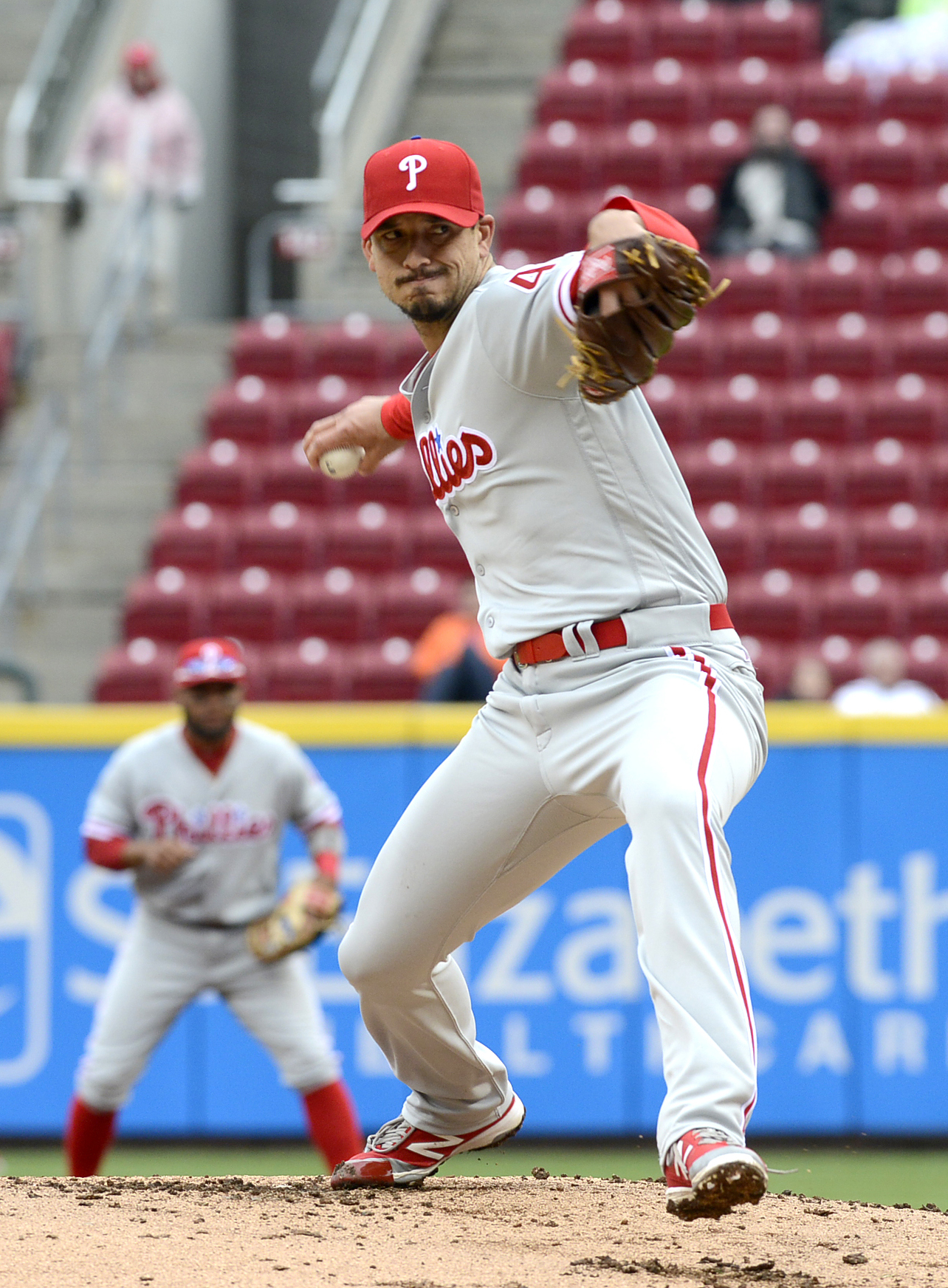
Morton has spent the bulk of his career with the Pirates but spent the 2016 season in the Phillies organization after being acquired in a trade last winter. However, Morton suffered a torn hamstring after just four starts in Philadelphia and ultimately required season-ending surgery to repair the injury, leaving him with a total of just 17 1/3 innings pitched in 2016. His contract with the Phils contained a $9.5MM mutual option, but that was bought out by the team, allowing Morton to hit the open market in search of a new deal.
When at his best, Morton is a ground-ball specialist that demonstrates solid control. He has a career 4.54 ERA in 893 Major League innings, though that mark reflects some considerable struggles he had early in his career. From 2011-15, Morton pitched to a more respectable 3.96 ERA with 6.4 K/9, 3.2 BB/9, 0.6 HR/9 and a robust 58.2 percent ground-ball rate. And when healthy in 2016, he looked to have made some intriguing gains in terms of fastball velocity, as his two-seamer jumped from an average of 91.8 mph to 93.3 mph, per PITCHf/x data. MLB.com’s Mike Petriello also notes (on Twitter) that the spin rate on Morton’s curveball ranked in the top five in all of baseball among pitchers that threw at least 50 hooks. Houston is known to be drawn to players with lofty spin rates — a trait that led them to take a chance on Collin McHugh prior to his 2014 breakout.
Morton’s penchant for grounders and strong results against right-handed opponents should play well in Houston, where right-handed bats can feast on the short porch down the left field line. In that aforementioned stretch from 2011-15, Morton held right-handed opponents to a feeble .234/.296/.336 line, though left-handed bats did knock him around at a .298/.397/.433 clip. Even against lefties, though, he’s exceptionally stingy in terms of giving up the long ball.
Durability has been an issue for Morton, who in addition to last year’s hamstring operation has had Tommy John surgery (2012) and surgery to repair a hip injury (2014). Morton has never made more than 29 starts in a season and has topped 150 innings just twice in the Majors, with 2011’s 171 2/3 frames representing a career-high. That said, with a mere $7MM annual commitment, Morton needn’t be a workhorse to justify his salary.
Morton should slot into the back of the rotation in Houston, filling the void left by the departure of fellow free agent Doug Fister. He’ll be joined there by Dallas Keuchel, who will look to rebound from a highly disappointing followup to his 2015 Cy Young campaign. Houston also has right-handers McHugh, Lance McCullers, Joe Musgrove and Mike Fiers as rotation options, giving them the depth to either move a starter in a trade or give Musgrove some additional work in Triple-A (although he certainly pitched well enough in 2016 to justify a further look at the big league level). Alternatively, the club could simply deploy Fiers, who struggled a bit in 2016, as more of a spot starter and swingman to add some length in the bullpen and serve as valuable depth to a rotation that saw both Keuchel and McCullers miss significant time due to injury this past season.
Adding Morton to a rotation that already includes Keuchel gives the Astros two of the game’s most prolific ground-ball pitchers as well as a third potential ground-ball savant in the form of McCullers (57.3 percent in 2016). McHugh, Musgrove and Fiers all profile more as fly-ball arms, though Fiers did experience a significant uptick in his ground-ball rate in his first full season with Houston last year, jumping from 37.6 percent in 2015 to a career-high 42.2 percent in 2016.
Photo courtesy of USA Today Sports Images.
Free Agent Profile: Ian Desmond
When we did this exercise last winter, Ian Desmond was a shortstop. Now, he’s a center fielder who also holds out some promise of adding value at the corner outfield or in various infield roles.
Pros/Strengths
It’s easy to overstate clubhouse presence, but Desmond has earned unbridled praise from both of his most recent employers (the Nationals and Rangers) in that regard. He’s a hard worker who doesn’t shy away from taking responsibility when things don’t go well; if anyone gets a boost for their makeup, it’s him.
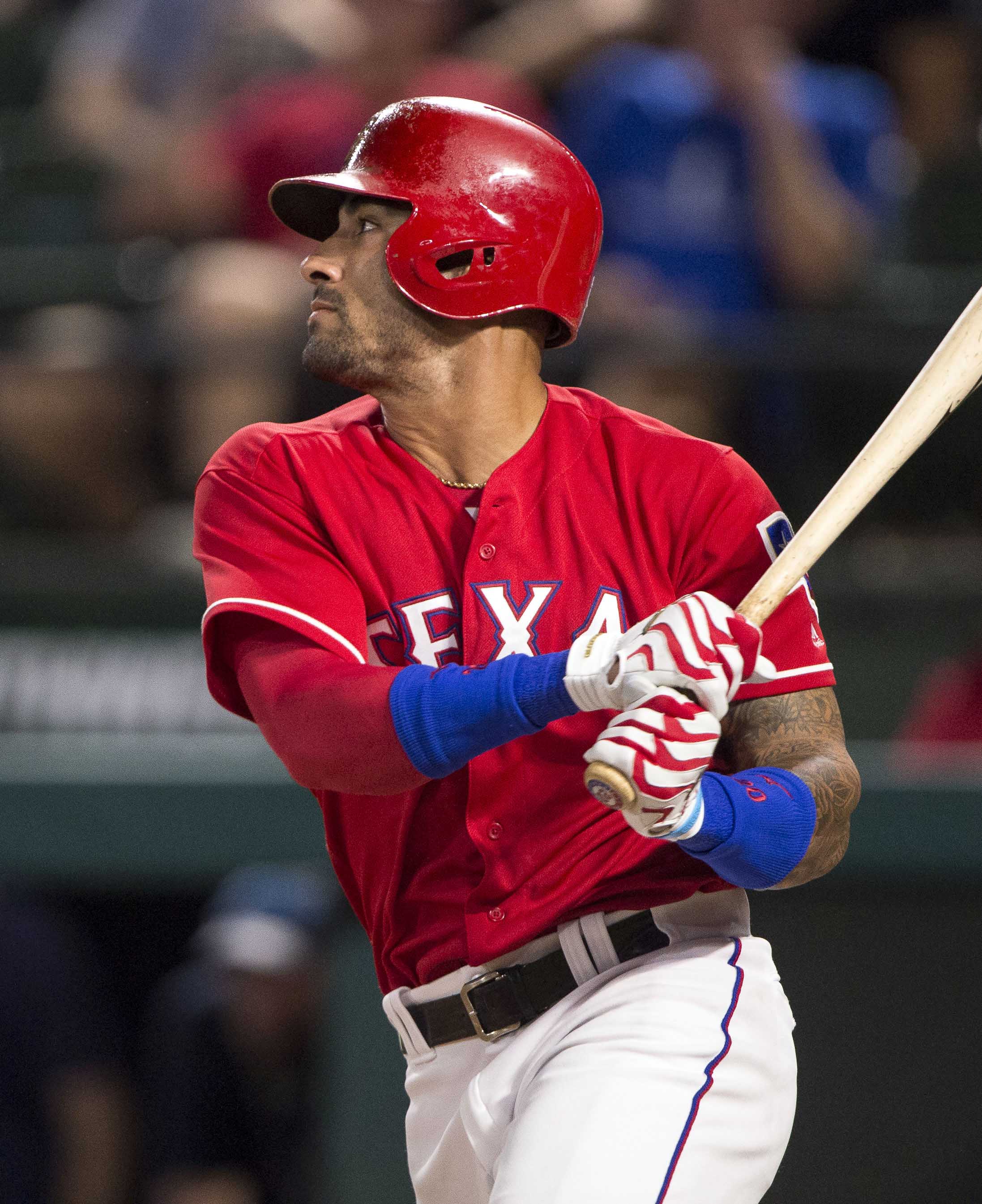
Desmond also earns top marks for his outstanding athleticism, which allowed him to transition rather seamlessly off of the shortstop position. While he’s still capable of playing there, Desmond proved a quick study in both left and center after joining the Rangers on a one-year deal when his market failed to materialize last winter. The versatility stands out as a feather in his cap, though it’s fair to wonder whether teams will worry about relying too heavily on him in a multi-positional role given the fact that his propensity for errors in the infield played a major role in his shift off of the dirt.
If the 31-year-old has a single, standout skill, it’s his baserunning. He has swiped at least 20 bags in five of the last six years, but is even more impressive in his overall contributions. Desmond ranks ninth in all of baseball since the start of 2014 in total baserunning contributions, by measure of Fangraphs’ BsR rating. It’s an underappreciated aspect of his game, but one that adds real value.
At the plate, Desmond is a safe bet for 20 or more long balls annually. And he returned to his typically above-average overall contributions with a rise in his batting average last year, ending with a .285/.335/.446 slash over 677 plate appearances. That was good for a 106 wRC+, which doesn’t come close to his breakout 2012 output but nevertheless makes him a sturdy offensive presence.
Better still, Desmond reversed what had been a troubling increase in his strikeout tendencies. He had struck out in just under 30 percent of his plate appearances in the prior two campaigns but drew that back to a 23.6% K rate in 2016. He draws walks at just under the league average rate, but makes up for that in part by typically carrying a robust BABIP (.350 in 2016, .326 for his career) that is supported by his speed and what was a personal-low 26.0% fly-ball rate (which fell well below the league average). When Desmond does put the ball in the air, it often leaves the yard. He turned 18.2% of his flies into homers in 2016 and has often been at or near that mark in recent seasons.
Cons/Weaknesses
Those positives at the plate do hint at some questions, of course. Desmond still swung through 12.2% of the pitches he offered at last year, which was better than his rates in the two prior years but remains elevated. And batting average on balls in play is a double-edged sword. While he’s a solid bet to carry a higher-than-average mark, his mediocre 2015 season coincided with a BABIP dip. He’s also made soft contact in over a fifth of the times he has put the ball in play in each of the last two seasons, which is above league average and a much higher rate than he carried in his best seasons (2012-2014).
With those considerations in mind, teams will need to think hard about how they expect Desmond to age. Any erosion of his speed or contact could spell problems, as he has never shown much in the way of forward progress in his walk rate. Desmond took free passes in 6.5% of his plate appearances in 2016, against a career mark of 7.3%, and is below average in that regard.
The lack of a stable offensive approach has contributed to Desmond’s noted streakiness as a hitter. He started off slow for Texas last year, then charged to a .322/.375/.524 batting line through his first 89 games. There were signs that he had turned a corner. At that point, it was 2012 all over again. But the second half wasn’t nearly as promising. Over his final 293 trips to the plate in 2016, Desmond slashed just .237/.283/.347 with only seven home runs and 66 strikeouts against 16 walks.
The early-season narrative about Desmond’s glovework in the outfield also changed as time went on. He rated well in a short sample in left and seemed to be off to a nice start in center, aided in part by his powerful arm. But while both UZR and DRS tallied his full year contribution as a positive with his throwing, they soured on his range and playmaking ability. Over 1,109 innings in center, Desmond received a -5.7 grade from UZR and -6 from DRS. While that’s at least palatable enough to think he can man the center field position, it suggests there’s some refinement in order before we can safely assume that his legs and glove support a strong floor as an up-the-middle performer.
Personal
Desmond and his wife, Chelsea, have three children and live in their native Sarasota, Florida. Desmond is known for being active in the community and has done charity work relating to neurofibromatosis and the Nationals’ Urban Youth Academy initiative. On the eve of free agency, Desmond switched agencies, moving to CAA Baseball.
Market
The Rangers have made clear that they’d like to bring Desmond back, which helps reinforce the notion that his transition to the outfield is viewed as a success. Texas made him a qualifying offer, which Desmond unsurprisingly rejected. That means he’ll enter the market carrying the baggage of draft pick compensation — a burden which proved to be a major factor in his disappointing foray into free agency last winter.
Unlike his experience the last time around, when there wasn’t a ton of demand at the shortstop position, Desmond could profile as a fit with quite a few organizations. And he also may benefit from the fact that there are relatively few enticing free agents, with Dexter Fowler and Carlos Gomez representing the major competition in center field. Yoenis Cespedes, Michael Saunders, Jose Bautista and Mark Trumbo represent potential competition in the outfield corners (if one still considers the latter two viable options there).
The Astros, Cardinals, White Sox, and Nationals are all in the market in center, and the Indians could be as well. Teams looking at corner outfield or even utility types could also be involved, with the Orioles already showing interest and hypothetical matches to be found with the Giants, Dodgers, Mariners, Braves, and possibly the Phillies (depending on how things proceed following their acquisition of Howie Kendrick).
Expected Contract
At age 31, Desmond is still comfortably in the same range as many free agents who receive offers of four or even five years in length. And with a considerably stronger season in 2016 than 2015 as well as newfound defensive versatility, he should get the multi-year deal that eluded him last winter. In our ranking of the top 50 free agents, we pegged Desmond at four years and $60MM, which would land him between the four-year deals inked by Ben Zobrist ($56MM) and Alex Gordon ($72MM) last winter. It’s certainly possible to imagine his ultimate contract falling within $10MM or so in either direction of that $60MM mark, but it still seems a plausible expectation at this point.
Photo courtesy of USA Today Sports Images.
Rosenthal’s Latest: Sale, Archer, Jays, Halos, McCann, Catchers
Talk about White Sox ace Chris Sale figures to be persistent this winter whether he gets moved or not, and FOX’s Ken Rosenthal has the latest installment in his newest notes column. Rosenthal echoes yesterday’s report from USA Today’s Bob Nightengale that the Nationals are interested in Sale and adds more context to the matter. Per Rosenthal, the Nats would shut talks down if the Sox were insistent on Trea Turner‘s inclusion in the deal, but they have numerous other high-end prospects — the Nats are prospect-rich with names like Victor Robles, Lucas Giolito and Reynaldo Lopez, among others — that could entice Chicago. While the Nats have more glaring needs (catcher, center field), they’ve expressed interest in both Sale and Chris Archer of the Rays (and other Tampa Bay starters) with an eye toward further deepening their rotation to maximize their postseason chances. Rosenthal reminds that the Nats appeared to have a stacked rotation even when they signed Max Scherzer, and the NL East is continually improving, putting more pressure on GM Mike Rizzo and his staff.
A few highlights from the column, which I’d recommend checking out in its entirety…
- The Blue Jays are still seeking a left-handed-hitting outfielder, and Rosenthal lists Josh Reddick and Dexter Fowler as possibilities, though Fowler would need to be willing to move to a corner to accommodate Kevin Pillar‘s borderline superhuman glove. They’re also in the market for a right-handed platoon partner for Justin Smoak at first base, with Steve Pearce standing out as a possible target. The need for a platoon partner is somewhat counterintuitive since Smoak is a switch-hitter, however Smoak hit just .209/.284/.337 as a right-handed hitter last year and has hit lefties at a woeful .223/.279/.378 clip over the past three seasons.
- Rosenthal lists the Angels‘ Tyler Skaggs and Matt Shoemaker as potential under-the-radar trade candidates, speculating that the team could potentially move someone such as Skaggs (as part of a trade package) if it meant landing a premium second baseman like Minnesota’s Brian Dozier. That appears to be a speculative link at this juncture, but Dozier’s name will be a popular one this winter given the Twins‘ last place finish and obvious need for pitching. The 29-year-old slugged 42 home runs for Minnesota in 2016 and is under club control for a total of $15MM through the 2018 season.
- The Yankees and Astros are “at an impasse” in trade talks over Brian McCann, though Houston can certainly turn elsewhere in its hunt for catching help and general offensive improvements. The ‘Stros were in on Kendrys Morales before he agreed to a his deal with Toronto, per Rosenthal.
- Free agent catchers could come off the board quickly, with Jason Castro and defensive stalwart Jeff Mathis among those drawing strong early interest. Rosenthal points out that last year, Chris Iannetta, Alex Avila, Brayan Pena and Geovany Soto all signed prior to Dec. 1. Castro’s market in particular appears to be fast-moving, as he’s already reported to be weighing offers from three American League clubs and could receive a fourth from Minnesota this week.