
Mariners Acquire Leonys Martin From Rangers For Tom Wilhelmsen
The Mariners have officially struck a deal to acquire outfielder Leonys Martin and righty Anthony Bass from the Rangers in exchange for right-handed reliever Tom Wilhelmsen, outfielder James Jones, and a player to be named later.
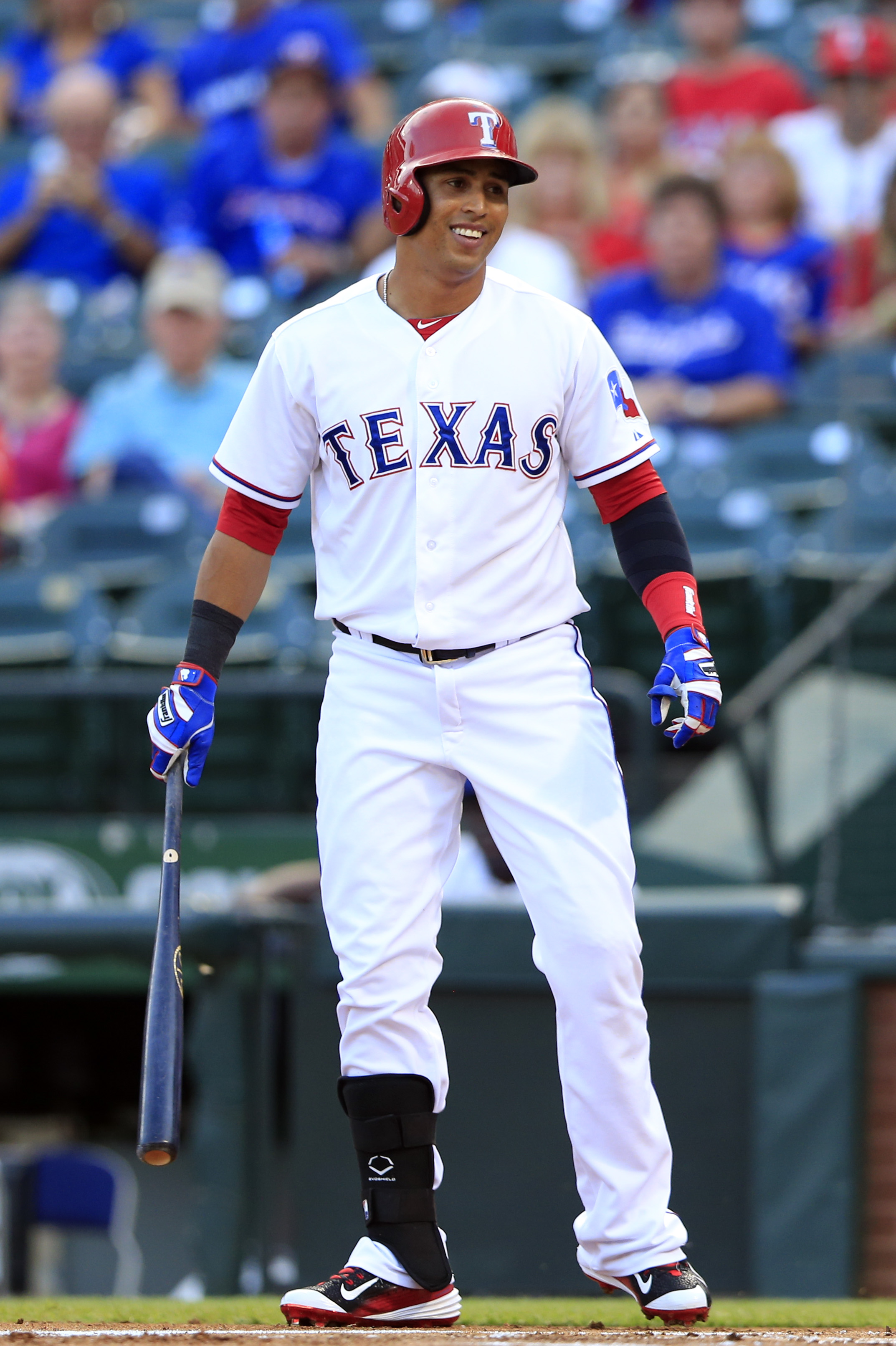
Martin had fallen out of favor in Texas after a rough 2015 season. The 27-year-old is an outstanding defender and major threat on the bases, but he slashed just .219/.264/.313 over 310 plate appearances. In the meantime, the Rangers found a Rule 5 gem in Delino DeShields Jr. While he and Martin made for a natural platoon pairing, there seemed to be some discord between Martin and the club after he was left off of the playoff roster and then refused to participate in Instructional League as a way to stay ready in case he was needed.
New Mariners GM Jerry Dipoto said that he sees Martin as a victim of bad luck — citing his .270 BABIP last year, which fell well below his .313 career mark — who ought to turn things around. (Via Ryan Divish of the Seattle Times, on Twitter.) It appears that Martin will go right to the top of the depth chart in Seattle, though Dipoto also told reporters tonight that another outfield addition could still be in the offing. It’s a good bet, though, that the team won’t now chase top free agents such as Dexter Fowler or Denard Span.
In addition to adding three years of control over Martin, Seattle will pick up three arb seasons of Bass. He represents a useful arm who will help maintain the Mariners’ bullpen depth. The 28-year-old comes with three years of arb control. He contributed only a 4.50 ERA last year, with 6.3 K/9 against 2.8 BB/9, but tossed 64 innings and drew more positive reviews from advanced metrics. While Wilhelmsen had represented a late-inning option, Dipoto had already gone out and added veteran set-up man Joaquin Benoit. But the club’s pen struggled last year, and adding Bass in this trade helps to guard against any scrambling for innings.
Texas, meanwhile, will add two seasons of Wilhelmsen, a 31-year-old righty who possesses a mid-90s heater. The veteran has thrown over 300 frames in the majors, working to a 2.97 overall ERA with 8.5 K/9 against 4.0 BB/9. He was right in that range in 2015, but continued a trend of posting earned run results that are much better than ERA estimators would expect. (For his career, Wilhelmsen has a 3.39 FIP, 3.94 xFIP, and 3.67 SIERA.)
Wilhelmsen figures to bolster a Rangers’ late-inning relief corps that has its share of questions. While pitchers like Shawn Tolleson, Keone Kela, Jake Diekman, and Sam Dyson all turned in quality seasons, there are enough question marks with that group that another good arm made sense.
And Jones is more than a throw-in, as he could ultimately be a cheaper and more controllable version of Martin. The left-handed hitter has not shown much of anything in his 400+ major league plate appearances, but has generally been rather productive at the plate in the high minors. Notably, last year, he not only put up a solid .294/.373/.423 batting line at Triple-A, but struck out only 68 times (against 53 walks) in his 501 trips to the plate — representing a huge improvement over prior seasons. While he may not possess an elite glove, Jones has swiped 28 bags in his limited MLB action. He could make for a useful pairing with DeShields up the middle.
While this deal shifts the assets between the clubs, it’s worth noting that it won’t have much impact on their respective payroll situations. MLBTR projects Martin to earn $3.75MM next year, matching his salary from 2015 — he would have only been projected at $1.6MM without that starting point — while Bass lands at $1.1MM. Meanwhile, the arb model pegs Wilhelmsen at an even $3MM.
Jeff Passan of Yahoo Sports reported the deal on Twitter. T.R. Sullivan first reported (on Twitter) the inclusion of Jones.
Photo courtesy of USA Today Sports Images.
Offseason Outlook: Washington Nationals
For the first time in a while, the Nationals enter the winter with a variety of question marks and a lack of linear solutions.
Guaranteed Contracts
- Max Scherzer, SP: $190MM through 2021 ($105MM deferred, payable in seven installments of $15MM over 2022-2028)
- Ryan Zimmerman, 1B: $72MM through 2019 (including buyout of 2020 club option, $10MM personal services contract)
- Jayson Werth, OF: $42MM through 2017
- Gio Gonzalez, SP: $12.5MM through 2016 (includes buyout of 2017 club option)
- Jonathan Papelbon, RP: $11MM through 2016 ($3MM deferred to 2017)
- Yunel Escobar, INF: $8MM through 2016 (including buyout of 2017 club option)
- Bryce Harper, OF: $5MM through 2016 (remains eligible for arbitration through 2018)
Arbitration Eligibles (projections via MLB Trade Rumors)
- Craig Stammen (5.160) – $2.4MM
- Drew Storen (5.140) – $8.8MM
- Stephen Strasburg (5.118) – $10.5MM
- Wilson Ramos (5.047) – $5.3MM
- Jose Lobaton (4.138) – $1.5MM
- Danny Espinosa (4.113) – $2.7MM
- David Carpenter (4.016) – $1.5MM
- Tyler Moore (3.018) – $1.0MM
- Anthony Rendon (2.130) – $2.5MM
- Non-tender candidates: Stammen, Lobaton, Carpenter, Moore
Options
- Casey Janssen, RP: team declined $7MM mutual option, paid $1.5MM buyout
- Nate McLouth, OF: team declined $6.5MM club option, paid $750K buyout
Free Agents
Ian Desmond (declined qualifying offer), Doug Fister, Denard Span, Matt Thornton, Jordan Zimmermann (declined qualifying offer)
The 2015 season was filled with disappointment and controversy for the Nats, who entered the year heavily favored in the NL East. Underperformance abounded on a talented roster, much as occurred in 2013, and GM Mike Rizzo will now look for a similar bounce back.
Once again, there will be a new skipper in the dugout, though this time the outgoing manager (Matt Williams) was fired. (Davey Johnson‘s retirement had long been planned.) Dusty Baker got the nod, but not until the team had engaged in a highly publicized dalliance with Bud Black. Washington was openly mocked for reportedly looking to get a manager on the cheap, though the team obviously reached terms with Baker and seems to have spent big on highly-regarded new pitching coach Mike Maddux.
That was hardly the way the team wanted to start the winter — especially after a late fade punctuated by an ugly dugout fight in which high-price closer Jonathan Papelbon tried to choke superstar Bryce Harper.
In many ways, that incident frames the team’s offseason. Papelbon was the team’s major deadline addition, unseating Drew Storen as the closer but bringing the promise of an excellent 1-2 punch in the late innings. That combo started out well, but it (and the team’s season) fell apart as Williams mismanaged, Storen faded, and Papelbon raged.
Now, the question is whether the Nationals will shop Papelbon, Storen, or both. Harper has reportedly chatted with Papelbon in an effort at conciliation. And GM Mike Rizzo says that both righties will remain with the team unless a “real baseball offer” comes in. That leaves at least some window for either or both to stay on in D.C. for the final year of their respective contracts.
Of course, the club badly needs pen arms. Washington has been tied to upper-tier trade candidates such as Aroldis Chapman since the trade deadline, and is one of many teams with reported interest in top free agent Darren O’Day. Significant additions of that kind would probably enter the picture (and the payroll) as Papelbon and/or Storen depart.
Regardless what happens at the back end, the Nats face a lot of questions in the pen. Lefty Felipe Rivero, an underappreciated piece of the Jose Lobaton/Nate Karns deal, had a nice rookie campaign. Righty Blake Treinen still has a huge arm, though he’ll need to take a step forward in harnessing it. We’ve yet to hear conclusively whether the team will take the risk on Craig Stammen and his projected $2.4MM salary after he missed the entire season with arm surgery. He’s expected to be ready for the spring, but even if he’s healthy, he’ll only be stepping back into the void left by Aaron Barrett, who’ll miss most or all of 2016. David Carpenter is another injury/arb question mark. There are other options in the organization, including Rafael Martin, Sammy Solis, and Matt Grace,
Tanner Roark could end up back in the pen if he’s bumped from the rotation, and some less experienced starters — A.J. Cole, Taylor Jordan, Taylor Hill, and Austin Voth — potentially could as well. But there are a lot of question marks in that group, and it seems likely that the Nationals will be hunting for relief arms at all levels of the market.
The rotation, on the other hand is set … probably. You could’ve said the same last year, after all, and the club added Max Scherzer on top of an already highly-regarded staff. That group fell shy of expectations, and will lose Jordan Zimmermann and Doug Fister to free agency, but still ought to be pretty good. Scherzer, Stephen Strasburg, and Gio Gonzalez form a good (and potentially excellent) trio at the top, Joe Ross was highly impressive in his debut last year, and Roark still profiles as a sturdy innings eater. The club also has some options and upside behind that group, with Cole perhaps ready for a real opportunity and consensus top overall pitching prospect Lucas Giolito not far behind (and ascending at a rapid pace).
Of course, Ross was mistakenly overlooked by many when news broke that he’d been traded to D.C. Taking top billing in that swap was Trea Turner, a swift young shortstop who got a brief taste of the big leagues last year. It will be quite a lot to ask of him to step in directly for the departing Ian Desmond — who, it should be noted, leaves big shoes despite a rough 2015 — but the Nats have other options as well. Yunel Escobar was acquired last winter due, in part, to his ability to step in at short for 2016. Danny Espinosa remains an outstanding defender and showed more with the bat last year, making him a platoon option up the middle. And Turner could ultimately be joined by another promising youngster, Wilmer Difo, as a double-play pairing. He, too, got a cup of coffee last year with the big club and could conceivably enter the picture this coming season.
The aforementioned group of players could combine in some form to occupy the middle infield positions. But we’ve heard whispers that the team could consider trading away Escobar, possibly in a reversal of the move (well-compensated reliever for well-compensated infielder) that brought him to D.C. in the first place. In that scenario, perhaps, the club would add a left-handed-hitting infielder to join the mix. Turner and Escobar, like most of the other Nats regulars, hit from the right side. And while Espinosa and Difo are both switch hitters, both are historically much more effective against southpaws.
It might not be out of the question, then, for the team to pursue a player like Daniel Murphy or Ben Zobrist. Both would add another left-handed bat to a heavily right-handed mix while contributing depth to the infield. (The latter hits from both sides of the plate.) Fellow free agent Kelly Johnson might represent a budget version of that type of player.
Adding another infield piece makes all the more sense when one considers the durability questions that still follow both Anthony Rendon and first baseman Ryan Zimmerman, both of whom are all but certain (injuries aside) to occupy the starting jobs at the infield corners. Much the same holds for left fielder Jayson Werth, who is aging and has been on the DL quite a bit recently — though, generally, his stints have been for acute injuries that might not reflect any particular long-term concerns.
There are in-house reserve options at the corners, but there are limits to their function. First baseman, bench bat, and emergency outfielder Clint Robinson did a nice job at the plate and could represent a cheap piece to pair with Zimmerman, he’s of limited utility in the National League given his poor glove on the grass. Much the same holds true of right-handed power source Tyler Moore, except that he doesn’t have as obvious a function on the team. A more versatile utility piece — such as those mentioned above — would also supply some support in the outfield while opening up opportunities to gain the platoon advantage.
Of course, there’s a more direct outfield need in center. Denard Span is hitting free agency, and the fact that he didn’t receive a qualifying offer — making him, arguably, the most eligible candidate who did not — signals that there’s little likelihood of a reunion. That leaves the toolsy but strikeout-prone Michael A. Taylor in position to take over. He’s a premier defender with legitimate power and wheels on the basepaths, but he’s still a question mark in terms of getting on base.
With Taylor ready but still raw, the club appears to have two primary routes available. The easier, more straightforward one would be to add a quality fourth outfielder who is capable of playing center and swings from the left side (so as to complement Taylor and also Werth). Though Matt den Dekker could fill that role, too, the team will probably try to do better while keeping him around for depth.
On this year’s free agent market, Gerardo Parra makes for the most obvious fit, and the Nats reportedly tried to add him at the trade deadline. A swap might also procure that sort of option. Rizzo has shown a proclivity for dealing for veterans on affordable, mid-length contracts, with Span, Fister, and Lobaton all representing examples. Brett Gardner of the Yankees, Leonys Martin of the Rangers, and Ender Inciarte of the Diamondbacks are a few names that come to mind, and all of those teams could well have interest in Storen in a swap. The Blue Jays, too, might like the idea of building out the back of their pen and could stand to part with Ben Revere. And depending upon what direction the Cardinals go, Jon Jay could be a target.
The catching position also carries some uncertainty. Wilson Ramos had a tough season in 2015, and is now just one year away from free agency. The same as true of Lobaton, the switch-hitting reserve, who could theoretically end up non-tendered despite his reasonable salary. It’s not as if there’s a ready replacement coming through the minors, as the team’s nearest catching prospect — 22-year-old Pedro Severino — hasn’t yet shown enough bat to profile as an upper-division regular. There was some reason to believe that Washington could make a run at Matt Wieters in free agency, but obviously there wasn’t enough interest there for the backstop to decline his qualifying offer, and he’s no longer available. An upgrade, if any, would have to come via trade. While that’s far from certain at this point, one would have to think the Nats would at least want to know the price on Jonathan Lucroy if he’s shopped.
If Rizzo (or his bosses) wants to shake things up, it’s not out of the question for the Nats to add a major free agent in the outfield. Indeed, MLBTR’s Tim Dierkes pegged D.C. as the likeliest landing spot for the tough-to-call Justin Upton. Presumably, an addition of that kind would mean that Harper — or, potentially the new player himself — would play somewhat out of position in center. Personally, I see Jason Heyward as the best match of the major free agent outfielders, since he hits from the left side and would probably be the most capable defender in center of the bunch. As I explained in a profile of his free agent case, Heyward also might command a slightly lesser AAV and could seek an opt-out clause. And the Nationals’ ownership has shown quite an affinity for complicated contract structures that spread financial commitments out over time. But those possibilities still seem fairly speculative. Indeed, Rizzo said recently that he doesn’t expect the team to “be big players for one of the big free agent outfielders.”
Truly bold action could come from elsewhere. Strasburg showed that he can still produce at an ace level down the stretch last year, and would be a highly appealing rental arm at his salary. The Nationals would surely be able to find a substantial return if they shopped him, and the team was reportedly willing to consider deals last winter for Desmond and Zimmermann. I suspect that Rizzo would be willing to move him in the right deal, but am skeptical that a sufficient offer would come in.
More likely, albeit still rather remote, is the extension route. Strasburg may be too close now to free agency to take a serious pass at negotiations, particularly since he looks like the best pitcher on next year’s market by a landslide. But his down-and-up 2015 could leave him willing to sacrifice some money to relieve some risk. Similarly, now could be the time to float a proposal to Rendon, who had an injury-filled 2015, though he’s still four years from free agency. And, of course, there’s always the at-least-theoretical possibility of getting something done with Harper, who met and exceeded the enormous expectations with a historically-relevant campaign last year. Locking him up, in turn, might well require a record-setting contract — a topic that I explored and put to a reader vote a little while back.
Rumors of the Nationals’ demise are premature. True, the core of the team is no longer the same as the 2012 iteration and its successors. But many of the same pieces are still in place, and the organization has supplemented quite nicely. Indeed, as noted above, a whole new wave of talent — Ross, Giolito, Turner, Taylor, and more — is not only lined up but designed to fit with the team’s needs. But patience only holds so long when the talent level (and payroll) is as high as it has been in recent campaigns, and Rizzo will need to be at his creative best to re-energize the big league roster without sacrificing too much prospect value and/or spending capacity.
Padres Have Expressed Interest In Ian Desmond
The Padres have reached out to free agent shortstop Ian Desmond to express interest, Dennis Lin of the San Diego Union-Tribune reports on Twitter.
That’s not a surprise, given that San Diego is one of a relatively few teams that have a fairly obvious need for a shortstop. And Desmond is, by consensus, the best player at that position in this year’s market, though he certainly carries a fair amount of risk after a tough 2015 season.
Desmond is freely available after declining a qualifying offer today from the Nationals, though that does mean that a signing team will need to part with a pick to add him. Of course, San Diego’s top pick (8th overall) is protected, and the team also now stands to add two compensatory picks if and when Justin Upton and Ian Kennedy land with new organizations.
Tonight’s trade of Craig Kimbrel makes a Padres connection to Desmond far more plausible, at least on paper. The ace closer would’ve cost the team $11MM this season, and shedding his salary (along with the $7.5MM that would have gone to the recently-dealt Joaquin Benoit) certainly opens the door to bigger free agent spending.
Red Sox Acquire Craig Kimbrel
The Red Sox have acquired star closer Craig Kimbrel from the Padres. It’s a stunning move for new president of baseball operations Dave Dombrowski, whose club will now have both Kimbrel and ace reliever Koji Uehara to lock down the late innings.
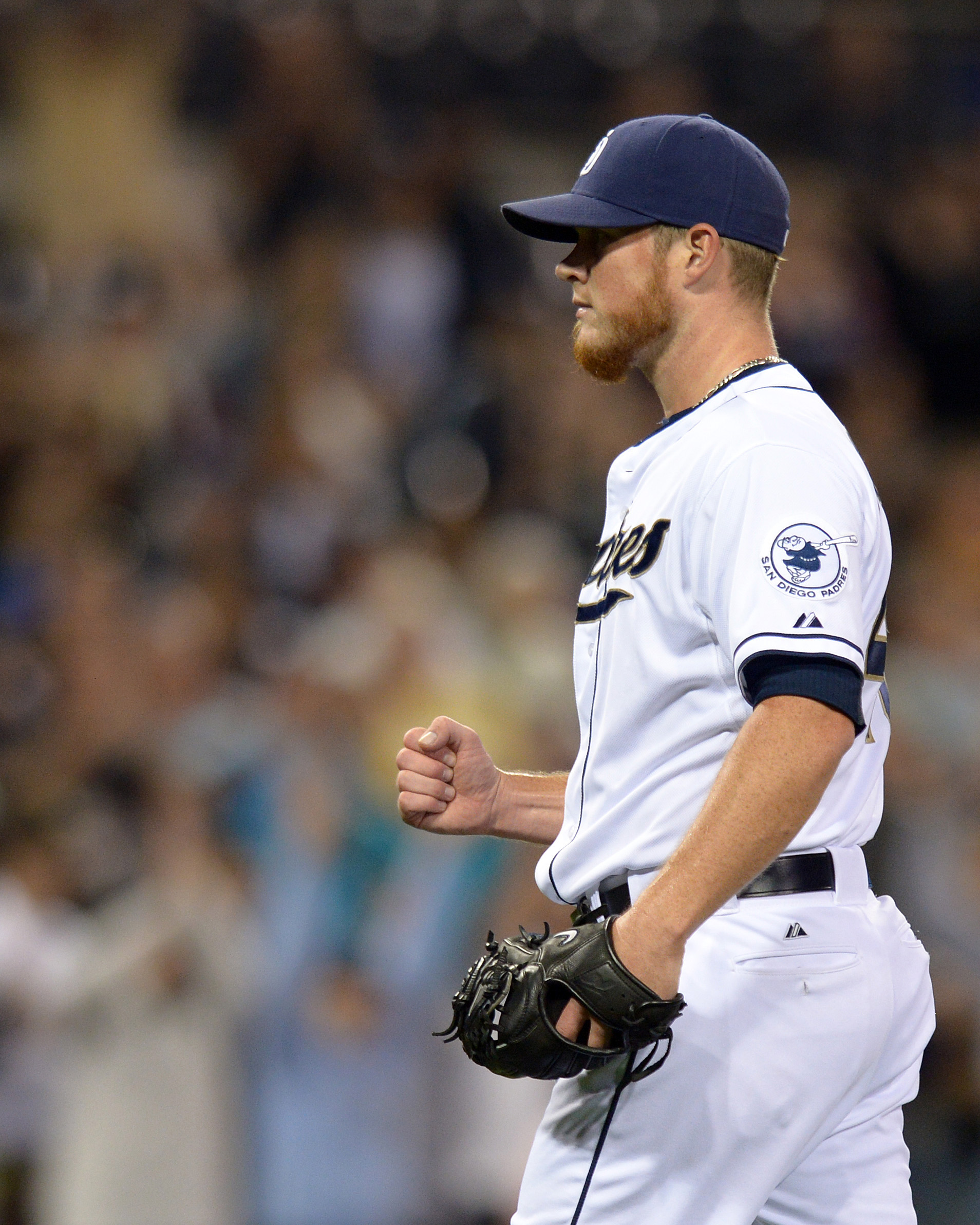
There’s a significant haul going back to San Diego. Top outfield prospect Manuel Margot, shortstop Javier Guerra, infielder Carlos Asuaje, and lefty Logan Allen make up the return. All four players rated among the thirty best Red Sox prospects in MLB.com’s latest ranking, with Margot (#25) and Guerra (#76) also checking in among the top 100 prospects league-wide.
Kimbrel, 27, has long been one of the game’s very best pen arms. Though he is no longer quite as mind-bogglingly dominant as he was back in 2012, he’s still an ace reliever of the highest caliber. Last year, he worked to a 2.58 ERA over 59 1/3 innings, with 13.2 K/9 against 3.3 BB/9. Those were excellent numbers, of course, but didn’t really come close to what he’d done to that point, as he carried a lifetime 1.43 ERA into the season.
To a large extent, the fall-off (if you can really call it that) was driven by a jump in Kimbrel’s home run proneness, as he allowed career highs of 0.91 HR/9 and a 13.6% HR/FB rate. But basically all other relevant markers stayed constant. The batted-ball profile of opposing hitters appears to be in line with prior seasons. And Kimbrel not only maintained his average fastball velocity, but bumped it to a career-high of 97.3 mph.
Boston will pick up three years of control over Kimbrel. The contract includes a $24MM guarantee over the next two seasons and a $13MM club option in 2018 that carries a $1MM buyout. The Sox will be responsible for the entirety of Kimbrel’s remaining salary in the deal.
It remains to be seen what the move means for the rest of Boston’s offseason, but at first glance, it makes free agency appear the likelier route to add a major starting pitcher. Of course, the Sox still have plenty of prospects to deal, and could still consider dealing young MLB-level players like Jackie Bradley, so there are still plenty of options.
We’ve already seen San Diego GM A.J. Preller swing huge deals on the buyer’s side, and now we know he can part with major assets, too. The Pads had already shipped out another established late-inning arm, Joaquin Benoit, during last week’s GM Meetings. It looks to be another offseason of change for the Padres.
Naturally, the first thought upon hearing about the deal goes to the swap that brought Kimbrel to the Padres on the eve of Opening Day 2015. San Diego was able to get him while parting only with a good-but-not-great pitching prospect in Matt Wisler, young outfielder Jordan Paroubeck, and a competitive balance draft pick. Of course, that deal also included a whole lot of financial shuffling — Melvin Upton to the Pads, Cameron Maybin and Carlos Quentin to the Braves — that left San Diego with more than $20MM in additional obligations.
That largely explains the differences in the returns, but there’s an argument to be made that Preller did quite well in the overall calculus (while also getting a season of Kimbrel in the 9th inning). After all, the group of players in tonight’s trade could be special.
Margot is arguably the headliner. The 21-year-old now figures to be the Friars’ long-term center fielder and isn’t terribly far away from commanding a shot in the majors. His power is still developing, but Margot has shown the ability to tally in the double digits over a full season (2014) and swiped 39 bags last year. He struck out only 51 times in 480 plate appearances last year, slashing a solid .276/.324/.419 split between High-A and Double-A.
Guerra, too, is a major piece. As Baseball America’s Josh Norris writes, he’s an outstanding defender who showed surprising power last season, which significantly raised his prospect stock. While it’s far from certain that he’ll remain a 15-homer threat, and he’s somewhat strikeout-prone, the 20-year-old nevertheless has immense promise.
The other two pieces in this deal are hardly throw-ins. Asuaje is already 24, and doesn’t have outstanding physical tools or outstanding power or speed, per MLB.com. But he’s shown a very promising bat and certainly seems on course to become a contributor in the majors.
Then, there’s the 18-year-old Allen, who was only able to be dealt because of the rule changes that occurred after last year’s Trea Turner deal. Taken in the eighth round of this summer’s draft and inked to an above-slot bonus, the southpaw is said to have a fair bit of polish for his age to go with an increasingly impressive arsenal.
It remains to be seen, of course, how the Pads move forward after parting with two most established relievers. This was a pure prospect move, as none of the four acquired youngsters figure to be ready in 2016. Notably, though, the two early-offseason trades have opened just under $18.5MM in payroll that otherwise would have been tied up in the pen. That’s a huge amount of additional space to work with for a team that only cracked $100MM in Opening Day payroll last year, and certainly opens up the possibility of more significant free agent involvement.
In large part, one’s assessment of the deal depends upon how one feels about reliever valuation. Kimbrel is obviously capable of delivering huge value from the back of the pen, but he’s only throwing a third or less of the innings of a starter. As Jeff Sullivan of Fangraphs recently discussed, there could be some value that WAR is missing in weighing elite pen arms. Kimbrel has been a two-to-three win annual pitcher for most of his career, though he’s separated from the top end of that range by a few years. As you start to slide that number up, he looks more and more like an upper-middle rotation starter in terms of overall value. It’s an open and fascinating question — and one that Dombrowski, at least, already appears to have answered.
Ken Rosenthal of FOX Sports reported the trade of Kimbrel on Twitter. The return was reported by Josh Norris of Baseball America (Twitter links), Jeff Passan of Yahoo Sports (on Twitter), and Alex Speier of the Boston Globe tweets. Jon Heyman of CBSSports.com tweeted the salary details.
Photo courtesy of USA Today Sports Images.
Three Players Accept Qualifying Offers; 16 Decline
After three straight seasons in which no player accepted a qualifying offer, and a record twenty offers extended this offseason, perhaps something had to give. For the first time, we saw players land in favor of taking the one-year offer — valued this year at $15.8MM — rather than entering the market with the burden of draft pick compensation attached.
We’ve covered the rules in some detail previously. For those players that accepted a qualifying offer, their once-and-current teams may not trade them without consent until June 15, 2016. (That’s the same rule that applies to any other free agent signing.) And no draft compensation changes hands.
That’s the situation for these three players who accepted qualifying offers:
- Brett Anderson, SP (Dodgers)
- Colby Rasmus, OF (Astros)
- Matt Wieters, C (Orioles)
For the seventeen declining players, their former teams will stand to receive a “sandwich” round draft pick as compensation. New teams that sign those players will have to forfeit their top unprotected draft pick (or picks, if they sign multiple QO-rejecting players). If a player rejects a QO but ultimately re-signs with the same team, no draft pick shuffling occurs.
Here’s that list:
- Wei-Yin Chen, SP (Orioles)
- Chris Davis, 1B (Orioles)
- Ian Desmond, SS (Nationals)
- Dexter Fowler, OF (Cubs)
- Yovani Gallardo, SP (Rangers)
- Alex Gordon, OF (Royals)
- Zack Greinke, SP (Dodgers)
- Jason Heyward, OF (Cardinals)
- Hisashi Iwakuma, SP (Mariners)
- Howie Kendrick, 2B (Dodgers)
- Ian Kennedy, SP (Padres)
- John Lackey, SP (Cardinals)
- Daniel Murphy, 2B/3B (Mets)
- Jeff Samardzija, SP (White Sox)
- Justin Upton, OF (Padres)
- Jordan Zimmermann, SP (Nationals)
That only accounts for 19 of the 20 offers, of course. The other player to receive a QO was righty Marco Estrada, who agreed to a multi-year pact with the Blue Jays before being forced to accept or reject the offer. Toronto will neither gain nor lose draft choices.
Brett Anderson Accepts Qualifying Offer From Dodgers
Lefty Brett Anderson has decided to accept the qualifying offer issued to him by the Dodgers, ESPN.com’s Buster Olney reports on Twitter. He becomes the third player to accept a qualifying offer this year, joining Colby Rasmus (Astros) and Matt Wieters (Orioles).
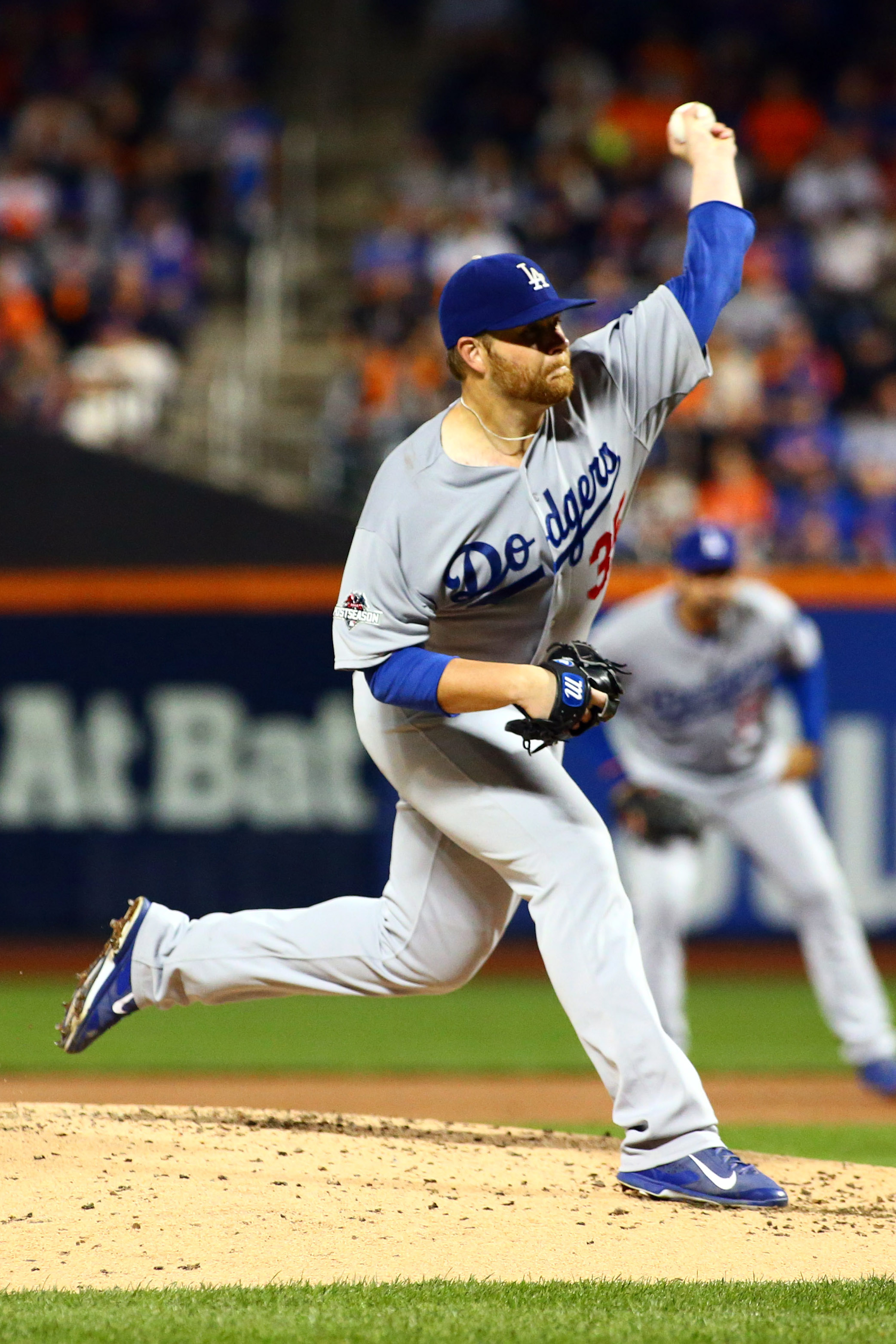
Anderson is just 27 years of age and is coming off of a year in which he put up 180 1/3 innings of 3.69 ERA ball. That makes his decision somewhat surprising, at first glance, particularly given his pedigree. And metrics like xFIP (3.51) and SIERA (3.46) felt that Anderson was a bit unlucky, with his 17.0% HR/FB rate probably stands to drop back toward his career levels (11.2%). All told, there was good reason to think he’d draw wide interest as a free agent.
Of course, it’s obviously highly relevant that the talented southpaw failed to reach the 100-inning threshold in any of the four preceding seasons. His results have generally been quite strong, and his 3.72 career ERA is actually a fair bit higher than ERA estimators value his performance, but Anderson has dealt with a wide variety of injuries. He’s battled through Tommy John surgery, a fractured foot, a broken finger, and back issues over his careers.
In short, then, Anderson presented possible suitors with ample risk and plenty of upside. And he faced the same kind of calculus in assessing his decision on the qualifying offer.
It’s worth noting that Anderson was able to earn a $10MM base salary and $2.4MM in incentives in his contract last year, coming off of yet another injury-shortened campaign. It certainly would have been plausible to imagine him signing a nice one-year contract if nothing better was offered, possibly with a club that had already given up an early pick or two to sign other QO-bound free agents.
But there were other considerations at play, too, for Anderson and his reps at the Legacy Agency. In addition to ensuring that he’ll add a hefty, $15.8MM salary to his bank account, the move allows Anderson another opportunity to prove his health and effectiveness. He’ll still be plenty young next year, when the market features nothing close to this season’s mass of top-end talent and overall depth. With a big 2016, then, Anderson could be in prime position to cash in.
Los Angeles will be glad if Anderson does position himself for a big payday, as they would stand to reap the benefits. The team is uniquely situated to take on this kind of salary in a one-year arrangement, and is probably not displeased at the chance to fill a rotation spot with a good arm without binding up future commitments. The team is certainly not done shopping, though, as the rotation still needs to be filled out — including, perhaps, adding another high-level arm alongside ace Clayton Kershaw.
Photo courtesy of USA Today Sports Images.
Marco Estrada Signs Two-Year Deal With Blue Jays
The Blue Jays have announced the signing of righty Marco Estrada, giving him a $26MM guarantee to return to the Toronto rotation for the next two seasons.
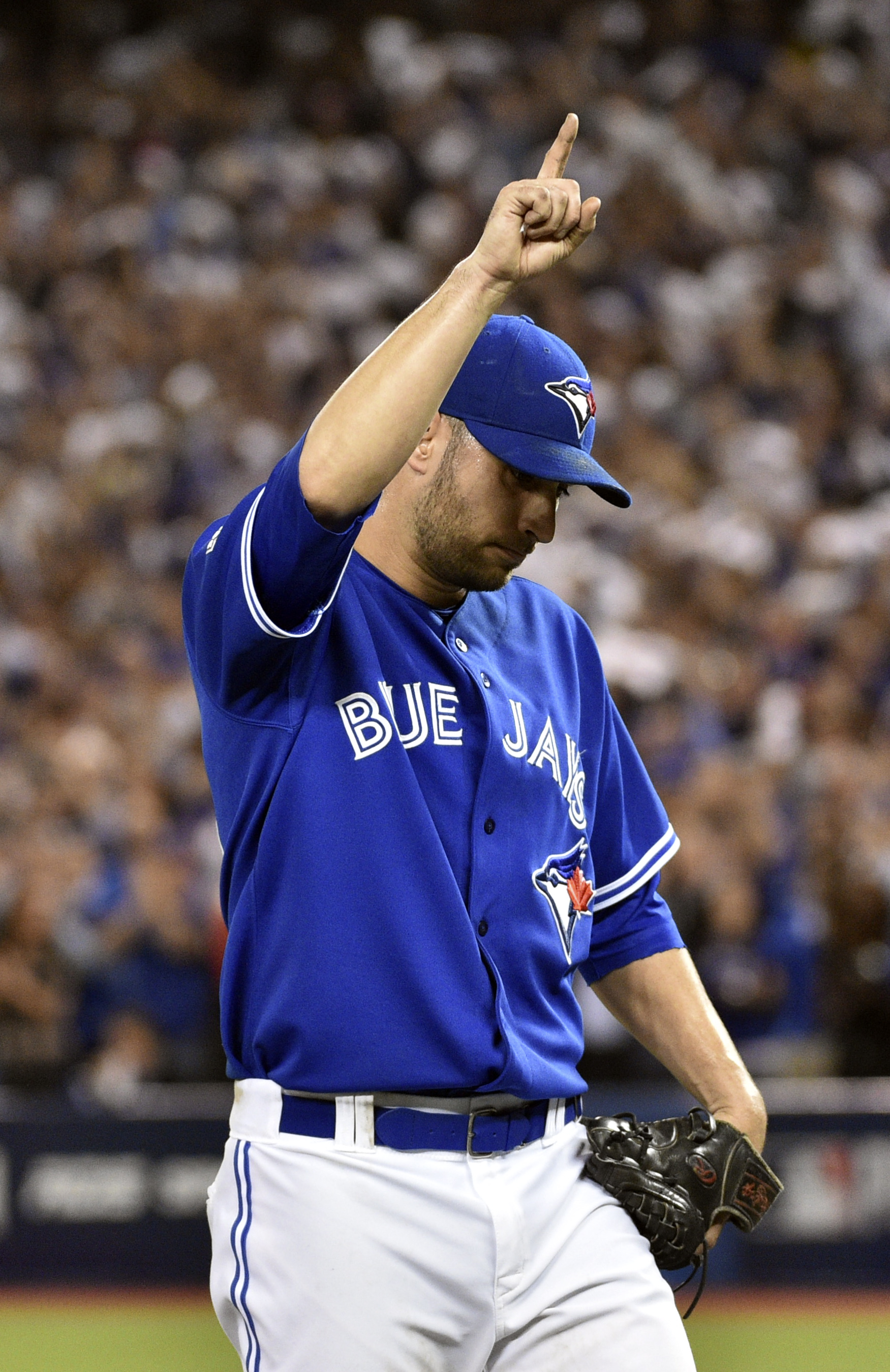
Last year was unquestionably a career-year for Estrada, who opened things up in the bullpen but quickly established himself as a key cog for the AL East champs. He ended the season with a stellar 3.13 ERA in his 181 frames.
That figure is both surprising and potentially misleading, as Estrada is no longer able to strike out a batter per inning (as he once did) and doesn’t induce many ground balls. Indeed, advanced metrics saw his results as incredibly lucky. An unsustainable .216 batting average on balls in play and career-low 8.7% HR/FB rate surely played a role.
On the other hand, Estrada has traditionally carried extremely low BABIP-against figures (.261 career), and his contact management ability arguably supports it going forward. Hardly a power pitcher, Estrada gets a ton of pop-ups and possesses an outstanding change-up that (one might think) could hold up well with age. And, most importantly, Toronto doesn’t need a repeat of that stellar run prevention to get what it needs out of this contract.
Estrada had been weighing a qualifying offer by the Jays, meaning he had the option of simply taking a $15.8MM salary for a one-year term. That was surely tempting, as Estrada has earned only about $10MM previously in his career. But the 32-year-old also had a chance at securing a multi-year commitment in free agency, which, given his age, may not ever again come around.
In the end, the sides appear to have chosen a mutually agreeable middle ground. Estrada gets multiple years, foregoing a chance at a third guaranteed season but maintaining a strong $13MM AAV. And the Blue Jays, who were in need of multiple starters, will fill one rotation spot with a manageable commitment.
It’s worth bearing in mind, too, that Estrada’s representatives at TWC Sports have had a chance to gauge the 32-year-old’s market all week long. Last year, Michael Cuddyer only turned down his QO when he knew a deal was in hand with the Mets. In this case, Estrada and his agents likely have a good sense of where things stand, though there’s always some uncertainty until a formal agreement is made.
Joel Sherman of the New York Post first reported that the deal was close (via Twitter) and reported its value (Twitter link). ESPN.com’s Jerry Crasnick reported on Twitter that the deal was done, as did Shi Davidi and Mike Wilner of Sportsnet.ca, who confirmed its length and value.
Photo courtesy of USA Today Sports Images
Colby Rasmus Accepts Qualifying Offer
NOV. 13: The Astros announced (via Twitter) that Rasmus has accepted the offer and will return to the club in 2016.
NOV. 12: Outfielder Colby Rasmus will become the first player ever to accept a qualifying offer, as Ken Rosenthal of FOX Sports tweets that he’ll take the one-year, $15.8MM deal extended to him by the Astros.
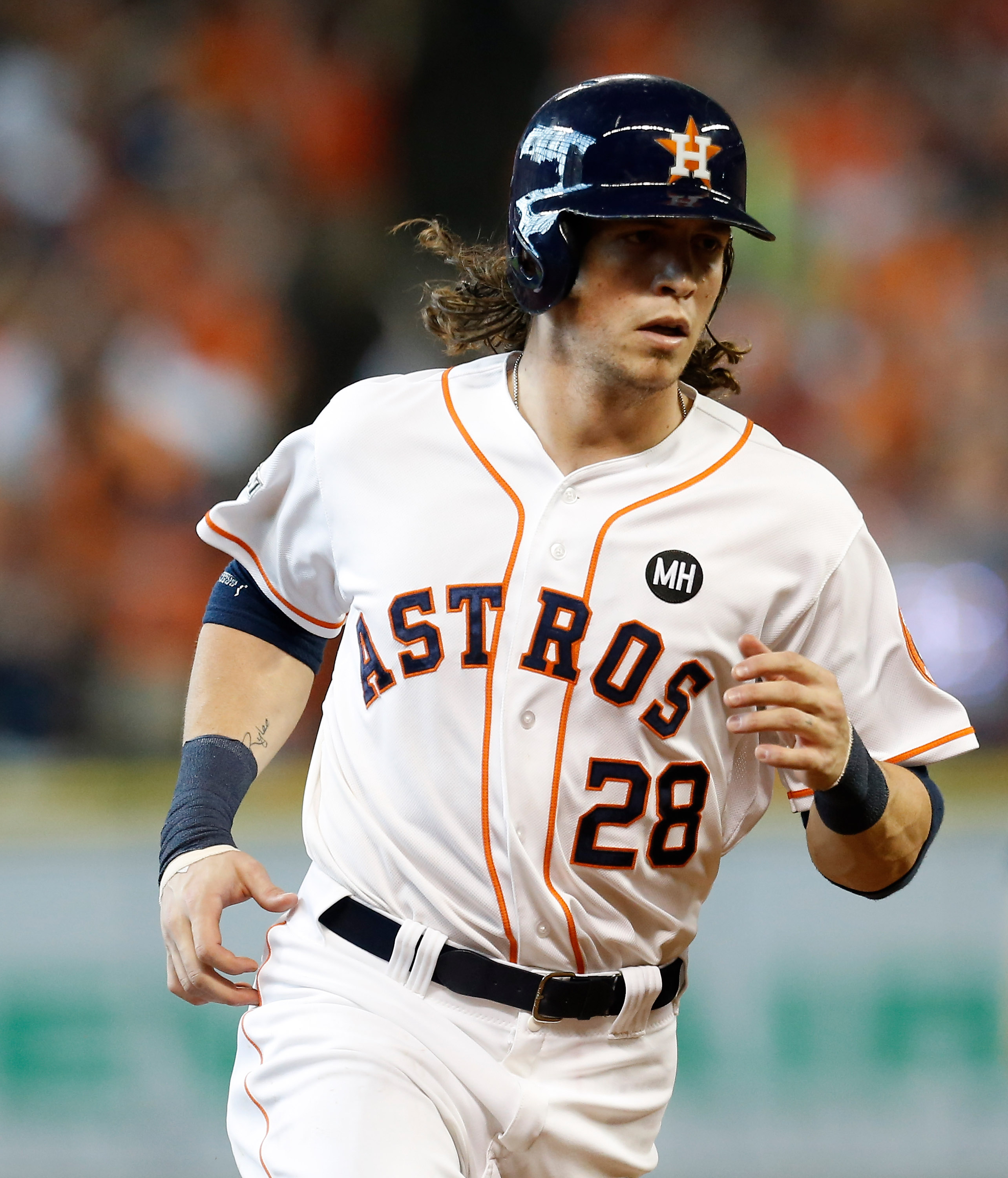
Rasmus, 29, slashed a productive .238/.314/.475 over 485 plate appearances last year. He also swatted 25 home runs while playing solid defense all over the outfield. And Rasmus reversed his traditional platoon splits, hammering lefties to the tune of .252/.364/.471 (in 140 trips to the plate).
In some ways that represented a big year for Rasmus, especially when combined with a torrid (but short-lived) post-season run. In truth, though, it really only affirmed his standing. His on-base percentage did drop below .300 in an injury-plagued 2014, but his power numbers were good enough that he still put together the second of three consecutive seasons with better-than-league-average production.
Rasmus will presumably spend most of his time in left, flanking center fielder Carlos Gomez. Slick defender Jake Marisnick may take some plate appearances against opposing southpaws.
Houston GM Jeff Luhnow said recently that the team was hopeful that Rasmus would accept, and it appears he’ll get his wish. The club will neither gain nor lose any draft picks. Rasmus will be treated like any other free agent who has signed a deal, meaning that he cannot be traded without consent until June 15th of 2016. (Click here for more of the rules governing the qualifying offer.)
The $15.8MM sum is a lot on an annual basis, to be sure. But it’s hardly an earth-shattering sum in this day and age. And Houston will benefit from the fact that it need not commit to Rasmus beyond next season, allowing the club to re-assess after the year. Of course, some planning will be required: both he and Gomez will at that point be eligible for free agency, and the team has dealt away several significant prospects (Brett Phillips and Domingo Santana were sent in the Gomez trade) who might have been ready to step in.
Over the three prior years that the qualifying offer system was in place, no player ever took the deal. As we’ve often discussed here at MLBTR, it rarely makes sense for a free agent to do so, since in most cases preserving the possibility of a multi-year deal is worth the risk — especially given that many players will still end up with a chance at a similar one-year deal as a fallback.
But as MLBTR’s Mark Polishuk explained on Tuesday in his outlook piece for the Astros, Rasmus seemed an unusually likely candidate to accept the one-year offer. While he’s still young, the Excel Sports Management client faced a competitive market situation and was not quite a full-time player last year. After failing to find a home with the Cardinals and Blue Jays, he seemed to fit in well in Houston. And it doesn’t hurt that he’ll have an opportunity to re-enter the market next year. While there are still some quality outfielders among the crop of expected 2016-17 free agents, it’s not as deep a class as the current one.
Looking elsewhere in the free agent market, players such as Denard Span and Gerardo Parra figure to benefit from today’s decision. While they are entirely different types of players, both are left-handed hitters who move up a peg in the outfield market.
Photo courtesy of USA Today Sports Images.
Free Agent Notes: Kim, Zobrist, Davis, Braves
Korean outfielder Hyeon-Soo Kim (or, alternatively anglicized, Hyun-soo Kim) has reached free agency and hopes to sign with an MLB club, Jeff Passan of Yahoo Sports writes. (Because he is a free agent, he will not need to go through a posting process.) The 27-year-old corner outfielder doesn’t quite have the power numbers of Byung-Ho Park, but has delivered good pop in the hitter-friendly KBO while taking walks more than he strikes out. He’s a .318/.406/.488 lifetime hitter, suggesting a nice blend of contact, patience, and pop, though he’s more of a 20 home run threat than a 40+ bomb KBO masher. Passan cites at least one scout that sees the left-handed-hitting Kim as a possible regular left fielder, and says he could have significant earning power this winter.
Here’s more on the market:
- The Nationals have interest in Ben Zobrist, though he’s not viewed as a top priority, James Wagner of the Washington Post reports. That’s not exactly surprising, for all the familiar reasons, but the possible fit in D.C. does seem to be a good one since the club could use a left-handed bat capable of playing second and the corner outfield. (Even better, Zobrist is a switch-hitter.)
- Meanwhile, GM Mike Rizzo indicated at the meetings that the team isn’t looking to bring back Denard Span, Wagner also reports. That’s even less surprising, of course. Rizzo indicated that the club feels good about Michael A. Taylor in center and doesn’t feel the need to add a new regular option there.
- As with the rival Nats, the Mets plan to speak with Zobrist’s representatives at Octagon, Mike Puma of the New York Post tweets. New York is well aware that Zobrist will have a broad market, though, Puma adds.
- Did I mention that there’d be wide interest in Zobrist? The Cardinals, too, have interest in him, Buster Olney of ESPN.com writes on Twitter. It’s not exactly clear how St. Louis would deploy Zobrist, but it’s possible to imagine him seeing time at more or less every position on the diamond (with a few exceptions) with the club.
- Agent Scott Boras made clear at the GM Meetings this week that he intends to pitch Chris Davis as a legitimate outfield option, as ESPN.com’s Jerry Crasnick writes. In addition to rare power, says Boras, Davis is more than capable of playing a passable right field for at least a year or two. That is indeed an intriguing idea, since it would open up some new possibilities, and Crasnick explains that there are good reasons to believe it’s plausible.
- Despite already adding A.J. Pierzynski, the Braves could sign another backstop to pair with him, David O’Brien of the Atlanta Journal-Constitution reports (Twitter links). But any such signing isn’t likely to be an expensive one, he cautions, which seems to suggest that Matt Wieters won’t be a target. Of course, that raises the question of what the team’s plans are for Christian Bethancourt, who has increasingly been mentioned as a change-of-scenery trade candidate. All this chatter occurred before Atlanta agreed to trade away Andrelton Simmons, though, so it’s hard to know whether a change in the club’s strategy will follow.
- Multiple agents suggested to Olney (Twitter link) that the teams with protected first-round picks don’t seem particularly inclined to spend a lot of money in free agency. That would appear to suggest that qualifying-offer-bound free agent may need to bear the full brunt of the draft pick compensation owed by any team signing them, since there will be fewer clubs that can add them at the cost of only a later pick. Of course, with so many players having received the QO, it’s likely that there will be a few teams that sign more than one, reducing the unit cost of the lost draft picks.
Offseason Outlook: Miami Marlins
The Marlins have a lot of ground to make up in the NL East, but enter the offseason with a talented core, a bit of free cash, and a desire to compete.
Guaranteed Contracts
- Giancarlo Stanton, OF: $318.5MM through 2027 (includes buyout of 2028 option)
- Christian Yelich, OF: $49MM through 2021 (including buyout of 2022 club option)
- Martin Prado, 3B/OF: $11MM through 2016 ($3MM to be paid by Yankees)
- Mike Dunn, RP: $3.45MM through 2016
- Ichiro Suzuki, OF: $2MM through 2016
Other Commitments
- Jarrod Saltalamacchia, C: $8MM owed through 2016 (released 5/5/2015)
Arbitration Eligibles (projections via MLB Trade Rumors)
- Aaron Crow (5.000) – $1.975MM
- Henderson Alvarez (4.051) – $4.0MM
- David Phelps (3.156) – $2.5MM
- Dee Gordon (3.154) – $5.9MM
- Adeiny Hechavarria (3.060) – $2.3MM
- A.J. Ramos (3.030) – $2.8MM
- Tom Koehler (3.016) – $3.9MM
- Bryan Morris (3.011) – $1.1MM
- Carter Capps (3.007) – $800K
- Jose Fernandez (3.000) – $2.2MM
- Non-tender candidates: Crow, Alvarez
Options
- None
Free Agents
The Marlins were riding high entering 2015, but a tumultuous season ended with yet more changes. Ultimately, GM-turned-manager Dan Jennings was sent out, with Don Matingly joining the organization to run the dugout and Michael Hill remaining the head of baseball ops. There was plenty of drama along the way, including another lengthy DL stint for superstar Giancarlo Stanton, the release of catcher Jarrod Saltalammachia, and trades of failed offseason acquisitions Michael Morse and Mat Latos.
In spite of that, the organization’s fundamental core remains intact. Stanton and Christian Yelich still look like cornerstone pieces, even if they weren’t able to put it on display consistently all year. Miami’s major winter addition, Dee Gordon, was spectacular. Young ace Jose Fernandez made it back from Tommy John surgery and looks ready to re-establish himself as a top-shelf ace, though some (hopefully) minor arm issues cropped up late in the year and his innings will need to be managed. The Marlins’ corner outfield duo is already under contract for the foreseeable future. The team could well push for long-term deals for the other two this winter, but they’ll be back regardless.
There was a time not long ago when a fifth player seemed worthy of mentioning with that group: center fielder Marcell Ozuna. Miami tried to extend him after a breakout 2014 in which he showed above-average pop and a quality glove. Ozuna received a mid-season demotion after a tepid start, saw his name arise in summer trade rumors, and was reportedly the subject of in-fighting between former manager Dan Jennings (who wanted to play him) and owner Jeffrey Loria (who didn’t). Jennings won that battle, as the soon-to-be 25-year-old did play, and played well (.278/.320/.469 in his 172 second half plate appearances). But Loria obviously went on to win the war. In recent days, Ozuna agent Scott Boras and Marlins president David Samson have swapped barbs, so it doesn’t seem as if the situation is improving.
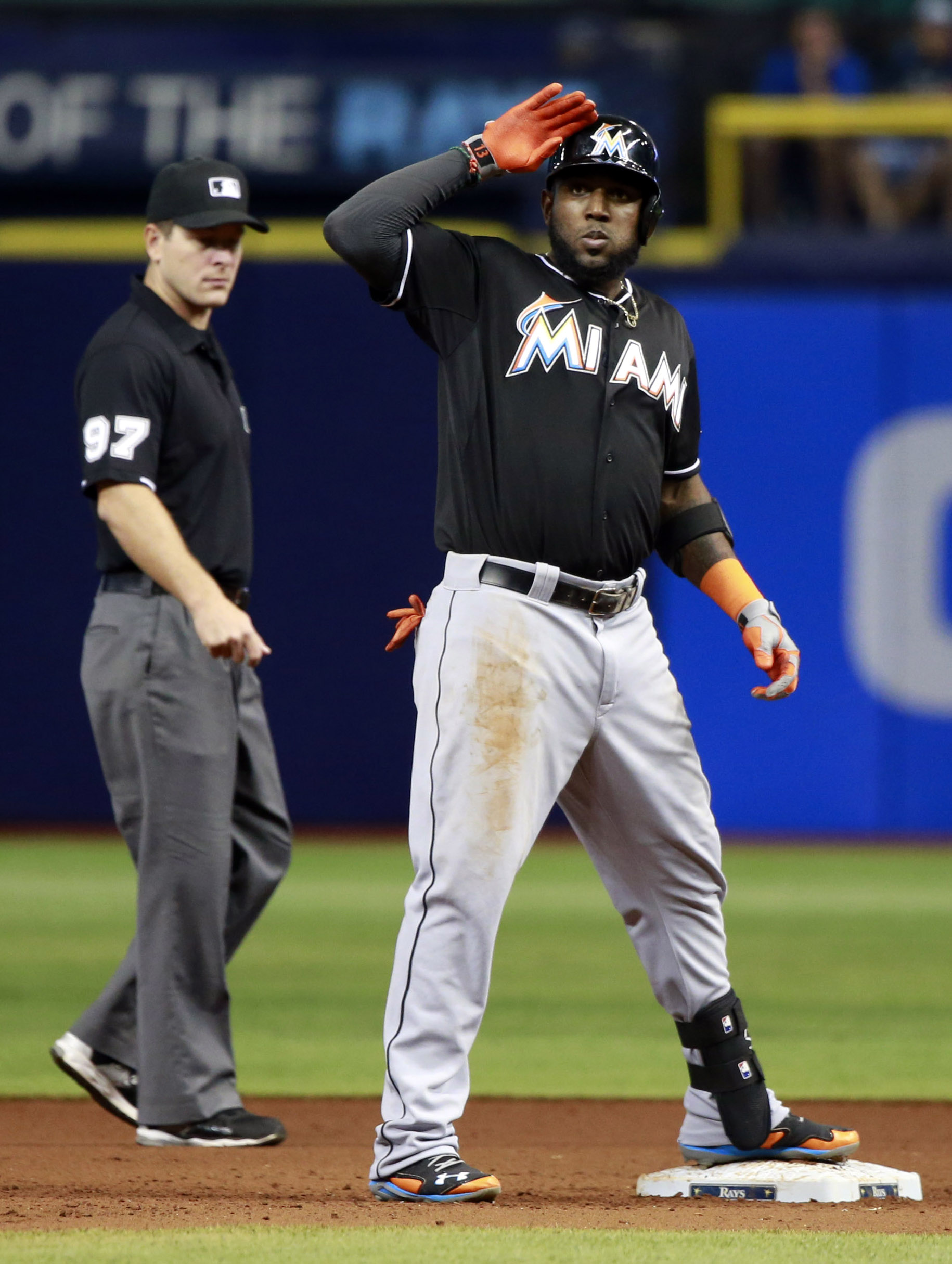 Making a decision on Ozuna represents the lynchpin of the Marlins’ offseason. If he’s retained, the organization would be set with an exciting, young trio of regulars (joined by veteran reserve outfielder Ichiro Suzuki). In the seemingly more likely scenario of a trade, Miami might well be left to search for a replacement externally. It isn’t impossible to imagine Miami giving out a mid-length contract to a veteran, with Denard Span possibly available at an appealing price point and Dexter Fowler standing at the top of a limited market, but a shorter-term signing could be more likely. Though the soon-to-be-renamed Marlins Park isn’t a great draw for hitters looking to rebuild value, the club could theoretically promise playing time and a center field job to someone like Austin Jackson.
If the front office isn’t willing or able to attract those kinds of players, it’s possible to imagine a scenario where a capable defender and right-handed hitter — Drew Stubbs comes to mind (though former Marlin Jake Marisnick would have worked nicely) — splits time with Yelich in center. In that scenario, the southpaw swinging Derek Dietrich could spend time in left when righties are on the hill, opening a route to more playing time for him in the process. Dietrich has yet to prove himself a capable fielder, but his bat showed up last year and a broader opportunity could be in order.
Dealing away a controllable piece like Ozuna is never easy, but it probably also represents the only reasonably plausible means for the organization to add a high-level pitcher. The team has made clear that’s a top priority, and it’s easy to see why. Henderson Alvarez could rejoin Fernandez at the top of the rotation after a lengthy absence due to shoulder surgery, but he’s now a major injury question mark. It’s probably also unfair to expect the 25-year-old to be a sub-3.00 ERA pitcher going forward, as he’s never posted a sub-3.70 SIERA even in his best seasons. It’s not even clear yet whether Alvarez will be tendered a contract, though it surely would be difficult to give him up with another year of control still remaining. Jarred Cosart showed promise after coming to the Marlins in the middle of 2014, but struggled last year with command, results, and health issues. The club has received plenty of innings from Tom Koehler in recent years, making him a nice arm to have at the back of the rotation, but his upside appears limited. Adam Conley is a reasonably interesting arm who showed well in his debut last year, but there are probably limits to what can be expected of him. Otherwise, the team has depth/swingman options such as Brad Hand and David Phelps as well as some unestablished pieces that have at least tasted the big leagues, including Justin Nicolino, Jose Urena, and Kendry Flores.
In retrospect, at least, it hurts to think about the arms that Miami has traded away in recent years. Nathan Eovaldi, Andrew Heaney, and Anthony DeSclafani have all had their share of success since leaving town. Trading Ozuna carries the same kind of risk, though he ought to be able to fetch a similarly controllable player in return — especially after a strong run at season’s end. We’ve heard lots of talk of the Indians as a potential match, which makes a lot of sense on paper, and MLBTR’s Steve Adams has previously identified the Mariners, Giants, Brewers, and Padres as hypothetical trade partners. Of course, Ozuna could also hold appeal to clubs that have center fielders on hand but need corner pieces, such as the White Sox, Rays, Royals, and Reds. And the division rival Braves and Phillies both could conceivably match up as well.
There’s also some indication that the Fish could be looking to spend some cash — perhaps up to $15MM annually — on an open-market rotation addition. (If they don’t add an arm via Ozuna, they could seek two free agents.) Depending on what kind of term of years Miami would be willing to commit to, that would put the team in play for a wide variety of mid-rotation arms. Among the top fifty free agents, as rated by MLBTR’s Tim Dierkes, only the very top arms appear to be completely out of reach. With a protected top pick (seventh overall) and a penchant for trading their competitive balance selections, the Marlins might not be too worried about giving up a second-round draft pick to add the right pitcher. It’s possible to imagine a run at the Jeff Samardzija – Mike Leake – Wei-Yin Chen – Kenta Maeda tier of arms, though taking aim at the next group down might be more realistic. If Miami prefers a younger arm and doesn’t mind taking some injury risk, Brett Anderson could be a target. High-performing veterans such as John Lackey and Hisashi Iwakuma might at least be worth pursuing. Otherwise, it’s also possible to imagine the club chasing a less expensive that can deliver innings. With former Pirates pitching guru Jim Benedict now in Miami, J.A. Happ could make added sense as a reliable arm with some upside. (Miami paid a steep price to add Benedict, it’s worth noting, and will surely look to benefit from some of the same magic he worked in Pittsburgh.)
The trio of traded pitchers noted above did, of course, bring back players in return, two of whom — Gordon and Martin Prado — feature heavily in the current infield alignment. (DeSclafani went for Latos, which obviously did not work out at all.) Prado has drawn a good deal of trade interest, and only has one year remaining on his deal, but the Miami front office continues to put out word that he’s not really available. Though he’s no longer the very good hitter he once was, Prado has delivered a league-average bat with quality defense at third base, and remains a valuable member of any team that hopes to contend. The 32-year-old also represents a corner outfield and second base option, expanding his versatility (and hypothetical trade market).
Shortstop is settled with the slick-fielding Adeiny Hechavarria, who is highly valued by the club despite his light bat. There’d be interest in an extension, but it seems that the club isn’t optimistic that the 26-year-old could be locked up at a reasonable price.
There’s some uncertainty at first base and catcher, though both positions figure to be filled by internal options with some possible external supplementation. Lefty slugger Justin Bour was rather productive last year, slashing .262/.321/.479 and popping 23 home runs over 446 plate appearances. But he’s been dominated in limited exposure to opposing southpaws, and looks in need of a platoon mate. It’s plausible to imagine the club pursuing hitters such as Mark Reynolds in free agency. Steve Pearce and Mike Napoli could also fit, though they’ll be looking for bigger roles and more money. Behind the dish, the 24-year-old J.T. Realmuto should continue to receive a chance to seize a long-term role. He started slowly with the bat, but showed plenty of offensive promise over the course of the season. While WAR measures liked his defensive work quite a bit, he’ll need to improve some of the league’s worst framing numbers. The switch-hitting Tomas Telis provides an option as a reserve catcher, and the organization could still bring back free agent Jeff Mathis, a highly-regarded performer in the field whose limitations on offense are well documented.
As the team looks at ways of filling in its final roster spots, the bullpen also figures to get some consideration. A.J. Ramos stepped in well for the disappointing Steve Cishek. The outgoing submariner brought back a control-challenged but live-armed righty in Kyle Barraclough, who probably earned a pen spot after spinning 24 1/3 frames of 2.59 ERA pitching after the trade (despite walking 6.7 batters per nine). Carter Capps was a revelation, but ended the year on the DL with elbow issues. Assuming he’s able to return to health, he’ll join Bryan Morris and lefty Mike Dunn to make up a fairly solid set-up group. It probably isn’t strictly necessary to add to this group, which could be supplemented by whatever rotation options don’t stick there, but a veteran acquisition is always possible.
All told, Miami could conceivably look at this as a winter to regroup, return to health, and make a few targeted acquisitions. But the Ozuna conundrum and the desire for a young pitcher add an element of intrigue. While the front office/field staff upheaval appears to be nearing a conclusion, the Loria-led team could yet surprise as it looks to arm Mattingly with the tools to deliver a winner.