
Central Notes: Twins, Bryant, Mize, Reds
Let’s check in on a few teams from the game’s Central divisions…
- The Twins signed injured left-hander Rich Hill in December with the expectation he’d miss a large part of the season. That was before the coronavirus pandemic ran amok, though, and now the Twins might get a full season (if there is one) out of Hill. The 40-year-old, who’s still recovering from the primary revision surgery he underwent in November , told Betsy Helfand of the Pioneer Press, “(I’ve) been able to make the most out of the situation so I’m right where I should be as far as rehab progression-wise, so if we do have a season, I should be ready to go when we kick off something of a spring training.” That means the Twins could get an entire season out of a hurler who has been one of the most effective starters in the majors on a per-inning basis since his out-of-nowhere breakout in 2015. Dating back to then, Hill has combined for a 2.91 ERA with 10.67 K/9 and 2.82 BB/9 in 466 1/3 frames as a member of the Red Sox, Athletics and Dodgers.
- Cubs third baseman/outfielder Kris Bryant is scheduled to become a free agent after the 2021 season. In theory, a shortened or canceled 2020 campaign could have a negative effect on his market if he does reach free agency, but agent Scott Boras doesn’t expect it to damage Bryant or any of the other star players who could be available then. “For the players who are the great players — because there’s always only a few great players — I don’t think it’s going to have anywhere near the impact,” Boras told Gordon Wittenmyer of NBC Sports Chicago, “because those great players are somebody you would sign for 10 years, and you can defer the cost. You just backload the contracts. You can do things with long-term contracts; you could wait for better times but still get the player for today.”
- Righty Casey Mize, the No. 1 pick in the 2018 draft, may be the best prospect in the Detroit organization. But with a minor league campaign unlikely to happen, Mize could miss out on further professional seasoning this year. So what’s the solution? Well, Evan Woodbery of MLive.com makes a case that the Tigers should just put him in their rotation this season. Doing so would burn a year of service time, and it’s unlikely Mize would help make the Tigers a playoff-caliber team even in a shortened season, but there’s no denying he is one of the most talented players in the organization. Mize spent the majority of last year in Double-A, where he pitched to a 3.20 ERA with 8.69 K/9 and 2.06 BB/9 in 78 2/3 innings.
- The Reds will start temporarily furloughing employees – less than 25 percent of them – on June 1, C. Trent Rosecrans of The Athletic tweets. Those individuals will continue to receive benefits while laid off, though.
Grading Jason Heyward’s Career (So Far)
It would be an understatement to say the Cubs’ Jason Heyward has had an eventful career in professional baseball. Heyward was the 14th pick of the Braves in the 2007 draft, and the Georgia-raised outfielder’s star continued to rise thereafter. As a prospect, Heyward topped out as Baseball America’s No. 1 overall farmhand after the 2009 season.
“Even if he opens 2010 at Triple-A Gwinnett, Heyward will be starting in Atlanta at some point during the year, and he has all the ability to emerge as one of the game’s premier players,” BA wrote then.
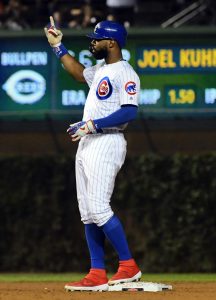
The towering Heyward did not start 2010 in the minors, though, instead beginning as the Braves’ top right fielder. And he made an enormous impact from the get-go, smashing a first-inning, three-run homer off Cubs righty Carlos Zambrano in his initial at-bat. The Braves went on to win that game and 90 more en route to a wild-card berth, owing in no small part to a 4.6-fWAR Heyward effort in which he batted .277/.393/.456 in 623 plate appearances.
It seemed that the rookie version of Heyward was indeed destined for greatness, but his career hasn’t been particularly consistent since then. Heyward remained a Brave from 2011-14, a 2,196-plate appearance run in which he batted .258/.340/.422 with 14.9 fWAR, but they decided after the last of those seasons to trade the homegrown standout to the Cardinals in a deal for right-hander Shelby Miller. That wasn’t indefensible from the Braves’ point of view, as Miller was then an up-and-coming starter with a few years’ team control remaining and Heyward had just one season left before reaching free agency.
[RELATED: Butterfly Effects & The Jason Heyward Signing]
If you go by fWAR, Heyward had his best in St. Louis (5.6), hitting .293/.359/.439 with 13 homers and a career-high 23 steals in 610 PA. Heyward was part of a 100-win team that year, but after the Cardinals bowed out of the NLDS against the Cubs, the free agent went to … the Cubs. They handed him an eight-year, $184MM guarantee, but Heyward’s regular-season numbers have fallen flat dating back to then. During his first four years as a Cub, Heyward batted an underwhelming .252/.327/.383 line across 2,151 trips to the plate, leading to 6.0 fWAR. Heyward’s typically outstanding defense has kept him afloat, as he has logged 42 Defensive Runs Saved and a 27.2 Ultimate Zone Rating as a Chicago outfielder (overall, he has put up 143 DRS with a 99.5 UZR as a big leaguer). Of course, it’s not always just about statistics.
On Nov. 2, 2016, the Cubs and Indians were tied 6-6 through nine innings and stuck in a rain delay in Game 7 of the World Series. It was two teams trying to break long championship droughts, but on Chicago’s side, Heyward went into Knute Rockne mode in the locker room.
“We’re the best team in baseball, and we’re the best team in baseball for a reason,” Heyward told his teammates (via Tom Verducci’s book “The Cubs Way: The Zen of Building the Best Team in Baseball and Breaking the Curse“). “Now we’re going to show it. We play like the score is nothing-nothing. We’ve got to stay positive and fight for your brothers. Stick together and we’re going to win this game.”
“Right then I thought, We’re winning this f—— game!,” president of baseball operations Theo Epstein said.
The Cubs did just that when the 17-minute delay ended, defeating the Indians in the 10th to pick up their first title in 108 years. It’s hard to quantify how much Heyward meant to that team on an emotional level. He went 0-for-5 in that game and posted a miserable .307 OPS during the postseason, which came after he recorded a personal-worst 72 wRC+ in the regular season, but that Game 7 speech will always live in Cubs lore.
While the Cubs haven’t won another title since 2016, Heyward’s production has trended upward going back to then, as he has been something close to a league-average hitter. Still, that’s not great for a former can’t-miss prospect who’s owed another $86MM through 2023. In all, Heyward has been a bit better than average as an offensive player during his career, having batted .261/.343/.412 (107 wRC+) with 144 homers and 110 steals in 5,580 PA. However, consistently stellar defense has helped the 30-year-old accumulate 31.1 fWAR, which is a higher amount than the vast majority of major leaguers have piled up, and he may have helped key a Cubs title behind the scenes. All things considered, how would you grade his career to this point?
(Poll link for app users)
Grade Jason Heyward's career so far
-
C 53% (7,280)
-
B 28% (3,864)
-
D 13% (1,818)
-
F 4% (510)
-
A 2% (244)
Total votes: 13,716
Photo courtesy of USA Today Sports Images.
A Front-Line Starter Who Got Away From The Rangers
Going back to his first season in the majors in 2014, just 11 other starters have outdone Cubs right-hander Kyle Hendricks‘ 3.14 ERA. That owes largely to an ability to limit walks, as Hendricks has issued just a bit over two free passes per nine innings during his career, as well a penchant for preventing damaging contact. Even though his typical fastball only clocks in around 86 mph, hitters can’t seem to square up Hendricks. Just last season, he ranked in the majors’ 97th percentile in exit velocity and its 88th percentile in hard-hit rate. It went down as yet another quality effort by Hendricks, who turned in a 3.46 ERA/3.61 FIP with his second-highest fWAR (4.1) across 177 innings.
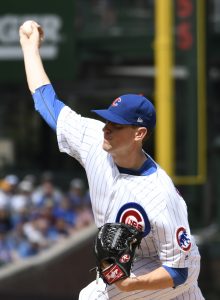
Not many could have expected Hendricks to pan out this well. The Rangers chose the former Dartmouth standout in the eighth round in 2011 (keep that in mind when unpicked players start signing after this year’s truncated five-round draft); although he went on to put up great production at the lower levels with the Rangers, he was never seen as a can’t-miss prospect. And at the July 2012 trade deadline, a little over a year after the Rangers drafted Hendricks, they traded him and third baseman Christian Villanueva (then a top 100-caliber prospect but now a member of Japan’s Nippon Professional Baseball) to the Cubs for veteran righty Ryan Dempster.
Dempster, who originally entered the pros as a third-rounder of the Rangers in 1995, got off to a strong start in 2012 before the Cubs traded him back to his original franchise. As MLBTR’s Tim Dierkes wrote when the swap occurred: “Dempster posted a 2.25 ERA with 7.2 K/9, 2.3 BB/9 and a 42.1% ground ball rate in 104 innings with the Cubs this year.”
Unfortunately for Texas, Dempster was unable to carry his Windy City effectiveness to the Lone Star State. While the Rangers did earn a playoff berth in 2012, they didn’t make it past the one-game wild-card round, and Dempster didn’t play much of a role in their regular-season success. He wound up tossing 69 innings of 5.09 ERA ball with the team before leaving for the Red Sox in free agency during the ensuing offseason. That proved to be a wise move for the last year of his career, as Dempster ended up as part of a World Series-winning Red Sox roster.
Dempster didn’t play a major role in Boston’s title, but Hendricks has gone on to be a key part of a championship winner since switching organizations. The Cubs took home their first World Series in 108 years in 2016, a season in which Hendricks recorded a league-best 2.13 ERA in 190 frames and added an jaw-dropping 1.42 ERA in 25 1/3 playoff innings. Three years later, the Cubs locked up Hendricks to what has always looked like an eminently reasonable contract extension, inking him to a $55.5MM guarantee over four seasons prior to the 2019 campaign.
We don’t know when we’ll see Major League Baseball again, but considering Hendricks’ track record, it seems safe to assume the 30-year-old will continue to hold his own when it does return. He’s one of the most valuable players on the Cubs, but he’s also one who got away for the Rangers.
Photo courtesy of USA Today Sports Images.
Baez On Extension Talks With Cubs
Cubs star Javier Baez hasn’t been shy about publicly discussing his contract talks with the Cubs, and that trend continued this week as the two-time All-Star told ESPN’s Marly Rivera that extension talks with the team have been on hold since the league shut down in mid-March. Both sides decided to “leave it there,” with the 2020 season on indefinite hold, although the 27-year-old made clear that he still hopes to reach an agreement at some point.
Transactions have halted and rosters frozen during the hiatus, and extension talks were reportedly placed on hold as well. Of course, that’s a tough policy to enforce and one that could conceivably be circumvented so long as a new deal wasn’t announced or reported until the limitations were lifted. It seems that has not been the case, despite Baez’s emphasis on what a “blessing” it’d be to spend his whole career with one team and the fact that neither party feels the need to put a deadline on talks. On the other hand, Baez is keenly aware of the business side of the game and did discuss the possibility of playing with multiple teams in his chat with Rivera. The two also discussed his charitable works in Puerto Rico during the shutdown and Baez’s workouts with his brother-in-law: Twins righty Jose Berrios. Cubs fans will want to take a full look for the full breadth of his comments.
The Cubs currently control Baez through the 2021 season, after which he’ll join a historically strong class of free-agent shortstops. He and the Cubs agreed to a $10MM salary for the 2020 season over the winter, although the best-case scenario for him is now that he’d receive a prorated portion of that sum (dependent on how many games are able to be played in a shortened season). He’ll have one more trip through arbitration on the horizon, barring an agreement on a new deal.
A Baez extension would require a change of trajectory for a Cubs organization that has become increasingly averse to spending over the past two seasons. It’s easy to envision Baez, a potential face of the franchise for the better part of the next decade, as an exception to that philosophy, but it’s hard not to notice the team’s decrease in spending. Craig Kimbrel was signed last summer, but only after a prolonged stretch on the restricted list for Ben Zobrist unexpectedly opened up some funds. Chicago also brokered extensions for Kyle Hendricks (four years, $55.5MM) and David Bote (five years, $15MM) in Spring Training 2019, but a Baez deal wouldn’t be in the same stratosphere as those two deals. Outside of those deals, the Cubs have spent just over $14MM in free agency dating back to October 2018.
That said, the Cubs will also have Jon Lester, Tyler Chatwood, Jose Quintana, Daniel Descalso, Steven Souza Jr. and Jeremy Jeffress come off the books this coming winter. They had been slated to enter the season with about $214MM worth of luxury-tax commitments on the books, but that number will crater to $93MM next year (not including sizable arbitration raises for Baez, Kris Bryant, Kyle Schwarber and Willson Contreras). It’s also perhaps telling while each of Bryant, Schwarber and Contreras saw his name kicked about the rumor circuit this past offseason — Bryant in particular — there were little to no such rumblings regarding Baez.
Whenever talks are able to resume, they’ll take place against the backdrop of sizable revenue losses for teams throughout the league — a reality that could make it more difficult for the two parties (or any two parties) to agree on a potential price point. That cuts both ways, as while the Cubs may not want to pay as much as they would have with an uninterrupted revenue stream, Baez (and other players set to hit free agency in the next couple of years) could be wary about going out into the open market at a time when owners are looking to recoup their losses. The expiration of the current collective bargaining agreement in December 2021 only further muddies the water, making it nearly impossible to predict just how contract negotiations of any type will play out in the foreseeable future.
Jon Lester Discusses His Future
As he waits with the rest of us for the return of baseball, Cubs southpaw Jon Lester chatted with Rob Bradford of WEEI.com about his current activities and future plans. It’s well worth a full read, but we’ll cover a few items of particular hot stove relevance.
Lester certainly doesn’t sound like a player who’s preparing to wrap up his career at the end of his contract. He spoke not only of preparing for the upcoming season but of his future on the mound.
Lester’s free agent deal includes a 2021 vesting/mutual option that would be guaranteed at $25MM if he throws 200 frames in 2020. (With a hefty $10MM buyout, the actual cost difference is $15MM.) The innings target will be prorated to account for a shortened season. Regardless, it’s difficult to imagine the Cubs letting him reach it.
“We’ll figure that out one way or the other,” says Lester. “I will either be here or be a free agent. … I’m open-minded to anything.”
Anything? Anything at all? It may not mean much, but Lester went on to drop an eyebrow-raising line that’s sure to pique the interest of Red Sox fans: “Absolutely it would be cool to go back and finish my career where it all started.”
As Lester noted, there’s still quite a lot of uncertainty to be dealt with before considering where he’ll throw in 2021. “Hopefully, I’m still a good enough caliber pitcher that the want of my services will still be out there for people,” he says. Lester went on to note: “I’m not getting any younger and coming off a year like I had last year, this [season delay] isn’t going to help me.”
It’s hard to imagine there won’t be a market for Lester’s services, even if he’s not the same guy he once was. He allowed more than four earned runs per nine for the second time in three seasons last year. ERA estimators didn’t expect better based upon his peripherals (4.26 FIP; 4.35 xFIP; 4.49 SIERA). Then again, Lester also made 31 starts again … as he has for a remarkable dozen-straight seasons. (Actually, he typically takes the ball 32 or 33 times.)
Lester may not be capable of producing to his own lofty standards, but he was still a quality rotation piece in 2019. He’s also not wrong that, at 36 years of age, his desirability on the open market will depend in large part upon what he’s able to show in 2020 — if indeed there is a season. Lester tells Bradford that he’s staying active but also trying not to “waste bullets down here in the backyard or at some high school,” instead saving them while waiting for “a date to ramp it up.” Here’s hoping he’ll have a chance to do so soon.
10 MLB Teams Whose Business Initiatives Face Coronavirus Hurdles
Like most every person or business, all thirty MLB teams face tough questions during the time of COVID-19. Some are relatively similar for all ballclubs, but there are obviously quite a few unique issues — some more pressing than others.
Dealing with the implications of this pandemic is probably toughest for organizations that are in the midst of executing or planning major business initiatives. We’ll run down some of those here.
Angels: The team has been cooking up potentially massive plans to develop the area around Angel Stadium. Fortunately, nothing is really in process at the moment, but it stands to reason that the project could end up being reduced in scope and/or delayed.
Athletics: Oof. The A’s have done a ton of work to put a highly ambitious stadium plan in motion. Massive uncertainty of this type can’t help. It isn’t clear just yet how the effort will be impacted, but it seems reasonable to believe the organization is pondering some tough decisions.
Braves: Luckily for the Atlanta-area organization, the team’s new park and most of the surrounding development is already fully operational. But with the added earning capacity from retail operations in a ballpark village comes greater exposure to turmoil.
Cubs: Like the Braves, the Cubs have already done most of the work at and around their park, but were counting on big revenue to pay back what’s owed (and then some). Plus, the Cubbies have a new TV network to bring up to speed.
Diamondbacks: Vegas?! Vancouver?! Probably not, but the Snakes do want to find a new home somewhere in Arizona. That effort is sure to be dented. Plus, the team’s recent initiative to host non-baseball events at Chase Field will now go on hiatus.
Marlins: The new ownership group has had some good vibes going and hoped to convert some of the positivity into a healthy new TV deal. That critical negotiation will now take place in a brutal economic environment.
Mets: So … this is probably not an optimal moment to be selling your sports franchise. The Wilpon family is pressing ahead with an effort to strike a new deal after their prior one broke down (at the worst possible time).
Orioles: That bitter television rights fee dispute that just won’t stop … it’s not going to be easier to find a resolution with less cash coming through the door. It was already setting up to be a rough stretch for the Baltimore org, with past TV money due to the Nationals and more bills to come, even while going through brutally lean years on the playing field.
Rangers: The new park is now built. While taxpayers footed much of the bill, the club still has to pay back a $600MM loan. Suffice to say the Rangers (and municipal authorities) anticipated game day revenues of more than $0 in year one when they planned out the loan repayment method.
Rays: The club’s preferred Ybor City option flamed out and it is currently engaged in a somewhat confusing effort to split time between the Tampa Bay area and Montreal. Existing hurdles to that arrangement seem only to be taller in the age of the coronavirus.
Others: We may be missing some, but it seems most other organizations are engaged more in usual-course sorts of business initiatives rather than franchise-altering efforts. For instance, the Nats have an interest in that TV deal as well. The Red Sox have been working to redevelop areas around Fenway Park. The Blue Jays are dabbling in future plans. And the Dodgers have a new TV rights deal, though that came to fruition after the pandemic hit and may not be impacted any more than any other existing carriage arrangements.
How The Royals Acquired The AL Home Run Champ
Two of last season’s top three home run hitters were originally acquired in trade. NL champ Pete Alonso was drafted and developed by the Mets, but NL runner up Eugenio Suárez and AL leader Jorge Soler were plucked from other organizations early in their MLB careers. MLBTR’s Connor Byrne just looked back at the Reds’ brilliant acquisition of Suárez. It only seems fair to give the Soler trade its due.
Soler was a known commodity long before he signed a pro contract. His name appeared on MLBTR pages more than thirty times before he finally agreed with the Cubs as a twenty-year old international amateur in 2012. He immediately found himself on top prospect lists and quickly tore through the minors, making his MLB debut a little over two years after signing.
Despite an exceptional debut, Soler never quite established himself amidst a crowded outfield mix on the North Side. In 765 cumulative plate appearances from 2014-16, he hit .258/.328/.434 (106 wRC+) with 27 home runs. It was passable production, but not enough to consistently crack a lineup with Dexter Fowler, Jason Heyward, Albert Almora, and Kyle Schwarber on hand, to say nothing of infielders like Kris Bryant and Ben Zobrist capable of manning the grass. Even with Fowler departing as a free agent, the Cubs’ outfield looked like an area of surplus. (It hasn’t really borne out that way, but it looked like a strong group at the time). That made Soler a reasonable trade candidate for a team looking to defend a World Series title.
That offseason, the Cubs and Royals indeed lined up on a deal. With their own competitive window soon to close, K.C. acquired the 24-year-old slugger for contract-year reliever Wade Davis. It was perfectly understandable from the Chicago organization’s perspective. Aroldis Chapman was to sign elsewhere just a day later. The bullpen looked like the relative weak spot on a win-now club. As MLBTR’s Steve Adams pointed out at the time of the deal, Davis had some red flags (injuries and a slight velocity loss), but he was fresh off an utterly dominant three-year run in Kansas City.
Indeed, the Cubs mostly got what they bargained for from Davis. He did regress a bit in 2017, as Steve suggested he might. But Davis was still quite good in Chicago, working to a 2.30 ERA/3.38 FIP in 58.2 innings. The Cubs lost to the Dodgers in the NLCS, but that was the fault of their offense, not Davis. The right-hander has fallen apart since signing with the Rockies after that 2017 season, but the immediate returns on the deal were positive for the Cubs. That wasn’t the case for the Royals.
Soler spent the first month of that season on the injured list with a strained oblique. When he returned in May, he was dreadful, hitting .164/.292/.273 and earning a demotion to Triple-A. Soler did hit well in the minors, but 2017 was undoubtedly a disappointment. He seemed to reestablish himself in 2018, hitting well until suffering a season-ending toe fracture in June. Everything clicked in 2019, though.
Most importantly, Soler stayed healthy last season, playing in all 162 games. He increased his hard contact rate to a career-high 46.7% and dropped his infield fly ball rate to a career-low 8.8%. He made the most contact of his career and continued to draw walks at a hefty clip (10.8%). All told, Soler’s .265/.354/.569 slash (136 wRC+) placed him in the top 20 qualified hitters leaguewide. Even at pitcher-friendly Kauffman Stadium, Soler paced the Junior Circuit in home runs with 48. Statcast data supported the breakout, as Soler finished in the 95th percentile or better in average exit velocity, hard contact rate and expected weighted on-base average. Even as a mediocre defensive outfielder who’s best suited for DH work, that’s plenty productive. Soler was worth nearly four wins above replacement last season, per both Fangraphs and Baseball Reference.
The Royals are no doubt thrilled with the acquisition of Soler at this point. He’s finally emerged as the middle-of-the-order force many expected. Steve Adams explored the possibility of the sides lining up on an extension in September. Controlled through 2021, Soler could alternatively be a key trade chip for the rebuilding club if the sides can’t reach a long-term agreement.
The Mark Grace Decade Award
For many years, my go-to baseball trivia question was this: who led the 1990s in hits?
I won’t bury the lede any further: The answer is Mark Grace. Grace never hit 20 home runs in a season despite being a middle-of-the-order bat, and he spent most of his career on lackluster Cubs teams. He was a three-time All-Star and four-time Gold Glove winner who never finished higher than thirteenth in MVP voting. He was a very good baseball player. But I think it’s safe to say that he’s not the first name that comes to mind when looking for the decade-leader in hits.
Growing up, Grace was my favorite player, but that’s only part of why I loved this trivia question. In my mind, Grace epitomized something special about the game. He played smart and with obvious boyhood joy. He could hit .300 falling asleep, and though he wasn’t known for his power, he held his own – in his words – by “turning triples into doubles” (he also led the nineties in doubles). #17 wasn’t a superstar to the world (he didn’t hit home runs, he didn’t run well, and he played for the lovable loser version of the Cubs), but Grace made the most of his physical abilities and let his personality shine through. And ah yes, he had more hits in the nineties than Tony Gwynn, Robby Alomar, Barry Bonds, Ken Griffey Jr., Sammy Sosa, Cal Ripken Jr.…or anyone else.
That he accomplished this feat speaks to the randomness and the breadth of the game of baseball. Only a player who played in every season of the decade is likely to lead all major leaguers in hits (see the exception to this rule later). And yet, what a tremendous accomplishment! The juxtaposition of those two thoughts encapsulates so much of what makes baseball unique. Timing is a huge factor in determining what becomes part of the baseball zeitgeist, and yet, there’s an ocean of information beneath the surface of any given statistical achievement.
Not to date myself, but there’s been two full decades since Grace led the nineties in hits! Granted, hits are no longer the be all and end all of offensive production. Not anywhere close. But they’re still important. Leading the league in hits over a decade is more trivia than player analysis, but it’s still an accomplishment that shines a light on a particular style of hitter. So without further ado, I thought it would be a fun exercise to see who wins the Mark Grace Award for leading a decade in hits.
2010-2019
- Robinson Cano (1,695)
- Nick Markakis (1,651)
- Adam Jones (1,647)
- Starlin Castro (1,617)
- Miguel Cabrera (1,595)
- Elvis Andrus (1,595)
Kicking it off, this is not the list I expected for our most recent decade. Cano taking the title is impressive, if not surprising for the career .302 hitter, because he only appeared in 107 games this last season and only 80 games the year before that. Taking the crown regardless speaks to how difficult it is in this day and age to stay in the game. Kudos to the the rest of the list as well, which provides a real working class crew (Miggy aside). Cano is also, for what it’s worth, the least productive hits king in any decade since the war-torn forties when the Indians’ Lou Boudreau took home the title with 1,578 hits.
2000-2009
- Ichiro Suzuki (2,030)
- Derek Jeter (1,940)
- Miguel Tejada (1,860)
- Todd Helton (1,756)
- Vladimir Guerrero (1,751)
Tejada is the only name on this list that might take more than a couple of guesses. Of course, the most impressive feat here is that Ichiro managed to chalk up more than 2,000 hits in only 9 seasons.
1990-1999
- Mark Grace (1,754)
- Rafael Palmiero (1,747)
- Craig Biggio (1,728)
- Tony Gwynn (1,713)
- Roberto Alomar (1,678)
Biggio or Gwynn probably would have been my guess had I not known the answer beforehand. Biggio led the league in plate appearances in 5 seasons (’92, ’95, ’97,’98,’99), but he hit “only” .297 for the decade (versus .310 for Grace). Gwynn hit .344 in the nineties, but only managed to appear in more than 140 games twice.
1980-1989
- Robin Yount (1,731)
- Eddie Murray (1,642)
- Willie Wilson (1,639)
- Wade Boggs (1,597)
- Dale Murphy (1,553)
Willie Wilson gave himself a good head start with 230 hits in 1980, but Yount and Murray managed to make up the difference before the end of the eighties. The Royals’ great did crush the competition for most triples in the decade, however, with 115 (Yount was second with 83).
1970-1979
- Pete Rose (2,045)
- Rod Carew (1,787)
- Al Oliver (1,686)
- Lou Brock (1,617)
- Bobby Bonds (1,565)
No surprises here, with Rose and Carew atop the list.
1960-1969
- Roberto Clemente (1,877)
- Hank Aaron (1,819)
- Vada Pinson (1,776)
- Maury Wills (1,744)
- Brooks Robinson (1,692)
For the decade, Clemente hit .328/.375/.501. He took the batting crown four times and hit over .350 twice (1961: .351 BA, 1967: .357 BA).
1950-1959
- Richie Ashburn (1,875)
- Nellie Fox (1,837)
- Stan Musial (1,771)
- Alvin Dark (1,675)
- Duke Snider (1,605)
Integration wasn’t exactly a comprehensive process from the jump when Jackie Robinson first appeared for the Brooklyn Dodgers in 1947, so we’ll make the fifties the last decade. All in all, Pete Rose unsurprisingly was the most prolific hits leader in any decade with 2,045 knocks in the 70s, but I’m not sure there’s a more impressive name on there than Ichiro, whose wizardy with the bat came up just 15 hits shy of Rose in just 9 seasons from 2001 to 2010.
Otherwise, definitely some names you might have expected (Rose, Young, Clemente), but it’s not as if a 3,000 hit king rules every decade. Ashburn, like Grace, hit the league at the perfect time to snag this award, as his career spanned from 1948 to 1962. He joins Grace and Cano as the non-3000 hit players to lead a decade in hits (though Cano still has an outside shot to get there). For their careers, Grace takes the distinction as the player with the least career hits to lead a decade in the category.
Who else on these list surprises you? Al Dark? Elvis Andrus? Who did you expect? Let’s hear your takes in the comments!
Quick Hits: Cora, Mize, Minors, Cubs, Nats
Former Red Sox skipper Alex Cora is suspended for all of the 2020 season as a result of the role he played as the Astros’ bench coach in their 2017 sign-stealing scandal, but it may not be long before he’s in a prominent position again. If the World Baseball Classic takes place in 2021, Cora may be in line to manage or perhaps serve as the GM of the Puerto Rican team. On potentially hiring Cora, president of the Puerto Rican Baseball Federation Jose Quiles told Primera Hora (via Chris Cotillo of MassLive.com): “Of course we would consider it. We already know the work he does. He would be considered as much for general manager as he would be for manager.” Cora was the GM of the 2017 Puerto Rican club that lost just one game – the championship round against the United States.
Here’s more from around the game…
- High-end Tigers pitching prospect Casey Mize is holding out hope that he’ll make his major league debut in 2020, as Chris McCosky of the Detroit News writes. “It is very frustrating,” Mize told McCosky the coronavirus-forced shutdown. “This is the year I’d hoped to spend a lot of quality time in the big leagues and make my debut. And if there is a season, that is still my goal. That is still something I want to accomplish.” The 22-year-old Mize is keeping in shape by throwing five days a week, including a 40-pitch bullpen session every Wednesday. The No. 1 pick in the 2018 draft, Mize further proved himself as one of the best prospects in baseball last year when he threw 78 2/3 innings of 3.20 ERA ball during his Double-A debut.
- Contraction of minor league teams seems to be on the way, but the Cubs won’t be among the franchises affected, Gordon Wittenmyer of NBC Sports Chicago details. They’re not in position to lose any of their affiliates, which Cubs senior director for player development Matt Dorey told Wittenmyer is “not surprising at all.” The Cubs have been impressed with the work that all of their lower level teams have put in, Dorey explained to Wittenmyer, and they believe those partnerships will continue. “It’s amazing how much investment in resources they’ve made to put our players in the best position to develop,” Dorey said.
- Changes to the minor league setup may allow the St. Paul Saints of the independent American Association to become an affiliated team, J.J. Cooper of Baseball America reported earlier this week. But the Saints are content in their current position. They’ve “had very little to do with this other than our name being mentioned,’’ executive vice president and general manager Derek Sharrer told Jim Paulsen of the Star Tribune. Sharrer added: “We’re a member of an independent league, and we’re very happy with it. Our heritage, our DNA, is tied into being independent. We’ve had success both on and off the field. We provide a brand of entertainment with a certain renegade independent feel to it, but we’re certainly flattered to be in the discussion.”
- The Nationals are the latest team that has committed to paying their non-player employees through the end of May, Ken Rosenthal of The Athletic tweets. They join most of the league’s other clubs in that regard.
Quick Hits: Warren, Yankees, ChiSox, Garland, Cubs
It was on this day back in 1890 that the Dodgers played their first game as members of the National League, as the team then known as the Brooklyn Bridegrooms dropped a 15-9 result to the Boston Beaneaters. Brooklyn switched leagues after winning the American Association championship in 1889, and immediately continued their success against their new competition, posting an 86-43 record in 1890 to win the NL title. This was the first of 23 NL pennants won by the Dodgers franchise, tied with the Giants for the most in league history.
Some notes from modern-day baseball…
- Adam Warren headed into the free agent market after undergoing Tommy John surgery last September, so amidst all of that uncertainty, he “didn’t look anywhere else” once he received interest from the Yankees, the right-hander told George A. King III of the New York Post. Having already pitched for the Yankees in two separate stints earlier in his career, Warren said the Bronx Bombers “were my ideal team….It was a situation where I didn’t have that much bargaining power and I wanted to catch on with a team that would take a chance on me. I was very fortunate the Yankees wanted to do that.” Warren signed a two-year minor league contract with New York, with the expectation being that he would spend the 2020 season recovering from surgery and be ready to pitch in 2021. If a reworked 2020 schedule leads to games deep into October or November, Warren admitted that “kind of tempts me to come back quicker, but the timing of the surgery it would feel like I am rushing back. The most realistic goal is treat this as a gone year.” The recovery process seems to be going rather smoothly for Warren, who said “fortunately I haven’t missed a beat too much with my rehab” even while being limited to working out at his home.
- The Jose Quintana-for-Eloy Jimenez (and Dylan Cease) trade may not be a fond memory for Cubs fans, though an even more lopsided deal between Chicago’s two teams took place back in 1998. The Athletic’s James Fegan looks back at what he described as the best trade in at least the modern era of White Sox history, when the Sox acquired Jon Garland from the Cubs in July 1998 for right-handed reliever Matt Karchner. The Cubs wanted some bullpen help for their playoff drive, and picked up Karchner even though he was in the midst of struggles that lasted both before and after the trade. Karchner pitched two more injury-plagued years and was out of baseball after the 2000 season, while Garland went on to become a mainstay of the White Sox rotation. Garland averaged 179 innings per season from 2000-07, and played a major role for the Southsiders’ World Series-winning team in 2005.