
Non-Tender Candidate: Gordon Beckham
The Angels acquired infielder Gordon Beckham from the White Sox last August. Now the club has to decide if he will be tendered a contract. According to MLBTR’s Matt Swartz, he’s projected to earn $5MM in his final spin through arbitration. Coming off arguably the worst season of his career, the expense might outweigh the benefits.
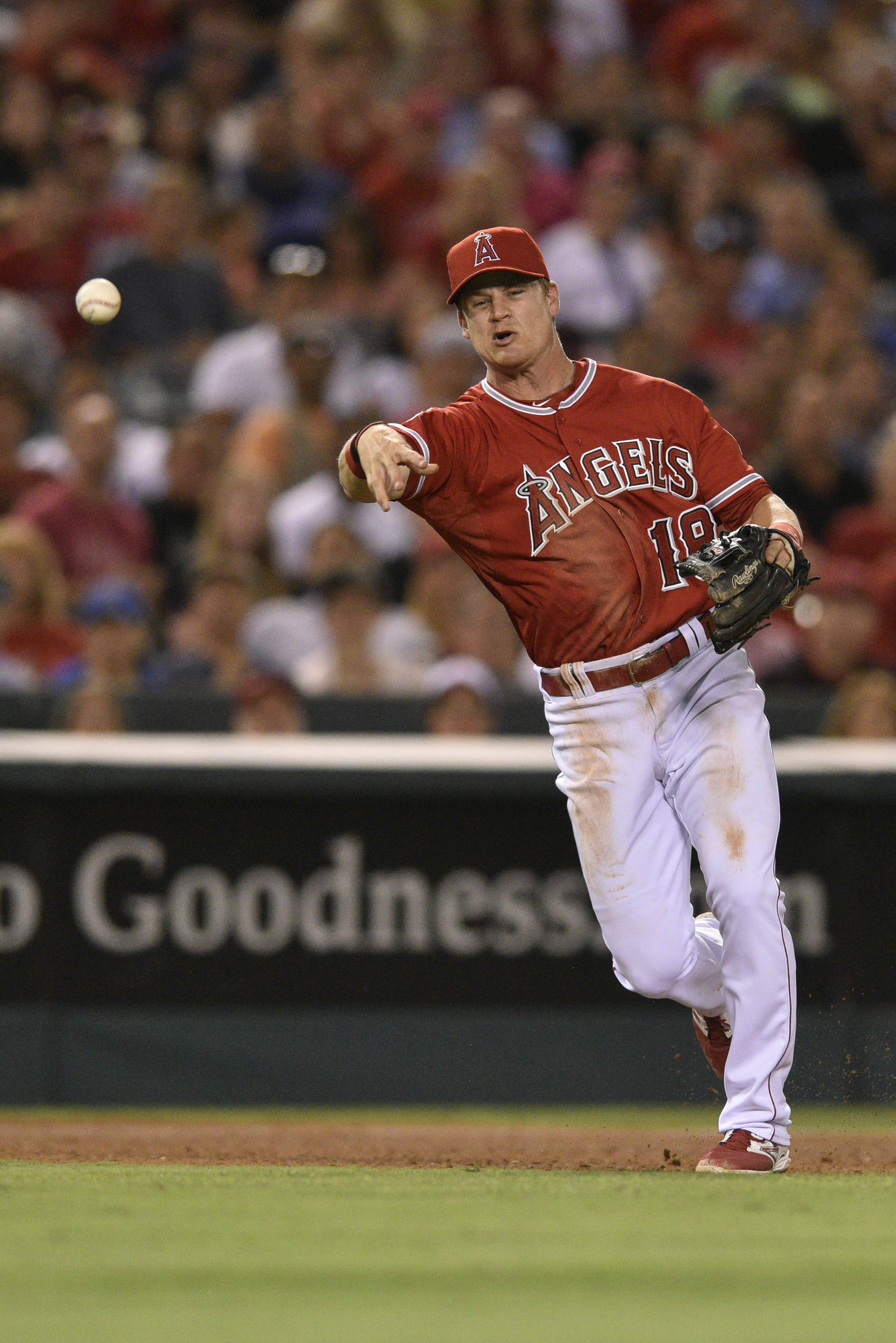 Any discussion of Beckham inevitably digresses to 2009, when the then 22-year-old posted 2.5 WAR in two-thirds of a season. In parts of five seasons since his breakout, he’s managed just 2.8 total WAR over 2,528 plate appearances. Last year, he struggled to a .226/.271/.348 line and -0.2 WAR, although he was much better with the Angels (.286/.328/.429) during a brief 61 plate appearance audition.
Beckham, now 28, is best viewed as a utility fielder. While the Angels did use him a few times at shortstop, he’s most successful at second and third base. He’s maintained strong contact rates throughout his career, but he’s never managed to produce much power after his rookie season. It’s worth noting that Chicago’s U.S. Cellular Field – where Beckham spent most of his career – is among the best offensive environments in baseball. In other words, the move to Los Angeles shouldn’t help his power.
Beckham’s performance in 2014 makes a trade unlikely. His $5MM projected salary is only affordable to a large market club in desperate need of middle infield depth. Incidentally, the Angels are perhaps the only team to fit that description. Howie Kendrick and David Freese have an intimate familiarity with the disabled list, which makes a player like Beckham a useful handcuff.
His presence on the roster, along with that of Grant Green, may give the Angels more confidence shopping Kendrick and Freese, both of whom have appeared in trade rumors. They’re free agents after 2015. Confidence should not be confused with reliance. While it’s possible Los Angeles could enter the season with Beckham, it’s unlikely they would plan to use him as a starter. The club is poised to contend in 2015, and Beckham’s bat would present a considerable hole in the lineup. If Kendrick or Freese are dealt, I expect the club to target infielders like Asdrubal Cabrera, Stephen Drew, or Jed Lowrie.
Other infielders who offer similar versatility include Emilio Bonifacio, Kelly Johnson, Ed Lucas, and Alberto Callaspo. Since they should all cost less than Beckham’s $5MM projection, the most likely outcome appears to be a non-tender situation. The going rate for 0.0 to 1.0 WAR middle infielders appears to be between $500K and $3MM. The Angels do need a player like Beckham, so he could be re-signed at a lesser rate. His relative youth assures that some club will hand him a bench role.
Free Agent Faceoff: Max Scherzer vs. Jon Lester
A look at this year’s market for free agent starting pitching reveals a group that is deep in quality options and also features a pair of prime-aged top-of-the-rotation arms in Max Scherzer and Jon Lester. This duo, represented by Scott Boras and ACES, respectively, is commonly believed to be the cream of the free agent crop, but which will be the better buy?
Few pitchers have been as dominant as Scherzer over the past two seasons. In that time, he’s pitched to a 3.02 ERA with 10.2 K/9, 2.5 BB/9 and a 36.5 percent ground-ball rate in 434 2/3 innings. His K/9 rate trails only Yu Darvish among qualified starters, and he grades out well according to ERA estimators FIP (2.79 — sixth) and SIERA (2.94 — eighth). In that two-year stretch, Scherzer leads qualified starters in ERA, FIP, xFIP, SIERA, K/9 and opponent batting average (.216), to name a few categories. He’s entering his age-30 season on the heels of a pair of All-Star appearances and a pair of top five finishes in the Cy Young voting — including his first Cy Young win in 2013. The 6’3″, 220-pound right-hander has cemented himselves among the game’s elite arms and is looking for a sizable payday, as evidenced by his rejection of a six-year, $144MM contract extension in Spring Training.
Lester is no slouch, however, as he ranks second to Scherzer in ERA (3.10) and FIP (3.19) among qualified free agent starters in that time. His SIERA mark, though a ways behind at 3.49, is still third-best over the past two seasons (Brandon McCarthy sits between them). Beyond that, Lester has been more of a workhorse in his career; he has reached the 200-inning mark in six of the past seven seasons, falling shy only in 2011 when he tossed 191 2/3 frames. Lester certainly keeps the ball on the ground more often than Scherzer, with a career ground-ball rate just under 47 percent and sitting at 43.7 percent over the past two seasons. Lester is also coming off the best platform season of any free agent starter, having pitched to a brilliant 2.46 ERA with 9.0 K/9, 2.0 BB/9 and a 42.4 percent ground-ball rate. He’s spent almost all of his career in the hitter-friendly AL East, whereas Scherzer has spent more time in a more favorable pitching environment (Detroit’s Comerica Park). Lester is a year older than Scherzer, however, and he’s thrown about 300 more innings in his big league career. He’s rumored to already have an offer upwards of $120MM from the Red Sox, and another possibly as large as $135MM from the Cubs, so the price tag figures to be substantial here as well.
In our free agent profiles, MLBTR’s Tim Dierkes predicted a seven-year contract for Scherzer while I personally went with six years for Lester, but it certainly wouldn’t be a shock to see a team guarantee Lester that seventh season. The above paragraphs are a mere snapshot of each pitcher, while the linked profiles offer a more in-depth look at the pair of aces. You can read over those to brush up on each pitcher’s strengths and weaknesses before making a vote below if you wish, but let’s get to the question at the root of this post.
Which starting pitcher would you rather sign?
-
Jon Lester 51% (15,356)
-
Max Scherzer 49% (14,562)
Total votes: 29,918
Arbitration Breakdown: Todd Frazier
Over the next few weeks, I will be discussing some of the higher profile upcoming arbitration cases. I will rely partly on my arbitration model developed exclusively for MLB Trade Rumors, but will also break out some interesting comparables and determine where the model might be wrong.
Todd Frazier enters his first year of arbitration this winter coming off a career year. In 660 PA, Frazier hit .273, stole 20 bases, smashed 29 home runs and collected 80 RBIs. The Reds’ third baseman has some solid pre-platform year numbers as well, having already accumulated 44 home runs and 155 RBIs before 2014, as well as 10 steals and a .249 average in 1186 PA. Several players have entered arbitration with similar numbers in recent years, but Frazier has somewhat of a leg up on many of them. As a result, my arbitration model projects him to get $4.6MM this winter. While I think that is more likely to be high than low, I do not think he is likely to miss this mark by much.
One promising comparable for Frazier could be Jason Heyward in 2013. He earned $3.65MM after 650 PA with 27 home runs and 21 stolen bases, along with 82 RBI and a .269 average. Basically, his platform season is a dead ringer for Frazier’s but Frazier’s pre-platform power numbers are better, as Heyward hit 32 homers (12 less than Frazier) and 114 RBIs (41 less than Frazier). Both had similar averages in their pre-platform years (Heyward hit .255), and Heyward stole 20 bases to Frazier’s ten. Frazier also had amassed 1186 pre-platform PA, to Heyward’s 1077. Since Heyward is so similar to Frazier in his platform year, yet Frazier clearly has him beat in his pre-platform years, it seems likely that Frazier will beat Heyward’s $3.65MM mark. The fact that salaries have grown over the last couple years also factors into Frazier’s higher projected salary.
CAA Sports, Frazier’s agency, could try to argue for Dan Uggla on the high side. Uggla earned $5.35MM in his first year of arbitration, although that was six years ago and thus less likely to be used as a comparable. Furthermore, Uggla was a second baseman, and Frazier is more apt to be compared to outfielders or other corner infielders. This being said, Uggla’s case is somewhat similar — he had 32 home runs and 92 RBI in 2008, so his power numbers bested Frazier’s 29 and 80 in his platform year, and he also had better numbers in his pre-platform years (58 HR and 178 RBI) than Frazier (44 HR and 155 RBI). Frazier had a slightly better platform-year average (.273 versus .260) though his .249 average over his pre-platform years was lower than Uggla’s .263 mark. Overall, Uggla’s $5.35MM number seems like the absolute ceiling of what Frazier can expect to earn.
A couple other players between Heyward’s $3.65MM and Uggla’s $5.35MM are possible comparables for Frazier as well. Pedro Alvarez agreed to a $4.25MM deal last year after having better power numbers, but a lower average and fewer steals than Frazier both in his platform and pre-platform years. Alvarez had 36 HR and 100 RBI in his platform year and 50 HR and 168 RBI in his pre-platform years. Alvarez’s averages, however, in his platform (.233) and pre-platform years (.237) fall short of Frazier’s .273 and .249, and he only had two steals both in his platform and pre-platform years, falling well short of Frazier’s 20 and 10 steals in each respective period. Overall, depending on how power gets treated relative to average and steals, Alvarez could be seen as a superior or inferior case to Frazier.
Another possibility is comparing Frazier to Mark Trumbo, who earned $4.8MM last season. Trumbo had a .234 average, but 34 HR and 100 RBI with five stolen bases in his platform year, and he hit .259 with 61 home runs and 184 RBIs with 13 stolen bases in his pre-platform years. Trumbo has better numbers across the board in his pre-platform years, but his platform year again asks the question of whether power or batting average and stolen bases are more important. Given all the factors that could eliminate Uggla — 2B vs. 3B, 2008 vs. 2014, etc. — from being a comparable to Frazier, Trumbo’s $4.8MM will in all likelihood be seen as the true ceiling for what Frazier can earn in arbitration.
My best guess is that Alvarez is seen as the most appropriate comparable for Frazier. Alvarez has something of the edge in power numbers while Frazier has the edge in the batting average/stolen base numbers, though there isn’t really a huge gap in any of the categories. Frazier could potentially earn a slight increase representing inflation over Alvarez if they are seen as similar, however. While the model projection of $4.6 is probably too high, I think the Reds third baseman will get relatively close to that number.
Scherzer, Lester, Shields And Career Pitch Counts
Agent Scott Boras has the prize of free agency in Max Scherzer, and Boras has taken to touting his client’s “pitching odometer.” Boras explained to Jon Heyman of CBS Sports, “[Scherzer] really has the [arm] of a 25 or 26 year old. This is like signing a 25 or 26-year-old pitcher.”
Perhaps reflecting what is found in Scherzer’s binder, Heyman cited the following stats:
“Did you know Scherzer, 30, has thrown 20,954 pitches, to 26,321 for Jon Lester and 29,461 for James Shields, the other top two free-agent pitchers in a top-heavy market containing three aces?”
Scherzer has thrown 8,507 fewer pitches than Shields and 5,367 fewer than Jon Lester. This difference may seem relevant, but in the end it will not matter. Instead, the focus should be on the trio’s birth date.
Context For Number Of Pitches Thrown
When looking at the total number of pitches, the zeros get in the way. For each game started, an ace will throw about 100 pitches. Most aces will start 30+ times a season, so each healthy ace-level pitcher can expect to throw at least 3,000 pitches in a season. The number could grow even higher with longer starts, more regular season starts and postseason games. Just using 3,000 pitches for a season and looking at each pitcher’s age, Boras’ difference can be explained by prorating the pitches thrown back to their age-29 season (Scherzer’s age at the end of last season).
Pitches prorated back to age-29 season
Scherzer: 20,954
Lester: 23,321
Shields: 17,461
The number of pitches thrown really just comes down to age. Scherzer’s arm had less mileage on it than Lester’s arm at the same age, but more than Shields. The difference of 8,500 pitches may seem like a ton, but for pitchers four years apart in age, the number is completely reasonable.
Pitches Thrown And Likelihood Of Next-Season DL Stint
Now, is there a magic number of pitches when a pitcher’s arm just quits being healthy? Is 25,000 pitches the point? 30,000? My study finds that no magic number exists. Actually, the opposite is true.
I looked at the career pitches thrown by pitchers from 2001 to 2012, then put the pitchers into 3,000-pitch groups and to find their chances of a DL stint next season. Here are the DL percentages for pitchers as they put more mileage on their arms. (Note: 39% of all established pitchers will go on the DL at some point the next season. (n) refers to the number of pitcher-seasons in the sample.)
# of pitches (n): DL rate, average # of DL days per pitcher
6000-8999 (674): 36%, 24
9000-11999 (470): 39%, 26
12000-14999 (324): 40%, 29
15000-17999 (225): 45%, 33
18000-20999 (179): 37%, 29
21000-23999 (111): 42%, 26
24000-26999 (99): 39%, 24
27000-29999 (88): 39%, 27
30000-32999 (71): 45%, 38
33000-35999 (47): 34%, 27
36000-38999 (28): 50%, 21
39000-41999 (26): 38%, 27
> 42000(79): 37%, 23
There are some increases and decreases, but generally the DL rate hovers around the expected 39%.
Here are the numbers grouped into 9,000-pitch blocks.
# of pitches (n): DL rate, average # of DL days per pitcher
6000-14999 (1468): 38%, 26
15000-23999 (515): 42%, 30
24000-32999 (258): 41%, 29
33000-41999 (101): 40%, 25
>42000 (79): 37%, 23
It may not seem intuitive that pitchers will have a smaller DL chance as they throw more, but they do. At 24,000 pitches, a pitcher has been productive and healthy enough to be in the league around eight seasons. Besides just the number of DL stints, the time spent on the disabled list is just as important. The pitchers could go on the DL and stay there because of a major injury. If high-pitch pitchers were staying on the DL longer, the average number of days would be seen going up. Instead, they decline.
Pitches Thrown And Expected Future Innings Pitched
The three pitchers in question — Scherzer, Lester, and Shields — are each looking for a multi-year deal. How many innings can teams expect out of these pitchers in the future? Looking at the pitches a pitcher has thrown in his MLB career from 2001 to 2009, here are the innings thrown in the next five seasons.
Pitches (n): IP
6000-8999: (468): 302
9000-11999: (364): 324
12000-14999: (249): 354
15000-17999: (176): 398
18000-20999: (129): 426
21000-23999 (86): 427
24000-26999 (81): 446
27000-29999 (68): 372
30000-32999 (45): 430
33000-35999 (32): 381
36000-38999 (17): 557
39000-41999 (18): 508
> 42000 (68): 476
And now the same data grouped into a few large groups.
Pitches (n): IP
6000-14999 (1081): 322
14000-23999 (391): 414
24000-32999 (194): 416
33000-41999 (67): 460
> 42000 (68): 750
Just because a pitcher has a ton of mileage on his arm doesn’t mean he is about to break down. He could continue to throw for years to come. The more pitches a pitcher has thrown, the better the chances he continues to throw. The three pitchers in question have passed the threshold of being healthy and good.
2015 DL Chances For Scherzer, Lester, Shields
Every pitcher (including these three) will eventually break down, we just don’t know when. An injury risk can be assigned to every pitcher. I have used a DL chance formula to determine the chance a pitcher will end up on the DL with accurate results. Using the formula, here their DL chances for 2015.
Name: Scherzer, Lester, Shields
Age: 29, 30, 33
GS (’12 to ’14): 98, 98, 101
DL Stints (’12 to ’14): 0, 0, 0
DL Chance: 34%, 35%, 38%
These three pitchers each have health (no recent DL stints) and a history of being able to make about 33 starts per season on their side. The only difference among them is age, which makes Scherzer the least likely to end up on the DL.
Boras continues to mention Scherzer’s pitching odometer as an advantage over Lester and Shields. However, the number of pitches thrown is not indicative of future injury. A high number shows the pitcher can hold up to the grind of being able to successfully throw for full seasons. The main issue between the three pitchers is age. Scherzer is four years younger than Shields. Scherzer’s body may still be able to hold up a bit better than the other pair, but they are still some of the healthiest pitchers in the league. The debate about the trio’s durability should begin and end with age.
Free Agent Profile: Torii Hunter
At 39 years of age, Torii Hunter is no longer the player he once was. But his reliable bat and clubhouse presence are sure to lead to plenty of interest.
Pros/Strengths
As he has throughout his career, Hunter hit in 2014. His 111 OPS+ (.286/.319/.446) marked the ninth consecutive season in which he has been at least 10% above league average in overall batting production (per that metric). Since becoming a regular in 2001, Hunter has only once (barely) dropped below the mean.
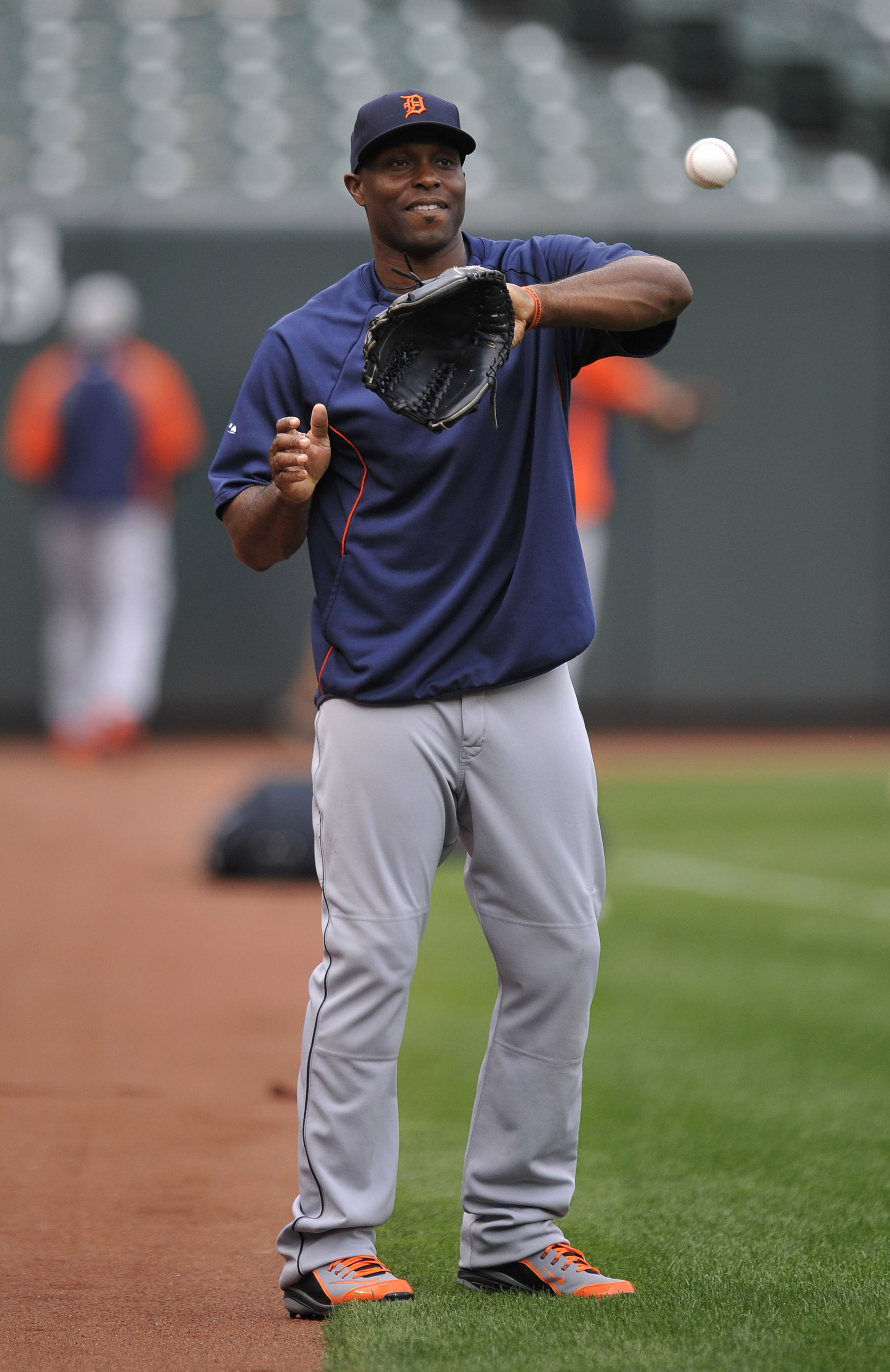
Neither is there any particular reason to think that a cliff is nearing. Hunter’s walk rate has been down sharply in the last two seasons — around 4% after posting numbers that were as much as twice that rate in the not-so-distant past — but he has also driven down his strikeout rate to a career-low 15.2%. And the contact is still good: Hunter posted a personal second-best 21.3% line drive rate last year and put the ball on the ground right at his career average. Bat speed and reflexes do not appear to be a problem; pitchers threw Hunter fastballs 57.6% of the time last year, the lowest percentage of his career.
That remarkable consistency is equaled by Hunter’s durability. Since the start of the 2007 campaign, Hunter has seen just one DL stint (for five weeks owing to a groin strain back in 2009). He has had his share of rest in recent years, averaging 142 games played over the last three seasons, but has made at least 584 trips to the plate in each of those.
It might reasonably be expected that teams will look beyond the numbers in determining their interest level in Hunter. He has 18 MLB seasons under his belt, and is widely characterized as a desirable clubhouse leader.
Cons/Negatives
Defensively, Hunter had already regressed from a solid center fielder to a solid right fielder. But over the last two years, defensive metrics have soured considerably on his work in right. Defensive Runs Saved, which judged Hunter a +15 contributor in 2012, has moving to -10 and then -18 since. Ultimate Zone Rating noted a less pronounced fade in 2013, but concurred with DRS on Hunter’s overall value last year. The issue, per UZR’s assessment, is clear: while Hunter’s arm and error propensity are approximately average, his range has disappeared.
At the plate, one could quibble and note that Hunter’s output last year was at the bottom range of his career range. While it would be a stretch to say that portends a precipitous decline – after all, he was still produced within the bounds of his career norms and did so on a career-average BABIP – that fact does, perhaps, dampen the notion that he might return to his 2012 levels (.313/.365/.451, albeit on a .389 BABIP).
Likewise, Hunter’s counting stats are down from his peak. He is no longer a threat to steal twenty bags or to hit 25-30 home runs. On the other hand, the loss of speed is not surprising, and Hunter still grades out well on the bases. And as for power, Hunter’s decline has tracked a more general league trend, and he still put up a .160+ ISO over each of the last two years and has never hit less than 16 long balls in a full season.
Personal
Hunter was born and raised in Arkansas, going straight from Pine Bluff to the Minnesota Twins after he was chosen in the first round of the 1993 draft. He is one of only two players from the first round of that draft still active in the majors, the other being first overall pick Alex Rodriguez.
Hunter makes his offseason home in the Dallas-Forth Worth area with his wife, Katrina. As he told MLB.com’s Jason Beck, the Hunters are already empty-nesters. Several of his sons excel at sports as well, enrolling in colleges on football scholarships, and Hunter says that he enjoys traveling to watch them in action.
Market
While the Tigers are not interested in a reunion at this point, recent reports suggest that as many as ten teams have already shown interest in the Reynolds Sports Management client, including the Royals, Cubs, Giants, Rangers, Blue Jays, and Mariners.
Then, of course, there are the Twins, Hunter’s former club. The veteran says he has had several conversations with Minnesota GM Terry Ryan. He has also indicated that he wants a regular role on a legitimate contender, and it would be difficult to cast the Twins in that light. Either way, having already earned over $160MM during his outstanding career, he seems unlikely to view the highest bid as a trump to personal preference.
The corner outfield market contains several players in the same general market niche as Hunter, though each obviously has their benefits and drawbacks. With Michael Cuddyer going to the Mets, teams looking for veteran production down the lines can also look to Alex Rios and Michael Morse.
It bears noting that Hunter has almost exclusively played right field since he moved off of center. He has spent a mere 119 1/3 frames patrolling left, all before he became a fixture in the Twins’ lineup. With his range being the major question, and his arm still playing at the big league level, it seems likely that he will be targeted primarily by clubs having (or willing to make) an opening on that side. As the list of teams with apparent interest would indicate, Hunter’s most obvious fit is with an American League club that plans to utilize some manner of platoon situation for its designated hitter slot, as he could benefit from a reduced defensive load as he enters his age-39 season.
Expected Contract
Hunter should have several appealing situations to ponder. To some extent, of course, the breadth of interest relates to the fact that he figures to be available on a short-term deal at a palatable rate. For teams looking to lock in a decent level of production at the plate for the short term, while keeping future payroll flexibility, Hunter makes for a highly appealing option.
Multiple years are certainly within reach if Hunter is interested, though he may not be – and may see somewhat reduced interest and lower-AAV offers if he does pursue that route. Cuddyer’s two-year, $21MM deal sets the market at the corner, and carries an even higher implied valuation since it required the Mets to sacrifice the 15th overall pick in the upcoming draft. (Applying a 3x multiplier to the slot value of that pick last year results in a rough $7.5MM valuation of New York’s added cost. As discussed by Jeff Sullivan of Fangraphs, however, other means of estimation might put the value in the $10MM to $15MM range.)
Ultimately, assuming Hunter picks amongst the clubs pushing the top of his market, I think he will land a deal in the range of two years and $22MM. If he ultimately falls shy of that mark, it could well be because he prefers a one-year deal or takes a discount for one reason or another.
Arbitration Breakdown: Greg Holland, Aroldis Chapman, Kenley Jansen, Steve Cishek
Over the next few weeks, I will be discussing some of the higher profile upcoming arbitration cases. I will rely partly on my arbitration model developed exclusively for MLB Trade Rumors, but will also break out some interesting comparables and determine where the model might be wrong.
Four relievers enter their second year of arbitration eligibility this winter, with a chance to collectively make a huge impact on that market. Each will influence each other’s salary as they did last year, and will influence many players that follow in the coming years. Greg Holland, Aroldis Chapman, Kenley Jansen, and Steve Cishek each became full-time closers during their second full seasons in 2012, and have dominated hitters since.
Becoming a closer so early was a rare feat just a few years ago. Teams used to give three-year or four-year deals worth upwards of $10 million per year for an “established” closer. Players like Francisco Cordero, Joe Nathan, Mariano Rivera, Brad Lidge, Francisco Rodriguez, Rafael Soriano, and Jonathan Papelbon signed such deals that began between 2008 and 2012, and few of those worked out. As I wrote several years ago, teams were paying far more per WAR for relievers than any other position on the diamond by far. Obviously the measurement of WAR is tricky, but regardless of how it is measured, it was clear that allocating $10 million to a guy to throw 60 innings three years down the line was not working out for many teams.
Fortunately, something happened that gave a number of teams the opportunity to change their ways. An onslaught of talented young pitchers emerged onto the scene with incredible fastballs, and many were given the opportunity to be closers quickly. Craig Kimbrel is actually from the same service class as these four players but he signed a four-year deal last winter. However, that makes five teams who quickly established a young arm in the closing position and had some success with it. Of course, now that these guys have some experience, the price has gone up.
Holland had the best year of the foursome, with a 1.44 ERA and 46 saves. Jansen was no slouch with a 2.12 ERA and 44 saves, Chapman’s ERA was just 2.00 and he had 36 saves, while Cishek had 39 saves but a more pedestrian 3.17 ERA. As a result, the model predicted a $4.62MM raise for Holland, $3.5MM for Jansen, $3.1MM for Cishek, and $3.05MM for Chapman. The model weighs heavily on saves since the market for relievers has done so in recent years, so it has unsurprisingly ranked their raises by saves. Holland’s raise is actually subject to “The Kimbrel Rule,” which states that a player cannot beat the record for his role and service time by more than $1MM, so his projected raise is limited to $4.275MM (topping Francisco Rodriguez’s $3.275MM raise from 2007 by $1MM), which gives him a $8.95MM projected salary.
What makes these guys even more unique is the fact that so few teams have gone year-to-year in arbitration with their closers. Jason Motte, Jonathan Broxton, and Carlos Marmol have each gotten two-year or three-year deals in recent years. Obviously Kimbrel’s four-year deal meets those criteria as well.
In fact, the only closer with 30 saves in his platform season, 45 saves in his pre-platform seasons, and an ERA under 3.50 in the last five years who did get a one-year deal during his second year of arbitration was Jonathan Papelbon. He got a $3.1MM raise from the Red Sox in 2010 after putting together 38 saves and a 1.85 ERA. Before him, Francisco Rodriguez’s 2007 raise of $3.275MM is a possible clue (1.73 ERA and 47 saves), as could be Jose Valverde’s $2.7MM raise in 2008 (2.66 ERA, 47 saves), or Chad Cordero’s $2.05MM raise in 2008 (3.36 ERA, 37 saves). However, those last three cases are very old and are less likely to be considered in an arbitration case.
All four of the closers in question will basically have Jonathan Papelbon’s $3.1MM raise and whatever each other get as a reference. I think that there is a strong possibility that Chapman and Cishek do get right around their projected numbers, which are within $50K of Papelbon’s raise. I could see Chapman’s reputation pushing him a little higher, though. And I’m also inclined to agree with the model that Kenley Jansen and Greg Holland, with similar ERA’s and more saves than Papelbon, plus a few years of salary inflation behind their cases, are likely to top Papelbon’s raise. Jansen’s $3.5MM raise seems about right, and while I think the model’s estimate for Holland of a $4.62MM raise strikes me as unlikely, a Kimbrel rule-adjusted $4.275MM raise sounds reasonable.
If I had to guess, I think that these four guys will follow the model well. However, I think that they will either all collectively make the model look good, or the first guy will make it look bad, and the following three guys to sign will make it look worse as they affect each other’s cases. Without many historical comparables that look anything like this foursome, they will all become comparables for each other. Unless their teams follow the Braves and ink a multi-year deal, I would not be surprised if these four guys affect each other’s 2016 salaries as well.
Offseason Outlook: Kansas City Royals
The 2014 Royals went from playoff hopeful to Wild Card winners to a Cinderella team that made it all the way to Game 7 of the World Series. While the Giants ultimately prevailed, the team’s success brought about a baseball renaissance in Kansas City, leading to passionate and raucous crowds at Kaufman Stadium throughout the entire postseason. Now, GM Dayton Moore and his staff must determine how best to position the team for a repeat of that success despite several escalating salaries and the departures of key free agents.
Guaranteed Contracts
- Omar Infante, 2B: $25.25MM through 2017 (including buyout of 2018 option)
- Jason Vargas, LHP: $25MM through 2017
- Alex Gordon, LF: $12.5MM through 2015
- Jeremy Guthrie, RHP: $12.2MM through 2015 (including buyout of 2016 option)
- Wade Davis, RHP: $7MM through 2015
- Salvador Perez, C: $3.75MM through 2016
- Alcides Escobar, SS: $3.5MM through 2015 (including buyout of 2016 option)
Arbitration Eligible Players (Service time in parentheses; projections via Matt Swartz)
- Jayson Nix, INF (5.055): $950K projected salary
- Greg Holland, RHP (4.028): $9.3MM
- Aaron Crow, RHP (4.000): $2MM
- Eric Hosmer, 1B (3.146): $5.2MM
- Mike Moustakas, 3B (3.111): $2.7MM
- Tim Collins, LHP (3.096): $1.5MM
- Jarrod Dyson, OF (3.088): $1.3MM
- Danny Duffy, LHP (3.083): $2.6MM
- Lorenzo Cain, OF (3.074): $2.3MM
- Louis Coleman, RHP (2.159): $700K
- Kelvin Herrera, RHP (2.157): $1.5MM
- Non-tender candidates: Nix, Coleman
Free Agents
- James Shields, Billy Butler, Nori Aoki, Josh Willingham (retiring), Jason Frasor, Luke Hochevar, Scott Downs, Raul Ibanez
Other payroll obligations
- $1MM owed to Bruce Chen for buyout of 2015 option
The Royals opened the 2014 season with a payroll just over $92MM, and they’re already at $52.75MM in 2015 simply by exercising their option on Wade Davis and buying out the option on Billy Butler. That figure doesn’t include arbitration raises for any of the many arb-eligible players, nor does it include pre-arbitration players to round out the roster. Going off Matt Swartz’s projections, arbitration alone figures to boost the Royals up to $81MM in guarantees — a figure that would jump into the mid-$80MMs when factoring in pre-arb salaries.
There isn’t much room between that projection and the Opening Day payroll of 2014, but of course, there will be extra funds to spend thanks to the team’s deep postseason run. Andy McCullough of the Kansas City Star wrote recently that the payroll could surpass $100MM for the first time, meaning GM Dayton Moore could have a fairly well-stocked war chest for the offseason. McCullough reported that room for one fairly significant addition does seem to exist.
Perhaps the biggest area of concern for the Royals will be in the starting rotation. Although the team is said to have a strong desire to retain James Shields, odds are that another team will outbid the Royals by a fairly significant margin. That would leave the club with a rotation consisting of Yordano Ventura, Jason Vargas, Danny Duffy and Jeremy Guthrie. The team does fancy Brandon Finnegan an eventual starter despite his key role in the postseason bullpen, but dropping him right into the fire from day one next season might be ambitious. He threw just 40 innings between the Royals (minors, regular season and postseason) plus another 105 2/3 innings at TCU last year.
The free agent market features a number of second-tier options at starting pitcher, and though the top names among that second tier — Brandon McCarthy, Francisco Liriano, Kenta Maeda and old friend Ervin Santana — could command average annual values north of $12MM on multi-year commitments, that seems to be within the Royals’ means. Indeed, McCullough specifically listed Santana as a target for the Royals when writing about the payroll, and there’s said to be mutual interest between the two sides. Of course, if Moore doesn’t want to spend most of his available money in one place, he could look to more affordable arms like Jason Hammel or try to catch lightning in a bottle by signing Brett Anderson or Brandon Morrow in hopes of getting 150+ innings of strong production should either finally remain healthy.
An alternative solution is the trade market. Reports have already indicated that the Royals will at least listen on some names they’d likely be loath to move, including Alex Gordon, Eric Hosmer and Mike Moustakas. However, in my eyes, the clearest area for the team to shed some payroll is by breaking up the core of the “big three” relievers that gained so much notoriety in this year’s postseason. Greg Holland could stage a legitimate argument for being the game’s best closer, but he’s also projected to earn a whopping $9.3MM next season — a mark that represents about 10 percent of Kansas City’s Opening Day payroll from 2014. Combining to pay Holland and Davis $16.3MM seems a luxury that is too much for Kansas City to afford. However, with two years of team control remaining, Holland will be an attractive asset even with his quickly escalating salary and could fetch some strong young talent in a trade. Davis could slot into the closer’s role, with Herrera becoming the primary setup man. Given Davis’ club options for 2016 ($8MM) and 2017 ($10M), the additional saves won’t drive up his price tag through arbitration as they would Holland’s. Moore has stated that he thinks the team can afford both, however, and the Royals are reportedly even looking to add to their bullpen, so that speculation may be far-fetched, but it does carry some logic, in my mind.
Around the infield, the Royals are set at nearly every position. Catcher Salvador Perez is one of the game’s best bargains, Hosmer will look to return to his 2013 offensive production, Omar Infante and Alcides Escobar will form the double-play tandem, and Mike Moustakas will hope to build off a sound postseason in which he flashed legitimate power. It’s worth debating whether or not the team could look to upgrade over Hosmer and Moustakas, each of whom has disappointed to some level (Moustakas in particular, at the plate at least), but both have been looked at as cornerstone pieces in the past and both possess significant upside that makes it difficult for Kansas City to go in another direction. At the very least, a right-handed platoon option that can handle either corner infield spot seems like it would be a wise acquisition.
In the outfield, Alex Gordon may be baseball’s best left fielder, and the team can either choose to lean on Lorenzo Cain and Jarrod Dyson in center/right or platoon the two and pursue an external right fielder. A reunion with Aoki, to whom they’ve already been connected, can’t be ruled out. The Royals are also reportedly interested in Torii Hunter, and had been listed as a serious suitor for Cuban slugger Yasmany Tomas, though he is reportedly off the market. An additional (and completely speculative) target could be Justin Upton, who’s owed $14.5MM next year before hitting the open market. Moore knows the Atlanta brass well, and Upton would add some legitimate power (at the expense of defensive value). And, he could net the team a draft pick next winter if he signed elsewhere. However, Atlanta would ask for some high-upside names, likely pitchers, and if the Braves want a Major League ready starter, as they got for Jason Heyward, the very mention of the names “Duffy” or “Ventura” would likely end those talks before they began in earnest.
Another question for the Royals will be how to replace longtime DH Billy Butler, who signed a three-year, $30MM contract with the A’s last week. Kansas City could look to Mike Morse as a DH or attempt to buy low on Corey Hart or Kendrys Morales if the preference is to avoid spending big on designated hitter (which would explain Butler’s departure). They could also elect to use DH as a spot to give Gordon, Hosmer, Moustakas and a potential free agent outfield addition some rest (particularly if K.C. ends up adding an older veteran like Hunter). In the conference call discussing Butler’s departure, Moore told reporters, including MLBTR’s own Zach Links, that he was open to either scenario — a dedicated DH or a rotation to keep multiple regulars fresh.
One final piece for Kansas City could be a bullpen arm. Free agent Jason Frasor pitched well in Kansas City after being acquired from Texas and will leave a void in bridging the gap from starter to closer. A reunion could make sense, as he figures to land a one-year deal at a modest cost and knows the team well. Otherwise, I’d peg Kansas City as a potential landing spot for Pat Neshek, Jason Grilli and other solid arms that won’t come with an exorbitant annual value.
In the end, the Royals should be able to boost payroll above $100MM this offseason, but the large arbitration raises due for their core players will prevent them from spending too freely. Moore and his staff could very well look to the trade market to alleviate some of that pressure. The cost-controlled core that is in place should provide the foundation for another run at an AL Central title, so long as the team is able to replace the value lost by Shields’ seemingly inevitable departure. Significant steps forward from Hosmer or Moustakas may take care of that on their own, but Kansas City would be wise to supplement the roster so that those steps forward would be a bonus rather than a necessity.
Offseason Outlook: San Francisco Giants
After missing the playoffs in 2013, the Giants added yet another chapter to the “Even Year” saga by capturing their third World Series victory in the past five seasons. They’ll have plenty to address in the offseason, however, with several key free agents coming off the books and a need in the rotation.
Guaranteed Contracts
- Buster Posey, C/1B: $146.5MM through 2021 (including buyout of 2022 option)
- Hunter Pence, RF: $74MM through 2018
- Matt Cain, RHP: $67.5MM through 2017 (including buyout of 2018 option)
- Madison Bumgarner, LHP: $29.5MM through 2017 (including buyout of 2018 option)
- Angel Pagan, CF: $19MM through 2016
- Tim Lincecum, RHP: $18MM through 2015
- Tim Hudson, RHP: $12MM through 2015
- Javier Lopez, LHP: $9MM through 2016
- Marco Scutaro, 2B: $6MM through 2015
- Santiago Casilla, RHP: $6MM through 2015 (including buyout of 2016 option)
- Jeremy Affeldt, LHP: $5MM through 2015
- Joaquin Arias, INF: $1.45MM through 2015
- Daniel Carbonell, OF: $400K through 2018 (salary increases upon promotion to Majors)
Arbitration Eligible Players (service time in parentheses; projections via Matt Swartz)
- Gregor Blanco, OF (4.164): $3.5MM projected salary
- Yusmeiro Petit, RHP (4.016): $1.6MM
- Brandon Belt, 1B (3.128): $3.4MM
- Travis Ishikawa, 1B (3.124): $800K
- Brandon Crawford, SS (3.094): $2.5MM
- Guillermo Quiroz, C (3.013): $500K
- Hector Sanchez, C (2.166): $1MM
Free Agents
The early portion of the Giants’ offseason focused largely on the team’s efforts to retain Pablo Sandoval, but the news came in on Monday that Sandoval will sign a five-year pact with the Red Sox, and he won’t be alone. Also going to Boston is one of the primary free agent alternatives to Sandoval — Hanley Ramirez. That leaves the Giants with limited options to address third base on the free agent market and leaves the team with holes in both its lineup and pitching staff.
The Giants have several spots on the diamond figured out; Buster Posey will share time with Andrew Susac behind the dish and also spend some time at first base along with Brandon Belt. The double-play tandem figures to be composed of standout defender Brandon Crawford and sophomore Joe Panik. They’ll form a defensively sound middle infield, though neither brings an overwhelming amount of offensive upside to the table. A healthy Angel Pagan should man center field in San Francisco, and Hunter Pence, of course, will be in right field.
The Giants will have to address third base and look for a new left fielder with Michael Morse a free agent as well. In Morse and Sandoval, San Francisco lost two of its more potent bats, so there should be a great deal of emphasis on replacing that offense. Rumored options in the wake of Sandoval’s departure include Chase Headley and Cuban slugger Yasmany Tomas (who has worked out for the Giants at third base but is probably better suited to play left field). Headley would provide shutdown defense at the hot corner and is a familiar option given his extended tenure with the Padres. Tomas, however, carries more offensive upside, as he’s said to possess 70-grade power and could provide 25-homer pop even in the pitcher-friendly confines of AT&T Park. If the Giants are looking for free agent alternatives in the outfield, a reunion with Melky Cabrera could provide some punch to the lineup, and Colby Rasmus brings some pop to the table with the ability to play center field should Pagan struggle with his health again. Of course, Rasmus is coming off a down season, and the Giants may want more certainty as they look to return to the World Series.
The trade market offers a number of alternatives. The Giants probably don’t have the MLB-ready pitching prospects that the Braves are believed to be seeking for Justin Upton, but they could look to Michael Saunders and Matt Joyce as low-cost upgrades. If they care to set their sights a bit higher, Jay Bruce is said to be attainable, though Cincinnati’s asking price will be significant. The Red Sox, of course, have a bounty of outfielders available and could send anyone from a group of Yoenis Cespedes, Shane Victorino, Allen Craig and Daniel Nava to San Fran.
A trade for a third base replacement may be a bit easier to come by, with names like Luis Valbuena, Will Middlebrooks, David Freese, Pedro Alvarez and Casey McGehee all potentially available. I speculated at one point that Trevor Plouffe could be a trade candidate as well, and one would think that the rebuilding Twins would indeed be willing to listen as his price increases and Miguel Sano looms.
While left field and third base are now obvious holes to be filled, another area of need for the Giants is in the rotation. Madison Bumgarner’s October heroics aside, the Giants have a lack of stability within the rotation. Former aces Matt Cain and Tim Lincecum are wild cards, to varying extents (Lincecum more so than Cain), as Cain is returning from surgery to remove bone spurs from his pitching elbow, while Lincecum’s past dominance has evaporated (4.76 ERA from 2012-14). Jake Peavy and Ryan Vogelsong are free agents, and Tim Hudson will turn 40 next July.
With that level of uncertainty and the loss of one potential cornerstone already in the books, perhaps it should come as no surprise that the Giants were recently connected to Jon Lester. The Giants likely have the financial means to pursue any of the “Big Three” starters, with Max Scherzer and James Shields posing legitimate options. However, the second tier of this year’s free agent class runs deep, and a pitcher-friendly ball park pairs well with a 2014 World Championship when it comes to luring free agents. The Giants could look to any of Brandon McCarthy, Ervin Santana, Francisco Liriano (the cousin of Santiago Casilla) or perhaps Japanese star Kenta Maeda (assuming he is posted). A reunion with Peavy can’t be ruled out after he pitched exceptionally well for them in the regular season following a July trade.
As is the case with the trade markets for both left fielders and third basemen, many names figure to be kicked around by the Giants’ brass. In Cincinnati, a trio of starters is said to be available — Mat Latos, Mike Leake and Alfredo Simon — and the Giants are well equipped to absorb the salary of a bigger fish like Cole Hamels. If the two sides can look past the divisional implications, Ian Kennedy is a good fit as well. Other potentially available names such as Jordan Zimmermann, Doug Fister and Scott Kazmir may require San Francisco to part with Major League ready help, as their current clubs are clear contenders, making them a trickier fit.
The Giants already possess a strong bullpen, with veterans Casilla, Jeremy Affeldt and Javier Lopez all coming back into the fold. Jean Machi enjoyed a solid season in the bullpen, and George Kontos was successful in about a half-season’s worth of innings. And, for all of Hunter Strickland‘s postseason struggles, his 100 mph heater figures to be back in the mix as well. The Giants seem likely to take a look at retaining the popular Sergio Romo but could pursue another outside option to solidify the bunch. I’d think another right-handed arm would be on the wish list, with Lopez and Affeldt slinging from the left side, and some potential free agent targets include Luke Gregerson and Pat Neshek. The team reportedly plans to use Tim Lincecum in the rotation, but a somewhat more creative option raised by Fangraphs’ Dave Cameron in August was to give the ninth inning to Lincecum. As Cameron noted, Lincecum has had prolonged struggles with men on base throughout his career, and giving him the standard “ninth inning only” closer’s role would allow him to enter with a blank slate every outing, when his numbers have been significantly better. That’d also allow manager Bruce Bochy to use his top relievers in higher-leverage situations with the game on the line in other innings — a strategy that served him well in the playoffs this season.
Another somewhat outside-the-box suggestion for the team (though it’s certainly been suggested before) would be to install Susac as the full-time catcher with Posey becoming a full-time first baseman or third baseman, although that could potentially leave Belt without a position. He could, of course, be appealing to other clubs in trades that could help fill a different need, however. Susac does come with starting catcher upside, and a move from behind the plate could help Posey reach new career-highs in plate appearances (currently just 610) and games played (148). Of course, there would be certain defensive questions raised with a slide to third base, but filling an existing hole with current roster members could allow the team to spend bigger on an impact free agent such as Tomas or Lester.
The Giants have many routes they can take now that the Sandoval saga has come to an end. Though they’re the defending World Champions, they’re getting hit hard by free agency and unquestionably have holes to fill. Still, this is a team with a legitimate ace atop its rotation, some strong relief options in place and a perennial MVP candidate in Posey. The Giants had a $149MM payroll to open the 2014 season which only rose with the acquisition of Peavy, and they’re flush with cash following postseason revenues and a World Series victory. They were reportedly prepared to pay Sandoval in the range of $95MM over the next five seasons, and you can be certain that those dollars will be reallocated to address other roster needs.
Non-Tender Candidate: Mitch Moreland
Most Rangers players struggled or were injured in Texas’ disastrous 2014 season, and first baseman Mitch Moreland was no exception. The lefty hit .246/.297/.347 in 184 plate appearances through early June, then had ankle surgery and missed the rest of the year. Now, he’s heading into his second season of arbitration eligibility with a projected $2.8MM salary on the horizon.
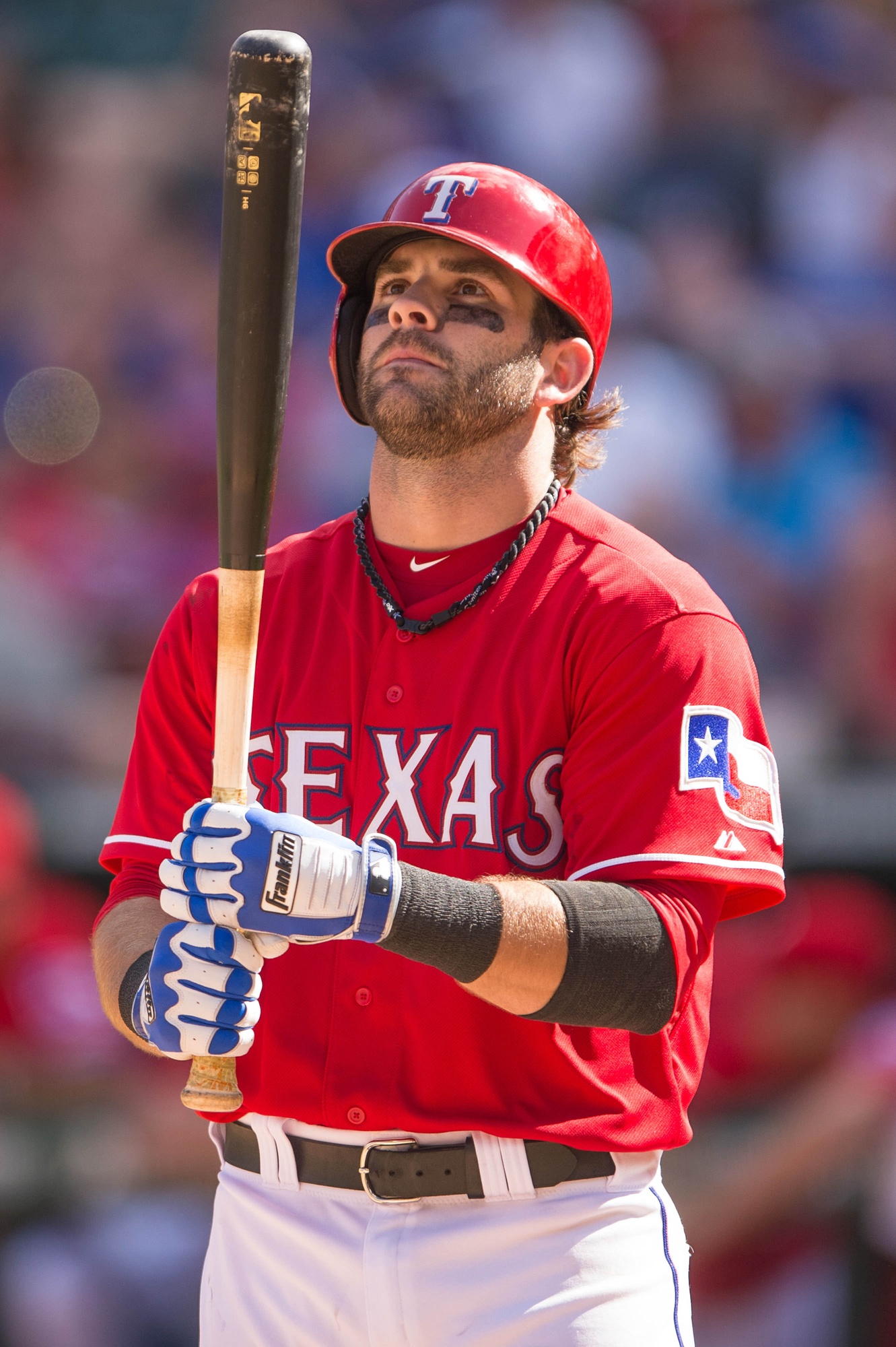 Moreland is now 29 and is on the fringes, at best, as a starting first baseman. Since a partial season as a rookie in 2010, he hasn’t posted an OPS+ above 106 or an OBP above .321, and as a slightly above average defensive first baseman or below average corner outfielder, he doesn’t provide much value with the glove. Even before his injury, he might have been an acceptable choice as a starter only for a team like Texas that had plenty of stars elsewhere in its lineup.
One of those stars is Prince Fielder, who should return from his own injury to take over first base in Texas next year. There’s also limited room for Moreland in the outfield — Shin-Soo Choo will be in right, Jake Smolinski hit well down the stretch last season and could get playing time in left, and Moreland has played only sparingly in the outfield since 2011 anyway. That leaves DH, where the Rangers can be flexible in finding an alternative to Moreland. They’re likely to pursue a DH upgrade this offseason, possibly on the trade market. Another possibility for the Rangers might be to acquire Justin Upton and bump Smolinski to DH.
Moreland posted a wRC+ of 76 last season; every AL team but two (the Indians and Mariners) got better production from their designated hitters. Of course, Moreland’s ankle might partially explain his struggles, and some rebound is likely. Steamer projects Moreland will post a wRC+ of 99 in 2015, which would be more palatable, but still isn’t a figure to which a team should aspire at DH, even at a relatively low price.
If the Rangers don’t acquire outfield or DH help this offseason, however, or if they don’t acquire a left-handed hitter for one of those positions, perhaps they could consider re-signing Moreland at a reduced rate, whether or not they non-tender him first. Smolinski’s breakout in a month’s worth of games in his MLB debut was unsustainable, and entrusting him with an entire starting job, whether that’s DH or left field, without a viable backup plan seems too ambitious. 24-year-old Ryan Rua offers a potentially decent alternative, but like Smolinski, he’s right-handed. Then there’s Michael Choice, who’s also a righty and had a disastrous rookie season.
Giving a fair amount of playing time to some combination of Smolinski, Rua and Choice seems like a good idea for the Rangers, but having reinforcements at DH and in the outfield seems like a good idea as well. Moreland had a poor season in 2014, but he’s experienced and left-handed, so it wouldn’t be a surprise to see him return to the Rangers in 2015 one way or another. A tender is therefore a possibility.
The Rangers’ decision needs to be made in early December, however, and given Moreland’s struggles last season, the Rangers might feel it’s unnecessary to commit nearly $3MM without first exploring other possibilities. A trade before that seems unlikely, since Moreland isn’t an obvious upgrade for many teams at first or DH. Perhaps if he becomes a free agent, a team like the Yankees might be a fit — Moreland could pick up at bats against righties while occasionally playing first base, DH and right field. The Rangers could also wait until later in the offseason to decide what to do with Moreland, to ensure that Fielder is fully ready and to see if an injury in another organization might create a better market.
Photo courtesy of USA Today Sports Images.
Non-Tender Candidate: Kris Medlen
This year, teams have until 11:59 ET on December 2 to tender contracts to their arbitration-eligible players. About 40 players are non-tender candidates, per MLBTR’s Tim Dierkes. Included on the list is injured Braves starting pitcher Kris Medlen.
Medlen, 29, earned $5.8MM through arbitration last season. He’s likely to earn a similar amount next season and no less than $4.64MM after missing the entire 2014 season due to his second Tommy John surgery. Based only on his statistics – a career 2.95 ERA, 7.62 K/9, and 2.15 BB/9 in 512 2/3 innings – he appears to be bargain. He’s been flexible about his role, with 61 starts and 89 relief appearances to his name. Return from major injury always comes with risk, especially for players who have undergone multiple Tommy John procedures. With only one more season of club control, the budget-conscious Braves may opt to cut ties with Medlen.
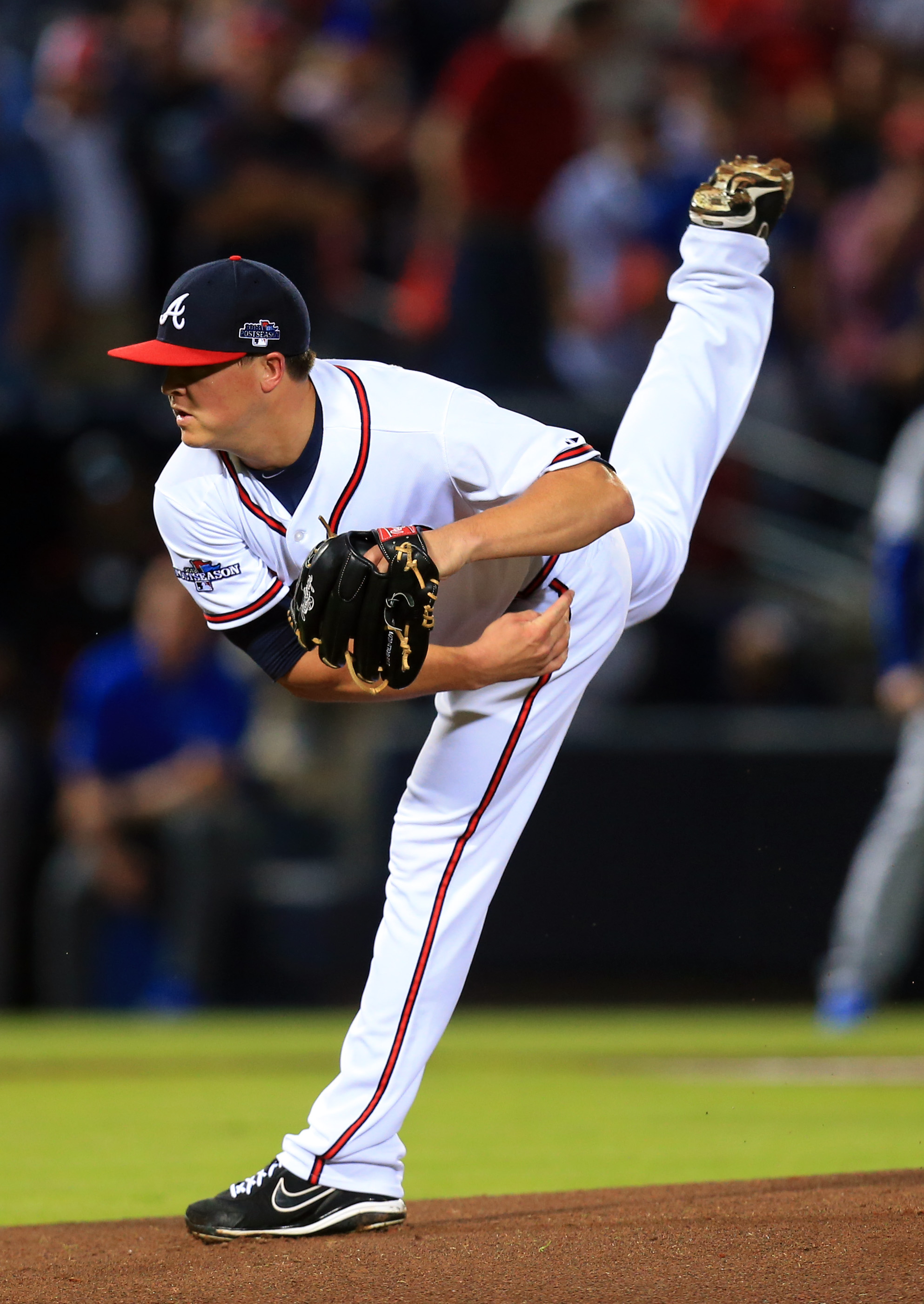 Jon Roegele and Jeff Zimmerman of the Hardball Times recently researched Tommy John surgeries in separate articles. Pitchers usually see an increase in their walk rate, decrease in strikeouts, and allow more runs in their first year back from the injury. Zimmerman cites the American Journal of Sports Medicine as saying, “83% of the pitchers they looked at made it back to the majors after surgery and 97% were at least able to pitch in a minor-league game after the surgery.” Roegele found that 28-to-29-year-old pitchers (sample size 73) took an average of 16.9 months to return from the surgery. Only 71% of pitchers in the cohort returned to big league action. Roegele does note some sample size issues, but it’s safe to say Medlen is bordering on the danger zone where age begins to correlate with poorer outcomes.
The average recovery time is skewed by players who suffer extended setbacks – like Diamondbacks pitcher Daniel Hudson. Even so, there is a plausible chance Medlen won’t be ready to compete until next July – 16 months from his surgery on March 18. An efficent recovery of 13 months still has him missing the early part of the season. A more financially endowed club may feel inclined to hope for the best outcome, but the Braves may have to be more pragmatic with a possible $5.8MM investment.
Reportedly, Atlanta’s preferred option is to re-sign Medlen at a lower rate, possibly with performance bonuses. Last offseason, the club inked Gavin Floyd to a one-year, $4MM deal with $4.5MM in possible bonuses. Floyd was also coming off Tommy John surgery and was expected to miss the beginning of the season. He made his Braves debut in May, but landed back on the disabled list in June after fracturing a bone near his elbow.
The experience with Floyd may serve as both a benchmark for expected contract and a cautionary tale. Floyd has a career 4.40 ERA and 4.36 FIP, so his performance has been substantially worse than Medlen’s. However, Floyd was relatively durable prior to his injury, whereas Medlen has a history of problems. Another relevant anecdote is that of Andrew Miller. The Red Sox non-tendered and re-signed him prior to last season. Atlanta may wish to try the same tactic, although it will be a risky move if their goal is to retain him.
On the open market, I foresee a one-year, $5MM guarantee with performance bonuses. Mutual options are not uncommon with injured or injury prone players. With a mid-season return uncertain, a club option could prove attractive to teams hoping to get more than a couple months of production.
The injury complicates any potential trades. Obviously, the Braves cannot expect a substantial return – Medlen wouldn’t be a non-tender candidate if they could. Trades involving injured players are rare, so Braves fans shouldn’t expect a notable prospect in return if a deal is reached.
Medlen, who is represented by Wasserman Media Group, seemingly fits with any club in need of rotation depth and upside. Since that describes the Braves, they could be motivated to bite the bullet and tender a contract. While half of the teams in the league could serve as possible landing spots, a few suitable playoff contenders include the Angels and Dodgers. Both clubs could use rotation depth with the flexibility to work out of the bullpen.
Photo courtesy of USA Today Sports Images.