
NL East Notes: Abrams, Harper, Knebel, Guillorme
Nationals’ infielder Luis Garcia has been dealing with a sore groin and may be headed to the injured list. Manager Dave Martinez relayed this info to Mark Zuckerman of MASNsports.com, who added C.J. Abrams was pulled from the Rochester Red Wings lineup today. Dan J. Glickman of Pickin’ Splinters then relayed word from Red Wings manager Matt LeCroy that the removal of Abrams was on order of the big league club, with ESPN’s Jeff Passan later confirming that Abrams will indeed be called up.
Abrams, of course, was one of the pieces coming to Washington in the Juan Soto trade, with many considering him the centerpiece of Washington’s return in the deal. Abrams got some MLB time with the Padres this year, though the Nats initially optioned him to the minors after the trade. With Garcia’s injury, it seems like he is set to make his debut as a National, about two weeks after the trade.
Even before this injury popped up, recent reporting had suggested Abrams would take over at shortstop, with Garcia moving over to second base due to his poor defensive showing at short. Abrams should take over regular shortstop duty for now, with Garcia eventually slotting in next to him at the keystone whenever his groin heals. Currently considered the #11 prospect across the league by Baseball America, Abrams hasn’t hit much at the major league level yet, but he’s hit .310/.360/.480 in Triple-A this season. He’ll celebrate his 22nd birthday in October.
In other NL East news…
- Phillies’ slugger Bryce Harper will take batting practice tomorrow for the first time since fracturing his thumb in June, with Matt Gelb of The Athletic relaying word from skipper Rob Thomson. Harper was dealing with torn UCL before that thumb issue, which had limited him to DH duties only. Though it was hoped the downtime from the thumb issue might lead to improvement in the elbow, that doesn’t seem to be the case, with the club just focusing on getting Harper’s bat back into the lineup for now. On that front, getting Harper back into BP is a notable step. Despite the torn UCL, Harper has hit .318/.385/.599 on the year for a wRC+ of 166. Getting him back to the Phils would obviously provide a huge boost down the stretch, as the club looks to battle its way through a tough postseason race with less than two months now remaining on the schedule.
- While the progress of Harper is good news, the Phillies also got some bad news today. Reliever Corey Knebel left today’s game with a lat strain, the team announced to reporters, including Gelb. The severity isn’t yet known, with Knebel now slated for an MRI that will likely provide more information. The hurler has a 3.45 ERA on the season, though his 20.9% strikeout rate and 13.6% walk rates both represent career worsts. Things looked much rosier earlier this month, as Knebel had a 2.59 ERA until a five-run outing on August 2. Taking that one outing away would certainly make his numbers look better, though the lack of punchouts and increased free passes are still concerning.
- The Mets announced to reporters, including Tim Britton of The Athletic, that infielder Luis Guillorme left today’s game with left groin tightness. He will undergo imaging tomorrow. Though it’s unclear how serious the issue is, the timing is unfortunate as the Mets’ infield has been taking a beating of late. Both Eduardo Escobar and Jeff McNeil had to leave Friday’s game due to injuries, which forced the club to turn to outfield Mark Canha as an emergency third baseman. Escobar relieved Guillorme today and McNeil started the game, so it doesn’t appear terribly dire. However, the club may have to consider adding another infielder to the roster in order to build in some rest for such a banged-up group.
Mets Re-Sign Travis Jankowski To Minor League Deal
The Mets have re-signed outfielder Travis Jankowski to a minor league deal, reports Andy Martino of SNY.
Jankowski, 31, now returns to the organization where he began his season, as he and the Mets also agreed to a minor league deal in March. He made the team on Opening Day and spent six weeks on the active roster, largely serving as a bench outfielder. Since he has a better reputation for his speed and defense than for his bat, he was largely entering games for pinch running and defensive replacement duty.
Unfortunately, at the end of May, he required hand surgery that was expected to keep him out of action for 6-8 weeks. Jankowski returned on the low end of that spectrum, spending just over six weeks on the IL. A couple of weeks later, the Mets designated him for assignment, as their trade deadline acquisitions squeezed him from the roster. He was claimed off waivers by the Mariners, but got into just a single game before getting designated again. His second DFA of the year resulted in him clearing waivers and electing free agency.
The Mets don’t have an immediate need for an outfielder at the big league level, as they have Brandon Nimmo, Starling Marte, Tyler Naquin and Mark Canha rotating through the playing time on the grass. However, there’s no harm in bringing aboard some depth to have on hand, should a need arise in the future. Jankowski has a .164/.281/.164 batting line on the year, between the Mets and Mariners. That’s not huge offensive production, but he has positive defensive metrics and three stolen bases in limited playing time this season.
Injury Notes: Colomé, Nance, Mets
The Rockies announced that right-hander Alex Colomé has been placed on the 15-day injured list due to right lateral epicondylitis. Fellow righty Justin Lawrence was recalled to take over Colomé’s spot on the active roster. (Danielle Allentuck of the Colorado Springs Gazette was among those to relay the moves before the official announcement.)
Lateral epicondylitis is better known as “tennis elbow,” which is perhaps notable for the hurler. The club hasn’t provided any information about how long they expect Colomé to be out of action, though an injury to a pitcher’s throwing elbow will always lead to at least some level of concern.
The 33-year-old was signed to a one-year, $4.1MM contract in the offseason and has thrown 41 1/3 innings of 4.68 ERA ball, getting ground balls at a 55.6% clip. That’s well above the 43.3% league average for relievers and especially important when playing at Coors Field. As an impending free agent on a non-competitive team, Colomé’s name came up in trade rumors, though he ended up staying put after the Rockies had another quiet deadline.
Other injury notes from around the league…
- The Marlins announced some roster moves between games of today’s doubleheader, with Jordan McPherson of the Miami Herald being among those to pass them along. Right-hander Tommy Nance has been reinstated from the injured list, with fellow righty Jeff Brigham being optioned in a corresponding move. Nance made his MLB debut with the Cubs last year and then came to Miami on a waiver claim in March. He hasn’t found much success in the majors so far, pitching to a 6.54 ERA in his first 53 2/3 MLB innings. However, he’s fared much better in the minors, as evidenced by his 3.86 ERA in Triple-A over his career.
- Last night, the Mets dealt with injuries to two infielders, as Eduardo Escobar left with side tightness and Jeff McNeil departed after a collision with Rhys Hoskins resulted in a cut on his hand. With their infield depth depleted, the club had to resort to emergency measures, plugging outfielder Mark Canha in at third base. Canha has some very limited third base work in his career, coming back in his time with Oakland. He logged two innings at the hot corner in 2015 and 13 more in 2016. “It was a little nerve-racking,” Canha told Anthony DiComo of MLB.com. “I just really didn’t want to make a mistake and make [Max Scherzer] angry.” The situation seems to have just been a temporary stopgap, as McNeil is back in the lineup today, playing second base with Luis Guillorme at third. Gosuke Katoh was at the ballpark today just in case, though neither McNeil nor Escobar were placed on the injured list.
Angels Notes: Trout, Lorenzen, Duffy, Bradley, Moniak, Iglesias
Mike Trout has been cleared to run and throw, and the former MVP is scheduled to take batting practice on the field today. Trout and Angels head trainer Mike Frostad spoke with reporters (including Jeff Fletcher of the Orange County Register) yesterday, with Trout expressing confidence that he’ll be able to return to the lineup “sooner rather than later.” A more specific timeline isn’t yet known, as Trout may require a minor league rehab assignment.
Trout has now missed a full month of action due to left ribcage inflammation and back spasms, and Frostad’s past update about Trout’s larger-scale back problems (a costovertebral dysfunction) left concern over both Trout’s short-term and near-term future. Given that Trout ended up missing almost all of the 2021 season due to a calf problem that just kept lingering, fans probably won’t be fully relieved until they actually see Trout back on the field, no matter this latest positive news about his rib injury.
More on the Halos…
- Frostad also provided details on several other injured Angels players, including 60-day injured list members Michael Lorenzen, Matt Duffy, and Archie Bradley. Lorenzen has thrown two bullpen sessions this week and will face live batters on Tuesday. The right-hander (who has sidelined by a shoulder strain) is tentatively expected to be activated from the 60-day IL when first eligible on September 2. Duffy’s first eligible activation date is August 26, and the infielder is slated to start a minor league rehab assignment next week as he makes his return from back spasms. The news isn’t as good on Bradley, who has been out since late June with a fractured right elbow and has yet to start throwing, though Frostad suggested that Bradley could start throwing this week. Given Bradley’s long layoff and the amount of rehab still to come, he might not pitch again in 2022.
- Mickey Moniak‘s season was though to be in jeopardy when the outfielder fractured the tip of his left middle finger, which sent him to the 10-day IL on August 7. Frostad said that Moniak’s stitches were removed yesterday, and depending on how he heals, might be able to return even if Moniak might still be playing through some discomfort. Acquired from the Phillies as part of the Noah Syndergaard trade at the deadline, Moniak played just five games for the Angels before hitting the injured list.
- The Mets and Yankees were among the teams also interested in acquiring Raisel Iglesias prior to the deadline, the New York Post’s Jon Heyman writes. However, neither New York club was willing to cover all of the $51.5MM remaining on Iglesias’ contract, while other teams were willing to take that deal entirely off the Angels’ books. Los Angeles ended up moving Iglesias to the Braves for Tucker Davidson and Jesse Chavez, but though the Halos dealt Iglesias and Syndergaard, Shohei Ohtani remained. “Half the teams or more” around baseball inquired about Ohtani, Heyman reports, and Heyman views owner Arte Moreno’s refusal to trade Ohtani as a missed chance. With Ohtani set for free agency after the 2023 season, there has already been a lot of speculation that he could be on his way out of Anaheim, and in search of a potential record-setting contract that reflects his unique two-way skillset.
Mets Hoping To Retain Brandon Nimmo
The Mets’ roster is facing a good bit of potential turnover this winter, with Jacob deGrom, Edwin Diaz, Chris Bassitt, Brandon Nimmo, Taijuan Walker, Seth Lugo and Trevor May among the many names able to reach free agency. DeGrom has an opt-out he’s said he plans to exercise even after missing time due to injury. Bassitt has a mutual option, which are very rarely exercised by both parties. Walker has a player option he should be able to easily surpass on the open market.
The 29-year-old Nimmo (30 next March) is a pure free agent at season’s end, but he tells Mike Puma of the New York Post that the Mets informed him as recently as the All-Star break that they’re hopeful of retaining him beyond the current season. There’s no indication the two have engaged in meaningful extension talks, but teams have a five-day exclusive negotiating window with their own free agents following the conclusion of the World Series. Failing to reach a new deal in that window — or sooner, as nothing’s technically preventing the two sides from speaking now — will prompt the team to make a decision on a potential qualifying offer for Nimmo.
Nimmo is a somewhat under-the-radar QO candidate, even with the hefty price point somewhere in the $18-19MM range. He’s been a bargain playing on a $7MM salary this season, hitting .269/.355/.421 with 10 homers, 21 doubles, five triples and anywhere from average to plus defensive marks in center field (-1 DRS, 2.7 Ultimate Zone Rating, 5 Outs Above Average). Opinions on the overall quality of his glovework may vary, but Nimmo has at the very least made himself into a passable defender who’s nowhere near the liability in center field he was just a few years ago.
On a rate basis, Nimmo has quietly been one of the league’s most-productive offensive players over the past several years. Dating back to 2018, he’s a .267/.387/.448 hitter in 1861 plate appearances. Out of 295 qualified hitters in that time, he’s tied with Mookie Betts and Alex Bregman for the sixth-best on-base percentage in baseball, and he has the game’s 15th-highest walk rate (13.7%). Nimmo’s brand of OBP-driven value at the plate may not hold the same appeal to fans as that of a prototypical .290-.310 hitter or 30-homer slugger, but it’s one that MLB front offices have proven to value nonetheless — particularly in center field, a premium position on the defensive spectrum (see: Dexter Fowler, Lorenzo Cain). By measure of wRC+, Nimmo has been 36% better than league average at the plate since 2018.
The elephant in the room, of course, is the necessity of specifying “on a rate basis.” Nimmo is a very good or even great offensive contributor when he’s been on the field … but health issues have hampered him immensely throughout the years. In his Major League career, Nimmo has been on the injured list for a hamstring strain, a partially collapsed lung, a finger contusion, a neck injury (which kept him out more than three months), a bone bruise in his hand and another hamstring strain. Even prior to his MLB days, Nimmo suffered a torn ACL (playing high school football), a strain in his other ACL (in the minors) and a torn tendon in his left foot. It is a long list of injuries. Since 2018, he’s played in 69.7% of possible games with the Mets.
Notably, Nimmo has been healthy for the bulk of the 2022 season. He spent four days on the Covid-related injured list earlier this season but has otherwise been a mainstay in the lineup and in center field. His walk rate is “down” to 9.1% (still above the league average), but he’s also striking out in a career-low 16.7% of his plate appearances.
When looking at a player’s free agency, age and market context also matter greatly. Nimmo will turn 30 on March 27 next year, which makes him on the younger end what’s typical for free agents. He’s also one of very few everyday center field options on the 2022-23 free agent market. Fellow free agent Kevin Kiermaier has an even longer list of injury troubles, with multiple surgeries on his track record — including a recent season-ending hip surgery from which he’s currently rehabbing. Enrique Hernandez could arguably be included as a true center field option, but he’s about to turn 31 and has hit .209/.273/.340 — his third well below-average offensive season in the past four years — in a year that has also seen him miss more than two months with a strained hip flexor.
Add up Nimmo’s production on a rate basis, his vastly improved defense in center, his age and the generally thin market for center-field help, and he probably has a stronger free-agent case than some would give him credit for. He placed as an honorable mention on MLBTR’s recently updated Free Agent Power Rankings, but Nimmo was No. 11 on our list, sitting just behind his teammate, Diaz.
Coming off a (so far) healthy and productive season, he should be in a good spot to cash in on a multi-year deal that’ll probably exceed the expectations of many onlookers. Nimmo likely didn’t hire the Boras Corporation back in January in hopes of negotiating a team-friendly extension, after all. The aforementioned Cain/Fowler contracts ($80MM and $82.5MM, respectively) figure to be benchmarks Nimmo’s camp will look to exceed.
Previewing Upcoming Club Option Decisions: National League
In the past two days, MLBTR has taken a look at how players with contractual options could impact the upcoming free agent class. We looked at players with vesting provisions on Tuesday before turning our attention to American League players under control via team options yesterday. Today, we’ll check in on their National League counterparts.
Braves
- Charlie Morton, SP ($20MM option, no buyout)
It has been strange year for Morton, who starred on last year’s World Series winner. He re-signed on a $20MM deal with a matching option for next season. Through 22 starts and 122 2/3 innings, the two-time All-Star has a slightly underwhelming 4.26 ERA. That’s largely attributable to a dreadful first couple months, however. He has an ERA of 3.55 or below in each of the past three months, carrying a cumulative 3.44 mark while holding opponents to a .198/.276/.369 line since June 1. Morton is still sitting in the mid-90’s with his fastball, striking batters out at a quality 27.3% clip and has ironed out his control after some uncharacteristic wildness through his first few starts. At first glance, a $20MM salary seems pricey for a pitcher entering his age-39 season with Morton’s overall numbers, but he’s not shown any signs of physical decline and has looked great lately. If he keeps at this pace for another two months, the Braves will probably welcome him back. That, of course, assumes Morton wants to continue playing. He’s hinted at retirement in years past and set fairly strict geographic limitations on his market during his latest trips to free agency.
Mets
- Daniel Vogelbach, 1B/DH ($1.5MM option, arbitration-eligible through 2024)
The Mets acquired Vogelbach from the Pirates to add a left-handed platoon bat to what had been an underwhelming designated hitter mix. He’d hit .228/.338/.430 through 75 games in Pittsburgh and has raked at a .341/.473/.568 clip over his first couple weeks in Queens. For a negligible $1.5MM salary, keeping Vogelbach around feels like an easy call. He’s technically arbitration-eligible through 2024 regardless of whether the Mets exercise his option. The option price should be more affordable than whatever he’d receive through arbitration next offseason, so if the Mets surprisingly declined the option, they’d likely non-tender him entirely.
- John Curtiss, RP ($775K option, arbitration-eligible through 2025)
There’s nothing new to report on Curtiss. He signed a big league deal just before Opening Day with the knowledge that he’d likely miss all of this season recovering from last August’s Tommy John surgery. He was immediately placed on the injured list. Next year’s option is valued at barely above the league minimum salary, so it’s just a matter of whether the Mets plan to devote him a roster spot all offseason. Curtiss is controllable through 2025 if the Mets keep him around.
Phillies
- Jean Segura, 2B ($17MM option, $1MM buyout)
Segura has been the Phils’ primary second baseman for the past four seasons. He’s generally hit at a slightly above-average level, relying on excellent bat-to-ball skills to prop up an aggressive offensive approach. He’s paired that with above-average defensive ratings at the keystone. He’s lost most of this season after fracturing his finger on a bunt attempt, but he’s healthy now and performing at his typical level. Across 195 plate appearances, he owns a .284/.324/.421 line with seven home runs. Segura is a good player, but a $16MM call will probably be too much for a Philadelphia club that already has five players on the books for more than $20MM next season (and will add a sixth notable salary — more on that shortly). The market also hasn’t been particularly robust for second base-only players in recent years. Segura will be headed into his age-33 season.
- Aaron Nola, SP ($16MM option, $4.25MM buyout)
This one’s a no-brainer for the Phillies to exercise. Nola is one of the sport’s top pitchers, a picture of durability and consistently above-average numbers (aside from a blip in his 2021 ERA that didn’t align with still excellent peripherals). One can argue whether Nola’s a true ace, but he’s at least a high-end #2 caliber arm. He’s given the Phils 144 2/3 innings of 3.17 ERA ball this season, striking out 27.9% of batters faced against a minuscule 3.6% walk rate. Even on a $16MM salary, he’s a bargain.
Reds
- Justin Wilson, RP ($1.22MM option, no buyout)
Wilson signed a complex free agent deal with the Yankees during the 2020-21 offseason. A one-year guarantee, the deal contained player and team options for 2022. Wilson and the Yankees agreed that if he triggered his $2.3MM player option for 2022, the team would get a 2023 option valued at $500K above that year’s league minimum salary. That provision carried over to the Reds when Wilson was dealt to Cincinnati at the 2021 trade deadline, and he indeed exercised the player option last winter. Next year’s league minimum is set at $720K, so Wilson’s option price will come in at $1.22MM.
It’s certainly affordable, but it still seems likely the Reds will let him go. The 34-year-old (35 next week) southpaw underwent Tommy John surgery in June, meaning he won’t return until late in the ’23 season at the earliest. He made just five appearances this season and posted a 5.29 ERA over 34 innings last year.
Brewers
- Kolten Wong, 2B ($10MM option, $2MM buyout)
Wong presents a tricky case for a Milwaukee club that typically runs slightly below-average player payrolls. He’s hitting .255/.336/.425, offense that checks in around 11 percentage points above league average according to wRC+. It’s among the better showings of his career. He doesn’t have huge power, but Wong’s an effective baserunner with plus bat-to-ball skills and good strike zone awareness. He’s a good but certainly not elite offensive player, one who’s performed about as well as Milwaukee could’ve reasonably hoped when signing him over the 2020-21 offseason.
What seems likely to determine whether the Brewers bring him back is how they evaluate his defense. A two-time Gold Glove award winner, Wong has rated as one of the sport’s best defensive second basemen for the majority of his career. Public metrics have unanimously panned his work this year, though, with Statcast’s Outs Above Average pegging him as the worst defensive second baseman in 2022. Wong’s speed has also taken a step back, and perhaps the Brewers think he’s just past his physical prime as he nears his 32nd birthday. If that’s the case, they probably buy him out, since Wong’s value has been so heavily concentrated in his glove. If they feel this year’s downturn is just a blip and expect he’ll return to his old ways on defense, then keeping him around makes sense. Like Segura, Wong could be affected by the market’s recent devaluation of second basemen. It’s also worth noting that Bob Nightengale of USA Today reported that Milwaukee was open to trade offers on Wong before this summer’s deadline. They didn’t move him, but it’s perhaps an indication the front office is leaning towards a buyout.
- Brad Boxberger, RP ($3MM option, $750K buyout)
Boxberger has spent the past couple seasons on low-cost contracts in Milwaukee and generally performed well. He carries a 2.51 ERA through 43 innings this season, albeit with slightly worse than average strikeout and walk rates. Boxberger has a career-worst 8.4% swinging strike rate, and the front office could view his strong run prevention mark as little more than a mirage. The financial cost is modest enough they could nevertheless keep him around, particularly since manager Craig Counsell has trusted Boxberger enough to give him plenty of high-leverage opportunities (largely with good results).
Rockies
- Scott Oberg, RP ($8MM option, no buyout)
Oberg is technically controllable for another season via club option, but the Rockies will obviously decline it. He earned a three-year extension after the 2019 season on the heels of two consecutive sub-3.00 ERA campaigns, no small feat for a reliever calling Coors Field home. Unfortunately, Oberg has dealt with persistent blood clotting issues that prevented him throwing from a single major league pitch throughout the course of the contract. The 32-year-old hasn’t officially announced his retirement, but he admitted in May he’s no longer actively pursuing a return to the field. He’s taken on a role in the Colorado scouting department to stay involved with the organization.
Dodgers
- Max Muncy, INF ($13MM option, $1.5MM buyout)
One of the game’s best hitters from 2018-21, Muncy has had a disappointing season thus far. Seemingly nagged by health issues tied to a ligament tear he suffered in his elbow late last season, he’s had a huge downturn in his offensive production. Muncy still boasts elite strike zone awareness, but his results on contact are way down. Overall, he carries a meager .180/.317/.360 line across 366 trips to the plate.
Still, given what Muncy’s shown himself capable of in the past, it seems unlikely the Dodgers let him go to save $11.5MM. This is an organization that annually runs one of the league’s highest payrolls, and they’ve shown a willingness to place one-year bets on players with upside but risk (e.g. tendering a $17MM arbitration contract to Cody Bellinger on the heels of a .165/.240/.302 season disrupted by injuries). They’ll probably do the same with Muncy and hoping he rediscovers his prior form with another offseason to rehab his elbow.
- Danny Duffy, RP ($7MM option, no buyout)
The Dodgers signed Duffy to a one-year guarantee this spring knowing he wasn’t likely to factor into the plans until midseason. He’d been shooting for a June return but has still yet to make his Dodgers debut, although he’s reportedly throwing at the team’s Arizona complex. It’s unlikely the Dodgers bring him back for $7MM given his recent health woes, but he could change those plans if he makes it back to the mound late in the season and looks like a potential impact arm, as he did at times with the Royals.
- Daniel Hudson, RP ($6.5MM option, $1MM buyout)
Hudson signed a one-year guarantee over the offseason and quickly emerged as a key high-leverage option for manager Dave Roberts. He dominated over 24 1/3 innings, pitching to a 2.22 ERA with an excellent 30.9% strikeout rate while averaging north of 97 MPH on his fastball. The veteran righty looked like one of the sport’s best relievers for two months, but he unfortunately blew out his knee trying to field a ground-ball. He tore his left ACL and is done for the year. The Dodgers could still roll the dice given how well he’d pitched before the injury, but that’s no longer a foregone conclusion. A $5.5MM decision isn’t onerous — particularly for L.A. — but there’s plenty of risk in Hudson’s profile given the injury and the fact that he’ll be headed into his age-36 season.
- Hanser Alberto, INF ($2MM option, $250K buyout)
The Dodgers added the veteran Alberto on a fairly surprising big league deal. He’s been a below-average offensive player for three years running, with his solid contact skills not quite compensating for a lack of power and one of the game’s most aggressive approaches. He’s played a limited utility role, serving as a right-handed bench bat capable of splitting his time between second and third base. Next year’s option price is very affordable, but the Dodgers can probably find a hitter with a bit more punch to play the role Alberto has assumed.
- Jimmy Nelson, RP ($1.1MM option, no buyout)
Nelson underwent Tommy John surgery last August, but the Dodgers brought him back for the league minimum salary to get a cheap option on his services for next year. He’s been on the injured list for all of 2022, as expected. Whether the Dodgers keep him will depend on how he looks at the start of the offseason, but $1.1MM for a 33-year-old who posted a 1.86 ERA and punched out 37.9% of his opponents in 29 innings when last healthy is beyond reasonable.
Padres
- Wil Myers, RF ($20MM option, $1MM buyout)
The Padres have spent the past few years trying to get out from under the money they owe Myers. The extension to which they signed him in January 2017 never worked out, as he’d been a roughly average hitter aside from a monster showing in the shortened 2020 campaign up until this season. The 2022 season has been a disaster, as Myers owns a .233/.277/.295 showing through 159 plate appearances and has lost two months to a right knee injury. He’s healthy now but relegated to fourth outfield duty. Myers will probably find a big league opportunity somewhere this offseason, but it’ll come with a new team and with a substantial pay cut.
Giants
- Evan Longoria, 3B ($13MM option, $5MM buyout)
Longoria is nearing the end of an extension he first signed with the Rays a decade ago. His production dipped late in his stint with Tampa Bay, and Longoria slogged through a trio of mediocre seasons through his first four years in San Francisco. He’s had an offensive resurgence over the past two years, carrying a .254/.340/.468 line in 470 plate appearances going back to the start of 2021. Longoria’s still a good hitter and capable defender at the hot corner, but he’s dealt with plenty of injury concerns as he’s gotten into his late 30s. He’s gone on the injured list five times in the last two seasons, including long-term absences for a shoulder sprain and hand surgery. The hefty buyout means it’d only be an extra $8MM for San Francisco to keep him around, but it seems likely they’ll look to get younger at the hot corner. It’s possible the three-time All-Star takes the decision out of their hands entirely, as he told Susan Slusser of the San Francisco Chronicle in June that he’s not ruling out retiring after this season.
Mets Reinstate Dominic Smith From 10-Day IL, Option Him To Triple-A
The Mets reinstated Dominic Smith from the 10-day injured list and then optioned the first baseman to Triple-A Syracuse. Smith has yet to play in the second half of the season, as a right ankle sprain sent him to the IL (via retroactive placement) on July 17.
Smith has already seen 20 games’ worth of action with Syracuse this season, both on a rehab assignment for his ankle and due to a demotion from the Mets’ active roster back in June. In the big leagues, Smith has hit only .194/.276/.284 in 152 plate appearances, his second consecutive down year amidst several trade rumors and the seeming reality that the Mets have simply moved on to other options at the first base/DH spot. Pete Alonso‘s presence was already going to limit Smith’s playing time, but New York has turned to several other players for at-bats besides Smith, leaving him frustrated.
The 27-year-old recently spoke about that frustration with MLB.com’s Anthony DiComo, but also with off-the-field problems that left Smith “in a bad spot” with his mental health.
“I wasn’t happy at the field. I wasn’t happy playing baseball at all,” Smith said. “I wasn’t happy when I did good. I wasn’t happy when I did bad….It was just stuff not going my way in life. I just felt like things couldn’t get worse, and then they seemingly did, and it kept snowballing worse and worse. You’re trying to control everything, and you just seem like you can’t control anything.”
Fortunately, Smith is in a better mental place and “just at peace right now.” He’ll continue to take the field at Triple-A and see if he can get himself on track as part of the Mets’ plans at least in 2022. His longer-term future in Queens is in doubt, as Smith put it plainly, “with the way I played this year, I don’t know if they want to bring me back for how much my contract is.” Smith earned $3.95MM this season and has two arbitration-eligible years left before free agency, so it remains to be seen if the Mets would just non-tender Smith altogether or if they could arrange a trade.
2022-23 MLB Free Agent Power Rankings: August Edition
A lot has changed since the last edition of MLBTR’s Free Agent Power Rankings. Joe Musgrove, formerly the No. 5 entrant on the list, has since signed a five-year extension with his hometown Padres, keeping him from reaching the market. Willson Contreras, the No. 9 entrant on that edition of the list, was somewhat stunningly not traded at the deadline, meaning he’ll be subject to draft-pick compensation. Jacob deGrom had yet to pitch at that point in the season but has now made a dominant pair of outings in his 2022 debut. More broadly, several players on the list or on the “honorable mention” portion of the list have altered their stock with strong play or faded.
Here’s a look at where things stand, with a reminder that this list is based on what the MLBTR team believes to be each player’s earning power in free agency — not necessarily a ranking of the “best” free agents or who’ll hold up the best over the life of a major free-agent contract.
1. Aaron Judge, OF, Yankees (Last ranked: 1): While plenty has changed since the May 25 version of these rankings, it’s business as usual for Judge, who boldly turned down a seven-year, $213.5MM extension offer back in Spring Training and now looks prescient for doing so. Judge was hitting .314/.386/.692 at the time of our last rankings and has followed that with a remarkably consistent .292/.390/.654 line in 64 games since. Judge is on pace to top Roger Maris’ 61 home runs from the 1961 season, leading the Majors not only in long balls (44) but also runs scored (93), RBIs (98), slugging percentage (.677), OPS (1.068) and wRC+ (196). He’s leading the AL with 122 hits and has even stolen a career-high 11 bases (without being caught).
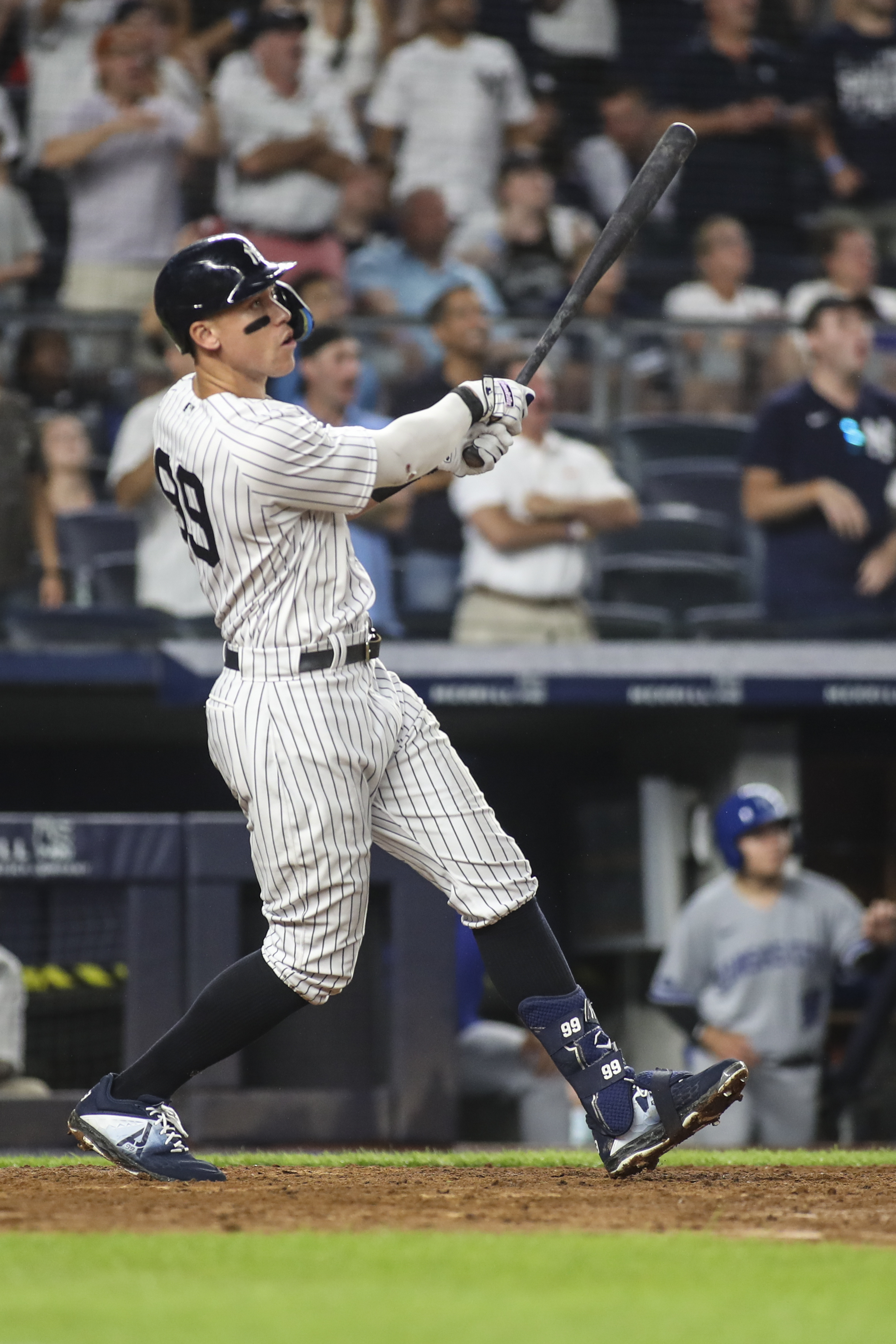
Judge has been the best hitter on the planet since Opening Day, and as things currently stand, the only person who could conceivably stand in his way of winning his first AL MVP trophy would be Angels sensation Shohei Ohtani. However, great as Ohtani has been again in 2022, his offense isn’t quite what it was last year (and isn’t anywhere close to Judge’s league-leading dominance). From a pure WAR perspective, Judge has been so good this year that his value with the bat has eclipsed Ohtani’s combined value at the plate and on the mound.
Regardless, Judge is now poised to reach free agency on the heels of the finest season of his already brilliant big league career. He’ll play the 2023 season at age 31, which is about the only strike against him in free agency. Judge will receive and reject a qualifying offer from the Yankees, and even though he’d be 38 by the end of an eight-year deal, that seems plenty plausible. He could very well command the largest annual salary any position player has ever received, too, and a $300MM overall contract doesn’t seem out of the question. This is what it looks like to bet on yourself and win — in resounding, overwhelming fashion, no less.
2. Trea Turner, SS, Dodgers (LR: 3): There’s not much on the baseball field that Turner doesn’t do well. The 29-year-old is the sport’s fastest player, by measure of Statcast’s Average Sprint Speed, and he’s hitting .305/.345/.499 as of this writing. The 28 home runs he popped in 2021 might very well go down as a career-high, but Turner should finish this year around 25 dingers and has twice in the past hit 19 long balls (including in a 2019 season where he played in just 122 games).
That injury shortened ’19 campaign was the only one in the past half decade in which Turner spent significant time on the shelf. Over the past five years, he’s a .303/.358/.493 hitter who’s made a pair of All-Star teams, won a batting title and taken home a World Series ring.
By the end of a long-term deal, Turner will probably move off shortstop, but he’s a solid option there for now who’d be plenty capable of sliding over to second base at some point. Over the past three seasons, he’s been 43% better than league-average with the bat, by measure of wRC+, and this will be his fourth season of at least four wins above replacement in the past five years — with the 60-game 2020 season, when he boasted 2.8 fWAR and bWAR alike, being the lone exception.
If Turner had been born a day later, next year would technically be considered his age-29 season, but he’ll be 30 on June 30, and the July 1 cutoff is (for whatever reason) generally seen as the arbitrary turning point for a player’s age in a given year. A seven-year deal for Turner would run through age-37, and an eight-year deal through age-38. He’ll have to contend with a qualifying offer and another deep class of shortstops, but Turner is one of baseball’s most well-rounded players and figures to be compensated in line with the game’s 10 to 20 best position players.
3. Nolan Arenado, 3B, Cardinals (LR: 6): It’s difficult to directly compare Arenado’s 2022 season and the 2019 season that propelled Anthony Rendon to a seven-year, $245MM contract, given that Rendon’s Herculean ’19 effort came during the juiced-ball season. Offense is down league-wide now, yet Arenado stacks up favorably in terms of batting average, on-base percentage and slugging percentage. Metrics like wRC+ and OPS+, which weight for both home park and league environment, feel that Arenado’s 2022 production at the plate has actually been slightly better.
Defensively, Arenado is nearly peerless at his position. Since making his MLB debut in 2013, Arenado ranks second among all players, regardless of position, with 151 Defensive Runs Saved, trailing only Andrelton Simmons. He’s third to Francisco Lindor and Nick Ahmed in Statcast’s Outs Above Average, which tracks defensive data dating back to 2016. Arenado’s numbers aren’t inflated by early-career marks, either. He remains elite this season, ranking third in all of MLB in DRS and second in OAA. Defensive metrics and the eye test agree, as Arenado has been a human highlight reel at the hot corner for his decade-long career.
The age gap between 2022 Arenado (31) and 2019 Rendon (29) can’t be ignored. However, that should be more reflected in the length of a theoretical Arenado contract than in the annual value. It’s also, of course, worth noting that Arenado is technically under contract through 2027. He’s guaranteed $144MM in that time but has the right to opt out of the contract after the current season. Arenado forwent an opt-out clause after the 2021 season, but his 2022 campaign is the best of his career.
Even if he’s capped at a five-year deal in free agency, he should be able to trounce the current $28.8MM annual value remaining on his deal by as much as $5-7MM — and a six-year deal doesn’t seem impossible to imagine coming off such a brilliant effort. (Freddie Freeman scored a six-year deal beginning with his age-32 season, so there’s recent precedent.) Perhaps Arenado and the Cardinals will work out a compromise, and it’s always possible he decides he’s happy in St. Louis and just passes on the opt-out entirely. If he does want to test the market again, however, there could be another $20-60MM in earning power for him on top of his current deal.
4. Carlos Correa, SS, Twins (LR: 2): The 2022 season might not have gone quite as well as either Correa or the Twins hoped, but he’s still enjoying a sound all-around year, hitting .265/.343/.433 (22% better than league average, by measure of wRC+). He got out to a slow start in April and has slumped following the All-Star break, but for a three-month stretch from late April to late July, Correa hit .308/.375/.509. Provided the current slump doesn’t last too long, Correa stands a decent chance to be around 30% better than average at the plate for the second straight season and third time in four years.
Last year’s all-world defensive ratings have taken a dip thus far in 2022 — surprising for a player who has generally been a consistent source of elite glovework. He’s made five throwing errors this season, tied for his most since 2016, but Correa has been plenty sure-handed, booting just two balls hit to him. He’s spent the year throwing to Miguel Sano and a pair of makeshift first baseman who’ve converted from other positions (Luis Arraez, Jose Miranda), so perhaps some of the throwing miscues can be forgiven by a team with a better defensive outlook at first base.
If those first couple paragraphs feel like they’re filled with caveats — well, they are. The simple fact is that Correa hasn’t had as strong a season as he did in 2021 and probably shouldn’t be expected to command the type of contract many (MLBTR included) thought to be possible last offseason. That said, Correa still hasn’t even turned 28 — the age at which he’ll play nearly all of the 2023 season. His youth alone gives him the chance to command the longest contract of any free agent this winter; even a 10-year deal would run through age-37.
That type of contract may not be on the table without a huge finish, but Correa is still a plus defender and well above-average hitter with age on his side. It’s perhaps narrowly more plausible that he could opt into a second year with the Twins, take another $35.1MM salary and hope to hit free agency on the heels of a stronger platform in 2023, but his current earning power is still among the best in this year’s free-agent class.
5. Xander Bogaerts, SS, Red Sox (LR: 4): When the last version of our list was published, Bogaerts had homered just four times in 174 plate appearances while posting a below-average .135 ISO (slugging minus batting average). It was easy enough to overlook as little more than small-sample noise at the time, but Bogaerts has hit just five home runs in 267 plate appearances since that time and now has nine long balls and a tepid .141 ISO in 441 trips to the plate. That’s the worst power output we’ve seen from Bogaerts since 2017 by an overwhelming margin. From 2018-21, he belted 90 homers in 2106 plate appearances while turning in a stout .224 ISO.
Bogaerts is still hitting .311/.383/.452 on the season, but he’s also sporting a career-high .382 average on balls in play that he’s not going to sustain — particularly not when his average exit velocity, barrel rate and hard-hit rate are at their lowest or near-lowest levels since 2017.
There’s still no doubt that Bogaerts will opt out of the remaining three years and $60MM on his contract, but he’d be higher on this list if not for his power stroke going MIA. Couple that with ongoing questions about his defense — some teams are surely going to see Bogaerts as a player who needs to move off shortstop, perhaps as soon as 2023 — and the current free-agent outlook is a bit murkier than expected.
Nevertheless, Bogaerts has a long track record of excellent offense and well above-average power output. With a strong finish to the season, particularly in the power department, he should have no problem commanding a notable nine-figure deal — and something in excess of $200MM can’t be ruled out.
6. Jacob deGrom, RHP, Mets (LR: 7): The No. 6 ranking here for deGrom factors in something of a best-case scenario, but this list is based on earning power, after all. If deGrom gets hurt again or struggles down the stretch, it’s possible he’ll drop off the list entirely. The latter of those two scenarios seems unlikely, though, as deGrom hasn’t “struggled” since 2017. He’s been dominant through his first two starts of the 2022 season, averaging 99.2 mph with his fastball and holding opponents to three runs on four hits and a walk with 18 punchouts through 10 2/3 innings.
Dating back to 2018, deGrom has a comical 1.95 ERA in 591 2/3 innings with a 34.9% strikeout rate against a 5.3% walk rate. When healthy, deGrom is simply unmatched in terms of starting pitching dominance over that period. He ranks second among all Major League pitchers with 24 wins above replacement dating back to 2018, per FanGraphs, despite the fact that he’s made only 93 starts in that time. Max Scherzer tops the list but has started 24 more games and logged 143 2/3 more innings — about an extra 75% of a season’s worth of work.
If deGrom finishes the season with no red flags, the bidding should be furious. He’ll turn 35 next June, making him nearly three full years younger than Scherzer was when he secured his record-setting three-year, $130MM deal from the Mets. DeGrom could justifiably look to top that AAV on a multi-year deal, and he’s too good for the bidding to stop at two years. The biggest question surrounding deGrom is just how many years someone will be willing to guarantee. A three-year pact in excess of Scherzer’s seems doable, and a fourth year ought to be on the table as well.
7. Dansby Swanson, SS, Braves (LR: Not Ranked): Long a plus defender at shortstop, Swanson is having another strong year with the glove and a career year with the bat. He’s followed up a career-high 27 home runs in 2021 with a .292/.348/.461 showing through 463 trips to the plate. He’s been the beneficiary of a .375 average on balls in play that he surely won’t sustain over a larger sample, but Swanson is also making hard contact at a career-best 44.7% clip and elevating the ball more than he has in years past.
A greater walk rate than his current 7.3% clip or lower strikeout rate than his 26.3% mark would raise Swanson’s floor, but his glove alone will make him an above-average regular and he’s well on his way to his second straight 25-homer season. Add in that Swanson will play all of next season at 29 years old, and a nine-figure deal seems likely. Both Trevor Story and Javier Baez landed six-year, $140MM pacts last winter at the same age. Swanson will have to contend with a qualifying offer and with some more decorated shortstop options ahead of him on the market, but he’ll be in high demand all the same.
8. Carlos Rodon, LHP, Giants (LR: 8): Rodon was the best pitcher in baseball through late July in 2021, but he was capped to five innings per appearance (at most) down the stretch as he battled shoulder fatigue and diminished velocity. For a pitcher with Rodon’s injury history, that limited interest in him to the point that he took a two-year, $44MM deal with a chance to opt out following the 2022 season — provided he reached 110 frames.
Rodon has not only reached 110 innings — he’s shot past it with career-best velocity (95.8 mph average fastball) and another sub-3.00 ERA (2.95 through 128 1/3 frames thus far). Rodon is averaging just shy of six innings per outing and boasts a 31.2% strikeout rate against a 7.6% walk rate. He’s reached double-digit strikeouts in six of his 22 starts and held opponents to three or fewer runs in 18 of 22 tries.
Rodon’s fastball in his past eight starts is down about one mile per hour over his average from his first 14 starts, but it’s still been a healthy 95.1 mph in that stretch. That said, he threw a complete game on July 9, worked seven shutout innings on July 31, and averaged a resurgent 96 mph with his heater in his most recent outing. At least so far, Rodon doesn’t appear to be fading at all. If he can avoid the type of late swoon he experienced in 2021, he ought to find four- and five-year offers at superior annual values to this contract’s $22MM AAV. He’ll receive a qualifying offer and surely reject it, which isn’t ideal, but he has the best combination of age (30 all of next season) and 2022 performance of any starter on this year’s market.
9. Justin Verlander, RHP, Astros (LR: Not Ranked): Simply returning to make a full season’s worth of starts would’ve been a feat for a 39-year-old who had pitched just six innings since the end of the 2019 season due to Tommy John surgery. Verlander, of course, is no ordinary 39-year-old, and he’s not only returned but positioned himself as a front-runner for the AL Cy Young Award.
It’s a jaw-dropping feat, even for one of this generation’s best. Verlander has a 1.73 ERA with a 25.5% strikeout rate against a minuscule 4.6% walk rate. He’s averaging nearly 6 2/3 innings per start, sitting 95.1 mph with his heater — his second-best mark since way back in 2011 — and has thrown a quality start in 16 of his 20 appearances this year. Verlander hasn’t yielded more than one earned run in a start since June 18 and has held opponents to one or zero earned runs in a stunning 15 of 20 starts.
He’ll turn 40 in February, but Verlander has a legitimate case to break Max Scherzer’s $43.33MM AAV, particularly if he’s looking at a two-year deal. He’s said he wants to pitch into his mid-40s and looks as good as ever, though, so we shouldn’t discount the possibility that a team shrugs and goes to three guaranteed years for this generation’s most prolific workhorse. Verlander unlocked a $25MM player option when he reached 130 innings pitched, but he should be able to crush that in free agency even if he prefers to work out an extension with Houston.
10. Edwin Diaz, RHP, Mets (LR: Not Ranked): It’s been six years since Mark Melancon (four years, $62MM), Kenley Jansen (five years, $80MM) and Aroldis Chapman (five years, $85MM) each set new records for relief contracts in the same offseason. Diaz, the most dominant reliever in baseball this season, will have a chance to topple that Chapman record when he heads into free agency in advance of his age-29 season.
After a nightmarish first season in Queens, Diaz has righted the ship and become a spectacle in the best kind of way. He’s averaging 99.1 mph on his heater this season, has punched out 52.9% of his opponents and has an entrance more befitting of a professional wrestler than a Major League closer.
Diaz’s Baseball Savant profile looks like a video game cheat code. He’s leading the Majors in expected ERA, expected wOBA, expected batting average, expected slugging percentage, strikeout rate, whiff rate and ranks in the 99th percentile in average exit velocity, opponents’ chase rate, opponents’ barrel rate and fastball velocity. Diaz last allowed an earned run on June 18, and in 18 innings since that time he’s posted a 38-to-1 K/BB ratio while yielding just seven hits.
The 2022 version of Edwin Diaz might be the best reliever we’ve seen since Mariano Rivera. He’ll be hit with a qualifying offer, but it’s doubtful the teams pursuing him are going to even care about that. It’d be a surprise if Diaz doesn’t set a new contract record for relief pitchers this winter, and he could be baseball’s first nine-figure reliever.
Honorable Mentions: Brandon Nimmo, Willson Contreras, Jose Abreu, Josh Bell, Chris Bassitt, Nathan Eovaldi, Andrew Benintendi
Can Edwin Diaz Get A Record-Breaking Contract?
In the upcoming free agent class, there’s no debate about the top available relief pitcher. Mets’ closer Edwin Diaz is arguably the best reliever in the entire sport right now and will be the jewel of that segment of free agency.
Now 28, Diaz burst onto the scene with the Mariners at the age of 22, recording 18 saves as a rookie. After two more excellent seasons as Seattle’s closer, he was traded to the Mets, partly as a way for the Mariners to get out from under Robinson Cano‘s contract. Though he struggled in 2019, his first season in Queens, he righted the ship over the next couple of seasons. Coming into this year, Diaz had a career 3.23 ERA with a 38.6% strikeout rate, 8.8% walk rate and 40.2% ground ball rate.
Despite that excellent body of work, he’s somehow found a way to take his game to new heights here in 2022. Through 45 1/3 innings on the year, he has a miniscule 1.39 ERA. 48.5% of batted balls against him are going into the ground, which is a career high and well above the 43.3% league average for relievers. His 7% walk rate is a few points better than the 9.1% rate for relievers around the league. But most impressively, he is striking out 52.9% of batters who come to the plate, well beyond his career high and more than double the 23.4% average for bullpen arms. That rate is easily the best among all pitchers in baseball with at least 20 innings pitched on the year, with Josh Hader coming in a distant second at 41.9%.
Diaz’s Statcast page is blood red, with the hurler coming in the 100th percentile in terms of strikeout rate and whiff rate, 99th percentile in terms of average exit velocity, barrel percentage and chase rate, and 87th percentile in hard hit rate. Hitters aren’t hitting him and rarely inflict any damage when they do. He averages 99 mph on his fastball and 90.7 mph on his slider.
If Diaz continues pitching at this elite level, could he push for a record-breaking contract, either in total dollars or average annual value? The largest contract ever given to a relief pitcher is the five-year deal signed between Aroldis Chapman and the Yankees prior to the 2017 campaign, which was for $86MM over five years, with Chapman eligible to opt out after three. That amounts to an average annual value of $17.2MM. Also worth noting, Liam Hendriks and the White Sox signed a four-year, $54MM contract prior to the 2021 season. The last year of the contract is technically a $15MM club option with a $15MM buyout. If the club chooses to buy him out, they will pay him that $15MM deferred over a ten-year period instead of paying it all out during the 2024 campaign. This unique contract, depending on how you look at it, either has an AAV of $13.5MM over four years or $18MM over three years. For those in the latter camp, Hendriks will be included in the forthcoming analysis.
When Chapman signed his contract, he was going into his age-29 season, which is the same situation as Diaz. Hendriks was going into his age-32 season. But what about performance? Here are all three pitchers in their final year before free agency, for comparison.
- Chapman in 2016: 58 innings, 1.55 ERA, 40.5% strikeout rate, 8.1% walk rate, 46% ground ball rate.
- Hendriks in 2020: 25 1/3 innings, 1.78 ERA, 40.2% strikeout rate, 3.3% walk rate, 32% ground ball rate.
- Diaz in 2022: 45 1/3 innings, 1.39 ERA, 52.9% strikeout rate, 7% walk rate, 48.5% ground ball rate.
Here’s the three seasons leading into free agency:
- Chapman in 2014-2016: 178 1/3 innings, 1.72 ERA, 44.4% strikeout rate, 10.7% walk rate, 41.8% ground ball rate.
- Hendriks in 2018-2020: 134 1/3 innings, 2.21 ERA, 34.7% strikeout rate, 6.4% walk rate, 33.4% ground ball rate.
- Diaz in 2020-2022: 133 2/3 innings, 2.42 ERA, 42.7% strikeout rate, 9.1% walk rate, 39.8% ground ball rate.
I think it’s fair to say that Diaz will be entering free agency with a less consistent track record than either Hendriks or Chapman. Hendriks’ track record, broadly speaking, was less overpowering but also less wild. The shortened 2020 season was the first time he posted a strikeout rate above 40%, but he also had never posted a double-digit walk rate. Chapman had a double-digit walk rate four times prior to reaching free agency, but also got strikeouts above 40% five straight seasons from 2012 to 2016, including a 52.5% rate in 2014. Diaz had an 11.5% walk rate in 2017 and then 12.7% in the shortened 2020 campaign but hasn’t had alarming numbers of free passes apart from that. He’s also gone beyond a 40% strikeout rate three times prior to this year, though never for two seasons in a row.
Looking just at the platform seasons, Hendriks limited walks in the shortened campaign, but got far less strikeouts and ground balls than the other two. Chapman trails Diaz in every rate category, however, with Diaz just 12 2/3 innings behind in terms of the sample size. If he can maintain this over the season’s final months, he could argue that he’s a better option now than Chapman was in 2017. Also, given that Chapman’s contract will be six years old this winter, there’s an argument that the natural trajectory of inflation should lead to Diaz getting a larger contract than Chapman, if they were considered equally talented. One thing working against Diaz, however, is the qualifying offer. Chapman was traded from the Yankees to the Cubs midseason in 2016, making him ineligible to receive a QO. Diaz, on the other hand, is a lock to receive one, meaning any team that signs him would be subject to draft pick forfeiture and potentially other penalties.
All in all, it seems like Chapman and Diaz make for fairly close comps. Hendriks was a bit older and got a shorter contract, with unique accounting measures inflating the AAV on paper. Diaz will be the same age as Chapman was at the time of his contract, both of them having strong track records and dominant platform seasons. Chapman didn’t have the QO attached but Diaz will have six years of inflationary progress helping push his dollars up.
There’s still some time for Diaz to change the calculus one way or another, and there’s also the postseason to consider, as Chapman pitched for the championship Cubs in 2016. He threw 15 2/3 innings in the playoffs that year, but not quite at his level from the regular season. The competition in the postseason is naturally higher than otherwise, but Chapman put up an ERA of 3.45 in that time, with a diminished 33.9% strikeout rate, a 9.7% walk rate and 43.8% ground ball rate. Since Diaz pitches for the Mets, who have a seven-game lead in the NL East and are almost guaranteed to make the playoffs, Diaz should get a chance to showcase his talents against the game’s highest competition and on its brightest stage. If he thrives there as he’s thrived elsewhere this year, he’ll have a chance to take the throne as the game’s highest-paid reliever ever.
Image courtesy of USA Today Sports.
Vesting Options Update: Flexen, Maldonado, Carrasco, Andrus
Major league contracts cannot be made conditional on player performance metrics, but it is permissible for clubs and teams to agree to options dependent upon playing time. Things such as innings pitched, plate appearances or (less frequently) games started or finished are all possible goals that could allow a player to trigger either additional guarantees or the right to opt out of an otherwise guaranteed contract. It’s also permissible to tie vesting provisions to a player’s finish in award voting, as we’ll see with the final player on this list.
This year, there are seven players whose 2023 contract status is tied directly to their playing time and/or awards finishes on the season. With a couple months left in the schedule, it’s worth checking in to see how they’re progressing towards those thresholds.
Already Vested
Carlos Rodón, SP, Giants
Rodón already reached the 110-inning threshold necessary to trigger his vesting provision last month. That affords him the right to opt out of the final year and $22.5MM remaining on his deal with San Francisco, and the Boras Corporation client is sure to do just that. Rodón has backed up his 2021 breakout with another elite season. He carries a 2.95 ERA across 128 1/3 innings, striking out an elite 31.2% of batters faced while sitting in the 95-96 MPH range with his fastball. The 29-year-old should receive the long-term deal that eluded him last winter, as he’s now pushing 50 starts of ace-level performance over the past two seasons and has put last summer’s shoulder soreness further in the rearview mirror.
Justin Verlander, SP, Astros
As with Rodón, Verlander has already hit his vesting threshold. The future Hall of Famer needed to hit 130 innings on the season to kick in a $25MM player option for next year, a milestone he reached last week. Barring injury, he’s going to pass up on that sum and test the open market. Despite being in his age-39 season, the nine-time All-Star has returned to the top of the Houston rotation after losing virtually all of 2020-21 to Tommy John surgery recovery. He owns an MLB-best 1.73 ERA across 130 frames, positioning himself as a strong contender for a third career Cy Young award. Verlander’s swing-and-miss rates aren’t quite at his pre-surgery peak, but that shouldn’t be much of a concern given his track record and continued dominance without an elite strikeout rate. The ISE Baseball client could look to top former teammate Max Scherzer’s $43.333MM average annual salary and shoot for an all-time record — particularly if he’s willing to accept two guaranteed years instead of holding out for a three-year deal that takes him through his age-42 season.
Should Be Imminently Reached
Chris Flexen, SP, Mariners
Flexen signed a two-year, $4.75MM guarantee upon coming over from the Korea Baseball Organization during the 2020-21 offseason. The deal contained a $4MM club option for the 2023 campaign but afforded Flexen the opportunity to override that with an $8MM salary based on his number of innings pitched. (MLBTR recently confirmed that Flexen’s vesting provision would guarantee his 2023 salary but does not afford him an opt-out clause after this season). The righty could reach that marker by tallying either 150 innings in 2022 or 300 combined frames from 2021-22.
As MLBTR’s Darragh McDonald noted yesterday, Flexen is soon to reach the latter threshold. He worked 179 2/3 frames last season, leaving him with 120 1/3 innings to tally this year. Through 21 starts, the 28-year-old has worked 117 frames. He needs just 3 1/3 more innings and should officially hit the threshold during his next start (or within two starts at the latest) barring an immediate season-ending injury. The Mariners, for their part, should be perfectly content to keep Flexen around for a reasonable $8MM. He’s been a durable source of roughly league average innings, posting an ERA of 3.73 since landing in the Pacific Northwest. Flexen doesn’t miss many bats, but he’s avoided the injured list and thrown plenty of strikes. He’s a perfectly fine back-of-the-rotation arm for a team with a spacious home ballpark and a strong defense behind him, and Seattle’s 2023 payroll slate is plenty reasonable.
Martín Maldonado, C, Astros
Last April, the Astros preemptively kept Maldonado from getting to the open market after the 2021 season. They signed him to a $5MM pact for 2022, and the deal contained a matching vesting provision for the following year. Chandler Rome of the Houston Chronicle was among those to report that Maldonado would lock in the $5MM salary for 2023 if he appeared in 90 games during the ’22 campaign.
Heading into play Tuesday, Maldonado has gotten into 82 contests. The 35-year-old (36 next week) has continued to pick up the bulk of the playing time even after Houston acquired Christian Vázquez from the Red Sox just before the trade deadline. Maldonado has been behind the dish for four of Houston’s six games since August 2, with Vázquez picking up the other two starts. Maldonado should get to the 90-game threshold with ease (again, barring imminent injury), likely within about two weeks.
Vázquez is ticketed for free agency after the season, so Maldonado should hold onto his primary catching job next year. It’s possible the Astros bring in a 1B complement, particularly with prospect Korey Lee struggling at Triple-A, but it seems they’ll be content to turn things over to Maldonado for a fourth straight season. The veteran has always been one of the game’s worst hitters, and that’s continued this season. He owns a .183/.244/.357 line across 278 plate appearances. He’s hitting for a bit more power than usual but posting one of his worst years from an on-base perspective. He’s also rated as a below-average defender this year in the estimation of public metrics like Defensive Runs Saved and Statcast’s pitch framing.
The Astros have maintained that Maldonado’s game-calling acumen and ability to handle a pitching staff is elite, however. That’s not going to show up on his statistical ledger, but the organization has backed up those assertions by continuing to pencil Maldonado into the lineup on most days. They’ve got no shortage of offensive firepower elsewhere around the diamond. Maldonado’s poor numbers haven’t stopped the team from racing to 30 games above .500, and they’ve had arguably baseball’s top pitching staff. One can debate how much credit Maldonado deserves for that, but he’s probably bringing some amount of on-field value that’s not quantifiable.
Attainable But Borderline
Carlos Carrasco, SP, Mets
Carrasco has a $14MM club option for next season on a contract extension he initially signed with Cleveland over the 2018-19 offseason. That option becomes guaranteed if he throws 170 innings in 2022 and is expected to be healthy for the following season, according to an Associated Press report. Carrasco can’t officially lock in the latter designation until the end of the year, as he’ll presumably need to pass a physical at the start of the offseason.
He can work towards the first goal, however. Carrasco enters play Tuesday with 117 2/3 innings across 21 starts. That leaves him 52 1/3 frames short with a little less than two months to go. The 35-year-old has averaged around 5.6 innings per start to this point in the season. At that rate, he’ll need to make between nine and ten more outings, which he’s right on track to hit by the end of the year. New York has 52 games left in the regular season, putting them on pace to go through a five-man rotation about ten more times. Even a brief injured list stint would probably prevent Carrasco from getting to 170 frames, but he’s on pace thus far.
Of course, it’s not a guarantee he’d hit free agency at the end of the year if he doesn’t trigger the vesting threshold. The Mets would still retain his services via club option, and it’s possible they’d exercise it anyhow. They’re over $280MM in 2022 payroll, so a $14MM salary isn’t all that burdensome. After an injury-plagued first season in Queens, the well-respected Carrasco has bounced back with a nice year. He owns a 3.82 ERA with slightly better than average strikeout, walk and ground-ball rates. If he finishes the year healthy and remains generally productive, the Mets probably keep him around regardless.
Elvis Andrus, SS, Athletics
The A’s, on the other hand, aren’t likely to want anything to do with Andrus’ option. The veteran shortstop’s extension with the Rangers contained a $15MM club option for 2023. That’d become a player option if Andrus were both traded (as he was, from Texas to Oakland) and tallies 550 plate appearances in 2022.
Andrus has hit 366 times thus far, leaving him 184 plate appearances shy of the marker. The A’s have 52 games remaining, so Andrus needs to tally around 3.54 plate appearances per game from here on out. He’s averaged 3.66 PA’s per game through the season’s first few months, so he’s on pace to reach the mark. If Andrus continued at his current pace, he’d reach approximately 556 plate appearances at year’s end. If the A’s are intent on avoiding that situation, they could mix in a couple more off days over the next two months to prevent him from getting there.
Deliberately curbing playing time to prevent a player from reaching a vesting threshold would be grounds for a grievance filing against the team. The rebuilding A’s could point to a desire to get 23-year-old Nick Allen more regular run at shortstop as an on-field justification, even as Allen has struggled mightily through his early stint in the major leagues. If Andrus misses the vesting threshold by just a handful of plate appearances, it’s certain to raise some eyebrows around the league and in the offices of the MLBPA. There’s little question Andrus — owner of a serviceable .241/.303/.372 line on the season — is one of the nine best position players on the last-place club. Yet he wouldn’t receive $15MM on the open market and would definitely trigger the option if it vests, likely counting for more than a quarter of the A’s bottom-of-the-barrel player payroll next season if that occurs.
Not Happening
Justin Turner, 3B/DH, Dodgers
The Dodgers re-signed the ever-productive Turner to a two-year, $34MM guarantee during the 2020-21 offseason. The deal contains a $16MM club option for 2023 that would vest at $20MM if Turner finishes in the top ten in MVP balloting this season. It’d vest at $17.5MM if he finishes between 11th and 15th in MVP balloting (report via Bob Nightengale of USA Today).
Turner overcame a very slow start with an excellent month of July that pushed his season line up to .257/.332/.405 through 355 plate appearances. He’s having a solid year, but it’s his worst season since he landed in Southern California back in 2014. Turner certainly isn’t going to get legitimate MVP support. Would the Dodgers exercise the option regardless as he heads into his age-38 season? That feels unlikely, but perhaps Turner could play his way into it with a strong stretch run and postseason after returning from an abdominal strain that currently has him on the injured list.