
Twins To Re-Sign Michael Pineda
The Twins have re-signed right-hander Michael Pineda to a two-year deal, Pierre Noujaim of FOX 9 Minneapolis reports (Twitter link). The Athletic’s Dan Hayes reports that Pineda will earn $20MM on the deal, which will become official after Pineda passes a physical. Pineda is represented by ISE Baseball.
Pineda will exactly double the two-year, $10MM deal he originally signed with Minnesota in the 2017-18 season, a contract that was really a one-year pact given that Pineda had undergone Tommy John surgery and missed all of 2018. This new contract also comes in the midst of some extenuating circumstances, as Pineda is still in the midst of a 60-game PED suspension and will miss the first 39 games of the 2020 season. That 60-game absence was originally an 80-game suspension, reduced on appeal since Pineda (who turns 31 in January) was able to provide evidence that the hydrochlorothiazide found in his system wasn’t being used as a PED masking agent.
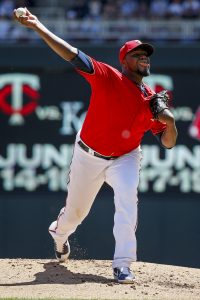 While this situation could have made some teams wary about Pineda’s 2019 performance, and perhaps paved the way for him to return the team that knew him best, there was ample interest in his services. Darren Wolfson of 5 Eyewitness News reports that the Blue Jays, Giants, Rangers, Braves, and White Sox also looked at adding Pineda in free agency. MLBTR ranked Pineda 17th on our list of the winter’s top 50 free agents, and his contract fell just shy of the $22MM we projected he would land on a two-year deal.
In the wake of his TJ surgery, Pineda delivered arguably the best season of his career in 2019, posting a 4.01 ERA, 8.6 K/9, and 5.00 K/BB rate over 146 innings. It wasn’t an entirely smooth year, since he had two minimal injured list stints (for a triceps strain and knee tendinitis), and Pineda also had one of the game’s least-impressive spin rates.
Still, a 2.7 fWAR season coming off Tommy John surgery is certainly sturdy, and the Twins can expect even more from the righty once he returns in May. While multiple injuries and issues with the home run ball have dimmed the profile of a player who was considered one of the sport’s top pitching prospects, Pineda looks like a very solid mid-rotation candidate in this next phase of his career.
Facing one of the more dire pitching situations of any contender heading into the offseason, the Twins have now brought back both Pineda and Jake Odorizzi, who accepted the club’s one-year, $17.8MM qualifying offer. Getting Odorizzi and Pineda back at reasonable prices before the Winter Meetings is already a nice result for Minnesota, who still have up to two more rotation spots to fill beyond ace Jose Berrios. The next arm could come at a much higher price, as the Twins are making a push to sign Madison Bumgarner, and they also made Zack Wheeler an offer before Wheeler signed with the Phillies.
Photo courtesy of USA Today Sports Images
SK Wyverns Posts Lefty Kwang-hyun Kim
TODAY: Kim’s official posting period begins tomorrow morning and ends at 4pm CT on January 5, as per Yoo’s latest report. The delay in Kim’s posting was due to some extra medical documentation that the KBO had to submit to Major League Baseball.
NOV. 28: The KBO has officially asked MLB to post Kim, Jeeho Yoo of Yonhap News tweets. After MLB notifies its clubs, Kim’s 30-day negotiating window will open at 8 a.m. ET the next day.
NOV. 22, 5:32pm: Kim is getting hits from several MLB teams, per Ken Rosenthal of The Athletic (subscription link). The Mets, Royals, Dodgers, Diamondbacks, and Cubs are all said to have shown some level of interest in the southpaw. It remains to be seen whether he’ll be seen as a rotation or bullpen candidate and what kind of salary terms teams will be amenable to offering.
1:38am: The SK Wyverns of the Korea Baseball Organization will post left-hander Kwang-hyun Kim, according to Naver Sports (via Dan Kurtz of MyKBO.net). Kim has already made it known that he’d like to pursue a major league opportunity in 2020.
Under the rules of the agreement between MLB and the KBO, Kim will be free to negotiate with all 30 big league clubs upon his posting. The release fee the Wyverns would receive if Kim were to sign with a major league team would depend on the value of his contract.
This will be the second posting for Kim, who was available to major league teams back in 2014 but was unable to reach an agreement with the Padres after they won the bidding for him for $2MM. The Padres are reportedly among several teams who have shown much more recent interest in Kim, a longtime star in his homeland.
The 30-year-old Kim has pitched his entire career with the Wyverns since debuting in the KBO at the age of 18 in 2007, though he did miss all of 2017 while recovering from Tommy John surgery. Kim has bounced back well from that procedure, however, and owns a sparkling 3.27 ERA with 7.8 K/9 and 3.5 BB/9 in 1,673 2/3 innings in what has typically been a hitter-friendly league. He logged an even better 2.51 ERA and recorded 8.5 K/9 against 1.8 BB/9 across 190 1/3 frames in 2019.
Kim’s repertoire includes a low- to mid-90s, a major league-caliber slider, a curveball and a forkball, as Sung Min Kim of the KBO’s Lotte Giants tweeted in August. Although Kim boasts a well-rounded pitch mix, it’s unclear how aggressively MLB teams will pursue him. FanGraphs’ Eric Longenhagen wrote in their Top 50 free agent rankings that Kim’s slider is a “nasty, tilt-a-whirl” offering but that the rest of his pitches are average at best, calling him more of a fifth starter or swingman.
Teams will surely have their own ideas about how to coax some improvements out of the lefty, be it via a move to the bullpen or some alterations to his pitch selection and location. For now, though, he’ll at least add a bit more intrigue to a southpaw pitching market led by fellow Korea native Hyun-Jin Ryu, Madison Bumgarner, Cole Hamels and Dallas Keuchel on the starting side and Drew Pomeranz on the relief side.
Reds Sign Mike Moustakas
Dec. 5: The Reds have formally announced the agreement and confirmed the reported contractual terms. Moustakas has agreed to a four-year, $64MM deal — the largest free-agent signing in Reds franchise history.
Bobby Nightengale Jr. of the Cincinnati Enquirer breaks down the yearly details: Moustakas will earn $12MM in 2020, $14MM in 2021, $16MM in 2022 and $18MM in 2023. There’s also an unannounced club option for the 2024 season that is valued at $20MM and comes with a $4MM buyout.
Dec. 2: The Reds have agreed to a deal with free agent infielder Mike Moustakas, according to Jon Heyman of MLB Network (Twitter links). It’s a four-year, $64MM pact for the Scott Boras client, according to reports from Heyman and Jeff Passan of ESPN.com (via Twitter).
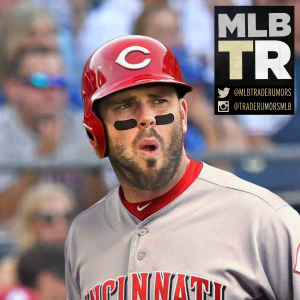
After two disappointing trips through the free agent process, it seems Moose has finally secured a long-awaited long-term agreement. His recently demonstrated ability to line up at second base was a game changer for the long-time third baseman. Moustakas now appears likely to pair up with Freddy Galvis to form a bit of an unlikely double-play combo in Cincinnati.
We predicted a five-year pact for Moustakas after the 2017 season, when he was a high-quality and still youthful third baseman. After he was forced into a pillow deal, we downgraded expectations to a two-year deal entering the 2018-19 winter. Moustakas again settled for a single-season guarantee from the Brewers. On the heels of another solid, but hardly otherworldly season, we doubled down on that two-year guess … only to see Moustakas absolutely smash expectations.
Having seen him up close over the past two seasons, the Reds clearly believe that Moustakas is not only capable of holding down the fort at second base, but doing so well and for some years to come. The corners are already locked up for the foreseeable future with Joey Votto and Eugenio Suarez.
And the Cincinnati front office is also going all-in on the bat of Moustakas. He has now twice exceeded thirty home runs and has topped the .200 mark in isolated power in each of the past four campaigns. The power is real, but so are the on-base struggles. Moustakas’s .329 OBP from 2019 was a career high-water mark but barely topped the league average.
Over the course of his career, Moustakas has reached base at a marginal .310 clip. Can he sustain and even extend his relatively productive 2019 in the OBP arena? Moustakas did carry a personal-best 9.1% walk rate in 2019, though his swinging-strike rate also crept up to a new high-water mark (11.0%). He has never hit much for average, so continued commitment to drawing free passes may be the ticket.
Even at his best, Moustakas has never rated as a true star. He has topped 2.0 fWAR in each of the past three campaigns but hasn’t gone past 3.0 since 2015. While bWAR put him at 3.2 wins above replacement in 2019, it took a dimmer view of his prior three seasons. And at this point, youth isn’t really on Moose’s side. But the Reds obviously feel that Moustakas will continue to be a steady producer and were willing to pay for his consistency. It stands to reason that other teams did as well, since the bidding pushed so far north.
Brewers Acquire Omar Narvaez
11:00am: The Brewers have formally announced the trade.
“Omar has established himself as one of the best offensive catchers in the game,” president of baseball operations David Stearns said in a press release. “We believe his bat will give us an impactful left-handed presence in our lineup.”
9:20am: The Brewers look to have found their replacement for Yasmani Grandal, as they’ve reportedly struck a trade to acquire Omar Narvaez from the Mariners in exchange for minor league right-hander Adam Hill and a Competitive Balance draft pick. The Brewers’ pick this year lands in Round B this year and is currently slotted in at No. 71 overall, although draft forfeitures for free agents who rejected qualifying offers could nudge that selection up a few spots.
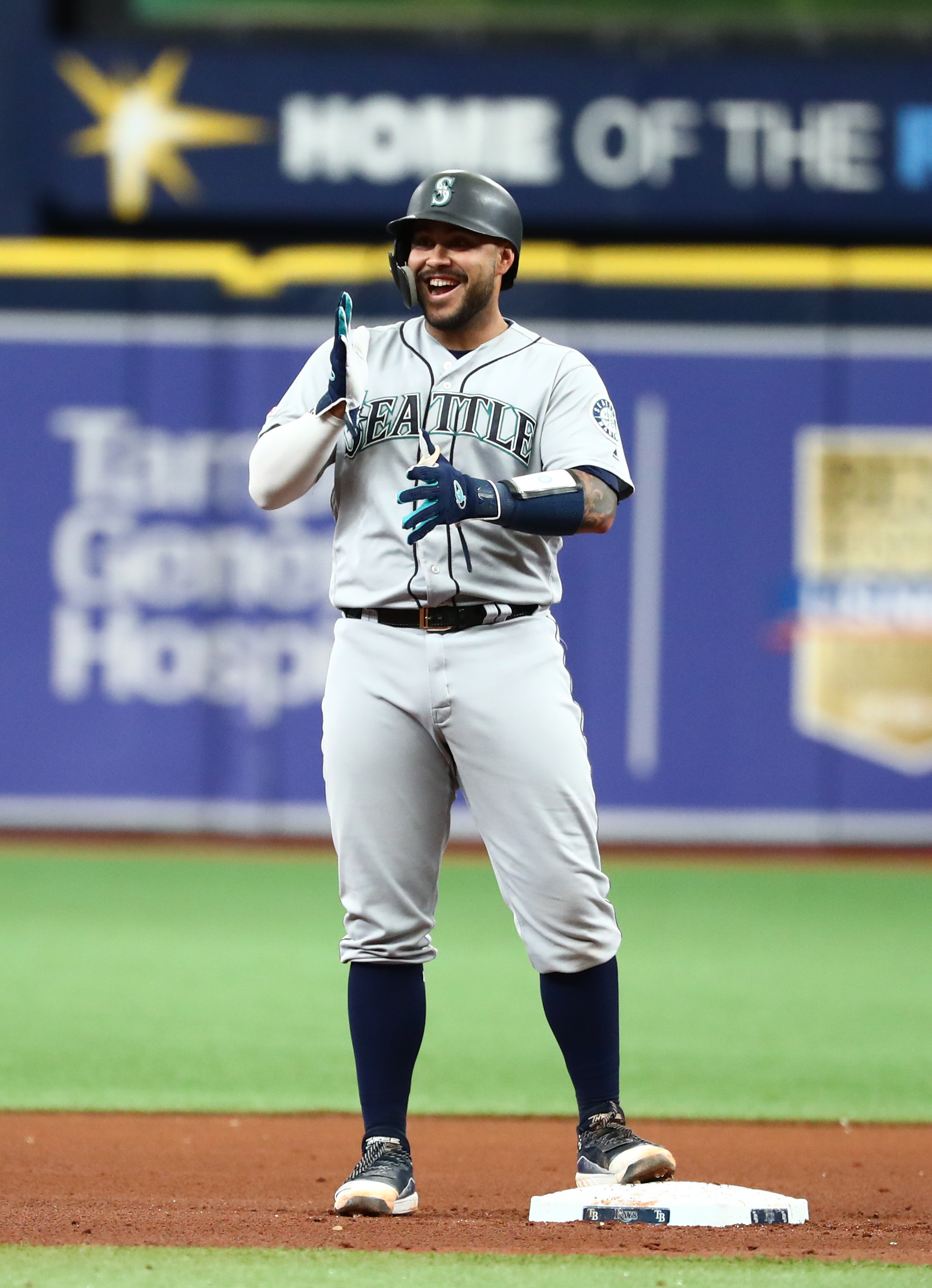 Narvaez is one of the few backstops in baseball that can come close to matching Grandal with the bat. And he’ll cost a whole lot less, bringing three seasons of control that begin with a projected arbitration cost of just $2.9MM. That’s not to say the Brewers won’t miss the outgoing Grandal. He’s a premium defender, especially in the pitch-framing department. Narvaez is considered a work in progress with the glove. He graded as one of the game’s worst framers in 2018 but did make strides to average levels last year.
Though Narvaez is unquestionably a nice addition, there are some risks here for the Milwaukee organization. His .278/.353/.460 slash and 22 long balls from 2019 came despite a decidedly chilly 85.4 mph average exit velocity and 27.5% hard-hit rate. Narvaez can draw a walk, with an 11.3% career rate, but could slip back towards league-average in overall offensive productivity if he can’t sustain the power output.
One other factor here: Most of the damage done by the left-handed-hitting Narvaez last year came against right-handed pitching. The Brewers will presumably task Manny Pina with a larger role than he was allotted last year with Grandal around.
As for the Mariners, this is only the latest in a long line of roster swaps. Consider its place in this strand of the voluminous trade history of Seattle Jerry Dipoto. Narvaez arrived last fall in the swap that sent reliever Alex Colome to the White Sox. Colome had only just landed in Seattle along with Denard Span in a creative mid-2018 arrangement. Now, after one productive year with the M’s and despite several seasons of affordable control remaining, the 27-year-old Narvaez is heading out the door. He stands to be replaced by 28-year-old Tom Murphy, who was himself picked up in a late-spring deal earlier in 2019.
Murphy’s own booming breakout in Seattle last year presumably helped nudge the Mariners into a move here. There’s also a solid prospect on the way in Cal Raleigh, though he’s not necessarily ready for prime time and isn’t a sure thing. The Mariners will presumably now set out looking for a second piece of a new backstop tandem. Since the right-handed-hitting Murphy made his mark almost exclusively against left-handed-hitting pitching last year — he carried a whopping 450-point OPS spread — it stands to reason that the team will prefer to find a player who (like the outgoing Narvaez) profiles as a strong option against opposing righty pitching.
In Hill, the Mariners will acquire a 2018 fourth-rounder who’s already been traded once since being drafted out of the University of South Carolina. The Mets selected Hill with the 110th overall pick in 2018 but traded him to the Brewers in exchange for Keon Broxton last January less than a year after that pick. (Ironically, Broxton landed in Seattle on a waiver claim long after the Mets had cut him.)
Hill spent the 2019 season with Milwaukee’s affiliate in the Class-A Midwest League, tallying 121 2/3 innings of 3.92 ERA ball with 8.1 K/9, 4.1 BB/9, 0.89 HR/9 and a 44.4 percent ground-ball rate in 23 starts (plus another three relief outings). Hill is 6’6″ and listed at 225 pounds, so he has plenty of size to stick as a starter, though reports from FanGraphs and MLB.com note that his questionable command could drop him into a bullpen role despite the potential for three average or better pitches (fastball, slider, changeup). He was ranked in the back half of the Brewers’ top 30 prospects and should fall into similar standing within a rapidly improving Mariners farm system.
Seattle will also pick up an additional pick in the 2020 draft as well as the slot money that accompanies that selection. Draft slot values for next year aren’t yet known, but picks in that general vicinity slotted in around $900K in value last year, so it’s likely the M’s are adding close to a million dollars to next year’s draft pool. Seattle gave up two fairly expensive seasons of Colome to acquire four years of Narvaez in the first place, and they’ve parlayed that deal into a productive year from Narvaez, a decent pitching prospect and some additional capital in the upcoming draft. It’s not an overwhelming return, but the end result moves the needle on the Mariners’ rebuild forward a bit.
Ken Rosenthal of The Athletic reported that the two sides were close to a deal (via Twitter). Greg Johns of MLB.com reported the Mariners’ return and that the deal had been completed (via Twitter).
Mets Acquire Jake Marisnick
10:40am: The Astros and Mets have both announced the trade.
10:27am: Houston will receive left-hander Blake Taylor and outfielder Kenedy Corona in return for Marisnick, ESPN’s Jeff Passan tweets. Taylor was on the Mets’ 40-man roster after having his contract selected last month and will now go on Houston’s 40-man roster.
10:05am: The Mets and Astros are in agreement on a trade that will send outfielder Jake Marisnick from Houston to New York, MLB Network’s Jon Heyman tweets. Ken Rosenthal of The Athletic first (via Twitter) reported that the two sides were close to a deal. Houston will receive a pair of minor leaguers in return for Marisnick, per SNY’s Andy Martino (Twitter link).
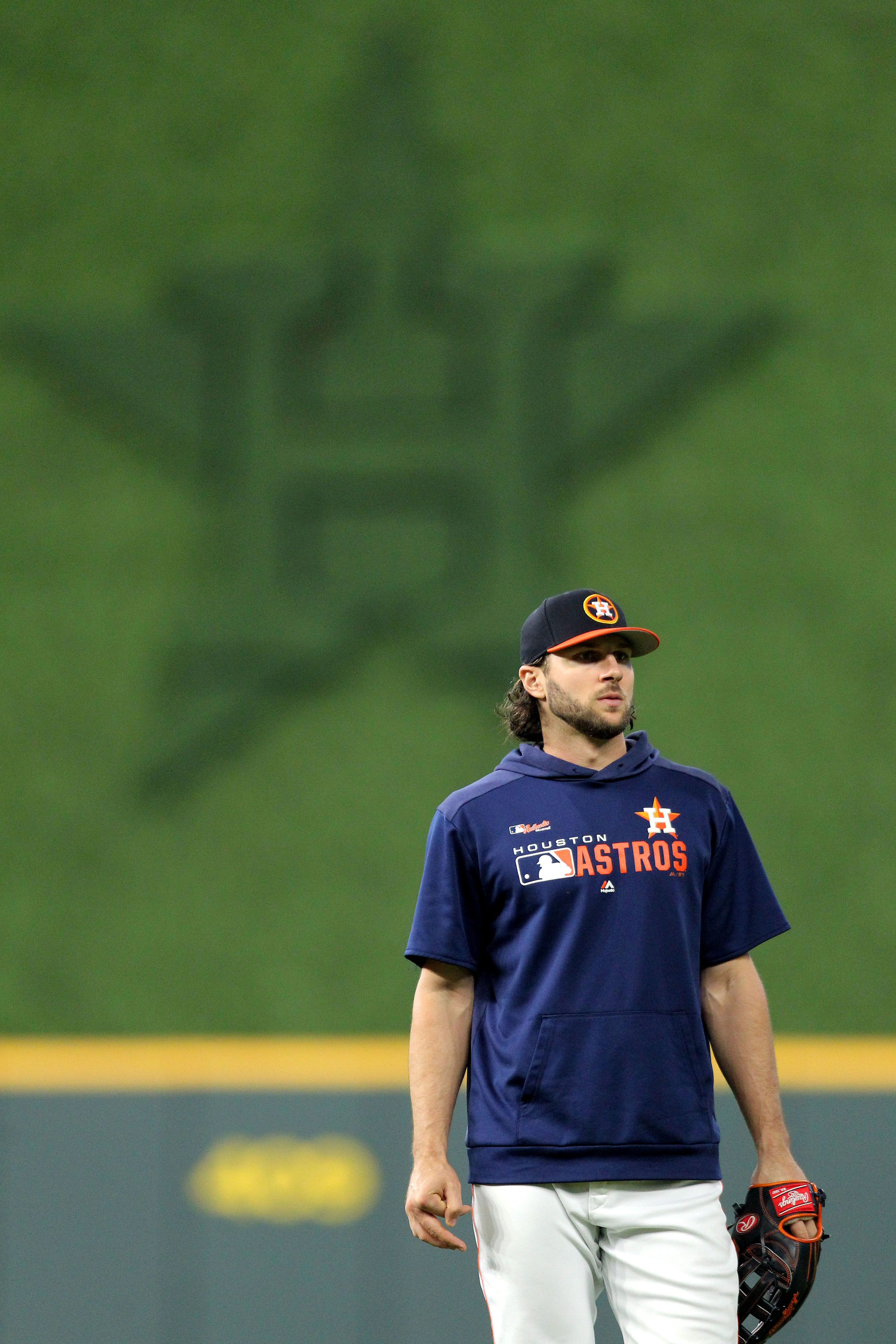
The trade is seemingly a sensible move for both clubs. Houston has an abundance of outfielders on the roster with Michael Brantley, George Springer, Kyle Tucker, Josh Reddick, Myles Straw and Yordan Alvarez all likely ticketed for varying levels of time in the outfield in 2020. Meanwhile, the Mets have a need for a center fielder but also lack payroll flexibility, making Marisnick and his projected $3MM salary an appealing target. The Astros themselves are on the cusp of luxury tax territory, so shedding even a relatively minimal salary is of some help. As noted in our Offseason Outlook on the Astros, looking to move the salaries of Marisnick and/or Reddick was a plausible course of action for Houston this winter. It still seems likely that they’ll at least explore their options with Reddick and his $13MM salary.
Marisnick, 29 in March, will be a short-term acquisition for Mets GM Brodie Van Wagenen and his staff, as he’s entering his final season of club control. He’s been utilized in a part-time capacity in Houston and hasn’t provided much offense in recent years, hitting .224/.283/.406 over the past two seasons combined. But Marisnick runs well and grades out as a terrific outfield defender; over the past two years he’s registered 17 Defensive Runs Saved, a +7.5 Ultimate Zone Rating and 21 Outs Above Average despite only logging 1327 innings in the outfield. For a Mets club that has long struggled on the defensive side of the game, Marisnick’s glove will be a welcome addition even if it comes at the cost of some offense.
In some ways, the acquisition of Marisnick mirrors the Mets’ acquisition of Keon Broxton last January. Like Broxton, Marisnick is a glove-first center fielder with notable strikeout issues and a history of OBP deficiency. His swing-and-miss troubles aren’t as extreme as were Broxton’s, however, and Marisnick has a lengthier track record as a generally useful player. He’s typically been worth between one and two wins above replacement in each of the past five years and could, of course, deliver a bit more overall value if he’s afforded more playing time. Even if he washes out in his new setting (as Broxton did), the financial hit won’t be substantial, and given his limited offensive track record and waning club control, the prospect cost to acquire him was rather minimal.
Neither Taylor nor Corona are considered to be among the Mets’ top prospects. The 24-year-old Taylor did log a 2.16 ERA with 10.0 K/9 and 3.2 BB/9 in 66 1/3 minor league innings of relief, but he did so against much younger competition. Taylor opened the year at Class-A Advanced, despite his age, and only moved up to Double-A midway through the season. Taylor did briefly reach Triple-A in 2018 but struggled both there and in Double-A, leading to the decision to have him repeat multiple minor league levels in 2019. His improved results are encouraging, but he’ll turn 25 next season and has only pitched 50 innings above A-ball, so he’s far from a sure bet to make an impact out of the Astros’ bullpen.
Corona, 19, signed with the Mets as an international amateur less than a year ago. He hit .301/.398/.470 in 63 minor league games this season, but as was the case with Taylor, he was older than the average competition he was facing. Corona, who’ll turn 20 next March, began the season in the Rookie-level Dominican Summer League, though he did top out with four games with the Mets’ short-season Class-A affiliate. He’ll likely be ticketed for A-ball in 2020, where the Astros will get a better idea of how he can handle more experienced competition.
Steve Cohen In Talks To Increase Investment In Mets
The Mets announced this afternoon that minority owner Steve Cohen and the Sterling Partners (owner Fred Wilpon’s company) are negotiating a deal in which Cohen “would increase his investment in the New York Mets.” The Athletic’s Ken Rosenthal first reported the news just minutes before the organization made a formal announcement (Twitter link).
The arrangement would make Cohen the new majority owner of the Mets if it is indeed completed, as Bloomberg reports that the proposed sale of shares would give him an 80 percent share of the team, which is being valued at $2.6 billion. Newsday’s Tim Healey tweets that Cohen would become the Mets’ control person heading into the 2025 season under the current proposal.
Under the terms of the yet-to-be-finalized agreement, Fred Wilpon (the co-founder and senior partner of Sterling Equities) would remain the Mets’ CEO and control person for another five years. His son, Jeff Wilpon, would also remain COO for another five years. Cohen will continue on as CEO of Point72 Asset Management, per the announcement.
Any ownership-level shakeup, of course, can have payroll implications for a team, but there’s no immediate indication that the Mets will increase spending in the near future. To the contrary, multiple reports this week have indicated that the Mets may need to move some undesirable contracts before spending further this winter — a reality that has long since been apparent to any who’ve closely examined the team’s payroll outlook. As for what would happen with regard to team payroll down the line, that can’t be known at this time, but it’s worth highlighting that the Bloomberg Billionaire Index lists Cohen’s net worth at a staggering $9.2 billion.
Today’s announcement seemingly puts a finite window on the Wilpons’ rein atop the organization and, as ESPN’s Buster Olney points out (Twitter link), perhaps explains why the club has been so focused on winning as soon as possible and making splashy moves toward that end. The Wilpon family has long been among the most highly scrutinized ownership groups in all of Major League Baseball, with reports of organizational dysfunction and over-involvement in more granular aspects of day-to-day operations becoming commonplace in recent years.
Angels Acquire Dylan Bundy
4:16pm: The Orioles have announced the move. Their 40-man roster is down to 37 players.
3:41pm: Also going to the Orioles in the deal are right-handers Zach Peek, Kyle Bradish and Kyle Brnovich, Jeff Passan of ESPN.com reports (Twitter link).
3:06pm: The Angels have reached a deal to acquire right-hander Dylan Bundy from the Orioles, Ken Rosenthal of The Athletic reports (via Twitter). Minor league right-hander Isaac Mattson is among the players headed back to the Orioles in the trade, which should be the first of several moves made to add to the Angels’ rotation this winter. Jon Meoli of the Baltimore Sun reports that the Orioles will acquire a total of four minor league pitchers in the deal (Twitter link).
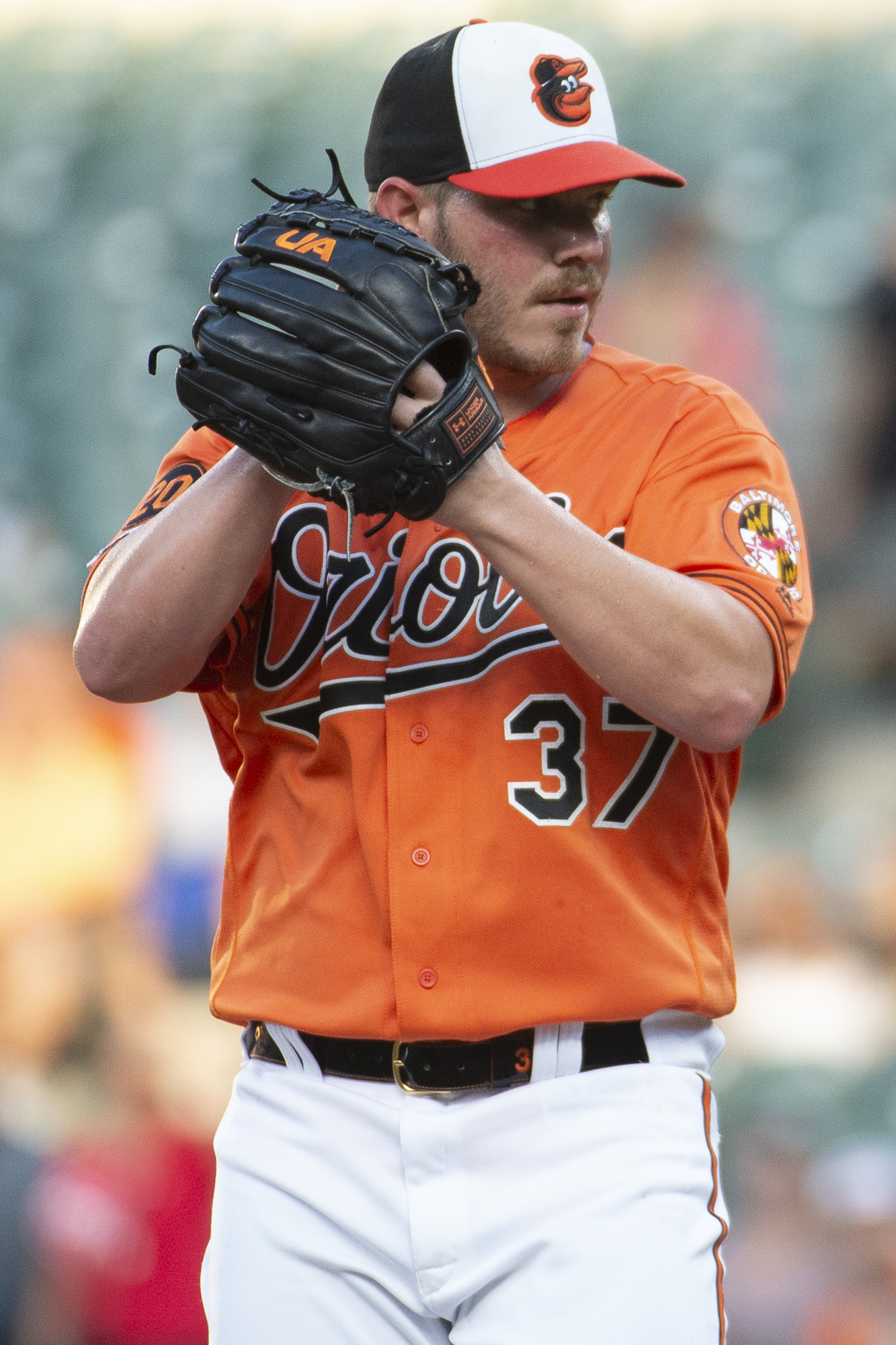
Bundy, 27, was the fourth overall pick by the Orioles back in 2011 and was touted as one of the game’s premier pitching prospects before a slew of injuries slowed his path to the big leagues. Once heralded as a potential ace, he’s instead settled in as a back-of-the-rotation arm in Baltimore, although despite a loss of velocity on his formerly blazing heater, Bundy still creates some optimism that there could be more in the tank.
First and foremost, it should be noted that he’s largely distanced himself from his early-career injury troubles, making 89 starts across the past three seasons as the lone source of consistency in the Baltimore rotation. He’s averaged better than a strikeout per inning over the past two seasons as well, and in 2019 posted a career-high 12.9 percent swinging-strike rate and 35.7 percent opponents’ chase rate on pitches outside the strike zone.
Bundy averages just 91.2 mph on his fastball at this point, but his ability to miss bats is undeniable. Drilling down a bit deeper, the spin rate on Bundy’s fastball ranked in the 95th percentile of MLB hurlers back in 2017 and has fallen in the 86th percentile in each of the past two seasons. His slider has generated whiffs at a near-25 percent clip over the past three seasons as well.
All of that said, Bundy’s bottom-line results simply haven’t been that inspiring since establishing himself as a rotation regular in Baltimore. He’s totaled 503 innings dating back to 2017 but pitched to a lowly 4.83 ERA and 4.76 FIP in that time. Home runs have been a particular problem for Bundy, who served up a league-high 41 long balls in 2018.
Bundy did work to counteract that in 2019, throwing fewer four-seamers and more changeups. The resulting 41.5 percent ground-ball rate was the highest of his career, and if he can continue to induce grounders on a more regular basis, he should be aided by an improved infield defense in Anaheim, where Andrelton Simmons and David Fletcher both grade as standouts with the glove. Simply moving away from Camden Yards and the many hitter-friendly parks the AL East has to offer could also shave a few home runs off his total moving forward as well.
From a contractual standpoint, there’s plenty to like about Bundy. He’ll be eligible for arbitration both this winter and next before reaching the open market upon completion of the 2021 season, and he’s projected by MLBTR contributor Matt Swartz to earn an affordable $5.7MM salary for the upcoming 2020 season.
The Angels, perhaps more than any team in baseball, have been decimated by injuries in recent years, so Bundy’s average of 29.7 starts over the past three seasons alone surely holds appeal to the Halos. He’ll slot into a rotation mix that features a returning Shohei Ohtani (who should be recovered from 2018 Tommy John surgery), Andrew Heaney and youngsters like Griffin Canning, Patrick Sandoval, Jaime Barria and Jose Suarez.
Of course, the Angels are also known to be in the hunt for much bigger fish in free agency this winter, with Gerrit Cole and Stephen Strasburg both rumored to be of interest to GM Billy Eppler and his staff. Other names on the market include Madison Bumgarner, Hyun-Jin Ryu and Dallas Keuchel, and it’d be a rather notable surprise if the Angels didn’t add at least one high-end arm to join Bundy in the updated rotation — be it via free agency or via trade. Given Bundy’s relatively low salary, there’s ample financial room for the Angels to do just that; they’re currently projected to come in around $150MM in 2020 payroll, and their luxury tax considerations are only a bit north of that mark.
Turning to the Orioles’ return, the 24-year-old Mattson, 24 will slot into the upper levels of the Baltimore farm system. He’s not a high-end prospect and wasn’t considered to be among the 30 best minor leaguers in the Angels’ system by either MLB.com or FanGraphs, but he enjoyed a strong 2019 season. A 19th-round pick in 2017, Matttson soared through the Angels’ system with 73 1/3 innings of 2.33 ERA ball and reached Triple-A late in the year. He posted a gaudy 13.5 K/9 mark against 3.3 BB/9 out of the bullpen and went on to post even better numbers in the Arizona Fall League; in 10 2/3 innings of relief in the AFL, Mattson allowed two earned runs (1.69 ERA) on nine hits and three walks with 12 strikeouts. He’s generated average or better ground-ball numbers throughout his minor league tenure and should be a near-term option for the ‘pen in Baltimore.
Bradish turned 23 in September and spent the season with the Angels’ Class-A Advanced affiliate after being selected in the fourth round of the 2018 draft. He logged a 4.28 ERA, 10.7 K/9 and 4.7 BB/9 while running up a 43.9 percent ground-ball rate in 101 innings. MLB.com ranked him 21st among Angels prospects, praising his four-pitch mix and deceptive delivery but noting that said delivery also leads to control issues.
Both Peek (sixth round) and Brnovich (eighth round) were college arms drafted by the Angels this summer. However, neither pitched following the draft, as the Angels shut both down per an organizational policy for college arms (as noted by MLB.com’s Joe Trezza, on Twitter). Baseball America ranked Brnovich 107th in the draft class and Peek 193rd, while MLB.com ranked both just inside the top 200 (Peek 178th, Brnovich 185th).
The subtraction of Bundy leaves what already looked to be perhaps the worst rotation in baseball in even more grisly shape, although the Baltimore organization has made it abundantly clear that winning games in 2020 isn’t a priority. To the contrary — the Orioles are quite likely gunning for the No. 1 overall pick in the 2021 draft as part of what looks to be an Astros-esque rebuild under second-year GM Mike Elias (who was hired out of the Houston organization). The next several seasons won’t be pretty for Orioles fans, and there’s no guarantee that they’ll come out on top of this rebuild like the Astros and Cubs did, but their aim to do so is readily evident.
Braves Sign Cole Hamels
1:15pm: The Braves have formally announced the signing and (unlike most clubs) confirmed the terms of the contract in their press release. Their 40-man roster is now up to 38 players.
11:18am: The Braves have struck a one-year deal with lefty Cole Hamels, per ESPN.com’s Jeff Passan (via Twitter). It’s said to include a $18MM guarantee for the John Boggs client.
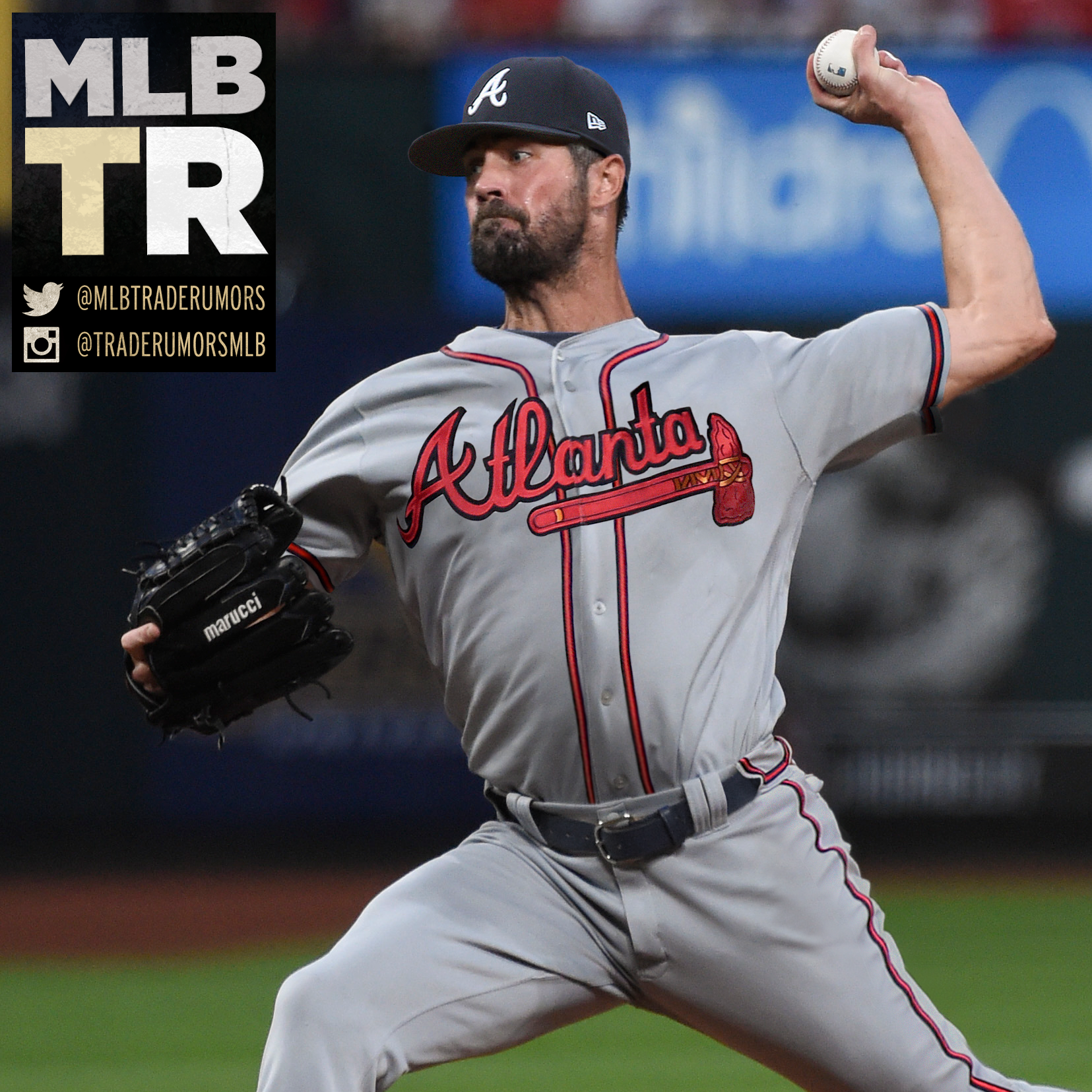
Hamels can still get the job done as he closes in on his 36th birthday. Despite losing more than a full tick on his fastball from 2018-2019, he generated swings and misses at close to a twelve percent rate — much as he has done throughout his 14-year career. Since landing with the Cubs in the second half of the 2018 campaign, Hamels has spun 218 innings of 3.30 ERA ball over 39 starts while maintaining 9.0 K/9 and 3.3 BB/9.
This match has long made sense — for all the reasons the team decided last year to ink fellow veteran southpaw Dallas Keuchel to a rental contract. MLBTR predicted Hamels to land in Atlanta in our ranking of the top fifty free agents.
Entering the winter, we believed Hamels could command a two-year deal at a $15MM AAV. But it emerged soon after the market opened that the veteran southpaw actually preferred a single-season mercenary arrangement. That’s just what he’ll get, and he’ll command a bit of a salary premium by foregoing any long-term security.
Hamels drew widespread interest over the past month. That continued into the month of December, with Bob Nightengale reporting (Twitter link) that a half-dozen organizations were still involved as of yesterday. The Phillies, White Sox, Rangers, and — surprisingly — the Giants were among the teams in the market until the end, per the report.
That Philadelphia link only further increases the NL East intrigue that we’re bound to see in 2020. While he is a few years removed from his tenure with the Phils, Hamels will always be known first and foremost as a long-time Phillies hurler who was one of the team’s key players during its last run of success.
Now, Hamels will try to help the Braves get over the hump. The Atlanta org has won the past two division crowns, but hasn’t yet managed to translate that success into the postseason. Hamels promises to step in for Keuchel as a durable veteran who has been there and done that plenty of times over a long and prosperous career.
This is the latest early strike for the Braves, who have already ticked through quite a few items on the checklist before the Winter Meetings even kick off. Hamels isn’t the top-of-the-rotation arm that might be preferred, but his addition doesn’t preclude further adds. For now, though, the focus will likely remain on re-signing or replacing third baseman Josh Donaldson.
Photo courtesy of USA Today Sports Images.
Athletics Sign Jake Diekman
1:45pm: The Athletics have formally announced the signing.
1:21pm: The Athletics and free-agent lefty Jake Diekman have agreed to a two-year contract with a club option for a third season, ESPN’s Jeff Passan reports (Twitter links). The Beverly Hills Sports Council client will be guaranteed $7.5MM over the life of the pact.
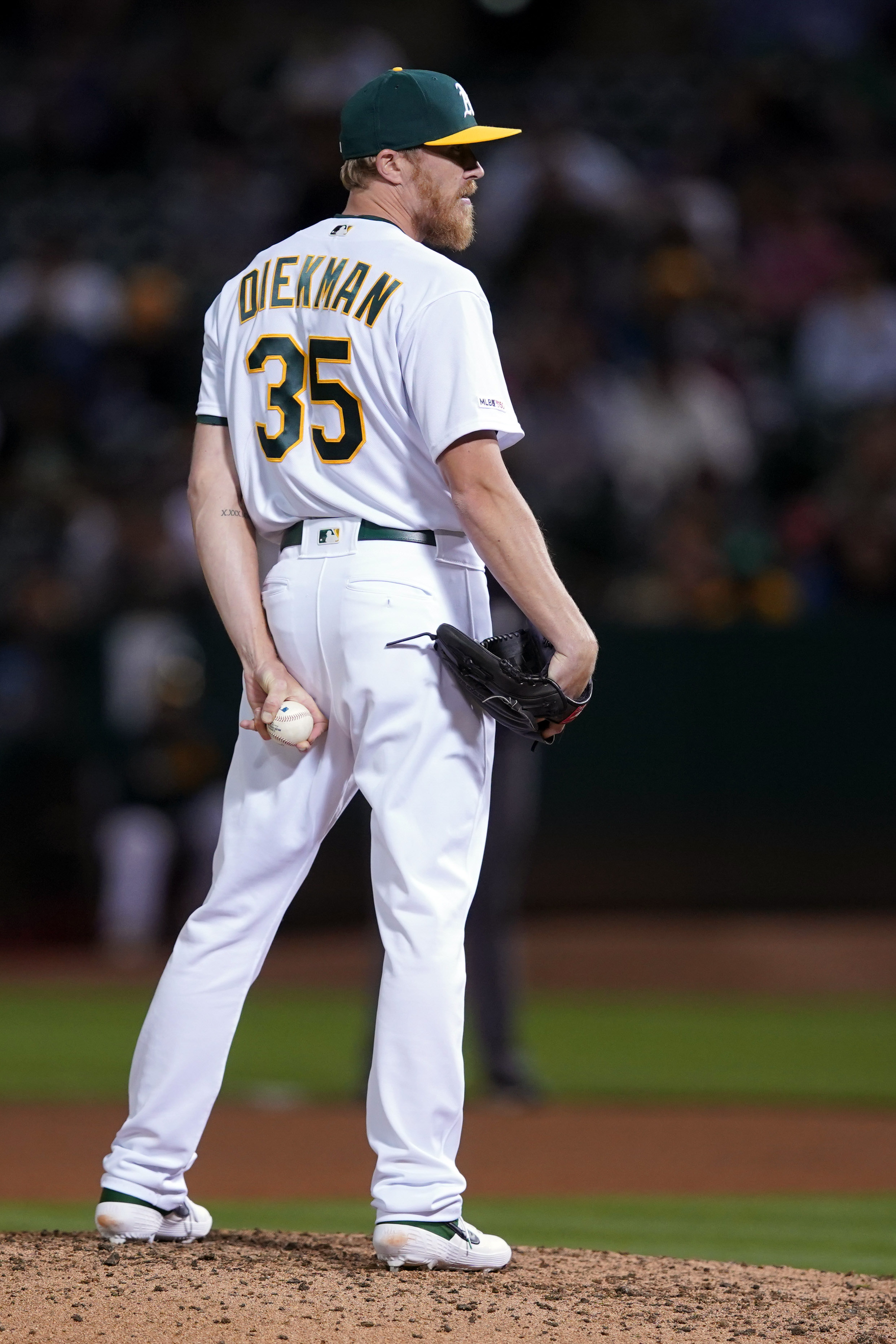
Diekman, 33 next month, inked a one-year, $2.75MM pact with the Royals last winter and was traded to the A’s prior to the July 31 deadline. The veteran southpaw pitched to a 4.43 ERA with 21 strikeouts but 16 walks and three hit batsmen through 20 1/3 innings with the A’s, continuing control problems that have plagued him for much of his MLB tenure. Diekman clearly made a strong impression on the Oakland organization, though, and he’s now in line to call it home for the next two seasons.
Control issues notwithstanding, the appeal in Diekman is easy to see, as his raw stuff is tantalizing. His 95.8 mph average heater is one of the fastest among all left-handed relievers in baseball, and Diekman’s overall 16.1 percent swinging-strike rate ranked 18th among 158 qualified reliever this past season. He’s averaged better than 11 strikeouts per nine innings pitched in his MLB career and fanned 28.2 percent of the hitters he’s faced in the big leagues. A look at his Statcast profile reveals that Diekman was one of the best in the game at limiting hard contact — specifically in allowing opponents to barrel up his offerings.
Diekman will pair with lefty T.J. McFarland, whom the A’s claimed off waivers last month and inked to a one-year deal to avoid arbitration yesterday, giving manager Bob Melvin multiple lefties to deploy in 2020. The Oakland ‘pen will once again be anchored by emergent closer Liam Hendriks, with Yusmeiro Petit, Joakim Soria and rebound hopeful Lou Trivino adding to the setup corps as well.
The move to add Diekman comes just a day after Oakland traded Jurickson Profar to the Padres and non-tendered Blake Treinen, Ryan Buchter and Josh Phegley — substantially reducing payroll in the process; that quartet had been projected to earn a combined $17.6MM on a perennially low-payroll A’s club.
Some of those funds will be immediately reallocated to Diekman, it seems, but the Oakland payroll still projects to come in north of previous levels. Last year’s $92MM Opening Day mark was a club record, and the A’s projected to come in around $95MM even before bringing Diekman aboard. It’s always possible that they’ll move some veteran contracts, but the A’s at the very least appear poised for a second season above the $90MM mark, which is unheard of territory for the organization.
Rangers Met Recently With Anthony Rendon
The Rangers missed the playoffs for the third straight year in 2019, but with a new ballpark set to open next season, it appears they’re serious about returning to contention immediately. The Rangers gave right-handed starter Kyle Gibson a three-year, $30MM guarantee last week, though that deal could pale in comparison to the highest award they dole out this winter. The club’s in pursuit of the best free-agent position player on the market in third baseman Anthony Rendon, as it met with him and agent Scott Boras in Houston on Sunday, Evan Grant of the Dallas Morning News reports. The Rangers haven’t made a contract offer yet, per Grant, but “several executives” have indicated they’re the favorites to sign him, Bob Nightengale of USA Today sports tweets.
Signing Rendon would likely mean doling out a guarantee well above $200MM, though it could help the Rangers’ cause that he’s a Texas native. Rendon’s by far the best unsigned third baseman in the game, but between their interest in him and Josh Donaldson, it’s clear the Rangers are serious about finding their first great option at the position since potential Hall of Famer Adrian Beltre retired after the 2018 season.
Texas, however, isn’t just considering a splash at the hot corner. Rather, the Rangers could pick up yet another high-profile starter even after signing Gibson. It’s “believed” that they’ve recently met with free-agent right-hander Zack Wheeler, according to Grant. Wheeler, who could cost around $100MM in free agency, would add another formidable arm to a rotation that has taken an obvious step forward with the acquisition of Gibson. Those two would presumably join Mike Minor, Lance Lynn and Kolby Allard to give the Rangers a rather imposing top five heading into 2020.