
A’s Listening On Jeffrey Springs, JP Sears
A’s righty Luis Severino is a known trade candidate after his struggles pitching at home in West Sacramento and his public criticism of the playing environment there, but he’s not the only A’s starter on the market this summer. The former Oakland club is also listening to offers on lefties Jeffrey Springs and JP Sears, Ken Rosenthal of The Athletic reports.
It’s not at all surprising that the A’s would listen on Springs, given the way the season has played out. The A’s acquired Springs and fellow lefty Jacob Lopez from the Rays in an offseason deal sending righty Joe Boyle, minor leaguers Jacob Watters and Will Simpson, and a Competitive Balance (Round A) draft pick the other direction. Springs, signed through 2026 with a 2027 club option, gave the A’s an immediate rotation upgrade while also coming with the allure of additional trade value if their season went south.
Things have indeed gone poorly for the A’s in their first season away from Oakland. After a decent start, the A’s dropped 11 straight games in late May, picked up one win, and then dropped another nine in a row. The Athletics are 17 games under .500 and nowhere close to the playoff picture. They’ll be surefire deadline sellers, and the two-plus years of control over a solid and affordable veteran like Springs — who sat at No. 7 on our list of the Top 40 deadline trade candidates earlier this month — should pique the interest of pitching-hungry organizations.
[Related: Athletics Trade Deadline Outlook]
Springs, 32, originally signed a four-year, $31MM extension with the Rays after a breakout showing in 2021-22. A 2023 Tommy John procedure wiped out most of the first two seasons of that deal, though the southpaw looked quite sharp in his first 33 innings back from surgery late last year. That was enough to convince the A’s to make the swap.
Springs hasn’t replicated his breakout form or last year’s late success, but he’s still been a solid arm for skipper Mark Kotsay. In 114 innings, he’s pitched to a 4.18 ERA. His 18.8% strikeout rate isn’t close to the 29% mark he showed with Tampa Bay from 2021-24, however. His 7.9% walk rate is better than average but still an increase over the 6.5% he turned in during that four-year stretch with the Rays. Springs’ 90.5 mph average four-seamer is also down from the 91.9 mph he averaged during his best seasons as a Ray.
Even with diminished stuff and results, Springs has been a source of solid innings who’s kept the A’s in the game most times he’s taken the field. He’s had the odd clunker here and there, but Springs has a dozen outings of at least six innings and three or fewer earned runs this season (not all technically “quality starts,” since two followed an opener). He’s had another three starts where he pitched into the sixth and yielded two or fewer runs but didn’t complete that sixth frame and get the quality start. At the end of the day, he’s been a respectable fourth starter.
Springs is being paid $10.5MM this year and next. His 2027 club option comes at a $15MM rate and contains a $750K buyout. There’s about $3.9MM of this year’s salary yet to be paid out, bringing the total guarantee on his one-plus seasons to about $15.15MM. If Springs can get back closer to peak form, that $15MM option will look eminently reasonable. Even if he continues on as a roughly league-average starter, it’s not an egregious price to pay, considering older veterans like Max Scherzer, Justin Verlander, Charlie Morton and Alex Cobb all received salaries of $15MM on one-year deals this past offseason ($15.5MM, for Scherzer).
Sears is a less-conventional trade candidate, as he’s controlled three years beyond the current season. He’s not performing up to past standards, due primarily to a huge spike in home runs that can be somewhat attributed to his new home park. In 101 2/3 innings, Sears has a 5.13 ERA. His 6% walk rate is a career-low mark, and this year’s 19.4% strikeout rate is up from last year’s 18.1% mark (but also down from 2023’s 21.9% rate).
The 29-year-old Sears has yet to reach arbitration eligibility but will do so for the first time this winter. He’s not a playoff-caliber starter but could solidify the back of a contending club’s rotation down the stretch — particularly if said club plays in a park that’s not quite so homer-friendly. Even more borderline contenders — the D-backs, for instance — could look at Sears as someone who can provide some durable innings at an affordable rate next season and beyond. Sears made 32 starts in both 2023 and 2024, and he’s never been on the major league injured list. He’s a fourth starter at his best, but he’ll likely earn under $4MM in his first trip through arbitration, making him a budget-friendly option.
Phillies Sign David Robertson
July 21: The Phillies announced that they’ve signed Robertson to a one-year deal. He’s consented to be optioned to Triple-A Lehigh Valley, where he’ll ramp up in preparation for his 2025 debut.
July 20: The Phillies and free agent reliever David Robertson are in agreement on a major league contract, reports Ken Rosenthal of The Athletic. The self-represented Robertson did not sign with a team over the winter but has stayed in shape and has been throwing for interested clubs recently. MLB.com’s Mark Feinsand reports that Robertson will be paid a prorated $16MM salary for the remainder of the season. That comes out to just over $6MM through season’s end ($6.021MM — assuming it becomes official tomorrow).
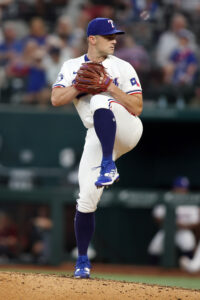
This is Robertson’s second free-agent deal with the Phillies and the third time overall that the Phils have acquired him. He inked a two-year, $23MM deal in the 2018-19 offseason that didn’t wind up paying off for the team, as the typically durable reliever wound up requiring Tommy John surgery and pitching only 6 2/3 total innings during the life of that contract. Philadelphia reacquired the righty in a 2022 trade that sent young righty Ben Brown back to the Cubs, and Robertson was excellent as the Phillies mounted a charge all the way to the World Series.
That Tommy John procedure came during Robertson’s age-34 season, and he didn’t return to a big league mound until the 2021 campaign. He’s emphatically silenced any concerns about his ability to restore his status as a high-end reliever. He’s now pitched 200 games and logged a 2.92 in 213 regular season innings since undergoing surgery. That includes a terrific 2024 season in Texas, where Robertson pitched 72 innings with a 3.00 ERA, a 33.4% strikeout rate, a 9.1% walk rate, two saves and 34 holds as the primary setup option to Kirby Yates.
Phillies president of baseball operations Dave Dombrowski was candid earlier this month in calling out bullpen help as his primary focus at this year’s trade deadline. Robertson is a potential major addition who helps on multiple levels. He’s obviously a decorated high-leverage arm coming off a strong season, and adding the lone marquee reliever on the free-agent market leaves the Phillies’ farm system intact as they look to pursue other bullpen upgrades. Beyond that, Robertson is a fresh arm who’s no stranger to pitching in the postseason — a key component for a Phillies club who lost lefty Jose Alvarado to an 80-game PED suspension earlier this year that renders him ineligible to pitch in the playoffs.
On the season, Philadelphia relievers rank 23rd with a 4.36 ERA. They’ve been better over the past month (3.89 ERA) but still have a top-heavy unit that’s been anchored by Matt Strahm, Tanner Banks and Orion Kerkering doing a disproportionate level of the heavy lifting. Offseason additions Jordan Romano (7.08 ERA) and Joe Ross (5.31 ERA) haven’t worked out as hoped.
Robertson will likely need a minor league tune-up before he’s ready to join the Phillies’ bullpen. It’s not clear what his precise timeline is, but it stands to reason that both he and Alvarado — eligible to return on Aug. 19 — will both be in the late-inning mix within the next month. The Phillies figure to remain active on the trade market as they look for a second reliever to add to the mix, and they could potentially seek an outfield upgrade as well.
Guardians Listening To Offers On Emmanuel Clase, Cade Smith
The Guardians are listening to offers on their relievers, reports Jon Heyman of The New York Post. That includes a willingness to discuss their star back-end duo of Emmanuel Clase and Cade Smith, Heyman adds, though he unsurprisingly notes that the asking price is high enough that a trade of either pitcher remains a long shot.
Teams are generally willing to field offers on almost every player. That’s particularly true for small-market clubs that are constantly trying to balance the short term and the future. It’s only sensible the Guards would hear other teams out on Clase and Smith. Teams are willing to pay a premium for relievers at the deadline. That’d be all the more true for late-game arms who are cheaply controllable for multiple seasons.
Clase is playing on a $4.5MM salary and will make $6MM next year. Cleveland has a pair of club options covering the 2027-28 seasons. Those respectively came with $10MM base salaries, though Clase has since escalated their value to $11.5MM annually by twice winning the American League Reliever of the Year award and by surpassing 200 appearances over the past three-plus seasons. He’d also receive a $1MM assignment bonus if he’s traded.
That’s well below market value for a pitcher of Clase’s caliber. He’s a much better pitcher than Tanner Scott, who signed for four years and a little over $60MM in net present value as last winter’s top free agent reliever. Clase is controllable for his age 27-30 seasons. There’s a chance he’d get into nine figures if he were a free agent.
Clase was MLB’s best reliever in 2024. He surrendered just five earned runs in 74 1/3 innings and went 47-50 in save opportunities. He had an ugly postseason performance but that came in a total of eight innings. Clase is putting together another excellent regular season this year. He has fired 44 innings of 2.86 ERA ball while going 21-25 in save chances. His 23.4% strikeout rate is essentially league average, but he has never been a huge strikeout artist. Clase excels with plus command and movement on his 99 MPH cutter, which hitters very rarely square up.
[Related: Cleveland Guardians Deadline Outlook]
Smith, 26, had a breakout rookie season to emerge as Cleveland’s top setup man. He turned in a 1.91 ERA with a near-36% strikeout rate through 75 1/3 innings a year ago. Smith’s ERA has backed up to a less impressive (though still strong) 3.07 mark across 41 frames this season. He’s striking out 35% of opponents behind a gaudy 15.1% swinging strike rate. The 6’5″ righty has a 96 MPH heater and a plus splitter. Smith is still a season and a half from reaching arbitration and is under club control for four and a half seasons.
There’s virtually no chance the Guardians would trade both relievers. If they were to move Clase, it’d be largely driven by the belief that Smith would be an elite closer in his own right. It’s even tougher to see them pulling the trigger on a Smith deal when he’ll play for barely above the league minimum for the next year and a half. The Guardians have a few lower-profile relievers (e.g. Hunter Gaddis, Erik Sabrowski) who could also draw some attention. They’d certainly listen on veteran righty and impending free agent Paul Sewald, but he just landed on the injured list with a shoulder strain that could keep him out beyond the deadline.
An openness to discussing Clase and Smith doesn’t signify that Cleveland is a guaranteed seller. They’re 4.5 games back of the American League’s last Wild Card spot. They have one of the easiest second-half schedules of any team, including four series against clubs with losing records (A’s, Orioles, Royals and Rockies) up to the deadline. There’s a path to getting back in the race and hoping that an excellent back of the bullpen can return them to the ALCS and beyond.
Nationals Agree To Sign First Overall Pick Eli Willits
The Nationals have agreed to sign Eli Willits, the first overall pick of the 2025 draft. The high school shortstop announced yesterday (in an interview on CNN with Wolf Blitzer) that he planned to officially ink his first pro contract today, and the Nats indeed have a press conference set to mark the event. MLB Pipeline’s Jim Callis reports that Willits will receive an $8.2MM bonus, which is the highest bonus ever given to a high school draft pick. However, Willits’ bonus is well beneath the $11,075,900 slot value assigned to the 1-1 selection.
Washington’s decision to select Willits raised a few eyebrows on draft night, and it would seem like his willingness to take a below-slot deal factored into the Nationals’ plan. With just under $2.876MM saved in draft pool money, the Nats can now re-allocate some funds towards other members of their draft class. To wit, the New York Post’s Jon Heyman reports that the Nats went way over slot to sign fourth-rounder Miguel Sime Jr., who had committed to LSU. Sime will now instead start his pro career after getting $2MM from the Nationals — Sime’s draft spot of 111th overall has an attached $687,800 slot price.
Several teams have adopted this tactic in the draft pool era, opting to spread around to their available money to multiple highly-touted players rather than commit the bulk of the draft pool towards its top pick. Willits will still end up with just under half of Washington’s $16,597,800 total pool, and the $8.2MM figure seems purposeful, as Willits can at least claim to getting the biggest draft payday of any high schooler.
This isn’t to say that the Nationals necessarily reached by picking Willits, who still well-regarded even if he didn’t top the boards of any of the most notable pundits. ESPN’s Kiley McDaniel and Baseball America were highest on Willits as the third-ranked player in their pre-draft rankings, MLB Pipeline and Fangraphs each had Willits fifth, and The Athletic’s Keith had Willits eighth.
Willits is viewed a relatively safe, high-floor type of pick, as the evaluators agreed that Willits looks like a big leaguer, even if he could top out as a regular moreso than the type of star usually associated with the 1-1 selection. That said, there’s still a lot to like about Willits’ upside given his contact skills and mature approach at the plate, especially if he can add more power. Willits has plenty of other tools, including plus speed, and a plus throwing arm and good defensive range that should make him a solid shortstop.
Rangers Trade Dane Dunning To Braves
The Rangers announced they’ve traded Dane Dunning to the Braves for minor league reliever José Ruiz and cash. Atlanta designated Jesse Chavez for assignment to clear a spot on the 40-man roster. Ruiz was outrighted last month. Texas’ roster count technically drops to 38 but will climb back to 39 tomorrow when they select the contract of first baseman Rowdy Tellez.
It’s a salary dump for the Rangers. Dunning has fallen out of favor over the past two seasons. The former first-round pick tossed 172 2/3 innings of 3.70 ERA ball during the World Series season two years ago. He only managed a 5.31 mark in 95 frames last season. While Texas tendered him a contract, Dunning had to take a very rare arbitration pay cut to ensure the Rangers didn’t move on.
That didn’t get him a spot on the Opening Day roster. The 30-year-old Dunning gave up 10 runs in 11 innings during Spring Training. Texas waived him at the end of camp in the hope that another team would take his $2.66MM salary. No one bit, and he has spent most of the year in Triple-A.
Dunning was called up in April, again cleared waivers in May, and was selected back onto the roster last month. He has been limited to five MLB appearances, all out of the bullpen, and has allowed four runs across 10 2/3 innings. He has worked as a starter in the minors, pitching to a 4.47 ERA over 46 1/3 frames in the Pacific Coast League. Dunning has punched out 24% of Triple-A opponents against a 9% walk rate.
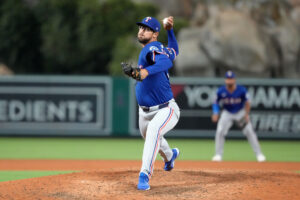
The Rangers were unlikely to give Dunning anything more than mop-up work. He had fallen behind Patrick Corbin, Jack Leiter and Kumar Rocker at the back of the rotation. Texas expects to get Jon Gray back from a wrist fracture in the next week or two. Dunning has a much better path to a rotation spot on an Atlanta team that has been decimated by injuries.
They’re without Chris Sale, Spencer Schwellenbach, Reynaldo López and AJ Smith-Shawver. They’ve given 15 starts to Bryce Elder, who has a near-6.00 ERA. Davis Daniel made his first start of the season just before the All-Star Break. He’s the nominal fourth starter behind Spencer Strider, Grant Holmes and Elder. They pressed 20-year-old Didier Fuentes into MLB work for which he was clearly not ready. He’s now back in Triple-A.
Dunning has been a capable back-end starter in the past. It seems he’ll work in long relief initially, as the Braves tabbed swingman Joey Wentz to start on Saturday against the Yankees. Dunning still has an option remaining. He’ll be eligible for arbitration at least once more. There’s a decent chance the Braves will non-tender him regardless, but they didn’t give up anything of note to acquire him.
Ruiz, 30, is a journeyman reliever. He managed a 3.71 ERA while striking out 24% of opponents over 52 appearances for the Phillies last season. Things went off the rails this year, as he has allowed 17 runs in 16 1/3 MLB innings. Atlanta claimed him off waivers from Philadelphia but waived him themselves after he gave up three runs in one inning during his second appearance with the club. He has since tossed 7 2/3 innings of four-run ball in Triple-A. The Rangers assigned him to their top affiliate in Round Rock.
The Phillies and Ruiz agreed to a $1.225MM arbitration salary. The Braves assumed that when they claimed him. Atlanta is paying down an unspecified portion of that sum. Dunning is owed roughly $1MM for the rest of the season, while Ruiz is owed about $450K. A direct swap without cash considerations would’ve knocked about $550K off the Rangers’ books. They’ll save a bit more than that depending on the amount of money that the Braves are covering.
It’s a small amount by MLB standards. However, as MLBTR pointed out in tonight’s preview of the Rangers deadline for Front Office subscribers, Texas should be motivated to cut spending around the fringe of the roster. Ownership clearly wants the front office to remain below the $241MM base luxury tax threshold. RosterResource calculated their CBT number a little above $234MM before tonight’s deal. That’s an unofficial estimate that doesn’t account for incentives that’ll add to the team’s tax number as they’re unlocked down the stretch.
The Rangers need to add at least one impact bat if they’re going to make a playoff push. They should probably acquire multiple hitters and would benefit from bringing in a power arm at the back of the bullpen. Dunning was the most obvious player for a pure salary dump as deadline season approaches. Gray, Adolis García and Jonah Heim could be candidates for a payroll-cutting trade as well, though they have (or will have, in Gray’s case) a bigger role than Dunning was playing.
As for Chavez, he’ll go back on waivers for the third time this year. There’s a good chance he’ll clear, elect free agency, then re-sign with Atlanta on a minor league contract. The 41-year-old righty has given up eight runs in as many innings over four MLB appearances this season. He has a 2.05 ERA across 30 2/3 innings in the minors.
Image courtesy of Kirby Lee, Imagn Images.
Kyle Gibson Announces Retirement
After parts of 13 seasons in the big leagues, Kyle Gibson is retiring. The longtime MLB starter announced the news on the Serving It Up show this afternoon.
Gibson, 37, has been a free agent since he opted out of a minor league contract with the Rays last month. The veteran righty had pitched very well over four Triple-A starts, but Tampa Bay did not have room in their big league rotation. Gibson said today that he hoped his Triple-A numbers would lead to an immediate MLB opportunity. When that didn’t materialize, he decided to retire. He implied that he received a major league offer a couple weeks later but he and his wife Elizabeth were happy with his decision by that point.
“It has been a lot of fun to be around the family a lot more. … That’s where I ended up a couple weeks ago when it turned out that I wasn’t going to get the opportunity that I was looking for,” Gibson added. “It has been exciting being home and turning the page to a new chapter. I’ve taken the last couple weeks to call and text people who I really wanted to let know (the news) in person. I’m going to take the next few days and try to write something up to properly thank everybody that needs to be thanked for the last 15, 16 years in professional baseball.”
Gibson’s pro career began when he was selected by the Twins in the first round in 2009. A 2011 Tommy John surgery prevented him from making his big league debut until 2013. Gibson made 31 starts the following year, the beginning of his lengthy run as an innings eater. He made at least 25 starts in all six full seasons in Minnesota. Gibson posted a pair of sub-4.00 ERA showings and has his best year in 2018. He turned in a 3.62 earned run average while setting career marks in innings (196 2/3) and strikeouts (179).
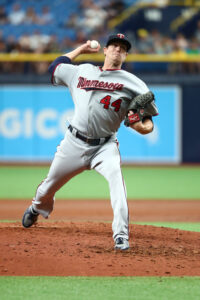
A first-time free agent after the 2019 season, Gibson joined the Rangers on a three-year deal that guaranteed $28MM. He struggled in the shortened 2020 campaign but got out to a fantastic first few months a year later. Gibson reeled off a 2.87 ERA in his first 19 starts to earn an All-Star selection. The Rangers were out of contention, so they shipped him alongside Ian Kennedy to the Phillies at the deadline. Gibson spent a season and a half at the back of the Philadelphia rotation. He posted a 5.06 ERA in 43 regular season appearances and was part of the NL’s pennant winning club in 2022. Gibson made one appearance in the Fall Classic, tossing a scoreless inning.
That marked the end of the three-year deal. Gibson would finish his career on a series of one-year contracts. He signed with the Orioles in 2023, posting a 4.73 ERA over 33 starts. He won a career-high 15 games that year and led the 101-win club with 192 innings. A Midwest native who attended the University of Missouri, Gibson chose to pitch close to home in 2024. He signed a $13MM contract with the Cardinals and remained a steady hand at the back of the rotation. He worked to a 4.24 ERA while reaching 30 starts for the fourth consecutive season.
Gibson’s final trip to free agency was not as fruitful. He remained unsigned well into Spring Training. Gibson finally returned to Baltimore on a $5.25MM contract with less than a week until Opening Day. He agreed to spend the first couple weeks of the season building up in Triple-A. The O’s brought him up at the end of April, but opponents teed off for 23 runs across 12 1/3 innings. Baltimore released him after just four MLB starts. That’d prove to be the final work of his big league career, though his professional run concluded with three consecutive scoreless starts for Tampa Bay’s Triple-A club before he triggered the opt-out clause.
Aside from this year’s extremely small sample, Gibson was a consistent and remarkably durable starter. While he never reached the 200-inning mark, he thrice got past 190 frames. Gibson topped 150 innings nine times and had a grand total of three injured list stints in his MLB career. A 2016 shoulder strain was the only injury that cost him more than a month after he reached the big leagues.
Over the 11-year stretch between 2014-24, only Max Scherzer and Gerrit Cole topped Gibson’s 1814 2/3 innings. He started 314 games during that time, 16 more than anyone else. Gibson finishes his career with a 4.60 ERA in 1878 frames. He topped 1500 strikeouts and won 112 games. Baseball Reference credited him with roughly 14 wins above replacement, while FanGraphs valued him at 21 WAR. Gibson made 30+ starts for five different teams and earned a little more than $73MM in salary, according to B-Ref. Congratulations to Gibson on an excellent run and all the best in retirement.
Image courtesy of Kim Klement, Imagn Images.
Yankees Interested In Mitch Keller
The Yankees have shown interest in Pirates right-hander Mitch Keller, reports Noah Hiles of the Pittsburgh Post-Gazette. They’re one of several clubs in the running for the 29-year-old righty, who’s signed for three additional years beyond the current season. Both the Mets and Cubs have been tied to Keller in recent weeks. Hiles adds that the Cubs currently view Keller more of a backup option in their rotation search, while the Mets are “very” interested.
Interest in Keller is only natural for the Yankees, who’ll be prominent players in the starting pitching market over the next two weeks. GM Brian Cashman acknowledged as much recently when indicating that pitching will be his top priority this summer. New York lost Gerrit Cole to Tommy John surgery before the season even began. Clarke Schmidt met the same fate earlier this month. Reigning AL Rookie of the Year Luis Gil still hasn’t pitched this season due to a lat strain. Lefty Ryan Yarbrough has also been out nearly a month due to an oblique strain.
At the moment, the Yankees have Max Fried, Carlos Rodon, Marcus Stroman and rookies Will Warren and Cam Schlittler in the rotation. The hope is that Gil, who’s already on a minor league rehab assignment, can strengthen that group soon. In theory, Yarbrough shouldn’t be far behind, but he’s yet to begin a rehab stint. That assumes no setbacks and a return to pre-injury form though — neither of which is a guarantee.
Keller has started 20 games for Pittsburgh and boasts a 3.48 ERA. He’s punched out 18.7% of his opponents and turned in a career-low 5.5% walk rate. Keller has been on a particularly strong run of late, pitching into the sixth inning or later in 13 consecutive starts and compiling a 3.04 ERA over 80 innings in that time. Ten of those appearances have been quality starts. Dating back to 2022, Keller is tied for the seventh-most starts (112) and tenth-most innings (650 1/3) in all of Major League Baseball.
Bringing Keller into the fold would make sense both to help this season and to provide some future stability. Stroman is a free agent at season’s end. Neither Warren nor Schlittler has cemented himself as a long-term rotation cog yet. Cole’s rehab will probably extend beyond Opening Day next year. Schmidt, given the timing of his surgery, won’t make it back to the mound until at least late next year — possibly not until 2027.
Keller would add durability to that group and create the possibility of a very strong midseason rotation next year. Health for all parties can’t necessarily be assumed, but there’d be a real chance that by June or so, the Yankees could deploy a rotation including Cole, Fried, Rodon, Keller and Gil, with Warren and Schlittler as the sixth and seventh arms on the depth chart. That sort of depth would rank among the best in baseball.
There are other factors to consider. Keller is midway through the second season of a five-year, $77MM contract. He’s being paid $15MM in 2025 and will earn salaries of $16.5MM, $18MM and $20MM over the next three seasons. That’s fine value for a mid-rotation arm of Keller’s caliber — particularly if you believe there’s still a bit of untapped upside in the former second-round pick and top prospect — but the Yankees would be on the hook for a good bit more than that due to their luxury tax status.
As of this writing, Keller has about $5.89MM of this year’s salary yet to be paid out. Add that to his future salaries and he’s still owed about $60.39MM over the next three-plus seasons. The Yankees would be taxed at a 110% clip on the roughly $17.8MM annual value of that remainder — assuming they remain in the top tier of luxury penalization moving forward, which seems like a good bet.
RosterResource projects the Yankees with about $187MM of luxury obligations in 2026, and that’s before factoring in arbitration raises for Jazz Chisholm Jr., Anthony Volpe, Fernando Cruz, Schmidt and Gil. Keller would add another $17.8MM to that number, and the Yankees will be in the market for help at third base, center field and in the bullpen this winter (depending on their trade deadline activity, of course). Each of Cody Bellinger, Trent Grisham, Devin Williams and Luke Weaver is a free agent in a few months. Even if the Yankees were able to drop down into only the third tier of penalization, they’d still pay a 90% tax on Keller’s remaining annual value.
If the Pirates do move Keller, they’ll presumably be most motivated by MLB-ready position players. Pittsburgh is deep in intriguing young arms (and just added another, Seth Hernandez, with the sixth overall pick in the 2025 draft) but hasn’t had much success in terms of developing young hitters. That’s not to say they’d have no interest in further stockpiling young pitching, but their aim over the next couple weeks is surely to add at least a few young hitters of note to help bolster a stagnant offense that ranks last in the majors in runs scored, home runs and slugging percentage.
Pirates Trade Adam Frazier To Royals
10:45am: The teams have announced the trade. Pittsburgh optioned Devanney to Triple-A Indianapolis.
9:27am: The Royals are set to acquire infielder/outfielder Adam Frazier from the Pirates, reports Robert Murray of FanSided. Kansas City will send infielder Cam Devanney back to Pittsburgh in the trade. Devanney was just selected to the major league roster by the Royals eight days ago but has not appeared in a big league game. Since both players being exchanged are on their respective teams’ 40-man rosters, neither club will need a corresponding move to make the swap official.
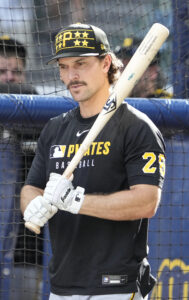
It’s a reunion for Frazier and the Royals, as the now-33-year-old veteran spent the 2024 season with Kansas City, struggling to a .202/.282/.294 batting line in 294 plate appearances. Frazier has had a much better go in 2025, returning to the club that drafted him (Pittsburgh) and hitting .255/.318/.336. That’s still below-average, but Frazier has been more productive since mid-May. He’s hitting .302/.356/.387 across his past 119 trips to the plate — albeit with a .360 average on balls in play that he’s not likely to sustain over a larger period of time.
Frazier has played second base, left field and right field in his return to Pittsburgh so far. He’s spent the majority of his time on the field at second base, but the Pirates have been using him in the outfield more over the past month or so. He’ll give the Royals a left-handed bat on what had been an all-right-handed bench and also provide manager Matt Quatraro with an option at multiple positions.
Jonathan India and Michael Massey lead the Royals in innings at second base this year, but both have struggled (and Massey is currently on the injured list). The Royals have used a remarkable 10 players in left field already this season, none of whom have managed to be all that productive. Frazier, presumably, will soon become the 11th player to take reps in left field for K.C. this season.
Frazier signed a one-year deal with the Pirates, which contained a modest $1.525MM guarantee. He’ll be a free agent at season’s end and has just under $615K of his salary yet to be paid out between now and season’s end. The Royals will take on all of that sum.
Devanney, 28, was a 15th-round pick by the 2019 Brewers. Milwaukee traded him to Kansas City in exchange for righty Taylor Clarke back in 2023. He’s enjoying a career year in Triple-A but is in his fourth trip through that level at this point. The righty-hitting Devanney is slashing .272/.366/.565 with 18 home runs, 14 doubles, three triples, an 11.8% walk rate and a 24.3% strikeout rate in 288 plate appearances at the top minor league level. He’s gone 3-for-4 in stolen base attempts as well.
The Royals have used Devanney primarily at shortstop in Omaha, but he’s logged plenty of time at third base and second base as well. He’s primarily an infielder but has gotten some nominal exposure to left field, suiting up for six games there (two in 2025). The Pirates are using Isiah Kiner-Falefa as their primary shortstop, but he’s quite likely to be traded in the next two weeks as well. Devanney could see plenty of time at short for the remainder of the season after Kiner-Falefa is moved, but if he has a long-term role with the team it’ll likely be as a right-handed utility option off the bench. Since last week was Devanney’s first selection to the major league roster, he still has a full slate of three minor league options remaining.
Stuart Sternberg Has Agreed To Sell Rays To Patrick Zalupski, Deal Expected To Be Final By September
The sale of the Rays seems to be coming to fruition. A report from Evan Drellich and Ken Rosenthal of The Athletic says that a sale has been agreed to in principle which would see the club be sold from current owner Stuart Sternberg to a group led by Patrick Zalupski. The deal is worth about $1.7 billion and is expected to be completed as soon as September. The report adds that Zalupski plans to keep the club in the Tampa area, with a preference for Tampa proper over St. Petersburg. The sale would need to be approved by 75% of MLB owners in order to become official.
It was reported about a month ago that Sternberg was in “advanced talks” to sell the team to Zalupski’s group. Shortly after that reporting emerged, Marc Topkin and Colleen Wright of the Tampa Bay Times spoke to hedge fund founder Trip Miller, who spoke of his desire to get involved in the bidding. It’s unclear if there was ever any chance of Miller’s group outpacing Zalupski’s, but it now seems basically confirmed that Zalupski’s group will be taking over.
As of a year ago, it seemed like Sternberg was going to stick around for a long time. He purchased the club in 2004 for $200MM. Since then, he has been trying to find a long-term home for the club so that the Rays could move on from Tropicana Field, which has long been viewed as insufficient and outdated for the major leagues.
Various proposals were floated over the years, including a creative plan which would have seen the franchise split its home games between Florida and Montreal. That was nixed but the Rays eventually put a plan in place to build a new stadium on the Tropicana Field site. Under that plan, the Rays would stay at The Trop through 2027 but would open the new facility in 2028. They had agreements in place with the city of St. Petersburg, Pinellas County and private investors for the $1.2 billion project.
That entire plan was thrown off the rails in October when Hurricane Milton swept through the area, doing significant damage to The Trop, particularly the roof. The Trop became unplayable for 2025 and the new stadium plan got delayed. Elections in October changed the composition of local government bodies, with the new paradigm less amenable to the Rays. The club made arrangements to play the 2025 season at George M. Steinbrenner field in Tampa. That seemed to not sit well with some Pinellas County officials, as Steinbrenner Field is in Hillsborough County.
The relationship between Sternberg and local officials seemed to sour, as he claimed the delays would lead to massive cost overruns. It was reported in March that the Rays would not be moving forward with the planned deal. That was shortly after it had been reported that league officials had been pressuring Sternberg to sell.
Now it seems the transition process is making quick progress and Zalupski’s group could be at the helm a couple of months from now. That’s notable timing, as there are key things to be worked out regarding the future of the franchise. It’s still unclear if the The Trop will be playable in time for the 2026 season. There’s also the usual baseball matters of payroll and things of that nature. And of course, new plans will need to be developed for a future stadium.
As mentioned, the report from The Athletic says Zalupski’s preference would be for the club to be in Tampa proper, as opposed to St. Petersburg. That is something that will have to be negotiated with local officials and private investors. If the club can chart a course towards a move into Tampa, there would be logic to that. It has been suggested by many that The Trop’s location isn’t highly accessible, which has contributed to the club’s poor attendance figures over the years, despite generally fielding competitive teams. A move to Tampa could help in that regard, though previous attempts to get the club into Tampa have not been successful.
Zalupski is the CEO of Dream Finders Homes, a publicly traded, Jacksonville-based developer that has built more than 31,000 homes across ten states. Forbes estimates his net worth at $1.4 billion, while his company’s valuation rests at $3.4 billion.
The timeline for the Rays will also have consequences across the league. Commissioner Rob Manfred has long insisted that expansion wouldn’t be a realistic possibility until the Athletics and Rays found new stadiums. The A’s are currently playing in West Sacramento but are expected to start playing in their new Las Vegas stadium by the 2028 season. If that plan progresses on schedule and the Rays get a new stadium plan in the works, then expansion will become a more realistic possibility.
Photo courtesy of Kim Klement Neitzel, Imagn Images
2025 MLB Draft, First Round Results
This year’s amateur draft is officially underway, and we’ll be updating this post throughout the night with every first-round selection. More details and scouting reports on all these young players are available in pre-draft rankings from Baseball America, Fangraphs, MLB Pipeline, The Athletic’s Keith Law, and ESPN’s Kiley McDaniel. As well, Pipeline has the breakdown of the slot values assigned to each pick in the first 10 rounds, as well as the bonus pool money available to all 30 teams.
Here are the first-round selections….
- Washington Nationals: Eli Willits, SS, Fort Cobb-Broxton (OK)
- Los Angeles Angels: Tyler Bremner, RHP, UC Santa Barbara
- Seattle Mariners: Kade Anderson, LHP, LSU
- Colorado Rockies: Ethan Holliday, SS, Stillwater High School (OK)
- St. Louis Cardinals: Liam Doyle, LHP, Tennessee
- Pittsburgh Pirates: Seth Hernandez, RHP, Corona High School (CA)
- Miami Marlins: Aiva Arquette, SS, Oregon State
- Toronto Blue Jays: JoJo Parker, SS, Purvis High School (MS)
- Cincinnati Reds: Steele Hall, SS, Hewitt-Trussville High School (AL)
- Chicago White Sox: Billy Carlson, SS, Corona High School (CA)
- Athletics: Jamie Arnold, LHP, Florida State
- Texas Rangers: Gavin Fien, SS/3B, Great Oak High School (CA)
- San Francisco Giants: Gavin Kilen, SS/2B, Tennessee
- Tampa Bay Rays: Daniel Pierce, SS, Mill Creek High School (GA)
- Boston Red Sox: Kyson Witherspoon, RHP, Oklahoma
- Minnesota Twins: Marek Houston, SS, Wake Forest
- Chicago Cubs: Ethan Conrad, OF, Wake Forest
- Arizona Diamondbacks: Kayson Cunningham, SS, Johnson High School (TX)
- Baltimore Orioles: Ike Irish, C, Auburn
- Milwaukee Brewers: Andrew Fischer, 1B/3B, Tennessee
- Houston Astros: Xavier Neyens, SS/3B, Mount Vernon High School (WA)
- Atlanta Braves: Tate Southisene, SS, Basic High School (NV)
- Kansas City Royals: Sean Gamble, OF/2B, IMG Academy (FL)
- Detroit Tigers: Jordan Yost, SS, Sickles High School (FL)
- San Diego Padres: Kruz Schoolcraft, LHP, Sunset High School (OR)
- Philadelphia Phillies: Gage Wood, RHP, Arkansas
- Cleveland Guardians: Jace LaViolette, OF, Texas A&M
The first round officially consists of only 27 picks since the Mets, Yankees, and Dodgers all had their first-round selections dropped back by 10 slots. The three teams surpassed the third luxury tax tier in 2024, and thus their punishment included a 10-slot drop in their opening draft choice.
The 2025 draft is split up over two nights. Rounds 4-20 will take place tomorrow, while the draft’s first 105 picks will come off the board tonight. Those 105 picks consist of the first three proper rounds, the two Competitive Balance Rounds, and two sets of compensatory rounds (giving picks to teams who lost qualifying offer-rejecting free agents), and the Royals getting the 28th overall pick due to the Prospect Promotion Incentive. The evening’s 105th and final selection will be a compensatory pick to the Angels for not agreeing to a deal with 81st overall pick Ryan Prager.