
MLBTR Chat Transcript
Click here to read the transcript of tonight’s live baseball chat
Latest On Tigers’ Offseason Targets
The Tigers have a lot of upgrades to make following a 96-loss season, and the club is exploring several veteran options on the free agent market. Evan Petzold of the Detroit Free Press reports that such players as Seth Lugo, Adam Frazier, Brian Anderson, and Edwin Rios have all drawn interest from the Tigers, and Wil Myers is also on the radar, but “the Tigers aren’t viewed as a frontrunner for Myers.” As for players who have already landed elsewhere, Detroit also had interest in Jace Peterson before he signed with the Athletics during the Winter Meetings.
Signing any of the available players would add some experience to the lineup and address at least one position on a roster with plenty of uncertainty. Third base is open after Jeimer Candelario was non-tendered, and Tigers manager A.J. Hinch told Petzold and other reporters during the Winter Meetings that second base playing time may also be available, depending on where Jonathan Schoop is utilized. Hinch suggested that Schoop could also see time at first base or third base, apart from just the keystone.
Realistically, Schoop is more likely to spend most of his time on the right side of the diamond, given that his big league third base experience consists of 133 2/3 innings with the Orioles back in 2014, and a single inning at the hot corner in 2021. Schoop (like many Detroit hitters) is also coming off a dismal year at the plate, and since he is only under contract through 2023, might not be in the long-term plans of new president of baseball operations Scott Harris.
Frazier has mostly played second base throughout his career, but he has also bounced around to both corner outfield positions, and a smattering of games at third base, shortstop, and center field. Signing Frazier would allow the Tigers some flexibility in planning the lineup, as Frazier or Schoop or rookie Ryan Kreidler could be shuffled around the infield as matchups dictate, and Frazier could also chip in as part of the outfield mix.
Of course, Frazier also didn’t hit much in 2022, batting .238/.301/.311 with three homers over 602 plate appearances with the Mariners. Since the start of the 2020 season, Frazier has a 95 wRC+ and a .266/.329/.362 slash line over 1471 PA with the Pirates, Padres, and Mariners, and much of his production in that stretch was concentrated within a fantastic three-month stretch with Pittsburgh early in the 2021 campaign (which helped Frazier earn an All-Star nod).
Despite these struggles, Frazier is looking for a two-year contract, according to Petzold. An argument can be made that Frazier (who turns 31 later this week) might still be worth such a commitment since he is a strong defender, and he has consistently been one of baseball’s tougher hitters to strike out. While Frazier’s extreme contact doesn’t result in many hard-hit balls, the potential is there for Frazier to become a very productive hitter if he can just barrel the ball with more consistency. Given how the Tigers had one of the highest strikeout rates of any team in baseball in 2022, simply getting a contact hitter of any ilk might also help Detroit’s offensive woes.
Anderson and Rios were respectively non-tendered by the Marlins and Dodgers, and while both players have experience at other positions (Anderson mostly in right field, Rios at first base), the Tigers would probably view either as candidates to take over from Candelario at third base. Like Frazier, these two are also looking to bounce back from underwhelming seasons, as Anderson and Rios both missed time to injury.
After posting solid numbers in 2018-20, it seemed like Anderson was on his way to becoming a building block in Miami before injuries cut into his playing time in each of the last two seasons. Anderson hit .266/.350/.436 (115 wRC+) over 1419 PA from 2018-20, but those numbers dropped to a 93 wRC+ and a .233/.321/.359 slash line over 647 PA in 2021-22.
Rios is an intriguing wild card option, as he owns a career 112 wRC+ but only over 291 career PA in the majors. The Dodgers used Rios as a part-time player for four seasons, and while it is quite possible he might’ve earned more playing time on a less star-studded team, Los Angeles seemingly never saw Rios as more than a spare part. Injuries also played a factor, as Rios missed most of the 2021 campaign due to shoulder surgery, and a hamstring tear last season resulted in a trip to the 60-day injured list.
While it doesn’t seem like Myers will be arriving in Detroit, he is an on-paper fit for playing time as a right fielder, DH, and first baseman. Spencer Torkelson will naturally get every opportunity for regular at-bats at first base next season, but Schoop might also get some first-base time, and Miguel Cabrera and Austin Meadows will get DH at-bats. A player like Myers would be an option for right field when Meadows is getting a DH day, plus Myers could also shift over to left field.
The Tigers are the latest of many teams linked to Lugo’s market, and Detroit is one of the clubs with interest in Lugo as a starting pitcher. The right-hander has worked exclusively as a reliever in three of the last four seasons with the Mets, and he hasn’t been a true full-time starter since 2017. However, Lugo has kept his arm relatively loose as a swingman and multi-inning reliever, and naturally a move back to rotation work could be very lucrative as he enters free agency for the first time.
Given how the Tigers were crushed by pitching injuries in 2022, the club can offer plenty of opportunity to Lugo as it looks to rebuild its rotation. With so much interest in his services, it isn’t hard to imagine that Lugo could land a two-year contract, as a team could view him as a starting candidate for 2023 and (if things don’t go well) at worst a reliever for 2024. If Lugo succeeds as a starter and the Tigers’ younger arms all return healthy down the road, such a crowded-rotation scenario counts as a nice problem to have for the team in the future.
Detroit already brought back Matt Boyd on a one-year contract, with Boyd also looking for a move back to starting pitching. The Tigers’ current rotation lines up as Eduardo Rodriguez, Matt Manning, Spencer Turnbull, and Boyd, with Joey Wentz, Tyler Alexander, Alex Faedo, and Beau Brieske all in competition for that fifth starter’s job.
In the bigger picture, none of Detroit’s free agent targets look to receive more than a one- or perhaps a two-year deal at most. This speaks to Harris’ apparent strategy (or ownership’s preference) of avoiding any big immediate expenditures, as the Tigers flopped after last winter’s major spending spree. The plan for 2023 might be for Harris and the Tigers to patch holes with some veteran additions, and then see how the roster — both the younger core and veteran stars like Rodriguez or Javier Baez — can collectively regroup after the disastrous 2022 season.
KBO’s LG Twins Walk Away From Deal With Abraham Almonte
TODAY: According to reports out of South Korea, the LG Twins have pulled out of the contract, due to an issue following Almonte’s physical.
DECEMBER 5: The LG Twins of the Korea Baseball Organization have announced a one-year contract with outfielder Abraham Almonte. (Hat tip to reporter Sung Min Kim.) Almonte will receive $400K in salary, a $100K signing bonus, and up to $300K in incentive bonuses.
The 33-year-old Almonte is a veteran of the last 10 Major League seasons, suiting up with seven different teams at the MLB level and also spending some time in the minors with the Brewers’ and Yankees’ farm systems. Of Almonte’s 455 career games in the Show, 187 were played with Cleveland from 2015-17, and his next highest total was 70 games with the Padres over parts of three seasons.
Almonte consistently found work as a backup or part-time outfielder during his journeyman career, due more to his ability to play all three outfield positions than his bat. While the switch-hitter has a few flashes at the plate, Almonte hit a modest .235/.302/.374 over 1363 Major League plate appearances. He entered the 2022 season on a minor league deal with the Brewers, but didn’t reach the majors until after he was dealt to the Red Sox in July.
Heading overseas for the first time in his pro career, Almonte now joins the Twins. Each KBO League team has up to three roster spots dedicated to non-Korean players, and international players can only sign for a $1MM maximum. An international player’s first KBO contract can also be only one year in length.
Giants Not Currently Considering Chris Bassitt
TODAY: Bassitt isn’t currently in the Giants’ plans, as Slusser tweets that a pursuit of the right-hander is “not in the cards at the moment.”
DECEMBER 10: The Giants “appear to have interest in” free agent right-hander Chris Bassitt, Susan Slusser of the San Francisco Chronicle reports. Checking in on Bassitt would track with the Giants’ general interest in starting pitching this winter, as they have also been linked to Carlos Rodon, Kodai Senga, Sean Manaea, and Shintaro Fujinami this winter, and plus Andrew Heaney before Heaney with the Rangers.
There haven’t been too many rumblings on Bassitt to date, though he entered the offseason as one of the top pitching options on the market. MLBTR rated Bassitt as the fifth-best starter available this winter (and 13th overall on our Top 50 Free Agents list), and of the four pitchers placed ahead of Bassitt, only Rodon and Senga remain, while Jacob deGrom signed with the Rangers and Justin Verlander joined the Mets.
In signing Verlander and Jose Quintana, the Mets have already found rotation replacements for deGrom and Taijuan Walker. Bassitt and the Mets had some mutual interest in a reunion before the offseason began, and given how aggressive New York has been in adding free agents and building payroll, it wouldn’t count as a surprise if the team splurged again to bring Bassitt back to Queens.
That said, recent reports suggest that the Mets don’t have interest in giving Bassitt anything more than three guaranteed years, and the right-hander is still looking for at least a four-year contract. Bassitt’s desire for such a lengthy commitment might also be a reason why the pitching-needy Blue Jays have only limited interest for now. The qualifying offer is also surely a factor, as Bassitt rejected the Mets’ QO, and thus any team who signs the righty will have to give up draft compensation.
The Mets and Blue Jays have been the only teams known to have any interest in Bassitt, but it’s probably fair to guess that several other teams in need of pitching have at least made some calls to Bassitt’s reps at Meister Sports Management. After all, Bassitt did post a 3.42 ERA/3.75 SIERA over 181 2/3 innings with New York last season, with an above-average 6.6% walk rate, a career-best 48.8% grounder rate, and excellent hard-contact numbers.
With top-ten finishes in AL Cy Young Award voting as a member of the Athletics in 2020-21, Bassitt is also from a one-year wonder, and he still projects as a solid starter heading into his age-34 season. Just based on age alone, however, teams may be a little wary of going beyond a three-year deal, especially a Giants team that has traditionally looked to sign players (especially pitchers) to shorter-term contracts. Under president of baseball operations Farhan Zaidi, San Francisco has yet to sign a player to a deal beyond three years.
That said, the Giants did make a concerted effort to sign Aaron Judge this winter, and naturally that contract would’ve gone well beyond three years. Judge and Bassitt represent very different free agents, yet if San Francisco is getting more aggressive in its pursuits this offseason, it is possible the club might be willing to consider a four-year deal if it’ll clinch a Bassitt signing.
With Logan Webb as the ace, Bassitt could slide into the No. 2 starter role, ahead of Alex Cobb, Alex Wood, and Anthony DeSclafani. Adding another starter would allow the Giants to move Jakob Junis back into the preferred role of swingman, and Bassitt in particular would bring durability. DeSclafani is a bit of a wild card after spending much of the 2022 season on the injured list, and Wood also has a long injury history. Signing Bassitt would probably take San Francisco out of the running for Rodon, but since Rodon also turned down a qualifying offer, the Giants would get a compensatory pick back if Rodon signed elsewhere, somewhat offsetting the penalty they’d incur for signing Bassitt.
Three Possible Landing Spots For Christian Vázquez
Fresh off his second World Series title, long-time Red Sox catcher Christian Vazquez is a free agent for the first time in his career. With Willson Contreras inking a five-year, $87.MM deal with the Cardinals, Vazquez is arguably the top free agent catcher left on the board, rivaled by Sean Murphy in the trade market. This position has left Vazquez with a lengthy list of suitors, including the Twins, Padres, D-Backs, Guardians, Diamondbacks, and Giants.
Vazquez, a career .261/.310/.386 hitter, had a two-sided 2022 season. In Boston, the righty hit .282/.327/.432 with eight homers and 20 doubles. However, after being traded to Houston, Vazquez struggled, hitting a weaker .250/.278/.308 while splitting time with Martin Maldonado. Nevertheless, from 2019-2022, the backstop hit a solid .271/.318/416 (95 wRC+). Additionally, Vazquez has been solid behind the plate, having thrown out 34% of runners since his debut in 2014, ranking in the 71st percentile pop time to second base during the 2022 season, and has drawn plus framing marks from publicly available metrics via Statcast, FanGraphs, and Baseball Prospectus. With this solid season and a strong overall career, MLBTR predicts that Vazquez will earn a contract in the three years, $27MM range.
As for Vazquez’s free agent preferences, the 32-year-old has told reporters that a starting role and contending are at the forefront when determining his next home. With those two factors in mind, along with his strong history, here are some potential landing spots for the veteran.
Beginning with one of the more active teams during this year’s free agent period: the Padres. San Diego primarily relied on a tandem of Austin Nola and Jorge Alfaro in 2022, with Friars’ backstops hitting a combined .249/.303/.350 with a middle-of-the-pack wRC+ (88). With the Padres opting to non-tender Alfaro, the club is currently projected to start the 2023 season with Nola and Luis Campusano behind the dish. Neither player should necessarily be a roadblock to surveying the market for a team as aggressively motivated to win now as San Diego.
More importantly, the Padres have not been afraid to open their wallet, most recently signing former Red Sox teammate Xander Bogaerts to a colossal 11-year, $280MM deal. San Diego also offered Aaron Judge $400MM and Trea Turner $342MM, before the two players signed with other clubs. A win-now team searching for a catching upgrade, the Padres appear a logical candidate to pique Vazquez’s interest while simultaneously outbidding competitors.
Cleveland is another potential landing spot for the veteran, with Austin Hedges reaching free agency and leaving the unproven Bryan Lavastida and Bo Naylor as the only backstops on the 40-man roster. Naylor is a highly-regarded prospect, but turning everyday reps behind the dish over to a 23-year-old could be too risky for a team looking to defend their AL Central title. The Guardians posted the second-lowest combined wRC+ for catchers last season (55), utilizing a soft-hitting duo of Austin Hedges and Luke Maile, although Hedges is regarded highly for his defensive work. Vazquez’s addition would improve offensive output while maintaining a high defensive level for the club.
The Guardians have already made one significant free agent addition this offseason, signing Josh Bell to a two-year, $33MM deal with an opt-out after the first season. The team also made an offer for first baseman Jose Abreu, but couldn’t reach the $60MM threshold that the Astros closed in on. A team known for their low budget, the Guardians are also heavily involved in the Murphy trade market but will likely remain a player for Vazquez’s services if his price is not out of their comfort zone.
A third potential (wildcard) team for the backstop is a former AL East rival, the Tampa Bay Rays. Tampa Bay primarily relied on Francisco Mejia, who was widely considered one of baseball’s top minor leaguers, ranked as high as fifth in Baseball Prospectus’ top-100 prospect ranking prior to the 2018 season, during the 2022 season. However, after a solid 2021 season (.260/.322/.417), Mejia struggled in 2022, hitting a meager .242/.264/.381. Poor performance and injuries led Tampa Bay to acquire Christian Bethancourt from Oakland in early July. Bethancourt would perform marginally better, hitting .255/.265/.436 in 151 plate appearances with the Rays.
As a team, Rays’ catchers hit a combined .224/.248/.373 with a below-average wRC+ (78). Vazquez represents an offensive upgrade to these two players, albeit with a higher price point than both Bethancourt and Mejia, who are both on their rookie deals. Nevertheless, Mejia still has one MiLB option remaining, and Vazquez and Bethancourt have experience, although limited, in the field with Bethancourt playing 249 innings at first base during the 2022 season. Admittedly, this landing spot is the least likely of the three.
While the Padres and Guardians present more logical landing spots for Vazquez, competitive teams, like the Rays, may look to shuffle their roster to add a proven veteran backstop talent. Minnesota recently offered Vazquez a contract, and there are sure to be many teams involved in free agent discussions with the catcher as the offseason continues.
Pitching Notes: Cardinals, Eovaldi, Rodón
Currently boasting a staff of Adam Wainwright, Miles Mikolas, Jack Flaherty, Jordan Montgomery, Steven Matz, and Dakota Hudson, the Cardinals were not predicted to be heavily involved in the free-agent starting pitcher market this offseason. Nevertheless, president of baseball operations John Mozeliak is aware that, “a year from now, we know we’re going to need starting pitching,” per Derrick Goold of the St. Louis Post-Dispatch. Mozeliak added that the team has recognized that they will have to replace or re-sign four starters after the 2023 season.
Wainwright, who re-signed with St. Louis on a one-year, $17.5MM deal with incentives, has already stated that the 2023 season will be his last. Additionally, Mikolas, Flaherty, and Montgomery will all be free agents at the conclusion of the 2023 season. Matz and Hudson are the only starters with a contract for the 2024 season, with Matz signed through the 2025 season and Hudson a free agent after 2024. Goold reports that the Cardinals “plan to explore contract extensions with at least two of the starters who are unsigned beyond 2023,” with Mikolas being the most likely candidate.
The Cardinals are currently projected to enter the 2023 season with a payroll of $171.9MM, per Cot’s Baseball Contracts. However, after the season, they are forecasted by Roster Resource to have only $94MM in commitments — giving them ample room to add to their team. Despite this financial freedom, Mozeliak notes that the Cardinals “have some young starters coming,” perhaps signaling a desire to avoid free agent starters in order to fit within the team’s budget.
Lefty Matthew Liberatore (the Cardinals’ No.4 Prospect) struggled in his Major League debut during the 2022 season, pitching to a 5.97 ERA in 34 2/3 innings with a 17.4 SO% and 11.2 BB%. He didn’t fare much better in his second season at Triple-A Memphis, pitching to a 5.17 ERA in 115 innings with a 23.5 SO% and 8.3 BB%. Nevertheless, Liberatore is only 23 years old and still has plenty of time to settle in at the Major League level. Additionally, Gordon Graceffo (Cardinals’ No.3 Prospect), Tink Hence (No.6), and Michael McGreevy (No.9) all are expected to make their debuts during the 2024 season, with Graceffo and McGreevy earning promotions to Double-A Springfield during the 2022 season, while Hence spent the entire season with Single-A Palm Beach.
More pitching-related items from around baseball….
- According to WEEI‘s Rob Bradford, the Red Sox do not view former All-Star Nathan Eovaldi as a top priority in their starting rotation search. Bradford adds that other teams are showing more interest in Eovaldi than the level currently displayed by Boston. The Mets were previously rumored to be in on Eovaldi, but their recent five-year, $75MM deal with Kodai Senga likely takes them out of the running for the soon-to-be 33-year-old. Eovaldi joined Boston during the 2018 season, with the righty helping them win the 2018 World Series. The Red Sox rewarded the starter with a four-year, $68MM contract that resulted in 407 2/3 innings of 4.15 ERA baseball, with a solid 24.4 SO% and strong 5.6 BB%. Despite being limited to 20 starts in 2022 due to low back inflammation and right shoulder inflammation, Eovaldi pitched to a 3.87 ERA in 109 1/3 innings with a 22.4 SO% and 4.4 BB%.
- In other St. Louis news, the Cardinals have reportedly entered the Carlos Rodon sweepstakes, per Jon Heyman of the New York Post. With Rodon seeking a seven-year deal and St. Louis having only two starters signed for the 2023 season, the Cards might look to join the bidding war for the two-time All-Star’s services. Rodon, 30, signed a two-year, $44MM deal with the Giants during the 2021 offseason, with an opt-out after the first year. Brushing aside injury concerns and making a career-high 31 starts, the southpaw pitched to a 2.88 ERA in 178 innings, with an absurd 33.4 SO% and strong 7.3 BB% before opting out of the contract at the end of the season. For his part, Mozeliak has remained coy, stating that while the team does “have some resources available,” but that he wouldn’t “believe many of the rumors you’re reading right now,” per Derrick Goold.
Frank Schwindel Signs With NPB’s Orix Buffaloes
Former Cub Frank Schwindel has reportedly signed a deal with the Orix Buffaloes of Japan’s NPB. Schwindel had been playing for the Águilas Cibaeñas in the Dominican Winter League. Sung Min Kim had previously tweeted that the two parties were discussing a deal, and Cibaeñas general manager Ángel Ovalles recently told reporters that the 30-year-old had signed with the Buffaloes and was leaving the team.
Designated for assignment in July 2021 by Oakland, Schwindel was picked up by Chicago and immediately sent to Triple-A Iowa. However, after Anthony Rizzo was traded to the Yankees, Schwindel received a call-up and never looked back. During the second half of the 2021 season, he slashed a robust .342/.389/.613, with a strong 15% strikeout rate, 6.7% walk rate, and 13 homers in 239 plate appearances. This tremendous output, albeit in a limited sample size, earned him minor consideration in the 2021 NL Rookie of the Year voting.
Schwindel opened the 2022 season with the Cubs but struggled and was shuffled between Iowa and Chicago. He also missed time with lower back strains in May and June. His poor performance led to the Cubs designating him for assignment in mid-September, and he was granted his unconditional release. Schwindel finished the 2022 season hitting .229/.277/.358 with eight homers in 292 plate appearances. Notably, his strikeout rate increased to 19.9%.
With a poor 2022, Schwindel might have been hard-pressed to find anything beyond a minor league deal with an MLB team this winter. Instead, the right-handed hitter will head to Japan in search of the magic he captured during the 2021 season. With the Buffaloes, he will likely earn more guaranteed money and ample opportunity to rediscover his swing, perhaps eventually exploring a return to North American baseball.
Guillermo Heredia Signs With KBO’s SSG Landers
The SSG Landers of the Korea Baseball Organization have announced that they have signed outfielder Guillermo Heredia (hat tip to Dan Kurtz of MyKBO.net). Heredia will earn $900K, with the possibility of earning an additional $100K in performance bonuses.
Heredia, who was projected to make $1.1MM in his final trip through the arbitration process, was non-tendered by the Braves in November. A veteran of parts of seven Major League seasons, Heredia joined Atlanta after the 2020 season, having been designated for assignment by the Mets, and would go on to win a World Series with the club.
Heredia appeared in 74 games (82 plate appearances) with the Braves during the 2022 season. However, he hit a poor .158/.220/.342 with a colossal 39% strikeout rate and below-average 7.3% walk rate. While never a major factor at the plate, with a career .231/.310/.346 line, 20% strikeout rate, and 8.3% walk rate, the right-handed hitter has a history of above-average fielding, having accrued at least five Outs Above Average (OAA) in five of his seven seasons. Nevertheless, during the 2022 season, Heredia earned 0 OAA while posting 1 Defensive Run Saved and a 0.8 Ultimate Zone Rating.
With the Braves hosting an outfield of three-time All-Star Ronald Acuna Jr., reigning Rookie of the Year Michael Harris, Eddie Rosario, and two-time All-Star Marcell Ozuna, Heredia was evidently deemed non-essential by the club. Instead, Heredia, who turns 32 years old in January, will make the transition overseas. He will earn a raise compared to a minor league salary and can explore a return to MLB if his time in South Korea proves fruitful.
Quick Hits: Kiermaier, Dodgers, Red Sox, Marlins, Bellinger, Bell, Rays, Diaz, Reds
Kevin Kiermaier is off the market after agreeing to a deal with the Blue Jays earlier today, and the former Gold Glover was drawing interest elsewhere on the market. The Dodgers “were in the running down to the end” on Kiermaier, according to Jorge Castillo of the Los Angeles Times (Twitter link), as Kiermaier was presumably being eyed as the left-handed hitting, center field replacement for Cody Bellinger. Dodgers president of baseball operations Andrew Friedman is no stranger to Kiermaier, as Friedman was the Rays’ general manager when Kiermaier began his career in Tampa Bay.
Red Sox chief baseball officer Chaim Bloom is also a former member of Tampa’s front office, but Kiermaier and the Sox had only “periphery discussions” about a possible contract, MassLive.com’s Chris Cotillo tweets. Adding Kiermaier would’ve helped the Sox address their needs in the outfield, but the newly-signed Masataka Yoshida is Boston’s biggest swing in the outfield market to date. For now, the first-choice Red Sox starting outfield looks like Yoshida in left field, Enrique Hernandez in center, and Alex Verdugo in right.
More from around baseball…
- Speaking of past pursuits, Bellinger and Josh Bell were among the players “targeted” by the Marlins, according to Jordan McPherson of the Miami Herald. Both free agents are now off the market, after Bellinger signed with the Cubs and Bell joined the Guardians. Bellinger would’ve been a natural fit for the Marlins’ longstanding need in center field, and would’ve at least provided strong defense, even if it remains to be seen if his bat can return to anything close to his past MVP levels of production. Bell has provided solid (if not always consistent) offense over the last two seasons, and the Marlins naturally have a lot of familiarity with Bell from his days with the Nationals. Miami already parted ways with Lewin Diaz and Garrett Cooper has been a trade candidate in the past, so it would seem like first base could be a target position for the Marlins as they look to add some much-needed pop to their lineup.
- Though the Rays are also looking to add offense and particularly a left-handed hitting first base option, Bell “wasn’t high on their list,” Marc Topkin of the Tampa Bay Times writes. It’s a moot point anyway with Bell now in Cleveland, and the Rays can continue their search for a bat at just about any position. “Outside of maybe a shortstop, there probably aren’t too many other areas where we’d say, ‘No, we don’t have any interest in that’….We’re fortunate, because we have enough moving pieces and versatility with our players that there’s a lot of different players we could bring in and make it work,” Rays GM Peter Bendix told Topkin and other reporters.
- “Teams have checked” in with the Reds about Alexis Diaz, Bobby Nightengale of the Cincinnati Enquirer writes. No trade seems close or particularly likely, given how the rookie right-hander looks more like a building block than a trade chip. In his first MLB season, Diaz finished fifth in NL Rookie of the Year voting after posting a 1.84 ERA over 63 2/3 innings out of the Reds’ bullpen. Apart from a very high 12.9% walk rate, Diaz’s Statcast metrics were otherwise excellent, and he could be on his way to joining older brother Edwin as a star closer. Interestingly, the Mets explored a trade for the younger Diaz before the trade deadline, but while Cincinnati is in a rebuild phase, Nightengale figures it “would take an absolute haul to even pique the Reds’ interest” in a Diaz swap.
Nationals Sign Trevor Williams To Two-Year Deal
TODAY: The Nationals officially announced Williams’ deal.
DECEMBER 9, 9:22am: Williams will be guaranteed a total of $13MM, Stephen J. Nesbitt of The Athletic reports (via Twitter).
8:54am: The Nationals are in agreement on a two-year contract with free-agent righty Trevor Williams, reports Mark Zuckerman of MASNsports.com (via Twitter). Williams is represented by John Boggs & Associates.
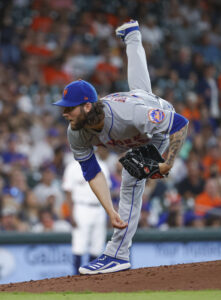
Williams, 31 in April, has spent the past season and a half with the Mets, pitching to a 3.17 ERA in 122 innings while splitting his time between the rotation (12 starts) and bullpen (28 appearances). He’d previously spent the bulk of his career as a starting pitcher, highlighted by a 31-start, 170 2/3-inning season of 3.11 ERA ball with the Pirates back in 2018. However, Williams has yet to consistently sustain that level of success over the course of multiple seasons.
For instance, Williams followed up that strong 2018 season with a 5.38 ERA in 26 starts in 2019, and he endured similar woes in the shortened 2020 season (6.18 ERA, 55 1/3 innings). That said, Williams has been a source of average or better innings in the other four full seasons of his career, dating back to 2017. In all, he owns a career 4.27 ERA and 4.40 FIP in a span of 715 1/3 Major League innings. He’s also coming off a career-high 22.6% strikeout rate and career-low 6.2% walk rate with the Mets in 2022.
Williams works with a traditional starter’s repertoire, leaning primarily on a four-seam fastball and complementing that with a sinker, slider and changeup that were all used at roughly equal levels in 2022 (plus a much more seldom-used curveball). None of those pitches generate huge spin, and none but the slider come with standout whiff rates. Still, Williams regularly excels at limiting hard contact, with above-average marks in exit velocity and hard-hit rate throughout the majority of his career to this point.
Zuckerman suggests that Williams could well end up in the Nationals’ rotation, but that’s not yet set in stone, and a return to the swingman role in which he’s thrived with the division-rival Mets is possible. At present, the Nats have a pair of albatross contracts atop the rotation in Stephen Strasburg and Patrick Corbin, and that pair will be followed by some combination of Josiah Gray, MacKenzie Gore, Cade Cavalli and perhaps Williams. Given Strasburg’s avalanche of recent injury troubles, plus the uncertainty surrounding inexperienced arms like Gore and Cavalli, there ought to be ample rotation innings available even if Williams initially begins the season in the bullpen.
Williams is the second free-agent addition of the winter for the Nats, who also inked corner infielder Jeimer Candelario to a one-year, $5MM contract last month. Washington has a projected payroll of about $106MM next season, though the bulk of that is tied up in their onerous commitments to Strasburg and Corbin. Strasburg is still signed through the 2026 season, while Corbin is signed through 2024.