
Free Agent Notes: Marte, Castellanos, Lorenzen, Canha
Starling Marte is the clear top option in this winter’s free agent center field class. Unsurprisingly, early interest seems to be robust, as Jon Heyman of the MLB Network reports (Twitter links) that both the Marlins and Mets have expressed interest in the 33-year-old. Those NL East clubs join the Yankees and division-rival Phillies as known entrants in his market. There are no doubt other clubs who have or will express interest in Marte, who’s coming off a stellar .308/.381/.456 showing between Miami and the A’s.
Miami’s early interest is eyebrow-raising, since he and the Marlins couldn’t agree to terms during midseason extension negotiations this summer. Reports suggested the Fish balked at offering a fourth guaranteed year a few months back, and going to that length again figures to be necessary to land Marte’s services now that he can field offers from all 30 clubs. It’s not as if his stock tanked after the deal, as Marte continued to be an offensive force (.312/.355/.462 with 25 stolen bases in just 56 games) for Oakland down the stretch. MLBTR projects he’ll ultimately land a four-year deal worth $80MM, a figure that would come in quite a bit higher than the money Marte reportedly targeted in original extension talks.
The Mets, meanwhile, are still trying to finalize the structure of their front office. That could pose a challenge for them in making any impactful moves early in the winter, but whomever the Mets hire to lead baseball operations is expected to look for some form of outfield help. Michael Conforto has already rejected New York’s qualifying offer, and his potential departure would leave a vacancy in the grass in Flushing. A Marte pursuit would be one way to replace Conforto, with current center fielder Brandon Nimmo probably sliding over to right field were a deal to get done.
Some news on a few more free agents:
- Nick Castellanos has already rejected the Reds’ qualifying offer, little more than a formality after he opted out of the remaining two years on his contract. The 29-year-old wouldn’t close the door on a return to Cincinnati, though, telling reporters (including Adam Baum of the Cincinnati Enquirer) he’d listen to any offers from the Reds. “Of course I would. Why wouldn’t I,” Castellanos asked rhetorically. “I feel like there’s still a lot of valuable pieces that are very good to win with. Jonathan India … Jesse Winker is coming into his own, figuring out who he is, figuring out what kind of father he wants to be, he’s doing a great job at that. Joey Votto just reinvented himself. We still have pitching. We have pieces. Why wouldn’t I entertain it?” Regardless of Castellanos’ amenability, a Reds’ return seems highly unlikely. Cincinnati has kicked off the offseason by parting ways with two veteran contributors (Tucker Barnhart and Wade Miley) for little more than financial relief, and general manager Nick Krall has spoken of “(aligning) our payroll to our resources.” It’d be nothing short of shocking if Cincinnati then pivoted to make a serious run at Castellanos, whom MLBTR projects to sign for $115MM over five years.
- California natives Michael Lorenzen and Mark Canha are both drawing interest from teams on the West Coast, reports Robert Murray of FanSided (Twitter link). Interestingly, Murray hears that at least some teams are willing to consider Lorenzen as a starting pitcher, aligning with the 29-year-old’s hopes for a rotation job. Lorenzen broke into the majors as a starter, but he’s started just five of his 268 appearances with the Reds since the beginning of the 2016 campaign. He’s had success in a multi-inning relief capacity, though, and Lorenz’s five-pitch repertoire could help him navigate an order multiple times. Canha, who has spent his entire major league career with his hometown A’s, hits the open market on the heels of four straight above-average offensive seasons, by measure of wRC+. Entering his age-33 season, the productive outfielder will probably be limited to short-term deals, which could make him a target of low and high payroll clubs alike.
Latest On Tigers’ Pursuit Of A Shortstop
The Tigers continue to cast a wide net in free agency as they attempt to build off an encouraging 2021 season. MLB Network’s Jon Morosi reports that the team has already spoken to representatives for six of this winter’s premier middle infielders (Carlos Correa, Corey Seager, Marcus Semien, Trevor Story, Javier Báez, and Chris Taylor). Morosi notes in a separate tweet that there’s some industry uncertainty over whether the Tigers would sign a player in the $250MM range, but that may have less to do with the team’s regard for the free agent shortstops and more to do with Detroit’s rotation needs.
It’s commonplace for teams to perform due diligence checks with agents in the offseason, even if the team isn’t optimistic about its chances to sign a certain player. Still, there is a perception among some in the sport that a few teams could be aggressive and move quickly in their pursuit of high-end free agents. The Tigers were among the teams listed as candidates to sign prominent players before the current CBA expires.
Detroit can afford to be opportunistic in the very literal sense that they have a ton of open payroll space. Even after extending Jonathan Schoop and their recent acquisition of Tucker Barnhart, the team has a projected 2022 payroll of just $93MM per Roster Resource. Non-tenders would shrink that estimate even further, and Detroit has a few prominent non-tender candidates (most notably Matthew Boyd) on large projected arb salaries. Given that the Tigers ran out a $200MM roster as recently as 2017, it’s easy to see the current payroll swelling in order to fling open the team’s competitive window.
Owing to this financial flexibility and a middle-infield that collectively posted a sub-.700 OPS last season, it’s understandable why the team would zero in on the solutions presented on the open market. Complicating this approach, however, is that Detroit has a very young rotation that posted middling run-prevention numbers last year.
The high-upside group of starters is likely to tap into some of its potential with more experience, but there’s validity in surrounding this pitching core with more proven commodities. After all, even if the team is hopeful each of Casey Mize, Tarik Skubal, and Matt Manning take a step forward, certain rotation-wide stats like a 4.66 FIP (4.17 ERA) and a low 18.8% strikeout rate portray a staff that is very much headed for regression.
Those three youngsters, of course, were not the only members of this past season’s rotation. Both Boyd and Spencer Turnbull soaked up innings for Detroit in 2021, providing some of the best numbers the pitching staff had to offer. Unfortunately, both players saw their productive seasons end prematurely. Boyd pitched to a personal-best 3.89 ERA across 15 starts for the team before being shut down to undergo forearm surgery that looks likely to lead to him being let go.
The 29-year-old Turnbull was amidst an even stronger season. Through eight starts and 50 innings, the right-hander posted a 2.88 ERA with superb command and ground-ball tendencies, to say nothing of the no-hitter he twirled against Seattle in May. News broke that Turnbull would require Tommy John surgery in July and, similar to Boyd, will likely miss the majority of the 2022 season. While the injury-created voids in next year’s rotation are far from ideal, one silver lining is that Detroit will at least maintain control of Turnbull through the 2024 season (barring changes to the service time structure in the next CBA).
Taking a two-pronged approach to the free agent market makes perfect sense then, since the Tigers can invest just about any level of resources to upgrade their middle infield and then use another chunk of their payroll to buttress their rotation. Detroit has already been linked to a number of mid-rotation starters, giving them multiple avenues to make a splash this offseason.
Offseason Outlook: Minnesota Twins
The 2019-20 AL Central champs faceplanted in a 2021 season that was disastrous enough for the Twins to trade away longtime top starter Jose Berrios. Owner Jim Pohlad has made clear that the Twins will not go into a rebuild, so president of baseball operations Derek Falvey and general manager Thad Levine will be looking for immediate help to remedy the roster.
Guaranteed Contracts
- Josh Donaldson, 3B: $50MM through 2023 (includes $8MM buyout of $16MM 2024 club option)
- Max Kepler, OF: $16.25MM through 2023 (includes $1MM buyout of $10MM 2024 club option)
- Jorge Polanco, 2B/SS: $12.5MM through 2023 (includes $1MM buyout of $10.5MM 2024 club option; contract also contains $12MM 2025 club option)
- Miguel Sano, 1B/DH: $12MM through 2022 (includes $2.75MM buyout of $14MM 2023 club option)
- Randy Dobnak, RHP: $8.55MM through 2025 (includes $1MM buyout of $6MM 2026 club option)
- Kenta Maeda, RHP: $6MM through 2023
- Total 2022 commitment: $45.8MM
- Total long-term commitment: $105.3MM
Arbitration-Eligible Players (projected salaries via MLBTR contributor Matt Swartz)
- Byron Buxton – $7.3MM
- Taylor Rogers – $6.7MM
- Tyler Duffey – $3.7MM
- Mitch Garver – $3.1MM
- Caleb Thielbar – $1.2MM
- Jake Cave – $1.1MM
- Danny Coulombe – $800K
- Willians Astudillo – $1.2MM
- Juan Minaya – $1.1MM
- Luis Arraez – $2.0MM
- Non-tender candidates: Cave, Coulombe, Astudillo, Minaya
Option Decisions
- Alex Colome, RHP: Twins declined their end of a $5.5MM mutual option (paid $1.25MM buyout)
Free Agents
- Michael Pineda, Andrelton Simmons, Nick Vincent*, Kyle Barraclough*, Luke Farrell*, Ian Gibaut*, Andrew Albers*, John Gant*, Rob Refsnyder* (*=outrighted and elected free agency after the season ended)
Very little went right for the Twins in 2021. Byron Buxton looked like an MVP candidate when healthy but played just 67 games thanks to a hip flexor strain and broken hand. The 2020 Cy Young runner-up, Kenta Maeda, pitched through hip and elbow troubles before undergoing Tommy John surgery. Mitch Garver, Michael Pineda and Max Kepler all had lengthy IL stays. Top prospect Royce Lewis tore his ACL before the season began. The similarly touted Alex Kirilloff tried to play through a torn ligament in his wrist before he, too, went under the knife. There was a team-wide Covid outbreak in late April. Nearly every free-agent pickup — J.A. Happ, Matt Shoemaker, Andrelton Simmons, Alex Colome — fell well short of expectations. Things snowballed quickly.
The end result was not only a 73-89 record but also a deadline sell-off that few would’ve expected on Opening Day. Jose Berrios, Nelson Cruz, Hansel Robles and Happ were shipped out for younger players — a series of trades that netted the Twins a trio of prospects who are all featured on at least one prominent Top 100 ranking. Austin Martin, Simeon Woods Richardson and Joe Ryan are now among the team’s top farmhands, and Ryan has already gotten his feet wet in the Majors.
That series of trades and a few free-agent departures leaves the Twins with quite a few holes on the big league roster. Based on the previously mentioned no-rebuild stance from ownership, it seems likely the Twins will seek to fill those holes this winter rather than completely tear down a roster that recently won a pair of division titles.
That does not, however, preclude the Twins from making further subtractions from the current group. Among the team’s prominent trade candidates are the aforementioned Buxton, Kepler, Garver and perhaps younger backstop Ryan Jeffers. Josh Donaldson’s name came up at the trade deadline and could do so again this winter.
The Twins and Buxton’s reps at Jet Sports discussed an extension this summer but were unable to come to terms on a deal. Reports indicated that Minnesota had been willing to commit $80MM over a seven-year term — a baseline framework amenable to both sides. However, Buxton’s camp sought a richer package of incentives in the event that the ultra-talented but oft-injured center fielder began to show more durability.
The Twins and Buxton figure to rekindle extension talks this winter, and Buxton’s case can only be buoyed by the fact that he closed out the season with a .314/.375/.686 slash in his final 112 plate appearances after returning from that ill-timed hand fracture. If the two parties can’t find a middle ground, it’s plenty feasible that the Twins will field offers on one of the more dynamic talents in the game.
In many ways, the difficulties in finding a common ground during extension talks would be mirrored in theoretical trade talks. Other clubs, particularly those seeking defensive upgrades, would relish the opportunity to install Buxton in center field. At the same time, he’s a free agent next winter, and his ongoing injury troubles will make teams wary of parting with too much in a potential trade. Buxton’s prodigious talent and repeated IL stints present the Twins with something of a conundrum, regardless of which path they explore.
Elsewhere on the roster, the Twins could look to capitalize on affordable control and organizational depth. Kepler’s huge 2019 season looks like an outlier at this point, but he’s a terrific defender in right field who can handle center and has 25- to 30-homer pop. He may not be an All-Star, but his blend of walks, power and defense are appealing even if aggressive shifting and an extreme-pull approach will continue to suppress his batting average. With a healthier Kirilloff, a more-experienced Trevor Larnach and the looming debuts of top prospects Lewis and Martin — both can play shortstop and center field — the Twins have some depth to explore outfield trades.
Behind the plate, both Garver and Jeffers have appeal as starting-caliber options. Garver has been one of the game’s most productive offensive catchers since his 2019 breakout (combined .254/.348/.546 slash, 135 wRC+). Jeffers entered the 2021 season as a Top 100 prospect, and while he didn’t hit like he did in his brief 2020 call to the Majors, he’s a strong defender with plenty of pop and untapped potential at the plate. He’s also 24 years old and under club control another five seasons. Garver is controlled through 2023. There’s room for both on the roster, particularly if Garver can spend some additional time at DH. Still, catching-needy clubs with pitching to spare (e.g. the Marlins) will surely be checking in with the Twins.
However the Twins proceed on the trade market, they’ll likely focus on young pitching in return. The trade of Berrios, the injury to Maeda and the potential free-agent departure of Michael Pineda leave the rotation in a threadbare state. Joe Ryan, acquired from the Rays in the Cruz trade, ranks as Baseball America’s No. 91 prospect and posted a 4.05 ERA with a 30-to-5 K/BB ratio in 26 2/3 frames down the stretch. (Ryan also won a Silver Medal with Team USA in this year’s Olympics.) Rookie Bailey Ober had a quietly strong showing, rounding into form after a rough start (3.59 ERA, 20.9 K-BB% through 67 2/3 innings from July 1 onward).
Beyond that pair of promising youngsters, there’s no certainty. That’s in large part due to the fact that the Twins’ injury troubles extended to the upper echelon of their pitching prospects, too. Each of Jhoan Duran, Jordan Balazovic, Matt Canterino and Josh Winder missed time due to injury, as did fifth starter/swingman Randy Dobnak. The club will hope to extract some quality innings from that group, and perhaps Woods Richardson, in 2022.
The lack of current rotation pieces, however, will push the Twins to not only target controllable young arms in trade but also some veterans to plug right into the mix. The offseason trade market will include the likes of Sean Manaea, Chris Bassitt, Luis Castillo and Sonny Gray — any of whom could appeal to Minnesota. (Castillo and Gray, in particular, have multiple seasons of control remaining.) The Twins also have the means to be active in free agency; it’s just a question of the extent to which they’ll spend.
First and foremost, coming off a disastrous season, the Twins aren’t likely to appeal to a Max Scherzer or Justin Verlander type — an older, high-end free agent seeking to jump right into an obvious contender’s rotation. It’s true that we’ve never seen the Twins sign a free agent for more than Ervin Santana‘s four-year, $55MM contract back in 2014, but Minnesota has made $100MM+ offers to both Yu Darvish and Zack Wheeler in the past.
With that in mind, it’s worth taking a quick high-level look at next year’s payroll. Minnesota has just $45.8MM in guaranteed money on the books for 2022. Even after factoring in around $25MM of arbitration salaries and pre-arb players to round out the roster, the Twins will be some $50MM south of their record $129MM payroll. Non-tenders and trades of current players could create further space, but there’s already a good bit of room to spend.
It’d rank as something of an upset if they actually won the bidding on a Robbie Ray, Kevin Gausman or Marcus Stroman, but the Twins at least have the payroll capacity to compete for those types of names. They were reportedly very interested in Stroman at the 2019 deadline, when he was traded to the Mets, and they’d be a plausible landing spot for a free-agent arm who’s still relatively young, such as Eduardo Rodriguez. There’s some mutual interest in a Pineda reunion, and other mid-rotation options include Anthony DeSclafani, Alex Wood and Jon Gray, among many others. The Twins need at least two, if not three options to stabilize the starting staff this winter.
Looking to the relief corps, things are similarly hazy. Taylor Rogers has been one of the game’s best left-handed relievers in recent years, but he ended the season on the injured list with a sprained ligament in his pitching hand. If the Twins are confident he’ll be good to go come Opening Day, a $6.7MM projected salary is plenty affordable. If there’s more doubt about his health, one can imagine they’ll at least debate whether to tender him a contract.
With Colome’s option being declined and uncertainty about Rogers’ health, the Twins will be on the hunt for an arm or two. The current front office regime has only signed one free-agent reliever to a notable multi-year deal — Addison Reed‘s ill-fated two-year, $16.75MM pact — so there’s little chance they’ll play at the top of the market, where Raisel Iglesias should command a three or four-year deal with an eight-figure annual salary. Kendall Graveman, too, could be in position for a three-year pact, but it’s reasonable enough to expect the Twins could be in on just about any other relief arm this winter. History suggests they’re likelier to ink a couple of lower-cost veterans than dole out a hefty two-year deal — perhaps bailing out a reliever whose market didn’t develop as hoped (much like they did with Colome last winter).
Turning to the lineup, the Twins’ bevy of trade possibilities opens the door for any number of free-agent pursuits. They’re a clear fit for a shortstop now that Jorge Polanco has moved to second base and enjoyed a career year there. At the same time, when pitching is such a dire need, it’s worth wondering whether the best use of resources would be to plop down a nine-figure guarantee to one of the market’s top-end shortstops. Minnesota did have interest in Marcus Semien last winter, but there’s a difference between pursuing him as a potential bargain and paying top-of-the-market dollars on a five- or six-year deal this time around.
If Buxton and/or Kepler is moved this winter, the Twins have the payroll space to pivot and bring in a veteran outfielder. Nelson Cruz’s departure could open the door for Minnesota to move Miguel Sano to DH and explore first base options — be it a free agent like Anthony Rizzo or a potential trade candidate such as Luke Voit. Sano himself is a candidate to be shopped, though it’s worth noting that he hit .251/.330/.503 with 21 homers in his final 375 plate appearances. Perhaps it’s just coincidence, but that production began the day after the league’s memo announcing foreign-substance checks for pitchers. It also stands to reason that Minnesota will at least talk to the 40-year-old Cruz about a 2022 return after two and a half very productive years at Target Field.
If all of that seems rather ambiguous, it’s largely a reflection of the nature of the Twins’ current roster. While some of their division rivals have more straightforward paths this winter — the Royals will focus on bullpen help to supplement a young core; the Tigers are going to aggressively pursue a shortstop and a starting pitcher — the Twins are in a different spot. The core that emerged from their last rebuilding process is beginning to turn over, but the farm system is strong enough and the payroll clean enough that another multi-year rebuilding effort doesn’t seem necessary.
Acquiring pitching is likely to be a focal point, but the open-ended nature of the Twins’ lineup gives Falvey, Levine and the rest of the front office the ability to get creative in building out the roster. A straightforward pursuit of rotation help could result in signing multiple veteran free agents, but the Twins could also focus on the trade market for their starting pitching needs and surprise as a landing spot for someone like Rizzo or Trevor Story. Buxton could be traded for even more controllable young talent or signed to serve as a franchise centerpiece in spite of durability concerns. The Twins don’t have to trade Kepler or have to trade a catcher, but other teams will inquire. The possibilities here are much more plentiful than with most clubs, and the reality is that the front office can’t even know for certain how it’ll play out.
It all makes for a fairly fascinating offseason in Minnesota. As was the case with the 2021 trade deadline, Minnesota will be heavily involved in a broad-reaching number of storylines. The Twins might blur the lines between “buyer” and “seller” this offseason, but whatever shape their winter takes, they’ll be active.
Giants Sign Manager Gabe Kapler To Contract Extension
The Giants have signed manager Gabe Kapler to a contract extension that runs through the end of the 2024 season, the club announced. His original deal ran through next year, so the sides are extending their relationship by an additional two years.
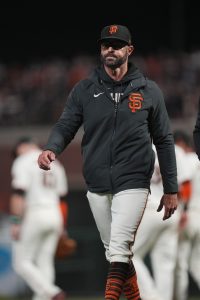
It’s no surprise the San Francisco front office kicked off the offseason by hammering out an extension with their skipper. It’s fairly common for teams to avoid heading into the season with a manager in the final year of his contract — if for no other reason than to ward off speculation about their long-term future.
Of course, no one would’ve expected Kapler’s job to be in any jeopardy anyways. Signed to replace Bruce Bochy over the 2019-20 offseason, Kapler led the club to a roughly average showing in his first season. The Giants went 29-31 during the 2020 truncated schedule, finishing just outside an expanded playoff field. If anything, that roughly .500 showing looked to be an optimistic expectation heading into 2021. FanGraphs’ preseason projections gave the Giants just a 5.7% chance of reaching the playoffs, while Baseball Prospectus forecasted them at 75-87 with less than a 1% shot of winning a loaded NL West.
Instead, the Giants played one of the best seasons in the history of the more than century-old franchise. No other Giants’ team had won more than the 107 regular games claimed by this year’s squad, while their .660 winning percentage was the organization’s fifth-highest mark since 1900 (and highest since moving to San Francisco in 1958). The Giants led all teams in wins, narrowly holding off the Dodgers to claim an improbable division crown.
The team didn’t have the postseason success they no doubt desired, dropping a tight five-game Division Series against their archrivals from L.A. The front office surely isn’t holding the vagaries of a five-game sample against Kapler, though, and today’s extension reflects that.
It’s always hard to apportion credit or blame for a team’s success to a manager from the outside. Giants’ players no doubt deserve plenty of acclaim, with Buster Posey, Brandon Crawford, Brandon Belt and Evan Longoria playing as well as ever despite being into their mid-30s. That group has been effusive in their praise for the front office and Kapler’s coaching staff in helping orchestrate their turnarounds, though. Kapler and his staff also drew plaudits for their leveraging of San Francisco’s role players, with previously unheralded performers like Darin Ruf and LaMonte Wade Jr. thriving in platoon capacities.
The Giants’ marvelous campaign has massively raised expectations for the franchise heading into 2022. Facing the potential free agent departures of four-fifths of their primary rotation, president of baseball operations Farhan Zaidi and his front office have plenty of work to do this offseason. They’ve checked off one box early, keeping Kapler in the Bay Area for what they hope to be another few great seasons.
Adam Conley Clears Waivers, Elects Free Agency
Left-handed pitcher Adam Conley, who was recently designated for assignment by the Rays, has cleared waivers and elected free agency per Marc Topkin of the Tampa Bay Times.
The 31-year-old Conley pitched effectively for a dominant Rays team after signing a surprise minor league deal in May. The jarring nature of Conley’s contract with the Rays came after he backed out of a deal with NPB’s Tohoku Rakuten Golden Eagles, citing pandemic-related concerns.
For all the tumult of the reliever’s offseason though, the effects weren’t particular pronounced on his bottom-line results. Conley pitched to a 2.29 ERA across 19+ innings for Tampa Bay, albeit with less shiny peripherals and minor league numbers (4.35 ERA in 31 Triple-A innings). Some good BABIP fortune largely explains the hurler’s pristine ERA, but even when factoring that in his ability to limit walks and avoid hard contact were definite pluses. Another team will likely sign Conley to a low-risk deal to serve as depth in the coming months, perhaps eyeing a bit of upside if his effectiveness in this year’s small sample size proves sustainable.
Injury/Health Notes: Britton, Oberg, Wieck
Yankees GM Brian Cashman confirmed what most fans had already expected, telling reporters that “it’s probable you won’t see” Zack Britton in 2022 (link via Ken Davidoff of the New York Post). Cashman didn’t fully rule out the possibility that the lefty could return for a playoff push. The long-time Orioles closer and Yankees set-up man underwent reconstructive elbow surgery in September — something of a surprise at the time, as both club and player had only planned on a procedure to remove bone chips from his left elbow, but that procedure evidently revealed significant damage to Britton’s UCL.
The southpaw arrived in the Bronx from Baltimore in a July 2018 trade and had no problems shifting from closer to a set-up role, logging 25 innings of 2.88 ERA ball before posting a combined 1.90 ERA (and an elite 232 ERA+) across 80 1/3 innings between 2019 and ’20. His 2021 came off the rails, however, as his ERA ballooned to 5.89 behind a BB% spike to 17.1% (his career mark was 9.5% entering the season). Britton’s $14MM salary — which became guaranteed when the Yankees picked up his 2022 option in October 2020 — essentially becomes dead money. The news may mean a bigger role for 2021 deadline acquisition Joely Rodriguez, who re-signed with the Yankees for one-year, $2MM on Wednesday.
Some other notes on injury situations around the game:
- Per The Athletic’s Nick Groke (Twitter link), righty Scott Oberg has undergone another procedure to further address issues arising from repeated blood clots in his arm. Though the righty reliever hasn’t seen a mound since 2019, Groke reports that the Colorado front office wants him in a Rockies uniform next year “even if he’s not able to pitch,” and Oberg has confirmed his desire to return. Oberg scouted and coached while on the IL in 2021, serving as something of a “bullpen Yoda,” per Groke. The Rockies may ask him to shift to that role more formally in 2022. Oberg has a solid 3.85 ERA (3.98 FIP) across 257 1/3 big-league innings spanning five seasons. The 31-year-old had planned to pitch in 2021 after undergoing thoracic surgery in September 2020 that doctors thought would keep the issue from recurring, but the issue returned following a March 2021 Spring Training appearance. As Danielle Allentuck of the Denver Gazette explained last month, Oberg spent a night in the ICU earlier this year ahead of an emergency surgery after his hand went numb and trainers couldn’t find a pulse in his wrist. This more recent procedure was planned, Groke notes.
- The Cubs announced to reporters that left-handed reliever Brad Wieck has been cleared for all baseball activities following a heart ablation procedure to address a irregular heartbeat — the second such procedure he’s undergone in two years (Twitter link via Meghan Montemurro of the Chicago Tribune). The importance of Wieck’s numbers pale in comparison to his health, of course, but he was a stellar bullpen option for the Cubs through early July, when he didn’t allow a single earned run while striking out 28 (albeit alongside 10 walks) in 17 innings. For his career, the 30-year-old Wieck has a 3.77 ERA and high-end 35.9 K% in 59 2/3 innings across parts of four seasons with the Cubs and Padres.
Brett Cecil Announces Retirement
Left-handed reliever Brett Cecil took to Instagram this week to announce his retirement from baseball. In a lengthy statement, Cecil thanked his family, his representatives at ACES and both Major League teams for which he pitched: the Blue Jays and the Cardinals.
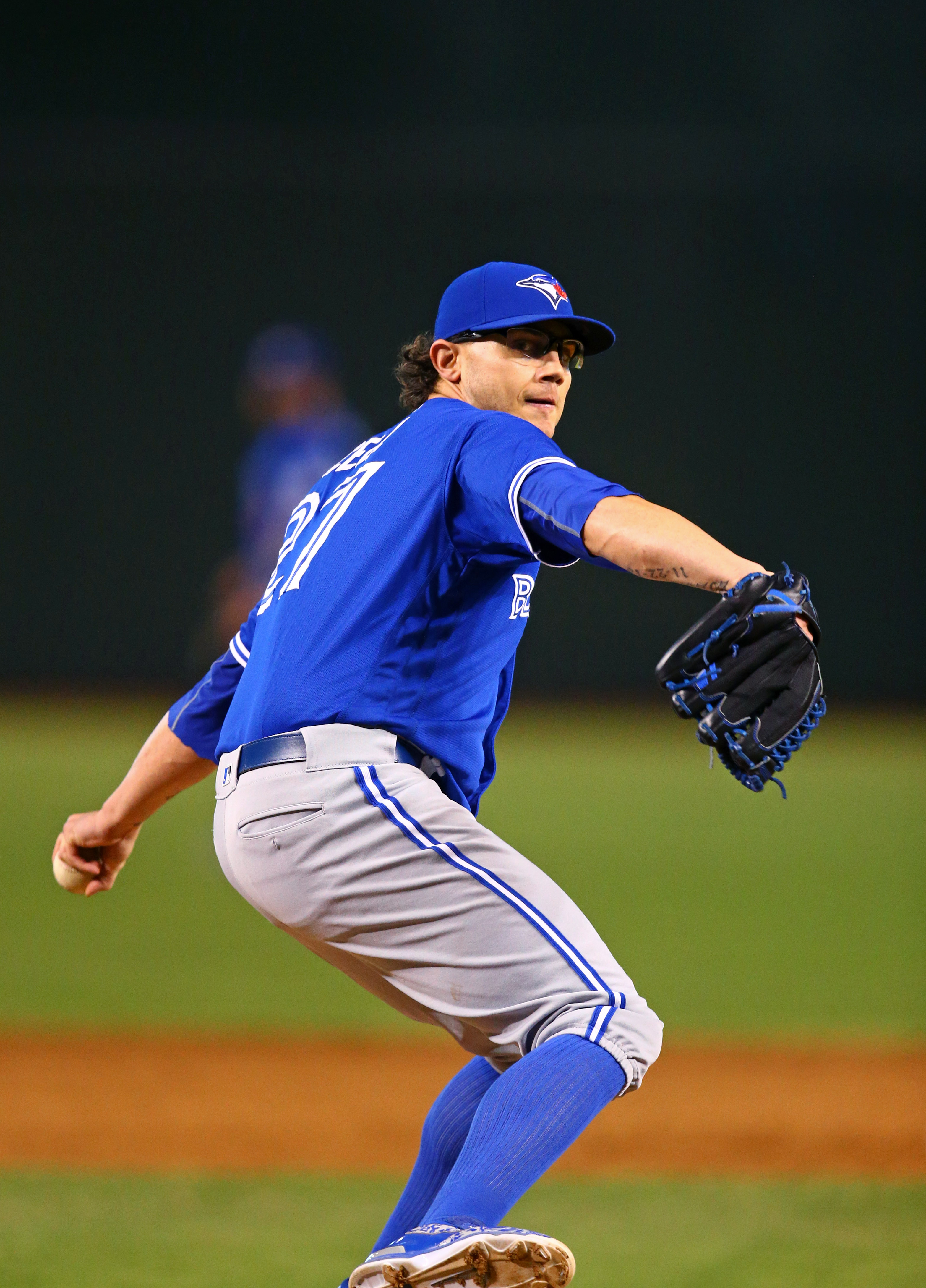
Cecil, 35, hasn’t pitched in the Majors since the 2018 season, although that’s not for lack of effort. The southpaw signed a four-year contract with the Cardinals in the 2016-17 offseason and turned in a solid first year in St. Louis before injuries completely derailed his time with the organization. A shoulder strain landed Cecil on the injured list after his first appearance of the 2018 season. He missed more than a month with that injury and spent another month on the shelf due to a foot strain later that year.
The 2019 season was a complete wash for Cecil, who underwent surgery to alleviate carpal tunnel syndrome in his pitching hand early in the year. He wasn’t able to make it back to the mound in ’19, and his 2020 season never got off the ground. Cecil suffered what the team termed a “significant” hamstring strain in Spring Training, not long before the league shutdown due to the Covid-19 pandemic. He’d made it back to the mound and was reportedly exploring a new sidearm delivery when MLB clubs began their “Summer Camp” in advance of the shortened season. The Cardinals cut him loose prior to the new Opening Day in what would have been the final season of that four-year, $30.5MM contract, however. He did not sign with a team for the 2021 season.
Cecil’s run in St. Louis clearly didn’t go as hoped, but the injury-plagued nature of that contract tends to overshadow the quality results he’d enjoyed in Toronto prior to signing that deal. Cecil had a bit of success as a starter with the Jays in 2010-11, pitching to a 4.43 ERA in 296 1/3 innings over the life of 48 starts. That two-year period even included a pair of complete games — one of them his lone MLB shutout. The left-hander’s career truly took off with a full-time move to the bullpen, however.
From 2013-16, Cecil pitched to a 2.90 ERA with a sizable 51.2% ground-ball rate, a massive 30.5% strikeout rate and a solid 8.3% walk rate. He was more effective against lefties than righties, as one would expect, but he more than held righties in check during that four-year run. Cecil posted a 3.88 ERA in his first season with the Cardinals, as his strikeout rate dipped a bit, but he remained a strong ground-ball pitcher with a terrific walk rate.
Cecil will retire from baseball with parts of 10 seasons in the Major Leagues, during which time he went 44-47 with a 4.29 ERA, 12 saves and 67 holds in 756 innings. A series of injuries cut short what looked to be a burgeoning run as one of the game’s better left-handed relievers, but two solid seasons as a starting pitcher and a five-year bullpen peak that saw him post a combined 3.14 ERA and fan 29% of his opponents from 2013-17 nevertheless makes for a fine big league career.
MLB Proposes Replacing Arbitration With Salaries Based Off Player WAR Totals
In August, Major League Baseball made its first core economics proposal to the MLB Players Association. That would’ve involved a radical restructuring of the game’s economic system, first granting players free agency at age 29 1/2 (as opposed to after six years of MLB service) and replacing the current arbitration structure with a pool-based system attached to revenues.
This week, the league proposed an unexpected wrinkle in CBA talks. While the new proposal contains the same age threshold for free agency qualification, Evan Drellich, Ken Rosenthal and Eno Sarris of the Athletic report that this offer would tie pre-free agency pay directly to a player’s Wins Above Replacement tally. Under this structure, a player’s service time and career WAR marks (weighted to emphasize the most recent seasons more heavily) would set the player’s salary. While multiple websites calculate WAR totals in different ways, MLB’s proposal would base salaries on FanGraphs’ WAR tabulations.
Earlier this afternoon, Ben Nicholson-Smith of Sportsnet reported (on Twitter) that MLB had offered to replace the arbitration system with salaries based on an algorithm. Nicholson-Smith added that the MLBPA was not enamored with that idea, and the Athletic trio quotes one player representative as saying that such an offer has “zero chance” of being approved.
That’s not at all surprising. MLB’s proposal to set free agency at 29 1/2 years has always looked to be a non-starter for the players. The league’s top prospects typically reach the majors in their early-mid 20’s. Those who live up to their promise will often pass six years of service and hit free agency in advance of their age-28 or age-29 seasons. Marketing as many prime-aged seasons as possible is what often allows players to land contracts that push free agency forward, and the league’s proposal could tether that elite group to their original teams for longer than the current system does. (For example, neither of this offseason’s top two free agents — Carlos Correa and Corey Seager — would be eligible for free agency were the age set at 29 1/2).
Certainly, the age threshold would impact some players positively as well. Players like Aaron Judge and Willson Contreras would’ve reached free agency this winter as opposed to going into their final year of arbitration. A late bloomer like Cubs third baseman Patrick Wisdom would’ve been on the open market instead of making the league minimum salary, and he’d have likely made a few million dollars in 2022 coming off a 28-homer showing over just 375 plate appearances. Overall, though, the union likely sees the 29 1/2 year age threshold as too old to be more desirable than the current service structure.
Fixing player salaries to a statistical formula comes with its own challenges. Past performance will, of course, always be relevant to player pay. The existing arbitration system awards players salaries based on their combination of service time and prior salaries of statistically-comparable players. There’s a case to be made that MLB’s proposal would modernize that process.
Arbitration can lean a little more heavily than most modern teams do on traditional box score statistics like pitcher wins, saves, and hitters’ home runs and RBI totals. While arbitrators will also consider newer, WAR-like metrics, their comparative reliance on old-school stats has led to arb salaries for closers and defensively-limited sluggers tending to skew higher than teams have been willing to pay. On the other hand, arbitrators haven’t generally placed as much value as clubs have on glove-first players and high-leverage setup relievers. Basing pre-free agency salaries off WAR would probably help to close that gap.
That said, the MLBPA seems likely to take issue with tying salaries to WAR directly. As the Athletic scribes write, using that metric is particularly challenging with regards to relievers. Both the free agent and arbitration markets have valued bullpen arms more highly than WAR totals typically do. Advanced defensive metrics — a key component in WAR calculations — can be unstable on a yearly basis. Over the long run, those metrics tend to align with general evaluations of a player’s defensive acumen. Fixing salaries weighted heavily on single-season defensive metrics, though, seems suboptimal.
WAR naturally involves making imprecise adjustments for different parks, which could pose problems when teams adjust playing field dimensions. And WAR metrics differ on how to separate a pitcher’s contributions from those of his defense; FanGraphs, upon which MLB’s proposal would be based, evaluates pitchers essentially off their strikeout, walk and home run rates. That strips out ball in play luck but also creates some seemingly odd results. For instance, Aaron Nola — who threw 180 2/3 innings of 4.63 ERA/3.37 FIP ball — had a higher 2021 fWAR than Robbie Ray, who tossed 193 1/3 frames of 2.84 ERA/3.69 FIP pitching.
None of this is meant as an indictment of WAR models generally or of FanGraphs’ choices specifically. Most or all MLB teams rely on similar calculations in making player evaluations. That’s with good reason, since advanced metrics of that nature can offer insights into players not found by typical box score stats. Still, these limitations highlight the potential pitfalls of tying player salaries directly to this one statistic.
MLB’s proposal looks unlikely to make much headway ultimately, and both sides will continue negotiations as we near the expiration of the current CBA on December 1. Nicholson-Smith reports that the two sides are scheduled to meet next on Monday.
Coaching Notes: Royals, Cubs, D-Backs
The Royals announced two additions to their coaching staff last night. Keoni DeRenne is being hired as assistant hitting coach, while Damon Hollins will join the staff as first base coach. DeRenne, who previously spent time in the Pirates and Cubs organizations, has spent the past two seasons as Kansas City’s assistant hitting coordinator. Hollins, who appeared in parts of four big league seasons between 1998-2006, has been in the organization for more than a decade. He served as interim first base coach in 2020.
The latest on some other coaching situations around the game:
- The Cubs are expected to hire Johnny Washington as assistant hitting coach, reports Sahadev Sharma of the Athletic. He’ll replace Chris Valaika, who was hired as Guardians’ hitting coach last week. Washington spent a few seasons coaching with the Padres when current Cubs’ bench coach Andy Green was San Diego’s manager. Sharma notes that he spent the 2021 campaign as the hitting coach with the Hanwha Eagles of the Korea Baseball Organization. Washington also garnered some consideration during the Angels’ 2019-20 managerial search, a job that eventually went to former Cubs’ skipper Joe Maddon.
- Former big league outfielder Peter Bourjos has moved into coaching, as Nick Piecoro of the Arizona Republic reports that the Diamondbacks have hired the 34-year-old as a minor league outfield and baserunning coordinator. Bourjos appeared in parts of ten major league seasons as a player, suiting up for the Angels, Cardinals, Phillies, Rays and Braves between 2010-19. He has spent the past two years doing advance scouting work with the Rockies.
Cardinals Notes: Reyes, Hicks, Scherzer, Matz
The Cardinals’ rotation for 2022 is 80% set, with Adam Wainwright, Jack Flaherty, Miles Mikolas and Dakota Hudson pencilled into four out of the five slots. However, that last spot could still seemingly go in many different ways, either with internal or external options. Derrick S. Goold of the St. Louis Post-Dispatch spoke to the team’s president of baseball operations John Mozeliak about the various paths they’re choosing between.
The club is apparently giving consideration to Alex Reyes and Jordan Hicks, both of whom having been primarily working as relievers in recent years and are questionable fits for rotation jobs. Reyes had an excellent year out of the bullpen in 2021, eventually becoming the team’s closer. In 72 1/3 innings, he had an ERA of 3.24 with a strikeout rate of 30% and notched 29 saves. However, that also came with a walk rate of 16.4%, around twice the league average. He also comes with a lengthy injury history that has limited his contributions in his career thus far. Those 72 1/3 innings from this year are the most he’s thrown since 2016, when he threw 111 1/3 between Triple-A and the big leagues, which is the most he’s logged in a single season. That was followed by a completely lost season in 2017 and three straight years of just a few dozen each.
The situation with Hicks is somewhat comparable, as he had an excellent season in 2018, throwing 77 2/3 innings out of the bullpen with a 3.59 ERA. However, he was limited to 28 2/3 innings in 2019 before having to undergo Tommy John surgery, opted out of 2020 and then was limited by injuries to just 13 innings in 2021, between Triple-A and the big leagues. Expecting him to jump into a rotation job at this point seems like a tall ask, and Mozeliak admitted as much. “My guess is no better than yours or anybody else’s,” he said, in regards to what Hicks could provide in the future. “For him to go out and pitch north of 100 innings would be maybe putting him in a difficult spot.”
In addition to those two, Goold also lists Jake Woodford, Johan Oviedo and Genesis Cabrera as those who are in the mix. Despite all of those candidates, the club is still looking into external options, which is understandable based on how 2021 went. Multiple injuries caused the club the struggle in the first half, leading them to make the mid-summer additions of Jon Lester, J.A. Happ and Wade LeBlanc. Although that helped stabilize the staff and get the club into the playoffs, they’re all now free agents. As Mozeliak puts it, “Last year, we thought we had nine or 10. I think you’ve got to have some protection going in regardless of what we say we’re going to get them to do… Having some additional arms is healthy.”
Goold’s report says that free agent Max Scherzer “would entertain an offer from the Cardinals”, which is notable because Scherzer was apparently unwilling to waive his no-trade clause to join them this past summer, preferring to become a member of a West Coast club. However, now that he is trying to maximize his earning potential, it makes sense that he would try to keep as many buyers at the table as possible, in order to ensure healthy bidding. Even if Scherzer is genuinely open to working in Missouri, where he was born and raised, the club may have trouble fitting him into the budget, as their 2022 payroll is currently over $142MM, according to Jason Martinez of Roster Resource. That’s around $20MM shy of 2021’s opening day payroll, which was a franchise record, per Cot’s Baseball Contracts. Scherzer is likely to command much more than that for an annual salary, with MLBTR recently predicting he garners a contract of $120MM over three years, an annual average value of $40MM.
A pitcher who will come much cheaper is Steven Matz, who was at the GM Meetings yesterday, according to Tim Healey of Newsday. Healey lists the Cardinals as being interested in his services, along with the Red Sox, Angels and Dodgers. MLBTR predicted Matz to land a deal of $27MM over three years, an AAV of $9MM which would certainly fit into the Cards’ payroll much more neatly than Scherzer’s. Matz had a solid year for the Blue Jays in 2021, throwing 150 2/3 innings with an ERA of 3.82. He figures to be popular among teams hesitant to surrender draft picks, as he didn’t receive a qualifying offer from the Jays.