
Angels Manager Mike Scioscia To Step Down
Mike Scioscia is stepping down from his post as Angels manager, the veteran skipper announced to the media (including Bill Shaikin of the Los Angeles Times and MLB.com’s Maria I. Guardado) after the Halos concluded their final game of the season. Rumors had swirled since August that this would be Scioscia’s final year as Los Angeles’ manager, and while there was some indication that Scioscia would retire from baseball altogether, he said today that he would be open to another managerial job with another club.
According to team president John Carpino (via Shaikin and other reporters), it was Scioscia’s decision to not return to the Angels. This doesn’t exactly match last week’s news that Scioscia wanted to remain with the club, as he said he would make his final choice after talking with owner Arte Moreno and GM Billy Eppler. This was the final season of Scioscia’s ten-year/$50MM contract, so the Angels could possibly have felt that change was necessary in the wake of three straight losing seasons.
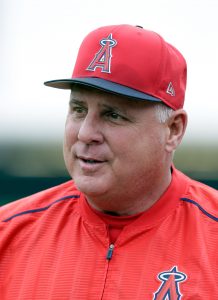 Still, Scioscia’s 19-year tenure as the Angels’ bench boss has easily been the most successful stretch in franchise history. Scioscia was a first-time manager when originally hired prior to the 2000 season, and he ended up managing the fifth-most games with a single franchise of any skipper in baseball history. He currently sits 18th on baseball’s all-time managerial win list with 1650 victories (against 1428 losses). Scioscia’s resume with the Halos included 11 winning seasons, six AL West titles, and the crowning jewel of the 2002 World Series championship, the first and only time the Angels have hoisted the Commissioner’s Trophy.
Over the last nine seasons, however, the Angels reached the postseason only once, a trip that resulted in an ignominious three-game sweep to the Royals in the 2014 ALDS. Given that the game’s best player (Mike Trout) was on the roster for much of this stretch and the Angels have consistently posted large payrolls under Moreno’s ownership, there have been whispers over the last couple of years that Scioscia wouldn’t be back in 2019, if not sooner. In fairness to Scioscia, however, it’s hard to blame him for the Angels’ recent struggles given that the team has been hit by a staggering amount of pitching injuries over the last three years.
It isn’t clear if Scioscia (who turns 60 in November) will pursue a managerial post immediately, or if he might take a year off to recharge his batteries and test the market. The Reds, Rangers, and Blue Jays are the only three teams known to be looking for new managers this winter, and there has been heavy speculation that the Orioles could also be looking to replace Buck Showalter. It’s possible more jobs could open up in the coming days or even weeks, depending on whether any playoff teams decide to make a change in the dugout.
The Angels will now embark on their first managerial search of the 21st century. As Ken Rosenthal initially noted last August in his report about Scioscia’s impending departure, top in-house candidates for the job include bench coach Josh Paul, special assistant Brad Ausmus, and Triple-A manager Eric Chavez. Fancred’s Jon Heyman wrote earlier this week that Chavez could be the favorite, as he only took over the Triple-A job (moving from his own special assistant role under Eppler) in early August, around the time of Rosenthal’s report. It’s fair to assume that a wider-ranging search could take place, as external candidates are likely to have strong interest in a managing a roster that includes the likes of Trout, Shohei Ohtani, Justin Upton, and other intriguing pieces, though obviously the front office has some work to do this winter to get the Angels back in contending form.
Photo courtesy of USA Today Sports Images
Baseball Blogs Weigh In: Verlander, Wright, Yanks, Mauer, V-Mart
This week in baseball blogs…
- theScore talks with Justin Verlander as he gears up for another postseason.
- Bronx to Bushville pays tribute to David Wright.
- Pinstriped Prospects asks if the Yankees should use an opener in the wild-card game.
- The Runner Sports (links: 1, 2) expects Joe Mauer to retire, and compares last year’s Astros to this season’s.
- Motor City Bengals says goodbye to Victor Martinez.
- True Grich praises Mike Scioscia at what could be the end of his Angels tenure.
- The K Zone profiles the Cecchini brothers, former top prospects whose careers haven’t gone according to plan.
- Hardball via Hardcore presents an offseason plan for the Mariners.
- Mets Daddy believes Jacob deGrom should take home NL MVP honors.
- Foul Territory hands out awards for the worst performances of 2018.
- Minor League Ball (links: 1, 2) focuses on the best first and second base prospects who figure to debut in 2019.
- Armchair All-Americans explains that the Pirates have plenty of reasons for optimism going into next year.
- Everything Bluebirds laments the Blue Jays’ decision to keep Josh Donaldson last winter.
- Friars on Base lists the Padres’ likeliest offseason trade candidates.
- The Pinch Runner names catchers the Brewers could pursue in the offseason.
- Phillies Nation examines the balance the club has between potential and performance.
- Rising Apple offers some historical comps for the seasons of Brandon Nimmo, Jeff McNeill, Seth Lugo and Zack Wheeler.
- Chin Music Baseball writes that Khris Davis is the game’s “most underrated slugger.”
- Rox Pile praises the Rockies for their resiliency.
- Call to the Pen looks at the Phillies’ bullpen going into the offseason.
- Jays From the Couch sees an opportunity for Toronto to change its offensive identity.
- Extra Innings UK (links: 1, 2, 3) breaks down fall instructional camp rosters, looking at players from unusual places.
- Mets Critic isn’t too optimistic about the club’s direction heading into the winter.
- Jays Journal spotlights John McDonald, a potential candidate to become Toronto’s next manager.
- Rotisserie Duck has a tribute to Yogi Berra.
Submissions: ZachBBWI @gmail.com
NL Notes: Kershaw, Nats, Harper, Reds, Girardi
The Dodgers clinched a playoff berth with a win over the Giants on Saturday, but Los Angeles still isn’t a lock to participate in a postseason series. Entering play on Sunday, the Dodgers and Rockies were tied atop the NL West. In the event Colorado wins the division, which may come down to a one-game tiebreaker between the teams on Monday, LA would have to get through the wild-card one-off on Tuesday in order to reach the NLDS. Ace Clayton Kershaw wouldn’t start that do-or-die contest, given that he just tossed five innings Saturday. So, because Kershaw could opt out of the remaining two years and $65MM left on his contract after the season, it’s possible Saturday’s start will go down as his last with the Dodgers. Kershaw was asked about his opt-out Saturday, but as you’d expect, his focus is on the playoffs. “I mean – I can’t really give an answer because I don’t know what’s ahead,” he told Bill Plunkett of the Orange County Register. “I know we’ve got the playoffs ahead. It’s a good distraction. If we weren’t making the playoffs, I probably would have put a lot more thought into where we’re going and what I’m doing personally. But right now, I can’t do it. There’s not enough room up there (in his mind) for both.”
More on a couple other NL clubs..
- This season will end up as a major disappointment for the Nationals, who entered as expected contenders but will miss the playoffs under first-year manager Dave Martinez. Nevertheless, Martinez and his staff are safe going into the offseason, general manager Mike Rizzo told Mark Zuckerman of MASNsports.com and other reporters on Sunday. It’s anyone’s guess whether Martinez will continue to manage superstar outfielder Bryce Harper, a pending free agent, in 2019. Unsurprisingly, though, Rizzo wants Harper to remain in the fold. “Of course he’s in our plans,” Rizzo said of Harper (Twitter link via Chelsea Janes of the Washington Post).
- It’s a near certainty the Reds will have Joe Girardi on their wish list as they search for a full-time manager, Ken Rosenthal of FOX Sports reports (video link). If Cincinnati does pursue Girardi, the former Marlins and Yankees skipper informed Rosenthal he would consider taking the job. “I want to manage again. I’m interested in everything,” said Girardi, whom the Yankees parted with last fall after a long and successful run in New York. On paper, the rebuilding Reds and Girardi may not look like a match, though it’s worth noting they expect to spend more in 2019 and could attempt to start pushing toward contention.
- The Reds’ 2019 manager will have to decide how to deploy righty Michael Lorenzen, a reliever who could vie for a starting role next season. Lorenzen started 21 times as a rookie in 2015, but he moved to a full-time relief job the next season. He has since made three starts, all of which came this season, and ended his year on Saturday with 5 2/3 scoreless innings against the Pirates. The 26-year-old then said (via Mark Sheldon of MLB.com) that he wants to return to starting on a full-time basis. “It’s not a secret that it’s something I want to do,” said Lorenzen, who added he’ll “work extremely hard” in the offseason to bolster his chances. Lorenzen was a valuable member of the Reds’ staff in 2018, as he posted a 3.11 ERA/4.18 FIP over 81 innings. He also did his best offensively to serve as the NL’s answer to Shohei Ohtani, hitting an excellent .286/.333/.750 with four home runs in 31 trips.
Mets Notes: GM Search, Callaway, Cespedes, Reyes
Speaking with reporters on Sunday, Mets COO Jeff Wilpon revealed that he and assistant general manager John Ricco will lead the initial round of interviews to find the team’s next GM (via Mike Puma of the New York Post). While the job still technically belongs to Sandy Alderson, it seems the leave of absence he took in June to battle cancer essentially ended his reign atop the team’s baseball department. Indeed, the Mets have known since June that they’d need a new GM, Tim Healey of Newsday was among those to tweet. None of Ricco or fellow assistants Omar Minaya and J.P. Ricciardi are candidates to succeed Alderson, Wilpon said (via Puma), though he hopes those three return. Whether that happens will be up to the team’s next baseball chief, however.
The Mets would like to hire a new general manager in time for the GM meetings in November, but that’s not a necessity, per Wilpon. He also revealed that the team will consider a president/GM or executive VP/GM power structure, James Wagner of the New York Times reports. On the role Alderson’s replacement will have in building the team, Wilpon said, “They will know that their final recommendation will go through me, but it’s not something where I am in the mix of picking the players.”
- It’s possible the Mets’ coaching staff will also see changes heading into next season. First-year manager Mickey Callaway said he expects his whole staff to return in 2019 (per Healey), but he may not be even be safe. Callaway’s fate “will depend on the new GM’s thoughts,” Wagner tweets. Wilpon did praise Callaway & Co. on Sunday, saying (via Healey): “Mickey and the staff did a nice job not letting anybody quit and keeping them moving forward, which was certainly something that could have happened. We saw it with other teams in our division, where they had a great first half and fell apart.” While crediting his own team’s coaches, Wilpon jabbed at the NL East rival Phillies, who collapsed in the second half of the season.
- Mets outfielder Yoenis Cespedes will undergo the second of two scheduled heel surgeries on Oct. 23, Tim Britton of The Athletic was among those to tweet. Cespedes expects to resume baseball activities roughly four months later, but he still won’t be able to run, Britton adds. The soon-to-be 33-year-old underwent his first heel surgery in late July, which ended his season and could keep him out for a sizable portion of 2019.
- Meanwhile, one of Cespedes’ teammates – infielder Jose Reyes – told reporters that Sunday’s game will be his last with the Mets, Wagner relays. The 35-year-old Reyes, a Met from 2003-11 and again since 2016, has managed a meager .583 OPS in 250 plate appearances this season. Reyes hasn’t decided on whether he’ll try to play again in 2019, but considering his output this year, he may not generate any interest as a free agent.
Ned Yost To Manage Royals In 2019
The Royals and manager Ned Yost have agreed to a one-year extension, Jon Morosi of MLB Network tweets. The deal is for next season, which will be Yost’s 10th as the Royals’ skipper.
At 58-103, the Royals have already clinched the majors’ second-worst record, but it’s hard to blame that on Yost. The rebuilding club is low on talent, after all, and figures to be in for another lean year next season, when it’s slated to reduce its payroll. That’s apparently OK with Yost, who has the full confidence of general manager Dayton Moore.
“We definitely want him back,” Moore said in April, adding that Yost has earned the right to manage the club for as long as he wants.
While the Royals have gone an underwhelming 687-735 under Yost, who took the reins in 2010, they’ve been resoundingly successful at times during his tenure. The Yost-led team won back-to-back American League pennants from 2014-15 and broke a 30-year championship drought in the latter of those seasons. Kansas City has also posted records of .500 or better in two other seasons during Yost’s reign.
Prior to joining the Royals, Yost managed Milwaukee from 2003-08, a span in which the Brewers logged a 457-502 record.
Diamondbacks Notes: Corbin, Miller, Descalso, Souza
Left-hander Patrick Corbin is set for a lucrative trip to free agency in the offseason, having just wrapped up a campaign in which he was somewhat quietly one of the majors’ premier pitchers. Corbin, who reached 200 innings for the first time in his career, ranks third among starters in FIP (2.47), fourth in fWAR (6.3), sixth in K/9 (11.07) and K/BB ratio (5.13), and 14th in ERA (3.15). Those numbers may help price Corbin out of Arizona, and based on his comments Friday, the 29-year-old “seems to believe his time with the Diamondbacks likely is over,” Nick Piecoro of the Arizona Republic writes “I think when the season is over, I’ll look into it more,” Corbin said. “I think I’ll just look back on my time here. The seven years have gone by really quick. A lot of friendships that I’ve had here. I’m not sure what’s going to happen. But the Diamondbacks organization will always have a special part of my heart.”
Here’s more from Piecoro:
- Another member of the Diamondbacks’ staff, righty Shelby Miller, will “probably” reach free agency, Piecoro tweets. Miller’s controllable through 2019, which is scheduled to be his fourth and final arbitration year, but the club could non-tender him after another disappointing season. Miller, who’s on a $4.9MM salary this year, has barely pitched since 2017 on account of arm injuries. He logged just 22 frames before undergoing Tommy John surgery last season, and after returning this past June to throw 15 innings over four subpar starts, went back to the shelf with elbow inflammation. Miller did come back to throw a scoreless inning Saturday, but that’s of little consolation to the D-backs amid another lost season for him. If Arizona does say goodbye to the soon-to-be 28-year-old Miller, it’ll mark the end of a disastrous union which began with his much-maligned acquisition from Atlanta in December 2015.
- Diamondbacks pending free-agent infielder Daniel Descalso spoke about his future Friday, telling Piecoro he “would hate to see” the club embark on a rebuild after a disappointing season. While Descalso “sounds interested” in staying in Arizona, per Piecoro, the team’s direction may determine whether that happens. Descalso revealed that team success will be among his key considerations as he maps out his future. Age (32 next month) won’t be on Descalso’s side when he hits free agency, but he’s hopeful his recent output will help him reel in a richer payday than he received last time he reached the market. Arizona signed Descalso to a one-year, $1.35MM guarantee in 2017 and then kept him this season with a $2MM club option. He has been well worth that investment in ’18, having batted .239/.354/.437 (112 wRC+) with a career-best 13 home runs in 422 plate appearances.
- When the Diamondbacks acquired outfielder Steven Souza Jr. from the Rays last February, their hope was that he’d help fill the void of superstar slugger J.D. Martinez, who departed in free agency. Instead, as Piecoro explains, Souza struggled through an injury-shortened 2018. Souza batted an ugly .217/.306/.354 (80 wRC+) with four homers in 271 PA this year, during which he endured multiple DL stints for a strained right pectoral. The 29-year-old discussed his tough season with Piecoro, saying: “Not great. It’s just been a really trying year. To the point of injury, re-injury, the trade, coming back and not playing well. All of it has just been a trying year, one I’m going to use for motivation next year.” Souza went on to suggest that he’s still not 100 percent from that injury, which he suffered in late March, but he and the team expect a return to form in 2019. “We believe in this guy strongly,” general manager Mike Hazen said. “We believe he’s going to come back next year and have a great year.” Souza’s only a season removed from a career year in Tampa Bay, where he hit .239/.351/.459 (120 wRC+) with 30 homers, 16 steals and 3.7 fWAR in 617 PA. That performance helped him secure a $3.5MM salary for this year, his third-to-last arbitration-eligible season.
Poll: Yankees’ Wild-Card Starter
While we know the Yankees will host the Athletics in the American League wild-card game on Wednesday, it’s not yet clear which pitcher will start for either team. The A’s seem poised to take an unconventional path and roll with their bullpen all night, as Susan Slusser of the San Francisco Chronicle reported Saturday, while the Yankees are likely to take a more traditional path. New York’s brass is currently debating whether to start Luis Severino, J.A. Happ or Masahiro Tanaka, who comprise the top three in the team’s rotation.
No matter who starts for the Yankees, one thing’s obvious: He’s in for an extremely difficult test against Oakland, whose offense ranks fourth in the majors in runs scored. The A’s have been death on both right-handers (112 wRC+) and lefties (106), meaning the Yankees can’t base their pick largely on pitcher handedness, and own the majors’ best road wRC+ (116). They also lead the league in fly ball rate (38.9 percent) and rank third in home runs, which bodes well for a team set to play at HR-friendly Yankee Stadium.
The A’s power could help steer the Yankees away from Tanaka, a homer-prone righty whose HR-to-FB rate (17.7 percent) is the majors’ sixth highest among pitchers who have thrown at least 150 innings this year. The left-handed Happ’s 30th in that category (13.4 percent), while Severino sits 45th (11.4 percent). On the other hand, the fact that Tanaka tends to shy away from fastballs could work in his favor. Tanaka has thrown his splitter 32 percent of the time this year, and according to Statcast, the A’s have only managed the majors’ second-worst weighted on-base average (.162) against that pitch. The 29-year-old’s main offering is his slider, which he has gone to 33 percent of the time. Oakland does place third in the majors in wOBA versus that pitch, though its .287 mark still doesn’t look that threatening. The A’s have also held their own against four-seam fastballs, evidenced by their .361 wOBA (ninth in the game), and that’s the pitch both Severino (50 percent) and Happ (59 percent) rely on the most.
The above numbers may factor into the Yankees’ decision for Wednesday, though if they make their call largely on upside, Severino will be the choice. The hard-throwing 24-year-old has been one of the sport’s most electrifying starters since last season, after all, and looked like an AL Cy Young front-runner during the first half of the season. Severino has experienced some turbulence since then, as he posted a horrid 5.57 ERA in the second half. At the same time, though, the righty still recorded excellent secondary numbers (10.86 K/9 against 2.00 BB/9, 3.37 FIP/3.06 xFIP), which suggests he deserved much better than his unsightly ERA, and finished the regular season allowing two or fewer earned runs in three straight starts.
Like Severino, Happ has been hot lately. Not only does Happ own a 2.62 ERA in the second half, but the 35-year-old has helped the Yankees to wins in nine of his 11 starts since they acquired him from the Blue Jays on July 26. However, his 4.21 FIP as a Yankee indicates fortune has been on his side. Tanaka, meanwhile, enjoyed a lights-out second half of the season in which he put up a 2.85 ERA/2.98 FIP with 9.41 K/9 and 1.61 BB/9. But it’s worth pointing out he’s fresh off back-to-back rough starts that saw him yield a combined eight earned runs in as many innings.
Based on numbers, selecting a starter against the A’s may not be a slam dunk for the Yankees. But in the end, the club’s choice might not even be on the mound for long. Whether it’s Severino, Tanaka or Happ, New York won’t gives its first-inning pick much rope Wednesday, largely because its bullpen is loaded with appealing choices. That relief corps was put to the test early in the Yankees’ wild-card game win last year, when the Twins teed off on Severino and chased him off the mound after he recorded just one out and allowed three earned runs. The Yankees’ bullpen saved them in a comeback victory in the Bronx that night, and they can only hope they won’t need that kind of help again in this season’s sudden death round.
(poll link for app users)
Who should start for the Yankees on Wednesday?
-
JA Happ 45% (4,176)
-
Luis Severino 34% (3,117)
-
Masahiro Tanaka 13% (1,206)
-
Go with a bullpen game instead 8% (743)
Total votes: 9,242
East Notes: Phillies, Quinn, Herrera, Yanks, CC, Rays, Jays, Estrada
Thanks to the presence of rookie Roman Quinn, Phillies outfielder Odubel Herrera has recently shifted from center field to right. It’s unclear whether that alignment will hold up in 2019, but manager Gabe Kapler said Saturday (via Todd Zolecki of MLB.com) that he wants both players to enter next season prepared to handle center. Kapler also suggested that Herrera hasn’t been at top physical condition this season, per Zolecki, saying: “I think he can come into camp in better shape in 2019 than he came in 2018. … This is something that he and I have discussed and will continue to discuss. I think he can be in incredible physical shape. We’ve seen it from him in the past. If you look back a couple years you see a version of him that is fast, athletic, explosive and I think that’s in there and I’m excited about helping him and supporting him to bring that out.”
Going by fWAR (1.1), this has been a dud of a season for Herrera, who posted between 2.9 and 3.8 in that category from 2015-17. Perhaps Herrera will be an offseason trade candidate, then, though the Phillies would be “selling low” on him, Zolecki points out. He also notes Quinn’s history of injuries could make it all the more difficult to part with Herrera, who’s set to turn 27 in December and has four guaranteed seasons left on the five-year, $30.5MM extension he signed prior to 2017.
Here’s more from the East Coast…
- Major League Baseball has issued a five-game suspension to Yankees left-hander CC Sabathia and a three-game ban to Rays right-hander Andrew Kittredge, Daniel Kramer of MLB.com was among those to report. Both players will serve their suspensions at the beginning of the 2019 season, if they’re upheld through the appeals process. Sabathia was ejected from a win over the Rays on Thursday after throwing at catcher Jesus Sucre, a retaliatory move which served as a response to Kittredge nearly hitting Yankees backstop Austin Romine in the previous half-inning. Sabathia’s ejection may have cost him a significant amount of money, considering he was cruising through five innings and was only two frames away from notching 155 for the season. Had Sabathia reached that mark, he’d have secured a $500K bonus. It’s still possible the 38-year-old will earn that money, though, with George A. King III of the New York Post noting the Yankees could use him for a couple innings Sunday in Boston in a postseason tuneup. However, Sabathia told reporters on Saturday that he’s not interested in doing that (via Erik Boland of Newsday). “Nah, man, the season’s over for me. I’m ready for the lights to come on,” he said.
- Blue Jays righty Marco Estrada won’t make his scheduled start Sunday on account of a sore back, per Gregor Chisholm of MLB.com, meaning the pending free agent may have thrown his last pitch as a member of the team. The 35-year-old Estrada, a Blue Jay since 2015, said he’d “love to hear from” the club again and is “comfortable” in Toronto, though he’s not sure whether the club’s interested in re-signing him. Thanks in part to the Jays’ youth movement, not to mention Estrada’s struggles this season, a parting of ways may be in order. Estrada had been a quality starter for the Jays from 2015-17, but he only managed a 5.64 ERA/5.44 FIP over 143 2/3 innings this year.
Rangers Notes: Eovaldi, Holland, Mazara, CF
With the Rangers heading into the offseason in dire need of starting pitchers, Evan Grant of the Dallas Morning News runs down several options they could consider in the coming months. Red Sox pending free agent Nathan Eovaldi is among them, and the Rangers “have always liked him,” Grant writes. The 28-year-old returned from 2016 Tommy John surgery to post a 3.81 ERA/3.60 FIP with 8.19 K/9, 1.62 BB/9 in 111 regular-season innings between Tampa Bay and Boston. While Eovaldi could be a realistic offseason target for the Rangers, the same may be true of Giants left-hander Derek Holland, who’d “love” to return to Texas, according to Grant. Holland – who, like Eovaldi, is a soon-to-be free agent – was a Rangers draft pick in 2006 who had a largely successful run with the franchise through 2016. After a couple down campaigns, the 31-year-old has revived his career in San Francisco, where he has put up a 3.61 ERA/3.89 FIP with 8.88 K/9 and 3.51 BB/9 in 169 1/3 frames this season.
- Rangers outfielder Nomar Mazara may undergo right thumb surgery after the season, Grant reports. The thumb has troubled Mazara throughout the second half of the season, including when he sat out from mid-July through mid-August, and has likely played a role in his poor post-All-Star break production. After recording a .789 OPS in the first half of the season, Mazara’s down to .679 in the second half. Texas will know more on the 23-year-old after he visits a hand specialist Tuesday.
- Assuming he’s healthy, Mazara’s sure to once again occupy a starting spot in the Rangers’ outfield next season. There’s uncertainty in center field, though, as Grant points out. While Delino DeShields has been excellent in the field, his offense has been woeful. And slugger Joey Gallo, who has played some center of late, may not be a long-term fit there. “I don’t think I’m a center fielder,” Gallo said. “But I’m not against it. It definitely affects you physically. But it also gives you a lot more value. Can I do it? I’ve already done it this year. I do think it adds to what I can do to help a team win.” Along with Deshields and Gallo, Texas has Carlos Tocci and Scott Heineman among its in-house options, and general manager Jon Daniels suggested the team could add center field help over the winter. Regardless, it seems he’s prepared to field inquiries for the outfielders already on hand. “I feel like the outfield is an area of depth,” he said. “I think it’s an area we will get hit on [by trade requests] this winter. Everything is interconnected.”
Tigers’ Al Avila On Castellanos, McCann, Middle Infield
With Detroit in a rebuild and one of its best players, right fielder Nicholas Castellanos, only under control for another year, this weekend may be his last as a Tiger. But general manager Avila suggested Saturday that the team’s not a sure bet to trade Castellanos during the offseason.
“Where he fits in the future of the Detroit Tigers, we’re still working through that at this point. But right now, I see him as our starting right fielder in 2019,” Avila said (Twitter links via Jason Beck of MLB.com).
Avila added that revenue sharing could factor into whether the Tigers keep Castellanos, given that they may go from paying it to collecting it. As Beck notes, by becoming a revenue sharing collector, Detroit would stand to receive a more valuable compensatory draft pick should it retain Castellanos through next season, issue him a qualifying offer after the campaign and then watch him depart in free agency.
Offensively, Castellanos has made a case that he’s a qualifying offer-worthy player since 2016 – his breakout season. And the former top prospect’s now on the verge of wrapping up his best campaign at the plate, having slashed .297/.354/.495 (129 wRC+) with 22 home runs in 670 trips. Castellanos has posted a terrific .362 weighted on-base average along the way, though his .388 xwOBA (via Statcast) suggests he has deserved even better results.
Although Castellanos has emerged as a key offensive piece, he hasn’t established himself on the other end. After struggling as a third baseman from 2014-17, Detroit moved Castellanos to the outfield on a full-time basis this year, but the returns haven’t been encouraging. Castellanos ranks last among outfielders in Outs Above Average (minus-25), third worst in Ultimate Zone Rating (minus-12.9) and fifth from the bottom in Defensive Runs Saved (minus-19). The 26-year-old’s limitations as a defender obviously help tamp down his impact, but thanks to his prowess as a hitter, he has still posted 2.8 wins above replacement. Castellanos has been a valuable player this year, then, and the Tigers will have to decide whether to continue with him in 2019 – his third and final arbitration-eligible season, in which he’ll earn a raise over his current salary of $6.05MM – or deal him during the winter.
Along with making a decision on Castellanos, Avila revealed that catcher, second base and shortstop will be among his areas of focus in the offseason (Twitter links via Evan Woodbery of MLive.com). The Tigers will have a “tough” call to make on catcher James McCann, Avila admitted, adding: “We have not made any decisions yet, but he’s one guy that we have to look at and determine do we bring him back or not?”
McCann, 28, looked like a promising piece for the Tigers as recently as 2017, but he has limped to a .220/.267/.314 (58 wRC+) batting line in 453 PA this season. Both that and his his subpar defensive work (per Baseball Prospectus and StatCorner) have seemingly put his Detroit tenure in jeopardy. On the heels of a rough 2018, in which he earned $2.375MM, McCann’s slated to go through arbitration for the second-last time in the offseason.
While McCann’s future is unclear, it’s obvious Avila plans to address the team’s middle infield, where shortstop Jose Iglesias is among its pending free agents.
“I don’t know if we’re going to be able to sign both but at least we’ll try to sign one,” Avila said of the two middle infield spots.
Going by fWAR (2.5), Iglesias was the Tigers’ second-most valuable position player this year before suffering a season-ending abdominal strain in late August. Never much of a threat at the plate, the 28-year-old Iglesias managed passable offensive production, as his .269/.310/.389 line and 90 wRC+ in 464 PA show, while providing his typical brand of plus defense (8.3 UZR, one DRS).
Whether the Tigers are interested in re-signing Iglesias is unknown, but it’s worth noting they reportedly had him on the trading block for the majority of the past couple years. Assuming his Tigers tenure is over, Iglesias will be one of the most proven non-Manny Machado shortstops available in free agency. It seems the Tigers will be prepared to sift through that group of players, given that they might not have an immediate Iglesias replacement on hand.
Detroit may also be lacking a capable starter at second heading into the offseason, but it’s possible it could turn to Niko Goodrum as its main option there. After inking a minors deal with the Tigers last offseason, Goodrum, 26, has batted a solid .244/.313/.433 (102 wRC+) with 16 HRs and 12 steals on 16 attempts across 486 trips to the plate. Goodrum has spent the majority of 2018 at the keystone, where he has racked up 64 appearances, but has also recorded double-digit showings at first, short, third and in the outfield.
The Tigers may want to keep Goodrum in a similar type of utility role next year, especially if aging, big-bodied first baseman Miguel Cabrera sees more time at designated hitter in the wake of Victor Martinez‘s retirement. In that event, Detroit could look to free agency for help, to which Avila alluded. There will be some veteran stopgaps on the open market, perhaps including Brian Dozier, Logan Forsythe, old friend Ian Kinsler, Neil Walker and Josh Harrison.
Now on the cusp of wrapping up their second straight season as one of baseball’s worst teams, it’s fair to say the Tigers won’t be operating as aggressive buyers in the offseason. The rebuilding club still has some intriguing offseason calls ahead, though, particularly with respect to Castellanos.