
Blue Jays Move Patrick Corbin To Bullpen
Blue Jays manager John Schneider announced to reporters today that left-hander Patrick Corbin is being moved to the bullpen. He was originally slated to start tomorrow’s game. That will now be started by Spencer Miles or an opener, depending on how things go tonight. Ben Nicholson-Smith of Sportsnet was among those to relay the news.
Corbin, 36, is a veteran soft-tosser at this point in his career. In the most recent offseason, he lingered unsigned until after the 2026 campaign had begun. The Jays scooped him up in early April. They had begun the season with Trey Yesavage, José Berríos and Shane Bieber on the injured list. Cody Ponce then hit the IL after he sprained the anterior cruciate ligament in his right knee in his first start of the season.
Though he signed late, Corbin had stretched out on his own and quickly jumped onto the big league roster. He initially provided a great help to the Jays. In addition to the aforementioned injuries, the Jays also saw Dylan Cease and Max Scherzer hit the IL. They also moved on from Eric Lauer after he struggled and complained about his role, trading him to the Dodgers. While all that was going on, Corbin posted a 3.65 earned run average over ten starts in April and May.
Since the calendar has flipped to June, things have changed. Corbin has an 8.69 ERA over his five starts this month. The Toronto rotation has also gotten healthier over the course of the season and now has Kevin Gausman, Cease, Yesavage and Bieber in four spots.
That still leaves one opening but the Jays may be able to improvise that for a bit. As mentioned, they will likely do some kind of bullpen game tomorrow with Miles and/or Corbin in bulk roles. They then have off-days on July 2nd and 9th, then the All-Star Break begins on July 13th. Perhaps they will be able to get through that stretch of play with four proper starters, while Corbin and Miles provide length on occasion. Miles has worked as a traditional reliever and a bulk guy this year with a 3.00 ERA, 24.3% strikeout rate, 7.8% walk rate and 54.3% ground ball rate in 51 innings.
After the Break, the Jays play 13 in a row, so they may have a stronger desire for a proper fifth starter at that time. Perhaps Scherzer will be able to come off the IL by then. They also have guys like Jake Bloss, Simeon Woods Richardson, Chad Dallas and Lazaro Estrada in Triple-A and could call upon one of them.
Beyond that stretch, the August 3rd trade deadline looms over the horizon. General manager Ross Atkins has mentioned starting pitching as a potential target, though the Jays will have to stay in the race between now and then. A recent six-game losing streak dropped them down in a crowded American League playoff race.
Thankfully for the Jays, lots of other clubs are struggling, so their 40-45 record is good enough to be within 2.5 games of a playoff spot at the moment. If they fall further back, they could pivot to seller position, though the club will obviously be hoping they hang in there or gain ground in the coming weeks.
Photo courtesy of Dale Zanine, Imagn Images
Blue Jays Designate Josh Fleming For Assignment
The Blue Jays announced a series of roster moves today. Left-hander Patrick Corbin and infielder Tyler Fitzgerald have been recalled to the active roster. Infielder/outfielder Addison Barger has been placed on the 10-day injured list, retroactive to April 6th, due to a left ankle sprain. That opened a spot for Fitzgerald, while Corbin takes the spot of left-hander Josh Fleming, who has been designated for assignment.
The Jays have recently been cycling through pitchers due to a few notable setbacks. Cody Ponce sprained the anterior cruciate ligament in his right knee last week, opening a hole in their rotation. Eric Lauer has also been battling the flu lately, which pushed his Saturday start to Sunday.
The Jays recalled Lazaro Estrada when Ponce landed on the IL. He covered four innings as part of a bullpen game on Saturday but then got optioned right after that, alongside lefty Brendon Little. The Jays added Joe Mantiply and Austin Voth to replace those two. Lauer tried to gut through his illness on Sunday but could only stomach two innings, forcing Voth to absorb 2 2/3.
Prior to yesterday’s game, Fleming was added to the roster with Voth designated for assignment. Max Scherzer started yesterday but was held back by some right forearm tendinitis. It’s possible he may be fine enough to make his next start, per Keegan Matheson of MLB.com, but he was pulled after just two innings last night. Fleming was called in to soak up three innings, allowing four earned runs as the Jays were eventually trounced by the Dodgers 14-2.
It’s presumably not the return to the majors that Fleming hoped for. After being stuck in the minors in 2025, he got back to the show last night and was thrown into the proverbial lion’s den, having to face Shohei Ohtani and the dangerous Dodger lineup. The Jays surely appreciate the nine outs he gave them but it took him 77 pitches and he wasn’t going to be available for a few days. Since he’s out of options, he’s been bumped into DFA limbo. The Jays will likely place him on waivers in the coming days. If he clears, he’ll have the right to elect free agency.
The Jays only signed Corbin a few days ago, as he lingered unsigned in free agency beyond Opening Day. Though he missed spring training, he had been getting stretched out privately. He agreed to be optioned to Low-A Dunedin and tossed five innings at that level on Saturday. Per Arden Zwelling of Sportsnet, Corbin will join the Jays tomorrow and will start Friday’s game.
The Jays have Kevin Gausman and Dylan Cease lined up to pitch the final two games of the series against the Dodgers. The Jays are off on Thursday and then start a series against the Twins, with Corbin taking the ball the first time through. Assuming Lauer and Scherzer are healthy, they could follow Corbin.
That may be the rotation plan, at least for the short term. Trey Yesavage is on a rehab assignment, working his way back from his shoulder impingement, and should be back in the mix in the coming weeks. José Berríos and Shane Bieber are also on the mend from their injuries, though they are a bit behind Yesavage. Eventually, someone may get pushed to the bullpen or off the roster, depending on health outcomes in the near future.
The injury bug hasn’t just bit the Toronto pitching staff. Outfielder Anthony Santander required shoulder surgery and will miss several months. Catcher Alejandro Kirk required thumb surgery and is slated to miss the next six weeks. Now Barger is also on the shelf, though this issue seems far more minor. Per Zwelling, the Jays are hoping it could be a minimal stint and he might not even need a rehab assignment.
Barger has mostly been playing right field this year. With him now subtracted from the outfield mix, the corners should be covered by some combination of Jesús Sánchez, Nathan Lukes, Davis Schneider and Myles Straw. It’s possible platoon matchups will be the plan, as Sánchez and Lukes are lefties while Schneider and Straw are righties. Fitzgerald, acquired in a cash deal a few days ago, has experience at every spot on the diamond except catcher, so he’ll give them some extra depth all over.
Photo courtesy of Nick Turchiaro, Imagn Images
AL East Notes: Corbin, Crawford, Pepiot, Uceta
Patrick Corbin signed a one-year, $1MM contract with the Blue Jays yesterday, and he made his organizational debut by tossing five scoreless innings and 74 pitches in a start for A-level Dunedin today. Prior to Corbin’s outing, Toronto manager John Schneider told MLB.com’s Keegan Matheson, Sportsnet and other media that the Jays would see how the start went before deciding on any further progression. While Corbin’s unsigned status kept him from participating in a normal Spring Training, Sportsnet’s Ben Nicholson-Smith wrote yesterday that Corbin has gone beyond 80-pitch workloads in his personal workouts, and tossing 74 pitches today certainly indicates that the left-hander’s arm seems pretty close to fully built up.
The recovery periods for such injured starters as Trey Yesavage, Jose Berrios, and Shane Bieber will naturally factor into how Corbin is used in Toronto, as Schneider left open the possibility that the veteran could be used in more of a long relief role. “We definitely view [Corbin] as a starter or a length option. Until the dominoes start to fall back into place with Trey, José and Bieber, you look for length and how we can use it,” Schneider said.
If and when the Blue Jays get close to their full complement of starters healthy, Corbin is likely the odd man out of a rotation mix, so a bullpen role might eventually be in his future. Using Corbin in the bullpen would also add some needed southpaw depth to Toronto’s relief corps, as left-handers Mason Fluharty and Brendon Little have both struggled badly in the early going in 2026.
More from around the AL East…
- Red Sox manager Alex Cora told MassLive.com’s Christopher Smith and other reporters that Kutter Crawford is also slated to throw four simulated innings on Monday or Tuesday before beginning a minor league rehab assignment. Crawford didn’t pitch in the majors or minors in 2025 due to both a lingering knee injury, and then wrist surgery. Between Crawford and Patrick Sandoval (Tommy John surgery) both on the verge of rehab assignments, the Sox may soon have a good deal of rotation depth. Boston already has five healthy starters in Garrett Crochet, Ranger Suarez, Sonny Gray, Brayan Bello, and Connelly Early, plus prospect Payton Tolle as another depth option. As the cliche goes, however, a team can never have too much pitching, and Johan Oviedo is now a question mark as he battles an elbow strain.
- Ryan Pepiot threw a bullpen session on Friday, and Marc Topkin of The Tampa Bay Times writes that the right-hander is expected back after the Rays’ April 6-12 homestand. Pepiot wasn’t expected to miss too much time after he started the season on the 15-day IL with right hip inflammation, and he projects to be out for roughly a week beyond the minimum 15-day absence. The 28-year-old Pepiot has been a solid part of Tampa’s rotation for two seasons, and the 2025 campaign saw him post a 3.86 ERA, a 24.6% strikeout rate, and a 9.0% walk rate over 167 2/3 innings.
- Also from Topkin, Edwin Uceta may be ready for a rehab assignment after tossing 22 pitches during an extended Spring Training game on Friday. Like Pepiot, Uceta also started the season on the 15-day IL, as the reliever was bothered by a right shoulder impingement that kept him from any game action during the Rays‘ big league spring camp.
Blue Jays Sign Patrick Corbin
The Blue Jays announced that they have signed left-hander Patrick Corbin to a one-year deal and optioned him to Low-A Dunedin. It’s worth $1MM, per Mitch Bannon of The Athletic. There are also incentives worth $1MM, per Ben Nicholson-Smith of Sportsnet. The Jays had 40-man vacancies and don’t need to make a corresponding move. Corbin has enough service time where he can’t be optioned without his consent, so he has presumably agreed to be sent down to get built up.
The signing is a response to the injury woes that have befallen the Toronto rotation in recent weeks. Shane Bieber is being built up slowly due to some offseason forearm fatigue. Trey Yesavage was slowed by a shoulder impingement. José Berríos was diagnosed with some elbow inflammation late in camp.
Those three started the season on the injured list, which left the Jays with a season-opening rotation of Kevin Gausman, Dylan Cease, Eric Lauer, Cody Ponce and Max Scherzer. Unfortunately, Ponce sprained the anterior cruciate ligament in his right knee in his first start. His timeline isn’t exactly clear but he seems to be slated for a lengthy absence.
Though Corbin missed spring training, he may be able to help the Jays relatively soon. Per Nicholson-Smith, he has been working out while unsigned and has gotten himself up to 80 pitches. He has agreed to head to Dunedin but it’s possible he may not need a full spring-style ramp-up of six weeks or so.
Corbin is a few years removed from his peak but is coming off a solid season with the Rangers. He made 30 starts and one relief appearance, logging 155 1/3 innings with a 4.40 earned run average. His 19.8% strikeout rate and 39.6% ground ball rate were both a couple of ticks below average but his 7.7% walk rate was a bit better than par.
At some point in the near future, Corbin could give the Jays a veteran back-end guy or could perhaps work as a long reliever. His role will presumably depend on how things develop with the other arms in the mix. Yesavage is making a rehab appearance in Dunedin tonight and doesn’t seem to be too far off. Berríos and Bieber are both throwing and could be back in the mix a bit later.
That could lead to some awkward decisions for the Jays, with perhaps Corbin or Lauer eventually getting pushed to the bullpen, but that’s a scenario they would presumably welcome at this point. They are planning a bullpen game started by Mason Fluharty tomorrow. Lauer was originally scheduled to take the ball for that game but he was pushed to Sunday by an illness. They then face the Dodgers for three, with Scherzer, Gausman and Cease likely to start those.
They may be able to breathe a bit easier after that, with off-days on both April 9th and 13th. But they then play nine straight followed by an off-day and then 13 straight, meaning they play 22 times in 23 days from April 14th to May 6th. Getting through that with a four-man rotation would put a strain on the staff so perhaps they could get Corbin and/or Yesavage into the mix by then.
Photo courtesy of Ken Blaze, Imagn Images
Tyler Mahle Can Push The Rangers Over The Tax Line
The Rangers clearly want to avoid the competitive balance tax in 2025. Evan Grant of the Dallas Morning News reported as much way back in October and owner Ray Davis confirmed that plan to Grant in January.
There are likely a few reasons for the club taking this route. The Rangers were one of several clubs which had a broadcast deal with Main Street Sports, formerly known as the Diamond Sports Group. As that company was going through bankruptcy, several clubs saw their contracts fall apart. Some of those organizations renegotiated new deals with the company but with lower fees. Other wound up with the league running their broadcasts.
The Rangers took a different approach and decided to launch their own regional sports network (RSN). Several big market clubs own RSNs, either in whole or in part, and many of them are doing well financially. The Rangers may have taken a smart route in the long run but it also might take some time to get it set up from scratch.
With that uncertain financial situation, the club decided it would be a good time to reset its CBT status after paying the tax in 2023 and 2024. Teams face increasing tax rates for paying the CBT in consecutive years. A team that avoids the tax in one year can then go into the following year as a “first-time” payor. Most teams like to limbo under the line from time to time, just to go back to square one.
But the Rangers still wanted to compete. They signed multiple players this offseason, including Nathan Eovaldi, Joc Pederson, Kyle Higashioka, Patrick Corbin, Kevin Pillar and a whole bunch of relievers. In the end, they came close to the line without going over it, at least according to publicly available metrics. RosterResource currently pegs them at $236.4MM, less than $5MM from the $241MM base threshold. Cot’s Baseball Contracts has them even closer at $237.8MM. Those are just estimates but they are probably close to accurate, given that the club wanted to be a bit under.
However, a club’s CBT number isn’t calculated until the end of the season, with any in-season developments being factored in. That includes contract bonuses/incentives for guys already on the club. Any players added midseason, such as in deadline trades, would also count.
That will be a situation worth watching in the coming months as the Rangers are currently atop the American League West with a 14-10 record. Assuming they stay in the race into the month of July, they should be deadline buyers. But if they want to stay under the tax, they may need their moves to be revenue neutral, or they might even need to move some money off their books.
Creeping just barely over the line wouldn’t lead to a massive tax bill. The club would be a third-time payor and subject to a 50% base tax rate. A hypothetical overage of $1MM would only lead to $500K in taxes, which is nothing for a baseball club. But it would mean the club would also face a 50% base tax rate in 2026, whereas ducking under the line this year and becoming a “first-time” payor means a 20% base tax rate next year. Avoiding the tax also changes the penalties and compensation for qualifying offer situations, providing another incentive to a team to stay under the line if they are near it.

In short, the CBT number is a living, breathing thing which will be moving throughout the year and it should have a real impact on the club’s deadline approach. There are many players with bonuses in their contract, but Tyler Mahle is the most notable with $5MM. Assuming the calculations of the club’s current CBT number are correct, that means he can single-handedly push them over the line.
Mahle was coming off May 2023 Tommy John surgery when the Rangers signed him to a back-loaded deal heading into 2024. It was a two-year, $22MM guarantee, with the Rangers knowing they likely wouldn’t get much in 2024. As such, they only paid him $5.5MM in the first year, followed by $16.5MM in 2025 with $5MM also available in incentives.
As expected, the Rangers didn’t get much from Mahle last year. He came off the injured list in August and made just three starts before some shoulder tightness put him back on the IL again. He stayed there for the remainder of the campaign.
Now in 2025, the Rangers seem to be getting what they hoped for. Mahle has been healthy and also in excellent form. He has a 0.68 earned run average though his first five starts. There’s a bit of luck in there from a .156 batting average on balls in play and 90.9% strand rate but he’s been a big part of their early-season success regardless.
The only downside for the Rangers is that Mahle’s bonuses are very achievable. MLBTR has learned that he gets an extra $500K for getting to 100 innings, $1MM each at 110, 120 and 130 innings, then $1.5MM at 140 innings.
He’s not a lock to earn the full $5MM, as he only has one season in his career where he got to 140 innings. He was still getting optioned to the minors at times in 2018 and 2019 and then fully established himself during the shortened 2020 season, before logging 180 frames in 2021. Shoulder troubles capped him at 120 2/3 in 2022, and then the aforementioned Tommy John surgery limited him in the following two seasons. Still, with the Rangers so close to the line, it could be a notable development even if he gets into triple digits and nudges them closer a million or two.
If he stays healthy, he would unlock the full $5MM easily. The Rangers might be tempted to back off his workload, as they did with Andrew Heaney in 2023. Heaney had a $13MM player option for 2024, which would bump up to $20MM if he hit 150 innings in 2023. The Rangers moved him to the bullpen to prevent that from happening, with Heaney finishing the year at 147 1/3 innings.
Doing the same with Mahle might be tricky if he continues pitching well. The Rangers have Cody Bradford, Jon Gray and Jack Leiter on the injured list. Kumar Rocker has a 6.38 ERA through four starts this year. Corbin is holding his own right now but hasn’t had an ERA under 5.00 in a full season since 2019. Jacob deGrom and Eovaldi are out to good starts but each is in his mid-30s with a notable injury track record. In short, this team might need Mahle more than the 2023 Rangers needed Heaney.
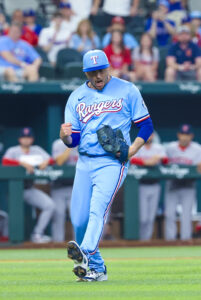
There are other players who could also factor in to lesser degrees. Luke Jackson is the second most notable after Mahle, as he is earning a $1.5MM base salary but could earn as much as $4MM via incentives, an extra $2.5MM. He can unlock $75K for pitching in 20 games, $100K at 25, $125 at 30, $150K at 35, $175K at 40, $225K at 45, $250K at 50, $300 at 55 and $350K at 60. That’s potentially an extra $1.75MM just for appearances. There’s another $750K for games finished: $50K for 25, $100K for 30, $150K for 35, $200K for 40 and $250K for 45. He has taken over the club’s closer role in the early going and already has nine games finished and ten appearances overall.
Corbin has batches of bonuses based both on innings pitched and relief appearances, so he should get paid some extra money as long as he’s healthy, regardless of which role the Rangers have him in. He gets $100K at 40 and 55 innings, $150K at 70 and 85, $200K at 100 and 115, $250K at 130, 145 and 160, then $350K at 170. He also gets $100K for 35 relief appearances, $150K for 40, $200K for 45, $250K for 50, $300K for 55. He’s in the rotation for now and those relief appearance bonuses are unlikely to be a factor, but he could certainly earn more money based on innings pitched. Getting to 170 innings pitched and unlocking all the bonuses would be an extra $2MM.
Chris Martin can earn an extra $150K by getting to 45 innings pitched this year and again at 50 frames, followed by $200K at 55 innings. Hoby Milner can get an extra $100K at 35 and then 45 innings, then an extra $150K at 55 and 65. Jacob Webb is making $1.25MM this year but can get that to $1.5MM via incentives worth $250K. MLBTR has learned that Webb gets $50K at 20, 30, 40, 50 and 60 innings pitched. Josh Sborz can unlock an extra $25K at five innings, $50K at 10, $75K at 15, $100K at 20. He underwent shoulder surgery in November and is expected to miss at least the first half of the season.
deGrom and Eovaldi have the same awards bonuses. They can earn an extra $250K for winning the Cy Young this year, as well as $200K, $150K, $100K or $50K for finishing second, third, fourth or fifth in the voting. They can also get $150K for winning World Series MVP, as well as $100K for getting an All-Star selection, a Gold Glove award, or LCS MVP. Pederson can get an extra $150K for winning MVP, $100K for an All-Star selection or World Series MVP, plus $50K for for a Silver Slugger or LCS MVP.
All of those bonuses could nudge the Rangers closer to the line or even over it, which will make for an interesting balancing act this summer. As mentioned, they will almost certainly be looking for upgrades as the deadline rolls around but they might also have to move some money around if they continue to plan on avoiding the tax.
Pederson is out to an awful start, so maybe they try to flip him somewhere else, though they would surely have to attach prospect talent in order to convince another club to absorb his contract. He is earning $13MM this year and will be owed $18.5MM next year. He can opt out after 2025 with the club able to override that by picking up a two-year option at $18.5MM annually for 2026 and 2027. If he continues struggling, he will obviously not take that opt-out.
Gray is making $13MM this year, the final season of his contract. He has been on the injured list all season due to a wrist fracture and it’s unclear when he’ll be back. It’s possible the Rangers won’t need him in the rotation once he’s healthy, depending on how others are performing. His deal has an AAV of $14MM, so trading him just ahead of the deadline could shave almost $5MM off the club’s CBT number. However, doing so would subtract from the club’s rotation depth. His trade value will also depend on how he heals up and performs in the coming months.
There are a great many factors at play here, but taking them all into consideration, it feels as though the Rangers are going to be right near the edge. If they abandon their desire to avoid the tax, that could simplify a lot. But if not, they will have to be watching all these numbers in the coming months.
Photos courtesy of Jerome Miron and Kevin Jairaj, Imagn Images
Rangers Place Jack Leiter On Injured List, Recall Patrick Corbin
The Rangers placed Jack Leiter on the 15-day injured list, retroactive to April 3, because of a blister on the middle finger on his throwing hand. Texas recalled veteran southpaw Patrick Corbin from Triple-A Round Rock in a corresponding move.
Leiter landed a season-opening rotation spot, at least in part because of Spring Training injuries to Jon Gray and Cody Bradford. His first two starts have been excellent. Leiter has reeled off 10 innings of one-run ball with 10 strikeouts. He has allowed only six hits and one walk. The former #2 overall pick has gotten whiffs on 14.5% of his pitches while averaging almost 98 MPH on his fastball. He had cruised through five scoreless innings with six punchouts against Cincinnati on Wednesday before the blister forced him out of the game.
While it’s unlikely to be a long-term absence, Leiter’s early-season run will be paused for at least two weeks. Texas has off days on April 10 and 14, so they may only need to deploy a fifth starter once before Leiter’s return. Tyler Mahle, Jacob deGrom and Kumar Rocker will take the ball for this weekend’s series against Tampa Bay. Corbin and Nathan Eovaldi will get the first two games of next week’s series at Wrigley Field in some order.
It’ll be the team debut for the 35-year-old Corbin. The veteran southpaw signed a one-year, $1.1MM free agent deal in mid-March. Between the late signing and the birth of his child just before Opening Day, Corbin did not get any Spring Training game action. He agreed to be optioned to Round Rock to build up. Leiter’s injury pushed him to the big leagues before he could make any Triple-A appearances. Corbin will presumably be on a low pitch limit for his first start of the season.
The two-time All-Star has eaten plenty of innings at the back of Washington’s rotation over the past few years. He posted a 5.62 ERA across 174 2/3 innings last season. Corbin has allowed an ERA above 5.00 in four consecutive seasons but topped 30 starts and 150 frames in each.
Rangers Release Cody Thomas
The Rangers released outfielder Cody Thomas from his minor league contract. Texas also officially selected Kevin Pillar onto the 40-man roster after announcing yesterday that he’d make the team. They had an opening after outrighting Dane Dunning earlier in the week. Additionally, the Rangers reassigned a number of minor league signees to Triple-A Round Rock: Joe Barlow, Tucker Barnhart, Caleb Boushley, David Buchanan, JT Chargois, Matt Festa, Adrian Houser, Patrick Murphy (minor league injured list), Hunter Strickland, Alan Trejo and Chad Wallach.
Thomas signed a minor league deal after spending the ’24 season in Japan. The lefty-hitting outfielder spent most of the season with the minor league affiliate of the Orix Buffaloes. He only appeared in 10 NPB games and went 0-18 with seven strikeouts. Thomas went 2-18 this spring. He walked three times with six strikeouts.
An Oklahoma product, Thomas appeared in 29 MLB games with the A’s between 2022-23. He has hit well over parts of three seasons in the Pacific Coast League. The 6’4″ outfielder owns a .292/.356/.585 slash with 42 homers in 176 Triple-A games.
In other Rangers news, Patrick Corbin will begin the season in Triple-A. The veteran southpaw has more than enough service time to refuse any minor league assignments, but he agreed to be optioned because he didn’t sign his one-year free agent deal until March 18. That nearly coincided with the birth of his third child, so he did not pitch in any games this spring.
GM Chris Young told reporters on Tuesday that Corbin will start two games with Round Rock before being recalled (relayed by Shawn McFarland of The Dallas Morning News). Young identified April 11 as the target date for Corbin’s team debut. Texas will go with Nathan Eovaldi as their Opening Day starter. Jacob deGrom, Tyler Mahle, Jack Leiter and Kumar Rocker round out the season-opening starting five.
Rangers Sign Patrick Corbin
March 19: Per the Associated Press, Corbin is guaranteed $1.1MM. As for the incentives, they are based on innings pitched and relief appearances. He’ll get $100K at 40 and 55 frames, $150K at 70 and 85, $200K at 100 and 115, $250K at 130, 145 and 160, then $350K at 170. That’s a total of $2MM. He’ll also get $100K for making 35 relief appearances, $150K for 40, $200K for 45, $250K for 50 and $300K for 55, a total of $1MM. There’s also a $250K assignment bonus if he’s traded.
Theoretically, Corbin could unlock $3MM of incentives by pitching 170 innings over 55 relief appearances, though that’s effectively impossible to do in today’s game. The incentives seem to give him a bit of extra earning power on top of his guarantee, whether he sticks in the rotation or gets bumped into a bullpen gig. Those incentives are potentially significant for a club that is so close to the CBT but wants to stay under.
March 18: The Rangers announced that they have signed left-hander Patrick Corbin to a one-year major league deal. The ISE Baseball client’s exact guarantee isn’t publicly known but Jon Heyman of The New York Post reports that it will be a slightly more than $1MM, with incentives worth around a million as well. Righty Jon Gray was transferred to the 60-day injured list as the corresponding move.
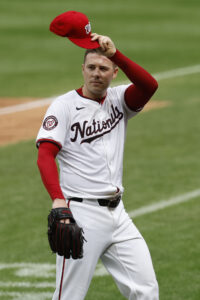
For the Rangers, this would appear to be a quantity-over-quality move. Corbin’s past few years haven’t been good on a rate basis, but he has been an effective innings-eater for the Nationals. The southpaw signed a six-year, $140MM deal with Washington going into 2019. He had just wrapped up a stellar season for the 2018 Diamondbacks, tossing 200 innings with a 3.15 earned run average. While his strikeout rate had previously hovered around 20%, he punched out 30.8% of opponents that year.
His first year as a Nat could hardly have gone much better. He logged 202 innings over 33 starts in the regular season with a 3.25 ERA, 28.5% strikeout rate, 8.4% walk rate and 49.5% ground ball rate. He logged another 23 1/3 innings in the postseason as the Nats charged all the way to the World Series and won it all for the first time in franchise history.
But his results declined in 2020 and never really recovered. His strikeout rate fell to 20.3% that year and his ERA climbed to 4.66. In the four full seasons since then, he has a combined 5.71 ERA, 17.7% strikeout rate and 7.3% walk rate. He didn’t post an ERA below 5.20 in any of those four campaigns.
But as alluded to earlier, he at least compiled bulk innings for the Nats. He has actually been about as reliable as a pitcher can be over the past decade. He missed the 2014 season due to Tommy John surgery. He was activated in July of 2015 and tossed 85 innings that year. The Snakes used him as a swingman in 2016, with Corbin logging 155 2/3 innings that year over 24 starts and 12 relief appearances. Since then, he has made at least 31 starts and logged at least 171 innings in every full season, in addition to making 11 starts in the shortened 2020 season. Any pitcher can get hurt at any time, but it’s hard to find a better track record of health in today’s game. From 2016 to 2024, Corbin’s 1,492 innings are second in baseball behind Aaron Nola.
A dependable back-end starter has some understandable appeal to the Rangers. The aforementioned Gray suffered a wrist fracture and is going to be out for a quite a while. Today’s transfer to the 60-day IL means a return in late May is the best-case scenario. Cody Bradford is shut down with some elbow soreness and faced an uncertain path back to health.
They could still have a competent rotation without those two, though there are questions with each candidate. Nathan Eovaldi has been largely healthy for the past few years but has two Tommy John surgeries on his track record and is now 35 years old. Jacob deGrom has missed most of the past two seasons due to Tommy John surgery and had plenty of issues before that as well. He hasn’t gone past 92 innings in a season since 2019 and turns 37 in June. Tyler Mahle also missed most of the past two seasons due to Tommy John surgery and has been battling forearm soreness in camp.
Prospect Kumar Rocker is a candidate to step up and take a job but he also missed most of the past two years due to his own TJS. Jack Leiter is impressing in camp but control still seems to be an issue, as it has been throughout his minor league career. Dane Dunning is coming off a rough year, as is non-roster invitee Adrian Houser.
A guy like Corbin taking the ball with regularity could be useful for a group like that with so many question marks. It’s also possible that he’s been better in recent years than it would appear. As mentioned, he has a 5.71 ERA over the past four years. However, his .328 batting average on balls in play and 67.4% strand rate were both on the unlucky side. His 4.99 FIP and 4.60 SIERA in that span suggest his ERA might have been inflated by about a full run. The Nationals had a team-wide -82 Defensive Runs Saved and -96 Outs Above Average during that four-year span, perhaps explaining some of the bad luck and extra runs crossing the plate.
If Corbin can take the ball and provide half-decent innings, that could be useful to the Rangers, especially at this price point. They are clearly trying to avoid the competitive balance tax in 2025, which has mostly limited them to fairly modest dealings this offseason. RosterResource projects their CBT number at $235MM, only about $6MM below this year’s $241MM base threshold of the tax. Corbin’s salary won’t move that very much, since he’s barely making more than the $760K league minimum.
Presumably, Corbin won’t be an option for the Rangers right away. He’ll need a few weeks to get himself into game shape, so he’ll likely start the season on the injured list, or perhaps he will consent to a brief optional assignment to start the year. President of baseball operations Chris Young tells Kennedi Landry of MLB.com that Corbin’s wife is due to have a baby in the next 24 to 48 hours, so he won’t even be joining the club in Arizona. He will instead join the club in Texas after they break camp.
Until Corbin is ready, the Rangers will likely give Rocker and Leiter some legit chances at locking down jobs. If those don’t work or other injury situations pop up, Corbin will slot into the rotation mix and ideally stabilize things.
Photos courtesy of Kamil Krzaczynski and Geoff Burke of Imagn Images.
Nationals Preparing To Be Deadline Sellers
The Nationals have been on the periphery of the postseason picture for much of the season but are preparing to approach the trade deadline as a seller, per Ken Rosenthal, Katie Woo and Patrick Mooney of The Athletic. Washington will be open to offers both on potential free agents and players signed/controlled for only one additional season, per the report. The Nats’ group of impending free agents include outfielder Jesse Winker, lefty Patrick Corbin, righty reliever Dylan Floro, struggling slugger Joey Gallo and the currently injured Trevor Williams. Of even more interest will be outfielder Lane Thomas, setup man Hunter Harvey and closer Kyle Finnegan, each of whom is controlled through the 2025 season via arbitration.
The vibe in D.C. is high at the moment following the debut of top-ranked prospect James Wood and the All-Star selection of shortstop CJ Abrams. But Washington has dropped 11 of its past 15 games to fall seven under .500. At 16.5 games back in the NL East, there’s no hope of surging back to the front of the division, and in the Wild Card chase, the Nats are 5.5 games back of the third spot with six teams to pass in order to get into the fray.
The Nationals are already three years into a rebuilding process that kicked off in 2021 with trades of Max Scherzer, Trea Turner and Kyle Schwarber (among many others) and continued into the summer of 2022 with the deadline blockbuster that shipped Juan Soto to San Diego in exchange for a package of five young players headlined by Abrams, Wood and current staff leader MacKenzie Gore. Selling off some short-term pieces at this year’s deadline isn’t a sign that said plan has faltered or a setback necessarily; for much of the season, the Nats appeared ahead of schedule but are now settling into the type of position most expected them to occupy heading into the 2024 campaign.
Among Washington’s slate of rental players, Winker stands as the most productive healthy option. He’s back in vintage form after a pair of seasons ruined by knee and neck injuries that both required surgery in the 2022-23 offseason. In 337 trips to the plate, the former Reds, Brewers and Mariners outfielder is hitting .268/.382/.436 with ten home runs and a career-high 12 steals. Winker’s 13.6% walk rate is more than five percentage points ahead of the league average, and he’s striking out at a manageable 22.3% clip.
Winker has long had platoon issues, but the Nats have given him 80 plate appearances against southpaws this season and he’s held his own, hitting .250/.344/.363. It should be noted that his small-sample production against lefties is aided by a bulky .358 average on balls in play and comes in spite of a huge 29% strikeout rate (10 points higher than his mark against righties). Winker probably can’t be expected to continue his output against lefties, but he’s punishing righties just as he always has when healthy: .275/.397/.465 with nine of his 10 home runs and six of his 17 doubles. Winker signed a minor league deal with a $2MM base salary, making him an ultra-affordable option for any team seeking a quality left-handed bat to add to its DH/outfield mix.
Floro, 33, is in the midst of a nice rebound season. He’s on a one-year, $2.25MM deal and has produced 43 2/3 innings of 2.06 ERA ball. His 20.5% strikeout rate is a couple percentage points shy of average, but his 6.4% walk rate is a couple points better than par. Floro sports a strong 50.4% grounder rate as well. However, he’s yet to allow even one home run this season, and it’s not sustainable for any pitcher to see every single one of his fly-balls stay in the park. Metrics like SIERA (3.50) and xFIP (3.45), which normalize homer-to-flyball rate, view Floro as a solid arm but not the dominant force his raw ERA might suggest. He should still draw plenty of interest as an affordable veteran with some track record.
Corbin’s $35MM salary is going to nullify any trade interest unless the Nats are willing to pay down almost the entire sum. The first season of his six-year, $140MM contract with the Nats went beautifully, as Corbin helped lead a deep rotation and stepped up as a key postseason arm en route to Washington’s Cinderella World Series run. He’s posted a 5.60 ERA since, including a 5.49 mark in 100 frames this year.
That said, the veteran has been pitching well of late. Corbin sports a 4.53 ERA dating back to Memorial Day weekend and has delivered a 3.81 ERA in 28 1/3 frames over his past five starts. A team just looking for some veteran innings in the five spot could look at Corbin as a cheap solution if the Nats eat most or all of the remaining salary.
If healthy, Williams might stand as the clearest and most coveted rental piece the Nats have to offer. He made 11 starts, and though he was averaging just five frames per appearances, Williams logged a pristine 2.22 ERA with a solid 21% strikeout rate and 7.1% walk rate. As with Floro, he’s been extremely fortunate with home runs (just two in 56 2/3 frames), and a solid but unspectacular K-BB profile points to some ERA regression if that home run trend doesn’t continue. But Williams is in the second season of a two-year, $13MM contract and would be an affordable rotation option. He’s been out since early June with a strained muscle in his forearm.
Also on the injured list is Gallo, who was struggling at career-worst levels prior to a hamstring strain. He’s hitting .164/.285/.321 with a glaring 43% strikeout rate and five homers in 165 plate appearances. Between that line and Gallo’s injury, it’s hard to envision any trade value even if he’s healthy enough to return before July 30. He’s more a DFA candidate than a trade candidate.
Looking to the Nationals’ more controllable pieces, Thomas and the bullpen duo of Finnegan and Harvey will draw wide-reaching interest. A deal for Thomas could be difficult to line up, depending on how the Nats price him. At last year’s deadline, Washington was valuing Thomas as an everyday outfielder, whereas many other clubs were viewing him more as a potential platoon piece.
That perception from other clubs won’t be different in 2024. Thomas has never hit righties much but is slashing a dismal .208/.262/.343 against them in 2024. Conversely, he’s always hit well against southpaws and is even better than his career line in 2024, hitting .338/.407/.563. Thomas is an absolute menace to southpaw pitchers, and he’s perhaps deceptively fast. Statcast ranks him in the 94th percentile of MLB players in average sprint speed, and Thomas has already swiped 21 bags — though he’s also been caught seven times. He’s making $5.45MM this season and will be owed one more raise in arbitration this winter before hitting free agency post-2025.
Both Finnegan and Harvey are on track for free agency in the 2025-26 offseason as well. Finnegan has saved 23 games and posted a tidy 2.17 ERA in 37 1/3 frames. He’s averaged a hefty 97.4 mph on his heater while recording a 26.5% strikeout rate, 8.2% walk rate and 42.7% ground-ball rate. After a rough start in terms of his command, Finnegan has reined in the walks, yielding only a 5.8% rate over his past 32 innings.
Harvey was arguably even more appealing for much of the season, though a recent rough patch could have altered that. His $2.325MM salary is less than half Finnegan’s $5.1MM mark, he throws even harder, and his strikeout/walk/ground-ball rates were the better of the two for the bulk of the current campaign.
Some recent struggles have ballooned Harvey’s ERA to 4.40 — more than two runs higher than the 2.08 mark he carried into the month of June. He’s been tagged for 14 runs in his past 12 2/3 innings. In that time, he’s walked 9.1% of his opponents (more than double his rate over the first two months) and been tagged for a grisly 2.13 homers per nine frames. For a pitcher with a lengthy injury history — Harvey still has just 166 2/3 career innings despite debuting in 2019 — that could be a particular concern among bullpen-needy clubs. But the affordable salary, extra year of control, 98.1 mph average heater and K-BB profile should all generate interest.
One other name to consider is journeyman righty Derek Law, who’s posted a 3.35 ERA in 53 2/3 innings of relief already and is controllable through 2025. Law has fanned 21.2% of opponents against a 6.2% walk rate but has been wildly inconsistent dating back to his 2016 debut campaign. He’s earning $1.5MM this season and could be a sensible middle-innings arm for a team looking at low-cost means of deepening the ‘pen.
Who Could The Nationals Trade At The Deadline?
This year’s trade deadline seems like it has the potential to be unique, with very few clear sellers. The expanded playoffs and weak Central divisions mean that there are only five teams that are more than eight games out of a playoff spot at the All-Star break.
One of those five clubs is in Washington, as the Nationals have been rebuilding in recent years. Stars like Max Scherzer, Trea Turner and Juan Soto have been flipped in deadline deals over the past two seasons, which unsurprisingly has led to them being one of the few noncompetitive clubs here in 2023. Their 36-54 record has them in last in the National League East and they’re 13 games back in the Wild Card race.
The Nats therefore stand out as one of the few clear sellers at this point, with just over three weeks until the August 1 deadline. They no longer have superstars like those mentioned above, but there are still some players that should attract attention.
Rental Players
Candelario, 29, is one of the most straightforward trade candidates in the league. He’s an impending free agent having a great season on a team that’s clearly in a position to sell. MLBTR recently listed the top 50 trade candidates for this summer and Candelario took the #2 spot, trailing only Lucas Giolito of the White Sox.
The third baseman was seemingly breaking out in Detroit not too long ago, putting up solid numbers both in 2020 and 2021. He produced a .278/.356/.458 batting line over those campaigns for a 125 wRC+ and was considered around league average defensively, leading to a tally of 5.8 wins above replacement from FanGraphs in 201 games. Unfortunately, just about everything went wrong in 2022 as he hit just .217/.272/.361 for an 80 wRC+ with subpar defensive grades.
The Tigers non-tendered him instead of paying him a projected $7MM salary for his final arbitration season, and the Nats swooped in with an offer of $5MM plus $1MM of incentives. It looks like that investment will pay off handsomely for the Nats, as Candelario is having a bounceback season. He’s hitting .261/.337/.478 (118 wRC+) and his defensive grades are much stronger. With so few sellers and a pitching-heavy free agent class this coming winter, Candelario should be one of the most sought-after position players in the weeks to come.
Edwards, 31, missed much of the 2019-2021 period due to injuries and had to settle for a minor league deal with the Nationals prior to the 2022 season. He made it to the big league club in May of last year and posted a 2.76 ERA in 62 innings the rest of the way. He likely benefited from a .259 batting average on balls in play and 83.6% strand rate, but his peripherals were around league average.
The Nationals tendered him a contract for 2023, agreeing to a $2.25MM arbitration salary. He’s been solid this year, with a 3.69 ERA in 32 appearances. His 16.9% strikeout rate and 12% walk rate aren’t exciting, but he has a 46% ground ball rate and has allowed just one home run all year. He isn’t likely to fetch a ton as a rental reliever with worrying peripherals, but he’s fairly cheap and bullpen help is always in demand. He’s been on the injured list almost three weeks due to shoulder inflammation, however, so his health will be a clear factor in his market.
Dickerson is a 34-year-old veteran who signed a one-year, $2.25MM deal with incentives in the offseason. The Nats were surely hoping he could serve as a veteran mentor to their younger players and perhaps play his way into being a deadline trade chip. Unfortunately, he’s hitting just .248/.278/.358 on the year for a wRC+ of 69. As a veteran left-handed hitter, he might get interest based on his track record, but the return would likely be mild even if he gets hot in the next few weeks.
Signed/Controlled For One Extra Year
Smith, 28, was a similar bounceback play to the Candelario signing. In 2019 and 2020 with the Mets, he hit .299/.366/.571 for a wRC+ of 150 but followed that up by hitting .233/.298/.345 over the next two years for an 82 wRC+. The Mets non-tendered him, and the Nats signed him to a one-year deal with a $2MM salary and $2MM in incentives.
Unfortunately, this deal hasn’t worked out nearly as well as the Candelario one. Smith is hitting .260/.328/.340 (85 wRC+) while playing first base only. Given the offensive expectations of that position, that’s clearly insufficient production. He can be controlled for 2024 via arbitration but is trending towards another non-tender unless he can turn things around.
Robles, 26, was once considered one of the top prospects in the league but has yet to put it all together at the big league level. He’s always had the speed and defense combo working but has continued to struggle at the plate, coming into 2023 with a career batting line of .233/.306/.359 and a 78 wRC+.
He has shown some positive developments here this year, including a 14.3% strikeout rate that’s well below his 23.9% rate in previous years. His .299/.385/.364 batting line is a bit above average, translating to a wRC+ of 111. Unfortunately, that’s come in just 36 games as he’s twice gone on the IL due to back spasms, including his current stint. He’s making $2.325MM this year with a $3.3MM club option for 2024. Even if that were turned down, he could still be retained via arbitration.
Williams, 31, was primarily a starter with the Pirates for many years but had been deployed in a swing role by the Mets in recent seasons. He signed a two-year, $13MM deal to return to a starting role with the Nationals. He has a 4.45 ERA through 18 starts, striking out 17% of opponents while walking 7.5%. That low strikeout rate has led to a 5.41 FIP and 4.95 SIERA. He’s not going to command huge interest, but a club in need of a back-end innings eater could give Washington a call.
Corbin, 34 next week, is having a bounce back year, at least in terms of results so far. His 4.89 earned run average is an improvement over his 6.31 figure from last year and the 5.82 from the year prior. That’s come despite a 15.2% strikeout rate, which is a few ticks below the past few seasons and would be a career low. On his back-loaded contract, he’s making $24MM this year and a massive $35MM next year. Even if the Nats paid all of that down, they likely wouldn’t be able to get much back in trade.
Longer-Term Players
Thomas, 27, is perhaps the Nats’ best chance to get a significant return this summer. He’s hitting .302/.347/.497 for a wRC+ of 126. His defense is generally considered a bit below average, but he’s stolen eight bases in 10 tries this year. It could be debated as to whether Thomas or Candelario is having the better season overall, but Thomas comes with two extra seasons of arbitration control beyond this one. He’s making $2.2MM this year and would be in line for a couple of raises in the upcoming campaigns.
He’s not a lock to be moved because the Nats could hold onto him and hope to return to contention while he’s still on the club. However, his trade value will only diminish as he gets closer to free agency and more expensive. It’s certainly possible that the Nationals return to contention in the coming years, but it will be a challenge with the division featuring a stacked Atlanta club, the ascendent Marlins and aggressive-spending Mets and Phillies.
Harvey, 28, has been a solid reliever for the club over the past two years. Since the start of 2022, he’s made 76 appearances with a 2.86 earned run average, 28.4% strikeout rate, 7.7% walk rate and 41.2% ground ball rate. He’s continued to move into higher-leverage spots, earning 11 holds and eight saves this year. He could be retained for two more seasons via arbitration, but reliever performance is volatile and there’s always the risk of an injury. He’s making just $870K this year.
Finnegan, 31, is in essentially the same spot as Harvey, as he can be controlled via arbitration for two more seasons beyond this one. He has a longer track record, having established himself as a viable reliever back in 2020, but his results are less encouraging this year. His 3.38 ERA is still solid, but his strikeout rate has dropped from last year’s 26.1% to this year’s 22.4%, with his walk and ground-ball rates also moving in the wrong direction a bit. He’s making $2.325MM this year.
Rainey, 30, is like Finnegan and Harvey in that he has two arbitration seasons after this one. But his situation is very different, as he had Tommy John surgery last August and is only now nearing a rehab assignment. Players on the injured list can still be traded, though the interest may be muted based on the uncertainty. He posted a 3.30 ERA last year with a 28.1% strikeout rate prior to going under the knife. He’s making $1.5MM this year.
Vargas, 32 this weekend, has plenty of experience as a light-hitting utility player. He had a .233/.268/.355 career batting line by the end of 2021 for a wRC+ of 60 but had played every position except center field and catcher. He’s had better results at the plate since joining the Nats in August of last year, hitting .281/.310/.409 for a wRC+ of 98 in 289 plate appearances. He’s making $975K this year and can be retained via arbitration for two more seasons.
Unlike the other names on this list, Meneses isn’t approaching free agency or making a significant salary. The long-time minor leaguer finally got the call to the big leagues last year at the age of 30 and mashed 13 home runs in 56 games, finishing the season with a .324/.367/.563 batting line and 156 wRC+. He was only able to accrue 65 days of service time, leaving the Nats with six years of remaining control.
His production has naturally taken a step back in 2023, as he’s hit just six home runs and is batting .284/.328/.404 for a wRC+ of 98. He’s been on a mini heater of late, as four of those six homers came in the club’s last three games before the break. The Nats could simply hang onto Meneses given that he’s not slated for arbitration until after 2025 or free agency until after 2028. However, his late-bloomer trajectory means that he’s already 31 years old and will likely be in his mid-30s by the time the club is in contention again. Perhaps the best course of action would be to cash him in for younger players now — if there’s sufficient interest in the next few weeks.
____________________________
The Nationals were the star sellers of each of the past two deadlines, flipping Scherzer and Turner two years ago and then Soto last year. They don’t have any players that could reach that level, either in terms of publicity or prospect return. However, Candelario is one of the best rentals available and should net them some decent value. If they get more aggressive and move controllable players like Thomas, Harvey and Finnegan, they could go even farther in stockpiling young talent for future seasons.