
Francisco Lindor Open To Extension, But Won’t Negotiate During Season
The New York Mets introduced new shortstop Francisco Lindor to the media today via a zoom call. The video has been provided here by Newsday.
Of course, one of the topics discussed early in the conversation was the possibility of a long-term extension. Lindor and his representation at SportsMeter have yet to begin contract negotiations with the Mets. That said, Lindor isn’t against the possibility of staying in New York long-term. Per the Athletic’s Tim Britton (via Twitter), Lindor said, “I live life day by day. I’m extremely happy and excited about what’s happening right now, but I haven’t really sat down and talked to anybody (about an extension). I have never been against an extension…. We’ll see what happens.”
Lindor made clear, however, that if he does sign a new deal, he expects to do so before the seasons begins, per Britton and others. That’s been Lindor’s policy in the past, and he does not intend to change his stance this year. With spring training a little more than a month away, the Mets and Lindor have enough time to hammer out an extension, but they have a smaller window than the Mets might prefer.
Lindor was acquired last week from the Indians after Cleveland failed to reach an extension with their star shortstop. Lindor acknowledged that both sides made a good effort to get an extension done, but it just didn’t happen, per the Athletic’s Zack Meisel (via Twitter). The Indians offer never got as high as $300MM, and any extension Lindor signs will certainly cross that threshold. Despite the breakdown in negotiations and the eventual trade, Lindor had only positive things to say about his time in Cleveland, notes Bob Nightengale of USA TODAY (via Twitter).
MLBTR Poll: Grading The Francisco Lindor Trade
The Mets and Indians made perhaps the biggest trade of the offseason earlier this week. Star shortstop Francisco Lindor and right-hander Carlos Carrasco are now Mets. They represent the biggest pair of additions for a New York club that has been expected all offseason to pursue star-level talent.
Lindor, of course, was seen as a near-lock to be moved all winter. The Indians seemingly never came close to working out an extension with the four-time All-Star. With Lindor one season removed from hitting free agency, it looked apparent Cleveland would trade him away. Carrasco was less obviously going to be moved this winter, but it wasn’t a huge surprise the Indians parted with him, either. Carrasco’s two-year, $27MM deal (with a 2023 option) marked the biggest guaranteed contract on Cleveland’s books. Lindor’s projected arbitration range ($17.5MM — $21.5MM) would’ve easily been the Indians’ largest 2021 expense.
Each of Lindor and Carrasco remains a bargain at those rates relative to their on-field production. But Cleveland’s ownership has signaled a desire to cut payroll this winter; it wasn’t hard to foresee that coming via jettisoning the team’s highest-paid players. Cleveland’s estimated $40MM payroll, per Roster Resource, is now less than half the team’s 2020 season-opening outlay (prior to prorating).
While finances were an obvious element of the trade, it wasn’t a mere salary dump. The Indians brought in four young players, two of whom are immediate big leaguers. Amed Rosario is a former elite prospect who has been up and down over his first three-plus MLB seasons. Andrés Giménez was a highly-regarded farmhand himself and had a decent if unspectacular rookie year. The pair of prospects, right-hander Josh Wolf and Isaiah Greene, are recent high school draftees. They rank 25th and 28th, respectively, in the Indians’ farm system at FanGraphs.
Turning things over to the readership, how did each team fare in this week’s blockbuster?
(poll links for app users)
Grade The Lindor Trade For The Mets.
-
A 79% (22,641)
-
B 15% (4,346)
-
C 3% (889)
-
F 2% (432)
-
D 1% (298)
Total votes: 28,606
Grade The Lindor Trade For The Indians.
-
C 41% (10,729)
-
B 22% (5,777)
-
D 21% (5,437)
-
F 11% (2,915)
-
A 5% (1,288)
Total votes: 26,146
NL Central Notes: Carpenter, Alvarez, Cubs, Lindor, Reds, Eckstein
After struggling in both 2019 and 2020, Matt Carpenter has reshaped his offseason training routine in advance of what he considers to be a make-or-break year or perhaps even his final year in the big leagues, Carpenter tells Rick Hummel of the St. Louis Post-Dispatch. Carpenter’s contract with the Cardinals is up after the 2021 season, unless he records at least 550 plate appearances to trigger an $18.5MM vesting option for 2022. “As far as guarantees, this is the last guaranteed trip to spring training, period, for me. Maybe for any baseball team, let alone St. Louis,” Carpenter said. “I think about that, and that’s why I say it’s such an important season for me personally. And that’s not even to say whether I want to play past this season. I just want to finish strong.”
Carpenter is entering his age-35 season, and he is likely correct in guessing that another tough year will greatly lessen his chances at anything beyond a low-cost MLB contract or even a minor league deal next winter. Carpenter finished ninth in NL MVP voting as recently as 2018, but has since hit .216/.332/.372 over 661 plate appearances in 2019-20. Between the Cardinals’ COVID-19 outbreak and the compressed schedule of make-up games once they returned to play, Carpenter didn’t feel the 2020 season was “a fair representation, hitting or pitching, good or bad” for the entire club. Still, Carpenter knows he needs to get on track, saying “the last two seasons, in my eyes, our offense has been about a bat short….I have basically been the one bat missing. I put a lot of the responsibility for the offensive woes the past two seasons on myself.”
More from the NL Central…
- As rumors swirl about Kris Bryant trade talks between the Cubs and Mets, Mike Puma of the New York Post reports (via Twitter) that Chicago has a particular interest in Mets catching prospect Francisco Alvarez. Currently ranked by MLB Pipeline as the 58th-best prospect in all of baseball, it isn’t surprising that the Cubs (and probably many other teams) would like to have Alvarez in their farm system, particularly if Willson Contreras might also soon be dealt away from Wrigleyville. In regards to a Bryant trade, it seems unlikely that New York would deal Alvarez for just one year of Bryant’s service. Even with James McCann now signed to a four-year deal, Alvarez might still be the Mets’ catcher of the future since he is only 19 years old, so the Mets surely have their eyes on grooming Alvarez to be ready by the time McCann’s contract is up.
- “The Reds were not involved in making any push to acquire Francisco Lindor” before the Indians dealt Lindor to the Mets on Tuesday, MLB.com’s Mark Sheldon writes. Acquiring Lindor to fill their hole at shortstop would’ve been quite the pivot for the Reds, whose offseason focus to this point has largely been on cutting salary, between trading Raisel Iglesias to the Angels, non-tendering Archie Bradley, and being open to trade offers for many high-priced stars. This isn’t to say that Cincinnati might not yet sign a shortstop from amongst the well-known free agent names still on the market, but Lindor was likely a bridge too far, given the prospect cost to pry him away from Cleveland and the likelihood that the Reds wouldn’t be able to sign Lindor to an extension beyond the 2021 season.
- David Eckstein is leaving the Pirates after two years as a special assistant to the baseball operations department, according to Alex Stumpf of DK Pittsburgh Sports (Twitter link). Eckstein made the move in order to spend more time with his family. The former 10-league MLB veteran is best remembered for his role in helping both the 2002 Angels and 2006 Cardinals win the World Series, even capturing Series MVP honors with St. Louis.
East Notes: Mets, Jays, Lindor, Red Sox, Devers
The Mets won the Francisco Lindor sweepstakes when they acquired the star shortstop from Cleveland in a blockbuster trade earlier this week. It turns out that the Blue Jays finished second in the derby, Anthony Castrovince of MLB.com reports. While Castrovince isn’t sure which other players were involved in the teams’ trade talks, the Blue Jays offered “what is probably a higher ceiling,” he writes. The problem for Toronto is that the prospects it put on the table weren’t that close to being ready for the majors, so Cleveland accepted an offer that it expects to be beneficial in both the short and long term.
- The Red Sox and third baseman Rafael Devers have not discussed a multiyear contract to this point, agent Nelson Montes de Oca told Alex Speier of the Boston Globe. For now, the focus is on agreeing to a salary for 2021 by next Friday’s deadline to file figures. The Red Sox renewed Devers for a near-minimum $692,500 heading into last year, even though he was coming off a tremendous campaign. The 24-year-old is now eligible for arbitration, where he’s projected to collect anywhere from $3.4MM to $6.3MM. Unfortunately for Devers, he’s going into the process off a down season in which he slashed .263/.310/.483 with 11 home runs in 248 plate appearances. Barring an extension, Devers won’t be eligible for free agency until after 2023.
- Back to the Mets, who seem primed to move right-hander Seth Lugo back to the bullpen in 2021, Jon Heyman of MLB Network relays. Lugo has been highly successful as a reliever in the past, but he had a tough time last year after the Mets moved him into their rotation. They’re now largely set there with Jacob deGrom, Carlos Carrasco, Marcus Stroman and David Peterson in line to comprise their top four when next season opens. They’ll also get righty Noah Syndergaard back from his Tommy John surgery sometime during the summer.
- The Blue Jays have signed hitting coach Guillermo Martinez to a two-year contract extension, Shi Davidi of Sportsnet relays. Martinez has been on the job since 2018. The Blue Jays’ offense finished seventh in the majors in runs and 11th in wRC+ under his tutelage last season.
Mets Acquire Francisco Lindor, Carlos Carrasco
The Mets have made their first huge deal of the Steve Cohen era, acquiring shortstop Francisco Lindor and right-hander Carlos Carrasco from the Indians as part of a six-player trade. To replace their star shortstop, Cleveland will receive two prominent young infielders in Amed Rosario and Andres Gimenez and a pair of Mets prospects — right-hander Josh Wolf and outfielder Isaiah Greene.
It has been widely assumed that Lindor would be on the move at some point this offseason, as the Tribe is looking to cut payroll and Lindor is now entering his final season before free agency. The Mets have been one of many teams mentioned as a plausible suitor, though comments made by both new owner Cohen and team president Sandy Alderson implied that the Mets would be more apt to sign big-name players rather than trade for them, due to a lack of minor league depth in New York’s farm system.
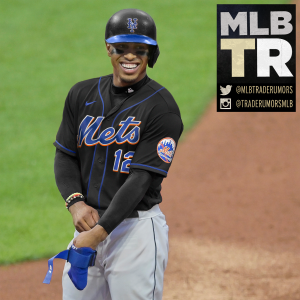
Instead, Alderson and new Mets GM Jared Porter have now swung a major blockbuster. Financial terms of the deal haven’t yet been made public, but it’s safe to assume the Mets are picking up all of the $27MM owed to Carrasco through the 2022 season. Between Carrasco’s contract and Lindor’s projected salary (between $17.5MM and $21.5MM) in his final year of arbitration, Cohen’s willingness to spend manifested itself in a different way, as the Mets will now upgrade their roster by taking some salaries off the books of the cost-cutting Cleveland organization.
Since his debut in 2015, no shortstop in baseball has a higher fWAR (28.9) than Lindor. A four-time All-Star with two Gold Gloves and two Silver Slugger Awards, Lindor has hit .285/.346/.488 with 138 home runs over his six big league seasons, and further established himself as an all-around talent by stealing 99 bases. 2020 was a down year for Lindor, as he hit only .258/.335/.415 over a league-high 266 PA, but that would certainly be explained by the unusual nature of the shortened season rather than a clear sign of a decline.
It is also fair to wonder if Lindor might have been impacted by the trade speculation that has been swirling around him for the better part of three years. After some early-career extension talks with the Tribe failed to lead to a deal, it became increasingly clear that Cleveland would look to trade Lindor rather than just let him walk in free agency. Indians owner Paul Dolan said in 2019 that his team didn’t have the resources to invest heavily in a single player, and rather notoriously told Cleveland fans to “enjoy [Lindor] and then we’ll see what happens.”
Lindor now becomes the centerpiece of an already-strong Mets lineup, as he will step in as the everyday shortstop. Luis Guillorme looks like New York’s top backstop shortstop option now that Rosario and Gimenez are gone, though Jose Peraza and Wilfredo Tovar are also on hand. The Mets could look to add another veteran utility infield type prior to Opening Day, though Jeff McNeil‘s ability to play multiple positions gives them some cover in that respect.
We also shouldn’t assume that the Mets are anywhere near done with major moves, of course. The club has already signed James McCann and Trevor May in free agency, retained Marcus Stroman via the qualifying offer, and such big names as George Springer and Trevor Bauer are also known to be free agent targets for Alderson and company. Since the Mets are still roughly $32MM short of the $210 luxury tax threshold, at least one more pricey contract could certainly be added, and possibly more if the club moved some other salary in a trade, or was willing to take a one-year tax hit for exceeding the threshold.
Carrasco joins Stroman and ace Jacob deGrom in a strong 1-2-3 punch atop the New York rotation. If rookie David Peterson can continue his 2020 performance over a full season and Noah Syndergaard is in form during his midseason return from Tommy John surgery rehab, the Mets could very well have one of the sport’s top starting fives. On the flip side, given the uncertainty of Syndergaard’s health, how Stroman will look after opting out of the 2020 season, and the possibility of a sophomore slump for Peterson, this same rotation carries some questions that now aren’t as glaring with a solid veteran like Carrasco in the fold.
Carrasco’s salary made him a natural trade candidate, and today’s news ends his 11-season run as a beloved favorite for both Cleveland’s fans and within the Tribe’s locker room. Carrasco posted a 3.77 ERA, 25.5 K%, and 19.2 K-BB% over his 1242 1/3 innings in an Indians uniform, highlighted by a 2017 season that saw him finish fourth in AL Cy Young Award voting.
After missing almost three months of the 2019 season due to a leukemia diagnosis, Carrasco made an emotional return to the field that September, and then looked to be fully back during a 2020 season that saw him post a 2.91 ERA, 29.3 K%, and 19.6% K-BB% over 68 frames. His 9.6 BB% is a bit of a red flag, and his highest total in the category since his 2009 rookie season, though this could again be a by-product of the small 2020 sample size.
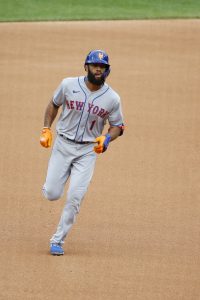 It was less than four years ago that Rosario was a consensus top-10 prospect in baseball, and between his young age (25) and the flashes he has shown over four MLB seasons, it isn’t out of the question that he can still fulfill that potential with a change of scenery. Rosario looked to be breaking out in 2019, when he hit .322/.353/.453 over his final 372 plate appearances of the season, but he managed just a .252/.272/.371 slash line in 147 PA in 2020.
As it happened, Gimenez received more playing time ahead of Rosario, and Gimenez responded with a .263/.333/.398 slash in his first 132 plate appearances as a major leaguer. A former top-100 prospect himself, Gimenez is considered a better defender than Rosario and might be Cleveland’s preferred choice at shortstop, with Rosario perhaps moving into the second base vacancy left open by free agent Cesar Hernandez. Since Rosario has been considered to have multi-position capability, the Tribe could also move Rosario around the diamond, perhaps a way of addressing their longstanding outfield problem.
It probably isn’t a surprise that both Wolf and Greene weren’t drafted by Alderson’s front office, which may have made him more open to moving these particular prospects. The two youngsters were second-round picks (Wolf in 2019, Greene in 2020) during Brodie Van Wagenen’s time as New York’s general manager, and were respectively ranked ninth and 10th in MLB Pipeline’s list of Mets minor leaguers.
Drafted as a high schooler out of Texas, Wolf pitched eight innings over five appearances for the Mets’ rookie ball team in 2019. Pipeline rates both his curveball and his fastball as 60-grade plus pitches, with his heater averaging 94mph during his brief rookie ball debut. As per the scouting report, “Wolf’s athleticism, quick arm and clean delivery enable him to pitch to both sides of the plate and all four quadrants of the strike zone, and he earns high marks for his aptitude with regards to making adjustments.”
Greene is another high school product, and he won’t celebrate his 20th birthday until August. Greene is a bit raw, but he already has what Pipeline’s scouting report described as “a contact-oriented approach” at the plate, plus speed, and potential to remain as a center fielder. Baseball America thinks left field might be his eventual destination, but still ranked Greene as the 49th-best prospect available in the 2020 draft, and noted that Greene was “drawing comparisons to Garret Anderson and Michael Brantley” as a hitter.
In the bigger picture, today’s trade emulates other major swaps made by the Indians in recent years — a higher-priced star player (whether Lindor, Carrasco, Mike Clevinger, Trevor Bauer, or Corey Kluber) is dealt for a combination of big-league ready pieces and younger talent. Cleveland president of baseball operations Chris Antonetti and GM Mike Chernoff have done an admirable job of keeping the Indians competitive amidst this constant shedding of higher-paid players, in part due to the team’s ability to consistent develop quality pitchers from its minor league system.
That said, Cleveland now has just over $40MM on its books for 2021, and no players officially under contract beyond the season. At least one of Jose Ramirez‘s club options seem a safe bet to be exercised, but that’s assuming Ramirez isn’t also traded at some point in the next 12 months. The lack of both fan attendance and revenue-sharing payments unquestionably delivered a big hit to the team’s financial picture, but this even more austere approach to roster construction will surely hamper Cleveland’s chances at contending in the AL Central and making another postseason appearance.
ESPN.com’s Jeff Passan (Twitter links) was the first to report that the two teams were “deep in talks” about a Lindor deal, and Passan also noted Gimenez was part of the trade. MLB Network’s Jon Heyman first reported the the two sides had agreed to the trade. MLB.com’s Mark Feinsand reported Carrasco’s involvement in the swap. MLB Pipeline’s Jonathan Mayo reported that Rosario was being dealt, while The Athletic’s Ken Rosenthal reported Wolf’s involvement, and ESPN’s Kiley McDaniel) had Greene’s involvement.
Photos courtesy of USA Today Sports Images
Lindor Notes: Extension, Springer, Jays, Odorizzi, Yankees
The Mets swung a massive trade Thursday when they unexpectedly acquired superstar shortstop Francisco Lindor and right-hander Carlos Carrasco from Cleveland. It’s the biggest story in baseball at the moment, so reactions have come pouring in over the past several hours. Here’s some of the fallout from the deal…
- Lindor is only under control for one more season, in which he’ll make a projected $17.5MM to $21.5MM, though the Mets will try to keep him around beyond then. Mets president Sandy Alderson said the team will “broach in the next few weeks” an extension with the four-time All-Star, Joel Sherman of the New York Post tweets. That’s not surprising news, as the Mets had to part with four young players (Andres Gimenez, Amed Rosario, Josh Wolf and Isaiah Greene) to get the deal done, and new owner Steve Cohen certainly has the money to pay Lindor on a long-term contract.
- While the Mets may be willing to keep Lindor around for the foreseeable future, it never seemed realistic for low-budget Cleveland to sign him to an extension. The club knew last spring it wouldn’t be able to extend Lindor, per MLB Network’s Jon Heyman, who reports that it offered the 27-year-old $200MM. That didn’t come close, though, as Lindor was then seeking upward of $300MM.
- In the wake of the Lindor/Carrasco trade, the Mets aren’t necessarily finished making big-ticket acquisitions, though it’s “less likely” they will sign free-agent outfielder George Springer because of an unwillingness to exceed the $210MM luxury-tax threshold, Andy Martino of SNY writes. New York is in the $190MM payroll vicinity at the moment, and it would like to open the season around $5MM to $10MM under the $210MM mark, Martino reports. The Mets have been tied throughout the offseason to Springer, arguably the top position player on the open market. The former Astro wants a deal in the $175MM range, but the Mets have been short of that at around five years and $150MM, according to Martino. The Blue Jays, who have also been in on Springer, are in the five-year, $115MM range, Martino relays.
- The Mets had interest in free-agent righty Jake Odorizzi earlier in the offseason, but getting Carrasco put the kibosh on that, as Martino writes that they’re no longer in the running to sign him. The Mets are slated to rely on Jacob deGrom, Marcus Stroman, Carrasco and David Peterson as their top four starters, at least until Noah Syndergaard returns from Tommy John surgery during the summer.
- With DJ LeMahieu currently a free agent, the Yankees were speculative candidates to make a deal for Lindor. While the team did inquire about Lindor before the crosstown rival Mets reeled him in, the Yankees’ main focus has continued to be re-signing LeMahieu, Sherman tweets. Because they’re so locked in on LeMahieu, the Yankees only regarded Lindor as a fallback option.
- Mets general manager Jared Porter told reporters (including Anthony DiComo of MLB.com) that they have five to six prospects whom they have no plans to trade. To no one’s surprise, Porter did not reveal any names, though DiComo lists shortstop Ronny Mauricio, righties Matthew Allan and J.T. Ginn, catcher Francisco Alvarez, third baseman Brett Baty and outfielder Pete Crowe-Armstrong as farmhands who probably aren’t going anywhere. They each rank among the Mets’ top six prospects at MLB.com.
MLBTR Poll: Shortstop Trade Candidates
It’s early in the offseason, but three star shortstops have already been mentioned as trade candidates. The Indians’ Francisco Lindor, the Rockies’ Trevor Story and the Astros’ Carlos Correa each seem to have at least a small chance of ending up on the move this winter. The question is: Which of the three would you prefer to acquire?
There isn’t a more accomplished member of the trio than Lindor, a 27-year-old who has already earned four All-Star nods and a pair of Gold Glove Awards since his career began in 2015. If you’re looking for flaws, though, the switch-hitting Lindor isn’t coming off a stellar year at the plate, as he slashed .258/.335/.415 (good for a league-average 100 wRC+) with eight home runs and six stolen bases in 266 trips. He also comes with potentially the biggest price tag of the three players, with MLBTR contributor Matt Swartz projecting a salary between $17.5MM and $21MM for his final year of team control.
Story, 28, had a better year than Lindor and Correa in 2019, slashing .289/.355/.519 (117 wRC+) with 11 homers and 15 steals across 259 plate appearances. It was the third straight exemplary season for Story, a two-time All-Star who’s also a year from free agency. Story’s locked in for a $17.5MM salary next season after signing a two-year, $27.5MM extension before 2020.
Correa is also slated to be part of next winter’s standout class of free-agent shortstops. In the meantime, he’ll rake in the lowest salary (between $8MM and $10.2MM) next year. The 26-year-old’s name hit the rumor mill earlier this week, though the Astros reportedly aren’t in active negotiations to trade him. If they were, they wouldn’t be aiming to sell high on Correa, who was uncharacteristically pedestrian at the plate in 2020. Correa wound up with a line of .264/.326/.383 (97 wRC+) and five HRs in 221 PA. The good news is that he stayed healthy after three consecutive injury-limited, albeit more productive, seasons.
All three of these well-known shortstops are nearing free agency, so any of them could be involved in trades before the 2021 campaign. Considering their production and their salaries, which one would you want?
(Poll link for app users)
Which shortstop would you want in a trade?
-
Lindor 65% (11,320)
-
Story 24% (4,183)
-
Correa 11% (1,955)
Total votes: 17,458
Dodgers Rumors: Hand, Turner, Arenado, Lindor
The Dodgers have shown some interest in free-agent lefty Brad Hand, tweets MLB.com’s Jon Morosi. While the early interest in the former All-Star closer is somewhat notable it’s also not much of a surprise; the Dodgers generally have been willing to spend money on high-profile free relievers in recent years — Joe Kelly and Blake Treinen among them — and Hand’s track record is likely appealing to just about any contender despite the fact that he went unclaimed on waivers. It’s certainly possible that Hand could yet find a multi-year deal at an annual value lower than the $10MM sum he’d have commanded in 2021 had he been claimed off waivers, or even at a similar rate but with some of the guaranteed dollars pushed out beyond year one of the arrangement. The Dodgers are set to lose Blake Treinen, Jake McGee, Alex Wood and Pedro Baez to free agency, so it’s likely that they’ll be connected to myriad relievers in the coming weeks and months. Hand, 30, posted a 2.05 ERA and 29-to-4 K/BB ratio in 22 innings this past season but also saw his average fastball dip to 91.4 mph — two full miles per hour slower than in 2018.
More on the Dodgers…
- While many have assumed that Justin Turner will eventually re-up with the Dodgers, Jorge Castillo of the L.A. Times cautions that a reunion isn’t quite a given. The presence of some high-profile trade options, including Kris Bryant and Nolan Arenado, gives the Dodgers alternative scenarios to explore if they prefer a younger option at the hot corner. The O.C. Register’s J.P. Hoornstra feels similarly, adding that Turner’s return could in some ways be dependent on the implementation (or lack thereof) of the universal designated hitter for the 2021 season. Francisco Lindor‘s presence on the trade market gives the Dodgers yet another possibility to mull, he notes, as it’s possible that Corey Seager could slide to third base. Turner may still return to Los Angeles in 2021, but he’s just one of many options for the Dodgers to consider.
- Hoornstra also notes that the Dodgers’ prior conversations with the Indians regarding Lindor have advanced beyond the “tire-kicking” stage of talks, but that was when Lindor was more than a one-year rental. The team’s willingness to part with considerable young talent for a one-year player less than 12 months after doing so to acquire Mookie Betts can’t be fully known. Obviously the Dodgers convinced Betts to stay in Los Angeles long term, but the same can’t be guaranteed for Lindor. And while both Lindor and Arenado will be regularly linked to the Dodgers throughout the winter, Hoornstra opines that Lindor is a much more plausible fit, citing the Rockies’ likely reluctance to trade a franchise player to their chief division rival. Both pieces from Castillo and Hoornstra are well worth a full read to get a more in-depth sense of the Dodgers’ options regarding the left side of their infield.
Mets Intent On Building Depth
Given their desire to contend from day one, it’s easy to see the Mets all-in on any of the year’s best available players, including star shortstop Francisco Lindor. But that might not be the course of action that makes the most sense, writes Joel Sherman of the New York Post. Sherman asked Mets president Sandy Alderson about their plans for free agent spending versus trades.
Anderson’s response: “There are only two currencies in baseball — one is players, the other is money. If you are not spending money, you have to spend players. … We have to be careful how we use players in transactions.”
During Steve Cohen’s introductory press conference, Alderson laid out some of the team’s most pressing needs, which included infield defense, bullpen consistency, and a new catching tandem. But he also spoke about building out better depth, and that’s tough to do when trading away prospects for established stars, as was the approach taken by previous GM Brodie Van Wagenen.
Said Anderson (per Sherman): “We’ve got no depth at Double-A and Triple-A, so we are doing all we can to sign six-year minor-league free agents to fill out depth with our top two minor-league teams and provide up-and-down depth for the season.”
Of course, that strategy doesn’t always produce the best collection of ready Major League talent, but as the Dodgers (and others) have shown, the right talent evaluators/developers can absolutely find gems among that pool. Beyond those minor league free agents, the Mets have the opportunity to flex some financial muscle in an offseason where spending capital should be a considerable market advantage. That doesn’t preclude them from making a big splash for someone like Lindor, of course, but it does speak to their priorities this winter, as well as their strategy for contention more broadly.
It might also speak to their timeline. The Mets have yet to hire their president of baseball ops, so Alderson may leave some of the bigger decisions until they are fully-staffed. Collecting minor league free agents won’t have the direction-setting impact of a Lindor-or-equivalent acquisition. Speculatively speaking, Alderson would want to leave as many avenues open as possible until they find the right person to run baseball ops.
Quick Hits: Lindor, White Sox, Universal DH
Some news and notes from around the league:
- The Indians are planning to trade Francisco Lindor this offseason, but there’s nothing imminent on that front. A Lindor trade isn’t going to happen quickly, hears Jon Morosi of MLB Network (Twitter link). Morosi reiterates that Lindor will likely be on the move this winter, but Cleveland is expected to take their time as they explore the market. MLBTR’s Connor Byrne recently examined potential fits on that front.
- The White Sox figure to be aggressive buyers this offseason, feels Buster Olney of ESPN. That’s not especially surprising. Chicago emerged from their rebuild to make the expanded playoffs in 2020. They then hired Tony La Russa as manager, reaffirming that the club is squarely in a contention mindset. The White Sox could stand to augment the rotation and address the corner outfield, where Nomar Mazara underwhelmed and looks like a non-tender candidate.
- Olney also notes it remains “a safe bet” the universal designated hitter will wind up in place for 2021. Introducing the DH in the National League, like all of 2020’s COVID-inspired rule changes, was a one-year measure. MLB and the MLB Players Association would need to come to a new agreement to put the NL DH in play for 2021, but that seems likely “unless the MLB and players’ union animus erupts to the point of complete dysfunction,” Olney argues. Regardless of the DH’s status next season, it’s widely expected the universal DH will become a permanent feature in the next collective bargaining agreement, which will need to be negotiated next offseason.