
Cardinals, Mets Among Teams Interested In Griffin Canning
The Cardinals and Mets both have some interest in free agent righty Griffin Canning, reports Jon Heyman of the New York Post. Canning spent the 2025 season with the Mets after signing a one-year, make-good deal in free agency last year. He started the season well before running into a brief rough patch and then suffering a torn Achilles tendon before he really had a chance to bounce back. The White Sox are also known to have interest.
A former second-round pick and highly regarded prospect with the Angels, Canning has shown glimpses of the upside he had during his minor league days but hasn’t found much consistency in the majors. Part of that is due to persistent injuries, as he’s missed time in his career due to not just last year’s Achilles tear but also elbow, groin and calf injuries over the years. The Angels traded him to the Braves for Jorge Soler just hours into the 2024-25 offseason in what amounted to a salary dump for Atlanta; Canning was non-tendered just a couple weeks later.
After signing a one-year deal with the Mets, Canning looked like a quality bargain to begin the season. Spring injuries to Sean Manaea and Frankie Montas opened a rotation spot, and Canning ran with that opportunity. Through his first nine starts, he posted a terrific 2.47 ERA with slightly better-than-average strikeout and walk rates (23.2% and 8.6%, respectively) and an excellent 55.2% ground-ball rate. He had some good fortune in terms of balls in play, home runs and strand rate, but even more bearish metrics like SIERA (3.84) and FIP (3.92) still graded him as a solid mid-rotation arm.
Canning hit some trouble in mid-May, walking 18 hitters over his next 26 1/3 innings. He didn’t get a real chance to bounce back from that rough patch. During the third inning of a road start against the Braves, he suffered a torn Achilles tendon during his follow-through on what otherwise looked like a perfectly innocuous pitch. Canning had to be helped off the field and underwent season-ending surgery. His 2025 campaign ended with a 3.77 ERA, 21.3% strikeout rate, 10.7% walk rate and 50.9% ground-ball rate. The bump in grounders was particularly notable, given that he’d been a fly-ball pitcher with the Halos. The Mets made some changes to his pitch selection and also altered the shape/release points of his slider and changeup.
Another one-year deal for Canning seems likely after the way his 2025 season ended. He ought to command more than the $4.25MM guarantee he received last winter — at least as long as he’s healthy. Heyman writes that Canning is expected to be ready “around” Opening Day, so it’s not yet clear whether he’ll need an IL stint to begin the season (and may not become fully clear until afer he’s signed and spring training is underway).
The Mets and Cardinals both make varying levels of sense. New York obviously liked Canning last winter and had to be encouraged by how he performed with input from their staff. They’re looking for depth and have been open to trade offers on both Kodai Senga and David Peterson.
The Cardinals are an even more sensible fit. They’re in the early stages of a rebuild over in St. Louis, and Canning could provide a veteran arm and some upside who could play his way into trade chip status this summer. After trading Sonny Gray and seeing Miles Mikolas become a free agent, the Cardinals’ rotation currently mix includes Matthew Liberatore, Michael McGreevy, Andre Pallante, Kyle Leahy, free agent pickup Dustin May and trade acquisitions Richard Fitts and Hunter Dobbins. Prospects Quinn Mathews, Tink Hence and Brycen Mautz could debut at some point in 2026 as well. That’s a lot of arms but far less certainty, making the addition of Canning or another veteran a sensible pursuit.
White Sox Among Teams Interested In Griffin Canning
The White Sox have added some depth to the rotation already this winter, signing lefties Anthony Kay and Sean Newcomb to respective two-year and one-year contracts ($12MM for Kay; $4.5MM for Newcomb). Ken Rosenthal and Will Sammon of The Athletic report this morning that the South Siders are still hoping to bring in another veteran arm on a one-year deal, with Griffin Canning among the pitchers they’ve targeted.
There’s no indication that a deal is close. Canning surely isn’t Chicago’s lone target, nor are the White Sox the sole team looking at the possibility of signing him. The fit between the two parties is a fairly sensible one, however.
Canning, 30 in May, is a former second-round pick and top prospect with the Angels. He showed flashes of making good on that potential across parts of five seasons with the Halos, but injuries repeatedly set him back. The Angels eventually swapped him out for Jorge Soler in a Nov. 2024 deal with the Braves. Atlanta non-tendered him a few weeks later. Canning went on to sign a one-year deal with the Mets.
Early in the 2025 campaign, that low-cost pickup looked like a steal for the Mets. Thrust into the rotation mix after spring injuries to Frankie Montas and Sean Manaea, Canning raced out of the gates with a 2.47 ERA, 23.2% strikeout rate, 8.6% walk rate and gaudy 55.2% ground-ball rate in his first nine starts. Fielding-independent metrics like SIERA (3.84) and FIP (3.92) weren’t quite as bullish as his earned run average, but Canning very much looked the part of a quality mid-rotation arm over that span of nearly two months.
The right-hander then ran into some troubles with his command, issuing 18 walks over his next 26 1/3 frames. His numbers obviously took a step back along the way, and Canning never got much of a chance to right the ship. He was through 2 2/3 spotless innings against the Braves on June 26 when he suffered a ruptured Achilles tendon that ended his season. Overall, Canning closed out the year with a 3.77 ERA, 21.3% strikeout rate, 10.7% walk rate and 50.9% grounder rate.
The uptick in grounders was a new development for Canning, who’d previously carried just a 39.5% ground-ball rate in his career. The Mets scrapped his prior curveball in favor of a knuckle curve, but the more prominent factor in his newfound success in that regard were changes to his slider and changeup, which generated grounders at respective rates of 57% and 62%. Canning threw his slider at career-high levels in ’25 and used his four-seamer at a career-low mark (while also averaging 94.1 mph on the pitch — second-best in his career).
Discouraging as his finish to the season was, Canning showed enough in his 16 starts with the Mets to command a big league deal this winter. He’s a relative upside play, which makes him a good fit for a club that can promise him a rotation spot and trot him out every fifth day. The White Sox, still working through another rebuilding effort, can afford that opportunity far more easily than a clear-cut contender.
At the moment, each of Kay, Shane Smith, Sean Burke and Davis Martin appear locked into manager Will Venable‘s rotation. Newcomb could compete for a starting gig this spring but spent more time in the bullpen in recent seasons. Jonathan Cannon will be in the mix but has a minor league option remaining. Top prospects Noah Schultz and Hagen Smith could both debut in 2026, but each could probably use some more minor league time. Smith hasn’t pitched at all in Triple-A, and Schultz struggled mightily there in five starts (9.37 ERA) after a much stronger showing in Double-A. Both southpaws could stand to improve their command, in particular.
Whether it’s Canning or another veteran, there appears to be ample room for at least one more arm in the White Sox’ rotation. Kay is looking to continue his NPB breakout but has never had much big league success. Smith (a 2024 Rule 5 pick) and Burke only have one season of solid results in the majors. Martin has pitched like a fourth or fifth starter in parts of three MLB seasons. Smith, Martin and Burke all have minor league options remaining.
At the moment, RosterResource projects just an $87MM payroll for the White Sox. That’s over $100MM shy of their franchise-record mark, set back in 2022 ($193MM). The Sox carried just a $75MM payroll on Opening Day last year but were well over $100MM in both 2024 ($123MM) and in 2023 ($181MM).
MLBTR Podcast: Depleted Mets’ Pitching, The Pirates Are Open For Business, And More!
The latest episode of the MLB Trade Rumors Podcast is now live on Spotify, Apple Podcasts, and wherever you get your podcasts! Make sure you subscribe as well! You can also use the player at this link to listen, if you don’t use Spotify or Apple for podcasts.
This week, host Darragh McDonald is joined by Tim Dierkes of MLB Trade Rumors to discuss…
- Griffin Canning‘s injury dealing another blow to the Mets‘ rotation (1:45)
- Which playoff-caliber starters could be available at the deadline? (6:10)
- What does Canning’s free agency look like with this injury? (12:55)
- The Pirates reportedly having almost no one off the table at the deadline (15:10)
Plus, we answer your questions, including…
- Could the Orioles be sellers at the deadline and then make a late-season run for a Wild Card berth? (28:35)
- Should the Royals make Vinnie Pasquantino available at the deadline? (31:20)
- Should the Cubs get Eugenio Suárez from the Diamondbacks? (35:30)
- Should the Mariners get Josh Naylor of the Diamondbacks or Alex Bregman of the Red Sox? (40:10)
- If the Reds are sellers, should they make TJ Friedl available? (44:20)
- The constant tough question of when a small-market team should sell a star player (47:05)
Check out our past episodes!
- The Braves Say They Won’t Sell, Jeimer Candelario DFA’d, And Injured D-Backs – listen here
- Reacting To The Devers Trade And Aaron Civale – listen here
- White Sox Ownership, Roman Anthony, And The Diamondbacks’ Rotation – listen here
The podcast intro and outro song “So Long” is provided courtesy of the band Showoff. Check out their Facebook page here!
Photo courtesy of Wendell Cruz, Imagn Images
Griffin Canning Diagnosed With Ruptured Achilles
3:40pm: Canning underwent surgery this morning, Mendoza tells reporters (via Laura Albanese of Newsday). Tidwell is indeed available out of the bullpen tonight, but the plan moving forward will eventually be for him to step into Canning’s rotation spot.
2:32pm: The Mets announced that right-hander Griffin Canning has been placed on the 60-day injured list with a ruptured left Achilles. They also optioned right-hander Austin Warren and infielder Jared Young. To fill those three spots, infielder Mark Vientos has been reinstated from the 10-day IL, righty Blade Tidwell has been recalled and left-hander Colin Poche has been selected to the roster. The Mets added that lefty Richard Lovelady, who was designated for assignment earlier this week, has cleared waivers and elected free agency. Outfielder Jose Azocar, who recently elected free agency himself, has been re-signed to a new minor league deal.
The Canning news is devastating but not surprising. He had to be helped off the field last night, clearly unable to put weight on his left leg. It immediately appeared to be an Achilles injury and manager Carlos Mendoza admitted after the game that the club suspected as much.
The Mets haven’t yet relayed an expected timeline but it’s fair to conclude Canning’s season is over. An injury like this can often take a full year to recover from. Given that half the 2025 season is already in the books, Canning is surely going to miss the remainder and likely part of the 2026 campaign as well.
It’s a terrible break for the 29-year-old Canning, a former second-round pick and top prospect with the Angels. He’d looked on the cusp of establishing himself as a regular rotation member in Anaheim back in 2019-20 before a stress reaction in his back wiped out most of his 2021 season and all of his 2022 campaign. He returned with solid numbers in 2023 before crashing with a 5.19 ERA in 31 starts last season. The Halos traded him to the Braves for Jorge Soler in a swap of unwanted salaries following the 2024 season, and Atlanta ultimately non-tendered him.
The Mets brought a fresh start for Canning, and he looked to be taking full advantage. The right-hander has started 16 games and pitched 76 1/3 innings of 3.77 ERA ball, fanning 21.3% of his opponents with a huge 50.9% grounder rate — albeit against a less-encouraging 10.7% walk rate. Canning was terrific up through early June (2.90 ERA) but in the three starts prior to his injury had been tagged for 13 runs in 14 1/3 frames.
Even with that rough stretch, Canning looked well on his way to positioning himself for a nice multi-year deal on the open market. He could still command a two-year deal, in theory, but it’d be small in scale with a backloaded salary structure to reflect the uncertainty surrounding the first year of his contract — similar to the one former Angels rotation-mate Patrick Sandoval signed with the Red Sox.
As for the rest of the Mets’ transactions, a couple were expected. Vientos said yesterday that he was told he’d be activated today. He’ll return after a nearly monthlong absence due to a hamstring strain and hope to get back on track. The 26-year-old broke out with a .266/.322/.516 batting line (133 wRC+) and 27 home runs in just 111 games last year, seemingly cementing himself as a fixture at one of the infield corners for years to come.
That may still be the case, but Vientos hasn’t looked the part so far in 2025, slashing just .230/.298/.380. He’s actually cut his strikeout rate and improved his walk rate while continuing to hit the ball hard, however, creating good reason to be optimistic about a turnaround. The Mets have been waiting for some combination of their long-vaunted quartet of infielders — Vientos, Brett Baty, Ronny Mauricio, Luisangel Acuña — to seize spots around the infield, and that’s yet to happen. A return to form for Vientos would be a step in that direction and a boon for a Mets lineup that has struggled in recent weeks.
Tidwell was reported to be joining the Mets last night as well. The Mets’ second-round pick in 2022, he’s regarded as one of the system’s most promising young arms. His two starts earlier this year didn’t go well (eight runs in 7 1/3 innings), and the 24-year-old is coming off a tough start in Triple-A, where he served up six runs to the Yankees’ top affiliate. Prior to that ugly outing, he’d rattled off a 3.55 ERA with a 28.9% strikeout rate and 8.6% walk rate in 45 2/3 innings across eight starts. He’ll be in the bullpen for now, per SNY’s Andy Martino, which makes sense with David Peterson, Paul Blackburn and Frankie Montas lined up for weekend starts against the Pirates and an off-day on Monday.
Poche, 31, signed a minor league deal with the Mets back in May. He opened the season with the division-rival Nationals but was rocked for 11 runs in 8 2/3 innings before being cut loose. The Mets themselves contributed to that damage, tagging him for a run in two-thirds of an inning during a late-April meeting.
Ugly as that brief stint was, Poche had a nice track record in four prior seasons with the Rays, pitching to a combined 3.63 ERA with a 27% strikeout rate and 9.2% walk rate in 208 1/3 innings. Since signing with the Mets, he’s pitched 12 2/3 innings down in Syracuse, logging a 4.26 ERA with an uncharacteristic and alarming 17.9% walk rate.
If Lovelady’s tenure with the Mets is any sort of indication, it could be a brief stay on the big league roster for Poche. The 29-year-old opted out of a minor league deal with the Twins earlier this month, signed a big league deal with the Mets and was designated for assignment after just one appearance (two runs in 1 2/3 innings). Lovelady was excellent in Triple-A with Minnesota and has a nice track record at that level. He’s shown consistent ability to generate grounders, miss bats and limit walks at passable levels, but he’s struggled with men on base in the majors and limped to a 5.35 ERA in 102 2/3 innings across parts of six seasons.
Azocar, also 29, appeared in a dozen games with the Mets earlier this year and hit .278/.350/.278 in 20 plate appearances. He’s a righty-swinging, glove-first outfielder with good speed who can handle left, center and right on any given day. The former Padre is a career .244/.290/.319 hitter in 418 major league plate appearances.
Griffin Canning Believed To Have Suffered Achilles Injury
Mets starter Griffin Canning had to be helped off the field in the third inning of tonight’s win over the Braves. He injured his left leg in what initially seemed to be a small, harmless hop after a Nick Allen chopper to shortstop (video via Awful Announcing). Replay showed Canning’s foot appear to buckle as he hit the ground, immediately raising concern about a potential Achilles tear.
The team initially announced that Canning was being evaluated for a left ankle injury and was headed for an MRI. The club won’t provide a specific diagnosis until the imaging results come back, but manager Carlos Mendoza confirmed postgame that they believe it is an Achilles injury. While there’s no timeline yet, Canning’s season certainly seems to be in jeopardy.
Canning has been a surprisingly important piece of the Mets pitching staff. He signed for $4.25MM as a free agent after being let go by the Angels (in a salary dump trade) and Braves (via non-tender) earlier in the offseason. The former second-round pick might’ve opened the season in long relief had everyone been healthy. Injuries to Sean Manaea, Frankie Montas and Paul Blackburn pushed him into the starting five. He ran with the opportunity.
The 29-year-old Canning took a 3.91 earned run average across 73 2/3 innings into tonight’s start. His abbreviated outing dropped that to a 3.77 mark. He has gotten ground-balls half the time while recording a league average 21.3% strikeout rate. The strikeout rate is up nearly four percentage points while he has cut his ERA by about a run and a half relative to his final season with the Angels. The Mets encouraged Canning to use his slider a little more often than he had with the Halos to positive results.
While Canning struggled last season, he’d shown the potential to pitch at the back of a rotation earlier in his career. He’d struggled to rack up many innings because of various injuries, though. He lost a good portion of ’21 and the entire following year to a stress reaction in his lower back. Canning also missed time with elbow soreness at the beginning of his career. He had avoided the injured list for the past year and a half.
The Mets have lost three starters this month. Tylor Megill is going to miss at least a month with an elbow sprain, and they’ll need to closely monitor his progress to try avoid any setbacks. Kodai Senga will be down for a couple weeks with a hamstring strain. Canning’s injury seems the most severe of all.
Montas returned to make his season debut this week. Manaea is expected back next week despite a brief setback after he received an injection to treat a loose body in his elbow. Blackburn, who was briefly the subject of trade chatter when he seemed to be seventh on the depth chart, is now entrenched in the rotation behind Clay Holmes and David Peterson. The Mets will go with Peterson, Blackburn and Montas for this weekend’s series in Pittsburgh. They’re off on Monday and could activate Manaea to take Canning’s rotation spot next week. Blade Tidwell and Justin Hagenman are candidates for a spot start if they want to give Manaea a few extra days.
The Mets probably would have been in the rotation market at the deadline even if Canning were healthy. There’s a lot of risk in counting on Megill to make a smooth return from an elbow injury. Montas got through five scoreless innings in his season debut but had been knocked around on his minor league rehab stint.
Canning will reach six-plus service years and return to free agency this offseason. A significant Achilles injury would threaten a good portion of his ’26 availability and would obviously deal a huge hit to his market value.
Yankees Notes: Canning, Cousins, Stanton
With Griffin Canning starting for the Mets in today’s Subway Series matchup, Yankees manager Aaron Boone revealed to reporters (including MLB.com’s Bryan Hoch) that his own club met with Canning and explored a possible signing this past offseason. Instead, Canning wound up in another corner of the Big Apple, signing with the Mets for $4.25MM in guaranteed money on a one-year contract.
The deal was the culmination of a busy winter for Canning, who was dealt from the Angels to the Braves as part of the Jorge Soler that was essentially a salary dump on Atlanta’s part. Indeed, Canning found himself non-tendered just a few weeks after the trade was completed, and he caught on with the Mets a month later. That deal is now looking like one of the better under-the-radar contracts of the offseason, as Canning has blossomed to a 2.36 ERA over 42 innings with the Amazins.
Signing Canning obviously wouldn’t have prevented the Yankees from their big-ticket pitching acquisition of Max Fried, but it could be that if Canning was in the fold, minor league signings Carlos Carrasco or Jake Woodford might not have wound up in the pinstripes, or the Yankees might not have claimed Allan Winans on waivers. Who knows if Canning would’ve enjoyed the same early success with the Yankees that he has with the Mets, but having an extra starter on hand would’ve been helpful for a Bronx Bombers rotation mix that has been thinned by injuries to Gerrit Cole, Luis Gil, Marcus Stroman, and JT Brubaker.
Boone’s pregame media session (with Hoch, the New York Post’s Greg Joyce, and other reporters) also included some injury updates. Jake Cousins has yet to pitch in 2025 due to a right elbow flexor strain sustained during the offseason, and the reliever’s recovery process has been further delayed by a pec injury that developed during a recent live bullpen session. Boone doesn’t think the pec issue is “anything serious,” but it was enough for the Yankees to shut Cousins down for 4-5 days to monitor the situation.
Cousins is on the 60-day injured list and was already expected to be out well beyond his first eligible activation date in late May. Joyce writes that Cousins was aiming to return to New York’s bullpen by the middle of June, “but this shutdown will almost certainly delay that timeline.”
The first of Cousins’ live bullpens came facing Giancarlo Stanton, as part of Stanton’s own rehab from torn tendons in both of his elbows. Boone said that Stanton’s workload has included running on the field and facing a high-velocity pitching machine, in addition to some live at-bats against the likes of Cousins.
Stanton is also on the 60-day IL and can be activated in a little over a week’s time, though it isn’t clear exactly how close the slugger is to even a minor league rehab assignment, let alone returning to the majors. Boone did note that Stanton’s rehab process may not follow a standard path, as since Stanton is a DH-only player, he won’t have to take any reps in the field.
Mets To Promote Justin Hagenman
The Mets will recall right-hander Justin Hagenman to pitch in tomorrow’s series finale in Minnesota, manager Carlos Mendoza told reporters (video via SNY). It’s still undecided whether he’ll start the game or work behind an opener, but he’ll make his major league debut. Hagenman is already on the 40-man roster after signing a major league free agent contract last offseason.
Griffin Canning was lined up for the start but came down with an illness. He’ll be pushed back by a couple days. The Mets will need to option out a pitcher to make room on the active roster. As Tim Britton of The Athletic observed this evening, they’ll likely use a roster technicality.
A pitcher who is optioned must spend at least 15 days in the minors unless he’s recalled as the corresponding move for another player going on the injured list. The Mets lost center fielder Jose Siri to a broken leg last night. They elected not to put him on the IL today because of the Canning situation. They can recall Hagenman while optioning a reliever — Max Kranick is a logical choice after he threw 31 pitches tonight — and then recall that reliever on Thursday as the corresponding move for Siri’s IL placement. They’d probably option Hagenman back out after his spot appearance and call up an outfielder at that point.
Hagenman, 28, gets the call after pitching parts of four seasons in Triple-A. He was drafted by the Dodgers out of Penn State back in 2018. He got as high as Triple-A in the L.A. system before being traded to the Red Sox at the 2023 deadline as part of a package for Enrique Hernández. Hagenman spent a season and a half in the Boston farm system but never received a call-up. He qualified for minor league free agency when the Red Sox opted not to put him on their 40-man roster at the end of last season.
The Mets signed him to a split deal that pays $225K while he’s in Triple-A and comes with a prorated $850K salary for whatever time he spends in the big leagues. The 6’3″ righty struck out seven without a walk over eight innings in Spring Training. He’s had a tougher start to the season at Triple-A Syracuse. Hagenman has surrendered 11 runs (eight earned) on 15 hits and four home runs through 10 2/3 innings. His most recent start came on April 10, though, so he’s a fresh arm who can provide multiple innings in a pinch.
Hagenman owns a 4.56 ERA through 240 2/3 career innings at the top minor league level. He has struck out a solid 24.5% of batters faced against a 7.8% walk rate. His sinker is averaging 91 MPH, while he’s also using a pair of low-80s breaking pitches and a changeup in the 85 MPH range.
MLBTR Podcast: Brent Rooker’s Extension, Gavin Lux, And Catching Up On The Holiday Transactions
The latest episode of the MLB Trade Rumors Podcast is now live on Spotify, Apple Podcasts, and wherever you get your podcasts! Make sure you subscribe as well! You can also use the player at this link to listen, if you don’t use Spotify or Apple for podcasts.
This week, host Darragh McDonald is joined by Tim Dierkes of MLB Trade Rumors to discuss…
- The Athletics and Brent Rooker agreeing to a five-year extension (1:40)
- The Dodgers signing Hyeseong Kim and trading Gavin Lux to the Reds (6:40)
- The Diamondbacks signing Corbin Burnes (14:45)
- Do the Blue Jays have unique challenges in signing free agents to come to another country? (16:30)
- Will Burnes opt out in two years and will the Diamondbacks trade a starter now? (21:05)
- The Yankees acquiring Cody Bellinger from the Cubs and signing Paul Goldschmidt (26:35)
- The Astros signing Christian Walker (34:40)
- The Mets signing Sean Manaea and Griffin Canning (39:15)
- The Red Sox signing Walker Buehler and Patrick Sandoval (43:35)
- The Phillies acquiring Jesús Luzardo and signing Max Kepler (50:35)
- The Orioles signing Charlie Morton (55:35)
- The Guardians trading Josh Naylor to the Diamondbacks and signing Carlos Santana (58:30)
- The Rangers trading Nathaniel Lowe to the Nationals and signing Joc Pederson (1:01:25)
- The Nationals get Lowe as well as signing Josh Bell, Michael Soroka and Trevor Williams (1:05:30)
- The Tigers signing Gleyber Torres and shuffling their infield around (1:08:25)
Check out our past episodes!
- Kyle Tucker To The Cubs, And Trades For Devin Williams And Jeffrey Springs – listen here
- Winter Meetings Recap – listen here
- Blake Snell, Dodger Fatigue, And The Simmering Hot Stove – listen here
The podcast intro and outro song “So Long” is provided courtesy of the band Showoff. Check out their Facebook page here!
Mets Sign Griffin Canning
The Mets finalized the signing of right-hander Griffin Canning to a one-year free agent deal. The Wasserman client is reportedly guaranteed $4.25MM and could make an additional $1MM via incentives. Canning would unlock $250K bonuses for reaching 22, 25, 28 and 31 starts. The Mets had four open roster spots, so no corresponding move was necessary.
This will technically be Canning’s third team of the offseason. The Angels dealt him to the Braves in a one-for-one swap for Jorge Soler within hours of the trade market reopening. As MLBTR’s Steve Adams pointed out at the time, Canning wasn’t a lock to stick in Atlanta for more than a few weeks. MLBTR contributor Matt Swartz projected him for a $5.1MM salary in his final season of arbitration eligibility. The Braves balked at that price and non-tendered him, affirming that the trade was about shedding the final two years of Soler’s contract.
That made Canning a free agent for the first time in his career. The 28-year-old heads to Queens and should compete for a rotation job. Canning has over five years of service time and cannot be sent to the minors without his consent. He’ll be on the MLB roster in some capacity, though it’s possible he’ll be pushed into long relief to open the year.
A second-round pick out of UCLA in 2017, Canning immediately became one of the Angels’ better pitching prospects. He profiled as a quick-moving college arm who had a chance to land in the middle of the rotation. Canning reached the big leagues within two years, but he’s had an up-and-down career. He posted a 4.58 earned run average over 90 1/3 innings as a rookie. His best season came during the shortened 2020 schedule, as he turned in a 3.99 ERA through 11 starts.
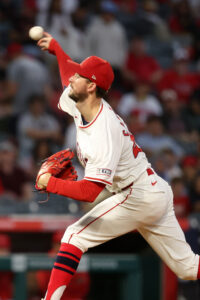
That remains Canning’s only sub-4.00 showing. Opponents tagged him for a 5.60 ERA across 14 MLB appearances in 2021, leading the Halos to option him to Triple-A. He landed on the injured list almost immediately with a stress reaction in his lower back. That carried into the following year and cost him the entire 2022 season.
At the time, it looked as if injuries could derail his career. The back was the most severe, but he’d also battled recurring elbow soreness early in his career. Canning has fortunately managed to stay mostly healthy over the last two seasons. He landed on the injured list twice in 2023, though both were minimal stints related to minor leg issues. Canning avoided the IL entirely this year. His effectiveness has waned, however.
Canning pitched to a 4.32 ERA across 127 innings two seasons ago. This year was a struggle, as he allowed 5.19 earned runs per nine over a career-high 171 2/3 frames. His strikeout rate plummeted to a personal-low 17.6%, more than eight points south of the previous year’s 25.9% clip. The walks ticked up a couple points while his swinging strike percentage dipped from 12.8% to a league average 11% rate.
The stuff also took a slight step backwards. Canning averaged 93.4 MPH on his four-seam fastball this season, a tick below the prior season’s 94.7 MPH mark. Opponents teed off on that pitch, connecting on 16 homers with a .529 slugging percentage. Canning features a fairly typical four-pitch mix (fastball, changeup, slider, curveball) and has intermittently looked like a fourth starter. The Mets will try to help him find that form more consistently.
Canning becomes the third potential starter whom the Mets have added via free agency. They went to the middle of the market for upside plays on Frankie Montas and Clay Holmes, the latter of whom will stretch into rotation work after six seasons as a full-time reliever. Canning doesn’t have the same ceiling — hence the far lower price tag — but aligns with New York’s seeming preference for stockpiling depth.
Montas, Kodai Senga, David Peterson, and Holmes should all be in the Opening Day rotation. Canning, Tylor Megill and Paul Blackburn would vie for the fifth starter job as things stand. The Mets could prefer to run a six-man rotation. Senga was limited to one regular season start this year by injury. They’ll need to closely monitor Holmes’ workload so he doesn’t fatigue. Blackburn finished 2024 on the IL and underwent a postseason spinal surgery that could delay him in Spring Training.
The Mets could use at least another mid-rotation arm to solidify that group. They’ve stayed in contact with Sean Manaea since he declined their qualifying offer. Various reports have cast them as a long shot to land Corbin Burnes, but The Athletic tied them to Jack Flaherty and Nick Pivetta (each of whom remains unsigned) during the Winter Meetings. Adding another starter would allow the Mets to push at least one of Canning, Megill or Blackburn into a multi-inning relief role.
RosterResource calculates New York’s salary commitments and competitive balance tax number around $255MM. Owner Steve Cohen has been comfortable pushing their CBT number well beyond $300MM in previous years. There’s little reason for him to pull back now that they’ve landed Juan Soto. For now, they remain in the lowest tier of luxury tax penalization. They’re taxed at a 50% rate on spending between $241MM and $261MM, so the tax hit on Canning is $2.125MM. That brings the investment to $6.375MM before incentives.
Ken Rosenthal of the Athletic first reported the Mets were signing Canning to a $4.25MM deal with $1MM in bonuses. The Associated Press reported the incentive specifics.
Image courtesy of Imagn.
Braves Non-Tender Ramón Laureano, Griffin Canning
The Braves made five non-tenders this evening. Most notably, they parted ways with outfielder Ramón Laureano and recent trade pickup Griffin Canning. Atlanta also dropped lefty reliever Ray Kerr and righties Huascar Ynoa and Royber Salinas.
Laureano caught on with the Braves in May after being released by the Guardians. He had a surprisingly strong finish, hitting .296/.327/.505 with 10 homers across 226 plate appearances. Laureano’s dismal early-season production with Cleveland left his season batting line right around league average: .259/.311/.437 with 11 homers through 309 trips to the plate.
The late-season turnaround was Laureano’s best extended stretch since his 2021 suspension for performance-enhancing drugs while a member of the A’s. It’s fair to wonder if that was more than a small sample mirage. He struck out at an elevated 28.3% clip while walking only 3.5% of the time with the Braves. Laureano has never been an elite contact hitter, but he drew walks more consistently during his best years in Oakland. Atlanta wasn’t sufficiently convinced to retain him at a salary which MLBTR contributor Matt Swartz projected at $6.1MM.
Canning’s non-tender may come as a bit of a surprise. The Braves just acquired him three weeks ago in a one-for-one swap that sent Jorge Soler to the Angels. That was far more about shedding Soler’s salary than an indication that the Braves valued Canning in particular. The Angels were willing to assume the remaining two years and $26MM on Soler’s contract, which wasn’t a tenable price for an Atlanta team that has Marcell Ozuna locked in at designated hitter.
Indeed, MLBTR’s Steve Adams noted within our Soler writeup that the Braves could cut bait with Canning entirely if they didn’t agree to a deal below his $5.1MM projected salary. Atlanta could’ve viewed the righty as a candidate for a “pre-tender” deal that checks in below his projection so as to avoid a non-tender. Whether the Braves never pursued that or Canning simply didn’t have interest in signing at a discounted rate, the result is the same. He’ll hit free agency, which probably would’ve been the case had he not been traded. The Angels would likely have non-tendered him themselves.
Canning will look elsewhere for a landing spot after struggling to a 5.19 ERA in 32 appearances for the Halos last year. The UCLA product has battled injuries over his five-year career, though he’s intermittently flashed mid-rotation potential. He had a 4.32 ERA with a near-26% strikeout rate in 127 frames a year ago. Canning should be able to find an MLB deal, presumably with a lower base salary than the arbitration projection, now that he’s a free agent.
The other cuts were about clearing roster space rather than shedding salary. Kerr and Salinas have yet to reach arbitration. Ynoa was arb-eligible but projected for a salary barely above the league minimum. Kerr underwent Tommy John surgery in June and will miss the bulk of next season. Ynoa hasn’t pitched in the big leagues since 2022, while Salinas has yet to make his MLB debut. Atlanta could look to re-sign any of them to minor league deals. They’ll likely try that route with Salinas, in particular, as they just claimed the 23-uyear-old off waivers from the A’s three weeks ago.