
MLBTR Poll: Projecting The 2021 Blue Jays
The Blue Jays were one of the more active teams in baseball this offseason. Rumored to be interested in virtually every high-profile player on the free agent or trade markets, Toronto eventually made a handful of key additions, none bigger than George Springer. The former Astros star was followed by Marcus Semien, who rounds out a potentially star-studded infield of Vladimir Guerrero Jr., Bo Bichette and Cavan Biggio. An outfield of Springer, Lourdes Gurriel Jr., and Teoscar Hernández has the potential to be similarly impressive, at least offensively.
Toronto was also active in adding to the pitching staff, but there’s a lot less certainty in that area. The Jays brought back Robbie Ray and acquired Steven Matz in a trade with the Mets. Those players are coming off down years, though, as are fellow projected rotation members Tanner Roark and Ross Stripling. Only Hyun-jin Ryu looks like a sure bet to provide quality production as a starter.
It’s something of a similar story in the bullpen. Kirby Yates, Tyler Chatwood and David Phelps bring varying degrees of upside as offseason acquisitions. However, due to either injury or poor performance, none of that trio got good results in 2020 (although in Phelps’ case, that seems to be a product of unsustainably dreadful home run luck). Is that enough to make up for a relief corps that, despite strong performances from Rafael Dolis and Jordan Romano, was well below-average by both ERA (4.71) and K% – BB% (10.7 points) in 2020?
Let’s turn to the 2021 projections. Baseball Prospectus’ PECOTA projects the Jays for a typical season in the 85-win range. FanGraphs’ Depth Charts system is more bullish, pegging Toronto as an 88-win team. We’ll split the difference: over or under 86.5 wins for the Blue Jays in 2021?
(poll link for app users)
Will The Blue Jays Exceed 86.5 Wins In 2021?
-
Yes. 71% (8,158)
-
No. 29% (3,389)
Total votes: 11,547
Astros Sign Jake Odorizzi
The Astros have added the top player remaining in free agency, announcing an agreement with righty Jake Odorizzi. The deal is a two-year pact with a player option for the 2023 season. Odorizzi is represented by Excel Sports Management.
Odorizzi is guaranteed $23.5MM. That takes the form of a $6MM signing bonus, a $6MM salary in 2021, a $5MM salary in 2022, and a $6.5MM player option for 2023. The option comes with a $3.25MM buyout. Performance escalators can max the option out at $12.5MM while also bringing the potential buyout figure up to $6.25MM. Combining to make 30 appearances from 2021-22 will bring Odorizzi to just shy of $24MM over those two seasons in salary, while incentives could push the deal up to $30MM.
On top of the $5MM base salary for the 2022 season, Odorizzi would make $500K for reaching 100 innings pitched, $1MM apiece for throwing 110, 120, 130, 140, and 150 innings, with another $1.25MM if he reaches the 160 inning mark. The deal also contains some deferred money.
The addition of the player option is an obvious method of spreading out the contract’s luxury tax hit, similar to the Yankees’ recent agreements with Brett Gardner and Darren O’Day. With just a $3.25MM difference between the value of the option and the buyout, it’s highly unlikely Odorizzi exercises it two years from now. However, the player option pushes the contract’s guaranteed money out to three years, while still giving Odorizzi the chance to re-test free agency after 2022. That lowers the deal’s average annual value (which determines the luxury tax calculation) to a modest $7.83MM. Altogether, that brings the Astros’ CBT ledger for 2021 to around $203.6MM, per Cot’s Contracts. That keeps them barely below the $210MM tax threshold, albeit without leaving much room to make in-season additions without cutting payroll elsewhere on the roster if they’re adamant about not going over.
Moreso than paying additional dollars, the Astros’ bigger concern about the luxury tax may be more related to the draft-pick compensation penalties attached to teams that go over the CBT, as the Athletic’s Ken Rosenthal recently noted. With McCullers, Carlos Correa, and possibly Justin Verlander all in line to receive qualifying offers next winter, the Astros may be planning to reload their farm system with extra compensatory picks should these players all reject a QO and sign elsewhere. Houston would also have to surrender a higher amount of draft and international signing bonus capital for signing a free agent who rejected a QO from another club.
Reports surfaced last week about Houston’s interest in Odorizzi, which seemed natural considering that Framber Valdez is in danger of missing the entire 2021 season after suffering a fractured ring finger on his throwing hand. While nothing has been decided about Valdez’s status just yet, Odorizzi’s addition will help reinforce an Astros rotation that also includes Zack Greinke, Jose Urquidy, Lance McCullers Jr., and Cristian Javier. More inexperienced options like Luis Garcia and Brandon Bielak will now project as Triple-A depth rather than be called upon to immediately contribute at the big league level.
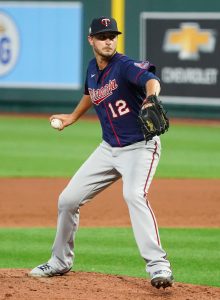 Odorizzi doesn’t quite fit the Astros’ usual model of pitching acquisition, as he lacks the big spin rates that Houston has often favored in recent years. It could be that the need to replace Valdez put Odorizzi on the team’s radar, and Astros GM James Click is quite familiar with Odorizzi from their time together in the Rays organization. Houston will be gaining a veteran arm who has a track record of eating innings, though Odorizzi did pitch only 13 2/3 frames with the Twins in 2020 due to a series of minor injuries.
Blister problems, a ribcage strain, and being struck in the chest by a line drive resulted in three separate injured list stints for Odorizzi, bringing a sour end to what had been a pretty successful tenure in Minnesota. Odorizzi posted a 4.01 ERA and an above-average 24.83K% over 323 1/3 innings in 2018-19, and chose to return to the Twin Cities in 2020 after accepting the team’s $17.8MM qualifying offer.
This decision to bet on himself didn’t entirely work out, as a more typical Odorizzi season in 2020 would have likely resulted in a longer and more lucrative free agent deal for the hurler (who turns 31 later this month). With Odorizzi having control over his fate for the 2023 season, he ended up technically receiving the three-year contract he hoped to receive for much of the winter, though it took him almost a week into March to finally land the contract.
MLBTR ranked Odorizzi 11th on our list of the offseason’s top 50 free agents, projecting him for a three-year, $39MM deal. The Twins, Giants, Angels, Red Sox, Cardinals, Mets, Phillies, and Blue Jays were among the many teams who had some level of interest in Odorizzi over the course of the offseason, with clubs joining and departing the hunt depending on other transactions.
ESPN’s Jeff Passan initially reported the sides had an agreement on a two-year contract with a 2023 player option. Mark Feinsand of MLB.com was first with the contract structure. Odorizzi’s former teammate, Trevor Plouffe, provided a breakdown of the incentive structure for the 2022 season. Jon Heyman of MLB Network was first to note the deferrals.
Photo courtesy of USA Today Sports Images
COVID Notes: 3/8/21
The latest on COVID-19 and Major League Baseball:
- The Astros have placed Pedro Báez on the injured list, per a team announcement. The move clears space on the 40-man roster for Jake Odorizzi, whose signing has been made official. While the club didn’t give a reason for Báez’s IL placement, it’s almost certainly related to COVID-19. The veteran reliever was one of eight Houston pitchers to leave the team last weekend as part of the league’s health and safety protocols. It isn’t clear if Báez was one of the players to have tested positive for the coronavirus; players can also be placed on the COVID IL for exhibiting symptoms or for exposure.
AL Health Notes: Rosenthal, Mariners, Long, Greiner
Athletics reliever Trevor Rosenthal is dealing with a slight groin strain, manager Bob Melvin told reporters (including Martín Gallegos of MLB.com and Matt Kawahara of the San Francisco Chronicle). The team believes it’s a minor issue, Melvin says, but there’s no current timetable for when Rosenthal will resume throwing. It isn’t clear if Rosenthal will have to start the season on the injured list but that would seem to be a possibility with Opening Day just over three weeks away. The 30-year-old was the A’s top free agent acquisition after rebounding with a 1.90 ERA/2.31 SIERA over 23.2 innings with the Royals and Padres in 2020.
Other health notes from the American League:
- Mariners second baseman Shed Long Jr. has inflammation in his right shin, reports Ryan Divish of the Seattle Times (Twitter link). Long underwent tibia surgery last September but the area continues to cause him problems. At the moment, it seems the organization is hopeful that a bit of rest can improve the situation. The upcoming season looks to be a critical one for Long, who failed to cement himself as Seattle’s second baseman of the future during a disappointing 2020.
- Catcher Grayson Greiner suffered a broken nose in yesterday’s Spring Training game and will miss a week of action, the Tigers announced. The news comes as a bit of a relief, as Greiner went down after being struck in the face by a 94 MPH fastball in a scary incident. Assuming his recovery goes as expected, it seems the 28-year-old should be ready for Opening Day. Greiner’s in competition with Jake Rogers and non-roster invitees Eric Haase and Dustin Garneau for the backup job behind Wilson Ramos.
Latest On Mets, Maikel Franco
4:49 pm: While the Mets have checked in on Franco, a deal is “unlikely to come together at the moment,” reports Tim Britton of the Athletic (via Twitter).
2:35 pm: Franco is expected to pick his next team within the next couple of days, according to Joel Sherman of the New York Post (Twitter link).
2:19 pm: The Mets are one of the teams “in the Maikel Franco derby,” MLB Network’s Jon Heyman tweets. Heyman reported earlier this week that interest in Franco was starting to pick up, and the Orioles were another team known to have some interest in the third baseman’s services.
Franco would be an interesting yet also somewhat odd fit on a Mets team that may already have a surplus for position players. J.D. Davis is the incumbent third baseman, and while New York reportedly looked into adding such stars as Nolan Arenado and Kris Bryant this winter, Franco doesn’t represent a clear offensive or defensive upgrade over Davis at the hot corner. The Mets also have Jonathan Villar and Luis Guillorme on hand as more traditional utility infielders, whereas Franco has played only third base and a handful of games at first base over his MLB career.
On the flip side, the Mets may simply want as much depth and talent on hand as possible. The Mets saw plenty of Franco during his days as a once-heralded prospect with the Phillies, though he never fully realized that potential and Philadelphia non-tendered him following the 2019 season. Franco caught on with the Royals and performed well, hitting .278/.321/.457 (106 wRC+, 109 OPS+) over 243 plate appearances in 2020, but Kansas City non-tendered him again rather than pay a projected arbitration salary in the $4.5MM-$8MM range.
At this point in the offseason, Franco’s price tag is significantly lower, so the Mets, Orioles, and other third base-needy teams would surely have interest in the 28-year-old as a potential value signing. A team like Baltimore would be able to offer Franco more in the way of playing time, though Franco could also prefer playing for a projected contender like the Mets, plus New York offers a bit more stability considering that the rebuilding O’s would surely float Franco as a trade chip at the deadline.
NL Notes: Jeffress, Nationals, Varsho, Howard
The Nationals‘ release of Jeremy Jeffress yesterday carried some mystery, both because it came so early in Spring Training (and within three weeks of Jeffress signing with the Nats) and because GM Mike Rizzo used the odd phrasing of describing the release as due to “personnel reasons.” Rizzo didn’t provide much further clarification in speaking with Mark Zuckerman of MASNsports.com and other reporters today, apart from saying that Jeffress’ release was “an employment issue” and not related to on-field performance.
Jeffress himself has weighed in, texting Jesse Dougherty of the Washington Post to say that the Nationals’ given reason for releasing him was “not true,” without specifying what the club said. The veteran reliever also wrote a pair of tweets yesterday, one stating “I’m not what they say I am, I’m what God says! I don’t deserve this false negativity!” and another since-deleted tweet saying that his former agent “jus ruined my life.” It remains to be seen if the reason behind Jeffress’ release will ever fully come to light, but if nothing else, this uncertain situation would seem to hamper Jeffress’ chances of catching on with another team.
More from the National League…
- “Catcher/center fielder” isn’t exactly a common defensive skillset, and while Daulton Varsho saw more time in the outfield than he did behind the plate in his rookie season, the Diamondbacks are clear about their top prospect’s future role. “We see him as a catcher who can play other positions, not as a center fielder who can catch,” Arizona assistant general manager Amiel Sawdaye told The Athletic’s Zach Buchanan. Varsho is happy to play wherever, and the outfield might be his clearest path to more MLB playing time in 2021, considering the D’Backs have Carson Kelly and Stephen Vogt as their regular catching duo. The team doesn’t want to take too much time away from Varsho’s development as a catcher, however, given the amount of specialized work that goes into learning the position at the big-league level.
- The Phillies also face a question about how to deploy a top prospect, as Spencer Howard has never thrown more than 112 innings in any of his four pro seasons. As Matt Breen of the Philadelphia Inquirer writes, the Phils could start Howard in the minors since rotation space could be hard to find, or they could manage his innings throughout the season in a relief role on the MLB roster. The latter option would leave the door open to Howard eventually making some starts in 2021, though it would require the Phillies to also keep Howard stretched out in something of a swingman role so he could more easily shift into working as a starting pitcher. A second-round pick for the Phillies in the 2017 draft, Howard’s minor league climb was slowed by some shoulder problems in 2019, and he has yet to pitch at Triple-A ball. Philadelphia promoted Howard to the majors last summer after watching him at the alternate training site, and Howard posted a 5.92 ERA over 24 1/3 innings and six starts.
MLB To Adopt Modified, Loan-Based Revenue Sharing Plan For 2021 Season
After being halted in 2020 due to the pandemic, Major League Baseball’s revenue-sharing system between bigger-market and smaller-market teams will return in an altered form in 2021, The Athletic’s Evan Drellich reports (subscription required). Smaller-market clubs will only receive half of the normal amount of funds this year, with the other half coming in 2022. The league itself will be covering the 2021 payments in a loan deal, with the larger-market teams expected to eventually pay MLB back.
“Expected” may be a loaded term, however, as Drellich notes that there are still several details about this plan that are unclear, or are open to interpretation based on comments from executives from different teams. One exec from a large-market team believes MLB’s loan is just for the sake of optics (“They can say whatever they want for politics, the understanding is it’ll never be paid back“), while a league source insists otherwise.
There also isn’t much clarity on when exactly big-market teams will have to pay back the league, or the other 50 percent of the 2021 payments directly to the smaller-market clubs, as commissioner Rob Manfred purposely “retained the ability to change payment schedules and the amounts paid based on economic conditions.” It is also possible that the next Collective Bargaining Agreement could change the revenue-sharing system significantly, so the loan repayment plan could be adjusted after the current CBA expires in December.
Revenue-sharing is often a combative issue even in the best of times, and in the words of one executive, there was “a big fight” amongst owners over how (or even if) the system should be restarted in 2021 and beyond. While an increasing number of markets are expecting to have some fans in the stands on Opening Day, the continued uncertainty about the state of the coronavirus pandemic has naturally left all teams wary about how much revenue they can expect to generate this season.
We already saw how the loss of revenues impacted several teams in all market sizes this offseason, as various clubs looked to limit or cut payroll expenditures. Smaller-market teams had less money on hand due to the lack of extra revenue-sharing dollars, while larger-market teams might have saved on those sharing payments but lost more in terms of pure dollars overall.
Exact numbers involved in revenue-sharing aren’t made public, and the total teams pay or receive can differ significantly from year to year. But for 2019, Drellich reports that the Dodgers (roughly $90MM), Red Sox (slightly less than Los Angeles), Cubs (roughly $70MM) and Yankees (over $60MM) were the teams who had the highest revenue-sharing bills. On the other end, the Marlins received around $70MM in 2019, and the Rays received somewhere in the $50MM-$60MM range each year from 2017-19. How small-market teams use those funds is another point of contention, as both the MLBPA and even some larger-market owners take a dim view of small-market teams who don’t reinvest the money into improving the on-field product.
Brewers Sign Jackie Bradley Jr.
TODAY: The Brewers officially announced Bradley’s deal. To create roster space, utilityman Tim Lopes (oblique) has been moved to the 60-day injured list.
MARCH 4, 1:05pm: Bradley’s 2021 salary is $13MM, tweets Ken Rosenthal of The Athletic. He’ll earn $11MM in 2022 if he declines to opt out.
10:45am: Some of Bradley’s salary is deferred, tweets Joel Sherman of the New York Post.
As to the defensive alignment with Bradley in the fold, Brewers manager Craig Counsell spoke to reporters today and firmly indicated that Cain is the team’s center fielder (Twitter links via Tom Haudricourt of the Milwaukee Journal-Sentinel). Counsell wouldn’t mention Bradley directly, as his deal has yet to be formally announced, but he said his club doesn’t “…have any fourth outfielders. We have a lot of starting outfielders and we have to figure out how that works. But there’s playing time, absolutely.”
7:08am: The Brewers and center fielder Jackie Bradley Jr. are in agreement on a two-year, $24MM contract, reports Julian McWilliams of the Boston Globe. The second year on that deal is a player option, so Bradley will have the opportunity to return to the open market next winter if he performs well during his first season in Milwaukee. Bradley is represented by the Boras Corporation.
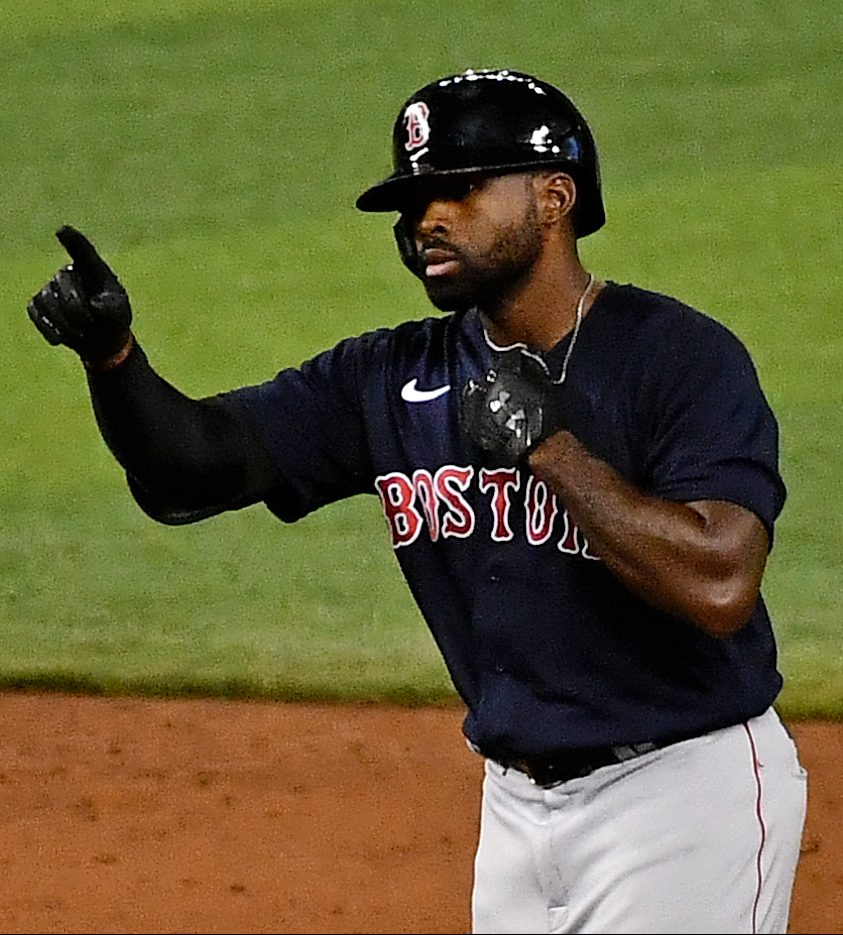
It’s the second major free-agent signing for the Brewers this winter and the second that provides the team with a huge defensive upgrade. Milwaukee also inked former division rival Kolten Wong, arguably the game’s premier defender at second base, on a two-year deal that guarantees him $18MM.
Bradley, 31 in April, figures to slide into the outfield alongside Lorenzo Cain and Christian Yelich. His acquisition could push Avisail Garcia, who struggled in 2020 during the first season of a two-year contract of his own, into a lesser role. It appears quite unlikely that there’ll be a universal designated hitter in 2021 at this point, but Garcia could still work as a DH during interleague games at American League parks. He could also slot into the mix against tough lefties and spell any of the other three on a given day.
Cain, meanwhile, carries a sterling defensive reputation much like Bradley, but he’ll turn 35 the same week Bradley turns 31. The Brewers could turn center field over to the younger of the two and slide Cain, who opted out of the 2020 season after just five games last year, into a less demanding corner outfield spot.
Prior to their deal with Bradley, the Brewers didn’t have much in the way of proven outfield depth in the event that a starting outfielder went down with an injury. The only other outfielders on the 40-man roster were Tyrone Taylor, Corey Ray and a trio of offseason DFA pickups: Billy McKinney, Derek Fisher and Tim Lopes. Bringing Bradley into the mix now gives them cover for a potential injury and allows them to rest Cain (returning at 35 after opting out of 2020) and Yelich (major knee injury at the end of 2019) with more regularity. More broadly speaking, the signing also simply improves both the defense and the lineup.
Detractors may brush aside the notion that Bradley can help to improve Milwaukee’s offense, but over the past six seasons he’s batted .247/.331/.438 — good for a slightly above-average 102 wRC+ and 101 OPS+. That line includes a .283/.364/.450 showing through 217 plate appearances last year. Bradley struggled in 2019 as his strikeout rate spiked to an unpalatable 27.3 percent, but he cut that mark by more than five percent last season in a rebound effort during the shortened campaign.
Bradley shouldn’t be problematic from a payroll standpoint, as the Brewers had been set for a decrease from their 2019-20 spending levels prior to the deal. The new agreement will take them to $105MM if the contract is evenly distributed and a bit more if the deal is front-loaded (which, speculatively speaking, seems likely). Either way, they’ll still be well shy of 2019’s franchise-record $122.5MM Opening Day mark.
The Bradley deal, in many regards, is reminiscent of Milwaukee’s surprise agreement with catcher Yasmani Grandal in the 2018-19 offseason. Grandal, like Bradley, was an elite defender at a premium position who didn’t find long-term offers to his liking and instead bet on himself by signing a one-year deal at a higher annual rate with the Brewers. Bradley’s deal doesn’t match Grandal’s $18.25MM guarantee (although it could afford him more than $12MM depending on the structure), but it gives him a nice safety net with the player option in the event that he struggles in 2021 or deals with a notable injury.
Aside from the Cardinals’ blockbuster acquisition of Nolan Arenado, it’s been a rather quiet offseason in the NL Central. The Cubs have made a handful of small-scale, one-year additions — but only after trading away Yu Darvish — while the Reds and Pirates have been mostly idle. Late agreements with Bradley, Wong and lefty Brett Anderson don’t make the Brewers a clear favorite even in a potentially lackluster division, but they certainly improve what looks to be a competitive club. And given the current payroll level and this front office regime’s penchant for late-offseason value plays, it’d be unwise to completely rule out any further additions.
Central Notes: Cubs, White Sox, Brewers, Pirates
The Cubs will welcome fans back to Wrigley Field in 2021, the team announced today. They have been approved by the city to fill the stadium to 20 percent capacity, beginning on opening day. “In coordination with MLB, top health experts and local officials, we developed a comprehensive plan that prioritizes the health and safety of our players, staff and fans,” said Cubs President of Business Operations Crane Kenney. “Our goal is to create a safe, clean and friendly environment for everyone to enjoy Cubs baseball beginning Opening Day.” The Cubs will require masks for patrons two-years-old and above while hosting pod-style seating and practicing social distancing.
On the other side of town, the White Sox will be allowed up to 8,122 patrons per game while practicing social distancing, per Daryl Van Schouwen of the Chicago Sun-Times (via Twitter). The Southsiders home opener will be on April 8th. That means every team except for the Blue Jays will have at least a limited number of fans in the seats this season, notes Bob Nightengale of USA Today. Now, the latest in roster news from the Central…
- The Brewers are facing a roster crunch at the end of the bench. It’s a side effect of the Jackie Bradley Jr. signing, writes MLB.com’s Adam McCalvy. Pablo Reyes and Derek Fisher have impressed manager Craig Counsell so far, notes McCalvy. Manny Pina and Avisail Garcia are locks to be a member of the bench, which probably only leaves two spots. Assuming Travis Shaw makes the roster, that puts one of Shaw, Orlando Arcia, and Luis Urias on the bench as well. Daniel Robertson has been viewed as a favorite to win that final bench spot, in part because the infielder is out of options. Daniel Vogelbach is also out of options and on the 40-man roster. The big first baseman brings a limited, though valuable skill-set as a power bat off the bench. Of those players on the 40-man roster, Fisher, Jace Pederson, and Billy McKinney are also out of options, giving the Brewers much to think about as we inch closer to April 1.
- Milwaukee may have a little bit of extra time to decide on that final roster spot, however. Lorenzo Cain hasn’t played in a week because of a quad issue, and there’s a chance he won’t be ready in time for opening day, per McCalvy (via Twitter). There’s still hope that he’ll be ready from the jump, but if not, the Brewers could roll with Bradley Jr. in center and Garcia in right, while taking the extra time to evaluate someone from their out-of-options pool.
- Pirates manager Derek Shelton won’t spend much time thinking about who might claim the closer role until the last few days of camp, per the Athletic’s Rob Biertempfel. Said Shelton, “We have a guy who we know can go to the back end and do it in Richie (Rodríguez), who did it last year, so I’m really not thinking about it.” That certainly sounds like Richard Rodriguez has the inside track on the job. There will certainly be enough bodies to choose from, as the Pirates plan to break camp with eight or nine relievers, notes Biertempfel. That said, there aren’t a lot of proven late-inning options to immediately wrench the role from Rodríguez. Kyle Crick is the most obvious challenger, with Chris Stratton perhaps snagging an opportunity or two after striking out close to 30 percent of hitters last season.
Nationals Will Make Extension Offers To Juan Soto, Trea Turner In Near Future
The Washington Nationals have famously fielded top-heavy rosters typically built around a core of strong starting pitching. Since Washington’s first playoff appearance in 2012, they’ve advanced to postseason play five times in nine years, always on the backs of their starting pitching. The starting pitching units on their playoff teams (2012, 2014, 2016, 2017, 2019) ranked 1st, 1st, 2nd, 4th, and 3rd in the Majors by FIP and 5th, 2nd, 1st, 2nd, and 1st by fWAR. Gio Gonzalez, Jordan Zimmermann, Tanner Roark, Max Scherzer, and Stephen Strasburg each posted multiple 3.0+ fWAR seasons for Nats’ playoff teams, and Patrick Corbin is halfway there after a 4.7 fWAR season in 2019.
On the position player side, a core of Bryce Harper, Jayson Werth Ryan Zimmerman, and Ian Desmond added Anthony Rendon in 2014. They morphed by swapping Daniel Murphy and Trea Turner into the core group for Desmond and Werth by 2016. Before 2019, this unit faced their most monumental change yet, letting Harper leave for Philly as Juan Soto developed in his place. Rendon left after the title team in 2019, and it’s now been three years since Zimmerman aka “Mr. National” played a central role in the offense.
Present day, the Nats’ offensive core is a smaller unit than it’s been in year’s past, but it might be the strongest foundation of a Nationals team to date. Soto is one of the best offensive players in the game, compared today to Ted Williams by the Athletic’s Jayson Stark. Turner is one of the game’s most dynamic and underrated superstars.
Victor Robles certainly seemed like a key member of this core unit in 2019, and they hoped Carter Kieboom might step into Rendon’s place at the hot corner, but neither cemented their place in the inner circle during a rough 2020 season. The slow ascent of Kieboom and Robles has made Soto and Turner all the more important to the Nats’ future. Beyond their obvious talents, at 22 and 27 years old, they’re the youngest ties to the 2019 title team.
Starting pitching has been this team’s past, but Scherzer is 36, Strasburg is 32 and twice lost seasons to injury, and Corbin is 31. Their top prospects are a couple of power arms in Jackson Rutledge and Cade Cavalli, and Cole Henry, Andry Lara, Jeremy De La Rosa, and Tim Cate provide some backing in that regard, but there’s much uncertainty in projecting arms. The Nationals future seems to lie in the hands of Soto, Turner, and to a lesser extent, Robles and Kieboom.
The clock is ticking, however, and the cost is rising. Turner will make $13MM this season with one more year of arbitration before free agency after 2022. Soto became arbitration eligible for this first time this winter as a Super Two player. He’ll make $8.5MM in 2021 with three more turns through arbitration before free agency after 2024. He’ll be just 26 years old.
The conversation inevitably turns to potential extensions, and there have been internal discussions about what it might cost to lock their two superstars into long-term deals. In fact, there will be long-term contract offers on the table in the near future, per Jesse Dougherty of the Washington Post (via Twitter).
They’ve made offers in the past, however. Per MLB.com’s Jessica Camerato (via Twitter), GM Mike Rizzo said earlier today, “We’ve discussed internally with ownership about it. We’re in the midst of making decisions on what a timeframe would look like … We certainly have made & will make a long-term extension offer to both players sometime in the near future.”
Since the Braves extended Ronald Acuña Jr. to a well-below-market eight-year, $100MM extension, and the Padres extended Fernando Tatis to a 14-year $340MM extension, Soto might be the best young player without a long-term deal in place. Acuña signed his deal after winning Rookie of the Year with a 4.3 bWAR season in 111 games. Tatis signed after two years of service time and 7.0 bWAR through 143 total games. Soto has just 0.143 more service time than Tatis, but he’s begun the arbitration process, played in 313 games, won a World Series, and accrued 9.7 bWAR. How much will it cost to extend the next Ted Williams? That’s a difficult question, especially when he’s represented by Scott Boras.
If there’s any organization comfortable dealing with mega-agent Boras, it’s the Nationals, who have dealt with him over the years both to sign long-term deals in the case of Strasburg and Scherzer and to not sign those deals with Harper and Rendon. The Nats should have a pretty clear idea about what it would take to sign Soto – or if it’s even possible.
As for Turner, the CAA client might want to wait and see how next winter’s free agent market shakes out. One way or another, a market price will be set for star shortstops as Francisco Lindor, Javier Baez, Carlos Correa, Marcus Semien, Trevor Story, and Corey Seager all sign new contracts. If he does wait, 2021 could be a make-or-break season for Turner. While he’s flashed tremendous potential, he’s also dealt with injuries that have cut short some of his most productive seasons. He finished 7th in MVP voting during the shortened 2020 season.
Xander Bogaerts signed a six-year, $120MM extension in April 2019 with the Red Sox, which could be used as a comparison point. You can check MLBTR’s Extension Tracker to find your own comps. Bogaerts – a Boras client – signed after 5.046 days of service time at 26 years old with 759 games and 15.6 bWAR under his belt. Turner is at 4.135 days of service time right now. He’ll be in the territory of Bogaerts’ 5.046 service time days by the time he turns 28-years-old in June. At present, Turner has notched 541 games and 16.6 bWAR.
One thing we know about Washington and long-term deals is that money will have to be deferred. That said, they’ve shown willing to spend high-end money for the right players. Even though they’ll pay Strasburgh $35MM a season through 2026, and Corbin escalating salaries of $23.4MM, $24.4MM and $35.4MM through 2024, the Nats have some long-term payroll flexibility. Schezer’s $42MM deal comes off the books after this season, as does deals for Brad Hand, Starlin Castro, Daniel Hudson, Yan Gomes, Jon Lester, Alex Avila, Josh Harrison, and Zimmerman. They can also takes a $3MM buyout for Kyle Schwarber over an $11MM option. That’s a total of $73.6MM that could come off the books following 2021. Of course, in that circumstance, Rizzo would also have to back-fill nine roster spots.