
Andy MacPhail On The 25-Year Anniversary Of The Twins’ 1991 World Series Championship
The Minnesota Twins surprised the baseball world in 1987 when they finished first in the American League West with an 85-77 record – just one season after going 71-91. But they didn’t stop there; the Twins stunned Detroit (98-64 in the regular season) to win the A.L. Championship Series, then shocked St. Louis (95-67) to bring home a World Series title.
Just four years later, after a complete retooling of the pitching staff, the 1991 Twins rebounded from a last-place finish the year before to win the A.L. West. After dropping nine of their first 11 games, they started putting things together – and eventually went on a 24-3 tear from May 28-June 25 (including a 15-game winning streak). By the time that stretch ended, they found themselves atop the divisional standings – and never entered a day’s action the rest of the season looking up at anyone. After defeating Toronto in the ALCS, they outlasted Atlanta in the worst-to-first World Series to bring home another trophy.

The architect of both championship clubs was Andy MacPhail, who was just 32 years old when he took over as Minnesota’s General Manager in August 1985. Now the President of the Philadelphia Phillies, MacPhail took some time to speak to MLB Trade Rumors about the 1991 Twins in this – the 25th anniversary of their last World Championship.
The pitching staff was completely overhauled between 1987 and 1991. The front three in 1987 were Frank Viola, Bert Blyleven and Les Straker; by 1991, Jack Morris, Scott Erickson and Kevin Tapani sat atop the rotation. Jeff Reardon was the closer in 1987; Rick Aguilera was in that role in 1991.
“We had to turn the entire pitching staff over in a four-year period, which was no easy feat,” MacPhail said. “As I recall, it was a little bit of everything – trades, free agent acquisitions, minor league free agents, major league free agents … Some came from the system, like Scott Erickson. Some were more high-profile free agents, like Jack Morris. But one of the most critical signings was a minor league free agent named Carl Willis – who ended up pitching the 8th inning and doing an extraordinary job for us. With Willis in the 8th and Aguilera in the 9th, we locked down the last two innings. It just goes to remind you that you have to get contributions from every potential artery you can to improve your club – not just rely on one aspect alone. Tapani and Aguilera were trades. Morris – major league free agent. Mark Guthrie – minor league free agent. They all combined in one year to help us completely turn over the pitching staff.”
The best pitcher on the 1987 team – and the most recognizable – was Frank Viola, who earned World Series MVP honors that season and went on to win the A.L. Cy Young Award in 1988. The trade of Viola at the July 1989 deadline turned out to be a big reason why the Twins won the 1991 World Series, as three pitchers acquired for him – Tapani, Aguilera and David West – became key members of the Minnesota staff.
“At the time we moved him, we were in last place, and it felt like we needed some volume as opposed to one great starter,” MacPhail said. “We had a difficult negotiation after the ’88 season. He ended up signing a three-year agreement, but we were probably going to have another negotiation that would not be easy. We just felt it was time to make a move. When he went over to the Mets, he won 20 games and pitched well there. Given our circumstances, we were looking for volume. We got Kevin Tapani – who did a tremendous job for us and was an integral piece of the ’91 puzzle. And we were able to add David West, who ended up starting and relieving for us over the course of ’91. And then another critical piece was Rick Aguilera, who was our closer and filled an important void for us.”
From a fan standpoint, moving such a popular player and person as Viola had to be tough. MacPhail was asked if it was harder to remove him from the team because Minnesota was a small market club.
“That was a harder one to do. We ended up doing it right at the deadline on July 31st,” MacPhail said. “Back then, it was a midnight deadline. We did it with minutes to spare. It was not an easy decision by any stretch. I remember just wanting to have to sit down for a moment and sort of collect myself. Independent of the market size, it clearly was not an easy decision. It was not going to be popular, because you are trading a known for multiple unknowns to some degree. While I felt conviction that it was the right thing for us to make the trade … I wouldn’t say I was conflicted, but I recognized back then that of all the trades I had made in my career, this one was going to have the most riding on it. If it was not successful, it was going to come back and bite you personally – probably in a big way. You trade a potential 20-game winner to a New York club, you better be getting something back.”
A year and a half later, the Twins were playing in the 1991 World Series. Vindication, or still a tad conflicted?
“No, the end game object is to be the last club standing. We were able to accomplish that. The pitchers we acquired in that deal were big parts of it. So I felt the actions of the organization were justified,” he said.
Rick Hahn Q&A
After a disappointing 2014 season, White Sox GM Rick Hahn contemplated a complete team teardown. But once owner Jerry Reinsdorf opened his checkbook, Hahn “won” the offseason with a series of splashy moves — which ultimately added only three wins in the standings.
This past offseason, Hahn again underwent some of the same soul-searching over the direction of the White Sox, debating everything from a complete rebuild to chasing some of the winter’s nine-figure free agents. Determining that the status quo wouldn’t get the White Sox into October and a teardown would set the franchise back, Hahn got to work. This time, however, the GM did so with a sneaky trade chased by a series of under-market signings (as MLBTR’s Tim Dierkes examined in his recent review of their offseason).
But even with the AL Central fully up for grabs, it will take more than a few extra wins to get the White Sox to their first postseason since 2008 — and to that end, the convivial Hahn turns stern, ensuring that no Pale Hoser’s place in the lineup is guaranteed: “There are no scholarships.”
With Cactus League games underway, Hahn takes time out to talk exclusively with MLBTR about his second consecutive busy offseason.
Jeremy Hellickson On Offseason Trade
As a part of the Diamondbacks’ efforts to remold themselves into a contender, they sent one of their starters off to a rebuilding club. In November, the D-backs shipped Jeremy Hellickson to the Phillies in exchange for 20-year-old righty Sam McWilliams. Hellickson, unlike McWilliams, comes with a lengthy track record at the big league level — something that could theoretically have appealed to the win-now Diamondbacks — but he’s struggled in recent seasons, logging a 4.73 ERA over the past three seasons after an outstanding start to his career. The Diamondbacks decided to use his relatively sizable projected salary elsewhere.

Leading up to the deal, Hellickson says that he didn’t get a phone call from anyone in the organization indicating that a move might be coming down. However, he sensed that he could be traded at any moment. “I didn’t have any indication [that a deal could happen], you just kind of get a feeling with the direction that they’re going in,” Hellickson said in Clearwater, Fla. late last week. “I didn’t know that they were going to sign guys for that much money after trading me, but I just got the feeling that was going to happen.”
After Hellickson’s departure, the Diamondbacks spent $206.5MM on Zack Greinke; paid a hefty premium in terms of player personnel to acquire Shelby Miller (Ender Inciarte, Dansby Swanson and Aaron Blair); signed Tyler Clippard to a two-year, $12.25MM deal; and acquired Jean Segura and righty Tyler Wagner from the Brewers for Chase Anderson, Isan Diaz and Aaron Hill. Now, after winning 79 games in 2015, the D-backs could very well contend for the NL West crown. Even though the Phillies seem more likely to wind up in the cellar of the NL East than at the top, Hellickson says that he isn’t bothering to concern himself with his former club’s dealings.
At the age of 28, Hellickson is one of the team’s “veteran” starters, along with 32-year-old Charlie Morton (a fellow offseason trade acquisition). Hellickson admits that it’s an odd role to play for someone who is on the right side of 30.
“It is a little bit weird being one of the veteran guys on this rotation,” said Hellickson. “It was kind of the same situation alst year [in Arizona] but the game is getting younger. There are guys getting called up at 21 or 22 years old. I don’t feel old at 28, but 28 is kind of old in this game right now.”
Hellickson and the Phillies avoided arbitration back in January with the right-hander getting $7MM instead of his projected $6.6MM salary. After this season, the Scott Boras client is headed towards free agency. Hellickson may or may not rack up wins this season, but the former American League Rookie of the Year could position himself for a nice payday with a rebound campaign in 2016.
Photo courtesy of USA Today Sports Images.
Marco Estrada Happy To Be Back With Blue Jays
Marco Estrada‘s first experience through free agency was over before it could even get underway. In November, following a career year, the right-hander agreed to return to Toronto on a two-year deal worth $26MM. Estrada would have liked to take his time on the open market, but after careful consideration, the hurler decided that he would be better off taking a two-year deal from Toronto rather than accept the one-year, $15.8MM qualifying offer.
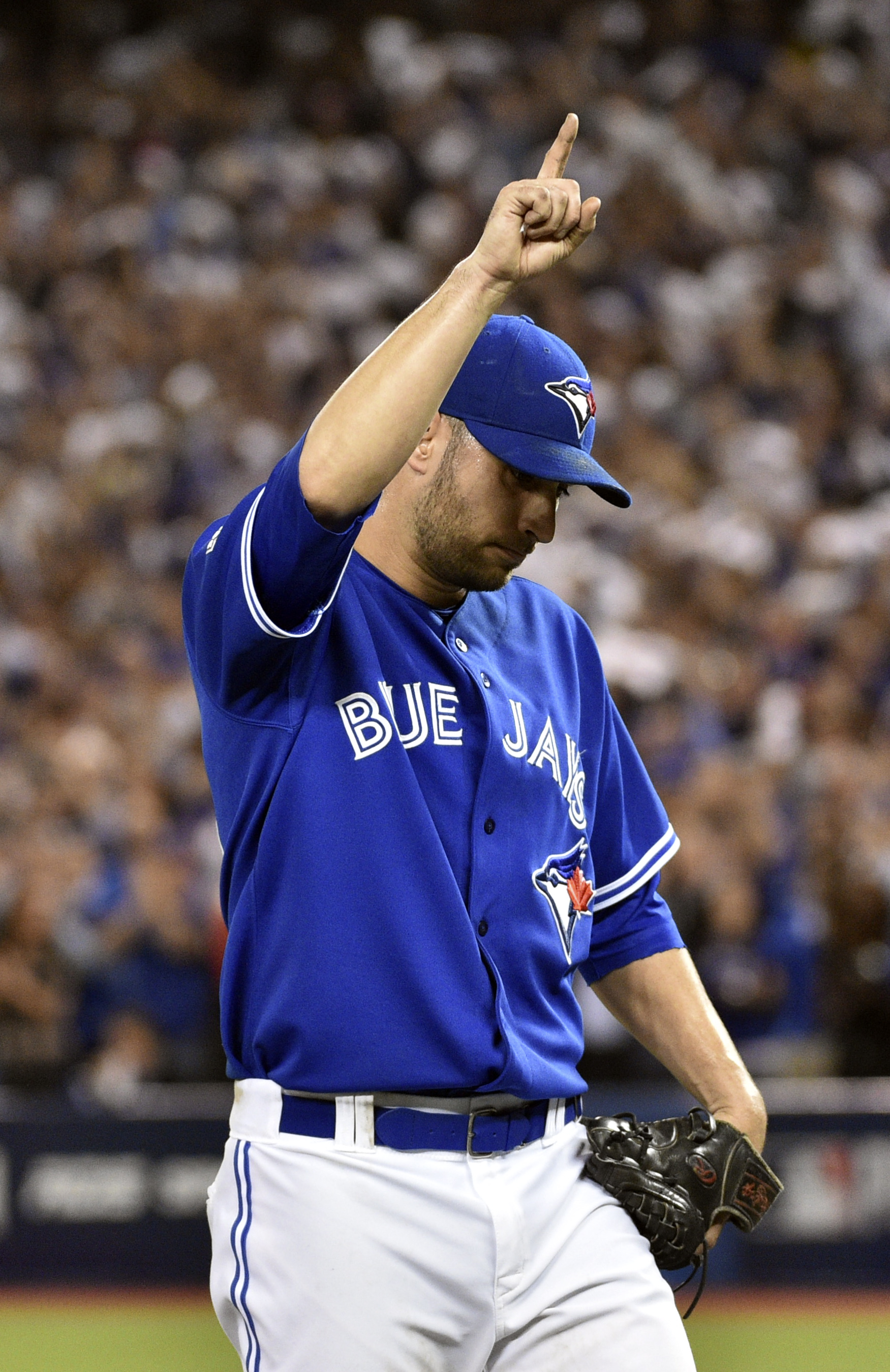
“I wanted to test it just to see what it was like. I probably would have returned to this team anyway. I did want to test the market. Who doesn’t?,” Estrada told MLBTR during a one-on-one chat in Dunedin, Florida. “I’ve never been through free agency and I was coming off of a really good year so why not test free agency? I didn’t get to experience it, but I’m happy with my decision. I’m glad to be back and I’m happy with how my deal worked out. But, it would have been nice to see what it’s like. Who knows, maybe two years from now I’ll try free agency.”
The veteran pitcher and his reps at TWC Sports pushed hard for a three- or four-year commitment from the Blue Jays, but they ultimately agreed to the two-year offer. From the sound of it, the Blue Jays were firmly against giving the 32-year-old (33 in July) a longer deal.
“We tried to get a third or fourth year. I don’t think it was ever going to be close on their part. Obviously, I tried. I wanted less money for more years, but they didn’t want to do it. It’s fine. I like the deal I got now. I guess the AAV went up and it was only two years but, it’s good, you know, I can’t complain,” Estrada said.
Even after seeing many of the offseason’s top available pitchers rocket past their projected earnings, it’s not clear whether Estrada could have netted a hefty three- or four- year pact. Estrada, on one hand, ended the season with a strong 3.13 ERA over 181 innings. The advanced stats aren’t as kind to him, however. As MLBTR’s Jeff Todd noted in November, Estrada wound up with a career-low 8.7% HR/FB rate and a .216 batting average on balls in play, factors that surely played a role in his breakout year.
Regardless of the contract, Estrada is happy to be back in Toronto for two more seasons.
“I look at the team that came back and it’s a pretty solid team. It’s not a lineup I’d like to face, I’ll tell you that right now,” the pitcher said. “Knowing I’m going to have these guys behind me, not just the offense they give me, but the defense. Nobody ever talks about the defense here and I think we’ve got one of the best defensive teams in the league. A guy like me, I need a good defense behind me, so why not come back here and have these guys play hard for me?”
Photo courtesy of USA Today Sports Images.
Swisher Recognizes Reasons For Trade To Braves
When the Indians signed Nick Swisher to a four-year, $56MM deal prior to the 2013 season, they didn’t anticipate his knees giving him serious trouble just one year in. By 2015, the deal looked to be a bad one for the Indians and they were more than motivated to unload the money owed to him. The Tribe found a taker in August, sending Swisher, Michael Bourn‘s bad contract, and $15MM to Atlanta for third baseman Chris Johnson. Swisher says he completely understands the Indians’ reasons for dealing him.
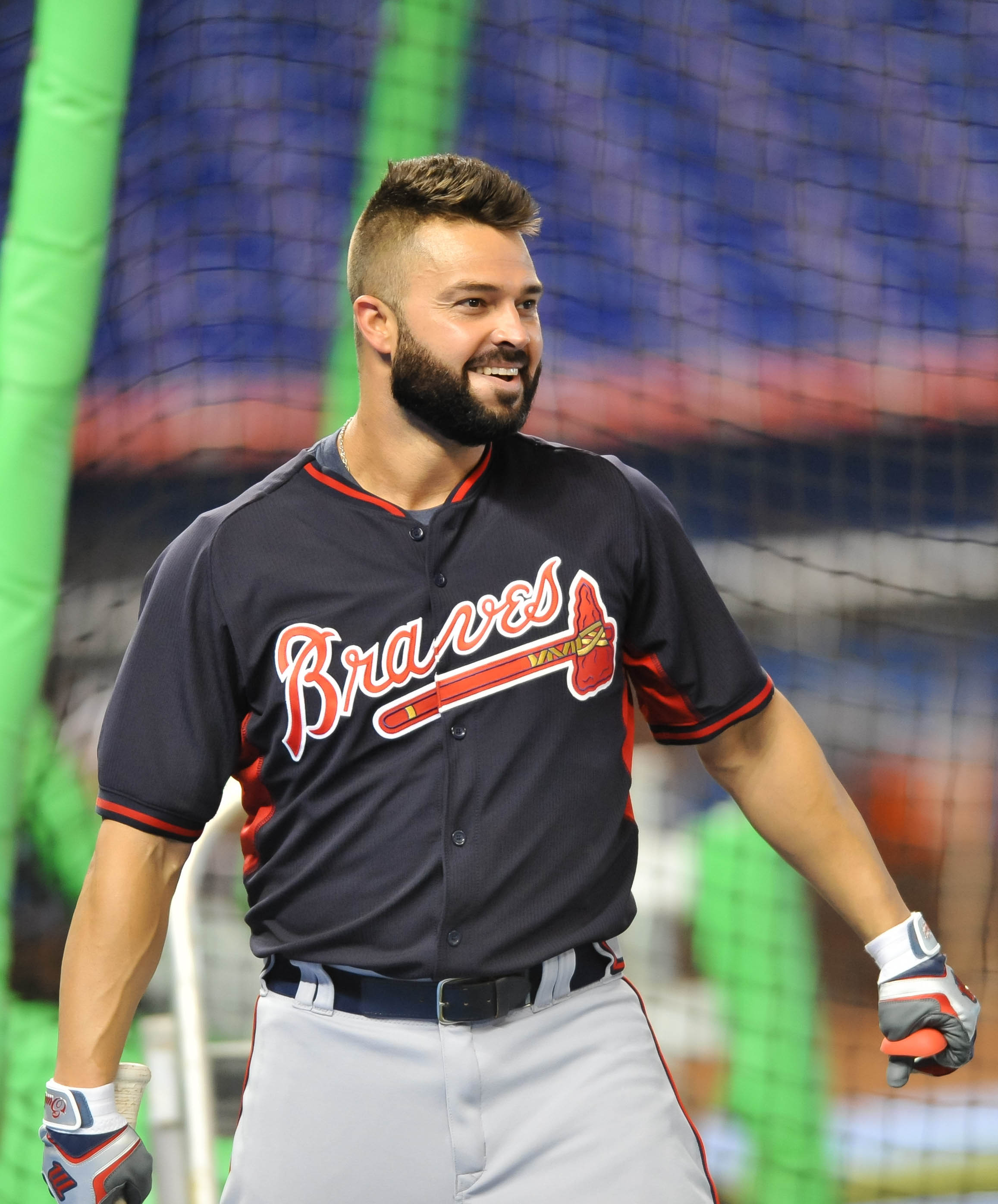
“It was a business move and I don’t blame [the Indians] for doing that,” Swisher told MLBTR prior to Friday’s Spring Training game against the Phillies. “I got hurt in the second year of a five-year deal [his deal includes an option] and my production was down. I was hired to do a job and I didn’t get it done, so I don’t blame them. It made a lot of sense as a business move.”
Now more than 18 months removed from double arthroscopic surgery on his knees, Swisher says that he “feels great” and is eager to show what he can do on the field. After first undergoing surgery in 2014, Swisher turned in a weak .208/.278/.331 line and followed that up with an even worse .198/.261/.297 batting line in 30 games in 2015. Now, he believes that he can inch closer to the form he displayed in the previous eight seasons, when he slashed .257/.362/.464 and averaged 26 homers per season.
If Swisher shows in Spring Training that he can hit reasonably well, he might not be in Atlanta for long. In January, it was reported that the Braves would like to trade Swisher and/or Bourn before Opening Day. The talk will heat up if Swisher starts raking in March, but don’t expect the 35-year-old to be scanning the web for the latest mentions of his name.
“There’s too much stuff going on to pay attention to that. I’ve kind of been doing this for a little bit and in the offseason, people write stuff that has no truth to it. I think, for me, I’ve been doing it long enough to know that it’s all B.S. Until something does happen, that’s when you can really believe things,” Swisher said.
Swisher finds himself on a team that is designed to compete in 2017, not 2016. The veteran understands the team’s plan but he is not necessarily crazy about the prospect of spending the year in the cellar.
“It’s different. It’s something I’m not used to. Where I’m at in my life and my career, I want to win and I want to win now. I don’t know how many years I got left,” said Swisher. “I just know that I want to keep going out there and keep enjoying this piece of grass every day that I keep coming out to. I’m just so fortunate in my career and I’ve been able to do a lot of great things. I just want to ride this thing until the wheels fall off and I want to make my mark on this game, somehow.”
Photo courtesy of USA Today Sports Images.
Phillies’ Jake Thompson On Being Traded Twice
It can be tough for a player adjust to a new organization, and Phillies prospect Jake Thompson has already had to make that change twice in his young career thanks to his inclusion in a pair of significant trades. The first time around, Thompson was shipped from the Tigers to the Rangers as a part of the Joakim Soria deal. One year later, he went from Texas to Philly in the Cole Hamels deal. After his Spring Training start on Thursday, Thompson explained that going through deal No. 1 helped him transition better after deal No. 2.
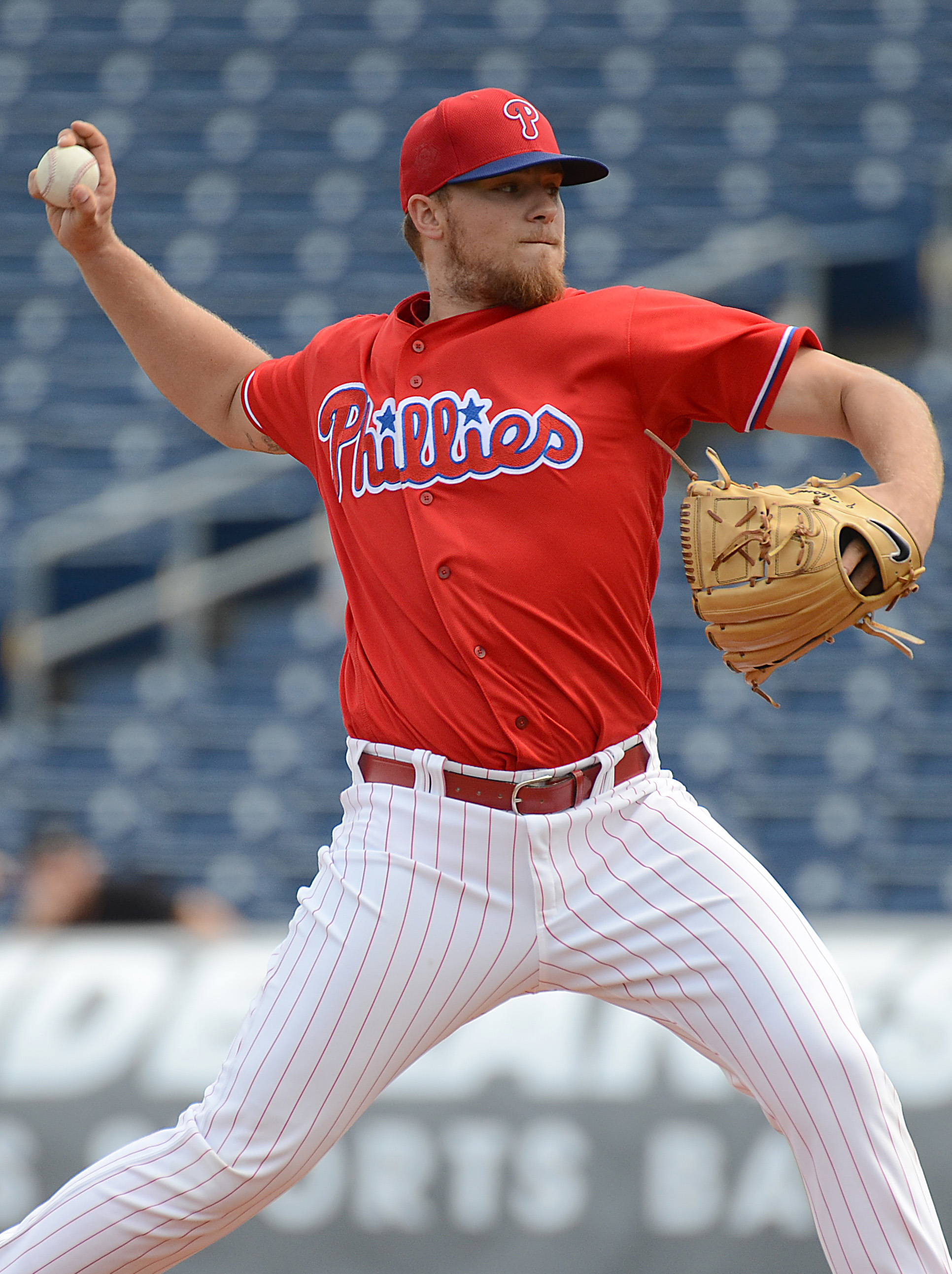
“I tried to overdo everything [after the first trade]. I tried to throw every fastball max velocity, and I wasn’t really utilizing all the strengths of my game like the movement on my fastball,” Thompson told reporters in Clearwater, Fla. after allowing three hits over two innings with one walk and one strikeout. “I was trying to do things that I wasn’t capable of. So, this time around I decided to be myself and see how that turns out. I’ve tried to get a whole lot more contact since I’ve been with the Phillies and the last part of [Double-A] Reading that really panned out for me and as my command gets better here I’m going to try to keep doing that. I’m going to keep trying to get more ground balls.”
As he adjusts to the Phillies organization, Thompson says that he is leaning on veteran leadership for advice and support. Of course, there aren’t many veterans left in the Phillies clubhouse with 28-year-old Jeremy Hellickson qualifying as a grizzled veteran in the team’s babyfaced rotation. Thompson, 22, cited Charlie Morton and Carlos Ruiz as two of his mentors here in Clearwater.
Thompson was also more at ease after the Hamels deal because he came to his new club with fellow pitching prospects Alec Asher and Jerad Eickhoff, catching prospect Jorge Alfaro, and outfield prospect Nick Williams.
“That’s one thing that is a little bit different from the first time I was traded. I came here with a few teammates and I actually played with all of them except for Matt Harrison, so that made things a lot easier. I had some familiar faces with me,” Thompson explained.
The trade talk buzzed around Hamels in Philadelphia for years and reached a fever pitch leading up to July 2015. Even though the Rangers were often mentioned as a likely landing spot for the ace, Thompson says that he ignored the trade talk. When the trade did go down, Thompson admitted that he was flattered to be a key piece of a deal for one of the league’s biggest names.
“There’s a huge honor in that. Cole Hamels is Cole Hamels, he’s undeniably good. For me, I just try not to get super wrapped up in it. Every day I’m trying to become a Major League pitcher, and I just try to keep getting better.”
Thompson may not have to wait too long to realize that goal. Though he just turned 22 in January, he reached Double-A at the age of 20 and spent the entire 2015 season, his age-21 campaign, at that level. Thompson recorded a 3.73 ERA with 7.6 K/9 against 2.8 BB/9 in 132 2/3 innings last year despite being nearly four years younger than the league average. That performance and his raw stuff prompted Baseball America to rank him third among Phillies farmhands and 75th in all of baseball. Similarly, MLB.com listed him second among Phillies prospects and 55th in baseball, while ESPN’s Keith Law rated Thompson second in the organization and 63rd in all of baseball.
Photo courtesy of USA Today Sports Images.
Doug Fister Looks To Rebound With Astros
This winter, Doug Fister‘s free agency lasted longer than most. The right-hander was linked to a number of teams but, after waiting things out, he inked a one-year, $7MM deal with the Astros which could reach $12MM through incentives. After an exceptionally strong 2014, Fister followed up with a disappointing 2015 which saw him relegated to the bullpen in Washington. At the outset of free agency, observers really weren’t sure about what kind of deal Fister would land. The pitcher says he had no idea, either.
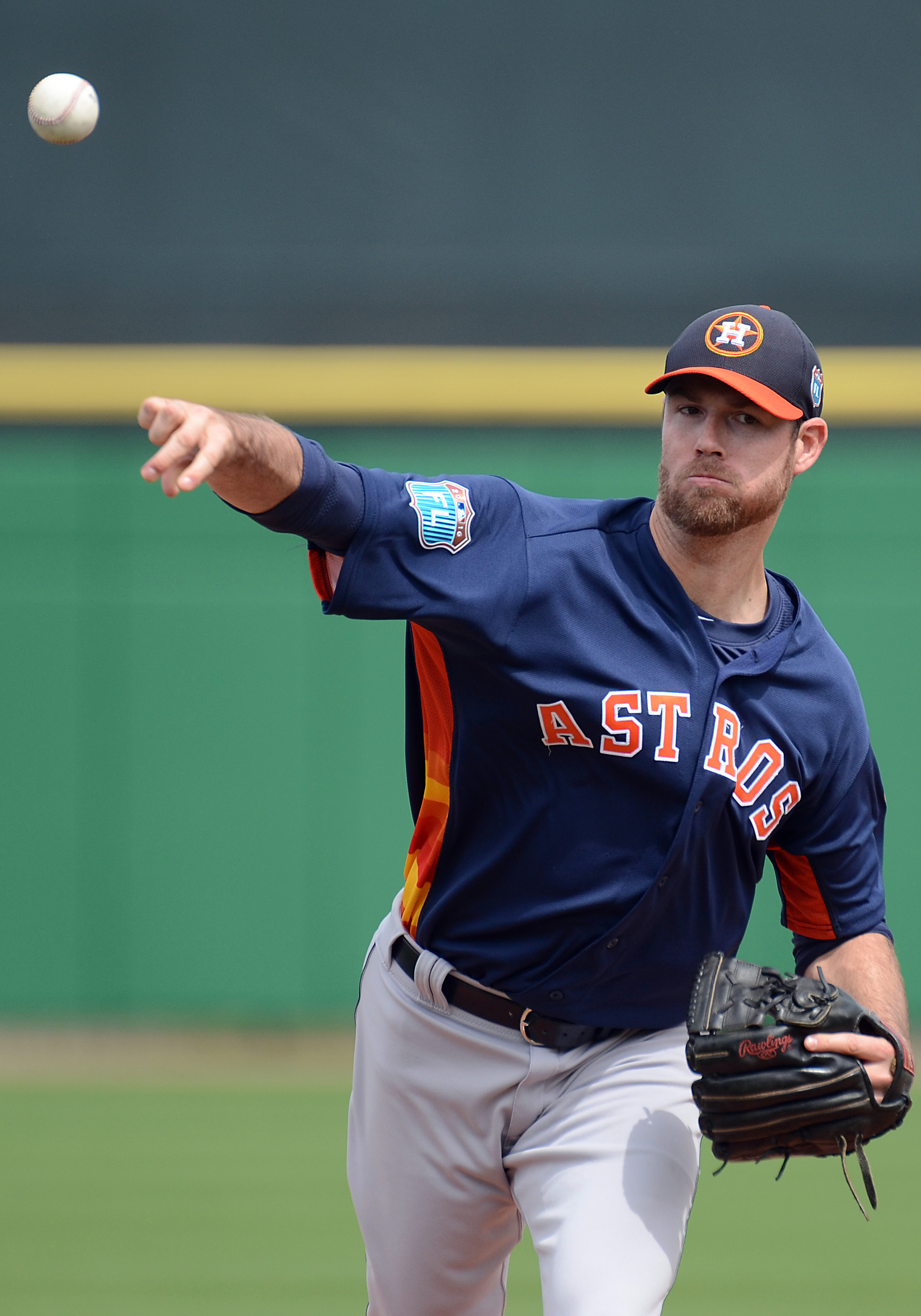
“No, I really didn’t know what kind of contract I would get. I kind of took the mindset that would all take care of itself,” Fister said after tossing a pair of scoreless innings in his 2016 Spring Training debut. “I have a great agent [Page Odle, PSI Sports Management] and I leaned on him…I realized that I’ll just be where I’m going to be and I’m truly blessed to be a part of this clubhouse. We’ve got a great team. I can’t stress that enough.”
Fister drew varying degrees of interest from teams like the Mariners, Yankees, Marlins, Tigers, and even today’s opponent — the Phillies. The Astros came to Fister with the right contract, and they also sold him hard on spending a year in Houston.
“I spent some time on the phone with [manager] A.J. [Hinch] and [GM] Jeff [Luhnow],” Fister explained. “I got to know them more on a personal level, and it was almost like a job interview, really. But they have that desire to win. They have that fire. The guys here got a taste of the playoffs last year, and they want to get back there. They have that fire, that desire, and that’s what we play this game for.”
Last season was surely frustrating for Fister, but he termed the rocky year as a “learning experience.” Ultimately, though, he refuses to complain and he says that he is embracing the challenge of reasserting himself as a starter this year.
After several strong years in Detroit, he enjoyed one of his best seasons with the Nationals in 2014. Unfortunately, injury issues slowed him down at the outset of the season, but he performed better when he was moved to the bullpen. The 32-year-old has a singular focus on getting back to the starting five, but after last year’s experience, he knows that he can pitch in relief again if he is ever asked to do so.
“Every starter has a routine, and I had to kind of break that up and tell myself that I have to pitch every day,” said Fister. “I told myself that if the time comes later in my career where I have to pitch out of the bullpen, I know that I can do that. At the same time, I know that starting is in my heart and that’s where I wanted to be this offseason. It’s only two weeks into the spring but I’m definitely where I want to be.”
Photo courtesy of USA Today Sports Images.
Charlie Manuel On Phillies’ Rebuilding Process
The rebuilding Phillies have just two players left from their 2008 World Series Championship team — Ryan Howard and Carlos Ruiz. They’re not the only members of the organization that were in the dugout then, however; former manager Charlie Manuel is now serving as a senior advisor to the General Manager — a job that keeps him involved and plugged in as the team looks to continue its rebuilding process. The overhaul has left the Phillies with an exceptionally young club, but that’s not unfamiliar territory for Manuel. 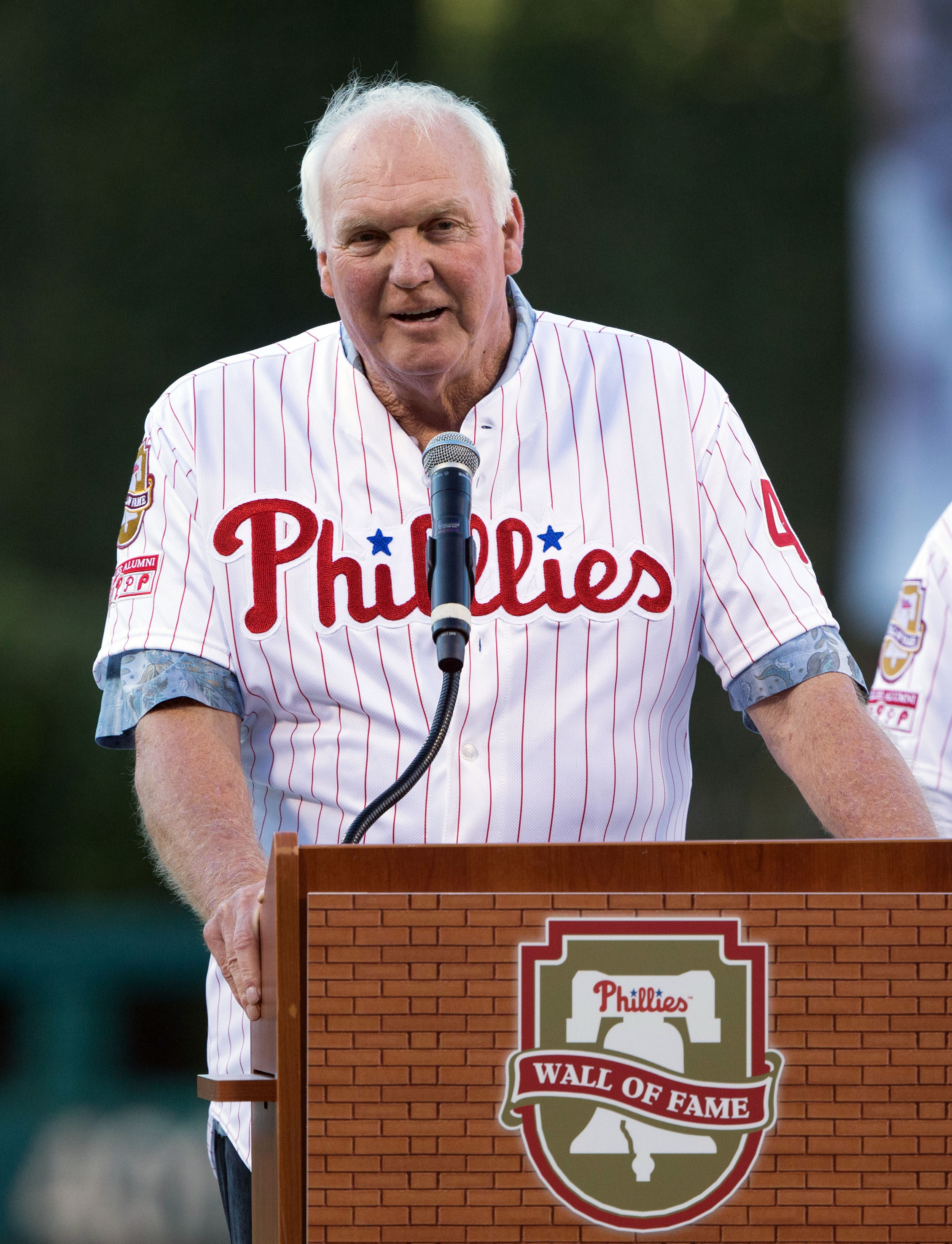
“When I was with the Twins in 1986 and ’87 we had some young players. We had [Kent] Hrbek, [Gary] Gaetti, [Kirby] Puckett, and all these young guys that turned out to be real good players. This group of guys is something similar to them,” Manuel told MLBTR in a one-on-one interview in Clearwater, Florida. “When you look at this group, we’ve got a lot of talent. These players have a lot of tools. We can go first to third, we can go second to home, but we still have to develop ourselves as hitters to be able to be regular players at the Major League level. And, when it comes to young pitchers, we got so many that some of them have to be good.”
Manuel is particularly impressed with the team’s young pitching and pointed to Aaron Nola, Jerad Eickhoff, and Jake Thompson as “big arm” pitchers that can be future stars for the club. Part of Manuel’s new role with the team will be to help identify the next crop of amateur pitchers that can blossom into impact players.
“During the season, I go to all of our minor league teams and help evaluate players,” the World Series winning manager explained. “Also, when Spring Training is over, I’ll get involved in the amateur draft and I’ll check out some of the top guys, guys that are going in the first through fifth rounds. After the summer, I’ll pick up some Major League scouting and key in on some free agents. I’ll also be in Philadelphia up in our box as a part of our own in-house evaluations.”
In 2008, Manuel’s Phillies won 92 games on their way to an National League East crown and, of course, a World Series title. This year’s Phillies aren’t a popular pick for the postseason, but the 72-year-old ex-manager doesn’t think it’ll be long before we see the Phillies in the postseason again.
“I think a few years from now, you’ll see us where the Astros are,” Manuel said as he gestured towards the visiting dugout. “They backed up and made a lot of good draft choices and look at how good they are now. That’s what we’re hoping to do.”
Photo courtesy of USA Today Sports Images.
Peter Bourjos Eager For Fresh Start With Phillies
In December, the Phillies added to an already stacked outfield mix when they claimed Peter Bourjos off waivers from the Cardinals. The outfielder’s time in St. Louis was not terribly memorable and many pointed to his lingering hip injury as the culprit for his struggles. However, Bourjos says it was something else keeping him from playing his best with the Cards. 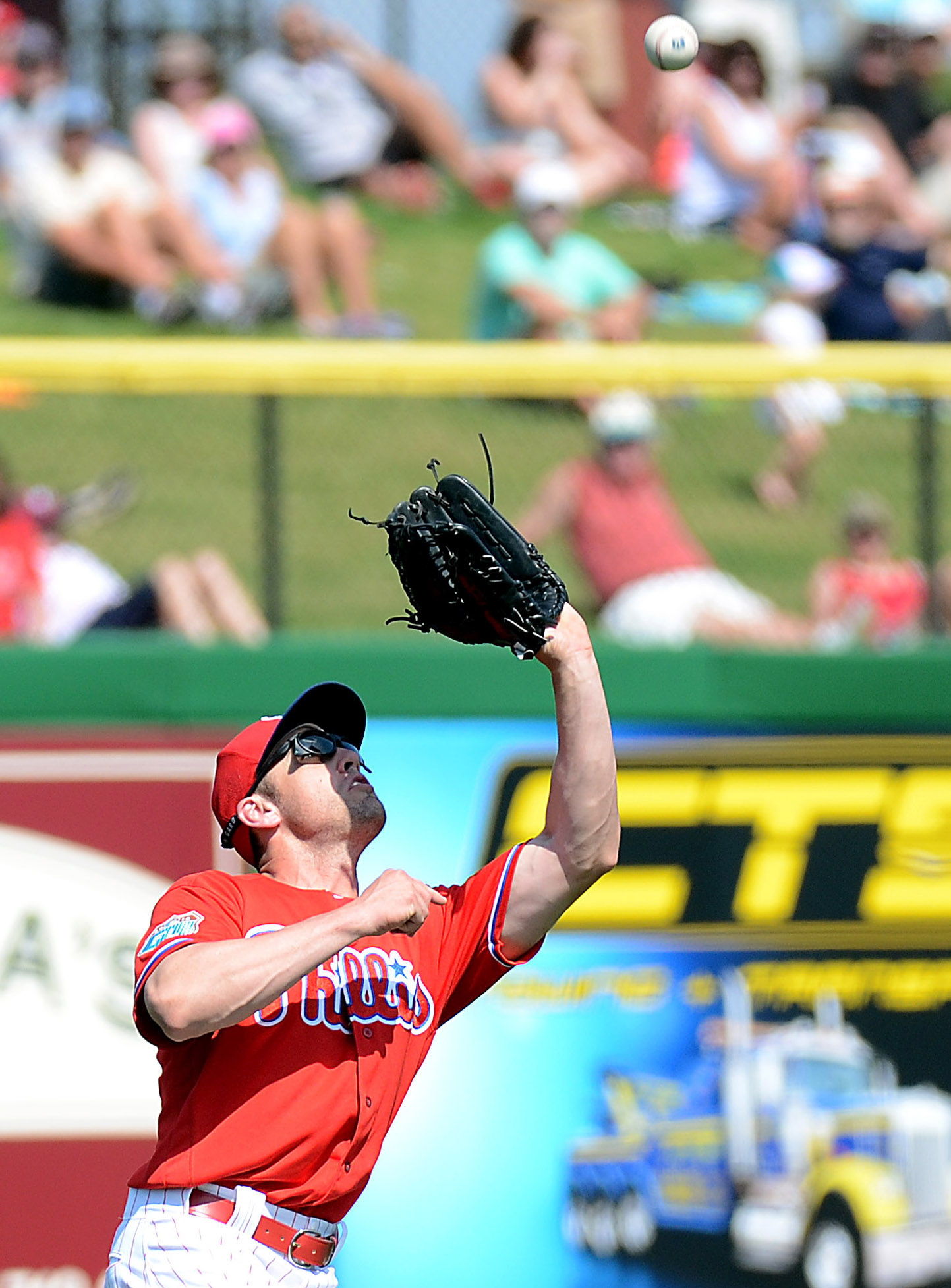
“I think it was more just being in and out of the lineup. It was tough getting into a rhythm,” Bourjos told MLBTR in Clearwater, Florida on Thursday. “That’s the role I was in, that was the role I accepted, and you just try to do your best with it. It’s tough coming in and facing the set-up guy or the closer in pinch hit at-bats. It’s tough to get something going.”
Because of his inconsistent playing time, it was no surprise to Bourjos when he was exposed to waivers in the offseason.
“I didn’t really think I’d be back there, just because of how things played out down the stretch. I think I had three or four starts in the second half of the year. I didn’t really have a lot of at-bats. You can just kind of see the writing on the wall, that they had a lot of good young outfielders coming and it probably just wasn’t going to be a good fit,” said Bourjos.
Realizing that he wouldn’t be back with the Cardinals, Bourjos and agent Curtis Dishman huddled up to discuss potential landing spots and which teams would make the best fit for him. With the potential for significant and consistent playing time, the Phillies were “at the top” of his personal wish list. General Manager Matt Klentak told MLBTR back in December that his familiarity with Bourjos from their shared Angels days played a role in acquiring him, but the outfielder says that the Phillies have actually had interest in him for years, dating back to the Ruben Amaro-led front office.
It’s easy to see why the Phillies would have coveted Bourjos for so long. In 2011, the defensive wizard made a name for himself in baseball when he slashed .271/.327/.438. Now on his third big league team, Bourjos is determined to make the most of his fresh start.
“Whenever I’ve had consistent at-bats, I’ve played pretty well, and that goes back to 2013. The at-bats were consistent, but I got hurt. I was playing pretty well up until that point. It’s about getting out there and being consistent in the lineup. It kind of goes both ways, I have to prove that I can do that. I can’t get off to a bad start, I have to prove that I belong out there.”
Photo courtesy of USA Today Sports Images.
Brad Ausmus On Tigers’ Offseason
After four consecutive AL Central titles, the Tigers’ streak came to an end in 2015. Eager to get back to the business of hoisting championship banners, Detroit got to work in the winter and landed some serious upgrades on the open market. From signing Jordan Zimmermann to a five-year, $110MM deal in November to landing Justin Upton on a six-year, $132.75MM commitment in January, the Tigers went all out to ensure that they would be in position to return to the postseason once again. 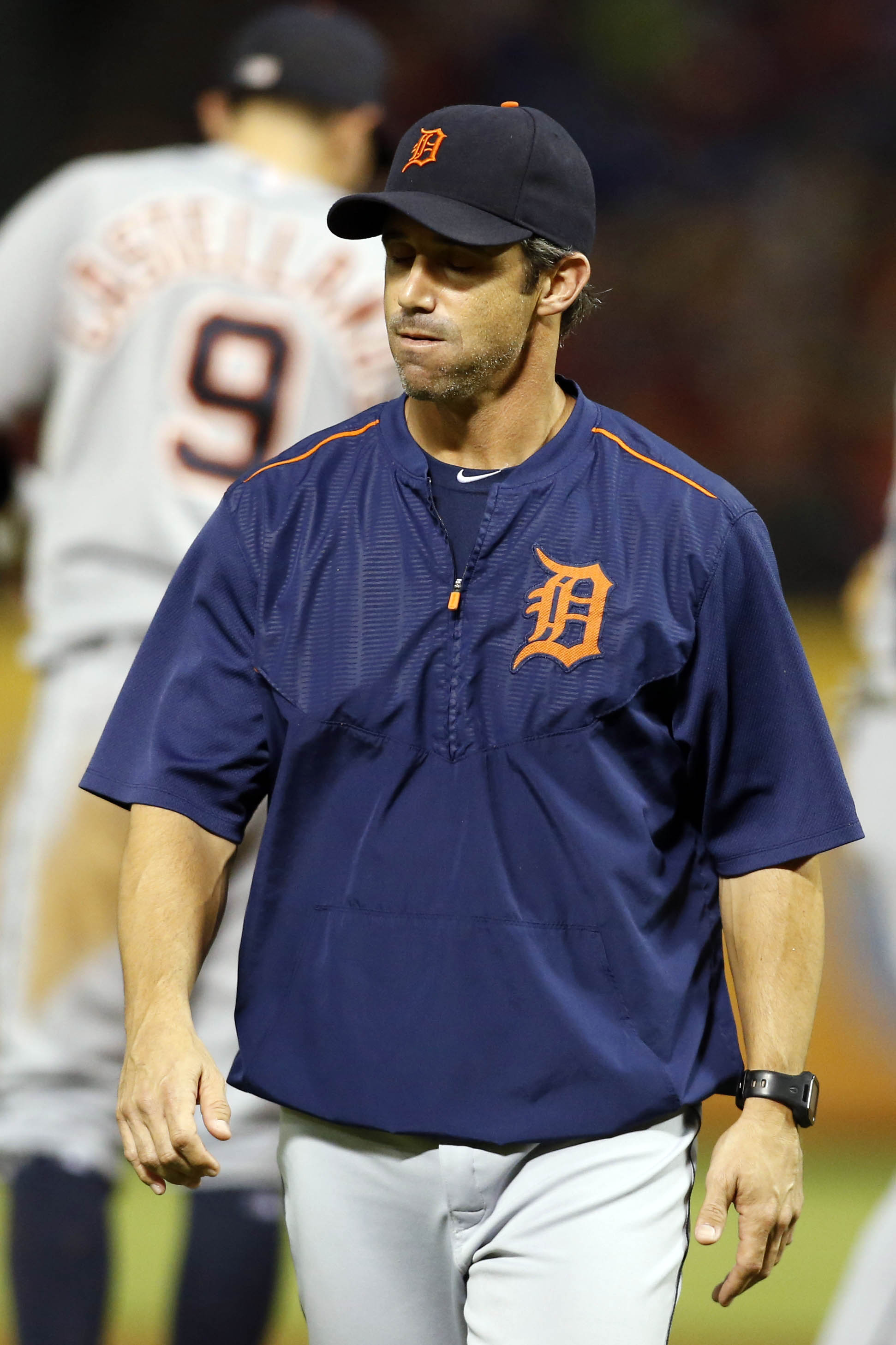
If the Tigers’ major additions took you somewhat by surprise this offseason, then you weren’t alone. Detroit manager Brad Ausmus didn’t necessarily expect things to work out this way, either.
“I knew what the plan was. It’s a lot easier to make a plan than it is to execute a plan,” Ausmus told MLBTR and other reporters on Tuesday morning at Joker Marchant Stadium. “I knew that we were going to be aggressive in terms of trying to sign free agents, but we were probably much more successful in doing it than I would have anticipated. It’s easy to talk about, it’s much more difficult to follow through on. But, it worked well.”
Ausmus addressed reporters outside of the clubhouse where players were having a private union meeting. With the MLBPA on-hand, the Collective Bargaining Agreement was fresh on everyone’s minds. One of the key issues in the next round of CBA talks is expected to be the Qualifying Offer system and the union is expected to fight for an overhaul given how it has negatively impacted several notable players.
During his playing days, Ausmus served as a union representative, but he could not recall what year he was serving in that capacity or whether he added much in MLBPA meetings. The former catcher says he was mostly an observer in “the back of the room” during some of the more substantive discussions taking place in the early 90s. In 2016, six years removed from playing in the majors, he’s not terribly interested in offering up his opinion on the QO. Still, he had to concede that the oft-criticized system helped lead one of the offseason’s top position players to Detroit.
“It might have helped us in the sense that [Justin Upton] was still out there in late January. Without the [draft pick] compensation system, I guess there may have been more teams that would have been involved earlier.”
Photo courtesy of USA Today Sports Images.