
Players That Could Move To The 60-Day IL Once Spring Training Begins
Just about every baseball team has a full 40-man roster now, with the Astros the only team with an open spot at the moment. That means that just about every transaction, be it a free agent signing or a waiver claim, requires a corresponding move.
However, that could soon change as the injured list is coming back soon. There’s no IL from the end of a season until pitchers and catchers report to Spring Training for the next campaign, which they will do next week. That means some clubs could potentially gain a bit of extra roster flexibility at that time, since players on the 60-day IL don’t count against a team’s roster total. However, it’s worth pointing out that the “60 days” don’t start until Opening Day, which is March 30 this year. That means, though a team can transfer a player to the 60-day IL next week, they will likely only do so if they aren’t expecting the player back until end of May or later.
With some notable free agents still unsigned like Jurickson Profar, Andrew Chafin, Michael Wacha, Elvis Andrus and many others, it’s possible that teams interested in their services might try to hold off on getting a deal done until next week. Or perhaps clubs that have players they would like to sneak through waivers will try to do so now, before rival clubs gain that extra roster flexibility with the IL opening up. Then again, some clubs will need to keep in mind non-roster players they are planning to promote by Opening Day and might hold off on making a move until that time.
Here are some players who are expected to miss some significant time and could find themselves transferred soon, sorted by division.
AL East
The Blue Jays have a pair of pitchers on their 40-man roster who are returning from Tommy John surgery. They should be on a similar timeline, as they each underwent the procedure in June of last year, though Green will most likely return first since relievers generally require less time to build up arm strength compared to starters. Regardless, the recovery time period for TJS is about 12-18 months, meaning neither pitcher is likely to return until midseason at the earliest. Ryu recently said he was targeting a July return.
The Red Sox shortstop recently underwent an internal brace procedure on his throwing elbow, a similar operation to Tommy John. Though he’s confident he’ll return at some point, he’s slated to miss most of the upcoming season and is certainly headed for the injured list.
The Orioles lefty underwent Tommy John surgery in late of April of 2022. With the 12-18 month recovery window for TJS, he could theoretically return in the first couple of months of the season, so the O’s may not want to transfer him to the injured list until they have some clarity about his timeline.
Scott Effross/Luis Gil/Frankie Montas
Effross is a lock for the Yankees‘ injured list as he underwent Tommy John in October and will likely miss the entire 2023 campaign. Gil had the same surgery but in May, which means he’ll likely be out until midseason. The situation with Montas is a bit less clear, as he’s dealing with shoulder inflammation that is expected to keep him out for the first month of the season. Unless he suffers some sort of setback, he probably won’t be placed on the 60-day IL right away.
The Rays have a couple of hurlers bound for the IL as Baz underwent Tommy John in September while Kittredge had the same surgery in June. They’re both going to miss the first half of the year, with Baz potentially missing the entire season.
AL Central
Mize underwent Tommy John surgery in June and should be placed on the Tigers‘ IL at some point. Skubal’s case is a bit less certain after he underwent flexor tendon surgery in August. The club hasn’t provided a timeline for his recovery but some recent comparables can give us some idea. Danny Duffy underwent the procedure in October of 2021 and was hoping to return by June of 2022, though a setback prevented him from pitching at all on the year. Matthew Boyd went under the knife for flexor tendon surgery in September of 2021 and didn’t return to a big league mound until September of 2022.
Crochet of the White Sox underwent Tommy John surgery in April of last year but was already stretched out to throwing from 120 feet in November. Whether he’s able to return in the early parts of 2023 or not will depend on his continued progression in that recovery process. In a less conventional situation, Liam Hendriks announced last month that he’s beginning treatment for non-Hodgkin’s lymphoma. It’s unknown how long his treatment will take but general manager Rick Hahn said they don’t expect updates “prior to Opening Day at the very earliest.”
Paddack was recently extended by the Twins though he underwent Tommy John in May of last year and likely won’t be ready to return until the middle of the upcoming campaign. Lewis tore the anterior cruciate ligament in his right knee in June of last year, the second year in a row that he suffered that unfortunate injury. At the time, his recovery timeline was estimated at 12 months, which likely puts him on the shelf until midseason as well.
AL West
It was reported last month that the Rangers lefty will require shoulder surgery. It was said that the timeline will become more clear in the aftermath of the procedure but he’s likely to miss the entirety of the upcoming season.
NL East
The Phillies superstar underwent Tommy John surgery in November and the club has announced they expect him to be out of action until around the All-Star break in July.
Both these Braves pitchers underwent Tommy John last year, with Ynoa going under the knife in September and Matzek in October. That makes them both long shots for appearing at all this year, but especially not in the first half.
Max Meyer/Anthony Bender/Sixto Sanchez
The Marlins have a couple of arms that will certainly miss time this year and one more that’s a wild card. Meyer and Bender both underwent Tommy John in August and will miss most of the upcoming campaign. Sanchez underwent arthroscopic shoulder surgery in October with the club announcing at that time they expected him back by spring. It was reported last month that Sanchez is already throwing bullpens, which perhaps points against an IL stint. However, after the shoulder issues completely wiped out his 2021 and 2022 seasons, it’s hard to know how much to rely on his health going forward.
The Mets signed Mendick after he was non-tendered by the White Sox. The infielder/outfielder tore the anterior cruciate ligament in his right knee in June of last year and missed the second half of the season. There haven’t been any updates on his status recently, but further clarity will likely come when camp gets rolling.
Tanner Rainey/Stephen Strasburg
The Nationals have one fairly straightforward case in Tanner Rainey, who underwent Tommy John in August and will likely miss most of the upcoming season. What’s less clear is the situation surrounding Strasburg, who’s hardly pitched at all over the past three years due to thoracic outlet syndrome and various issues seemingly related to that. He made one appearance in the big leagues last year, pitching 4 2/3 in one start in June but went on the IL right after and never returned. He spoke about the issue in September, saying he hadn’t thrown in months and that he is “not really sure what the future holds.”
NL Central
Ethan Roberts/Codi Heuer/Kyle Hendricks
Roberts underwent Tommy John in June and likely won’t be available for the Cubs until midseason. Heuer had TJS in March but the latest reporting suggests he won’t return until June or July. The status of Hendricks is less clear, with the righty trying to recover from a capsular tear in his shoulder. The club is hoping to have him back by Opening Day but also said they won’t rush him. He recently said that he’s expecting to be on a mound by March 1.
Vladimir Gutierrez/Tejay Antone
Gutierrez, a Reds righty, underwent Tommy John in July and should miss the first few months of the upcoming season at least. Antone was rehabbing from a Tommy John of his own when he suffered a flexor strain in his forearm. He announced today he’s received a platelet-rich plasma injection to treat the issue and suggested he might miss the first half of the season.
The Pirates right-hander required Tommy John in June and will miss the first half of the upcoming campaign.
NL West
Antonio Senzatela/Tyler Kinley
The Rockies have a couple of murky situations on their hands with these hurlers. Senzatela tore the anterior cruciate ligament in his left knee last year and required surgery in August. The timeline at that point was given at 6-8 months, which would place his return somewhere in the February-April window. Whether he’ll require a lengthy IL stint will depend on if his recovery is still on that track. Kinley was diagnosed with an elbow strain and a flexor tear in his forearm in June of last year. He underwent surgery in July with the club announcing they expected him to miss one calendar year, which should prevent him from pitching early in the campaign.
Walker Buehler/Blake Treinen/J.P. Feyereisen
The Dodgers have a trio of pitchers that are likely to miss most or perhaps all of the upcoming season. Buehler required Tommy John in August and could potentially return very late in the year. Treinen underwent shoulder surgery in November with an estimated recovery time of 10 months. Feyereisen underwent shoulder surgery in December and won’t be able to begin throwing until four months after that procedure, or around April. His eventual return to game shape will depend on how long it takes him to progress from simply throwing to getting up to full game speed.
The Giants signed the right-hander in free agency, despite Jackson undergoing Tommy John in April. President of baseball operations Farhan Zaidi told reporters last month that there was a chance Jackson begins the year on the 60-day IL, though that doesn’t seem to indicate any kind of setback. “He’s doing great in his rehab, so we’re going to wait and see how he’s doing in spring training,” Zaidi said.
Marlins, Jon Berti Avoid Arbitration
10:44pm: Berti’s deal guarantees him $2.125MM — taking the form of a $2.1MM salary for the upcoming season and at least a $25K buyout on the 2024 option, reports MLBTR’s Steve Adams (Twitter link). The option has a $3.5MM base value and can escalate as high as $4.125MM depending on his plate appearance total for the upcoming campaign.
8:40pm: The Marlins announced they’ve avoided arbitration with Jon Berti on a one-year contract with a team option covering the 2024 season. The deal does not have any impact on Miami’s window of club control. Berti is represented by the Ball Players Agency.
Berti is wrapping up his fourth season in Miami. The speedy utility player had the best year of his career in 2022, stealing 41 bases to lead all major leaguers. That he managed to lead the league in any noteworthy counting stat is remarkable, considering he only played in 102 games. That was due both to inconsistent playing time early in the year and a left groin strain that cost him a month of action between August and September.
The 33-year-old’s profile is built around his elite baserunning and the ability to handle multiple positions on defense. Berti started games at the three infield positions to the left of first base and in both left and center field. The bulk of his playing time came at second and third base, while he eventually carved out a top-of-the-lineup spot by season’s end.
Berti hit .240/.324/.348 with four home runs through a personal-high 404 plate appearances. He walked at a strong 10.4% clip against an average 22% strikeout rate. The former 18th-round selection has never had much power, as he owns just 16 homers through 303 career big league contests.
Miami has revamped its infield this offseason. Jean Segura — another right-handed contact hitter/speedster — signed a two-year deal to man third base. Miami acquired Luis Arraez to play second base, thereby pushing Jazz Chisholm Jr. into center field. With Joey Wendle set to man shortstop on most days, Berti looks headed for a multi-positional role off the bench. His defensive flexibility gives him the ability to cover anywhere on the infield if injuries necessitate, while first-year manager Skip Schumaker figures to deploy him fairly frequently as a pinch-runner in games which he doesn’t start.
Berti has between three and four years of major league service. He first qualified for early arbitration last winter as a Super Two player, settling for $1.2MM. This year’s salary has not yet been reported, though it’ll land somewhere between Miami’s $1.9MM filing figure and his camp’s desired $2.3MM salary. He’ll remain eligible for arbitration through the end of the 2025 season. That’s true regardless of whether Miami exercises next year’s option, as the team could decline the option while still deciding to tender him an arbitration contract (as they did in a similar case with Wendle this offseason).
The agreement wraps up the Marlins’ arbitration business. Two players who did go to a hearing with the club — Arraez and left-hander Jesús Luzardo — both prevailed over the team. They’ll avoid that possibility with Berti, the only other player on the roster who hadn’t agreed to terms by last month’s deadline to exchange filing figures.
Marlins Sign Johan Quezada To Minor League Deal
The Marlins have signed reliever Johan Quezada to a minor league deal, according to his transactions tracker at MLB.com. The right-hander will presumably receive an invitation to major league Spring Training.
Quezada, 28, began his professional career in the Twins organization in 2013 after signing as an international amateur. By the end of 2019, he had yet to reach Double-A or rack up significant innings, thanks largely to injuries. He reached minor league free agency and signed a minor league deal with the Marlins going into 2020. The Fish selected him to the big league roster in September and let him toss three innings over three appearances, allowing three earned runs in that time.
He then went to the Phillies on a waiver claim in the offseason but was traded to the Cardinals before the 2021 season kicked off. Injuries limited him to just 24 minor league innings that year and a 6.38 ERA. In March of 2022, he was designated for assignment to create room on the roster for Albert Pujols but cleared waivers and stayed in the organization. He tossed 59 2/3 innings in the minors last year with a 4.83 ERA, 26.6% strikeout rate and 13.9% walk rate. His .386 batting average on balls in play and 65.1% strand rate were both on the unfortunate side of average, perhaps indicating he deserved better, with his FIP coming in at 3.88 on the year.
This deal will return Quezada to the only club that he’s pitched for at the major league level. His continued health issues have seemingly hampered his progress at times, but there are intriguing elements to his profile. He’s listed at 6’9″ and 255 lbs, bringing an unusual arm plane for hitters to deal with. It also comes with some power behind it, as Quezada averaged 97 mph on his fastball during his brief MLB showing back in 2020.
The Miami bullpen will likely consist of Dylan Floro, Matt Barnes, Tanner Scott, Steven Okert, JT Chargois, Tommy Nance, Andrew Nardi, Huascar Brazobán and Rule 5 draftee Nic Enright. There are various depth options on the 40-man roster such as Sean Reynolds, Eli Villalobos, Josh Simpson and George Soriano, though they were all just added prior to the most recent Rule 5 and have no major league experience yet.
If Quezada can crack Miami’s roster at any point, he still has a couple of option years remaining and just a few weeks of MLB service time. That means he could potentially serve as an affordable and optionable depth arm for the foreseeable future.
Big Hype Prospects: Cowser, Bleday, Alvarez, Outman, Steer
Pitchers and catchers report in 10 days, at which point we’ll have more to discuss in virtually every facet of the sport. Until then, let’s review more prospects tangentially connected to the news. Today’s episode coincidentally includes a number of left-handed hitters with holes in their swing.
Five BHPs In The News
Colton Cowser, 22, OF, BAL (AAA)
(A+/AA/AAA) 626 PA, 19 HR, 18 SB, .278/.406/.469
In a recent radio spot, Orioles general manager Mike Elias indicated a belief Cowser will debut later this season. A recent review of the Baltimore farm system published by FanGraphs’ Eric Longenhagen offers modest cause for concern. There are now questions about Cowser’s ability to perform against low-in-the-zone breaking balls and inside fastballs. Those are two very large holes for a big league hitter, indicating Cowser might require a carefully managed role once he is promoted. The lower-half stiffness noted by Longenhagen is a new issue and might relate to the workload Cowser shouldered last season. In order to improve and adjust, Cowser could require a long stint in Triple-A.
JJ Bleday, 25, OF, MIA (MLB)
(MLB) 238 PA, 5 HR, 4 SB, .167/.277/.309
The left-handed hitting slugger has two massive issues to overcome – a weakness against up-and-away fastballs and a pulled, fly-ball-oriented approach lacking in high-quality exit velocities. Both issues were on full display in Bleday’s first season, and he has used up his rookie eligibility. Bleday is currently expected to compete with Jesus Sanchez and Bryan De La Cruz for playing time in left field. Unless he improves upon both shortcomings, the former fourth-overall pick will be limited to heavily scripted usage against right-handed sinkerballers. Achieving such an adjustment will likely require a new swing and a return to Triple-A to digest the changes.
Francisco Alvarez, 21, C, NYM (MLB)
(AA/AAA) 411 PA, 27 HR, .260/.374/.511
A burly backstop who frequently draws hitting comps to Salvador Perez, Alvarez will need to play his way onto an Opening Day roster that already includes catchers Omar Narvaez and Tomas Nido. While neither player is expected to block Alvarez, he also has a second pathway onto the roster – designated hitter. As we learned yesterday, the Mets are carrying a veteran tandem of Daniel Vogelbach, Darin Ruf, and Tommy Pham in part to leave a door open for Alvarez and Brett Baty (covered last week) to get at-bats as part of the revolving door at DH.
As a hitter, Alvarez appears primed for the Show. There is near-term concern about his rate of contact and occasional lapses into over-selectivity. Even so, these are small issues to polish rather than fatal flaws.
James Outman, 25, OF, LAD (MLB)
(AA/AAA) 559 PA, 31 HR, 13 SB, .294/.393/.586
Although the Dodgers have made peace with crossing the first luxury tax threshold, they’ve done little to fortify their left field mix. Outman will compete with the likes of Chris Taylor and Jason Heyward for a regular role this spring. Outman’s approach could serve as a roadmap for Bleday. The left-handed hitting Outman makes frequently pulled, fly ball contact, but he isn’t nearly as extreme as the similarly built Marlins outfielder. Outman also consistently delivers line drives which allows him to post above-average BABIPs. Toss in above-average plate discipline, and he has a chance to hit for average, OBP, and power despite expectations of a 30 percent strikeout rate.
Spencer Steer, 25, 3B, CIN (MLB)
(AA/AAA) 427 PA, 23 HR, 4 SB, .274/.364/.515
Acquired as part of the return in the Tyler Mahle trade, Steer looks the part of a future second-division starter or frequently-used utility man. The Reds are in a year of transition with Steer eyeing a role as the regular third baseman. Long-term, he’ll need to contend with the likes of Elly De La Cruz, Edwin Arroyo, Noelvi Marte, and Matt McLain – whichever among those doesn’t take over at shortstop. Steer is considered a well-rounded hitter with a feel for contact, above-average plate discipline, and an ability to pop mistakes. The cozy confines of Great American Ballpark should help his power production. One question he’ll need to answer relates to his consistency of contact quality. In a 108-plate appearance trial last season, Steer posted an 84.7-mph average and 104.4-mph max exit velocity, which were well below Major League average.
Three More
George Valera, CLE (22): After managing a league-average batting line at Triple-A last season, Valera is on pace to debut at some point in 2023. He won’t be making the Opening Day roster due to a recent hamate injury. Such injuries are hard to predict, as the recovery is speedy in some cases, but some players are left with lesser bat control for weeks or months after returning. Occasionally, as with Alex Kirilloff, a secondary issue can linger indefinitely.
Kyle Stowers, BAL (25): Currently in the outfield and designated hitter mix for Baltimore, Stowers has a brief window to cement a role as a righty-masher before a flood of high-ceiling prospects joins the roster. Stowers is patient, strikeout-prone, and powerful, rendering him a Three True Outcomes option. Such hitters are volatile as they’re heavily reliant on hitting home runs at just the right time.
Grayson Rodriguez, BAL (23): General manager Mike Elias reiterated his belief that Rodriguez will make the Opening Day rotation. There’s still the messy part of actually navigating Spring Training, especially since Rodriguez’s stuff had declined at last look, though he was returning from a lat injury at the time. Even the September version of Rodriguez looked like a future rotation mainstay.
Jesus Luzardo Wins Arbitration Hearing Against Marlins
Left-hander Jesus Luzardo has won his arbitration hearing against the Marlins, MLB.com’s Mark Feinsand reports (Twitter link). The arbiter’s ruling means that Luzardo will earn his desired $2.45MM salary in 2023, rather than the Marlins’ submitted figure of $2.1MM.
Luzardo becomes the second Miami player (and the second MVP Sports Group client) to win an arb hearing in as many days, after Luis Arraez was victorious Thursday in his bid to earn a larger salary. Jon Berti is also slated for a hearing in the coming days, unless he and the Marlins agree ahead of time on a contract to avoid arbitration.
This is the first of four trips through the arb process for Luzardo, as a Super Two player. The extra year of arbitration eligibility makes this hearing decision a particularly nice result for Luzardo, since the $2.45MM provides a higher starting platform for his future earnings. Both figures from Luzardo and the Marlins were above the $2MM projection of Matt Swartz’s arbitration model.
One of baseball’s best pitching prospects during his time in the Athletics’ farm system, Luzardo made his MLB debut in 2019, and then finished eighth in AL Rookie Of The Year voting in 2020 when he posted a 4.12 ERA over 59 innings in the shortened season. Just when it seemed like Luzardo was going to be Oakland’s next building block, however, he struggled badly at both the Major League and Triple-A levels in 2021, and also missed time with a fractured pinkie finger.
With the A’s vying for a playoff berth (and facing an imminent fire sale that offseason), Luzardo was dealt to the Marlins in a one-for-one trade for Starling Marte at the deadline. As well as Marte played in his brief time in Oakland, it wasn’t enough to get the Athletics into the postseason, while the Marlins picked up a controllable and talented arm who already looks to have benefited from the change of scenery.
Luzardo didn’t pitch well for Miami during the remainder of the 2021 campaign, but then posted a 3.32 ERA and a strong 30% strikeout rate over 100 1/3 innings in his first full season as a Marlin. The southpaw’s 2022 performance wasn’t without some hiccups, however, as his 8.8% walk rate was below average and he spent over two months on the 60-day injured list due to a forearm strain. Fortunately, Luzardo returned from that worrisome injury in good form, posting a 3.03 ERA over his final 12 starts and 71 1/3 innings of the season.
Some more trade rumors swirled around Luzardo this winter, as the Marlins were openly looking to move one of their starters (except Sandy Alcantara or top prospect Eury Perez) in exchange for a hitting upgrade. Luzardo was reportedly floated to the Mets in a possible offer involving Brett Baty, though ultimately, Pablo Lopez ended up being the starter on the move, as Miami sent Lopez to the Twins as part of the four-player trade that brought Arraez onto the roster. With Lopez now gone, the Marlins are counting on Luzardo to take another step forward, and perhaps even establish himself as the rotation’s number two pitcher.
Latest On Pirates, Bryan Reynolds
Perhaps the biggest offseason storyline in Pittsburgh has been the saga involving center fielder Bryan Reynolds. The All-Star outfielder requested a trade after extension talks between his camp and the Bucs fizzled out in December. Reports suggested the Pirates had offered more than the $70MM they guaranteed Ke’Bryan Hayes but the specific numbers under discussion had been unclear.
Jon Heyman of the New York Post now reports Pittsburgh had put forth a six-year offer that would’ve guaranteed $76MM. Jason Mackey of the Pittsburgh Post-Gazette reported last month the sides had been roughly $50MM apart in negotiations, suggesting Reynolds’ camp was seeking somewhere around $126MM.
The 28-year-old Reynolds has between three and four years of big league service. He’s set to make $6.75MM for the upcoming season and will be eligible for arbitration twice more before qualifying for free agency after the 2025 campaign. Sean Murphy, who’s also 28 and in the same service bucket, inked a six-year, $73MM extension with the Braves in December. Pittsburgh’s offer was right in that range, making for an interesting comparison point.
It’s fair to debate which of Murphy or Reynolds is the better player. The Atlanta catcher is coming off a .250/.332/.426 line in a pitcher-friendly environment in Oakland. That brought his career line up to .236/.326/.429 in 1260 plate appearances, offense that’s 16 percentage points above league average as measured by wRC+. Reynolds is a better hitter, owning a career .281/.361/.481 line that rates as 26 points above average. He’s coming off a .262/.345/.461 showing in 2022.
That said, Murphy has the edge on the other side of the ball. He’s among the game’s top few defensive catchers, with two-way production at the position that’s among the best in the league. Reynolds also plays up the middle but rated as a below-average center fielder last season. He’s capable of playing center and likely would be a plus defender in the corner outfield, but that’s less valuable than elite defense behind the dish.
Given the terms of the Murphy extension, Pittsburgh’s reported offer to Reynolds is defensible. Yet Reynolds had an edge over Murphy in earning power during their arbitration seasons, with Murphy’s originally projected $3.5MM arb salary for 2023 more than $3MM below what Reynolds will make. That difference — attributable both to Reynolds’ gaudier offensive counting stats and qualification for early arbitration last offseason as a Super Two player — would’ve likely held or compounded over the next two years if both players had gone year-by-year through that process. That’s because a player’s arbitration salaries are generally designed to escalate relative to the prior year’s figure.
Freddie Freeman holds the record for the largest extension among players in the 3-4 year service bucket. The first baseman signed an eight-year, $135MM pact with the Braves nine years ago. Whether Reynolds’ camp was seeking to beat that number or merely approach it isn’t clear, though the reported gap in negotiations suggestions they were well closer to that figure than to the $76MM the Pirates had put on the table. While Reynolds’ camp could argue that’s a dated precedent, Freeman represented a safer long-term bet than Reynolds does. Freeman was nearly four years younger at the time of his deal and coming off a .319/.396/.501 showing in 2013 that rivals Reynolds’ career-best season (.302/.390/.522) from 2021.
Once Reynolds rejected the Bucs’ offer and registered his trade request, most public attention turned to the possibility of him changing teams. However, Heyman writes Pittsburgh continues to have interest in negotiating an extension. There’s no indication of any plans to reopen talks, nor is it known if Reynolds’ camp would even be open to doing so at this point, but the team’s continued desire for a long-term deal supports the numerous reports of an astronomical ask from other teams in trade discussions.
The Rangers, Marlins, Yankees, Rockies, Braves and Red Sox have all been at least loosely linked to Reynolds at points this offseason. All six of those clubs still has some level of uncertainty in its outfield. Heyman writes Miami, in particular, has been among the most aggressive suitors — the continuation of longstanding interest on the Fish’s part that dates back at least to last winter.
The Marlins are planning to move Jazz Chisholm Jr. to center field after acquiring Luis Arraez to man second base. That could diminish any desire to meet Pittsburgh’s ask, though there’s still room to upgrade a left field mix likely to consist of some combination of Jesús Sánchez, Bryan De La Cruz and JJ Bleday. A Reynolds trade this offseason still appears a long shot, however, with no indication the Pirates plan to lower their demands as the start of Spring Training approaches.
Luis Arraez Wins Arbitration Hearing Against Marlins
Newly acquired infielder Luis Arraez has won an arbitration hearing against the Marlins, reports Mark Feinsand of MLB.com. The MVP Sports Group client will be paid $6.1MM rather than the $5MM figure originally submitted by his now-former team, the Twins.
Miami acquired Arraez, 25, in the trade that sent right-hander Pablo Lopez, top prospect Jose Salas and minor league outfielder Byron Chourio to Minnesota last month. His win in arb hearing comes on the heels of a .316/.375/.420 batting line that netted him an American League batting title in 2022. Arraez notched career-highs in games played (144), plate appearances (603), doubles (31) and homers (8) this past season.
All of that surely factored into his win over his new team, and he’ll now receive a 187% raise over last year’s $2.125MM salary. This was the infielder’s second trip through arbitration as a Super Two player, and he’ll be arbitration-eligible two more times before reaching free agency after the 2025 season.
The Marlins acquired Arraez in something of a high-risk gambit, hoping that his improved offense will offset the inherent defensive downgrade of swapping him in at second base and moving Jazz Chisholm Jr. to center field. That’s not to suggest Chisholm can’t be a solid center field — he certainly has the tools and athleticism to handle the position — but he’s been a plus defender at second base in his career while Arraez has been below-average. And, Chisholm will now have to learn a new position on the fly. It’s a move that carries risk, but there’s no denying that Miami’s lineup looks deeper with Arraez hitting at or near the top than it did previously.
With Arraez’s salary now set, the Marlins project for a payroll in the roughly $103MM range, per Roster Resource. That still has a bit of room to change even without further additions, as the Fish still have two pending arbitration cases. Utilityman Jon Berti and left-hander Jesus Luzardo both exchanged figures with the club. Berti filed a $2.3MM figure to the team’s $1.9MM submission, while Luzardo came in at $2.45MM to the Marlins’ $2.1MM. Those are trivial sums to any team in the grand scheme of things, but as we’ve explored at MLBTR in the past, the battle over those sums is more about managing salaries years down the road — even for future classes of players, as arbitration is a precedent-based system — rather than present-day savings.
Red Sox, Marlins Swap Matt Barnes For Richard Bleier
The Red Sox and Marlins swapped relievers Monday afternoon, with righty Matt Barnes dealt to Miami for southpaw Richard Bleier. Boston is also reportedly sending a little more than $5.5MM in cash in the deal to make the transaction nearly cash-neutral.
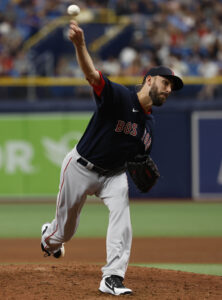
Barnes, 32, was designated for assignment by the Red Sox last week following the completion of a one-year, $7MM agreement with outfielder Adam Duvall. He served as Boston’s primary closer in 2021, earning a team-leading 24 saves. The 2021 campaign, however, was something of a tale of two seasons for Barnes. He dominated to the tune of a 2.25 ERA and a 42% strikeout rate through Aug. 4. Barnes was impressive enough that the Sox inked him to a two-year, $18.75MM extension in early July.
Over the final two months of the 2022 season, however, Barnes not only struggled but melted down in catastrophic fashion. He pitched just 10 2/3 innings from Aug. 5 onward, yielding a dozen runs on 17 hits and nine walks with 16 strikeouts along the way. It was a calamitous end to a what had begun as one of the best seasons among all Major League relievers.
Barnes hoped to right the ship in 2022 but promptly lost the closer’s job early in the year when he stumbled to a 7.94 ERA through the end of May. The right-hander was always going to be much lower among the team’s high-leverage considerations in 2023, following the December additions of Kenley Jansen and Chris Martin — a pair of moves that was in large part necessitated by Barnes’ struggles.
Nonetheless, it’s worth pointing out that Barnes finished on a high note that likely intrigued Miami and other clubs. He was on the injured list from early June through early August due to shoulder inflammation, and upon returning, he looked much more like the Barnes of old. Beginning on Aug. 4 — the same point at which he began to struggle a year prior — Barnes pitched 22 2/3 innings of 1.59 ERA ball and picked up four saves. His 21.1% strikeout rate was half that of his dominant 2021 form, but it was still an encouraging note on which to end the season.
Barnes might eventually get a fresh chance to carve out some save opportunities in Miami, though Dylan Floro is the current projected frontrunner for that gig. Floro worked to a 3.02 ERA across 53 2/3 innings with the Marlins in 2022, and he has successfully converted 25 save attempts over the last two years. Barnes tallied only eight saves in 2022 and finished with a 4.31 ERA in 39 2/3 frames. He’ll add quite a bit more bat-missing potential to a team that ranked 13th among MLB clubs with a 24% strikeout rate from its relief corps in 2022, though the downside is obvious.
Bleier, meanwhile, can fill the Sox’s need for left-handed bullpen help, even as he enters his age-36 season. The veteran southpaw has registered a 3.09 ERA in 125 1/3 innings since the beginning of 2020, and he’s held left-handed batters to a .225/.260/.313 slash line since he first reached the major leagues with the Yankees in 2016. Boston traded lefty Josh Taylor to the Royals in exchange for Adalberto Mondesi, sent veteran Jake Diekman (signed through 2023) to the White Sox at last year’s trade deadline and lost Darwinzon Hernandez to the Orioles via waivers earlier this offseason — all of which had thinned out the team’s left-handed depth in the ‘pen.
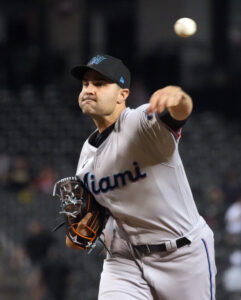
They’ll get some quality left-handed innings out of Bleier, although despite his strong track record there are some red flags of note. The soft-tossing southpaw has never missed many bats, but last year’s 14.4% strikeout rate was his lowest since 2019. Bleier has, in the past, offset his lack of whiffs with enormous ground-ball rates. However, while last year’s 52.5% mark was strong relative to the league-average, it was nowhere close to the 63.5% career mark he carried into the 2022 season. Bleier has also regularly avoided hard contact, but last year’s 89.6 mph exit velocity and 40.8% hard-hit rate were both his worst showings since the aforementioned 2016 debut.
Barnes will make $7.5MM in 2023 and is due at least a $2.25MM buyout on a 2024 club option valued at $8MM. Bleier is due $3.25MM for the upcoming season and has a $3.75MM club option with a $250K buyout for next year. Barnes is guaranteed $9.75MM from here on out while Bleier will make at least $3.75MM. The Sox are covering the bulk of that $6MM gap with the $5.5MM+ cash consideration.
The Sox will save a minuscule amount of money and bring in a middle reliever with a solid overall track record and some particularly encouraging numbers against fellow lefties — even if Bleier comes with some potential areas of concern. That he can be controlled through 2024 via that affordable $3.75MM option is icing on the cake.
As for the Marlins, they’ll add more late-inning upside to their bullpen with this swap at almost no additional cost. Fans may bristle at shipping out the reliever with better surface-level numbers for what amounts to a Barnes reclamation project, but the Fish are willing to gamble on the younger, harder-throwing Barnes in hopes of unlocking a high-leverage reliever who can be controlled affordably through the 2024 season via that $8MM option. And, if Barnes is indeed able to round back into form, he’ll give Miami an interesting arm to put on the market this summer if they’re decisively out of postseason contention.
Ken Rosenthal of the Athletic first reported the Marlins were acquiring Barnes. Craig Mish of SportsGrid reported that Boston was acquiring Bleier in return. Jordan McPherson of the Herald was first to relay that Miami was receiving cash considerations, which Mish pegged in the $5MM range. Chris Coitllo of MassLive was first to report the cash involved was a little above $5.5MM.
Quick Hits: Stephenson, Meneses, Oakland
Tyler Stephenson was one of the bright spots of a tepid Reds offense that contributed to them finishing 62-100 and securing their first 100-loss season since 1982. The trouble was the Reds only called upon Stephenson in 50 games last year, and getting a full season out of their young catcher will be a huge boost to their lineup in 2023 and beyond.
As Bobby Nightengale of the Cincinnati Enquirer reports, the Reds are looking to utilize Stephenson in 140-150 games in 2023, but the majority of those appearances could come at designated hitter to try and protect his body from the rigors of catching. He did, after all, hit .319/.372/.482 with six home runs across 183 plate appearances so it’s no surprise that the Reds are trying to figure out the best way to get a full season’s worth of that offense.
The Reds have signed Curt Casali and Luke Maile to their roster and plan to carry three catchers throughout 2023, and Nightengale writes that the team could look to use Stephenson as a catcher twice a week, which would equate to 54 games over the course of the season, with Casali and Maile handling the rest.
Here’s some more bits and pieces from around baseball:
- Joey Meneses was a revelation for the rebuilding Nationals in 2022, slashing .324/.367/.563 with 13 home runs over 240 plate appearances in his age-30 rookie campaign. As the Talk Nats podcast revealed, the Nats tried to sign Meneses after the 2019 season but he opted to go to Japan instead. At the time, Japan was likely a far more financially appealing option for Meneses given he would’ve been looking at another minor league deal had he stayed in the States.
- The A’s are planning to use Jesus Aguilar at both first base and designated hitter in 2023, general manager David Forst told reporters, including Martin Gallegos of MLB.com. Aguilar appeared in 63 games at first and 60 at DH last year for the Marlins and Orioles, and it seems likely he’ll have a similar split this year. The 32-year-old had a disappointing 2022, slashing just .235/.281/.379 with 16 home runs over 507 plate appearances. He’d been a productive hitter for a few years prior though, and that was enough for Oakland to give him a one-year, $3MM deal for 2023. The rebuilding A’s will surely be hoping for a rebound at the plate so Aguilar can turn himself into a valuable trade chip at the deadline.
- Sticking with the A’s, and Forst says Paul Blackburn and James Kaprielian have both progressed well in their rehab and should be ready for spring training. “I think it’s reasonable to expect both guys to be ready to go,” Forst said (Twitter link). Both players figure to be part of Oakland’s rotation this year. Blackburn, 29, pitched in 21 games last year and worked to a 4.28 ERA over 111 1/3 innings, striking out batters at a 19.1% clip against a 6.4% walk rate. He was a productive pitcher for the first three months of the season and earned his first All Star game callup. He was shelled for 21 runs over 14 1/3 innings while pitching through pain in his pitching hand before he ultimately went on the injured list. That pain ballooned out his ERA a bit and wound up ending his season, so it’ll be interesting to see if Blackburn can rediscover his early season form in 2023. He’ll earn $1.9MM in his first year of arbitration. Kaprielian threw 134 innings of 4.23 ERA ball in 2022, but underwent shoulder surgery in the off-season to repair his AC joint. His rotation spot is probably a little less secure than Blackburn’s, but the trade of Cole Irvin opens up another spot and if healthy he seems likely to at least start the year in the rotation alongside Blackburn, Drew Rucinski and Shintaro Fujinami.
Marlins Outright Daniel Castano
Left-hander Daniel Castano went unclaimed on waivers and has been assigned outright to Triple-A Jacksonville, the team announced Thursday. Castano, who was designated for assignment to open a roster spot for Johnny Cueto, will be in spring training as a non-roster invitee.
Acquired alongside Sandy Alcantara, Zac Gallen and Magneuris Sierra in the lopsided trade that sent Marcell Ozuna to St. Louis, the now-28-year-old Castano has appeared with the Marlins in each of the past three seasons, pitching to a combined 3.89 ERA over 85 2/3 innings of big league work. However, that ERA has been accompanied by a 12% strikeout rate that ranks as the lowest in MLB dating back to his debut (min. 80 innings pitched).
Castano has strong command, evidenced by a 7.5% walk rate, and he’s avoided hard contact nicely, yielding just an 87.6 mph average exit velocity, a 7% barrel rate and a 35.9% hard-hit rate, per Statcast. Paired with a solid 44.7% ground-ball rate, he’s managed to find some success even in spite of his lack of punchouts — although fielding-independent metrics like FIP (4.86) and SIERA (5.28) feel he’s had his share of good fortune to arrive at that much stronger earned run average.
The addition of Cueto bolstered the Marlins’ rotation depth, although their subsequent trade of Pablo Lopez to the Twins thinned it back out. As such, the Marlins are surely happy to keep Castano in the organization. If he doesn’t earn a spot on the big league roster this spring, he’ll head to Jacksonville and give the club some experienced depth to call on in the event of an injury. While in Triple-A, he can continue to hone the new cutter that he debuted in 2022 — a pitch that emerged as his primary offering this past season. Castano found good success with the pitch in the minors (26.4% strikeout rate), but those new missed bats didn’t carry over to the MLB level for him this past season (12.8% strikeout rate).