MLBTR Originals
A roundup of MLBTR’s original content from the past week:
- With the regular season approaching, Tim Dierkes released his first free agent power rankings of 2017. Tim’s list consists of the 10 players who appear poised to earn the most money if they reach the open market next winter. Aces Jake Arrieta, Yu Darvish, Johnny Cueto and Masahiro Tanaka are among the group, leading Jeff Todd to poll readers on which of the four will end up as the No. 1 free agent in next offseason’s class.
- Comically gifted Brewers right-hander Tim Dillard revealed what goes on inside the mind of a veteran reliever during spring training. A sampling of his inner monologue: “Today, in-between spring training activities, I made time to share some of my baseball knowledge and wisdom with a younger generation of ballplayers. And they found time to remind me that I am still the oldest and most bearded guy in Brewers Minor League camp this year. But in their defense, I did utter these phrases at the field today: “Back in my day.”, and of course, “Not my first rodeo!”’
- Tim Dierkes released his annual list of out-of-options players who are on 40-man rosters.
- This year’s Offseason In Review series continued with looks at the Astros, Braves and Cardinals.
- Finally, Jeff made the case that Royals third baseman Mike Moustakas is facing a make-or-break year.
Offseason In Review: St. Louis Cardinals
This is the latest entry in MLBTR’s Offseason In Review series. The full index of Offseason In Review posts can be found here.
The Cardinals added two top free agents this offseason and said goodbye to some longtime contributors as they tinkered with the core that won them 86 games in 2016.
Major League Signings
- OF Dexter Fowler: five years, $82.5MM
- LHP Brett Cecil: four years, $30.5MM
- Total spend: $113MM
Notable Minor League Signings
- Jose Adolis Garcia, Eric Fryer
Trades And Claims
- Acquired RHP Chris Ellis, RHP John Gant and 2B Luke Dykstra from Braves for LHP Jaime Garcia
- Lost OF Jeremy Hazelbaker on waivers to Diamondbacks
- Lost LHP Tim Cooney on waivers to Indians
Extensions
- RHP Carlos Martinez: five years, $51MM (includes club options for 2022 and 2023)
Notable Losses
- Brandon Moss, Matt Holliday, Garcia, Seth Maness, Brayan Pena
Needs Addressed
The Cardinals ended the 2016 season by parting ways with a longtime star, giving the aging Matt Holliday a $1M buyout rather than exercising a $17MM option. Though he hits capably, the 37-year-old Holliday no longer provided enough offense to offset his salary and health and defensive issues. He headed to the Yankees, who can use him as a DH. The Cardinals also saw the departure of another veteran slugger, Brandon Moss, who didn’t receive a qualifying offer from the club before he ultimately landed with the Royals.
The Cardinals thus set about adding another outfielder who could bump 2016 center fielder Randal Grichuk to a corner. They were linked to a number of high-profile names, including Adam Eaton, Charlie Blackmon, Lorenzo Cain, Jarrod Dyson and Ian Desmond, before ultimately signing Dexter Fowler to a five-year, $82.5MM deal.
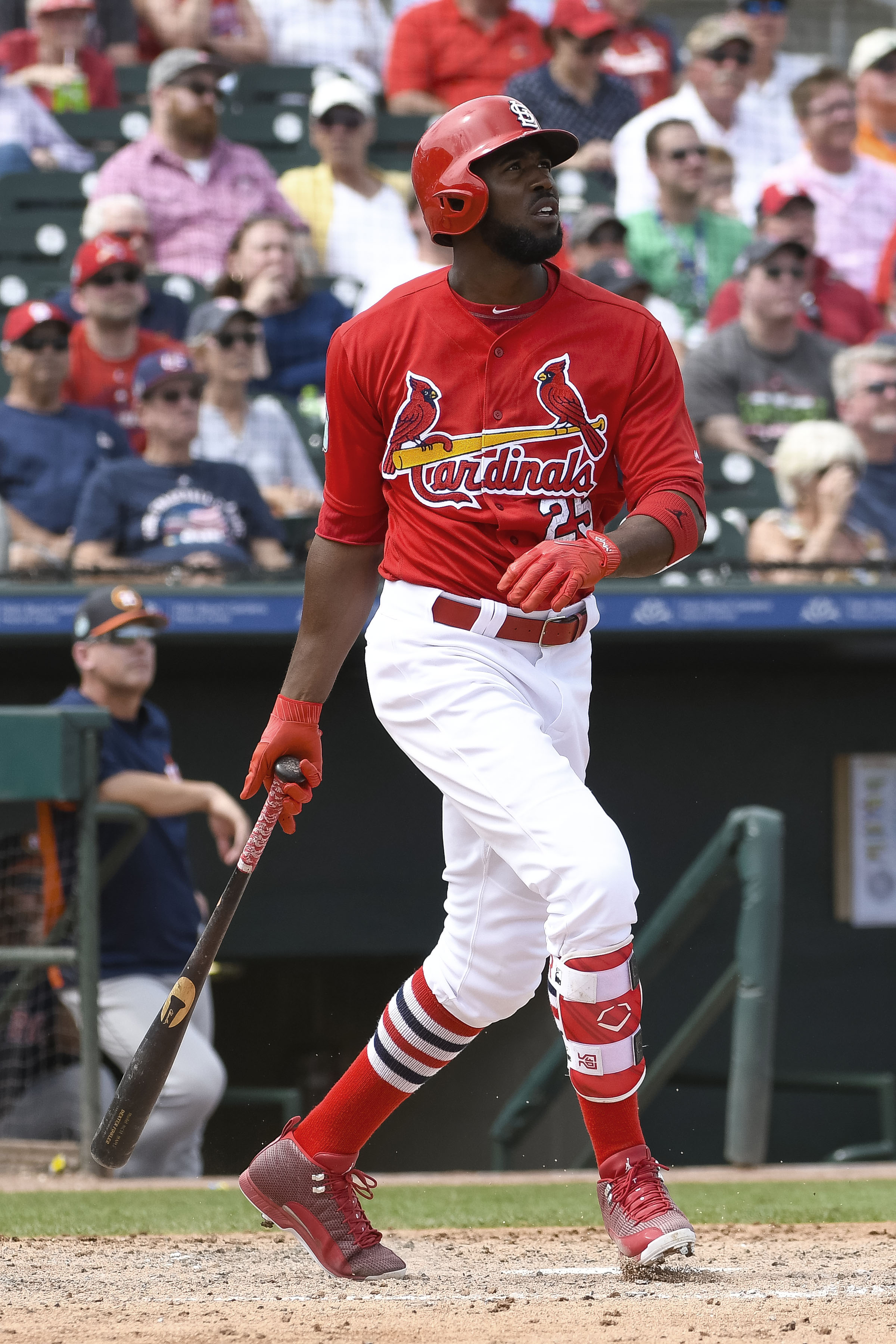 The Cardinals’ seemingly singular focus on finding a center fielder rather than a corner outfielder initially seemed odd, since advanced stats actually identified Grichuk as a better defensive center fielder than Fowler and several of the other rumored options. UZR pegs Grichuk as being a few runs above average in about 1,200 career innings in center field, and Defensive Runs Saved is even more bullish, rating Grichuk as 14 runs above average. Both stats rate Fowler as a hair above average last year, but below average (sometimes significantly so) in the five seasons before that. Fowler will also be 31 later this month, and though his athleticism makes him likely to age relatively gracefully, his defense seems unlikely to improve as he ages and slows. The Cards reached agreement with Fowler during the Winter Meetings — relatively early in the offseason, and significantly before most of the other outfield bats signed. They also paid almost $20MM more for him than MLBTR projected he’d receive. One wonders whether they might have gotten better value had they kept Grichuk in center and signed one of the many cheaply available sluggers to join him and Stephen Piscotty in their outfield.
There was also another cost to signing Fowler, in that the Cardinals forfeited their top 2017 draft pick, No. 19 overall, to complete the signing. That loss will hurt, particularly since the team also lost its next two picks (Nos. 56 and 75) as part of its penalty for its role in the Astros hacking scandal.
Perhaps that’s overthinking it, however. The only free agent outfielder who compared favorably to Fowler in overall value was Yoenis Cespedes, who was already off the market by the time the Cards landed their man. Unlike some of the defensively challenged sluggers who languished on the free agent market, Fowler’s well-rounded game insures him somewhat against decline. At least in the short term, he should upgrade the Cardinals’ offense with his on-base ability and their defense by virtue of being significantly better than players like Holliday or Moss. And, of course, in signing Fowler, the Cardinals lured a talented player away from the rival Cubs, who replaced him with the much less costly Jon Jay.
More analysis after the break …Read more
Make Or Break Year: Mike Moustakas
MLBTR is rebooting its “make or break year” series, in which we analyze players who enter the season with up-and-down track records but also an opportunity to stake a claim to significant future earnings.
There are several “make or break” candidates on this year’s Royals team, with pending free agents Eric Hosmer, Lorenzo Cain, and Alcides Escobar all having much to prove. But there’s as much variance for third baseman Mike Moustakas as there is for any of those other core K.C. players, and he’ll face the added uncertainty of coming back from an ACL tear suffered last May.
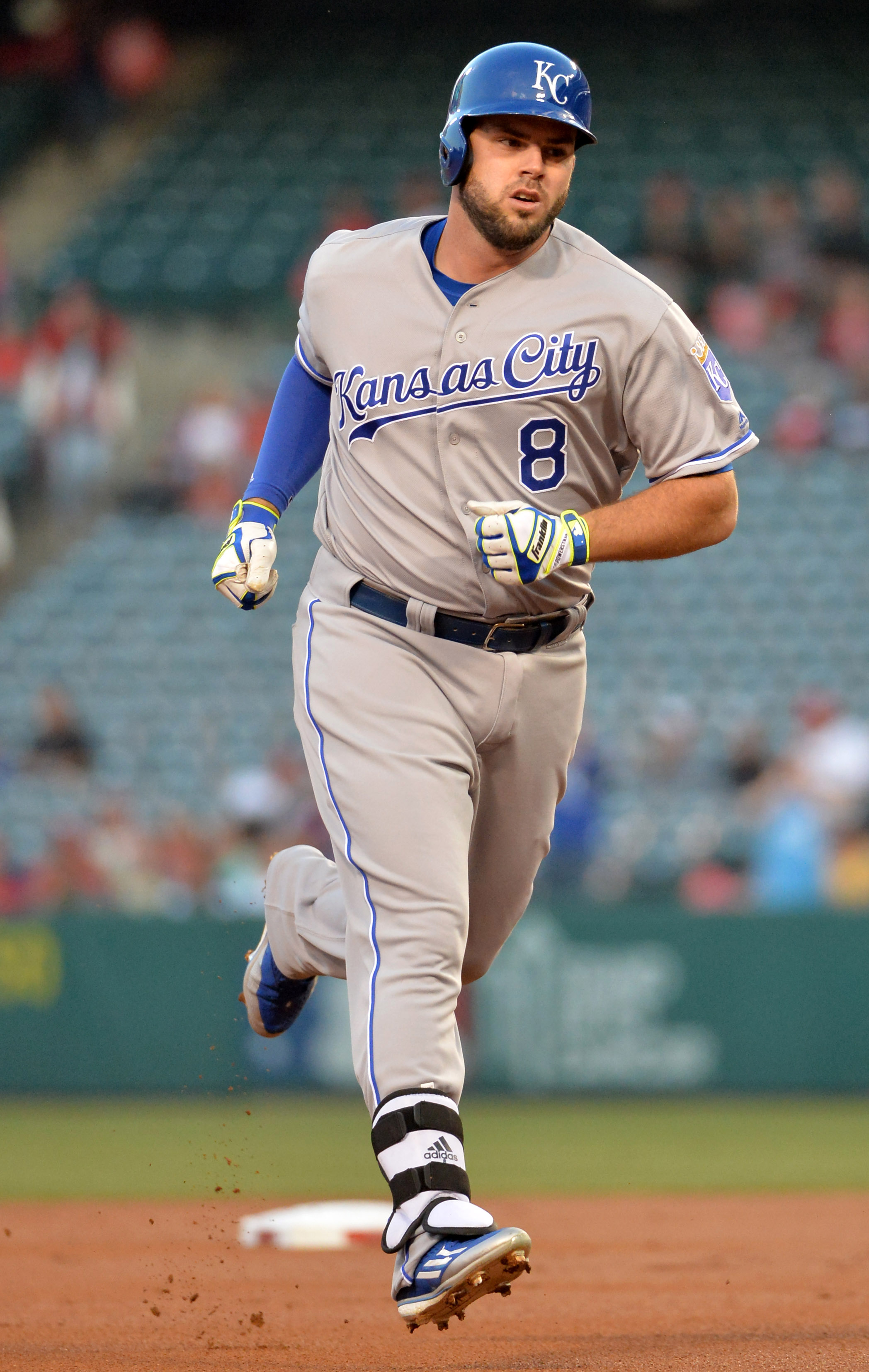
Moustakas, who’ll turn 29 in September, was long viewed as a quality prospect who just hadn’t gained traction in the majors. Through the 2014 season, he had accumulated only a .236/.290/.379 batting line in over 500 games of MLB action. But Moustakas showed life in the 2014 postseason, raising hopes yet again that he’d finally come into his own on the playing field.
As it turned out, that’s just what happened. Moustakas blossomed in the Royals’ 2015 World Series campaign, setting personal-best marks in every triple-slash category (.284/.348/.470) while driving a career-high 22 long balls. And he continued to draw solid ratings for his glovework at the hot corner, leading to a 3.6 fWAR / 4.4 rWAR campaign in which he finally rewarded the organization’s commitment.
Things were off to a rather promising start in 2016, with Moustakas carrying a .240/.301/.500 slash when he hit the operating table. That’s all the more impressive given that he was held back by a .214 BABIP in spite of a 37.4% hard-hit percentage that is better than he’s ever managed over a full season. Plus, Moustakas had tamped down his already excellent strikeout ratio to a personal-low 11.5% level while boosting his walk rate to 8.0%, just below league average. Moustakas was also showing further strides in converting flyballs to home runs, with a 19.4% HR/FB ratio.
All said, the arrow has pointed up for Moustakas ever since he turned things on late in 2014. If he can regain that momentum and prove he’s back to full health, perhaps the missed time won’t prove a major hindrance to his earning power. A big season from Moustakas could leave him targeting something approaching the Pablo Sandoval contract (five years, $95MM), though perhaps only a true breakout campaign would make that achievable. But there’s plenty of earning power downside, too; after all, Moustakas has been a below-average hitter for the bulk of his MLB career, and anything short of a productive campaign might put quite a different spin on his overall track record.
Photo courtesy of USA Today Sports Images.
Offseason In Review: Atlanta Braves
This is the latest entry in MLBTR’s Offseason In Review series. The full index of Offseason In Review posts can be found here.
As they open SunTrust Park for the 2017 season, the Braves have begun to transition toward competitiveness — though they carefully avoided any lengthy veteran entanglements this winter.
Major League Signings
- Bartolo Colon, SP: one year, $12.5MM
- Sean Rodriguez, IF: two years, $11MM
- R.A. Dickey, SP: one year, $8MM
- Kurt Suzuki, C: one year, $1.5MM
- Total spend: $33MM
Trades And Claims
- Acquired SP Jaime Garcia from Cardinals in exchange for INF Luke Dykstra, SP John Gant, SP Chris Ellis
- Acquired 2B Brandon Phillips and $13MM (covers all but $1MM of Phillips’s 2017 salary) from Reds in exchange for RP Andrew McKirahan, RP Carlos Portuondo
- Acquired 2B/OF Micah Johnson from Dodgers for PTBNL or cash
- Acquired RP Luke Jackson from Rangers for RP Brady Feigl, SP Tyrell Jenkins
- Acquired SP Luiz Gohara, RP Thomas Burrows from Mariners for OF Mallex Smith, RP Shae Simmons
- Acquired OF/C Alex Jackson, SP Tyler Pike (as PTBNL) from Mariners for SP Rob Whalen, SP Max Povse
- Claimed RP Kevin Chapman from Astros
- Claimed 1B/OF Adam Walker from Orioles
- Claimed RP Armando Rivero from Cubs in Rule 5 draft
Notable Minor League Signings
- Lane Adams, Andrew Albers, Xavier Avery, Emilio Bonifacio, Blaine Boyer, Rex Brothers, Sanders Commings, John Danks, Joel De La Cruz, David Hale, Sam Freeman, David Freitas, Balbino Fuenmayor, Blake Lalli, Jacob Lindgren, Kris Medlen, Eric O’Flaherty, Danny Reynolds, Matt Tuiasosopo, Colin Walsh
Extensions
- Ender Inciarte, OF: six years, $30.525MM ($9MM club option for 2022; $1.025MM buyout)
- Jim Johnson, RP: two years, $10MM
Notable Losses
- Jed Bradley (claimed), Ellis, Gant, Tuffy Gosewisch (claimed), Williams Perez (released), A.J. Pierzynski, Simmons, Smith, Chris Withrow (non-tendered)
[Braves Depth Chart; Braves Payroll Information]
Needs Addressed
The pace of moves coming from the Atlanta front office remains dizzying. This time around, while there were still many forward-looking transactions, the club increasingly turned its attention to investing in the 2017 roster.
That’s not to say that the Braves went wild in a push to win now; after all, the club won only 68 games in 2016, despite a strong finish. Instead, the vast bulk of the club’s investments in veteran players are of the one-year variety. The club clearly hopes to boost its on-field product with a new park opening while steering clear of the kinds of moves that could hamper more dedicated future efforts at contending.
GM John Coppolella promised that the rotation would be the focus, and he followed through on that early. Atlanta added two of the game’s oldest players, Bartolo Colon and R.A. Dickey, on mid-priced, one-year deals. Talented lefty Jaime Garcia joined the fold, too, in a deal that cost the organization two reasonably promising pitching prospects in John Gant and Chris Ellis.

All said, the rotation promises to be worlds better than the 2016 unit, though it’ll likely be more of a reliably solid unit than any kind of top-tier staff. With the trade rumors in the rear-view — at least until the deadline — top hurler Julio Teheran will look to repeat a strong season. High-octane righty Mike Foltynewicz seems the obvious choice for the fifth spot, and he’ll also seek to build off of the promise he showed in 2016.
The Braves would surely be glad to see that quintet succeed for a full season, though it’s possible to imagine a summer trade if the organization isn’t sticking in the postseason picture. Garcia, in particular, could hold appeal if he performs. Meanwhile, Atlanta will see whether Matt Wisler, Aaron Blair, and Lucas Sims can regain their footing, while veterans such as John Danks, Andrew Albers, and perhaps old favorite Kris Medlen will take up spots in the depth department. Most importantly, perhaps, the club will closely watch the progress of touted arms as Sean Newcomb, Patrick Weigel, Max Fried, Touki Toussaint, Mike Soroka, Kolby Allard, and the newly acquired Luiz Gohara as they plot a course for the future.
Despite all the changes in the rotation, the bullpen largely returns in its 2016 form. Jim Johnson took an extension just before reaching free agency, and he’s expected to handle closing duties. That job could be contested at some point during the year, though, particularly if Arodys Vizcaino can find his form or Mauricio Cabrera proves as overwhelming as his stuff. Josh Collmenter and Ian Krol are back after agreeing to arb deals, while Jose Ramirez also figures to have a spot locked down. Righty Chaz Roe, who showed well (11.7 K/9, 3.2 BB/9, 3.60 ERA) in 20 frames after a mid-season claim, is in the mix too, though he’s struggled badly in Spring Training thus far. Rounding out the pen may come down to a camp battle involving veteran minor-league signees Eric O’Flaherty, Sam Freeman, Rex Brothers, Blaine Boyer, and perhaps also 40-man members Luke Jackson and Akeel Morris.
The Braves’ most notable moves on the position-player side came at second base. The team thought it had its man in Sean Rodriguez, who got a two-year deal after a career year in Pittsburgh, but a terrifying car crash left him with an injured shoulder and a lengthy rehab timeline. He could miss the majority of the 2017 campaign. That led the Braves to pivot back to Brandon Phillips, who was acquired for a light price and will hold down the fort at second while the team waits for top prospect Ozzie Albies to return from injury, finish his development, and join exciting young shortstop Dansby Swanson in the bigs.
While there was chatter that the Braves would pursue an upgrade behind the dish, the club ultimately passed on free agents such as Matt Wieters, Jason Castro, and the recovering Wilson Ramos. Instead, the club added Kurt Suzuki on a modest pact to join Tyler Flowers in some kind of time share. Anthony Recker remains on hand as a third option, so things are set for the time being. In the long term, though, the catching position remains one of uncertainty.
Questions Remaining
Most of the organization’s notable holes were plugged in some way, as might have been expected. But there’s plenty of variability on this roster, and there are a few areas which remain unsettled as the season draws near.
There was speculation before the offseason that Atlanta might look to upgrade at third base, where the team is set to feature Adonis Garcia. The 31-year-old has shown flashes of ability in his brief time in the majors, but he has yet to show the kind of consistency that warrants regular playing time. Garcia improved with the bat and the glove after a rough first half in 2016, though he still ended the year with a below-average .273/.311/.406 batting line and negative grades on the bases and in the field.
To be fair, parting with significant resources to add a player such as Todd Frazier (via trade) or Justin Turner (through free agency) probably wasn’t sensible from a long-term perspective. And it’s certainly possible that Atlanta foresaw a scenario where Rodriguez would have shifted to the hot corner upon the ascension of Albies, or where Garcia would give way to prospect Rio Ruiz. But the Braves could have placed a smaller bet on someone like Luis Valbuena or Trevor Plouffe to bolster the third base situation, so there were alternatives. Whether the team made the right call to give Garcia another full season of playing time remains to be seen.
The outfield, too, still seems in need of a supplemental player. Ender Inciarte is undoubtedly deserving of the vast bulk of the time in center, which he’ll surely receive (more on him below). But Matt Kemp and Nick Markakis aren’t exactly mid-prime corner options. While they’ll see the lion’s share of the time, their own value would likely be maximized if they receive regular rest.
Among the organization’s current options, veteran Emilio Bonifacio may have the inside track on such a role. He’s more of a utilityman than a true outfielder, but would generally meet the team’s reported desire for a right-handed hitter who can play center. (Bonifacio does have a good bit of MLB experience there; the switch-hitter has also traditionally fared better against southpaw pitching.) Other internal reserve possibilities, such as Micah Johnson and Adam Walker, don’t quite match the job description, and Johnson is now out of the picture in the short term anyhow after suffering a fractured wrist. There’s been some chatter that the Braves are interested in veteran Angel Pagan, though it seems the team hasn’t offered enough to draw him in.
There are broader bench questions, too. The left-handed-hitting Jace Peterson is a rather obvious choice to earn one spot; he’ll likely spend some time spelling the team’s right-handed-hitting second and third basemen. Otherwise, light-hitting utilityman Chase d’Arnaud seems to have the inside track. If it’s d’Arnaud, Peterson, and Bonifacio to go with the second catcher, and the Braves use an eight-man pen, that doesn’t leave much in the way of offensive ability on the bench.
On the pitching side, there is certainly a fair bit of depth, and the bullpen is in solid shape. Despite all the additions to the rotation, though, that unit may not be as great an asset as might be hoped. Dickey and Colon are both over 40; while that hasn’t stopped them from being sturdy and effective to this point, there’s always the possibility of a significant fall-off given their age. Garcia carries long-term health questions and wasn’t that effective in 2016. And while there’s talent beyond that group, only Teheran has clearly established himself as a high-quality MLB starter.
It obviously wouldn’t have made much sense for the Braves to prioritize 2017 too heavily in making winter moves. But the club did dabble in the market for such quality, controllable arms as Jose Quintana and Chris Archer. Any such acquisition would’ve been a major trade that could well have required paying too high a price (quite possibly including Swanson), but clearly that kind of arm would’ve represented a more significant upgrade. The Braves will be content to roll the dice with what they have, and to keep knocking on those doors, but as presently constituted the rotation has plenty of potential to disappoint.
Deal Of Note
The rebuilding process isn’t just about securing young talent. It’s also about sorting through it and planning ahead for when it’s all available at the MLB level.
When the Braves struck the stunning deal last winter that sent Shelby Miller to the Diamondbacks, much of the focus landed on Swanson — and rightfully so. But the deal also delivered Blair and the underappreciated Ender Inciarte, who many thought might be flipped.
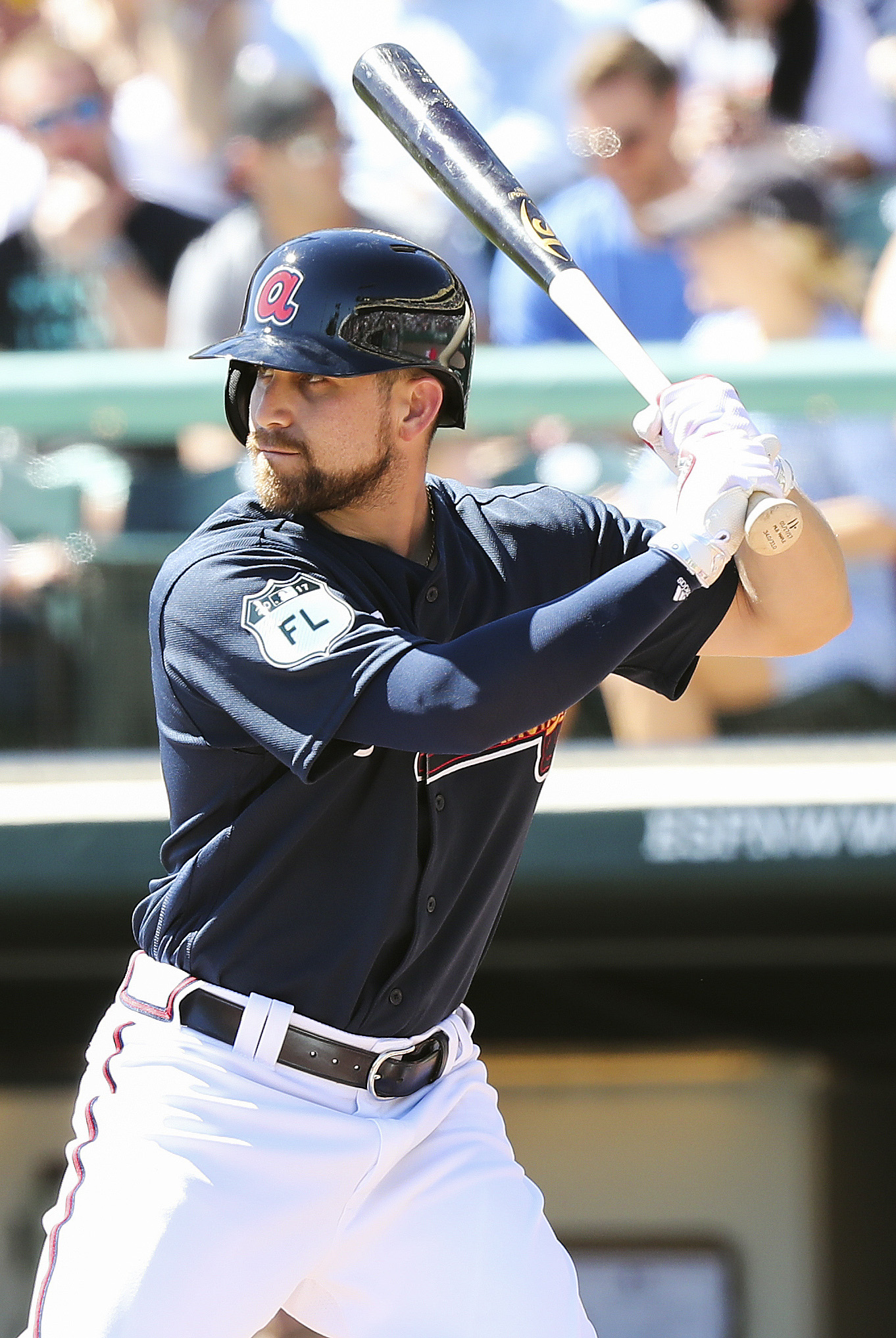
Inciarte, however, wasn’t dealt. And though he struggled early, he turned things on in the second half and ended up with another 3+ WAR campaign. While the Braves had another chance to weigh trade offers, the club chose instead to commit to the Super Two-eligible player this winter in the form of a five-year contract extension.
The total outlay to Inciarte — just over $30MM — is low enough that it won’t hurt too badly if the investment falls flat. That’s an unlikely outcome, as his defensive and baserunning abilities give him a fairly sturdy floor as a useful fourth outfielder even in a downside scenario.
While the Braves have been downright aggressive in hunting for high-upside players in recent years, and have also committed some near-term funds to veterans, the Inciarte deal is another kind of transaction entirely. Much like the division-rival Phillies’ nearly identical deal with Odubel Herrera, this extension represents the placement of a piece of the puzzle for seasons far beyond the present. Particularly given the most likely alternative — shopping Inciarte for yet more pre-MLB talent — the contract is as clear an indication as any that the organization is ramping up for contention.
Overview
Few will pick the Braves to make the postseason in 2017, or even to remain in the hunt as summer turns to fall. But there’s an expectation for improvement — and, perhaps, also the beginnings of some pressure. Fan expectations are rising with the new park and new player investments. Some of the organization’s hyped upper-level players are entering the phase where they will need to prove their worth in the majors or step aside. And the plans of the front office will increasingly be put to the test as the organization seeks to convert the talent it has accumulated into wins.
What’s your take on the Braves’ winter? (Link to poll for mobile app users …)
How would you grade the Braves' winter?
-
B 54% (3,173)
-
A 20% (1,188)
-
C 20% (1,179)
-
D 4% (239)
-
F 2% (122)
Total votes: 5,901
Photos courtesy of USA Today Sports Images.
Offseason In Review: Houston Astros
This is the latest entry in MLBTR’s Offseason In Review series.
Even though the Astros underwhelmed en route to 84 wins and a third-place finish in the American League West in 2016, they still entered the offseason in enviable shape. When previewing their winter in October, I wrote, “Given the plethora of talent that’s already in place, a productive offseason from general manager Jeff Luhnow would restart the hype machine for Houston next spring.” Luhnow followed through, leading PECOTA to project an AL-high 93 wins for his club this year.
Major League Signings
- Josh Reddick, OF: Four years, $52MM
- Carlos Beltran, DH: One year, $16MM
- Charlie Morton, RHP: Two years, $14MM
- Total spend: $82MM
Trades And Claims
- Acquired C Brian McCann and cash considerations from Yankees for RHPs Albert Abreu and Jorge Guzman
- Acquired cash or a player to be named later from Phillies for RHP Pat Neshek
- Claimed OF Nori Aoki off waivers from Mariners
- Claimed LHP Ashur Tolliver off waivers from Angels
Notable Minor League Signings
Extensions
- None
Notable Losses
- Neshek, Jason Castro, Doug Fister, Colby Rasmus, Luis Valbuena
Astros Roster; Astros Payroll Information
Needs Addressed
The 2016 Astros featured one of the majors’ least valuable outfields, a seven-man group which compiled a woeful .224/.302/.380 batting line (good for an AL-worst 86 wRC+) in 2,187 plate appearances. Carlos Gomez, whom Houston released in August, was one of the primary reasons for the unit’s bottom-of-the-barrel output. But nearly everyone else in the septet also failed to impress (only George Springer pulled his weight), so Luhnow elected to make over the outfield during the offseason. As a result of his moves, Springer will shift from right to center after logging just 17 appearances at the latter spot over his first three seasons.
The changes started with an early November waiver claim, Nori Aoki, whom the Astros picked up from the AL West rival Mariners. At $5.5MM, Aoki should give the Astros an acceptable left field regular at a reasonable price, though the 35-year-old’s upside is limited. The Japan native has been a competent hitter since debuting stateside in 2012, having slashed .286/.353/.387 while registering a minimal strikeout rate (8 percent) in 2,670 trips to the plate. However, there’s little power to speak of – as his career ISO (.100) shows – and he’s no longer a stolen base threat. After swiping anywhere from 14 to 30 bags in each of his first four seasons, Aoki was successful on only seven of his 16 attempts a year ago. He also had an ugly season versus same-sided pitchers (.227/.299/.258), albeit only over 108 PAs. Historically, Aoki has held his own against both left- and right-handed hurlers. He has also typically been a decent defender (6.6 Ultimate Zone Rating, one Defensive Run Saved), but his minus-four DRS and minus-5.5 UZR from 2016 pale in comparison to both his career numbers and the brilliant work of predecessor Colby Rasmus (20 DRS, 14.9 UZR last season). The Astros understandably said goodbye to Rasmus, however, on the heels of an injury-plagued season in which he hit a meager .206/.286/.355 in 417 tries.
Aoki figures to serve as a stopgap as the Astros await the arrivals of both Kyle Tucker, who tops out at No. 19 in Baseball America’s prospect rankings, and Derek Fisher (83rd on MLB Pipeline’s list), whereas Josh Reddick will occupy a spot in the team’s outfield for the long haul. At $52MM, the right fielder is in possession of the largest contract the Astros have awarded since Jim Crane bought the franchise in 2011. Reddick debuted in earnest that year with the Red Sox and has since slashed a respectable .259/.321/.435 in 2,809 PAs while thriving in the field (54 DRS, 41.2 UZR). The lefty-swinging 30-year-old does come with troubling platoon issues, though, having batted .218/.280/.360 line in 800 PAs against same-handed pitchers. He hit a nadir in that department last year with a hideous .155/.212/.155 line over 104 trips to the plate as an Athletic and Dodger. Should that carry into this season, the Astros do have righty-hitting outfield reserves he could platoon with in Jake Marisnick and Teoscar Hernandez, though utilizing a fairly expensive player in a timeshare wouldn’t be ideal.
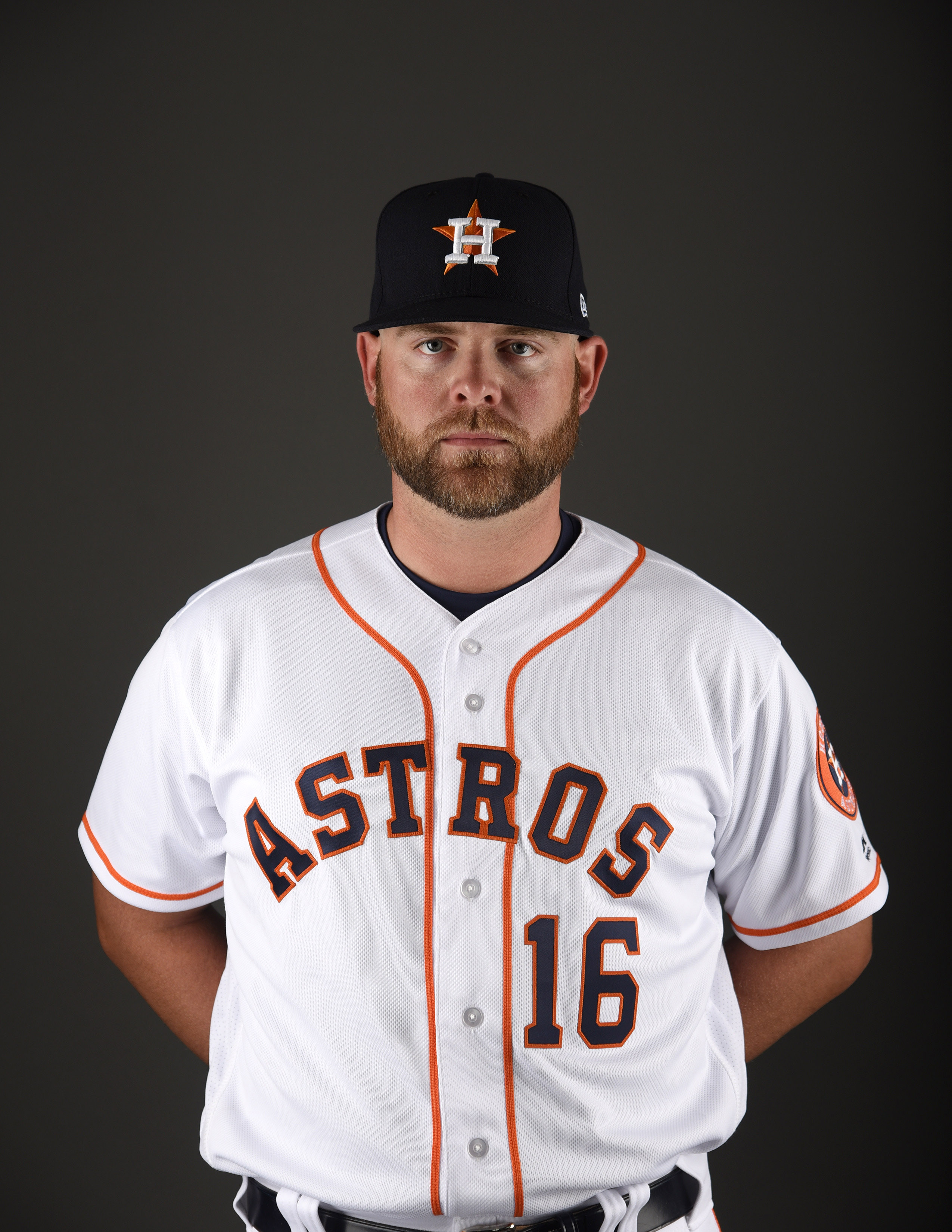
In addition to securing Aoki and Reddick, the Astros acquired two more prominent players for their lineup in catcher Brian McCann and designated hitter Carlos Beltran. All of Aoki, Reddick, McCann and Beltran bat from the left side (Beltran’s a switch-hitter; more on him later), meaning an Astros team that went into the offseason with mostly right-handers came out with a balanced lineup. The four newcomers will complement righties in Springer, Carlos Correa, Jose Altuve, Alex Bregman, Yulieski Gurriel and Evan Gattis.
While the power-hitting Gattis ostensibly could have taken the reins at catcher (he earned mostly positive defensive marks from Baseball Prospectus and StatCorner in 52 games there last year), Houston instead swung a trade for the more established McCann. In doing so, the Astros lost a couple promising arms, per FanGraphs’ Eric Longenhagen, and subsequently saw previous starting backstop Jason Castro and his excellent pitch-framing skills head to the Twins in free agency. Nevertheless, the 33-year-old McCann isn’t exactly a slouch behind the plate, and he’s a much better offensive player than Castro. Although McCann is no longer the force he was in Atlanta, where he slashed .277/.350/.473 from 2005-13, he is coming off a three-year stretch in which he hit an above-average .232/.320/.456 with the Yankees.
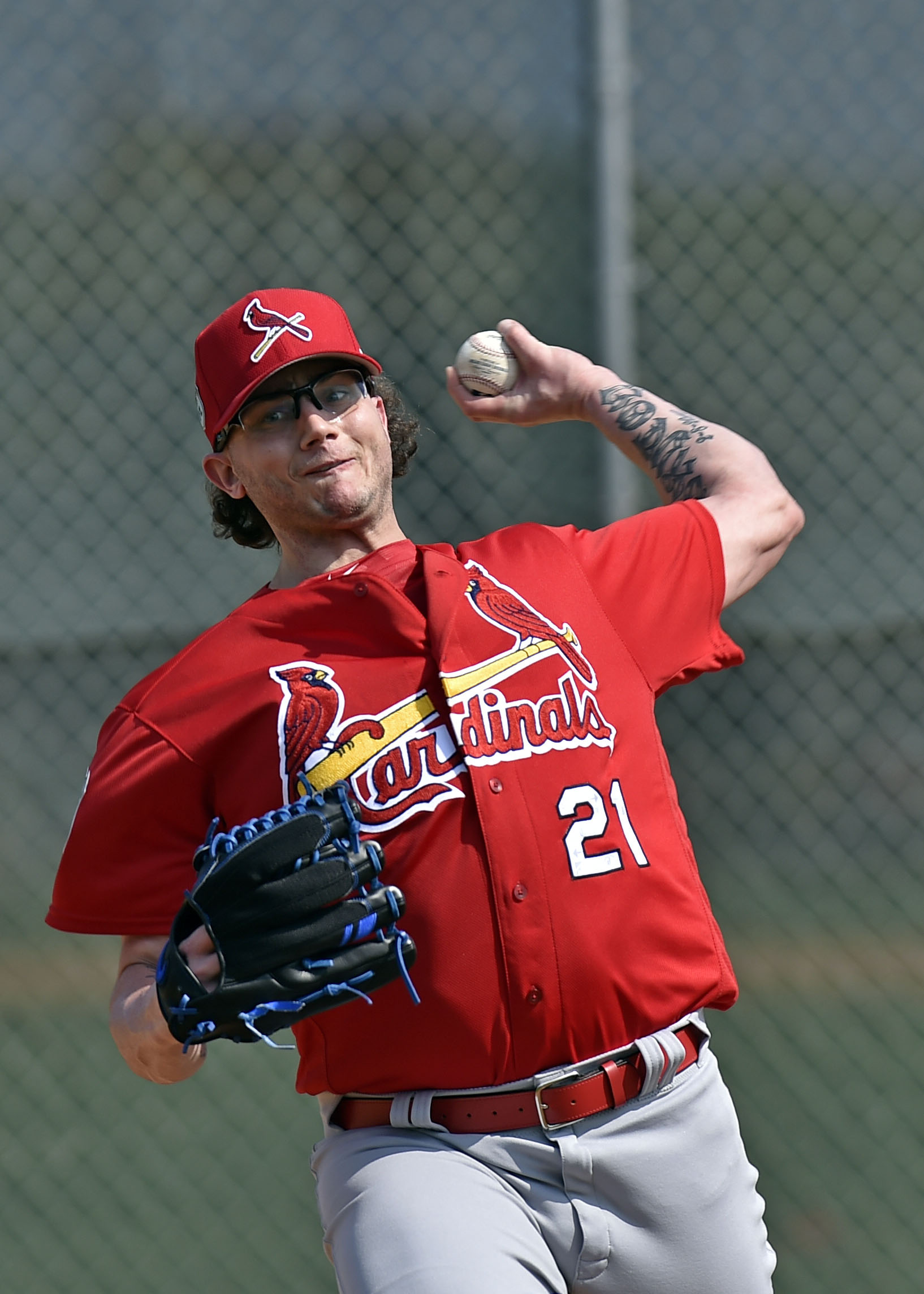
Among the pitchers who will throw to McCann is Charlie Morton, who will slot into the Astros’ rotation after totaling only 17 1/3 innings last season. Then with the Phillies, Morton suffered a torn hamstring in late April and didn’t pitch again. Morton did show encouraging signs during a tiny sample of work, though, as he ran his average fastball velocity up to a personal-best 93.3 (well above his 91.5 lifetime mark) and posted a 12.3 percent swinging-strike rate (far better than his 7.8 percent career figure). The 33-year-old has since thrown even harder this spring, and if those velocity gains stick, he could be a lot more interesting than the pitcher he was with Atlanta and Pittsburgh from 2008-15. To his credit, Morton did have some strong seasons with the Pirates, and his career 55.4 percent ground-ball rate makes him a good fit for a Houston team which plays in a homer-friendly ballpark and has a quality defensive infield. The biggest concern with Morton arguably centers on health, as he wasn’t able to avoid the disabled list in any of the previous five seasons. On the other hand, the still-unsigned Doug Fister – whom Morton is replacing – was one of just two Astros who threw at least 180 innings last year.
Click “Read More” to continue…
Out Of Options 2017
The following 40-man roster players have less than five years service time and are out of minor league options. That means they must clear waivers before being sent to the minors. I’ve included players on multiyear deals. This list was compiled through MLBTR’s sources when possible, but may be incomplete for a handful of teams. I’ll update the post as confirmed information comes in.
Angels
Austin Adams, Kirby Yates, Cam Bedrosian, JC Ramirez
Astros
Mike Fiers, Brad Peacock, Max Stassi
Athletics
Stephen Vogt, Liam Hendriks, Raul Alcantara
Blue Jays
Mike Bolsinger, Ezequiel Carrera, Ryan Goins, Bo Schultz
Braves
Kevin Chapman, Chase d’Arnaud, Ian Krol, Jose Ramirez, Chaz Roe
Brewers
Tommy Milone, Kirk Nieuwenhuis, Jonathan Villar, Jesus Aguilar, Jhan Marinez, Wily Peralta, Hernan Perez, Manny Pina, Carlos Torres
Cardinals
Greg Garcia, Tyler Lyons, Miguel Socolovich
Cubs
Matt Szczur, Mike Montgomery, Hector Rondon
Diamondbacks
Randall Delgado, Chris Herrmann
Dodgers
Giants
Hunter Strickland, George Kontos, Jarrett Parker, Gorkys Hernandez, Cory Gearrin, Conor Gillaspie
Indians
Trevor Bauer, Lonnie Chisenhall, Brandon Guyer, Zach McAllister, Dan Otero, Danny Salazar
Mariners
Leonys Martin, Evan Scribner, Nick Vincent
Marlins
Derek Dietrich, Adeiny Hechavarria, Dan Straily, Jose Urena, Jeff Locke
Mets
Nationals
Orioles
Brad Brach, Zach Britton, Dylan Bundy, Oliver Drake
Padres
Christian Bethancourt, Paul Clemens, Jarred Cosart, Christian Friedrich, Brad Hand, Luis Sardinas
Phillies
Freddy Galvis, Cesar Hernandez
Pirates
Alen Hanson, Wade LeBlanc, Felipe Rivero
Rangers
Rays
Chris Archer, Brad Boxberger, Xavier Cedeno, Alex Colome, Danny Farquhar, Nick Franklin, Erasmo Ramirez, Jumbo Diaz
Red Sox
Josh Rutledge, Tyler Thornburg, Sandy Leon, Steven Wright, Drew Pomeranz, Christian Vazquez, Heath Hembree, Bryce Brentz
Reds
Arismendy Alcantara, Tony Cingrani, Blake Wood
Rockies
Cristhian Adames, DJ LeMahieu, Jordan Lyles, Chris Rusin
Royals
Christian Colon, Cheslor Cuthbert
Tigers
Andrew Romine, Tyler Collins, Jose Iglesias, Dixon Machado, Steven Moya
Twins
Ehire Adrianza, Eduardo Escobar, Robbie Grossman, Jorge Polanco, Danny Santana, Michael Tonkin
White Sox
Matt Davidson, Leury Garcia, Dan Jennings, Rymer Liriano, Yolmer Sanchez, Michael Ynoa
Yankees
Dellin Betances, Tommy Layne, Aaron Hicks, Austin Romine, Gary Sanchez, Chris Carter
Special thanks to J.P. Hoornstra and Adam McCalvy for their assistance.
2017-18 MLB Free Agent Power Rankings
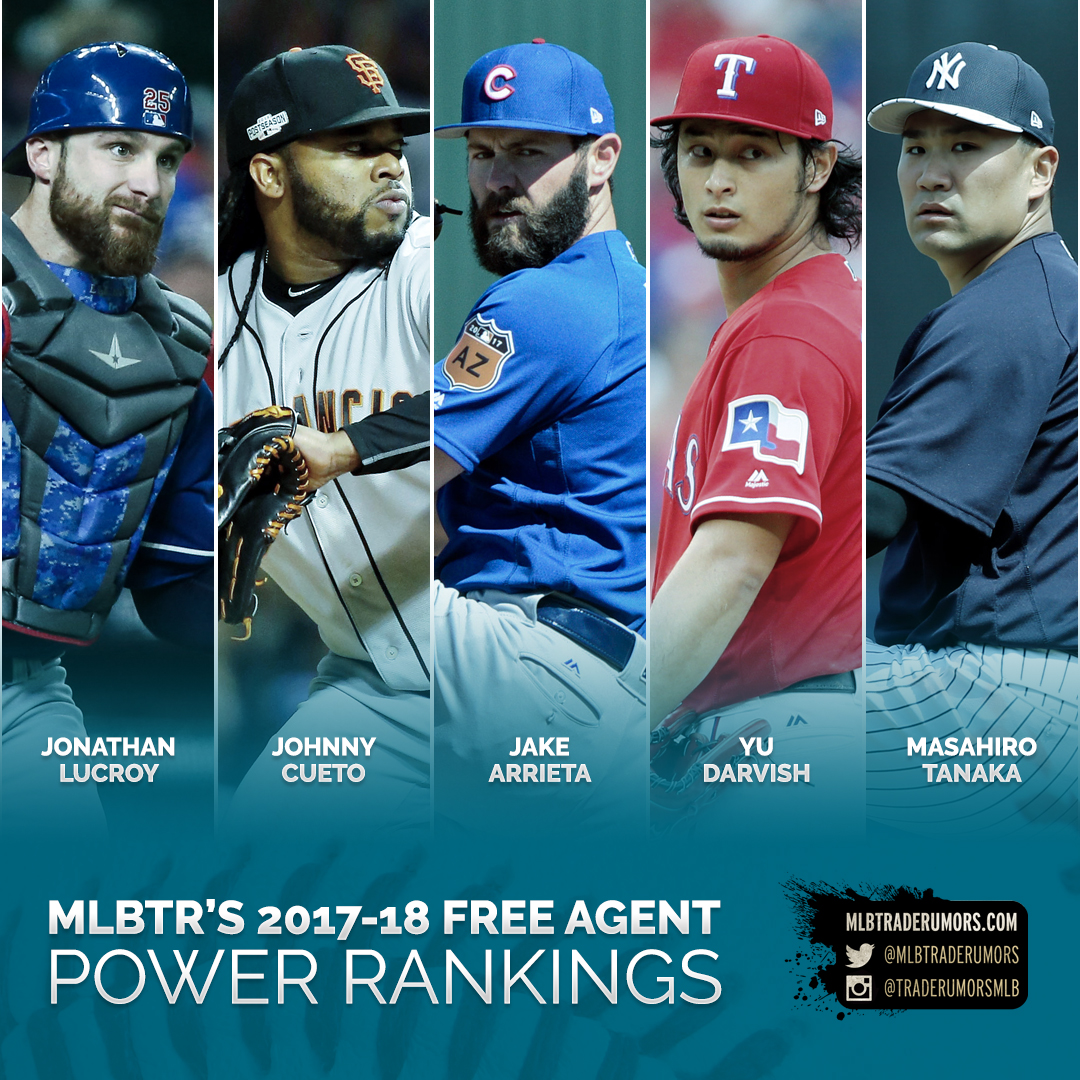
All of the top free agents from last winter have found homes, and Opening Day 2017 is less than three weeks away. Here at MLBTR we like to keep an early eye on the next free agent class. The players referenced in this post are scheduled to become free agents after the 2017 season. These rankings are subject to change each month, as players drop off due to extensions, injuries, or poor performance, while others see their stock rise. A year ago, our rankings were led by Stephen Strasburg, who signed an extension in May, and Carlos Gomez, who wound up released in August and ultimately signed the 36th-largest contract of the 2016-17 offseason. Dexter Fowler, who ended up with the third-largest free agent contract, didn’t crack our top ten until May.
The goal here is to rank earning power. These rankings represent expected contract size, assuming each player reaches the open market and goes to the highest bidder. For the full list of 2017-18 MLB free agents, click here.
1. Jake Arrieta. You could reasonably put the first three pitchers on this list in any order. All three were born within a six-month span in 1986. Currently, Arrieta stands as our “top gun.” Since joining the Cubs in a legendary 2013 trade, the righty boasts a 2.52 ERA and 8.9 K/9 in 634 2/3 regular season innings. He peaked with the NL Cy Young Award in 2015, and also finished ninth in 2014 and ’16. Arrieta will pitch the 2018 season at age 32, which makes a six-year deal a long shot. Zack Greinke is an exception, though his contract is probably one most front offices do not want to emulate. As a player known to be in top physical condition, Arrieta at least has a case for six years (but almost certainly not seven). He’s been DL-free since a stint in early 2014 and has a relatively low pitching odometer, as agent Scott Boras likes to say. Before Arrieta can make the six-year argument, however, he must shake off a decidedly mediocre finish to his 2016 season, as he posted a 4.05 ERA and 3.75 BB/9 over his final 20 regular season starts. Aside from the term, there’s also the question of average annual value. That could push into the low-$30MM range, as achieved by David Price, Max Scherzer, and Greinke.
2. Yu Darvish. Darvish, the strikeout king of this free agent class, could ease concerns with a healthy 2017. The big blemish on Darvish’s record is his Tommy John surgery in March 2015. As a result of the surgery, Darvish went about 22 months between Major League starts. He made his 2016 debut in late May, and after three starts he missed another 37 days with shoulder discomfort. That injury was seemingly connected to his long recovery from Tommy John. Like Arrieta, Darvish may have difficulty finding teams willing to guarantee a six-year contract. Darvish should still be able to surpass the current free agent record contract for a Tommy John survivor, the five-year, $110MM deal Jordan Zimmermann received from the Tigers in November 2015. One point in Zimmermann’s favor: his surgery was further in the rearview mirror, as he had posted five full healthy seasons after the procedure. Darvish, of course, is a different kind of pitcher, one of the most dominant in the game. Another season like 2013, when he finished second in the AL Cy Young Award voting, could send free agent bidding through the roof.
3. Johnny Cueto. Cueto’s case is just about as strong as that of Arrieta or Darvish. Cueto has pitched at least 212 regular season innings in each of the last three seasons, quieting mild concerns about his health. He was part of the fabled free agent pitching class of 2015-16, one of seven starting pitchers to receive at least $80MM that winter. Heading into his age-30 season, Cueto landed a six-year, $130MM deal with the Giants. He could have done even better, but instead wisely secured an opt-out clause after the second year of the contract. After the 2017 season, Cueto must decide whether he should opt out and try to top the four years and $84MM remaining on the contract. With another vintage Cueto season, a five-year contract at a high-$20MM range AAV would be expected. More than $50MM could hang in the balance. Alternately, the Giants could just extend Cueto’s contract an additional year at a strong salary, as the Yankees did under the threat of C.C. Sabathia opting out after the 2011 season.
4. Masahiro Tanaka. Though he’s every bit as talented as the pitchers listed above, and a couple years younger, I’ve got Tanaka in a slightly lower tier. Tanaka joined the Yankees from Japan for the 2014 season, but made only 44 regular season starts over his first two campaigns. You may recall that in July of 2014, Tanaka was diagnosed with a partially torn ulnar collateral ligament in his elbow. Tanaka chose a platelet-rich plasma injection and the rehab route. Two and a half months later, he was pain-free and back on a big league mound. The following season, a forearm strain knocked him out for over a month. Tanaka surprised many by making 31 starts in 2016, though his season ended early with a seemingly minor flexor mass strain. Like Darvish, Tanaka faces a crucial 2017 season in proving his health. If Tanaka does finish the season healthy, he could do much better than the three years and $67MM remaining on his contract, which could prompt him to opt out. Or, the Yankees could add a year or two to the deal. On a brand new contract, Tanaka could get a five-year deal despite his early MLB health history. It all depends on how his right elbow holds up this year.
5. Jonathan Lucroy. Lucroy currently profiles as the best position player on the 2017-18 free agent market. The Rangers’ catcher, 31 in June, signed an early-career extension in 2012 as a member of the Brewers. Including an exercised club option, Lucroy ended up getting $17MM for what would have been four arbitration years and his first free agent year. He’s now approaching his best chance to cash in. Lucroy was arguably the best catcher in baseball last year, and in 2014 as well. With another strong year, he should be able to push the limits of what a free agent catcher can get, possibly surpassing the five-year, $82-85MM deals given to Russell Martin and Brian McCann.
6. J.D. Martinez. The bottom half of this list inspired the most debate among MLBTR writers. Martinez, 30 in August, has proven himself as a 30 home run bat since his career renaissance with the Tigers. After hitting 38 home runs in 2015, Martinez lost a month and a half last year with a non-displaced fracture of the radial neck at the right elbow last year. He crushed the ball in 55 games after his return. The concern with Martinez is his right field defense, which UZR suggested was above average in 2015 and well below-average in 2016. Kyle Yost and Brandon Day of Bless You Boys recently took an in-depth look at Martinez’s glovework, which the player acknowledges is an area of focus for him this year. With a reasonable rebound of his defensive metrics, Martinez is a candidate for a five-year deal worth $100MM or more. Since 2014, he’s been one of the dozen best hitters in baseball, on par with Edwin Encarnacion and Freddie Freeman.
7. Eric Hosmer. Hosmer may be the most polarizing 2017-18 free agent. The Royals’ first baseman, who turns 28 in October, has long been considered a candidate for a megadeal in free agency. Recently, many have been questioning that possibility. The Wins Above Replacement metric doesn’t do Hosmer any favors, as his career total of 5.9 was exceeded by 15 different players in 2016 alone. Traditionally a low-power first baseman, Hosmer just didn’t hit much in 2012, ’14, or ’16. In an attempt to rationalize Hosmer’s apparent earning power, Jeff Sullivan of FanGraphs noted that he’s been a much better hitter in high leverage situations, and that advanced metrics may underrate his defense. The question is whether MLB’s increasingly analytical front offices will be swayed by those points and whatever else makes it into Scott Boras’ binder for Hosmer. At this point, Hosmer is propped up by excellent marketing. For any of the knocks on him, there is a rebuttal. The Royals love Hosmer, and if a few more teams also buy in, he should be able to land five or more years.
8. Justin Upton. In my discussions with the MLBTR team, several of our writers recommended Upton be omitted. To even reach free agency, he’d have to opt out of the remaining four years and $88MM on his contract with the Tigers. I think that’s enough of a possibility to include him here, even after a disappointing first year with Detroit. Though Upton has never hit more than 31 home runs, the 29-year-old remains capable of bigger things. After a couple brutal months to start his 2016 season, Upton hit 28 bombs over his final 429 plate appearances. While 40 home runs doesn’t always lead to free agent riches (see Chris Carter and Mark Trumbo), Upton might be able to land a new five-year deal in excess of $100MM with a big season. The safe move is to stick with his Tigers contract, though.
9. Carlos Gonzalez. In CarGo, we have another player to whom WAR is not kind. Gonzalez, 31, has become a one-dimensional player, with power as his calling card. He’s not one to draw a walk, and he’s not known for his defense. That was a problem for Trumbo in free agency, but Gonzalez strikes out less often and doesn’t carry a reputation as a terrible defender. Gonzalez does bear a different burden, with extreme home/away splits. Taken out of Coors Field, Gonzalez may be of limited appeal to MLB teams. He may need another 40 home run season to keep his spot on this list.
10. Mike Moustakas. Moustakas, 28, had a breakout 2015 season for the Royals but missed most of last season with an ACL tear. Given positive contributions with both offense and third base defense, as well as his relative youth, Moose could push for a four or five-year contract with a full return to form.
A half-dozen players just missed making the list: Chris Tillman, Todd Frazier, Michael Pineda, Carlos Santana, Lorenzo Cain, and Wade Davis. We’ll be updating these rankings every month during the season.
The Inner Monologue of @DimTillard Part 1
It’s 6:18pm in Pheonix, Arizona. Sunday March 12th, 2017. My name is Tim Dillard. I’m 33. I play professional baseball, and after a day of Spring Training practice… I’m sitting in a hotel room trying to think of something to write about for MLB Trade Rumors. They contacted me with the false hope I could write something truly captivating and insightful about baseball. So after very little reflection and contemplation, I’ve decided to just start typing the inner thoughts about my day. At this particular moment, yes I do think this is a good idea.
6:21pm Okay wait, did I just misspell Phoenix a few minutes ago? I must be tired. During spring training, because of how early practice is, I usually go to bed around 8pm. I blame the sun. The sun out here is notorious for draining the energy right out of you. Or I could just be hungry.
6:48pm Well my trip to Taco Bell was indeed a success! Much like yesterday… and most of last week.
6:49pm Usually when I’m away from home, I try to eat at all the places my wife refuses to dine. Tomorrow I’m hitting up Long John Silver (which conveniently shares a building with Taco Bell).
6:53pm Today, in-between spring training activities, I made time to share some of my baseball knowledge and wisdom with a younger generation of ballplayers. And they found time to remind me that I am still the oldest and most bearded guy in Brewers Minor League camp this year. But in their defense, I did utter these phrases at the field today: “Back in my day.”, and of course, “Not my first rodeo!”
6:55pm This is my 14th spring training. And over my career I’ve had the privilege of 12 spring trainings with the Milwaukee Brewers team, and also participated in 2 spring trainings with the unemployment team. Which means I’m enjoying myself, and appreciating baseball now more than ever.
6:58pm Because now at this stage everything is much more precious. My past experiences have taught me to treat EVERY stretch, throwing program, sprint work (not poles), meeting, groundball, light weight training, bunt play, another meeting, conversation, workout, that other meeting, or whatever… with a tangible awareness that I have no idea which day will be my last in a baseball uniform.
7:01pm *grabs tissue, dabs eye* … Allergies out here can be challenging.
7:04pm You know what, looking around, I just noticed I’ve had the exact same room at this hotel for the last 3 spring trainings. Hmm, I wonder how many people have slept in this bed since I was here last?
7:06pm Anyway. During batting practice today I was asked why I run around the outfield like an idiot picking up baseballs. The curious kid that asked is in his very first spring training camp. So I walked up to the young buck (just over half my age), put my hand on his shoulder and said, “Eye wash man! It’s eye wash! I’m just trying to make sure all these coaches out here notice me hustling!” Cause that’s what it’s all about.
7:09pm I mean, that’s part of it I’m sure, but I think some of it is just me being afraid. Like in the movie Field of Dreams. You remember the part when the young ballplayer runs over to help the little girl? And as soon as he steps off the field he instantly transforms into the old white-haired Doctor “Moonlight” Graham? (spoilers) Then we realize he’ll never be able to go back and play baseball ever again! Well that’s kind of how I feel. Except instead of being afraid of transforming into an 87 year-old mustached doctor, I’m afraid every time I leave, a security guard will be instructed to not let me back in.
7:14pm Right now baseball is in full swing (<-pun) and the excitement for baseball is palpable! Like a hibernating bear that wakes up and just screams at everybody. Spring training is that awakening! Not sure who thought it up (you can google it), but it perfectly EASES players, umpires, coaches, broadcasters, bat boys, mascots, popcorn vendors, instant replay technicians, and of course fans seamlessly into another year of baseball history!
7:22pm My roommate just walked in, and has confirmed our room smells like tacos… with just the tiniest hint of fish.
7:25pm Hold on, got a text message…
7:26pm It’s an unnamed teammate asking what time stretch is in the morning. When I get texts like this I usually send the picture I took of the weekly schedule posted in the clubhouse. I always take a picture of the schedule because that’s what professional baseball does! It makes you SUPER paranoid about being late… for anything… ever! This is one of those times paranoia is a good thing. Because as the saying in baseball goes, “If you’re 5 minutes early, You’re 10 minutes late!”
7:36pm Let’s see, what else happened today? Oh yeah, I was asked about the first time I was called up to the Big Leagues. Oh man, these stories are the life blood for Minor League baseball players. We need them. Because it proves The Show is in fact a real place and possibly within grasp. And players crave inspiration. So what could be better than hearing a first hand account of toeing the rubber in a Major League baseball game! But actually my Big League Debut story is kind of an average story at best. In fact, the best part of my debut story is what happened after the game: with me, on a sidewalk, being mistaken for star Milwaukee Brewers pitcher Ben Sheets! Anyway, let’s just say there’s a gentleman out there somewhere with 14 Ben Sheets baseball cards with the signature “Tim Dillard48” scribbled on it!
7:48pm Okay yeah it’s late. As soon as my roommate finishes playing his Call of Medal Duty game, I’m falling asleep in this bed… and pretending it’s a brand new mattress.
To Be Concluded…
You can follow Tim @DimTillard and read more of his work at his blog.
MLBTR Originals
A roundup of MLBTR’s original content from the past week:
- MLBTR contributor Brett Ballantini (links here) spoke with new Diamondbacks senior vice president and assistant general manager Jared Porter, who previously worked in the front offices of the Red Sox and Cubs. Porter discussed what it was like to be a member of those two organizations during their championship-winning, drought-breaking campaigns, and he addressed various subjects relating to the Diamondbacks, among other topics.
- Another MLBTR contributor, former Cubs front office member Chuck Wasserstrom, chatted with ex-Blue Jays scouting director Tim Wilken about the team’s impressive 1997 draft haul. First-round pick Vernon Wells headlined the class for the Jays, who also selected three other players who became successful big leaguers in Michael Young, Orlando Hudson and Mark Hendrickson.
- This year’s Offseason In Review series continued with Mark Polishuk analyzing the Red Sox’s winter and Charlie Wilmoth doing the same with the Brewers‘.
- Jeff Todd explained that this could be a make-or-break year for Yankees right-hander Michael Pineda, while I took a look at what’s at stake for Diamondbacks righty Shelby Miller.
- Lastly, Jeff polled readers on which team will sign arguably the best free agent pitcher left on the board, righty Doug Fister. Out of the six clubs listed, the plurality of voters see the Yankees as the likeliest landing spot. However, “Other” has gotten the most votes so far.
Offseason In Review: Milwaukee Brewers
This is the latest entry in MLBTR’s Offseason In Review series. The full index of Offseason In Review posts can be found here.
The Brewers’ offseason saw them continuing to add young talent, but they also acquired several veterans who should help make them fun to watch as they integrate younger players onto their roster.
Major League Signings
1B Eric Thames: three years, $16MM (including $1M buyout on $7.5MM option for 2020)
RHP Neftali Feliz: one year, $5.35MM
LHP Tommy Milone: one year, $1.25MM (non-guaranteed)
Notable Minor League Signings
Joba Chamberlain, Ryan Webb, Eric Sogard, Ivan De Jesus Jr..
Trades And Claims
Acquired 3B Travis Shaw, SS Mauricio Dubon, RHP Josh Pennington and PTBNL from Red Sox for RP Tyler Thornburg
Acquired C Jett Bandy from Angels for C Martin Maldonado and RHP Drew Gagnon
Claimed 1B Jesus Aguilar from Indians
Lost RHP Miguel Diaz to Twins in Rule 5 Draft
Notable Losses
Chris Carter, Thornburg, Blaine Boyer, Chris Capuano
Needs Addressed
The Brewers’ offseason mostly continued their recent trend of rebuilding what had been an aging roster, but their activity this winter also showed small signs that they’re looking toward contending in the near future.
Their first big move of the winter was to replace first baseman Chris Carter with Eric Thames, who signed a three-year, $16MM deal the same day the Brewers designated Carter for assignment, thereby avoiding taking him through the arbitration process. The Carter move was eyebrow-raising — it isn’t every day that a team drops a 41-homer hitter who’s set to receive a seemingly reasonable salary. The arbitration process, though, rewards counting stats like home runs and likely would have minimized Carter’s shortcomings, such as his strikeout and contact issues and lack of defensive value. MLBTR projected in October that Carter would receive $8.1MM through arbitration, and there are suggestions the salary might have gone higher. That sum seems paltry for a prolific home-run hitter, but the apparent ambivalence to one-dimensional power sources on this winter’s market strongly indicates that teams aren’t overly interested in sluggers who don’t bring something else to the table. The Brewers’ inability to trade Carter, as well as his eventual signing with the Yankees on a mere $3.5MM deal, suggest that the league didn’t think Carter was worth nearly as much as the arbitration process would have paid him.
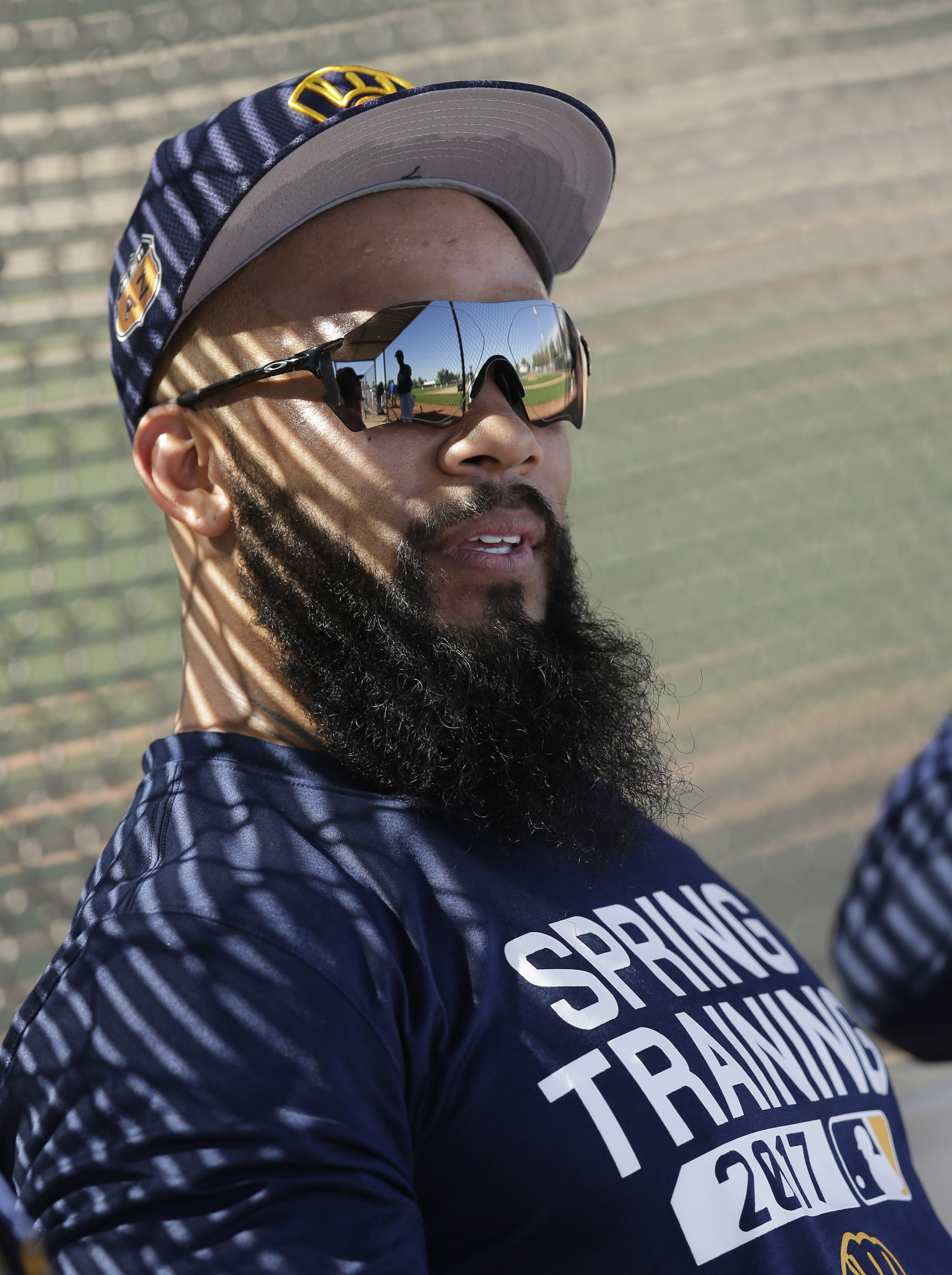 In Carter’s place, the Brewers landed Thames, whose unusual background makes him an interesting and somewhat outside-the-box fit for the team’s first-base opening. Thames spent two forgettable seasons with the Blue Jays and Mariners in 2011 and 2012 before heading to the NC Dinos in South Korea, where he emerged as one of the KBO’s most fearsome sluggers. Even in a league dominated by offense, Thames’ numbers stood out — he hit 124 home runs in Korea in a mere 1,634 plate appearances. He’s also still just 30, young enough that he could have several more power-hitting seasons left in him.
There’s still very limited data on how KBO stats will translate to the Majors, and the existing precedents for prime-age sluggers point in different directions — Jung Ho Kang has been a success (his off-the-field problems notwithstanding), while Byung Ho Park‘s first season was a failure. Perhaps the biggest difference between Kang and Park prior to their arrivals in the states, though, was their plate discipline. Kang had 293 strikeouts in his last three seasons in Korea, while Park had a very high 399 (including 161 in his last season there). Thames, like Kang, had 293 whiffs in his three seasons in the KBO, suggesting a balanced approach that could play well as he returns to the big leagues. The well-rounded offensive game Thames demonstrated in Korea, where he posted OBPs above .420 in all of his three seasons, also contrasts sharply with that of Carter. No one really knows how Thames’ game will play in the big leagues at this point, but the Brewers, as a rebuilding club that didn’t have an obvious fix at first, were in great position to gamble on a relative unknown.
More analysis after the break …Read more