
‘Lucky Charm’ Jared Porter On Metrics, D-Backs’ 2017 Roster
This is the second half of an interview with Diamondbacks assistant GM Jared Porter, conducted by MLBTR contributor Brett Ballantini. Click here to read Part 1.
In the second part of the conversation, Porter addresses the intricacies of his job, including his go-to stats, and taking the “macro” view on the Diamondbacks’ future:
—
You were with the Cubs when the Diamondbacks traded for Shelby Miller, which from the jump seemed a significant overpay by Arizona. What was your impression?
It’s impossible for me to weigh in heavily due to the fact that I wasn’t here and don’t know all of the circumstances surrounding the trade. With that said, we are really excited to have a pitcher of Shelby Miller’s quality in our rotation. It’s been great getting to know Shelby as a person over the course of the last month or so and has been exciting to watch him feature such explosive stuff in his first two spring outings. He’s in impeccable physical shape and has a great mindset heading into the season. We’re lucky to have Shelby on the Diamondbacks.
Analytics is a rabbit hole that ultimately yields greater and greater understanding of the game. We’re so far from sheer batting average or pitching wins now, we can never go back. But clearly, each front office doesn’t just have a Baseball-Reference stock ticker of WAR numbers that steers evaluation. There are nuances wrapped in projections inside of data. Even among your own equfront office, with a relatively flat hierarchy, each of you must have your own pet data or go-to projections. If you can give me the Shake n’ Bake without revealing its flavor, what is your go-to stat?
Great question. I don’t think I have a “go-to stat,” but what I like the most is the data that helps prove things that are hard for our eyes to see or that can be hard to gauge within a scouting report. Player evaluation is so tough, even for the best evaluators, that any advantages we can find and use are so important.
For me, I’ve really been gravitating towards run prevention data lately. Some examples of this are PITCHf/x data (movement qualities of the pitch), pitch results data (how a pitcher’s stuff impacts the way hitters put balls into play) and pitch sequencing data (how a pitcher uses his pitches); defensive data and defensive positioning data; and catcher defense analysis.
One area that tends to get over-reported is catcher framing. While I’m a firm believer in the value of catcher framing and the impact it makes, the story often stops with catcher framing data and not enough attention is paid to the importance of game-calling and game leadership when it comes to evaluating catchers. A big part of a pitcher’s conviction in the stuff he’s throwing has to do with how the game is called and led behind the plate.
Your most significant trade of the offseason sent Jean Segura to the Seattle Mariners for Taijuan Walker and Ketel Marte. Was that a matter of selling high on Segura, buying low on Walker, or a little bit of both?
We’re really excited to have Taijuan Walker and Ketel Marte in Diamondbacks uniforms right now. We gave up a very talented and well-rounded impact player in Jean Segura as the centerpiece of the deal for Seattle, but continuing to add young, controllable, high-ceiling players like Taijuan and Ketel will make our talent pool deeper and more sustainable from a macro viewpoint.
Taijuan is a pitcher who all three organizations I’ve worked for have tried to acquire over the last two or three years. Getting to know him a bit over the course of the last month has given us a lot of confidence in the person he is. He wants to be great, and he wants to win. We’re very excited to have such a talented athlete in our program.
You have an exhausting number of responsibilities, overseeing player personnel, baseball operations, and the medical staff. But arguably your more significant responsibility with Arizona is in pro scouting. I’m guessing that amateur scouting—confirming blue chips or uncovering hidden treasure—is significantly different from pro scouting, where we imagine a half-dozen guys with radar guns trying to pick the bones of this summer’s early rebuilders. How do the roles of amateur and pro scouts differ?
The nature of all scouting is the same: Consistently beat other teams by evaluating and recommending talented, championship-caliber players for your organization. The types of scouting that I have the most significant responsibility for within Arizona are professional (other teams’ minor league players, and the independent leagues), major league (other teams’ major league players, and advance scouting), and international professional (typically NPB, KBO, and Cuban players who don’t fall under the amateur cap).
There are a few major differences between amateur and professional scouting that stand out. Every year there is a draft, so it’s a fact that an enormous pool of amateur players will be selected and signed to play professional baseball every June. For this reason, there’s a culminating point in every draft cycle. We don’t have as much information on amateur players. Although the information available is growing at an astonishing rate, there still isn’t as much information available in comparison to professional players. We haven’t had the opportunity to see amateur players compete against their professional peers on a daily basis yet, so the accuracy of evaluations is more volatile and higher risk. It becomes critical to mitigate the risk as much as you can while continuing to maximize the upside and the potential impact of players you’re bringing in.
On the professional and major league side, we have significantly more information, but oftentimes the assets you’re giving up in player or financial capital are so great that it makes the margin for error within these decisions minuscule. Also, the player pool to select from is more finite. Professional scouting is more of an ongoing process with regards to acquisition. Although there are a few big dates, like the Trade Deadline or Winter Meetings, the professional player acquisition period is literally 365 days a year, because a transaction can happen at any time.
Which scouting is a greater challenge, or more fun?
The best way for me to describe it is that it’s all awesome, and it’s all really challenging. You can never learn enough about player evaluation with regards to organizational building and roster construction.
You have inherited a Diamondbacks team that seems a given to put 69 wins in the rearview mirror, with not just superstars like Zack Greinke, Paul Goldschmidt and A.J. Pollock, but quite a few budding stars as well. Obviously, you’ve got a long-term vision of remaking the team, but how jazzed are you regarding your immediate, 2017 prospects?
We’re all very excited about the talent on our 40-man roster and certainly feel fortunate to inherit so many talented and athletic players with high ceilings. [Rookie manager] Torey Lovullo has set a great tone in camp, with everyone being part of a unified group headed in the same, positive direction. It’s been a point of emphasis for us this offseason to put a well-rounded, versatile, and deep group of major league players together going into the season. It’s still roughly a month to go before Opening Day, but so far, so good. Personally, I’ve enjoyed getting to know our players better as competitors and people, and am excited to continue to do so.
I asked Dave Stewart this question last year, and for all his intensity and aggressiveness, he surprised me with a muted answer. With specific regard to making an offer to a guy like [ex-Los Angeles Dodger] Greinke, is there any additional incentive beyond what he can do for the Diamondbacks—does taking a valuable player away from a direct rival color your decision-making at all? Or, asked another way, are the battles for wins fought exclusively between the lines, or can a front-office guy steal a couple of wins for the team and contribute the same value as a hitter with a knack for a game-winning RBI?
No, I don’t see it this way at all. It’s our job to help build a sustainable, deep, and well-rounded Diamondbacks team regardless of what other teams in our division are doing. If we do that, it doesn’t matter what other teams are doing because we’ll be able to provide Torey and our coaching staff with the necessary weapons to navigate a 162-game schedule, and hopefully more.
There is some nuance within the season with regards to matchups, maybe stocking your bullpen with a certain type of reliever for a series or two, picking the right time to spot start a guy, or adding a bat that might match up well for a certain stretch. But when it comes to the macro decisions, we have to constantly focus on making our team better and not worry about the others.
Fortunately, this is something I was able to see first-hand in Boston when I was younger due to the incredible depth and talent in the AL East at the time. I never saw Theo give in to any pressures that might have been there to match our division rivals, and I feel that as a result our internal player pool was always deep and sustainable, with great young players ready to make an impact at the major league level.
You were hired by the Red Sox in 2004 and, poof, there goes an 86-year Curse of the Bambino. The Cubs snapped you up in 2016 and, boom, the longest streak in the history of pro sports, 108 years without a title, is gone. Every time you join a new team, they win a World Series. Arizona’s drought of 15 seasons is slightly less dramatic than what you’ve conquered already. So, pressure’s on, are you going to make it three-for-three?
I wish it were that easy. I’ve been fortunate to work around great people and for teams with great players in Boston and Chicago. My hunch tells me that it’s been more about the players than me being a curse breaker! We’ll chalk it up to good timing.
With that said, we have a talented group here in Arizona and we are working daily to create the culture both in the office and in the clubhouse through Torey that we’ve seen lead to sustainable success in Boston and Chicago.
Follow Brett Ballantini on Twitter @PoetryinPros
D-Backs Assistant GM Jared Porter Traces His Path to Arizona
A 69-win season spelled an abrupt end for the D-backs front office regime that was led by chief baseball officer Tony La Russa (who remains in the organization in another capacity), general manager Dave Stewart and senior vice president De Jon Watson.
Enter new Arizona GM Mike Hazen, who tapped former standout Boston execs Amiel Sawdaye and Jared Porter, along with former Red Sox bench coach Torey Lovullo, to remake a franchise that may have lost its way.
We caught up to Porter, Arizona’s senior vice president and assistant GM, in order to get a peek into the changes the Diamondbacks are implementing this season.
But in part one of this interview, Porter traces his remarkable fortune in the game so far, including four championships (three in Boston, one with the Chicago Cubs). Is he a lucky charm? Well, Diamondbacks fans can be heartened that in his first seasons in Boston and Chicago, he helped the clubs snap World Series droughts of 86 and 108 years, respectively:
—
Much is made of the Boston roots of Mike Hazen, Amiel Sawdaye, you, and even new manager Torey Lovullo. Given the different roles you all played with the Red Sox, did you conceive of a time when you might all be together again, with commensurate promotions?
I’m very fortunate to have been able to learn from and work with so many talented executives in Boston. It’s one of those things where you don’t realize just how much your career can be shaped by who you work for and learn from early on—and it’s immeasurable.
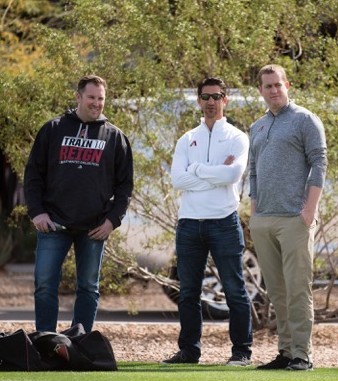
In my case, I happened to get an internship working with and for the best executive in baseball history, Theo Epstein. The culture that Theo created in Boston (and now in Chicago, with Jed Hoyer) is so unique. I feel like I’ve been part of an incredible and captivating baseball operations think tank ever since I started as an intern with Boston in 2004, with everybody working as hard as they can and trying to learn as much as they can, with the freedom and comfort to express opinions and explore both old and new ways of thought with regards to player evaluation, acquisition, development and analysis. I’m forever grateful to Ben Cherington, for hiring me and giving me my first opportunity.
That think tank culture is certainly something we are going to try as hard as we can to replicate in Arizona. Along with others such as Theo, Jed, Ben, Raquel Ferreira, Brian O’Halloran, Jason McLeod, and Allard Baird, Mike and Amiel were big parts of that culture, with their fingerprints all over Boston’s World Series championships and current roster.
Did you have an inkling that you were valued to such a degree by Mike that he would seek you out in Arizona as he did? When you left Boston after the 2015 season, leaving them behind for a year, was there any sort of exit interview/between the lines/wink-wink where you had a sense you might work together again down the line?
Things never seem to happen in a linear manner when it comes to a career path, so there was never any sort of “wink-wink,” but Mike, Amiel, and myself have always been very close and have always enjoyed working together. With that said, the preexisting relationships I had when I went to the Cubs along with some very strong ones I developed over the year-plus I spent in Chicago made it a very tough place to leave, on both a personal and professional level.
I think the Cubs will be just fine without me, though!
What was your adjustment moving from a Ben Cherington front office in Boston to Theo’s in Chicago? Given the enormous successes both teams have had, there must be a lot of similarities. But is there a single contrast that stands out?
We all worked together for so many years in Boston, making the front offices very similar in style and goals. It was a smooth transition from Boston to Chicago, given the similar styles and scouting/development infrastructures coming from what Theo instilled in all of us in Boston.
The biggest difference between the two front offices is that the Cubs have really pressed forward with regards to analytics and new forms of data analysis, because Theo was able to pick up from he left off in Boston while starting from scratch in Chicago. Data analysis is nonstop for them, with a perfectly designed platform to access all of this information. From minor league coaches, to scouts, to major league coaching staff, the analytics make everyone more efficient and knowledgeable. It’s an area that we have already started, and will continue to press forward with, on the Diamondbacks.
Does Theo give you crap for walking into a 103-win team and cherry picking a ring?
[Laughing] No, he doesn’t. But I give it to myself!
Admittedly, it was great timing for me. I’m really lucky that he and Jed gave me the chance to be a part of winning a World Series with the Cubs. The ring is a nice bonus, but the amount I was able to learn being around those guys again for another year-plus, and being ingrained into the great culture they (along with manager Joe Maddon) have created in Chicago is my biggest takeaway. Theo’s probably given me more crap for cherry picking from the culture, and I don’t blame him. They have a great thing going there.
As long as we’re talking Cubs, can you give me your personal Game 7 experience?
Oh man, what an incredible game and series. [Ex-Cubs pitcher and current team exec] Ryan Dempster said it best on the bus ride from Progressive Field to the airport after the game, something to the effect of, “There’s no way the Cubs were going to win their first World Series in 108 years without some sort of dramatic story within the game.”
And it’s true. The twists and turns throughout the Series and specifically in Game 7 were captivating and gut-wrenching. The Indians were and are a great team; it could have gone either way. I’ve been fortunate to be a part of a few world champions over the years, so the best part for me is seeing players, coaches, front office executives and scouts win one for the first time. To me, that provides an incredible amount of gratitude. It serves as a reminder of how tough it is to be part of a team that wins it, and also how lucky all of us who work in baseball are to be a part of it.
Speaking of breaking 108-year droughts, do you practice any particular superstitions in spite of being an analytics-driven kind of fella?
I don’t want to say too much here—and acknowledging that it’s the players who win games on the field—but we’ll do just about anything in the front office suite during a game to change our luck and try to will the team to get a few runs. Typically it involves a lot of hot dogs, chocolate cake, and even the occasional vegetable crudité and tapenade combo.
Part two of this Q&A, which focuses on Porter’s preferred statistics/metrics for player evaluation, his front-office responsibilities in Arizona and the Diamondbacks’ 2017 roster, will run tomorrow afternoon.
Follow Brett Ballantini on Twitter: @PoetryinPros.
Photo courtesy of Sarah Sachs / Arizona Diamondbacks communications department.
Make Or Break Year: Michael Pineda
MLBTR is rebooting its “make or break year” series, in which we analyze players who enter the season with up-and-down track records but also an opportunity to stake a claim to significant future earnings.
It’s easy to pick pending free agents as “make or break” candidates, so this isn’t a particularly inventive choice. But few players have more boom or bust earning potential than Michael Pineda, the talented 28-year-old Yankees hurler.
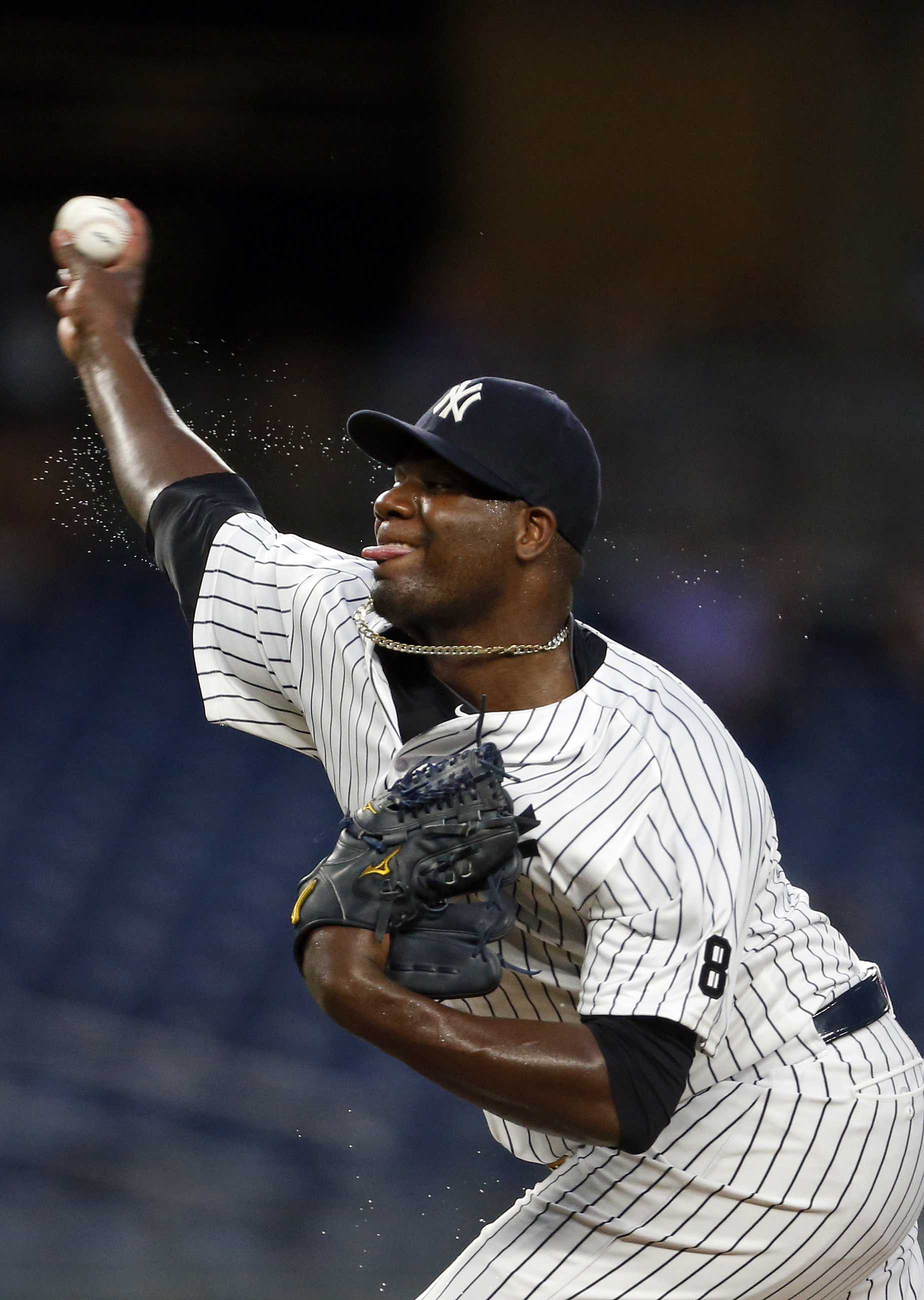
Pineda’s recent track record is susceptible of supporting multiple narratives. By one, it’s something of a surprise that the Yanks tendered him a contract and paid him a fairly healthy $7.4MM salary in his final year of arb eligibility. After all, he carries a disappointing 4.60 ERA over his 336 1/3 innings in the past two seasons. That’s far shy of what the club hoped for, no doubt; a pitcher’s essential job, after all, is to keep runs off the board.
There’s another view, of course. For one thing, Pineda finally turned in 32 starts for the first time as a big leaguer in 2016. Given the serious shoulder problems he has dealt with, that’s both notable and quite valuable in and of itself. He also finally restored all of his lost fastball velocity, working at 94 mph for the first time sine his rookie year. Pineda also managed a career-best 14.1% swinging-strike rate and 10.6 K/9 strikeout rate, placing him in elite company (see here and here). His walks were up a smidge (2.7 BB/9) over his prior two years, when he showed top-level control, but that’s hardly a problem. And Pineda continues to generate grounders at a slightly above-average rate.
All of those measures suggest that Pineda is among the game’s most dominant starters. The issues largely lie in the batted ball results and sequencing. For one thing, he allows too many gopher balls. Last year, he coughed up 1.38 per nine while allowing dingers on 17.0% of the fly balls hit against him — well over the league average. And Pineda has surrendered successive .332 and .339 batting averages on balls in play while posting below-average 68.6% and 70.7% strand rates.
There’s probably some poor fortune mixed in there — Pineda’s contact profile (32.7% hard, 17.2% soft) last year landed in range of the league average. But there’s more than just bad luck at play here. Other measures of contact management paint a less optimistic picture. Why? Pineda’s slider is his money pitch. While his change is mostly just a serviceable option, it at least provides another look to lefties. Indeed, the platoon advantage isn’t the issue; while lefties reached base a bit more often against Pineda, due mostly to drawing more walks, hitters from both sides slugged the same (.460 for lefties, .463 for righties).
The bigger problem, it seems, is Pineda’s other pitch: the fastball. He works off of his four-seamer, throwing it 45% of the time. Opposing hitters hammered that offering, resulting in a -20.6 pitch value that more than offset the fantastic results (15.7 pitch value) Pineda generated with his top-notch slider. Nicolas Stellini of Fangraphs took a close look at this issue recently, arguing that the lack of a truly viable third pitch combined with a propensity for grooving the fastball to produce the problems. To be fair, it’s possible to groove a heater with good results — reigning NL Cy Young winner Max Scherzer has a top-shelf four-seamer that he “grooves” quite a bit, though his has quite a lot of horizontal movement and is surrounded by a much more developed set of offerings.
I certainly won’t pretend to know whether that’s simply a permanent limitation for Pineda; indeed, plenty of high-octane fastball-slider hurlers simply end up being relegated to bullpen duty. Lots of tweaks can be imagined. Improving his fastball and/or change are obviously possible, theoretically, if perhaps unlikely at this stage. Further developing alternative fastball versions (two-seamer, cutter) might vary the look. Playing with vertical location could have an impact. Whatever the fix, it’ll need to stick for Pineda to show he’s capable of sticking as a starter.
As things stand, there’s a high degree of variance to Pineda’s future. He’ll play the 2018 season at just 29 years of age, so there are prime seasons to sell in free agency. But will he be marketing those as a top-flight young starter? (With a qualifying offer attached?) As a one-year bounceback candidate? Or perhaps as a versatile, late-inning reliever who’s capable of throwing multiple frames. That last possibility surely is an intriguing one. Pineda’s power arsenal and ability to limit walks compare rather favorably with converted starters such as Andrew Miller, who pared back his starter’s arsenal to a four-seamer/slider mix that has obviously played up in the pen.
Of course, even in the current market, the relief ace profile doesn’t pay quite as well as that of a quality #2 or #3 starter. And it remains to be seen whether Pineda will have a chance — or will be forced — to showcase himself in such a role in 2017. All in all, there’s plenty riding on the season to come.
Photo courtesy of USA Today Sports Images.
Offseason In Review: Boston Red Sox
This is the latest entry in MLBTR’s Offseason In Review series.
You can’t really call it a “quiet” offseason when you swing perhaps the winter’s biggest blockbuster, though the Red Sox seem to be counting on internal pieces just as much as their few new faces in order to defend their AL East title.
Major League Signings
- Mitch Moreland, 1B: One year, $5.5MM
- Total spend: $5.5MM
Trades And Claims
- Acquired SP Chris Sale from White Sox for 2B Yoan Moncada, SP Michael Kopech, OF Luis Alexander Basabe and RP Victor Diaz
- Acquired RP Tyler Thornburg from Brewers for 3B/1B Travis Shaw, SS Mauricio Dubon, RHP Josh Pennington and cash/player to be named later
- Acquired 2B Josh Tobias from Phillies for SP/RP Clay Buchholz
- Claimed 1B/OF Steve Selsky off waivers from Reds
- Claimed IF Josh Rutledge from Rockies in the Rule 5 Draft
Notable Minor League Signings
- Brian Bogusevic, Dan Butler, Cesar Cabral, Erik Cordier, Matt Dominguez, Kyle Kendrick, Junior Lake, Edgar Olmos, Mike Olt, Carlos Quentin, Hector Velazquez
Extensions
- None
Notable Losses
- David Ortiz (retirement), Koji Uehara, Brad Ziegler, Junichi Tazawa, Buchholz, Moncada, Kopech, Shaw, Ryan Hanigan, Bryan Holaday
Red Sox roster; Red Sox payroll information
Needs Addressed
After signing David Price last winter and trading for Rick Porcello in December 2014, the Red Sox made yet another offseason splash to upgrade their rotation, and arguably the biggest one yet in Chris Sale. The southpaw has been nothing less than one of baseball’s best pitchers over the last five seasons, posting a 3.04 ERA, 5.08 K/BB rate, 10.0 K/9 and 27.6 bWAR over 1015 2/3 innings. Not only is Sale still apparently at the top of his game heading into his age-28 season, he also offers ace production at a relative bargain price, as he is owed $12MM this year and then $12.5MM in 2018 and $13.5MM in 2019 (assuming the Sox exercise club options on those last two seasons).
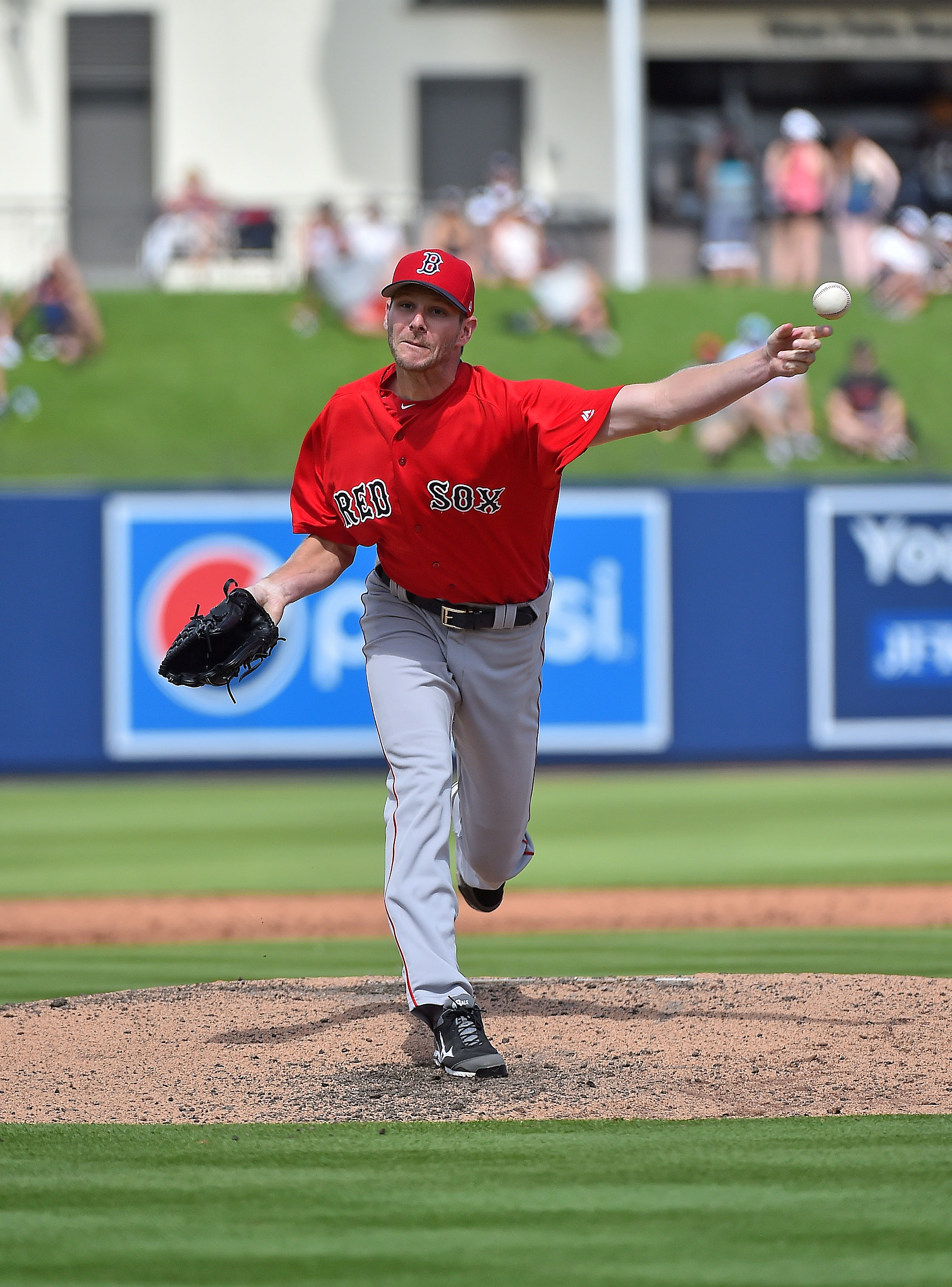
Sale came at a heavy prospect cost, though Boston has enjoyed such incredible minor league depth in recent years that the club could justify trading blue chippers like Yoan Moncada and Michael Kopech. An established ace like Sale is naturally more help for a win-now team like the Sox than Kopech would be in the rotation, while Moncada was blocked at his natural position (second base) by Dustin Pedroia and blocked in the outfield by Mookie Betts, Jackie Bradley and rookie Andrew Benintendi (the consensus top prospect in baseball). Even with the uncertainty at the hot corner, Moncada was still somewhat expendable given that prospect Rafael Devers may be a year or two away from becoming the third baseman of the future.
Speaking of third base, the Sox dealt starter Travis Shaw to Milwaukee as part of another multi-player deal that saw righty reliever Tyler Thornburg come to Fenway Park. Thornburg enjoyed a big year out of the Brewers pen in 2016, and he is both considerably younger and harder-throwing than veterans Koji Uehara and Brad Ziegler, who left in free agency. Thornburg projects to be Craig Kimbrel‘s top setup option, though Spring Training may decide if Joe Kelly has a share of that role or if the Sox could simply use both men in the eighth inning on a situational basis. (Carson Smith could factor in the late innings, too, when he finally returns from Tommy John surgery.)
Adding Sale to an already somewhat crowded rotation picture allowed the Sox to trade Clay Buchholz to the Phillies. Injuries and inconsistency kept Buchholz from ever truly living up to expectations, though the righty certainly had his share of impressive moments over his decade in Boston. The Red Sox chose to exercise their $13.5MM option on Buchholz last fall rather than simply let him walk, a decision that allowed the club to net some return for him when Philadelphia took on all of Buchholz’s salary and still gave up an interesting infield prospect in Josh Tobias.
The Red Sox were linked to several notable first base/DH-type sluggers to fill David Ortiz’s big shoes, but decided against pursuit of a star name. Boston instead inked Mitch Moreland to a one-year deal. The move allows Hanley Ramirez to take most of the DH duties, as Ramirez will likely only play first when the Sox face a lefty pitcher, with Chris Young spelling Moreland in the lineup as the designated hitter. Signing Moreland also doesn’t create a long-term roadblock at the position since the Sox think very highly of minor league first baseman Sam Travis, who missed much of last season due to a torn ACL but could reach the majors by late 2017 if he continues hitting.
Questions Remaining
It isn’t a coincidence that the Red Sox saved the bulk of their offseason business until after the new collective bargaining agreement was finalized in late November. The new luxury tax rules were of particular importance to the team. Since the tax threshold was raised to $195MM this season, the Sox were able to emerge from the offseason a few million dollars beneath the the limit. If they can stay there through year’s end, the club can “reset its clock” in the calculation of overage penalties (which penalize repeat offenders at a higher rate, and are also more costly under the new CBA).
As a result, the offseason saw the Red Sox show some financial restraint, which annoyed some fans who felt bigger moves were necessary in the wake of Ortiz’s departure and the team’s abrupt postseason exit. Moreland ended up being the answer at first base instead of Edwin Encarnacion, Jose Bautista, Carlos Beltran or Mike Napoli; while the Sox at least checked in on these and other notable 1B/DH names, the club chose future financial flexibility over making an “all-in” move to win in 2017.
Given the amount of core talent on the Sox roster, it can be argued that Boston didn’t really need to make such a big splash now when they’re well-positioned to contend for the next several years. (Plus, getting under the tax threshold now will save millions, and potentially set the Red Sox up to be larger players in the star-studded 2018-19 free agent market.) The Sox also have enough potential at their so-called question mark positions that these spots might not end up being problems at all, though there’s definitely some uncertainty in a few areas.
With Moncada, Shaw and veteran Aaron Hill all no longer third base options, the Red Sox are putting a lot of faith in Pablo Sandoval‘s ability to resurrect his career after a miserable 2015 and an injury-writeoff of a 2016 campaign. Sandoval has gotten himself in much better shape, though it’s hard to know what to expect from the Panda in the wake of two lost seasons. If Sandoval can’t produce, the Sox could turn to Brock Holt, Marco Hernandez and/or Josh Rutledge to handle third until the trade deadline, when you’d expect Boston to be in play for such potential trade candidates as Todd Frazier of the White Sox, the Royals’ Mike Moustakas or others.
The Sox stood pat at catcher, hoping that Sandy Leon can find an acceptable balance between his scorching-hot summer performance and his ice-cold September or that Christian Vazquez can develop some hitting to go with his outstanding defense. Former top prospect Blake Swihart is still a bit of a wild card due to his lack of a position; while he has the most value to the Sox if he can get a foothold as a catcher, Swihart developed a problem throwing balls back to the mound during spring camp. Needless to say, Swihart’s future as a catcher is still a work in progress, and he might end up spending much of 2017 at Triple-A working on his defense and making sure he’s fully recovered from his season-shortening ankle injury.
Price and the Red Sox received a big scare early in Spring Training when Price was shelved with elbow soreness, though fears of Tommy John surgery were allayed when the lefty was diagnosed with bone spurs and a mild flexor strain. Still, Price won’t throw for a couple of weeks and will almost certainly begin the season on the DL, which underscores a potential lack of depth in the Sox rotation.
Even with Price healthy, the three-pitcher battle between Drew Pomeranz, Steven Wright and Eduardo Rodriguez over the final two rotation spots carried its share of question marks. All three of those starters had injury issues in 2016, with Pomeranz and Wright perhaps the most concerning of the trio — Wright pitched just ten innings after August 9 due to a shoulder injury and Pomeranz received a stem cell injection in his throwing elbow after the season to battle some recurring soreness in the joint. It’s also worth noting that Wright and Pomeranz didn’t have much of a track record of success as starters prior to 2016 and Rodriguez has only shown flashes of his vast potential during his brief MLB career.
It’s probably unlikely that all three will struggle (be it from injuries or just poor performance) this season, though there’s suddenly much less room for error if Price ends up with a significant DL stint. Looking at the farm, the Red Sox could turn to Roenis Elias, Brian Johnson or Henry Owens, plus veteran Kyle Kendrick was signed to a minor league deal. While none of these names offer much in the way of stability, the fact that Boston has so many arms in the upper minors made it difficult for the club to attract much in the way of reliable veteran depth this winter.
Deal Of Note
While obviously no one expects Moreland to replicate Ortiz’s stunning production, Moreland has some dependability issues even as a platoon bat. The left-handed hitting Moreland has only been a solid (.258/.321/.457) rather than a standout performer against right-handed pitching over his career, and he managed just a .700 OPS against righty pitching last season. He enjoyed a big 2015 season that saw him hit .278/.330/.482 with 23 homers and a 117 wRC+ over 515 PA for the Rangers, but apart from that career year, Moreland has generated just 2.7 bWAR over his 641 career games played outside of the 2015 season.
As noted, however, there was sound financial logic behind Boston’s decision to sign Moreland instead of a pricier first base bat. On the field as well, Moreland makes sense as both a big defensive upgrade and a doorway to lineup flexibility. Moreland won a Gold Glove last year, posting a 9.2 UZR/150 and +7 Defensive Runs Saved that were far beyond Ramirez’s below-average grades in both metrics. By improving their first base defense, the Red Sox are guarding their infield against a probable defensive dropoff at third, as Shaw exhibited some very good glovework at the hot corner.
While more and more teams have preferred to rotate players through their DH spot in recent years in order to keep everyone fresh, the Sox didn’t really have that luxury due to Ortiz (though his bat more than made up for such drawbacks). While Ramirez will be the DH most days, the Red Sox can also give veterans like Pedroia or Sandoval a break while still keeping them in the lineup.
Even if Moreland has another blah year at the plate, the Red Sox will be satisfied if he can continue wielding a strong first base glove. While Sox fans may cringe whenever, say, Encarnacion or Beltran go yard for the Indians or Astros, they may also appreciate that Ortiz’s “replacement” (from an overall value standpoint, not hitting-wise) is actually in left field. Boston received a combined -0.1 bWAR out of the left field position in 2016, and everyone in baseball expects far more than that from the highly-touted Benintendi.
Overview
President of baseball operations Dave Dombrowski has historically been pretty bold about using young talent as trade chips, and the Sale deal goes near the top of the list of Dombrowski’s trades of prospects for established talent. As much as Sale, Thornburg or Moreland could be the final pieces of the puzzle, however, this season could be defined by how some players can solidify any weak spots on the roster. Scenarios like Benintendi living up to the hype, Price returning from injury with no ill effects, at least two of the three rotation candidates firmly earning the fourth and fifth starters’ jobs or Sandoval recapturing some of his old Giants form would go a long way towards a deeper postseason run for the Sox.
What’s your take on the Red Sox’ winter? (Link for app users.)
How would you grade the Red Sox offseason?
-
F 25% (2,436)
-
B 24% (2,370)
-
A 22% (2,166)
-
D 16% (1,545)
-
C 13% (1,227)
Total votes: 9,744
Photos courtesy of USA Today Sports Images.
Inside The Draft Room: The 1997 Blue Jays
Chuck Wasserstrom spent 25 years in the Chicago Cubs’ front office – 16 in Media Relations and nine in Baseball Operations. Now a freelance writer, his behind-the-scenes stories of his time in a big league front office can be found on www.chuckblogerstrom.com. Chuck has previously contributed to MLBTR’s Draft Prospect Q&A series and spearheaded MLBTR’s College Series, in which he spoke to numbers general managers and assistant general managers around the game about their time in college and their paths to a Major League front office.
It’s early on a Wednesday morning in February, and Tim Wilken is well into the amateur scouting season.
In most parts of the country, high school and college baseball teams are still a couple weeks away from getting on the field. But at this point in the year, Wilken has already been to Puerto Rico for a showcase and to Fort Myers, Fla., for a junior college tournament – as well as multiple scouting missions to the Dominican Republic.
This is the 39th consecutive year that Wilken – a special assistant to the general manager with the Arizona Diamondbacks – has been involved in baseball’s amateur draft. In his current role, he works closely with Arizona scouting director Deric Ladnier and anticipates seeing anywhere from 150-190 players for the upcoming draft. Prior to joining the Diamondbacks, he spent 10 years with the Cubs, three with the Rays and 25 with the Blue Jays.
Major League teams started putting together their 2017 draft coverage last summer, sending scouts to watch high school showcases, high school tournaments, the Cape Cod League, Team USA, and other events. As the summer turned to autumn, there was plenty of collegiate fall ball – along with a fair share of pro scouting days. Throw in some pretty significant junior college tournaments in January, and it’s easy to see that the draft is a year-round process.
Wilken began his Blue Jays career in 1979 as an area scout and was named national crosschecker in 1989. He was promoted to scouting director in 1995, and – during his first year in charge of the Blue Jays’ draft – the club picked seven players who would reach the majors, including Billy Koch and Casey Blake. It was a precursor of things to come.
“The first draft was a wild one,” Wilken recalled. “I’d been involved in six drafts before as the national guy and had a pretty strong hand in those drafts. But when it’s your turn to make the call, it’s a little bit different.”
The first draft was a launching point. But Wilken’s second draft really stamped him as a scouting director to keep an eye on. Looking back at it 20 years later, Toronto had the best draft class of 1997 – a draft class worth praising.
The truth: “Only” four players selected by the Blue Jays in that year’s draft went on to reach the majors. Four others – who were picked by the club but returned to school – eventually reached the big leagues after being chosen in later drafts by other clubs.
The reality: “Only” is a poor word to use. Having four players from one draft reach the majors is a solid accomplishment.
The facts: Those four players – Vernon Wells, Michael Young, Orlando Hudson and Mark Hendrickson – each saw action in at least 10 major league seasons. Wells, Young and Hudson had multiple All-Star game appearances and received big league hardware (eight combined Gold Glove Awards, a Silver Slugger for Wells, a batting title and an All-Star Game MVP for Young). Hendrickson, a 6-foot-9 left-hander, pitched for five teams over 10 years – after seeing action as a power forward with four NBA teams.
When you add it all up, those four players appeared in a combined 50 seasons of major league action.
“When evaluating drafts, that has to say something for that particular draft and that particular team,” Wilken said. “You’re always grading scouting departments on performance, but when you get four guys giving you that much time in the big leagues – that should count for something. You might have a year where you put 10 guys in the big leagues, but that might be 21 total years of service. You’re paying for quality, not just for getting guys there.”
– – –
The Blue Jays’ scouting staff was facing obstacles as the 1997 draft approached. The Labatt Brewing Company – the majority owner of the Blue Jays since their inception in 1976 – had just completed the process of selling the team, and finances were not as available to Wilken as they had been during previous drafts.
The Blue Jays – winners of back-to-back World Series in 1992-1993 – had struggled over the few years following those championships while an ownership transition was taking place. A 74-88 campaign in 1996 gave Toronto the fifth overall selection in the ensuing draft. Meanwhile, in an attempt to become relevant again at the big league level, the team made an off-season splash – signing right-hander Roger Clemens. As a result, Toronto gave up its second-round pick as compensation for the free-agent signing.
“Our budget for the draft was compromised; a lot of people thought the Blue Jays were still operating on a big budget, which we weren’t,” Wilken said. “We weren’t necessarily looking for a deal in the first round because we were picking in the five-hole, but at the same time we weren’t super-equipped to take on a monster sign if one of those style players had fallen to No. 5. We had to stay as close as we could to the budget.”
Those “monster sign-style” players – Rice pitcher Matt Anderson, Florida State outfielder J.D. Drew and UCLA third baseman Troy Glaus – were taken 1-2-3 as expected by Detroit, Philadelphia and Anaheim. If any of the first three had dropped, Wilken would not have been prepared to deviate from the plan.
“I don’t think we could have come up with the money – because those three were going to get a fair amount more than we could afford,” Wilken explained.
As the draft got closer and closer, Wilken’s plan was to select a two-sport prep star out of Bowie High School in Arlington, Texas, by the name of Vernon Wells.
There had been a lot of talk that Wells and another player who would later be selected 26th overall (outfielder Darnell McDonald, by Baltimore), would be heading to the University of Texas to play football. The more Wilken and the Blue Jays’ scouting department saw Wells play, the more they knew he was their type of guy. In the eyes of the draft prognosticators, though, Wells was not thought to be a Top 20 pick.
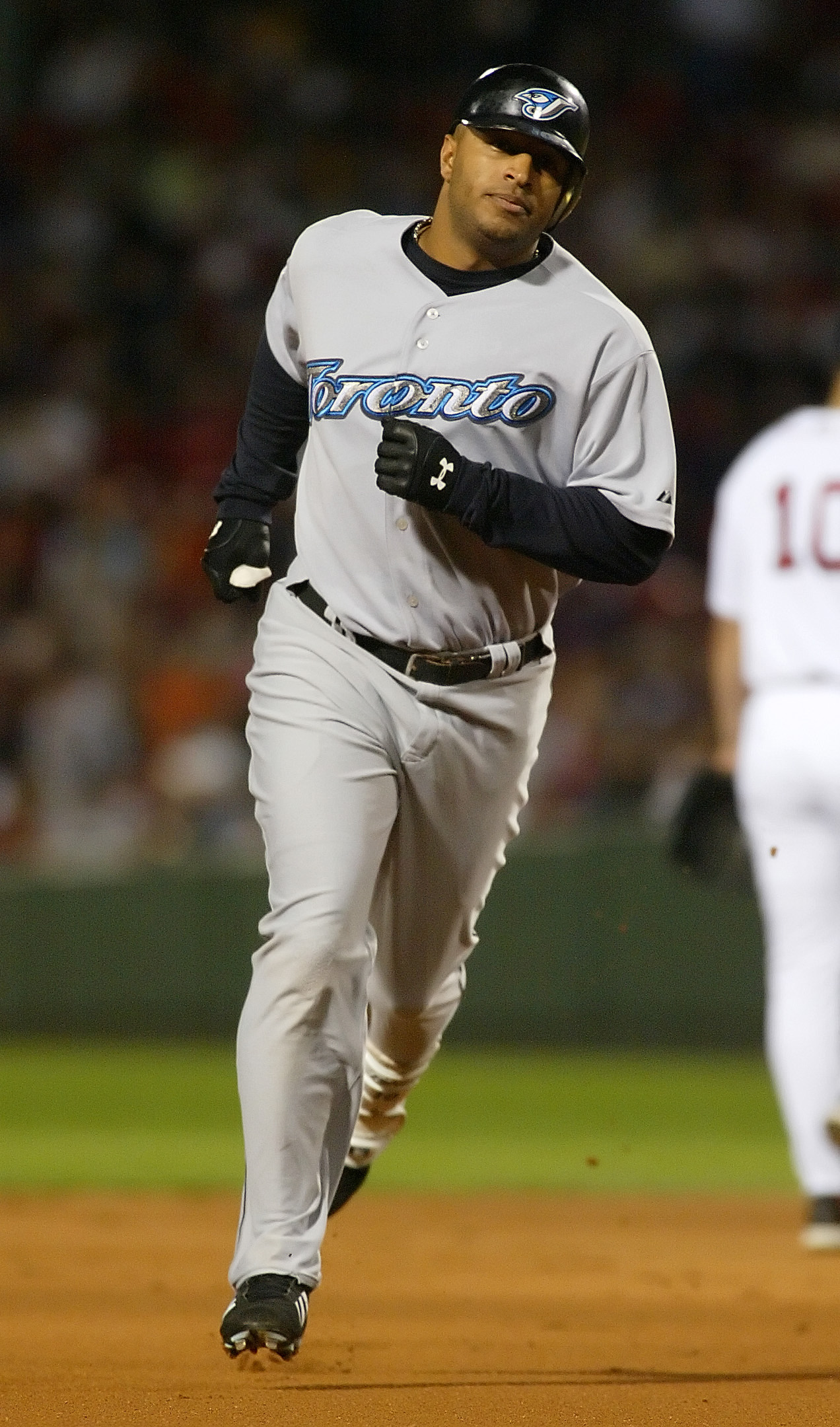
“We thought Vernon would be the right move for us. He was a true center fielder,” Wilken said. “He was just a natural player, and he was way ahead of himself mentally. (Toronto general manager) Gord Ash left the night before the draft and flew down to Dallas – and negotiated with Vernon and our area scout, Jim Hughes. After talking to him, Gord knew that there would be an excellent chance that we would sign him the next morning.”
Once the first three picks went as expected, only one team could prevent Wilken from selecting Wells: San Francisco.
“We didn’t know what the Giants were going to do,” he said. “I think we all knew who the first three picks would be, but no one knew what was going to happen at No. 4. The Giants were very tight-lipped, so we didn’t really know if we’d have our man.”
San Francisco selected Seton Hall pitcher Jason Grilli, and Wilken had his man.
“We took Vernon, and we paid him exactly what the slot was bonus-wise,” he said. “We thought Vernon was a true center fielder – and that he’d have a chance to hit. We thought he was mentally mature beyond his days, and that proved out – because he got to the big leagues at 20 years of age. We were honed in to him pretty good. There weren’t too many guys we would have taken over him – and definitely not the first three. Probably the only other guy you could argue that could have gone in that spot was Lance Berkman. We couldn’t have taken J.D. Drew at No. 5 with the money we had available.
“After we selected Vernon, I remember a writer saying that the Blue Jays had run away from their values and what they had done in years past – which had been taking the athlete-type guy. I thought that was a slap in the face to Vernon – since he was a pretty good athlete. As time went on, he showed that he was definitely a guy that should have been taken there.”
Wells, who made his big league debut in August 1999, developed into a three-time American League All-Star, a three-time Gold Glove Award winner and a 2003 Silver Slugger Award winner. He played in over 1,700 major league games for the Blue Jays (1999-2010), Angels (2011-2012) and Yankees (2013), batting .270/.319/.459 with 270 homers and 958 RBI.
– – –
Somehow, Michael Young lasted until the fifth round of the draft. Somehow, despite being a kid out of Division I, it took Young four minor league seasons just to reach the Double-A level. Somehow, a late-season, two at-bat cup of coffee after a 2000 trade to the Texas Rangers’ organization proved to be the jolt that Young’s career needed.
The best way to sum up the somehows: Young was your classic late bloomer.
“It’s kind of funny … there wasn’t monster play on him,” Wilken said. “Michael was originally a center fielder and went to Bishop Amat High School in the L.A. area. He got a scholarship to go to UCSB (University of California-Santa Barbara), where he was learning how to play shortstop. He had this mentality – almost like a football player – in the sense that he’d run right through ground balls … he had a big motor. A lot of professional instructors will tell you that it’s easier to tone down a player than it is to perk him up, and he fit that mode that you want to see. He was a good baseball player. His tools did not actually punch you in the face, except that he had a tremendous arm. And I mean … tremendous. Probably a ‘7’ from short – and he threw better from center field.”
Wilken was referring to the 2-8 scouting scale, with an ‘8’ being Hall-of-Fame equivalent, ‘7’ being All-Star, and so on.
“I remember the first time I watched Michael play,” he said. “UCSB was playing against Westmont College – which was an NAIA school. Even back in 1997, you didn’t see a lot of Division I schools playing NAIA teams. He had the cycle by the fourth inning – and they won something like 26-2. In the fifth inning, he made an out, and all the players on the bench started booing him.
“Chris Buckley, one of my assistants, was with me. So was Billy Moore, who was one of our better area guys; he had gotten guys like Reed Johnson, Jay Gibbons and Chris Woodward for us in the late rounds of previous drafts. I remember Buckley leaning over and saying, ‘Geez Billy. If you don’t get this guy, I don’t think you’ll ever get a higher pick.’
“I would say if you were to ask the other 29 clubs what kind of power grades they had on Michael … at that time, it didn’t look like that swing path was going to play. I don’t know if anyone had ‘50’ power on him. But look at some of the years he had in the big leagues – with close to 70 extra-base hits. It shows you what kind of player he made himself. He learned how to close the hole in his swing.
“One thing that helped us was that UCSB was a little bit off the beaten path travel-wise. He wasn’t the easiest guy to see – especially when they played at home. Knowing he was making a position switch also helped us; I don’t think ‘raw’ is the right word for it, but not many can come into the infield from center field – which he did. We just kept watching him play, and we nonchalantly took Michael in the fifth round. You know the story from there.”
Young – who was traded to the Rangers as part of a July 2000 trade for Esteban Loaiza – didn’t become a big league regular until he was nearly 25 years old. He made an A.L. All-Star team for the first time at 27 – and went on to appear in seven Midsummer Classics, winning All-Star Game MVP honors in 2006. He won the A.L. batting title in 2005, a Gold Glove at shortstop in 2008 and went to two World Series. In 1,970 games for the Rangers (2000-2012), Phillies (2013) and Dodgers (2013), he hit .300/.346/.441 with 185 homers and 1,030 RBI.
– – –
In Wilken’s first draft as Toronto’s scouting director in 1996, he used a 33rd-round pick to select a skinny high school kid by the name of Orlando Hudson. The Darlington (S.C.) High infielder opted to go the junior college route, spending one year at Spartanburg (S.C.) Methodist College.
Over that 1996-1997 school year, Hudson got a little bigger and a little stronger. When the baseball draft rolled around, Wilken once again chose Hudson – this time in the 43rd round.
“It shows you how smart I was, taking him in the 33rd round one year and in the 43rd the next year – and then he goes on to play 11 years in the majors,” Wilken joked. “We had a scout by the name of Mike Russell who originally drafted him his high school year, then a guy named Steve Williams joined us – and he continued the relationship with Orlando.
“Orlando was going to go to the University of South Carolina. Draft-and-follows don’t usually work out, but he had gotten a little bit bigger and a little bit stronger. We were able to put together the right combination of school and bonus. We had lost Ted Lilly a couple years earlier because we hadn’t gone a little bit further, and I said I wasn’t losing another player whose baseball ability we believed in.”
Wilken thought that if Hudson continued to get stronger, the contact would play up – which it did. The second baseman made two All-Star teams and won four Gold Gloves, seeing big league action with six teams from 2002-2012. In 1,345 games, he hit .273/.341/.412 – and the one-time skinny guy even homered 93 times.
“Orlando was a wonderfully animated guy who knew how to play the game. He was a ball yard rat,” Wilken said. “He always had good hands and a good-enough arm. He was a baseball player, but his strength hadn’t come in yet. At that point, he was a below-average runner – and that’s why he got to be where he was in the draft. As he got bigger and stronger, he started running better – and he was a good baserunner.
“He was just acutely aware baseball-wise – which is what separated him later on as he got stronger. It’s the same thing that happened with Chris Woodward a couple years earlier; he also was thin and underdeveloped at the time, but he was a really good baseball player with good hand/eye coordination. On top of that, Orlando was a switch-hitter. The foundation and the basis were there.”
– – –
During his time in Toronto, Wilken was an important cog in the drafting of a solid core of players that included Wells, Young, Hudson, Casey Blake, Chris Carpenter, Carlos Delgado, Ryan Freel, Jay Gibbons, Shawn Green, Roy Halladay, Reed Johnson, Steve Karsay, Jimmy Key, Alex Rios, Shannon Stewart and Craig Wilson. But it was the draft class of ’97 that really put him on the map.
“Looking back, you can smile and say we did a pretty good job – but we were also fortunate at the same time, too,” Wilken said. “Vernon Wells, in the eyes of a lot of prognosticators, was considered a way-too-high pick at the time. Michael Young made himself better and became a pretty darn good player. If anyone truly believed Orlando Hudson would become as good of a baseball player as he did, then shame on us – especially me – for letting the guy get to the 43rd round. That’s kind of the purist in me.”
Throw in Mark Hendrickson’s 10 seasons on a big league mound, and “those four put 50 years in,” Wilken said. “We had great area scouts that made it all possible. I can sit back and smile and say, ‘Hey, our department did pretty good that year.’ It’s rewarding mentally to see what did happen.”
Photo courtesy of USA Today Sports Images.
Make-Or-Break Year: Shelby Miller
MLBTR is rebooting its “make or break year” series, in which we analyze players who enter the season with up-and-down track records but also an opportunity to stake a claim to significant future earnings.
Relative to expectations, few major leaguers are coming off poorer seasons than Diamondbacks right-hander Shelby Miller, whose first year in Arizona couldn’t have gone much worse. Miller had been a quality starter with the Cardinals and Braves over the three prior seasons, but the Diamondbacks’ decision to send a haul to Atlanta for him in December 2015 was universally panned from the get-go.
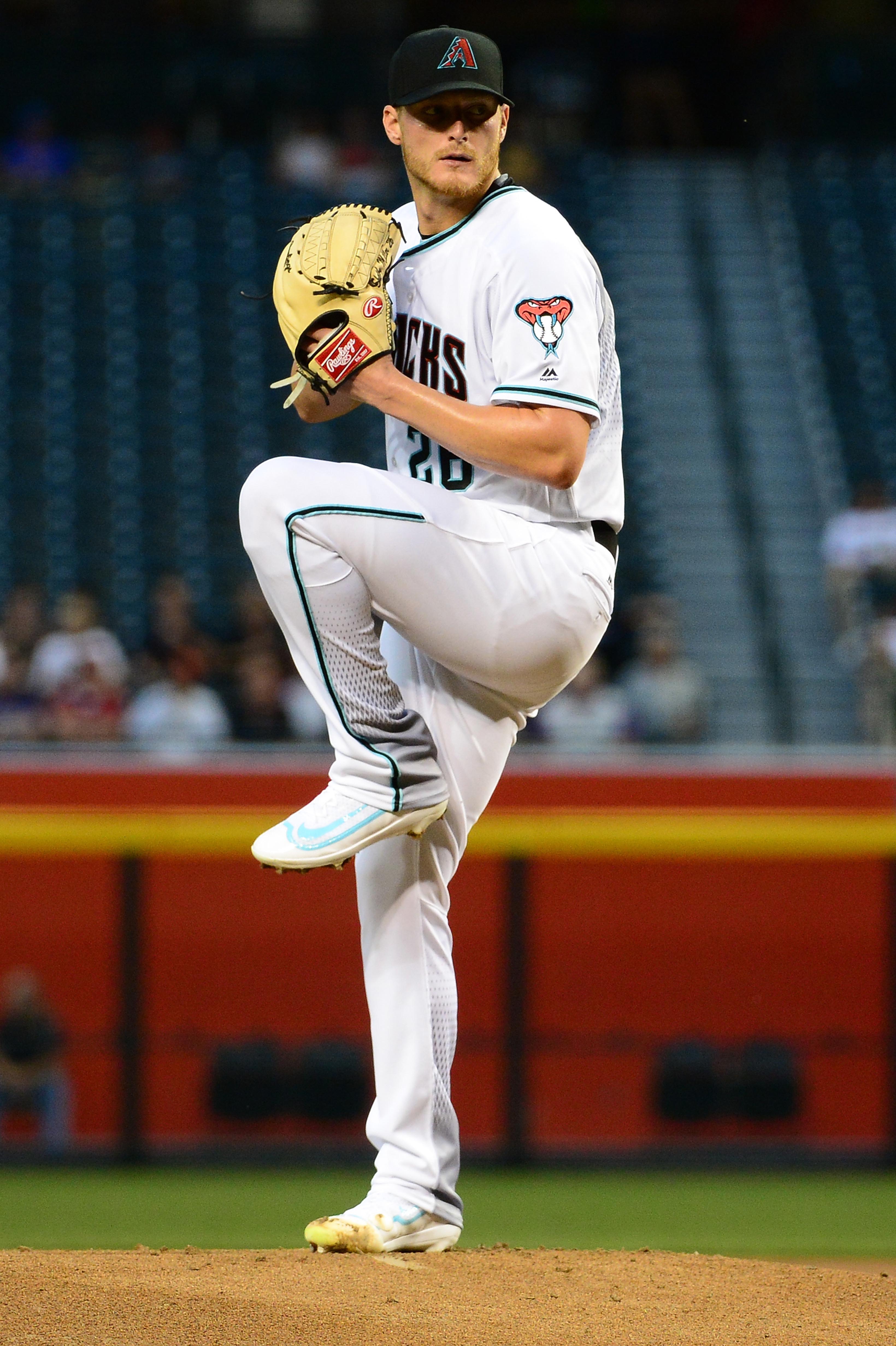
Clearly regarding Miller as an ace, the D-backs’ front office parted with two well-regarded prospects, shortstop Dansby Swanson (the No. 1 pick in the 2015 draft) and righty Aaron Blair, as well as highly valuable center fielder Ender Inciarte to land him. That choice ultimately helped cost Diamondbacks general manager Dave Stewart and senior vice president of baseball operations De Jon Watson their jobs this past offseason, which came on the heels of dreadful performances from Miller and the 69-win team the executives helped build.
In a year that included a stint on the disabled list, a midsummer demotion to Triple-A and nearly another trade, Miller posted career worsts in ERA (6.15), K/9 (6.24), BB/9 (3.74) and swinging-strike percentage (7.0) across 101 innings. On Atlanta’s end, Blair endured an even worse 70 frames in his first taste of big league action, but Swanson impressed in his 145-plate appearance debut and figures to serve as their long-term answer at short. The defensively adept Inciarte, meanwhile, played well enough to land a lucrative contract extension.
While the trade is never going to turn into a positive for the Arizona organization, it’s possible Miller will revert to being a valuable contributor. He’s still only 26, after all, and not far removed from the aforementioned 2013-15 stretch that saw him register a terrific 3.27 ERA over 561 2/3 innings, albeit with so-so strikeout and walk rates (7.48 and 3.25 per nine) and a below-average ground-ball percentage (42.3). He’ll also have help from behind the plate, with new GM Mike Hazen having ditched a poor pitch-framing catcher (Welington Castillo) in favor of a good one (Jeff Mathis) during the offseason. Moreover, Hazen added ex-major league hurlers Dan Haren and Burke Badenhop (a former MLBTR contributor) to the front office, and those two will attempt to aid Miller and the team’s other pitchers in their new roles.
Miller revealed last month that attempting to live up to the trade hindered him last season, and he told FOX Sports’ Ken Rosenthal that he’s trying to “almost go back to being a Little Leaguer and have fun.” It’s only spring, granted, but it appears that approach is working. In his most recent outing on Thursday, Miller hit 99 mph on the radar gun and shut down the Cubs over three innings of one-hit ball, per Nick Piecoro of the Arizona Republic.
Diamondbacks pitching coach Mike Butcher then raved about Miller to Piecoro on Sunday, saying (via Twitter): “Mentally, he’s in a great place. He’s where he needs to be. He just looks really, really good right now. And he’s confident. He’s on a mission, man.”
Whether Miller’s encouraging spring carries over into the regular season will obviously affect his earning power for years to come. Thanks to his minor league demotion last season, Miller didn’t accrue a year of big league service time, meaning he could be under Arizona’s control through the 2019 campaign. Miller will earn $4.7MM this year after the Diamondbacks defeated him in arbitration during the offseason, and he’ll be a prime non-tender candidate next winter if he fails to rebound in 2017. On the other hand, flashing something resembling the form he showed prior to 2016 would net Miller a raise in arbitration or even a contract extension. It’s fair to say, then, that Miller’s in for a make-or-break year.
Photo courtesy of USA Today Sports Images.
MLBTR Originals
A roundup of MLBTR’s original content from the past week:
- Charlie Wilmoth kicked off this year’s Offseason In Review series with analysis on the Pirates, who elected against trading outfielder Andrew McCutchen during the winter and signed a couple notable pitchers in free agency.
- Jeff Todd (links: 1, 2, 3) highlighted three players who are in for make-or-break years, Mets catcher Travis d’Arnaud, White Sox outfielder Avisail Garcia and Reds center fielder Billy Hamilton.
- Jeff also searched for a landing spot for free agent DH Pedro Alvarez, whom the plurality of voters expect to sign with the White Sox, and Steve Adams did the same with unsigned outfielder Angel Pagan. Voters regard the Blue Jays as the most logical destination for the longtime Giant.
- Jason Martinez continued this year’s Camp Battles series with a piece on the Rays, while I took a look at the Cardinals.
Make Or Break Year: Billy Hamilton
MLBTR is rebooting its “make or break year” series, in which we analyze players who enter the season with up-and-down track records but also an opportunity to stake a claim to significant future earnings.
Reds center fielder Billy Hamilton remains one of the game’s most fascinating players, due in large part to his eye-popping ability to create runs through his unmatched daring on the bases. Hamilton’s top-of-the-charts speed — which he ably deploys to circle the bags and track down fly balls with the best of them — gives him a sturdy floor and makes him an easy bet to contribute in the big leagues for a full career.
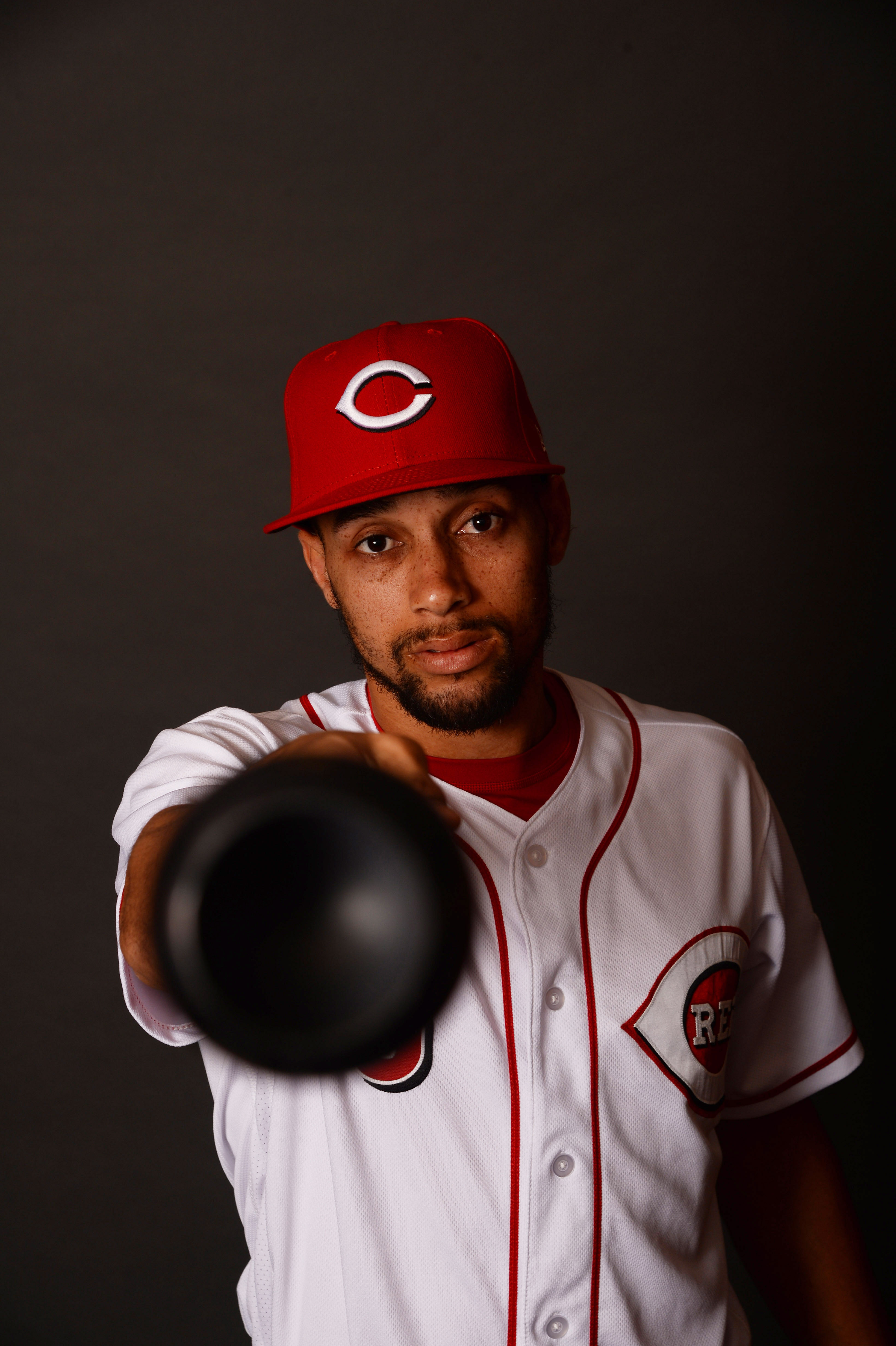
The question remains, though, whether Hamilton ought to be trotted out on an everyday basis given his weaknesses with the bat in hand. There’s an argument to be made that he’s good enough on the bases and in the field that he really doesn’t need to hit much at all to warrant a steady job. Over the past three seasons, Hamilton has paced baseball by a laughable margin in total baserunning value and ranks third in the game in UZR-based defensive contributions. And this isn’t just some sabermetric argument; teams have long valued outstanding up-the-middle defenders who couldn’t hit a lick. (To take but one largely random example, Phil Rizzuto came in second in the AL MVP voting in 1949 despite a .275/.352/.358 batting line … nearly a perfect match for the .273/.351/.355 slash he carried during a Hall-of-Fame career.)
Still, there’s a point at which it’s hard to stomach the lack of production at the dish. Remarkably, Hamilton managed 2.0 fWAR and 1.0 rWAR in 2015 even while hitting an anemic .226/.274/.289. But that level of offense makes him more of a fourth outfielder than a regular worthy of a major commitment from an organization, so the Reds will no doubt demand more before committing to Hamilton for the long run. Obviously he’s shown more in other seasons, but how much bat is enough? And can Hamilton boost his production to the point where that’s a moot question, perhaps earning an extension in the process? Much of the information needed to answer those questions will be provided by Hamilton’s 2017 season.
Is it too early to label this a “make or break year” for Hamilton? Perhaps, to some extent. After all, he’s only 26 and just reached arbitration eligibility for the first time. (He’ll earn a palatable, but still reasonably significant, $2.625MM salary.) But that leaves only two further years of control, at increasing rates of pay, and the Reds are hoping to push toward contention sooner than later. If there’s uncertainty regarding Hamilton’s future — and the organization’s interest in retaining him beyond his arb years — then surely Cincinnati will look to explore alternatives, while perhaps dangling the unique burner in trade talks. (If late-inning relievers are uniquely appealing at the trade deadline, then how about a baserunning specialist who’d become a rare weapon down the stretch and in the postseason?)
Let’s take a closer look at Hamilton’s hitting profile. Surrounding his putrid 2015 campaign, the switch-hitter compiled two seasons in which his overall output was similar but the way he got there was different. In 2014, his rookie campaign, Hamilton slashed .250/.292/.355; last year, he ran out a .260/.321/.343 batting line. With context factored in, both represented productivity that falls about 20% below league average. But for several reasons, the more recent season was arguably more promising.
First and foremost, Hamilton boosted his walk rate in 2016 to a career-best 7.8%. Relatedly, while his overall contact numbers have held steady, Hamilton continued a trend of laying off of more pitches out of the zone. He also put the ball on the ground quite a bit more than ever before (47.7%), helping him to generate a career-best .329 BABIP even as he recorded a typical (for him) 12.5% infield-hit rate and continued to produce very little had contact.
Those background improvements are reason for some optimism, but it’s Hamilton’s late-season charge that has created the most excitement. As C. Trent Rosecrans of the Cincinnati Enquirer recently examined, Hamilton produced a .369 on-base percentage over his final 45 games, allowing him to steal a remarkable 36 bases in that span. With some professional maturation and improvements to his approach supporting that improvement, perhaps there’s cause to believe that could carry over.
If Hamilton can reach base even at an approximately average clip, he looks like a solid 2.5 to 3.0 WAR player. If he can get on board at a greater rate, perhaps he’ll be a star. But his career OBP of .297 has left his legs in the dugout too frequently. There’s still some time for Hamilton to chart his true course, but the Reds may base their own plans based largely upon his 2017 campaign. The Cincinnati organization has opened up the pocketbook to extend control rights over core players rather frequently, and the Marlins’ extension of Dee Gordon shows the upside for a player of Hamilton’s ilk, but he’ll need to convince the club that he’s capable of sustained productivity to get there.
Photo courtesy of USA Today Sports Images.
Offseason In Review: Pittsburgh Pirates
This is the first entry in MLBTR’s annual Offseason In Review series. We’ll be reviewing the other 29 clubs over the next several weeks as the season approaches.
The Pirates were at the center of multiple potential blockbuster trade rumors this winter, but none of the rumored deals came to fruition. Now, Pittsburgh looks poised to enter the 2017 with a familiar core while several young talents hope to cement themselves as big league contributors.
Major League Signings
RHP Ivan Nova: three years, $26MM (re-signed)
RHP Daniel Hudson: two years, $11MM
RHP Lisalverto Bonilla: Major League contract (later lost on waivers to Reds)
Notable Minor League Signings
Eury Perez, Jason Stoffel, Josh Lindblom, Casey Sadler (re-signed), Angel Sanchez (re-signed)
Trades And Claims
Acquired IF Phil Gosselin from Diamondbacks for RHP Frank Duncan
Acquired RHP Pat Light from Twins for PTBNL or cash
Selected LHP Tyler Webb from Yankees in Rule 5 Draft
Extensions
LHP Wade LeBlanc: one year, $750K, plus $1.25MM 2018 option or $50K buyout
Notable Losses
Neftali Feliz, Matt Joyce, Sean Rodriguez, Jeff Locke, Ryan Vogelsong
Needs Addressed
Despite being connected to trade talks involving star lefty Jose Quintana throughout the winter, the Pirates’ offseason was generally a conservative one, designed to retain and augment the team’s top assets rather than adding more top assets to join them. That’s not to say, though, that their winter failed to prepare them for the upcoming season. The Bucs will have their work cut out for them as they attempt to compete with the Cubs again this year — that would be a tough assignment for any team, really. Still, there’s reason to think they can improve on their 78-win 2016 total, perhaps dramatically so if things go right.
The Bucs’ 2016 season was full of disappointments, particularly in their rotation. Ace Gerrit Cole couldn’t stay healthy and failed to build on his outstanding 2015. Francisco Liriano was a disaster, and he ended up heading to Toronto in a dubious August trade. Jon Niese, acquired prior to the season for a quality second baseman in Neil Walker, was a mess, posting a 4.91 ERA in Pittsburgh before heading back to New York. And Jeff Locke and Ryan Vogelsong, perhaps somewhat predictably, failed to pick up the slack. The Bucs’ rotation, formerly one of the team’s strengths, finished fifth-worst in the NL with a 4.67 ERA.
The disappointments extended to the lineup, where the Pirates got less than they were probably hoping for from Francisco Cervelli, Josh Harrison and John Jaso. By far the Bucs’ biggest disappointment, though, was Andrew McCutchen. The former MVP batted a mere .256/.336/.430 and looked markedly slower than he had in the past. His declining speed was a factor in his horrific -18.7 UZR and -28 DRS, with both statistics marking him as easily the worst regular center fielder in the game.
There’s reason to think the Pirates can avoid some of 2016’s troubles, even though they made few big on-paper moves. In the rotation, they re-signed Ivan Nova, who pitched better than he ever had after heading their way at the 2016 trade deadline. (More on Nova below.) They can also hope for a full, healthy season from Cole, and they should continue to receive help from a burgeoning group of young pitchers that includes Jameson Taillon (who had a strong rookie season in 2016), Chad Kuhl, Steven Brault and, if he can improve his control, top prospect Tyler Glasnow.
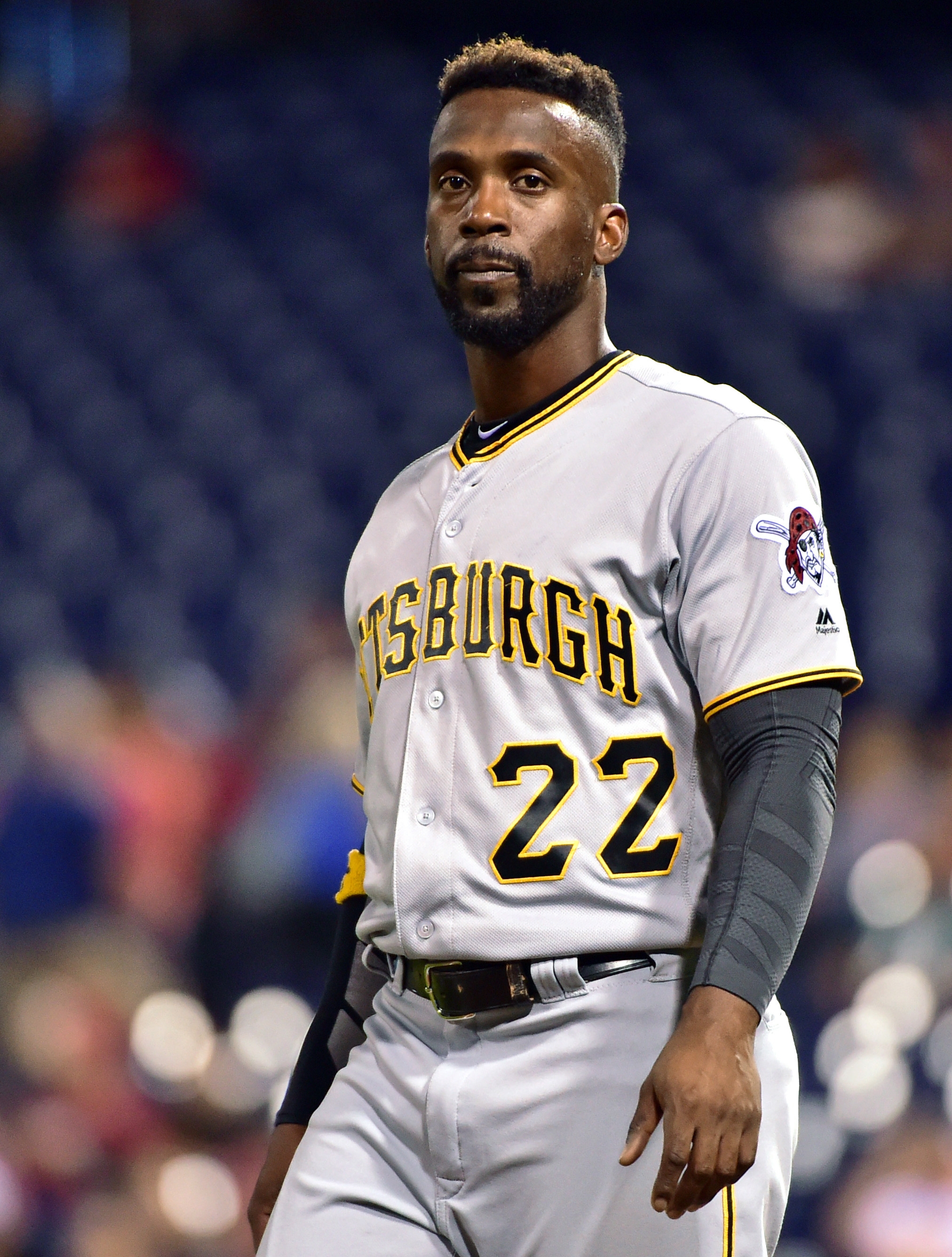 This offseason, the Pirates first attempted to address the McCutchen issue by trading him. The superstar has only one guaranteed year left on his contract, plus a team option for 2018, and with top prospect Austin Meadows on the way and Starling Marte looking like a far better defensive center fielder than McCutchen, McCutchen seemed like an increasingly strained fit in Pittsburgh. The Bucs were repeatedly connected to the Nationals as a potential trade partner, with the Nats reportedly offering pitchers Lucas Giolito and Dane Dunning, plus another player. Those plans were scuttled when the Nationals traded Giolito, Dunning and Reynaldo Lopez for Adam Eaton instead. It then appeared the Pirates would keep McCutchen, and though there were whispers about other teams (including the Mets and Blue Jays) having interest, the Bucs never seemed all that likely to trade him once their talks with the Nationals fell through.
So the Pirates will keep McCutchen, at least for now, and they’ll head into 2017 with a new plan for how to use him. While McCutchen’s 2016 season was disappointing, he did end it well, batting .284/.381/.471 over the season’s final two months. It remains to be seen whether he can retain that pace going forward, of course. But the Pirates also addressed his defensive struggles by changing their outfield alignment — the very capable Marte will man center field going forward, with Gregory Polanco in left and McCutchen in right. McCutchen has a weak arm, suggesting that right field is an odd fit, but right field in PNC Park is small. Also, McCutchen is better at going to his right than to his left, suggesting that he could fare decently in right by staying relatively near the foul line.
The Bucs also addressed their bullpen, which had been depleted by the losses of Mark Melancon at last year’s trade deadline and Neftali Feliz to free agency, by signing Daniel Hudson to a two-year deal. Hudson produced a 5.22 ERA with the Diamondbacks last season, but his peripherals were somewhat more promising than that, and his fastball averaged 96 MPH in his second full year back from his second Tommy John surgery. He shares his good velocity, extensive injury history and modest recent performance record with pre-2016 Feliz, who had a successful comeback season with the Pirates last year.
More analysis after the break …Read more
Make Or Break Year: Avisail Garcia
MLBTR is rebooting its “make or break year” series, in which we analyze players who enter the season with up-and-down track records but also an opportunity to stake a claim to significant future earnings.
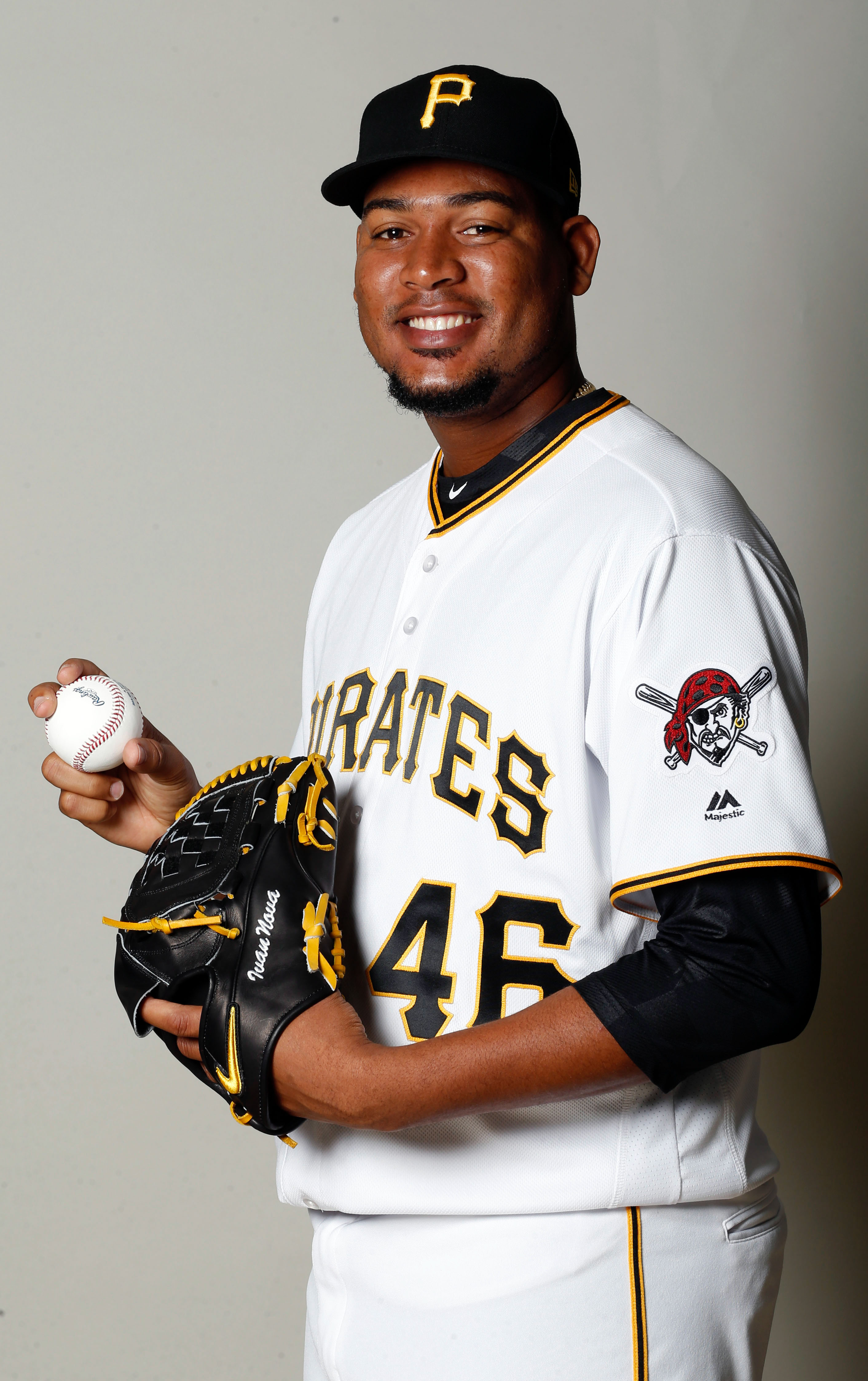
As you may have heard, the White Sox are entering a rebuilding phase. For 25-year-old Avisail Garcia, that may be a good thing. Otherwise, he might already have been pushed out of his current spot atop the South Siders’ depth chart in right field.
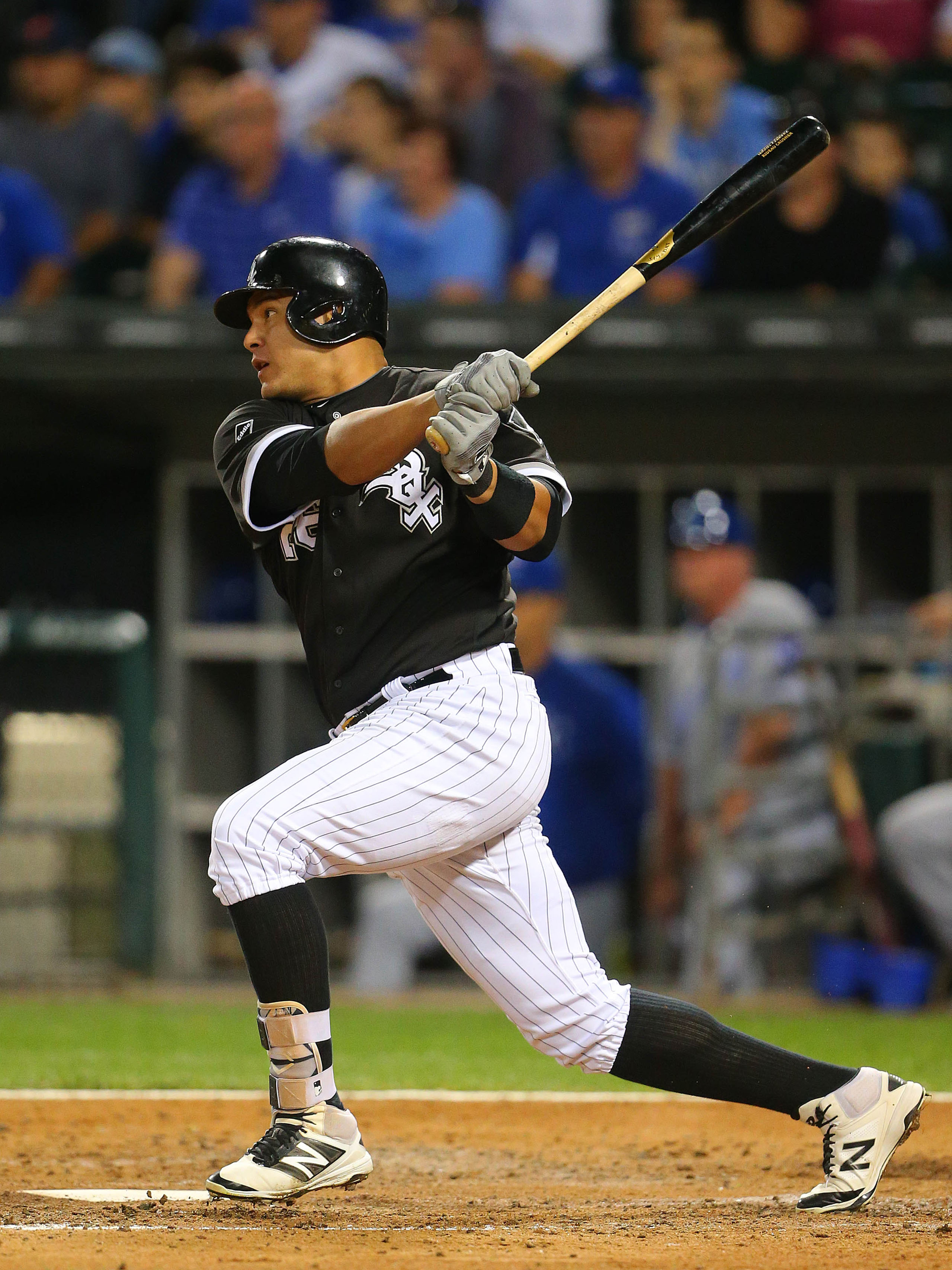
Before this winter, the Chicago front office’s last significant selling move came at the 2013 trade deadline, when the team landed Garcia and three other prospects in the swap that sent Jake Peavy to the Red Sox and Jose Iglesias to the Tigers. The hope at the time was that Garcia would step right into the MLB lineup and make himself a fixture.
Despite his evident tools, Garcia has thus far fallen well shy of hopes. There has been no shortage of opportunity — he has taken over 1,500 trips to the plate in the majors — but the results just haven’t been there.
In the aggregate, Garcia has slashed a modest .258/.310/.385 while striking out at a 23.8% clip and walking just 6.2% of the time. Though he carries a solid 14.4% HR/FB rate, Garcia has put the ball on the ground quite a bit, carrying a 53.2% goundball rate. Despite the power potential, and a healthy .320 career BABIP, Garcia just hasn’t reached base enough or hit for enough power to rate as even an average corner outfielder.
Adding to the concern is the fact that Garcia has never shown polish in the other aspects of his game. Over his career, he has rated as a well-below-average baserunner and fielder. In the aggregate, Garcia has posted -1.4 fWAR and 0.1 rWAR for his career — anemic tallies considering the amount of time he has received.
If there’s a ray of hope, perhaps it can be found in the improvements Garcia did make in 2016. He drew positive metrics for both his glovework and baserunning for the first time; if that can be maintained, it would significantly boost his floor. Of course, the offensive work — .245/.307/.385 — hardly gave added cause for optimism. But Garcia has long been valued most for the upside in his bat, and he has yet even to reach his 26th birthday.
As noted, that background likely wouldn’t be sufficient for Garcia to enter the season with a regular job were it not for the fact that the White Sox already committed to a rebuild. With little in the way of roster pressure, he ought to receive a fair bit of rope to establish himself.
But there could well come a point where the White Sox decide to cut bait, particularly if they feel other, yet younger players are more deserving of an opportunity. Garcia’s contractual upside is limited, after all, and not just because he’s owed $3MM this year. Much like former top prospect Jurickson Profar, another younger player who isn’t fully established in the bigs, Garcia will enter the 2017 season with just two more years of club control remaining thereafter.
It’s not altogether clear whether Garcia has much of a future with the White Sox, whether or not he can pull himself out of his malaise. Perhaps the best-case scenario for Chicago is one in which Garcia plays well enough to turn himself into a solid trade candidate, freeing the organization to move him either this summer or next winter. For Garcia, though, there’s still plenty of opportunity both to build off of a nice platform arb salary and to develop a case for a free-agent payday after the 2019 campaign, which he’ll play at just 28 years of age.
Photo courtesy of USA Today Sports Images.