MLBTR Originals
A roundup of MLBTR’s original content from the past week:
- In a fascinating, extremely detailed piece, MLBTR contributor and former Cubs front office man Chuck Wasserstrom went back in time to the team’s active offseason after the 2006 campaign. The Cubs won just 66 games in 2006, leading the Tribune Company – which owned the franchise at the time and was looking to sell it – to give then-general manager Jim Hendry the green light to spend in free agency. Improving the on-field product would increase the Cubs’ value, the Tribune Company figured, so Hendry brought in famed manager Lou Piniella and made several signings. Wasserstrom interviewed both Hendry and Piniella about that offseason, and Hendry noted that left-hander Ted Lilly was the Cubs’ top free agent pitching target entering the Winter Meetings. Both Lilly and his agent, Larry O’Brien, as well as Hendry, Piniella and Yankees GM Brian Cashman (the Bombers were Lilly’s top choice) were among those who detailed the courting of Lilly, who ultimately signed a four-year, $40MM deal with Chicago. At the same time, though, Hendry was in a terrifying personal situation, having found out that he’d need to undergo an emergency heart procedure. When Lilly agreed to join the Cubs, Hendry was in the midst of an EKG. “To this day, the story obviously has been embellished in some ways by the fact that a couple hours later I was going to have a heart procedure – but the fact is that Larry O’Brien called me when I was on the gurney,” Hendry said. Added Cashman, who now works with Hendry in the Yankees’ front office, “I know we as an industry were worried sick about Jim and his health, but it’s nice to be able to look back on it in a fond way promoting how dedicated Jim is – because he survived it.” Hendry’s signing of Lilly proved to be a quality move, as the left-hander went on to post a 3.70 ERA in 113 starts with the Cubs and help the team to two playoff appearances.
- Brewers reliever and funnyman Tim Dillard, who’s in minor league camp in Arizona, returned to share the second part of his Inner Monologue. Here’s an excerpt: “Yesterday a teammate walked in the clubhouse carrying coffee and wearing a huge round fancy wristwatch. So just to be stupid, I asked him what time it was. The guy stopped… dug his watch hand into his pocket… and emerged with a smart phone. He hit the button to make the screen light up, but it was upside down. But after repositioning his coffee between his arm and chest, he managed to flip the phone right side up. “It isssssssss 6:37.”’
- This year’s Offseason In Review series continued with looks at five teams. Tim Dierkes handled both Chicago clubs (links: Cubs, White Sox), while I tackled the Mets and Athletics, and Mark Polishuk analyzed the Blue Jays.
The Inner Monologue of @DimTillard Part 2
A few weeks ago I blogged my Inner Monologue for MLB Trade Rumors. They decided it didn’t suck that bad, and asked if I’d write down some more thoughts… so now, back by not a whole lot of demand, my Inner Monologue Part 2!
It’s 4:08pm on Saturday March 25th, 2017. My name is Tim Dillard. I’m 32 years and 614 days old. I’m a relief pitcher trying to win a spot for my 15th professional baseball season. I’m currently in Arizona as part of Minor League spring training with the Milwaukee Brewers baseball club team organization. I’m married and have 3 kids. I enjoy movies, Star Wars, and movies about Star Wars.
4:11pm I really need to work on my opening paragraphs for these blog things. I remember my speech teacher back in college saying that the key to giving a good speech or writing an article, is to always start off with a funny joke.
4:12pm But I can’t think of one.
4:13pm Probably because I’m a little pressed for time. My aforementioned offspring are enjoying nap/quiet time right now. And according to my calculations, they will be standing on the furniture in 47 minutes. And by furniture, I mean hotel furniture (so who cares really). And by my calculations, I mean my watch. And by my watch, I really mean the clock on my iPhone.
4:16pm Yesterday a teammate walked in the clubhouse carrying coffee and wearing a huge round fancy wristwatch. So just to be stupid, I asked him what time it was. The guy stopped… dug his watch hand into his pocket… and emerged with a smart phone. He hit the button to make the screen light up, but it was upside down. But after repositioning his coffee between his arm and chest, he managed to flip the phone right side up. “It isssssssss 6:37.”
4:20pm Oh no, just heard a faint child cry from the other room… I’m betting it’s either my 18-month-old or my 76-month-old.
4:23pm False alarm. It was the TV. Tell me again why ad agencies continually think it’s a good idea to have crying babies in their commercials? I may be alone on this, but the sound of a crying baby in the house puts me on high alert.
4:28pm Not sure why the TV was on anyway. I really don’t watch that often. Unless you count sports, or the Dancing with the Voice Bachelor Project show my wife insists we view together.
4:29pm During team stretch today, some of the guys were talking about the new Netflix show A Series of Unfortunate Events. Jokingly, I asked if that was the show loosely based on my baseball playing career… no one laughed. But honestly shouldn’t there be a show about the Minor Leagues?
4:34pm Think about it… the plot could center around a Triple-A team. It could be filmed in the offseason at any of the hundreds of unused baseball stadiums around the country. It would probably work best as a dramedy. And as far as casting and stunts, just call on former pro players who want to show off their acting chops! Quick, anyone have Michael Bay’s err Steven Spielberg’s email?!
4:41pm Just imagine the movie Summer Catch… but like completely different in every way.
4:42pm Last week before batting practice, a bunch of position players were talking about the movies they have on digital download or their very legal hard drive. So me being fluent in the language of movies, I naturally butted in on the fun. But got some weird looks from the younger guys when I mentioned I had VHS growing up.
4:47pm That same day I had a milestone event in my baseball career! At the Angels stadium out here in Phoenix, I managed to pitch 2 different times in the same game! I came in to end the 3rd inning, then came in again to end the 4th. I know the rules can be bent in spring training, but pretty sure that’s the first time I’ve had 2 appearances in 1 game. Guess I can add that to my list of strange career highlights.
4:51pm It will sit right up there next to: bunting in a hail storm, pitching with a broken hand, almost winning a fan a new mattress, breaking a 107-year-old record for most hit batters in a season, escaping a bases loaded jam with ice cream on my face, being ejected, stadium lights turning off mid-pitch during a potential no-hitter, maintaining a career Major League batting average of .500, almost tackling Will Ferrell in the outfield, fielding a groundball off a giant boulder, hitting a bird mid-flight with a pitch… never mind, actually, that last one happened to Randy Johnson.
4:59pm No kids have emerged from slumber as of yet, so I guess I’ll keep typing.
4:59:49pm And not to brag, but I was once one of the top 10 or 15 typers in my entire 8th grade class. I was also third-string quarterback. And that same year, during Awards Day at school, I was unable to accept my Perfect Attendance Trophy due to sickness.
5:02pm Today starts the closing week of Minor League spring training 2017. And for players, it can be a very difficult and emotional time. With so many decisions left to be made, players wait, wonder, and worry about what will happen next. Which Minor League team roster will I make? Am I really ready for opening day? Who do I ask to be roommates for the next 5 months? How do I find an apartment in just a few days time? What if I don’t make a team? What if I get released?
5:09pm These thoughts are real. These thoughts are scary. And there isn’t a vaccine or antibiotic to stop them from spreading. (believe me)
5:11pm I told a rookie yesterday to stay strong and stay standing to the very end of spring training… I honestly have no idea what this means. May have stolen it from a Facebook picture with a cat on it. But I’d like to think what I meant was: to keep fighting and keep grinding and show the decision makers everything you are. That will put you in the best possible position to be awarded a baseball season.
5:13pm “I’m in a glass case of emotion!” -Ron Burgundy
5:14pm The sound of furniture under attack means I’m done for now.
To Be Concluded…
Giants Release Gordon Beckham
5:05pm: The Giants have officially released Beckham, the club told reporters (including Andrew Baggarly of the Bay Area News Group).
4:10pm: The Giants will release Gordon Beckham from his minor league contract with the club as per Beckham’s request, MLBTR has learned. Beckham originally joined the Giants in a late-September trade with the Braves and re-signed with the club in February, joining a very crowded battle within the Giants’ camp to decide the third base and utility infield jobs.
The 30-year-old Beckham will now look for a clearer opportunity elsewhere with teams in need of infield depth. Most of Beckham’s MLB experience has some at second base dating back to his days as a regular with the White Sox, though he has also seen substantial action at third base over the last three seasons and even some action at short, starting seven games at the position for Atlanta in 2016. Beckham has hit .211/.285/.340 over 516 PA since the start of the 2015 season, though he does own a career .260/.360/.458 slash line coming off the bench (in 114 PA) over his career.
Offseason In Review: Oakland Athletics
Check out all the published entries in our Offseason in Review series here.
After finishing among the American League’s bottom three teams in both wins (69) and run differential (minus-108) in 2016, the low-payroll Athletics tried to make a splash in free agency. Oakland’s attempt to land first baseman/designated hitter Edwin Encarnacion went for naught, though, and the club ultimately emerged from the offseason having made several modestly priced signings.
Major League Signings
- Matt Joyce, OF: Two years, $11MM
- Santiago Casilla, RP: Two years, $11MM
- Rajai Davis, OF: One year, $6MM
- Trevor Plouffe, IF: One year, $5.25MM
- Adam Rosales, IF: One year, $1.25MM
- Total spend: $34.5MM
Trades And Claims
- Acquired RHP Paul Blackburn from Mariners for IF/OF Danny Valencia
- Acquired IF Jordan Tarsovich from Dodgers for OF Brett Eibner
- Acquired C Jason Goldstein from Mariners for LHP Dillon Overton
- Claimed RHP Josh Smith from Reds
- Claimed LHP Giovanni Soto from Cubs (lost later on waivers to White Sox)
Notable Minor League Signings
- Alejandro De Aza, Ross Detwiler, Ryan Lavarnway, Chris Parmelee, Jaff Decker, Felix Doubront, Matt McBride, Andrew Lambo
Extensions
- None
Notable Losses
- Valencia, Eibner, Overton, Fernando Rodriguez
Oakland Athletics Depth Chart; Oakland Athletics Payroll Information
Needs Addressed
The offseason didn’t unfold the way many thought it would for Encarnacion, whose five-year run in Toronto as an elite hitter didn’t lead to the nine-figure contract that seemed attainable at the outset of free agency. Encarnacion went without a deal for nearly two months before agreeing to join the Indians on a three-year contract with $60MM in guarantees. It was surprising that Encarnacion landed with the Tribe, but it was more of an eye-opener that the A’s were Cleveland’s main competition. After all, the richest contract on the A’s belongs to reliever Ryan Madson, who’s on the second season of a three-year pact worth $22MM. Encarnacion would have averaged $25MM per annum, likely over two years, had he taken the A’s offer. Reeling in the slugger would have been a boon for Oakland, which scored the fewest runs in the AL last season and has a starting first baseman, Yonder Alonso, who brings almost no offensive punch to the table.
“We knew we’d face some headwinds going in,” executive vice president Billy Beane said after losing the Encarnacion sweepstakes. “But again, we saw this as a unique player. … [W]e thought was that type of player who would have served as a real good anchor point with our young pitching and some of our other young players.”
Nearly a month before Encarnacion made his decision, the A’s partially addressed their offensive issues by awarding a two-year, $11MM guarantee to free agent outfielder Matt Joyce. That commitment has a chance to go down as one of the offseason’s biggest bargains, as the lefty-swinging Joyce has typically been a quality hitter and is coming off a career year. Then with the Pirates, Joyce slashed a terrific .242/.403/.463 in 293 plate appearances. The 32-year-old led all batters with at least 250 PAs in walk rate (20.1 percent, a notable improvement over his career 12.5 percent), which was the product of being far more selective than ever. Between 2008, his rookie campaign, and 2015, Joyce hadn’t swung at under 24.7 percent of pitches outside the zone in any individual season. Last year, though, he offered at only 18.2 percent of such pitches. He also showed some of the best power of his career, having logged his highest ISO (.221) since 2010.
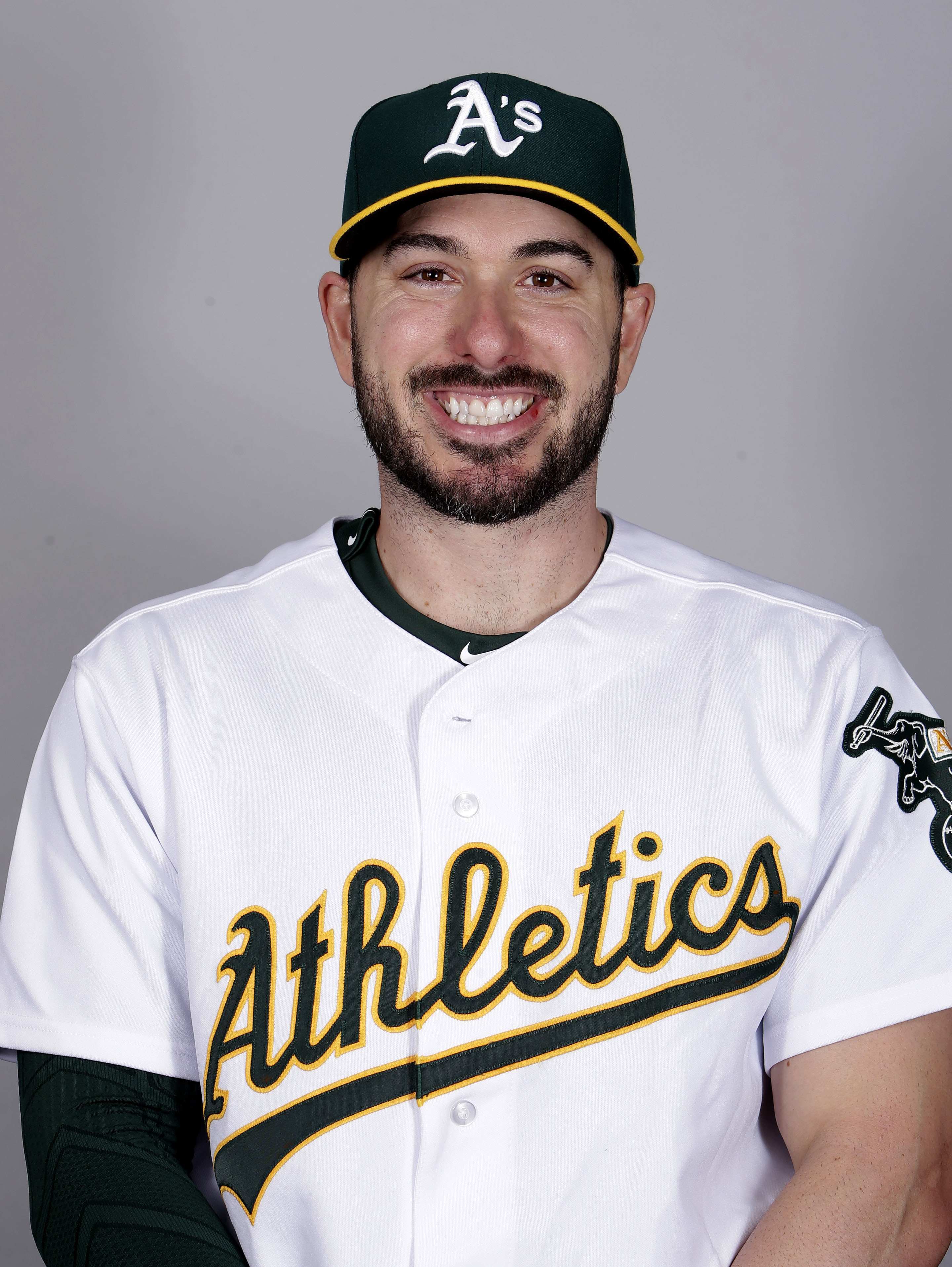
It’s fair to be skeptical of Joyce going forward – he slashed a ghastly .174/.272/.291 in 284 PAs with the Angels only two years ago, and he’s a lifetime .185/.265/.310 hitter against lefties. However, as FanGraphs’ Jeff Sullivan wrote in November, Joyce made intriguing adjustments last season, including lowering his hands and becoming less reliant on pulling the ball. Even if those gains don’t stick, though, the A’s should at least have a capable, reasonably priced platoon right fielder on their hands in Joyce, who has batted .252/.353/.449 in 2,686 career plate trips against righties.
Another newcomer, 36-year-old center fielder Rajai Davis, will join Joyce and primary left fielder Khris Davis to comprise the A’s main alignment in the grass. This isn’t the first go-around in Oakland for Davis, who was previously with the team from 2008-10. As an Indian last season, Davis wasn’t significantly better offensively than either of the A’s top two center fielders, Coco Crisp and Jake Smolinski, but he is a weapon when he gets on base. Davis is coming off a year in which he racked up an American League-high 43 steals – just seven fewer than the A’s 26th-ranked team total (50). He also finished second in the majors to Billy Hamilton in FanGraphs’ BsR metric, a stat in which Oakland ranked dead last. And while Davis was a mixed bag in center last season (minus-five Defensive Runs Saved, 3.6 UZR/150 in 595 innings), he has typically been passable there and should at least be a clear upgrade over Crisp, who registered minus-11 DRS and a minus-37.7 UZR/150 in 290 innings.
After adding Joyce and Davis to their outfield, the A’s sought to upgrade their infield and came away with third baseman Trevor Plouffe and utilityman Adam Rosales on one-year accords. A careerlong Twin until they outrighted him in November, Plouffe isn’t far removed from combining for a .251/.317/.429 line and 6.0 fWAR in 1,214 PAs from 2014-15. That type of production would be welcome for Oakland, though Plouffe struggled in the other five seasons of his career, having registered minus-0.8 fWAR largely because of subpar defensive metrics. That includes last season, when Plouffe was a negative at third (minus-four DRS, minus-17.1 UZR/150 in 519 innings) and hit a below-average .260/.303/.420 in 344 PAs. The 30-year-old does deserve some benefit of the doubt for his latest output, however, as he endured an injury-riddled campaign that featured three trips to the disabled list.
Healthy again, Plouffe will serve as the A’s No. 1 option at the hot corner, meaning Ryon Healy will mostly divide his time between designated hitter and first base. As a rookie last season, Healy played all 72 of his games at third, where he posted Plouffe-like numbers (minus-two DRS, minus-17.5 UZR/150) over 637 innings. Those struggles took away somewhat from the offensive excellence displayed by Healy, who put together a .305/.337/.524 mark in his 283-PA debut.
Rosales, meanwhile, will back up Plouffe, Healy and the rest of the A’s infielders, and he could be especially useful at second base. Starter Jed Lowrie has dealt with injury troubles throughout his career, including a left foot issue that limited him to 87 games last year, and hasn’t stood out offensively since a career year in 2013. Rosales, who was with the A’s from 2010-13, is coming off his own personal-best season. A Padre in 2016, the 33-year-old journeyman was a radically different hitter than he had been from 2008-15. Along with his best-ever batting line, .229/.319/.495 (in 248 PAs), the right-hander accrued highs in home runs (13), ISO (.266, up from a career .140), walk rate (11.7 percent) and hard contact rate (36.9 percent, far above his lifetime 26.4 percent figure). As evidenced by those numbers, not to mention a career-high fly ball rate (46.2 percent) and a bloated strikeout percentage (35.5), it’s clear Rosales sold out for gains in the power department last year. Even if his 2016 proves to be a mirage, Rosales should still give the A’s both a usable option against southpaws (.241/.318/.395 in 644 PAs) and, if Lowrie goes down again, a credible defensive second baseman (13 DRS, 6.6 UZR in 1,007 lifetime innings).
Click to continue…
Offseason In Review: Chicago White Sox
This is the latest entry in MLBTR’s Offseason In Review series. The full index of Offseason In Review posts can be found here.
The White Sox set a rebuilding course with a pair of Winter Meetings blockbusters in which Chris Sale and Adam Eaton were cashed in for top prospects.
Major League Signings
- Derek Holland, SP: one year, $6MM. Includes performance bonuses.
- Total spend: $6MM.
Trades And Claims
- Claimed OF Rymer Liriano off waivers from Brewers
- Claimed RP Giovanni Soto off waivers from Athletics
- Acquired 2B Yoan Moncada, SP Michael Kopech, OF Luis Alexander Basabe, and RP Victor Diaz from Red Sox for SP Chris Sale
- Acquired SP Lucas Giolito, SP Reynaldo Lopez, and SP Dane Dunning from Nationals for CF Adam Eaton
- Acquired SP Dylan Covey from Athletics in Rule 5 draft
- Acquired cash from Rangers for P James Dykstra
- Claimed OF Willy Garcia off waivers from Pirates
- Acquired 1B Brandon Dulin from Royals for player to be named later or cash
Notable Minor League Signings
- Cory Luebke, Anthony Swarzak, Geovany Soto, Everth Cabrera, Cody Asche, Peter Bourjos, Blake Smith, Tyler Matzek, Tyler Ladendorf
Extensions
- Tim Anderson, SS: Six years, $25MM. Includes club options for 2023 and 2024.
Notable Losses
- Chris Sale, Adam Eaton, Brett Lawrie, J.B. Shuck, Justin Morneau, Austin Jackson, Alex Avila, Matt Albers, Jacob Turner, Daniel Webb, Anthony Ranaudo, Jason Coats
White Sox Roster; White Sox Payroll Information
Needs Addressed
When I published my White Sox Offseason Outlook on November 5th, the team had not yet tipped its hand as to the offseason direction. GM Rick Hahn had said in August, “By the time we make our first or second transaction, publicly it will be fairly clear as to our direction.” Hahn wasn’t kidding. The White Sox staked a very clear rebuilding position with back-to-back Winter Meetings blockbuster trades. Finally, the team committed to a full teardown.
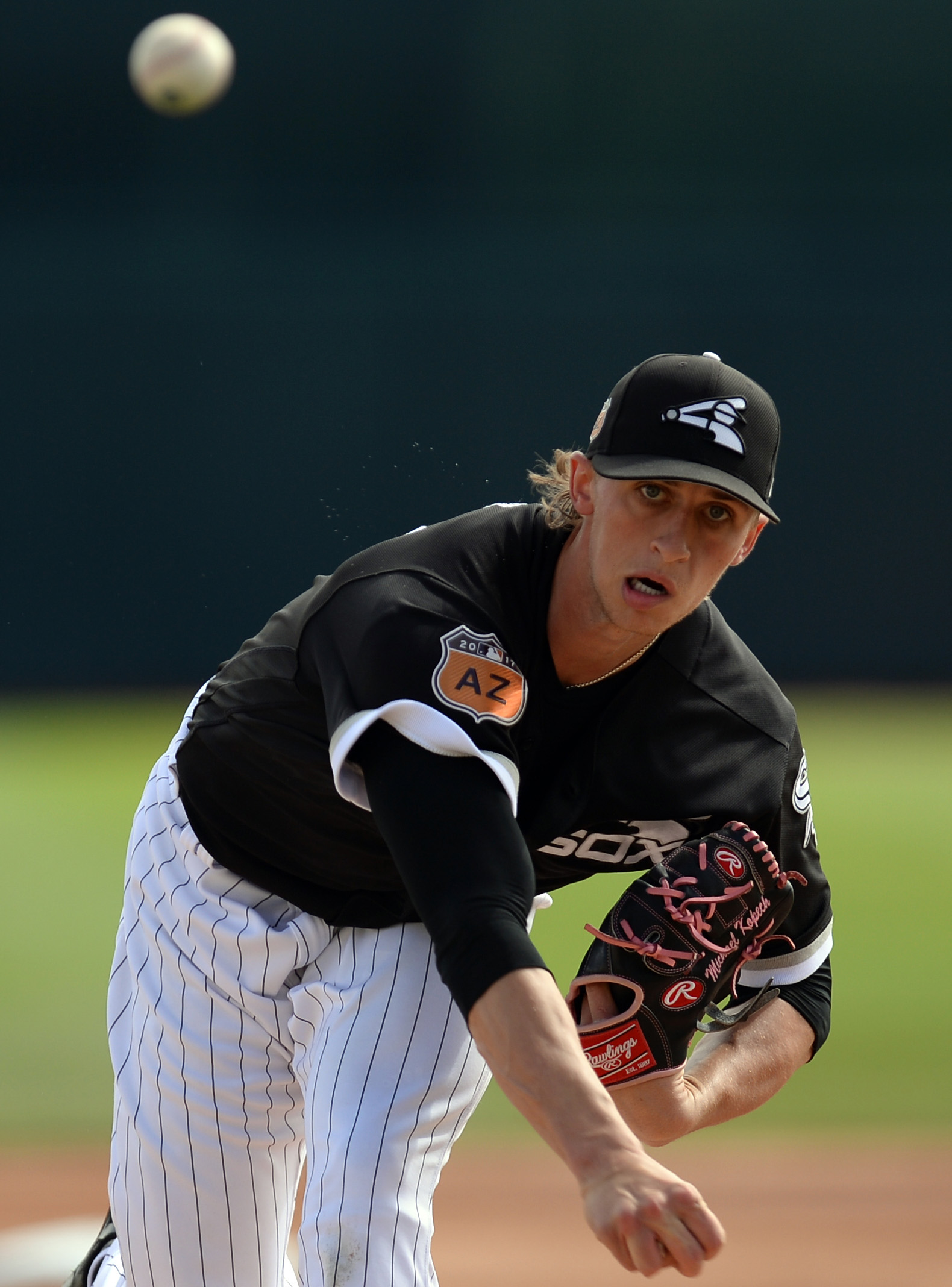
First, longtime ace starting pitcher Chris Sale was traded to the Red Sox for a bevy of top prospects, led by Moncada and Kopech (pictured at right). In Moncada, the White Sox acquired the type of player who is rarely traded: a potential perennial All-Star, on the cusp of being MLB-ready. The switch-hitting Cuban is penciled in as Chicago’s second baseman of the future. Moncada draws raves from prospect gurus for his power, speed, and arm. Kopech, meanwhile, is a power pitcher who comes with “front of the rotation potential,” according to Baseball America. Basabe, while further from the Majors, also rates as one of the team’s top ten prospects now. The White Sox determined they could not win in the next three years with Sale, and Hahn was able to maximize the return by pitting the Red Sox against the Nationals, Astros, Braves, and others.
Barely 24 hours later at MLB’s Winter Meetings in Orlando, Hahn made a deal to send Adam Eaton to the Nationals for three pitching prospects. Baseball America ranks Lucas Giolito and Reynaldo Lopez both slightly above Kopech, and has all three in the #25-32 range among all MLB prospects. Like Moncada, Giolito and Lopez have Major League time. While there may be growing pains, the top assets acquired by Hahn are all close to contributing in 2017. Dunning played the Basabe role in this deal, as a third piece who is further from the big leagues. Eaton, 28, is at the top of his game and was the rare veteran player to be dealt with five years of remaining control. With the Eaton trade, Hahn was able to pull off a second deal that drew raves around the industry. The total haul for Sale and Eaton leaned toward pitching, a function of Hahn pursuing the best available young players, regardless of position.
A week later, the White Sox filled their rotation vacancy by signing Derek Holland to a one-year deal. Holland hasn’t had a healthy, valuable season since 2013, but this is the kind of free agent signing we expect to see with a rebuilding club. In the best case scenario, Holland has a nice first half and the White Sox are able to spin him for a useful, controllable piece in July.
Earlier this week, the White Sox locked up shortstop Tim Anderson to a precedent-setting six-year, $25MM deal. The contract sets a new record for a player with less than one year of Major League service. With only 115 days of Major League service under his belt, it’s difficult to project what kind of player Anderson will become. But at age 23, he already looks like a solid two-win contributor. And the team has a fantastic recent track record with these types of extensions, having previously signed Sale, Eaton, Jose Quintana, and Nate Jones.
Questions Remaining
With the Sale and Eaton trades occurring in rapid succession, it seemed a Jose Quintana deal wasn’t far behind. Quintana’s availability this winter was no secret. While the 28-year-old doesn’t have Sale’s ace reputation, he is a very good starting pitcher on a very team-friendly contract. With a terrible free agent market for starting pitching, it was surprising no team was willing to meet the demands of the White Sox for Quintana. The Pirates and Astros were reportedly quite interested, with the Rangers, Yankees, and Braves also connected. Quintana is undoubtedly a major trade chip for the White Sox in the coming months. In a February call with MLB.com’s Scott Merkin, Hahn said, “Frankly, there just hasn’t been an offer on the table that has made us feel like, ‘Boy we better move now or we are going to be kicking ourselves.'” While Hahn noted he’s feeling no economic or timing pressure on his remaining trade chips, the team is taking a calculated risk that offers will improve in future. While a summer Quintana trade currently seems like the most likely scenario, it’s possible a deal could be struck between now and Opening Day.
Rumors were scant regarding first baseman Jose Abreu, outside of a Winter Meetings note that the Rockies were interested. The White Sox may have run into an overcrowded free agent market, which featured more first base/DH-type bats than there were jobs. At the lower end, players such as Brandon Moss, Mike Napoli, and Chris Carter took cheaper-than-expected deals. Abreu, 30, is more appealing than many of those free agents, but not enough to trigger wide reported interest.
In their talks for Adam Eaton, the Nationals reportedly attempted to expand the deal to include reliever David Robertson. Talks continued, but the Nationals and White Sox have reportedly reached a stalemate on the veteran closer. With two years and $25MM remaining on his contract, and control problems in 2016, Robertson is not for everyone. He’s another name to watch this summer. Perhaps the White Sox will end up eating more money than they were willing to in the winter. Todd Frazier, a free agent after 2017, is another veteran player who received little reported interest this winter despite hitting 75 home runs over the past two seasons. The White Sox will be rooting for strong, healthy first halves for many veteran players, which would lead to an active July. Hahn repeatedly said he would have liked to have made four more transactions this winter, and perhaps Quintana, Abreu, Robertson, and Frazier were the four players.
The team would also be best served moving 32-year-old veteran Melky Cabrera, who will serve as the Opening Day left fielder. The Melk Man hit about as well as Wil Myers, Adam Eaton, or Mike Napoli last year, but his below-average defense and $15MM salary seems to have limited interest. One quietly intriguing trade chip this summer will be Nate Jones, a fantastic reliever who is under contract for up to five more seasons. Jones, a 31-year-old with a 97 mile per hour fastball, is far more valuable than Robertson and could be the best reliever traded this summer. The White Sox still have a ton of trading left to do.
Aside from all the trades that have yet to happen, the other question is who is actually going to play for the 2017 White Sox. With a team that is clearly not concerned about winning in 2017, the White Sox have a rare opportunity to use low-pressure playing time to unearth trade chips or future contributors. Unfortunately, the roster is currently loaded with placeholders devoid of upside. For example, the club’s Opening Day outfield could feature Cabrera, Peter Bourjos, and Avisail Garcia. Someone has to stand out there, but hopefully Hahn can identify a few post-hype sleepers to try out in the outfield until long-term fixtures are identified. The White Sox make a great home for players feeling the roster squeeze. The release of Lawrie was a step in the right direction, opening up second base for cheaper options led by Tyler Saladino. The team’s catching position is another area of uncertainty. The club is hoping 25-year-old Omar Narvaez can keep the seat warm until 2016 first-round pick Zack Collins is ready for The Show.
Overview
In 2017, the White Sox are set to join teams like the Phillies, Reds, Padres, and Brewers as clubs undertaking rebuilds. It’s the right move for the franchise as Hahn and company look to build a sustainable winner with a deep roster. The Major League product will get worse before it gets better, as the White Sox will continue to clear the decks of veteran players this summer.
What’s your take on the White Sox’ winter? (Link to poll for mobile app users …)
How would you grade the White Sox' winter?
-
A 55% (2,345)
-
B 29% (1,255)
-
C 9% (377)
-
D 4% (159)
-
F 3% (138)
Total votes: 4,274
Photo courtesy of USA Today Sports Images.
Straight From The Heart: The Signing Of Ted Lilly
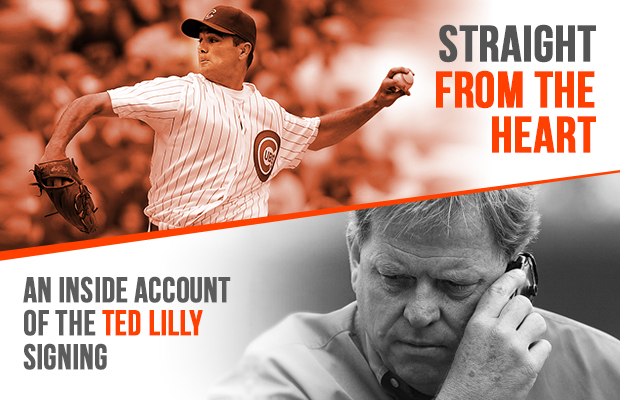
“You were part of it,” my former boss said with a laugh, “watching me roll around in agony for a couple days in the hotel room and not doing anything about it.”
“We were angling for a palace coup,” I joked, “but the reality is … the doctor gave me warning signs to be looking for, and we all know you weren’t being truthful with us.”
To which he quickly replied: “Well, we had to get Lilly done.”
– – –
It was a Tuesday night in December 2006, and baseball’s annual Winter Meetings were taking place at the Walt Disney World Swan and Dolphin Resort in Orlando, Fla.
Cubs general manager Jim Hendry hadn’t been feeling well all day. He really hadn’t felt right since arriving in Orlando over the weekend. He talked periodically about feeling a little bit of discomfort in his abdominal area, but never let on how much he was hurting.
Mostly, he sat subdued in the Cubs’ suite – which wasn’t like him – chomping antacid tablets like they were M&M’s. Typically, he was animated, lively, tugging at his shirt collar as he worked the room. On this day, he was pale and quiet but determined to do his job.
And I knew he wasn’t his normal self, as I was a member of Hendry’s baseball operations staff.
Leading up to Orlando, the previous couple of months had been an offseason like no other in Cubs history – as Hendry was literally ordered to spend money by his bosses. Tribune Company executives more-or-less gave him a mandate: We want a winner now. We need TV ratings to go up now. We need to be relevant immediately.
Braves Release John Danks
3:27pm: The Braves have officially announced the move.
2:20pm: MLBTR has learned that veteran lefty John Danks asked for and will be granted his release by the Braves. Danks is willing to sign elsewhere, but is not interested in pitching in the minors.
Danks reached a minor-league deal with Atlanta in December, then allowed seven runs while striking out seven and walking six over 9 2/3 innings of spring work. Even before those disappointing performances, Danks seemed unlikely to crack a Braves rotation that will feature Julio Teheran, Bartolo Colon, Jaime Garcia, R.A. Dickey and Mike Foltynewicz. The 31-year-old Danks pitched with the White Sox early in the 2016 season but did not pitch for another team after being released in May.
Danks has pitched over 1,500 innings and won 79 games over parts of ten seasons in the big leagues, all of them with the White Sox, and he stood out as a rotation workhorse from 2008 through 2011. He has, however, had a rough go since shoulder problems that resulted in surgery in 2012 — in the last five seasons, he has a 4.92 ERA, 6.0 K/9 and 2.9 BB/9 while dealing with an average fastball velocity that’s gradually slipped from 91.6 MPH to 87.1 MPH last year. He made $65MM over those five seasons thanks to a long-term deal he signed prior to the 2012 season, although that contract expired last fall.
Offseason In Review: Chicago Cubs
Check out all the published entries in our Offseason in Review series here.
Fresh off their first World Championship since 1908, the Cubs acquired a top-shelf closer and spent modestly in free agency.
Major League Signings
- Jon Jay, CF: one year, $8MM
- Koji Uehara, RP: one year, $6MM
- Brett Anderson, SP: one year, $3.5MM. Includes performance bonuses based on starts.
- Brian Duensing, RP: one year, $2MM
- Total spend: $19.5MM.
Trades And Claims
- Claimed RP Conor Mullee off waivers from Yankees (later non-tendered and re-signed to minor league deal)
- Acquired RP Wade Davis from Royals for OF Jorge Soler
- Acquired P Caleb Smith from Brewers for a player to be named later or cash. Smith had been taken by the Brewers from the Yankees in the Major League Rule 5 draft and remains subject to those rules.
- Claimed RP David Rollins off waivers from Rangers (later outrighted and cleared waivers)
- Claimed RP Dylan Floro off waivers from Rays (later outrighted and cleared waivers)
- Acquired SP Eddie Butler from Rockies for RP James Farris and an international bonus slot
- Acquired SP Alec Mills from Royals for CF Donnie Dewees
Notable Minor League Signings
- Jemile Weeks, Jim Henderson, Munenori Kawasaki, Williams Perez, Andury Acevedo, Gerardo Concepcion, Casey Kelly, Manny Parra, Zac Rosscup, Carlos Corporan, Fernando Rodriguez
Extensions
- Pedro Strop, RP: Two years, $11.85MM. Replaced one-year, $5.5MM arbitration deal for 2017. Includes $6.25MM club option for 2019 with a $500K buyout.
Notable Losses
- Dexter Fowler, Aroldis Chapman, Jorge Soler, David Ross, Jason Hammel, Trevor Cahill, Travis Wood, Clayton Richard, Joe Smith, Chris Coghlan, James Farris, Donnie Dewees, Armando Rivero, Spencer Patton
Cubs Roster; Cubs Payroll Information
Needs Addressed
An MLB front office never rests. Before the buzz wore off from the Cubs’ epic World Series parade, Theo Epstein and company met with starting pitcher Jason Hammel regarding his 2017 club option, according to Patrick Mooney of CSN Chicago. Earlier this month, Hammel explained to reporters, “I love how people were saying it was a choice, because it really wasn’t. It was either basically pitch out of the bullpen or not have a job.” Hammel told the Cubs to cut him loose, and the team set off searching for rotation depth to complement Mike Montgomery.
It appeared the Cubs’ top priority was Tyson Ross, the 29-year-old righty who was non-tendered by the Padres in December. Ross’ lost 2016 culminated in thoracic outlet surgery in mid-October, and the arbitration system would have required the Padres to pay him $7.68MM or more this year. The Cubs ended up finishing second for Ross, who received a $6MM guarantee from the Rangers in mid-January.
Enter Plan B: 29-year-old southpaw Brett Anderson. The oft-injured lefty had finally returned to the 30-start milestone with the 2015 Dodgers, and accepted that club’s $15.8MM qualifying offer for 2016. Things quickly went sour for him, as Anderson was diagnosed with a bulging disk in his back that required surgery in March. Anderson made his 2016 Dodgers debut on August 14th, but then dealt with a wrist sprain and a blister. Unlike Ross, Anderson is at least MLB-ready at this moment. Whether he makes five or 25 starts for the Cubs this year, the Cubs haven’t risked much. Manager Joe Maddon has indicated Montgomery and Anderson may share the fifth starter job, or the team could occasionally go to a six-man rotation.
Soon after the Anderson signing, the Cubs added two more depth pieces in Eddie Butler and Alec Mills. Both had been designated for assignment by their former teams and have an option remaining, meaning they’ll likely open the season at Triple-A Iowa. Butler remains somewhat intriguing, as outlined by Eno Sarris of FanGraphs.
The bottom line: with a returning rotation of Jake Arrieta, Jon Lester, Kyle Hendricks, and John Lackey, the Cubs did not feel the need to go big for their self-created rotation vacancy. They expressed no reported interest in free agents such as Rich Hill, Ivan Nova, or Charlie Morton, and seemingly were not involved in trade talks for Taijuan Walker, Drew Smyly, Dan Straily, or Jose De Leon. The assumption is that Chris Sale wasn’t a consideration, given the White Sox’ likely reluctance to send their ace across town.
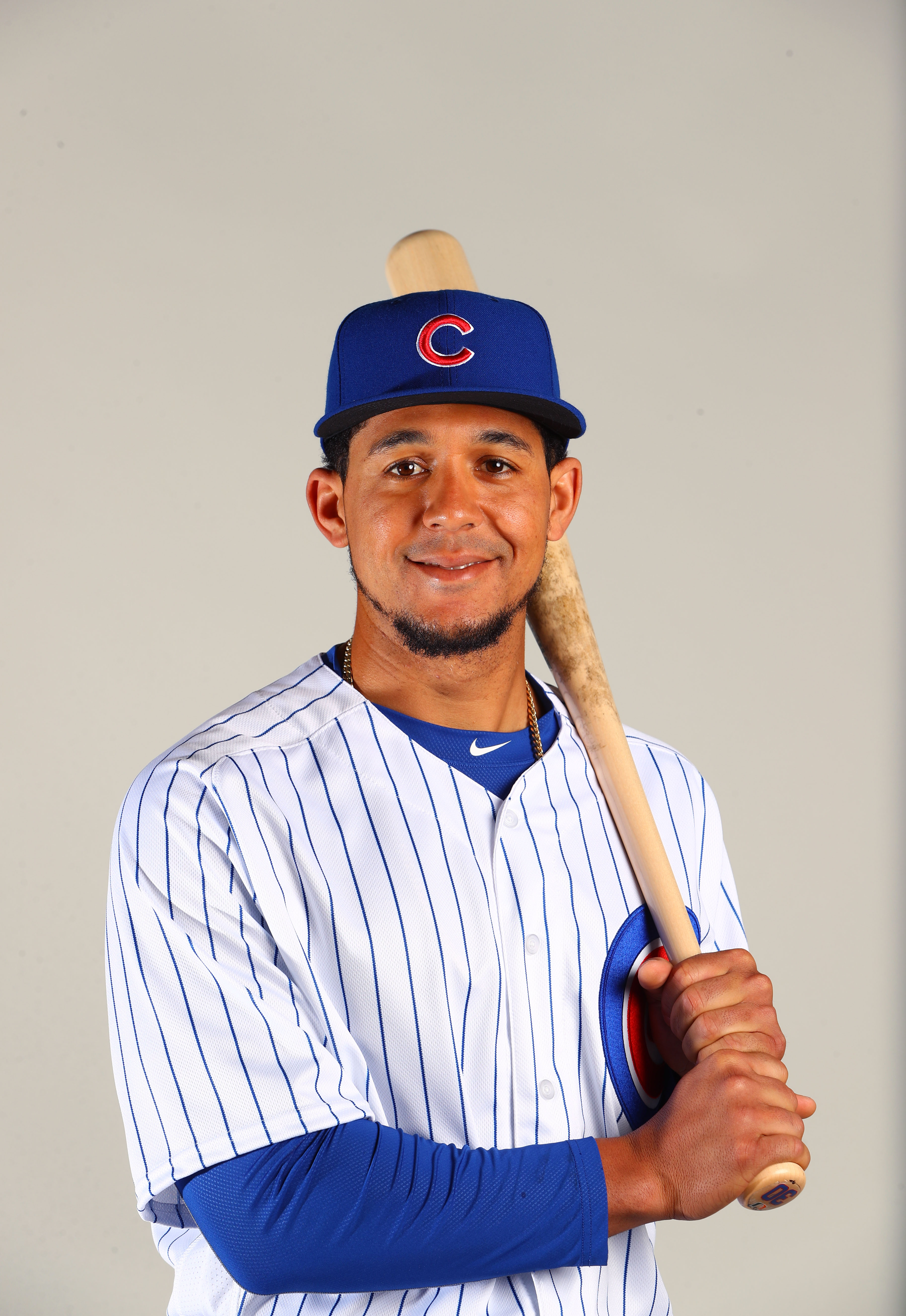
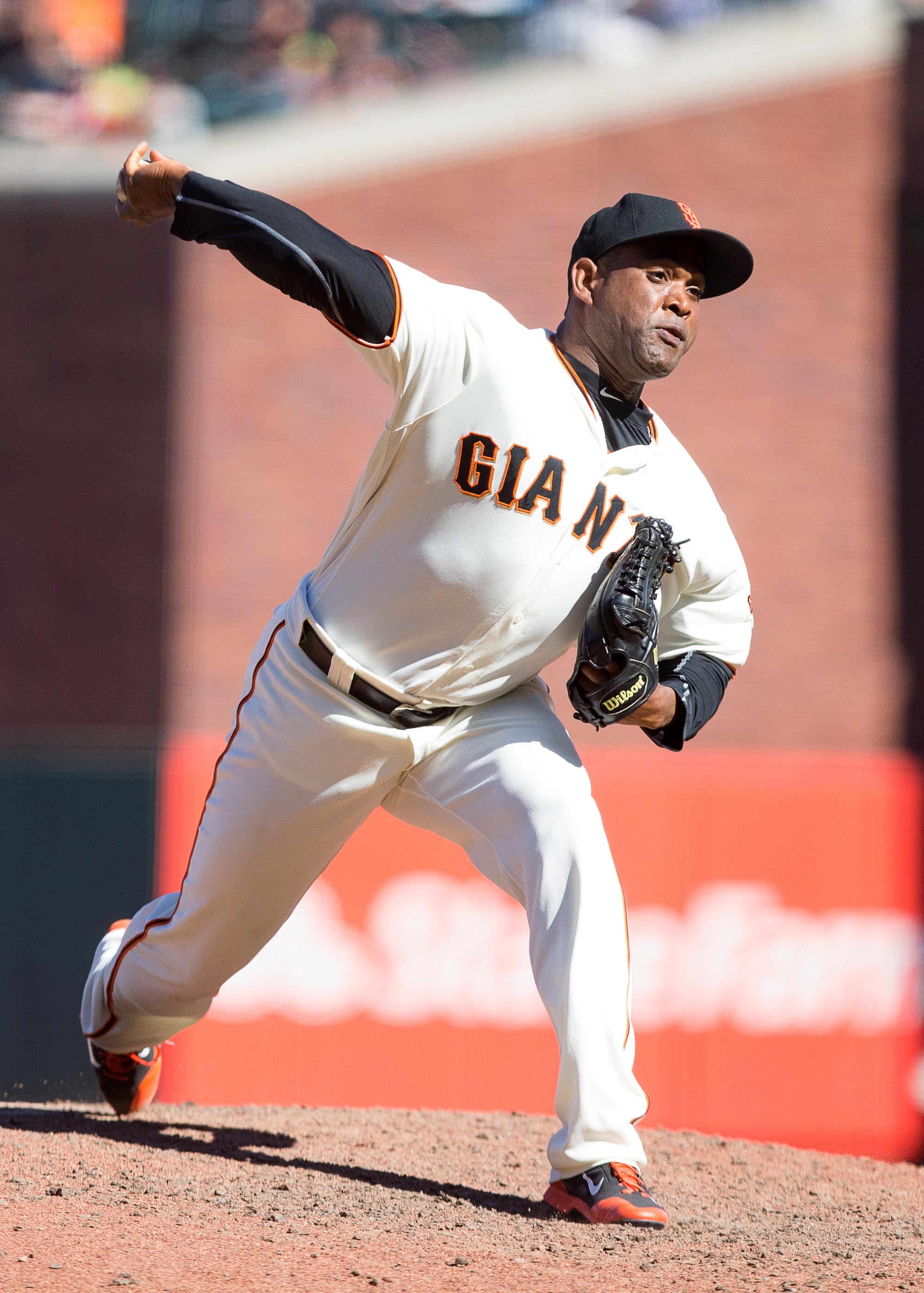
The Cubs also took a measured approach toward center field. Even with the luxury tax threshold in sight, the Cubs could have afforded to re-sign Dexter Fowler at the $82.5MM he ultimately received from the Cardinals. But this is a disciplined front office, one that didn’t seem interested in giving Fowler a three-year deal during his previous free agency. So, gone is the two or three-win player Fowler might be this year, replaced by incumbent Albert Almora and free agent signing Jon Jay (pictured). The Cubs struck quickly to add Jay, a 32-year-old veteran who can hit for average and play an acceptable center field. Jay will serve as a safety net for Almora, who turns 23 in April and was drafted sixth overall by the Cubs in 2012. Baseball America describes Almora as “a potential Gold Glove winner in center.” If he can show a tolerable bat at the bottom of the Cubs’ order, Almora will have the center field job for years. Rather than give Fowler a risky long-term deal, the Cubs elected to accept a short-term downgrade and increased risk with center field for 2017.
You may be sensing a trend toward conservatism in the Cubs’ offseason. Indeed, all four free agents they signed received one-year deals. During the summer, Epstein and company actually did mortgage a piece of the team’s future, sending potential star infielder Gleyber Torres to the Yankees to rent flamethrowing reliever Aroldis Chapman.
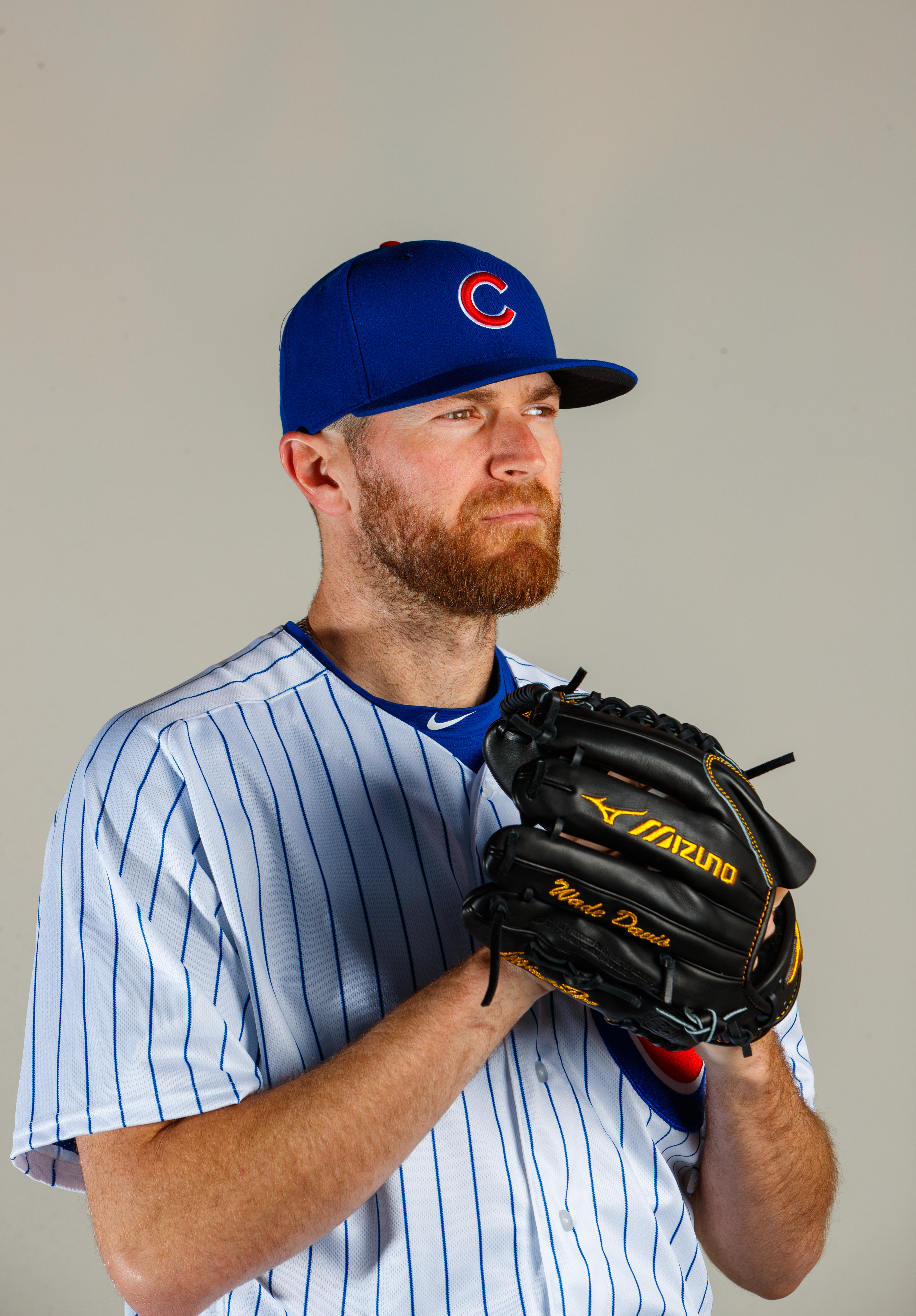
Shortly after the Cubs became World Champions, though, prudence set in. Record-shattering five-year deals for Chapman or Kenley Jansen didn’t interest the Cubs, who instead made a Winter Meetings deal to acquire Wade Davis (pictured) from the Royals for Jorge Soler. The deal carries its own kind of risk, just not financial. In Soler, the Cubs traded away four years of control of a 25-year-old with a potential All-Star bat. However, Soler had no role in the Cubs’ crowded outfield, hadn’t impressed much in his 765 plate appearances with the team, and had battled injuries throughout his tenure. His loss has little effect on the 2017 club. Davis, who the Cubs control for just one year, was among the game’s best relievers from 2014-15. However, he missed 52 days in 2016 with elbow problems. The Cubs have said they feel confident about Davis’ health.
The Cubs also added Koji Uehara, who turns 42 in April. Uehara is about as dominant as a reliever can be with an 87-MPH fastball, though he is an extreme flyball pitcher. Like Davis, he’s an obvious health risk. There’s a good chance the Cubs’ bullpen depth will be tested this year, with righties Hector Rondon, Pedro Strop, Carl Edwards Jr., and Justin Grimm expected to have roles. Strop, who has a 2.65 ERA over the last three years with the Cubs, signed a team-friendly extension that added only $6.35MM in guaranteed money.
The Cubs entered the offseason without much left-handed relief depth. After reportedly showing interest in top free agent lefty Brett Cecil in November, the club settled on Brian Duensing as their lone Major League signing for this vacancy. Duensing, 34, spent the first two months of the 2016 season in Triple-A and later missed over two months to elbow surgery. His effectiveness against lefties has come and gone over the last few seasons. The Cubs added more lefty relief depth with Rule 5er Caleb Smith, but he’s barely pitched above Double-A and is a long shot to stick in a Major League bullpen all year. Montgomery may eventually be needed to shore up the Cubs’ left-handed relief, if Anderson is able to handle the fifth starter job.
More analysis after the break …Read more
Offseason In Review: Toronto Blue Jays
This is the latest entry in MLBTR’s Offseason In Review series.
The Blue Jays added several veteran reinforcements to their roster and brought back franchise icon Jose Bautista, though the loss of Edwin Encarnacion may linger as a “what-if” scenario for years to come.
Major League Signings
- Kendrys Morales, DH/1B: Three years, $33MM
- Lourdes Gurriel Jr., IF/OF: Seven years, $22MM
- Jose Bautista, RF: One year, $18.5MM (plus $17MM mutual option for 2018 and $20MM vesting option for 2019)
- Steve Pearce, 1B/OF: Two years, $12.5MM
- J.P. Howell, RP: One year, $3MM
- Joe Smith, RP: One year, $3MM
- Total spend: $92MM
Trades And Claims
- Claimed RHP Dominic Leone off waivers from Diamondbacks
- Claimed RHP Leonel Campos off waivers from Padres
- Claimed C Juan Graterol off waivers from Angels
- Selected RHP Glenn Sparkman from Royals in the Rule 5 Draft
Notable Minor League Signings
- Jeff Beliveau, Jonathan Diaz, Jake Elmore, Gavin Floyd, Jarrett Grube, Lucas Harrell, T.J. House, Mat Latos, Rafael Lopez, Brett Oberholtzer, Mike Ohlman, Gregorio Petit, Jarrod Saltalamacchia, Jose Tabata
Notable Losses
- Edwin Encarnacion, R.A. Dickey, Michael Saunders, Brett Cecil, Joaquin Benoit, Scott Feldman, Josh Thole, A.J. Jimenez
Toronto Blue Jays Depth Chart; Blue Jays Payroll Overview
Needs Addressed
When Encarnacion didn’t quickly accept the Blue Jays’ early offer of a four-year, $80MM contract, Toronto moved right on to its Plan B in another experienced slugger in Kendrys Morales. While Morales’ numbers over the last five years don’t match Encarnacion for either consistency or sheer production, the switch-hitter has still produced above-average offensive numbers for much of his career, and is just a season removed from a .290/.362/.485 line with the world champion Royals in 2015. Last year, Morales got off to a very slow start in the first two months before heating up to the tune of an .888 OPS over 423 PA from June 1 onward. Interestingly, Jays GM Ross Atkins suggested that Morales could see a “good deal” of action as a first baseman, though since Morales has played just 16 games at first since the start of the 2015 season, one would suspect Morales will fill more of a primary DH role.
Adding more versatility to the lineup is Steve Pearce, signed to a two-year deal despite undergoing elbow surgery last September. (Pearce has been limited to DH duty thus far in Spring Training but otherwise looks to be in fine condition.) Pearce appears to be the Jays’ first choice in left field, though he has also seen time in right, first base and even second base in recent years.
While he has been particularly good against southpaws, Pearce has an overall .266/.348/.485 slash line from 2013-16, making him a solid choice as an everyday player whenever Toronto decides to use him. Against left-handed pitching, Pearce could play first with Melvin Upton or Ezequiel Carrera handling left field. With a righty on the mound, Pearce could play left while Justin Smoak starts at first. Pearce could also spell Bautista in right field on occasion, or serve as a stopgap at second base if Devon Travis‘ availability for Opening Day is still in doubt.
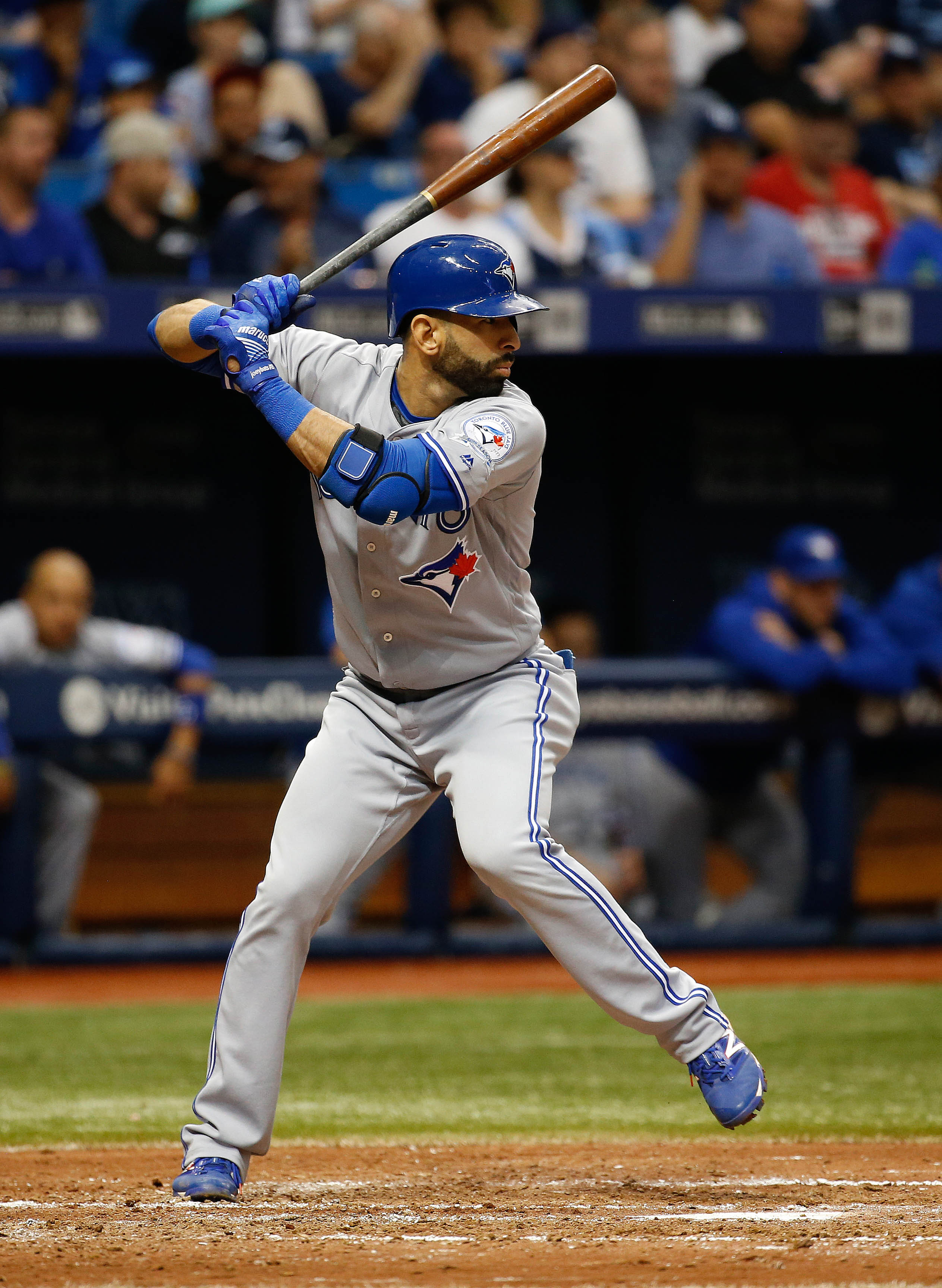 Bautista didn’t enter free agency on a high note, as he was limited to just 116 games due to injuries during his age-35 campaign. It also didn’t help Bautista that the market for free agent hitters in general was rather a cool one this year, and while a number of teams (such as the Indians, Phillies and Orioles) were speculatively linked as interested candidates for a signing, a lack of concrete interest allowed the Jays to re-emerge as suitors in late December.
Though one mystery team reportedly offered Bautista a three-year deal worth more than $50MM, he instead rejoined the Jays for $18.5MM and just one guaranteed year. One would think that a vintage Bautista season in 2017 will lead the slugger to decline his end of a 2018 mutual option in search of a bigger multi-year contract without the anchor of the qualifying offer weighing down his market. If that ends up being the case, the Jays couldn’t really complain about getting one final outstanding year from one of the franchise’s greatest hitters, even if they’re no longer in line for draft compensation.
Re-signing Bautista allows the Jays to fill a need in right field, with the hope that a season of better health will allow him to provide better defense. Bautista still hit .234/.366/.452 with 22 homers despite his injury woes last year, though Toronto will be hoping for more production to help make up for Encarnacion’s departure.
The Jays replaced free agents Brett Cecil and Joaquin Benoit in their bullpen by signing another pair of veterans in lefty J.P. Howell and right-hander Joe Smith. Before signing Howell, Toronto also considered other southpaws such as Jerry Blevins and Boone Logan. The Blue Jays did consider making a bigger expenditure on their pen, as the team had some talks with the White Sox about David Robertson.
After parting ways with Josh Thole and Dioner Navarro, the Jays addressed their backup catching needs by signing veteran Jarrod Saltalamacchia to a minor league contract. “Salty” is the favorite to serve as Russell Martin‘s understudy, while the Blue Jays made some other minor acquisitions (i.e. Juan Graterol, Mike Ohlman) to build catching depth.
On the international signing front, Toronto made a splash by signing highly-regarded Lourdes Gurriel Jr. to a seven-year, $22MM deal. The 23-year-old Gurriel hails from one of Cuba’s most respected baseball families (his father is one of Cuba’s greatest players and his older brother Yulieski plays for the Astros) and could potentially line up at several different positions around the diamond. Gurriel is probably at least a year away from the big leagues but he stands out as an intriguing building block for the future.
Questions Remaining
Going into the offseason, there was significant doubt as to whether the Jays could re-sign either Bautista or Encarnacion, and a reunion with both seemed totally out of the question. It seemed like the Jays themselves believed the latter scenario was true, as once Encarnacion rejected that initial offer, the team jumped to sign Morales to fill Encarnacion’s role. As the winter went on, however, the expected frenzy for Encarnacion’s service never materialized, as the first baseman signed a three-year, $60MM deal (with a $20MM club option year) with the Indians that fell below all industry projections.
Had the Jays held off on Morales and waited perhaps just a few more weeks before re-engaging Encarnacion and agent Paul Kinzer, it’s possible Encarnacion could have ended up back in Toronto at a relative discount price. Instead, the Jays spent $33MM on Morales (who’s only a few months younger than Encarnacion and an inferior batter with no defensive value) and $18.5MM on Bautista, who certainly wouldn’t be the first star hitter to hit a sudden decline in his late 30’s.
Given the slow-moving market for all the first base/DH types on the market, Morales himself might well have still been available at a lower price tag had the Jays not been in such a rush. If not Morales, then a scenario certainly exists where the Blue Jays would’ve indeed managed to get the band back together by re-signing both Encarnacion and Bautista.
The Jays headed into the winter with a lineup lacking in athleticism and left-handed hitters, and those issues are still on the books as Opening Day approaches. “Any organization would be looking to create more balance, more platoon effect and potentially more speed. But it’s just not as easy as deciding to do that and making that happen,” Atkins said during an end-of-the-season talk with reporters.
Indeed, the Jays’ main three position-player acquisitions don’t really check any of the boxes on Atkins’ general offseason wish list. Bautista and Pearce are both right-handed bats, while the switch-hitting Morales has better career splits as a left-handed hitter over his career but has posted a better OPS from the right side of the plate in three of the last four seasons. While Pearce can play multiple positions, Morales is more or less a full-time DH and Bautista’s declining defensive numbers of the last two years argue that he too is best deployed as DH or first baseman at this point rather than as a regular right fielder. Morales taking the bulk of DH at-bats also means a loss of lineup flexibility — there is now less opportunity to give Martin, Troy Tulowitzki, or Josh Donaldson a break from playing the field while still keeping their bats in the lineup.
The Jays at least checked in on a wide range of players (such as Dexter Fowler, Carlos Beltran, Andrew McCutchen, Charlie Blackmon, Josh Reddick, Matt Wieters, Ian Desmond, Curtis Granderson, Jay Bruce, Sean Rodriguez and their own free agent Michael Saunders) who could’ve potentially been better fits from either a versatility standpoint or by adding more left-handed balance. Signing the likes of Fowler or Desmond would’ve cost Toronto a first-round draft pick since both players rejected qualifying offers, though one could argue the Jays essentially surrendered a first-rounder anyway by re-signing Bautista, who also rejected a QO.
Atkins has stated that his “best-case scenario” is to have Pearce as the regular left fielder and Smoak as the regular first baseman. Counting on Pearce for regular outfield duty on the Rogers Centre’s artificial surface is optimistic enough, as beyond his elbow surgery, Pearce has also hit the DL with oblique, hamstring and wrist injuries in the last four seasons. Believing that Smoak is a late bloomer who can go from being a virtual replacement player (0.3 fWAR in his seven big league seasons) into a viable everyday option at age 30 is perhaps even more questionable.
It remains to be seen if Morales can handle enough first base time to at least spell Smoak against left-handed pitching. If not, and Pearce or Bautista need to step in at the position, that opens up left or right field for an outfield mix that includes Upton, Carrera, Dalton Pompey, and Darrell Ceciliani. Until Pearce is fully able to play, at least, the plan for left field appears to be an Upton/Carrera platoon (though the Jays are reportedly also looking around for outfield help).
Upton was a big disappointment after joining the Jays at the trade deadline, and, aside from a brief resurgence with the Padres, has been a below-average offensive producer in three of the last four seasons. Carrera is a rare left-handed bat on the roster but his career numbers are actually better against southpaws than righties.
Ceciliani is another lefty bat who owns more traditional splits, though he also hasn’t shown much at the MLB level. The switch-hitting Pompey is still an unknown quantity after struggling badly early in the 2015 season and being limited to mostly pinch-running duty in his subsequent time in the majors. He is also currently being held out of action after suffering a concussion during the World Baseball Classic.
Still, hoping on unproven commodities like Pompey, Ceciliani, or first base prospect Rowdy Tellez underscores the lack of left-handed hitting options on Toronto’s roster. Against a right-handed starter, the Jays’ lineup could feature just Morales, Smoak (a modest career .720 OPS against righties) and perhaps the switch-hitting Saltalamacchia as options from the left side, if Martin is on a rest day. Signing a veteran outfield option like Angel Pagan would be an upgrade, though the Blue Jays are apparently unlikely to land Pagan.
Travis’ lingering injury problems create another potential issue at second base. For the short term, the Jays could platoon Darwin Barney and Ryan Goins at the keystone, a scenario that would help the team keep the out-of-option Goins on the roster. Pearce could play second in a pinch if Travis faced a lengthy DL stint, though it would seem almost a waste of Pearce’s versatility to lock him into his least-ideal position, not to mention the fact that using Pearce at second would also weaken left field and first base.
There were rumors earlier this winter that the Blue Jays would explore stretching Joe Biagini out as a starting pitcher so that the righty could go from being an unexpected bullpen breakout star to rotation depth. The latest word, however, is that Biagini will remain in the relief corps, so the Jays are still thin on depth beyond their solid starting five of Aaron Sanchez, Marco Estrada, J.A. Happ, Marcus Stroman and Francisco Liriano. Mike Bolsinger could fill a long relief or swingman role, with MLB veterans Mat Latos and Lucas Harrell also in camp on minor league deals and Gavin Floyd also back on a minors contract as he looks to rebound from another injury-plagued season.
Deal Of Note
This section actually addresses multiple deals of note — namely the one-year, $3MM contracts the Jays handed to Howell and Smith, plus the one-year, $7.5MM contract Benoit signed with the Phillies and the whopping four-year, $30.5MM deal Cecil landed from the Cardinals.
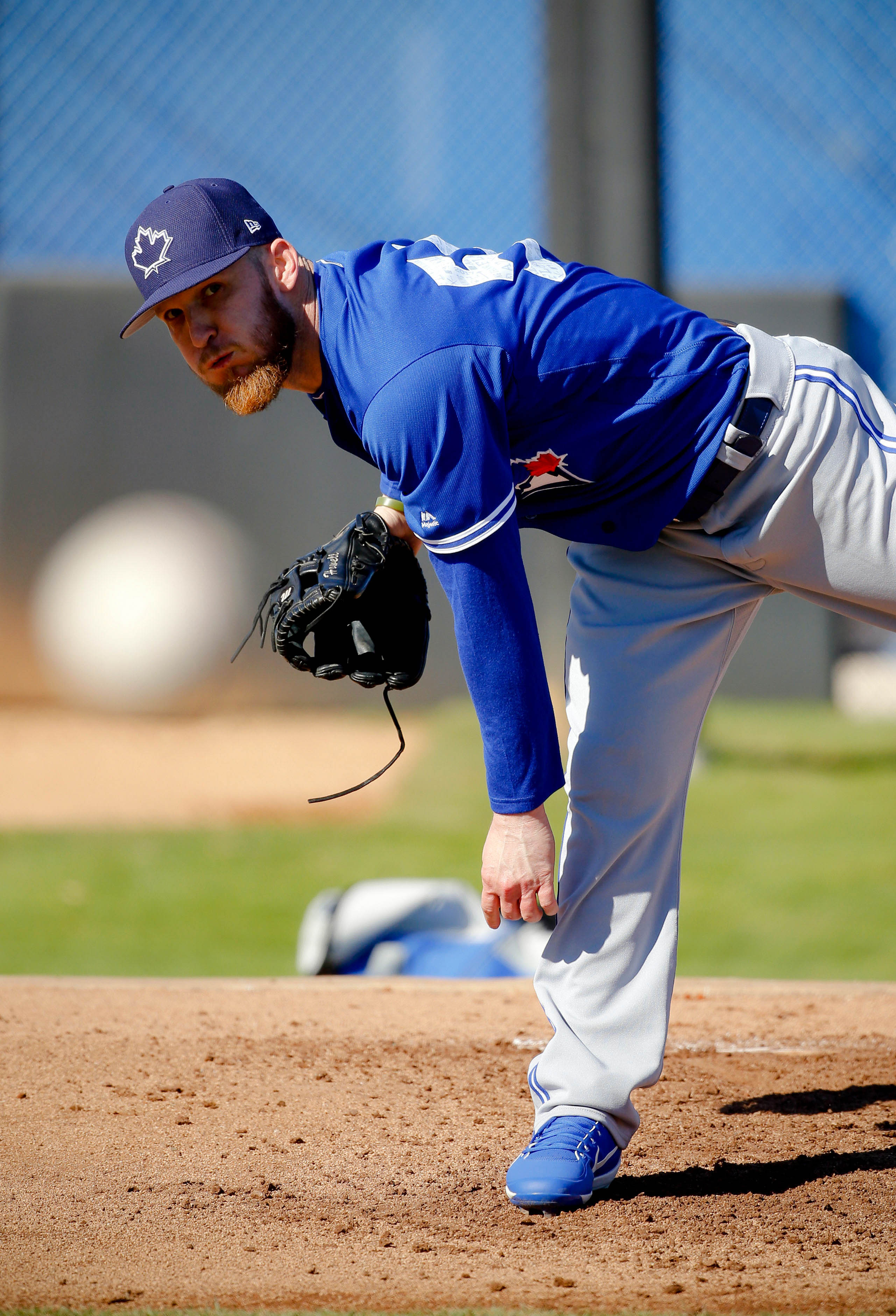
Toronto took a slow-play approach to its bullpen needs, which ended up being a shrewd tactic given the early explosion in relief prices. Beyond the huge contracts given to star closers Aroldis Chapman, Kenley Jansen and Mark Melancon, you also saw the likes of Cecil, Mike Dunn, Brad Ziegler, Junichi Tazawa, Daniel Hudson and Marc Rzepczynski land multi-year commitments before the end of December. The market slowed considerably as the winter went on, and thus the Jays landed both Howell and Smith for less than the Phils paid Benoit, let alone the massive outlay that would’ve been required to re-sign Cecil.
Obviously, several factors beyond just asking prices went into these signings (age, various teams’ particular preferences, etc.), including the fact that Howell and Smith are both coming off relative down years by their standards. Cecil and Benoit were both better pitchers in 2016 than Howell and Smith, though the gap in performance doesn’t equal the $9MM gap in salaries the two pairs will earn in 2017. Given Benoit’s age (39), Cecil’s rather inconsistent performance last season and the general inherent risk of paying significant money for relief pitching, one could argue the Blue Jays positioned themselves to get more bang for their buck in waiting out the market to sign Howell and Smith in February.
Overview
For the second straight offseason under Atkins and club president Mark Shapiro, the Blue Jays relied more on modest free agent signings rather than trades to upgrade the roster. (In fact, Toronto was the only team that didn’t swing a single trade all winter.) The Jays clearly didn’t want to surrender what it would’ve taken to acquire the likes of McCutchen, Blackmon or Granderson, be it prospects or young talent on the MLB roster. Likewise, Atkins and Shapiro preferred to spread the Jays’ cash around rather than focus the spending on one big signing like Fowler, or what they thought it would’ve taken to re-sign Encarnacion.
Two winters of free agent acquisitions, even on non-blockbuster signings, add up; the Jays’ estimated payroll of over $162.6MM for 2017 will be the largest in franchise history. With this big payroll in mind and the fact that the Jays focused their attention on veteran signings, the club is clearly still in win-now mode after consecutive trips to the ALCS. For a team that has championship aspirations, however, the Jays are taking risks both in their lack of depth, and in apparently counting on underachieving players (i.e. Smoak, Upton, Carrera) to play notable roles. There isn’t much margin for error on this roster if, say, Bautista doesn’t have a bounce-back year, or if an unexpected injury fells a cornerstone player like Donaldson.
Still, with some good minor leaguers in the system, the Jays are leaving themselves room for improvement if they need to make a trade or two at the deadline. There’s also the possibility that the front office felt it didn’t need to make many changes to what is already a contending team, and that the combined contributions of Morales, Pearce and a revived Bautista will make up for the losses of Encarnacion and (to a lesser extent) Saunders.
What’s your take on the Blue Jays’ winter? (Link for app users.)
How would you grade the Blue Jays offseason?
-
C 44% (1,562)
-
B 36% (1,251)
-
D 12% (410)
-
F 5% (176)
-
A 3% (123)
Total votes: 3,522
Photos courtesy of USA Today Sports Images
Offseason In Review: New York Mets
This is the latest entry in MLBTR’s Offseason In Review series.
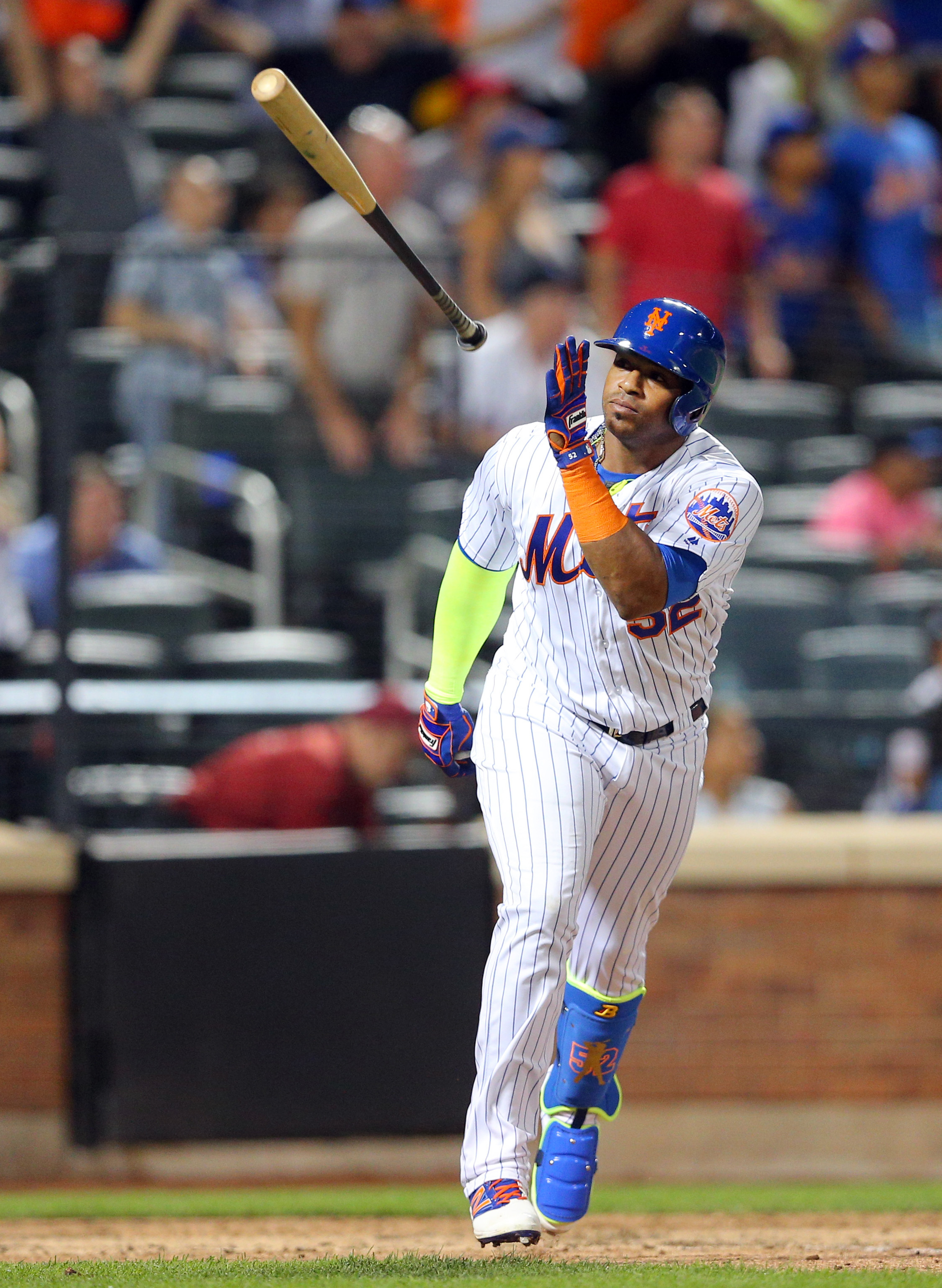
For the second straight winter, the biggest offseason question the Mets faced centered on whether they’d re-sign outfielder Yoenis Cespedes. And for the second straight winter, the Mets managed to prevent Cespedes from departing in free agency. As a result, he’ll once again serve as the centerpiece of New York’s lineup as the club tries to log three consecutive playoff berths for the first time in franchise history.
Major League Signings
- Yoenis Cespedes, OF: Four years, $110MM
- Neil Walker, 2B: One year, $17.2MM (accepted qualifying offer)
- Jerry Blevins, LHP: One year, $6.5MM (club option for 2018)
- Fernando Salas, RHP: One year, $3MM
- Total spend: $136.7MM
Trades And Claims
- Acquired cash from Orioles for RHP Logan Verrett
- Acquired cash from Orioles for RHP Gabriel Ynoa
Notable Minor League Signings
Extensions
- None
Notable Losses
Mets Roster; Mets Payroll Information
Needs Addressed
Aside from Cespedes, whom we’ll address on a more in-depth level later, the Mets brought back three of their other free agents in second baseman Neil Walker and relievers Jerry Blevins and Fernando Salas. General manager Sandy Alderson didn’t do anything else of significance, meaning the Mets are essentially relying on the same roster they did last year. Considering the Mets fought through a rash of injuries to win 87 games and earn a wild-card spot in 2016, Alderson’s continuity-based approach could prove beneficial.
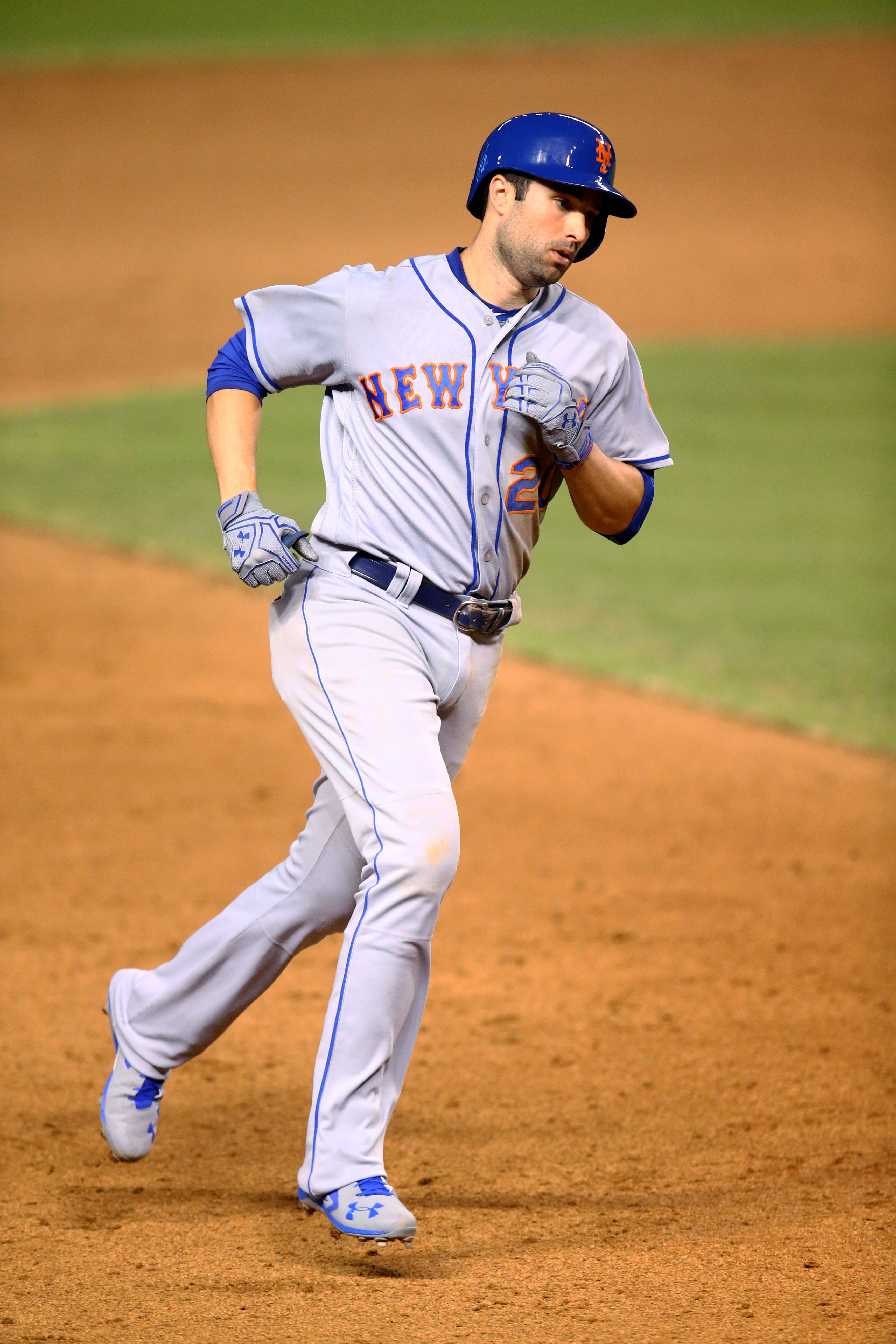
One of the keys to the Mets’ success last season was Walker, whom they acquired from Pittsburgh in December 2015 for left-hander Jon Niese. That trade has already gone down as a heist for Alderson, as the perennially productive Walker had yet another quality season. Niese, whom the Mets later reacquired from the Bucs for reliever Antonio Bastardo, scuffled with both teams last year. That made it an easy decision for New York to decline Niese’s $10MM option for 2017 in November.
Walker, meanwhile, slashed .282/.347/.476 with a career-high-tying 23 home runs in 458 plate appearances and registered a personal-best 9.3 Ultimate Zone Rating as a defender. Consequently, the belief was he’d test free agency during the winter. While MLBTR projected Walker would garner a three-year, $36MM deal on the market, he ultimately eschewed an opportunity to shop his services around the majors in favor of the Mets’ $17.2MM qualifying offer.
It’s possible Walker, 31, was leery of leaving a high guarantee on the table because of the season-ending back surgery he had last September. Regardless, it seems that issue is behind him. The Mets, after all, nearly awarded Walker an extension in the three-year, $40MM neighborhood last month before talks hit a snag over his 2017 salary. So, although Walker’s long-term future is uncertain, the switch-hitter is in place to function as a linchpin in the Mets’ lineup for at least another year.
Both Blevins and Salas are back for the short term, too, albeit at much lower salaries than Walker. The bigger prize of the two is likely the 33-year-old Blevins, who was quietly great last season. Blevins pitched to a 2.79 ERA with 11.14 K/9 against 3.21 BB/9 in 42 innings and 79 appearances, during which he dominated left- and right-handed hitters alike. Relative to both his 2016 performance and the larger guarantees awarded to fellow lefty setup men like Brett Cecil (four years, $30MM), Mike Dunn (three years, $19MM) and Marc Rzepczynski (two years, $11MM) in free agency, Blevins’ contract looks quite fair for the Mets. Each of Cecil, Dunn and Rzepczynski signed fairly early in the offseason, but Blevins had to wait until February. It’s now possible he’ll work as the Mets’ primary bullpen southpaw through 2018, as his agreement includes a reasonably priced club option ($7MM) for its second and final year.
Salas also went without a contract until February, when he accepted a modest $3MM after a near-flawless showing down the stretch with the Mets last season. The team acquired Salas from the Angels on the final day of August, and he then proceeded to allow just four earned runs in 17 1/3 innings and rack up 19 strikeouts without issuing a walk. The 31-year-old was far less effective over the first five months of the season as a member of the Angels, with whom he posted a 4.47 ERA, 7.2 K/9 and 3.0 BB/9 in 56 1/3 frames. Last year was a microcosm of the inconsistent Salas’ career, which makes it a gamble (an affordable one, granted) that the Mets are looking to rely on him in a prominent late-game role this season. While the Mets’ best reliever, closer Jeurys Familia, likely serves a season-opening suspension resulting from an October domestic violence incident, they’ll turn to Addison Reed, Salas, Hansel Robles and Blevins as their top end-of-game pitchers.
Click to continue…