
Mets Notes: Harvey, Employee Fund, Matz
It was on this day in 1972 that the Montreal Expos traded the franchise’s first star, as Rusty Staub was sent to the Mets for a three-player package consisting of Ken Singleton, Mike Jorgensen, and Tim Foli. All three players ended up being productive regulars during their time in Montreal, so it didn’t turn out to be a bad swap for the Expos, as much as fans missed having “Le Grand Orange” in the lineup. Montreal’s loss was New York’s gain, as Staub hit .276/.361/.428 over 2263 PA with the Mets from 1972-75 and also delivered a huge performance during the Mets’ playoff run in 1973. Staub had a 1.096 OPS over 46 postseason plate appearances that year, and quite possibly could have been World Series MVP had New York beaten the Athletics in the seven-game Fall Classic. Staub ended up playing nine of his 23 seasons in a Mets uniform, returning for a second stint with the franchise from 1981-85.
Some more from Queens….
- A reunion between Matt Harvey and the Mets doesn’t seem likely, as MLB.com’s Anthony DiComo writes that the Amazins “weren’t interested” in Harvey over the offseason and he doesn’t believe the club has been in contact with the right-hander. Given some of the off-the-field controversy that surrounded Harvey during his previous tenure in New York, it probably isn’t a surprise that the Mets have seemingly closed the door on their former All-Star. Aside from a tryout with the Blue Jays earlier this winter, Harvey hasn’t been publicly linked to any teams since his minor league deal with the Athletics expired at the end of the season. Harvey has posted a 5.89 ERA over 307 1/3 innings with the Mets, Reds, and Angels since undergoing thoracic outlet syndrome surgery midway through the 2016 season.
- The Mets announced Friday that a financial aid program had been developed for seasonal game-day staff members. The $1.2MM fund will be mostly given out in the form of “need-based grants” for staffers who directly work for the Mets, while remaining money will be divided among subcontracted workers (employed by Aramark, Impark, and Alliance) who serve in various roles around the ballpark.
- Left-hander Steven Matz is also helping COVID-19 relief efforts, announcing (Twitter links) that his TRU32 charity is donating $32K to first responders and hospitals in New York. The organization’s first donation is going Elmhurst Hospital in Queens, located less than three miles from Citi Field.
How To Get A Job In Baseball, According To GMs
Working in baseball operations for a Major League team is a dream job for many baseball fanatics. If front office job-seekers are being honest, the pinnacle would be to one day land in the GM’s chair and call the shots on trades, free agent signings, and draft picks. But in such a competitive field, how do you stand out? What should you focus on to become as appealing as possible to an MLB team in a job interview?
Seven years ago, I polled many MLB executives on their advice for high school students with front office aspirations. With so many new executives in the game since then, I decided to move a bit further down the career path and ask this question:
What one piece of advice would you give to a college student who hopes to work in baseball operations one day?
I posed this question to many of MLB’s top-ranking baseball operations executives. Just like the rest of us, these people are currently sheltered in place with their families trying to get some work done in these difficult and strange times. The following ten execs kindly took the time to answer my question: Ross Atkins of the Blue Jays, Jeff Bridich of the Rockies, Ben Cherington of the Pirates, James Click of the Astros, Mike Elias of the Orioles, Derek Falvey of the Twins, Matt Kleine of the Brewers, Dayton Moore of the Royals, Brodie Van Wagenen of the Mets, and Dick Williams of the Reds. Their answers are below.
I always think of the creative examples of how several of the current team’s GMs and Presidents got their foot in the door when asked this question. Without sharing those ideas specifically, I tell the individual who asked to think of something that they can bring to the table today that would be beneficial for a baseball operations team. Is there something that they do or can do that would have an immediate impact even if very small. It could be data analysis, programming, scouting, performance coaching, or leadership/communication application but ideally in the form of a project or deliverable and in a perfect world something that the organization doesn’t already have.
I believe that if those looking to get into baseball have excelled in other arenas they should think about how they have done that and share that in a way that is applicable to baseball as that is usually an attractive approach to those who are deciding to add to their operations teams. – Ross Atkins, Blue Jays Executive Vice President, Baseball Operations & General Manager
In terms of trying to trying to get into the world of baseball operations out of college, mindset and attitude will determine a lot. Create for yourself a mindset built around relentlessness, flexibility and hard work. The typical college school year and/or graduation timeframe do not lineup perfectly with when most Major League teams are hiring. So there could be some lag time between leaving college and getting hired.
Also, there usually are hundreds, maybe thousands, more applicants for jobs than there are jobs available. So chances are you’ll hear a bunch of “Nos” before you hear a “Yes”. That’s where relentlessness, flexibility and work ethic come into play. Your first opportunity in the baseball industry may not come in the perfect shape, size and package that you desire – but that’s OK. Be flexible in what you are willing to do and where you’re willing to work (be that departmentally or geographically).
At some point in your job search, you may feel like you are being annoying or that you’re bothering team employees too often. But know that relentlessness and persistence often pay off. It’s tough to count up how many times we have said over the years, “You have to give that person credit for his/her persistence,” whether we hired that person or not. If the worst outcome is that you are not hired (yet) but you are given credit for your relentless desire to work in the game, then it’s worth it.
Finally, look at the job search process like it is a job in itself. Put in the time. Make sure your resume is as good as it possibly can be. Ask thoughtful questions of any and all people who could help you. And always be ready – after you’ve sent off your resume and applied for a job, you never know when a team might call you. Those people who are ready for an in-depth discussion at a moment’s notice usually make a good first impression. – Jeff Bridich, Rockies Executive Vice President & General Manager
It’s hard to narrow down to one but if I had to I’d say finding opportunities to solve complicated problems in groups. Almost all of the work we do in baseball operations focuses on assessing, predicting, or improving human performance. Human performance is complicated. Almost none of the work we do in baseball is done by ourselves. Just about everything we do is done by teams of people. So I’d say the more practice combining those two things the better. – Ben Cherington, Pirates General Manager
There’s no magic bullet, no secret code to getting into baseball. All of us have a unique story about how we got here, so play to your strengths and put yourself in as good a position as possible to take any job that you’re offered, even if – especially if – it’s not in the area in which you see yourself long term. Every job is an opportunity to show what you can do, a chance to gain valuable experience and perspective on how the game works, and to make sure that this lifestyle is something you want to take on. Finally, don’t get discouraged! It took a lot of us a long time to get into the game, but it’s worth it. – James Click, Astros General Manager
I think there are so many public forums today to showcase your work online. Whether it’s contract analysis, data analysis, or scouting evaluation that you want to do, you can start to build this body of work on your own, before anyone hires you. It is so helpful when we are interviewing when someone has a portfolio already started. It shows how you work and think, but also shows initiative and that you are truly passionate about this line of work. – Mike Elias, Orioles Executive Vice President and General Manager
I’d recommend that you don’t wait around for the perfect opportunity to come your way and instead find a way to create one. People who want to work in baseball will reach out and say they’re just waiting for that “break” to come their way. It’s not uncommon that a year later we’ll hear from them again still waiting for that opening to show up.
My suggestion – dive into a topic within the game that interests you, learn as much as you can about it, and then generate a work product that shows you have the baseline skills and passion to impact a baseball operation as soon as you walk through the door. Don’t be afraid to try something because you might fail. Of all the resumes we get, it’s the ones that are accompanied by a work product (and therefore a willingness to put yourself out there) that generate the most interest. – Derek Falvey, Twins President of Baseball Operations
My advice to students is to create baseball-specific opportunities for yourself. Don’t wait for them to come to you. Volunteer to capture video, analyze data or operate pitch tracking software for your school’s team. Connect with your Sports Information Director and ask how you can help. Learn SQL. Learn Spanish. Contact baseball-centric websites and volunteer your time. Devise your own work product that attempts to solve meaningful questions you believe are currently unanswered within the public sphere. This is especially important because providing MLB clubs with examples of self-driven work product showcases your curiosity, thought process, and reasoning. It’s equally as important – if not more so – than a strong resume.
Students should also understand that our approach to hiring is shaped by our constant pursuit of the next marginal win. How can the next hire help us win games both today and in the future? Students who approach us with hard skills, novel work product and a strong resume quickly move to the front of that line. – Matt Kleine, Brewers Vice President – Baseball Operations
As it pertains to teams and front office, compatibility is the most important trait. This will only exist if you have an above and beyond attitude with the commitment to do the jobs that others simply find meaningless. You must have an “others first” mindset and model that behavior. Finally, never stop looking at this game from the eyes of your youth. – Dayton Moore, Royals Senior Vice President – Baseball Operations/General Manager
1. When interviewing with a prospective employer/executive, be specific about the area in which you want to work. Prove to your audience that you have you done the research in his/her area of focus. This will enable you to be versed enough to hold a meaningful conversation. Those who want a “PARTICULAR job” are much more compelling than those who simply just want “a job.”
2. Be willing to work in any city that has an opportunity to further your pursuits. Don’t let geography limit your search. – Brodie Van Wagenen, Mets Executive Vice President & General Manager
The best way to get your foot in the door is to figure out how you can solve a problem for me that I may not have even known I had. It makes for a much more effective cold call when you email your resume into an organization if you can articulate what you can do that the Reds are not doing today that could make us better. At least it makes us more likely to read further.
Keep abreast of the evolving trends in the industry and tailor your coursework accordingly. If you have baseball experience, focus on adding database management or machine learning or something technical. And if you are technically skilled, work on adding the baseball experience however you can. – Dick Williams, Reds President of Baseball Operations
Rebound Candidate: Edwin Diaz
If the Mets are going to maximize their potential and break their three-year playoff drought in 2020, odds are they’ll need a bounce-back effort from right-handed reliever Edwin Diaz. It’s still tough to believe how little the Mets got last year from Diaz, whom they acquired in December 2018 in what now looks like a regrettable blockbuster with the Mariners.
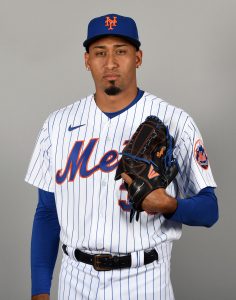
Diaz concluded his three-season Seattle tenure in epic fashion prior to the trade, turning in one of the greatest years a reliever has ever recorded. He collected 57 saves on 61 tries and logged a 1.96 ERA/1.61 FIP with 15.22 K/9 and 2.09 BB/9 in 73 1/3 innings en route to AL Reliever of the Year honors. The Mets surely expected Diaz to compete for the NL version of that award last season. No dice.
Diaz wound up ranking among the majors’ worst at preventing runs in his first year with the Mets, as he finished seventh last out of 158 qualified relievers in ERA (5.59) and well below average in FIP (4.51). The .377 batting average on balls in play hitters registered against Diaz had a hand in his sudden ineffectiveness, though he can’t simply be let off the hook for that. After all, someone who was so dominant just the year before (and very good in the prior two seasons) could no longer seem to keep meaningful contact at bay.
Thanks in part to noticeable decreases in groundball percentage and infield fly rate, Diaz’s hard contact jumped by 18.8 percent from 2018, according to FanGraphs. He ended up in the league’s second percentile in hard-hit percentage and its 11th percentile in average exit velocity against, per Statcast. His slider – a pitch that embarrassed hitters before – was battered to the tune of a .387 weighted on-base average, helping lead to a whopping 16 percent increase in home runs. Many pitchers gave up more HRs than usual during a power-happy 2019, but most didn’t so to that extent.
Despite all of that, the 26-year-old Diaz shouldn’t be counted out just yet. He did show some positive signs last season, believe it or not. Diaz lost nothing on his fastball, a pitch that has averaged 97.3 mph in each of his major league seasons. His strikeouts and swinging strikes dropped from his dream ’18 effort, while his walk rate rose, but he was still far above average in the first two categories and passable in the third. In fact, his strikeout rate (39 percent; 15.38 per nine) ranked in the league’s 99th percentile, and he finished fifth among relievers in swinging strikes (18 percent). And it seems Diaz did deserve better when he threw his slider, evidenced by a .272 expected wOBA against the pitch.
None of this is to say Diaz will ever return to his absolute best form, but he does still seem to have what it takes to succeed in the bigs. Even if he does, the Diaz/Robinson Cano trade (the latter has also struggled so far) probably won’t go down as a positive for the Mets. But if Diaz can help stabilize the back end of New York’s bullpen and aid in a return to the playoffs, that would ease the pain to some degree.
Photo courtesy of USA Today Sports Images.
Quick Hits: TJ Surgery, Thor, Verlander, Torres
Even with medical facilities reeling from the coronavirus, there are still Tommy John surgeries taking place. Red Sox left-hander Chris Sale and Mets righty Noah Syndergaard have undergone the procedure in the past few days. However, famed orthopedist Dr. James Andrews, who’s known for performing the operation, has put a stop to it for the time being, Alex Speier of the Boston Globe relays. The Andrews Institute for Orthopaedics and Sports Medicine is located in Florida, where Gov. Ron DeSantis – as Speier writes – issued an executive order prohibiting “any medically unnecessary, non-urgent or non-emergency procedure or surgery which, if delayed, does not place a patient’s immediate health, safety or wellbeing at risk, or will, if delayed, not contribute to the worsening of a serious or life-threatening medical condition.” Syndergaard underwent TJS in the state last week, though he was not an Andrews patient.
- It’s hard to believe, but Syndergaard could end up as a non-tender candidate next winter, as Buster Olney of ESPN observes. Syndergaard should be in line to make around $9.7MM next season (the same salary he’s slated for in 2020), but he’s going to miss a large portion of 2021 and, as Olney explains, teams may be in cost-cutting mode with revenues sure to decline because of the coronavirus. Those realities could lead to a non-tender or a trade for Syndergaard, so it’s possible he has already thrown his last pitch as a Met. Whether or not Syndergaard becomes a non-tender victim, one executive told Olney that there will likely be an increase in such cases next offseason. “I think you’ll see more non-tenders,” the exec said. “The guys with four-plus or five-plus [years of] service time.”
- Astros ace and reigning AL Cy Young winner Justin Verlander seems to be making progress in his recovery from the right groin surgery he underwent on March 17. General manager James Click told Brian McTaggart of MLB.com: “The last I heard, everything’s going great and he’s ready to get back out there as soon as he possibly can. I haven’t heard anything bad. As far as I know, he’s right on schedule and he’s recovering very well.” That’s reassuring for the Astros, who – if there is a season – will count on Verlander and Zack Greinke to carry a rotation that lost Gerrit Cole and Wade Miley in free agency.
- The Yankees aren’t known for doling out contract extensions, but if they’re going to lock up one of their own for the long haul, shortstop Gleyber Torres is a logical candidate. The 23-year-old enjoyed an especially impressive campaign in 2019, and he’s now entering his final season of pre-arbitration. That said, the Yankees are unlikely to try to extend Torres until they see how he fares as a full-time shortstop, George A. King III of the New York Post writes. While Torres has mostly played second base since his career began in 2018, he spent the majority of last season at short because now-Phillie Didi Gregorius sat out for a couple months while recovering from Tommy John surgery. Torres didn’t garner awful grades there, for what it’s worth, finishing with minus-1 Defensive Runs Saved, a minus-2.1 Ultimate Zone Rating and minus-3 Outs Above Average. Regardless of how adept Torres is in the field, it seems he’s someone the Yankees should want around at set prices for the foreseeable future. Even if that’s the case, though, there’s a leaguewide freeze on extension talks at the moment.
Quick Hits: Miller, Wacha, Expansion
Some items from around the game…
- Cardinals reliever Andrew Miller spoke to Rick Hummel of the St. Louis Post-Dispatch about several topics, including the recent agreement between the league and players’ union about the 2020 season, how Miller is handling the shutdown, and the rather mysterious arm problem that sidelined Miller earlier this month. “There are some explanations for some of what I’m going through and I have a lot of appreciation for the amount of time [Cardinals head athletic trainer] Adam Olsen and Dr. [Brian] Mahaffey have put in helping me to look for some answers,” Miller said. Though there still isn’t an actual diagnosis of Miller’s issue, “I think I have answers that make a lot of sense and they’re not the type of thing that brings any sort of concern to my health and my livelihood.” The southpaw is currently throwing, albeit under “not…ideal” circumstances working out at his home rather than in a normal training environment.
- Michael Wacha turned to some offseason video analysis with his father to help solve mechanical problems from the 2019 season, which put him in a good place heading into his first Spring Training with the Mets, Deesha Thosar of the New York Daily News writes. By the time Wacha met with pitching coach Jeremy Hefner and assistant pitching coach Jeremy Accardo in camp, “they said my mechanical changes that I made over the offseason were exactly what they were going to be telling me,” Wacha said. “Exactly the same type of information or helpful tips that they were trying to get me into, I already made them on my own.” The early returns in Grapefruit League action were somewhat promising, as Wacha posted a 1.17 ERA over 7 2/3 innings, albeit with four walks against only five strikeouts. However, Wacha also didn’t allow any home runs, which was a positive sign after an ugly 1.8 HR/9 helped push his ERA to 4.76 over 126 2/3 innings with the Cardinals last season. Wacha signed a one-year, $3MM with the Mets in the offseason and now looks to be a member of their starting five, in the wake of Noah Syndergaard‘s season-ending Tommy John surgery.
- With league revenues bound to take a massive hit due to the shutdown, could expansion be an ideal way to inject some new money into the sport? Fangraphs’ Craig Edwards explores the question, noting that adding two new teams worth $750MM each (which is perhaps a conservative estimate for the price tag of a new club) in franchise fees would give each current team an extra $50MM in revenue. Commissioner Rob Manfred has often said that the league would only consider increasing its membership after all of the current 30 teams (namely the A’s and Rays) had some type of plans in place for a new ballpark, and Edwards observes that the league hasn’t had any real financial incentive to expand in recent years. Of course, the pandemic could now change that stance entirely, though Edwards also points out that the worldwide financial uncertainty caused by the ongoing crisis could lead to fewer potential owners willing meet the price for an expansion team, and cash-strapped cities will now have even less of a reason to spend resources on building a new stadium for a new team.
Mets Still Pursuing Sale Efforts
If you presumed the Mets had suspended their efforts to find a new owner, think again. Per Daniel Kaplan of The Athletic (subscription link), the club’s representatives are continuing to seek purchasers.
It’s hard to believe it was less than two months ago that the club broke off its anticipated deal with minority owner Steve Cohen. Under that arrangement, the current Wilpon ownership group would’ve retained operational control for a five-year period. The team is now offering an arrangement with no strings attached.
Suffice to say the economic picture for a baseball franchise is rather more complicated now than it was then. Still, it sounds as if the Mets are sticking to their $2.6B asking price and still pressing forward in an effort to find a taker.
As Kaplan writes, some initial leads have already dried up with the sudden economic downturn. Ongoing uncertainty, both generally and in the operation of a major-league organization, will surely give added pause.
Still, this represents quite a rare opportunity to take over a New York-based baseball club. If indeed the team is able to maintain traction on the sale effort, it could make for an interesting test of the value of franchises.
It’s often said that operating profit isn’t the true source of a team’s value; rather, like a piece of fine art, the investment lies in capital appreciation. That may well be. But teams have increasingly shown an appreciation for the end-of-year bottom line. Cash flow is a significant part of the picture when it comes to the game of baseball. In this case, the spigot seems sure to turn back on, but it’s possible it may sputter for a time and may not flow in quite the same way once it steadies.
Noah Syndergaard Undergoes Tommy John Surgery
March 27: Syndergaard underwent surgery yesterday at the Hospital for Special Surgery in West Palm Beach, Fla., tweets Anthony DiComo of MLB.com.
March 24, 2:58pm: The Mets have formally announced that Syndergaard will undergo Tommy John surgery on Thursday. He’ll be out until at least April of 2021. General manager Brodie Van Wagenen offered the following statement, via press release:
After experiencing discomfort in his elbow before Spring Training was suspended due to the pandemic, Noah and our health and performance department have been in constant contact. Based on the persistence of his symptoms, Noah underwent a physical examination and MRI that revealed the ligament tear. A second opinion from Dr. Neal ElAttrache confirmed the diagnosis and the recommendation for surgery. Noah is an incredibly hard worker and a tremendous talent. While this is unfortunate, we have no doubt that Noah will be able to return to full strength and continue to be an integral part of our Championship pursuits in the future.
2:41pm: Mets right-hander Noah Syndergaard has been diagnosed with a torn ulnar collateral ligament in his right elbow and is expected to undergo Tommy John surgery, ESPN’s Jeff Passan reports (via Twitter). It’s a rather stunning and out-of-the-blue development, as Syndergaard looked relatively sharp in Spring Training — three runs on five hits and no walks with 11 strikeouts in eight innings — and wasn’t known to be experiencing any notable discomfort.
The Syndergaard news is a devastating blow to a Mets rotation that looked to have the makings of a quality group. Jacob deGrom, of course, has won the past two National League Cy Young Awards and will return to front the staff, but Syndergaard had been slotted into the second spot in the rotation behind him. His injury makes last summer’s acquisition of Marcus Stroman all the more important but also serves to highlight the team’s inability to work out an extension with righty Zack Wheeler despite multiple attempts over the past couple of seasons. Wheeler signed a fjve-year deal with the division-rival Phillies this winter, though an extension prior to reaching the open market likely wouldn’t have proved as costly — particularly were it agreed upon prior to the 2019 campaign.
Beyond the combination of deGrom and Stroman, the Mets will turn to Steven Matz and rebound candidates Rick Porcello and Michael Wacha — both signed to one-year deals in the offseason. Porcello remained a durable workhorse for the Red Sox but was tattooed for a 5.52 ERA and better than 10 hits per nine innings in his 32 starts and 174 1/3 innings last year. Wacha, meanwhile, battled injuries for the third time in four seasons, spending time on the IL due to a knee problem and finishing out the year on the sideline due to shoulder troubles. Since emerging as a full-time member of the Cardinals’ rotation in 2014, Wacha averaged 24 starts and 134 innings per season.
The injury to Syndergaard will put to test general manager Brodie Van Wagenen’s offseason comments about having “probably the deepest rotation in baseball.” After all, if any of deGrom, Stroman, Matz, Porcello or Wacha struggles or lands on the injured list, the Mets’ slate of alternatives in the upper minors looks decidedly pedestrian. Walker Lockett, Stephen Gonsalves, Franklyn Kilome and Corey Oswalt — the latter three of whom were already optioned out of Major League camp — are the top names on the 40-man roster. Veteran righty Erasmo Ramirez was trying to win a job in camp on a non-roster deal after enduring a pair of miserable seasons.
With Syndergaard out for all of the 2020 season — assuming there is one — the Mets will be left with only one year of club control remaining over the powerhouse righty. Syndergaard is owed a $9.7MM salary after avoiding arbitration this winter, and he’ll surely command the exact same salary for the 2021 campaign; virtually all arbitration-eligible players who miss an entire season due to injury are brought back at the same rate they’d earned the previous season (with the exception of first-time eligible players). And given the timing of the surgery, Syndergaard can reasonably expect to pitch the bulk of next season, so there’s almost no chance he’ll be non-tendered, barring some notable setback(s) prior to December. Syndergaard is slated to become a free agent upon conclusion of the 2021 season.
Rookie Radar: NL East
MLBTR’s Jeff Todd has recently taken a look at some potential impact rookies throughout the AL Central and AL West. Steve Adams handled the NL West. Now let’s move on to the NL East, which was one of the strongest divisions in baseball in 2019, with four teams finishing .500 or above. 2020 figures to be just as competitive. Perhaps a strong rookie season could be a difference-maker for one of these teams. Who could it be? Let’s take a look at some of the contenders.
Braves
The Braves already have a crowded outfield at the big league level. But if any kind of opportunity should present itself, Cristian Pache is going to be waiting in the wings. The 21-year-old has received more praise for his defense and speed than for his offense. But his bat seemed to turn a corner in 2019. Over 433 plate appearances at Double-A, he put up a slash line of .278/.340/.474, good enough for a wRC+ of 134. His Triple-A numbers aren’t as strong, with a line of .274/.337/.411 and a wRC+ of 92. That was over a smaller sample of 105 plate appearances, though, and he was only 20 years old.
Pache could have competition in the form of fellow outfield prospect Drew Waters, who is following a similar trajectory. Waters was also 20 last year and spent the bulk of the season at Double-A, where he managed a lofty 144 wRC+. He also had a cup of coffee at Triple-A, where his wRC+ dropped to 84 at Triple-A. While both Pache and Waters while played 26 games at Triple-A, Waters dwarfed Pache in the strikeout column, 43 to 18.
On the pitching side, the Braves have a pile of young arms who are slated to be in Triple-A to start the year, fighting to be the first one to get the call. The 24-year-old Kyle Wright has electric stuff but hasn’t been able to translate it into success at the big league level yet. It’s a similar story for 22-year-old Bryse Wilson. Ian Anderson is only 21 and isn’t on the 40-man, but he has already been bumped up to Triple-A after dominating in Double-A.
Marlins
The rebuilding Marlins already have lots of promising youngsters on the roster right now, and there are more on the way. Sixto Sanchez hasn’t reached Triple-A yet, but after dominating in Double-A with a 2.53 ERA over 103 innings, it’s possible he won’t need too much time there. Same goes for Edward Cabrera, whose Double-A ERA was just a smidge higher at 2.56, though in a smaller sample of 38 2/3 innings. Evaluators are split as to which of the two should be ranked higher. If you’re the Marlins, that’s a good problem to have.
In terms of position players, the most exciting options are outfielders. Jesus Sanchez has a tremendous bat but lacks plate discipline. Monte Harrison‘s defensive skills give him a decent floor. But the bat will need to take another step for him to reach his ceiling. He put up a decent line of .274/.357/.451 in Triple-A in 2019, good enough for a wRC+ of 97, just below league average.
Mets
The Mets’ rotation took a big hit when it was announced that Noah Syndergaard will undergo Tommy John Surgery. And while they may turn to veterans like Michael Wacha or Seth Lugo to pick up the slack, they could also look to some of the rookies they have in the minors. David Peterson hasn’t reached Triple-A just yet, but he threw 116 Double-A innings in 2019, with an ERA of 4.19 and 9.47 K/9. Franklyn Kilome missed all of last season after undergoing Tommy John surgery in 2018, but he was the Mets’ fifth-best prospect at that point. Stephen Gonsalves was once a highly-touted prospect in the Twins’ system, though an injury-plagued 2019 led to them losing him to the Mets on waivers. He’s still 25 and could be a wild-card factor if he can get healthy and regain his form.
As far as position players go, shortstop Andres Gimenez is an exciting prospect (mostly because of his speed and defense). The 21-year-old swiped 66 bags from 2018-19, so the big question is how he’ll do with the bat. Gimenez spent 2019 at Double-A, slashing a mediocre .250/.309/.387, but he’s still young. And since the Mets have plenty of middle infield options such as Amed Rosario, Robinson Cano, Jeff McNeil and maybe even Jed Lowrie, it will be difficult for Gimenez to contribute as soon as 2020.
Nationals
For the Nats, the most important rookie is definitely Carter Kieboom, one of the best prospects in baseball. The infielder had an excellent 2019 at the Triple-A level, slashing .303/.409/.493 for a wRC+ of 123. The 22-year-old wasn’t able to carry those numbers into his MLB debut last season, but it was only an 11-game sample size.
With Anthony Rendon moving to California, there’s an opening for Kieboom to be the everyday third baseman. He’ll have to earn it because the Nats brought back Asdrubal Cabrera as a fallback option, but they’d surely prefer for the 22-year-old Kieboom to take the job. That would enable the Nats to use Cabrera in a utility role.
Phillies
Alec Bohm‘s calling card is his bat. As a 22-year-old in 2019, he played 22 games in A-ball and produced a wRC+ of 196. In A+, he played 40 games with a wRC+ of 165. In 63 games at Double-A, the wRC+ was 146. If he can keep hitting in Triple-A, the question will be where to put him. Bohm mostly plays third, but many evaluators feel that his defense is too weak for the hot corner and suggest a move to first. The Phillies would surely love for Bohm to prove those evaluators wrong because they have Rhys Hoskins entrenched at first. Their current plan for the rest of the infield is to deploy Jean Segura at third, Didi Gregorius at short and Scott Kingery at second. But since Segura can also play shortstop or second, Bohm could nudge his way into the picture if any one of them goes down with an injury.
On the mound, the big name to watch is Spencer Howard. Despite injuries limiting his total output in 2019, he still put up great numbers when healthy. In 30 2/3 innings at Double-A, his ERA was 2.35. And Howard, 23, capped off his season with 21 1/3 innings of 2.11 ERA ball in the Arizona Fall League. The Philly rotation is a bit flimsy, with guys like Vince Velasquez, Zach Eflin keeping a tenuous hold on back-end spots, so a healthy Howard could shove his way into the equation.
Video: The Cespedes Saga
Yoenis Cespedes has led a very interesting career since signing with the A’s out of Cuba eight years ago. MLBTR’s Jeff Todd chronicles the excitement and the boars in today’s video.
Mets Option Paul Sewald, Daniel Zamora
The Mets announced Thursday that they’ve optioned right-hander Paul Sewald and left-hander Daniel Zamora to Triple-A Syracuse.
This will mark the final option year for the 29-year-old Sewald, who has been up and down between the Mets and their top minor league affiliate for much of the past three seasons. The 2012 tenth-round pick made 57 appearances and racked up 65 1/3 innings out of the ‘pen in his debut effort back in 2017. His time in the big leagues since that time has been more sparse. He spent just 19 2/3 frames with the Mets this past season. To date, Sewald has posted a 5.16 ERA in 141 1/3 innings — an ugly number despite strong marks of 9.5 K/9 and 3.0 BB/9. Fielding-independent metrics are more bullish on him, in part because of his abnormally low strand rate (64.3 percent). Given Sewald’s prior MLB experience, he’ll likely be called upon again in 2020 as injuries arise.
Zamora, 26, has only pitched 17 2/3 innings in the Majors, but he’s managed 24 punchouts against six unintentional walks in that tiny sample (a 31.1 percent overall strikeout rate). A rare 40th-rounder who’s made it to the big leagues, Zamora has steadily posted quality ERA, strikeout and walk marks throughout his minor league tenure and should continue to receive opportunities to establish himself in the big league bullpen.
The Mets brought Brad Brach back for the 2020 season and also inked Dellin Betances, adding that pair of righties to the existing core of Edwin Diaz, Seth Lugo, Jeurys Familia, Justin Wilson and Robert Gsellman. That limited the chances of either Sewald or Zamora earning Opening Day roster spots, although if the league does begin with expanded rosters this summer when teams ramp up (as has been rumored), it’s possible that either could again be considered for a bullpen spot.