
Mets Sign Sean Manaea To Two-Year Deal
The Mets announced the signing of left-hander Sean Manaea to a two-year contract. It’s reportedly a $28MM guarantee for the Boras Corporation client, who can opt out following the 2024 season. Manaea will make $14.5MM next season, leaving him with a $13.5MM call on the ’25 option.
Manaea, 32 in February, was a first-round pick by the Royals back in 2013 and was swapped to the A’s alongside Aaron Brooks in the 2015 deal that brought Ben Zobrist to Kansas City. The southpaw made his big league debut in Oakland early in the 2016 season and fashioned a solid rookie year for himself with a 3.86 ERA and 4.08 FIP across 144 2/3 innings of work. Manaea continued to provide mid-to-back end of the rotation consistency for Oakland over the next few seasons, and he owned a career 3.94 ERA (105 ERA+) and 4.15 FIP in 464 innings by the end of the 2018 season. Unfortunately, the lefty’s success was interrupted by shoulder surgery late in the 2018 campaign and he missed nearly all of 2019.
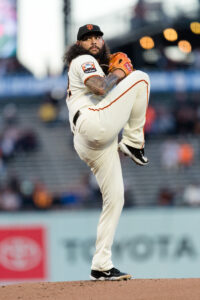
Upon his return to action late in the 2019 season, Manaea more or less picked up right where he left off. In 48 starts from 2019-21, the left-hander posted a solid 3.73 ERA (111 ERA+) with a strong 3.64 FIP. During this stretch, Manaea saw his strikeout rate climb considerably. Though he entered the 2019 season with a rate of just 19.2% for his career, the lefty struck out 24.8% of batters faced over the next three seasons while walking just 5.2% and generating a 43.8% groundball rate that was a near match for his 44.1% figure in the first three seasons of his career. With just one year left before the lefty would hit free agency and the team going nowhere in 2022, the A’s shipped Manaea to San Diego as the Padres in a four-player deal, netting a pair of prospects for the left-hander’s services.
Unfortunately, Manaea began to struggle upon departing Oakland. The lefty’s lone season in San Diego was something of a disaster as he struggled to a 4.96 ERA, 24% worse than league average by ERA+, with a 4.53 FIP. Manaea’s strikeout rate dipped to 23.2%, his walk rate climbed to 7.5%, and he generated grounders at a career-worst 38.2% clip. While the southpaw mostly looked like himself in the first half of the season, with a 4.11 ERA and 4.07 FIP in 100 2/3 innings of work (17 starts), that production fell off a cliff down the stretch as he allowed a whopping 6.44 ERA over his final 13 contests. Those struggles led Manaea to sign a two-year, $25MM deal with the Giants last offseason that gave him the option to return to the free agent market this winter.
At first, Manaea’s time with the Giants saw similarly disastrous results as his final outings with the Padres the previous year. The lefty was booted from the club’s rotation in early May and by mid-June had put together a 5.84 ERA in 49 1/3 frames as opposing batters teed off to the tune of a hefty .474 slugging percentage. However, as MLBTR’s Darragh McDonald noted in a recent profile of Manaea, the lefty added a sweeper to his repertoire at the end of May and found massive success with it. Hitters struggled to a .140/.161/.163 slash line against the pitch, swinging and missing at it 35.1% of the times it was thrown.
After adding the sweeper, Manaea quickly found more success with the Giants. He pitched to a solid 3.78 ERA with a fantastic 3.26 FIP in his final 81 frames of the season, and excelled in a late-season return to the rotation with a 2.25 ERA and 3.21 FIP in four September starts. After adding the sweeper midseason, Manaea punched out 24.2% of batters faced while walking 6.6% and generating grounders at a 44% clip reminiscent of his days in Oakland. While the majority of that success came in multi-inning relief, the lefty nonetheless flashed the form that made him a successful mid-rotation arm earlier in his career.
The strong late-season results led Manaea to decline his $12.5MM player option with the Giants and return to the open market. The decision worked out well for the southpaw, as his $28MM pact with the Mets comes with an AAV of $14MM and the ability to return to opt out of the deal once again next winter should he choose to do so. Manaea slightly outperformed the two-year, $22MM prediction MLBTR offered when ranking him 35th on our annual Top 50 MLB free agents list, earning an additional $3MM annually over the same term. The deal is mostly in line with the market for back-end starters this offseason, which has seen the likes of Nick Martinez ($26MM) and Kenta Maeda ($24MM) earn similar guarantees on two-year arrangements.
By adding Manaea, the club adds another veteran arm to a rotation mix that parted ways with both Max Scherzer and Justin Verlander at the trade deadline last summer. The southpaw figures to return to starting full-time in joining the Mets, slotting into the middle of the club’s rotation behind incumbents Kodai Senga and Jose Quintana and ahead of fellow offseason additions Luis Severino and Adrian Houser. The addition of Manaea allows the club to utilize the likes of Tylor Megill, Joey Lucchesi and Jose Butto as depth options at the Triple-A level or in the club’s bullpen. The same figures to go for lefty David Peterson when he returns from offseason hip surgery sometime next summer.
The Mets were already over the highest luxury tax threshold of $297MM prior to signing Manaea, That means his full $14MM is part of the Mets’ overage coming into 2024. Assuming they remain over the highest tax threshold all season, the club figures to pay $15.8MM in taxes on Manaea’s salary next season, meaning the club effectively figures to pay $29.8MM for the lefty’s services in 2024. Of course, that’s unlikely to be much of a concern for the Mets as the club paid over $100MM into the luxury tax this past season. With the club’s rotation mix now likely settled, the Mets figure to continue searching for help at third base, DH and in the bullpen going forward.
Jon Heyman of the New York Post reported the Mets were signing Manaea to a two-year, $28MM guarantee with an opt-out. The Associated Press reported the salary breakdown.
Angels Sign Zach Plesac
TODAY: The deal is official, and MLB.com’s Rhett Bollinger (X link) reports that Plesac signed a one-year contract worth $1MM in guaranteed money.
DECEMBER 30, 10:34pm: Murray reports that it’s a major league deal between the Angels and Plesac, though the specific terms of the contract are still not known.
10:14pm: The Angels are in agreement with right-hander Zach Plesac on a deal, according to a report from Jon Heyman of the New York Post. Robert Murray of FanSided first reported that a deal between the two sides was close.
Plesac, 29 next month, made just five starts for the Guardians last offseason before being demoted to Triple-A and eventually outrighted off the club’s 40-man roster in June. The right-hander posted a disastrous 7.59 ERA across 21 1/3 innings of work in those five contests, and his performance at the Triple-A level last season did little to inspire confidence: Plesac mustered just a 6.08 ERA with a 17.9% strikeout rate in 19 appearances at the level. While those brutal numbers surely make Plesac something of a surprising choice for any club to add to their pitching staff to those unfamiliar with the right-hander, it’s worth noting that Plesac had established himself as a solid middle-to-back of the rotation starter in the years prior to his disastrous 2023 campaign.
Initially drafted in the 12th round of the 2016 draft, Plesac made his big league debut as a 24-year-old back in 2019, when he made 19 starts in the majors for Cleveland. At the time, he had the look of a solid mid-rotation starter with a 3.81 ERA (126 ERA+) across 21 starts in his rookie season even as his 4.94 FIP and lackluster 18.5% strikeout rate both left much to be desired. Plesac then took a major leap forward during the shortened 2020 season. The right-hander posted an incredible 2.28 ERA that was 96% better than league average by measure of ERA+ and a strong 3.39 FIP.
During the truncated campaign, Plesac’s peripherals caught up to his performance as he struck out 27.7% of batters faced while walking just 2.9%. That strikeout-to-walk ratio placed Plesac between Brandon Woodruff and Clayton Kershaw for the 13th best figure among starters that year, while only Kyle Hendricks and Marco Gonzales allowed less free passes. The strong performance set him up to be a key cog in Cleveland’s rotation for years to come headed into the 2021 season.
Unfortunately for both the Guardians and Plesac, that future as a key piece of Cleveland’s pitching corps did not come to pass. Plesac instead reverted to his previous, low-strikeout rate form in 2021 and has stayed that way ever since. Unlike his rookie campaign in 2019, however, his results fell back down to Earth alongside his peripherals. The diminished results with a 4.49 ERA (90 ERA+) and a 4.59 FIP across 274 1/3 innings between 2021 and 2022. Although his walk rate remained at a strong 6.2% during that time, he struck out a measly 17.2% of batters faced. That figure was the fifth-worst punchout rate among starters with at least 250 innings pitched between the two seasons.
Of course, it’s worth noting that even in those 2021 and ’22 seasons where Plesac offered diminished production relative to his previous heights, the right-hander’s results were only around 10% below league average. A team can do far worse than 25 starts at that level of production for their fifth- or sixth-best starting option; 31 starters posted an ERA- of 110 or higher while throwing at least 100 innings in the majors last season, or more than one per team in the league. If the Angels believe Plesac’s 2023 campaign was an anomaly and his 2021-22 performance is a more accurate baseline, the right-hander could be a valuable depth option for a club that saw 14 different pitchers draw starts in 2023.
After losing Shohei Ohtani to the Dodgers in free agency earlier this month, the Halos have plenty of work to do as they look to retool their roster and return to contention in 2024 on the heels of back-to-back 89-loss seasons. Though the specific terms being discussed between Plesac and Anaheim are not yet clear, a deal for Plesac figures to be either a minor league pact or perhaps a relatively inexpensive major league deal that won’t prevent the Angels from making other additions to the roster, including in the rotation. Either way, Plesac has options remaining headed into 2024 and would likely compete for a spot in the Angels’ starting rotation this spring before potentially starting the season as depth at the Triple-A level should he be unable to secure a starting spot.
Mariners Trade Robbie Ray To Giants For Mitch Haniger, Anthony DeSclafani
The Giants and Mariners have completed a trade, per announcements from both clubs, that will send left-hander Robbie Ray to the Giants, with outfielder Mitch Haniger, right-hander Anthony DeSclafani and cash considerations going to the Mariners. It’s an out-of-nowhere trade involving significant pieces going in both directions. Per Andrew Baggarly of The Athletic, it’s approximately $6MM going to Seattle.
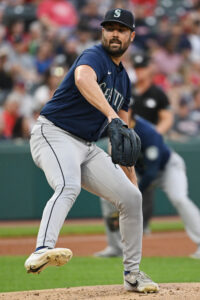
“As we continue to build out our team for 2024 and beyond, we feel this trade accomplishes a couple of our objectives,” said president of baseball operations Jerry Dipoto in the official announcement. “In Mitch, we get a player we know well, and hold in very high regard, as another piece for our outfield, while Anthony – who can start or pitch out of the ‘pen – gives us depth in our pitching staff. And the deal allows us to put the best team possible on the field from Opening Day on.
“I do want to thank Robbie for his time in Seattle. On the field and in the clubhouse, he was a key part of taking us to the postseason in 2022 and in allowing us to remain in the race down to the final days in 2023. He provided leadership to our young pitchers that will be felt here for years to come. We wish he and his family nothing but the best in San Francisco.”
Ray, now 32, won the American League Cy Young with the Blue Jays in 2021 and parlayed that into a five-year, $115MM deal with the Mariners, with the ability to opt out after three seasons. His first year with Seattle was strong, as he made 32 starts with a 3.71 earned run average. He struck out 27.4% of batters faced while issuing walks at just an 8% clip. But in 2023, he made just one appearance before being shut down and eventually requiring elbow surgery to both repair his flexor tendon and reconstruct his ulnar collateral ligament.
As Ray sat out the rest of the 2023 season, the Seattle rotation actually managed to fare well in his absence. Luis Castillo, Logan Gilbert and George Kirby were in the front, with prospects Bryce Miller Emerson Hancock and Bryan Woo stepping up to help out. All six of those players were still under club control going into 2024, giving the Mariners something of a rotation surplus that led to some trade speculation.
They have held tight to that group so far and could have had Ray rejoin the rotation later in the year, perhaps as soon as midseason. But instead, it seems they have decided to exchange him for players that can help them throughout the entire year. Ray had a full no-trade clause for 2022 and 2023 but could be moved without his input now that the calendar has flipped to 2024.
For the Giants, their rotation was inconsistent in 2023 as they were arguably the club that was the least committed to traditional starter usage. Logan Webb and Alex Cobb were mainstays but pitchers like Ross Stripling, Alex Wood, Sean Manaea and DeSclafani were often moved to the bullpen or the injured list or both.
Looking ahead to 2024, it’s possible that the rotation will again evolve over the course of the season. Cobb underwent hip surgery and may not be ready for the beginning of the campaign, meaning he and Ray will be jumping into the mix once they are healthy. But at the start of the season, Webb currently figures to be joined by Stripling, but with plenty of uncertainty beyond that. Younger pitchers such as Kyle Harrison, Keaton Winn and Tristan Beck could be in the mix but none of that group even has a full year in the big leagues to this point. But with Cobb and Ray hopping on board along the way, the rotation could be in a much different place at the end of the season.
Of course, there’s nothing to suggest that the club is done with their offseason moves. There’s still over a month until Spring Training and the Giants have been connected to big name free agents like Blake Snell, Jordan Montgomery and Shota Imanaga. Bob Nightengale of USA Today says the Giants are still in on Snell even after this trade. There are also plenty of other free agents still available if the Giants don’t nab any of those three.
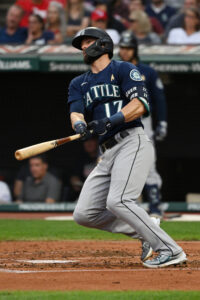
In exchange for Ray, the Mariners will bolster their lineup with a familiar face, as Haniger was with the club from 2017 to 2022. Health was an ongoing issue, including missing the entire 2020 season, but he was a tremendous offensive asset when on the field. He hit 107 home runs in his 530 games during those seasons, slashing .263/.337/.480 for a wRC+ of 124.
After reaching free agency, he signed with the Giants on a three-year, $43.5MM deal going into 2023, with an opt-out opportunity after the second season. His first year in San Francisco didn’t go well, as he made trips to the injured list for a left oblique strain, fractured right forearm and low back strain. He only played 61 games and hit a tepid .209/.266/.365 when he was in the lineup.
The Giants recently signed Jung Hoo Lee to be their center fielder, which will nudge Mike Yastrzemski over into the corner outfield mix alongside Michael Conforto. There could have been room for Haniger in there still with the designated hitter slot, but the Giants also have Wilmer Flores as a good candidate for that spot, perhaps making Haniger more useful in Seattle than in San Francisco.
The Mariners did a lot of subtracting from their lineup in the early parts of the offseason. They didn’t make a qualifying offer to Teoscar Hernández, then traded away Eugenio Suárez and Jarred Kelenic in separate deals. That removed three potent but strikeout-prone bats from the lineup as the Mariners looked to find more contact and juggle their finances amid uncertainty around their broadcast revenue.
They have subsequently switched their focus to additions, signing Mitch Garver to serve as a backup catcher/designated hitter and now Haniger will join the corner outfield mix. Haniger won’t help too much with the strikeout issues, as he’s been punched out at a rate of 24.5% or higher in each of the past four full seasons. But his right-handed bat should pair well with lefties likes Dominic Canzone, Taylor Trammell and Cade Marlowe. Another left-handed outfielder, Luke Raley, was also acquired from the Rays today in a separate trade. Haniger doesn’t have huge platoon splits but his 129 wRC+ against lefties in his career is a few points better than his 114 versus righties.
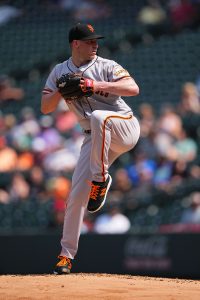
There’s also DeSclafani heading to Seattle, adding to their pitching staff. He had some solid seasons as a mid-rotation guy with the Reds but struggled badly in the shortened 2020 season, an all-timed down year as he was heading into free agency. He then settled for a one-year pillow deal with the Giants, earning $6MM in 2021. He posted a 3.17 ERA that year over 167 2/3 innings and parlayed that into a three-year, $36MM deal to return to San Francisco.
That second deal hasn’t worked out nearly as well for the Giants, however. DeSclafani only made five starts in 2022 as he dealt with ankle issues that eventually required surgery. In 2023, he threw just under 100 innings, missing time due to right shoulder fatigue and a right elbow flexor strain, posting a 4.88 ERA in the process.
In Dipoto’s statement quoted above, he explicitly mentioned that DeSclafani can pitch out of the rotation or the bullpen. 169 out of his 180 major league games have been starts but it seems as though the Mariners won’t be guaranteeing him a rotation spot. As mentioned, they have Castillo, Kirby and Gilbert in the front three spots. Miller, Woo and Hancock all had encouraging results in 2023 but they’ve yet to pitch a full season in the big leagues. Perhaps DeSclafani’s role will be determined by his health and performance, as well as how those youngsters look. If they surpass him on the depth chart, he could be moved to the bullpen, and injuries could always open up opportunities as the season goes along. It also can’t be ruled out that the Mariners have yet another trade in the works between now and the start of the season, giving the way they typically operate.
Turning to the financials, it will be close to cash neutral in 2024 but there are many ways that it could play out down the road. Ray and Haniger each have $1MM assignment bonuses for being traded, so that’s a wash. Ray is going to make $23MM this year and is set to make $25MM in the next two campaigns, but he can opt out after the 2024 season, meaning he’ll have to decide whether or not to leave two years and $50MM on the table. If he’s healthy and effective this year, it’s easy to see him opting out and beating that on the open market, at least in terms of total guarantee. But if things don’t go smoothly in the months to come, perhaps he would take the security of the proverbial bird in the hand.
Haniger will have a $17MM salary this year and $15.5MM next year, though he can also opt out after the 2024 campaign. Another injury-marred season like he had in 2023 would likely lead to him staying put, but another bounceback from him would obviously change the calculus. DeSclafani is set to make $12MM this year, the final season of his deal. With $29MM owed to Haniger/DeSclafani this year and $23MM owed to Ray, the approximately $6MM coming from the Giants will cover the difference. But into the future, it will depend on the opt-out decisions.
The Mariners have had some payroll concerns due to their uncertain broadcast situation and had a decent chunk of their budget tied up in Ray, who wasn’t going to be able to help at all in the first half of the season. They are giving away the upside of his late-season return for a lineup upgrade and a pitcher who can hopefully be a more immediate factor for them. For the Giants, they took two players who were getting squeezed for playing time and turned them into an upside play on a potentially-elite lefty who could be a significant wild card down the stretch.
Jeff Passan of ESPN first reported the three players involved in the swap. Ken Rosenthal of The Athletic first reported that cash would be involved.
Cardinals Swap Richie Palacios To Rays For Andrew Kittredge
The Rays and Cardinals got together on a swap this afternoon that sent outfielder Richie Palacios to Tampa and right-hander Andrew Kittredge to St. Louis. Joel Sherman of The New York Post first reported that the sides were in talks regarding the two players, while The Athletic’s Katie Woo first reported that the deal between the two sides was complete.
Kittredge, 34 in March, was a 45th-round pick by the Mariners back in 2008 but didn’t make his big league debut until 2017 as a member of the Rays. After riding the shuttle between Triple-A and the majors in the first two seasons of his career, Kittredge earned a more permanent role with the club in 2019, when he pitched to a 4.17 ERA and 3.56 FIP in 49 2/3 innings of work across 37 appearances. Kittredge was relied upon for both single-inning and multi-inning relief appearances while acting as both an opener and a late-inning arm for the club throughout the season. Kittredge went on to impress early in the shortened 2020 campaign with a 2.25 ERA, but saw his season limited to just eight appearances by a UCL sprain.
Kittredge elected free agency following the 2020 season but re-signed with the Rays on a minor league deal shortly thereafter and wound up turning in a dominant 2021 season. Kittredge pitched 71 2/3 across 57 appearances and kept his ERA at a sparkling 1.88 figure during the time. He struck out 27.3% of batters faced while walking just 5.3% and maintaining a strong 53.5% groundball rate. Kittredge’s ERA was third in the majors behind only Jacob deGrom and Ranger Suarez among pitchers with at least 70 innings of work that season, easily earning him the first All Star appearance of his career.
Unfortunately for both the Rays and Kittredge, much of his time has been spent on the injured list since that phenomenal 2021 campaign. He dealt with back tightness early in the 2022 campaign before undergoing Tommy John surgery that June and didn’t return to the majors until mid-August. In 31 appearances between the 2022 and ’23 campaigns, Kittredge performed solidly despite the circumstances with a 3.13 ERA and 4.18 FIP in 31 2/3 innings of work. With that being said, some of the veteran righty’s peripherals took a turn for the worse during that time. The righty’s groundball rate dipped to just 42.7% during that time while his strikeout rate sank to 19.2%.
Even so, the addition of Kittredge offers the Cardinals a veteran arm with late inning experience to supplement the back of their bullpen, which currently features Giovanny Gallegos, Ryan Helsley, and JoJo Romero. Gallegos suffered a down season in 2023 while Helsley and Romero combined for just 73 1/3 innings of work, leaving plenty of uncertainty surrounding the group headed into 2024. While Kittredge has some question marks himself, he provides another quality arm with a track record of success in the majors: since he became a regular fixture in the Tampa bullpen back in 2019, Kittredge owns a 2.85 ERA and 3.43 FIP across 161 innings of work. For a Cardinals club that had made bullpen upgrades and explicit goal this offseason, adding Kittredge could go a long way to achieving that objective.
In exchange for Kittredge’s services, the Cardinals are giving up Palacios. The club acquired the 26-year-old outfielder from the Guardians in a cash deal back in June and the youngster took off in 32 games with St. Louis, slashing .258/.307/.516 in 102 trips to the plate in the majors while posting a .299/.418/.459 slash line in 195 Triple-A plate appearances with the organization. The offensive outburst from Palacios was relatively unexpected, as he had struggled to a .232/.293/.286 slash line with the Guardians in 2022 and mustered just a .217/.351/.318 line in 56 Triple-A games prior to the trade.
Clearly, the Rays are betting that Palacios unlocked a new level during his time in St. Louis. If he can hit at an above-average clip in the majors, the lefty-swinging youngster could provide the Rays with an outfield bat to fill the void left by Luke Raley, who the club swapped to Seattle earlier today. It’s even possible he could chip in at second base, where he has spent 920 1/3 innings in the minors (though he’s only made three appearances there at the big league level), alongside Brandon Lowe.
Tantalizing as the upside Palacios flashed last season was, however, it seems unlikely he would’ve been able to garner more than a bench role in St. Louis due to the club’s deep outfield mix and the presence of both Brendan Donovan and Nolan Gorman at the keystone. The lack of a clear role for Palacios in St. Louis and Kittredge’s lack of additional team control beyond 2024 make this swap a relatively low-cost gamble for both sides that could pay significant dividends in 2024 (and, in the case of the Rays and Palacios, beyond).
Mariners Trade José Caballero To Rays For Luke Raley
The Mariners already completed one trade today, sending Robbie Ray to the Giants in exchange for Mitch Haniger, Anthony DeSclafani and cash considerations, and have now completed a second. They are sending infielder José Caballero to the Rays in exchange for outfielder Luke Raley, per announcements from both clubs.
“We’re thrilled to add Luke Raley to the middle of our lineup as a left-handed bat with positional versatility,” Mariners general manager Justin Hollander said in that club’s press release. “Offensively, Luke brings power paired with game-changing baserunning and instincts. He’s also a solid defender across multiple positions, adding further flexibility to our lineup on a nightly basis.”
Raley, now 29, was drafted by the Dodgers and made a brief major league debut with them in 2021. He was traded to the Rays and then got some more limited MLB time in 2022. He finally got his first extended stretch of time in the big leagues last year and ran with it. He took 406 plate appearances over 118 games in 2023, striking out at a 31.5% clip but also hitting 19 home runs. His overall batting line of .249/.333/.490 translated to a wRC+ of 130, indicating he was 30% better than league average. He also stole 14 bases in 17 tries and received solid grades for his outfield defense while also spending a bit of time at first base.
Despite that strong performance, Raley was part of a crowded outfield mix that also featured Randy Arozarena, Josh Lowe and José Siri in regular roles. Yandy Díaz is set to likely be the everyday first baseman, while players like Harold Ramírez, Jonathan Aranda, Jonny DeLuca and others were in the mix for playing time as well. With Raley now out of options, he needed to be kept on the active roster or else be removed from the 40-man entirely.
In Seattle, the path to playing time should be more smooth. That club let Teoscar Hernández reach free agency without making him a qualifying offer and also traded Jarred Kelenic to Atlanta. They have since added Mitch Garver to be their primary designated hitter, and take a share of the catching time from Cal Raleigh, while Haniger was acquired earlier today to join the corner outfield mix.
Julio Rodríguez is entrenched in center but Raley and Haniger could perhaps take the corner regularly, with players like Cade Marlowe, Taylor Trammell and Dominic Canzone also a part of that corner outfield picture. At first base, Ty France has been the regular in Seattle for the past three years but his production dipped in 2023. If that continues into this year, Raley gives them a fallback option for that position.
The Rays mostly shielded Raley from left-handed pitchers, with 363 of his 406 plate appearances coming with the platoon advantage last year. His high strikeout rate also doesn’t mesh with Seattle’s stated intention to cut down in that department, but the power, speed and defense make him enticing nonetheless. He’s also still at least a year away from reaching arbitration, meaning he fits well on a club with financial concerns like the Mariners. He can be controlled for another five seasons before qualifying for free agency.
Caballero, 27, made his major league debut with the Mariners last year, getting into 104 games. He hit .221/.343/.320 in his 280 plate appearances, drawing a walk in 10% of them. That production amounted to a wRC+ of 96, indicating he was just 4% below league average. But he also stole 26 bases in 29 tries and received strong grades for his defense at the two middle infield positions, as well as spending small amounts of time at third base and left field.
The ability to play shortstop likely appeals to the Rays, who have plenty of uncertainty there. Wander Franco once seemed to be firmly entrenched in that position, having signed an 11-year extension going into the 2022 season. But he is currently under investigation for allegedly having inappropriate relationships with minors and it’s unknown when, if ever, he will play a Major League Baseball game again.
Assuming Franco isn’t an option in 2024, the Rays have guys like Taylor Walls, Junior Caminero and Osleivis Basabe as potential shortstops on the roster. However, none of that trio is a lock to hold down the job this year. Walls and Basabe are broadly considered strong defenders but weaker at the plate while Caminero is generally considered the opposite. Basabe and Caminero both have less than 100 major league plate appearances.
Caballero’s first taste of MLB action was subpar, but only slightly so. He’s always hit well in the minors, perhaps leaving some room for him to continue developing with more exposure to major league pitching. He still has a full slate of options and less than a year of service time, meaning he can be a long-term part of the Rays’ roster if things click.
Ken Rosenthal of The Athletic first reported the framework of the deal while Jeff Passan of ESPN first relayed that it had been completed.
White Sox Sign Martin Maldonado
JAN. 5: The Sox have officially announced the deal, announcing it as a $4.25MM pact with a club option for 2025. Per Daryl Van Schouwen of the Chicago Sun-Times, it”ll be a $4MM salary in 2024 with a $250K buyout on a $4MM option for 2025. Maldonado’s option vests with 90 appearances at catcher, per Robert Murray of FanSided.
DEC. 27: Maldonado will earn $4MM in 2024, according to MLB.com’s Mark Feinsand (via X). The 2025 option is a vesting option that, if triggered, would pay Maldonado another $4MM for a second season of the deal.
DEC. 26: The White Sox are in agreement with catcher Martín Maldonado on a one-year contract with an option for 2025, reports Jon Heyman of the New York Post (on X). Robert Murray of FanSided (X link) first reported the sides were near a deal. Financial terms for the MVP Sports Group client are still unreported.
Maldonado’s move to Chicago’s South Side officially ends a four-and-a-half-year run in Houston. It was clear the Astros were moving on from the 37-year-old when they inked Víctor Caratini to a two-year deal during the Winter Meetings. With Caratini on hand as an experienced option behind Yainer Diaz, Maldonado was left to look elsewhere.
A veteran of 13 big league campaigns, he’ll now join the sixth team of his MLB career. He reunites with former Houston teammate Korey Lee, whom the Astros traded to the Sox for reliever Kendall Graveman at this past summer’s deadline. The 25-year-old Lee hasn’t produced offensively in parts of two big league campaigns. He’s a highly-regarded defensive catcher, which is also Maldonado’s calling card.
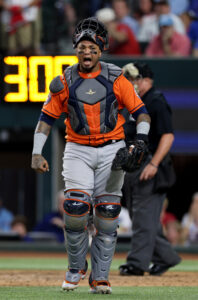
Outside of the shortened 2020 campaign, Maldonado has never hit at an average level in the big leagues. He is one of the sport’s least impactful hitters overall. In more than 3700 career plate appearances, the right-handed batter owns a .207/.282/.349 line. He hasn’t approached the Mendoza line in three years, running a .183/.260/.333 slash going back to the start of 2021.
Among 226 hitters with at least 1000 plate appearances over that stretch, only Joey Gallo has a lower batting average. Maldonado has the worst on-base mark of the group, while he’s fifth from the bottom in slugging. That the Astros nevertheless relied on him as their #1 catcher on some of the best rosters in MLB speaks to how highly the coaches and pitching staff felt about his presence behind the plate.
For most of his career, Maldonado has indeed rated as an excellent defensive catcher. That was not the case last season. Statcast graded him as the worst pitch framer among qualified backstops. He only threw out 14% of attempted basestealers, roughly six percentage points below the league mark. That’s perhaps more a reflection of the Houston pitching staff than Maldonado, as Statcast ranked him 23rd among 81 catchers (minimum 10 throws) in average pop time to second base.
In any case, the greater appeal for Chicago’s front office and coaching staff is in Maldonado’s game-calling ability and work with a pitching staff. The White Sox are likely to cycle through a number of inexperienced pitchers in 2024. Dylan Cease is the staff ace, though it’s no sure thing he won’t be traded before Opening Day.
KBO returnee Erick Fedde is a lock for the season-opening rotation, while Michael Kopech is likely to get a rebound opportunity. Michael Soroka and Jared Shuster — each of whom was acquired from the Braves in the Aaron Bummer trade — could vie for spots. Rule 5 pick Shane Drohan will have to remain on the MLB roster or be waived and subsequently offered back to the Red Sox, while prospects Cristian Mena and Jake Eder could reach the big leagues at some point.
Maldonado will work with that pitching group. He can serve as a short-term bridge to catching prospect Edgar Quero, the headliner of last summer’s Lucas Giolito/Reynaldo López deal. The 20-year-old spent all of last season at Double-A. He could reach the majors late in the ’24 season while taking over as the primary option in 2025.
In the interim, it’s possible the Maldonado signing displaces one of the organization’s other catchers. Once the contract is finalized, the White Sox will have four catchers on the 40-man roster. It’s unlikely Chicago will move from Lee, leaving Carlos Pérez and Max Stassi potentially on the bubble. Pérez didn’t hit well in the majors or Triple-A last season. The White Sox just acquired Stassi from the Braves a couple weeks ago, but they’re not on the hook for money beyond the league minimum salary and didn’t surrender much (a player to be named later) to bring him in.
Image courtesy of USA Today Sports.
Michael Brantley To Retire
Outfielder Michael Brantley is going to retire, he tells Jon Morosi of MLB.com. “It’s time for me to be home 24/7, watch my kids grow up, and not miss important milestones,” he said.
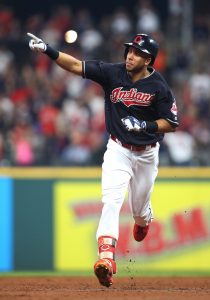
Brantley, now 36, has spent over a decade as one of the best hitters in the league but his health has been a significant issue in recent years. In 2022, he played just 64 games before getting shut down with right shoulder discomfort. He eventually required surgery, which wiped out the second half of that campaign. The issue lingered into 2023 and he didn’t make it back to the big leagues until late August. He continued battling soreness even when activated off the injured list and only made 57 plate appearances over 15 games on the year. He made 32 more plate appearances for the Astros in the postseason but hit just .179/.281/.321 in those. He received some interest from the Blue Jays this winter but it appears he will hang up his spikes instead.
In the seventh round of the 2005 draft, Brantley was selected by the Brewers, though he would never appear in the big leagues for that club. In July of 2008, the Brewers sent Matt LaPorta, Zach Jackson, Rob Bryson and a player to be named later to Cleveland for C.C. Sabathia. Though Cleveland was reportedly choosing between multiple players as that PTBNL, they ultimately went with Brantley in October.
In retrospect, that decision could hardly have worked out better. Brantley didn’t immediately hit the ground running in the majors, getting some brief looks in the years after the trade. He started to get regular playing time from 2011 to 2013, hitting .280/.334/.394 over those years for a wRC+ of 101. He only struck out in 11.6% of his plate appearances, just over half of league averages at that time, showcasing a high-contact approach that would come to be one of his signatures. He was given the nickname “Dr. Smooth” at this time, in honor of his aesthetically pleasing approach.
The club clearly believed in the young doctor, signing him to a four-year, $25MM extension going into 2014, with a club option for 2018. Their faith in him paid off, as he immediately had a tremendous breakout season, hitting 20 home runs and only striking out in 8.3% of his plate appearances. His .327/.385/.506 batting line translated to a 151 wRC+, indicating he was 51% better than the league average hitter. He also stole 23 bases and received solid grades for his outfield defense. FanGraphs considered him to be worth 6.5 wins above replacement, while Baseball Reference had him at 7.0. He finished third in American League MVP voting, behind Mike Trout and Victor Martinez.
His 2015 saw him produce similarly, though just a notch below that elite 2014 campaign. After that came some injury struggles, however. He underwent right shoulder surgery after the 2015 campaign and the issue lingered into 2016. He only played 11 games that season and eventually required a second surgery. With Brantley sitting out the remainder of the campaign, Cleveland still made it all the way to Game 7 of the World Series, though they eventually lost to the Cubs.
Brantley was back in 2017 but an ankle strain limited him to 90 games. He hit .299/.357/.444 for a wRC+ of 109, below his previous highs but it was nonetheless encouraging after a mostly lost season. In 2018, he shook off some of the rust and was able to slash .309/.364/.468 for a wRC+ of 125. Cleveland returned to the postseason in those years but fell in the ALDS both times. It seems that everyone in Cleveland knew his time there was likely coming to an end, with a report from Chandler Rome and Zack Meisel of The Athletic relaying that everyone in the room cried during his exit interview as he reached free agency.
The Astros had won the World Series in 2017 but then lost the ALCS in 2018. Looking for a clubhouse leader to replace departed veterans like Carlos Beltrán and Brian McCann, they signed Brantley to a two-year, $32MM deal. He took to the leadership role, quickly earning the new moniker of “Uncle Mike.” The second season of that pact ended up being interrupted by the pandemic but Brantley was healthy enough to play 194 out of 222 possible games. He hit .309/.370/.497 in that time for a wRC+ of 132. The Astros made the playoffs both times but lost the 2019 World Series to the Nationals and were dropped in the 2020 ALCS.
Brantley returned to the Astros on another two-year $32MM deal and had another signature season in 2021, hitting .311/.362/.437 for a wRC+ of 121. The Astros were once again felled in the World Series, this time to Atlanta. As mentioned above, Brantley’s 2022 was cut short by yet another shoulder surgery and he had to miss the second half of the season. Though he wasn’t able to play, the report from Rome and Meisel linked above relays that he led a players’ meeting as they were down 2-1 to the Phillies in the World Series. They went on to win the next three games and finally get Brantley a World Series ring.
He now retires having made 6,149 plate appearances in 1,445 regular season games. He only struck out in 10.7% of those trips to the plate, playing in an era where the league-wide rate often pushed well beyond double that. He batted .298/.355/.439 overall while getting 1,656 hits, 348 doubles, 25 triples and 129 home runs. He stole 125 bases, scored 758 runs and drove in 720. He produced 28.8 fWAR and 34.3 bWAR, earning over $112MM in the process. He also played in 62 postseason games between his two clubs. We at MLB Trade Rumors salute Brantley on an excellent career and wish him the best in his post-playing endeavors.
Yankees Interested In Dylan Cease
The Yankees were connected yesterday to free agent Blake Snell but it appears they are exploring the trade market as well. Ken Rosenthal of The Athletic reports that the Yankees, and the Orioles, have “sincere” interest in Dylan Cease. The O’s were previously connected to Cease and Roch Kubatko of MASNsports.com reported earlier this week that they “remain engaged” with the White Sox. Rosenthal adds that the Dodgers, Cardinals and Red Sox, all previously reported to have interest in Cease, are possibly still in the mix, with other clubs perhaps involved as well. The Braves and the Reds, who once had interest in Cease, appear to have moved on to other targets with Atlanta trading for Chris Sale and the Reds signing Frankie Montas and Nick Martínez.
Rumors have been flying around Cease all winter but he remains on the White Sox for now. About a month ago, it was reported that the White Sox were “pulling back” on the Cease talks. That wasn’t to take him off the market, but rather that the Sox wanted to wait until Yoshinobu Yamamoto signed to find out if clubs that missed on him would pivot to Cease as a fallback.
With the interest from the Yankees, that would appear to be exactly the case. They were one of the clubs that was heavily connected to Yamamoto before he signed with the Dodgers, leaving the Yanks looking elsewhere. They have considered Snell as well as free agent Jordan Montgomery but are checking in on Cease as well.
For the Yanks, they have Gerrit Cole cemented into the top spot of their rotation but things get less clear after that. Carlos Rodón and Nestor Cortes have the potential to be excellent contributors but both of them struggled badly in 2023, both with injuries and poor performance. Clarke Schmidt will likely be in the mix towards the back of the rotation, but the club subtracted from its depth in the Juan Soto trade, as Michael King, Drew Thorpe, Jhony Brito and Randy Vásquez are all Padres now. Adding another starting pitcher, and having Rodón and Cortes bounce back a bit, would give the club a very strong front four, with Schmidt likely in the five spot and pitchers like Clayton Beeter, Yoendrys Gómez, Luis Gil and Will Warren providing the depth.
Cease would upgrade any rotation in the league, despite a relative down year in 2023. He had a 2.20 earned run average in 2022 but that figure jumped to 4.58 last year, though his underlying numbers paint a less drastic picture. His 2022 success wasn’t likely to be sustainable anyway, given his .260 batting average on balls in play and 82.3% strand rate, both of which are on the lucky side. Those numbers moved to .330 and 69.4% in 2023, pushing some extra runs across. His strikeout and swinging strike rates did tick down slightly but were both still well above average. His 3.10 FIP in 2022 jumped to 3.72 in 2023, suggesting a far less concerning shift, while his SIERA went from 3.48 to 4.10.
Looking at the past three years as a whole evens out some of that luck and paints and an incredibly flattering portrait. He’s made 97 starts since the start of 2021 with a 3.54 ERA and 29.8% strikeout rate. The 10.1% walk rate is on the high side but his 12.6 wins above replacement from FanGraphs in that time puts him eighth among all MLB pitchers.
His appeal goes beyond his skills, as his earning power is still capped by the arbitration system. MLBTR contributor Matt Swartz projects Cease for a salary of $8.8MM this year and he will be due a raise in 2025 before reaching free agency.
The Yankees currently have a competitive balance tax figure of $290MM, according to Roster Resource. They are set to pay the tax for a third straight year in 2024, which sets them up for escalating penalties. They are already above the third tier of $277MM and nearing the fourth and final tier of $297MM. That means they are facing a tax rate of 95% on current spending until they go over the last line and then have a 110% rate on spending from there.
Signing a player like Snell or Montgomery would likely require the Yanks to give out a salary of around $25MM or more, with the taxes effectively doubling that. Given that Cease will be making around a third of that salary figure, that would obviously make him more attractive.
But the flip side of that equation is that Cease will also require sending something to the White Sox in return, likely a very significant package of talented young players. The Yanks just sent away a big batch of young pitchers in the Soto deal and may be reluctant to make another sizable dent in their talent pipeline. As for what the Sox would be looking for, Rosenthal says they are “staying open-minded” and “not necessarily inclined to favor a team that could include major-league-ready pitching.”
With the O’s also having “sincere” interest, they might have an edge on the Yankees in terms of having the talent to get a deal done. Despite constantly graduating prospects to the major league level in recent years, they are still considered to have the top farm system in the league by many evaluators. Jackson Holliday is almost certainly untouchable but the club also has guys like Colton Cowser, Coby Mayo, Jordan Westburg, Samuel Basallo, Heston Kjerstad and Joey Ortiz without enough open positions for all of them.
The club has also shown a bias against bold moves, both in the trade market and free agency, which is why they have that loaded farm system and almost no money on the books. If they decide now is the time to strike, Cease would fit nicely into a rotation with lots of talent but limited experience. Kyle Bradish and Grayson Rodriguez are at the top of the rotation for now, after each showed encouraging signs in 2023, but Bradish has less than two full years in the big leagues and Rodriguez less than one. Then there’s John Means, who has hardly pitched in the last two years due to Tommy John surgery, and guys like Dean Kremer and Cole Irvin options for the back end.
As mentioned, clubs like the Dodgers, Cardinals and Red Sox may still be involved and that might not even be the extent of the market. But with Yamamoto off the board, it seems the pitching market is broadly heating up and a Cease trade could happen at any time now.
Braves, Chris Sale Agree To Two-Year Deal
The Braves and left-hander Chris Sale have agreed to a new deal, which will pay him $38MM over the next two years. The Wasserman client will earn $16MM in 2024 and $22MM in 2025 and there’s also an $18MM club option for 2026. Sale was already under contract via an extension he previously signed with the Red Sox but this will overwrite that.
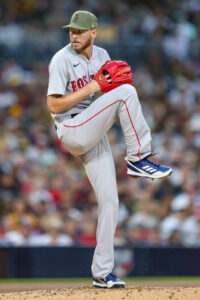 Sale was acquired from the Red Sox last week, in a trade that sent Vaughn Grissom to Boston. The Sox also included $17MM to cover the remainder of Sale’s contract, a five-year, $145MM extension he and the Red Sox signed in 2019. As part of that deal, Sale was set to make $27.5MM in 2024, though $10MM of that was deferred until 15 years in the future. With the $17MM coming from the Sox, Atlanta was only going to be paying him $500K. There was also a $20MM club option for 2025.
As part of this new deal, Sale’s $16MM salary will be pretty close to the non-deferred money he was going to make in 2024. He will no longer have that deferred $10MM payment down the road, but he will have $22MM locked in for the 2025 season. That gives him some extra security in the event of more health problems cropping up this year. Sale pitched less than 50 total innings over the 2020-2022 period, mostly due to Tommy John surgery but also due to other ailments. Last year, he was able to toss 102 2/3 frames but a stress reaction in his shoulder blade kept him out of action for over two months. Any further health issues would have perhaps given the club some hesitation about picking up the 2025 option but Sale has now locked in a notable salary for next year.
For Atlanta, this is a show of faith in the soon-to-be-35-year-old. They could have simply employed Sale for 2024 and then walked away if things didn’t go well, with the club option there to keep him around if he had a strong campaign for his new club. But they have now committed themselves to at least two years of Sale, with the club option now kicked down the road to 2026. As mentioned, Sale hasn’t been fully healthy in the past four years and even had some issues before that. Some shoulder and elbow issues kept him around 150 innings in 2018 and 2019, meaning his last fully healthy campaign was 2017.
Back then, Sale was one of the best pitchers in the league, finishing that 2017 season with a 2.90 ERA. Last year, he wasn’t quite as dominant, with a 4.30 at the end of the season. The peripherals were a bit better, however, with a 29.4% strikeout rate and 6.8% walk rate that were both strong.
Despite that fairly solid bounceback season, it’s obviously a gamble to bet on a pitcher that has been hurt so much, locking him up for his age-35 and age-36 seasons. But the club has a decent amount of rotation uncertainty going forward. Max Fried is entering his final year of club control while Charlie Morton is one year from free agency as well. Morton has flirted with retirement before and is going into his age-40 season, making it possible he won’t be back in 2025.
Prior to this deal, Sale was a potential to depart as well, depending on the outcome of the club option. Now that he’s under contract for 2025, he can be pencilled into next year’s rotation next to Spencer Strider. The club will still have to fill out the rest of the rotation, but perhaps internal options like Bryce Elder, AJ Smith-Shawver and Hurston Waldrep will have taken steps forwards between now and then.
There’s also the competitive balance tax to consider. Under the current collective bargaining agreement, a player’s CBT hit is recalculated when he is traded to reflect what remains of the contract. That means that Sale was going to have a $27.5MM CBT hit prior to this deal, with the Sox absorbing $17MM of that. But that will now drop to $19MM, leaving just $2MM on Atlanta’s CBT ledger this year but $19MM next year. Going into today, the club’s CBT figure was at $276MM, per Roster Resource. That’s right against the third tax threshold of $277MM, which is a notable line to cross. Clubs that go over the third threshold have their top pick in the next draft pushed back by 10 slots, in addition to an increased tax rate. By lowering Sale’s CBT hit, the club will have a bit more breathing room to make more moves, either now or during the season.
Ultimately, it’s a pact that works for both sides. Atlanta gets a bit more luxury tax space and also, hopefully, a better rotation outlook in 2025 and maybe even 2026. Sale, meanwhile, locks in some future earnings to guard against any continued health issues.
Yankees Interested In Blake Snell
The Yankees are interested in left-hander Blake Snell, reports Jon Heyman of The New York Post. That meshes with reporting from Andy Martino of SNY, who says the club is “planning an active January” as it hopes to add to its pitching staff before Spring Training. Martino adds that Snell has privately expressed an interest in the Yankees, though also adds they are not the only club in his market.
The Yankees were heavily pursuing Yoshinobu Yamamoto, highlighting their desire to add to their rotation. Previous reports from Mark Feinsand of MLB.com and Ken Rosenthal of The Athletic suggested that, if the Yanks missed on Yamamoto, they might pivot to build a super bullpen instead of focusing on the rotation. Now that Yamamoto has signed with the Dodgers, the Yankees are exploring their other options and it seems they haven’t totally abandoned the idea of a significant rotation addition. They have had ongoing interest in bringing back Jordan Montgomery and now Snell appears to be on the table as well.
If they were to sign Snell, they would have a rotation fronted by the two reigning Cy Young winners. Snell just took home the National League hardware for his excellent season with the Padres while Gerrit Cole got the American League trophy. Despite that, the pitchers are actually quite different. While Cole has been the poster boy for stability and reliability, Snell’s career has been more erratic.
He finished 2023 with 180 innings pitched for the Friars, registering a 2.25 ERA in that time. He struck out 31.5% of batters faced and kept 44.4% of batted balls on the ground but also gave out walks at a 13.3% clip. That got him second career Cy Young, the first coming with the Rays in 2018 when he had a 1.89 ERA. But the four seasons in between those two elite campaigns were more shaky. His ERA finished 4.20 or higher twice and he didn’t reach 130 innings in any of them, dealing with various injuries.
Those concerns aside, Snell is clearly one of the best pitchers in the league when things are going well and he has received interest from the Giants, Angels, Mets and Red Sox. The Yankees slotting him next to Cole would give the club an excellent one-two punch. Carlos Rodón and Nestor Cortes are each coming off disappointing injury-marred seasons but have been excellent in the past. If they are able to bounce back this year, and the club signs Snell, then they would be looking at arguably the best front four in the league. The depth was thinned out in the Juan Soto deal, with four pitchers going to San Diego, but the Yanks still have Clarke Schmidt, Clayton Beeter, Yoendrys Gómez, Luis Gil and Will Warren as options for the back end.
At the start of the offseason, MLBTR predicted Snell to land a seven-year deal worth $200MM, around $28.6MM per year. The Yankees haven’t been shy about handing out huge deals for starting pitchers in recent years, as they gave Cole $324MM, Rodon $162MM and reportedly offered Yamamoto $300MM over 10 years.
Per Roster Resource, the club currently has a payroll of $279MM and a competitive balance tax figure of $290MM. The Yanks are set to pay the luxury tax for a third straight year, meaning they have a base tax rate of 50% for any spending beyond the lowest threshold of $237MM. As the brackets go up in $20MM increments, their tax rates jump to 62%, 95% and 110%. They are already well beyond the third line and just $7MM away from the highest tier. That means that signing Snell to a salary in the $25-30MM range would actually cost them around twice as much when factoring in the taxes.
Last year, the club was reluctant to pass the final tier but it feels as though they are more willing to blow past it this year, given that they are so close to it and still actively pursuing upgrades. Even if they eventually turn away from a rotation addition and turn instead to relievers like Jordan Hicks or Robert Stephenson, they would still find themselves on the other side of the border.