
Marlins Sign Pete Fairbanks
December 28: The Marlins have officially announced the Fairbanks signing. His Christmas Eve deal was pending a physical, which he seems to have passed. Miami had room on the 40-man roster after trading Dane Myers to Cincinnati yesterday. With Fairbanks now on board, the Marlins 40-man is back up to 40.
December 24: The Marlins and reliever Pete Fairbanks are in agreement on a contract, according to Will Sammon of the Athletic. It is a one-year, $13MM contract for the Republik Sports client, according to Jeff Passan of ESPN. Per Mark Feinsand of MLB.com, the deal includes a $1MM signing bonus and another $1MM in incentives based on appearances. Fairbanks will also receive a bonus of $500,000 if he is traded. The deal is pending a physical. The Marlins have a full 40-man roster and will need to make a corresponding move to make this official.
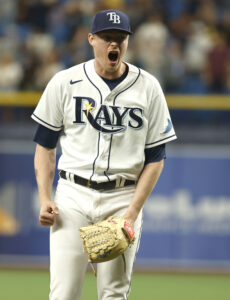
Fairbanks, who turned 32 last week, is coming off a 2.83 ERA in 60 1/3 innings for the Rays in 2025. Tampa held an $11MM club option on his services for 2026, but they instead paid him a $1MM buyout. We at MLBTR ranked him No. 44 on our Top 50 Free Agents list and projected a two-year, $18MM contract. He now heads to the Marlins on a shorter deal with a higher annual salary and figures to be the team’s closer next year.
The right-hander debuted in 2019 and has pitched 265 1/3 innings with a 3.19 ERA in his seven seasons with the Rays. In that time, Fairbanks has struck out 30.0% of hitters against a 9.3% walk rate thanks to an upper-90s fastball and a mid-80s slider which he uses 44.1% of the time. He also gets groundballs at an above-average 45.1% rate and generally keeps the ball in the park, allowing just 0.81 HR/9.
He has also frequently dealt with injuries, making seven trips to the injured list from 2021-24. He had better health luck this year, as he avoided the injured list and set a career high with 60 1/3 innings pitched. When he’s healthy, Fairbanks is a dominant back-end reliever. In 151 innings as the Rays’ closer from 2023-25, he had a 2.98 ERA while posting a 18.9% K-BB rate and earning 75 saves, which was 12th-highest in the league in that span.
That largely continued in 2025, albeit with a drop in Fairbanks’ advanced metrics. After striking out 37.0% of hitters as recently as 2023, that has fallen to 23.8% in 2024 and 24.2% in 2025. That is still plenty effective, especially as he has lowered his walk rate from 10.9% in 2023 to 7.4% this year. However, it has also come with an uptick in average exit velocity. Hitters averaged 85.7 mph off the bat against Fairbanks in 2023, but that rose to 90.2 mph in 2025. Meanwhile, his four-seamer now sits at 97.3 mph after averaging 98.9 mph in 2023.
Nonetheless, the fact that the current version of Fairbanks has better-than-average strikeout and walk rates with 90th-percentile fastball velocity means that he is still an effective reliever. If anything, the move by the Rays to decline his option was financially motivated. Tampa Bay’s payroll usually ranks near the bottom of the league (29th out of 30 in 2025). They previously signed Fairbanks to a three-year, $12MM extension in January 2023. While $4MM was a comfortable price range for the team, $11MM may have simply been too high a price to commit to one reliever, even one as effective as Fairbanks.
Indeed, the club tried to trade Fairbanks after the season ended, but they couldn’t find any takers. That ended up being a moot point, as he garnered plenty of interest from teams around the league. The Marlins, Diamondbacks, White Sox, and Tigers were publicly known to be interested in the right-hander. Miami always seemed like a logical fit, given the connection between Fairbanks and president of baseball operations Peter Bendix from their time with the Rays.
With the addition of Fairbanks, the Marlins have fortified a bullpen which ranked 23rd in the league with a 4.27 ERA and 17th with a 14.1% K-BB rate in 2025. The best performer of the bunch was right-hander Ronny Henriquez. The 25-year-old pitched 73 innings over 69 appearances this year with a 2.22 ERA and a 32.3% strikeout rate. His 1.3 fWAR was a team high for relievers, while his peripheral stats were slightly higher than his ERA but still excellent. He also earned seven saves throughout the season. It was the best possible outcome for the Marlins, who acquired Henriquez as a waiver pickup last offseason. Unfortunately, news broke two days ago that the righty underwent an internal brace procedure on his throwing elbow. As a result, he will miss the entire 2026 season.
Including Henriquez, the team got a good amount of volume from its bullpen in 2025. Seven Marlins relievers pitched at least 50 innings, with Tyler Phillips‘s 77 2/3 innings leading the group. He pitched to a 2.78 ERA and got groundballs at a well-above-average 55.6% rate, albeit with just a 16.6% strikeout rate and middling peripherals. Calvin Faucher and Lake Bachar had ERAs of 3.28 and 3.78, respectively, but with expected values in the mid-4.00s. Meanwhile, Anthony Bender, Cade Gibson, and Valente Bellozo had solid groundball rates but below-average strikeout numbers. The signing of Fairbanks upgrades the group with more velocity, strikeouts, and groundballs while covering for Henriquez’s injury and taking pressure off the younger arms.
According to RosterResource, the signing of Fairbanks brings the Marlins’ projected payroll to $73MM, a slight bump from $70MM in 2025. That figure includes just over $15MM for eight arbitration-eligible players, with $2MM of that going to the recently-signed Christopher Morel (previously non-tendered by the Rays). So far, Morel and Fairbanks have been the club’s only big-league free agent signings, though the club is reportedly willing to spend more than usual this offseason.
Photos courtesy of Nathan Ray Seebeck and Kim Klement, Imagn Images
White Sox Sign Sean Newcomb
The White Sox announced this morning that they’re in agreement with left-hander Sean Newcomb on a one-year deal that guarantees the southpaw $4.5MM this morning. Will Sammon of The Athletic reports that Newcomb “will at least get the chance to start” for Chicago. Lefty Ryan Rolison was designated for assignment to make room for Newcomb on the 40-man roster. Newcomb is a client of Tidal Sports Group.
Newcomb, 32, was a first-round pick by the Angels back in 2012 and spent years as a consensus top-100 prospect in the minors. The lefty made his big league debut with Atlanta back in 2017 after previously coming over as part of the Andrelton Simmons trade. He spent the first two seasons of his career as a rotation piece, with a 4.06 ERA (103 ERA+) and a 4.16 FIP that gave him the look of a decent back-end starter. Unfortunately, in 2019 early season struggles led to him being demoted to Triple-A and moved into a bullpen role upon his return. He started four games for the Braves in 2020 but struggled badly across those starts as well, and ultimately did not start another game for the team before being designated for assignment by the club.
The lefty was traded to the Cubs shortly after his DFA and moved to the bullpen for the club, but struggled to put things together over the next few seasons. He pitched to an atrocious 6.61 ERA in 47 2/3 innings of work at the major league level between the Cubs and A’s over the next three seasons, held back primarily by a whopping 15.0% walk rate. Back in January, Newcomb latched on with the Red Sox on a minor league deal and found a path back to a big league rotation job between a strong performance in Spring Training coupled with injuries to rotation pieces like Lucas Giolito and Brayan Bello that kept them off the Opening Day roster.

Newcomb’s performance once added to the rotation was a mixed bag. He made five starts for the Red Sox and posted a lackluster 4.43 ERA, but did so with strong peripherals. He struck out 25.7% of his opponents while walking 10.5%. After moving to the bullpen, he posted a much stronger 3.38 ERA in seven relief outings for Boston, though his strikeout rate cratered during those outings. That led the Red Sox to designate him for assignment in late May, and he found himself traded back to the A’s shortly thereafter.
The lefty remained with the Athletics for the remainder of the 2025 season and did extremely well for himself with the club. In a full-time relief role for the A’s, Newcomb pitched to a dazzling 1.75 ERA with a 2.69 FIP in 51 1/3 innings of work. That excellent performance was backed up by strong peripherals, as he struck out 24.9% of his opponents, walked just 7.0%, and posted a strong 48.9% ground ball rate. His 3.22 SIERA in West Sacramento would be good for 44th among relievers with at least 50 innings of work last year if separated from his time in Boston. He’d also rank fifth by ERA and 18th by FIP.
That performance is more than strong enough to justify offering Newcomb a solid one-year guarantee to be a lefty bullpen arm, and the 32-year-old likely could have landed a similar dollar amount from a more competitive team for 2026 based on contracts offered to comparable lefties this offseason like Caleb Thielbar, who re-upped with the Cubs on a $4.5MM guarantee earlier this month. With that said, those contenders would have presumably wanted to keep Newcomb in a full-time bullpen role. The White Sox, by contrast, don’t have expectations of contention headed into 2026 and therefore can afford to offer Newcomb the opportunity to earn a rotation spot this spring.
Fellow offseason signing Anthony Kay figures to join Shane Smith and Davis Martin in the front three rotation spots for the White Sox this year. That leaves Newcomb to compete with players like Sean Burke, Jonathan Cannon, and Chris Murphy for the last two spots in the club’s rotation. It wouldn’t be a shock to see Newcomb land that role, though it’s certainly possible that he could also be used in a late-inning role given that the Sox bullpen has only Mike Vasil and Jordan Leasure as leverage options at the moment, with Tyler Gilbert as the top lefty option.
As for Rolison, the southpaw was claimed off waivers from Atlanta earlier this month. Rolison made his MLB debut as a member of the Rockies this past year, but struggled badly to the tune of a 7.02 ERA in 42 1/3 innings of work at the big league level for Colorado this year. The lefty will now be put through the waiver wire again, unless the Sox work out a deal involving Rolison before then. Should he pass through waivers unclaimed, Rolison figures to be outrighted to Triple-A as non-roster depth for Chicago headed into the 2026 season.
Athletics Acquire Jeff McNeil
The Mets have traded infielder/outfielder Jeff McNeil to the Athletics along with cash considerations, according to announcements from both clubs. The Mets receive right-hander Yordan Rodriguez in return. The A’s designated left-hander Ken Waldichuk for assignment to open a 40-man spot, which you can read more about here. New York is reportedly sending $5.75MM to cover part of McNeil’s $15.75MM salary in 2026 and will cover the $2MM buyout on McNeil’s $15.75MM club option for 2027 if the A’s don’t pick it up.
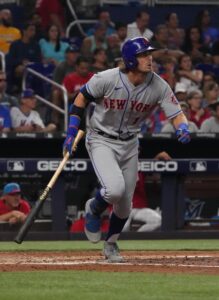 Once again, the Mets are moving on from a long-tenured player as they overhaul their roster this offseason. They traded Brandon Nimmo to the Rangers last month. In recent weeks, Pete Alonso signed with the Orioles and Edwin Díaz with the Dodgers. Díaz was acquired by the Mets in a trade ahead of the 2019 season. Nimmo, Alonso and McNeil were all drafted by the Mets, Nimmo back in 2011, McNeil in 2013 and Alonso in 2016.
McNeil debuted in the big leagues in 2018 and played in eight different seasons as a Met. Through the 2022 campaign, McNeil had appeared in 516 games, stepping to the plate 2,039 times. He established himself as one of the hitters most likely to put the ball in play. His 6.8% walk rate was a bit lower than league average while his 11.9% strikeout rate was barely half of par. He showed a bit of pop with 46 home runs in that span, though 23 of those were in the 2019 juiced-ball season. Put it all together and McNeil slashed .307/.370/.458 for a 130 wRC+ over those five seasons, indicating he had been 30% better than league average on the whole.
In addition to his skills at the plate, he swiped a few bags and provided the Mets with a good amount of defensive versatility. He spent most of his time at second base but also appeared at third base and the outfield corners, generally getting good marks for his glovework. FanGraphs credited him with 15.3 wins above replacement in that span.
Going into 2023, the Mets signed him to a four-year, $50MM contract extension, just ahead of his age-31 season. That deal hasn’t been a disaster but McNeil’s production has declined since then. Up until he signed that pact, he had a .332 batting average on balls in play. That’s roughly 40 points better than typical league averages, a tremendous boost for a guy who puts the ball in play so often. But in the past three seasons, his BABIP has been just .269, which has led to a .253/.326/.389 line and 102 wRC+. Thanks to his glovework, he’s still been worth about two fWAR per year over the course of his extension so far.
The infield picture in Queens has become jumbled in recent years. Francisco Lindor has been a mainstay at shortstop since 2021. McNeil has been at second a lot but has also been moved around as the Mets have tried to find time for a crop of younger infielders consisting of Brett Baty, Mark Vientos, Ronny Mauricio and Luisangel Acuña.
As those players have been earning more playing time, to varying degrees, trade rumors around McNeil have picked up. The Mets further loaded up the infield by acquiring second baseman Marcus Semien from the Rangers as the return in the Nimmo trade.
McNeil’s defensive versatility meant the Semien trade didn’t completely kick him out the door but it was perhaps telling that the Mets acquired one of the most reliable, everyday guys to cover the position McNeil has played most often. Since McNeil will turn 34 years old in April and has just one guaranteed year remaining on his contract, a deal did feel likely. The Jorge Polanco signing added even another layer. He is expected to primarily play first base and serve as the designated hitter but some time at second or third base is possible as well.
The trade possibility was complicated by the fact that McNeil’s health is at least somewhat in question. It was reported in November that McNeil underwent a thoracic outlet procedure at the end of the 2025 campaign. His agent characterized the procedure as minor and said the expectation would be for McNeil to be back to normal in time to be a full participant in spring training.
The procedure doesn’t seem to have dissuaded the A’s, who have been looking for upgrades at the second and/or third base positions. The A’s have been rebuilding for a while and have had a lot of success at developing their young position player prospects. They have almost a full lineup of controllable players but they came into this offseason with some room to add on the infield. Jacob Wilson is the club’s shortstop and Nick Kurtz the first baseman, but the other two spots were wide open.
Zack Gelof flashed some home run pop when he debuted in 2023 but his strikeout problems have worsened since then and he was injured for most of 2025. Various other young players have received sporadic auditions while veterans like Luis Urías and Aledmys Díaz have also floated through.
McNeil will likely be the club’s regular second baseman in the upcoming season but his flexibility also allows them to pivot as things develop. Wilson is not an especially strong defender at shortstop, so he could end up pushed to second or third. He will probably stick at short for the time being but prospect Leo De Vries, acquired in the Mason Miller trade, is looming. He’s only 19 years old but he is one of the best prospects in the league and has already played in 21 Double-A games.
Wilson’s arm strength was ranked by Statcast in the 80th percentile this year, so handling the hot corner is a possibility, though the A’s might prefer to have him stick up the middle. As they sort that out, guys like Max Muncy, Darell Hernaiz, Max Schuemann, Brett Harris and Gelof will be trying to earn playing time as well. Injuries and further acquisitions will inevitably change the situation but McNeil can move around as circumstances dictate. He even played a bit of center field this year, so he can give the A’s some coverage for Denzel Clarke, who is an elite fielder but questionable hitter.
The A’s could have turned to the free agent market and tried to do so. They reportedly offered Ha-Seong Kim $48MM on a four-year deal, which works out to $12MM per year. Instead, Kim decided to bet on himself with a one-year, $20MM deal with Atlanta, as he will hope to return to free agency with a better platform.
Once Kim was gone, the A’s weren’t left with amazing options. Bo Bichette is still out there but the A’s are not going to meet his asking price and he wouldn’t want to play in a minor league park even if they did. Alex Bregman and Eugenio Suárez shouldn’t be quite as expensive as Bichette but those situations would be somewhat comparable. Below that tier, the top free agents are utility types like Ramón Urías, Willi Castro and Isiah Kiner-Falefa.
McNeil has a better track record than those guys and isn’t prohibitively expensive. Since the Mets are covering $5.75MM of his salary in 2026, the A’s will only have to pay him $10MM, a bit less than they were willing to pay Kim annually. If McNeil has a good year, they can pick up his $15.75MM club option for 2027 but they can also walk away for nothing since the Mets have agreed to cover his buyout.
RosterResource estimates that the A’s are slated to spend $87MM on next year’s club. It’s unclear where they want the budget to be but that’s already $8MM higher than last year. They could still use some pitching but it’s unclear how much more they are willing to spend.
The A’s are also parting with a lottery ticket prospect. Rodriguez is a Cuban righty who just signed with the A’s this year for a $400K bonus. He tossed 15 1/3 innings in the Dominican Summer League with 20 strikeouts but eight walks and two wild pitches. He’s still only 17 years old, turning 18 in January, and isn’t properly on the prospect radar yet. Baseball America says he was not going to be one of the Athletics’ top 30 prospects for the upcoming year. If he’s ultimately able to contribute anything for the Mets, it won’t be for quite some time.
The Mets will take the flier on Rodriguez and see if they can cash him in later. For now, it’s about moving some money off the payroll and likely opening themselves up for further transactions. It’s unclear what their next moves will be but an outfield acquisition feels inevitable after sending out both Nimmo and McNeil. Vientos, Polanco and Baty are projected to share the infield corners and the DH spot unless the Mets shake things up with an external addition. Further moves on the pitching side are surely forthcoming.
Time will tell how it all plays out but it’s the latest sign that there’s a changing of the guard taking place in Queens. Semien isn’t a young player but he’s only signed for three years as opposed to Nimmo’s five, so that move was at least somewhat about avoiding long-term commitments to aging guys. Letting Díaz and Alonso walk while trading McNeil could also be moves about preventing the club from getting too old. The Mets are looking for rotation help but reportedly don’t want to commit to top free agents on lengthy deals.
Owner Steve Cohen has an almost unmatched willingness to spend but that led to inconsistent results in the first few years of his regime. He presumably brought in president of baseball operations David Stearns to make the tough, analytical decisions about how to use the resources. So far, the results under Stearns have also been uneven but it’s only been two seasons.
Clearly, there’s a desire to avoid long-term pitfalls. Apart from the Juan Soto deal, which was an exceptional situation due to his youth, Stearns hasn’t signed a contract longer than three years with the Mets. He has let fan favorites walk away in free agency and has also sent them packing himself. The fan base doesn’t appear too happy at the moment, especially after the disappointing 2025 campaign, so it will have to work out in the long run for Stearns to win them back.
Jeff Passan of ESPN first reported the details of the trade. Photos courtesy of Wendell Cruz, Jasen Vinlove, Imagn Images
Mets Sign Luke Weaver
December 22nd: The Mets announced Weaver’s signing. They opened a 40-man roster spot by trading McNeil to the Athletics earlier today.
December 17th: The Mets are working to finalize a two-year, $22MM deal with free agent reliever Luke Weaver, reports Joel Sherman of the New York Post. The two sides have an agreement in place, per Will Sammon of The Athletic. The deal is pending a physical. Weaver is repped by Excel Sports Management. The Mets have a full 40-man roster and will need a corresponding move to make this deal official.
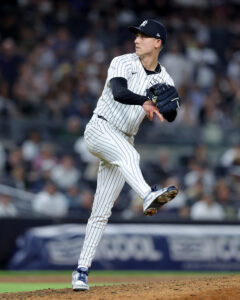
The two-year, $22MM terms are the exact same ones as the just-agreed-upon deal between the division-rival Phillies and righty Brad Keller. Like Keller, Weaver is a starter-turned-reliever who’s found notable success pitching near the back of a big-market contender’s bullpen.
Weaver, 32, has spent the past two-plus seasons as a key late-inning arm over in the Bronx. A rocky finish to the 2025 season inflated his earned run average to 3.62 but since signing with the Yankees late in the 2023 campaign, Weaver touts a 3.22 ERA, 29.4% strikeout rate and 7.5% walk rate in 162 innings of relief. He saved a dozen games and picked up 43 holds along the way, blowing only four other opportunities in that time. It’s presumably just coincidence, but the Mets now employ Weaver, Devin Williams and Clay Holmes (who’s moved into the rotation) — the Yankees’ three highest-leverage arms for the bulk of the 2024-25 seasons.
A first-round pick by the Cardinals back in 2014, Weaver debuted in the St. Louis rotation in 2016 and showed some promise as a starter there in 2017-18. The Cards flipped him to the D-backs as part of the return for star first baseman Paul Goldschmidt, and Weaver looked to be on the cusp of a full-fledged breakout in 2019. He started a dozen games and pitched to a 2.94 ERA with plus strikeout and walk rates before a forearm strain ended his season. Subsequent shoulder and elbow injuries doomed the rest of Weaver’s D-backs tenure; from 2020-23, he pitched to a 5.95 ERA while bouncing between five clubs.
The last of those five stops, however, was in the Bronx. He made enough of an impression in three late-season starts to sign a $2.5MM big league deal in the offseason — one that contained a 2025 club option. It proved to be a raucous bargain for the team and a career-saving deal for Weaver, who rebuilt himself into a coveted bullpen arm and now lands the largest payday of his 12-year professional career. Despite that strong run in the Bronx and some reported interest in a reunion, the Yanks were not in the bidding for Weaver, per Sherman.
Back in September, Weaver expressed some openness to returning to a starting role if a team gave him a chance, but that doesn’t seem to be at play here. Anthony DiComo of MLB.com writes that Weaver will slot into the bullpen. It’s unclear if that’s sourced reporting or deduction but there hasn’t been anything to suggest the Mets plan on giving Weaver a rotation gig. The price of Weaver’s deal is right around expectations. At the beginning of the offseason, MLBTR predicted him for an $18MM guarantee over two years, an estimate that he has marginally beaten.
New York had a middling bullpen in 2025. Their collective 3.93 ERA was 15th in the majors. It was even worse later in the year as the season slipped away from the club. Over August and September, the relief corps had a collective 4.18 ERA. At season’s end, Edwin Díaz, Tyler Rogers, Gregory Soto, Ryan Helsley and others hit free agency, further thinning out the group. Those four have already signed with other clubs.
The Mets have signed Williams and now Weaver to fortify the group. They will slot in among incumbent arms like A.J. Minter, Brooks Raley, Huascar Brazobán and others. Presumably, there are still more bullpen moves to come.
RosterResource, assuming an equal distribution of Weaver’s guarantee over two years, now projects the Mets for a $305MM payroll and a $307MM competitive balance tax figure. Since they have paid the tax in at least three straight years, they face compounding taxation rates. The top tier of the tax in 2026 is $304MM, so this deal pushes them over. That means they will pay a 110% tax on any further spending, though that’s nothing new for them.
There are still several items on the to-do list for the Mets this winter. Sammon wrote earlier this week that the club is still looking for a front-of-rotation starter and an offensive upgrade. That could come via free agency but there have also been plenty of trade rumors surrounding Jeff McNeil, Kodai Senga, David Peterson, Mark Vientos, Ronny Mauricio and Luisangel Acuña. For now, Weaver upgrades the bullpen at market price.
Photo courtesy of Jeff Curry, Brad Penner, Imagn Images
Nationals Sign Foster Griffin
December 22nd: The Nats announced the Griffin signing today.
December 16th: The Nationals are going to sign left-hander Foster Griffin, reports Robert Murray of FanSided. It’ll be a one-year, $5.5MM contract with another $1MM in incentives for the Excel Sports Management client. The Nats have 40-man vacancies and won’t need to make a corresponding move.
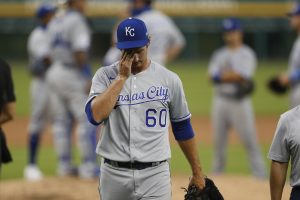 Griffin, now 30, got some brief major league action a few years ago. He made seven appearances, split between the Royals and Blue Jays, over the 2020 and 2022 seasons. He has spent the past three years in Japan, pitching for the Yomiuri Giants of Nippon Professional Baseball, with great success.
He tossed 315 2/3 innings over those three campaigns, allowing 2.57 earned runs per nine. He struck out 25.1% of batters faced, only gave out walks to 5.1% of opponents and kept about half of balls in play on the ground. In 2025, a leg injury limited him to just 78 innings but it was his best season in terms of run prevention. He posted a 1.62 ERA with a 25.1% strikeout rate, 5.9% walk rate and 48.9% grounder rate.
Despite the solid numbers, there are some questions about whether how his stuff will translate to North American ball. Griffin’s fastball only sits in the low 90s, fairly soft by modern standards. He succeeds with a deep arsenal which also includes a slider, cutter, changeup, splitter, curveball and two-seamer.
It has been a relatively busy winter in terms of guys returning to North America after stints overseas. Cody Ponce got $30MM over three years from the Blue Jays. The White Sox gave Anthony Kay $12MM over two years. Drew Anderson got one year and $7MM from the Tigers and Ryan Weiss got one year and $2.6MM from the Astros. All pitchers have had some success in Japan or South Korea but the price differences are likely down to the stuff. Ponce is 6’6″ and 255 pounds with a fastball that averages in the upper 90s with a splitter/kick change that is considered a plus pitch. Griffin isn’t tiny, as he’s listed at 6’3″ and 225 lbs., but his crafty, soft-tossing lefty profile is obviously different than that of Ponce.
It’s still an intriguing package. Recent reporting indicated teams were showing interest in Griffin and that he was putting a priority on an opportunity to prove himself in a rotation. Washington is a good landing spot for him in that regard.
The Nats have been rebuilding for years but have struggled to return to contention. The slow progress prompted major changes, as the club has overhauled almost the entire front office and coaching staff in the past few months. It’s expected that the new regime, led by president of baseball operations Paul Toboni, will be focused on long-term goals. They are one of the clubs best suited to take a chance on an unproven arm like Griffin.
As of right now, the Washington rotation consists of guys like MacKenzie Gore, Cade Cavalli, Josiah Gray, Brad Lord, Griff McGarry, Jake Irvin, Mitchell Parker and others. Gore is just two years away from free agency and is widely expected to be traded this offseason. Cavalli and Gray haven’t pitched much in recent years due to Tommy John surgery. Lord had decent results as a swingman in 2025. McGarry is a Rule 5 pick with no major league experience yet. Irvin and Parker have each logged over 300 big league innings but they each posted an ERA near 6.00 this year.
In short, there’s very little locked into place in the Washington rotation, meaning Griffin should have a shot to hold down a spot. If he succeeds for the first few months of the season, he will likely end up on the trade block, allowing the Nats to potentially bring back more young talent for their rebuild. If it doesn’t work out, it’s a fairly modest bet from the team’s perspective, though it’s a huge amount of money for Griffin himself.
Photo courtesy of Darren Yamashita, Raj Mehta, Imagn Images
Padres Sign Sung-Mun Song
December 22nd: The Padres officially announced their signing of Song today. The deal is actually a four-year pact worth $15MM, as per Ronald Blum of the Associated Press, with the fourth year existing as a player option for Song. There is also a $7MM mutual option for the 2030 season with a $1M buyout. Song will get a $2.5MM salary in 2026, $3MM in 2027, $3.5MM in 2028, and (if he doesn’t opt out) $4MM in 2029. The Padres will also pay Song a $1MM signing bonus broken up into a $500K installment in January, and then the other $500K coming in January 2027.
Song would also receive a $1MM bonus for winning NL Rookie of the Year honors, and there is a salary escalator if he achieves a top-five finish in MVP voting. The Heroes will receive a $3MM posting fee from the Padres, representing the standard 20% posting fee attached to any contract worth $25MM or less for a KBO League player.
December 19th: The Padres are in agreement with infielder Sung Mun Song on a contract, according to a report from Robert Murray of FanSided. According to Francys Romero of BeisbolFR, it’s a three-year deal that guarantees Song around $13MM.
Song, 29, has broken out in a big way over his last two seasons playing for the KBO’s Kiwoom Heroes. After typically being a slightly below average hitter by that league’s standards in the early years of his career, Song exploded with a .340/.408/.518 (143 wRC+) slash line across 602 plate appearances during the 2024 season. He flashed 20/20 potential at the plate and walked at a career-high 10.6% clip while primarily playing third base for the Heroes. He followed up on that season with an even better year in 2025, as he slashed .315/.387/.530 (151 wRC+) with 26 homers, 25 steals, and 37 doubles in 646 trips to the plate.
Those dominant back-to-back campaigns in the KBO league were enough to convince Song to try his hand in the majors, and the Heroes made Song’s goal a reality when they posted him for MLB clubs last month. That opened a 30-day window (set to close on the 21st of December) for Song to negotiate with MLB clubs. Song has typically been viewed by scouts as a step below MLB Gold Glove winner Ha-Seong Kim, the best South Korean player to make the jump to the majors in recent years, and there’s been some debate about whether he’s more of a utility player or a proper starter at the big league level.
Song’s reported price tag is certainly affordable enough for the Padres to stomach in the event he’s more of a bench piece than a regular. A multi-year pact that pays Song less than $5MM annually figures to be quite affordable for San Diego; Jose Iglesias earned $3MM last year after being added to San Diego’s roster on a minor league deal to fill out the club’s bench mix. Song figures to fill a similar role this year to the one Iglesias held last season, chipping in around the infield and serving as a pinch-hitter.
While Song has primarily played third base throughout his career in the KBO league, that position is manned by Manny Machado in San Diego. Perhaps the Padres will look to get Machado occasional DH reps headed into his age-33 campaign, but aside from those occasional fill-in days Song figures to spend most of his time at first and second base, both of which are positions he logged significant time at in South Korea. Jake Cronenworth is currently slated to serve as San Diego’s second baseman next year, though his name has popped up in trade talks this winter. First base meanwhile, is unsettled after the departure of Luis Arraez. Gavin Sheets has some experience at the position but may be better suited for DH duties. As a result, first base could be Song’s best shot at regular reps, though it’s possible a trade of Cronenworth or the addition of a more traditional first base option like Paul Goldschmidt or Rhys Hoskins changes things.
The signing of Song comes just one day after the club agreed to reunite with right-hander Michael King on a three-year, opt-out laden contract. According to RosterResource, the Padres project for a payroll just under $217MM in 2026, with a payroll of nearly $258MM for luxury tax purposes. That’s before the addition of Song to the payroll, which at the currently reported numbers would push the team’s payroll up to around $221MM and around $262MM for luxury tax purposes. That would put them just barely below the second, $264MM luxury tax threshold for 2026.
If the Padres don’t want to go over that line, they would need to subtract salary from the roster to make virtually any more additions to the roster. That’s far from impossible, as rumors have percolated around not only Cronenworth but also players like right-hander Nick Pivetta and Ramon Laureano. A trade of Pivetta would save $20.5MM in 2026 and $13.75MM for luxury tax purposes. Cronenworth being dealt would save roughly $12.3MM in 2026 and $11.5MM for luxury tax purposes. Laureano wouldn’t save nearly as much money, as he’s due just $6.5MM next season on the final year of his contract.
Of course, it’s also possible the Padres simply stand pat from here, though doing so without adding another bat to the first base/DH mix would certainly be risky. Perhaps an addition on the trade market that comes with a lower financial cost could make some sense if San Diego neither wants to exceed the second luxury tax threshold nor trade salary to make room in the budget. Players like Triston Casas of the Red Sox and Mark Vientos of the Mets could potentially be available this winter and remain under affordable team control.
Rangers Re-Sign Chris Martin
The Rangers announced on Friday evening that they’ve brought back veteran right-hander Chris Martin on a one-year deal. The ISE Baseball client reportedly receives a $4MM guarantee that includes a $2MM salary and deferred $2MM signing bonus. He can also earn an extra $1MM in incentives based on innings pitched. He’ll get $200K each for throwing 35, 40, 45, 50 and 55 frames. Texas had a couple of 40-man vacancies and didn’t need to make a corresponding move.

Not so long ago, it seemed like Martin was on his way out the door. Just over a year ago, in September of 2024, he said he was 95% sure that 2025 would be his final season. He turned 39 years old in June and made a few trips to the injured list during the campaign. The first IL stint was in May due to shoulder fatigue, followed by another in July due to a calf strain. Most ominously, his season was ended in late September due to a diagnosis of thoracic outlet syndrome.
Taken all together, it was fair to assume he would be hanging up his spikes. But just a few days ago, it was reported that he was planning to pitch in 2026. His current health status isn’t known but presumably the Rangers feel good about what he can contribute next year.
When he was healthy enough to be on the mound in 2025, his results were still good. He was still averaging in the mid-90s with his four-seamer and sinker, while also mixing in a cutter, splitter, slider and knuckle curve. Long one of the best control pitchers in the majors, he tossed 42 1/3 innings while only walking 4.6% of batters faced. He also struck out 24.7% of opponents and got grounders on 42.6% of balls in play. Put that all together and he allowed 2.98 earned runs per nine innings for the year.
The Texas front office has been given some budgetary constraints over the past few years. Last winter, they put together their bullpen primarily via a series of small one-year deals. In addition to Martin, they also signed Hoby Milner, Luke Jackson, Jacob Webb and Shawn Armstrong. That actually ended up working quite well, as the Texas bullpen was pretty good in 2025. But since they limited themselves to one-year deals, almost the entire bullpen hit free agency at season’s end.
Going into 2026, they are looking to rebuild the relief corps but appear to again be working with limited resources. They recently signed lefty Tyler Alexander to a modest one-year deal. They also reportedly have an agreement with Alexis Díaz. The numbers on that deal haven’t been reported yet but it’s surely on the low side as well. Martin made $5.5MM in 2025. Given his age and the injuries he dealt with in 2025, he shouldn’t be in line for much of a raise, or any at all.
RosterResource currently projects the Rangers to have a 2026 payroll about $50MM lower than in 2025, but since they are expected to spend less on next year’s team, they should have less than $50MM to work with. They are looking to bolster the rotation and add a righty bat, but continuing to build out the bullpen is also on the to-do list.
Jeff Passan of ESPN first reported that Martin and the Rangers had a one-year deal. Evan Grant of The Dallas Morning News reported the guarantee and the deferred signing bonus. Jon Heyman of The New York Post first reported the incentives. Photo courtesy of Lon Horwedel, D. Ross Cameron, Imagn Images
Red Sox Acquire Willson Contreras
Less than a month after landing Sonny Gray, the Red Sox have acquired another prominent veteran talent from St. Louis. Boston has landed first baseman Willson Contreras and $8MM in cash considerations from the Cardinals in exchange for a package of three right-handed pitchers — Hunter Dobbins and prospects Yhoiker Fajardo and Blake Aita.
Contreras and his agents at Octagon negotiated an extra $1MM bonus for Contreras to approve the trade, as the veteran’s contract includes a full no-trade clause. The final two guaranteed seasons of Contreras’ contract and the club option on his services for 2028 have been slightly reworked, so he’ll now receive $18MM in 2026, $17MM in 2027, and the Red Sox hold a $20MM club option on his services in 2028, with a $7.5MM buyout. (The previous terms included salaries of $18MM and $18.5MM in 2026-27, plus a $5MM buyout on a 2028 club option valued at$17.5MM.)
The final accounting works out to $42.5MM in guaranteed money for Contreras over the remainder of his deal. Factoring in the Cardinals’ $8MM contribution, Boston’s commitment to Contreras is $34.5MM in salary, and his luxury tax number is $17.25MM.
When the Cards were first exploring a rebuild last winter, neither Contreras or Gray was open to waiving their no-trade protection. After a lackluster 78-84 season sent the Cards more firmly looking towards the future, Gray, Contreras, and Nolan Arenado (who blocked a deal to the Astros last winter) all indicated in recent months that they were more open to accepting a trade.
In Contreras’ case, he cracked the door open at the end of season by saying that “if something comes up…and it makes sense for me and my future, how about we talk about that?” Contreras said. The first baseman stressed that he was still eager to contribute as a veteran leader within the Cardinals’ rebuild, though reports emerged a few weeks ago that Contreras was showing an increased willingness to waive his no-trade clause and move on to a new challenge.
 Contreras (who turns 34 in May) ends his St. Louis tenure with a .261/.358/.459 slash line and 55 home runs over 1416 plate appearances from 2023-25. Signed to a five-year, $87.5MM free agent deal back in December 2022, the idea was that Contreras would take over from Yadier Molina as the team’s regular catcher, yet in somewhat awkward fashion, the Cardinals reduced Contreras’ playing time behind the plate and used him regularly as a DH. Heading into the 2025 season, Contreras became a full-time first baseman, returning to a position he’d played only a handful of times earlier in his career with the Cubs. The Outs Above Average metric gave Contreras a positive +6 grade for his first base work in 2025, but he also received -1 Defensive Runs Saved.
Regardless, it would seem like Contreras is at least a passable defender at the cold corner, and the Red Sox can live with only so-so defense as long as the former All-Star continues to hit. Contreras batted .257/.344/.447 with 20 home runs over 563 PA in 2025, translating to a 124 wRC+. A career-low 7.8% walk rate was a concern and Contreras has always been prone to strikeouts, but he continued to make consistently hard and productive contact. Contreras is a right-handed batter, which helps balance out a Boston lineup that tilts to the left side.
Contreras’ final four seasons in Chicago overlapped with Craig Breslow‘s time working in the Cubs’ front office, before Breslow was hired to take over Boston’s baseball operations department following the 2023 season. Breslow’s tenure has thus far been defined by significant trades, ranging from the deals that brought Gray, Garrett Crochet, and now Contreras to Fenway Park, and last June’s surprising move that sent Rafael Devers to the Giants.
One of the many factors involved in the Devers trade was Devers’ displeasure over being asked to move to first base in the wake of Triston Casas‘ season-ending knee surgery in early May. While Romy Gonzalez and deadline pickup Nathaniel Lowe helped fill the first base void, there was little doubt the Sox were going to address the position in a larger fashion this winter. Pete Alonso, Isaac Paredes, Kazuma Okamoto, Munetaka Murakami, and Bryce Eldridge were among the first base candidates on Boston’s radar on the free agent and trade fronts this winter, and Cotillo reported last week that Contreras was another name under consideration.
With Contreras now in the fold, a Casas trade now looks increasingly likely. Casas has been floated in trade talks even dating back to last winter and prior to his knee surgery, and despite his injury-shortened season, rival clubs figure to have interest in the former top prospect. Conversely, if the Sox could figure out a way to dump Masataka Yoshida‘s contract, Casas could share first base/DH duties with Contreras.
Adding a first baseman solves another piece of Boston’s infield puzzle, and turns a position from a weak link into a strength. The Red Sox remain linked to such other major infield names as Bo Bichette or old friend Alex Bregman, and Contreras’ $36MM price tag shouldn’t prevent the Sox from spending big on either of those names, even considering Boston’s recent wariness about major financial commitments. Trading an outfielder could further shake up the position-player mix, and there have been consistent rumors about the possibility of the Sox moving an outfielder for pitching.
The Red Sox entered the winter with a lot of pitching depth in terms of young arms, yet were lacking proven frontline hurlers that could join Crochet and Brayan Bello in the rotation. Gray was one answer, and fellow trade pickup Johan Oviedo could be another after Oviedo was acquired from the Pirates. This has made Breslow more comfortable in trading from further down his pitching depth chart, and after moving Richard Fitts and prospect Brandon Clarke to St. Louis for Gray, Breslow has now parted ways with Dobbins, Fajardo, and Aida.
The equation has been pretty simple for Breslow. The CBO has been willing to move some (i.e. Jhostynxon Garcia, Kyle Teel) of Boston’s more highly-touted prospects while hanging onto the likes of Marcelo Mayer, Roman Anthony, and Kristian Campbell, and also moving some pitchers that no longer seem to be in Boston’s plans. In Dobbins’ case, he isn’t even going to be available for the Cardinals’ Opening Day roster, as the righty tore his right ACL last July. This was the second right ACL tear Dobbins has endured, plus he has a Tommy John surgery on his checkered health history.
Dobbins made his MLB debut in 2025, and posted a 4.13 ERA, 6.6% walk rate, and 17.6% strikeout rate over his first 61 innings in the Show. An eighth round pick for the Sox in the 2021 draft, Dobbins is more of grounder-heavy pitcher than a big strikeout arm, but his slider and curveball have good whiff rates as complements to his 95.5mph fastball. Significant questions remain about Dobbins’ durability, but the 26-year-old right-hander has less than a year of MLB service time and now projects to be a longer-term add to the St. Louis rotation.
Cardinals president of baseball ops Chaim Bloom is plenty familiar with Dobbins, as Bloom was running Boston’s front office when Dobbins came into the organization. Interestingly, of the five pitchers obtained by the Cardinals in the Contreras and Gray trades, Dobbins is the only one who was part of Boston’s organization when Bloom was still there.
Fitts and (when healthy) Dobbins can factor in the Cardinals’ rotation picture as early as 2026. Dobbins doesn’t at all fit Bloom’s desire to add another veteran arm to the rotation, yet finding an innings-eater is a short-term goal, whereas Dobbins is part of the bigger picture. That has been the story of this offseason in St. Louis, as with Bloom now fully installed atop the decision-making pyramid, the Cardinals are embarking on the rebuild they considered but then backed away from last winter.
Trading Contreras removes another big chunk of salary from the Cards’ books. An Arenado deal could be the next step, though that trade will be trickier due to both Arenado’s salary and the fact that (unlike Contreras or Gray) Arenado is coming off a rough 2025 season. Other players like Brendan Donovan and JoJo Romero have also been regularly mentioned in trade rumors. One player St. Louis wasn’t very willing to move is Alec Burleson, who now looks to step right into the everyday first base role with Contreras gone.
Fajardo was an international signing for the White Sox in 2024, and he has now been traded twice before his 20th birthday. Fajardo changed his Sox when Chicago sent him Boston a year ago in the Cam Booser trade, and the righty had a 2.25 ERA, 28.8% strikeout rate, and a 9.4% walk rate over 72 innings in rookie ball and with A-level Salem in 2025. MLB Pipeline ranked Fajardo 23rd on their ranking of the top 30 Red Sox prospects, describing the teenager as “a potential mid-rotation starter” whose four-seam fastball can hit 97mph.
Aita was a sixth-round pick for the Red Sox in the 2024 draft. His first pro season saw the 22-year-old right-hander post a 3.98 ERA in 115 1/3 combined innings in Salem and at high-A Greenville, with a 21.4% strikeout rate and 6.5% walk rate. As per Geoff Pontes of Baseball America, Aita technically has a five-pitch arsenal but he rarely throws his slider. Aita’s fastball is in the 92-93mph range but with plenty of movement, and there’s also a lot of movement and spin on his sweeper and cutter.
ESPN’s Jeff Passan (multiple links) was the first to report that Contreras was going to Boston for Dobbins and multiple minor league pitchers, with The Athletic’s Ken Rosenthal later identifying Fajardo and Aita. ESPN’s Jesse Rogers reported the detail of Contreras’ $1MM bonus for waiving his no-trade clause. MassLive’s Chris Cotillo reported the $8MM heading from St. Louis to Boston, and Cotillo and The Athletic’s Katie Woo had the details on the reworked money in Contreras’ contract.
Inset picture courtesy of Isaiah J. Downing — Imagn Images
White Sox To Sign Munetaka Murakami
The White Sox have officially announced their signing of infielder Munetaka Murakami to a two-year deal worth $34MM. ESPN’s Jeff Passan was the first to break the news. Murakami, a client of Excel Sports Management, will be officially introduced as a member of the Sox roster during a press conference tomorrow.
Beyond the $34MM in salary, the White Sox will also owe a $6.575MM posting fee to the Yakult Swallows, as per the rules of the MLB/NPB posting system. The fee is determined by the size of the player’s eventual Major League contract, so the $6.575MM figure is determined by 20% of the contract’s first $25MM, and then 17.5% of anything between $25MM and $50MM.
Murakami, 26 in February, arrives in the majors as perhaps the most anticipated NPB hitter to move stateside since Shohei Ohtani. The slugger set an NPB record with 56 home runs in a single season at 22 years old, and he continued to make an international name for himself with Team Japan during the 2023 World Baseball Classic. A career .270/.394/.557 hitter across 892 Central League games for the Swallows, Murakami boasts true 80-grade power that could completely change an up-and-coming White Sox lineup that already includes highly regarded youngsters like Colson Montgomery and Kyle Teel.
That combination of power and unusual youth for a free agent led many to believe that Murakami would be able to secure one of the most lucrative contracts of the offseason. On MLBTR’s annual Top 50 MLB Free Agents list published at the outset of the offseason, Murakami landed as the #4 free agent available with a predicted contract of $180MM over eight years. It was easy to imagine at least one team being willing to roll the dice on Murakami’s tantalizing upside in order to lock him up for his entire prime, but teams were more hesitant to commit to Murakami than expected. Few teams were publicly connected to the slugger, and reports from all corners of the baseball world indicated that teams were feeling gun-shy about his contact rate in NPB, which would’ve been the lowest in baseball in the majors last year if carried over.
While teams weren’t willing to go to the high levels expected when Murakami was first posted, it does appear that he may have left some guaranteed money on the table in taking this deal. Passan reports that some teams did try to get involved in Murakami’s market by offering long-term deals with lower annual salaries. That sort of deal would have guaranteed Murakami a longer runway to work things out at the big league level, but would have limited the financial upside available to him. Instead, he took a short-term deal that will offer him a healthy annual guarantee that’s on par with the AAV of the five-year deal Murakami’s countryman Seiya Suzuki signed with the Cubs across town five years ago.
That comes with just two guaranteed years in the majors, but if Murakami is able to establish himself he’ll head into free agency ahead of his age-28 season. That should leave him in line for a far more substantial payday during the 2027-28 offseason, should he prove himself capable as the sort of middle-of-the-order power bat he has the potential to be. For a player looking to adjust to the majors, it’s hard to imagine a more forgiving environment than the south side of Chicago. The White Sox have average 108 losses per season over the last three years and posted arguably the worst season in MLB history back in 2024. While young players like Montgomery and Teel have begun to impact the major league roster, expectations for the club could hardly be lower at this point.
While any dreams Murakami may have had of hoisting a World Series trophy in his rookie season as a big leaguer are likely to be dashed by his decision to sign with the White Sox, playing on a team with low expectations for this year should allow him a low-pressure environment to make any adjustments to his game that might be necessary in order to maximize his success without the risk of losing his spot in the lineup to another player in the midst of a pennant race.
The White Sox seem to want Murakami to be able to focus on maximizing his offense as much as possible, as the longtime NPB third baseman will be moving to first base in Chicago. Scouts nearly universally expressed skepticism about is ability to handle the hot corner at the big league level, so a move to first base should put less pressure on Murakami to prove himself as a defender and allow him to focus more fully on his work at the plate.
Should Murakami successfully prove himself in the majors, he would help anchor a budding core of young hitters for the White Sox. Montgomery and Teel both enjoyed excited seasons at up-the-middle positions last year, and they’ll be joined in the lineup by players like third baseman Miguel Vargas, second baseman Chase Meidroth, and catcher/DH Edgar Quero who enjoyed seasons last year that made them look like solid complementary pieces for the future. Luis Robert Jr. also figures to offer the Sox some star power alongside Murakami if he’s healthy enough to handle something close to a full slate of games in center field and remains on the team amid persistent trade rumors.
Taken together, it’s easy to see Murakami as the centerpiece of an offseason that has seen the White Sox take small steps towards a return to competitiveness at the big league level. The NPB star isn’t the only player the White Sox have deigned to add to the roster this winter; lefty Anthony Kay signed a two-year deal worth $12MM after his own successful stint in Japan, and the club is reportedly among the teams interested in former Rays closer Pete Fairbanks, as well. Those moves are unlikely to vault Chicago into a playoff spot by themselves, especially in a competitive AL Central where the Tigers and Guardians made it to October with Kansas City putting together a very aggressive offseason in their own right.
Immediate playoff contention, however, isn’t likely to be the expectation. Instead, these additions should allow the White Sox to foster a more competitive environment for their young core as they reach the majors and build towards playoff contention in 2027 and beyond. There’s also the plus of reinvigorating fans who have been left wanting by the team’s latest rebuild, which saw the club part with beloved players like Lucas Giolito and Garrett Crochet.
These steps forward allow the White Sox to pull their payroll out of the league’s basement. Following the Murakami signing, RosterResource projects the club for an $84MM payroll in 2026, a figure that jumps up to nearly $102MM for luxury tax purposes. That’s more or less in line with last year’s $85MM payroll and pulls the White Sox just out of the bottom five in the majors at this point. Of course, that figure is still extremely modest and leaves plenty of room for a team in a large market like Chicago to add additional salary, whether that’s a late-inning arm like Fairbanks or perhaps a veteran starting pitcher who can help anchor the club’s rotation.
Blue Jays Interested In Alex Bregman
Add the Blue Jays to the list of potential suitors for free agent Alex Bregman. Toronto officials have been in contact with Scott Boras, the third baseman’s agent, reports Ken Rosenthal of The Athletic. The Red Sox, Cubs, and Diamondbacks have also been connected to Bregman.
Toronto has already been a major player in free agency this offseason, though the additions have come on the pitching side. The club snagged one of the top starters on the market in right-hander Dylan Cease. They locked down reliever Tyler Rogers on a three-year deal. In a year with several intriguing arms arriving from overseas, the Blue Jays landed one of the highest-upside options in Cody Ponce. Toronto has been tied to some of the biggest bats on the market, including Kyle Tucker, Cody Bellinger, and Bo Bichette. Bregman now joins that esteemed group.
Boston is reportedly pushing for a Bregman reunion. The third baseman opted out of a three-year, $120MM deal with the club after one season. He had a strong campaign with the Red Sox, providing middle-of-the-order thump to go with steady glove work. Chicago is back in the mix after coming up short last year. The Cubs reportedly offered Bregman a four-year deal this past offseason, though the total value fell short of his agreement with the Red Sox. The Diamondbacks recently joined the race for Bregman. Arizona seems like a long shot to land the stud free agent, but the club does have a vacancy after trading Eugenio Suárez at the deadline.
Toronto’s current plan at third base seems to be a combination of Addison Barger, Ernie Clement, and Davis Schneider. Clement will be penciled in at second base with Bichette hitting the market. Barger is the top option for third base duties, at least against righties. Schneider could pick up second base reps against lefties, with Clement sliding to third. Infielders JoJo Parker and Arjun Nimmala are among Toronto’s top prospects, though they’re unlikely to contribute at the big-league level for a few more years.
The Blue Jays’ third basemen ranked 10th in OPS last season. Clement and Barger split the role fairly evenly, with Will Wagner and Isiah Kiner-Falefa occasionally mixing in. Barger emerged as a crucial cog in the middle of the lineup, launching 21 home runs in his first extended stint at the highest level. Clement bounced around the infield, seeing time at all four spots. He played in a career-high 157 games, providing league-average numbers at the plate. Clement also set a postseason record with 30 hits. Third base isn’t a position that seems like a glaring weakness, but a longer-term view of the roster makes Bregman a more sensible fit. George Springer and Daulton Varsho are both free agents after 2026. Their potential departures would open up outfield and DH opportunities for Barger, Schneider, and company.
While Clement and Barger are solid players, Toronto would have no issue reshuffling the lineup to make room for an addition like Bregman. The 31-year-old has a career 133 wRC+. After three straight seasons with at least 23 home runs, Bregman hit 18 in 114 games in his lone season in Boston. A quad strain cost him a month and a half, but he was on track to maintain his standard power numbers. Bregman was worth +3 Outs Above Average this past year. He’s now at +18 over the last five seasons.
The additions of Cease and Rogers, among others, pushed Toronto’s estimated payroll to roughly $272MM, per RosterResource. That’s already $14MM above the club’s 2025 mark. It’s well beyond the Blue Jays’ $217MM payroll from 2024. It’s a new level of spending for a squad that fell just short of bringing home a title this past year.
Photo courtesy of Brad Penner, Imagn Images