
Mets Sign Mark Canha
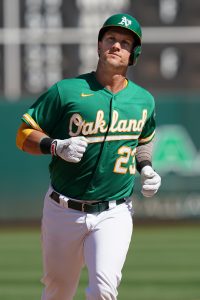
The Mets continue to bolster their position player mix, announcing agreement Tuesday with free agent outfielder Mark Canha. It’s reportedly a two-year, $26.5MM guarantee for the CAA Sports client. The deal also contains a 2024 club option. A Bay Area native, Canha had previously spent his entire big league career with the A’s.
Canha’s contract will see him collect $12MM in 2022 along with a $2MM signing bonus and then $10.5MM in 2023. The 2024 club option is valued at $11.5MM and has a $2MM buyout attached.
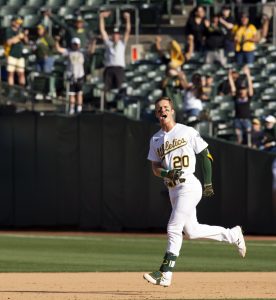
Canha becomes the second big addition of the day for the Mets, who also agreed to terms with infielder Eduardo Escobar on a two-year guarantee this afternoon. Canha will step into the club’s outfield mix, with the bulk of that time presumably coming in the corners. While he has experience in all three outfield spots, he’s never rated highly as a center fielder and has logged the plurality of his career innings in left field.
Public metrics like Statcast’s Outs Above Average and Defensive Runs Saved have been mixed on Canha’s corner outfield work over the past few seasons. There’s little question about his bat, though, as Canha has been an above-average hitter in each of the past four years by measure of wRC+.
Since the start of the 2019 season, the Berkeley product owns a .249/.377/.438 line over 1365 plate appearances. While he doesn’t have an eye-catching batting average, the right-handed hitter has walked in a fantastic 13.3% of his trips to the dish. That’s the 14th-highest rate among the 159 players with 1000+ plate appearances in that time. As a result, Canha’s on-base percentage is nearly sixty points higher than the league-wide mark over that span.
That ability to reach base may be Canha’s only standout skill, but it’s a highly valuable one for a Mets’ club that ranked sixteenth with a .321 mark this past season (excluding pitchers). And while Canha may not be elite at anything else, he’s a generally solid all-around player. His strikeout rates over the past few years have typically been a bit lower than the league marks. He owns a .189 ISO (slugging percentage minus batting average) since the start of 2019, which is slightly above par. Canha has done all that in one of the game’s more pitcher-friendly home environments, and his overall offense over the past three seasons checks in 29 percentage points above league average after accounting for park effects.
Canha was off to an especially promising start in 2021. In 325 plate appearances through June 25, he hit .255/.375/.450 with 11 homers. He suffered a left hip strain that landed him on the injured list at that point, an injury from which he didn’t seem to fully recover. While Canha returned in mid-July, he slumped to a .206/.340/.319 line over his final 300 plate appearances. A glance at his batted ball metrics seems to support that narrative. Canha’s average exit velocity before his IL stint sat at a solid 89 MPH; over his final few months, that mark dropped to 85.5 MPH.
The Mets are clearly of the belief that Canha’s power and overall offensive output will return to peak levels after an offseason to recover. His reported $13.25MM average annual value comes in a touch higher than MLBTR’s two-year, $24MM projected guarantee. Still, it’s a reasonable price for a player of Canha’s caliber and the Mets aren’t taking on much long-term risk. Canha turns 33 years old in February, capping the length of offers teams were willing to put forth.
Canha joins Brandon Nimmo as locks for regular playing time in the New York outfield next season. The Mets have various others who could play their way into the mix. Jeff McNeil and J.D. Davis could get bumped from a crowded infield mix into outfield work, while Dominic Smith, Khalil Lee and recent big league signee Nick Plummer could also see action. Still, there are enough moving parts that new GM Billy Eppler and his staff could continue to look for upgrades. Jon Heyman of the MLB Network tweets that New York still isn’t ruling themselves out of the market for free agent center fielder Starling Marte, for instance.
The specific breakdown of Canha’s deal has yet to be reported, but it’s likely to be another fairly significant addition to the Mets’ 2022 books. If both the Escobar and Canha deals were paid out evenly over the next two seasons, New York’s 2022 payroll would be pushing $207MM in the estimation of Jason Martinez of Roster Resource. The Mets’ estimated luxury tax commitments, meanwhile, are now up around $210MM (both figures including projected salaries for arbitration-eligible players).
It’s not entirely clear how far owner Steve Cohen is willing to push payroll, but it seem very likely they’ll at least be above this past season’s $195MM mark. Both Cohen and Eppler have talked about having ample financial flexibility, and the Mets remain on the hunt for additions to a rotation that has already lost Noah Syndergaard and could see Marcus Stroman depart. It’s already been an active first few days for Eppler in Queens, and it seems likely the Mets will continue to be busy as they try to snap a five-year playoff drought.
As for Canha’s former club, the A’s never seemed especially likely to make a strong run at bringing him back. Oakland is expected to conduct a significant roster overhaul this winter, with ownership seemingly mandating a drastic reduction in payroll. The A’s didn’t make Canha an $18.4MM qualifying offer, and shelling out a multi-year deal at an eight-figure annual salary would’ve registered as a major surprise.
Jeff Passan of ESPN first reported the Mets and Canha were nearing an agreement. Joel Sherman of the New York Post reported a two-year, $26.5MM guarantee had been agreed upon. Sherman also reported the presence of a 2024 option, which Jon Heyman of the MLB Network specified was a club option. MLB.com’s Anthony DiComo reported the salary breakdown of Canha’s contract.
Image courtesy of USA Today Sports.
Angels Sign Michael Lorenzen
The Angels announced the signing of right-hander Michael Lorenzen to a one-year contract on Tuesday. It’s reportedly a $6.75MM pact for the CAA Sports client.
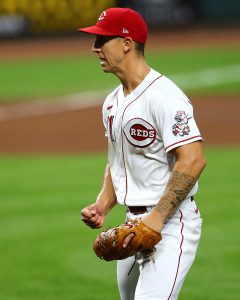
After already signing Noah Syndergaard, the Angels will add another notable pitcher to their rotation on a one-year contract, as Lorenzen will reportedly function as a starting pitcher. Lorenzen went into free agency hoping to get an opportunity to again work as a starter, following six years of almost exclusively being used as a reliever out of the Reds bullpen. Cincinnati was open to stretching Lorenzen out last spring, before Lorenzen was sidelined with a shoulder strain that put him on the injured list for the entire first half of the season.
Lorenzen (who turns 30 in January) indicated that he was open to signing a shorter-term contract in order to prove himself in a rotation, and thus set himself up for a more lucrative free agent deal next winter when he can market himself as a full-fledged starting pitcher. For an Angels team that needs starting pitching and is generally wary of long-term commitments to starters, Lorenzen represented a solid fit, and since Lorenzen is also an Anaheim native, he’ll now get to start this new chapter of his career in his hometown.
Anaheim is also a particularly interesting landing spot for considering the presence of Shohei Ohtani, and Lorenzen’s own status as a two-way player. In addition to working out of the Reds’ bullpen, Lorenzen also appeared in 34 games as an outfielder, with most (29) of those appearances coming during the 2019 season. Lorezen has hit .233/.282/.429 over his 147 career plate appearances, which is well above average for a pitcher, if unspectacular for a position player.
It is easy to imagine a scenario where Lorenzen continues to get regular work in the rotation and in the outfield, since the Angels know better than any team now to manage a two-way player. The Halos have already adjusted their rotation to a six-man unit to accommodate Ohtani, and that rotation now consists of Ohtani, Lorenzen, Syndergaard, Jose Suarez, Patrick Sandoval, and one of Reid Detmers or Jaime Barria.
Considering how the Angels have been linked to so many notables on the free agent and trade markets, it wouldn’t be a surprise to see another pitcher acquired, in order to add even more depth to this group. It remains to be seen, of course, whether Lorenzen can actually thrive as a starter, and Syndergaard is only returning to regular action after Tommy John surgery caused him to miss miss virtually all of the 2020-21 seasons.
If Lorenzen doesn’t work out as a starting pitcher, he can always fall back on relief pitching, which would also provide a boost for the Angels. There is a big hole at the back of the bullpen since closer Raisel Iglesias may depart in free agency, which is a little ironic considering how Lorenzen spent much of his time in Cincinnati working as Iglesias’ setup man. Lorenzen posted a 3.48 ERA over 331 innings from 2016-2020, also delivering a 5.59 ERA over 29 frames in 2021, though that performance is hard to gauge given all of Lorenzen’s injury problems.
Lorenzen didn’t fit the usual profile for a reliever, as he delivered below-average strikeout rates and middling walk rates but relied on a lot of soft contact and strong grounder rates to get outs. Between this skillset and a very good spin rate on his fastball, there is some sense that Lorenzen can translate well to rotation work. If the experiment doesn’t pan out, Lorenzen can pick up where he left off in the pen, and might well still score a solid multi-year contract next winter if he pitches to his usual standard as a reliever.
Robert Murray of FanSided first reported the Angels were in agreement with Lorenzen on a one-year deal worth around $7MM, and reported Lorenz’s role as a starter. Rhett Bollinger of MLB.com reported the guarantee was $6.75MM.
Rays Trade Joey Wendle To Marlins
A busy offseason for the Marlins continued Tuesday, as Miami has announced the acquisition of infielder Joey Wendle from the Rays in exchange for outfield prospect Kameron Misner.
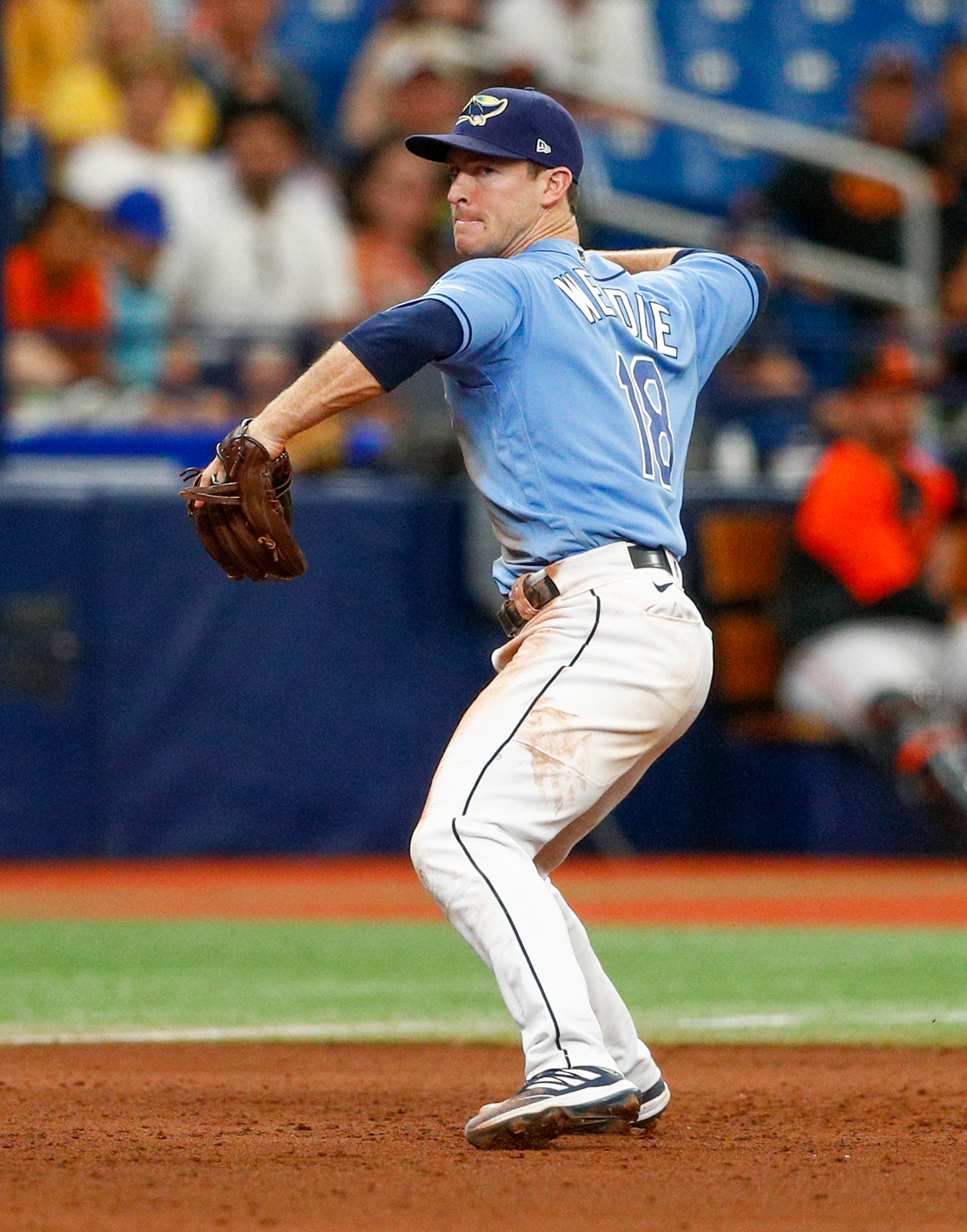
Wendle, 31, gives the Marlins an option at any of second base, shortstop or third base both in 2022 and in 2023, as he’s controlled another two seasons via arbitration. The lefty-swinging Wendle provides quality defense at all three of those positions and will bring a largely contact-driven offensive approach to the plate for Miami. He’s spent the past four seasons with the Rays, hitting at a combined .274/.330/.414 clip — six percent better than the league average, by measure of wRC+ — with 25 home runs, 86 doubles, 14 triples and 40 stolen bases (in 55 tries) through just shy of 1500 plate appearances.
The Marlins, according to SportsGrid’s Craig Mish (Twitter link), plan to utilize Wendle as a super-utility player who’ll bounce between second, short, third and perhaps the outfield or first base. Jazz Chisholm and Miguel Rojas have second base and shortstop largely locked down (respectively), while Brian Anderson has been the team’s primary third baseman in recent years. Anderson, however, has been beset by shoulder troubles and spent considerable time on the injured list. He’s also capable of playing in the outfield corners, so it’s at least feasible he could move to the grass in order to accommodate Wendle at the hot corner at times. The advent of a designated hitter in the National League could also lead to some reps for Anderson (or Wendle) there.
The good news for Miami is that they don’t have to set anything in stone just yet. Adding Wendle unquestionably improves the roster but does so while creating enough agility for general manager Kim Ng and her staff to cast a wide net in their further offseason pursuits. The Marlins are still seeking a center field option but could also pivot to add a corner bat if there’s a chance for an opportunistic strike in left field or at third base.
Wendle’s addition is the latest in an increasingly active offseason for the Marlins, who in the past week have signed Avisail Garcia to a four-year contract, acquired catcher Jacob Stallings from the Pirates, and signed rotation leader Sandy Alcantara to a five-year contract extension with a team option for a sixth season.
On the other side of the deal, Tampa Bay has reportedly been exploring the trade market for Wendle in advance of tonight’s deadline to tender contracts to arbitration-eligible players. Wendle is projected by MLBTR contributor Matt Swartz to earn $4MM in 2022, and the Rays needed to open a spot on the roster to accommodate their recent one-year, $8MM agreement with veteran right-hander Corey Kluber. The Rays are also deep in terms of infield options; Brandon Lowe, Wander Franco, Yandy Diaz and prospects Taylor Walls and Vidal Brujan give them ample cover at second, third and short.
The addition of Misner, who’ll turn 24 in January, is nothing to scoff at from the Rays’ vantage point, either. The No. 35 overall draft pick back in 2019, Misner split the 2021 campaign betweenthe Class-A Advanced and Double-A levels, hitting a combined .253/.355/.433 with a dozen homers, 29 doubles, three triples and 26 steals (in 30 tries).
Scouting reports on Misner tout the lefty hitter’s plus raw power, plus speed and solid defensive tools — which make for a tantalizing package were it not for a substandard hit tool. Misner fanned at a 29.4% clip in 462 of his minor league plate appearances this season, and while he offsets those punchouts (to an extent) with a stout 12.3% walk rate, more advanced pitchers will carry greater potential to expose holes in his swing.
The blend of power, speed and defense makes Misner a relatively high-upside name to add to an already deep stockpile of prospects. Misner ranked 10th among Marlins farmhands at FanGraphs, 15th on Baseball America’s midseason list and 21st on MLB.com’s midseason rankings. The fact that Misner briefly reached Double-A this past season at least opens the door for a potential MLB debut at some point in 2022, though it seems likelier that he’d make an impact in 2023 — assuming he continues to produce in the upper minors.
Craig Mish of SportsGrid and the Miami Herald first reported (via Twitter) that Wendle was headed to Miami. Marc Topkin of the Tampa Bay Times reported that Misner was going back to Tampa Bay in return.
Photo courtesy of Imagn/USA Today Sports.
Marlins Sign Sandy Alcantara To Contract Extension
After months of back-and-forth, the Marlins and right-hander Sandy Alcantara have agreed upon a long-term deal. The team announced Tuesday they’ve signed the CAA Sports client to a five-year contract extension that also contains a club option covering the 2027 season. Alcantara will reportedly be guaranteed $56MM, including a $2MM buyout on the 2027 option valued at $21MM. He receives a $1.5MM signing bonus as part of the deal.
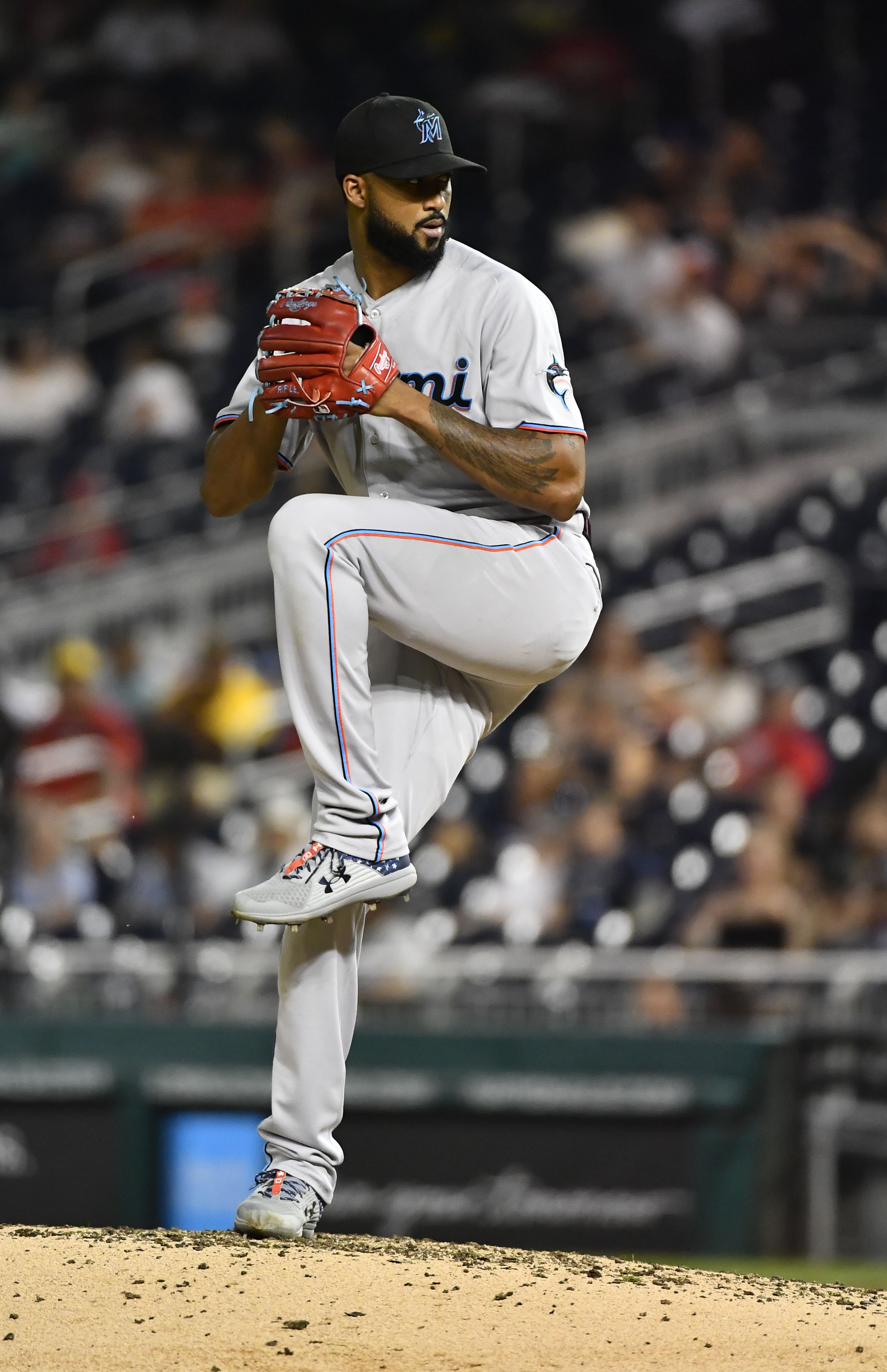
Alcantara, 26, has been in extension talks at least dating back to July, when reports of negotiations first surfaced. While the Marlins’ first overtures were said to be low enough that Alcantara’s camp considered them a nonstarter, a $55MM+ guarantee would be a record extension for a pitcher with between three and four years of Major League service time, topping the previous highwater mark set by Carlos Martinez in Feb. 2017 (five years, $51MM).
Acquired from the Cardinals alongside Zac Gallen in the 2017 trade that sent Marcell Ozuna to St. Louis, Alcantara has steadily improved over the course of his four seasons in Miami. He’s always been a hard-throwing sinker specialist, but his strikeout and walk rates early in his career were pedestrian, to say the least. Alcantara racked up 197 innings with the Fish in 2019, but he looked more like a potential innings-eater than a star at that point. Fast forward to 2021, however, and Alcantara looks more like a building block than that stable No. 4 starter he was in ’19.
This past season, Alcantara finished fourth in MLB with 205 2/3 innings thrown, averaged 98.1 mph on his heater and posted career-best marks in strikeout rate (24.0%), walk rate (6.0%) and ground-ball rate (55.3%). All three are vastly better than the league average, so it’s little surprise that Alcantara’s 3.19 ERA was largely supported by fielding-independent marks. This year’s 13.3% swinging-strike rate was easily a career-high, and Alcantara’s gaudy 36.7% opponents’ chase rate on pitches outside the strike zone ranked third among qualified starters. Alcantara also thrives when it comes to inducing weak contact and ranks above the league average in Statcast’s “expected” ERA, batting average, slugging percentage and wOBA.
Alcantara had been set for his first trip through the arbitration process this winter and was projected by MLBTR contributor Matt Swartz to earn $4.5MM. He’d have been arb-eligible twice more, securing a pair of additional raises in the process. The proposed deal would buy out two arbitration seasons and, depending on how bullishly one cares to project Alcantara’s would-be raises in years two and three of arbitration, places a value of around $14-15MM per season on those two free-agent campaigns. That, of course, still represents a bargain for Alcantara if he can replicate his 2021 breakout, but that type of tradeoff is commonplace for players signing extensions well before they’d otherwise reach the open market.
The $11MM annual value — a figure which, as with many extensions, is skewed by the arbitration seasons included in the deal — is significant for a typically low-payroll Marlins club. However, Miami doesn’t have a single guaranteed contract on the books after the 2023 season, and second-year GM Kim Ng has been vocal in her desire to spend more money this offseason. Much of that is expected to come via free agency, but locking up one of their current stars to keep him in the fold beyond his previously allotted team control certainly speaks to that increased financial wherewithal as well.
Miami has reportedly considered trading from its impressive collection of young starting pitchers as the organization eyes long-term options both in the outfield and behind the plate. That said, Alcantara would always have been one of the toughest Marlins starters to obtain — if not the toughest — and a five-year extension would further diminish the already slim chances of him being dealt. The Fish could still dangle any combination of Pablo Lopez, Elieser Hernandez and Jesus Luzardo, while near-MLB prospects like Max Meyer and Edward Cabrera (among many others) would surely carry very strong trade value. Injured youngsters like Sixto Sanchez (shoulder capsule surgery) and Jake Eder (Tommy John surgery) are appealing in their own right — health concerns notwithstanding.
With such a bounty of young arms, the Marlins obviously could have weathered the hit of trading Alcantara, but today’s extension instead likely portends a long-term rotation headed by Alcantara and 2021 NL Rookie of the Year runner-up Trevor Rogers. Who’ll fill the spots behind that dynamic pairing is dependent on how the offseason trade market unfolds, but the Fish are well-positioned to continue making strides thanks largely to that near-unparalleled collection of pitching talent.
Craig Mish of SportsGrid first reported the Marlins and Alcantara were both nearing agreement and had agreed upon on a five-year extension worth more than $56MM. Mish and Jordan McPherson of the Miami Herald reported the presence of a sixth-year club option valued at $21MM, as well as the $1.5MM signing bonus.
Photo courtesy of Imagn/USA Today Sports.
Rays Discussing Joey Wendle, Kevin Kiermaier In Trade Talks
The Rays are exploring the trade markets for both infielder Joey Wendle and center fielder Kevin Kiermaier, tweets Ken Rosenthal of The Athletic. Earlier today, Matt Gelb of The Athletic reported that the Phillies have had trade talks surrounding Kiermaier as they continue to search for an option in center field.
Wendle, 31, was one of the Rays’ whopping 19 arbitration-eligible players entering the offseason, and teams have until 8pm ET tonight to determine whether to tender contracts to those players. MLBTR contributor Matt Swartz projects a $4MM salary for Wendle next season, but the Rays are deep in infield talent with the likes of Wander Franco, Brandon Lowe, Yandy Diaz and prospects Vidal Brujan and Taylor Walls.
There’s little chance the Rays would simply non-tender Wendle. He’s coming off a solid .265/.319/.422 batting line (106 wRC+) through 501 plate appearances in 2021, and beyond his contribution with the bat, he played above-average defense at each of second base, third base and shortstop. He’s also controlled another two seasons via arbitration, so a team in need of help at second and/or third base would surely be intrigued by the possibility of swinging a deal with the Rays.
Kiermaier is in an entirely different situation. The 31-year-old is entering the final guaranteed season of a six-year, $53.5MM contract extension and is due to earn $12MM next season (plus at least a $2.5MM buyout on a $13MM option for the 2023 campaign). His name has been kicked about the rumor mill for years now, largely on account of his salary naturally increasing in the latter stages of that extension.
Though Kiermaier has struggled to remain healthy throughout his MLB career, it’s obvious why a Phillies club that has been defensively inept for several years would have interest in adding him to the mix. When healthy, Kiermaier is among the best defensive players on the planet, regardless of position. And while he’s been inconsistent with the bat, his composite .243/.321/.401 batting line dating back to 2016 is only about five percent below average, by measure of wRC+. Kiermaier also provides ample value on the basepaths, evidenced in part by a 77% success rate in stolen-base attempts during that time.
The Phillies have about $171MM in payroll commitments for the 2022 season and a near identical mark in luxury-tax obligations, per Roster Resource’s Jason Martinez. Kiermaier would add $12MM to their bottom-line payroll but only about $8.91MM to their luxury ledger, thanks to the backloaded nature of his contract extension.
Philadelphia has been seeking an upgrade in center field for several years now and has already missed out on top free agent Starling Marte this winter. The Phils also held interest in Minnesota’s Byron Buxton, but the Twins signed him to a seven-year extension with a full no-trade clause, firmly closing the book on any such possibility.
It’s at least plausible that the Phils could have interest in a combo deal with the Rays that would send both Kiermaier and Wendle to the City of Brotherly Love. The Phillies have been loosely tied to infield upgrades, and while it’s not reported to be a top priority for them, Wendle would give them some cover on the left side of the infield where both Didi Gregorius and Alec Bohm are coming off lackluster seasons.
The Rays have a full 40-man roster and still need to make room for the formal addition of right-hander Corey Kluber, who agreed to a one-year, $8MM deal with Tampa Bay on Sunday.
Cubs To Sign Yan Gomes
Catcher Yan Gomes has agreed to a two-year, $13MM deal to join the Chicago Cubs, pending a physical. The contract contains a $6MM option for a third year, as well as $1MM in performance bonuses available each year based on games started. Gomes is a client of Jet Sports Management.
Gomes was on the free agent market two years ago and signed a two-year deal with the Nationals that came with a $10MM guarantee. After a decent showing over those two seasons, including a trade to Oakland at this year’s trade deadline, Gomes entered this year’s market as arguably the best backstop available. Over the past two campaigns, Gomes played 133 games, hitting 18 home runs and slashing .260/.306/.432. When combined with solid defensive numbers, he produced 1.8 fWAR in that time. Now the 34-year-old has beaten his previous contract by $3MM. He also beats MLBTR’s prediction that he would get the same $10MM guarantee as his last trip to free agency.
Gomes is a veteran of ten seasons between the Blue Jays, Guardians, Nationals and Athletics. His best showing came in 2013-2014 with Cleveland, where his combination of potent offence and excellent defence led to him producing 9.4 fWAR over those two seasons. He hit 32 home runs and slashed .284/.325/.476, adding up to a wRC+ of 121. He followed that up with a couple of rough seasons in 2015 and 2016, partially because of a serious shoulder injury, but has since bounced back to be a solid regular over the past five seasons.
Gomes joins a Cubs team that already has a starting catcher in the form of Willson Contreras, who was one of the few long-standing Cubs to survive the team’s recent fire sale. They sent most of the remaining household names from their 2016 World Series championship club out the door at the trade deadline this year, including Kris Bryant, Javier Baez and Anthony Rizzo, along with more recent additions to the club such as Craig Kimbrel and Ryan Tepera. Contreras, however, remains with the team, despite being just one season away from free agency.
The addition of Gomes seems to raise the specter of Contreras being the next guy out the door, and Contreras himself might even agree, as he tweeted a series of emojis showing a plane taking off and landing, perhaps implying that he is about to embark on a journey. Given the thin catching market, Contreras should be a hot commodity if he is indeed shopped around on the trade market. The 29-year-old, 30 in May, has been an above-average hitter in each of his six seasons so far, along with contributing on the defensive side of his game. In 621 career games, he has 95 home runs and has hit .259/.349/.458, for a wRC+ of 114 and 12.0 fWAR.
Craig Mish of SportsGrid first reported the two-year deal with a $13MM guarantee. Ken Rosenthal of The Athletic first relayed the $6MM option for a third year and the $1MM annual performance bonuses.
Image courtesy of USA Today Sports.
White Sox Sign Kendall Graveman
The White Sox continued their aggressive approach to building a late-game relief corps, formally announcing on Tuesday the signing of righty Kendall Graveman to a three-year contract. The Sports One client will be guaranteed $24MM, the team announced.
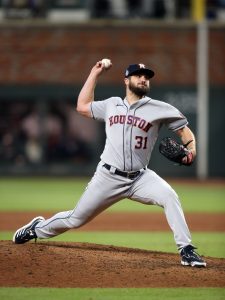
Graveman spent the first few seasons of his career as a competent but unexciting back-of-the-rotation starter. A quality strike-thrower who induced plenty of ground-balls, Graveman ate a fair amount of innings during his 2015-18 run with the A’s. But he consistently ran one of the game’s lower strikeout rates, capping his overall upside.
That began to change in September 2020, when the Mariners bumped Graveman into short relief stints. The Alabama native took to his new role with aplomb, adding almost three miles per hour to his average fastball and performing quite well down the stretch. That was only a month’s worth of action, but it was enough to convince the M’s to bring Graveman back and install him in a full-time relief role in 2021.
Graveman was excellent this past season, kicking off the year with fourteen consecutive scoreless outings. He sustained his uptick in fastball velocity, averaging a career-best 96.2 MPH on the pitch. With that improved raw stuff came better results, as Graveman generated swinging strikes on a decent 10.7% of his offerings — his first season north of 8% in that regard. He struck out an above-average 27.5% of batters faced, all while maintaining his standout ability to keep the ball on the ground.
Dating back to his bullpen conversion, Graveman has tossed 66 innings of 2.05 ERA/3.17 FIP ball between Seattle and the Astros. He owns solid strikeout and walk rates (25.5% and 8.9%, respectively) in addition to a huge 54.9% grounder percentage. Opposing hitters have managed just a .181/.278/.256 line against him in that time, and Graveman has shown himself capable of thriving in both a traditional closer’s role and as a high-leverage middle innings type.
That level of dominance led MLBTR to project a three-year deal for Graveman entering the winter. The 30-year-old (31 next month) looks as if he’ll come in just a touch shy of MLBTR’s three-year, $27MM projection, but his deal falls right in line with the general area for high-quality setup types of recent offseasons. Will Harris ($24MM in 2019-20), Adam Ottavino ($27MM in 2018-19) and Joe Kelly ($25MM in 2018-19) have all landed three-year free agent deals right around this territory in recent offseasons.
The White Sox have invested heavily in their bullpen over the past twelve months, and today’s strike to land one of this winter’s top free agent relievers is the latest example in that trend. Chicago signed star closer Liam Hendriks to a four-year, $54MM deal last offseason, then traded for eight-time All-Star Craig Kimbrel at this summer’s deadline. Kimbrel struggled down the stretch after an otherworldly showing with the Cubs during the first half of the season. He remains with the White Sox after the club exercised a $16MM option on his services, but GM Rick Hahn has already acknowledged the possibility the Sox try to move Kimbrel this offseason.
Signing Graveman doesn’t necessitate a Kimbrel trade. There are plenty of high-leverage innings to go around, and one of Chicago’s best 2021 late-game options — Michael Kopech — is expected to compete for a rotation role in 2022. The Sox could still elect to roll into 2022 with a three-headed monster for manager Tony La Russa to deploy at the end of games. That said, the Graveman pick-up could give the front office enough confidence in the relief corps that they’re comfortable moving Kimbrel to address other areas of the roster, with second base and a corner outfield spot standing out as potential areas of need.
It’s also worth noting that Graveman’s deal could push the franchise into a level of spending with which they may not be comfortable. Chicago has never had a season-opening player payroll north of $130MM in franchise history, according to Cot’s Baseball Contracts. Jason Martinez of Roster Resource estimates they’ve already got around $168MM in 2022 commitments, though, even before accounting for Graveman’s forthcoming deal.
So while the Graveman addition need not force a Kimbrel trade from a roster perspective, adding that money to the White Sox’s already atypically packed ledger might foretell a money-saving deal of some kind. Moving Kimbrel’s $16MM salary elsewhere would seemingly be the most straightforward way to bring spending closer to the franchise’s previous levels, if owner Jerry Reinsdorf is intent on doing so.
MLB Network’s Jon Heyman first reported the agreement and the terms (Twitter links).
Image courtesy of USA TODAY Sports.
MLB Reportedly Proposes 14-Team Playoff Field In Collective Bargaining Negotiations
Major League Baseball has proposed expanding the postseason field to fourteen teams in collective bargaining discussions with the Players Association, reports Jesse Rogers of ESPN. That’s hardly a surprise, as Commissioner Rob Manfred has publicly advocated for expanding the playoffs (reportedly preferring a 14-team setup) going back to last year, when the league and MLBPA agreed to a 16-team playoff during the shortened 2020 season.
Under the proposed format, the top seed in each league would receive a bye — as is the case with the NFL’s current structure. However, Rogers adds that MLB’s proposal would allow the other two division winners in each league to choose which Wild Card team they’d prefer to face in the first round, which would take the form of a three-game series. The division winner with the second-best record in each league would have its pick of any of the four Wild Card clubs in its league; the final division winner would pick to face one of the other three Wild Card teams; the two Wild Card teams remaining would face one another.
The league has long been expected to prioritize an expanded playoff field in collective bargaining talks. An increased number of postseason games comes with an associated uptick in gate and television revenue, an obvious appeal for ownership groups. The effects for players could be more mixed. While some players could stand to benefit from increased playoff shares, Rogers notes that the MLBPA is concerned that an expanded playoff field could reduce the incentive for teams to aggressively try to bolster their roster.
A broader playoff field increases every team’s odds of getting into the postseason, and front offices may find the greater odds a disincentive to upgrading their roster via free agency or trade. Small-sample postseason series have an inherent high level of randomness. It seems the fear among some on the players’ side is that teams could be satisfied to build a slightly above-average roster (which would stand a much greater chance of making the postseason in a 14-team field than under the current 10-team system) and hope that a hot streak can carry them deep into the playoffs.
MLB, on the other hand, contends that the first-round bye would offer such a significant advantage to the teams with the best record in each league that very good clubs would remain motivated to improve. Meanwhile, the expanded field could offer a greater incentive for teams with mediocre rosters to add short-term impact, since the proposal would significantly increase those teams’ chances of getting to the postseason at all.
Rogers notes that the expanded playoff proposal has been on the table for months, but he reports that MLB recently put forward a new suggestion: a lottery for the top three amateur draft choices. Rather than setting the draft order as the inverse of the league standings — as is the current setup — this proposal would introduce a weighted system that injects more randomness into the process. Teams with the worst records would still have a greater chance of securing higher picks, but any non-playoff team would have a chance at a top three selection.
That offer is in response to players’ concerns that the current system rewards teams that orchestrate long-term rebuilds with perennially high draft choices. Of course, it’s not entirely clear that a weighted lottery would serve as much of a disincentive for tanking, since teams would still have higher probabilities of top picks with worse records.
Rogers’ colleague at ESPN, Jeff Passan, shed some further light on CBA talks this afternoon. Passan reports that the league recently offered a slight raise over the luxury tax thresholds set in the 2016-21 CBA. That’s a turnaround from the league’s earlier efforts to tie a lowered tax threshold to a soft salary floor, an offer the MLBPA rejected. It’s not clear how high the league is willing to set the thresholds, though, and Passan adds that the league’s willingness to raise them might come with associated stiffer penalties for exceeding them. Unsurprisingly, the MLBPA expressed concern that’d counterbalance high-spending teams’ willingness to surpass those thresholds.
Passan further reports that MLB has expressed openness to a “minimal” bump on the league minimum salary, which sat at $570.5K in 2021. MLB’s offer also included the introduction of the designated hitter to the National League, an on-field alteration widely expected to ultimately be put into place. Passan offers an in-depth breakdown of the labor dynamics that is well worth a full read for those interested in the topic.
The current CBA expires on Wednesday at 11:59 pm EST. It’s widely expected that the league will lock out the players if no deal is agreed upon at that point, a move that would come with an accompanying freeze on major league transactions. (Players who were not on a major league roster last season could still sign minor league contracts with clubs, Passan notes). Jon Heyman of the MLB Network tweeted this afternoon that while there’s been “incremental” progress between the two sides of late, there’s “basically no hope” of a deal getting done within the next 48 hours. That reality has been reflected in the flurry of free agent activity we’ve seen in recent days, as many players and teams have been highly motivated to lock in deals before the expected MLB transaction prohibition.
Braves Sign Kirby Yates
The defending champion Braves have made an addition in the bullpen, announcing a two-year, $8.25MM guarantee for free agent reliever Kirby Yates. The team announced that’ll take the form of a $1MM salary in 2022, a $6MM salary in 2023 and at least a $1.25MM buyout on a 2024 club option valued at $5.75MM. (The Braves are among the teams that publicly disclose contract terms). Yates is a client of Beverly Hills Sports Council.
Yates is coming off a lost season. After signing with the Blue Jays last offseason, he suffered a flexor strain in Spring Training that required Tommy John surgery. That procedure is expected to keep him out until midseason 2022, which explains the contract’s backloaded structure. That came on the heels of a 2020 campaign also wrecked by injury, as he was limited to just 4 1/3 frames with the Padres that season.
Because it’s been a few years since we’ve seen Yates over an extended period, it might be easy to forget how great he was at his best. A late bloomer who bounced around the league on waivers through the first few years of his MLB career, he took his game to a new level upon landing with the Padres in 2017. Over the next three seasons, the right-hander pitched to a combined 2.31 ERA across 179 1/3 innings of relief, striking out a brilliant 38.7% of batters faced while walking just 6.8%. Yates led all of baseball with 41 saves in 2019, a season that also saw him earn an All-Star nod and finish seventh in National League Cy Young award voting.
Yates turns 35 years old next March, so there’d be some risk for Atlanta even independent of his spotty recent health history. But he was utterly dominant the last time he was at full strength, and that ceiling prompted the front office to take a shot on a rebound.
We’ve seen similar deals of this ilk in the past. Tommy Kahnle and Ken Giles signed two-year contracts with the Dodgers and Mariners, respectively, last winter despite both being expected to miss the entirety of the 2021 campaign recovering from TJS. Yates offers the potential to contribute to a playoff push down the stretch next year before logging a hopefully healthy 2023 campaign. The Braves also pick up some additional upside in the form of the 2024 club option, which would look like an abolsute bargain if Yates does manage to return to anything resembling his 2017-19 form.
Jeff Passan of ESPN first reported the Braves and Yates were in agreement on a two-year, $8.25MM guarantee with a $5.75MM club option for 2024.
Marlins Acquire Jacob Stallings From Pirates
The Marlins have announced the acquisition of Gold Glove catcher Jacob Stallings from the Pirates. In exchange, Pittsburgh acquires righty Zach Thompson in addition to right-handed pitching prospect Kyle Nicolas and outfield prospect Connor Scott. Miami was connected to Stallings earlier this morning.
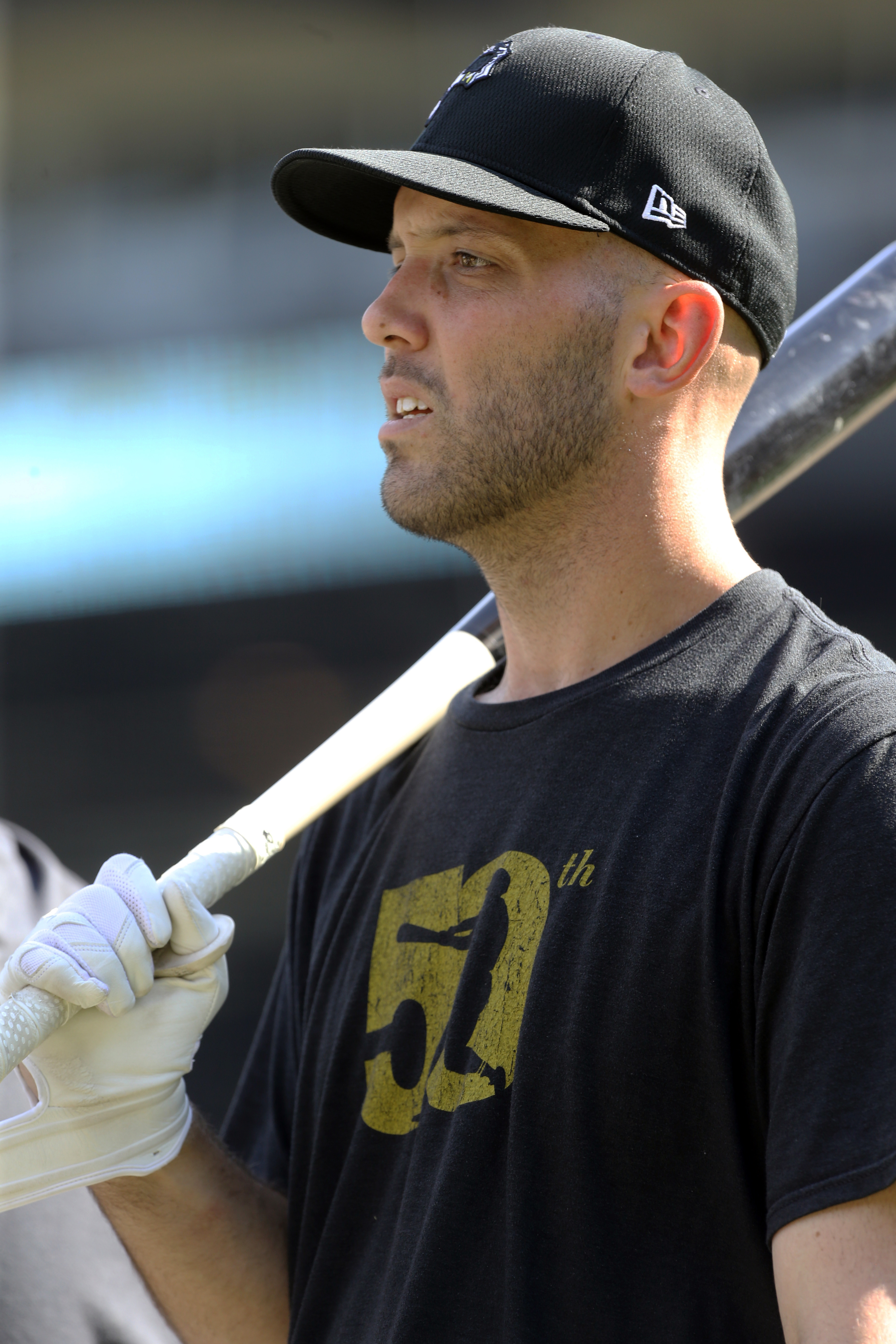
The 31-year-old Stallings (32 next month) will come to the Marlins with three years of club control remaining and give the Fish a standout defensive catcher to pair with their burgeoning young pitching staff. While his offensive numbers don’t stand out — Stallings has batted .251/.331/.374 with 17 homers, 32 doubles and a triple in 780 plate appearances dating back to 2019 — the 2021 Gold Glover is one of the best defensive players in the sport, regardless of position.
Over the past three seasons, Stallings has racked up 42 Defensive Runs Saved, including 21 DRS this past season. He notched an imposing 36.2% caught-stealing rate from 2019-20 and has a career 27% mark, though it’s worth noting that he slipped to 21% in that department this past season. Each of Baseball Prospectus, FanGraphs and Statcast peg Stallings as an above-average pitch framer, and Prospectus credits his ability to block pitches in the dirt as plus as well.
Projected by MLBTR contributor Matt Swartz to earn a $2.6MM salary in 2022, Stallings is highly affordable in terms of salary — and he can be controlled via arbitration through the 2024 season. For a low-payroll club that is building around what it hopes will emerge as a dominant young pitching staff, Stallings is a highly sensible addition. Sandy Alcantara, Trevor Rogers, Sixto Sanchez, Edward Cabrera, Elieser Hernandez, Max Meyer and others will all likely benefit from his framing and game-calling prowess.
Looking to the Pittsburgh’s return, they’ll add an immediate rotation piece (Thompson) in addition to a pair of promising young arms. The 28-year-old Thompson proved to be an outstanding pickup on a minor league deal last winter after the White Sox allowed him to become a free agent.
Thompson, a former fifth-rounder, gave the Marlins 75 innings of 3.24 ERA/3.69 FIP ball over the life of 26 appearances, including 14 starts. His 21% strikeout rate and 8.9% walk rate aren’t exactly dominant numbers, but Thompson thrived in terms of generating weak contact; his 87.6 mph average exit velocity ranked in the 76th percentile of MLB hurlers, while his 33.9% hard-hit rate checked into the 82nd percentile. The spin rate on his four-seamer is also in the 92nd percentile.
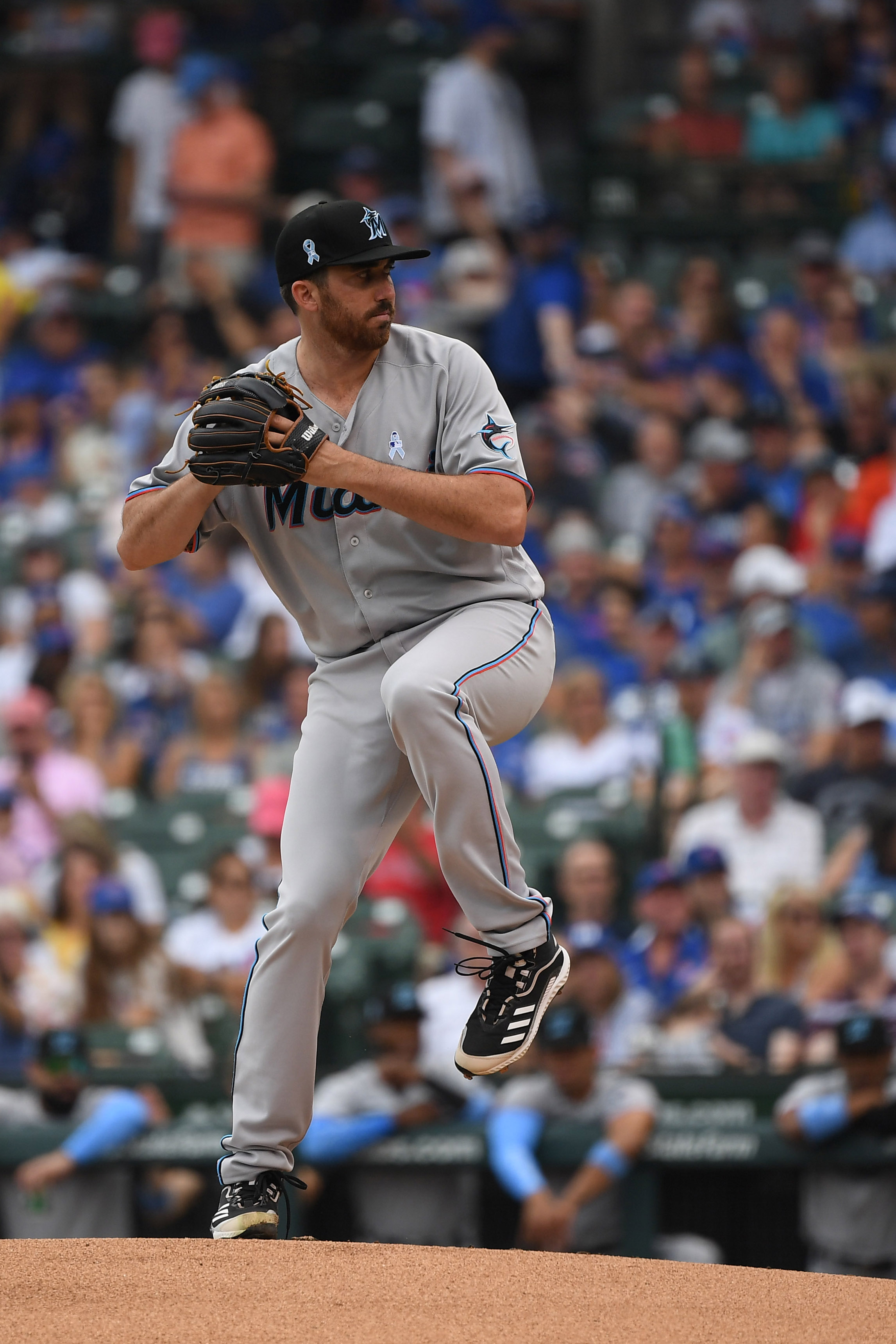
While Thompson won’t be mistaken for a top-of-the-rotation arm, he’ll give the Bucs six years of club control and won’t be eligible for arbitration until at least the 2023-24 offseason. (At 121 days of service in his debut season, he’ll be on the bubble of Super Two status, barring fundamental changes to the arbitration system in collective bargaining negotiations.) As it stands right now, Pittsburgh controls Thompson all the way through the 2027 season.
Nicolas, 22, was Miami’s second-round pick in the 2020 draft and ranked 23rd among their prospects on Baseball America’s midseason Top 30 list. He landed 16th at MLB.com and 18th among Miami farmhands on Eric Longenhagen’s rankings at FanGraphs. The Ball State product pitched to a combined 4.18 ERA through 99 innings of Class-A Advanced and Double-A ball this season, pitching more effectively at the more advanced of those two levels. Nicolas punched out 32% off his opponents this year, albeit with a somewhat bloated 11.5% walk rate. Miami has developed him as a starter to this point, but with a heater that reaches the upper 90s and a plus slider, it’s possible he’ll ultimately move to the bullpen.
Scott, meanwhile, was Miami’s first-round pick back in 2018. While he still landed in the middle tiers of the Miami system at both FanGraphs and MLB.com, Scott’s stock has dipped a bit since that lofty selection. (The lack of a minor league season in 2020 surely didn’t help his development.) Scott spent the 2021 season in Class-A Advanced, where he posted a solid .276/.333/.446 batting line with 10 homers and 14 steals, and reports on him suggest that he’s capable of playing a quality center field and hitting near the top of the lineup if things pan out. Scott only recently turned 22, and with a pretty good showing at Class-A Advanced under his belt, he could be ticketed for Double-A Altoona in 2022.
Pittsburgh doesn’t have an immediate heir-apparent to take the reins if Stallings, but the lack of an immediate successor in Pittsburgh served as little deterrent from jumping at what they surely view as a strong offer. The Pirates aren’t contending in 2022 anyhow, and the free-agent market has a number of veteran options who could be plugged in as a stopgap while the team waits on 2021 No. 1 overall pick Henry Davis to develop in the minors.
It’s a different story in Miami, where they’ve been on the hunt for a catcher for the better part of the past year. Miami has designs on stepping out of the NL East cellar and into playoff contention, and a move to both sharpen the team’s overall defense and help maximize the pitching staff is a strong step in that regard. Stallings won’t do much to bolster a lineup that was already lacking in power, but he’ll draw plenty of walks and provide the type of sage catcher that clubs often seek when building around young rotations.
Ken Rosenthal of the Athletic first reported the Marlins were nearing agreement on a deal to acquire Stallings. Jon Heyman of the MLB Network reported the Pirates were acquiring Thompson, Nicolas and Scott in return.
Photos courtesy of Imagn/USA Today Sports.