
2020 Minor League Season Canceled
4:00pm: Minor League Baseball has formally announced the cancellation of its 2020 season.
12:15pm: The 2020 minor-league season will be canceled, according to a report from Baseball America’s J.J. Cooper and Josh Norris. While widely expected, the news comes as a major blow to the minor-league teams and many young players who were hopeful of continuing to chase after a coveted MLB roster spot.
This was already shaping up to be a rough campaign for the minors long before the coronavirus was on anyone’s radar. As 2019 came to a close, a tense and rather high-profile battle was already underway regarding MLB’s plans for cutting down on the number of minor-league affiliates.
Minor League Baseball’s effort to defend its member teams was greatly imperiled by the global pandemic. Public attention, for good reason, has been elsewhere. And minor-league teams have experienced a more-or-less complete halt to revenue.
A resumption of play might have helped. There were times when it seemed plausible, but any hope dissipated over recent weeks. Even as MLB and its players haggled over the terms for a big league resumption, a ramp-up of virus transmission in many parts of the United States served to increase the already great logistical challenges to a MiLB season.
We’ll see how the broader picture turns out. For now, it’s a rough situation for minors clubs that rely entirely upon in-person gameday revenue (and advertising associated with anticipated spectatorship).
The situation is obviously also detrimental to the players that are now sitting at home without a clear path to playing baseball in 2020. Some limited number of prospects — generally, those with clear paths to the majors — have been invited to participate in MLB summer camps and ongoing training. But those that weren’t named to 60-man player pools will have to get creative.
There is a potential indie ball outlet, but that’s not likely to provide many opportunities. The Baseball America team has reported that some players are participating in local amateur leagues, though the level of competition will obviously not be up to the typical standard. Fortunately, most MLB teams are committing at least to paying $400 weekly stipends to the minor-leaguers that are left in limbo. That’s a help, but hardly a full solution for those players that were not already cut loose from their organizations.
Tigers Agree To Terms With Spencer Torkelson
The Tigers have agreed to terms with top overall draft choice Spencer Torkelson, according to Jim Callis of MLB.com (Twitter link). He’s set to receive a hefty $8,416,300 bonus.
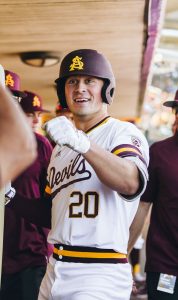
While he only topped the 1-1 draft slot allocation by a nominal amount ($1K), it’s still quite a notable number. Per Callis, this is the biggest draft bonus ever given. It’s also the first time a first overall pick has reached the full slot value since the current draft system (with prohibitive penalties for excessive spending) went into effect.
Torkelson entered the draft as the consensus top overall talent, so it came as no surprise when he went first overall. The Tigers have enjoyed quite a lot of good years from Miguel Cabrera, who may overlap in Detroit if Torkelson moves as quickly as many expect.
Over his three seasons at Arizona State, Torkelson carried a prodigious .337/.463/.729 batting line. He not only launched 54 home runs over his 628 trips to the plate, but walked more often than he struck out. As you might expect, Torkelson was more dominant than ever during the truncated 2020 season, solidifying his position as the top available player.
The greatest bit of intrigue on draft day came not with the calling of Torkelson’s name, but the Tigers’ announcement that they viewed him as a third baseman. Most anticipate the big slugger will end up at first base by the time he arrives in Motown. But the Tigers will at least give him a shot at settling in at the hot corner, where his monster bat could have even greater value.
Torkelson’s polish is all the more impressive given that he still hasn’t reached his 21st birthday. It’ll certainly be interesting to see how swiftly he forces his way up the farm system. No doubt the Tigers are hopeful that Torkelson will catch up to the many intriguing power pitchers already lining up for MLB opportunities.
Photo courtesy of Arizona State University Athletic Department.
Cashman: Yankees “Optimistic” Judge Will Be Ready For Opening Day
After months of uncertainty surrounding the status of Yankees slugger Aaron Judge, general manager Brian Cashman said on a conference call today that the team is optimistic he’ll be ready for the rescheduled Opening Day (Twitter links via The Athletic’s Lindsey Adler). The Yankees are also optimistic that Giancarlo Stanton will be ready to open the year in the DH slot. Lefty James Paxton is expected to be ready to go as well, and it’s possible that center fielder Aaron Hicks could be game-ready come Opening Day as well.
Judge’s entire injury saga has been bizarrely vague, but it seems an end is at last in sight. It took the club several weeks early in camp to diagnose a stress fracture in his rib, and only two weeks later did the team reveal that Judge was also found to have a collapsed lung. Near the end of March, Boone revealed that Judge’s injuries may have dated all the way back to last September. Even throughout the shutdown, updates on Judge lacked specific timelines and frequently pointed to additional imaging as the next step.
Stanton sustained a calf injury back in Spring Training, and Cashman indicated today that he’s quite specifically referencing a DH-only role with regard to the former NL MVP’s Opening Day readiness. The YES Network’s Jack Curry tweets that the club wants to evaluate Stanton in camp before making any declaration about his ability to play in the outfield.
Paxton is more than four months removed from back surgery and could be game-ready right now, according to Cashman. There’s a bit less certainty regarding Hicks, who is eight months out from last year’s Tommy John surgery. Hicks has already proclaimed himself ready to go for the season opener, though the organization is understandably taking a bit more reserved approach and will use “Summer Camp” (as the league has now termed it) to make its own evaluation.
Orioles Sign Heston Kjerstad
The Orioles have signed second overall draft pick Heston Kjerstad, per a team announcement. The University of Arkansas product will receive a $5.2MM bonus, per MLB.com’s Jim Callis (Twitter link).
Kjerstad was expected to go near the top of the draft, but not with the second selection. The O’s obviously liked him quite a bit, but also saw an opportunity to save some bonus pool capacity to draft and sign other talented players in later rounds. The club was able to reapply over $2.5MM of the second overall slot value.
As things stand, the Orioles are known to have deals in place with five of their six selections. Jordan Westburg (30th overall) and Hudson Haskin (39th) secured at-slot bonuses. High schoolers Coby Mayo and Carter Baumler were lured with over-slot promises, though their deals aren’t yet official. That leaves Ole Miss infielder Anthony Servideo, the team’s third-round choice, left without a pact (so far as is publicly known).
Perhaps it’s easy to get caught up in the machinations and overlook Kjerstad’s own promise. While teams obviously see the appeal in spreading draft bonus pool availability over multiple players, they also aren’t generally inclined to spend premium draft choices on sub-premium talent.
All major draft pundits graded Kjerstad as one of the dozen or so top-available talents. Eric Longenhagen of Fangraphs had the highest ranking, listing him in the seventh slot.
Most agree on the profile here. Kjerstad is seen as a solid right fielder with big potential at the plate. He was drubbing high-end college pitching (.448/.513/.791) when the 2020 season was suspended. There are some concerns over his complicated swing and proclivity to strike out, but obviously the consensus is that Kjerstad will grow into a quality offensive performer at the game’s highest level.
Ian Desmond Opts Out Of 2020 Season
Rockies outfielder Ian Desmond will opt out of playing in the 2020 MLB season. He provided a thoughtful explanation of his decisionmaking process in an announcement on Instagram.
Desmond explains that “the COVID-19 pandemic has made this baseball season one that is a risk I am not comfortable taking.” He says he’s compelled to stay home “with a pregnant wife and four young children who have lots of questions about what’s going on in the world.”
Fortunately for all of us that care about the future of the game, the widely respected Desmond says he intends to work with his local Little League (in Sarasota, Florida) while he’s not playing this year. He did not offer an indication of his future plans for returning to the diamond.
Desmond’s announcement is essential reading for all baseball fans. It’s a powerful call to action to deal with glaring inequity in the game, from its lowest to its loftiest levels.
Three other big leaguers preceded Desmond in announcing that they would not participate in the 2020 season. No doubt others will follow. It is not known whether Desmond had any personal medical issue that will allow him to opt out while still accruing salary and service time. If not, he will forego a pro-rated portion of his $15MM salary for the year. He remains under contract with the Rockies through 2021; the club also controls him in 2022 via club option.
Each MLB Team’s 60-Man Player Pool
Teams had until Sunday at 4:00 pm EST to report their initial 60-man player pools to MLB. Note that these pools can contain up to 60 players but were not required to be full upon their first submission. Teams can — and in some cases already have begun to — make additions at any time, so long as they have an open spot in the pool. If their pool is full and they wish to sign someone, claim a player off waivers or acquire a player via trade, they’ll need to either release, waive or trade a 60-man player of their own.
While a handful of teams waited until Monday to make their player pools public, all 30 have now been announced. Here are the initial lists submitted by all 30 teams…
AL East
AL Central
AL West
NL East
NL Central
NL West
Ryan Zimmerman, Joe Ross Opt Out Of 2020 Season
Neither Ryan Zimmerman nor Joe Ross will suit up to play for the Nationals in 2020, according to respective reports from Mark Zuckerman of MASNsports.com and Brittany Ghiroli of The Athletic. The D.C. pair joins Diamondbacks right-hander Mike Leake among the first of what figure to be many players choosing not to play amid the COVID-19 pandemic.
“Ryan Zimmerman and Joe Ross have decided not to participate in the 2020 season for the personal health and safety of themselves and their loved ones,” general manager Mike Rizzo confirmed in a statement. “We are one hundred percent supportive of their decision not to play this year. We will miss their presence in the clubhouse and their contributions on the field.”
Zimmerman outlined his reasoning last week in a guest piece for the Associated Press, candidly discussing his concern with having a newborn daughter and a mother who has been diagnosed with multiple sclerosis. Those understandable family concerns have prompted Zimmerman to forgo the year of service time and the prorated $2MM salary he’d have collected in 2020 had he indeed played. Zimmerman released the following statement today, via his agents at CAA Baseball:
After a great deal of thought and given my family circumstances — three young children, including a newborn, and a mother at high risk — I have decided not to participate in the 2020 season. Everyone knows how much it means to me to be a part of a team, and I will miss that camaraderie dearly this year. Of course I would love to pursue back-to-back titles. I cannot speak for anyone else, but given the unusual nature of the season, this is the best decision for me and my family, and I truly appreciate the organization’s understanding and support. To be clear, I am not retiring at this time. I have not decided on my future in baseball past 2020. But this year, I’ll be staying safe at home and pulling as hard as anyone for the guys to defend our championship.
Zimmerman likely wouldn’t have been the everyday lineup cornerstone that he’s been for much of his career in D.C., but the 35-year-old was in line to serve as a part-time first baseman and (under this year’s altered rules) designated hitter. His decision to sit out should lead to more at-bats for both Howie Kendrick and Eric Thames, among others.
As for Ross, his decision was surely difficult. Not yet established as a surefire big league starter, he was in line to serve as the Nationals’ fifth starter. Playing out the 2020 season would’ve given the 27-year-old Ross a share of a prorated $1.5MM salary and pushed him north of five years of MLB service, bringing him within a year of free agency. Now, unless Ross himself has been deemed a high-risk player by team medical personnel, he’ll waive both that salary and service time. That can’t be an easy decision to make, and it serves as a reminder of the concerns that many players harbor — particularly if they live with or are in close proximity to at-risk loved ones.
With Ross now on the sidelines for the season, it’s likely that right-handers Austin Voth (profiled here as an intriguing rotation candidate himself earlier this spring) and Erick Fedde will get a look at the back of the rotation behind Max Scherzer, Stephen Strasburg, Patrick Corbin and Anibal Sanchez.
Major League Baseball Formally Announces Rule Changes For 2020 Season
Major League Baseball has formalized a wave of rule changes and procedural protocols that have been widely reported upon and speculated upon over the past several months as the league and players union worked toward a return to play. The league also formally announced a July 3 return to training camp — now officially referred to as “Summer Camp” — and confirmed plans for July 23 or July 24 start to the regular season.
Among the changes that have now been put into place for at least the 2020 season, per the league’s press release:
On-Field Rules
- National League games will include the use of the designated hitter for the first time in history.
- An extra-innings rule will begin each extra inning with a runner on second base.
- The batter (or a substitute for the batter) who leads off an inning shall continue to be the batter who would lead off the inning in the absence of this extra-innings rule.
- The runner placed on second base at the start of each half-inning shall be the player (or a substitute for such player) in the batting order immediately preceding that half-inning’s leadoff hitter. By way of example, if the number five hitter in the batting order is due to lead off the tenth inning, the number four player in the batting order (or a pinchrunner for such player) shall begin the inning on second base. However, if the player in the batting order immediately preceding that half-inning’s leadoff hitter is the pitcher, the runner placed on second base at the start of that half-inning may be the player preceding the pitcher in the batting order. Any runner or batter removed from the game for a substitute shall be ineligible to return to the game, as is the case in all circumstances under the OBR.
- For purposes of calculating earned runs, the runner who begins an inning on second base pursuant to this rule shall be deemed to be a runner who has reached second base because of a fielding error, but no error shall be charged to the opposing team or to any player.
- As previously announced, the new three-batter minimum rule will require the starting or any relief pitcher to pitch to a minimum of three batters, including the batter then at bat (or any substitute batter), until such batters are put out or reach base, or until the offensive team is put out, unless the substitute pitcher sustains injury or illness.
- Notwithstanding anything to the contrary in OBR 4.03(c) or MLR 2(b)(2), any player may appear as a pitcher at any point during the game (i.e., no extra inning requirements or six-run rule, as were once planned for 2020). However, all players eligible to participate in the game, regardless of position, must be included on that game’s lineup card.
- Prohibitions against unsportsmanlike conduct will be strictly enforced to prevent unnecessary physical contact and support physical distancing between individuals on the playing field. In this respect, players and managers should maintain physical distancing from all umpires and opposing players on the playing field whenever possible. Players or managers who leave their positions to argue with umpires, come within six feet of an umpire or opposing player or manager for the purpose of argument, or engage in altercations on the field are subject to immediate ejection and discipline, including fines and suspensions.
Procedures for Health and Safety
- Each Club must submit a written COVID-19 Action Plan for approval by MLB.
- Spitting is prohibited (including but not limited to, saliva, sunflower seeds or peanut shells, or tobacco) at all times in Club facilities (including on the field). Chewing gum is permitted.
- Pitchers may carry a small wet rag in their back pocket to be used for moisture in lieu of licking their fingers.
- Clubs must provide expanded dugout and bullpen space at their ballparks.
- Players, umpires, and other on-field personnel should practice physical distancing to the extent possible within the limitations of competition and the fundamentals of baseball. Examples of ways in which physical distancing can be incorporated without disrupting the basics of the game include:
- When the ball is out of play, fielders are encouraged to retreat several steps away from the baserunner.
- If the batter is in the batter’s box and the catcher needs to stand to relay signs to the infielders, the catcher can step onto the grass towards the mound to give the signs before assuming his position behind home plate.
- First and Third Base Coaches should remain in or behind the Coach’s Box and shall not approach a baserunner, fielder or umpire on-field.
- Players on opposite teams should not socialize, fraternize, or come within six feet of each other before the game, during warm-ups, in between innings, or after the game.
- There will be no pre-game exchange of lineup cards. Instead, each Club will input their lineup card into a mobile application provided by MLB.
Scheduling
- Clubs may schedule up to three exhibition games before the end of Summer Camp. Clubs may consider scheduling games against their opening opponent in the days leading up to Opening Day. There is no limit on the number of intrasquad games permitted.
- A regionally-based schedule will feature each Club playing 40 divisional games and 20 Interleague games against the corresponding geographical division.
Revised Procedures for Transactions
- All player transactions that had been suspended resumed this past Friday.
- Yesterday, each Club submitted a list of up to 60 players who will be eligible to participate in Major League games during the 2020 championship season (“Club Player Pool”).
- Roster rules include:
- By 12:00 p.m. (ET) on the first date of the revised 2020 regular season, each Club must submit to MLB an Opening Day Active Roster with a maximum of 30 players, and a minimum of 25.
- The maximum Active Roster limit shall be reduced from 30 to 28 on the 15th day of the regular season.
- The maximum Active Roster limit shall be reduced from 28 to 26 on the 29th day of the championship season for the remainder of the championship season and postseason. There shall be no expanded rosters in September.
- The limitations on the number of pitchers on the Active Roster otherwise required by MLR 2(b)(2) shall not apply.
- In the event that a doubleheader takes place while the Active Roster limit is 26, both Clubs may use an additional player.
- A Club is permitted to carry up to three additional Taxi Squad players from its Club Player Pool on all road trips with the Major League team. If the Club elects to carry three additional players, at least one must be a player whose designated position prior to the season is catcher. Players on the Taxi Squad are permitted to workout with the Major League Club but are not permitted to be in uniform and in the dugout during games. Upon the conclusion of each road trip, players on the Taxi Squad will return to the Alternate Training Site.
- August 31st will be the 2020 trade deadline and September 15th will be the 2020 Postseason eligibility deadline.
- Standard Injured List placements will be for either 10 days or 45 days, with the latter replacing 60. A COVID-19 Related Injured List will allow for placements that will not require a confirmed positive test for COVID-19. A player may be placed on the COVID-19 Related IL based on a positive test for COVID-19, confirmed exposure to COVID-19, or if a player exhibits symptoms requiring self-isolation for further assessment.
Mike Leake Opts Out Of 2020 Season
Diamondbacks right-hander Mike Leake is planning to opt out of participating in the 2020 season, Steve Gilbert of MLB.com reports (via Twitter). Leake becomes the first known player to choose not to play amid public health concerns stemming from the COVID-19 pandemic, although others will surely follow suit.
D-backs general manager Mike Hazen has confirmed the decision, tweets Zach Buchanan of The Athletic. The details surrounding Leake’s decision aren’t known, nor need they be shared. As Hazen went on to tell reporters: “I think those conversations are personal in nature” (Twitter link via the Arizona Republic’s Nick Piecoro). Leake’s agent, Danny Horwits, offered the following statement (via ESPN’s Jeff Passan):
During this global pandemic, Mike and his family had many discussions about playing this season. They took countless factors into consideration, many of which are personal to him and his family. After thorough consideration, he has chosen to opt out of playing in 2020. This was not an easy decision for Mike. He wishes the best of luck and health for his Diamondback teammates this season and he’s looking forward to 2021.
Leake, 32, was in the final season of a five-year, $80MM contract originally signed with the Cardinals — although he’s since been traded to Seattle and then Arizona. He’d have earned a prorated $16MM salary this season — about $5.5MM — and had a $5MM buyout on an option for the 2021 season. MLB Network’s Jon Heyman tweets that Leake will not be paid in 2020, which suggests that his decision is not due to concerns about his own health but rather the health of close-proximity family and loved ones. Under the agreement reached between the league and union last week, only players who are deemed high-risk themselves are entitled to receive salary and service time after opting out.
Under the terms of Leake’s previous trades, the Cardinals were set to pay $4MM to the Mariners this season to cover a portion of Leake’s salary. The Mariners, meanwhile, were on the hook for as much of $9MM of Leake’s salary, which was to be paid to the D-backs in deferred installments. Those payments will now presumably be forgiven. As for the $5MM buyout on Leake’s 2021 option, that does not pertain to the 2020 season and should therefore still remain on the table. The Mariners are also responsible for that sum under the terms of last summer’s trade.
With Leake suddenly and unexpectedly out of the rotation picture in Arizona, the D-backs will likely rely on the quartet of Madison Bumgarner, Robbie Ray, Zac Gallen and Luke Weaver to lead the rotation. Merrill Kelly could be in line to retake the fifth spot, although he’ll face some competition from younger arms like Alex Young, Jon Duplantier and, if healthy, Corbin Martin. Arizona will also have a 40-man roster spot opened up with Leake no longer occupying a spot.
Mets Sign Melky Cabrera, Erasmo Ramirez, Gordon Beckham
JULY 1: Cabrera can earn at a $1.1MM annual rate if he makes the roster, Jon Heyman of MLB Network tweets.
JUNE 29: The Mets’ signing spree continued Monday with the additions of outfielder Melky Cabrera, infielder Gordon Beckham and right-hander Erasmo Ramirez. All three have been announced by the club, and all are “expected” to be added to the 60-man player pool, according to the team. They join earlier signees Hunter Strickland and Ryan Cordell in that regard.
At 35 years old, Cabrera isn’t the hitter he once was. That said, the Melk Man also hasn’t batted lower than .273 in the past decade, and his contact skills generally make him a source of a respectable OBP even though he doesn’t walk much.
The switch-hitting Cabrera’s .280/.313/.399 slash with the Pirates last year was below-average on the whole (88 OPS+, 85 wRC+), but he was an average or better hitter in the three preceding seasons. Cabrera carried an .807 OPS into the All-Star break last year, but he hit just .231/.257/.306 down the stretch as his role shrunk. To his credit, he struck out at just a 10.3 percent clip in 2019. He’s no lock to make the roster, but if he can shake off last year’s second-half slide, the Mets could conceivably work him into the DH mix and not need to worry about his glove.
Beckham, 33, inked a minor league pact with the Padres in February but had a rough showing in their initial camp that led to his release. Although he drew five walks, Beckham was hitless in 14 at-bats. He spent the 2019 campaign with the Tigers, hitting .215/.271/.372 with six homers, a dozen doubles and a pair of triples in 240 trips to the plate.
Beckham made his big league debut just one year after being selected with the No. 8 overall pick in the 2008 draft by the White Sox. He wasn’t able to replicate a strong rookie campaign, though, and eventually settled in as a journeyman utility infielder. He’s appeared in the big leagues each year since 2009, but Beckham carries a tepid .237/.300/.367 slash in 3782 plate appearances as a big leaguer.
Ramirez, 30, was a quality arm with the Mariners and Rays from 2015-17, pitching to a combined 3.97 ERA (4.22 FIP) with 7.0 K/9, 2.3 BB/9 and 1.2 HR/9 in 385 1/3 big league innings. A teres major strain wiped out most of his 2018 season, though, and Ramirez has yet to really regain his footing. He spent the 2019 season with the Red Sox’ Triple-A affiliate, for whom he posted a 4.74 ERA with 6.8 K/9 and 3.1 BB/9 in 125 1/3 innings.