
Andrew Friedman Expects To Finalize New Contract With Dodgers Soon
Dodgers president of baseball operation Andrew Friedman is unsigned for the 2020 season, but he said in today’s year-end press conference that he expects to wrap up a new contract with the team within the next few days (Twitter links via Jorge Castillo of the Los Angeles Times). Friedman also confirmed that Dave Roberts will return as the team’s manager in 2020, as Castillo originally reported late last week.
Friedman, 42, jumped from his role as the Rays’ executive vice president and general manager to the Dodgers back in 2014, agreeing to a reported five-year, $35MM contract that at the time was the largest deal ever inked by a baseball executive. He aggressively reshaped the Dodgers, trading away the likes of Matt Kemp, Dee Gordon and Dan Haren in his first offseason at the helm (netting Yasmani Grandal, Enrique Hernandez and others, including Andrew Heaney, whom he immediately traded to the Angels for Howie Kendrick).
Friedman’s front-office group has been involved in some of the most complex trades in recent history, including not only the Kemp trade but the three-team, 13-player swap with the Braves and Marlins that centered around Hector Olivera, Alex Wood, Mat Latos and the remainder of Bronson Arroyo‘s dead-money contract. Friedman even reacquired Kemp from the Braves in yet another financially motivated swap and then traded Kemp to the Reds this past offseason in a further example of juggling funds to remain south of the luxury tax line.
The Dodgers’ baseball operations group has, in some ways, become a pipeline for other organizations throughout the league. Former GM Farhan Zaidi was named Giants president of baseball operations last winter, while former vice president Alex Anthopoulos, who landed with the Dodgers after leaving the Blue Jays, became general manager of the Braves. Gabe Kapler served as the Dodgers’ director of player development before being hired as the Phillies’ manager, and one of Kapler’s top lieutenants, Jeremy Zoll, was hired away by the Twins to serve as their director of minor league operations.
On the field, Friedman’s penchant for aggressive, creative trades and his manipulation of MLB’s waiver/DFA process and shortened injured list minimum have helped the Dodgers to cultivate extraordinary levels of depth on their 40-man roster. That’s been a major advantage for the Dodgers, who have averaged 97 wins and taken home the NL West division title in all five of Friedman’s seasons atop the front office infrastructure. It has not, however, manifested in the form of an increasingly elusive World Series championship. The Dodgers appeared in the World Series in both 2017 and 2018 in addition to an NLCS berth in 2016, but they’ve yet to break through that final plane.
That said, the Dodgers are well-positioned for long-term success. Much of the team’s young talent, including Walker Buehler and Cody Bellinger, is under club control for the foreseeable future. Top prospects Will Smith, Alex Verdugo, Gavin Lux, Dustin May and Tony Gonsolin all reached the Majors in 2019, giving a glimpse at what the future may hold. The ample resources provided by ownership, paired with the apparent annual tradition of dropping some salary and luxury hits on the trade market, should give Friedman’s Dodgers room to be active in free agency. The Dodgers certainly have needs to address as they look to return to a third World Series in four years, but it doesn’t sound as though there are any plans to change who’ll have final say over how those needs are addressed.
2019-20 Qualifying Offer Value To Decline For First Time
The value of the qualifying offer will be set at $17.8MM for the coming winter, per Jayson Stark of The Athletic (via Twitter). That’s down by $100K from last year’s mark of $17.9MM.
In every prior year that the QO has been in existence, it has risen. The offer price is set by averaging the salaries of the 125 highest-paid players in the game, so the number is obviously reflective of some broader market changes. Stark points out that some large recent contracts came with low base 2019 salaries, which may have skewed the accounting a bit. Obviously, a detailed assessment would be needed before reaching any firm conclusions. Prior years’ qualifying offer values were $17.4MM (2017-18), $17.2MM (2016-17), $15.8MM (2015-16), $15.3MM (2014-15), $14.1MM (2013-14), and $13.3MM (2012-13).
Any team wishing to receive draft compensation for the loss of a free agent will first have to make that free agent a one-year offer worth that $17.8MM value. Qualifying offer recipients will have 10 days to decide whether to accept or reject the offer and are free to talk with other clubs during that window as they get an early sense of their market value. If a player accepts, he is considered signed for the 2020 season at that rate. Like other free-agent signings, that player would be ineligible to be traded, without his consent, prior to June 15 of the following season.
Only players who spent the entire 2019 season with the same organization are eligible to receive a qualifying offer; midseason trade acquisitions and signings cannot receive one. Nicholas Castellanos of the Cubs and Yasiel Puig of the Indians are therefore not candidates for a QO. Additionally, the 2017-21 collective bargaining agreement added the stipulation that players can only receive one qualifying offer in their career. Brewers catcher Yasmani Grandal and third baseman Mike Moustakas are among the players who cannot receive another this winter. MLBTR’s Connor Byrne took a recent look at the upcoming free-agent class, discussing the variety of players who could be considered for qualifying offers by their respective teams.
Draft compensation under the new system is more complicated than it was under the 2012-16 CBA, as both luxury tax spending and revenue sharing are now factored in to determine the specific penalty and compensation associated with qualified free agents. Each team’s top overall draft pick is protected, but teams with multiple first-round picks can lose their late first-rounders in some cases.
Click here for a full rundown. Here’s a crash course/reminder.
For teams that signs a qualified free agent…
- A team that received revenue sharing the previous season will forfeit its third-highest selection upon. Signing a second qualified would result in the loss of that team’s fourth-highest selection. Signing a third would result in the loss of its fifth-highest selection.
- A team that did not receive revenue sharing and also did not pay any luxury tax penalties would lose its second-highest selection as well as $500K of the league’s allotted international bonus pool. Signing additional qualified free agents would result in forfeiting the third-highest selection and another $500K of international allotments.
- A team that paid luxury tax penalties must forfeit both its second- and fifth-highest selections in the 2019 draft and forfeit $1MM of international funds. Signing a second would result in the loss of that team’s third- and sixth-highest picks, plus another $1MM in international funds.
For teams who lose qualified free agents…
- A draft pick after Competitive Balance Round B will be awarded if the team losing the free agent did not receive revenue sharing or if the free agent in question signed a contract worth less than $50MM in guaranteed money.
- A draft pick after Round 1 will be awarded if the team losing the free agent received revenue sharing and the free agent in question signed for more than $50MM.
- A draft pick after Round 4 will be awarded if the team losing the free agent paid luxury tax penalties in the preceding season.
This post includes information adapted from prior MLBTR posts on prior seasons’ qualifying offer values.
Phillies Fire Gabe Kapler
Changes are coming in Philadelphia. Gabe Kapler will not return as manager of the Phillies in 2020, the team announced on Thursday. His dismissal creates a nearly unprecedented eighth managerial vacancy around the Major Leagues.
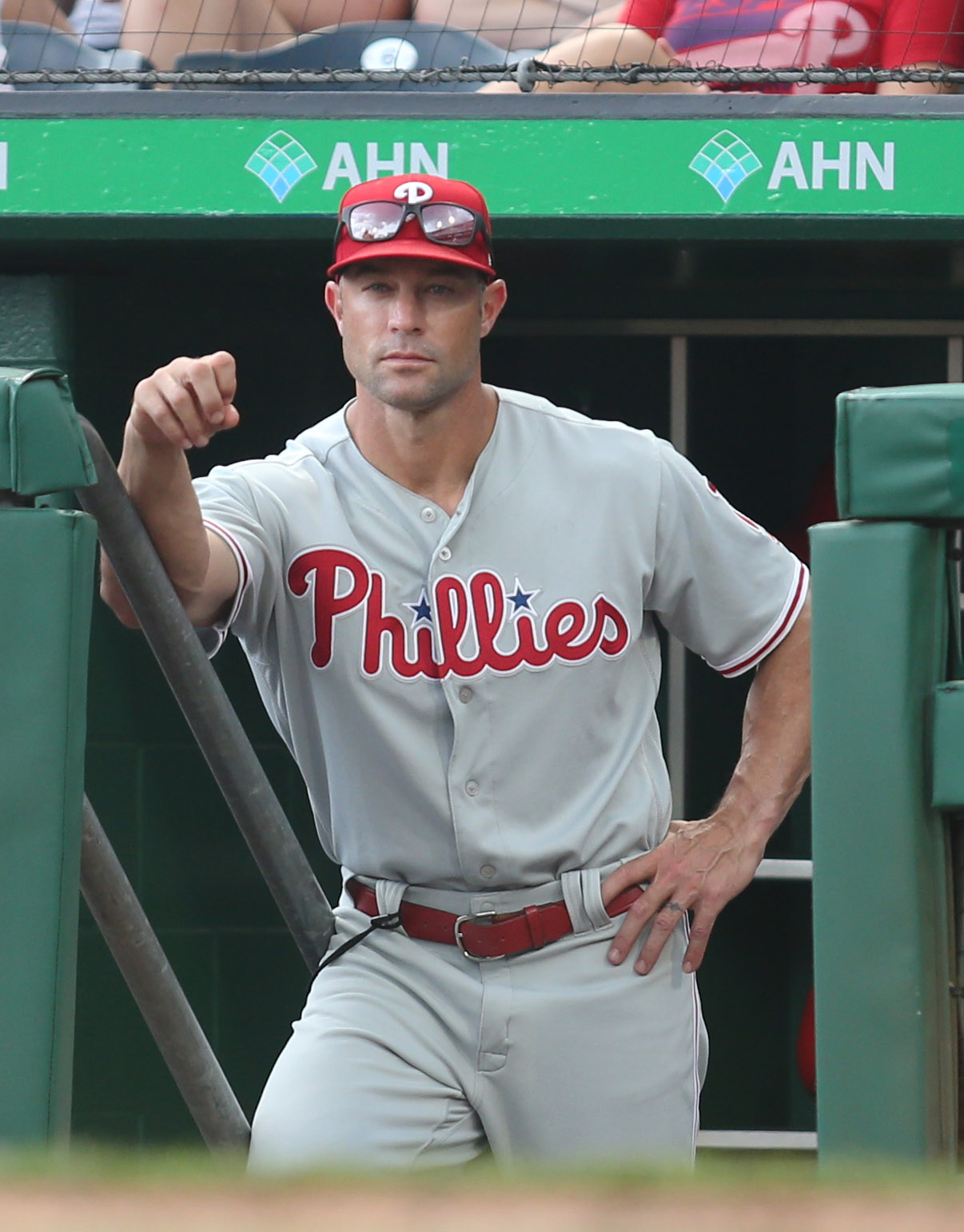
The Phillies also confirmed previous reports that Chris Young won’t return as the pitching coach in 2020 and announced that interim hitting coach and franchise legend Charlie Manuel will return to his role as a senior advisor to the GM.
Not only will the Phillies be looking for a new manager, pitching coach and hitting coach — they’ll also be looking to revamp their training staff, as neither head athletic trainer Scott Sheridan nor assistant athletic trainer Chris Mudd will have his contract renewed for 2020, per the club. The rest of the coaching staff has been invited back for next season, although it’s certainly possible that the change atop the dugout hierarchy could lead to eventual changes down the pecking order.
Phillies owner John Middleton offered the following statement on Kapler, who had been under contract through next season:
Several years ago, I promised our loyal fans that I would do everything in my power to bring a world championship team to our city. I will never waver from that commitment. During the second half of this season and continuing into this week, I have evaluated our organization extensively, a process that included talking to many people both internally and around the league. Reassuring to me was the endorsement that people outside the Phillies gave to the progress we have made recently, both organizationally and on the field. Nevertheless, with the knowledge that I have gained from my evaluation, combined with my personal reflection on the 2019 season, I have decided that some changes are necessary to achieve our ultimate objective. Consequently, we will replace our manager. I am indebted to Gabe for the steadfast effort, energy and enthusiasm that he brought to our club, and we are unquestionably a better team and organization as a result of his contributions. With [general manager Matt Klentak] leading our search for our next manager, I am confident that we will find the right person to lead us.
The Phillies organization debated the decision at great length. The Inquirer’s Matt Breen reported earlier this week that Middleton had been seeking opinions from players and front office execs alike as he seemed to genuinely wrestle with whether to bring Kapler back for the final contract of his season. Ultimately, the organization will go in a new direction after a pair of disappointing playoff misses in Kapler’s first two seasons at the helm.
Of course, team record is hardly the be-all and end-all in determining the fate of a manager these days. Managerial changes are also linked to how one maintains order in the clubhouse, aligns with the organization’s vision for the future, oversees the a coaching staff and incorporates input from a club’s front office/analytics department into game flow. The team’s lackluster records in both 2018 and 2019 surely played a role in the eventual decision but were surely just a few of the innumerable factors Middleton weighed in making today’s announcement.
Kapler, 44, played in parts of a dozen Major League seasons and managed in the Red Sox’ minor league system before embarking on a player development trajectory with the Dodgers (where, notably, he worked with current Giants president of baseball operations Farhan Zaidi, who is also on the hunt for a new manager). Kapler spent three seasons as the Dodgers’ director of player development prior to being hired by the Phillies — a role in which he placed great emphasis on analytics, player nutrition and mental wellness.
During his time with the Dodgers, Kapler was viewed as a fast-rising managerial candidate, and although things didn’t pan out in Philadelphia, he’ll quite likely garner consideration from other clubs. It’s hardly uncommon for rookie managers to be dismissed from one club before finding success with another — as A.J. Hinch can attest — and MLB Network’s Jon Heyman tweets that Kapler would like to continue his managerial career.
Bob Brookover of the Philadelphia Inquirer first broke the news of Kapler’s dismissal (via Twitter).
Projected Arbitration Salaries For 2020
As explained here, Matt Swartz and MLB Trade Rumors have developed an accurate model to project arbitration salaries. This is the ninth year we’ve done these projections, and I’m proud to present the results for 2020. Official service time is in parentheses next to each player. The Super Two cutoff has been confirmed as 2.115. For players’ actual arbitration salaries, check out our tracker here.
Angels (9)
- Tommy La Stella (5.057) – $2.9MM
- Cam Bedrosian (4.153) – $2.8MM
- Andrew Heaney (4.150) – $5.0MM
- Hansel Robles (4.119) – $4.0MM
- Dylan Bundy (4.026) – $5.7MM
- Max Stassi (3.049) – $800K
- Brian Goodwin (3.019) – $2.1MM
- Keynan Middleton (2.150) – $800K
- Noe Ramirez (2.139) – $1.0MM
Astros (8)
- George Springer (5.166) – $21.4MM
- Brad Peacock (5.165) – $4.6MM
- Lance McCullers Jr. (4.140) – $4.1MM
- Carlos Correa (4.119) – $7.4MM
- Roberto Osuna (4.097) – $10.2MM
- Chris Devenski (4.000) – $2.0MM
- Joe Biagini (3.134) – $1.5MM
- Aledmys Diaz (3.100) – $2.4MM
Athletics (8)
- Liam Hendriks (5.164) – $5.5MM
- T.J. McFarland (5.164) – $2.1MM
- Marcus Semien (5.118) – $13.5MM
- Robbie Grossman (5.060) – $3.3MM
- Mark Canha (4.092) – $4.9MM
- Sean Manaea (3.157) – $3.5MM
- Chris Bassitt (3.130) – $2.8MM
- Chad Pinder (3.047) – $1.8MM
Blue Jays (4)
- Matt Shoemaker (5.166) – $3.8MM
- Ken Giles (5.113) – $8.4MM
- Anthony Bass (5.010) – $1.7MM
- Brandon Drury (3.165) – $2.5MM
Braves (7)
- Shane Greene (5.075) – $6.5MM
- Mike Foltynewicz (4.134) – $7.5MM
- Adam Duvall (3.151) – $3.8MM
- Dansby Swanson (3.047) – $3.3MM
- Luke Jackson (3.019) – $1.9MM
- Grant Dayton (3.007) – $800K
- Johan Camargo (2.137) – $1.6MM
Brewers (6)
- Corey Knebel (4.151) – $5.125MM
- Omar Narvaez (3.089) – $2.9MM
- Orlando Arcia (3.047) – $2.7MM
- Ben Gamel (3.029) – $1.6MM
- Brent Suter (2.161) – $900K
- Josh Hader (2.115) – $4.6MM
Cardinals (1)
- John Gant (3.004) – $1.4MM
Cubs (7)
- Kris Bryant (4.171) – $18.5MM
- Javier Baez (4.089) – $9.3MM
- Kyle Schwarber (4.086) – $8.0MM
- Willson Contreras (3.108) – $4.5MM
- Albert Almora (3.073) – $1.8MM
- Jharel Cotton (2.158) – $800K
- Kyle Ryan (2.139) – $1.1MM
Diamondbacks (7)
- David Peralta (5.120) – $8.8MM
- Nick Ahmed (5.054) – $7.0MM
- Jake Lamb (5.053) – $5.0MM
- Andrew Chafin (5.020) -$3.2MM
- Robbie Ray (5.007) – $10.8MM
- Archie Bradley (4.112) – $3.6MM
- Matt Andriese (4.071) – $1.4MM
Dodgers (12)
- Pedro Baez (5.059) – $3.3MM
- Enrique Hernandez (5.054) – $5.5MM
- Joc Pederson (5.028) – $8.5MM
- Chris Taylor (4.037) – $5.0MM
- Corey Seager (4.032) – $7.1MM
- Ross Stripling (3.115) – $2.3MM
- Austin Barnes (3.098) – $1.3MM
- Scott Alexander (3.097) – $1.0MM
- Max Muncy (3.027) – $4.6MM
- Cody Bellinger (2.160) – $11.6MM
- Julio Urias (2.117) – $1.7MM
Giants (3)
- Donovan Solano (4.081) – $1.2MM
- Alex Dickerson (3.120) – $1.2MM
- Wandy Peralta (2.168) – $800K
Indians (5)
- Sandy Leon (5.144) – $2.8MM
- Francisco Lindor (4.113) – $16.7MM
- Nick Wittgren (3.071) – $1.3MM
- Mike Clevinger (3.041) – $4.5MM
- Tyler Naquin (3.033) – $1.8MM
Mariners (3)
- Mallex Smith (3.125) – $2.7MM
- Sam Tuivailala (3.082) – $900K
- Mitch Haniger (3.048) – $3.0MM
Marlins (4)
- Jonathan Villar (5.113) -$10.4MM
- Jose Urena (4.040) – $4.0MM
- Adam Conley (3.147) – $1.6MM
- Jesus Aguilar (3.082) – $2.5MM
Mets (9)
- Marcus Stroman (5.148) – $11.8MM
- Jake Marisnick (5.132) – $3.0MM
- Noah Syndergaard (4.149) – $9.9MM
- Steven Matz (4.099) – $5.3MM
- Michael Conforto (4.043) – $9.2MM
- Edwin Diaz (3.121) – $7.0MM
- Seth Lugo (3.082) – $1.9MM
- Brandon Nimmo (3.042) – $1.7MM
- Robert Gsellman (3.042) – $1.2MM
Nationals (6)
- Hunter Strickland (4.163) – $1.9MM
- Michael A. Taylor (4.129) – $3.25MM
- Roenis Elias (4.069) – $1.9MM
- Joe Ross (4.018) – $1.4MM
- Trea Turner (3.135) – $7.5MM
- Wilmer Difo (3.016) – $1.2MM
Orioles (5)
- Mychal Givens (4.069) – $3.2MM
- Hanser Alberto (3.085) – $1.9MM
- Miguel Castro (3.079) – $1.2MM
- Richard Bleier (3.074) – $1.1MM
- Trey Mancini (3.015) – $5.7MM
Padres (10)
- Jurickson Profar (5.165) – $5.8MM
- Kirby Yates (5.021) – $6.5MM
- Greg Garcia (4.083) – $1.7MM
- Zach Davies (4.020) – $5.0MM
- Austin Hedges (3.166) – $2.9MM
- Luis Perdomo (3.086) – $1.0MM
- Matt Strahm (3.064) – $1.5MM
- Manuel Margot (3.012) – $2.1MM
- Hunter Renfroe (2.165) – $3.4MM
- Dinelson Lamet (2.130) – $1.7MM
Phillies (7)
- J.T. Realmuto (5.038) – $10.3MM
- Jose Alvarez (5.035) – $3.0MM
- Vince Velasquez (4.086) – $3.9MM
- Hector Neris (4.068) – $4.7MM
- Adam Morgan (4.017) – $1.6MM
- Zach Eflin (3.018) – $3.0MM
- Andrew Knapp (3.000) – $800K
Pirates (9)
- Keone Kela (5.000) – $3.4MM
- Michael Feliz (3.169) – $1.2MM
- Jameson Taillon (3.110) – $2.3MM
- Chad Kuhl (3.079) – $1.4MM
- Adam Frazier (3.075) – $3.2MM
- Joe Musgrove (3.063) – $3.4MM
- Josh Bell (3.053) – $5.9MM
- Trevor Williams (3.027)- $3.0MM
- Erik Gonzalez (3.007) – $800K
Rangers (6)
- Danny Santana (4.140) – $3.9MM
- Delino Deshields (4.109) – $2.4MM
- Nomar Mazara (4.000) – $5.7MM
- Rafael Montero (3.138) – $900K
- Nick Goody (3.105) – $1.1MM
- Joey Gallo (3.103) – $4.0MM
Rays (6)
- Mike Zunino (5.165) – $4.9MM
- Tommy Pham (4.107) – $8.6MM
- Chaz Roe (4.094) – $2.2MM
- Oliver Drake (3.045) – $1.1MM
- Tyler Glasnow (2.158) – $1.9MM
- Daniel Robertson (2.134) – $1.1MM
Red Sox (7)
- Jackie Bradley Jr. (5.150) – $11MM
- Mookie Betts (5.070) – $27.7MM
- Brandon Workman (5.051) – $3.4MM
- Eduardo Rodriguez (4.130) – $9.5MM
- Matt Barnes (4.110) – $3.0MM
- Heath Hembree (4.106) – $1.6MM
- Andrew Benintendi (3.062) – $4.9MM
Reds (6)
- Trevor Bauer (5.158) – $18.6MM
- Anthony DeSclafani (5.062) – $5.2MM
- Michael Lorenzen (4.159) – $4.2MM
- Curt Casali (3.151) – $1.7MM
- Travis Jankowski (3.148) – $1.2MM
- Matt Bowman (3.021) – $900K
Rockies (7)
- Scott Oberg (4.063) – $2.0MM
- Jon Gray (4.062) – $5.6MM
- Trevor Story (4.000) – $11.5MM
- Tony Wolters (3.161) – $2.0MM
- Carlos Estevez (3.022) – $1.2MM
- David Dahl (2.162) – $3.0MM
- Kyle Freeland (2.144) – $2.4MM
Royals (2)
- Jorge Soler (4.143) – $11.2MM
- Mike Montgomery (4.089) – $2.9MM
Tigers (5)
- Daniel Norris (4.073) – $2.9MM
- Michael Fulmer (3.157) – $2.8MM
- Matthew Boyd (3.136) – $6.4MM
- Buck Farmer (3.083) – $1.1MM
- JaCoby Jones (2.125) – $1.4MM
Twins (9)
- Ehire Adrianza (5.131) – $1.9MM
- Trevor May (5.012) – $2.1MM
- Eddie Rosario (4.120) – $8.9MM
- Miguel Sano (4.066) – $5.9MM
- Byron Buxton (3.160) – $2.9MM
- Taylor Rogers (3.145) – $3.9MM
- Tyler Duffey (3.074) – $1.1MM
- Jose Berrios (3.044) – $5.4MM
- Matt Wisler (3.042) – $1.0MM
White Sox (5)
- Alex Colome (5.118) – $10.3MM
- James McCann (5.028) – $4.9MM
- Leury Garcia (5.025) – $4.0MM
- Carlos Rodon (4.168) – $4.5MM
- Evan Marshall (3.090) – $1.3MM
Yankees (9)
- James Paxton (5.151) – $12.9MM
- Tommy Kahnle (4.131) – $3.0MM
- Gary Sanchez (3.086) – $5.6MM
- Aaron Judge (3.051) – $6.4MM
- Chad Green (3.050) – $1.4MM
- Jordan Montgomery (2.153) – $1.2MM
- Luis Cessa (2.131) – $1.1MM
- Gio Urshela (2.127) – $2.2MM
- Jonathan Holder (2.124) – $800K
Brian McCann Announces Retirement
Seven-time All-Star catcher Brian McCann is planning to retire this offseason, he announced to reporters following the conclusion of today’s NLDS loss to the Cardinals (Twitter link, with video, via FOX Sports Southwest). “It’s time to go,” said McCann when asked about his decision. “Fifteen years of catching — it’s sad, but it’s time. I knew about a month and a half ago.”
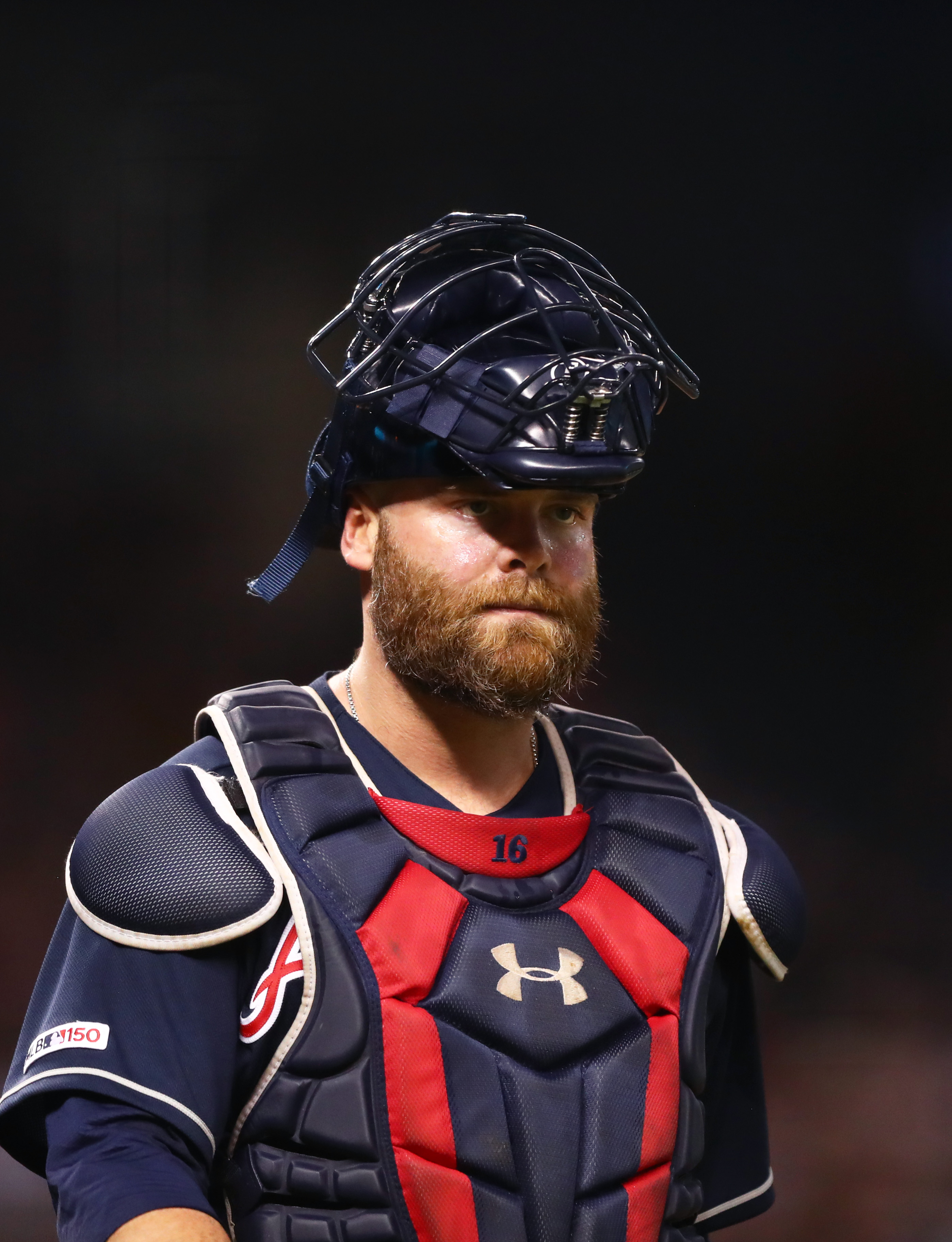
After spending three seasons with the Yankees and two with the Astros, the 35-year-old McCann returned to the Braves on a one-year deal this past offseason. It was homecoming in more ways than one, as the Athens, Ga. native and Duluth High School grad was the Braves’ second-round pick back in 2002. The opportunity to return to his hometown and suit up for one more ride with the next generation of Braves stars was a significant factor in his decision to sign with Atlanta in the winter, McCann added.
“That’s a big reason I wanted to come back,” he said. “I wanted to be a part of this again — put this uniform back on, play in front of my family every night. That was a big reason. … Fifteen years is a long time, catching every day. And I got to do it in my hometown.”
Following that 2002 draft, McCann quickly ascended to top prospect status and made his big league debut with the Braves in 2005. He’d ultimately go on to wear a Braves uniform for 10 of his 15 excellent MLB seasons. A six-time Silver Slugger winner, McCann enjoyed 10 seasons in which he tallied 20 or more home runs throughout his big league career. He’ll hang ’em up with a lifetime .262/.337/.452 batting line, 282 home runs, 1018 RBIs, 742 runs scored and 294 doubles.
McCann never won a Gold Glove but was considered a quality defender for much of his career, finishing at 297 of 1194 in throwing out base thieves (25 percent) and with a total of 26 Defensive Runs Saved. He never did much damage during the postseason but did manage a few key home runs, and he of course took home a World Series ring as the primary catcher for the 2017 World Series Champion Astros.
Former teammates have already begun to heap praise onto McCann — perceived by many onlookers as a gruff enforcer but widely beloved by the players with whom he shared a clubhouse. Lance McCullers Jr. (link) and Chipper Jones (link) are among those to offer heartfelt praise for the 15-year veteran’s contributions to their clubs.
McCann earned more than $128MM in salary over the course of his career and will be remembered as one of the finest and most durable catchers of his generation. His 282 career home runs trail only Mike Piazza, Johnny Bench, Carlton Fisk, Yogi Berra, Gary Carter, Lance Parrish and Ivan Rodriguez among catchers — all of whom other than Parrish have been enshrined in the Hall of Fame. Best wishes to “B-Mac” in his post-playing days.
Twins To Exercise Club Option Over Nelson Cruz
In one of the more predictable items of early offseason business, the Twins have decided to exercise their club option over designated hitter Nelson Cruz, according to Jon Heyman of MLB Network (via Twitter). That decision will not need to be made formally until after the conclusion of the World Series, but it seems the Minnesota organization has already chosen a path.
When Cruz was asked recently about his contract situation, he responded in a manner that almost suggested he would be waiting with baited breath: “I don’t have that call,” he said, “but hopefully they can pick up the option.” But it didn’t take an act of benevolence, or even require much deliberation, for the Minnesota organization to settle upon a return.
This campaign came to a bitterly rapid end, but Cruz was right to note recently that the future seems bright for the Minnesota organization. That’s due primarily to the team’s array of youthful talent, strong farm system, and tidy baseball ops balance sheets. But it’s also based upon the ability to retain Cruz on the heels of a campaign in which he provided valuable leadership and immense offensive production. The veteran DH swatted 41 dingers and turned in a .311/.392/.639 slash during the regular season before producing yet more strong output in the team’s fruitless ALDS appearance.
Cruz was already an elusive free agent bargain, having returned 4.3 wins above replacement (by measure of both Fangraphs and Baseball-Reference) at a cost of just $14MM. Now, the Twins get another bite at the apple for just $12MM. (The alternative was to send Cruz back onto the open market with a $300K buyout.) It might have been interesting to debate the open-market value of a 39-year-old DH after such a massive season, and then to see how the situation would play out. But we may safely presume that Cruz would have attracted ample interest at or above that price point, likely over multiple years.
Japanese Slugger Yoshitomo Tsutsugo To Be Posted
Japan’s Yokohama DeNA BayStars announced today that they intend to make star corner outfielder Yoshitomo Tsutsugo available through the NPB-MLB posting system. Jason Coskrey of the Japan Times was among those to cover the news via Twitter. Once he’s formally posted, which will occur between November 1st and December 5th, Tsutsugo will have thirty days to negotiate a contract with any of the thirty MLB teams. He’ll be represented by the Wasserman Agency, Mark Feinsand of MLB.com tweets.
The 27-year-old left-handed-hitting slugger is a ten-year veteran of Nippon Professional Baseball. Accordingly, he won’t be subject to the restrictions on international signings that limited the earning potential for countrymate Shohei Ohtani and certain other younger and/or less experienced players.
Under the new posting system, which went into effect after Ohtani’s signing, the team that agrees to sign Tsutsugo will also need to pay a release fee that is determined by reference to the contract. Teams pay 20% of guaranteed money up to $25MM, 17.5% for promised cash between $25MM and $50MM, and then 15% of anything beyond. There are also some provisions that allow for additional release fees in the event that certain non-guaranteed earnings are triggered.
Tsutsugo has long been on the MLB radar. He has been among the most effective hitters in Japanese baseball since fully establishing himself at the nation’s highest level in 2014. Since that time, Tsutsugo has devoured NPB pitching. In over four thousand career plate appearances, he’s a .284/.382/.525 hitter with 205 long balls.
This past season wasn’t Tsutsugo’s most dominant, as he provided the BayStars with 557 plate appearances of .272/.388/.511 hitting and launched 29 long balls. That’s a far sight shy of his personal-best 2016 output (.322/.430/.680, 44 home runs) but still plenty productive. Indeed, he was the sixth-best hitter in the NPB by measure of OPS.
There ought to be a fair amount of interest in Tsutsugo among MLB teams, though he’s not generally regarded as a quality fielder and isn’t exceptionally youthful. The most direct market competition will likely come from other left-handed-hitting, power-oriented corner bats such as Corey Dickerson and Kole Calhoun. It remains to be seen whether Tsutsugo will be targeted as a first-division regular, solid platoon candidate, or something in between.
Van Wagenen: Syndergaard, Diaz Will Not Be Traded In Offseason
An offseason free of trade rumors swirling around right-hander Noah Syndergaard will almost feel strange at this point, but Mets general manager Brodie Van Wageen said in a conference call to address today’s dismissal of manager Mickey Callaway that the team will not trade Syndergaard or embattled closer Edwin Diaz this winter (Twitter link via The Athletic’s Tim Britton):
“Edwin Diaz is going to be on this team next year. Noah Syndergaard is going to be on this team next year,” said Van Wagenen. Notably, that was an unprompted assertion from the GM, who is entering his second offseason at the post.
Syndergaard has been a fixture on the rumor circuit for the better part of two seasons, as teams have persistently inquired about the right-hander’s availability amid postseason misses and uncertain offseason approaches. While most expected the Mets to take a seller’s approach at the 2019 trade deadline, though, Van Wagenen & Co. loaded up for the 2020 season with a surprise acquisition of Marcus Stroman. Today’s comments not only emphatically double down on the fact that the Mets view themselves as contenders but also preemptively put to bed any speculation about moving Syndergaard for MLB-ready help in other areas.
As for Diaz, the once-dominant Mariners closer looked like a potential change-of-scenery candidate after the 2019 season proved to be an unmitigated disaster. The 25-year-old’s strikeout percentage dropped from 44.3 percent in 2018 to 39 percent in 2019 as his walk percentage jumped from 6.1 to 8.7. But Diaz’s true downfall was his alarming susceptibility to the long ball. After allowing an average of just 0.61 homers per nine innings pitched with Seattle in 2018, Diaz’s HR/9 rate soared to an untenable 2.33 with the Mets in 2019. The flamethrowing righty maintained his velocity, but the uptick in walks and home runs serve as clear indicators of trouble locating the ball.
The bottom-line results — a 5.59 ERA, seven blown saves and an eventual removal from the closer’s role — were about as poor an outcome as one could’ve forecast following the trade that brought Diaz to Queens. However, it seems there’s no thought to parting ways a la Sonny Gray and the Yankees, as the Mets remain confident they can get Diaz back on track. He does have three remaining seasons of club control, so the upside with Diaz is enormous if he can right the ship. Syndergaard, meanwhile, is controlled through the 2021 season.
With both Syndergaard and Diaz seemingly written in ink on next season’s roster, the question for the Mets will become one of who’ll slot in alongside them. Jacob deGrom, Steven Matz and Stroman will join Syndergaard in the rotation, but with Zack Wheeler hitting free agency, the Mets will need to add a fifth starter (plus some depth to stash in the upper minors). That’s especially true given that Anthony Kay, perhaps the organization’s most MLB-ready rotation prospect, was sent to the Blue Jays as part of the trade to acquire Stroman.
In the bullpen, Jeurys Familia had a similarly disappointing year to the one through which Diaz struggled. Robert Gsellman had his own struggles before going down with a partially torn lat that ended his season. That trio will return alongside righty Seth Lugo and lefty Justin Wilson, both of whom pitched well, but the Mets will surely be in the market for some bullpen reinforcements once again.
Mets Fire Mickey Callaway
The Mets announced Thursday that they have fired manager Mickey Callaway. The decision comes two-thirds of the way through a three-year deal for the former Indians pitching coach, who compiled a 163-161 record in his two seasons as the Mets’ skipper.
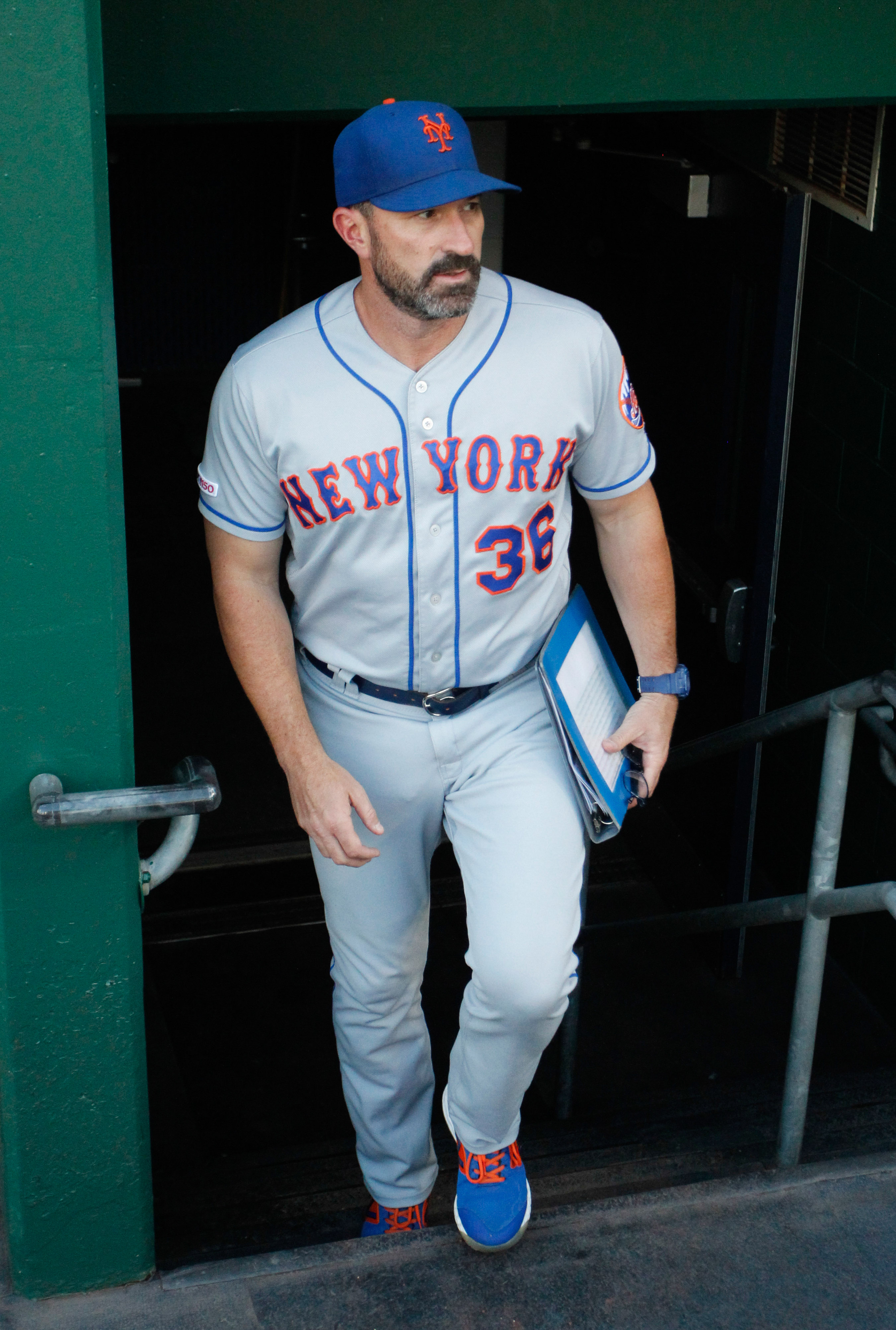
“We want to thank Mickey for his consistent work ethic and dedication over the last two seasons and I’m certain these characteristics will serve him well in his next opportunity,” Mets general manager Brodie Van Wagenen said in a statement accompanying today’s press release. “A decision like this is never easy, however, we believe it is in the best interest of the franchise at this time.”
Callaway’s departure from the Mets creates a seventh managerial vacancy throughout the league, as two managers (Kansas City’s Ned Yost and San Francisco’s Bruce Bochy) have opted to retire while Callaway joins Brad Ausmus (Angels), Andy Green (Padres) and Clint Hurdle (Pirates) as managers who were fired despite having time left on their current contracts. The Cubs, meanwhile, opted not to re-sign Joe Maddon after the expiration of his contract.
Generally speaking, the Mets have underperformed in each of the past two seasons, although injuries and roster construction missteps by a pair of different front-office regimes have obviously contributed to the team’s consecutive playoff misses. The 2019 season proved to be particularly tumultuous, as the team got out to an awful start and found itself 10 games under .500 at the time of the All-Star break. A torrid run to open the second half thrust the Mets back into the Wild Card mix, however, and although a Cinderella second half didn’t prove to be in the cards, the Mets improbably finished the season ten games above the .500 mark — good for third place in the division.
Along the way, however, there was no shortage of discord. Stories about Noah Syndergaard‘s preference to pitch to Tomas Nido leaked out into the public eye, while Callaway made numerous conflicting statements about usage restrictions on embattled closer Edwin Diaz. Callaway himself came into a particularly negative spotlight for cursing out a reporter in the clubhouse and subsequently refusing to apologize for his actions the next day — only to then seemingly be forced into doing so by the organization a short time later. Former Mets left-hander Jason Vargas had to be physically restrained during that particular altercation, and the entire incident obviously did not sit well with Mets’ higher-ups.
Of course, things aren’t always as they seem in the public eye, either. The New York Post’s Mike Puma reports, for instance, that Callaway’s early insistence on saving Diaz for the ninth inning and refusing to use him for more than three outs was a “direct order” from COO Jeff Wilpon. But, Puma also details some player feelings on Callaway’s communication skills and his lack of hands-on instruction with the pitching staff (despite a half decade building a reputation as one of the game’s better pitching coaches in Cleveland).
Regardless of one’s thoughts on Callaway and whether he deserved to stay or go, it’s become increasingly difficult to ignore the near-constant state of turmoil surrounding the Mets as an organization in recent years. From myriad reports about the Wilpon family’s habitual involvement in nearly every aspect of the club (e.g. Diaz’s usage) to the repeated vague and conflicting medical updates provided under former manager Terry Collins, to the aforementioned Vargas debacle this past summer, a general sense of chaos seems to permeate the organization each year. While one could argue that a strong, veteran voice is needed to command the respect of both the clubhouse and ownership, it’s also fair to wonder whether some seasoned managers would prefer not to be caught up with the drama.
Nationals Reportedly Made Recent Extension Offer To Anthony Rendon
The Nationals have made a late-season push to retain pending free agent star Anthony Rendon, according to Barry Svrluga of the Washington Post.
Per the report, the club dangled a seven-year offer in the range of $210MM to $215MM. While there were deferrals in the proposal, it would’ve functioned more like the Max Scherzer contract than the long-fuse offer the team made last year to Bryce Harper.
The offer was put on the table in early September, according to Svrluga, and it doesn’t seem as if it’s likely to be accepted. Rendon is now just weeks away from the open market and appears destined to reach it. He’ll do so armed with the knowledge that the Nats have intense interest in keeping him.
It’s not entirely clear whether the D.C. organization will keep this particular offer on the table once the offseason begins. Neither is it known whether the team is willing to go any higher if that’s needed. Regardless, it’s a nice starting point for Rendon, who has ramped up his already excellent play to higher-than-ever levels in 2019. He’s slated to reach free agency as the top available position player.
Depending upon where one looks for their contract numbers, the reported offer may sound light. After all, Rockies star third bagger Nolan Arenado just got a $260MM contract that spans eight years … sort of. In fact, that deal added seven years and $234MM beyond Arenado’s final season of arbitration eligibility. In reality, the Nats’ offer to Rendon is close to — but still clearly less than — the money the Rox gave to Arenado.
That Arenado contract (which also includes an opt-out) always spelled bad news for the D.C. organization’s efforts with Rendon, as it pushed a big new comp out at an inopportune time. Rendon is nearly a year older, lacks the history of consistent home run output, and isn’t as flashy a fielder or well-known a marketing piece. But for all his steady excellence, Arenado has never reached the offensive heights Rendon did in 2019 and hasn’t yet posted a 6.0 fWAR campaign. Rendon, meanwhile, has quietly reeled off three-straight seasons with that level of all-around value.
These ongoing talks only help to set the stage for what promises to be quite an interesting trip onto the open market for Rendon and super-agent Scott Boras. The universe of bidders isn’t yet known, but there’s little doubt multiple clubs will make serious pushes to draw Rendon from the Nats.