
White Sox Sign Liam Hendriks
TODAY: Hendriks’ contract is broken down by MLB Network’s Jon Heyman (via Twitter). The closer will receive a $1MM signing bonus, $11MM in 2021, $13MM in 2022, $14MM in 2023, and then the $15MM option/buyout for 2024. The option will automatically vest if Hendriks is traded.
Jan. 15: The White Sox have formally announced the signing of Hendriks to a four-year, $54MM contract. Chris Hatfield of SoxProspects.com and Joel Sherman of the New York Post point out an interesting wrinkle in the unique structure of Hendriks’ contract (Twitter link): for luxury-tax purposes, the fourth year comes with a zero-dollar hit. Because Hendriks is guaranteed the full $54MM even over a three-year term, the first three years will come with an $18MM hit (dipped slightly because of the 10-year deferrals if the option is bought out).
The White Sox have never flirted with the luxury barrier, but it’s notable in the event that they increase their spending in future years or in the event that another club wants to borrow the concept for future dealings. Of course, with the collective bargaining agreement set to expire next December, it could be rendered a moot point; it’s possible that new luxury limits and/or new means of determining luxury penalization will be bargained.
Jan. 12: If the White Sox don’t pick up Hendriks’ $15MM option for the 2024 season, they’ll pay him a buyout of that same value but defer it over a 10-year period, tweets USA Today’s Bob Nightengale. That’s an unprecedented structure for a club option that affords the ChiSox the opportunity for substantial up-front cost savings while still guaranteeing Hendriks the full freight of the $54MM — even if the actual present-day value of the contract is weighed down by the potential deferrals.
Jan. 11: The White Sox have reached an agreement with free-agent reliever Liam Hendriks, pending a physical, Tim Brown of Yahoo Sports reports. It’s a three-year, $54MM guarantee with a club option for a fourth season, per Mark Feinsand of MLB.com. Both the option and buyout are worth $15MM, according to ESPN’s Jeff Passan, so the right-handed Hendriks will earn that money regardless of how long he’s part of the team. Passan adds that the White Sox would be able to pay the buyout over multiple years. Hendriks is a client of ALIGND Sports Agency.
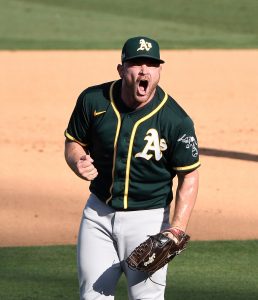
So far, this is the largest guarantee given to any free agent during what has been a slow-moving offseason. It comes as a surprise when considering how the winter opened for relievers, as Cleveland waived star closer Brad Hand in lieu of paying him a $10MM option for 2021 and no other team claimed him. After that, it would have been easy expect relievers to continue faring somewhat poorly this offseason, but Hendriks will be paid handsomely. In fact, his deal blows past the three-year, $30MM prediction MLBTR made for him before the offseason.
Just a couple of years ago, it would have been almost impossible to imagine Hendriks at this point. The Athletics outrighted him in July 2018, but he came back with a vengeance as a member of the team that September and carried it over into the 2019 and ’20 campaigns. Hendriks was the majors’ most effective late-game arm during that span, as he pitched to a 1.66 ERA with a similarly astounding 33.1 percent strikeout-walk percentage, piled up 39 saves out of 47 chances, and won American League Reliever of the Year honors in 2020.
Based on what he has done in recent seasons, the 31-year-old Hendriks looks like an enormous loss for the A’s – who didn’t give the hurler a qualifying offer after they knocked off the White Sox in the first round of last fall’s playoffs – and a massive pickup for Chicago. The White Sox earned their first trip to the postseason since 2008 last season, and they’re one of the few teams in baseball that have been active since then. Assuming the Hendriks deal goes through, he’ll be their third noteworthy pickup of the offseason, joining starter Lance Lynn and outfielder Adam Eaton.
Also a former Twin, Royal and Blue Jay, Hendriks should be in line to take over for free agent Alex Colome as Chicago’s closer. The Australia native will be the highest-profile member of a White Sox relief corps that finished seventh in the majors in ERA (3.76) last year, when holdovers Evan Marshall, Aaron Bummer, Matt Foster and Codi Heuer turned in terrific results. With Hendriks coming in, Chicago’s bullpen could be even better in 2021.
Photo courtesy of USA Today Sports Images.
Dodgers Bullpen Rumors: Hendriks, Yates
The Dodgers were in pursuit of free-agent reliever Liam Hendriks earlier this offseason, but that interest “has recently dissipated,” Jorge Castillo of the Los Angeles Times writes. While Hendriks is viewed as the best reliever available on the open market, the former Athletics closer reportedly wants a four-year contract, and the Dodgers aren’t willing to sign him to that long of a deal, according to Castillo.
Although Hendriks appears to be out of the mix for Los Angeles, the reigning World Series champions do have other high-end relievers on their radar. Along with the previously reported Brad Hand, the Dodgers are eyeing right-hander Kirby Yates, per Castillo, who adds that they “have significant interest in him.” Yates shouldn’t cost as much as Hendriks or Hand, having missed almost all of last season with elbow problems, but the ex-Padres standout could be a relatively low-risk, high-reward pickup for any team that signs him. After all, the 33-year-old is just two seasons removed from posting a ridiculous 1.19 ERA with a 41.6 percent strikeout rate and a 5.3 percent walk rate over 60 2/3 innings. Yates also saved a National League-high 41 games in 44 chances that year.
A Yates signing for the Dodgers would be somewhat similar to 2020 additions such as Blake Treinen and Jake McGee, in that they’d be landing a proven reliever whose stock isn’t at an all-time high on a short-term pact. Both signings worked out well for LA last season, and the team was so impressed with Treinen’s work that it brought him back on a two-year, $17.5MM guarantee in free agency.
Liam Hendriks Visits Blue Jays
Free agent Liam Hendriks visited the Blue Jays’ training complex in Dunedin today, reports Shi Davidi of Sportsnet. The 31-year-old (32 in February) is unquestionably the best reliever available on the open market and has been quite arguably the best reliever in the sport over the past two seasons.
Hendriks had been loosely tied to the Blue Jays in recent weeks, but today’s visit seems to underscore the seriousness of those talks. Toronto has been connected to virtually every prominent free agent and trade target available this winter. It seems likely they’ll bring in at least one key player from outside the organization.
It remains to be seen whether Hendriks, who pitched for Toronto between 2014-15, will be among the Jays’ noteworthy additions. The Mets, Dodgers, White Sox and Astros have also been tied to the right-hander at various points this offseason. Chicago remains in play for Hendriks, reiterates Mark Feinsand of MLB.com. Houston is still “all over him,” hears Chris Cotillo of MassLive.com. The Dodgers’ “strong interest” in signing Hendriks also persists, adds Robert Murray of Fansided. It’s clear Hendriks is finding rather robust interest, which should aid his attempt to land the four-year contract he seeks.
Dodgers, Astros Interested In Liam Hendriks
In a class of his own atop the free agent reliever market, Liam Hendriks is unsurprisingly drawing widespread interest. The White Sox, Mets and Blue Jays have been tied to Hendriks within the past week, and Jeff Passan of ESPN reports that the Dodgers and Astros have joined them among those pursuing the right-hander. Hendriks is looking for a four-year deal, Passan adds.
Over the past two seasons, Hendriks has arguably been the best reliever in baseball. He’s pitched to a 1.79 ERA across 110.1 relief innings since the start of 2019. In that time, Hendriks struck out 38% of opposing hitters against a 5.7% walk rate and held batters to a .192/.240/.289 slash line. No reliever (minimum 50 innings) has a better park-adjusted ERA, and only Josh Hader, Nick Anderson and Kirby Yates have a higher strikeout minus walk percentage.
Quite obviously, every team in the league would benefit from the addition of Hendriks to the back of the bullpen. The Dodgers’ bullpen was quite good in 2020; nevertheless, that’s the area of the roster that has given the team a bit of trouble in prior seasons and is the easiest spot to add depth as they look to mount another World Series run.
The Astros’ interest in Hendriks also isn’t surprising. Houston’s bullpen was decimated by injuries this past season and looks in need of some outside help. The Astros are facing the potential free agent departures of George Springer, Michael Brantley and Josh Reddick, though, with few obvious in-house replacements beyond Kyle Tucker. It remains to be seen if there’ll be requisite payroll space for the Houston front office to add top-of-the-market relief help while also sufficiently addressing the outfield.
Widespread interest notwithstanding, Hendriks finding a four-year deal at a strong average annual value might prove to be a tough task. He turns 32 in February, which figures to give some teams pause. The early stages of the offseason also haven’t been particularly kind to relievers. Every team in the league passed on Brad Hand’s $10MM option at the start of the offseason. Trevor May settled for a two-year, $15.5MM deal with the Mets; similarly productive relievers (Jeurys Familia and Joe Kelly, for instance) found three-year pacts in past winters. It’s possible Hendriks’ recent brilliance causes teams to view him as an exception, but the general trend seems to be that of a depressed bullpen market. One factor in his favor: the A’s did not issue him a qualifying offer, so the team that signs him will not have to forfeit draft pick compensation.
East Notes: Mets, Jays, O’s, Nats
The Mets are interested in righty reliever Liam Hendriks, arguably the No. 1 bullpen arm available on the open market, per Andy Martino of SNY. He’d be the second major relief addition this offseason for the Mets, who signed Trevor May to a two-year, $15.5MM guarantee last week. Hendriks, previously with the Athletics, was perhaps the most dominant reliever in baseball during the previous two seasons. In that 108 1/3-inning stretch, the 31-year-old logged a matching 1.66 ERA/FIP, notched 13.21 K/9 against 1.83 BB/9, and recorded 39 saves in 47 opportunities. While the New York club has some level of interest in cross-town star D.J. LeMahieu, David Lennon of Newsday writes, it’s more on the “periphery” in that pursuit at the moment.
More from the eastern divisions:
- The aforementioned Hendriks and fellow free-agent reliever Brad Hand “are believed to be” on the Blue Jays’ radar, Ben Nicholson-Smith of Sportsnet writes (their interest in Hand was previously reported). Either pitcher would further strengthen a Toronto bullpen that finished 24th in the majors in ERA and 28th in K/BB ratio last season. It seems the Toronto organization is still casting rather a wide net in its free agent search. Gregor Chisholm of the Toronto Star recently linked the team to a number of big names at a variety of positions.
- Orioles general manager Mike Elias said Tuesday that the team is unlikely to give out any multiyear contracts in free agency (Twitter links via Roch Kubatko of MASNsports.com and Jon Meoli of the Baltimore Sun). However, Elias acknowledged the Orioles are hunting for a new shortstop after trading Jose Iglesias to the Angels last week. Elsewhere, Elias said the Orioles plan to keep righty Alex Cobb, who has one year and $15MM left on his contract. Cobb had a decent year in 2020 (4.30 ERA/4.87 FIP in 52 1/3 innings), though he may be a tough sell at his current salary.
- Sticking with the Orioles, beleaguered first baseman Chris Davis revealed Wednesday (via Melo) that he has no plans to hang up his cleats at this point. “I don’t want it to end the way that things have gone the last few years for me. I think there’s more of a story to be told but as far as my contract is concerned, it is what it is,” said Davis. “I’m not going anywhere. I’m not giving up. I’m not throwing in the towel. I understand the club is in a position right now to where they’re trying to cut payroll, and I’m the one big lump that they’re kind of stuck with. But they knew what they were signing up for when they took the job.” Davis’s seven-year, $161MM contract has been an unmitigated disaster for the Orioles, but he’s certainly not obligated to walk away from the remaining two seasons even if the club would prefer it. The 34-year-old is coming off a third-straight woeful season. Davis took just 55 plate appearances, failed to hit a home run and posted a brutal minus-14 wRC+.
- Moving south on 95, the Nationals have a need for just the sort of player Davis once was. The D.C. organization put in an effort to lure Carlos Santana before he latched on with the Royals, Jesse Dougherty of the Washington Post reports on Twitter. Missing on the veteran slugger makes it likelier that the Nats will end up putting together some kind of timeshare at first, as there isn’t a clear everyday alternative available in free agency. It also keeps the door open to a return for Nationals stalwart Ryan Zimmerman, whose intentions remain unknown.
White Sox Interested In Liam Hendriks, Michael Brantley
It’s been a busy couple of days for the White Sox, who acquired Lance Lynn in a trade with the Rangers and then signed Adam Eaton to a one-year, $7MM deal. However, the Pale Hose aren’t done yet, as The Athletic’s Jayson Stark (Twitter link) reports that the team might still add to both the rotation and outfield even with Lynn and Eaton already in the fold, with Michael Brantley still a potential target. Turning to the bullpen, USA Today’s Bob Nightengale reports that the White Sox “have their sight set on” free agent closer Liam Hendriks.
Since Alex Colome is a free agent, Hendriks would be a natural replacement and even an upgrade for save situations. Hendriks has been nothing short of dominant over the last two seasons with the A’s, posting a 1.79 ERA, 13.1 K/9, and 6.71 K/BB rate over 110 1/3 innings, racking up 39 saves in the process. MLBTR projected Hendriks as the top free agent relief pitcher available, though with so many relievers flooding the market, it remains to be seen how sizable a contract Hendriks can land.
There hasn’t been much buzz about the Australian right-hander to date, quite possibly because teams are still weighing all the available bullpen candidates before making a move for likely the most expensive option. Still, Hendriks also has fewer red flags than just about any of the other free agent relievers, so an aggressive team like the White Sox might just want to address their ninth-inning vacancy as quickly and simply as possible. Aaron Bummer or Evan Marshall are in-house candidates for save situations, but the Chicago bullpen would certainly be strengthened overall with the addition of another established stopper.
In contrast to Stark, Nightengale suggests that the White Sox have moved on from Brantley for budgetary reasons, though “they would have preferred” Brantley to Eaton. That said, in a year when the White Sox clearly seem to be in win-now mode, maybe they’re willing to splurge on both Eaton and Brantley to make the lineup as strong as possible. Brantley and Eloy Jimenez could split time between left field and DH, and while it had been widely speculated that the Sox could turn to star prospect Andrew Vaughn as a DH candidate in 2021, the team might prefer an established veteran bat in the lineup rather than a promising but unproven rookie like Vaughn.
Adding another starting pitcher would similarly put more veteran stability in the rotation, with this hypothetical new starter slotting into the fourth spot behind Lucas Giolito, Dallas Keuchel, and Lynn. The White Sox might prefer having Michael Kopech, Dylan Cease, and Reynaldo Lopez competing for just the fifth starter’s job rather than counting on two rotation spots to be covered by those three young hurlers.
The A’s Have Some Tough Qualifying Offer Decisions
Heading into the 2020 season, A’s shortstop Marcus Semien appeared poised to become one of the market’s top free agents. Then 29 years of age, Semien was fresh off an MVP-caliber 2019 campaign fueled by a breakout at the plate and continued improvement upon his once-shaky defensive reputation at second base. Semien posted a huge .285/.369/.522 slash with a career-best 33 homers, 10 steals and defense strong enough to make him a Gold Glove finalist at shortstop.
The 2020 season, however, has been another story entirely. In 236 plate appearances, he turned in a .223/.305/.374 batting line with seven homers and four steals. Semien’s 10.6 percent walk rate was the second-best of his career, trailing only last year’s breakout, but he went the wrong direction in virtually every other category. His strikeout rate jumped from 13.7 percent to 21.2 percent — his highest mark since 2017 — while his isolated power dipped from .237 to .152. Semien’s hard-hit rate and average exit velocity both dropped considerably.
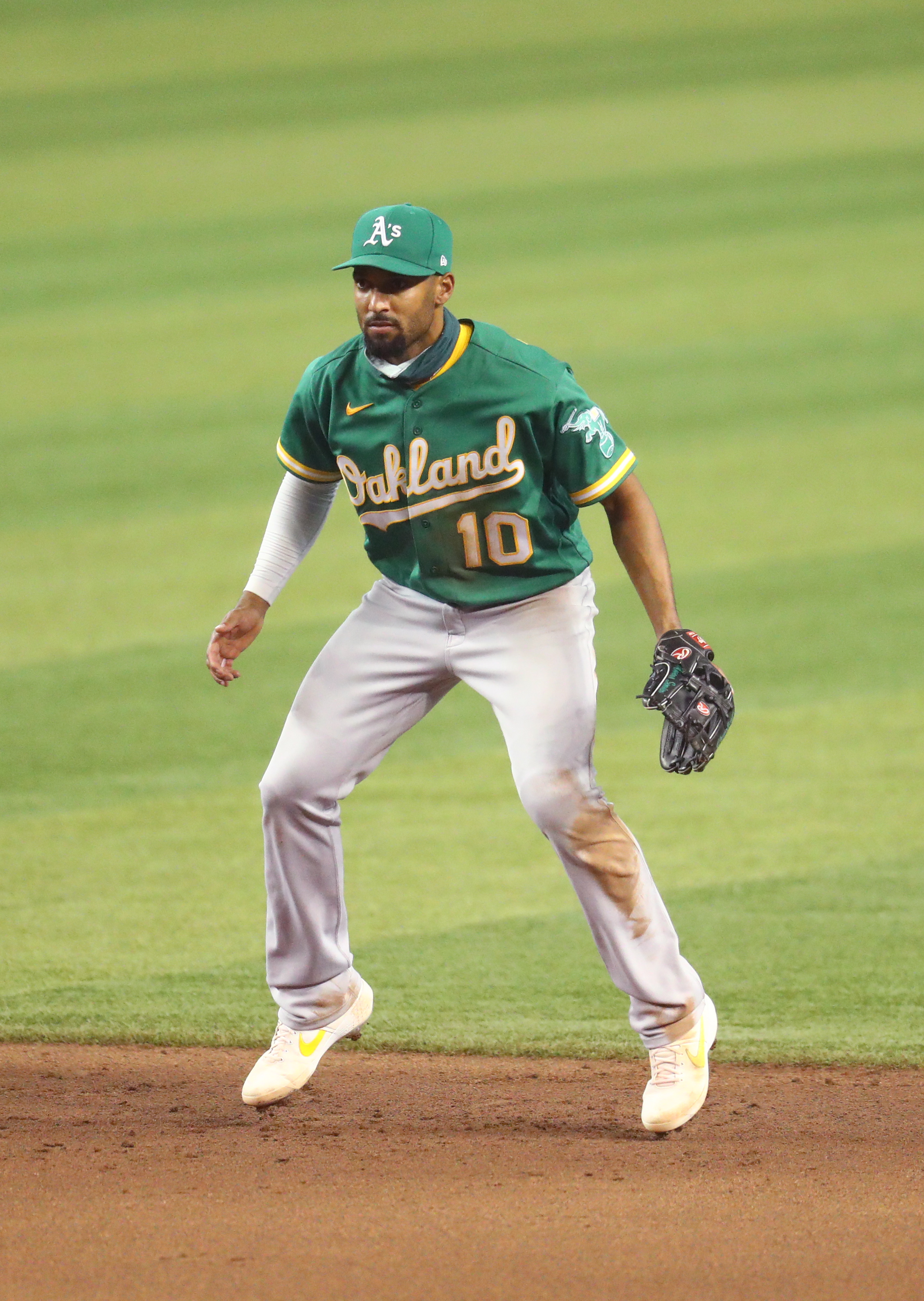
In the field, Semien went from +12 Defensive Runs Saved to -5. Outs Above Average wasn’t particularly kind to his 2020 work, either (-4). It’s worth mentioning that Ultimate Zone Rating still pegged him as a plus defender, with his 4.8 UZR/150 nearly matching the prior season’s 5.0. On a more rudimentary level, Semien made seven errors in 451 innings in 2020 compared to just 12 errors in 1435 frames a year ago.
The difficulty of evaluating players’ successes and failures in a wholly unique 2020 season is plain to see. But for both the A’s and for other clubs who may hold interest in Semien, it’s particularly challenging. Anything close to his 2019 output would’ve made him a lock to receive an $18.9MM qualifying offer, but the Oakland org now must wonder whether he’d accept such an offer and whether they’d want him back at that rate. Other clubs will be left to wonder whether the 2019 season was a fluky outlier or whether he was on player on the rise whose 2020 struggles can be attributed to myriad factors associated with this unprecedented season.
Perhaps further complicating matters for the A’s is that they have a second player who looks worth of a qualifying offer: closer Liam Hendriks. Such a notion would’ve sounded laughable as recently as 2018, when Hendriks was put through outright waivers and went unclaimed. However, he’s come back with a vengeance and emerged not only as Oakland’s closer but as the top free-agent reliever on this year’s market and one of the best relievers in the game, period.
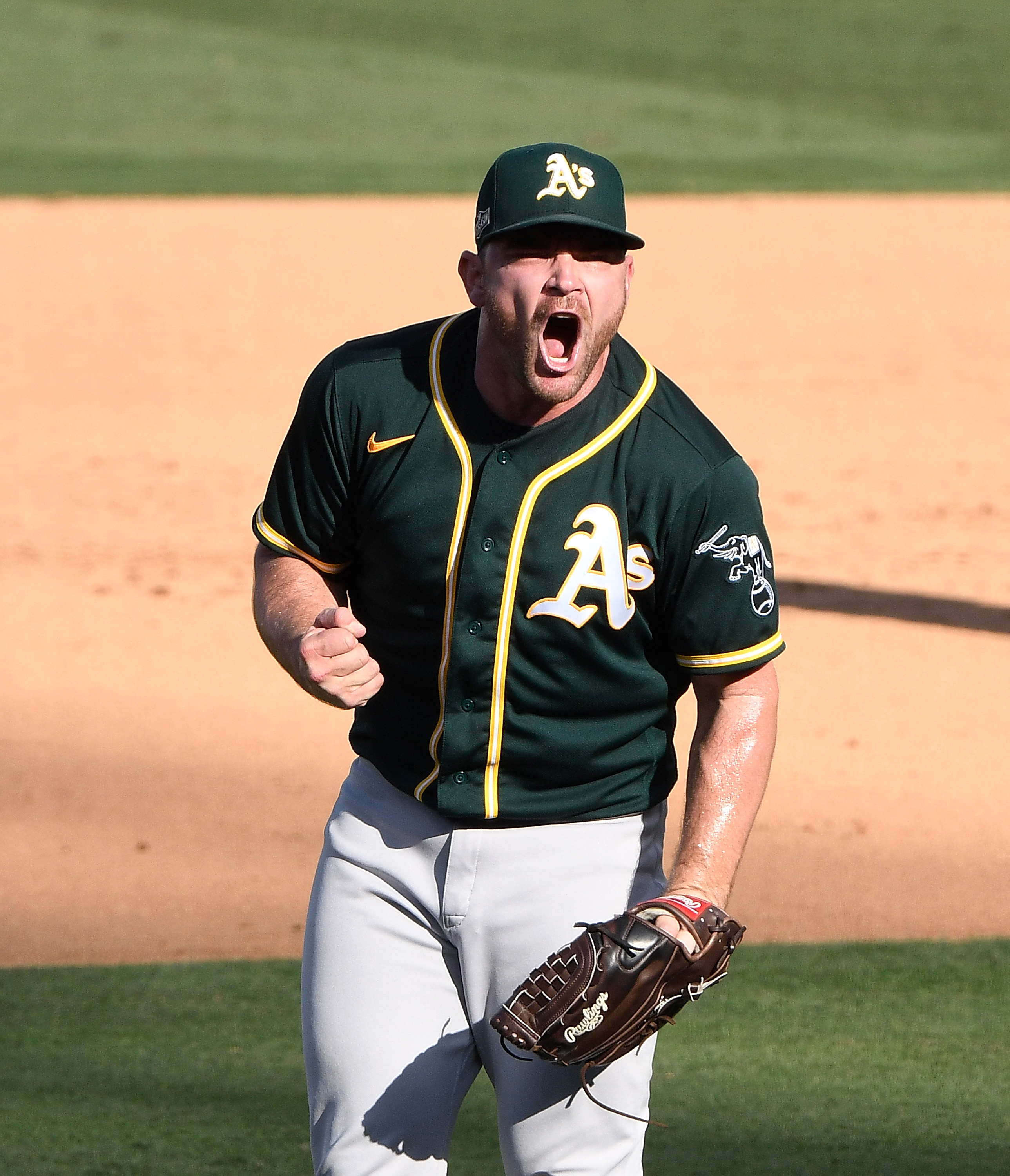
Over the past two seasons, Hendriks has a ridiculous 1.79 ERA, 1.70 FIP and 2.95 xFIP with averages of 13.1 strikeouts and 2.0 walks per nine innings pitched. He’s posted a superhuman 17.6 percent swinging-strike rate — including a 19 percent rate in 2020. Meanwhile, he induced chases on pitches out of the strike zone at a whopping 38.1 percent this year (35.1 percent dating back ti ’19). That he was named reliever of the year in the American League came as little surprise.
On many clubs, making a qualifying offer to Hendriks would be a no-brainer. However, the A’s perennially operate with one of the league’s lowest payrolls and are just months removed from having to be publicly pressured into paying their minor leaguers a $400 weekly stipend. An $18.9MM salary on a reliever could well be something they’re not prepared to risk. From Hendriks’ vantage point, he’s just north of $12MM in career earnings, so an $18.9MM paycheck would surely be tempting.
At the same time, Hendriks surely took note when a less-dominant reliever, left-hander Will Smith, rejected a qualifying offer last year and still secured a three-year, $40MM deal with the Braves. If his camp believes such a deal is out there, then rejecting would be a better move; even in a worst-case scenario, he’d surely be able to command a sizable one-year deal in free agency — albeit likely not at that $18.9MM level. But if Hendriks believes the downside of rejecting a qualifying offer is, say, a one-year deal at $10MM, he’d be risking the $8.9MM difference for a multi-year deal that guarantees him perhaps $20MM or more beyond the value of the qualifying offer.
All of this, of course, could be a moot point. The A’s might decide that they don’t want to risk a qualifying offer for either player. They’re already on the hook for $16.5MM to Khris Davis, $7.25MM to Stephen Piscotty and $4MM to Jake Diekman next year. They’ll also see both Matt Chapman and Matt Olson receive sizable salary bumps as they enter arbitration for the first time — the headliners in a class which also features Sean Manaea, Chris Bassitt, Mark Canha and Frankie Montas, among others. Projecting arbitration salaries for that bunch is trickier than ever given the shortened season and revenue losses, but they should command more than $20MM.
There are some split camps on how the A’s will proceed on this front. MLB Network’s Jon Heyman and USA Today’s Bob Nightengale suggested on the former’s podcast last week that they still feel there’s a good chance Semien will receive an offer. Susan Slusser of the San Francisco Chronicle tweeted recently, however, that a qualifying offer for Semien may not be realistic given the heft of that would-be salary.
The A’s were already slated to head into the 2020 season with what would’ve been a record payroll, just north of $100MM, prior to prorating this year’s salaries. Between the guarantees to Davis, Piscotty and Diekman; the arbitration raises to Chapman, Olson, Manaea, Bassitt, Canha and Montas; and the would-be $18.9MM salaries to Semien and Hendriks (should they accept), the A’s would already be close to $90MM. That’s before factoring in pre-arbitration players to round out the roster and any offseason additions they might hope to make.
Frankly, it’s difficult to see this club being willing to take this type of risk, although there’s an argument to be made in favor of both. A one-year deal for Semien would prove to be a nice value, for instance, if he rebounds to something between his 2019 and 2020 levels. And Smith’s contract with the Braves last year certainly lends credence to the idea that Hendriks could reject, which would give the A’s a valuable compensatory draft pick if he departs.
Let’s open this up for MLBTR readers to weigh in on a pair of questions:
Should the A’s make a qualifying offer to Semien and/or Hendriks? (Link to poll for Trade Rumors mobile app users)
*Should* the A's make a qualifying offer to Marcus Semien and/or Liam Hendriks?
-
They should make a qualifying offer to both. 35% (1,807)
-
They shouldn't make a qualifying offer to either. 24% (1,258)
-
They should make one to Hendriks, but not Semien. 22% (1,139)
-
They should make one to Semien, but not Hendriks. 19% (964)
Total votes: 5,168
Will the A’s make a qualifying offer to Semien and/or Hendriks? (Link to poll for app users)
*Will* the A's make a qualifying offer to Marcus Semien and/or Liam Hendriks?
-
They won't make one to either player. 42% (1,344)
-
They'll make one to Semien but not Hendriks. 22% (705)
-
They'll make one to Hendriks but not Semien. 19% (613)
-
They'll make one to both players. 17% (553)
Total votes: 3,215
Liam Hendriks, Devin Williams Win Reliever Of The Year Awards
Liam Hendriks of the Oakland Athletics and Devin Williams of the Milwaukee Brewers have won the Reliever of the Year Award in their respective leagues, per MLB.com (via Twitter).
Hendriks takes home the Mariano Rivera American League Reliever Of Year Award after saving 14 games in 24 appearances with a 1.78 ERA/1.14 FIP and 13.1 K/9 to 1.1 BB/9 across 25 1/3 innings. It was the second consecutive stellar campaign for the native Australian. He posted a 1.80 ERA/1.87 FIP in 75 games (85 innings) while notching 25 saves in 2019. In the postseason, he impressed with a scoreless 3-inning outing with the season on the line in game three of the ALDS against Houston. Unfortunately, it would be his final appearance of the year, as Oakland would bow out of the postseason tourney in the next game.
Hendriks becomes the first A’s player to win the award, which replaced the Rolaids Relief Award in 2014. It’s particularly good timing for Hendriks, as the 2019 All-Star heads into free agency this winter at the pinnacle of his career.
Williams takes the Trevor Hoffman National League Reliever Of The Year Award from his teammate Josh Hader, who won the previous two seasons. It’s quite the achievement for the unheralded rookie, who rode his trademark change-up to a 0.33 ERA/0.86 FIP in 27 innings across 22 games with an absurd 17.7 K/9 to 3.0 BB/9 in 2020. The 26-year-old unfortunately missed the playoffs due to right shoulder soreness. He’ll be one of the more interesting cases to track next season, assuming a return to the standard 162-game season.
How The Rays Traded A Top-100 Prospect For A 29-Year-Old Rookie And Came Away Winners
Nick Anderson is not exactly a household name – and he may never be. For most of last season, Anderson was a 28-year-old rookie non-closer pitching for the Marlins (he turned 29 in July). That’s not a recipe for superstardom.
After a deadline deal brought him to Tampa Bay, Anderson did get a moment in the spotlight, striking out four of the five batters he faced in the Rays’ Wild Card Game win over the A’s. That was nothing new for Anderson, who spent most of the season racking up strikeouts at an alarming rate.
Between Tampa and Miami, Anderson appeared in 68 games in 2019, totaling 65 innings with a good-but-not-great 3.32 ERA. The peripherals speak to a much more dominant campaign for the former independent leaguer. His 2.35 FIP suggests a potential high-leverage bullpen arm, while the 2.1 fWAR he racked up confirms it: he tied for 5th overall in the majors among relievers. That puts him on the same plane with firemen/closers like Taylor Rogers, Brandon Workman, Felipe Vazquez and Aroldis Chapman. Make no mistake: Nick Anderson is an elite bullpen piece.
Credit the Marlins for picking up Anderson and turning him into a top-100 prospect in Jesus Sanchez. Sanchez may have lost some luster as a prospect, but he still landed at #96 on Fangraphs’ top-100 list. Yes, he was #47 on their updated list after starting the year at #54 in 2019, but he’s still just 22-years-old and posted a promising line of .246/.338/.446 in the homer-happy PCL after the trade. As a 21-year-old, he was more than 5 years younger than the average player in the PCL.
For their part, the Marlins acquired Anderson for Brian Schales after the Twins signed Anderson from the independent league. The 6’5″ Anderson put up good numbers in the Twins’ system from 2015 to 2017, but he started to pop in 2018, striking out 13.2 hitters per nine innings in Triple-A. At the time, the deal was most notable for bumping Derek Dietrich from the Marlins’ roster.
But Anderson became a different animal entirely during his breakout in 2019. His 15.23 K/9 ranked fourth among relievers in the majors, behind only strikeout artists Edwin Diaz, Matt Barnes and Josh Hader. After joining the Rays, Anderson went into overdrive, striking out a ridiculous 17.3 batters per nine innings. Including his Marlins work, the Minnesota native finished in the bottom 9th percentile in hard hit percentage and bottom 12th percentile in exit velocity.
In adding Anderson from the Marlins, the Rays got a guy who has a legitimate chance to be one of the most dominant relievers in all of baseball, and they have him at the league minimum for another two seasons. This is a guy the Rays can afford, which makes the deal all the more important from their perspective. There’s a reason they could include Ryne Stanek in the deal, a guy who throws 100+ mph and had a 3.40 ERA at the time. There’s a reason they could deal Emilio Pagan to the Padres after he broke out with a 2.3 bWAR season of his own in 2019. That reason is Nick Anderson.
So how does he do it? For Anderson, the recipe is fairly simple. He throws a fastball that averages 96 mph with good spin that he locates up in the zone. His “other” pitch is a curveball – but it’s one of the best in the game. By Fangraphs’ pitch values, his curveball was the second most valuable such offering from a reliever in 2019, behind only Workman’s bender. Batters managed an expected batting average of just .134 off Anderson’s curveball while registering a whiff rate of 54.2%. As of right now, Anderson’s hook is one of the deadliest weapons in the sport.
Anderson could also be in line for some positive regression this season, as opponents had a higher-than-average .349 BABIP against him in 2019. A 14.5 % HR/FB rate was also higher than Anderson had yielded at any point in the minors, and if that number comes down, Anderson could be an even more potent asset for the Rays moving forward.
His ceiling is no lower than Liam Hendriks‘ amazing 2019, though Hendriks has a bit more versatility in his offspeed stuff. Hendriks, of course, was the most productive reliever in all of baseball last season, so there aren’t a ton of comps out there that make sense for him. Anderson, however, is one that does.
How Did The A’s End Up With Baseball’s Most Productive Reliever?
Okay, I’m sure some will take umbrage with the title here. But I chose my words pretty carefully. Liam Hendriks probably wasn’t baseball’s most effective reliever in 2019. He almost assuredly isn’t its best from a true-talent perspective. And the Aussie certainly isn’t its most valuable when it comes to control rights and contracts. (He’ll be a free agent at the end of the 2020 season.)
But … Hendriks did lead Major League Baseball’s bullpen denizens with a whopping 3.8 fWAR last year … the loftiest single-season tally since Eric Gagne‘s magical 2003 effort. (It’s 3.9 if you include his two “opener” outings.) Hendriks was also worth 3.5 rWAR, so it wasn’t just a quirk of the FIP-based Fangraphs tabulations. Prefer RA9 WAR? He was even more dominant.
But, you may protest, wins above replacement isn’t the best measure of a reliever. That’s no doubt true. The precise tabulations don’t really matter for our purposes here. Hendriks was in part able to out-WAR his fellow relievers because he threw so many innings — 85 in 75 appearances, one of the heaviest workloads in the game — but that just makes things more impressive. He ranked among the leaders in most major measures of effectiveness as well … including fielding-independent pitching measures FIP (2nd), xFIP (18th), and SIERA (5th).
This showing was exceedingly impressive, no matter the details. It was also … decidedly not consistent with Hendriks’s prior efforts on an MLB mound. Entering the 2019 season, his big league stat sheet reflected 406 innings of 4.72 ERA pitching.
How on earth did we get here?
We can mostly ignore the earliest stage of his career, when Hendriks — once a prospect of some note with the Twins — failed to make it as a starter. The Minnesota organization cut bait after 156 innings of 6.06 ERA pitching. Hendriks ultimately landed with the Blue Jays after a round of offseason waiver-wire musical chairs in the 2013-14 offseason. He first went from the Twins to the Cubs after the Minnesota org signed Phil Hughes. The Orioles prevented the Cubs from slipping Hendriks through waivers but cut him loose when they inked Ubaldo Jimenez.
The Toronto organization only gave Hendriks a few outings during the ensuing 2014 season before sending him to the Royals in a deal for Danny Valencia. Hendriks did have good Triple-A numbers that year. When the Royals needed 40-man space in the ensuing offseason, the Jays stepped back in and grabbed Hendriks back in a DFA limbo swap.
Finally, the stage was set for success. Hendriks moved into the bullpen in Toronto … and immediately exhibited a huge uptick in velocity. He was sitting over 95 mph in a relief capacity and having much more success at generating swings and misses. In 2015, Hendriks turned in 64 2/3 innings of 2.92 ERA ball with 9.9 K/9 against 1.5 BB/9. He didn’t allow many home runs (0.4 per nine) and even generated a strong 46.3% groundball rate (the only time he has ticked up in that department).
The Blue Jays decided to cash in at this point, shipping Hendriks to Oakland in exchange for steady veteran swingman Jesse Chavez. He continued the strong work for the most part. While his ERA trickled north, Hendriks still carried good peripherals and gave the A’s a lot of useful innings in his first two campaigns. Taking his 2015-17 efforts as a whole, Hendriks was a notable contributor: he threw between 64 and 64 2/3 frames in each season while compiling a 3.63 cumulative ERA and a total of 3.9 fWAR (precisely the tally he managed in the 2019 season alone).
Before Hendriks could break out, he had to go through the roughest patch since his time as a starter. He struggled with a groin injury and threw eleven terrible innings before being dumped to make way for Edwin Jackson. Hendriks sailed through waivers and could’ve elected free agency, but decided to stay with the A’s since doing otherwise would’ve meant giving up the remainder of his $1.9MM arbitration salary.
Expectations were low when the A’s unceremoniously brought Hendriks back onto the MLB roster for the stretch run with the September active roster expansion. But he had transformed himself while away and the results were immediately apparent — at both Triple-A (43:4 K/BB in 25 1/3 innings) and the big leagues (two earned runs, 10:3 K/BB in 13 innings). What changed? As Rian Watt of Fangraphs wrote recently, A’s pitching coach Scott Emerson credits Hendriks for having “transformed his body” and with it his “mindset” and “approach” during his demotion. Oh, and Hendriks added velocity — it was apparent late in 2018 and continued in 2019 — and figured out a better means of locating his curve to complement the heat.
That good old-fashioned hard work has served Hendriks well in the past; he credited strength training and clean living for his original, pre-2015 breakout. But this time he moved into much more exclusive territory, delivering a 96.8 mph average fastball and generating a big 17.0% swinging-strike. Hendriks ended up fifth among all relievers with 32.0% K%-BB%.
Remarkably, even as the A’s watched Blake Treinen fall from his perch (a 3.6 fWAR 2018 season), they were able to turn over the ninth inning to a similarly dominant hurler. Hendriks ended up locking up 25 saves for Oakland last year. He’s earning a reasonable $5.3MM in his final season of arbitration eligibility — which will actually be his tenth consecutive season of MLB action, owing to all the ups and downs over the years.
As for the future, we’ll have to see whether Hendriks can keep this going. But he only turned 31 in February, so he could have many good seasons ahead.