
West Notes: Belt, Bellinger, Gonzales, Pomeranz, Adell
The Giants are placing first baseman Brandon Belt on the 10-day injured list with a mild left oblique strain and recalling infielder Jason Vosler, per manager Gabe Kapler (via Susan Slusser of the San Francisco Chronicle). Kapler doesn’t expect Belt to miss more than 10 to 14 days, and in the meantime, Darin Ruf will get the lion’s share of playing time at first base. Even a short absence for Belt could be a tough blow for the contending Giants, though, considering he’s off to a .228/.350/.447 start with eight home runs in 137 plate appearances. However, Ruf has also hit well – albeit over a smaller sample of 97 PA – with a .228/.361/.506 line and six long balls.
- The Dodgers are hopeful that slugger Cody Bellinger will return from the injured list on Saturday, manager Dave Roberts told Juan Toribio of MLB.com and other reporters. Los Angeles has gone nearly the entire season without Bellinger, who suffered a hairline fracture in his left leg and hasn’t played since April 5. Nevertheless, the reigning World Series champions have more than held their own in Bellinger’s absence, having won eight straight to improve to 30-18.
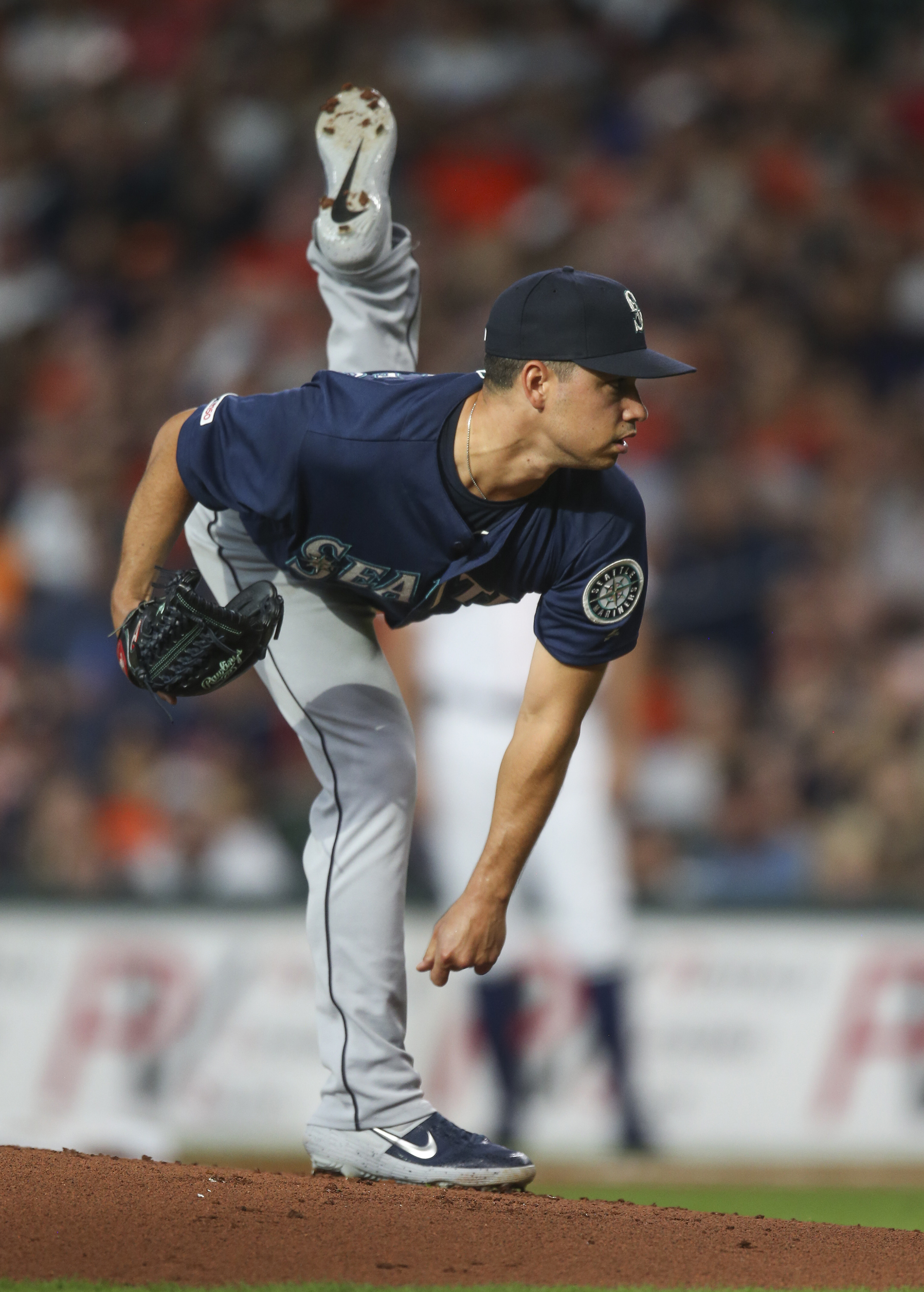
- Mariners left-hander Marco Gonzales, out since April with a forearm strain, is making progress and could come back during the team’s upcoming homestand (May 27-June 2), per Adam Jude of the Seattle Times. Gonzales was one of the top starters in the league year, but he’s off to a rough beginning this season between the injury and his performance. Before going on the IL, Gonzales recorded a surprisingly poor 5.40 ERA/4.87 SIERA in 28 1/3 innings, and his walk rate skyrocketed compared to 2020. He issued walks just 2.5 percent of the time then, but he’s up to 9.1 now.
- Padres reliever Drew Pomeranz has suffered a setback in his recovery from a left shoulder impingement, manager Jayce Tingler announced to AJ Cassavell of MLB.com and other reporters. The Padres will shut Pomeranz down from throwing for about a week and then decide how to proceed. Unfortunately, injuries have been a common problem since Pomeranz’s career began in 2011. When healthy, though, he has been a revelation for the Padres since they inked him to a four-year, $34MM contract before 2020. Dating back to then, the 32-year-old has registered a 1.67 ERA with a highly impressive 38 percent strikeout rate in 32 1/3 innings, including 13 2/3 this season.
- Despite his encouraging start to the season at the Triple-A level, the Angels have not recalled top outfield prospect Jo Adell. That doesn’t look as if it’s going to change imminently, as general manager Perry Minasian said Tuesday (via Bill Shaikin of the LA Times): “He’s making some strides. He’s not there yet.” While the 22-year-old Adell has hit a power-packed .266/.326/.696 with 10 home runs in 86 plate appearances, he has posted a high strikeout rate of 33.7 percent at the same time. Strikeouts have been an issue over the past few years for Adell, including during his major league debut last season. He fanned in 41.7 percent of his 132 PA then and batted a woeful .161/.212/.266.
Mariners Place Marco Gonzales On Injured List
The Mariners are placing left-hander Marco Gonzales on the 10-day injured list after a Wednesday MRI revealed a left forearm strain, tweets Corey Brock of The Athletic. Manager Scott Servais tells reporters that Gonzales will miss at least “a couple starts.” He’s already begun treatment. Righty Domingo Tapia is being called up from the taxi squad to take Gonzales’ spot on the roster, tweets Ryan Divish of the Seattle Times.
It’s been a rough start to the season for the typically steady Gonzales. The 29-year-old has been the Mariners’ best pitcher in recent years and quietly been one of the league’s more effective lefties overall. From 2018-20, the former Cardinals first-rounder pitched to a 3.85 ERA with a 19.5 percent strikeout rate, a 5.2 percent walk rate and a 41.8 percent grounder rate. Along the way, Seattle inked Gonzales to a four-year, $30MM contract extension that includes a club option for the 2025 season as well.
Gonzales hasn’t looked much like himself this season, logging an ugly 5.40 ERA (4.80 SIERA) through his first five starts, which have lasted just 28 1/3 frames. Gonzales’ 19 percent strikeout rate is down from last year’s 23.1 percent (although close to his combined 2018-20 rate), but his 9.1 percent walk rate is his worst since his 2014 rookie campaign in St. Louis. His 88.1 mph average fastball velocity is also 1.8 mph south of his career mark.
However, it doesn’t appear that the forearm strain is at the root of those issues — or at least, Gonzales isn’t using it as any kind of excuse. Divish tweets that Gonzales says he only felt the discomfort crop up after his last outing. And to be fair to Gonzales, he’s fared quite a bit better in his three most recent starts than he did in his first two outings of the year. The lefty held the Dodgers to a run on six hits and a walk last week before limiting Houston to a pair of runs in six frames as recently as Monday.
Gonzales joins James Paxton (season-ending surgery) and Nick Margevicius (shoulder inflammation) as rotation arms on the injured list for Seattle. With that group sidelined, the M’s will look to Justus Sheffield, Chris Flexen, Yusei Kikuchi and Justin Dunn in the rotation. Their starter for Saturday’s game is still listed as TBD, though long relievers Ljay Newsome and/or Robert Dugger could perhaps step into that spot to head up a bullpen game.
Seattle also has some notable top pitching prospects thought to be on the cusp of big league readiness — 2018 first-rounder Logan Gilbert chief among them. Gilbert, the game’s No. 35 overall prospect at Baseball America, breezed through three minor league levels in his lone season of minor league ball in 2019. Through 135 levels spread across Class-A, Class-A Advanced and Double-A, he worked to a 2.13 ERA with 165 strikeouts (31.7 percent) against just 33 walks (6.3 percent).
Mariners Likely To Open With Six-Man Rotation
The Mariners are planning to begin the season with a six-man rotation in place, general manager Jerry Dipoto told reporters yesterday (Twitter link via Greg Johns of MLB.com). That tactic should allow the Seattle club the opportunity to manage the innings of younger arms on a per-game basis while also maximizing their opportunity to evaluate some up-and-coming arms who could factor into the long-term outlook.
Recently extended southpaw Marco Gonzales seems likely to get the Opening Day nod as the Mariners’ most established starter, and the team will hope for better results from 29-year-old lefty Yusei Kikuchi in the second season of his uniquely structured free-agent deal. Kikuchi, who had established himself as one of Nippon Professional Baseball’s premier arms prior to 2019, is locked in at $43MM from 2019-21. After the contract’s third year, Seattle can pick up a four-year, $66MM “option.” If the club declines to do so, Kikuchi can instead exercise a $13MM player option. In essence, he’s guaranteed $56MM over four years, while the M’s have the opportunity to lock him up at what would be a total of seven years and $109MM if he takes his game to a new level between now and the completion of the 2021 campaign.
Beyond that pair of lefties, Seattle will get longer looks at southpaw Justus Sheffield and righty Justin Dunn — two key trade acquisitions that came over in the 2018-19 offseason. Sheffield, a former first-rounder and longtime top prospect, was the headline piece of the trade that sent James Paxton to the Yankees. Dunn came to the Mariners alongside vaunted outfield prospect Jarred Kelenic and righty reliever Gerson Bautista in the Robinson Cano/Edwin Diaz blockbuster.
The Mariners also rolled the dice on a pair of low-cost free agents this winter, nabbing former division rival Kendall Graveman and former Mariner Taijuan Walker on one-year pacts. Both have seen their careers slowed by 2018 Tommy John surgery. Graveman, who had his procedure in late July that year, didn’t make it back to the big leagues in 2019. Walker’s surgery was in April 2018, but a strained shoulder capsule limited him to one inning in 2019, which came in the final game of the season.
As one would expect from a rebuilding club, the Mariners have plenty of other young options to dream on, though the organization’s very best pitching prospects are likely a bit too far down the pipeline to factor into the 2020 season. The Mariners have selected a college right-hander with their top pick in each of the past three drafts — Logan Gilbert, George Kirby and now Emerson Hancock — and while that trio is unlikely to pitch in the Majors this year (Gilbert being the lone plausible exception), Dipoto did suggest that they and other top prospects could be on the taxi squad primarily for developmental purposes (link via Ryan Divish of the Seattle Times). Working out with other taxi squad members would give that promising group critical developmental reps in a year where no formal minor league season is expected to be played.
An Unpopular Trade Paying Off In Seattle
The Mariners’ rebuild began in earnest following a disappointing finish to the 2018 season, when GM Jerry Dipoto first began talk of re-imagining his roster. The M’s have added a bevy of prospects since that time, highlighted by Jarred Kelenic and Justus Sheffield, but one of their most important long-term pieces was acquired on July 21 in 2017, when the club was still aiming for immediate contention.
That day saw Seattle trade slugging minor league outfielder Tyler O’Neill to the Cardinals in exchange for left-hander Marco Gonzales. The now-28-year-old Gonzales has become a fixture in the rotation, but the trade wasn’t exactly well-received among M’s fans at the time. The club was below .500 but just 1.5 games back from a Wild Card spot at the time of the swap. Dipoto had been trying to acquire young pitching, hoping to add to his core while also remaining competitive in a top-heavy American League. (The 85-win Twins claimed the league’s second Wild Card position that year.)
The consensus among Mariners fans at the time of the swap was, essentially, “Why would they do this?” Social media reactions to the deal weren’t favorable, and looking through the comments on the trade’s writeup at MLBTR, FanGraphs or most other sites reveals a similarly perplexed set of replies. O’Neill had entered that year as one of the game’s 100 best prospects and the second-best in the Mariners organization, while Gonzales had made just one appearance in the Majors since returning from 2016 Tommy John surgery. He was having a nice season in Triple-A, but most scouting reports on him pegged Gonzales as a mid-rotation arm, at best. In addition to that Tommy John surgery, he battled shoulder troubles in 2015.
Injury risk or not, Dipoto was undeterred. The Mariners’ GM spoke the day before the trade about only being willing to deal from his premium prospects if it meant acquiring a long-term rotation piece, and days after the swap he called Gonzales “about as big-league-ready as a Triple-A pitcher could be.” Sure enough, Gonzales was in the big leagues less than three weeks later.
The initial results did little to assuage the concerns of Seattle fans. Gonzales pitched just 36 2/3 innings of 5.40 ERA ball down the stretch as the Mariners again fell shy of the postseason. O’Neill hit .253/.304/.548 with a dozen homers in 37 Triple-A games following the trade that year. On-base questions notwithstanding, the power was still impressive and Mariners fans were skeptical of the lefty for whom O’Neill had been shipped out.
Despite that lackluster showing, Gonzales opened the 2018 season in the Seattle starting five. His early work didn’t inspire much confidence, but after four shaky starts, Gonzales settled into a groove and pitched to a 3.60 ERA over his final 150 innings, averaging 7.6 K/9 and 1.7 BB/9 along the way. In 2019, Gonzales posted a 3.99 ERA that was nearly identical to his 4.00 ERA from 2018 — but he did it in a larger sample of 203 frames.
Setting aside his rocky debut in 2018, Gonzales has given the Mariners 369 2/3 frames of 3.99 ERA ball with an even better 3.83 FIP, 7.1 K/9, 2.1 BB/9, 0.97 HR/9 and a 42.5 percent ground-ball rate. From 2018-19, he was worth 6.0 bWAR and 7.1 fWAR. The rebuilding Mariners made clear that they view Gonzales as a core piece back in February, signing the southpaw to a four-year, $30MM contract extension (2021-24) that also contains a $15MM club option for the 2025 season.
The trade would likely look like a solid one for the Mariners even if O’Neill had blossomed into an everyday corner outfielder. That hasn’t happened yet, however. While Gonzales was solidifying himself in the Mariners’ rotation, O’Neill was bouncing back and forth between Triple-A and St. Louis, hitting a combined .258/.307/.454 with 14 home runs in 293 plate appearances. The power has been good but not elite, and O’Neill’s contact struggles have indeed been magnified against MLB pitching; he’s punched out 110 times in those 293 plate appearances (37.5 percent).
To be fair to O’Neill, he hasn’t exactly been given a real opportunity to win an everyday job. Just months after he was traded to St. Louis, the Cardinals went out and acquired two years of control over Marcell Ozuna in a trade that sent Sandy Alcantara, Zac Gallen and Magneuris Sierra to the Marlins. With Ozuna, Dexter Fowler, Tommy Pham (in 2018) and Harrison Bader all logging considerable time in the St. Louis outfield, opportunities for O’Neill have been sparse. But the very fact that the Cards felt it necessary to pursue a Giancarlo Stanton acquisition and then pull off a deal for Ozuna speaks to some level of question in O’Neill’s readiness.
The Cards didn’t add a left fielder to replace the departing Ozuna this winter, but they also have uber-prospect Dylan Carlson nearing the Majors. Even if Carlson seizes an outfield spot, the likely implementation of the universal DH will give O’Neill some additional opportunities to get into the lineup, so perhaps he’ll finally get the chance to justify the deal from the St. Louis end. The Cards haven’t exactly been hurting for pitching even without Gonzales in the fold, but there’s no denying he’s been the more valuable piece of the straight-up swap to this point.
The Gonzales/O’Neill trade won’t be looked back upon as any time of blockbuster, but it offers some reminders when judging future trades:
- Prospect rankings are useful and entertaining, but it’s easy to overemphasize them. Prospect values are in a constant state of flux. Even a few weeks and certainly a couple months can change the opinion on a prospect. Whether it’s adding a new pitch, adding/losing velocity, outgrowing a position, altering mechanics at the plate or any number of other changes a player can exhibit, a prospect’s value can alter in a hurry.
- It’s too easy to write off post-hype prospects. Gonzales himself was a first-round pick and top-100 prospect prior to injury troubles. At the time of the O’Neill trade, he was less than two years removed from ranking as the game’s No. 50 prospect, per Baseball America. A recent top prospect with some big league experience and four to five years of control is generally still a valuable piece even if he’s not a star. MLBTR’s Connor Byrne recently looked at another player fitting this mold: Pittsburgh’s Joe Musgrove.
- Position scarcity matters. We’ve seen corner outfielders and first baseman go for smaller returns on the trade market and in free agency in recent seasons. Part of the Mariners’ calculus was surely that a corner outfielder with some on-base questions was easier to come by than an affordable mid-rotation starter, even if the latter carried considerably more risk.
In some regards, the end result of this trade is common. “Team gets one of its best pitchers by trading away key prospect” is hardly a unique storyline in baseball, but the manner in which the Mariners went about this particular instance of that narrative isn’t typical. The result speaks for itself right now, though. And while O’Neill can still change how we look at the deal in the long run, it’s worked out about as well as the Mariners could’ve hoped.
Mariners Extend Marco Gonzales
February 4: Gonzales will receive a $1MM signing bonus and be paid salaries of $5MM in 2021, $5.5MM in 2022, $6.5MM in 2023 and $12MM in 2024, tweets Mark Feinsand of MLB.com. There’s no buyout on the $15MM option for the 2025 season.
February 3: The Mariners have announced a contract extension with southpaw Marco Gonzales. He’s now guaranteed $30MM from 2021 through 2024, Ken Rosenthal of The Athletic tweets. The deal includes a $15MM club option for another campaign, per MLB Network’s Jon Heyman (Twitter link).
Though it has been a fairly quiet winter for the Seattle organization, the club has now managed to strike two notable long-term deals. The other was a surprising pre-debut pact with first base prospect Evan White.
Gonzales, who was already under contract for the 2020 season, had been on track to qualify for arbitration next winter. He’d have reached the open market at the end of the 2023 campaign. Instead, the M’s have now secured his services for one would-be free agent campaign while picking up an option for another.
As he’s now closing in on his 28th birthday, Gonzales will now be under team control through his age-33 campaign. Given the costs involved, it was a pretty easy bet for the team to make. And it’s equally understandable that the CAA Sports client was interested in locking in earnings at this stage of his career.
Gonzales has been quite effective since coming over from the Cardinals in a mid-2017 trade. Over the past two seasons, he has carried a 3.99 ERA over 369 2/3 innings with 7.1 K/9 and 2.1 BB/9. While there’s nothing especially about his stuff or his peripherals, Gonzales has successfully tamped down on the long ball and studiously avoided hard contact.
It’s certainly not the typical profile of an extension target. Gonzales sits in the 90 mph range with his fastballs and managed only a 7.9% swinging-strike rate last year. Neither is he a groundball monster. But he was able to keep hitters off balance by utilizing five pitches with equivalent frequency — none less than 15.9% of the time and none more than 24.1%.
Photo courtesy of USA Today Sports Images.
Mariners Rumors: Haniger, Gonzales
Although he’s coming off a season filled with adversity, Mariners outfielder Mitch Haniger remains an appealing trade target around the league, Ken Rosenthal of The Athletic reports (subscription link). The Mariners would consider trading Haniger, but left-hander Marco Gonzales doesn’t appear to be available, per Rosenthal.
This arguably isn’t an ideal time for the Mariners to part with Haniger, whom a ruptured testicle limited to 283 plate appearances in 2019. When Haniger did play, he experienced a drop in production, as the 28-year-old hit .220/.314/.463 with 15 home runs and 1.1 fWAR. Before that, Haniger was somewhat quietly one of the majors’ most valuable outfielders from 2017-18, during which he slashed .284/.361/.492 with 42 homers and 7.0 fWAR across 1,093 trips to the plate.
As you’d expect, there was trade interest last winter in Haniger. The Mariners elected to hold him instead of selling high, though, and now he likely has less trade value after a difficult season. But Haniger still has three arbitration-eligible seasons left, and he’ll earn a projected $3MM in 2020 – factors that may help make him more intriguing than the best outfielders in this free-agent class (Nicholas Castellanos, Marcell Ozuna, Corey Dickerson and Yasiel Puig, to name a few).
As things stand, Haniger still looks like the Mariners’ preeminent outfielder, though they do have up-and-coming building blocks in Kyle Lewis and touted prospects Jarred Kelenic and Julio Rodriguez. While Kelenic and Rodriguez aren’t ready for the bigs yet, Lewis debuted at the game’s highest level in 2019 and impressed – albeit over just 75 PA. Rookie Shed Long also encouraged, though he may be better cut out for second base. Meanwhile, regulars Mallex Smith and Domingo Santana were merely replacement-level players in 2019.
Turning to the Mariners’ rotation, the soon-to-be 28-year-old Gonzales comes with even more control than Haniger. Gonzales still has four years remaining, including one more on the unconventional contract he signed with the Mariners last offseason. He’ll earn $1MM in 2020, which will continue to make Gonzales a steal for Seattle, with which he amassed a career-best 203 innings of 3.99 ERA/4.15 FIP pitching this year. He’s hands down the top starter the Mariners have right now, and there’s little doubt Gonzales would bring back a haul from another club. However, it doesn’t appear trade-happy general manager Jerry Dipoto is in any hurry to ship him out.
Quick Hits: Realmuto, Mariners, Myers, Kia Tigers
The Marlins have put a very high price on J.T. Realmuto in trade talks, which isn’t surprising given Realmuto’s status as arguably the best catcher in baseball. Since Realmuto may never be as valuable as he is now, ESPN.com’s Buster Olney (subscription required) argues that Miami needs to swing a deal this winter rather than risk the chance that Realmuto is injured or has a downturn in production in 2019. Some rival teams feel that Realmuto will still be a Marlin on Opening Day since the team is simply asking for too much in return, possibly due to a feeling that they didn’t get enough back in last winter’s trades of Christian Yelich, Marcell Ozuna, and Giancarlo Stanton. Olney observes that the Nationals already made a quick pivot to another catcher in Kurt Suzuki, which could be a sign that other teams engaged in the Realmuto talks might also explore alternatives unless Miami lowers its demands.
More from around the baseball world as we wrap up Thanksgiving…
- With the trades of Mike Zunino and James Paxton, the Mariners have indicated that they plan to “step back” in 2019, as GM Jerry Dipoto told the Seattle Times’ Ryan Divish and other reporters. Divish explores what this strategy could mean for the rest of the Mariners’ offseason plans, particularly since Dipoto indicated the desire for a pretty quick turnaround, with the M’s theoretically ready to contend again as early as 2020. This means that longer-term pieces like Mitch Haniger, Edwin Diaz, and Marco Gonzales are less likely to be traded, as Dipoto “would have to be blown away to move players like that,” the GM said, though “we are going to stay open-minded to anything with a general ‘never say never.’ “
- An alternative to this partial Mariners selloff is proposed by Buster Olney, who argues in another subscription-only piece that the M’s should go into a full-blown fire sale, a la the complete teardowns the Cubs and Astros underwent to rebuild their franchises into World Series winners. Under Olney’s plan, everyone on Seattle’s roster would be available — he suggests Haniger could be shopped to teams that miss out on Bryce Harper, while an elite closer like Diaz has limited value on a team that isn’t preparing to immediately contend.
- The Mariners and Padres discussed a trade scenario that would’ve seen Jean Segura and Mike Leake go to San Diego with Wil Myers coming back to Seattle, though Divish hears from sources that the negotiations took place over two weeks ago and don’t appear to be ongoing. From San Diego’s perspective, MLB.com’s AJ Cassavell looks at the pros and cons of trading Myers, who is the most experienced and productive (and expensive) member of the crowded Padres outfield.
- Former big leaguers Roger Bernadina and Pat Dean won’t be returning to the Korea Baseball Organization’s Kia Tigers next season, according to a Yonhap News report, as the Tigers are reportedly looking to get younger. Jeremy Hazelbaker and Jacob Turner were both recently signed by the Tigers to fill the international player roster slots formerly occupied by Bernadina and Dean. Last appearing in MLB in 2014, Bernadina has performed very well in two seasons in the KBO, so it would stand to reason that he would consider signing with another Korean team if he isn’t interested in exploring a return to North American baseball.
Dipoto Downplays Possibility Of Mariners’ Rebuild
7:33pm: Dipoto told MLB.com’s Greg Johns at the GM Meetings that this morning’s reports were “clearly over-dramatized,” adding that the Mariners are “just too talented” to completely tear down the roster. That said, Dipoto also conceded that the Mariners are “open-minded to different ways we can get better” and expressed a desire to “re-imagine” the team’s roster while “gather[ing] as much talent as we can.”
Generally speaking, it seems as though the Mariners will be open-minded to moving shorter-term assets — Paxton and Zunino both have only two years of control remaining — while also trying to gather some controllable talent in order to supplement the pieces of the roster that remain into 2019 and beyond. The GM also suggested that the Mariners won’t rule out a reunion with Nelson Cruz, whom he called a “super human being” and a “wildly productive” player. But the team also has other needs, specifically in center field, Dipoto noted.
The column is rife with quotes from Dipoto on the offseason direction and the agile approach the Mariners will take toward offseason roster maneuverings and is worth a look for Mariners fans and those hoping that various Mariners players become available in trades.
10:48am: Facing a difficult path to improving their roster sufficiently to compete in the AL West, the Mariners are said to be weighing at least a partial sell-off of veteran assets. Jeff Passan of Yahoo Sports tweets that the organization is “considering a full-fledged teardown,” while Ryan Divish of the Seattle Times characterizes the situation as one in which the club will pursue the somewhat less dramatic path of “culling the roster of a few players who could actually bring back some younger talent to the organization” while also maintaining a competitive assortment of MLB players.
Whatever the precise course, it’ll be a fine line to walk, and one that’ll require deft handling from Seattle GM Jerry Dipoto. It’s worth noting that both reports emphasize the variability remaining in the situation. The M’s won’t simply be auctioning players off, it seems. Rather, the club is going to be demanding value. And as Divish notes, there’s also a strong countervailing wind to the concept of a rebuild. The goal, as Dipoto has himself stated recently, is to make a legitimate challenge for a World Series as swiftly as possible. Accordingly, it’s at least possible that the organization will prioritize near-to-the-majors talent over far-away, high-upside prospects.
Regardless, it’s an interesting shift in the market just as it gets underway. No doubt, the allure of the trade market is factoring into the thinking for the Mariners’ front office. That seems to be an element of the Indians’ decision to consider offers on some key veteran pitchers. The market side of the reasoning here isn’t altogether different, though it’s quite a different competitive picture for the Cleveland organization, which still has a very clear path to the postseason. With few top-end starters and relievers available for the highest bidder, there certainly could be some opportunities to achieve value.
All indications of late had been that the Mariners would consider to push to contend. There’s real talent on the roster, to be sure, and the club did just win 89 games even after a late-2018 tailspin. Certainly, the organization’s slate of contract commitments represents that of a contending team, with large and lengthy commitments to several players. Those same factors, though, also can easily be interpreted as supporting a different approach. The 2018 club arguably outperformed its true talent level and still finished 14 games out of first place in the AL West. And a crowded payroll situation makes it hard to imagine ready solutions to some of the team’s ongoing areas of need.
So, what players could be on the move? The premium assets will certainly draw the most attention, though they’ll also be the hardest to pry loose. James Paxton, Edwin Diaz, Mitch Haniger, Jean Segura, and Marco Gonzales all come with ample excess value in their control rights. Surely, it would require the right deal to part with any of these players. Of them, Paxton seems the likeliest to move, if only because the others are all controlled for at least four move seasons while he has just two left to go. Indeed, Divish indicates it’s quite likely the power lefty will be shipped out. Diaz is a fascinating potential piece on the market, as he’d easily be the most valuable relief asset available. The 24-year-old just turned in an outstanding season and his trade value was boosted by the fact that he barely missed out on Super Two qualification, which would have greatly increased his overall arbitration earning power. Haniger is likely the team’s most valuable piece, though he might also be the hardest to part with. Moving Segura’s contract might offer a means of both dropping salary and adding younger talent in one fell swoop. There’s really not much reason for the Mariners to consider dealing Gonzales, who is amply affordable and controllable (and also just agreed to an unusual new contract).
Several other players will also surely be of keen interest on the market. Veteran reliever Alex Colome is not as good, or as cheap and controllable, as Diaz, but he’d be quite an interesting alternative to the open market options for clubs needing late-inning relief talent. Several other bullpen assets could hold appeal as well. Backstop Mike Zunino has his limitations as a player, but he’s a talented defender with huge power. It would be rather challenging for the club to move its most expensive veterans, though perhaps contract-swapping arrangements of some kind can be imagined. Plenty of rivals would like to have Robinson Cano, Kyle Seager, Dee Gordon, and Mike Leake on their rosters, after all, despite their suboptimal recent track records, though certainly the remaining financial obligations would need to be sorted out somehow.
The possibilities, truly, are endless, and will depend in no small part upon precisely what Dipoto and co. are looking to accomplish. It could well be a matter of seeing what’s possible on the market, rather than setting out specifically to prioritize the addition of new talent, say, as opposed to shaving payroll. Given Dipoto’s history of dealmaking, it wouldn’t be surprising to see quite a few moves to re-shape the roster in the coming months.
Mariners, Marco Gonzales Agree To Two-Year Deal
7:14pm: Heyman tweets that Gonzales agreed to drop his grievance, which could have increased his service time and, consequently, his earnings, in exchange for a current salary greater than that of a typical player with his service time.
6:13pm: According to Heyman, part of the explanation for the abnormally high value of Gonzales’ deal is the existence of a previous grievance from his time with the Cardinals, which is still pending (Twitter link). The grievance reportedly concerns the timing of a demotion. The outcome of this dispute may alter Gonzales’ service time and therefore his earning power, which would explain the $1.9MM figure.
4:40pm: The Mariners have agreed to a highly unusual two-year contract with lefty Marco Gonzales, reports Fancred’s Jon Heyman (Twitter link). The contract promises Gonzales a total of $1.9MM despite the fact that Gonzales is still two full years from reaching arbitration. Joel Sherman of the New York Post tweets that Gonzales will earn $900K in 2019 and $1MM in 2020.
Presumably, then, there’s some type of club option associated with the deal that will give the Seattle organization the right to control at least one of Gonzales’ arbitration seasons at a predetermined rate. Beyond that, it’s not entirely clear why the Mariners would bump Gonzales’ pay to this extent; he earned just north of the league minimum in 2018 and could’ve been given only minimal raises over that sum in both of the next two seasons. While it’s only a minor difference, the Mariners are effectively promising as much as an additional $700-800K with this deal.
Gonzales, 27 in February, emerged in 2018 as a quality rotation piece for a Seattle team that was in desperate need of arms. While some raised an eyebrow when Seattle traded slugging outfield prospect Tyler O’Neill to St. Louis in order to acquire Gonzales, the lefty delivered plenty of value to the Mariners in his first full season with the organization. Through 166 2/3 innings (29 starts), Gonzales pitched to an even 4.00 ERA with 7.8 K/9, 1.7 BB/9, 0.92 HR/9 and a 44.9 percent ground-ball rate.
There’s also yet some reason to believe that Gonzales has more in the tank. His pristine control helped to offset his average strikeout tendencies, prompting metrics like FIP (3.43), xFIP (3.49) and SIERA (3.81) to view his 2018 results even more favorably. Meanwhile, he induced swings on pitches out of the strike zone at a whopping 35.9 percent clip — a mark that ranked fifth in the Majors and trailed only Patrick Corbin, Jacob deGrom, Carlos Carrasco and Miles Mikolas. That speaks to the deception that Gonzales brings to the table and suggests that there could eventually be more strikeouts — or at least more weak contact — in the future for the southpaw.
Mariners Notes: Gonzales, Segura, Haniger, Cruz
Here’s the latest from the city of Jimi Hendrix and Frasier Crane…
- Marco Gonzales is hopeful that he can return from the disabled list to start during the Mariners’ series with the Yankees this weekend, MLB.com’s Greg Johns was among those to report. A cervical neck muscle strain forced Gonzales to the 10-day DL on August 27, though the left-hander had no issues while playing catch today. Gonzales will throw a light bullpen session Monday and another later in the week with an eye towards starting against New York. “The silver lining” of the absence, Gonzales told Johns and other reporters, is that he has had time to rest his arm and perhaps get a bit of a reset after struggling badly over his last four outings.
- The November 2016 deal that brought Jean Segura and Mitch Haniger to Seattle has turned into one of the best trades in recent Mariners history, with the two both quickly becoming cornerstone players for the M’s. The Athletic’s Corey Brock (subscription required) looks back at the trade with GM Jerry Dipoto, who broke down some of the talks between he and Diamondbacks GM Mike Hazen, and how Segura and Haniger were identified as targets.
- In a mailbag piece for the Seattle Times, Ryan Divish notes that the two biggest questions surrounding the Mariners’ offseason will be whether or not to re-sign Nelson Cruz, and what position Dee Gordon will play in 2019. The two questions go hand-in-hand, particularly in regards to Robinson Cano — if Cruz leaves, Cano will see more DH time and Gordon could play more at his natural second base position. If Cruz stays as the full-time DH, however, Cano will see regular time at second while Gordon could return to the outfield. Ryon Healy‘s future with the team is also a factor, as Cano could also be deployed at first base. It will be an interesting positional juggle for the M’s, plus we can’t rule out Dipoto trying another unconventional solution (i.e. the decision to acquire Gordon and use him as a center fielder in the first place).