
Mets Currently Have Buyer Mentality, Could Focus On Bullpen Help
A month ago, the Mets looked like also-rans in the National League playoff picture. They followed up a 9-19 showing in the month of May with a pair of losses to begin June, but the Mets have since turned things around in dramatic fashion, going 16-6 over their past 22 games. Manager Carlos Mendoza’s squad is still a game under .500 and has minimal hope of catching the best-in-MLB Phillies (55-29), who lead the NL East by a margin of eight games over the Braves and 13.5 games ahead of New York. However, even at 40-41, the Mets are only two games out of the final spot for the final National League Wild Card spot.
Jon Heyman of the New York Post reports that as things stand right now, the Mets are approaching the July 30 deadline with an eye toward adding to the team. President of baseball operations David Stearns tells Heyman that the bullpen, specifically, is an “area of the team we’re going to continue to monitor.”
Mets relievers rank 14th in the majors with a 3.77 earned run average. Both their 3.73 FIP and 3.47 SIERA rank more favorably among MLB clubs, and the Mets’ bullpen leads all of baseball with a 26.8% strikeout rate on the season. They’re not without their flaws, however. The bullpen in Queens has a 10.5% walk rate that ranks as the fifth-worst in MLB. The Mets also just lost righty Drew Smith to probable Tommy John surgery, and they’ve had an uneven season from closer Edwin Diaz. The Mets’ $102MM closer posted a 5.40 ERA in 20 innings before landing on the injured list due to a shoulder impingement, returned to rattle off three straight scoreless innings (three strikeouts, no walks) — but then was hit with a 10-game ban following a failed foreign substance check in his most recent appearance.
For much of the season, the focus on the Mets has been about who they might have to peddle to contending clubs at the deadline. Pete Alonso‘s name, in particular, has been a hotly debated topic, though Heyman writes that as of this time, the slugger “isn’t going anywhere.” So long as the Mets remain in arm’s reach of a postseason bid — particularly with considerable momentum on their side after their play in the past three weeks — it seems they’ll avoid straight sell-side transactions.
That said, both Heyman and SNY’s John Harper suggest there’s room for the Mets to walk both paths. New York’s pitching depth is improving with Kodai Senga on the mend. The Mets have several starters on short-term deals — Luis Severino and Jose Quintana most notably. The Post’s Mike Puma reported yesterday that the Mets could look to move some veteran starters, knowing that Senga is progressing toward a return while top prospect Christian Scott and young righty Jose Butto continue to impress in the upper minors.
Among their short-term veterans, Severino would presumably have the most value but is also the least likely to change hands. The longtime Yankee hurler has posted a 3.42 ERA in a team-high 97 1/3 innings with strong walk (8%) and ground-ball (50%) rates. Severino has a career-low marks in strikeout rate (18.5%) and swinging-strike rate (8.3%), but his revamped, sinker-heavy approach has nonetheless yielded impressive results. Moving him would register as a surprise, given that he’s presumably viewed as a leading candidate to make playoff starts, alongside a hopefully healthy Senga.
Lefty Sean Manaea, too, can become a free agent at season’s end. There are different sorts of hurdles when it comes to trading him. The veteran southpaw has turned in a 3.89 ERA in 76 1/3 innings with a strong 23.6% strikeout rate but also a career-worst 10.6% walk rate. More concerning for interested teams than his walk rate, though, would be the lefty’s contract. He inked a two-year, $28MM contract over the winter, but the second season of that deal is a $13.5MM player option.
Broadly speaking, teams are reluctant to trade for players who have player options and/or opt-out clauses on their contracts. Those clauses are pure downside for the acquiring team. If the player performs well or exceeds expectations post-trade, he’s all but assured taking the out clause and becoming a free agent. If said player incurs an injury or performs poorly, the acquiring team could be stuck with an additional year(s) of the player on a contract that outpaces his market value. Effectively, if the player performs well post-trade, he becomes a rental. If he plays poorly or gets hurt, it becomes an underwater multi-year contract.
Of the team’s veteran starters, Quintana might be the most straightforward option to change hands. The 35-year-old has had some struggles this season, posting a 4.57 ERA and proving uncharacteristically susceptible to home runs (1.42 HR/9). Quintana has a below-average 18.1% strikeout rate but a sharp 8.1% walk rate. He’s kept the ball on the ground at a strong 44.5% clip.
Quintana has also pitched much better of late. An eight-run drubbing at the hands of the Rays back on May 3 represents nearly 20% of the lefty’s total earned runs this season. He’s allowed three or fewer runs in 13 of his 16 starts this season and owns a tidy 3.70 ERA over his past eight trips to the hill. Quintana is earning $13MM this season, with about $6.36MM of that sum yet to be paid out as of this writing. For the Mets, there’s some extra incentive to shed some of that salary; they’re paying a 110% tax on it because of their current luxury tax status. Though Quintana himself is only owed that remaining $6.36MM, trading him would save the Mets just shy of $13.5MM when factor in luxury tax considerations.
It bears emphasizing that there’s no indication the Mets view shedding a veteran starter as a necessity or even a likelihood. Being open-minded to that sort of move is nothing new for Stearns, who made several trades of big league players during his time atop the Brewers’ front office — even when the Brewers were in the midst of a contending season. And, as with most teams currently on the Wild Card bubble, the current mentality is presumably subject to change. The Mets played themselves into this spot with a torrid late-June showing, but it stands to reason that if the pendulum swings in the other direction and they lose several games in a row to fall considerably further back in the standings as the trade deadline draws nearer, they’d consider operating more as a conventional seller.
2024-25 Player Option/Opt-Out Preview: June Edition
We’re two months into the 2024 season, meaning more than a third of the schedule has already elapsed. While there are still plenty of games remaining, there are enough in the books to affect the market of the upcoming free agent class.
That’s particularly true for players who can opt out of their current contracts. Player ages are for the 2025 season.
- Cody Bellinger (29): Can opt out of final two years and $52.5MM on three-year guarantee
Bellinger didn’t find the $200MM+ offer he was seeking last winter. As with a few other high-profile Boras Corporation clients (more on them in a minute), he pivoted to a short-term deal that allowed him to return to free agency next winter. Bellinger is arguably out to the best start of the bunch and seems on track to head back to the open market. He can earn a salary of $27.5MM in 2025 or take a $2.5MM buyout. If he decides to stay with the Cubs, he’ll then get to choose between a $25MM salary for 2026 or a $5MM buyout.
The lefty-hitting center fielder has a .265/.325/.459 line with eight homers over 203 plate appearances. His 15.8% strikeout rate and 7.9% walk percentage are on par with last year’s levels. Bellinger is again succeeding despite a below-average 33.8% hard contact rate. He’s not performing at quite the same pace he did in 2023, but the overall profile remains the same: good contact skills with the ability to play center field and mediocre batted ball metrics.
It could set up another winter where Bellinger’s exit velocities are the subject of plenty of debate. Perhaps his camp will need to lower their asking price in the early stages of his free agency, but the initial decision to opt out would be a straightforward one if he continues at this pace. He’d still be fairly young for a free agent at 29. Now two seasons removed from his dismal 2021-22 production, he also wouldn’t be saddled with a qualifying offer. Bellinger received the QO last winter, so he cannot receive another in his career.
- Matt Chapman (32): Can opt out of final two years and $36MM on three-year guarantee
Chapman also settled for a short-term deal after a tough finish to the 2023 season. The defensive stalwart inked a three-year, $54MM contract with the Giants early in Spring Training. He has a $17MM player option for next season and an $18MM player option for the ’26 campaign if he doesn’t take the first opt-out. There’s a $1MM buyout on a mutual option for 2027 as well.
Over 60 games in San Francisco, he’s hitting .238/.307/.411 with eight home runs. That’s slightly better than average production in this season’s diminished run environment. By measure of wRC+, Chapman has been nine percentage points better than average at the plate — right in line with his usual level. He’s putting the ball in play more than he ever had before, but he’s sacrificing a few walks and some of his typically huge exit velocities to do so. While this would probably be enough for Chapman to head back to free agency in search of a three- or four-year deal, it’s not likely to result in the nine-figure contract that seemingly wasn’t on the table last offseason.
- Gerrit Cole (34): Can opt out of final four years and $144MM on nine-year guarantee; team can override by exercising a $36MM option for 2029 if Cole declines his end
As recently as a few months ago, this decision looked preordained. Cole, coming off a Cy Young win and probably the best pitcher in baseball, would trigger the opt-out — only for the Yankees to override it by exercising a $36MM option for 2029. Boras suggested as much in a chat with USA Today’s Bob Nightengale in December.
His status has at least been somewhat complicated by elbow inflammation that arose during Spring Training. Cole has spent the entire season on the 60-day injured list; he’ll begin a minor league rehab stint tonight. If he looks like his typical self in the second half, this’ll probably be an easy call for Cole and the Yankees alike. If he struggles or, more worryingly, battles any other elbow concerns, he’d need to more seriously consider hanging onto the final four years and $144MM on his record free agent deal.
- Nathan Eovaldi (35): Conditional $20MM option if Eovaldi reaches 156 innings pitched or based on Cy Young/All-Star results
Eovaldi’s $34MM deal with the Rangers contained a conditional option for 2025 that went into effect if he threw at least 300 innings in the first two seasons. He logged 144 frames a year ago, meaning he needed 156 this season. Eovaldi lost three weeks to a groin strain. He has made nine starts and thrown 50 innings so far, leaving him 106 shy of the vesting threshold. With another 18-20 turns through the rotation, it’s still doable, but any other injuries would essentially rule it out.
He could also kick in the option with a top-five finish in Cy Young balloting or a top seven Cy Young finish and an All-Star selection. While he’s pitching very well, the Cy Young provision only comes into play if he falls short of 156 innings. Placing that high without reaching 156 frames is a tall task.
Even if he were to vest the option, Eovaldi may well prefer to head back to free agency in search of a multi-year deal. While he’ll be 35, he still looks the part of an upper mid-rotation starter. Eovaldi has followed up a 3.63 ERA during his first season in Arlington with a 2.70 mark to this point. His fastball is sitting around 96 MPH and he has punched out more than 26% of opposing hitters with a ground-ball rate north of 50%. There’ll always be lingering durability questions given his age and two previous Tommy John surgeries, yet on talent, Eovaldi is one of the better pitchers who could be available.
- Wilmer Flores (33): $3.5MM player option; team can override by exercising an $8.5MM option if Flores declines his end
In September 2022, the Giants signed Flores to a $16.5MM extension. He has a $3.5MM option for next season; if he declines, the Giants could keep him around by picking up an $8.5MM salary. Flores had arguably the best year of his career in 2023, drilling a personal-high 23 homers with a .284/.355/.509 slash line. The pendulum has swung in the opposite direction this season. He has only one longball with a .207/.276/.283 mark in 163 trips to the plate. Flores’ strikeout and walk profile haven’t changed, but his contact quality has plummeted.
A full season of replacement level production would make it likely that Flores takes the $3.5MM salary. There’s still time for him to find his power stroke, though.
- Lucas Giolito (30): $19MM player option
Giolito is likely to take a $19MM salary from the Red Sox next year. The typically durable right-hander suffered a UCL injury during his second Spring Training appearance with Boston. He underwent an internal brace procedure and will miss the entire season. While he could be ready for the start of next season, he’d be hard-pressed to match a $19MM salary coming off the elbow procedure.
Opting in would trigger a conditional team/mutual option for the 2026 season, though. If Giolito doesn’t top 140 innings next year, the Sox would have a $14MM option (with a $1.5MM buyout) for ’26. Giolito would convert that to a $19MM mutual option by reaching the 140-inning plateau.
- Mitch Haniger (34): Can opt out of final year and $15.5MM on three-year guarantee
The Giants signed Haniger to a three-year, $43.5MM free agent deal two winters back. That allowed him to opt out of the final season’s $15.5MM salary. Haniger’s time in the Bay Area was a disappointment. A broken arm limited him to 61 games and he didn’t hit well when healthy. San Francisco dealt him back to the Mariners last offseason in a change-of-scenery swap involving Robbie Ray and Anthony DeSclafani.
Haniger is the only member of that trio who has played in 2024. (Ray is still recovering from Tommy John surgery, while DeSclafani was flipped to the Twins and ultimately required elbow surgery himself.) The veteran outfielder hasn’t hit in his return to the Pacific Northwest. He carries a .221/.282/.349 line with six homers and a strikeout rate approaching 28% in 213 plate appearances. He’s trending towards sticking around.
- Rhys Hoskins (32): Can opt out of final year and $18MM on two-year guarantee
Hoskins inked a two-year, $34MM deal with the Brewers after losing all of 2023 to an ACL tear. He landed in a favorable hitting environment in Milwaukee with a chance to prove he was back to his typical offensive form. Hoskins has done just that over the season’s first two months, connecting on 10 homers with a .243/.345/.486 line through 168 trips. He’s well on his way to opting out and would be one of the top offensive players in next year’s free agent class. The Brewers could make him a qualifying offer.
- Clayton Kershaw (37): $5MM+ player option
The Dodgers brought back the future Hall of Famer, who is rehabbing from an offseason shoulder procedure. His deal contains a 2025 player option with a $5MM base value and significant escalators. It’d jump to $7MM if he makes six starts this season, $3MM apiece for each of his seventh through ninth start, and another $4MM if he starts 10 games. Performance bonuses could push his 2025 salary as high as $25MM.
It’s likely Kershaw will exercise the option regardless of where the specific value winds up. He has been throwing but has yet to begin a rehab stint. A return relatively early in the season’s second half — which would give him a chance to get to 10 starts — is still in play.
- Sean Manaea (33): $13.5MM player option
Manaea opted out of a $12.5MM salary last winter and landed a two-year, $28MM pact from the Mets. He’s been a rare bright spot in a dismal season in Queens. Over 11 starts, the southpaw has tossed 57 innings of 3.63 ERA ball. He has a solid 23.2% strikeout rate behind an 11.2% swinging strike percentage. Manaea’s 9.9% walk rate is a personal high, but he’s looked the part of a decent mid-rotation starter.
If he continues at this pace, he’d likely forego next year’s $13.5MM salary and hit the market for a third straight winter. Manaea will be heading into his age-33 campaign and could look for a two- or three-year pact (potentially the final multi-year deal of his career). Even if wouldn’t dramatically improve on his annual salary, pitchers like Seth Lugo and Michael Wacha have gotten multi-year deals in their mid-30s for mid-rotation work.
- Nick Martinez (34): $12MM player option
Cincinnati guaranteed Martinez $26MM over two seasons — $14MM this year with a $12MM option for 2025. That investment made it appear the Reds would give him an extended look in the rotation. They’ve instead kept him in the swing role which he played for most of his time with the Padres. Martinez has started five of 13 games, posting a 4.20 ERA across 49 1/3 innings. He has a microscopic 0.76 ERA from the bullpen but has been rocked for a 7.36 mark out of the rotation.
On the surface, Martinez’s production doesn’t seem all that eye-catching. It’s not too dissimilar to Manaea’s work in a swing role with the Giants in 2023, though. Manaea turned in a 4.44 ERA while starting 10 of 37 games with San Francisco. He declined a $12.5MM player option and found a multi-year deal with a team willing to give him a rotation spot. Martinez (like Manaea, a Boras Corp. client) has opted out of multi-year commitments from San Diego in each of the last two offseasons. He’d probably do the same next winter if his performance doesn’t dramatically turn.
- Jordan Montgomery (32): Conditional $20MM option if Montgomery reaches 10 starts
Montgomery agreed to terms with the Diamondbacks just days before the start of the regular season. He landed a $25MM salary for this year and a conditional player option for 2025. The condition — making 10 MLB starts — would only not come into play if the southpaw suffered a significant injury. Montgomery is already two starts away from vesting the option. Its value would escalate to $25MM if he gets to 23 starts.
The 31-year-old certainly anticipated declining that option and trying his hand again in free agency. He’s been hit hard through his first eight starts in the desert, though. Montgomery has been tagged for a 5.48 earned run average across 44 1/3 innings. While he’s still showing good control, his strikeout rate has plummeted seven points to a poor 14.4% rate. His four-seam and sinker are each averaging less than 92 MPH after sitting around 93.5 MPH last season. Perhaps Montgomery is still shaking off rust related to his delayed start to the year, yet his early performance could make the option decision tougher than he expected.
- Emilio Pagán (34): $8MM player option ($250K buyout)
The Reds signed Pagán to a two-year, $16MM contract with the ability to collect a $250K buyout in lieu of an $8MM salary next season. It was an odd fit considering Cincinnati’s hitter-friendly home park and Pagán’s longstanding trouble with the longball. His first 21 appearances as a Red have been fine. He owns a 4.19 ERA across 19 1/3 innings. The righty has a customarily strong 30.5% strikeout rate against an 8.5% walk percentage. He has surrendered four homers.
Pagán, who is currently on the 15-day injured list with triceps tightness, has performed about as the Reds probably anticipated. This one can still go either way, but an $8MM salary for his age-34 season feels about right for his market value.
- Wandy Peralta (33): Can opt out of final three years and $12.65MM on four-year guarantee
The Padres surprisingly signed Peralta to a four-year deal as a means of reducing the contract’s luxury tax hit. The veteran southpaw has been effective, turning in a 2.66 ERA across 23 2/3 innings. Peralta doesn’t miss many bats, but he’s an excellent ground-ball specialist (55.6% this season, 53.1% for his career). Even though he’s pitching well, it’d be somewhat surprising to see him walk away from another three years and almost $13MM covering his age 33-35 seasons.
- Robbie Ray (33): Can opt out of final two years and $50MM on five-year guarantee
Ray’s five-year, $115MM contract with the Mariners allowed him to bypass the final two seasons valued at $25MM annually. Ray had a solid, if not overwhelming, first season in Seattle. His elbow gave out after one start in year two. Ray underwent Tommy John surgery in May 2023. The Mariners offloaded the final three years of his contract in the Haniger trade with the Giants.
The former AL Cy Young winner is targeting a return around the All-Star Break. He has been throwing from a mound and could head on a rehab stint in the coming days. Odds are against an opt-out right now, but a dominant second half could change the calculus.
- Hunter Renfroe (33): $7.5MM player option ($1MM buyout)
The Royals signed Renfroe to a surprisingly strong two-year, $13MM deal. The righty-hitting outfielder was coming off a middling .233/.297/.416 showing between the Angels and Reds a year ago. He has had a very rough start to his Kansas City tenure, hitting .178/.256/.309 with only four homers in 168 plate appearances. It’d take a major reversal in the season’s final few months for him to forego a $7.5MM salary.
- Blake Snell (32): $30MM player option
The Giants jumped in late on Chapman and even later to grab the defending NL Cy Young winner. Snell signed a two-year, $62MM guarantee two weeks before Opening Day. The hope for everyone involved was that he’d collect the first $32MM and pitch well enough to pass on next season’s $30MM option.
Snell’s first two months in the Bay Area couldn’t have gone much worse. He has battled groin issues throughout the season. Snell lost around a month with an adductor (groin) strain between April and May. He went back on the 15-day IL last night. He has taken the ball six times and been rocked for a 9.51 ERA over 23 2/3 innings. Needless to say, he’ll need a much better final four months to go back to free agency.
- Chris Stratton (34): $4.5MM player option ($500K buyout)
The Renfroe deal wasn’t the only surprising two-year pact with an opt-out that the Royals signed last winter. They signed Stratton, a generally solid middle reliever, to an $8MM deal containing a $4.5MM option for next season. The right-hander was coming off a 3.92 ERA performance across 82 2/3 innings out of the St. Louis and Texas bullpens.
He hasn’t been as effective for the Royals, allowing 5.76 earned runs per nine through 25 frames. Stratton’s strikeout rate is down a few points to 21.7%, but the much bigger issue is an uncharacteristic inability to find the zone. He has walked almost 16% of batters faced, more than doubling last season’s rate.
- Justin Verlander (42): Conditional $35MM option if Verlander reaches 140 innings pitched
Verlander would unlock a $35MM player option if he throws 140 innings this season. While he was delayed to start the year by shoulder discomfort, he has logged 52 innings in nine starts since his return. Barring another injury, he’ll throw more than 88 innings over the season’s final four months.
At 41, Verlander is still pitching well — a 3.63 ERA with a 22.2% strikeout rate — but he’s not operating at Cy Young form. If he continues at this pace all season, matching a $35MM salary on the open market is unlikely. Verlander seems comfortable in Houston and would probably prefer to stick with the Astros, though that may depend on whether the team plays better before the deadline. Verlander approved a trade from the Mets back to Houston last summer when it became clear that New York wasn’t going to be a legitimate World Series contender during his contract. At 27-34, the Astros need to turn things around quickly to put themselves in position for an eighth straight trip to the ALCS.
- Michael Wacha (33): $16MM player option
Wacha landed in Kansas City on a two-year commitment with matching $16MM salaries and the opportunity to head back to free agency after year one. The veteran righty is pitching well enough to make that a consideration. He owns a 4.24 ERA across 12 starts and 68 innings. That’s a run higher than his ERA of the past two seasons, but the general profile remains the same.
He throws strikes with slightly below-average whiff rates. He has thrown between 120-140 innings in each of the last three seasons and looks on his way to matching or surpassing that in 2024. Opting out in search of another two-year deal in the $30MM range is plausible.
Mets Sign Sean Manaea To Two-Year Deal
The Mets announced the signing of left-hander Sean Manaea to a two-year contract. It’s reportedly a $28MM guarantee for the Boras Corporation client, who can opt out following the 2024 season. Manaea will make $14.5MM next season, leaving him with a $13.5MM call on the ’25 option.
Manaea, 32 in February, was a first-round pick by the Royals back in 2013 and was swapped to the A’s alongside Aaron Brooks in the 2015 deal that brought Ben Zobrist to Kansas City. The southpaw made his big league debut in Oakland early in the 2016 season and fashioned a solid rookie year for himself with a 3.86 ERA and 4.08 FIP across 144 2/3 innings of work. Manaea continued to provide mid-to-back end of the rotation consistency for Oakland over the next few seasons, and he owned a career 3.94 ERA (105 ERA+) and 4.15 FIP in 464 innings by the end of the 2018 season. Unfortunately, the lefty’s success was interrupted by shoulder surgery late in the 2018 campaign and he missed nearly all of 2019.
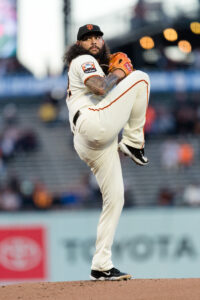
Upon his return to action late in the 2019 season, Manaea more or less picked up right where he left off. In 48 starts from 2019-21, the left-hander posted a solid 3.73 ERA (111 ERA+) with a strong 3.64 FIP. During this stretch, Manaea saw his strikeout rate climb considerably. Though he entered the 2019 season with a rate of just 19.2% for his career, the lefty struck out 24.8% of batters faced over the next three seasons while walking just 5.2% and generating a 43.8% groundball rate that was a near match for his 44.1% figure in the first three seasons of his career. With just one year left before the lefty would hit free agency and the team going nowhere in 2022, the A’s shipped Manaea to San Diego as the Padres in a four-player deal, netting a pair of prospects for the left-hander’s services.
Unfortunately, Manaea began to struggle upon departing Oakland. The lefty’s lone season in San Diego was something of a disaster as he struggled to a 4.96 ERA, 24% worse than league average by ERA+, with a 4.53 FIP. Manaea’s strikeout rate dipped to 23.2%, his walk rate climbed to 7.5%, and he generated grounders at a career-worst 38.2% clip. While the southpaw mostly looked like himself in the first half of the season, with a 4.11 ERA and 4.07 FIP in 100 2/3 innings of work (17 starts), that production fell off a cliff down the stretch as he allowed a whopping 6.44 ERA over his final 13 contests. Those struggles led Manaea to sign a two-year, $25MM deal with the Giants last offseason that gave him the option to return to the free agent market this winter.
At first, Manaea’s time with the Giants saw similarly disastrous results as his final outings with the Padres the previous year. The lefty was booted from the club’s rotation in early May and by mid-June had put together a 5.84 ERA in 49 1/3 frames as opposing batters teed off to the tune of a hefty .474 slugging percentage. However, as MLBTR’s Darragh McDonald noted in a recent profile of Manaea, the lefty added a sweeper to his repertoire at the end of May and found massive success with it. Hitters struggled to a .140/.161/.163 slash line against the pitch, swinging and missing at it 35.1% of the times it was thrown.
After adding the sweeper, Manaea quickly found more success with the Giants. He pitched to a solid 3.78 ERA with a fantastic 3.26 FIP in his final 81 frames of the season, and excelled in a late-season return to the rotation with a 2.25 ERA and 3.21 FIP in four September starts. After adding the sweeper midseason, Manaea punched out 24.2% of batters faced while walking 6.6% and generating grounders at a 44% clip reminiscent of his days in Oakland. While the majority of that success came in multi-inning relief, the lefty nonetheless flashed the form that made him a successful mid-rotation arm earlier in his career.
The strong late-season results led Manaea to decline his $12.5MM player option with the Giants and return to the open market. The decision worked out well for the southpaw, as his $28MM pact with the Mets comes with an AAV of $14MM and the ability to return to opt out of the deal once again next winter should he choose to do so. Manaea slightly outperformed the two-year, $22MM prediction MLBTR offered when ranking him 35th on our annual Top 50 MLB free agents list, earning an additional $3MM annually over the same term. The deal is mostly in line with the market for back-end starters this offseason, which has seen the likes of Nick Martinez ($26MM) and Kenta Maeda ($24MM) earn similar guarantees on two-year arrangements.
By adding Manaea, the club adds another veteran arm to a rotation mix that parted ways with both Max Scherzer and Justin Verlander at the trade deadline last summer. The southpaw figures to return to starting full-time in joining the Mets, slotting into the middle of the club’s rotation behind incumbents Kodai Senga and Jose Quintana and ahead of fellow offseason additions Luis Severino and Adrian Houser. The addition of Manaea allows the club to utilize the likes of Tylor Megill, Joey Lucchesi and Jose Butto as depth options at the Triple-A level or in the club’s bullpen. The same figures to go for lefty David Peterson when he returns from offseason hip surgery sometime next summer.
The Mets were already over the highest luxury tax threshold of $297MM prior to signing Manaea, That means his full $14MM is part of the Mets’ overage coming into 2024. Assuming they remain over the highest tax threshold all season, the club figures to pay $15.8MM in taxes on Manaea’s salary next season, meaning the club effectively figures to pay $29.8MM for the lefty’s services in 2024. Of course, that’s unlikely to be much of a concern for the Mets as the club paid over $100MM into the luxury tax this past season. With the club’s rotation mix now likely settled, the Mets figure to continue searching for help at third base, DH and in the bullpen going forward.
Jon Heyman of the New York Post reported the Mets were signing Manaea to a two-year, $28MM guarantee with an opt-out. The Associated Press reported the salary breakdown.
Mets Showing Interest In Various Starting Pitchers
The Mets are interested in rotation upgrades and appear to be casting a wide net in that search. Jon Heyman of The New York Post lists Hyun Jin Ryu, Sean Manaea and Shota Imanaga as pitchers they are considering. A report from Joel Sherman of The New York Post echoes those names while also adding Dylan Cease and Brandon Woodruff to the list.
The club has already made a couple of moves to bolster a rotation that has changed a lot in the past year. Max Scherzer and Justin Verlander were traded at last year’s deadline, then Carlos Carrasco reached free agency. The depth also took a hit when it was reported that David Peterson required hip surgery that would prevent him from being with the club at the start of the upcoming season.
That left Kodai Senga and José Quintana as the two leading incumbents at the start of the offseason, with pitchers like Tylor Megill and Joey Lucchesi also on hand as options. The Mets have signed since Luis Severino to a one-year deal and acquired Adrian Houser in a trade with the Brewers. Those two likely push Megill and Lucchesi into a battle for the fifth spot in the rotation, but Sherman relays that the club would like to add one more arm and push those two further into depth roles. Both pitchers are still optionable and don’t need to be on the active roster if the pitching staff if strengthened.
New president of baseball operations David Stearns is plenty familiar with Woodruff from his time in Milwaukee. He would be more of a long-term play though, unlikely to help the 2024 club too much. He underwent shoulder surgery in October and is slated to miss most of the upcoming campaign, which led the Brewers to non-tender him. But with the Mets looking at 2024 as a sort of transition year with an eye towards more aggressive contention in 2025, perhaps the two sides can line up on some kind of two-year deal. That would allow Woodruff to bank some money while rehabbing and then give the Mets the upside of bolstering their club next year.
If Woodruff can overcome his shoulder woes and return to his previous form, he would upgrade any rotation in the league. He has a career earned run average of 3.10 in 680 1/3 innings dating back to his 2017 debut. He has struck out 28.9% of batters faced in that time while walking just 6.5% of them and keeping 42.8% of balls in play on the ground. Health has been a bit of an ongoing issue, as he’s never been able to throw 180 innings in a big league season, but the results on a rate basis have clearly been excellent.
As for Cease, his ERA flared up to 4.58 in 2023 but his peripherals were still above average, including a 27.3% strikeout rate and 13.6% swinging strike rate. Over the past three years, he has made 97 starts with a 3.54 ERA and 29.8% strikeout rate. He tallied 12.6 wins above replacement over those three seasons, according to FanGraphs, which puts him eighth on the pitching leaderboard for that stretch.
He’s projected by MLBTR contributor Matt Swartz for a salary of $8.8MM this year and will be due one more raise before becoming a free agent after 2025. That means he will be paid way less than a pitcher of similar skill who is looking for a free agent deal, but it also means the White Sox are setting a very high asking price. It was reported last month that they asked the Reds for four of that club’s top prospects in exchange for Cease. The Reds seem to have given up on the pursuit, signing Frankie Montas instead.
For the Mets, giving up a significant prospect package like that would be a surprise. They have been open about their desire to build a strong prospect pipeline in order to ensure continuous contention and have been even more focused on the long-term plan this offseason. Though Sherman says the Mets continue to check in with the White Sox, the Mets aren’t considered as likely to land him as a team flush with prospects like the Orioles.
Ryu, 37 in March, would line up with the club’s offseason M.O., as they have given out one-year deals to Severino, Harrison Bader, Joey Wendle, Jorge López, Austin Adams and Michael Tonkin. It appears to be a strategy of spreading money around and improving depth while not committing any future money. It’s also possible that any player in this batch who plays well will end up on the trading block if the Mets are out of contention a few months from now.
Given Ryu’s age and recent health history, he is likely looking at a one-year deal as well. He missed most of 2022 recovering from Tommy John surgery, though he did return last year and toss 52 innings for the Blue Jays with a 3.46 ERA. His 17% strikeout rate was below average but he limited walks to a 6.3% rate and kept 45.6% of balls in play on the ground. He may have been a bit lucky to keep as many runs from scoring as he did, given his .272 batting average on balls in play and 77.6% strand rate. ERA estimators such as his 4.91 FIP and 4.69 SIERA weren’t as enthused with his performance. On the other hand, perhaps he could shake off some more rust and have better results this year now that he’s further removed from his surgery. As recently as 2020, he finished in the top three in American League Cy Young voting.
Manaea, 32 in February, is coming off a couple of shaky years in terms of results. He has been a solid mid-rotation option in his career but his ERA jumped to 4.96 in 2022 and was at 4.44 last year. Digging into his most recent campaign provides more reason for optimism, something recently explored here at MLBTR. Notably, Manaea added a sweeper to his arsenal in late May and had significantly better results, 6.61 ERA before and 3.60 ERA after adding that pitch. At the start of the offseason, MLBTR predicted Manaea could land a two-year, $22MM deal this winter.
As for Imanaga, he stands out from the other names on this list as he seems slated for a far more lengthy commitment, though the Mets have been connected to him in the past. MLBTR predicted he could land a five-year, $85MM contract, but with recent reporting suggesting he has enough interest to push past $100MM. Sherman throws a bit of cold water on that today, however, suggesting there are concerns around a 2020 shoulder surgery and also how his tendency to work up in the zone might make him homer prone in the majors.
If the market drops, perhaps the Mets will sense an opportunity to bolster their long-term rotation outlook, in contrast to their other moves this winter. Quintana, Severino and Houser are all set to be free agents after 2024, so they have very little rotation certainty going forward. The 30-year-old Imanaga has a 3.18 ERA in his NPB career and just posted a 2.80 mark in 2023. In addition to the Mets, he’s had interest from clubs like the Red Sox, Giants, Yankees and Cubs, though Patrick Mooney of The Athletic reported today that the Cubs aren’t seen as a likely landing spot for the lefty. Imanaga’s posting period end on January 11, giving him less than a week to get a deal done.
Free Agent Profile: Sean Manaea
Left-hander Sean Manaea has a lengthy track record of being a decent mid-rotation starter, but the past couple of years have been challenging. Overall, he has an earned run average of 4.10 in just over 1,000 career innings at the major league level. He has struck out roughly a quarter of batters faced in each of the past four full seasons and has never had a walk rate higher than 8.4%.
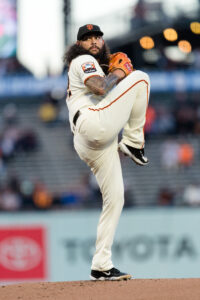
But in 2022, his performance dipped, as his ERA jumped to 4.96 with the Padres. His peripherals were still pretty strong, as he struck out 23.2% of batters faced and walked just 7.5%, but it was nonetheless a poor time for diminished results as he was heading into free agency for the first time.
The Giants took a shot on Manaea, giving him a two-year, $25MM deal that allowed him to opt out after the first season. The club was aggressive in deploying openers, only giving Manaea 10 actual starts, but he logged 117 2/3 innings on the year over 37 appearances. He finished with a 4.44 ERA, 25.7% strikeout rate and 8.4% walk rate. Though those results were more decent than spectacular, he still decided to trigger his opt-out and return to the open market.
Things get a little more interesting when digging deeper into his season, which may give more insight into his decision to try free agency again. Notably, Manaea added a sweeper this year and had great results with it. Per Statcast data, he first threw the pitch on May 30 and ultimately tossed it 214 times, 10.4% of his pitches thrown on the season overall. He felt comfortable throwing it to both righties and lefties, with a perfect split of 107 sweepers thrown to each. That resulted in a huge whiff percentage of 35.1% and a batting line of .140/.161/.163. Even when batters did make contact, the 82.8mph average exit velocity was easily the lowest of any of his offerings.
The impact on his overall results is quite clear. In his first 11 appearances of the year, prior to introducing the sweeper, he had a 6.61 ERA, 28.9% strikeout rate, 12.5% walk rate, 32.6% ground ball rate and eight home runs in just 32 2/3 innings. The rest of the way, he had a 3.60 ERA, 24.2% strikeout rate, 6.6% walk rate, 44% ground ball rate and six home runs in 85 innings. The Giants gave him four actual starts to finish the year and he posted a 2.25 ERA in those, averaging six innings per start.
This is still a fairly small sample size of results but the change in his arsenal at least gives some reason to believe that it may not just be a fluke. Last month, Driveline tweeted some video of a session with Manaea which showed him also trying out a splitter, perhaps suggesting Manaea is still trying to find yet another gear going forward.
MLBTR’s Top 50 Free Agents predicted Manaea for a contract of two years and $22MM, an average annual value of $11MM. That’s roughly the going rate for a back-end innings eater these days. MLBTR’s Contract Tracker shows that Lance Lynn got $11MM while Kyle Gibson got $13MM. Jack Flaherty got $14MM and Luis Severino $13MM despite a poor platform seasons, while Frankie Montas got $16MM even though he missed almost all of the year recovering from shoulder surgery. Tyler Mahle got $22MM over two years even though he’s going to miss at least part of the upcoming campaign while rehabbing from Tommy John surgery.
If Manaea can maintain the results he showed over the final four months of 2023, he could be a bargain, especially with pitchers like Blake Snell and Jordan Montgomery set for nine-figure deals. The need for starting pitching is still high and just about every club would benefit from the kind of performance Manaea seems capable of. His market has been very quiet this winter, with the Giants reportedly interested in a reunion but no other suitors publicly mentioned.
NL West Notes: Snell, Dodgers, Manaea, Giants, E-Rod
“The Dodgers are showing interest in seemingly every pitcher but Blake Snell,” Jon Heyman of The New York Post writes, running counter to Heyman’s own report from a month ago suggesting that Los Angeles was one of the teams in on the reigning NL Cy Young Award winner. While Heyman didn’t go into specifics about why Snell may no longer be on the Dodgers’ radar, obviously much has changed for L.A. within the last month — namely the Shohei Ohtani signing and (on the more immediate pitching front) the impending trade and extension involving Tyler Glasnow.
Since Los Angeles exceeded the luxury tax last season, the Dodgers had to give up $1MM in international bonus pool money and their second- and fifth-highest picks in the 2024 draft as compensation for Ohtani, who rejected the Angels’ qualifying offer. Snell also rejected a QO from the Padres, so the thought of giving up two more picks to add Snell might simply not be palatable for the Dodgers. While Snell’s market has been a little less clear than other top pitchers on the free agent market, such clubs as the Giants, Red Sox, and Padres have all been linked to Snell at various points, and it remains to be seen what other suitors might emerge once the likes of Yoshinobu Yamamoto or Jordan Montgomery are off the board. The Dodgers continue to be involved in the hunt for Yamamoto, and could pursue other trade options beyond Glasnow in order to address the lack of proven depth in their rotation.
More from around the NL West…
- The Giants remain interested in potentially re-signing Sean Manaea, The San Francisco Chronicle’s Susan Slusser reports. There hasn’t been much buzz on the left-hander since he opted out of the final year (and a $12.5MM salary) of his previous contract with San Francisco to test the open market, though it stands to reason that Manaea might get more looks as more and more free agent pitchers come off the board. Likewise, the Giants’ pitching needs haven’t really changed since the offseason began, and Manaea might be a reasonable addition even if they did land Yamamoto or Snell considering that the Giants could deal from their crop of young pitchers to bolster their lineup. Manaea had a 4.44 ERA and an above-average 25.7% strikeout rate over 117 2/3 innings for the Giants last season, working in a modified swingman role as a starter, bulk pitcher, or piggyback starter.
- Eduardo Rodriguez‘s past history with Diamondbacks GM Mike Hazen and manager Torey Lovullo helped pave the way to the Snakes’ four-year, $80MM contract with the free agent southpaw, as Rodriguez told reporters (including Theo Mackie and Nick Piecoro of the Arizona Republic). Hazen was Boston’s GM and Lovullo the bench coach during Rodriguez’s past stint with the Red Sox, and this familiarity resulted in what Hazen described as a two-hour meeting that touched on both the past and what Rodriguez can bring to the D’Backs going forward. Rodriguez and agent Gene Mato met with seven teams during the Winter Meetings, and the field was narrowed to the D’Backs and a mystery team before Arizona sealed the deal in a second sitdown.
Zaidi: Giants Plan To Pursue Rotation Help, Defensive Upgrades In Outfield
The Giants head into the offseason in search of ways to bolster a team that has produced just one winning record in the past seven seasons. San Francisco flirted with Wild Card contention for much of the 2023 campaign, but a 9-19 finish to the season dashed any hopes of returning to the playoffs. Not only that, but the team’s late collapse doomed manager Gabe Kapler, who was dismissed after four years on the job and replaced by future Hall of Fame skipper Bob Melvin.
The Giants’ hiring of Melvin dovetailed with an extension for president of baseball ops Farhan Zaidi, both of whom are now signed through 2026. Zaidi kicked off his winter with a fair bit of transparency, candidly acknowledging in an interview with the San Francisco Chronicle’s John Shea that his team is “going to be in the starting pitching market” and that he’ll also be on the lookout for ways to augment his outfield alignment. Specifically, Zaidi hopes to improve his outfield’s glovework. “We’ll look to add a little bit more speed, a little bit more range to the outfield,” Zaidi tells Shea.
At least as far as the outfield upgrades are concerned, the trade market will present more options than free agency. Cody Bellinger is the top outfielder (and top non-Shohei Ohtani) free agent of the offseason, and the former Dodgers star is quite familiar to Zaidi, who served as the general manager in Los Angeles before being hired away by the division-rival Giants. That said, Scott Boras will surely be seeking a massive contract for Bellinger on the heels of a resurgent season, and given the dearth of quality hitters on the market, competition for him could be steep.
Other outfield options with plus gloves include Kevin Kiermaier, Harrison Bader and Michael A. Taylor (to name a few). Kiermaier and Bader come with plenty of injury concern, however, and all three have inconsistent offensive track records (at best). Perhaps for those reasons, Zaidi at least alluded to the possibility of operating on the trade market — noting that younger (and thus more athletic players) tend to come via that market rather than free agency. KBO star Jung Hoo Lee, who’ll be posted by the Kiwoom Heroes this winter, could bring some of that youth and athleticism to the table, as he’s just 25 years of age. However, his season ended early with an ankle injury, and MLB evaluators are split on the extent of his defensive value in the outfield.
The Giants’ current outfield alignment figures to include some combination of Mike Yastrzemski, Mitch Haniger and Michael Conforto, who exercised an $18MM player option yesterday and will now return for a second season at Oracle Park. Alternative options on the 40-man roster include Austin Slater, Luis Matos, Heliot Ramos, Wade Meckler and Blake Sabol. That group was lackluster in the field, ranking 22nd in the Majors with -7 Defensive Runs Saved and 27th with -13 Outs Above Average.
As far as the pitching is concerned, it’s a natural and obvious need for the Giants to pursue. Ace Logan Webb will return to front the rotation, and the Giants picked up their $10MM club option on righty Alex Cobb (a net $8MM decision when factoring in the option’s $2MM buyout). Top prospect Kyle Harrison made his MLB debut in 2023 but has just seven big league starts to his name. Ross Stripling picked up a player option and will be back in the mix next year, though he’s plenty familiar working in a swingman capacity. Righty Anthony DeSclafani is signed through 2024 under a three-year, $36MM contract, but he’s pitched just 118 2/3 innings of 5.16 ERA ball during that deal due to ankle and forearm injuries — the former of which required surgery.
For much of the season’s second half, the Giants operated with only a pair of traditional starters. Bullpen games were a frequent tactic, with Stripling, Sean Manaea (who declined a player option) and Keaton Winn among the pitchers who were tasked with working long relief stints in such settings. Given the lack of established rotation talent, starting pitching is an obvious area of focus the team.
Zaidi acknowledged that he expects to talk with Manaea and his agents at the Boras Corporation about a potential return, but the starting pitching market is generally considered to be a deep one this offseason. Beyond Ohtani (who won’t pitch in 2024), 25-year-old NPB ace Yoshinobu Yamamoto headlines this year’s class. Countryman Shota Imanaga is also well-regarded and available for MLB teams to sign. More known commodities include Blake Snell, Aaron Nola, Jordan Montgomery, Sonny Gray and Eduardo Rodriguez, though as shown on yesterday’s Top 50 Free Agent List here at MLBTR, the options beyond those top tiers are plentiful.
Giants To Exercise Club Option On Alex Cobb; Sean Manaea Opts Out Of Contract
The Giants intend to exercise their $10MM club option on Alex Cobb‘s services for the 2024 season, according to Jon Heyman of the New York Post (X link). In another notable Giants pitching development, Andrew Baggarly of The Athletic reports (via X) that Sean Manaea has elected to opt out of the final year of his contract, foregoing a $12.5MM salary to test free agency.
It was widely expected that Cobb’s option would be picked up, though a possible wrench was thrown into the mix with last week’s news that Cobb was undergoing hip surgery. Though Cobb might not be able to return to a big league mound until May at the earliest, the Giants decided that the $8MM net decision (Cobb’s option contained a $2MM buyout) was still worth the investment. Obviously the surgery was no surprise to the team, as Cobb has battled hip problems for much of the season and had his year officially ended by a 15-day injured list placement in late September.
Cobb signed with San Francisco in November 2021 on what is now a three-year, $28MM deal with the option exercised. The results have been more than solid, as Cobb has a 3.80 ERA over 301 innings for the Giants, and he was even an All-Star this past season. His strikeout rate, barrel rate, and total barrels declined sharply from 2022 to 2023, though Cobb also improved his walk rate and his fastball velocity from season to season. Cobb also has a 59.4% grounder rate across the last two seasons, and a .327 BABIP indicates that his numbers might’ve been better if it wasn’t for the Giants’ subpar infield defense.
Injuries have also been a factor, as Cobb has been on the IL four separate times during his Giants tenure. That said, Cobb still brought some durability to the rotation since he and Logan Webb were the only two starters San Francisco used in a normal starting role for much of the 2023 season. The Giants addressed the other rotation spots in a number of ways, ranging for actual starts, piggyback-style pitcher usage, or an opener/bulk pitcher mix.
Manaea was one of the many Giants pitchers used in this fashion, as he started only 10 of his 37 appearances. However, Manaea often found himself in a bulk pitcher or piggyback role, and he finished with 117 2/3 innings pitched while posting a 4.44 ERA and an above-average 25.7% strikeout rate. It was a pretty decent course-correction for Manaea after some early struggles cost him a full rotation job, and it was a good bounce-back after a down year with the Padres in 2022.
Despite that down year, Manaea landed a two-year, $25MM deal with the Giants last winter, with the opt-out built into the contract so Manaea could quickly re-enter the market if he had a better platform year. While not a hands-down breakout year on paper, the left-hander should be able to find another multi-year deal heading into his age-32 season, likely with a team that wants him in a full-time starting role.
Heading into 2024, San Francisco’s rotation consists of Webb, Cobb (when healthy), DeSclafani (if healthy), Stripling (who passed on his own opt-out opportunity), and Kyle Harrison, with Tristan Beck, Jakob Junis, and Keaton Winn on hand as depth options. The Giants might well use at least one rotation spot for another mix-and-match assortment of pitchers, but the club is known to be looking for pitchers to bring more stability to the starting five. Yoshinobu Yamamoto is known to be on the Giants’ radar, and depending on how aggressive the team plans to be, any number of top free agent or trade options could be explored.
NL West Notes: Conforto, Manaea, Sewald, Dodgers
Michael Conforto and Sean Manaea can each opt out of the final year of their contracts with the Giants, with Conforto owed $18MM in 2024 and Manaea $12.5MM. Neither player has yet decided whether or not they’ll opt out, with Conforto telling NBC Sports Bay Area’s Alex Pavlovic that “I think the good thing is it’ll be a hard decision, but I don’t think there’s a bad outcome really. It will be tough, just because I’m very close with these guys and the uncertainty there could give you a little bit of anxiety, but again, there are a lot of conversations that have to happen before I’m even close to knowing what I want to do.”
Conforto hit .239/.334/.384 over 470 plate appearances in a season shortened by a hamstring injury, while Manaea posted a 4.44 ERA over 117 2/3 innings while working as a starter, long reliever, and bulk pitcher behind an opener. Manaea might be the likelier of the two to find a larger deal on the open market, as Pavlovic notes that a multi-year agreement could be possible since teams are forever in need of pitching. Conforto could remain with the Giants and hope for a better platform year before re-entering the market next winter, though he’d be rejoining an outfield/DH picture that already looks crowded, and the Giants might still be making more moves to the outfield to add both athleticism and hitting pop.
Here’s more from around the NL West…
- The Diamondbacks‘ acquisition of Paul Sewald has proven to be one of the trade deadline’s most impactful moves, as The Arizona Republic’s Theo Mackie writes that the Snakes’ once-unsteady bullpen has turned into a strength. From August 19 until the end of the regular season, Arizona relievers combined for a 2.94 ERA, with Sewald himself delivering a 2.84 ERA over 12 2/3 innings in that stretch, closing out nine of 10 save chances. As noted by Mackie and D’Backs GM Mike Hazen, establishing Sewald as the closer allowed the team to stick to a pretty set formula for their bullpen usage, and this routine has helped the Diamondbacks both reach the playoffs and advance to the NLCS.
- The Dodgers‘ roster is broken down by J.P. Hoornstra of the Southern California News Group, with an eye towards whether or not several players could be back in Los Angeles in 2024. Among the free agents, Hoornstra likes the chances of a reunion with Enrique Hernandez, as the utilityman’s multi-positional ability could help add depth if a DH-only player (i.e. Shohei Ohtani) were to join the roster. On the other hand, David Peralta is basically limited to just left field and only against right-handed pitching, so it seems like L.A. might prefer internal options. There also seems to be a chance the Dodgers will re-sign Jason Heyward, which could make Peralta further “redundant” since Heyward is also a left-handed hitter and a more versatile outfielder.
Giants Less Likely To Trade From Rotation After DeSclafani Injury
Within the past week, multiple reports have emerged about the Giants receiving interest on their starting pitchers. There was some thought that San Francisco could deal a back-end starter for help elsewhere on the roster.
President of baseball operations Farhan Zaidi downplayed that possibility when meeting with the SF beat last night (link via Alex Pavlovic of NBC Sports Area). Pointing to the recent placement of Anthony DeSclafani on the 15-day injured list (plus an injury to Triple-A righty Keaton Winn), Zaidi said the front office is “kind of in a different position than we were even a week ago” with regards to the pitching. As a result, he stated “it’s less likely we explore something there. It kind of feels like we have just enough pitching to be comfortable and to have some options, but we’ll see what happens over the next day.”
At the same time, it doesn’t seem the Giants are anxious to add rotation depth either. Asked about that possibility, Zaidi noted the club’s success when deploying openers and/or bullpen games. He’s also spoken previously about his comfort with the likes of Alex Wood, Sean Manaea, Ross Stripling and Jakob Junis behind staff ace Logan Webb. At the beginning of July, the baseball operations leader said the Giants were likely only to get involved for potential top-of-the-rotation arms — which are generally lacking in supply this deadline season anyhow.
Still, the loss of DeSclafani deals something of a hit to the group. The righty hasn’t had a great season, carrying a 4.88 ERA with a below-average 18.9% strikeout rate. He trails only Webb and Cobb on the team in innings pitched, though. DeSclafani is battling a flexor strain in his throwing elbow. The team announced last night the righty was headed for a second opinion (relayed by Susan Slusser of the San Francisco Chronicle). There’s a possibility the injury will end his season, though the results of further imaging will obviously determine that.
While the Giants might be quiet on the pitching front, they’ll surely continue working the phones over the next six-plus hours. San Francisco has been searching for middle infield help for some time. Thairo Estrada is headed out on a minor league rehab stint, perhaps reducing the urgency to add there, but there’s still room for an acquisition given Estrada’s and Brandon Crawford’s recent health concerns.