
Cubs Activate Clint Frazier, Place Michael Hermosillo On The 10-Day Injured List
The Cubs activated Clint Frazier from the 10-day injured list today, sending Michael Hermosillo back to the injured list to create space on the active roster, per Meghan Montemurro of the Chicago Tribune (via Twitter).
Brandon Hughes has also been sent back to Triple-A after being an emergency call-up because of the club’s COVID issues. Hughes. 26, was not on the 40-man roster. He made five appearances since May 17th, tossing seven innings while yielding just two earned runs on four hits with a 9-to-1 strikeout to walk ratio.
The Cubs outfield situation, meanwhile, will continue to be a dynamic group for the foreseeable future. Seiya Suzuki, for instance, is out of the lineup today with a sprained left finger, but he’s not expected to be out for long. Jason Heyward, meanwhile, is cleared for baseball activities and “ramping up” to return to the team, per Montemurro. Another move will be required when Heyward officially returns.
Frazier was a low-risk gamble for the Cubs this winter, but he has not been able to get going as of yet. In just 10 games, Frazier hit .143/.250/.238 in 24 plate appearances with intermittent playing time. Now that he’s returned, Frazier should at least return to his role as a short-side platoon player.
In the long run, that may be a role that Frazier and Hermosillo will compete for. Hermosillo is the stronger defender of the two, but Frazier, theoretically, has more upside. In 17 games so far, Hermosillo has slashed .071/.257/.107 across 35 plate appearances with the big league club. Regardless, the Cubs have to be intrigued by Hermosillo after he hit ..306/.446/.592 with their Triple-A club last season.
Rays Notes: No-Hit Bid, Suzuki, Yarbrough
The Rays tossed nine no-hit innings against the Red Sox today, but while the no-no was erased during a wild tenth inning, Kevin Kiermaier‘s walkoff homer gave Tampa a 3-2 victory. Six different Rays pitchers combined to hold Red Sox batters without a hit or a run over the game’s first nine innings, yet the Tampa Bay lineup was also shut out (on two hits) against Boston pitching. The Sox finally broke out for two hits and two runs in the top of the 10th, yet the Rays roared back in the bottom half of the inning for what might already be the most unusual win of their season.
This is the 15th time in Major League history that a would-be no-hitter wasn’t broken up until extra innings, and only the second time that such a game was tossed by more than one pitcher. Matt Garza‘s gem on July 26, 2010 remains the only no-hitter in Rays franchise history. Tampa has been on the wrong end of no-hit games on five occasions, with three of those five being perfect games (from Mark Buehrle, Dallas Braden, and Felix Hernandez).
Some more notes from St. Pete…
- Seiya Suzuki was known to be on the Rays’ target list during the offseason, and the club was apparently prepared to make a big investment. Jon Heyman of The New York Post reports that the Rays’ offer to Suzuki was “close” to the five-year, $85MM deal the outfielder eventually landed from the Cubs. Between this push for Suzuki and the Rays’ even more surprising interest in Freddie Freeman this past winter, it could hint that Tampa Bay is prepared to be more financially aggressive than usual in its pursuit of a World Series, which might set the stage for some interesting trade possibilities as the deadline approaches. It also seems like the Rays were onto something with Suzuki, given how he has been on fire for the first two weeks of his Major League career.
- Ryan Yarbrough is set to throw a rehab start at Triple-A today, Rays manager Kevin Cash told The Tampa Bay Times’ Marc Topkin and other reporters. If all goes well, it could line Yarbrough up to be activated from the 10-day injured list in time to start the Rays’ game with the Mariners on Thursday. Yarbrough has yet to pitch this season due to a groin injury. Working as a reliever, opener, bulk pitcher, and traditional starter over his four MLB seasons, Yarbrough has a 4.30 ERA over 499 2/3 career innings with Tampa.
Cubs Sign Seiya Suzuki
The Cubs continue to show that their current retooling efforts won’t at all resemble the aggressive teardown of a decade ago, announcing on Friday that they’ve signed star NPB outfielder Seiya Suzuki to a five-year contract. Suzuki, a Wasserman client, will reportedly be guaranteed a hearty $85MM on the contract.
Under the NPB/MLB posting system, that means the Cubs will also owe Suzuki’s former team, the Hiroshima Carp, a posting fee of $14.625MM. That brings the total investment in Suzuki to $99.625MM — although only Suzuki’s actual contract (more specifically, its $17MM annual value) will count against the luxury tax. Suzuki will reportedly receive a $5MM signing bonus and be paid annual salaries of $7MM, $17MM, $20MM, $18MM and $18MM on the deal, which contains a full no-trade clause.
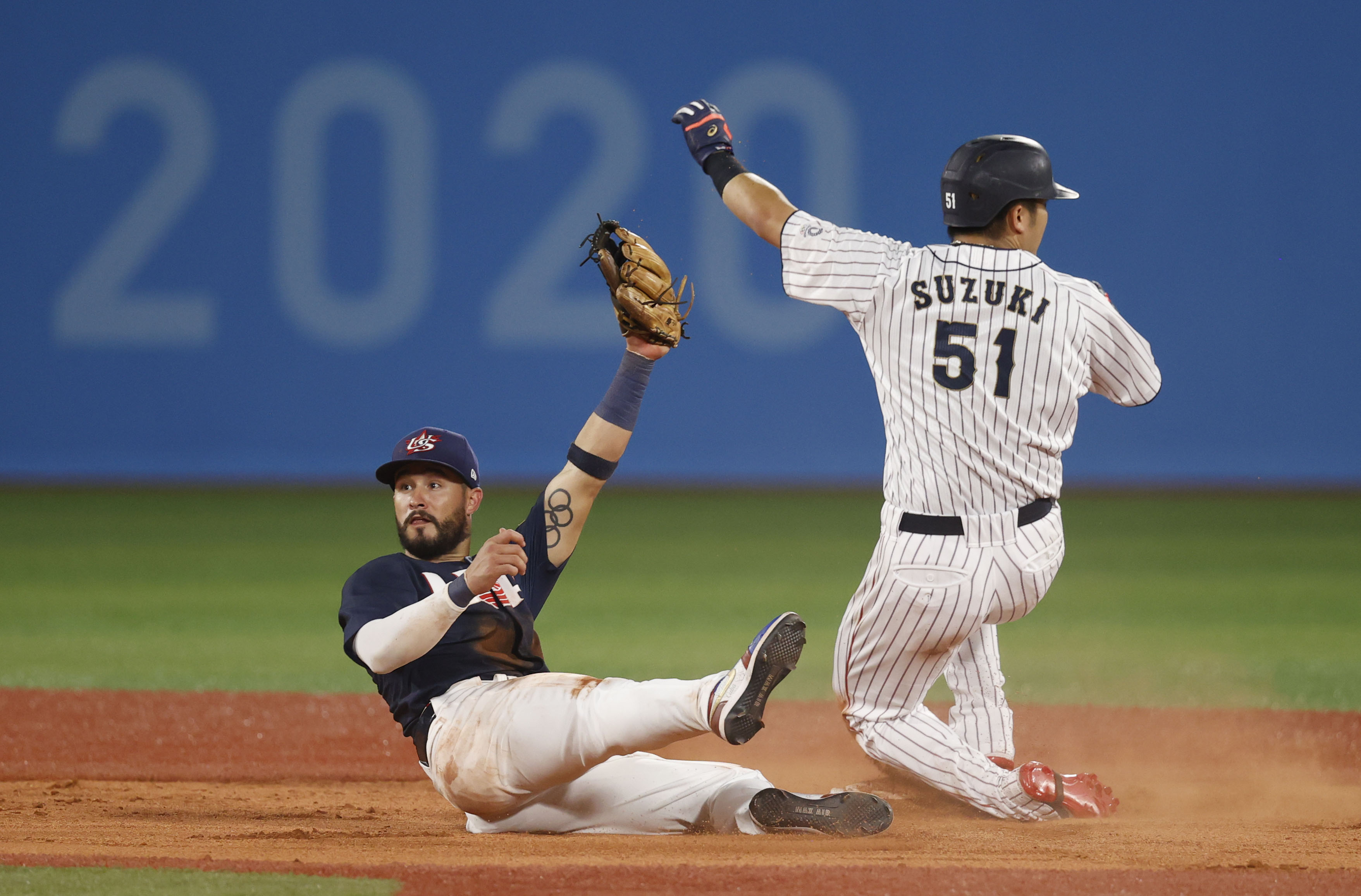
Suzuki hit .317/.433/.639 with 38 home runs in 533 plate appearances for the Hiroshima Carp this year. He’s been one of the best hitters in NPB dating back to 2016, with a career line of .309/.402/.541. He’s hit at least 25 home runs in each of the last six seasons and is a five-time NPB All-Star.
According to MLBTR’s Steve Adams, “The most bullish opinions we’ve gotten peg Suzuki as an everyday Major League right fielder — a solid defensive player with a strong arm and enough power to hit in the middle of a big league lineup.” In August, Dylan Hernandez of the L.A. Times spoke to a Major League scout who compared Suzuki to AJ Pollock, back when Pollock was playing for the Diamondbacks.
Though Suzuki has nine seasons under his belt, he’s still just 27 years old, which is rare for a posted player out of Japan. Suzuki explained to Hernandez, “I think everyone feels they want to play at the highest stage if they can get the chance.” Suzuki was only one year short of international free agency, so the Carp were motivated to be compensated for his departure.
In late November, the Carp posted Suzuki for MLB teams, beginning a 30-day window that was interrupted by the sport’s 99-day lockout. Suzuki was left with 20 days post-lockout to negotiate a deal with an MLB team. On top of his contract, the Cubs will owe the Carp a posting fee equal to 20% of the contract’s first $25MM, 17.5% of the next $25MM and 15% of any dollars thereafter. Only Suzuki’s $17MM average annual value will count toward the competitive balance tax, but the Cubs are a good $78MM short of the $230MM base tax threshold including Suzuki.
Suzuki is a strong-armed prototypical right fielder and a five-time NPB Gold Glove winner. The Cubs still have Jason Heyward under contract for another two years and $44MM, but given Heyward’s struggles at the plate, there’s a good chance Suzuki is taking over his position. Suzuki may spend most of his five-year tenure playing alongside center fielder Brennen Davis, Baseball America’s 16th-ranked prospect.
The news of the Suzuki signing comes on the heels of Anthony Rizzo‘s two-year, $32MM deal with the Yankees. It’s a fitting contrast and representation of the Cubs’ reboot, as Suzuki is five years younger than Rizzo and the Cubs reportedly once offered Rizzo the same contract before trading him and other stalwarts in July last year. Cubs fans will be watching many former stars in different uniforms this year, with Javy Baez having signed in Detroit, the Phillies reaching an agreement with Kyle Schwarber, and Kris Bryant signing with the Rockies. The Cubs’ other big splash came before the lockout, the signing of starting pitcher Marcus Stroman to a three-year, $71MM deal.
Interest was widespread in Suzuki. The Padres, Red Sox, Rangers, Giants, Mariners, Yankees, Blue Jays, Marlins, and Dodgers are among the other teams that were linked to the slugging right fielder.
Pitcher Masahiro Tanaka holds the record for a Japanese player signing in MLB, having landed a seven-year, $155MM deal with the Yankees in January 2014. On the position player side, Suzuki eclipses the four-year, $48MM deal outfielder Kosuke Fukudome signed with the Cubs in December 2007. The only position players to have sustained success in MLB out of Japan have been Ichiro Suzuki, Hideki Matsui, and of course, pitcher/designated hitter Shohei Ohtani.
Sankei Sports first reported the agreement. Ken Rosenthal of The Athletic reported the terms and the no-trade clause, while MLB.com’s Mark Feinsand provided the annual breakdown.
Rays Among Teams Interested In Matt Chapman, Seiya Suzuki
The Rays are among the teams with interest in Athletics third baseman Matt Chapman, per Marc Topkin of the Tampa Bay Times, and they’re also one of the teams still bidding on star NPB outfielder Seiya Suzuki. The Athletic’s Ken Rosenthal hears the same, adding that Tampa Bay has also spoken to Oakland about right-hander Frankie Montas.
Either of the two bats listed would represent large-scale expenditures, at least by the Rays’ generally modest standards. MLBTR contributor Matt Swartz projects a $9.5MM salary for Chapman this season, and he’d be eligible for arbitration one final time next offseason before reaching the open market upon conclusion of the 2023 season. Suzuki, meanwhile, is drawing interest from a wide field of teams and figures to command a weighty multi-year deal himself.
The 28-year-old Chapman’s offensive production has taken a nosedive in recent years after a pair of MVP-caliber seasons in 2018-19. Since Opening Day 2020, Chapman has managed a .215/.306/.431 batting line, still showing good power (.216 ISO, 37 homers in 774 plate appearances) but with an alarming jump from a 22.8% strikeout rate to a 33.1% mark. Chapman’s 2020 season was cut short by hip surgery, though, and it’s possible that the injury which led to that operation and the lingering aftereffects have hampered him at the dish.
Where Chapman hasn’t missed a beat is with the glove. A two-time Platinum Glove winner and three-time Gold Glover at the hot corner, Chapman is widely regarded as one of the best defensive players in the sport. His 78 Defensive Runs Saved since debuting in 2017 are the third-most in baseball, at any position, trailing only Mookie Betts (81) and Andrelton Simmons (79). Chapman ranks third in MLB in Ultimate Zone Rating during that time as well, trailing that same pair. Meanwhile, Statcast ranks him 10th among all big leaguers with 49 Outs Above Average in that same time.
As for Suzuki, he’s been posted by the Hiroshima Carp and will head to the Majors in the midst of his prime, at age 27. Suzuki is generally regarded as one of the best players in Japan at the moment, if not the best overall. He turned in a mammoth .317/.433/.636 batting line with 38 home runs, 26 doubles and nine steals in 533 plate appearances this past season in NPB, all while walking 87 times against 88 strikeouts (16.3% vs. 16.5%). This was far from a one-year fluke; dating back to 2018, Suzuki’s right-handed bat has produced a dominant .319/.435/.592 slash line with 121 home runs, 115 doubles and four triples in 2179 plate appearances.
Rays fans may be a bit skeptical after seeing their team’s two-year, $12MM investment in Yoshi Tsutsugo quickly go south. However, Suzuki is younger and far more highly regarded as a player than Tsutsugo was at the time of his own free-agent foray. Even in NPB, Tsutsugo came with considerable strikeout concerns and minimal defensive value. The variance in opinions seems likely to be reflected in the size of contract Suzuki ultimately commands. Prior to Suzuki’s formal posting, multiple team evaluators told MLBTR that Suzuki could be an everyday corner outfielder in the big leagues. One particularly bullish evaluator called Suzuki the best player to come out of Japan since Shohei Ohtani (not a direct comparison between the two, to be clear).
Looking to Montas, he’d give the Rays a big-time arm to plug into a rotation that looks heavily reliant on younger talent. Tampa Bay is hoping for a bounceback from Ryan Yarbrough and better health from offseason signee Corey Kluber, but the group beyond that pairing consists of Yonny Chirinos (returning from Tommy John surgery), Shane McClanahan, Luis Patino, Drew Rasmussen and Shane Baz. It’s an undeniably talented collection of starters, but Montas would provide some more stability and arguably more upside than some of those current options.
The 28-year-old (29 next week) just wrapped up a 2021 season that saw him post a career-high 187 frames with a 3.37 ERA, a 26.6% strikeout rate and a 7.3% walk rate. Projected by Swartz to earn $5.8MM next season, Montas is controlled through 2023 and is one of many players the rebuilding A’s are open to moving. He missed the second half of the 2019 season while serving an 80-game PED suspension and struggled in his 2020 return, but last year’s standout showing netted Montas a sixth-place finish in American League Cy Young voting. Unlike Chapman and Suzuki, his current salary is a bit more in the Rays’ general wheelhouse.
Ultimately, though, the payroll is going to be pivotal in determining just how big the Rays can go. Tampa Bay is currently projected for an $85.4MM Opening Day mark that would represent a new franchise record. That said, there have also been reports about possible trades of Kevin Kiermaier ($12MM salary), Austin Meadows (projected $4.3MM) and/or Tyler Glasnow (projected $5.8MM — any of which could alter the team’s immediate and 2023 financial outlooks. Glasnow, notably, is expected to miss most of the 2022 season while rehabbing from Tommy John surgery.
Seiya Suzuki Weighing Interest From Several Teams
6:41pm: Suzuki and his reps are expected to meet with Cubs brass tonight, reports Sahadev Sharma of the Athletic (Twitter link).
4:45pm: Suzuki himself shot down rumors of a decision having been made, via Instagram story. “There are several reports that I’ve made my decision, but none of that is true,” writes Suzuki.
2:28pm: Suzuki has not chosen a team yet, according to Dylan Hernandez of the L.A. Times, who says six to seven teams remain under consideration. Jon Heyman of MLB Network names the Padres, Dodgers, Red Sox, Giants, Mariners, and Cubs as some of the teams still involved.
TODAY, 1:43pm: “It appears Seiya Suzuki’s decision is not far away,” tweets Acee.
YESTERDAY, 11:53pm: The Padres are known to be making a push for Seiya Suzuki, and the outfielder worked out in front of Padres executives at Petco Park this weekend, The Athletic’s Dennis Lin reports (Twitter link). Suzuki’s time in San Diego also included a visit with Padres righty Yu Darvish and Darvish’s family.
Now that the lockout is over, Suzuki is finally free to partake in normal free-agent recruitment tours, which are particularly key for players coming to Major League Baseball for the first time. Lin notes that it isn’t known if Suzuki visited any other teams this weekend or what his other travel plans may entail, though given the number of teams interested in Suzuki, he could have quite a few stops to make before his posting period is up. Suzuki now has 17 of his 30 posting days remaining, as the lockout interrupted this process and kept Suzuki from any contract with big league clubs.
Suzuki has seemingly become an increasingly important figure in the Padres’ roster-building efforts, as Kevin Acee of The San Diego Union-Tribune said earlier today that obtaining Suzuki was part of a “Plan A” scenario for the team. That outline included signing Suzuki and Nelson Cruz, and then trading one of Eric Hosmer or Wil Myers to open up payroll space, though one element of that plan has now been scuttled since Cruz signed with the Nationals.
With Cruz now off the board, it could only intensify the Padres’ pursuit of Suzuki. Since Cruz is limited to DH duty, adding Suzuki would arguably be a better fit for San Diego anyway given the team’s needs in the outfield. Suzuki could be easily slotted right into the Padres’ right field spot, as Myers (if he isn’t traded) could be moved across the grass to fill San Diego’s left field vacancy.
Padres Notes: Hosmer, Myers, Suzuki, Cruz, Montesino
Eric Hosmer and Wil Myers have been regulars in trade rumors for months, and that status hasn’t changed now that the lockout is over. The Padres have been “aggressively shopping” both players in trade talks, according to MLB.com’s Mark Feinsand, in an effort to clear some salary and roster space, plus create some more flexibility under the competitive balance tax.
Even with the tax threshold rising to $230MM this season, the Padres are already projected for a luxury tax number just shy of $218MM (as per Roster Resource). Since the Padres did exceed the CBT last season, they’d have to pay the larger “two-timer” penalty for crossing the threshold in consecutive years, so all things considered, the club would surely prefer to avoid a second tax overage if at all possible.
Getting either Hosmer or Myers off the books would help greatly in this regard. Since a player’s tax number is determined by the average annual value over the life of his contract, Hosmer’s tax number is $18MM per season and Myers is $13.83MM, though both players are set to earn more in actual dollars. Myers is owed $20MM in 2022 and there is a $20MM club option on his services for 2023 with a $1MM buyout, while Hosmer is owed a total of $59MM over the 2022-25 seasons.
These pricey contracts also don’t hold a ton of appeal to other teams, which is why San Diego has explored any number of scenarios to try and swing a deal. The Padres have looked to try and attach a prospect (Luis Campusano and Robert Hassell were mentioned) to Hosmer in talks with the Rangers and Cubs last summer, as some kind of sweetener is likely necessary to move the first baseman. Beyond the $59MM, Hosmer has also posted essentially replacement-level production (0.6 fWAR) since the start of the 2018 season. Myers has been similarly inconsistent over that same timeframe but his 5.5 fWAR has clearly marked him as the more productive of the two. If Myers may be the easier trade candidate, however, the Padres’ needs in the outfield would only be increased if Myers was suddenly no longer around.
This isn’t to say that San Diego isn’t already eyeing replacements. As Kevin Acee of The San Diego Union-Tribune puts it via Twitter, the Padres’ “Plan A” would seem to be a scenario where the club signs Seiya Suzuki and Nelson Cruz, while moving one of Hosmer or Myers. Several other teams have been linked to both Suzuki and Cruz, though in Cruz’s case, recent reports have indicated the Padres could be a finalist for the veteran slugger. Even with one of Hosmer or Myers dealt, plans to add two prominent free agent bats could seem to indicate that the Friars are willing to spend at least in the range of that $230MM tax threshold.
In other team news, first base/outfield prospect Daniel Montesino will miss the 2021 season due to Tommy John surgery, Jeff Sanders of The San Diego Union-Tribune reports. Montesino signed for a $1MM bonus during the 2020-21 international signing period, and posted a big .934 OPS over 243 plate appearances for the Padres’ Dominican Summer League squad last year. MLB Pipeline (24th) and Baseball America (29th) each listed Montesino within their rankings of San Diego’s top 30 prospects.
Latest On Seiya Suzuki’s Market
Star NPB outfielder Seiya Suzuki waited out the lockout in search of a deal with an MLB team this offseason. The league and Players Association agreed to freeze his posting window during the work stoppage. The official lifting of the lockout restarted the clock, giving teams twenty days to finalize an agreement.
Suzuki has reportedly drawn interest from upwards of a dozen teams this winter, and Jon Heyman of the MLB Network lists five (via Twitter) that have been prominent players: the Mariners, Giants, Dodgers, Cubs and Red Sox. That’s not necessarily a group of finalists, to be clear, but it seems those teams are among Suzuki’s top suitors.
Four of those clubs — Seattle, San Francisco, Chicago and Boston — have been known entrants in the bidding for some time. A report from Japan’s Nikkan Sports in January named the four clubs as among those likely to remain factors until he chooses a destination. The Dodgers, though, hadn’t been strongly linked to Suzuki until this point.
Los Angeles doesn’t necessarily have a need in the outfield. Mookie Betts, Cody Bellinger and AJ Pollock make for a strong starting trio, and Chris Taylor and Gavin Lux could see some action on the grass as well. The Dodgers haven’t been shy about acquiring talent even in the absence of an obvious weakness on the roster, however. And Los Angeles is clearly open to further bolstering an already strong offense, as they’re reportedly making a run at Freddie Freeman. Manager Dave Roberts isn’t afraid to move even his best players around the diamond, and the implementation of the universal designated hitter could allow NL teams to cast a wider net in search of talent.
With a little under three weeks before Suzuki has to make a decision, there still seems to be a decent array of possible landing spots. Only 27 years old, Suzuki should appeal both to win-now clubs like the Dodgers and teams (the Cubs perhaps among them) that are eyeing 2023 and beyond as more realistic windows of contention. He’s coming off a monstrous .317/.433/.639 showing with the Hiroshima Carp, for whom he’s been a strong middle-of-the-order bat in recent years. Evaluators with whom MLBTR spoke earlier in the offseason generally suggested Suzuki could immediately be a solid everyday right fielder in MLB.
Whoever signs Suzuki will owe the Carp a posting fee on top of the guarantee that goes to the player himself. The fee is calculated as 20% of the contract’s first $25MM, 17.5% of the next $25MM and 15% of any dollars thereafter.
Seiya Suzuki Still “100% Committed” To Playing In MLB This Season
One of the most bizarre storylines of the ongoing lockout has been the frozen posting window for Seiya Suzuki. The star NPB outfielder was made available to big league clubs in November via the posting process, but he didn’t agree to a deal with an MLB team before the league implemented the lockout on December 2.
The league and union agreed to freeze the 30-day signing window for the duration of the work stoppage. With the lockout set to reach its three-month anniversary tomorrow, however, questions have intermittently popped up about how long Suzuki himself might want to wait. After all, he could simply choose to return to the Hiroshima Carp for the upcoming season and explore the possibility of making the move to MLB next winter.
Suzuki, though, remains intent on seeing the posting process through. Joel Wolfe, his representative at Wasserman, tells Andrew Baggarly of the Athletic that Suzuki’s thought process was unchanged by the league’s announcement that the first two series of the regular season have been cancelled (Twitter link). “Seiya is 100% committed to playing in MLB this year. He’s shown remarkable patience and resolve,” Wolfe told Baggarly.
That’s not a huge surprise, as Suzuki told Baggarly in mid-January he planned to wait things out. “I’m just going to wait until both sides agree,” Suzuki said at the time. “There’s no date I set on myself. In Japan, you don’t experience a lockout so it’s a first for me. At first, I was a little worried about it. But when you think about it, it’s going to end sometime soon. Just having that positive mindset that it will end sometime has allowed me to keep my head up.”
Still, those comments came before the latest uncertainty regarding the MLB labor situation. In the interim, NPB has begun its preseason schedule and opens its regular season on March 25. MLB, on the other hand, won’t begin playing meaningful games until at least the second week of April. More to the point, the league’s decision to cancel some regular season action only further complicates the labor situation and figures to make the ongoing lockout more difficult to resolve. Waiting things out is no doubt an unenviable situation for Suzuki, but it seems he’s committed to doing so in order to test his ability against big league competition.
Whenever he is allowed to negotiate with teams, the righty-hitting outfielder should have a robust market. At 27, he’s among the youngest players in free agency. Scouting reports generally suggest he could be a capable everyday right fielder at the MLB level. And Suzuki’s coming off an excellent season in NPB, hitting .317/.433/.639 with 38 home runs across 533 plate appearances. The Padres, Cubs, Giants, Mariners, Red Sox and Rangers are among the clubs that have been linked to Suzuki this offseason.
Padres Notes: Suzuki, Closer Situation, Abrams
In a Monday mailbag, Dennis Lin of The Athletic poured cold water on pre-lockout reports that the Padres had targeted Nick Castellanos to fill an outfield/DH vacancy, but he did suggest the club might enter the sweepstakes for Japanese slugger Seiya Suzuki when free agency resumes. While fitting Suzuki into their payroll might require finding a taker for at least a portion of the salary due to Eric Hosmer or Wil Myers on the trade market, principal owner Peter Seidler has indicated the club’s budget has at least a bit of room for growth, though this could depend on luxury tax provisions in the new CBA (the Padres slightly exceeded the threshold last season, and the previous deal included escalating penalties for repeat offenders). The longtime Hiroshima Toyo Carp outfielder, who might offer the highest bang-for-the-buck potential among remaining free agent outfielders, won’t command nearly the salary sought by Castellanos or Kris Bryant (MLBTR projects Suzuki will sign for five years and $55MM). Including projections for arbitration-eligible players, the Padres are presently on the hook for just shy of $199MM in 2022 salary (via Jason Martinez of Roster Resource).
Though the Giants and Mariners appear to be the industry favorites to sign Suzuki, Padres fans have learned never to put anything past GM and president of baseball operations A. J. Preller, particularly given Seidler’s repeated willingness to green-light moves that commit the club to significant years and dollars. As Lin notes, the Padres had only three above-average lineup regulars (Fernando Tatis Jr., Manny Machado, and Jake Cronenworth) in 2021. Suzuki’s bat is hardly a sure thing — Friars fans will note the significant adjustment difficulties of KBO import Ha-Seong Kim in 2021, though the versatile infielder did provide significant value with his glove — but his career .315/.414/.541 line at Japan’s highest level (.317/.433/.539 in 2021) offers plenty to dream on.
A few other Padres notes as we wait out the (rather bleak) CBA negotiations:
- In the same mailbag, Lin discussed the Padres’ closer situation, which remains unsettled following the departure of 2021 NL saves leader Mark Melancon to the Diamondbacks. Drew Pomeranz is the obvious choice for a ninth-inning role, but he’s coming off surgery to repair a torn flexor tendon that ended his 2021 season in August. Lin notes that both Emilio Pagan and the recently signed Robert Suarez have experience in the role, but Pagan had a less-than-stellar 2021 (4.83 ERA, 5.22 FIP) and all of Suarez’s 68 career saves came in Japan, where he’s played since 2016. Should the Padres no longer view him as a starter, Dinelson Lamet could also be an option, though new manager Bob Melvin may prefer to use him in a multi-inning role. In any event, Lin expects the Padres to address lineup questions before turning to the bullpen. They could turn to one or several of low-cost options with histories of big-league success, a list that includes Brad Hand, Chris Martin, Archie Bradley, Adam Ottavino, Sergio Romo, Yusmeiro Petit, Mychal Givens, Sean Doolittle, Pedro Strop, Richard Rodriguez, and Tyler Clippard.
- Consensus top-10 prospect CJ Abrams, who missed the second half of the 2021 season after suffering a broken tibia and torn MCL in late-June infield collision and had recently dealt with shoulder issues, has been cleared to resume baseball activities, reports Jeff Sanders of the San Diego Union-Tribune. Prior to the injury, the 21-year-old shortstop compiled a .296/.363/.420 batting line in a 42-game sample at Double-A San Antonio. As he’s not yet on the Padres’ 40-man roster, Abrams is not affected by the lockout and could play in mini-camp games in short order. Though he’s certain to begin 2022 in the minors, Abrams is a potential candidate for a late-season call-up should his bat continue to show life in the upper minors, particularly if Fernando Tatis Jr.’s shoulder issues persist or manager Bob Melvin revisits plans to deploy Tatis in the outfield.
Latest On Mets’ Post-Lockout Plans
The Mets have already had one of the most active offseasons of any team, signing Max Scherzer to a record-setting contract and inking a trio of bats — Starling Marte, Mark Canha and Eduardo Escobar — to multi-year deals. The combined outlay on that quartet of additions was $254.5MM, pushing the team’s payroll to a projected $263MM (via Roster Resource’s Jason Martinez).
SNY’s Andy Martino wrote last week that the Mets are likely to target more rotation help — listing Yusei Kikuchi as one candidate — but have likely completed most of the heavy lifting on the position-player side of the roster. Sports Illustrated’s Pat Ragazzo tweets today that pitching is indeed expected to be the team’s priority, while MLB Network’s Jon Heyman adds that the team isn’t completely closed off to bringing in another impact hitter. A payroll approaching $300MM isn’t out of the question in Queens, Heyman notes.
A pitching addition would be far more straightforward than signing another bat. The quartet of Scherzer, Jacob deGrom, Carlos Carrasco and Taijuan Walker is immensely talented but also laden with injury risk. Fifth starter candidates David Peterson and Tylor Megill are solid enough options, but as currently constructed, the Mets would be one injury away from needing to lean on both (and two away from having to tap into a shaky group of Triple-A options).
Carlos Rodon and Clayton Kershaw stand out as two of the most prominent starters who have yet to sign, though Martino noted last week when linking the Mets to Kikuchi that they did not have any contact with Kershaw’s camp prior to the lockout. There are, of course, myriad trade scenarios to consider as well. The A’s (Frankie Montas, Sean Manaea, Chris Bassitt) and Reds (Sonny Gray, Tyler Mahle, Luis Castillo) have starters who could conceivably change hands. The Padres have a wealth of young arms if the Mets are simply looking to add some depth, as they did last year when acquiring the now-injured Joey Lucchesi from San Diego.
On the pitching side of the coin, things are far muddier for the Mets — due in no small part to that aforementioned pre-lockout spending spree. The advent of a universal designated hitter might help to alleviate any logjams, but Mets already have crowded outfield and infield pictures alike. Marte, Canha Brandon Nimmo figure to get the bulk of the work in the outfield, while the infield mix will feature Pete Alonso, Robinson Cano, Francisco Lindor, Escobar and Jeff McNeil. Beyond that group of nine, the Mets have both J.D. Davis and Dominic Smith as capable corner options in the infield/outfield mix.
There’s already talk that the Amazins will be open to moving McNeil and/or Smith once the lockout lifts, which would make some sense given the lack of regular at-bats available. McNeil, Smith and Davis (more on him here) seem to be the likeliest change-of-scenery candidates, and moving multiple names from that group could pave the way for another addition.
With such a crowded roster already in place, there isn’t necessarily one glaring position the Mets need to feel compelled to shop. If the team is comfortable with Cano and Luis Guillorme logging the bulk of the work at second base, for instance, that’d free up the ability to trade McNeil and perhaps add an impact bat who could primarily serve as a DH (e.g. Nick Castellanos, Kyle Schwarber, Nelson Cruz). The Mets could also play Escobar at second base in that scenario and pursue help at the hot corner. Frankly, with so many players who have experience at multiple positions, Mets fans could dream on innumerable speculative scenarios. Martino has even suggested that despite having signed multiple outfielders, a Mets pursuit of Seiya Suzuki cannot be expressly ruled out.
Today’s reports don’t necessarily indicate anything that contradicts prior reporting but rather serve to reinforce the idea that the Mets aren’t likely to rest on their laurels after an active November/December. Pitching still seems likeliest to be the focus of their efforts, but the potential trades of some combination of McNeil, Smith and Davis could leave the team with the flexibility to add a bat of note — particularly if one of the prominent sluggers on the market is struggling to find a deal to his liking. Owner Steve Cohen certainly has the financial chops to swoop in and opportunistically sign such a free agent to a pillow deal, at the very least.