
This Date In Transaction History: Cubs Sign Yu Darvish
On February 13th, 2018 the Cubs officially announced a six-year, $126MM agreement with free agent Yu Darvish. After splitting the 2017 season between the Rangers and Dodgers, Darvish was the top free agent on MLBTR’s list of available players that winter. Little did we know at the time that Darvish would spent only half the length of that contract in a Cubs uniform.
At the time, Darvish seemed like a much-needed injection of frontline rotation talent for the Cubs. After falling to the Dodgers in the NLCS in their title defense season, swiping Darvish from the Dodgers had the potential to swing a potential rematch in seasons to come.
That rematch wouldn’t come to pass, however. Darvish would make just nine starts for the Cubs in the 2018 season. Though they won 95 games, Joe Maddon’s club stumbled into a wild card spot before losing the wild card game to the Rockies on a Tony Wolters RBI single in the 13th inning.
The timing was never quite right for Darvish and the Cubs. He was better in his second season in Chicago, but not good enough to change the fortunes of their fledgling contender. Darvish finished second for the NL Cy Young during the pandemic-shortened 2020 season, but they fell in the first round of the playoffs to the Marlins.
Though Darvish was incredible during that 2020 season (2.01 ERA/2.23 FIP over 76 innings), the Cubs chose to sell high on their one-time free agent prize, sending him to the Padres for a quartet of teenagers. The Cubs were largely criticized at the time of the deal, though the full impact of the move won’t be known for many years yet. There’s no doubt that Chicago needed an injection of youth for a system that had largely stagnated during their years of contention. Further, in terms of maximizing their assets, Darvish was their most valuable trade piece at the time.
And though Darvish’s arsenal is robust, and he’s among the strikeout leaders on a per batter basis year-by-year, his bottom line run prevention numbers don’t necessarily paint him as one of the best pitchers in the league.
He was certainly a touch disappointing in his first season with the Padres, posting just 1.4 rWAR/2.9 fWAR despite making 30 starts and tossing 166 1/3 innings. The 34-year-old wasn’t bad in 2021, but with a 4.22 ERA/3.90 FIP, Darvish looks more like a solid mid-rotation arm than a true frontline ace, even with an impressive 29.2 percent strikeout rate and 6.5 percent walk rate.
The fact is, outside of his tremendous 2020 season, Darvish has been closer to this 2021 self for most of his Major League career – at least since missing the 2015 season. Still, that makes for a valuable rotation arm that ought to play a valuable role for the Padres over the next two seasons, even in his age-35 and age-36 seasons.
At the same time, it’s hard to fault the Cubs now for selling when they did. MLBTR readers did not like the deal, with the most popular grades being a C and D at the time. But in retrospect, the Cubs were clearly more than a Darvish away from competing last season.
On the whole, even though they traded him halfway through the deal, the Cubs probably still feel pretty good about their decision to sign Darvish. On the field, he gave them 294 2/3 innings over three seasons with a 3.60 ERA/3.77 FIP, totaling 5.8 fWAR. Those aggregate numbers are solid, though they came in the shape of one subpar season, one stellar season, and one middle-of-the-road year in 2019.
Taking a more holistic approach, you can give Darvish credit for also netting the organization four prospects who may still provide a boost to Cubs teams down the road. As of right now, Fangraphs has the four prospects the Cubs got for Darvish ranked as their #3, #5, #37, and #48 ranked prospects in their system. Will those four prospects end up being more valuable than the final three years of Darvish’s free agent deal? That’s a question for a future date. In terms of the free agent deal that was signed four years ago today, the move didn’t turn out exactly the way the Cubs perhaps wanted, but they should count it as a win nonetheless.
Padres Activate Yu Darvish
The Padres will activate Yu Darvish to start tonight’s ballgame, per Bill Plunkett of the Orange County Register (via Twitter).
Daniel Camarena has been optioned to Triple-A to create the roster space to add Darvish, the team announced. Camarena served up the game-winning two-run shot to AJ Pollock in the 16th inning of yesterday’s marathon contest. The 28-year-old southpaw has generated more buzz for his work at the plate this season, hitting a grand slam off Max Scherzer in his first career plate appearance. He had an at-bat in last night’s game as well, but he went down swinging.
For his part, Darvish has been out since August 13th with lower back tightness. He has a 3.70 ERA/3.71 FIP in 23 starts covering 131 1/3 innings with a typically strong 29.9 percent strikeout rate, 5.7 percent walk rate, and lower than usual 36.0 percent groundball rate.
The Padres have seen their pitching depth ravaged by injuries this season. If they’re going to stay in the hunt for the second wild card game, Darvish’s healthy return would seem a likely requirement. Chris Paddack could also be on his way back after a successful three-inning simulated game, notes Kevin Acee of the San Diego Union-Tribune.
Padres Place Jake Arrieta On Injured List
The Padres announced this evening they’ve placed starter Jake Arrieta on the 10-day injured list, retroactive to August 19, due to a left hamstring strain. The move opens space on the active roster for utilityman Jurickson Profar, who has been reinstated after missing two weeks on the COVID-19 IL. To open space on the 40-man roster for Profar, reliever Drew Pomeranz was transferred from the 10-day to the 60-day IL.
Already reeling in the rotation due to injuries to Yu Darvish, Dinelson Lamet and Chris Paddack, San Diego signed Arrieta this week after he was released by the Cubs. The veteran right-hander made his first start as a Padre on Wednesday at Coors Field. He allowed five runs over 3 1/3 innings against the Rockies before departing due to the hamstring issue that today landed him on the shelf.
With Arrieta also out, San Diego will again have to try and piece things together behind Joe Musgrove, Blake Snell and Ryan Weathers. Reiss Knehr looks like one potential option for the back of the rotation, and the Padres also have Daniel Camarena on the 40-man roster as a pitcher capable of working into the middle innings. Fortunately, Darvish threw a bullpen session this afternoon, his first since landing on the IL last weekend (via AJ Cassavell of MLB.com).
Pomeranz’s transfer to the 60-day IL is nothing more than a procedural move. The southpaw is out for the season after it was determined he’s require surgery to repair a torn flexor tendon.
Padres Activate Fernando Tatis Jr., Place Yu Darvish On IL
The Padres have reinstated Fernando Tatis Jr. from the IL, per a club announcement. He is in today’s lineup, starting in right field, his first career game at a position other than shortstop. Yu Darvish is swapping places with Tatis and going on the IL, with lower back tightness. Additionally, outfielder Brian O’Grady has been optioned, with righty Reiss Knehr being recalled.
Despite ongoing shoulder issues, Tatis has been one of the best players in baseball this year. He has an excellent slash line of .290/.373/.647 on the year, producing a wRC+ of 165. Among players with at least 350 plate appearances, the only ones with a higher wRC+ are Vladimir Guerrero Jr. and Shohei Ohtani. The Padres are moving him to the outfield in the hopes that he’ll see less defensive action and will therefore be less likely to re-aggravate the shoulder problems that have already seen him go on the IL three times this season. Having his bat back in the lineup will surely be a boost to a Padres team that has been sliding lately, but still maintains a 2 1/2 game lead over the Reds for the final National League wildcard spot, going into today’s action. Jake Cronenworth, who has been manning shortstop in the absence of Tatis, figures to remain there. Wil Myers, who has been the regular right fielder of late, might be the most at risk of losing playing time.
As for Darvish, he left his start a few days ago with lower back tightness and he will now miss at least one start while recuperating. It’s a serious blow to the Padres rotation, as Darvish is having yet another excellent season. Through 131 1/3 innings, he has an ERA of 3.70, with a strikeout rate of 29.9% and walk rate of 5.7%, both of which are much better than league average. Craig Stammen is starting today, in what figures to be a bullpen game.
The San Diego rotation is now down to Blake Snell, Joe Musgrove and Ryan Weathers for the time being. Reinforcements will surely be required, either internally or externally. Kevin Acee of The San Diego Union-Tribune reports that the club is considering free agents such as Jake Arrieta, who was released by the Cubs three days ago.
Yu Darvish Leaves Game Due To Lower Back Tightness
Yu Darvish made a quick exit from tonight’s game against the Diamondbacks, lasting just 2 2/3 innings and allowing five runs. Darvish was removed after a mound visit from the team trainer, and the Padres announced that Darvish left due to lower back tightness.
With San Diego already short-handed in the rotation, the last thing the Padres need is an injury to Darvish, the team’s leader in innings despite a minimum 10-day trip to injured list in July (Darvish’s absence covered the All-Star break). Left hip inflammation was the cause of that IL visit, and tonight’s rough outing continues an inconsistent run for the right-hander since the start of July. Darvish had a 6.34 ERA over his previous six starts, though he seemed to have turned a corner with a very strong performance (7 IP, two ER, 12 K, no walks) in his last game on August 7, also against the Diamondbacks.
Darvish’s next scheduled start is on Tuesday against the Rockies at Coors Field, and it is possible the Padres could push Darvish back a couple of days even if an IL trip isn’t required. However, that only further hampers a rotation already down to four regular starters in Darvish, Joe Musgrove, Blake Snell, and Ryan Weathers. Craig Stammen is being stretched out for starter or opener duty in tandem with rookie Reiss Knehr, as San Diego continues to look for ways to fill innings with Chris Paddack and Dinelson Lamet still on the injured list.
Padres Activate Yu Darvish
The Padres announced they’ve reinstated ace Yu Darvish from the 10-day injured list to start this evening’s game against the Braves. Righty Miguel Díaz was optioned to Triple-A El Paso to open active roster space. Additionally, righty Jordan Humphreys has been passed through outright waivers and assigned to Double-A San Antonio. The move opens a spot on the Padres 40-man roster.
Darvish landed on the IL just before the All-Star Break with left hip inflammation. It was never expected to be a lengthy absence, and he’ll indeed make his return after a minimal stay. Last year’s NL Cy Young award runner-up is having another very strong season. He’s tossed 105 innings of 3.09 ERA/3.37 SIERA ball this year, earning his fifth career All-Star nod in the process.
Humphreys has yet to pitch in the majors, but he’s bounced between a few teams in recent years. A well-regarded prospect early in his career with the Mets’ organization, he missed much of the 2018-19 campaigns after undergoing Tommy John surgery. Acquired by the Giants last summer, Humphreys went to the Indians then back to San Francisco on waivers before landing with San Diego on another claim in early March.
The Friars have successfully gotten Humphreys through the wire, so he’ll remain in the organization without requiring a 40-man roster spot. He has pitched 10 2/3 innings with San Antonio already, managing just a 9.28 ERA with a below-average 13.2% strikeout rate.
Padres Place Yu Darvish On 10-Day Injured List
The Padres announced that right-hander Yu Darvish has been placed on the 10-day injured list (retroactive to July 9) due to left hip inflammation. Righty Nabil Crismatt was called up from Triple-A El Paso to take Darvish’s spot on the active roster.
It was already known that Darvish wouldn’t be pitching in the All-Star Game, after he was named to the team for the fifth time in his MLB career. Assuming his IL stint is a minimum 10 days, Darvish won’t miss a start, factoring in both the two days of retroactive placement already banked and the four-day All-Star break. The righty is currently lined up to start San Diego’s fourth game of the second half, a road game against the Braves on July 19.
Of course, it shouldn’t be assumed that Darvish will be immediately ready for that start, considering that he left his last outing on Thursday due to back and hip tightness. Darvish was touched for six runs in three innings in that start against the Nationals, easily the worst start of what has been an impressive debut season in San Diego for the veteran hurler. Darvish has a 3.09 ERA/3.36 SIERA over 105 innings for the Padres, with a strong 29.8% strikeout rate and 5.7% walk rate. There is a lot of red ink in general on Darvish’s Statcast card, but his elite 99th-percentile fastball spin rate stands out as particularly noteworthy.
Darvish isn’t a pitcher the Padres can afford to be without for too long, especially considering that Blake Snell and Dinelson Lamet are also still on the 10-day IL (though tentatively expected to return after the All-Star break). Starting pitching was already thought to be a priority for the Padres heading into the trade deadline, and that need will only increase if there is any uncertainty about Darvish’s readiness.
Trading A Cy Young-Caliber Starting Pitcher
Less than three months after their first-round playoff defeat to the Marlins, the Cubs traded second place NL Cy Young finisher Yu Darvish to the Padres. This occurred after the Cubs won their division with a .567 winning percentage, which would have extrapolated to about 92 wins in a full season. I looked back through the last 20 years, and this has never been done: winning teams simply do not trade top-2 Cy Young finishers.
As you might expect, teams prefer not to trade top-2 Cy Young finishers at all. In the past 20 years, it’s only been done twice in the offseason: the Mets traded 38-year-old R.A. Dickey to the Blue Jays after the 2012 season, and the Diamondbacks dealt 41-year-old Randy Johnson to the Yankees after Arizona’s abysmal 2004 campaign. Let’s see if the more recent Dickey trade bears any similarities to what the Cubs did.
December 17, 2012: Mets trade Cy Young winner R.A. Dickey with Mike Nickeas and Josh Thole to the Blue Jays for Noah Syndergaard, Travis d’Arnaud, John Buck, and Wuilmer Becerra.
The 2012 Mets finished with a 74-88 record, good for fourth place in the NL East. Dickey, a knuckleballer, had quietly signed a minor league deal with the Mets after an uninspiring 2009 season out of the Twins’ bullpen. He flourished in the Mets’ rotation, finding another gear in 2012 en route to a 2.73 ERA over 233 2/3 innings. That effort resulted in 20 wins and the Cy Young award for the 38-year-old. At that point, the Mets had one year of control left on Dickey at an affordable $5MM.
Dickey hoped to stay longer. In May of his Cy Young-winning season, he told Mike Puma of the New York Post, “I like it here and I want to be here. I feel like the team is moving in the right direction, and I want to be a part of the solution. Now it’s up to them. If I’m in those plans, [addressing the contract] is one way to make it known.” As late as September of 2012, GM Sandy Alderson spoke of his intent to retain Dickey as well as David Wright long-term. They were the clear bright spots on the 2012 team. By November, however, a significant gap had emerged in contract talks between the Mets and Dickey, with the righty reportedly seeking a two-year extension worth $26MM.
Once the Mets succeeded in locking up Wright, the PR hit of potentially trading Dickey diminished, and the trade rumors began in earnest. In 2021, the Cubs’ nod to the negative PR of the departures of Darvish and Theo Epstein, among others, seems to be the nostalgia signing of Jake Arrieta. Not quite on par with the Wright extension, though the Cubs do have Anthony Rizzo, Javy Baez, and Kris Bryant as extension candidates given their impending free agency.
The Mets reportedly discussed Dickey with eight different teams at the Nashville Winter Meetings in 2012, ultimately reaching an agreement with the Blue Jays pending a contract extension for the pitcher. The Jays hammered out a two-year, $25MM deal – only $5MM more than the Mets had offered – and the deal was done. Alderson explained the Mets’ approach:
“One of the reasons the negotiations were prolonged is we began to see forces of supply and demand at work, frankly. On the one hand, we saw the value of starting pitching go up in terms of compensation. At the same time, we saw the supply start to go down in terms of availability. And so because we were proceeding on two tracks, at some point we had to wait and see what the value might be.”
Much like the 2021 Cubs after trading Darvish, Alderson talked about how the Mets weren’t giving up on the 2013 season, saying, “No. 1, we have made this trade, and we feel a number of the players that we’ve acquired — John Buck, certainly — and probably Travis d’Arnaud will make contributions in 2013. We can’t quantify those at the moment. But we do have expectations about that. In addition, there’s a lot of time between now and when we report to spring training. So we do expect to do some other things. We do expect to acquire some other players. We recognize we have holes to fill — that we may have created a hole in our rotation, but we will address those. We certainly are not punting on 2013.”
What were those “other things?” The rest of the Mets’ offseason consisted of signing Shaun Marcum for $4MM and adding some veterans on minor league deals. I didn’t expect much from the 2013 Mets, writing, “The Mets have been a sleeping giant under the Alderson regime, parting ways with their best veterans other than Wright, avoiding free agency, and allowing their attendance to slip to 17th in MLB. A decent rotation won’t be enough to overcome the team’s gaping holes in 2013, but perhaps the season will provide a sneak preview for the Mets’ return to relevance in the coming years.” The Mets wound up treading water in 2013, putting up the same 74 wins they had in 2012.
Then-Blue Jays GM Alex Anthopolous talked about the Mets’ leverage in the negotiations:
“Sandy clearly had the option to sign the player back. Everyone knew that. That was made aware. And the player wanted to stay. I think Sandy, when d’Arnaud was on the table, he was probably on the table for 10 days. And it really didn’t move anywhere. There was no traction. There was no dialogue. It just was not enough from his standpoint, as much as we valued Travis.” Anthopoulos would go on to tell reporters that Syndergaard was the last player the Mets insisted on acquiring.
Having recently added Jose Reyes, Josh Johnson, and Mark Buehrle in a blockbuster deal with the Marlins, Anthopoulos pulled the trigger on Dickey and gave up two major prospects in d’Arnaud and Syndergaard. How were the prospects perceived at the time?
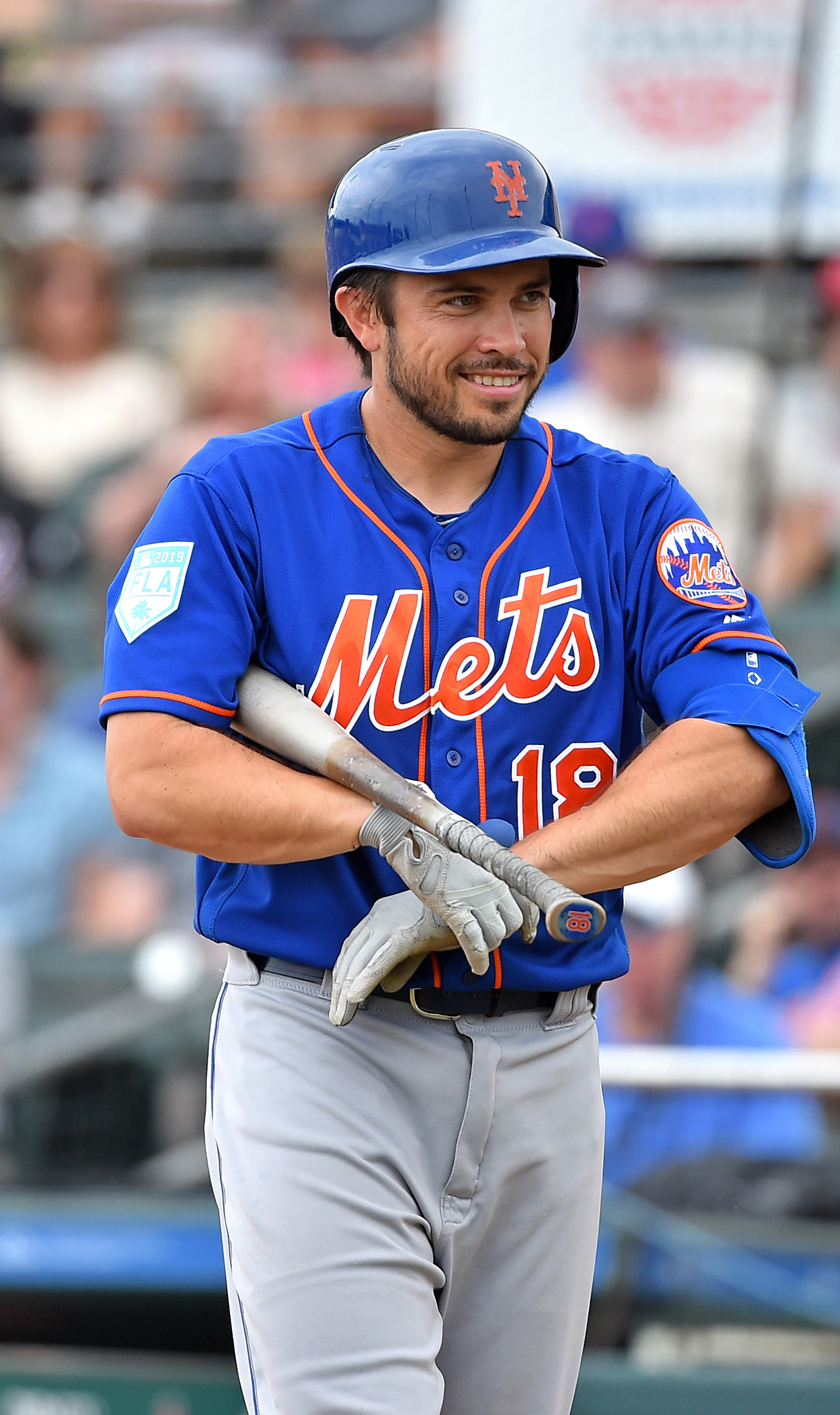
In d’Arnaud, the Mets landed an MLB-ready prospect ranked 23rd in baseball in early 2013, according to Baseball America. It would be similar to acquiring Luis Patiño in the present day, who happens to be the main piece the Padres sent to the Rays for Blake Snell last December. Baseball America slapped a 60 grade on d’Arnaud at the time, generally assigned to “first-division regulars.” D’Arnaud was said to have the ability to become an All-Star catcher, “if he can stay healthy.”
Though d’Arnaud played well in 2014-15, accumulating 6.2 WAR over 175 games, his Mets career was mostly marked by a litany of injuries, and he was released in May 2019. D’Arnaud has had a resurgence since then, with a 120 wRC+ over 550 plate appearances. He took home his first Silver Slugger award with the 2020 Braves and is entering the last year of a two-year, $16MM free agent contract.
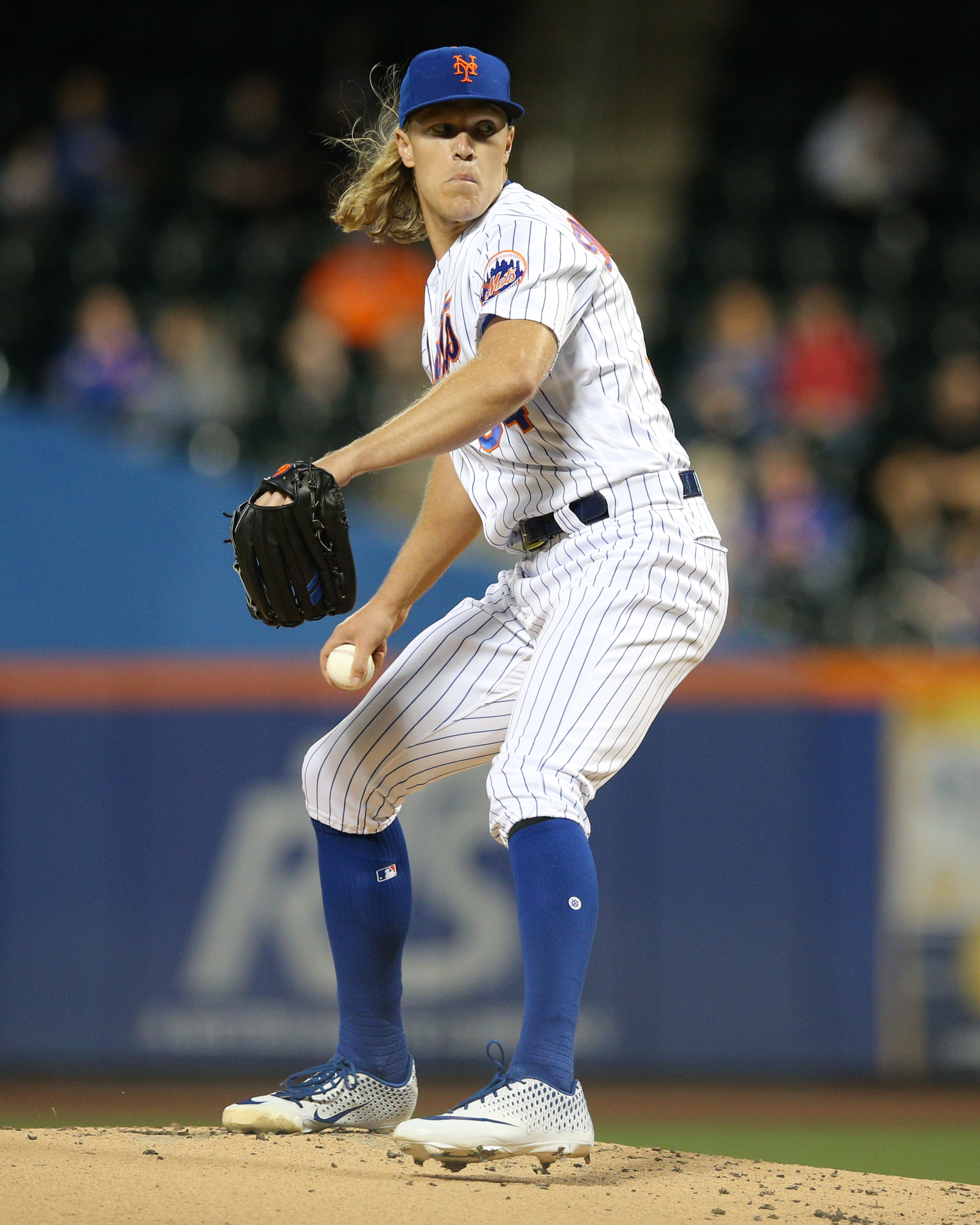
Syndergaard, meanwhile, landed 54th on BA’s top 100 back in 2013. He, too, was assigned a 60 grade, with “the ceiling of a frontline starter.” Syndergaard, who had been drafted out of high school, was a 20-year-old who had yet to pitch above low-A, but he was considered a polished pitcher at the time. He ascended quickly to top-15 prospect status, reaching the Majors in 2015 and finishing fourth in the Rookie of the Year voting. He pitched well for the Mets in their 2015 run to the World Series and finished eighth in the 2016 NL Cy Young voting.
Though Syndergaard missed most of the 2017 season with a lat injury and all of 2020 due to Tommy John surgery, he’s tallied 18.8 WAR for the Mets and should be a factor in 2021 before becoming eligible for free agency.
While Buck and Becerra didn’t pan out for the Mets and d’Arnaud fell short of expectations, the acquisition of Syndergaard alone made the Dickey trade a resounding success for the Mets and Alderson. The chances of the Cubs having landed a player of Syndergaard’s caliber in the Darvish deal are remote, but we’ll have to check back in five years or so.
With Dickey seeking a reasonable two-year extension, a suitor could have expected to control him for three years in total, which is what the Blue Jays wound up getting. Dickey would only need to be paid $30MM over the three-year term, in an offseason where Zack Greinke landed a six-year, $147MM contract and Anibal Sanchez signed for five years and $80MM. Dickey would be paid just 40% of the AAV the market’s top pitcher received in free agency, on a much shorter term. In 2021, Trevor Bauer signed for three years and $102MM, an average annual value of $34MM. With the Cubs picking up $3MM of Darvish’s tab, the Padres got him for $59MM over three years – a $19.67MM AAV that is about 58% of Bauer’s. Bauer’s contract could easily become $85MM over two years assuming he opts out of the final year, however, and then Darvish’s AAV would be about 46% of Bauer’s.
It’s not a perfect parallel, and both Dickey and Darvish came with some risks, but it’s fair to say the Cubs weren’t offering quite the same payroll-friendly ace the Mets were – especially with teams reeling from the pandemic. The Cubs surely would have upped their return had they been willing to include more cash or take on a bad contract. Talent-wise, Dickey was a 38-year-old knuckleballer who had never shown strikeout potential prior to 2012. Darvish, on the other hand, made four All-Star teams prior to 2020 and consistently rates among the top strikeout pitchers in the game. Darvish seems more likely to deliver ace-caliber seasons for his new team than Dickey was, though he poses a greater health risk. As it turned out, Dickey never reached 2 WAR in any of his four seasons with the Blue Jays.
Like the Mets in 2012, the Cubs didn’t have any real urgency to make a deal this offseason, and should have held out unless they were bowled over. The Padres had already traded the aforementioned Patiño, the game’s #23 prospect, but still had prospects ranked #10, #11, #36, #76, and #85. The Cubs received none of them. Though the Cubs threw in a credible backup catcher in Victor Caratini, their return was one year of righty Zach Davies, plus prospects Reginald Preciado, Owen Caissie, Ismael Mena, and Yeison Santana. None of the four prospects are near the Majors, and all of them received 45 grades from MLB.com. Santana, who recently turned 20, is the oldest of the bunch. We’ll let future Hall of Famer Clayton Kershaw take it from here, in his interview with Jorge Castillo of the L.A. Times:
“There’s a lot of smart guys in front offices. Figure something out that’s easier to do than trading away a [star]. Just, for example, a potential Cy Young [Award winner] in [Yu] Darvish, who has been one of the top five pitchers in baseball for a year and a half, for prospects that could potentially be good but they’re 17, 18 years old. And [Zach] Davies is a great pitcher, but to me, that’s just not . . . For the Chicago Cubs to do that, it’s not good. It’s just not good.”
Kershaw would know. He’s finished in the top two for Cy Young voting five times, and his big-market employer never entertained trading him immediately thereafter.
So then, why do the deal if you’re the Cubs? A mandate from ownership to reduce payroll is the likely answer, as the Cubs removed $59MM of Darvish’s $62MM commitment from the books. Darvish carries a $21MM CBT payroll hit for 2021, yet the Cubs added $31.33MM back to the payroll in Davies, Joc Pederson, Jake Arrieta, Andrew Chafin, Trevor Williams, Jake Marisnick, Austin Romine, Jonathan Holder, and Kohl Stewart. The new acquisitions project to 6.1 WAR, while Darvish projects for 3.8 by himself. This sequence of moves represents a clear step back, as the Cubs could have easily kept Darvish’s 3.8 WAR out of one roster spot, while adding all the same supplementary help aside from Davies.
The 2021 Cubs currently carry a CBT payroll of about $170MM, more than $45MM shy of where they sat last year. They project as roughly a .500 team, and fit in well in a division where most of the teams aren’t really pushing for the title.
Hoyer: Finances “Not The Focus” Of Darvish Trade
Cubs president of baseball operations Jed Hoyer spoke with reporters on a Zoom call this morning, discussing a slew of topics in the wake of yesterday’s trade of Yu Darvish and Victor Caratini to the Padres. Notably, Hoyer claimed early in the process that the financial component of the trade was not the primary focus (Twitter link via Patrick Mooney of The Athletic):
We always have an eye on the finances of every deal. In 2020, obviously, some of those things are magnified. But that was not the focus. The focus of this deal was to try to move a player in the second half of his contract and acquire a lot of young talent.
It’s tough to sell that finances weren’t the focus of the deal, given that the Cubs cleared more than $50MM in salary (over the next three years) and didn’t receive any of the Padres’ top 10 farmhands. Three of the four minor leaguers acquired in the trade have yet to play their first professional game, thanks to the lack of a minor league season in 2020.
Nevertheless, Hoyer expressed confidence that the Cubs will have a competitive roster in 2021, although he simultaneously indicated that the organization won’t be a major player in free agency despite the money saved from the Darvish trade (Twitter links via Gordon Wittenmyer of NBC Sports and Paul Sullivan of the Chicago Tribune).’
Hoyer also called a report suggesting that the Cubs were shopping Willson Contreras “fictional,” though he acknowledged he has received trade interest in his catcher and would not label him untouchable. ESPN’s Jesse Rogers tweets that in spite of Hoyer’s denial, the Cubs have indeed discussed Contreras with other clubs “a lot” in the “recent past.” The Athletic’s Sahadev Sharma added that the denial does not mean Contreras won’t be moved, though there haven’t been “substantive” talks in the past week or two.
The messaging throughout the call seems rather mixed. Hoyer has asserted that finances did not drive the trade, which most in the industry view as a salary dump. Free agency, meanwhile, will become a priority again only when the roster “has the bones” of a contender, which inherently implies that the current roster has something less than that (due, in no small part, to the Darvish trade itself). Yet the company line is that this team will compete in 2021, and the very notion of shopping Contreras was framed as ridiculous.
Also puzzling was Hoyer’s characterization of the Darvish return. While it’s standard to see an executive express excitement over the young talent acquired in exchange for a star player, as he did today, the newly minted Cubs president also suggested that this was the best package he could coax from the Padres (Twitter link via Rogers). Hoyer noted that San Diego counterpart A.J. Preller has steadfastly held onto MacKenzie Gore and most of his organization’s best prospects throughout a frenzy of trade activity dating back to August.
However, the very mention of taking the best return out there seems to imply that there was indeed pressure from ownership to make a deal. Taking the best deal available is only the course of action charted when taking no deal at all isn’t an option. Beyond that, if finances truly weren’t the main focus, one would assume the prospect return have been heightened by the Cubs offering to pay down more than the reported $3MM they’re sending to the Padres to cover Darvish’s remaining $62MM in guarantees.
It’s an unenviable spot for Hoyer or any executive to have to talk around a trade of this nature, but this morning’s press conference still felt more disconnected than it needed to be. At the end of the day, the Cubs’ message is that trade was not intended as a salary dump; that the team will still be competitive in 2021 without any notable free-agent additions to a roster that may not have the “bones” of a contender (and also just lost a Cy Young runner-up); and that initiating additional trades of established players (e.g. Contreras) is far-fetched.
The goal may have been to push back on the notion of a full-scale teardown, but the resulting depiction is something of a rudderless ship. Does this team view itself as a contender for 2021? If so — and if not for financial reasons — why trade its best pitcher while eschewing free-agent additions with the associated cost savings? If not, then why push back so strongly on trading Contreras?
The good news for the Cubs and their fans is that no one else in the National League Central seems to want to try to separate themselves from the pack. Given the inactivity throughout the division, the Cubs could still find themselves among the Central’s more competitive teams by default. Still, whether it happens this winter or next offseason — when each of Anthony Rizzo, Javier Baez and Kris Bryant are slated to reach free agency — it’s clear that substantial change is on the horizon for the Cubs.
Padres Acquire Yu Darvish, Victor Caratini
DEC. 29, 10:07pm: Both teams have announced the trade. The Cubs will pay $3MM of Darvish’s remaining money, per Jordan Bastian of MLB.com and Heyman. Darvish has $62MM left on his contract – not the previously reported $59MM – because of the incentives he reached for finishing second in 2020 NL Cy Young voting, Bastian notes.
DEC. 28: The Cubs and Padres have agreed to a deal that will send right-hander Yu Darvish and catcher Victor Caratini from Chicago to San Diego, Mark Feinsand of MLB.com reports. The Cubs will receive righty Zach Davies, shortstops Reginald Preciado and Yeison Santana, and outfielders Owen Caissie and Ismael Mena in return. The trade is done pending medical records, and the sides could finalize it Tuesday, per Jon Heyman of MLB Network. Chicago will pick up “a minor portion” of Darvish’s remaining money, Bob Nightengale of USA Today adds.
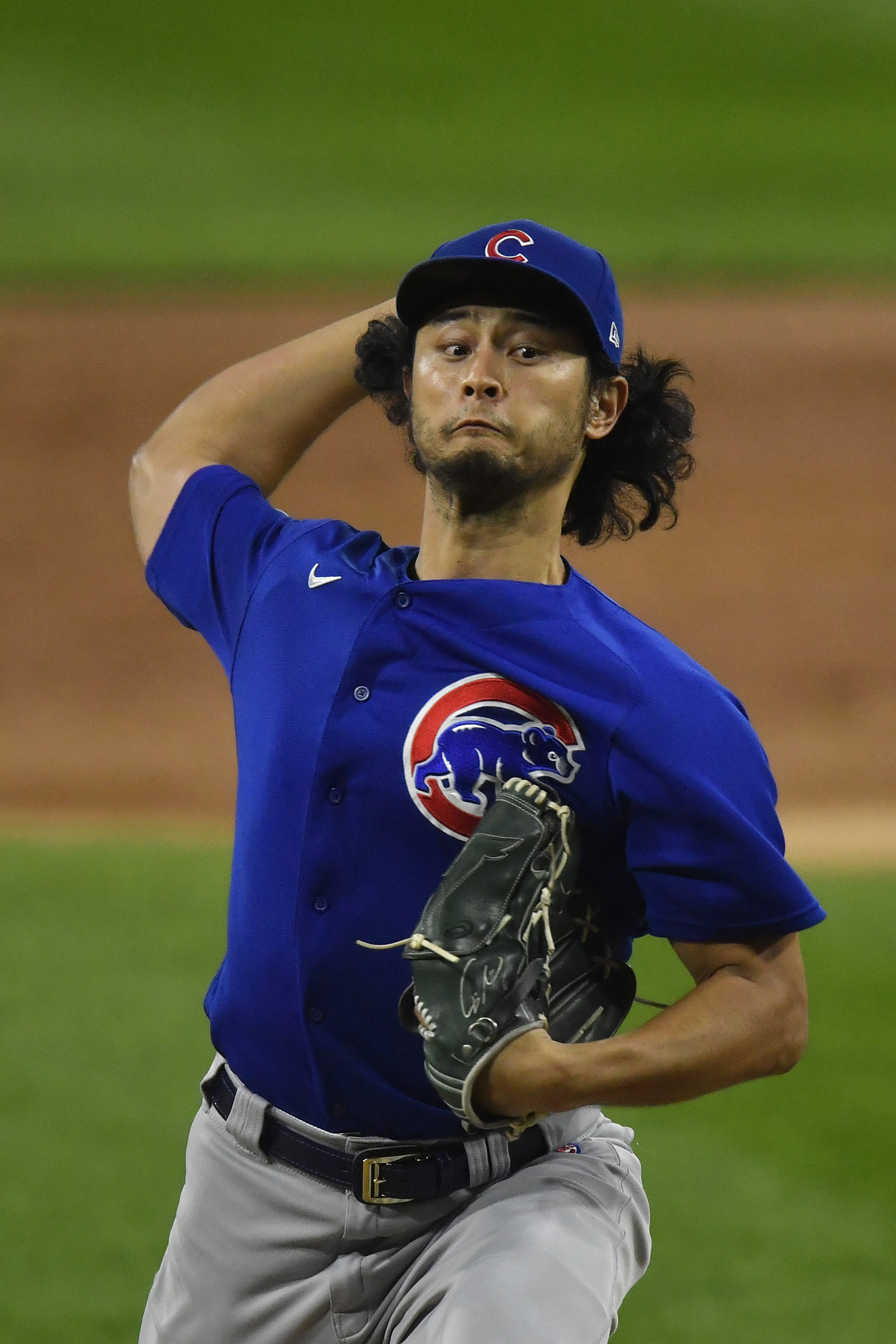
This deal does not come as a surprise, as the two sides had been in deep discussions about Darvish throughout the day. It’s the latest bold strike for the Padres, who are coming off their first playoff season since 2006 and clearly plan to vie for their first-ever World Series title next year. Even before landing Darvish, they made a huge addition to their rotation Sunday by agreeing to pick up left-hander Blake Snell from the Rays. They also agreed to sign Korean infielder Ha-Seong Kim on Monday, making for an epic 24-hour period of dealmaking for GM A.J. Preller.
The Cubs, meanwhile, are losing perhaps their best starter in Darvish – a 2020 National League Cy Young finalist – as well as a quality catcher in Caratini. Although the Cubs are just a couple months removed from their fifth playoff berth in six years, ownership entered the offseason unlikely to spend after a pandemic-shortened campaign. Indeed, the Cubs previously saved money by saying goodbye to Kyle Schwarber and Albert Almora at the non-tender deadline, while pricey third baseman/outfielder Kris Bryant has been the subject of trade speculation. It’s unclear whether the Padres will take on all of Darvish’s remaining contract, but if they do, that’ll be $59MM on their books over the next three years. Caratini’s much more affordable, as he will earn a projected $1.2MM to $1.6MM in 2021. Caratini isn’t on track for free agency until after 2023.
In heading to San Diego, Darvish will reunite with Preller, who was part of the Rangers’ front office when they signed Darvish out of Japan before the 2012 season. Darvish, now 34, has since enjoyed a terrific career divided among the Rangers, Dodgers and Cubs, and last season was likely his best yet. He ended up with 76 innings of 2.01 ERA/2.23 FIP ball, posted 11.01 K/9 against 1.66 BB/9, and averaged a personal-high 95.5 mph on his fastball. He’ll now slot in near the top of a rotation that lost Mike Clevinger to Tommy John surgery but will still feature Snell, Dinelson Lamet and Chris Paddack as locks for rotation jobs (barring other aggressive moves). The Padres also boast multiple high-end pitching prospects, including MacKenzie Gore.
Caratini, 27, was Darvish’s personal catcher in Chicago, but he was a reserve behind No. 1 backstop Willson Contreras. Caratini debuted with the Cubs in 2017 and has since offered passable offense relative to his position, having batted .250/.327/.372 in 677 plate appearances. Caratini was also a well-regarded defender in Chicago, including when he ranked in Statcast’s 98th percentile in the pitch-framing department last season. He’ll join Austin Nola and Luis Campusano as catchers on the Padres’ 40-man roster.
For the Cubs, this deal represents their first blockbuster trade under new president of baseball operations Jed Hoyer, their former GM who earned a promotion after Theo Epstein stepped down in November. Losing Darvish and Caratini may not go over well for their fan base, but the Cubs are banking on Davies helping replace Darvish in 2021 and the young talent they received emerging as cornerstones.
Davies was somewhat quietly a top-tier starter in 2020, his only year as a Padre, as he recorded 69 1/3 frames of 2.73 ERA/3.88 FIP ball with 8.18 K/9 and 2.47 BB/9. He should look good alongside Kyle Hendricks as the Cubs’ one-two in 2021, though the 27-year-old Davies isn’t controllable beyond then. He’ll earn a projected $6.3MM to $10.6MM via arbitration next season.
The rest of the Cubs’ return doesn’t consist of any elite farmhands, but Kyle Glaser of Baseball America notes that BA was planning to rank Preciado (No. 15), Mena (17), Santana (18) and Caissie (20) among the Padres’ 20 best prospects in its upcoming Prospect Handbook.
Just 17 years old, BA rated Preciado 23rd in the Padres’ farm system midway through last season, writing that the 6-foot-4 switch hitter’s “frame provides hope he can grow into 20-plus home run power as he matures physically.”
Mena, 18, signed an expensive $2.2MM bonus with the Padres out of the Dominican Republic during the 2019-20 international signing period. BA lauded Mena’s speed, range and potential 15- to 20-home run power earlier this year.
The 20-year-old Santana put up impressive production in rookie ball from 2018-19, when he combined for a .306/.418/.425 line in 365 plate appearances. The Canadian-born Caissie, 18, was a second-round pick (No. 45) of the Padres last summer. BA wrote before the draft that Caissie possesses “exciting upside,” though there are “some significant swing-and-miss concerns” in his game.
All things considered, this looks like a trade between two NL playoff teams going in different directions. The Padres appear to be all in on playing for a championship in 2021. It’s hard to say the same for the Cubs, who seem to be a club in retooling mode.