
White Sox Sign Javy Guerra To Minor League Deal
The White Sox have added veteran reliever Javy Guerra on a minor league agreement, according to his transaction tracker on MLB.com. Atlanta’s Triple-A affiliate released the right-hander on Thursday. It didn’t take long for Guerra to find a new club.
Guerra had spent the past two seasons with the Hanshin Tigers of Japan’s Nippon Professional Baseball. He returned to the States this year, inking a minor league deal with Atlanta in January. The righty was tagged for five earned runs over 2 2/3 innings in Spring Training. Guerra scuffled to a 5.68 ERA across 16 appearances with Gwinnett. He had three more walks (20) than strikeouts (17).
The 30-year-old Guerra has spent parts of five big-league seasons with three teams. He most recently pitched with the Rays in 2023. The majority of Guerra’s innings in the majors have come with the Padres. He debuted with San Diego in 2019 and was an occasional member of the bullpen for four seasons.
Guerra has an ERA well above 6.00 as a big leaguer. Walks have typically been his biggest issue. He’s issued free passes at a massive 14.3% clip over 63 MLB innings. Guerra did put together a strong campaign with Hanshin in 2024. He fired 58 innings with a 1.55 ERA. The righty recorded 14 saves. More importantly, he trimmed his walk rate to 4.9%. Guerra only pitched in six games during his second season with Hanshin.
Photo courtesy of Jim Cowsert, Imagn Images
Guardians Trade Nolan Jones To White Sox
The Guardians announced they’ve traded non-roster outfielder Nolan Jones and cash considerations to the White Sox. Chicago sends a $250K international bonus pool allotment to Cleveland in return.
Cleveland outrighted Jones off their 40-man roster at the end of Spring Training. He therefore won’t immediately occupy a roster spot for Chicago. The Sox announced that they’ve assigned him to Triple-A Charlotte. Jones has spent the entire season in the International League with Cleveland’s affiliate in Columbus.
The 28-year-old Jones appeared in the Majors each season from 2022-25. He had by far his best season with the Rockies in 2023, hitting .297/.389/.542 with 20 homers in a little over 400 plate appearances. Back problems limited him to half a season a year later. His numbers plummeted, as he hit only .227/.321/.320 with three homers in 79 games.
Colorado moved on after that injury-riddled season. The Rox dealt Jones back to Cleveland, the organization that had drafted him in 2016 and with which he made a brief debut six years later. He spent the entire season on the MLB roster, aside from a season-ending oblique strain in late September, but did not rebound offensively. Jones mustered only a .211/.296/.304 batting line while striking out in 28% of his 403 trips to the plate.
It came as a surprise that the Guardians tendered him an arbitration contract after a second consecutive season of below replacement level production. The sides hammered out a $2MM agreement early in the offseason. Jones had a rough camp and failed to make the team out of Spring Training. He cleared waivers and had an easy call to accept an assignment to Triple-A so as not to forfeit that salary.
Jones is amidst a nice year in the minors. He’s hitting .275/.385/.460 with eight longballs across 226 plate appearances. He’s striking out a little too often (24.3%) but hitting the ball hard and drawing walks at an excellent 14.2% rate. Jones has had that “three true outcomes” approach throughout his career.
The Guardians are paying an undisclosed portion of the roughly $1.15MM he’s owed through the end of the season. The White Sox weren’t going to take on that entire sum for a Triple-A player. Cleveland takes the opportunity to get some amount of salary relief for a player who had clearly been squeezed out of their plans. The Guardians haven’t gotten much from their outfield lately, but Jones was behind the 10 outfield options they have on their 40-man roster.
Chicago isn’t actually sending cash. They’re trading $250K in space from their hard-capped bonus pool for international amateurs, which means the Guardians can spend a little more of their own money to add to their farm system. The White Sox seemingly don’t intend to sign anyone else of note before the close of this period. They also packaged $250K in bonus space alongside Derek Hill in their afternoon trade with the Phillies to add a couple minor leaguers.
Jones gives them some upper minors depth for right field, which has been an issue this season. They’re in better shape now with Braden Montgomery up and Everson Pereira back from the injured list, but they don’t have much depth in the upper minors. Jones would be eligible for arbitration for a few years if the Sox call him up before the end of the season. He’d otherwise become a minor league free agent once the regular season concludes.
Phillies Acquire Derek Hill
The White Sox have traded outfielder Derek Hill and $250K of international bonus pool space to the Phillies in exchange for outfield prospect Dylan Campbell and infield prospect Jose Colmenares, according to announcements from both clubs. Outfielder Everson Pereira has been reinstated from the injured list to take Hill’s spot on the roster. Philadelphia designated right-hander Jackson Rutledge for assignment to open a 40-man spot for Hill. Jeff Passan of ESPN first reported the trade.
Hill, 30, is a journeyman depth outfielder. This is his seventh big league season but he has appeared in just 268 games in that span. He has suited up for the Tigers, Nationals, Rangers, Giants, Marlins and White Sox. Chicago claimed him off waivers late last season and tendered him an arbitration contract, with the two sides agreeing to a $900K salary for this year.
He’s not much of a threat at the plate. He has a career .227/.278/.351 batting line, which leads to a wRC+ of 74, while striking out at a 30.8% clip. This year’s slash of .213/.284/.375 leads to a slightly better 84 wRC+, but still notably south of league average.
But he has other attributes. He is one of the fastest players in the league, with Statcast putting his sprint speed in the 94th percentile this year. That’s allowed him to steal 30 bases in 39 tries in his career. That speed has also helped him in the field. In over 1500 outfield innings, mostly in center, he has been credited with 11 Outs Above Average. Defensive Runs Saved has considered him to be league average.
Thanks to that speed-and-defense profile, he can be a useful player. The lack of offense hurts but he can at least be a short-side platoon guy. A right-handed swinger, he has a .272/.317/.463 line and 115 wRC+ against lefties, compared to a dismal .195/.251/.271 line and 45 wRC+ in the other split.
Despite his attributes, he has been getting squeezed for playing time in Chicago. The Sox have been calling up rookies this year and have lately been giving most of their outfield playing time to Braden Montgomery, Sam Antonacci, Tristan Peters and Rikuu Nishida, with Hill and Randal Grichuk chipping in from time to time.
The Sox have been rebuilding for years but are having a good season, currently leading the American League Central. This may feel like a “sell” move since they are trading a big leaguer for prospects, but it’s surely more that they feel subtracting Hill doesn’t significantly hurt their chances in 2026. Hill was already losing playing time and Pereira’s return from the IL would have further squeezed him out.
But the Phillies have a far more open outfield mix. They have been giving most of the playing time to Brandon Marsh, Justin Crawford and Adolis García this year, with Edmundo Sosa and Steward Berroa currently in bench roles. Johan Rojas would have been in the mix as a depth option but he was given a PED suspension earlier this year and his comeback was stopped by season-ending elbow surgery this week.
García departed last night’s game after appearing to injure his right shoulder. It’s possible he’s going on the injured list, though Matt Gelb of The Athletic reports that the Phils were looking for a right-handed complement to their outfield even before the García injury.
Marsh and Crawford are both lefty bats. Marsh has a career .221/.284/.318 line against lefties and would ideally have a platoon partner. He has a .288/.333/.442 slash against southpaws this year but that’s getting a lot of help from a .424 batting average on balls in play. Crawford is a rookie with a paltry .232/.291/.332 line on the year, which includes a ghastly .143/.250/.143 line against lefty pitchers.
Between Crawford’s struggles, the platoon issues for both Crawford and Marsh, García’s injury and the Rojas surgery, it’s easy to see how Hill could have a better path to playing time in Philadelphia than he did in Chicago.
To get him aboard, the Phils are parting with a couple of prospects. Campbell, 23, has now twice been traded for pool space. Originally drafted by the Dodgers, that club sent him to the Phillies in January of 2025 to add pool space to help them sign Roki Sasaki. He has played all three outfield positions as well as second base. He’s got some wheels, as he stole 42 bases on the farm in 2024, 33 last year and nine so far in 2026.
His offense is a bit more questionable. He is only hitting .216/.281/.412 at Double-A this year, leading to a wRC+ of just 75. He has been better in the past. He had a combined .232/.314/.370 slash over 2024 and 2025, leading to a league average 100 wRC+. FanGraphs ranked him the #19 prospect in the Philadelphia system in the offseason, though that was before this year’s struggles. He’s not currently listed as a top 30 prospect in the system by either Baseball America or MLB Pipeline.
Colmenares, 24, was originally a Yankee prospect. He was released in August of last year and was signed by the Phillies. He’s having a good season for High-A Jersey Shore, hitting .278/.403/.413, but he’s old for the level and that line is propped up by a .386 BABIP. He has exclusively played shortstop this year but has previous experience at second and third base.
Both prospects feel like lottery tickets, which makes sense since Hill is more of a role player than a true difference maker. The Sox probably don’t feel like they are giving up much since Hill was getting pushed off the roster anyway. They also presumably feel that Campbell and Colmenares are better than anyone they could have spent the bonus pool money on. The international signing period begins in January and most of the notable youngsters would have signed by now. The Phils, meanwhile, bolster their outfield group without giving up much and can use that pool space to replace the prospects they surrendered.
Rutledge, 24, was just claimed off waivers from the Nationals last month. He has been kept on optional assignment since then, so he hasn’t appeared for the Phillies in the majors. He gave the Nats 103 innings from 2022 to 2026, allowing 6.29 earned runs per nine.
He now heads into DFA limbo for a second time this year. If he garners interest, it will mostly be about past pedigree. He was a first-round pick of the Nats in 2019, getting selected 17th overall but he never developed into the kind of player the Nats hoped they were getting. He was initially a starter but walked too many batters and got moved into a relief role. As mentioned, his major league results have not been good so far.
There’s not too much encouragement in his minor league numbers either. Dating back to the start of 2025, he has thrown 21 1/3 innings at the Triple-A level. His 3.80 ERA in that time looks nice but his 17.6% strikeout rate and 13.2% walk rate are both poor numbers. He is still optionable for the rest of this year but will be out of options next year. He will likely be put on waivers in the coming days. If he clears, he would not have the right to elect free agency, since he hasn’t yet been outrighted in his career and has less than three years of service time.
Photo courtesy of Darren Yamashita, Imagn Images
White Sox Promote Braden Montgomery
12:15pm: The White Sox have formally announced the selection of Montgomery’s contract. Veteran outfielder Austin Hays moves from the 10-day IL to the 60-day IL to open a 40-man spot. Chicago also recalled lefty Joe Rock from Triple-A Charlotte and optioned Nishida and righty David Sandlin to Charlotte in a sequence of additional moves.
11:17am: The White Sox are calling up top outfield prospect Braden Montgomery, as first reported by Matt Snyder of CBS Sports. Chicago will have to open space on the 26-man and 40-man roster to accommodate Montgomery, who currently ranks 33rd on Baseball America’s top-100 prospect rankings.
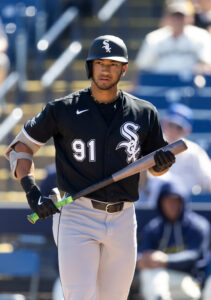
Selected No. 12 overall out of Texas A&M by the Red Sox in 2024, Montgomery landed with the White Sox as the co-headliner (alongside catcher Kyle Teel) of the blockbuster trade sending Garrett Crochet to Boston. The 23-year-old Montgomery opened the 2026 season in Double-A and has since been promoted to Triple-A, tormenting opposing pitchers at both levels. He’s appeared in 56 games this season, taken 258 plate appearances between those two levels, and turned in a stout .314/.422/.548 batting line (152 wRC+) with 10 homers, 13 doubles, three triples, five steals (albeit in 11 attempts), a huge 15.1% walk rate and a 24.8% strikeout rate.
Montgomery has been particularly productive at the dish as of late. After falling into a mini-slump that saw him go hitless for 16 plate appearances, he’s turned things around with a .474/.580/.711 batting line over his past 10 games. In that time, the switch-hitter has popped a pair of homers and three doubles while drawing 10 walks against seven strikeouts. The dip in strikeouts is notable, as the main knock on Montgomery for many scouts is a penchant for swinging and missing that leads to bearish grades on his hit tool; Baseball America pegged his hit tool at a 40 (on the 20-80 scale) heading into the season, while FanGraphs gave him a present-day 30 with a chance to get to a 40.
Even if Montgomery strikes out more than the Sox would prefer, he garners praise for elite bad speed, plus-plus raw power and a prodigious arm in right field. That latter element is to be expected for a former two-way star who ran his heater up to 96 mph as an amateur. Montgomery has focused solely on hitting and playing the outfield in pro ball, but the fact that he was a touted amateur pitcher as well only underscores his natural athleticism.
Montgomery is the latest promising young hitter to join an increasingly exciting White Sox core. The Sox have already called up Sam Antonacci and former first-rounder Jacob Gonzalez this season. They’re getting a full-fledged breakout from former top prospect Miguel Vargas. Former first-rounder Colson Montgomery has cemented himself as a potent source of power and claimed the long-term shortstop role. Chase Meidroth (also acquired alongside Montgomery and Teel) is light on power but has hit for average and gotten on base while staking a claim as the organization’s long-term second baseman. And, of course, the White Sox struck gold when they signed NPB slugger Munetaka Murakami to a two-year contract after the market failed to produce the type of long-term pact most envisioned for the 26-year-old. The aforementioned Teel has been out all season due to a knee injury but hit .273/.375/.411 in 78 games as a rookie last year.
For all that young potential, Chicago’s outfield is still pretty open. Antonacci has been a nice tablesetter in left field. Tristan Peters has hit well in center, but he’s a 26-year-old rookie whose production is buoyed by a .385 average on balls in play that he won’t sustain over a larger period. None of Derek Hill, Luisangel Acuna, Everson Pereira, Tanner Murray, Rikuu Nishida or veteran Andrew Benintendi has been a standout thus far; Pereira has hit reasonably well in 71 plate appearances but has a 30% strikeout rate and is out with a pectoral injury. Montgomery should have a path to regular at-bats in either center field or right field moving forward.
Based on the timing of Montgomery’s promotion, he’s not going to receive a full season of big league service unless he hits the ground running and finishes top-two in AL Rookie of the Year voting with a massive four-month finish to the season. Barring that unlikely event, the Sox will have six years of club control over him beyond the current season. He’s probably going to fall just a few days shy of Super Two eligibility, meaning he’ll be eligible for arbitration the standard three times rather than four, though that assumes he’s in the majors to stay. Whether that proves to be the case will hinge on how well he adjusts to big league opponents.
White Sox’ GM Chris Getz Discusses Deadline Approach
The White Sox are probably the most surprising team in playoff position through the season’s first two months. Chicago takes a 32-28 record into tonight’s game in Minnesota, placing them three games up on the competition for the second AL Wild Card spot. They’re only a game and a half back of the Guardians in the AL Central.
Chicago’s front office surely anticipated taking a step forward after their third straight 100-plus loss season. They added Munetaka Murakami to the middle of the order and took a handful of one- and two-year fliers on the pitching staff. That said, even they probably didn’t project this team as an especially likely playoff team entering the season. They’ve been in rebuilding mode for the entirety of Chris Getz’s three-year tenure as general manager.
The Sox now find themselves in a different spot as teams sketch out their preliminary trade deadline trajectories. Should they look to move prospect capital for MLB talent this summer to aid a potential unexpected playoff push?
Getz spoke with Chad Jennings of The Athletic last week, indicating the front office’s focus remained on the longer term. “It’s never been about 2026. It isn’t. It’s still very big picture,” Getz told Jennings. At the same time, he mentioned that the club is “starting to really have this winning kind of mindset.” That may be changing the front office’s approach just a few days later, as Getz has already somewhat walked back last week’s comments.
“We are focused on 2026. I know I have stated that it’s not about 2026, but this team is playing really good baseball,” the GM said on Tuesday (link via James Fegan of Sox Machine). “We know where we are in the standings, both within the division and Wild Card, and we’re monitoring it. If there’s opportunities to add to this — we have higher hopes than just 2026 because we want to have a continual winner here — but if there’s chances to really add to this group, we’re going to do that.”
Getz didn’t tip his hand on what the front office would prioritize. That’s fairly easy to project from the outside. The Sox have had a top 10 offense overall and are tied for third in home runs behind the Yankees and Braves. They’re tenth in on-base percentage and fifth in slugging. Pitching has been the relative weakness, as they’re 19th in earned run average and 20th in strikeout rate.
Chicago can use help in both the rotation and the bullpen. Starting pitching figures to be the biggest priority, as there are a couple obvious areas to upgrade at the back end. Davis Martin has had an excellent season to cement himself as the staff’s top arm, tonight’s ugly start at Target Field notwithstanding. Sean Burke and Anthony Kay have been capable mid-rotation arms.
Re-signing Erick Fedde on a $1.5MM reclamation deal hasn’t worked, while top prospect Noah Schultz hasn’t been efficient enough in his first eight MLB starts. Schultz landed on the injured list with patellar tendinitis last week but should be back after a short-term absence. Another prospect, David Sandlin, has drawn his first two big league starts in the interim. If the Sox remain in contention, they figure to add at least one starter to take over Fedde’s spot.
The bullpen has found its footing to an extent after a poor April. Second-year righty Grant Taylor is a weapon at the back end. Sean Newcomb, Seranthony Domínguez and Bryan Hudson are all effective and in the mix for leverage roles. They could use another arm or two in the middle innings, however.
There’s not as much to be done on the position player side assuming Murakami and Kyle Teel are back from injury, though they’ll probably explore the outfield market. Sam Antonacci has taken over left field and quickly hit his way to the top of the lineup as a strong on-base threat. They’ve gotten good work from Tristan Peters in center field, but he entered the season without any real big league track record. Right field has been a revolving door, currently falling to a Rikuu Nishida/Randal Grichuk platoon.
Getz told Fegan that the Sox expect to get a look at outfield prospect Braden Montgomery this season. Acquired alongside Teel and Chase Meidroth in the Garrett Crochet deal, the 23-year-old Montgomery is hitting .281/.366/.461 over 23 Triple-A contests. He mashed in a similar amount of Double-A playing time before getting the bump to Triple-A in early May.
Even if the Sox bring Montgomery up before the trade deadline, they could look for a left-handed hitting outfielder from outside the organization. Montgomery is a switch-hitter who can play center or right field. Although the Sox presumably would want him playing regularly once he’s up, there’d likely be some growing pains. Between that and the potential for Peters to take a step back offensively, adding some kind of veteran outfield help makes sense.
None of that means the front office is likely to deal from the top of the farm system. The prospect cost for a back-end starter, middle relief help and/or complementary outfield bat should all be fairly manageable. It’s still too early to delineate many clear buyers and sellers, but Mickey Moniak, Jake McCarthy and Trevor Larnach are among lefty-hitting outfielders who seem likely to be available.
White Sox Release LaMonte Wade Jr.
The White Sox have released veteran first baseman LaMonte Wade Jr., who’d been playing with their Triple-A affiliate. CHSN’s Brooke Fletcher was among those to relay the news. The 32-year-old Wade was performing well in Charlotte, slashing .250/.420/.441 with seven homers, eight doubles, two steals and more walks (22.4%) than strikeouts (21.4%) in 201 trips to the plate.
It might register as a modest surprise that the Sox either cut him loose or (if he had a June 1 opt-out in his contract) granted him his release at a time when Munetaka Murakami just hit the shelf for at least four to six weeks due to a Grade 2 hamstring strain. However, Chicago is taking a look at 2023 first-rounder Jacob Gonzalez in Murakami’s absence. He played first base in his MLB debut but has more experience on the left side of the infield, which could allow Miguel Vargas to man first base more regularly in Murakami’s absence. Gonzalez absolutely earned a look with a massive performance in Triple-A. Perhaps they could’ve found a way to get Wade onto the bench in a reserve role, but that would’ve entailed cutting ties with a veteran outfielder like Derek Hill or Randal Grichuk. The Sox chose not to do so.
Wade originally signed a minor league deal with the South Siders in January. He was released late in camp when the Sox informed him that he wouldn’t crack the Opening Day roster, but he signed a new minor league deal a week later and has spent the entire season thus far with the Knights.
Wade has appeared in each of the past seven big league campaigns, mostly with the Giants, and is a lifetime .236/.341/.390 hitter in the majors. His most recent work was well shy of his career marks, however; in 282 plate appearances between San Francisco and Anaheim last year, he posted a dreadful .167/.271/.254 batting line (52 wRC+) with a career-worst 24% strikeout rate. Wade grades out below average at first base (his primary position) and in the outfield corners, and he’s never hit left-handed pitching very well.
It’s a limited skill set, but Wade’s work in Charlotte shows what he’s capable of at his best: piling up walks to support a substantial on-base percentage with enough power to offset what’s typically a pedestrian batting average. Teams looking for some lefty-swinging corner help — ideally at first base but possibly at DH and/or in an outfield corner — could take a look and hope that his strong showing in the upper minors is a precursor to a return to form in the majors. It’s also possible he simply returns to the White Sox, depending on what the market has to bear. This time last year, the White Sox granted reliever Dan Altavilla his release when he triggered an opt-out, only to re-sign him on a big league deal 48 hours later.
Jarred Kelenic Elects Free Agency
TODAY: Kelenic cleared waivers and elected free agency rather than accept an outright assignment, according to Brooke Fletcher of the Chicago Sports Network.
MAY 25: The White Sox announced that outfielder Jarred Kelenic has been designated for assignment. That’s the corresponding move for them to select infielder/outfielder Rikuu Nishida, a move that was reported yesterday.
Kelenic, 26, signed a minor league deal with the Sox in the offseason. He began the season at Triple-A and put up some encouraging numbers. In 26 games, he slashed .202/.346/.464. That batting average is obviously not pleasant but was held back by an unfortunate .224 batting average on balls in play. The on-base percentage was buoyed by a huge 18.3% walk rate. His six home runs in 104 plate appearances boosted the slugging percentage. The batting line translated to a subpar 97 wRC+ but would have been above average with a bit more batted ball luck.
The White Sox decided to give him another shot in the big leagues, which didn’t work out. He got into 19 games and stepped to the plate 59 times. His 10.2% walk rate was strong but he also struck out at a huge 33.9% clip. Though his .344 BABIP was actually a help in this sample, he nonetheless put up a .226/.305/.321 line and 81 wRC+.
These are fairly small data sets but they do roughly mirror Kelenic’s larger career arc. A former sixth overall pick and top prospect, he has often put up huge numbers in the minors without finding success in the majors. Including this year’s stint with the Sox, he now has 1,547 big league plate appearances. He has been punched out in 30.7% of those and has a .211/.283/.374 line, which leads to an 84 wRC+. He has stolen some bases but hasn’t received strong grades for his glovework.
The overall performance has pushed him into fringe roster status. As mentioned, he had to settle for a minor league deal coming into this season. He has exhausted his option years, so the Sox had to bump him off the 40-man since they no longer want him on the active roster.
Kelenic is now in DFA limbo, which can last as long as a week. The waiver process takes 48 hours, so the Sox could take five days to explore trade interest. The most likely outcome is Kelenic ending up on waivers and clearing. He just cleared waivers in October of last year and he hasn’t done much to raise his stock since then. Players with a previous career outright or three years of service time have the right to reject outright assignments in favor of electing free agency. Kelenic qualifies on both counts and can head to the open market if he clears waivers in the next week.
Photo courtesy of Kamil Krzaczynski, Imagn Images
White Sox Place Munetaka Murakami On Injured List
TODAY: Murakawmi has a Grade 2 hamstring strain and will miss 4-6 weeks, Venable told SoxMachine’s James Fegan and other reporters. Chicago officially placed Murakami on the 10-day IL today, and selected infielder Jacob Gonzalez (as reported yesterday) to take his spot on the active roster.
MAY 29: The White Sox’s dramatic win tonight over the Tigers didn’t come without a cost. Munetaka Murakami left the game with right hamstring tightness. Manager Will Venable said postgame that while the team was still awaiting testing results, the rookie slugger could miss a couple weeks (relayed by Scott Merkin of MLB.com).
Murakami tweaked his hamstring in the third inning. He hustled to beat out a potential double play ball and favored his leg after getting through the bag. Venable said postgame they believe there’s a strain and will know more about the severity after tomorrow’s imaging. Miguel Vargas kicked over to first base to finish the game. Colson Montgomery slid from shortstop to third base, while Luisangel Acuña handled short.
It halts a phenomenal start to Murakami’s big league career. He easily leads rookies with 20 home runs, tying him with Yordan Alvarez for second in MLB behind Kyle Schwarber. The strikeout concerns that were oft-mentioned haven’t stopped him from being one of baseball’s most feared sluggers. Murakami is hitting .240/.378/.560 over his first 246 plate appearances.
Vargas hit a two-run, walk-off shot against Drew Anderson with two outs in the tenth inning. That pushed the Sox to a season-high three games above .500. They’re only three games back of the Guardians in the AL Central and currently occupy the second Wild Card spot.
The Sox will reportedly bring up infield prospect Jacob Gonzalez tomorrow as the corresponding move. Vargas seems likely to handle everyday first base duties for a few weeks. Gonzalez and Montgomery would get the majority of the playing time on the left side of the infield. Acuña can pick up occasional middle infield work, while second baseman Chase Meidroth is also able to slide to the other side of the bag.
White Sox Select Jacob Gonzalez
TODAY: The Sox officially announced the selection of Gonzalez’s contract to the active roster. In the corresponding moves, Murakami was placed on the 10-day IL due to a right hamstring strain, and Leasure was moved from the 15-day IL to the 60-day IL.
MAY 29: The White Sox will select Jacob Gonzalez onto the MLB roster, reports Jeff Passan of ESPN. James Fegan of Sox Machine reported this evening that Gonzalez would likely get the call if Munetaka Murakami went on the injured list. Manager Will Venable told reporters postgame that Murakami would likely be down for a couple weeks with a right hamstring issue.
Chicago will need to open a spot on the 40-man roster. Reliever Jordan Leasure, who just went on the 15-day injured list today with a flexor strain, is a candidate for a move to the 60-day IL. The righty said Friday that he’ll be shut down entirely for four weeks after pitching through some discomfort for more than a month (via Fegan). Leasure indicated there’s a lot of inflammation but nothing structurally amiss with his elbow.
Chicago selected Gonzalez with the #15 pick in the 2023 draft. The Ole Miss product posted below-average offensive numbers over his first couple minor league seasons. He has completely turned that around in 2026, slugging 18 home runs over 54 games with Triple-A Charlotte. That’s already more than the 17 longballs he hit over his first two and a half seasons in the minors.
Gonzalez, who’ll make his MLB debut on his 24th birthday if he’s in the lineup tomorrow, leads all Triple-A players and is third in affiliated ball in home runs. He’s hitting .308/.414/.646 across 234 plate appearances, the second-best OPS among minor leaguers with 200+ trips. The power has come with a slight uptick in swing and miss, as he’s fanning at a career-high 20.5% rate. That’s obviously a tradeoff worth making for this kind of impact.
A 90 mph average exit velocity and 42% hard contact rate don’t quite align with Gonzalez’s monster production. Those would be above-average marks at the MLB level but aren’t top of the scale. Gonzalez had been viewed as more of an OBP-focused hitter entering the season, so even average power would be a major step forward.
Gonzalez was drafted as a shortstop and has continued to play there more than any other position. He has experience at all four infield spots and will likely play alongside Colson Montgomery on the left side of the dirt. Miguel Vargas can move to first base while Murakami is out of action.
White Sox Call Up David Sandlin For MLB Debut
May 26th: The White Sox officially announced their recall of Sandlin today. In a corresponding move, Schultz was placed on the 15-day injured list due to right knee patellar tendinitis, retroactive to May 25th.
May 25th: The White Sox are planning to promote right-hander David Sandlin, reports Elijah Evans of Just Baseball and Future Sox. The 25-year-old is already on Chicago’s 40-man, but the team will need to make space for Sandlin on the active roster. Confirming the move, James Fegan of Sox Machine noted that Sandlin is likely going to start for the White Sox, although it’s not entirely clear how he would fit into the rotation. It’s possible he’s only coming up to make a spot start, considering Chicago is in the midst of playing 13 games without a day off.
Sandlin, 25, began his professional career with the Royals in 2022, and Kansas City traded him to Boston in 2024. The Red Sox then dealt the righty to the White Sox this past winter – along with Jordan Hicks, two players to be named later, and cash – in exchange for Gage Ziehl. Sandlin was the prize of the deal for the White Sox, who were willing to take on most of Hicks’ remaining salary to acquire him. In fact, at the time of the trade, general manager Chris Getz even described Sandlin as “essentially” part of the return for Luis Robert Jr., since the GM was able to use some of the money he saved by trading Robert (and his $20MM salary) to pay Hicks, and, therefore, to secure Sandlin. Getz went on to say that Sandlin would compete for a spot on Chicago’s Opening Day roster, praising his “mid-rotation” arsenal and stuff. “He’s got a chance to really impact our starting rotation this year,” Getz explained (per MLB.com’s Scott Merkin).
Sandlin didn’t end up pitching in big league spring training. Back and forearm soreness (per Fegan) forced him to start the season on the minor league injured list instead. However, from his first rehab start at High-A Winston-Salem to his latest outing for Triple-A Charlotte, he has been nothing short of electric. Leading with a four-seam fastball that flirts with triple digits, he’s given up just 12 hits in 16 1/3 innings, striking out 26. While his walk rate is high, he hasn’t let the free passes lead to much damage; Sandlin didn’t allow an earned run until his most recent start.
Most prospect evaluators roughly agree with Getz’s assessment of Sandlin. He has No. 3 or 4 starter upside, but he needs to improve his control and hone the rest of his arsenal (besides that high-velocity heater) if he’s going to get there. While his results this season have been promising, his Triple-A numbers from 2025 demonstrate why there’s cause for concern. In his first 23 2/3 innings at the highest minor league level, he walked 13 batters, beaned two more, and gave up 35 hits en route to a 7.61 ERA and 5.27 FIP.
Davis Martin has been a revelation for the White Sox this season. Anthony Kay and Sean Burke have been solid, despite their ups and downs. Noah Schultz and Erick Fedde have struggled badly. Even so, it’s hard to imagine that Sandlin would take either of their spots in the rotation. Schultz could be optioned, while Fedde could be DFA’d. Yet, Sandlin isn’t stretched out to take on a full starter’s workload, and he’s never made more than 18 starts or thrown more than 106 innings in a professional season. So, it seems more likely that he’s joining the team to give the rest of the rotation an extra day of rest. Of course, that doesn’t mean he can’t stay in Chicago if he pitches well. This might be a spot start for now, but the White Sox aren’t going to send down anyone who can give them quality innings. They’re currently in a playoff position, despite a mediocre 4.47 ERA and 4.19 SIERA. If Sandlin succeeds, he shouldn’t have trouble sticking around.