
Free Agent Profile: Jose Bautista
Jose Bautista‘s offseason suitors will have to weigh his disappointing 2016 season against his track record as one of baseball’s top sluggers.
Strengths/Pros
While Bautista had a down year last season, it was far from being an actually “bad” year. Indeed, most players would be very satisfied hitting .234/.366/.452 with 22 homers and 24 doubles over 517 plate appearances. Bautista’s 122 wRC+ indicates that he still generated 22% more runs than a league average batter, and of all free agent hitters with at least 400 PA last year, only seven topped Bautista’s mark of 122.
With a career .266 BABIP, Bautista has never received too much luck from the batted-ball gods, though it could be argued that his .255 BABIP in 2016 was particularly lacking in fortune. Bautista had a career-high line drive rate of 18.8%, and he made hard contact on a whopping 41% of his balls in play, both of which were career-highs. Bautista’s vaunted batting eye made him productive even when he didn’t make contact, with a 16.8% walk rate that ranked third in all of baseball (behind only Bryce Harper and Mike Trout) and an 0.84% walk-to-strikeout rate that tied him for 12th among all hitters.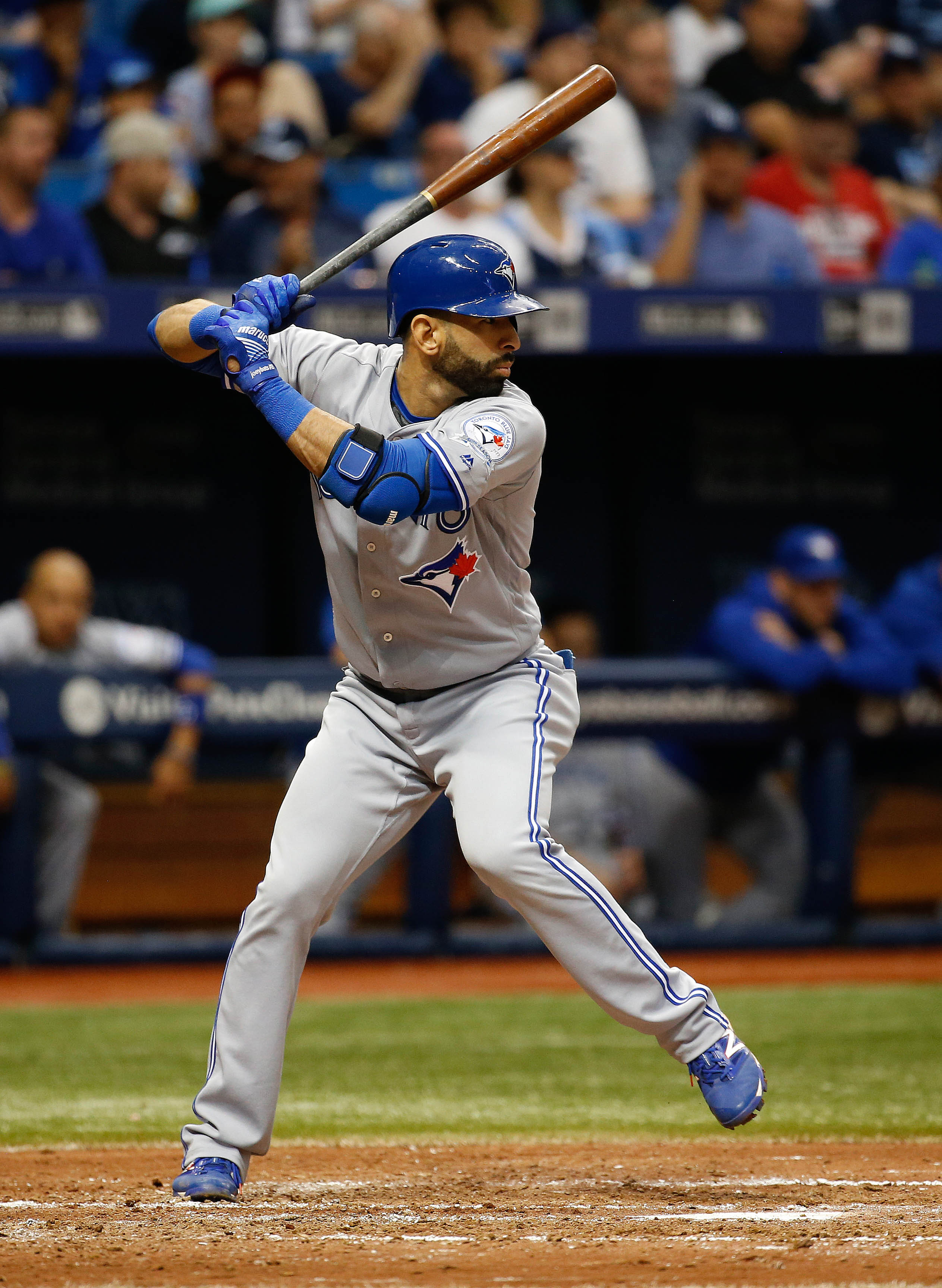
Bautista was bothered by a sore hip flexor in May and then had two separate DL stints (with turf toe and a left knee sprain, respectively) that limited him to 116 games. It could simply be that the nagging injuries and the somewhat stop-and-start nature of his season prevented Bautista from ever really getting into a groove. Bautista is known to keep himself in good physical condition, and he played in 308 of 324 games in 2014-15.
And of course, even with his 2016 season in mind, Bautista is still easily one of the decade’s best hitters. Since the start of the 2010 campaign, Bautista leads all hitters in home runs (249) and isolated power (.278), while ranking second in walk rate (16%), fourth in wRC+ (152) and eighth in fWAR (33.8). If 2016 was just an aberration, then Bautista’s next team could be signing him at a relative bargain.
Weaknesses/Cons
When a player is in his mid-30s, any signs of decline have to be taken as a red flag. For every stat indicating that Bautista was more or less his old self last year, there was another that showed significant dropoff. He posted his lowest batting average, slugging percentage, wRC+, wOBA (weighted on-base average) and isolated power numbers since his pre-breakout 2009 season, while also posting his highest strikeout rate since 2009. Between 2010-15, Bautista made contact 70.5% of the time when swinging at pitches outside the strike zone; that number plunged to just 60.4% in 2016.
Beyond just his issues at the plate, Bautista was only worth 1.4 fWAR (his lowest as a Blue Jay) last year in large part due to below-average baserunning and fielding metrics. Bautista posted his second straight year of rough numbers in right field, and now has -11 Defensive Runs Scored and -11.2 UZR/150 over the last two seasons.
Jay Alou, Bautista’s agent, has said that his client is open to a move to left field or the infield, which should help Bautista’s market. National League teams without the luxury of a DH spot, however, may be wary about signing a player entering his age-36 season without any guarantee that he can provide passable defense. Bautista has only played 154 MLB innings as a first baseman and 410 innings as a left fielder; a return to third base would seem very unlikely at this stage of his career.
Beyond this season’s two DL trips, Bautista was also limited to 92 games in 2012 due to a bad wrist that required post-season surgery, and 118 games in 2013 due to a bruised hip that prematurely ended his season. (In fairness to Bautista, both shutdowns were more than a little due to Toronto being miles out of the pennant race.) He also battled a bad shoulder in 2015 that required him to receive more DH at-bats than usual, though that injury didn’t appear to impact his offensive production whatsoever.
Personal
Originally a 20th-round pick for the Pirates in the 2000 draft, Bautista’s rise from journeyman to superstar is one of baseball’s more unlikely breakout stories. He played for five different organizations in the 2004 season (his rookie year) before settling back in Pittsburgh and posting middling numbers in semi-regular duty as a third baseman and outfielder. Dealt to the Blue Jays in August 2008 for catcher Robinzon Diaz, Bautista still didn’t entirely break out until a swing overhaul under the tutelage of Toronto manager Cito Gaston and hitting coach Dwayne Murphy. The results were incredible — after managing just 59 career homers over his first 2038 PA in the bigs, Bautista exploded for 54 homers in 2010 and the rest is history.
Bautista’s outspoken personality made him a clubhouse leader in Toronto but also ruffled some feathers around the league, whether it’s questioning the strike zones of several umpires, getting involved in the most memorable on-field brawl in recent memory or his iconic bat flip home run in Game Five of the 2015 ALDS. There hasn’t been any indication that Bautista’s attitude is necessarily impacting his free agent stock; if anything, Bautista has a reputation as an intense competitor.
Market
Needless to say, Bautista won’t be getting anything close to the massive asking price (five or six years for $150-$180MM) he reportedly floated during preseason extension talks with the Jays. In fact, given his disappointing year, Bautista could’ve been justified in accepting the one-year, $17.2MM qualifying offer in the hopes of rebounding in 2017 and testing the market again next winter in search of a bigger contract.
Instead, he rejected the Blue Jays’ offer, so any club that signs him will have to give up its top unprotected draft pick for Bautista’s services. As we’ve seen in the past, the qualifying offer can limit the market for anything less than superstar free agents. Between the draft pick compensation, Bautista’s age, his declining defense and hitting numbers and the number of other first base/DH types on the market, Bautista could have a tough time finding what he believes is fair value.
On the other hand, it’s hard to ignore Bautista’s performance prior to 2016. There will certainly be teams interested in seeing if Bautista can bounce back to his old form, and Bautista’s apparent willingness to shift out of right field will increase his list of suitors.
Teams like the Orioles, Red Sox, Astros or Mariners have multiple holes at DH, first base or the corner outfield slots that Bautista could fill, switching positions on a near-daily basis to accommodate other players on the roster. The Dodgers, and Giants have corner outfield slots that Bautista could fill, and conceivably the A’s and Phillies could be added to the list if Bautista’s price drops or if he isn’t set on joining a contender. The Rockies could sign Bautista as a first baseman with an eye towards giving him some time in the outfield if Carlos Gonzalez or Charlie Blackmon are traded. The Nationals somewhat surprisingly asked about Bautista at last summer’s trade deadline so they could be a suitor now; with Ryan Zimmerman still holding down first base in Washington, Bautista would have to play right, with Harper sliding to center. I don’t know if the bad blood between Bautista and the Rangers would preclude the two sides from doing business, though Bautista is at least an on-paper fit in Texas as a first baseman or designated hitter.
The Yankees and Mets have both already been linked to Bautista, though the Mets would need to deal one of Lucas Duda, Jay Bruce, Curtis Granderson or (less likely) Michael Conforto to make room. For the Yankees, Bautista would add veteran stability to their young first base/right field/DH mix of Greg Bird, Tyler Austin, Aaron Judge and Aaron Hicks, and left field could also open up if anything comes of trade inquiries about Brett Gardner.
While Blue Jays GM Ross Atkins recently said that the club’s signing of Kendrys Morales didn’t mean that Toronto couldn’t still bring back Bautista or Edwin Encarnacion, talks between Bautista and the Jays are reportedly not showing any signs of re-opening. Bautista could still technically fit playing right, first base and DH in rotation with Morales and Justin Smoak, though at this point, it seems like the Bautista era is Toronto is coming to a close.
Expected Contract
MLBTR’s Tim Dierkes ranked Bautista 12th on his list of the offseason’s top 50 free agents, projecting Bautista for a three-year, $51MM contract but with the potential for an opt-out clause after the first year or perhaps just a one-year deal altogether.
I would tend to think that a multi-year deal with an opt-out is the best scenario for all parties. Bautista already feels that he vastly outperformed his previous contract — he could see another modest multi-year deal as a missed opportunity at prime earning years in 2018 or 2019, as obviously he believes he’ll return to form next season. With an opt-out, Bautista can test the market again next winter if he has that rebound year, and the signing team might be satisfied to have gotten one big year from a 36-year-old and then let off the hook for his age-37 season and beyond.
This is a tough one to predict given Bautista’s lackluster platform year, though I believe Tim’s projection of a $17MM average annual value will end up being accurate. Whether Bautista gets a third year could depend on how the rest of the first base/DH market shakes out.
Photo courtesy of USA Today Sports Images
Stefen Romero To Sign With Japan’s Orix Buffaloes
Former Mariners outfielder Stefen Romero has agreed to terms with the Orix Buffaloes of Japan’s Nippon Professional Baseball, according to Ken Rosenthal of FOX Sports (Twitter link). The Mariners announced last week that they were releasing Romero so that he could pursue an opportunity in Asia, and Rosenthal reports that he’ll receive a seven-figure guarantee with his new team.
Romero, 28, was one of the Mariners’ top prospects from 2012-14 but struggled quite a bit in his big league debut back in 2014, hitting just .192/.234/.299 with three homers in 190 plate appearances. He tallied another 43 plate appearances across the next two seasons but wasn’t able to do anything to further his case for big league playing time. All told, he’s a .195/.242/.307 hitter in the Majors. However, he’ll head to Japan with a career .299/.347/.514 batting line and 61 homers across 1552 plate appearances at the Triple-A level and will have the opportunity to earn considerably more overseas than he would have had he remained stateside.
Romero, who was out of minor league options and would’ve had to break camp with the big league club or be exposed to waivers, was a long shot to stick on the 25-man roster all season. And even if he did, he’d have earned a shade over $500K, so he’ll come out considerably ahead in this deal and still have the opportunity to return to the Majors later in his career if he performs well in NPB.
Mike Hazen, Jerry Dipoto Discuss Segura-For-Walker Trade
The Mariners and Diamondbacks completed one of the largest trades of the young offseason last night, as Seattle sent right-hander Taijuan Walker and infielder Ketel Marte to Arizona in exchange for shortstop Jean Segura, outfielder Mitch Haniger and lefty reliever Zac Curtis in a trade that should have a longstanding impact on each organization. The lack of available starting pitching, both in free agency and in trades, has been well documented and played a role in the deal for both teams, as Arizona GM Mike Hazen and Seattle GM Jerry Dipoto explained to reporters in a pair of Wednesday night conference calls (links via Nick Piecoro of the Arizona Republic and Ryan Divish of the Seattle Times).
“When we looked at the pitching that’s out on the market, we felt like this was an opportunity we had to take right now,” said Hazen of the trade. “Obviously, Jean is a great fit for them and was for us, but in order for us to get a starting pitcher the caliber of Taijuan, we felt like this was the opportunity we had to take given the market. It takes a lot of starting pitching to get through the season.”
Indeed, the D-backs will add Walker to a rotation mix that features Zack Greinke, Shelby Miller, Patrick Corbin, Robbie Ray, Rubby De La Rosa, Braden Shipley and Archie Bradley. The magnitude of this trade and Walker’s solid results to this point in his career — 4.18 ERA, 8.1 K/9, 2.5 BB/9, 41.5 percent ground-ball rate in 357 innings — should effectively guarantee him a spot in new manager Torey Lovullo’s rotation. Piecoro projects Walker to be joined by Greinke, Miller, Corbin and Ray on that front, and the remaining three righties could serve as either bullpen pieces, depth options in the minors or trade fodder thanks to the increased depth brought by Walker’s acquisition. Parting with Walker was painful for the Mariners, Dipoto admitted.
“It’s always hard when you give up talent like Taijuan,” said Dipoto. “You have to give to get and in this case we feel like we are getting a little bit more of a known commodity and we understand that Taijuan takes with him the upside to achieve something greater than we’ve seen. I know that’s real. At some point, Tai is going to put it all together and he will find himself as a pitcher.’
Walker, though, was only one part of the equation for the Snakes, and Hazen sounded excited about the opportunity to add a high-upside middle infielder like Marte. The switch-hitting 24-year-old already has parts of two MLB seasons under his belt, and though his sophomore campaign didn’t live up to a tremendous rookie season that came at the age of 21 (.283/.351/.402, two homers, eight steals in 247 plate appearances), Marte still carries plenty of upside and could be a long-term piece at shortstop or at second base.
“We think there’s definitely some upside in the bat and the defensive ability, and the speed and the athleticism,” said Hazen of Marte. And, as Piecoro notes, the trade could free up some at-bats for Brandon Drury (at second base), which Hazen acknowledged was a contributing factor in the decision. Drury hit .282/.329/.458 in his rookie season last year, showing great promise at the plate, but the presence of Segura at second base and Jake Lamb at third base pushed the natural infielder to left field. Drury struggled in left (-7 in both DRS and UZR), but he’ll have an opportunity to compete for regular time at second base next year.
Both GMs noted that Segura comes with significant appeal, and Dipoto offered confidence that his new shortstop’s 2016 breakout wasn’t a flash in the pan. “Segura was one of the premiere offensive players in the Majors last season,” said the second-year Mariners GM. “His combination of average, power and speed is extremely difficult to find, especially at a position like shortstop and at the top of our lineup. We believe pairing him with Robinson Canó gives us tremendous offensive potential in the middle of our infield.”
The Mariners, though, acquired a pair of pieces that could contribute to the team as soon as the 2017 season as well in Haniger and Curtis. Their proximity to the Majors also played a role in making this trade, according to Dipoto, who spoke quite highly of Haniger in particular. “We see Haniger as a high-ceiling prospect who projects to join our outfield as soon as next season, while Zac Curtis’ track record in the minors gives us great confidence in his future as a big league pitcher,” Dipoto explained.
While neither Haniger nor Curtis has been regarded as a premium prospect, Haniger laid waste to the admittedly hitter-friendly Pacific Coast League last year, batting .341/.428/.670 with 20 homers in just 312 Triple-A plate appearances. With Nori Aoki departing via waivers while Franklin Gutierrez hits the open market and Stefen Romero heads to Japan, the Mariners have some outfield at-bats up for grabs. The right-handed-hitting Haniger could complement lefty swingers Ben Gamel and Seth Smith quite nicely in the corners, and his Triple-A success lends some hope to his ability to be a starter.
As for the lost rotation depth, Dipoto expressed confidence that the organization has enough remaining talent to survive a full season, but he also acknowledged that he’ll pursue additional help. “We are going to look at the free agent market,” he said. “We are certainly not opposed at potential for trades. We still feel like in the big picture that we are 10-11 deep with guys that we feel secure in starting a Major League game. We are comfortable with that group, but we’d like to augment it.”
While the trade market offers a limitless number of avenues for upgrade, free agency brings a lesser supply. Rich Hill, Jason Hammel and Ivan Nova are the top three starters on this year’s free-agent market, though Seattle’s pitcher-friendly environment could certainly be an appealing setting for one of the numerous rebound candidates that are available. Names like Brett Anderson and Derek Holland are both available, as are former Angels C.J. Wilson and Jered Weaver, each of whom pitched for Dipoto’s teams in Anaheim.
Diamondbacks Acquire Walker, Marte From Mariners For Segura, Haniger, Curtis
The Diamondbacks have announced that they’ve acquired starter Taijuan Walker and shortstop Ketel Marte from the Mariners for middle infielder Jean Segura, outfielder Mitch Haniger and lefty Zac Curtis. The Mariners also announced that they’ve designated switch-pitcher Pat Venditte for assignment. Yahoo! Sports Jeff Passan was first to tweet that a deal was close between the two teams.
[Related: Updated Arizona Diamondbacks Depth Chart]
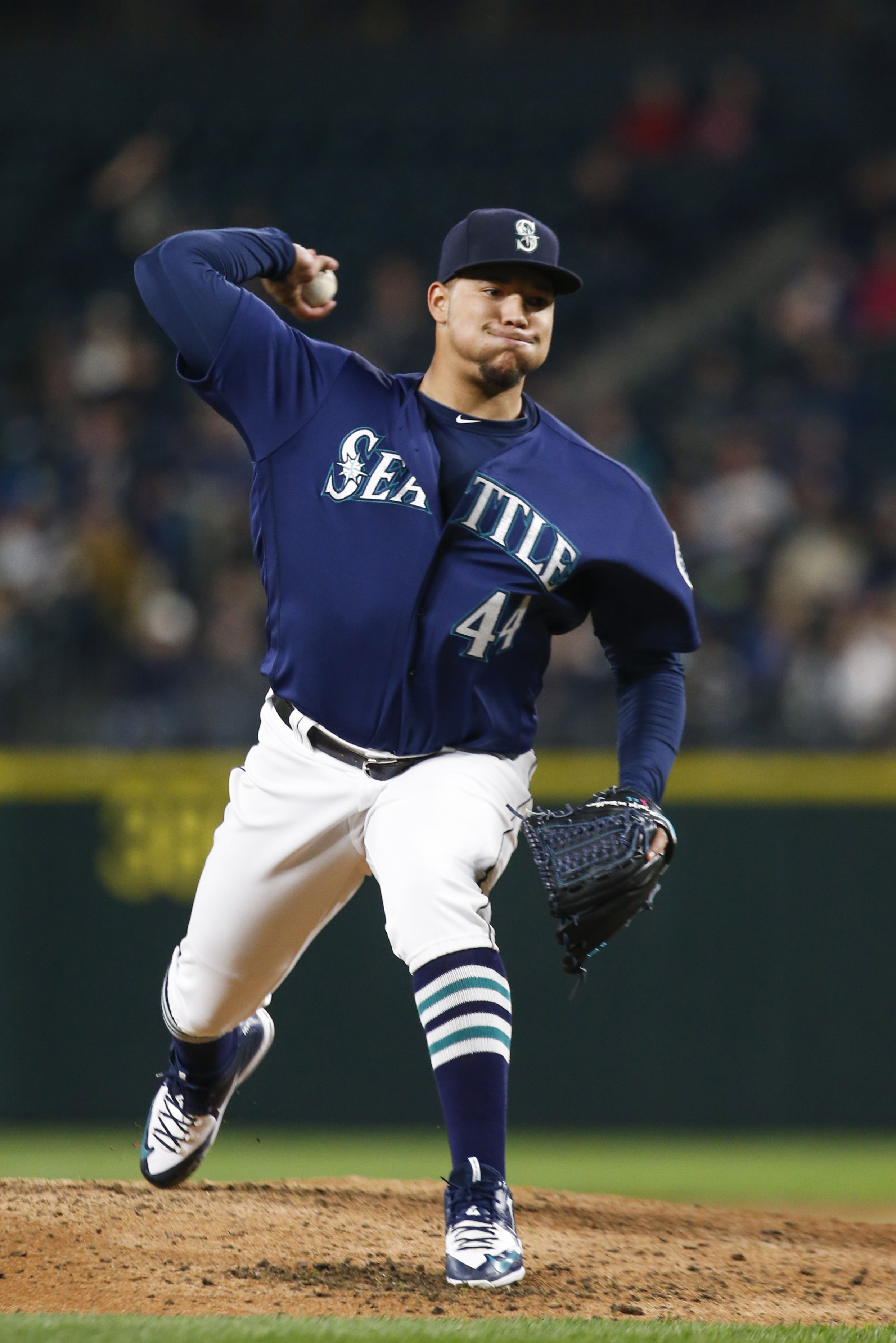
The trade marks quite the opening salvo for Diamondbacks GM Mike Hazen, who has added two very intriguing young players to his new organization. Walker, 24, began his career as a top-ten prospect in all of baseball, and while he hasn’t yet emerged as a standout starter, he also hasn’t done much to dim his status as a top young talent. His name had repeatedly come up as a speculative possibility in potential blockbusters, including one in 2014 involving David Price, but he managed to stick with Seattle and put in two-plus seasons in their rotation before finally being dealt. In 2016, he posted a 4.22 ERA, with 8.0 K/9 and 2.5 BB/9 over 134 1/3 big-league innings, bringing a strong mid-90s fastball in the process.
Walker’s upside remains considerable, and he’s under control for the next several seasons — he’s eligible for arbitration for the first time this winter as a Super Two player (and is projected to make $2.8MM), and he can’t become a free agent until after the 2020 season. He battled a foot injury in the middle of the 2016 campaign and had surgery to address it after the season, but there’s no reason to expect that to be a major issue going forward. He’ll join some combination of Zack Greinke, Robbie Ray, Patrick Corbin, Shelby Miller, Rubby De La Rosa, Archie Bradley and Braden Shipley in the Diamondbacks’ rotation.
Marte is a not-to-be-overlooked component of Arizona’s side of the deal. He only recently turned 23 and already has the equivalent of a season’s worth of big-league plate appearances under his belt. While he struggled both offensively and defensively in 2016 (posting a .259/.287/.323 line and a significantly below average UZR), he fared well enough in the minors to get to the big leagues at age 21, and certainly has time to improve. If he develops, he could become the Diamondbacks’ starting shortstop for the next several seasons.
“Young, controllable pitching is hard to find, and adding Taijuan to the rotation gives us significant depth in that area,” Hazen says. “In Ketel, we believe we have acquired a talented switch-hitting shortstop to join a very solid core of young middle infielders.”
[Related: Updated Seattle Mariners Depth Chart]
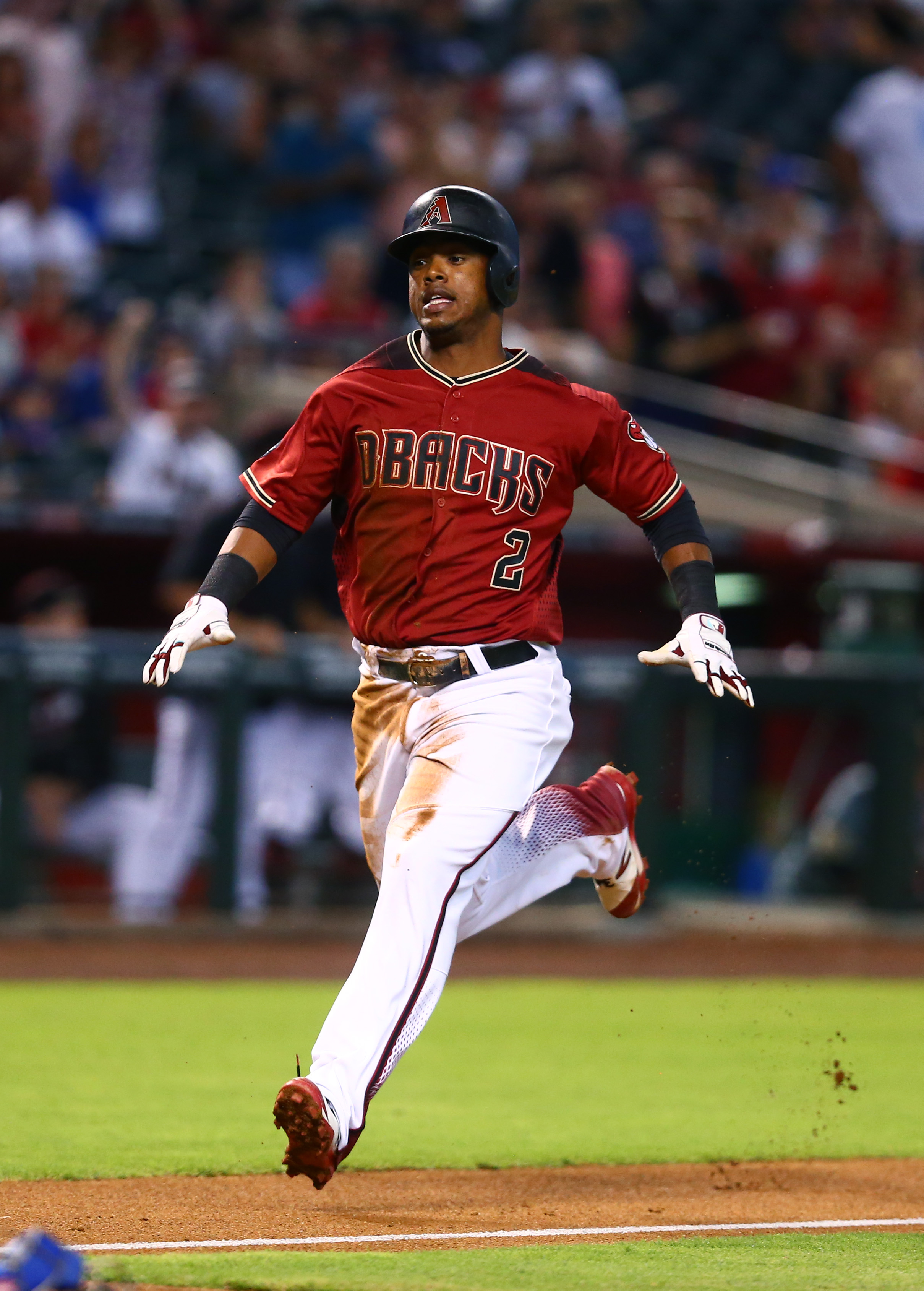
From the Mariners’ perspective, the deal seems to hinge to a large degree on Segura’s breakout performance last season. Segura batted .319/.368/.499 with 20 homers in an outstanding 2016, posting 5.0 fWAR of value in his first season with the Snakes. (Credit former GM Dave Stewart for acquiring Segura in one of his better trades in his short tenure in Arizona.)
Segura’s previous history is erratic, however — he failed to clear a .300 OBP in either 2014 or 2015 with the Brewers. Some of Segura’s struggles might have been related to the tragic death of his infant son in the middle of the 2014 season, but his difficulties on the field are still worth considering. Also, unlike Marte (who is controllable for five more years), Segura only has two years of control remaining before he’s eligible for free agency. (MLBTR projects he’ll make $7.3MM in his second year of arbitration eligibility this offseason.) Segura had primarily been a second baseman with the Diamondbacks, but it appears likely he’ll play mostly shortstop with the Mariners, who have Robinson Cano at second.
The 25-year-old Haniger made his big-league debut in 2016 and batted a modest .229/.309/.404 in 123 plate appearances. He did, however, grade well defensively in a small sample, and he batted an excellent .341/.428/.670 in 312 plate appearances at Triple-A Reno, demonstrating outstanding power (with 20 home runs, albeit in a favorite hitting environment) and good plate discipline. Nonetheless, he was not particularly highly regarded — MLB.com ranked him just 21st among Diamondbacks prospects, noting the likelihood that he would wind up as a good fourth outfielder, and Baseball America (subscription required) didn’t even mention him in their midseason writeup on the Diamondbacks system. Still, he wouldn’t be the first young player with excellent minor league numbers to go underrated by prospect hounds, and he could contribute to a thin Mariners’ outfield immediately (likely mostly as a corner outfielder, since the M’s have Leonys Martin to man center). The Diamondbacks initially acquired him in 2014 when they traded Gerardo Parra to the Brewers.
Curtis has the lowest profile of any of the five players in the deal, but he’s an interesting fifth piece. He was pitching for Class A+ Visalia in 2016 when he got promoted all the way to the big leagues, thanks to a stat line that included 22 strikeouts in 10 1/3 innings. Perhaps unsurprisingly, he didn’t fare well there, posting a 6.75 ERA, 6.8 K/9 and 8.8 BB/9 in 13 1/3 innings, but he got significantly better results after heading back to Double-A Mobile and might eventually reemerge as a good bullpen arm once he has more seasoning. In 111 minor league innings, he’s totaled 169 strikeouts against 35 walks. Curtis is undersized at 5’9″ and averaged a relatively modest 90.9 MPH on his fastball in the big leagues, though, so he probably doesn’t profile as a future power reliever.
Venditte pitched 13 1/3 innings with the Mariners in 2016 and allowed ten runs. The 31-year-old has attracted plenty of curiosity for his ability to pitch with either hand, but despite his consistent platoon advantage, he has just a 4.97 ERA, 7.5 K/9 and 4.1 BB/9 in parts of two seasons in the big leagues. Most of the damage done against Venditte has come from right-handed batters, as opposing lefties have hit just .179/.242/.366 against him.
Photos courtesy of USA Today Sports Images.
Central Notes: Pirates, Cardinals, Twins
The Pirates have not discussed an extension with manager Clint Hurdle, Rob Biertempfel of the Pittsburgh Tribune-Review writes. “How long will I go? I don’t know the shelf life,” says Hurdle. “I just know that I’m still engaged. I love what I do, I love who I’m doing it for, and I love who I’m doing it with. I’ll take it one year at a time.” There’s no indication Hurdle’s job is in danger, and he’s signed through 2017 with an option for 2018. Interestingly, though, Biertempfel notes that whenever Hurdle’s tenure with the Pirates does come to an end, there’s a good chance he could be replaced internally, with new bench coach and former Double-A skipper Tom Prince as a possible replacement. “We hope Clint manages the Pirates for a long time,” says Pirates president Frank Coonelly. “But, like with any other key leadership position, we want to be sure we’re developing successors. We have a bias toward promoting from within when possible, but we also have a bias toward hiring the best person for the job. If we develop our people the right way, they’ll be the best people for the job.” The Bucs already recently did develop another top big-league manager — former Bucs bench coach Jeff Banister was the 2015 AL Manager of the Year with the Rangers. Here’s more from the Central divisions.
- Four-year deals for relievers are demonstrably dicey propositions, so it’s unclear why the Cardinals committed to Brett Cecil for that long, ESPN’s Keith Law writes (Insider only). Cecil was worth roughly $7.5MM per year (the annual value of the contract he just received) in 2013 through 2015, but it’s optimistic to expect him to be worth that several years from now, given the uninspiring histories of relievers who’ve received long-term deals (B.J. Ryan, Justin Speier, Joe Nathan, Steve Karsay, and so on).
- Cardinals fans would be unwise to read too much into the news that the team has mentioned Michael Wacha‘s name in trade talks, Derrick Goold of the St. Louis Post-Dispatch writes in a series of questions and answers about the Cards’ offseason plans. The Cardinals might simply be trying to gauge Wacha’s value, as they did in previous discussions about pitchers like Shelby Miller and Kyle Lohse.
- Law praises the Twins for dropping Trevor Plouffe, on the grounds that his underwhelming defense makes him approximately replacement level. Law says he is curious to see whether the Twins will now turn to Miguel Sano at third base, since he is heavy for the position and has not been a good defender at the position throughout his career. (UZR and DRS rated Sano around average in 376 big-league innings at the position in 2016.)
- The Twins have been in contact with free agent righty Justin Masterson, Mike Berardino of the Pioneer Press tweets. That’s not surprising, since new Twins head of baseball operations Derek Falvey previously worked with Masterson in the Indians organization. Masterson, formerly a solid big-league starter, had an underwhelming 2016 in the Bucs organization while fighting his way back from shoulder trouble, posting a 4.85 ERA, 6.1 K/9 and 4.4 BB/9 in 59 1/3 innings covering two minor league stops.
MLB Trade Rumors Free Agent Prediction Contest
Only a few hours remain in the MLB Trade Rumors Free Agent Prediction Contest! Click here to log in with Google or Facebook and predict which team you think each of the remaining top 50 free agents will sign with. For each player, you can select one of the 30 MLB teams, as well as Retirement, Korea, or Japan. Be sure to use the “Save Picks” button at the bottom each time you make a change. Make sure you have something chosen for all 50 players by midnight central time tonight. Finish your picks now!
This year, we rebuilt the contest to allow people to log in with Google or Facebook. We’re doing two things with your information: saving your picks, and displaying your name on the contest leaderboard (which is still in progress).
Other contest notes:
- Players in the contest who have already signed are considered freebies, although you still need to go in and make the correct pick.
- The leaderboard will rank contestants by “batting average” on correct picks. The leaderboard will show full names of contestants.
- Ties in batting average will be decided by totaling the ranking number of each correctly-guessed free agent and taking the lowest total, rewarding contestants for being right on better free agents. If people are still tied after that method is applied, prizes will be distributed at MLBTR’s discretion by choosing among tied contestants randomly.
- Prizes are a work in progress, but I do intend to give something out for the top finishers.
- If you experience a technical issue, please use our contact form.
John Hart On Braves’ R.A. Dickey, Bartolo Colon Signings
This offseason, the Braves have added two starting pitchers so old that one of them (42-year-old R.A. Dickey) can’t believe the team also acquired an even older hurler in 43-year-old Bartolo Colon, David O’Brien of the Atlanta Journal-Constitution writes. “Coppy [Braves GM John Coppolella] said to me, we’re going after Colon, and I said, whatever; he’s never leaving New York because he’s had a great run there, why would he leave there?” Dickey says. “So I automatically thought that I was going to be the oldest player on the team.”
Dickey and Colon certainly look like different sorts of pitchers than those the Braves used last year, when they got 126 starts from pitchers in their age-25 season or younger. But the Braves say the team’s signings of two veteran starters doesn’t mark a significant change in the organization’s recent plan of building with youth, O’Brien writes.
“A lot of our pitchers are at the A-level, the high-A level, the Double-A level. We were sort of forced to giving some starts [last season] – Matt Wisler did a terrific job up and down, Aaron Blair showed a little bit towards the end,” says president of baseball operations John Hart. “That next wave is at least a year away, and I think as we viewed this, going into this new ballpark, with the club that we had and giving this club and our fans an opportunity to compete, without standing in the way of some of these young pitchers.”
Hart says that, even with Dickey and Colon in the fold, younger pitchers will still have plenty of opportunities to start. (Wisler, Blair, Tyrell Jenkins, Williams Perez, Rob Whalen and John Gant would appear to be among those who could receive chances next season.) The organization is still waiting for many of its best young talents, several of whom are still deep in the minors. Nine of the players on MLB.com’s list of the top 15 Braves prospects are pitchers, but only two of those — Sean Newcomb and Lucas Sims — have significant experience at Double-A or higher.
“We’re certainly going to have at least one, maybe two youngsters in this rotation as we go forward,” says Hart. “It’s a long season, a lot of things happen, and a big part of what John and I are going to be focused on certainly is what’s going on at the major league club, but we pay attention to what’s happening down below. We’re going to be following the progress of the Sean Newcombs and the Max Frieds and the Mike Sorokas and Kolby Allards and all these youngers that we really like. But these kids, they’re still in the bus leagues (low minors), a lot of these guys.”
MLBTR Chat Transcript
Click here to view the transcript from MLBTR Chat With Jason Martinez: November 23, 2016
Latest On The Yankees’ Offseason
The Yankees’ top relief target this winter is their own former closer Aroldis Chapman, but they have made contact with other stars at various positions as well, Jon Heyman of Fan Rag Sports writes. The Yankees have also been in touch with closer Kenley Jansen (although they prefer Chapman, since he’s pitched for them before and since signing him wouldn’t cost them a draft pick) as well as hitters Carlos Beltran, Edwin Encarnacion, Yoenis Cespedes, Jose Bautista, as has been previously reported. They’ve also likely spoken to representatives for starters Rich Hill (in whom top Yankees exec Brian Cashman has stated interest) and Jason Hammel (about whom the Yankees were previously known to be gathering information).
Encarnacion, Heyman writes, could be a high priority for the Yankees, although he also reports that the team has spoken with Cespedes’ agent up to five times already. As has been previously noted, the Yankees are involved in Beltran’s market, along with the Astros, Red Sox and perhaps Rangers.
Heyman also adds a few new names to the mix: those of Dexter Fowler, Matt Holliday, Mike Napoli and Brandon Moss. The Yankees currently have Brett Gardner, Jacoby Ellsbury and Aaron Judge in the outfield and Tyler Austin at DH, but Judge and Austin are inexperienced, and the Yankees could trade Gardner to clear playing time and payroll space for an impact bat.
Heyman cites Napoli, who is coming off a solid .239/.335/.465 season in Cleveland, as one option who could be particularly intriguing. Napoli or Holliday could help the Yankees at DH, while Fowler would likely play the outfield, and Moss could help in the outfield or first base, or at DH. Either way, it’s unclear to this point whether the Yankees are looking for one player for outfield and DH or two.
Report: Lockout On The Table As CBA Nears Expiration
4:33pm: There is optimism that a lockout can be avoided, ESPN’s Jayson Stark writes. Stark cites two sources who tell him there is a “path to a deal.” Both sides, however, seem to believe that the lockout suggests December 1 is a “hard deadline” to reach an agreement. If there were to be a lockout in December, it wouldn’t necessarily result in missed games, but it could delay the progress of the offseason and cut off player benefits.
TODAY, 12:32pm: ESPN.com’s Buster Olney writes (Insider link) that there’s no particular reason to think that the saber-rattling will lead to a significant interference in labor relations, stating his own “educated guess” that compromise will be found. Sources do tell him that the league side is indeed “incredibly frustrated” by the union’s foot-dragging and unwillingness to move on issues like the international draft. And that could still lead to a standoff that impacts the progress of this winter’s trade and free agent markets. But as Olney explains, there’s relatively little at stake in the talks (in relation to the immense amount of money that both sides are making) and plenty of time before the owners and union would risk interfering with the 2017 season.
YESTERDAY: Major League Baseball’s owners “will consider” instituting a player lockout if a new collective bargaining agreement between the league and the MLB Player’s Association can’t be found, according to a report from Ken Rosenthal of FOX Sports. The current CBA is set to expire on December 1st, and the sides are said to be at an impasse over several matters.
This is the first time we’ve heard a firm report suggesting that there could be a work stoppage — though, of course, there’s no imminent threat to actual baseball games with Spring Training not set to begin until mid-February and the regular season still four months off. It has long been assumed that the owners and union would resolve any differences, particularly given that the game has continued to experience growth in revenue, but talks have dragged on longer than expected.
In considering a lockout, the owners would be threatening to interfere with the conduct of the offseason’s business, much of which remains to be completed. Some have suggested that a failure to reach agreement by the new deadline might result in a continuation of the status quo; presumably, that’s still also a possibility. But if a deal can’t be struck and the owners take a hard line, it might well result in a freeze on transactions right before the Winter Meetings.
It’s important to bear in mind that there are strategic reasons for suggesting the possibility of a lockout, which would require a vote of ownership to be instituted. And with just over a week left to finish negotiations, there’s still time for a resolution. Commissioner Rob Manfred says he’s still “committed to the idea that we’re going to make an agreement before expiration,” while union chief Tony Clark declined comment.
The sides are certainly jockeying for position on the remaining issues; no doubt, each is familiar with the other’s positions at this stage. The key matters yet to be determined are, however, rather notable. According to Rosenthal, the owners offered to get rid of any tying of free agents to draft compensation (as currently embodied in the qualifying offer system), but requested an international draft in exchange. The union, it seems, has lined up behind the idea that the draft would be too onerous.
There’s also disagreement regarding the competitive-balance tax and the Joint Drug Agreement. As to the former issue, it seems largely a matter of divvying up dollars and figuring out ways to ensure that teams put any subsidies into their major league roster. With regard to the latter, it seems that all are agreed on the need to add force to the JDA, but the players are asking to be compensated in exchange.
Rosenthal spoke with sources to get a read of the situation, and his article is well worth a full read. The takeaway seems to be that there’s still a path toward completing an agreement before the CBA expires, but the players are also prepared to dig in their heels. There’s certainly much to be lost for both sides in the event of a serious labor dispute, and that fact remains the best reason to retain hope that a lockout can be avoided. While this bit of brinkmanship is hardly determinitive, though, it’s also a notable sign that there have been real difficulties in seeing eye to eye.