
Jeremy Hellickson Accepts Qualifying Offer
2:40pm: Hellickson tells MLB.com’s Todd Zolecki that he was leaning toward declining the qualifying offer but changed his mind after multiple teams expressed reluctance to part with a draft pick when speaking to Boras (Twitter link).
1:11pm: Right-hander Jeremy Hellickson has accepted the one-year qualifying offer and will return to the Phillies for the 2017 season a $17.2MM salary, reports Jon Heyman of FanRag Sports (Twitter link). Hellickson, a client of the Boras Corporation, will become the fourth player to ever accept a QO, joining outfielder Colby Rasmus, left-hander Brett Anderson and catcher Matt Wieters — each of whom accepted a $15.8MM qualifying offer last winter.
[Related: Updated Philadelphia Phillies Depth Chart]

The news on Hellickson comes as somewhat of a surprise, given the dismal market for starting pitching. The 29-year-old Hellickson (30 next April) looked to be one of a select few arms that could be expected to deliver a quality season’s worth of innings in 2017 and, as such, was one of the few rotation options projected to receive a multi-year deal in free agency. However, Hellickson and his representatives have had the past week to survey the free-agent market while weighing the decision to accept Philadelphia’s offer, and clearly his camp wasn’t comfortable enough with his potential earning power to forgo a one-year deal at $17.2MM. That sum actually exceeds Hellickson’s career earnings to date, so his reluctance to pass on it is understandable from that point of view. He’ll now look to repeat was a strong 2016 season in the Phillies’ rotation and enter the open market next winter in advance of his age-31 season. If he’s able to do so, he could find himself in position for an even more lucrative deal, as he’d be coming off a two-year platform of quality work as opposed to the rebound campaign he enjoyed with the Phils this past year.
Acquired from the D-backs last winter in what amounted to be a salary dump, Hellickson tossed 189 innings of 3.71 ERA ball for the Phillies this year, averaging 7.3 K/9 and 2.1 BB/9 to go along with a 40.7 percent ground-ball rate. That represented a continuation of a strong second half in 2015, giving Hellickson a 3.74 ERA with 7.3 K/9 and 2.3 BB/9 over his past 240 1/3 innings at the big league level. If he’s able to continue on at that pace in 2017, he should have no issues finding a sizable multi-year deal next winter, and there’s reason to believe that he could do so without needing to burden himself with a qualifying offer. The collective bargaining agreement is being renegotiated as we speak, and the flawed QO system is one of the main subjects of the newest wave of collective bargaining talks. Some reports have suggested that the new CBA will prevent players from being eligible for a QO in consecutive years, while other speculation has centered around eliminating the QO system altogether.
The long-term financial outcome for Hellickson remains to be seen, but his short-term prospects are set in stone at this point. After accepting the QO, he cannot be traded until June 15 of next season without his consent, so he’ll return to a Phillies rotation that’ll also include Aaron Nola, Vince Velasquez and Jerad Eickhoff. Philadelphia has a number of young arms that can compete for the final spot in that rotation, including right-handers Zach Eflin, Jake Thompson, Alec Asher and Ben Lively. That group should give manager Pete Mackanin a solid starting mix in 2017, so the challenge for GM Matt Klentak, president Andy MacPhail and the rest of the Phillies’ front office will be to improve a lineup that was one of the worst, if not the worst in all of baseball last season. The Phils have already added one veteran bat to the mix in the form of Howie Kendrick, and they’ll presumably look to add some more respectable pieces to help round out a lineup that will be centered around Odubel Herrera and a hopefully improved Maikel Franco in 2017.
The Phillies will not receive the compensatory draft pick they likely expected to acquire when issuing Hellickson the QO in the first place, although having a capable arm back in their rotation on a one-year deal isn’t a disastrous outcome, even if it comes at somewhat of an overpay. Philadelphia, after all, has virtually no money committed to its long-term books, as Hellickson will join Kendrick ($10MM), recently acquired right-hander Pat Neshek ($6.5MM) and injured lefty Matt Harrison ($13.25MM plus a $2MM buyout of his 2018 option) as the only guaranteed contracts on next year’s roster. That, plus a modest projection of $12.8MM to four arbitration-eligible players (which could dip if Cody Asche and/or Jeanmar Gomez is non-tendered) brings them to a current Opening Day payroll projection of just $77.7MM (including pre-arb players). For a team that has previously spent as much as $177.7MM on its Opening Day payroll, the addition of Hellickson at $17.2MM is hardly a financial burden.
Taking a step back, the removal of Hellickson from the free-agent market takes an already terrible crop of starters and thins it even further. Rich Hill, Ivan Nova and Jason Hammel are the top three starters available this winter, and teams in need of other arms will be left with few options. Those teams could turn to bounce-back candidates like Andrew Cashner, Edinson Volquez, Jake Peavy, Jorge De La Rosa and Doug Fister or look to get creative by signing someone such as Travis Wood and converting him back into a starter or pursuing international arms like Korea’s Kwang-hyun Kim, Hyeon-jong Yang and Woo-chan Cha.
Otherwise, the trade market will be the most obvious method for teams to add to their respective rotations, though the lack of viable alternatives that are available through other means should place an abnormally high premium on rotation help. That was always going to be the case anyway; Hellickson’s subtraction from the free-agent class doesn’t create a shortage of pitching, but it certainly creates even more scarcity and should force one more team to get creative in seeking a starter, as he’ll now be returning to a team that didn’t otherwise seem like a plausible fit for him on a multi-year deal.
Photo courtesy of USA Today Sports Images.
Dexter Fowler To Reject Qualifying Offer
Cubs center fielder Dexter Fowler will reject the team’s one-year, $17.2MM qualifying offer, writes FanRag Sports’ Jon Heyman (he also previously tweeted the news). Fowler has been widely expected to do just that despite the problems he faced after rejecting a QO from Chicago last winter, as he even said himself recently on ESPN’s Sportscenter that he would be a free agent again this offseason.
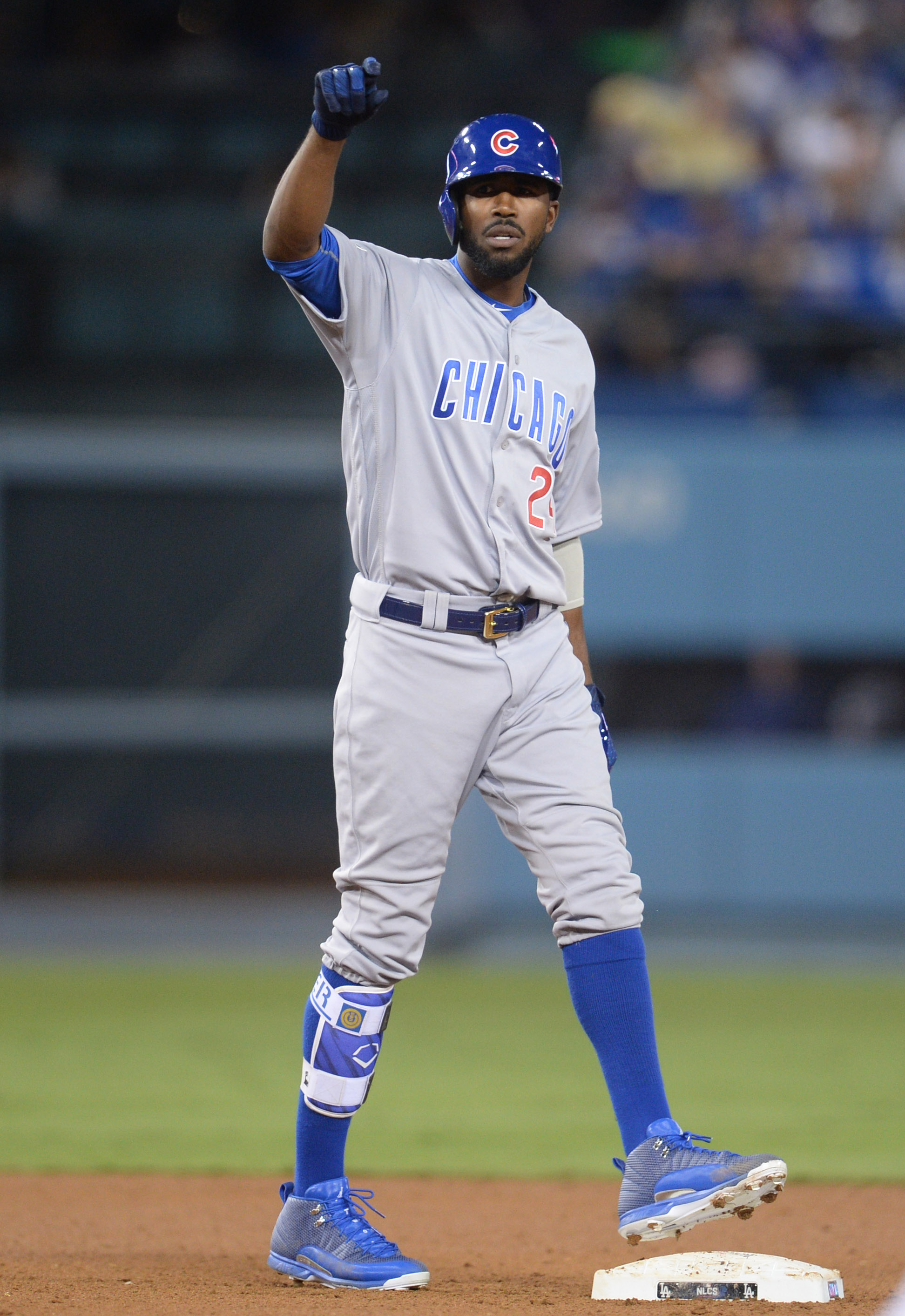
Fowler, 31 in March, had a career year at the plate, hitting .276/.393/.447 with 13 homers and 13 stolen bases — providing well-rounded value in every facet of his offensive game. As the switch-hitter himself told USA Today’s Bob Nightengale last month, though, it was questions about his glove that led to skepticism over Fowler’s value and ultimately prompted him to linger on the free agent market. As Fowler explained in that interview, he altered his positioning in center field, believing himself to be playing too shallow (the Cubs agreed), and the results manifested in both his Ultimate Zone Rating and Defensive Runs Saved marks. Both metrics graded him as one run above average, which isn’t a ringing endorsement but is a significant step forward for a player who had delivered negative ratings in each of the five previous years.
Of course, if Fowler is an average or even slightly below average center fielder, he could probably perform well in either corner outfield slot, and there are undoubtedly teams that would like to see him in either left field or right field (and atop their lineup) in 2017. His reported near-deal with the Orioles last February, for instance, would’ve sent Fowler to right field, and the market will surely present similar opportunities this winter as well. Fowler, though, has considerably less competition on the free agent market for outfielders this time around and is also coming off a better all-around season in terms of offense, defense and baserunning (he rated as MLB’s eighth-best baserunner in 2016, per Fangraphs’ BsR metric).
While the Cubs would probably love to have Fowler back on a short-term deal once again — they could sort the subsequent outfield logjam via offseason trades and platoons in 2017 — the market should present a considerably better offer for Fowler this time around. On paper, he makes sense for any number of teams, including the Blue Jays, Cardinals, Giants, Dodgers, Phillies, Mariners, Rangers and Athletics, among others. While not all of those teams will have interest in Fowler at the price he could command, interest should still be great enough that he’ll land the payday that eluded him last winter. MLBTR rated him sixth on our top 50 free agent list and pegged him for a four-year, $64MM deal.
Photo courtesy of USA Today Sports Images.
Kenley Jansen, Justin Turner Will Reject Qualifying Offer
Continuing with this morning’s trend of unsurprising qualifying offer decisions, Dodgers stars Kenley Jansen and Justin Turner will reject the team’s qualifying offer, per FanRag’s Jon Heyman (Twitter links). Andy McCullough of the L.A. Times tweeted as much at the time that each QO was extended in the first place. Each of the two should find at least a four-year deal on the free-agent market, and we pegged the them both for five-year contracts when ranking them in the top five on our list of the top 50 free agents.
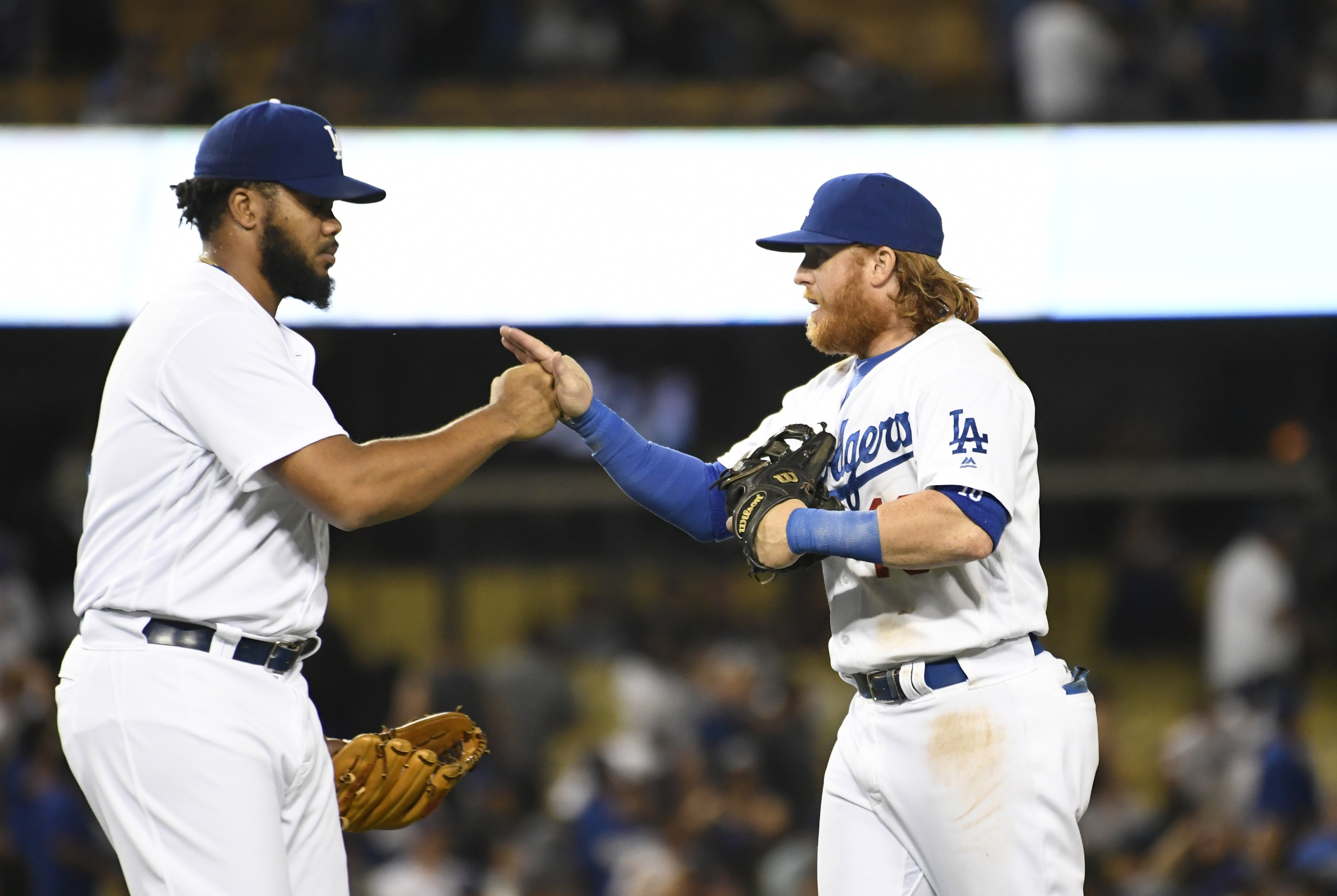
The 29-year-old Jansen logged a brilliant 1.83 ERA with 13.6 K/9, 1.4 BB/9 and a 30 percent ground-ball rate in 2016. Since making his big league debut at the age of 22, the converted minor league catcher has never posted a single-season ERA greater than 2.85, nor has he averaged fewer than 13 strikeouts per nine innings. Over the past four years, Jansen has a 2.19 ERA with a ridiculous 396-to-56 K/BB ratio in 263 innings of work. He potentially added to his value with a Herculean postseason performance for the Dodgers, recovering from an early hiccup to turn in three appearances of two shutout innings or more. Jansen threw 51 pitches in 2 1/3 scoreless innings in the decisive Game 5 of the NLDS, registering a hold that set up Clayton Kershaw‘s memorable save. In Game 6 of the NLCS, he fired three perfect innings of relief with four strikeouts in a losing effort. That demonstration of his ability to work multiple innings effectively in the highest-leverage spots possible makes him all the more appealing as a free agent.
Turner, meanwhile, has blossomed into a superstar-caliber talent in three years with the Dodgers after being non-tendered by the Mets and signing a minor league deal in L.A. The 31-year-old (32 next week) has batted .296/.364/.492 in his three seasons with the Dodgers, demonstrating improved power in each year, which culminated with a career-high 27 homers in 2016. That impressive total was accompanied by 34 doubles and three triples, giving him 64 extra-base hits in 622 plate appearances. Turner also registered elite defense at third base this year, according to both Defensive Runs Saved (+7) and Ultimate Zone Rating (+14) in 1224 innings at the hot corner. Although he’s a bit older than the typical free-agent position player, a four-year deal seems easily attainable, and five years is possible for Turner. Ben Zobrist, after all, inked a four-year, $56MM deal last offseason that began with his age-35 season, and Turner’s age-35 season would be the fourth year of a theoretical multi-year pact.
The Dodgers have reportedly been in contact with both Jansen and Turner about new contracts already, though the Giants, Yankees, Cubs and Nationals are all expected to be in the mix for Jansen this offseason as well. The Dodgers will collect a compensatory draft pick at the end of the first round next year if either signs with a new team and a pair of picks if both sign elsewhere.
Photo courtesy of USA Today Sports Images.
Mark Trumbo Will Reject Qualifying Offer
“Indications are” that Orioles slugger Mark Trumbo will reject his qualifying offer, per FanRag’s Jon Heyman, and Yahoo’s Jeff Passan tweets a similar sentiment, calling the market for Trumbo “bustling” and adding that he can be “cross[ed] off the list of players who might be inclined to accept a qualifying offer.” SB Nation’s Chris Cotillo tweets more definitively that Trumbo will reject. After leading the Majors with 47 home runs, Trumbo has never seemed to be an especially likely candidate to accept the qualifying offer. Some teams, undoubtedly, will be scared off by his fairly one-dimensional nature, but power is always an in-demand commodity even in spite of the league-wide increase in home runs in 2016.

Trumbo, 31 in January, hit .256/.316/.533 in 667 plate appearances this past season, adding 27 doubles and a triple to his MLB-leading home run total. However, Baltimore deployed Trumbo as its primary right fielder, and while he has plenty of corner outfield experience from his days with the D-backs, the results have never been pretty, as one might expect for a player that is listed at 6’4″ and 235 pounds. In 791 outfield innings this year (all but eight of which came in right field), Trumbo graded out to 7.7 runs below average, per Ultimate Zone Rating, and an even less-flattering 11 below average, per Defensive Runs Saved. He also walked at a slightly below-average 7.6 percent and struck out in 25.5 percent of his plate appearances, hence the middle batting average and on-base percentage.
All of that said, Trumbo’s bat should still get him paid fairly handsomely. He’s topped 30 homers three times in his career to date (and fell one big fly shy of that mark in 2011), and while he’s never been a great defensive outfielder, he’s received solid marks at first base when playing there in the past. Trumbo’s presence on teams that have had established first basemen — Albert Pujols with the Angels, Paul Goldschmidt with the D-backs and Chris Davis with the Orioles — has forced him to the outfield grass with regularity (as MLBTR’s Mark Polishuk recently noted in Trumbo’s free agent profile), but could be a nice fit on a team with a vacancy at first base and/or designated hitter.
MLBTR ranked Trumbo eighth on our top 50 free agent list and projected a four-year, $60MM contract for the 2016 home run king. The Orioles have expressed interest in retaining Trumbo, though GM Dan Duquette did caution that he wasn’t sure they’d be able to afford him.
Photo courtesy of USA Today Sports Images.
Edwin Encarnacion, Jose Bautista To Reject Qualifying Offers
9:49am: Edwin Encarnacion, too, is rejecting his QO, tweets SB Nation’s Chris Cotillo. That was among the most obvious calls in the entire class (or in any class of QO players). On the heels of a .263/.357/.529 batting line and 42 homers — his fifth straight season with at least 34 round-trippers — Encarnacion figures to cash on a substantial four-year pact and has a chance at a five-year deal worth in excess of $100MM. If both Encarnacion and Bautista sign elsewhere, the Jays will net a pair of compensatory picks in next year’s draft.
8:46am: Blue Jays right fielder/DH Jose Bautista will decline Toronto’s one-year, $17.2MM qualifying offer before today’s 5pm ET deadline, tweets Jon Heyman of FanRag Sports. That decision has long been viewed as likely even on the heels of a disappointing and injury-filled season for the 36-year-old slugger. In light of Bautista’s decision, the Jays will receive a compensatory draft pick at the end of the first round if he signs elsewhere.
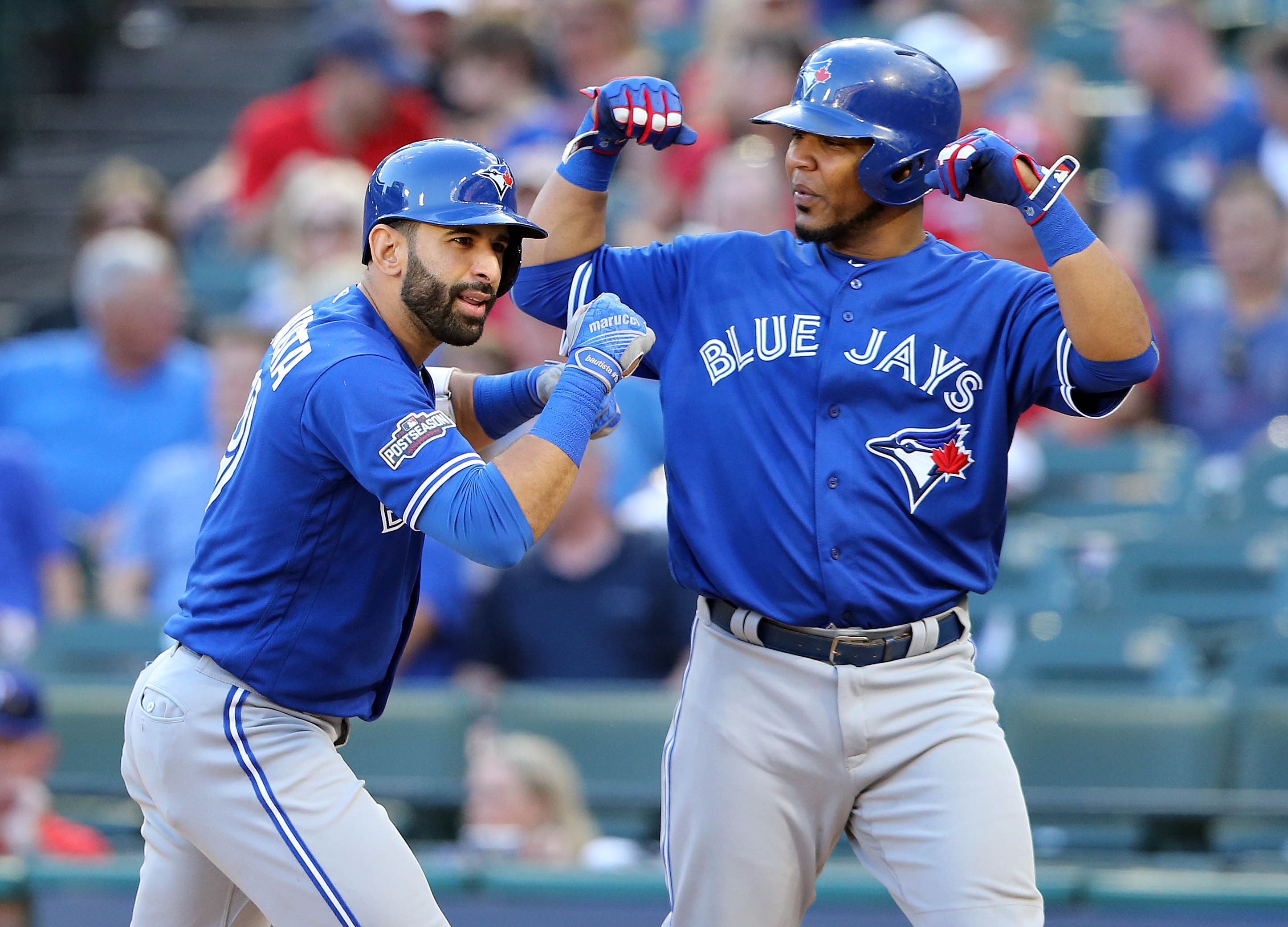
Bautista spent roughly six weeks of the 2016 season on the disabled list due to a toe injury and a knee sprain. When healthy, the two-time MLB home run leader (2010, 2011) batted just .234, though his .366 on-base percentage, .452 slugging percentage and .217 isolated power mark were all considerably above the league average. Bautista walked at nearly a 17 percent clip and struck out in just a shade under 20 percent of his plate appearances, and he finished the year on the upswing, hitting .262/.401/.469 in 162 plate appearances after being activated from his second stint on the DL.
The most significant questions surrounding Bautista are his age and his defense in right field. Having just turned 36 in October, a significant multi-year deal would carry him into at least his age-38 season. While that’s certainly not unheard of — Carlos Beltran, for instance, just played out a three-year, $45MM deal that spanned his age-37 through age-39 seasons — there will certainly be teams that are wary about committing to such pacts for a player that’s closer to 40 than to 30. Beyond that, his defense has rated out quite poorly in each of the past two seasons; Ultimate Zone Rating pegs him at 15.5 runs below average over his past 1825 innings in right field, while Defensive Runs Saved has him at -11 in that same time frame.
Those factors will likely scare away numerous National League clubs, although since formally receiving the qualifying offer, Bautista has already drawn some level of interest from the Mets. He’s also been loosely linked to both the Red Sox and Yankees, and it stands to reason that other American League teams will at least kick the tires on Bautista, who has hit more home runs than anyone in baseball dating back to the 2010 season. The Blue Jays may yet express interest in retaining Bautista, although their three-year deal with Kendrys Morales, signed last Friday, certainly makes him a bit of a tougher fit on Toronto’s roster.
Photo courtesy of USA Today Sports Images.
Yoenis Cespedes To Reject Qualifying Offer
Yoenis Cespedes will reject his qualifying offer from the Mets, tweets Joel Sherman of the New York Post. Most of the qualifying offer decisions are no-brainers, but Cespedes’ decision was the easiest to foresee of them all, as the slugger had already opted out of the remaining two years and $47.5MM on his contract. His rejection is a pure formality and will allow the Mets to cash in on a compensatory draft pick at the end of the first round of the 2017 draft in the event that he signs with a new team.
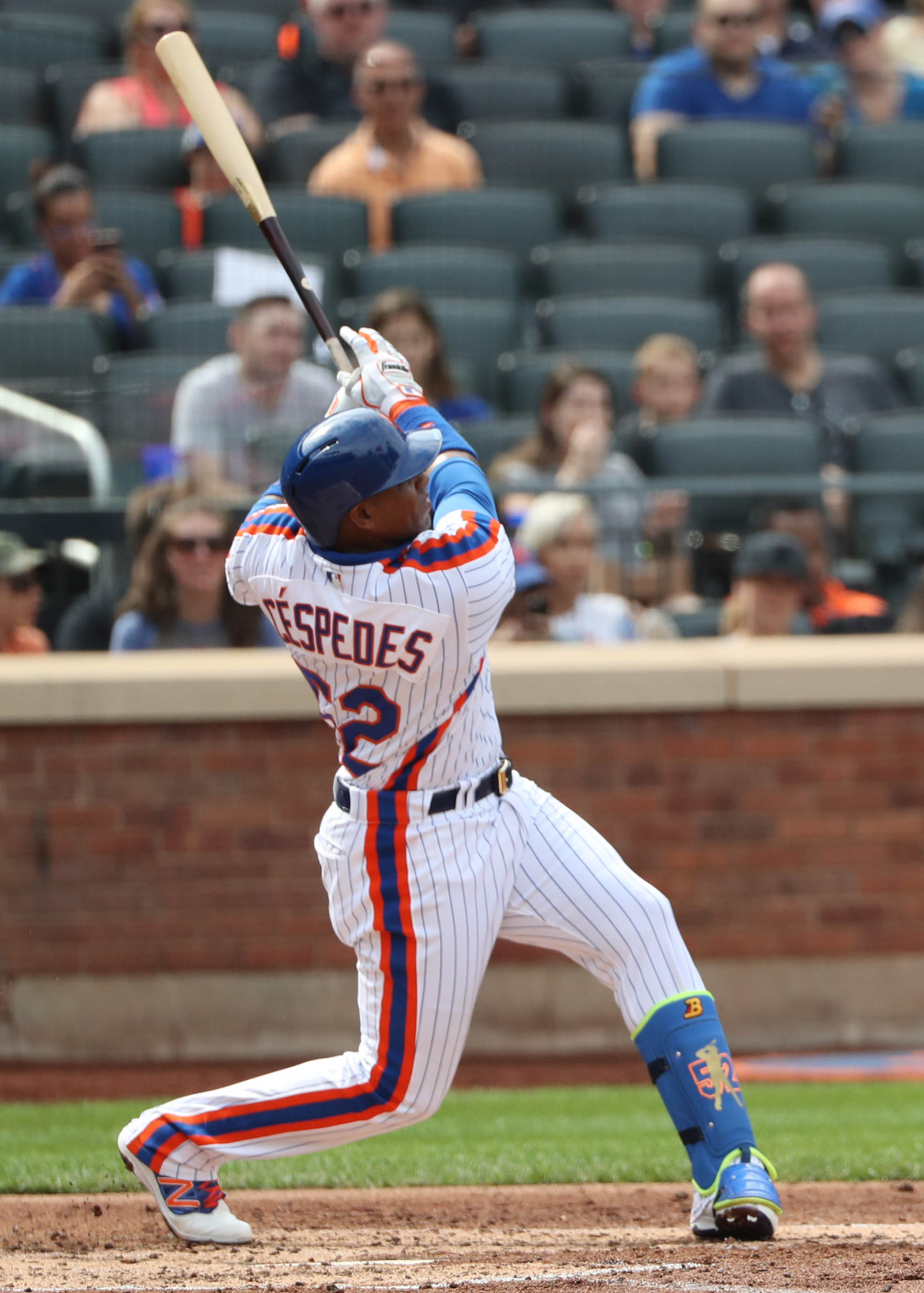
Cespedes, 31, signed a three-year, $75MM contract with the Mets last winter that guaranteed him $27.5MM in 2016 and contained an opt-out clause following year one of the deal. It was obvious all along that barring a catastrophic injury or a sudden and unexpected massive decline in performance, Cespedes would be opting out of the deal in search of a larger contract. Unlike last year when he had to compete with the likes of Justin Upton, Jason Heyward and Alex Gordon on the market for corner outfielders, Cespedes is the top outfielder available this winter and quite arguably the top overall free agent on the market. He ranked first on MLBTR’s list of top 50 free agents, where he’s projected to land a $125MM commitment over five years (although it’s certainly plausible that his market pushes him to a six-year deal as well).
A balky right quadriceps muscle limited Cespedes to 132 games this season, but he was outstanding when healthy enough to take the field and even surpassed his 2015 performance in many ways. Cespedes hit .280/.354/.530 and belted 31 homers this year, coming just four long balls shy of his 2015 total despite tallying 133 fewer plate appearances. He was miscast as a center fielder for much of the season and drew negative Ultimate Zone Rating and Defensive Runs Saved marks there, but his defense in left field remained above average even in spite of his quad injury. And on top of that, his walk rate soared from 4.9 percent in 2015 to a career-best 9.4 percent in 2016 — a positive sign that should alleviate some concerns about his ability to consistently post a respectable on-base percentage.
Cespedes, of course, was one of two Mets to receive the qualifying offer. The other, Neil Walker, has a considerably murkier case coming off of season-ending back surgery that was performed in late September. From my vantage point, Walker is the lone free agent that has a reasonable chance of accepting the QO, though there’s no definitive word on whether he’ll do so or test the free agent market. Andy Martino of the New York Daily News tweets that the Mets are hoping Walker accepts the deal and returns on a one-year commitment for the 2017 season. He’d be used all around the infield in that scenario, per Martino, indicating that he’d be a backup option to Lucas Duda at first base and David Wright at the hot corner.
Photo courtesy of USA Today Sports Images.
Blue Jays Reportedly Make Three-Year Offer To Brett Cecil
The Blue Jays have made a three-year offer to Brett Cecil in an effort to retain the free-agent left-hander, reports Sportsnet’s Jamie Campbell (via Twitter). The average annual value of the offer isn’t known at this time.
Cecil, 30, posted an abnormally high 3.93 ERA in 2016 but turned in excellent strikeout-to-walk numbers, averaging 11 strikeouts and just two walks per nine innings pitched. The primary factor behind his uncharacteristic ERA spike was a spike in his homer-to-flyball rate; Cecil saw 11.6 percent of the fly-balls against him turn into home runs from 2009-15, but that rate jumped to 20.8 percent in 2016. Homer-to-flyball rate is prone to year-to-year fluctuations, however, and it’s never been a significant problem for Cecil before, who has somewhat quietly dominated over the past four seasons, posting a 2.90 ERA with 11.5 K/9, 3.1 BB/9 and a 50.2 percent ground-ball rate in 205 innings for the Jays. He’s held both left-handed hitters and right-handed hitters in check over that time as well, so he shouldn’t be limited to a specialist role like many southpaw relievers.
Outside of Aroldis Chapman, Cecil is very arguably the top free-agent lefty on the market. He ranked 26th on MLBTR’s list of top 50 free agents, where he was projected to land a three-year, $18MM pact. Cecil already been connected to the Mariners in the past week and figures to draw widespread interest, as nearly every team in the league is looking for bullpen pieces early in the offseason, and the supply of quality left-handed arms is slimmer than the supply of quality right-handers. As it stands, Aaron Loup, Chad Girodo and Matt Dermody are the only left-handed relievers on Toronto’s 40-man roster, so their need to add some left-handed stability to the bullpen is evident.
Ian Desmond To Reject Qualifying Offer
Rangers outfielder Ian Desmond will reject his one-year, $17.2MM qualifying offer, per reports from FanRag’s Jon Heyman and Joel Sherman of the New York Post (Twitter link). As Sherman notes, Desmond figures to be in considerably more demand this time around than he was after rejecting the QO last winter.

Last year’s decision seemed logical at the time but ultimately proved to be a misstep, as Desmond settled for a one-year, $8MM deal with the Rangers that required him to switch positions. While that was certainly a disappointing outcome, it may have been a blessing in disguise, as Desmond showed well in the outfield and enjoyed a considerably stronger year at the plate in 2016, prompting him for a larger payday than he’d have otherwise received on a more modest multi-year commitment last winter. In 156 games with the Rangers, Desmond hit .285/.335/.446 with 22 homers and 21 stolen bases while playing above-average defense in left field and passable, albeit below-average defense in center. Considering that the 2016 season marked his first professional exposure to both positions, it’s perhaps not surprising that Desmond struggled in center. He could conceivably improve there if asked to reprise his role as a center fielder, though, now that he has more experience under his belt. And it’s certainly possible that he returns to the infield as well, or at the very least operates as a hybrid infielder/outfielder and moves around the diamond with regularity, as Ben Zobrist and others have done in recent years.
Desmond, though, isn’t without his red flags. He did slump to finish out the year, falling off the table with a .249/.297/.305 batting line over his final 229 plate appearances. Strikeouts have also long been an issue for Desmond, and though he improved in that regard in 2016, his 23.6 percent strikeout rate was still three percent worse than the league average, while his 6.5 percent walk rate was about two percent below average.
It seems likely that with the Rangers set to lose both Desmond and Carlos Gomez to free agency, they’ll at least talk to Desmond’s new representatives at CAA about a reunion, and if he elects to sign elsewhere, Texas will receive a compensatory draft pick at the end of the first round of the 2017 draft. To this point, the Orioles have already been rumored to have interest in Desmond, though comments from GM Dan Duquette call into question whether Desmond will fit into Baltimore’s price range. MLBTR ranked Desmond ninth on our Top 50 free agent list and pegged him for a four-year, $60MM pact on the open market.
Photo courtesy of USA Today Sports Images.
Quick Hits: Ross, D’Backs, Black, Int’l Draft, Cubs
David Ross‘ pursuit of another World Series ring in his final season was one of the many great subplots of the Cubs‘ championship run, and now the veteran catcher is adjusting to retirement, MLB.com’s Carrie Muskat writes. “There hasn’t been a big lull for me. I ended it the best way I could,” Ross said. “It’s a storybook and a dream. I was saying to my wife, ‘This offseason’ — and she said, ‘It’s no more the offseason; this is life.’” The widely-respected Ross has often been cited as a future manager or coach, and while he’ll be meeting with Theo Epstein after Thanksgiving to discuss a possible future role with the team, Ross is looking forward to more well-deserved time with his family. Here’s some more from around the majors as we start a new week…
- The Diamondbacks won’t face any payroll limitations in Mike Hazen’s first offseason as the team’s general manager, club president/CEO Derrick Hall tells Nick Piecoro of the Arizona Republic. “It’ll become a challenge in the future,” Hall said. “We can’t have too many high-priced players on the roster at the same time in this market. You just can’t. At some point we’re going to have difficult decisions to make. But this year it’s not critical. That’s a good spot to be in as a new GM. (Hazen is) not looking at what he has committed and looking at having to move pieces to bring in others. It gives him time to breathe and look and make his own assessments.” While Hazen may not be required to make big payroll cuts, however, he may not have much spending room available if the D’Backs aren’t raising payroll.
- New Rockies manager Bud Black is certain that he can avoid the clash of personalities that soured the relationship between GM Jeff Bridich and former manager Walt Weiss, Jeff Saunders of the Denver Post writes. Black’s ability to communicate and learn throughout every stage of his playing and post-playing career is illustrated in this piece from MLB.com’s Thomas Harding, who explores some of the many relationships Black has made throughout his many decades in baseball.
- Commissioner Rob Manfred has stated that competitive balance and transparency are the league’s priorities in pushing for an international talent draft, though Baseball America’s Ben Badler feels neither of these issues will be helped (and in fact could be worsened) by further limiting contracts for international players within a draft framework. The league’s real priority, Badler argues, is limiting the amount of bonus money given to international players.
- How can the Cubs best position themselves for a repeat in 2017? MLB.com’s Phil Rogers has a few suggestions, including re-signing Dexter Fowler, acquiring Sean Doolittle (if healthy) from the A’s, and packaging some of the club’s top prospects together to trade for a front-of-the-rotation starter.
No “Substantive” Extension Talks Between Mets, Neil Walker
The Mets and second baseman Neil Walker have yet to engage “in any substantive discussions” about a multi-year extension that would keep Walker off the free agent market, Ken Davidoff of the New York Post reports. The next step between the two sides seems to be tomorrow’s deadline (at 4pm CT) for players who have been issued qualifying offers to decide whether to accept or reject the one-year, $17.2MM offer.
Walker is one of ten players to receive QOs this offseason, and seemingly the only one who may yet accept his deal. In late August, Walker underwent season-ending back surgery to repair a herniated disk, a procedure that will keep him from resuming baseball activities until around the middle of December. Walker’s surgery wasn’t considered to be particularly dangerous nor were his chances at a full recovery in any way limited — the fact that the Mets issued him a qualifying offer at all is a good sign that the club expects him to be healthy. Still, if Walker has any doubts about how his injury status could impact his market, he could accept the QO to remain in New York, pocket a nice one-season payday and then look to re-enter free agency next winter on the heels of another good season and a clean bill of health.
Both Walker and the Mets expressed interest earlier this year in continuing their relationship into 2017 and beyond, though any notion of extension talks apparently went south in the wake of Walker’s back surgery. From the Mets’ perspective, they could’ve approached a Walker extension as they did their deal with Yoenis Cespedes last winter; a multi-year contract with a player opt-out after the first season, so Walker would’ve had the option of exploring free agency again if he was healthy.
It’s hard to know if Walker would’ve been amenable to a deal like that since, injury aside, he is still expected to land a healthy contract. MLBTR’s Tim Dierkes predicts Walker for three years and $36MM, so with that kind of market out there for his services, there wasn’t necessarily any urgency for Walker to rush into an extension with his former club. (New York probably also felt there wasn’t a real chance they could re-sign Walker to a team-friendly extension.) While Walker’s injury adds some uncertainty to his situation, it is still quite uncommon for major free agents to reach extensions with their teams so close to hitting the open market.