
Tim Adleman Signs With KBO’s Samsung Lions
The Samsung Lions of the Korea Baseball Organization announced today that they’ve signed right-hander Tim Adleman to a one-year deal worth $1.05MM (via Jee-ho Yoo of South Korea’s Yonhap News Agency). The Reds haven’t announced the move, but Adleman was still on Cincinnati’s 40-man roster, so they’ll likely receive financial compensation from the Lions for releasing Adleman and paving the way for the move.
Adleman, who turned 30 earlier this month, has appeared in 43 games for the Reds over the past two seasons, totaling 192 innings of 4.97 ERA ball with 7.3 K/9, 3.3 BB/9, a 35.1 percent ground-ball rate and an average fastball velocity of 90.4 mph. He led an injury-plagued Reds pitching staff with 122 1/3 innings and finished second on the team with 20 starts made. However, Adleman was also among baseball’s most homer-prone pitchers in 2017, averaging a whopping 2.12 long balls per nine innings pitched.
Though he’s yet to experience much in the way of Major League success, Adleman does possess a solid minor league track record. He’s logged just 63 2/3 innings in Triple-A but recorded a sharp 2.40 ERA along the way, and overall he’s worked to a 3.57 ERA with 7.3 K/9, 2.3 BB/9 and 0.7 HR/9 in 458 2/3 innings across parts of six minor league seasons. Though he’s been a fly-ball pitcher in the Majors, he’s demonstrated the ability to induce grounders in the minors, routinely registering ground-ball rates of 45 percent or better.
For the Reds, losing Adleman will obviously deplete the team’s depth in the rotation. However, Cincinnati will surely be banking on better health from the trio of Anthony DeSclafani, Brandon Finnegan and Homer Bailey in 2017; DeSclafani missed the entire year with an elbow issue, while Finnegan was limited to just 13 innings and Bailey chipped in 91 frames. Beyond that, the Reds saw a number of young arms break into the Majors last season, and while many of them struggled, GM Dick Williams recently noted to Fangraphs’ David Laurila that the organization was heartened by strong finishes from the likes of Luis Castillo, Sal Romano and Tyler Mahle.
In addition to those six arms, the Reds also have lefties Amir Garrett and Cody Reed as options, as well as right-handers Robert Stephenson, Rookie Davis, Jackson Stephens, Keury Mella and Jose Lopez all on the 40-man roster, which now stands at 39 players.
Free Agent Profile: Zack Cozart
Zack Cozart‘s huge 2017 season would seem like the perfect platform year as he enters free agency, though the veteran shortstop faces a complicated market and some inevitable questions about whether he can duplicate his breakout year.
Strengths/Pros
Defense has long been Cozart’s calling card. Since debuting in 2011, he ranks seventh in UZR/150 (+10.6) and 14th in Defensive Runs Saved (56) among all players in baseball with at least 6000 innings played. Among just shortstops in that same timeframe, Cozart is behind only the incomparable Andrelton Simmons in both categories and also behind Brandon Crawford in DRS. Cozart would provide a massive boost to any club looking to improve its run prevention.
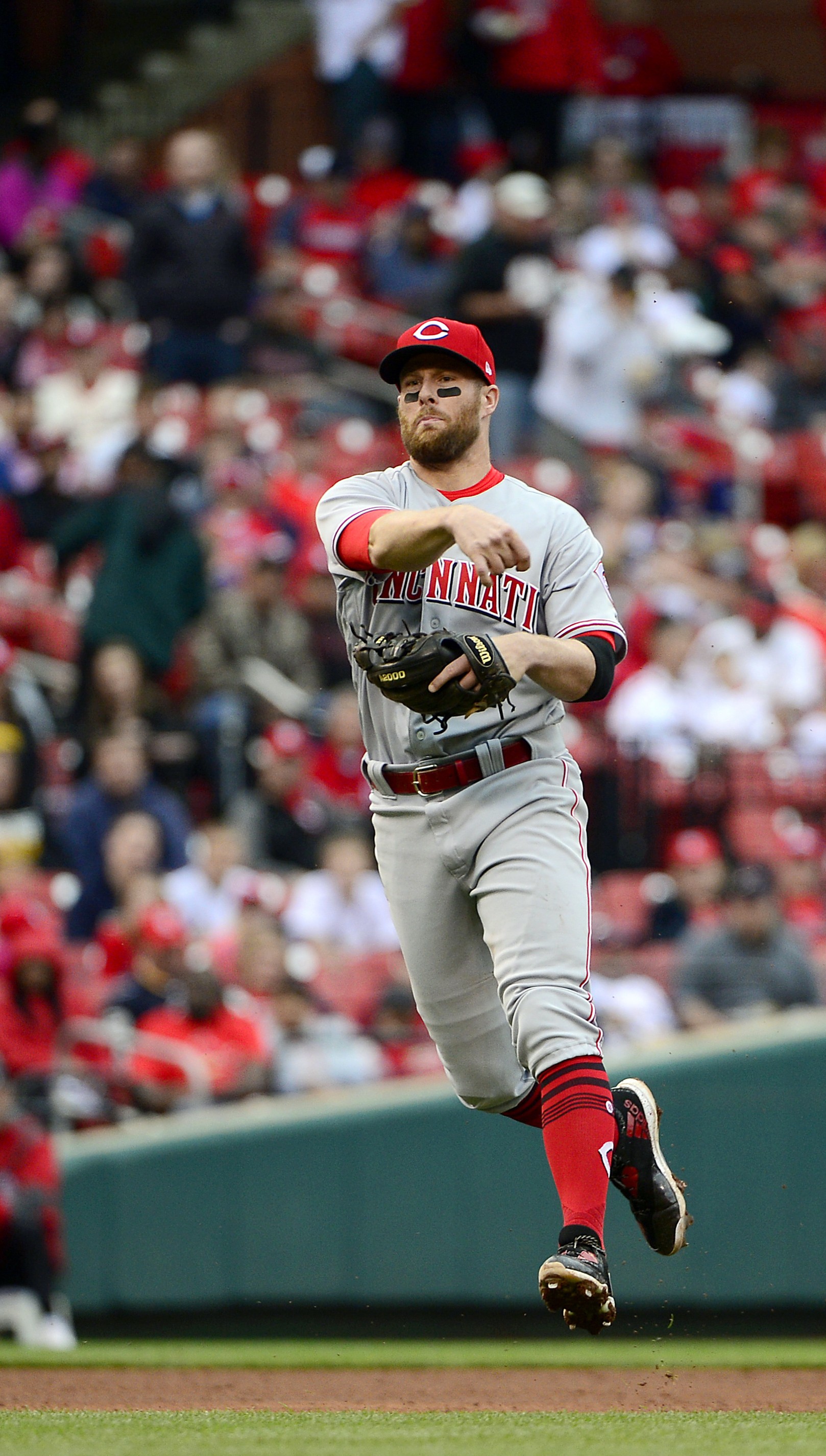
Heading into last season, however, Cozart still hadn’t been able to move beyond his reputation as a glove-only player. He posted roughly average run-production numbers in 2015-16, though injuries and a major second-half fade in 2016 left doubts as to whether he could truly put it together at the plate. Those questions were answered in rather stunning fashion, as Cozart emerged as not just a solid bat, but one of baseball’s best overall hitters in 2017.
The numbers are startling — a .297/.385/.548 slash line over 507 PA, 24 homers, 80 runs scored, and almost as many walks (62) as strikeouts (78). Cozart’s 141 OPS+ was topped by just 15 players in the entire league, with an overall 5.0 fWAR surpassed by only 16 players. In fact, Cozart also has the highest 2017 fWAR total of the entire 2017-18 free agent class, counting both hitters and pitchers.
Cozart was no creation of the hitter-friendly Great American Ballpark, as he hit well both at home (.958 OPS) and on the road (.900 OPS). He also displayed a nice balance against all pitchers, crushing lefties to the tune of a 1.059 OPS while also hitting right-handed pitching hard (.896 OPS).
While he set new career bests in virtually every offensive category, most of Cozart’s advanced metrics are not too far removed from his normal career rates. His homer rate did spike, and his swinging-strike and overall swing rates both dropped significantly from his career norms. This increased plate discipline bodes well for Cozart’s ability to continue an above-average level of hitting, even if he may not again reach the peak of his 2017 production.
Weaknesses/Cons
While he still outperformed many hitters who received well more than 507 plate appearances, Cozart was again hampered by injuries, as quad injuries to both legs limited him to just 122 games. Between the quad problems, a torn knee ligament in 2015 and continued knee issues in 2016, Cozart has played in just 296 of the Reds’ 486 games over the last three seasons. This lack of durability and the fact that Cozart just turned 32 last August will give some teams pause before considering him for a pricey multi-year contract.
It’s worth noting that last season was one of Cozart’s lesser defensive years, as he delivered “only” a +6.2 UZR/150 and +2 DRS. Obviously these are still fine numbers, though it could hint that the years of leg problems are beginning to impact Cozart’s glovework. It certainly seems like the injuries could be hurting Cozart on the basepaths, given that Fangraphs’ BsR metric has indicated subpar baserunning totals in each of the two seasons since his knee surgery.
While Cozart would hardly be the first player to blossom later in his career, his continuing to be a top-15 hitter in 2018 would be even more of a surprise than his 2017 breakout. As per Statcast, Cozart’s expected weighted on-base average (.332) was well below his actual .399 wOBA thanks to his middling launch angle and exit velocity numbers — that 0.067 gap between the two categories was the second-largest of any player in baseball with at least 200 at-bats in 2017.
In fairness, Cozart has specifically tailored his swing and plate approach to account for his general lack of hard contact, and to focus on a level swing rather than aiming to put the ball in the air. This makes him an interesting outlier among modern hitters, though his power surge may have less to do with swing changes than it does (as Fangraphs’ Dave Cameron recently observed) with the livelier baseballs reportedly used in MLB play over the last two years. If Cameron’s argument is correct, Cozart’s home run numbers could be in particular danger of regression if there are further alterations in how the balls are produced.
Cozart said back in April that he’d actually been feeling more comfortable hitting over two years ago due to increased aggressiveness at the plate, so between that and a minor swing tweak from last Spring Training, above-average production could be a new normal for Cozart. Still, his 2017 numbers were so far beyond his career averages that some amount of regression seems inevitable.
Personal
A native of Memphis, Tennessee, Cozart was a second-round pick for the Reds in the 2007 draft after three years of college ball at the University of Mississippi. His collegiate success earned him a spot on the United States’ gold medal-winning team in the 2006 World University Championship.
As one of the few long-term veterans on the rebuilding Reds, Cozart earned the nickname of “Coach” for his leadership role within the young clubhouse. Cozart was named as the Reds’ recipient of the 2016 Heart & Hustle Award by the MLB Players Alumni Association.
On a lighter note, the Cozart family welcomed a new pet into the fold this past summer, thanks to Joey Votto‘s promise to buy his teammate a donkey if Cozart made the NL All-Star roster.
Market
While Cozart is far and away the top free agent shortstop available this winter, his biggest issue could be that the shortstop market itself isn’t very large. Most contenders or would-be contenders already have a shortstop in place, and several of the teams with a hole at the position (such as the Marlins or Padres) are in a rebuilding phase.
This would seem to at least create the possibility that Cozart remains in Cincinnati. The two sides shared some interest in working out a contract extension last summer, and while it would be somewhat unusual to see Cozart become a long-term piece for the club after two years of trade rumors, the Reds may have changed course after seeing him emerge as a hitter. The Reds could decide to go with Cozart and Scooter Gennett (another breakout player in 2017) in the middle infield, leaving Jose Peraza and Dilson Herrera for backup or utility roles, or the team could shop one of those young and controllable talents for some much-needed pitching help.
Looking at other possible suitors, there are a lot of “maybe, if…” situations that could see a team make a play for Cozart. The Orioles or Royals could be fits if they aren’t respectively sold on Tim Beckham or Raul Mondesi Jr. as everyday shortstops (and if Kansas City doesn’t enter a rebuild itself). The Pirates or Rays would need to carve out payroll space, or the Cardinals could get into the mix if they sold high on Paul DeJong in another trade.
Perhaps the easier path to locating Cozart’s next team is to look for openings at second or third base. This could require a change of heart from Cozart, as he reportedly “feels strongly” about sticking at his usual position, though he might have no choice but to become more flexible given the lack of shortstop vacancies. Cozart’s reps at Excel Sports Management could pitch their client both as a regular starter at one position, or as an everyday contributor that could get 600 PA while receiving a couple of starts per week at shortstop, second and third. The Angels have already considered Cozart as a second baseman, and a position switch could also get teams like the Mets, Giants, Blue Jays, or Braves interested.
One plus for Cozart’s market is that the Reds declined to issue him a qualifying offer, so another team can sign him without having to surrender any draft pick compensation.
Expected Contract
MLBTR predicts Cozart will find a three-year, $42MM deal this winter, though this could be a pretty fluid projection depending on whether or not Cozart is open to a position change. While Cozart’s age could be an obstacle in finding a fourth guaranteed year, you’d think multiple teams would love to find space for a player coming off a five-win season somewhere around the infield, maybe even to the point of making room at shortstop.
Photo courtesy of USA Today Sports Images
NL Notes: Cubs, Robles, Rockies, Mets, Lind, Reds
Many expect the Cubs to trade from their position player depth to fill a spot in the rotation, but ESPN Chicago’s Jesse Rogers cautions that such a trade may not be as likely as one would think. President Theo Epstein did acknowledge after the season that the team may have to consider dealing from the big league roster to add a pitcher, and names like Javier Baez, Addison Russell, Ian Happ, Kyle Schwarber and Albert Almora have all been listed as speculative possibilities. However, Rogers points out how crucial that depth has been in dealing with injuries and suggests that depleting said depth could simply create further troubles. Free agency is a better fit, Rogers opines, suggesting the oft-speculated match between Alex Cobb and the Cubs as a starting point. Also of note, Rogers notes that an informal poll of rival execs at this month’s GM Meetings suggested that Baez and Russell are “neck and neck” in trade value.
Some other notes from around the Senior Circuit…
- Nationals top prospect Victor Robles is expected to begin the 2018 season in Triple-A, reports Jorge Castillo of the Washington Post. The Nats are as bullish as ever on the highly touted 20-year-old, but they’d prefer that he receive everyday at-bats rather than play in a more limited role to open the year. As it stands, Washington figures to head into the season with Michael Taylor, Adam Eaton and Bryce Harper as its starting outfield and Brian Goodwin on hand as a reserve. Robles already made his MLB debut in 2017, so it stands to reason that in the event of an injury, he’d be under consideration for a promotion and a regular role. And, with Harper potentially departing as a free agent following the 2018 campaign, a long-term spot could be opening for Robles in advance of his age-22 season (2019).
- Patrick Saunders of the Denver Post runs down a number of potential targets for the Rockies in free agency, noting that the bullpen, catcher and first base are among the team’s needs. Saunders believes re-signing Jonathan Lucroy to be the club’s top priority, noting that manger Bud Black “loves” how Lucroy worked with the team’s young pitchers. Re-signing Greg Holland is also on the team’s wishlist, but Saunders suggests that if the bidding reaches Mark Melancon territory (four years, $62MM) then the Rockies won’t be a player for his services.
- With the Mets exploring the possibility of bringing in a free-agent first baseman, ESPN’s Buster Olney reports (on Twitter) that Adam Lind is one potential name the team will consider. The interest in Lind suggests that the Mets are casting a fairly wide net, as they’ve also been linked to a higher-profile target in Carlos Santana. Speculating a bit, it also could suggest that the team isn’t giving up on Dominic Smith after a disappointing MLB debut in 2017. Signing Santana or any other higher-profile free agent would block Smith for years to come and likely turn him into a trade piece; bringing in a shorter-term stopgap like Lind, though, could give the Mets a strong platoon partner option to complement their right-handed infield bats early in the season in order to let Smith develop further. Lind slashed a robust .303/.364/.534 in 269 plate appearances against righties last season but could potentially be had on a one-year deal due to his age (34), longstanding platoon issues and a flooded market for platoon first basemen.
- While the Reds‘ rotation has plenty of uncertainty heading into the 2018 season, GM Dick Williams tells David Laurila of Fangraphs that he’s nonetheless optimistic about the team’s collection of young arms. As Williams explains, injuries forced the Reds to promote numerous prospects from Double-A while skipping the Triple-A level entirely. Still, some of those arms made adjustments on the fly as the season wore on, and the experience gained was valuable in their overall development. Williams points to strong finishes from Luis Castillo, Sal Romano and Tyler Mahle as encouraging factors heading into the offseason. And, of course, the Reds will hope for better health from the likes of Anthony DeSclafani, Brandon Finnegan and Homer Bailey, which could further help to bolster the rotation results. Laurila also chats with Twins GM Thad Levine about managerial qualifications and Rangers skipper Jeff Banister about player development.
Shohei Ohtani Rumors: Tuesday
Though Shohei Ohtani has not even yet been officially posted — that’s expected as soon as Friday — the supreme young talent is drawing plenty of attention from MLB organizations. Those clubs received a memorandum over the weekend asking them to provide information to Ohtani and his representatives on a variety of subjects, which is only the beginning of a highly unusual and utterly fascinating recruitment process.
Here’s the latest:
- Though Ohtani is limited to a signing bonus and a minor league contract in coming to the Major Leagues, he stands to earn substantially more through marketing endorsements, tweets USA Today’s Bob Nightengale. Marketing agents have predicted to Nightengale that between endorsements back in Japan and in the United States, Ohtani could command north of $20MM annually. That’d make him MLB’s highest-paid player in terms of off-the-field revenue.
- Ken Rosenthal of The Athletic spoke to agent Scott Boras (who was in the running to represent Ohtani before Ohtani signed CAA and Nez Balelo) as well as MLB chief legal officer Dan Halem about Ohtani’s earning capacity. Unsurprisingly, Boras offered sharp criticism of a system that won’t allow Ohtani to top a $3.535MM signing bonus at this point. “He is precocious, greatness cast adrift, forced into the MLB lifeboat,” said the always colorful Boras. “And his admission is handcuffs that prevent him from getting at least what his older, lesser valued peers received—in Tanaka’s case, more than $150 million.” Halem, as one would expect, wholly disagreed with Boras’ notions, pointing out that it was Ohtani who passed on the chance to sign with MLB clubs as an amateur out of high school, which could have jump-started his earning potential. And, it was Ohtani who asked to be posted as an amateur just two years before he could have been posted as a professional. The free column has quite a few quotes from both Boras and Halem on the matter and is well worth a full look.
Earlier Updates
Reds Claim Kyle Crockett From Indians
The Reds announced on Monday that they’ve claimed left-handed reliever Kyle Crockett off waivers from the Indians. Crockett, 25, was designated for assignment in Cleveland last week as the team set its 40-man roster in advance of the Rule 5 Draft.
Crockett was a fourth-round pick back in 2013 and was the first player from that draft class to reach the Majors, debuting in 2014. While he turned in a promising 1.80 ERA with 8.4 K/9 against 2.4 BB/9 in 30 innings that season, he’s struggled to a 4.84 ERA with 8.7 K/9 against 3.8 BB/9 in 35 1/3 big league innings since then. To his credit, Crockett has allowed just a minuscule three homers in 65 1/3 MLB innings and has held lefties to a .614 OPS in 167 plate appearances. Righties have knocked him around at a .280/.373/.452 clip, though.
The addition of Crockett fills Cincinnati’s 40-man roster.
Looking For A Match In A Raisel Iglesias Trade
The Reds’ short- and long-term plans for their rotation hit a snag in 2016 when promising starter Raisel Iglesias shifted to the bullpen after encountering shoulder problems. Now, with Iglesias having morphed into one of the game’s most valuable late-game assets over the past two seasons, it’s clear that something positive came from the right-hander’s role change.
Since he became a member of Cincinnati’s relief corps, Iglesias has combined for 126 innings of 2.29 ERA pitching, with 10.43 K/9 against 3.29 BB/9. Any team would sign up for that type of production, including the Reds themselves, who seem inclined to retain Iglesias entering his age-28 season. But with the Reds amid a rebuild and not looking like near-term contenders, there’s an argument to be made that they should sell Iglesias this winter.
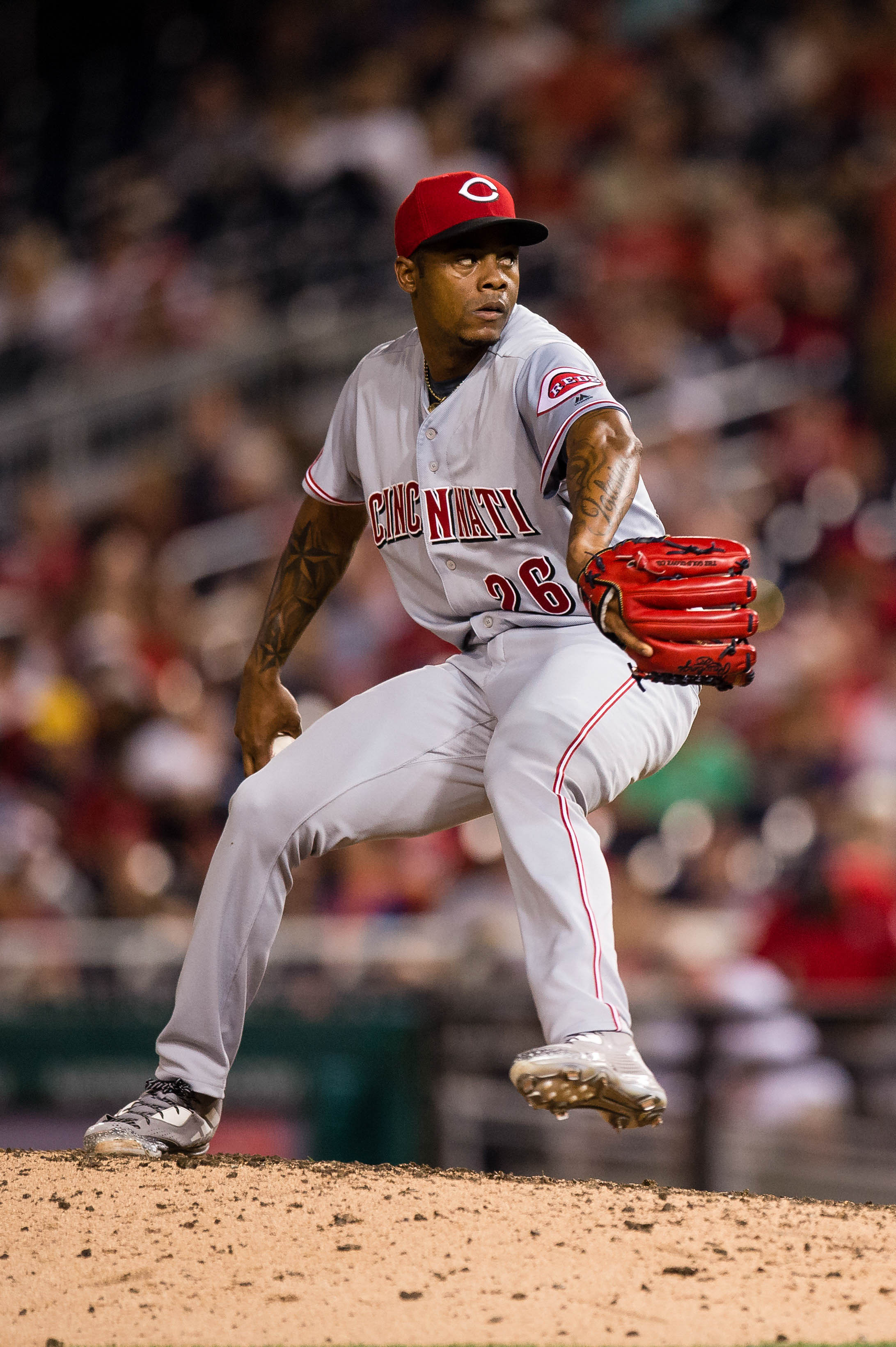
Iglesias has already drawn reported interest from the Twins, who will need to bolster their thin bullpen if they’re going to build on the unexpected success they experienced in 2017. Iglesias would be a fit for a Minnesota club seeking more strikeouts from its pitching staff, but with a farm system that lacks impact talent (per Baseball America), he may be out of its reach.
The Twins are one of a multitude of teams that could inquire about Iglesias (or maybe already have). Indeed, general manager Dick Williams estimated earlier this month that two-thirds of the league would have interest in Iglesias without the Reds even having to shop his services. That seems like a reasonable guess on Williams’ part, given both Iglesias’ superb pitching and his affordability.
Thanks to the seven-year, $27MM contract he signed as a Cuban defector in 2014, Iglesias is under control through the 2020-21 offseason. He’s guaranteed a relatively meager $14.5MM in salaries over the next three years ($4.5MM in 2018, $5MM in both ’19 and ’20), though he could opt into arbitration in each of those offseasons if he believes he’d rake in more money that way. That’s unlikely to happen in 2018, with MLBTR contributor Matt Swartz projecting a $2.8MM arbitration award for Iglesias should he choose that route. Regardless, Iglesias’ contract only adds to his appeal, and it’s a big part of the reason why he’d command a significant haul in a trade.
Teams with good systems that are either in contention or close to it stand out as the best fits for Iglesias in a hypothetical trade, which would seem to rule out rebuilding clubs such as the Tigers, Padres, Marlins, Athletics and White Sox. None of the Blue Jays, Rays, Orioles, Yankees, Red Sox, Royals, Mariners, Angels, Rangers, Indians, Mets, Cubs, Pirates, Diamondbacks or Giants look like ideal fits, either, for various reasons.
Toronto and Tampa Bay have two of the top 10 farms in the league, according to BA, though neither team appears to be in position to strip itself of major young talent to acquire a reliever. The Yankees and Indians seem to possess more than enough quality relievers, meanwhile, and the rest of the aforementioned clubs probably don’t have the youth on hand to put together a suitable package for Iglesias. That leaves us with seven of the Reds’ National League counterparts — the Braves, Phillies, Nationals, Cardinals, Brewers, Rockies and Dodgers — and the World Series champion Astros.
An earnest Iglesias pursuit could be a tad aggressive for either Atlanta or Philadelphia, a pair of clubs that have resided at the bottom of the standings in recent years. Both teams seem to be pushing toward contention, however, and there’s no shortage of capable prospects on hand in either case (even though the Braves just lost a dozen youngsters thanks to ex-GM John Coppolella’s transgressions).
The Nationals figure to rule the NL East for the third straight year in 2018, but they’re not loaded in the bullpen after Ryan Madson and Sean Doolittle. Next season might be the last in D.C. for Bryce Harper, which could lead to some bold, go-for-broke moves from general manager Mike Rizzo this winter. Landing Iglesias would qualify, though it would mean further thinning out a top-heavy system.
The Cardinals look poised to serve as one of the league’s most active teams in the next few months, and the need for relief help is apparent with Trevor Rosenthal out of the organization and Seung-hwan Oh and Juan Nicasio having hit free agency. The division-rival Brewers had the world-class game-ending tandem of Corey Knebel and Josh Hader in 2017, but the latter could shift to the rotation in the near future. Even if he doesn’t, there’s room for another inexpensive, top-notch reliever in Milwaukee, a low-payroll club with the prospects to assemble an Iglesias package.
As for the two NL West clubs, the Rockies and Dodgers, it’s clear there’s a greater need for Iglesias in Colorado. The Rockies surprisingly earned a playoff berth in 2017, in part because of relievers Greg Holland, Jake McGee and Pat Neshek. All three of those hurlers are now free agents, however, so Colorado is going to have to focus on its bullpen this offseason. Enter Iglesias, then? Notably, he’s rather reliant on a slider, a pitch the Rockies’ relievers threw more than 28 other bullpens last season and one that’s capable of surviving in the high altitude at Coors Field.
The pennant-winning Dodgers have arguably the game’s preeminent closer in Kenley Jansen, but their second-best reliever from last season, Brandon Morrow, is currently on the open market. That leaves room for an Iglesias pickup if they’re willing to part with the prospects, as he’s superior to late-inning holdovers such as Pedro Baez, Josh Fields, Luis Avilan and ex-Reds teammate Tony Cingrani.
The Astros managed to knock off the Dodgers in a Fall Classic that lived up its name, though the slump Houston’s bullpen endured nearly foiled its plans. Still, Iglesias would be more of a luxury than a must-have for the Astros, who look to be in fine shape with Ken Giles (playoff struggles notwithstanding), Chris Devenski, Will Harris and Joe Musgrove in the fold. But GM Jeff Luhnow tried to meaningfully improve the Astros’ bullpen over the summer, when he nearly swung a deal for the Orioles’ Zach Britton, and that was before Giles’ disastrous postseason run. With that in mind, perhaps Luhnow will dip into his high-end farm system this offseason to reel in a premier reliever like Iglesias, who would join a bullpen that led the majors in slider usage in 2017.
While the Reds may choose to go forward with Iglesias, it’s inarguable that they have an eminently valuable trade chip on their hands. As someone who saved 28 of 30 opportunities and recorded more than three outs in 17 of 63 appearances last season, Iglesias is the type of flexible late-game weapon who’d be worth more to a playoff-caliber team than a non-contender. With Cincinnati falling into the latter category, Iglesias just might himself in another uniform in 2018.
Photo courtesy of USA Today Sports Images.
Central Notes: Votto, Kinsler, Twins Pitching Targets
Just in case there was any doubt, MLB.com’s Mark Sheldon writes in response to a fan inquiry that there’s no indication whatsoever that Reds first baseman Joey Votto will end up being moved this winter. The polished batsman, who very nearly took home National League MVP honors for the 2017 season, has given every indication that “he doesn’t want to leave the Reds,” says Sheldon, and can control his own fate through a full no-trade clause.
- Tigers second baseman Ian Kinsler does not enjoy quite so much control over his own fate, but does have a ten-team no-trade list that was drawn up at the end of the 2017 campaign.* Katie Strang of The Athletic (subscription link) has the latest on his interesting trade candidacy, including a look at the feasibility of a move to third for the veteran — which some teams have reportedly considered as they weigh an offer to acquire him. At present, it is not publicly known which teams have contemplated that possibility or — yet more importantly — which are among those that cannot acquire Kinsler without his consent. The Detroit organization would obviously need to work with Kinsler and his representatives if it were to find a match with one of the ten protected rivals, but Strang reports that, at least as of last week, that subject has not yet been broached. As we discussed in examining his potential market yesterday, there are perhaps only a few very clear trade matches on paper at this point, though certainly a fair number of others could be imagined depending upon a variety of factors. Kinsler’s no-trade rights may not come into play at all, but might also afford him an opportunity to nix a move if it is not to his liking.
- While the Twins are said to be taking a look at a variety of controllable starters, there’s “no indication” at this point that they have engaged with the Rays on Chris Archer or the Marlins on Dan Straily, according to Mike Berardino of the St. Paul Pioneer-Press (via Twitter). It stands to reason, though, that both would at least draw internal consideration. The former is quite a lofty target for any team, as he’d draw huge interest if he’s made available in trade talks. The latter is a useful hurler in his own right after turning in solid results for two consecutive years. Straily’s affordable control would surely hold some appeal to Minnesota, though for the same reason the Marlins will likely set forth a relatively steep asking price for a starter who is noted more for his steadiness and contract than anything approaching dominant peripherals.
- The Twins will need to chase down some relief arms, too. Darren Wolfson of 1500 ESPN reports on his podcast (audio link) that the club has engaged the Padres on Brad Hand and the Rays on Alex Colome. Minnesota was previously reported to have chatted with the Reds about Raisel Iglesias, and these new names fit the same general profile as established late-inning arms with affordable remaining control. All will come with appropriately lofty price tags. Berardino also tweets that Cubs lefty Justin Wilson might represent a target for the Twins. Having struggled last year upon landing in Chicago, Wilson could conceivably become available, though that’s far from certain. Minnesota eyed the power southpaw in the past, says Berardino, though that occurred before the current front office leadership came into office.
*An earlier version of this post wrongly suggested that Kinsler had not yet compiled his current no-trade list and mistakenly attributed that notion to Strang’s report. The error was ours and we apologize for any confusion.
Players Added To The 40-Man Roster
As detailed earlier this morning at MLBTR, the deadline for Major League clubs to add players to the 40-man roster in order to protect them from next month’s Rule 5 Draft is tonight. Because of that, there will be literally dozens of moves between now and 8pm ET as teams make final determinations on who to protect and who to risk losing in next month’s Rule 5 draft. This process will lead to smaller-scale trades, waiver claims and DFAs, but for some clubs the only necessary moves will simply be to select the contracts of the prospects they wish to place on the 40-man roster. We’ll track those such moves in this post…
- Heading onto the Blue Jays‘ roster, per a club announcement, are righty Connor Greene, lefty Tom Pannone, first baseman Rowdy Tellez, and catchers Dan Jansen and Reese McGuire.
- The Rays have selected the contracts of righties Brent Honeywell, Diego Castillo, Yonny Chirinos, and Jose Mujica, lefty Ryan Yarbrough, first baseman/outfielder Jake Bauers, and outfielder Justin Williams, according to Marc Topkin of the Tampa Bay Times.
- The Diamondbacks placed lefty Jared Miller on the MLB roster, Nick Piecoro of the Arizona Republic reports on Twitter.
- A list of six players is heading onto the Reds‘ 40-man, per Zach Buchanan of the Cincinnati Enquirer (via Twitter): infielders Alex Blandino and Shed Long, outfielder Jose Siri, and righties Jose Lopez, Jesus Reyes, and Zack Weiss.
- The Padres and Brewers have joined the teams announcing their additions. For San Diego, lefties Jose Castillo and Brad Wieck are heading to the 40-man. Milwaukee has selected shortstop Mauricio Dubon, catcher Jacob Nottingham, and righties Marcos Diplan and Freddy Peralta.
- The Marlins and Yankees just struck a trade relating to their 40-man maneuvering, and each announced their selections shortly thereafter. Miami is placing outfielder Braxton Lee on the MLB roster along with righties Merandy Gonzalez, Pablo Lopez, and James Needy. New York, meanwhile, will select righties Albert Abreu, Domingo Acevedo, and Jonathan Loaisiga to the 40-man along with outfielder Billy McKinney and infielders Thairo Estrada and (last but not least) Gleyber Torres.
Click to check in on other teams that have selected players to their 40-man rosters …
Minor MLB Transactions: 11/18/17
Here are Saturday’s minor moves throughout the league…
- The Reds have re-signed outfielder Patrick Kivlehan to a minor-league deal with an invitation to spring training, beat reporter Mark Sheldon of MLB.com reports on Twitter. After bouncing around between the minor league systems of the Mariners, Rangers and Padres, Kivlehan made his major league debut in 2016 with the Padres organization and eventually made his way over to the Reds. In 204 plate appearances with Cincinnati last year, he hit .208/.304/.399 with a 29.9% K rate and 9 homers.
Minor MLB Transactions: 11/17/17
Here are Friday’s minor moves throughout the league…
- Joining the Reds on minors deals are outfielders Mason Williams and Rosell Herrera, C. Trent Rosecrans of the Cincinnati Enquirer was among those to report on Twitter. Once seen as one of the game’s better overall prospects, the 26-year-old Williams has seen scant action in the majors over the past three seasons — all with the Yankees, his only professional team to this point. At the highest level of the minors last year, Williams posted a .263/.309/.318 batting line and swiped 19 bags over 437 plate appearances.Herrera, 25, has himself received top prospect billing in the past and is also something of a change-of-scenery candidate (in his case, from the Rockies). He just wrapped up his first season at Triple-A, slashing .278/.351/.394 with twenty steals over 363 plate appearances.
- The Mets have struck a minors pact with southpaw Matt Purke, the team announced. Purke, 27, was considered a significant amateur prospect but has never fully found his niche at the game’s highest levels while dealing with numerous injury issues. He cracked the majors in 2016 with the White Sox, but did not return last year even as the Chicago organization cycled through a number of arms. Purke arguably turned in his best work in the upper minors, though, working 65 2/3 frames of 3.84 ERA ball over 48 innings while compiling 11.0 K/9 against 3.8 BB/9.
- Right-hander Angel Nesbitt has been hit with a 50-game PED suspension, Emily Waldon of The Athletic tweets. Nesbitt received a 24-game run in the majors in 2015 with the Tigers, but hadn’t made his way back and struggled in limited action in 2017. He is a minor-league free agent, meaning he’ll serve his penance upon signing with a new organization.
Earlier Updates
- The Blue Jays announced last night that they’ve brought back former first-round pick Deck McGuire on a minor league contract and invited him to Major League Spring Training. Toronto selected McGuire, now 28 years of age, with the 10th overall pick back in 2010. The former Georgia Tech star tore through Class-A Advanced with the Jays but began to struggle upon reaching Double-A and was ultimately traded to the A’s for cash considerations in 2014. McGuire has since pitched in the upper levels of the Dodgers and Cardinals systems, and in 2017 he made his big league debut with the Reds after turning in a terrific season in Double-A. McGuire tossed 168 innings with a 2.79 ERA, 9.1 K/9 and 3.1 BB/9 for Cincinnati’s Pensacola affiliate, and he impressed in a brief sample of MLB innings as well. Through 13 2/3 frames with the Reds, McGuire allowed four earned runs (2.63 ERA) on 10 hits and two walks with 11 strikeouts.
- Andy McCullough of the L.A. Times tweets that the Dodgers are closing in on a minor league deal with left-hander Manny Banuelos. The 26-year-old Banuelos was once one of the most prized prospects in the Yankees’ farm system before elbow problems slowed his career. Banuelos had Tommy John surgery back in 2013 and has since undergone a second elbow operation to remove bone chips. His lone season with MLB experience came in 2015 when he tossed 26 1/3 innings with the Braves. Banuelos spent the 2017 season with the Angels’ Triple-A affiliate and struggled to a 4.93 ERA with 8.1 K/9 against 4.6 BB/9 in 95 innings. It’s perhaps worth noting that he spent the bulk of 2017 as a reliever (nine starts, 30 relief outings) — his first career season working primarily out of the bullpen.