
Guardians Designate Anthony Castro For Assignment, Activate Cody Morris
The Guardians have designated right-hander Anthony Castro for assignment in order to open a spot on the 40-man roster for fellow righty Cody Morris, who’s been reinstated from the 60-day injured list, MLB.com’s Mandy Bell tweets. Infielder Ernie Clement has also been recalled from Triple-A Columbus.
Castro, 27, was acquired in the Opening Day swap that sent outfielder Bradley Zimmer to Toronto. He appeared in a dozen games with Cleveland and posted a 7.43 ERA with a 12-to-10 K/BB ratio in 13 1/3 innings of relief. Castro averaged 95.2 mph on his heater and induced grounders at a 51.2% clip — both solid marks — but the bottom-line results and shaky command clearly weren’t encouraging. He’s notched a 3.94 ERA and an impressive 29.5% strikeout rate in 29 1/3 Triple-A innings this season but also posted a cringe-worthy 15.2% walk rate in that time.
Dating back to 2020, Castro has totaled 39 Major League innings between the Tigers, Blue Jays and Guardians but limped to a 6.00 ERA in that time. He throws hard and has missed plenty of bats in Triple-A, but command has long been an issue and Castro will be out of options in 2023. Cleveland will place him on outright waivers or release him within the next week.
Morris, 25, likely would’ve made his MLB debut by now were it not for a strained teres major muscle that shut him down back in Spring Training. Cleveland selected him to the 40-man roster back in November on the heels of a 2021 season that saw him log a sparkling 1.62 ERA and 93-to-20 K/BB ratio in 61 innings across three levels.
Though he spent most of the season on the injured list, Morris has been able to go out on a minor league rehab assignment recently, and the results have been outstanding. He tossed three scoreless innings with nine strikeouts and no walks for the Guardians’ Rookie-ball affiliate before jumping to Triple-A and holding opponents to four runs with a 30-to-6 K/BB ratio in 15 1/3 innings of work. Between the past two seasons, Morris has tallied 52 innings of Triple-A work with a 1.90 ERA, a massive 40.6% strikeout rate and an 8.9% walk rate.
The Guardians’ Other Star Infielder
At this point, it’s not much of a surprise to write that Jose Ramirez is having an MVP-quality season. He’s not a frontrunner in 2022 — not with the season Aaron Judge is having — but Ramirez is hitting .283/.353/.548 with 26 home runs, 14 steals, 38 doubles, four triples, 106 runs knocked in and anywhere from average to plus defense at the hot corner, depending of your metric of choice. He ranks 11th among Major League position players in wins above replacement, per Baseball Reference, and seventh, per FanGraphs. It’s a Jose Ramirez season that’s so typical we’ve almost become numb to it.
It’s also, arguably, only the second-best season being enjoyed by a Guardians infielder.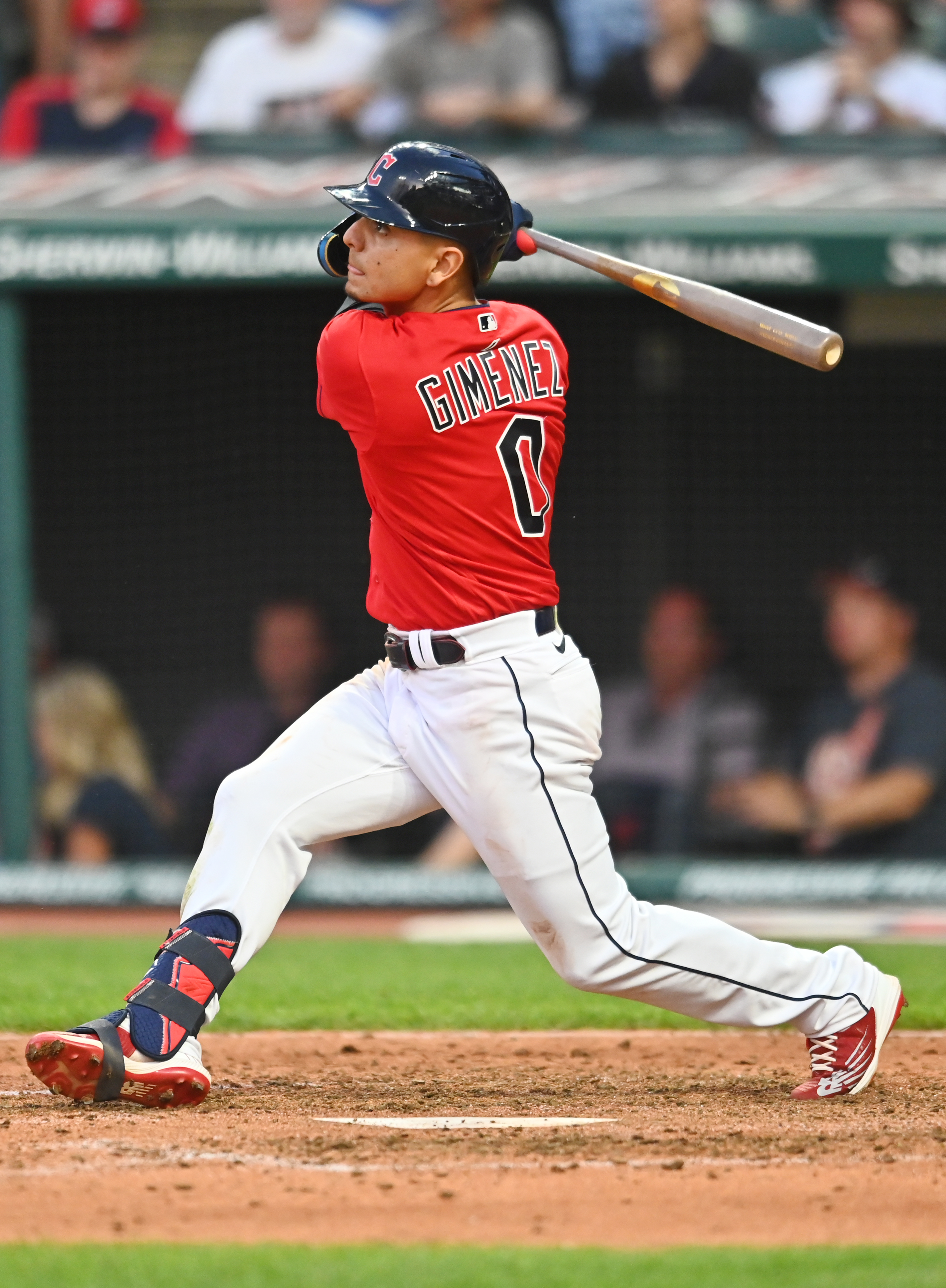
Andres Gimenez can’t go to-to-toe with Ramirez’s power or his run-production numbers — particularly since he’s had 107 fewer plate appearances. I will freely admit that, in my view, Ramirez is having the better season, but there are arguments to the counter. Gimenez leads Ramirez in batting average and on-base percentage, has hit with surprising power, has surpassed him in steals and baserunning value (despite the lower total of plate appearances) and has graded out as one of baseball’s best defensive players, regardless of position. Baseball-Reference credits Gimenez with 5.4 wins above replacement — tied for the fifth-highest mark in the Majors among position players. FanGraphs “only” has him tied for 14th, at 4.7.
Whether Gimenez can sustain this output in future seasons is a far more pertinent debate for the Guardians than whether Gimenez or Ramirez has had the better season. Gimenez is, after all, just a season removed from hitting only .218/.282/.351 through 210 big league plate appearances. Entering the 2022 campaign, Gimenez had slashed just .235/.302/.369 in 117 career games — not exactly a resounding declaration he could be an impact big leaguer.
Those struggles came in Gimenez’s age-21 and age-22 seasons, however. It’s hardly uncommon for players that young to struggle with the transition to the majors, even if they’re former top prospects, which was very much the case with Gimenez. Originally signed by the Mets as an amateur out of Venezuela, Gimenez thrice ranked among the game’s top 100 prospects at Baseball America and at Baseball Prospectus, also making multiple top-100 lists at MLB.com and FanGraphs. Gimenez’s defense and speed always garnered more praise than his bat, but he was projected as a potential everyday middle infielder. He was regarded highly enough to be one of the key pieces sent from New York to Cleveland in the trade that made Francisco Lindor a Met.
So, what’s changed for Gimenez in 2022? For starters, he’s simply making more contact. After punching out at a 24% clip in 2020-21, he’s down to 20.2% this season. His overall 73.3% contact rate from 2020-21 is up to 75% this season. Looking a bit deeper, he’s both slightly cut back on the rate at which he chases pitches off the plate and greatly increased his contact rate when he does chase. Gimenez struggled against lefties in 2021 but is hitting them at a .289/.352/.458 clip in 2022. It’s only 94 plate appearances, but it’s encouraging that Gimenez has actually fanned less often (17%) against lefties than against right-handers (21.2%).
The quality of contact made by Gimenez has markedly improved, too; he’s seen his line-drive rate rise nearly 10 percentage points, from 12.6% in 2021 to 22.3% in 2022. Gimenez also boasts a better than two mile-per-hour increase in his average exit velocity (88.4 mph, up from 86.3 mph in ’21) and a jump of nearly nine percentage points in his hard-hit rate (39.2%, up from 30.4%) this year. He’s more than doubled his rate of barreled balls, sitting at 7.4% after checking in at 3.6% a year ago.
Granted, those Statcast batted-ball ratings are still below the league average, and even Gimenez’s slightly improved 40.2% chase rate on pitches off the plate ranks among the highest levels in the league. There’s some clear work to be done for him to improve his overall approach, and his 2022 batting line wouldn’t look so rosy were it not for a .354 batting average on balls in play that he’s unlikely to sustain.
Even if his current production looks ripe for some regression, however, it’s hard not to be encouraged by all the positive strides in Gimenez’s game — both on a year-over-year basis and within the confines of the current season. Gimenez’s walk and strikeout rates were fairly dismal early in the season, for instance, sitting at 2% and 24.5%, respectively, through the end of April. Since Memorial Day weekend, he’s walked at a more passable 6.8% clip and logged an 18.6% strikeout rate. Ramirez’s hack-happy approach might always render him with a below-average walk rate, but if he can keep it around seven percent and also continue to put the ball in play at his current rate and with his current level of authority, he’ll be productive even as that aforementioned BABIP normalizes.
Barring the adoption of a more patient approach and/or further gains in terms of raw power, the 2022 campaign could very well represent something of a ceiling for Gimenez. Even if that’s the case, though, it’s quite the ceiling. He’s on pace to finish the year with six to seven wins above replacement, vastly above-average offense, plus baserunning marks and Gold Glove-caliber defense. Gimenez isn’t going to be considered a favorite or finalist in American League MVP voting, but he ought to get some down-ballot votes given just how strong his all-around performance has been.
It’s also possible that Gimenez will see his value to the team increase even further in future seasons, though not necessarily through his own doing. Scouting reports long touted him as a plus defender at either middle-infield spot, but he’s been limited to second base for most of his time in Cleveland thanks to the presence of Amed Rosario. While Rosario has improved his glovework at shortstop this year, he’s still received a mixed bag of defensive grades. Gimenez, meanwhile, has shined at shortstop, turning in marks of 7 Defensive Runs Saved, a 3.0 Ultimate Zone Rating and 8 Outs Above Average in just 634 career innings.
Rosario is due for his final arbitration raise this winter, and it’s feasible that the Guardians, with a bevy of middle-infield prospects and perennial payroll constraints, could look to trade Rosario rather than pay him a raise on this year’s $4.95MM salary. Doing so could open up shortstop for Gimenez, whose offense would be even more valuable at a position higher on the defensive spectrum, while subsequently opening second base for Tyler Freeman or another prospect.
Wherever his defensive home ultimately lies, Gimenez has used the 2022 season to cement himself as a viable big league contributor — not just a regular but an All-Star-caliber player who, at his best, could get some stray MVP votes. He’s controlled for another four seasons beyond the current year, won’t even reach arbitration eligibility until the 2023-24 offseason, and has yet to celebrate his 24th birthday. Ramirez is going to draw all the headlines in the Cleveland infield, but Gimenez has likely earned himself a long-term spot to draw some fanfare alongside his teammate.
Twins Claim Jake Jewell From Guardians
The Guardians have announced that right-hander Jake Jewell has been claimed off waivers by the Twins.
Jewell, 29, signed a minor league deal with the Guardians in the offseason and has had a nice showing in the minors this year. Through 43 1/3 innings in Triple-A, he had an ERA of 2.49 along with a 27% strikeout rate, 8.4% walk rate and 63.3% ground ball rate.
Based on that strong minor league showing, he got selected up to the big league club in early August but was optioned a few days later without getting into any game action and then designated for assignment after just over a week on the 40-man roster. That’s been something of a theme in Jewell’s career in recent years, as he’s often thrown quite well in the minors but without getting extended looks in the big leagues. He has 38 1/3 MLB innings thus far, spread out over three different campaigns.
For the Twins, they had an open spot on their 40-man roster, meaning no corresponding move will be necessary. Since Jewell has one option year remaining, they could send him to Triple-A as depth and keep him there for the final weeks of the season.
Guardians Designate Jake Jewell For Assignment
The Guardians have designated right-hander Jake Jewell for assignment, tweets Mandy Bell of MLB.com. His spot on the 40-man roster will go to right-hander Xzavion Curry, who will indeed be selected to the 40-man roster to start the second game of today’s doubleheader (as already covered here). Cleveland also reinstated James Karinchak from the restricted list and returned righty Peyton Battenfield to Triple-A Columbus.
Jewell, a longtime Angels farmhand, has begun to bounce around the league via waivers and minor league free agency in recent years, spending time with the Giants, Cubs, Dodgers and now Guardians since being let go by the Halos organization. He’s been hit hard in 38 1/3 career innings at the MLB level (7.75 ERA) but has posted a strong season in Cleveland’s system so far this year.
Through 43 1/3 innings in Triple-A Columbus, Jewell has pitched to a 2.49 ERA with a 27% strikeout rate, 8.4% walk rate and a huge 63.3% ground-ball rate. Despite that strong showing, Jewell wasn’t selected to the 40-man roster until a few days after the trade deadline. He didn’t make it into a big league game before being optioned back to Columbus and now jettisoned from the 40-man roster. With trades of players who’ve been on the Major League roster at any point now prohibited, Jewell will be placed on waivers or released within the next week. All 29 other clubs would be able to claim him.
Despite the lack of big league success, there’s a chance Jewell could end up claimed by another club. He’s optionable for the remainder of the season, creating some flexibility, and beyond the strong numbers he’s logged so far in 2022, he has a lengthy track record of sharp numbers at the game’s top minor league level. Jewell had a rough showing in Triple-A in 2019 — a season that saw Triple-A leagues use the same juiced ball as the Majors — but has otherwise managed ERAs well south of 4.00 and solid strikeout rates in his other three Triple-A campaigns. On the whole, Jewell has racked up 151 innings of 3.64 ERA ball with a 25.1% strikeout rate, a 10.5% walk rate, an impressive 59.8% ground-ball rate and just 0.50 HR/9 at the game’s top minor league level.
Guardians To Select Xzavion Curry
The Guardians will turn to right-handed pitching prospect Xzavion Curry to start the second game of today’s doubleheader, manager Terry Francona announced (Twitter link via Cleveland.com’s Joe Noga). He’ll need to have his contract formally selected to the 40-man roster, which is currently at capacity.
Curry, 24, was Cleveland’s seventh-round pick back in 2019 and has enjoyed a strong season between Double-A and Triple-A, working to a combined 3.48 ERA, 27.5% strikeout rate and 7.3% walk rate over the life of 101 innings (17 starts, two relief appearances). Curry didn’t post dominant numbers in his college days at Georgia Tech and was listed at “just” 5’10”, which might’ve contributed to him landing in the seventh round of his draft. However, he’s had little to no problems adapting to professional ball, posting strong results at every minor league stop — culminating in a career 2.90 minor league ERA.
FanGraphs tabs Curry 12th among Guardians farmhands in an absolutely stacked system, and he lands 18th on Baseball America’s midseason rankings. Scouting reports on Curry note that even though his heater sits in the low 90s, its huge spin and his deceptive delivery help it play up as a plus pitch that can miss bats in bunches. His secondary offerings don’t garner as much praise, though his slider is regarded as a potentially above-average pitch — and Curry’s outstanding command helps all of his pitches exceed expectations at times. He’s walked just 46 off the 795 hitters he’s faced as a pro (5.8%).
Curry will give Guards fans their first look at the latest rotation option to step out of the organization’s pitching factory. Cleveland seems to grow viable big league starters on trees, with both Curry and righty Peyton Battenfield (drafted two rounds after Curry) the latest unheralded prospects to surge through the system and position themselves as potential big league contributors. The Guardians’ five-man rotation is presently full, thanks to the presence of Shane Bieber, Triston McKenzie, Aaron Civale, Zach Plesac and Cal Quantrill, but both Curry and Battenfield have seemingly pitched their way to the upper levels of the organization’s depth chart.
Success in routinely turning out promising arms is one of the many reasons the Guardians have regularly been able to trade from their Major League pitching staff to keep the minor league system stacked without needing to dive headlong into a tedious, years-long rebuilding effort in recent seasons. Cleveland was reportedly open to trade offers on some controllable arms prior to the deadline — Plesac’s name was most commonly speculated upon — and promising late showings from arms like Curry who make their debuts this season will make it easier for the Guardians to renew any of those conversations this winter if they choose.
AL Central Notes: Robert, Guardians, Contreras, Tigers, Hinch
X-rays were negative on Luis Robert‘s left wrist, as the White Sox outfielder has been deemed day-to-day with a sprain. Robert suffered the injury on a stolen-base attempt in the bottom of the sixth inning in Friday’s game, and was replaced in center field for the top of the seventh.
Chicago’s next off-day doesn’t come until August 29, so there isn’t any room for Robert to get a break without leaving the White Sox undermanned on the roster. As such, a 10-day injured list visit could be necessary if there’s any lingering soreness, and the Sox might prefer to lose Robert for a few games now in order to get him fully healthy for the rest of the postseason race. Though he has already missed a couple of weeks (on the COVID-IL and on the regular IL due to blurred vision), Robert has still been a big contributor to the White Sox, hitting .301/.336/.454 with 12 homers in 354 plate appearances.
Other notes from around the AL Central…
- The Guardians were among the teams who had interest in Willson Contreras at the trade deadline, according to ESPN’s Jesse Rogers. The Cubs didn’t end up moving Contreras anywhere, while the Guards had a quiet deadline overall — they ended up moving a catcher themselves, dealing Sandy Leon to the Twins in a minor trade. Despite interest in both Contreras and the Athletics’ Sean Murphy, Cleveland stood pat at catching, leaving Austin Hedges and Luke Maile as the primary tandem behind the plate unless the Guardians look to call up top prospect Bo Naylor.
- A.J. Hinch ended any speculation that he might seek a move to the Tigers‘ front office, telling reporters (including The Athletic’s Cody Stavenhagen) earlier this week “I’m the manager. I plan on being the manager.” However, owner Chris Ilitch did state that Hinch would have some input on who might replace Al Avila as the club’s next general manager. To this end, Jon Heyman of The New York Post suggests that former Diamondbacks and Padres GM Josh Byrnes could be a candidate for the Detroit job — Byrnes and Hinch worked together in Arizona’s front office, with Byrnes giving Hinch his first managerial job in the Diamondbacks’ dugout. Byrnes has been working as the senior VP of baseball operations for the Dodgers since 2014.
Previewing Upcoming Club Option Decisions: American League
Yesterday, MLBTR checked in on the status of seven players who have vesting options in their contracts for the 2023 season. Each can (or already has) lock in some guaranteed money or the right to opt out of their current deal based on their workload or finish in awards voting this year.
Over the next two days, we’ll turn our attention to players with less of a say over their contractual status. A host of contracts around the league contain club options for 2023. Some of them will be easy decisions one way or the other, while there are others that’ll be more borderline calls. With teams having to make these calls a little over two months from now, it’s worth taking a look at how these players are performing in 2022.
Today, we’ll start with the American League. We’ll follow up with a look at the Senior Circuit tomorrow.
Orioles
- Jordan Lyles, SP ($11MM option, $1MM buyout)
Baltimore signed Lyles to a $7MM guarantee last winter, taking the form of a $6MM salary for 2022 and at least a $1MM buyout on next year’s option. He’s been a fine back-end starter, working to a 4.35 ERA across 130 1/3 innings. Lyles has below-average strikeout, swinging strike and ground-ball rates, but he leads the club in innings pitched and is throwing plenty of strikes. He’s also drawn strong reviews for his work in the clubhouse with the team’s younger arms. A $10MM call is borderline for a 4th/5th starter type, but the Orioles have almost nothing on the books next season and could keep him around as a veteran stabilizer.
Red Sox
- James Paxton, SP (team must decide on consecutive $13MM options this offseason; Paxton would have $4MM player option for 2023 if club declines)
Paxton signed a convoluted deal last winter that reflected his atypical situation. A mid-rotation caliber starter when healthy, he’s made just six starts over the past three years and hasn’t pitched in an MLB game since undergoing Tommy John surgery last April. He’s making $6MM this season and could be a rotation option for a team that’ll see each of Nathan Eovaldi, Michael Wacha and Rich Hill hit free agency. The club will have to decide whether to trigger consecutive $13MM options (essentially a two-year, $26MM pact) this winter. If they decline, Paxton could opt in to a $4MM salary for 2023 or test free agency. How things play out largely depends on how Paxton looks down the stretch. Manager Alex Cora recently told reporters the southpaw will throw a simulated game on Friday and could soon head out on a minor league rehab appearance (link via Chris Cotillo of MassLive).
- Hirokazu Sawamura, RP (team holds option currently valued at $3.6MM; Sawamura holds player option for 2023 currently valued at $1.8MM if club declines)
Sawamura signed a two-year, $3MM guarantee with the Red Sox over the 2020-21 offseason. The deal also included a club option for 2023 valued anywhere between $3-4MM, depending on whether Sawamura held his roster spot and based on his number of appearances. MLBTR has confirmed that escalators have already pushed the value of the club option to $3.6MM; that price escalates by an additional $100K for reaching each of 45, 50 and 60 appearances this season. (He’s presently at 43 games). If the team declines, Sawamura would have the right to trigger a player option currently valued at $1.8MM. As with the club option, the player option price escalates by $100K for reaching 45, 50 and 60 appearances. If both sides bypass their respective options, Sawamura would receive a $1MM buyout.
It seems likely that Sawamura’s team option price will fall somewhere in the $3.8MM – 3.9MM range, with a $1.8MM gap between the value of the club and player options. That’s an acceptable price to pay for a solid reliever, albeit one who’s been relied upon more in lower-leverage innings. Sawamura has a 3.14 ERA in 97 1/3 innings since coming stateside, striking out a decent 23% of opponents with a strong 51.7% ground-ball rate. He’s had issues throwing strikes consistently, but he’s an affordable power arm for a middle innings group that has been one of the team’s biggest weaknesses. That the Red Sox haven’t given Sawamura much high-leverage work in spite of their bullpen struggles is enough of a red flag to put this one in some doubt, but it seems likelier they’ll keep him around.
Yankees
- Luis Severino, SP ($15MM option, $2.75MM buyout)
Severino barely pitched between 2019-21 because of injuries, including a Tommy John recovery. He returned to the rotation this season and pitched to an impressive 3.45 ERA through 16 starts before suffering a lat injury that’ll cost him at least two months. The injury history is a real concern, but Severino still looks like an above-average starter when healthy. He’s averaged around 96 MPH on his fastball, struck out 27.2% of opposing hitters and has a tiny 7.2% walk rate. The Yankees would have to be very pessimistic about his health outlook to buy out his age-29 season, particularly since it’s only a $12.25MM decision once the buyout price is taken into account.
Rays
- Kevin Kiermaier, CF ($13MM option, $2.5MM buyout)
Kiermaier hit .228/.281/.369 over 221 plate appearances before suffering a season-ending left hip injury. It’s the latest in a long line of major health issues for the 32-year-old, and the Rays are planning to buy out the three-time Gold Glove winner. It’s possible the team tries to circle back at a lower price point, but the career-long Ray is likely to hit the open market for the first time in his career.
Blue Jays
- Anthony Bass, RP ($3MM option, $1MM buyout)
The Jays just acquired Bass from the Marlins at the trade deadline, fortifying their bullpen with a productive middle-innings arm. Bass has an excellent 1.49 ERA through 48 1/3 innings on the year, striking out 26.2% of opponents against just a 5.9% walk rate. It’s a career-best season at age 34, but Bass has a sub-4.00 ERA for five years running. He’s an underrated bullpen piece, and the Jays are sure to bring him back for what amounts to a $2MM decision.
White Sox
- Tim Anderson, SS ($12.5MM option, $1MM buyout)
This is as easy a call as any team will have to make this winter. Anderson has been one of the game’s better players four years running. He’s an elite contact hitter and baserunner, and he’s cemented himself as the Sox’s franchise shortstop. His 2022 season has been dinged by injuries, including a recent hand ligament tear that’ll cost him most of the remaining schedule. Frustrating year aside, Anderson has hit at a quality .301/.339/.395 clip this season and been an All-Star caliber performer in prior years. The White Sox are keeping him around next year, and they can do the same in 2024 via $14MM option.
- Josh Harrison, 2B ($5.5MM option, $1.5MM buyout)
Harrison signed a one-year deal in Spring Training and got off to a dreadful start. The veteran utilityman has turned things on since the calendar flipped to June, though, and he now carries a roughly league average .242/.312/.385 line through 281 plate appearances. The Sox will have to make a $4MM call this offseason on whether to bring him back for 2023. They’ll probably look for an upgrade at second base, but that’s a reasonable enough sum to dedicate to a quality infielder off the bench. Chicago already has Leury García making decent money in that role, and they might prefer to focus their finances on adding to the back of the rotation and bringing back star first baseman José Abreu.
Guardians
- Bryan Shaw, RP ($4MM option, $500K buyout)
Shaw is a longtime member of the Cleveland organization, having spent seven of his 11 MLB seasons there. He’s a durable bullpen workhorse who’s clearly a favorite of the coaching staff and front office, but his 2022 results have not been good. The 34-year-old righty owns a 5.36 ERA across 40 1/3 innings. He’s only striking out 17.7% of opponents, walking batters at an elevated 11.6% clip and has had some home run issues. The Guardians seem likely to go in another direction this offseason.
Twins
- Miguel Sanó, 1B ($14MM option, $3MM buyout)
Sanó is a longtime member of the organization who’s capable of carrying a lineup with his power at his best. His platform season has been a disaster, though, and the Twins are sure to buy out his option. The 29-year-old underwent surgery to repair a meniscus tear in his knee in May. He returned briefly but went back on the 60-day injured list last week with additional knee concerns. It’s not clear whether he’ll make it back this season. Sanó has an .083/.211/.133 line in 20 games this year after slightly above-average offensive performances in 2020-21.
- Sonny Gray, SP ($13.1MM option, no buyout)
Just as Sanó’s option is certain to be bought out, Gray’s is a no-brainer to exercise. Minnesota acquired the right-hander from the Reds in Spring Training, sending last year’s first-round pick Chase Petty to Cincinnati. Gray lost some time on the injured list, but he’s posted an impressive 3.19 ERA with slightly above-average peripherals through his first 16 starts in a Twins uniform. A mid-rotation starter of his caliber is a solid bargain at the cost of his option, which played into the fairly high asking price the Twins had to relinquish in the trade.
- Dylan Bundy, SP ($11MM option, $1MM buyout)
The Twins bought low on Bundy on a one-year free agent deal, hoping he’d rebound from a dismal 2021 and look more like the mid-rotation arm he resembled in 2020. That hasn’t really transpired, as the right-hander has a 5.01 ERA through 93 1/3 innings. He’s averaging a personal-low 89.2 MPH on his fastball, and while he’s throwing plenty of strikes, that lack of velocity has been reflected in both his 18.6% strikeout rate and higher than average home run rate. It seems likely the Twins will decline the option and reallocate that $10MM elsewhere, particularly with the recent acquisition of Tyler Mahle and Kenta Maeda’s expected return reducing the urgency to add to the rotation next season.
Astros
- Will Smith, RP ($13MM option, $1MM buyout)
Acquired in a one-for-one deadline swap that sent Jake Odorizzi to Atlanta, Smith is having a generally disappointing year. He has a 4.17 ERA through 41 innings, striking out a personal-worst 24.1% of batters faced with a career-high 11.2% walk rate. Smith was an effective late-game arm as recently as a season ago and is still generating swinging strikes at a quality 14.2% clip, but the $12MM price tag seems likely to be too hefty given the mediocre strikeout and walk numbers.
Athletics
- Stephen Piscotty, RF ($15MM option, $1MM buyout)
Piscotty has spent five seasons in Oakland after being acquired from the Cardinals heading into the 2018 campaign. He had an excellent first season in green and gold, but he’s been a well below-average hitter fours years running now. Going back to the start of 2019, Piscotty has a .231/.288/.380 line in just under 900 trips to the plate. He’s sure to be bought out and could be looking at minor league offers next winter.
Mariners
- Ken Giles, RP ($9.5MM option, $500K buyout)
Seattle signed Giles to a two-year deal knowing he’d miss all of 2021 recovering from Tommy John surgery. Unfortunately, hopes of a year two payout have been largely derailed by a finger issue that delayed his season debut and some shoulder tightness that has kept him out of action for the past month. Giles has thrown just 4 1/3 innings in a Seattle uniform, surrendering only one hit but four walks with six strikeouts. He’s averaged 94.8 MPH on his fastball, still solid but down from the 96.9 MPH range he showed during his incredible 2019 season with the Blue Jays. There’s a non-zero chance Giles returns — he’s currently on a rehab assignment in Triple-A — and dominates down the stretch to make Seattle think about the option. For the moment, though, it’s trending towards a buyout.
Rangers
- Garrett Richards, RP ($9MM option, $1MM buyout)
Texas signed the 34-year-old Richards to a one-year guarantee over the offseason, hoping he’d build off the promise he showed in a late-season bullpen stint with the Red Sox. That hasn’t panned out, as he has a 5.35 ERA across 38 2/3 innings of relief. Richards has an excellent 52.1% ground-ball rate, but he’s not missing as many bats as one would like and he’s giving up a lot of hard contact. Texas seems likely to buy him out.
- José Leclerc, RP ($6MM option, $750K buyout)
Texas signed Leclerc to an early-career extension in 2019, locking him in after a 1.56 ERA season the year before. He struggled with his control the following season, then missed virtually all of 2020-21 battling elbow issues that eventually culminated in Tommy John surgery. Leclerc returned to the mound in June but has a 4.01 ERA with a personal-low 20.4% strikeout percentage in 24 2/3 innings of generally low-leverage work. He’s still throwing hard and missing plenty of bats with his slider, so there’s a chance Texas takes an optimistic view and keeps him around. His deal also contains a $6.25MM option for 2024, so he’d be under control for multiple seasons if the Rangers are willing to give him a bit of a longer leash. This feels like it could go either way depending on how he performs down the stretch.
- Kole Calhoun, RF ($5.5MM option, no buyout)
The Rangers signing of Calhoun to a one-year deal over the winter hasn’t panned out. He’s hitting .211/.269/.363 through 350 plate appearances and is currently on the injured list with a heel issue. It’s a second straight below-average season for the veteran outfielder, who’ll be 35 in October. The Rangers will almost assuredly decline the option and look elsewhere in right field as they aim for legitimate competitiveness in 2023.
Cubs Claim Franmil Reyes From Guardians
2:20pm: The Cubs have announced the claim.
2:10pm: The Cubs are “adding” slugger Franmil Reyes, according to Sahadev Sharma of The Athletic. Reyes had been designated for assignment by the Guardians on Saturday. Since the trade deadline has passed, the Cubs have presumably claimed Reyes off waivers. Paul Hoynes of the Cleveland Plain Dealer reports that Reyes has indeed been claimed off waivers. The Cubs had a couple of vacancies on their 40-man roster, meaning a corresponding move won’t be required in that regard.
Reyes, 27, has an impressive track record as a power hitter, though he’s enduring an unfortunate swoon here in 2022. He debuted with the Padres in 2018 and then went to Cleveland in a three-team trade in 2019 that involved six other players. From his debut through the end of the 2021 campaign, he hit 92 home runs and walked in 9% of his plate appearances. His 29.5% strikeout rate was definitely on the high side, but he still managed to hit .260/.325/.503, production that was 19% above league average by measure of wRC+.
This season has been a complete nightmare by comparison, however. Reyes has struck out in 37.1% of his plate appearances, walked in only 5% of them and hit just nine homers. His overall batting line for the campaign sits at a paltry .213/.254/.350, wRC+ of 69. Cleveland has been using him as a designated hitter, ultimately deciding it could no longer withstand that meager output from a lineup spot that’s supposed to deliver more potency. He was optioned to the minors last week and designated for assignment a few days after that.
For a rebuilding Cubs team, it’s a logical move to take a chance on Reyes and hope that he bounces back to his previous form. He’s making $4.55MM this year, leaving around $1.5MM left to be paid out over the remainder of the campaign. He can be retained for two more seasons via arbitration and likely won’t require a huge raise due to his poor showing this year. The Cubs don’t have a dedicated designated hitter, with impending free agent Willson Contreras getting most of the time there. If Reyes successfully bounces back in any way, he could take over DH duties. He is capable of playing corner outfield, though has only trotted onto the grass for 26 total games in the past three years.
There are reasons to be optimistic Reyes could turn things around. Despite the strikeout woes and general struggles this year, he’s still in the 92nd percentile among MLB hitters when it comes to barrel percentage, 93rd in average exit velocity, 88th in hard hit percentage and 86th in max exit velocity. If he can cut down on the strikeouts even a little bit, he’s still crushing the ball with enough power that he could be a useful pickup, either sticking with the Cubs or being traded in the future.
Nationals Claim Alex Call From Guardians
Outfielder Alex Call has been claimed off waivers by the Nationals from the Guardians, per announcements from both clubs. Call had been designated for assignment by the Guards on Friday. He has been optioned by the Nationals to Triple-A. The Nats had an open 40-man roster spot, meaning no corresponding move will be necessary.
A third round draft pick of the White Sox, Call switched organizations in the trade that sent Yonder Alonso from Cleveland to Chicago. He was selected to the big league club and made his MLB debut in July. Though he drew four walks in 16 plate appearances, he didn’t impress much otherwise in his small sample. He currently has a line of .167/.375/.167 in his brief MLB career. In 71 Triple-A games this year, he has an excellent .280/.418/.494 line for a wRC+ of 146, with almost equal walk and strikeout rates of 16.1% and 16.4%, respectively.
Of course, the Nationals made huge headlines in recent weeks with the lead-up to the Juan Soto deadline trade, arguably the most significant transaction in history. By giving up on a generational talent that they could have kept around through the 2024 season, they’ve clearly waved a white flag on near-term competitiveness. As such, it makes sense that they would be interested in taking fliers on controllable players such as Call. He will head to Rochester as outfield depth and try to work his way up to a big league club that currently has Victor Robles, Lane Thomas, Yadiel Hernandez and Josh Palacios as part of the regular outfield mix.
Guardians Designate Franmil Reyes For Assignment
The Guardians have designated DH/outfielder Franmil Reyes for assignment, reports Zack Meisel of The Athletic. Though his 2022 numbers have fallen well below his career marks, the move still comes as something of a surprise given Reyes’ age (2022 is his age-26 season) and his prodigious raw power. He had been optioned to Triple-A Columbus earlier this week. Jake Jewell has been selected onto the roster in his place.
Since debuting with the Padres in 2018, Reyes has been one of the more consistent home run threats in the game despite playing his home games at San Diego’s Petco Park (the most pitcher-friendly stadium in the majors) and Progressive Field (comparatively neutral but still pitcher-friendly), going deep in 5.6% of his career plate appearances (the league-wide average over the same span is 3.3%). That number has fallen to 3.2% in 2022, however, while his strikeout rate has ballooned to 37.1% (against a career 30.7% mark) and his walk rate has fallen to 5% (8.4% career).
These unfortunate trends translated into a meager .213/.254/.350 triple-slash, a far cry from his career .253/.314/.478 batting line — particularly in the power department. The Guardians, who entered play on Saturday two games behind the Twins in the AL Central and a game behind the Rays for the final wild card spot, will likely continue to rotate Josh Naylor and Owen Miller between first base and Reyes’ erstwhile DH spot.
Given his very real power potential — and the passing of the trade deadline — there could be some very real interest in Reyes from contending teams, perhaps even before he’s cleared waivers. Any team claiming the slugger would owe him a pro-rated portion of his $4.55MM 2022 salary, while he’d be owed only a pro-rated portion of the minimum salary thereafter. Reyes actually has two years of team control remaining, though he’ll be in line for at least a modest raise should a team choose to tender him a contract.