
Offseason Outlook: Minnesota Twins
MLBTR is publishing Offseason Outlooks for all 30 teams. Click here for the other entries in this series.
For the second time in three years, the Twins made a surprising push for the AL Wild Card. Unlike their 2015 campaign, though, Minnesota made it to the postseason this time around. The 2017 Twins look like a much more believable contender than the ’15 group, so chief baseball officer Derek Falvey and GM Thad Levine figure to approach this offseason much differently than the 2016-17 offseason.
Guaranteed Contracts
- Phil Hughes, SP/RP: $26.4MM through 2019
- Joe Mauer, 1B: $23MM through 2018
- Jason Castro, C: $16MM through 2019
- Ervin Santana, SP: $14.5MM through 2018 (includes $1MM buyout of 2019 option)
- Brian Dozier, 2B: $9MM through 2018
- ByungHo Park, 1B/DH: $6MM through 2019
Arbitration-Eligible Players (service time in parentheses; projections via MLBTR contributor Matt Swartz)
- Eduardo Escobar (5.128) – $4.9MM
- Kyle Gibson (4.051) – $5.3MM
- Ehire Adrianza (3.131) – $1.0MM
- Ryan Pressly (3.118) – $1.6MM
- Robbie Grossman (3.060) – $2.4MM
- Trevor May (3.051) – $600K
Free Agents
- Matt Belisle, Chris Gimenez (outrighted, elected FA), Dillon Gee, Bartolo Colon, Hector Santiago, Glen Perkins (option declined)
[Minnesota Twins depth chart | Minnesota Twins payroll outlook]
A lot went right for the 2017 Twins, who surprised baseball with an 85-win season and an American League Wild Card berth. That several top-rated young talents took steps forward this season means that much of the lineup is already set.
Byron Buxton rebounded from an awful start to hit .274/.333/.452 over his final 459 plate appearances. Coupled with elite defense and baserunning, Buxton’s turnaround led to a 5-WAR season by measure of Baseball-Reference and 3.5 WAR by Fangraphs. Miguel Sano homered 28 times in 114 games, though he fouled a ball into his shin in August, resulting in a fracture that all but ended his season. He’s expected to be healthy by Spring Training after November surgery. Meanwhile, 26-year-old Eddie Rosario had a breakout year at the plate with 27 homers, improved K/BB numbers and a strong .290/.328/.507 overall line. Jorge Polanco was one of baseball’s worst hitters in July but erupted with a .316/.377/.553 slash over the final two months (234 PAs).
The Twins also received contributions from veteran hitters that are expected to return. Brian Dozier was again one of the top second basemen in the game, hitting 34 homers and swiping 16 bags with a 124 wRC+. Joe Mauer turned back the clock with a .305/.384/.417 line — good for a 116 wRC+. Robbie Grossman walked at a near 15 percent clip and posted a .361 OBP.
With Sano, Polanco, Dozier and Mauer set to return, the Twins could consider their infield largely set. Eduardo Escobar is on hand as an offensive-minded backup, while Ehire Adrianza can provide excellent defense at any infield spot. However, there’s also room yet to make an addition. With Grossman penciled in as the primary DH, the Twins could conceivably look to shift Sano to that spot on a more regular basis. That’d open up the possibility of signing an infielder for the left side of the diamond (e.g. Zack Cozart, Todd Frazier). Alternatively, the Twins could grab a first baseman like Carlos Santana or a corner bat like Carlos Gonzalez to mix in at DH. Santana would give the Twins two of the game’s better first-base defenders (Mauer rated quite well there in ’17) to rotate between first base and DH.
The other spot the Twins could conceivably add would be in right field. Max Kepler is still just 24 years old (25 in February) and has shown plenty of promise in the Majors, but he’s yet to put it all together. An above-average defender who has shown the ability to hit for power, Kepler has also struggled against left-handed pitching, and he’s yet to hit righties well enough to truly compensate for that deficiency. Young Zack Granite profiles as a quality fourth outfielder, but he’s also a left-handed bat, so perhaps the Twins could pursue a right-handed bat in the Austin Jackson mold to at least provide Kepler with a platoon partner.
Minnesota could also look to add a backup catcher to the fray. Castro provided slightly below-league-average offense (above-average relative to other catchers) and a massive defensive upgrade in Minnesota, so they’re likely content with him as the starter. Minnesota could simply opt to re-sign clubhouse favorite Gimenez or turn to prospect Mitch Garver to fill that role. Names like Chris Iannetta and Rene Rivera are among the right-handed-hitting alternatives that could pair well with the southpaw-swinging Castro. (Castro handled lefties just fine with a .737 OPS in 2017, but he’s historically struggled against same-handed opponents.)
While the position-player side of the equation looks promising and gives the Twins the flexibility to be opportunistic, things aren’t as rosy on the pitching staff. Outside of Ervin Santana and Jose Berrios, the Twins don’t have much in the way of rotation stability heading into 2017. Santana finished second in the Majors in innings pitched and turned in a 3.28 ERA, though secondary metrics were far less optimistic about his performance. At worst, he should be a durable innings-eater capable of posting an ERA in the low 4.00s, but he’s outperformed his peripherals for nearly two full years now and could again turn in a mid-3.00s mark. Berrios solidified himself as a Major Leaguer in ’17, and the Twins will now count on him to take a step forward in 2018. He won’t turn 24 until late May, and he comes with some yet-untapped potential despite a quality 3.89 ERA in 145 2/3 MLB innings this year.
Kyle Gibson figures to return after once again teasing the Twins with a Jekyll and Hyde act. Gibson was one of baseball’s worst starters in the first half of the season, but the former first-rounder was Minnesota’s best pitcher in the second half. In 70 2/3 frames after the break, he turned in a 3.57 ERA with 8.3 K/9, 2.3 BB/9 and a 50.2 percent grounder rate. We’ve seen this roller coaster ride out of Gibson before, but the strong finish likely spared him from a non-tender.
Adalberto Mejia, who showed promise but needs to dramatically improve his efficiency to work deeper into games, is a candidate to grab the fourth spot in the rotation. Minnesota has a pair of top 100 pitching prospects on the cusp of MLB readiness in lefty Stephen Gonsalves and righty Fernando Romero, but both will open the season in Triple-A. Other candidates for the back of the rotation that are currently on the 40-man roster include Aaron Slegers, Felix Jorge and Dietrich Enns. Veteran Phil Hughes is a wild card after undergoing a thoracic outlet syndrome revision surgery this past summer, but he could also work out of the ‘pen if he’s healthy enough to contribute.
In short: there’s room to add to the rotation, and that’s perhaps where the greatest level of intrigue sits when looking at the Twins’ offseason. As recently explored at length here at MLBTR, the Twins have an extremely favorable long-term payroll outlook. They’re at about $85MM after arb projections for the 2018 season — some $30MM shy of their franchise-record payroll — but they’re set to see Joe Mauer’s $23MM salary come off the books after 2018. Minnesota has just $24MM guaranteed on the 2019 books and, somewhat incredibly, doesn’t have a single guaranteed dollar committed to the 2020 roster.
The Twins, obviously, aren’t known for pursuing top-tier free agents. But with clubs like the Yankees, Giants, Red Sox and Rangers (among others) all unlikely to commit substantial dollars to starting pitching for various reasons this winter, the Twins could surprise. FanRag’s Jon Heyman has already linked the Twins to the very top levels of the free-agent market, including Yu Darvish and Jake Arrieta plus noted second-tier arms Lance Lynn and Alex Cobb. It’d still be a shock to see Minnesota commit $25MM+ annually to Darvish or Arrieta, but the club could realistically afford to do so — especially on a more backloaded deal. And, with the White Sox, Tigers and possibly Royals rebuilding within their division — there’s increased motivation to be aggressive and try to win right now.
Nippon Professional Baseball star Shohei Ohtani is seemingly mentioned in all of our Offseason Outlooks, as he’d unequivocally make sense for any team. It’s at least worth noting a recent AP report that indicated the Twins have the third-most money remaining in their international pool to entice Ohtani (behind the Yankees and Rangers). One has to consider Minnesota a long-shot to sway Ohtani to sign, but it’s an avenue they’ll at the very least explore — and with more resources than most of their competitors. Their lack of a firm DH could also allow them to at least offer occasional at-bats to Ohtani there.
As murky as things are in the Twins’ rotation, the bullpen may be even more unsettled. Sidearm righty Trevor Hildenberger was quietly excellent in his rookie season and has firmly entrenched himself in the team’s late-inning mix. Lefty Taylor Rogers turned in a solid sophomore season and will be back. Hard throwing Alan Busenitz posted a 1.99 ERA in 31 2/3 innings, but he didn’t show much of an ability to miss bats despite averaging nearly 96 mph on his heater. He’ll still likely receive another look. Fellow righty Ryan Pressly threw just as hard, missed more bats and racked up grounders while showing passable control — but a proclivity for serving up homers torpedoed his ERA. His combination of whiffs, grounders and solid control should earn him another chance. Tyler Duffey shined early in a multi-inning role but faded as the season wore on.
The Twins will also have hard-throwing righty (and MLBTR contributor) Trevor May coming back from Tommy John surgery. He could factor into either the rotation or the bullpen mix, though it’s not yet certain which role the club envisions. Other ‘pen candidates include righty John Curtiss and lefty Gabriel Moya, each of whom posted video-game numbers in the minors and earned a September call-up. J.T. Chargois, who missed most of the season with an elbow issue but has dominated upper-minors hitters, is another option, as are Jake Reed and Nick Burdi (once he returns from Tommy John surgery).
It’s a long list of names that comes with minimal certainty. If the Twins expect to enter the season as contenders, they’ll need to stabilize the late innings. As is the case with regards to the rotation, the Twins have the payroll capacity to spend. Perhaps the notion of committing a four-year deal at more than $10MM annually won’t sit well with the front office, but even if they don’t pursue Wade Davis or Greg Holland (both reasonable on-paper targets), the market is flush with high-quality arms.
Brandon Morrow, Mike Minor, Addison Reed, Juan Nicasio, Bryan Shaw (who Falvey knows well from his Indians days), Jake McGee and old friend Pat Neshek are all among the relievers coming off strong seasons that should command multi-year commitments. Minor, McGee and Tony Watson may be of particular interest, as the Twins currently lack a second lefty to pair with Rogers. (Buddy Boshers was the most common option in 2017, though he often looked overmatched.) Frankly, it’d be a surprise if the Twins didn’t add at least one reliever on a multi-year deal, and it seems quite likely that they’ll be in play for some higher-end arms that could serve as a closer.
As Spring Training draws nearer, the Twins will also have internal questions to address. Namely, Dozier is controlled for just one more season — his age-31 campaign — leaving the front office with the task of deciding whether to lock up a player that has emerged as a clubhouse leader, a fan favorite and one of the better second basemen in all of baseball.
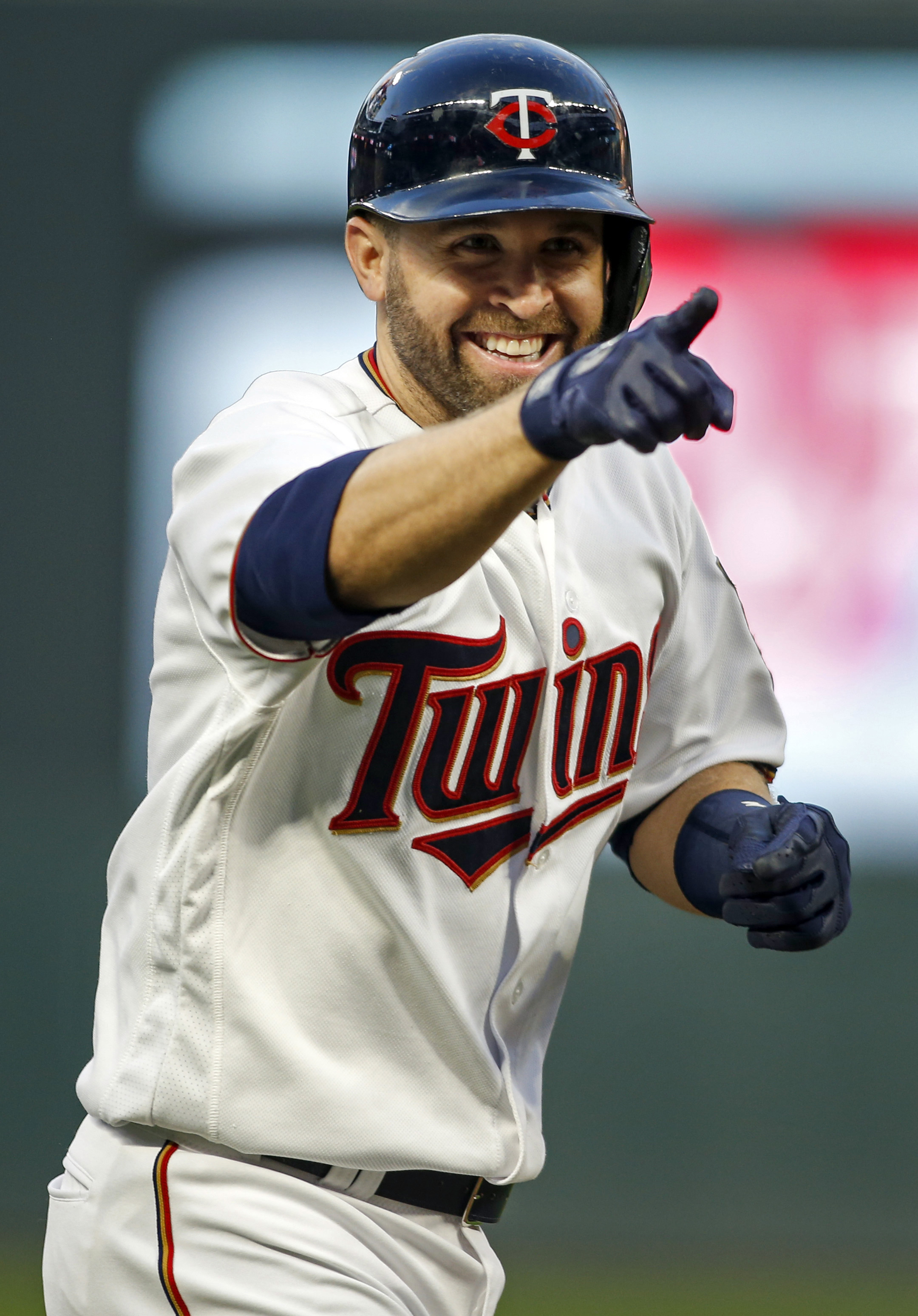
Dozier’s age will likely prevent the Twins from wanting to offer an especially lengthy commitment, but Minnesota should at least explore the possibility of retaining him. Daniel Murphy inked a three-year, $37.5MM deal beginning with his age-31 season, though Dozier’s 2016-17 production vastly outpaces Murphy’s two-year platform for that contract. Justin Turner inked a four-year, $64MM deal beginning with his age-32 season. I’d lean toward Turner as the better comp, but both could be talking points in extension discussions.
Top shortstop prospect Nick Gordon is near MLB-ready and could push Polanco to second base in the event that Dozier departs, but Dozier’s presence both on and off the field would be tough to replace.
The Twins will also have to look hard at whether they’d like to approach Buxton, Sano, Rosario, Polanco or Berrios about long-term deals, though there’s obviously quite a bit less urgency on that front; Sano, Buxton and Rosario won’t even be eligible for arbitration until next winter. Polanco and Berrios are even further out.
It’s an odd feeling to write sentences such as: “The Twins should have money to spend this offseason, and it’d be curious if they didn’t do so in a much more aggressive manner than in recent years.” But, that genuinely seems to be the case for the Twins, whose young core, pristine payroll outlook in 2020 and beyond and presence in a division rife with rebuilding clubs gives them an opportunity to reestablish their presence as an annual contender.
We’ve yet to see Falvey and Levine navigate an offseason in which the team acts as an expected contender, so it’s tough to gauge whether the club will utilize free agency or the trade market more in adding to the 2018 roster. Regardless of their preferred avenue, the 2017-18 offseason should be the most active in recent history for the Twins in terms of player acquisition.
Photo courtesy of USA Today Sports Images.
Twins, Brewers Enter Offseason In Position To Spend
Each year, our top ranking of the top 50 free agents and their projected contracts/destinations prompts many to raise an eyebrow. In the now five years that I’ve spent contributing to that behemoth of a post, though, I’m not sure I can recall a more unpopular pick with readers than the notion that Jake Arrieta could sign with the Brewers for what would be the largest free-agent signing in Milwaukee’s franchise history. The notion that the Brewers would win a bidding war isn’t one to which most are accustomed. Milwaukee signed Matt Garza to a four-year, $50MM contract prior to the 2014 season and has, at times, played in the second tier of free agency. But the Brewers are among baseball’s smallest markets, and placing Arrieta there admittedly felt odd even for us.
The question we kept asking, however, is: Why should it? The Brewers are one of two teams we kept coming back to that are in a position to act in a manner in which we’ve never really seen them act before. The other is just a five-hour drive to the west, in Minneapolis. I’m not suggesting that it’s a slam dunk that we’ll see the Brewers and Twins shatter their longstanding small-market perception; however, there’s an argument to be made for both teams to give serious consideration to spending far more aggressively this winter than they have in years past.
The 2017 season was a similar tale for both the Brewers and the Twins. Each club was largely written off heading into the 2017 season as they sought to continue rebuilding with an eye more toward 2018 and beyond than toward 2017. Last winter, the Twins’ biggest expenditure was a $24.5MM contract for veteran catcher Jason Castro. The Brewers spent $16MM on KBO reclamation project Eric Thames. The moves were not met with excessive fanfare.
But both the Brewers and Twins saw the majority of their young, potential core pieces take a step forward. Travis Shaw and Domingo Santana broke out with three-win seasons in Milwaukee, while Thames made good on his investment. Jimmy Nelson, Chase Anderson and Zach Davies led a surprisingly strong rotation, and Corey Knebel announced his presence as one of the best relievers on the planet.
Over in Minnesota, Byron Buxton rebounded from a terrible start and batted .274/.333/.452 over his final 459 PAs with elite defense. Miguel Sano hit 28 homers in 114 games before a stress reaction from a foul ball to the shin cut his season short. Eddie Rosario belted 26 homers, Jorge Polanco posted a 128 wRC+ in the second half, and Jose Berrios established himself as a useful big league starter. Joe Mauer even quietly rebounding to hit .305/.384/.417 (116 wRC+).
Suddenly, both teams look like potential contenders not just in 2018 but for the foreseeable future. The Twins share a division with the rebuilding White Sox and Tigers. The Royals are set to lose Eric Hosmer, Lorenzo Cain and Mike Moustakas to free agency after already having bid adieu to Wade Davis and Greg Holland in recent years. In 2018, at least, the AL Central outlook is promising for the Twins and the Indians.
Milwaukee will have to deal with the Cubs, Cardinals and Pirates in 2018, but the Bucs had a tough season and will soon have to seriously entertain trade offers for both Andrew McCutchen (a free agent next winter) and Gerrit Cole (a free agent the following offseason). The Cardinals are expected to radically alter their roster after a pair of disappointing seasons. The Cubs have work to do on the pitching front. Any of those teams could contend next year.
One advantage that both the Brewers and Twins have over their division rivals, though, is a largely blank payroll slate moving forward. Even after arbitration projections, the Twins have just $85.5MM on the books for the 2018 season. After the coming year, that commitment drops to $24MM. Minnesota doesn’t have a single dollar committed to the books in 2020.
It’s an even more favorable situation in Milwaukee (at least as far as 2018 is concerned). The Brewers have just $55MM committed payroll (including arbitration projections) and $31.5MM of guaranteed cash on the 2019 books. The recent extension of Chase Anderson gives them club options over the right-hander for the 2019-20 seasons, and Milwaukee also holds a 2020 option on Thames. Ryan Braun is the only guaranteed contract on the 2020 ledger, and his front-loaded deal will call for just a $16MM salary that season. That wide-open payroll was a large reason that the Brewers were connected to Justin Verlander on the summer trade market; the injury to Jimmy Nelson perhaps only adds impetus to the pursuit of a significant hurler.
Further working in the favor of both traditionally low-payroll clubs is the fact that many of the big-market teams that typically dominate free agency are either taking a step back on spending in 2017-18 or figure to focus their spending on areas other than the Twins and Brewers, who both need pitching help. It’s possible to imagine scenarios where the best pitchers don’t generate feverish bidding frenzies — perhaps allowing surprise suitors to participate in the market in a more measured way than the Diamondbacks did with their sudden and massive outlay for Zack Greinke.
The Yankees, for instance, have bluntly stated that they plan to get under the luxury tax barrier in advance of the 2018-19 mega crop of free agents (featuring Bryce Harper, Manny Machado, Josh Donaldson, Charlie Blackmon, Clayton Kershaw, Craig Kimbrel and many others). The Red Sox’ primary focus seems like it’ll be on adding a significant bat to the lineup rather than adding arms. The Giants have often played at the top of the free-agent market, but they’re already on the cusp of the luxury tax threshold before making a single move. The Angels have money to spend but have already committed to Justin Upton and still need to add a pair of infielders. The Tigers won’t spend much this winter as they kick off an aggressive rebuild. The Rangers are attempting to scale back their payroll by $10MM or so. The Nationals surpassed the luxury tax line in 2017 and already have a pair of $25MM+ annual salaries in Max Scherzer and Stephen Strasburg.
There will still be large-market teams looking to spend, of course. The Cubs need to add at least two arms in the rotation and could conceivably target as many as three bullpen additions. The Dodgers have reportedly been aiming to gradually pare back the payroll but of course still figure to spend some money this offseason, even if this current front-office regime hasn’t made a habit of top-level free-agent expenditures. Even the Phillies, once one of the team’s highest-payroll clubs prior to this rebuild, could begin throwing some dollars around this winter now that several of their own young players (e.g. Rhys Hoskins, Aaron Nola, Aaron Altherr, Odubel Herrera, Nick Williams) are showing promise at the big league level with others on the cusp.
That said, the Twins and Brewers nonetheless find themselves in the unique position of having pristine long-term payroll outlooks with a burgeoning young core carving out its foothold in the Majors. With several big-market teams likely to eschew massive contracts, they’ll have the opportunity to perhaps be unusually competitive when it comes to names for whom they’d traditionally be outbid. None of this is to say that Minnesota or Milwaukee should be considered the odds-on favorites to sign a Yu Darvish or Jake Arrieta, but it stands to reason that both could consider those types of moves far more closely than we’re traditionally accustomed to seeing. In fact, as I was finishing writing this piece, FanRag’s Jon Heyman reported that the Twins are indeed expected to consider a run at top-tier names like Darvish, Arrieta, Alex Cobb and Lance Lynn. And Brewers owner Mark Attanasio told Tom Haudricourt of the Milwaukee Journal-Sentinel in late September that the team’s financial flexibility may allow it to “punch a little bit above [its] weight.”
Trades will, as ever, factor into the decision-making process for both clubs this winter. Each still has a number of intriguing prospects despite the significant amount of graduations in recent years, and there’s something to be said for pursuing a controllable arm from the Rays, Pirates or Cardinals — organizations that possess multiple intriguing young pitchers that could conceivably be dangled on the trade market this offseason. However, those markets figure to be ultra-competitive, and part of the way in which the Twins and Brewers got to their current standpoint was by stockpiling young prospects and filling out their roster with that talent. Maintaining a quality pipeline of high-upside talent will remain a priority in both markets.
All of which leads back to the idea that the Twins, who haven’t topped $110MM in payroll since 2011, and Brewers, who have never opened the season with even a $105MM payroll, could be more aggressive than any would expect based on history. Some will roll their eyes at the notion, and it may prove in the end that neither lands a top-ranked free agent, but both Milwaukee and Minnesota are in excellent position to alter their image this offseason if they find an opportunity to their liking.
Latest On Shohei Otani
2:23pm: There’s a “tentative understanding” in place simply to extend the prior posting regime for another year, Sherman reports. The MLBPA has yet to weigh in on the subject, though, and there’s still not a final deal in place.
1:31pm: In the wake of Shohei Otani‘s decision to hire a MLBPA-certified player representative, it seems that there’ll be a renewed push to figure out a way to resolve the impasse that has threatened to derail his planned move to the majors. Joel Sherman of the New York Post reports that there’s a sense that the move will help facilitate an agreement that all involved will approve.
Indeed, Otani’s reps at CAA are scheduled to “meet soon” with the player’s association to attempt to get on the same page in an effort to sort things out, MLB Network’s Jon Morosi tweets. That’s just the first step here, of course, as Otani and the MLBPA will still need to engage with Major League Baseball and Nippon Professional Baseball — the two entities that are primarily negotiating a new system governing inter-league player transfers.
The difficulties here are tied to two factors: first, MLB’s rules capping international bonuses on certain younger international free agents; and second, the expiration of the prior posting system. There was a time when Otani’s current team, the Nippon Ham Fighters, might have auctioned Otani’s negotiating rights for something approaching or even exceeding nine figures while Otani might have commanded a guarantee of as much or more. Under the just-expired transfer system, the Fighters would at least have stood to receive the maximum allowable $20MM fee. But that’s no longer how things work.
The transfer rules currently under contemplation would do away with the (up-to) $20MM flat-fee approach in favor of one that would allow the NPB team to earn a percentage of the bonus the posted player negotiates. If Otani was free to seek his market value, that wouldn’t likely pose a problem. But his earnings are now severely limited; while he is evidently at peace with that, his would-be former team is obviously not enamored of the possibility of losing its best player for what would be relative peanuts.
Under MLB’s current international rules, MLB clubs can’t go past their international spending pools (as supplemented via trade) to sign Otani. Those are even more limited than might be realized, though, due to teams’ preexisting commitments with young international players. (This was already known, of course, though the details remained fuzzy.)
According to a report from the Associated Press, only six teams even have enough uncommitted pool space to offer Otani seven figures. The Rangers ($3.535MM), Yankees ($3.25MM), and Twins ($3.245MM) easily lead the way, with the Pirates ($2.2MM+), Marlins ($1.74MM), and Mariners ($1.57MM+) also have some money to spend — or, perhaps, to trade to a would-be Otani suitor. For someone who is expected to be an immediate and significant contributor at the major-league level, that’s a pittance no matter the precise amount. Of course, he’ll also have a chance to make significant income off the field and through a future extension or trip through arbitration.
Twins To Sell Michael Tonkin’s Contract To Japan’s Nippon Ham Fighters
The Twins have sold the contractual rights of right-handed reliever Michael Tonkin to the Hokkaido Nippon Ham Fighters of Japan’s Nippon Professional Baseball, according to Mike Berardino of the St. Paul Pioneer Press (Twitter links).
The move will benefit both sides, as it clears a 40-man roster spot for the Twins and gives Tonkin the opportunity to land a significantly larger payday than he’d have received in the United States; he’ll sign a two-year, $2.1MM contract with the Fighters, per Berardino. The Wasserman client will also have the opportunity to earn an additional $500K worth of “reachable” incentives, and he’ll have the chance to serve as the Fighters’ closer as well.
Tonkin, 28 later this month, was one of the top-rated relief prospects in the Twins’ system for several years but has yet to capitalize on that promise in the Major League level. He’s received multiple opportunities with the Twins, appearing for the big league club in each of the past five seasons but never seizing a permanent session in the club’s bullpen. In 146 1/3 innings with the Twins, Tonkin has pitched to a 4.43 ERA with 9.2 K/9, 3.3 BB/9, 1.54 HR/9 and a 39.9 percent ground-ball rate. He has, however, consistently dominated the Triple-A level, pitching to a 2.41 ERA with 10.6 K/9 and 2.1 BB/9 through 160 1/3 innings.
The move will subtract yet another player from the Twins’ 40-man roster and, according to Berardino, net the Twins more than $500K in addition to the 40-man spot. In the past week, the Twins have lost left-hander Randy Rosario to the Cubs, outfielder Daniel Palka to the White Sox and left-hander Nik Turley to the Pirates (all via waivers). Once Tonkin’s move to the Fighters is complete, Minnesota’s 40-man roster will stand at 33 players. Major League teams have until Nov. 20 to set their 40-man roster in advance of next month’s Rule 5 Draft, so the Twins could yet shed another player or two in advance of that deadline to clear room for additional prospects to be protected.
Outrighted: Twins, Phillies, Rays, Cardinals, Padres, Dodgers, Pirates
A variety of teams cleared 40-man space today. Some of the moves are reflected elsewhere on the site, but we’ll round up the others right here:
- The Twins have outrighted catcher Chris Gimenez and left Ryan O’Rourke, as MLB.com’ Rhett Bollinger tweets. Gimenez could have been retained for a projected $1MM arbitration salary, but Minnesota elected not to commit that much cash (and a roster spot) despite Gimenez’s 225 plate appearances of roughly league-average hitting in 2017. He tells Mike Berardino of the St. Paul Pioneer that he’ll likely elect to return to the open market, but would be open to a return (links to Twitter). As for O’Rourke, he was said to be exploring ways of hastening his return from Tommy John surgery, but Minnesota isn’t willing to gamble on the lefty’s recovery at this time.
- Infielder Pedro Florimon and righty Jesen Therrien are now free agents after being outrighted off of the Phillies 40-man, per a club announcement. The 30-year-old Florimon has made his way onto a major league roster in each of the past seven seasons, compiling a .209/.269/.308 slash in 791 plate appearances but providing enough with the glove to keep earning return trips. The 24-year-old Therrien was knocked around in 15 relief appearances for the Phils this year, but did turn in 57 1/3 frames of 1.41 ERA ball (with 10.2 K/9 and 1.4 BB/9) during his time in the upper minors.
- The Rays outrighted catcher Curt Casali, outfielder Cesar Puello, and righty Shawn Tolleson, as Marc Topkin of the Tampa Bay Times tweets. Casali played a bigger role on the 2016 MLB outfit and posted only a .698 OPS at Triple-A. The 26-year-old Puello has bounced around of late and struggled in a brief go at the bigs, but did manage a productive .327/.377/.526 slash in 379 plate appearances at the highest level of the minors (none of which came with a Tampa Bay affiliate). Tolleson required Tommy John surgery in May, so he’ll likely be looking for an organization to rehab with.
- Departing the Cardinals‘ 40-man were infielder Alex Mejia and catcher Alberto Rosario, according to MLB.com’s Jenifer Langosch (via Twitter). Mejia struggled mightily in the bigs as a 26-year-old rookie, but slashed .291/.341/.413 in his 475 plate appearances in the upper minors. As for Rosario, who is thirty years of age, there just hasn’t been much opportunity for time behind the MLB plate.
- Backstop Hector Sanchez and righty Tim Melville took free agency from the Padres after clearing outright waivers, per AJ Cassavell of MLB.com (Twitter link). Sanchez, a 28-year-old switch-hitter who has seen action in each of the past seven MLB seasons, will surely be targeted as a depth acquisition by other organizations. Melville, who’s also 28, worked to a 2.95 ERA with 8.5 K/9 and 3.9 BB/9 in 76 1/3 Triple-A innings — his best results in the minors — but was bombed in brief MLB time.
- The Dodgers outrighted first baseman/outfielder O’Koyea Dickson, as J.P. Hoornstra of the Southern California News Group tweets. Dickson, 27, briefly touched the majors in 2017 but spent the bulk of his time at Triple-A for the third-straight season. After putting up big numbers there in 2016, Dickson managed a career-best 24 home runs over 458 plate appearances in his most recent campaign, but slipped to a .328 on-base percentage.
- Finally, the Pirates outrighted lefty Dan Runzler, MLB.com’s Adam Berry reports on Twitter. He’ll head back to free agency after refusing an assignment. Runzler, 32, made it back to the majors after a four-year absence, but only saw four innings in eight appearances. He pitched to a 3.05 ERA in 41 1/3 Triple-A innings, managing only 7.8 K/9 against 4.8 BB/9 but also generating typically strong groundball numbers.
Pirates Claim Nik Turley From Twins
The Pirates announced on Monday that they’ve claimed left-hander Nik Turley off waivers from the Twins.
The 28-year-old Turley made his big league debut with the Twins this past season on the heels of excellent work in Triple-A, though he didn’t fare well in Minneapolis. Turley was rocked for 22 runs on 30 hits and eight walks with 13 strikeouts in 17 2/3 frames as a big leaguer, resulting in an 11.21 ERA. However, he tore through Double-A and Triple-A, pitching to a 2.02 ERA with 12.1 K/9 against 2.8 BB/9 in 92 innings (most of which was spent at the Triple-A level).
Turley becomes the third player the Twins have lost to waivers in the past week. Fellow left-hander Randy Rosario was claimed by the Cubs on Friday, while outfield prospect Daniel Palka was claimed by the White Sox a couple of days later.
Twins Name Derek Shelton Bench Coach
The Twins announced that they’ve hired veteran coach Derek Shelton as the new bench coach to manager Paul Molitor. Minnesota’s bench coach position became vacant when Joe Vavra joined Ron Gardenhire’s coaching staff in Detroit.
Shelton, 47, has a long track record as a big league coach and a minor league manager. The former catcher coached and managed in the Yankees’ minor league ranks in the late 1990s and early 2000s. Since that time, he’s spent a half decade as the Indians’ hitting coach (2005-09) and seven seasons as the Rays’ hitting coach (2010-16) before joining the Blue Jays as a quality control coach in 2017. Shelton’s time with the Indians briefly overlapped with that of current Twins chief baseball officer Derek Falvey, though Falvey had not yet climbed the organizational ranks with the Indians by the time Shelton left.
The 2018 season will be Shelton’s 14th season as a coach at the Major League level and his first as a bench coach. He’ll join first-year pitching coach Garvin Alston on a slightly revamped Twins coaching staff that will once again be guided by Molitor, who inked a three-year extension with the club last month.
White Sox Claim Daniel Palka
The White Sox have claimed corner outfielder Daniel Palka from the Twins, according to Darren Wolfson of 1500 ESPN (via Twitter). He was placed on outright waivers as part of Minnesota’s 40-man roster-trimming efforts.
Palka has been regarded as a bat-first prospect of some note, but has not yet received a shot at the majors. A former third-round pick who just turned 26 years of age, he looks to be a fairly interesting target for the rebuilding South Siders.
Power is Palka’s calling card, as he swatted 34 long balls in the upper minors in 2016. But he is also known for his swing-and-miss proclivities and did not have a terribly strong 2017 campaign. Over 362 Triple-A plate appearances on the year, he pared back on the whiffs (22.1% strikeout rate) but posted only a .278/.330/.444 slash with 13 dingers.
Twins Outright Niko Goodrum
The Twins have outrighted infielder/outfielder Niko Goodrum, as MLB.com’s Rhett Bollinger tweets. He has already cleared waivers, but it appears that he will be eligible for minor-league free agency.
Goodrum, 25, received his first brief taste of the majors in 2017 but spent most of the season at Triple-A. He slashed .265/.309/.425 over 499 plate appearances at the highest level of the minors, with a carer-best 13 home runs. Goodrum has featured mostly as an infielder, but saw quite a bit of action in the outfield last year as the Twins seemingly sought to boost his versatility.
Cubs Claim Randy Rosario From Twins
The Cubs announced that they’ve claimed left-hander Randy Rosario off waivers from the Twins. Chicago’s 40-man roster count now sits at 33 players.
The 23-year-old Rosario was rocked in his big league debut with the Twins this past season (eight runs in 2 1/3 innings) but has been considered among the team’s 20 to 30 best prospects in recent years. A hard-throwing lefty out of the Dominican Republic, Rosario’s performance has deteriorated as he’s ascended through Minnesota’s minor league ranks. This past season, he tossed 57 1/3 innings with a 4.08 ERA and 7.1 K/9 against 3.6 BB/9 with a 50.9 percent ground-ball rate in Double-A.
To Rosario’s credit, he was dominant at the Double-A level through the season’s first half. However, he collapsed in significant fashion from late July through season’s end, yielding 19 earned runs on 31 hits with a 13-to-11 K/BB ratio in his final 17 2/3 frames at the Double-A level.