
Free Agent Stock Watch: Mark Melancon
This winter’s free agent starting pitching class is so thin that two relievers (Aroldis Chapman and Kenley Jansen) easily carry the most earning power of any arm on the open market. It wouldn’t be a surprise to see more teams choosing to spend their pitching dollars on their relief corps rather than their rotations this offseason given the lack of starting options, not to mention baseball’s growing trend of ultra-deep bullpens.
In short, the opportunity is there for Mark Melancon to score a very nice multi-year contract. He won’t cost as much as Chapman or Jansen, though he is maybe only a step behind that elite pair of closers in terms of performance and several steps above the next-best free agent stopper, Santiago Casilla, as well as recent ninth-inning men such as Brad Ziegler and Jonathan Papelbon. (Of the closers who could be free agents if their club options aren’t picked up, only Wade Davis stands out as superior to Melancon, though the Royals will almost surely exercise their $10MM option on Davis for 2017.)
Looking at how Melancon, Chapman and Jansen have performed since the start of the 2013 season, Melancon is the clear bronze medalist within this “big three” of free agent closers, though he brings a different skillset to the table. He records far fewer strikeouts but also generates far more grounders, and Melancon has the lowest BB/9 (1.45), home run rate (5.5%) and ERA (1.74) of the trio.
Like Jansen, Melancon’s chief weapon is a cut fastball. Jorge Castillo of the Washington Post recently detailed how Melancon’s emergence as a force within the Pirates bullpen in 2013 was due to a full embrace of the cutter, and his reliance on that pitch and his curveball have only become more pronounced. The breakdown of Melancon’s pitch selection in 2015 reveals that he used his standard fastball only eight percent of the time and a changeup 0.3% of the time, while tossing 64.6% cutters and 27.1% curves. Never a particularly hard thrower, Melancon averages 91.7 mph on his heater (not a big drop from his high of 93 mph as a rookie in 2009) and has averaged around 90.7 mph on his cutter in 2015-16, down from roughly 91.7 mph in 2013-14.
As Castillo’s piece notes, there are some concerns about how the cutter can tax a pitcher’s elbow. Melancon underwent Tommy John surgery a decade ago, but has been very durable since. Ultimately, he carried only a slightly above-average risk factor for another UCL injury in last February’s statistical assessment of MLBTR contributor Bradley Woodrum.
Jansen has his own notable injury history and Chapman has a wholly separate set of issues due to his suspension under MLB’s domestic violence policy, so Melancon’s top free agent competition also has some baggage. Still, beyond health and strikeout rate, age is the most obvious reason Jansen and Chapman are better-positioned than Melancon for a pricier long-term contract. Both will be 29 next Opening Day while Melancon will be 32 years old.
MLBTR’s Tim Dierkes feels both Chapman and Jansen could land five-year deals worth more than $70MM, which would set a new standard for relief pitching contracts. It isn’t totally out of the question that either could land an unprecedented (for a reliever) six guaranteed years, though their rising tide wouldn’t lift Melancon’s boat into the realm of a five-year deal. No reliever has received five guaranteed years* since B.J. Ryan‘s free agent deal with the Blue Jays way back in the 2005-06 offseason, and while Chapman and Jansen likely have a chance to crack that threshold, no team is making that big a commitment to a 32-year-old relief pitcher.
*Sean Doolittle‘s extension with the A’s in April 2014 was technically a five-year pact, though it doesn’t really count given that the first year of that deal was already underway. Doolittle was also still a pre-arbitration player when he signed, so it’s not really a good comparable for Melancon’s situation.
A four-year deal, however, seems like a logical target for Melancon and his representatives at Relativity Baseball. Over the last two offseasons, David Robertson ($46MM), Andrew Miller ($36MM) and Darren O’Day ($31MM) all found four-year contracts on the open market. O’Day was entering his age-33 season and is a setup man rather than a proven closer, so there’s a good argument to be made that O’Day’s four years/$31MM is the floor of what Melancon can hope to receive this winter.
Robertson had only one season of closing experience at the time of his deal with the White Sox, while Miller had only one career save and, really, only one season as a truly reliable bullpen option under his belt when he signed with the Yankees. That said, those two pitchers signed their deals going into their age-30 seasons, and those two extra years of youth could very well carry more weight than Melancon’s three-plus years of an outstanding track record. If Melancon does land a four-year pact, his dollar figure should land somewhere much closer to Miller’s $36MM than it will Robertson’s $48MM salary.
It figures to be a busy market for closers this winter, in no small part because some of the game’s biggest spenders (such as the Cubs, Dodgers, Nationals and Giants) have their own stoppers hitting free agency and will be looking to re-sign or replace those ninth-inning standouts. The Rangers, Marlins, Cardinals, Mariners, Angels, Twins, Braves, Rockies, Diamondbacks and Yankees could also be looking for a new closer; the teams on that list who already have pretty steady closers could shift them into roles as Melancon’s setup man, thus improving overall bullpen depth. It also wouldn’t be a surprise to see a team with both an established closer and setup man get into the hunt for Melancon, in order to create a three-headed bullpen monster a la the 2015 Royals or the 2016 Yankees.
One market-limiting factor Melancon won’t have to worry about is the qualifying offer, as Melancon was traded from the Pirates to the Nationals at the deadline. The deal allowed the Bucs to obtain two promising young arms (Felipe Rivero and Taylor Hearn) for a reliever they wouldn’t have been able to afford re-signing, whereas Washington was making a win-now move to upgrade their bullpen. Melancon has been superb since joining the Nats, and continued excellence down the stretch and potentially through the postseason would certainly do a lot to raise his already-high profile heading into free agency.
Photo courtesy of USA Today Sports Images
2017 MLB Free Agent Power Rankings
Most players have about 30 remaining regular season games to add to their free agent bona fides. Postseason heroics don’t always change a free agent’s valuation, as Daniel Murphy can attest. Still, the majority of players on this list will see their seasons extend into the playoffs, providing a chance to shine on baseball’s biggest stage. The players below are ranked on their expected earning power in free agency. To view the full list of 2016-17 MLB free agents, click here.
1. Yoenis Cespedes. Cespedes aggravated his quad in early August, but returned to close out the month with five home runs in 11 games. He’s showing more power than ever and has even started drawing walks. Cespedes, who turns 31 in October, told reporters recently he’d like to spend the rest of his career with the Mets, but he has not made a decision about his opt-out clause. Barring a large extension with the Mets, it is a virtual lock Cespedes opts out of the remaining two years and $47.5MM left on his contract in search of a bigger commitment.
2. Aroldis Chapman. Aside from a laborious save last night at Wrigley, Chapman had a fine month for the Cubs. He appears in line to score a record contract for a reliever this winter.
3. Kenley Jansen. Jansen had a few rare blips in August, but he’s still right there with Chapman as one of the game’s dominant ninth inning forces. Chapman, Jansen, and Mark Melancon are poised to take the free agent relief market to new heights in a few months. Of the three, only Jansen will be subject to a qualifying offer, if that system remains in place.
4. Edwin Encarnacion. Encarnacion had another fine month with the bat, slugging eight more home runs to bring his total to 36. His career-high of 42 bombs is within reach. Unfortunately, Encarnacion has drawn attention for a lawsuit in which a woman alleges he knowingly infected her with sexually transmitted diseases in February. Any team considering signing Encarnacion this offseason is going to have questions and concerns about this situation.
5. Wilson Ramos. Ramos had a respectable August, with his career-best home run total climbing to 20. Among full-time catchers, that mark ties him for second in all of baseball. Ramos celebrated his 29th birthday in August, and his youth opens up the possibility of a five-year deal in free agency. If the bidding results in a contract near Russell Martin‘s five-year, $82MM pact, Ramos could be the second-biggest earner among all free agents. For more on Ramos’ market, check out Jeff Todd’s Free Agent Stock Watch.
6. Ian Desmond. Desmond hit a bump in the road in August, batting just .241/.276/.276 in 123 plate appearances for the Rangers. He’s no longer the free agent WAR leader. Desmond’s overall resurgent campaign still justifies a four-year deal, with strong contributions in hitting, baserunning, and defense.
7. Justin Turner. At 4.3 WAR, Turner is the most valuable free agent currently. The 31-year-old has combined his typical above average third base defense with newfound power at the plate. Turner’s 24 home runs marks a career high, though his batting average has slipped from the lofty heights of 2014-15. MLBTR’s Jeff Todd dissected Turner’s season and market position at length in this recent Free Agent Stock Watch.
8. Mark Trumbo. Trumbo leads all of MLB with 40 home runs, after adding ten more in August. It was an all or nothing month for the 30-year-old right-handed slugger, who hit .181/.280/.500 in 107 plate appearances. Oddly, Trumbo has struggled against left-handed pitching this year, after hitting .272/.328/.542 off southpaws from 2013-15. His poor defensive season is less of a surprise. Unlike a player like Desmond, Trumbo can only help a team in one area: power. I still think he has a reasonable chance at a four-year deal, though about 58% of MLBTR readers don’t think he’ll get one.
9. Jose Bautista. Bautista, 35, missed a chunk of August due to a knee sprain. While his offensive rate stats are down, the bigger concern is his health and defense moving forward. In the aforementioned survey, less than 13% of MLBTR readers think Bautista will get a four-year deal this winter. I agree with that assessment.
10. Josh Reddick. Reddick held the third spot on this list a month ago. Since being traded to the Dodgers, he’s hitting just .161/.223/.172 in 94 plate appearances. One month may not torpedo his free agent value entirely, and he still has September and October to build it back up. MLBTR’s writing team has debated whether Reddick can still land a four-year deal, with Jeff Todd’s Nick Markakis comp suggesting it’s possible. The ever-pessimistic MLBTR readership gives only a 26% chance of a four-year deal for Reddick. If they’re correct, he won’t hold a spot in the top ten.
An honorable mention goes to Mets second baseman Neil Walker, who held the tenth spot on this list until news broke that he’s likely to undergo season-ending back surgery. I would not rule out a four-year deal for Walker, who set a career-high of 3.8 WAR in just 113 games. Others who are not too far from cracking the top ten: Dexter Fowler, Michael Saunders, and Mark Melancon. The market will also feature power bats Mike Napoli, Brandon Moss, and Carlos Beltran, great speed and baserunning in Rajai Davis, and high contact hitter Martin Prado.
You may have noticed the complete lack of starting pitchers mentioned. The free agent market for starting pitching looks historically bleak this winter, with Jeremy Hellickson, Ivan Nova, and Rich Hill as the top-ranked arms.
The Importance Of “Glue Guys”
Ryan Spilborghs is a former big league outfielder. He is currently a color analyst for the Colorado Rockies on Root Sports Rocky Mountain and also works for MLB Network Radio. He came up in the Rockies organization and appeared for the club at the major league level between 2005 and 2011, playing a significant role in Colorado’s 2007 and 2009 post-season runs. Ryan also spent time with the Indians and Rangers organizations in 2012 before finishing out his playing career with Japan’s Seibu Lions in 2013. MLBTR is glad to welcome him as a contributor to its Player’s Perspective series.
The Dodgers are positioned to make a deep playoff run this season. They have been one of the best teams in baseball despite losing the best pitcher on earth in Clayton Kershaw, remarkably going 32-22 since his injury. The front office has found ways to push this team forward by using the waiver wire, trades, and roster manipulation, including using an obscene 14 different starting pitchers.
The Dodgers were even willing to demote the polarizing Yasiel Puig because they felt it made their team better. Puig had put a strain on the clubhouse chemistry. Given that decision, the recent trade of A.J. Ellis to the Phillies for Carlos Ruiz was a strange move. Ellis was the heart and soul of the Dodgers. Carlos Ruiz is a good player who was instrumental for the Phillies in their great run from 2007-2011. Ruiz remains an excellent pitch caller and a great teammate. He can handle a pitching staff, and has better splits versus lefties than Ellis. We can dissect every advanced metric and acknowledge that this trade makes sense. However, I argue that no metric can place a value on what certain players mean to a team.
I expect the Dodgers to continue to play well. But from a player’s point of view, this trade fractures the team. There is now a disconnect between what is best for the team, and what the front office values for the group. In talking with various members of the media, reading the reactions of the Dodgers players (most notably Kershaw), and even if you ask opposing teams, everyone agrees: this trade made no sense.
I have played on two teams that have made the playoffs, the 2007 and 2009 Rockies. The ’07 team made it all the way to the World Series. Talent is always the separating factor. However, when a group of talented individuals play as a collective unit, the cliché “the whole is greater than the sum of the parts” rings true. In order to have the collective whole play as a group, a bit of magic is required. Something must connect them. Most of the time it is a collection of “glue guys” who value the group more than themselves. These “glue guys” don’t have to be superstars, or even starting players. In 2007, Jamey Carroll, Yorvit Torrealba, Josh Fogg, and LaTroy Hawkins were as integral to the team as Matt Holliday and Troy Tulowitzki. The following year, when the Rockies did not bring back Carroll, Hawkins and Fogg, the team and clubhouse were not the same. The front office undervalued their on and off-field production. The 2008 team was the same core of starting players, a team that should have returned to the post season, but it was not the same “core” team. The value of “glue guys” can never be measured but should always be respected.
Baseball has grown enamored with statistics. But baseball is human, it is a grind. Teams spend months with mostly the same individuals sharing a common goal: get through the day. Most times the Major League life is not glamorous or filled with joy. Each day can become monotonous and difficult. Having the rare teammate who can grind with you, who can hold teammates accountable, and who can make people around him better is invaluable. Trading that human element for a better left-handed split makes the Dodgers fragmented and vulnerable. Can a backup catcher really mean that much to a team? The short answer: yes.
Players understand the game is about results and getting wins. A team will not flinch if a great starting pitcher with an ERA over 6 needs to go. Often times, a team will keep a struggling veteran but limit his role to where he can still help a team win. In the case of Ellis, we are discussing the value of a role player and his effect on the overall health of the team. Kershaw and Ellis “wept” when they heard the news. Is that a normal reaction toward a player getting moved?
There are no shirts that say A.J. Ellis was the “heart and soul” of the Dodgers team, but you don’t need one to know that he was. Look at the reactions around baseball. Look at the response of the players in that clubhouse and the media that follows them. Ellis was the last player the Dodgers expected to lose. This story has nothing to do with Carlos Ruiz as a player, and everything to do with how front offices value a team. The Dodgers can easily win the World Series this year, because the talent is there, but it will not change my mind: trading Ellis was a serious mistake. A piece of the Dodgers is sitting in a clubhouse in Philadelphia, and that piece, however small you value it, may be the most important.
6 Impending Free Agents Who Have Hurt Their Stock
While the free agent market for the upcoming offseason didn’t look overly appealing entering the current campaign, it appears even weaker now that several prominent contract-year players haven’t lived up to their previous standards in 2016. As seen on this list, plenty of impending free agents have endured rough seasons, but the six we’ll highlight have arguably hurt themselves the most.
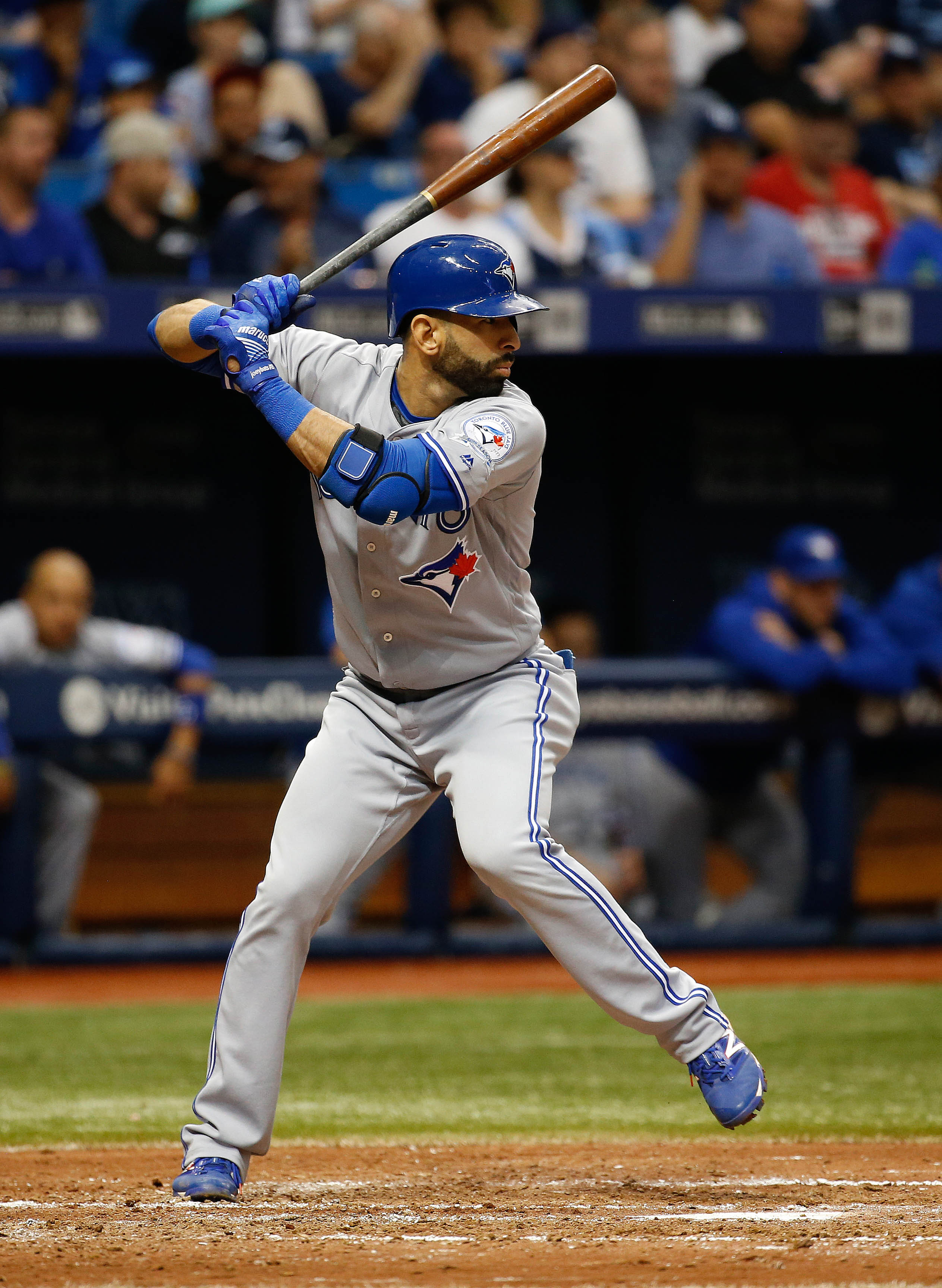
Jose Bautista, OF, Blue Jays: Multiple reports during spring training indicated that Bautista, 36 in October, was seeking a long-term pact worth upward of $150MM. If that type of deal seemed like a pipe dream for Bautista back then, it should now be an impossibility. (In a poll conducted yesterday, just 13 percent of MLBTR readers pegged Bautista as the recipient of a free agent deal spanning four or more seasons.) From his out-of-nowhere 2010 breakout through last season, Bautista amassed 3,604 plate appearances and combined to hit a superb .268/.390/.555. Along the way, he accounted for 32.5 fWAR – the majors’ fifth-highest total among position players – walked almost as much as he struck out (15.9 percent to 16.0 percent), and hit 28 more home runs (227) than his nearest competitor, Miguel Cabrera.
The version of Bautista who laid waste to opposing pitchers for six straight years hasn’t been present this season. While he’s still controlling the strike zone with aplomb (60 unintentional walks against 65 punchouts), his .229/.350/.454 line through 380 PAs looks closer to average than to spectacular. Bautista has also gone on the disabled list twice this summer, which would be less alarming if not for his age. Although he vowed in March to defy traditional aging curves, the bottom line is that Bautista has since failed to approach his previous production and dealt with multiple injuries. Those realities don’t bode well for Bautista’s earning power, but he should still reel in a sizable contract from Toronto or someone else. Closing the season on a tear for the World Series-contending Blue Jays would certainly help his cause.
Carlos Gomez, OF, Rangers: Arguably no major leaguer has declined more over the past year than Gomez, who could have lined himself up for a $150MM payday with another excellent season, as MLBTR’s Tim Dierkes wrote in March. Gomez, whom Houston acquired from Milwaukee for a significant haul last summer, began the season with a .210/.272/.322 line through his first 323 PAs. The Astros then pulled the plug on the Gomez experiment in August, releasing him just over a year after they traded for the erstwhile star.
Gomez caught on with the Rangers shortly after the Astros parted with him, but a change of Texas scenery hasn’t led to anything resembling a turnaround. In his brief stint in Arlington, the 30-year-old has gone 1 for 19 at the dish with 10 strikeouts and no walks. Gomez has never been great at avoiding strikeouts, but the 32.2 percent rate he has put up this year is easily the highest of his career, and it’s 11 percent worse than his clip from 2015. He has shown minimal power in the process, thereby rendering his swing-and-miss spike all the more damning. A plus defender in previous years, Gomez has also experienced a drop-off in the field this season. While he has done well stealing bases (13 of 15), that alone isn’t enough to make the free-falling Gomez a valuable player these days. It also won’t be enough for him to garner much money in the offseason.
Free Agent Stock Watch: Ivan Nova
We typically think of trade deadline winners and losers being teams, not players, but if September goes as August has, there will have been few bigger trade deadline winners than Ivan Nova. The righty spent years on the fringes of the Yankees’ rotation, but now could hit the open market as a hot commodity after what could turn out to have been a very useful makeover in the Pirates organization.
 In 97 1/3 innings with the Yankees this season, little went right for Nova. He posted a 4.90 ERA, with a reasonable 6.9 K/9 and 2.3 BB/9 but with a stratospheric 1.8 HR/9, and he made only 15 starts while also pitching six times out of the bullpen. He then headed to Pittsburgh in a little-noticed August 1 deal for two players to be named.
Nova figured to perform better with the Pirates, since he was moving to the more pitcher-friendly league and since it’s considerably easier to limit home runs at PNC Park than it is in Yankee Stadium. A.J. Burnett finished his career as a minor hero in Pittsburgh after an uneven tenure in New York, and Nova seemed likely to benefit from the same team change.
The Pirates organization’s reputation for fixing pitchers also figured to help Nova. That reputation has taken a bit of a hit this year with the struggles of Jon Niese, Francisco Liriano and others, but the past successes of J.A. Happ, Edinson Volquez, Mark Melancon, Liriano and Burnett all made Nova’s move look promising.
Since the deal, Nova has greatly exceeded expectations, posting a 2.87 ERA, 6.3 K/9 and only one walk in 31 1/3 innings. It appears the Pirates have helped Nova throw more strikes, and he’s done so with gusto, perhaps in part because he doesn’t have to worry as much about the ball flying out of the stadium if he makes a mistake. Nova’s performance since joining the Pirates looks likely to dramatically improve his standing in the coming offseason.
Of course, it’s still just 31 1/3 innings. There’s time for Nova to falter, and even if he doesn’t, teams perhaps will think twice before making a significant commitment this winter based on only two months of data. But Nova seems likely to benefit from the precedent Happ established last year.
Like Nova, Happ was a fringe starter who joined the Pirates on a forgettable deadline deal and immediately morphed into a completely different pitcher, posting a 1.89 ERA, 9.8 K/9 and 1.8 BB/9 in 63 1/3 innings for Pittsburgh. Better still, he signed with the Blue Jays for three years and $36MM last offseason and continued to perform well with his new team, posting a 3.19 ERA, 8.1 K/9 and 2.6 BB/9 in 155 1/3 innings so far with the Jays. A number of other pitchers who’ve righted their ships in Pittsburgh have enjoyed varying degrees of success elsewhere as well, including Volquez, Jason Grilli, Jeanmar Gomez and Vance Worley. This winter, then, teams will have reason to gamble that Nova will continue to contribute, particularly since he’s only 29.
The next month will be crucial for Nova, and there will be a wide range of possibilities for him in the offseason depending on how he pitches the rest of the year. It might turn out that his first five starts with the Pirates were partially a fluke. This wouldn’t be the first strong, but inconsequential, month he’s ever had — for example, from April 20 through May 19 of this season, he posted a 2.49 ERA while only walking two batters in 25 1/3 innings. But another good month would go a long way toward convincing potential suitors that Nova is for real. If he does continue to pitch well, Nova and his representatives at the Legacy Agency will surely point to Happ’s performance as evidence that small samples can matter. Rich Hill‘s performance this year after a handful of outstanding starts with the Red Sox last season will be a good data point for them as well.
Teams will be eager to believe the story Nova will be telling, too, because so little good pitching will be available on the open market. In a free agent market that will be highlighted by pitchers with serious question marks related to age or performance (the key names include Hill, Andrew Cashner, Bartolo Colon, Jeremy Hellickson and Doug Fister), a pitcher who might be the next Happ would stand out in a big way. The fact that the Pirates can’t tag Nova with a qualifying offer will only help his value as well. Volquez got two years and $20MM from the Royals prior to the 2015 season, but if Nova continues to pitch well, he seems likely to get significantly more, given that he’s been better than Volquez was with the Bucs and given the weakness of the market. A three-year deal a long the lines of the one Happ received looks like a real possibility if he can repeat his August excellence. It looks relatively likely, then, that Nova’s performance since the trade will have more than doubled the payday he’ll ultimately receive.
Photo courtesy of USA Today Sports Images.
Which Of These Free Agents Will Get Four-Year Deals?
Last offseason, 14 players received free agent contracts of four or more years, excluding international signings. Some of the borderline guys, like Ben Zobrist and Darren O’Day, successfully obtained the guaranteed fourth year. Others, such as Yoenis Cespedes and Daniel Murphy, were not able to get there, at least at an acceptable salary. This winter, Cespedes and elite relievers Aroldis Chapman and Kenley Jansen seem locks for four-plus years. Everyone else, not so much. Here are 13 cases to consider, and vote on:
- Edwin Encarnacion, 34 years old in January. Encarnacion is having a great season, sitting second in MLB with 36 home runs. He’s hit 34+ home runs in each of the last five seasons. His market will likely be limited to the American League, though there is precedent with Nelson Cruz‘s four-year, $57MM deal. Encarnacion is facing a lawsuit alleging he knowingly infected a woman with multiple STDs in February.
- Ian Desmond, 31 in September. Desmond has reinvented himself as the Rangers’ center fielder, though he has struggled offensively this month.
- Jose Bautista, 36 in October. Bautista recently finished his second DL stint of the year, and his production has been down this season. He’s the oldest player in this poll.
- Mark Trumbo, 31 in January. Trumbo leads MLB with 40 home runs, but he also sports a .317 on-base percentage and has struggled on defense.
- Wilson Ramos, turned 29 this month. The Nationals’ catcher has age on his side, and is in the midst of a breakout season.
- Justin Turner, 32 in November. Zobrist signed his deal heading into his age-35 season, so surely his contract will be considered a precedent by Turner’s agent. Turner has set a career-high with 24 home runs already, and is headed toward a career best in games played.
- Neil Walker, 31 in September. After being traded to the Mets in December, Walker is having the best season of his career. Chase Headley‘s four-year, $52MM deal with the Yankees in December 2014 suggests Walker can reach the same term.
- Dexter Fowler, 31 in March. Fowler ranks eighth in the NL with a .389 OBP, though a June hamstring injury may keep him shy of 130 games played for the third time in the last four years.
- Michael Saunders, 30 in November. Like Desmond, Saunders has re-established himself but scuffled in August. As with a few others on this list, Saunders’ injury history will give teams pause.
- Josh Reddick, 30 in February. Reddick once seemed like a lock for four years, but he missed time earlier this year due to a broken thumb and has been terrible since joining the Dodgers in a deadline deal. It’s fair to question whether four years will be on the table for him.
- Mark Melancon, 32 in March. Though not as dominant with strikeouts as Chapman and Jansen, Melancon has a 1.75 ERA in 272 innings since 2013, and he’s been great for the Nationals. His agent will at least aim for four years.
- Jeremy Hellickson, 30 in April. Hellickson is one of the best free agent starters available this winter, and the weak market and his relative youth could theoretically push him to a four-year deal.
- Ivan Nova, 30 in January. Nova is a long shot for four years, but he’s been great since coming over to the Pirates, and teams can act irrationally in free agency.
Your turn: which of these free agents will get four or more years? Check all that apply, and click here to view the results. Those using our app or Safari on their cell phone can click here for the poll.
Do Big Leaguers Have Favorite Teams?
Burke Badenhop made his Major League debut on April 9, 2008 when he tossed a scoreless inning of relief for the Marlins. In the eight years that followed, he pitched 512 1/3 innings of 3.74 ERA ball with the Marlins, Rays, Brewers, Red Sox and Reds. He’s been a part of four trades (most notably the Miguel Cabrera/Dontrelle Willis blockbuster), tested Major League free agency and been in more than a dozen Major League and minor league clubhouses. We are thrilled to have Burke bring some of that unique perspective to MLB Trade Rumors. This is his third offering; he has recently written about the importance of September roster expansion and the experience of playing the spoiler.
From kindergarten through eighth grade I grew up in Greenville, North Carolina. Greenville is tucked away in the eastern part of the state, situated between Raleigh and the Atlantic Ocean. It’s home to lots of barbecue spots, tobacco fields, and East Carolina University. Despite North Carolina’s love affair with college basketball, baseball is big in Greenville. I grew up loving Little League Baseball and the Atlanta Braves.
My parents are both from Ohio and neither had too much of a rooting interest in one particular big league team. Even though the closest big league city to Greenville at the time was Baltimore, I didn’t consider cheering for a team from up north. Folks from Greenville definitely fancied themselves Southerners and Atlanta, not Baltimore, was a better fit. Throw in the convenience of watching every game on TBS and a Braves fan was born.
As it turns out, I picked a very opportunistic time to enter the fandom of my new team. In 1991, when I was eight years old, the Braves were in the midst of their ‘worst to first’ season. There was a lot to love as a kid about that Braves team. They had exciting young starting pitchers Steve Avery, Tom Glavine and John Smoltz. Their outfield had the speed of Otis Nixon, the power of Ron Gant and the all around amazing-ness of reigning NL Rookie of the Year David Justice. The middle infield featured scrappy fan favorites Rafael Belliard and Mark Lemke. They even had a guy, Deion Sanders, who played in the NFL! What more could a kid want?
Despite finishing in last place the year before, the Braves battled for supremacy in their division that summer with the Dodgers. My Dad and I would check the paper every morning hoping for a Dodger loss that would tighten the standings. We watched every game down the stretch as the Braves crept closer and closer to LA, finally overtaking them and clinching the division on the next to last day of the regular season.
If the drama of the regular season wasn’t enough for my eight-year-old nerves, the postseason surely put them to the test. The Braves would win the NLCS in seven games and faced the Minnesota Twins in what most people would argue was the greatest World Series of all time. Since I was only eight, I wasn’t allowed to stay up late and see the finish of each game. I’d typically watch until the fourth or fifth inning before heading to bed. To add to the intrigue, before he left for work the next morning, my dad would write the score to the game on my bathroom mirror with a bar of soap. Just like the NLCS, that World Series went seven games. I raced to my bathroom the morning after Game 7 and couldn’t believe what I saw. Braves-0 Twins-1 10 innings. A World Series was obviously what I had hoped for, but I think that loss truly made me love the Braves even more. From then on, I called the Braves mine. That commitment lasted, ironically, until other teams began calling me.
During my junior year of college major league organizations began to scout me. Even though I was never a potential top round pick, everything relating to baseball just kind of changed for me. The dynamic between the big leagues and myself now shifted from lifelong fan to potential player, something I didn’t count on happening. In college, ‘baseball’ meant a scholarship to help pay for school, but it was now a potential post collegiate career opportunity. Did I hope that the Braves would show a lot of interest and draft me? Of course I did. My head would have literally exploded. Unfortunately, they never showed that much interest and I would instead get excited if a new team would call or send a letter to my coach. I was no longer focused on the one team I grew up rooting for since I hoped to attract the interest of all thirty teams. As other teams’ interest grew, the Braves’ interest never materialized and I was okay with that.
I was eventually drafted by the Tigers after my senior year of college and was traded to the Marlins three years later. I broke into the big leagues in 2008 with the Marlins, a team that just so happens to play in the same division as my once-beloved Braves. My third career start in the big leagues was in Atlanta, against the Braves. It wasn’t pretty. I managed to last 5 innings, but gave up eight hits and six runs. I walked a batter, didn’t strike anyone out and gave up a two-run homer in the first inning to Chipper Jones on his birthday. It was a surreal feeling to lose a game to the team I grew up hoping would always win. The ‘tomahawk chop’ was no longer something I wanted any part of. Once I passed that initial encounter, though, the Braves were just another opponent and business continued as usual. My favorite team became the one that I was lucky enough to wear the uniform of and my favorite players were the ones I called teammates.
So do big leaguers have favorite teams? The answer is yes, just not the current version of that team. I’m not a Braves fan now and I definitely wasn’t a fan of them as they pummeled me around Turner Field that April evening in 2008, but I love the Braves I grew up with. It’s that love for my favorite team that inspired me to become a big leaguer in the first place.
MLBTR Originals
Here’s the original analysis MLBTR has offered this week:
- Former major league reliever Burke Badenhop turned in his second guest column with MLBTR, this time offering firsthand knowledge of how players whose teams are out of contention late in the season handle the stretch run. If you’re under the impression those players run for the bus, think again.
- Jeff Todd highlighted eight soon-to-be arbitration-eligible hitters who are setting themselves up for significant raises during the upcoming offseason. As Jeff explained, the more plate appearances, home runs and runs batted in a hitter racks up, the better his chances are to do well in arbitration.
- Steve Adams updated his list of the top 20 August trade candidates. Players dealt in September aren’t eligible to participate in the playoffs, so time is running out on teams to acquire possible October contributors.
- With Diamondbacks chief baseball officer Tony La Russa and general manager Dave Stewart potentially on the chopping block, I polled readers on whether the club should give the much-maligned duo another chance.
- In this week’s edition of “Knocking Down the Door,” Jason Martinez looked at five prospects – two starting pitchers, two outfielders and a catcher – trying to force their way to the majors.
- Jeff forecast the futures of eight veterans – including Lucas Duda and Shelby Miller – who could be non-tender candidates during the offseason.
Top 20 Trade Candidates: August Edition
It’s been a fairly quiet August in terms of trade activity, and only one member of the last iteration of this list, Jeff Francoeur, has been traded. However, some activations from the disabled list and hot performances and off-field incidents have altered the composition of our list.
- Kurt Suzuki, C, Twins: Suzuki somewhat surprisingly cleared waivers. He represents an offensive upgrade behind the plate over some teams’ starting catchers and certainly over the average backup catcher. His defense isn’t well-regarded, but the bat figures to be a nice perk for teams on the lookout for some improvement behind the dish. At $6MM this season ($1.2MM remaining), he’s affordable as well. Veteran backstops are popular August trade candidates — witness the recent deals for Carlos Ruiz and Dioner Navarro — so it wouldn’t be too surprising to see Suzuki move as well.
- Boone Logan, LHP, Rockies: Lefties are hitting a pitiful .148/.211/.250 this year against Logan, who is in the final season of a three-year, $16.5MM pact. The 32-year-old hasn’t lived up to the deal overall, but he has saved his best season for last, logging a 3.11 ERA with 10.8 K/9 against 3.8 BB/9 in 2016. Nary a day has passed late in the month of August in any recent season in which there haven’t been clubs clamoring for left-handed relief help. With the Rockies sitting 7.5 games out of a Wild Card spot, it may be time to get something back from that largely ill-fated free agent signing.
- Peter Bourjos, OF, Phillies: Plenty of clubs could be on the lookout for a fourth outfielder before month’s end, and Bourjos’ speed and defensive reputation should make him an appealing candidate. His ridiculous stretch at the plate in June/July wasn’t sustainable, but he’s hitting .235/.316/.382 since coming off the DL earlier this month and .251/.293/.384 on the season overall. With a $2MM base salary, he won’t break any club’s budget.
- Nick Markakis, OF, Braves: Markakis cleared waivers over the weekend despite the torrid stretch he’s on at the plate. Since the All-Star break, the 32-year-old looks like he did in his peak years last decade, as he’s slashing .315/.383/.473 with four homers and 11 doubles. The $22MM he’s owed after this season allowed him to clear, but a club looking for corner outfield help could look into Markakis if Atlanta is willing to eat some cash (and they have been in trades prior).
- Brian McCann, C, Yankees: Gary Sanchez is announcing his arrival with authority, leaving it looking like McCann’s days with the Yankees could be numbered. An offseason trade might be more likely, but McCann has already cleared waivers and if the Yankees are willing to eat some of the $34MM remaining on his contract after this season, he could make an appealing upgrade for teams in need of a starting catcher.
- Yasiel Puig, OF, Dodgers: The Dodgers reportedly aren’t desperate to move Puig, but the fact that some reports indicate he won’t even be a part of the team’s September roster strengthen the argument that the organization has soured on him. Puig is an enormous talent whose performance has declined and who comes with clear off-field questions, but his on-field upside should lead some clubs to wonder if they could straighten him out.
- Derek Norris, C, Padres: An offseason trade of Norris, or even a non-tender, is more likely given his dismal season at the plate. The Padres have clear motivation to shed his contract, not only for financial purposes but also to get more at-bats for Christian Bethancourt and Austin Hedges. That’s been true for awhile, though, and Norris remains in San Diego.
- Melky Cabrera, OF, White Sox: As a solid switch-hitting bat with one reasonably priced year remaining on his deal beyond 2016 ($13MM), Cabrera should hold interest to teams looking for a boost in the lineup. He’s not a long-term piece for the Sox, though they’d probably need to replace him via trade or free agency this winter, so perhaps that alone is reason enough for them to hold on.
- Logan Morrison, 1B, Rays: Activated from the DL earlier this month, Morrison recovered from one of the worst starts to a season that I can remember and has quietly posted solid numbers at the plate since snapping that slump. The early season woes have his overall line looking unimpressive, but since the admittedly arbitrary cutoff date of May 16, LoMo is hitting .265/.338/.453. For a rental on a $4.2MM salary, that’s solid production that could bolster a contender’s bench.
- Jorge De La Rosa, LHP, Rockies: De La Rosa lost his rotation spot in late May and has somewhat quietly excelled since regaining it the following month. Over his past 78 1/3 innings, De La Rosa has a 3.56 ERA. His 43 strikeouts against 35 walks in that time aren’t encouraging, but he’s generating quality bottom-line results at Coors Field whilst playing out the final season of a two-year, $25MM contract extension.
- Jeanmar Gomez, RHP, Phillies: The Phils aren’t done dealing yet, as evidenced by yesterday’s trade of Carlos Ruiz to the Dodgers. Gomez has surrendered five runs in his past five innings but is sporting a 3.07 ERA on the season as a whole. He’d be a solid middle-relief add for any club and is controllable through next season as a bonus — though his salary will be enhanced quite a bit by his run as the Phillies’ closer.
- Blake Wood, RHP, Reds: To be completely honest, I’m not entirely sure why Wood’s name hasn’t landed on more of these lists. He’s a cheap bullpen arm on a clear rebuilding team that has some remaining club control. Perhaps the fact that the Reds can keep him via arbitration through 2018 means that they’d prefer to hang onto him, but there’s also an argument to be made that they should cash in on Wood’s 3.69 ERA and 9.3 K/9 — the best production of the journeyman’s career.
- Jeremy Hellickson, Phillies, RHP: Hellickson will be claimed by the first NL contender in need of starting pitching most likely, and with only one team to negotiate with, the Phils might not be able to coax more value than they’d get if Hellickson rejected a qualifying offer and netted them a draft pick. Limited leverage notwithstanding, a Hellickson swap makes sense on paper, and an NL contender could get desperate.
- David Robertson, RHP, White Sox: Robertson has struggled this year but has a 1.86 ERA in the month of August. With $25MM on his contract following this season, he’s a virtual lock to clear waivers if he hasn’t already. Teams may not view him as the elite reliever he looked to be when he signed a four-year deal with the South Siders, but if GM Rick Hahn absorbs a bit of cash there should be a market.
- Trevor Plouffe, 3B, Twins: It’s been a dreadful season for Plouffe, who has seen his year cut short by injuries and his production at the plate deteriorate. Those two things may be related, but even if they are, it doesn’t make his .252/.289/.385 line look much more appealing. There’s legitimate pop in Plouffe’s bat, and his defense rated anywhere from average to slightly above when he was healthy in 2014-15. A club looking for a corner infield boost could pick him up and hope he returns to his David Freese-esque ways at the plate and in the field.
- Danny Valencia, 3B/1B/OF, Athletics: Provoked or not, punching a teammate in the face in a clubhouse altercation isn’t a great way to smooth over existing concerns about your clubhouse demeanor. Valencia has raked over the past two calendar years but isn’t a great defender and has longstanding off-field concerns that far pre-date his fistful of Country Breakfast. The A’s are selling off veterans and Valencia’s bat, in a vacuum, is extremely appealing, but it’s not hard to see some clubs simply taking a hard pass in light of recent events.
- Ian Krol, LHP, Braves: A cheap, controllable left-handed reliever pitching well out of the Braves bullpen. We’ve seen this movie before, and it ended with a trade of Hunter Cervenka to the Marlins. Krol has more of a track record in the Majors, so perhaps the Braves are more confident that he can be a long-term cog in their relief engine. If Krol hasn’t already been claimed and pulled back, other organizations will likely put in a claim when he is. But the Braves could still work out a deal with whatever club has the waiver priority.
- Ryan Madson, RHP, Athletics: Madson’s contract will clear waivers, at which point this will be a matter of if the A’s can find someone willing to take on the majority of his salary. Madson’s overall results are solid, but he’s gone the wrong direction in terms of strikeout rate, walk rate and ground-ball rate. His 36th birthday is on Sunday, so teams are going to be wary about those types of trends in an aging reliever — especially one who sat out from 2012-14 due to injury.
- Ervin Santana, RHP, Twins: The Twins’ season has been an unmitigated disaster, but Santana is somewhat quietly on his way to his best season since 2013 and arguably his best since 2008. The 32-year-old has a 3.33 ERA in 140 2/3 innings and has been unstoppable of late, pitching to a 1.79 ERA since June 19. Santana is the best pitcher on the August trade market but the Twins have made it clear they’re not motivated to move him without garnering a significant return. At this point, that’s unlikely.
- Jon Jay, OF, Padres: Jay is injured, but MLB rules stipulate that an injured player can be passed through waivers if he’s served the minimum inactivity period and if he is healthy enough to play at his accustomed level. If Jay is able to begin a rehab assignment and show that he’s within arm’s reach of activation, he could hit the wire late this month and be moved just before the calendar flips to September. As a pure rental player that was performing well prior to his injury, he should be appealing to teams needing an outfielder — especially one capable of playing center field.
Also Considered
Yunel Escobar, Fernando Salas (Angels); Jake McGee (Rockies); Matt Garza, Chris Carter, Ryan Braun, Blaine Boyer (Brewers); John Jaso (Pirates); Brandon Kintzler (Twins); Zack Cozart (Reds); Brett Gardner, Chase Headley (Yankees); Yonder Alonso, Coco Crisp, John Axford (Athletics)
Poll: The Diamondbacks’ Front Office
Derrick Hall will remain the Diamondbacks’ CEO for the foreseeable future, but that won’t necessarily preclude a major overhaul to the franchise’s baseball operations department. Hall stated this week that the club will make decisions on the two heads of that department, chief baseball officer Tony La Russa and general manager Dave Stewart, after the season.
“There’s a lot to think about here,” said Hall, who doesn’t seem eager to make radical changes to Arizona’s front office.
La Russa and Stewart only took the helm in Arizona during the 2014 campaign, but the team has regressed enough under their leadership to make a regime change a legitimate possibility. After going 79-83 and posting a plus-7 run differential in 2015, the Diamondbacks’ first full season with La Russa and Stewart at the controls, the club has plummeted to 53-75 this year. Only two teams have lesser records than the D-backs, and just one has a worse run differential than Arizona’s minus-132. Injuries, primarily the fractured elbow that has kept star center fielder A.J. Pollock out all season, haven’t helped Arizona’s cause. However, even with a healthy roster, it’s fair to say the Diamondbacks would not have pushed for a playoff spot this year. Their front office had other plans, however, as evidenced by its aggressive offseason maneuverings.
The Diamondbacks’ most notable winter transactions included signing 32-year-old right-hander Zack Greinke to a $206.5MM contract and swinging a trade with the Braves for righty Shelby Miller. While still a quality option, Greinke has gone backward in his first year as a Diamondback (and spent time on the DL himself), which wasn’t the scenario they envisioned when awarding a franchise-record payday to him.