
Mets Sign David Robertson
DECEMBER 9: New York has officially announced they’ve signed Robertson to a one-year contract.
DECEMBER 8: The Mets and reliever David Robertson are in agreement on a one-year, $10MM deal. There are no options or incentives. Robertson, who is self-represented, has already passed his physical.
Robertson, 38 in April, has a lengthy track record of success as a major league reliever. In nine straight seasons from 2010 to 2018, he threw at least 60 innings while never posting an ERA higher than 3.82. Though his control wasn’t always pinpoint perfect, he never had a strikeout rate lower than 26% in any of those seasons. For reference, this year’s league average for relief pitchers was 23.6%.
Unfortunately, that long stretch of reliability came to an abrupt halt in 2019. After signing a two-year, $23MM deal with the Phillies, he only made seven appearances due to injuries, eventually culminating in Tommy John surgery. That kept him out of action for most of that year and all of 2020. He returned to the mound in 2021, starting with that summer’s Olympics and then joining the Rays for 12 appearances after.
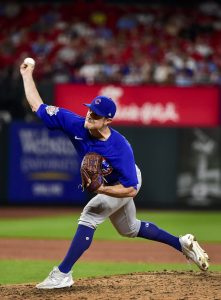
That was enough for the Cubs to take a flier on Robertson for 2022, when he truly got back into form. He tossed 40 1/3 innings for the Cubs with a 2.23 ERA and 30.9% strikeout rate. The walks were on the high side at 11.5%, but they didn’t stop him from being tremendously effective, racking up 14 saves in that time. He was flipped to the Phillies prior to the trade deadline and continued in similar fashion. He threw another 23 1/3 innings for the Phils with a 2.70 ERA and 30.3% strikeout rate. The walks became more of an issue, jumping to a 16.2% rate after the deal, but he still added another six saves and three holds. He was able to add another 7 2/3 innings in the postseason despite straining his calf while celebrating a Bryce Harper home run, posting a 1.17 ERA in that time even though he walked 15.2% of batters faced.
Despite his age and control issues, his season was effective enough that MLBTR predicted he would land a two-year, $16MM deal, or $8MM per season. Instead, Robertson has opted for a slightly higher salary but with the chance to return to free agency again a year from now.
The fact that the Mets were the one to pay him is not a huge surprise. For one thing, they have almost an entire bullpen to rebuild this winter. Edwin Díaz, Adam Ottavino, Seth Lugo, Trevor Williams, Joely Rodriguez and Trevor May all reached free agency at the end of the 2022 season, leaving the club with plenty of holes to fill. They have since re-signed Díaz, traded for Brooks Raley and made a few smaller moves, with Robertson now added into the mix as well.
Secondly, it’s also not surprising to see the Mets putting money down on a player they like because they’ve been doing a lot of that. The news of this deal and Brandon Nimmo‘s re-signing dropped in quick succession, adding to the club’s already huge financial outlay for 2023. Roster Resource currently pegs their payroll for next season at $322MM with a competitive balance tax figure of $335MM. That’s more than $40MM beyond the fourth and highest tier of luxury tax penalization, which is $293MM.
The CBT has escalating penalties for going over the line in successive seasons and the Mets also paid the tax in 2022, making them second-time payors for 2023. They will pay a 30% tax on spending over the first tier, 42% over the second, 75% over the third and 90% over the fourth. That means that they are currently slated to pay a tax of about $67MM, on top of that $322MM payroll. It’s also possible that they’re not done, as Andy Martino of SNY reports that they could still sign Kodai Senga.
For now, the gas pedal is clearly down to the floor for the Mets, as they have spent aggressively in trying to stay competitive for next year. They won 101 games in 2022 but had a huge free agent class that consisted of Nimmo, Díaz, Jacob deGrom, Taijuan Walker, Chris Bassitt and the aforementioned batch of relievers. deGrom and Walker have signed elsewhere, but the Mets signed Justin Verlander and José Quintana to replace them, in addition to retaining Díaz and Nimmo, with Robertson now added into the mix as well. He will likely be in line for setup duty with Díaz in the closer role, but it’s possible that the Mets still have plenty of more surprises up their sleeves to be revealed between now and Opening Day.
Jeff Passan of ESPN first reported that Robertson and the Mets were connecting on a one-year, $10MM deal. Mark Feinsand of MLB.com first reported that Robertson had already passed his physical and the lack of options or incentives.
Image courtesy of USA Today Sports.
Mets Sign José Quintana To Two-Year Deal
December 9: The Mets have officially announced the signing.
December 7: The Mets and left-hander José Quintana are in agreement on a two-year, $26MM contract, pending a physical. He will make even salaries of $13MM in each season.
Quintana, 34 in January, was a remarkably steady and consistent member of the White Sox rotation in his first five seasons. He debuted in 2012 with 22 starts, three relief appearances and a 3.76 ERA. For the next four seasons, he made at least 32 starts in each campaign while keeping his ERA between 3.51 and 3.20.
Unfortunately, he hit a few rough patches after that, as his ERA ticked up over 4.00 for three straight campaigns from 2017 to 2019, with Quintana getting traded across town to the Cubs in that time. A thumb injury in 2020 limited him to just 10 innings pitched in the shortened campaign. He signed with the Angels for 2021 but was shelled in nine starts to begin the year and got moved to the bullpen.
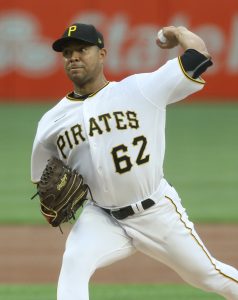 For 2022, the rebuilding Pirates took a flier on Quintana with a one-year, $2MM deal. The hope was that he would return to form, provide some veteran stability for their young rotation and perhaps turn himself into a trade chip by the deadline. That plan could hardly have gone much better, as the southpaw made 20 starts for the Bucs, posting a 3.50 ERA. His 20.6% strikeout rate was a bit below average, but he paired that with strong walk and ground ball rates of 7.2% and 45%, respectively. He and Chris Stratton were dealt to the Cardinals at the deadline and Quintana continued his strong campaign in St. Louis. He made another 12 starts with a 2.01 ERA, finishing the year with a 2.93 mark across 32 starts and 165 2/3 innings.
Quintana was then able to return to free agency in a much stronger position than his previous trips. In addition to his strong platform season, his midseason trade made him ineligible for a qualifying offer and his age made it unlikely that he would be able to pursue a lengthy contract. MLBTR predicted a two-year, $24MM deal, with Quintana eventually nudging just barely beyond that.
For the Mets, they were facing a great deal of turnover on their pitching staff, with Jacob deGrom, Chris Bassitt and Taijuan Walker reaching free agency, along with several relievers. deGrom has since joined the Rangers and Walker the Phillies. The Mets effectively replaced deGrom by signing Verlander and have now added Quintana to take a role in the middle or back of the rotation. That gives the Mets a front four of Verlander, Max Scherzer, Carlos Carrasco and Quintana. They have some internal options to take the fifth spot, such as David Peterson and Tylor Megill, but it’s also possible that they continue to pursue external additions.
This signing brings the club’s payroll to $290MM for next year, according to Roster Resource, with a competitive balance tax figure of $301MM. It’s unclear exactly how much they plan on spending by the time the dust has settled, but owner Steve Cohen has previously floated $300MM as a ballpark figure, per Jon Heyman of The New York Post. In terms of the luxury tax, they are already beyond the fourth and highest tier of penalization, which will be $293MM next year. As a second-time payor, they are subject to escalating penalties, meaning they will pay a 30% tax on the spending between $233-253MM, 42% between $253-273MM, 75% between $273-293MM and 90% above the top tier.
Ken Rosenthal and Will Sammon of The Athletic first reported that Quintana would join the Mets at $26MM over two years. Joel Sherman of The New York Post first added that it would break down into even salaries of $13MM in each year.
Mets Still Interested In Kodai Senga After Recent Signings
It was reported about three weeks ago that the Mets had a sit-down meeting with Japanese right-hander Kodai Senga. Since then, the club has been very busy, giving $86.66MM to Justin Verlander, $162MM to Brandon Nimmo, $26MM to Jose Quintana and $10MM to David Robertson. Despite all of that, Andy Martino of SNY reports that Senga is still an option for the club.
From a baseball perspective, the club’s continued interest in Senga is quite logical. The Mets saw three pitchers depart their rotation at the end of the 2022 season, as Jacob deGrom, Chris Bassitt and Taijuan Walker all reached free agency. deGrom and Walker have already found new homes with the Rangers and Phillies, respectively, but the Mets have replaced them with Verlander and Quintana. With those two slotted next to Max Scherzer and Carlos Carrasco, they have a solid front four, with options for the final slot like David Peterson or Tylor Megill.
However, the Mets seem to have no limits on either their desire to improve nor their ability to spend money to do so. Their 2023 payroll is already up to an incredible $322MM, per Roster Resource, with a competitive balance tax figure of $335MM. These are unprecedented levels and it doesn’t seem like we’ve reached their limit.
Senga was predicted by MLBTR to earn a contract of $75MM over five years, or $15MM per season. The market has proven to be incredibly strong compared to expectations this year, so it’s entirely possible he ends up eclipsing those numbers. Still, even if we stick to those projections for a second, the extra cost for the Mets will be significant. Since the Mets also paid the CBT in 2022, they will be second-time payors in 2023, which will come with added taxes. For any spending beyond the top CBT tier of $293MM, they will be paying a 90% tax. They are already well beyond that, so paying Senga even a $15MM salary will also lead to a $13.5MM tax, meaning they’d effectively be paying $28.5MM in order to obtain Senga’s services for this year.
That would certainly be quite a financial commitment to make, though it doesn’t seem the Mets are really bothered about pinching pennies at this point, simply going after whoever they want to go after. Targeting Senga makes sense as he’s perhaps the top free agent starting pitcher remaining outside of Carlos Rodón. Featuring a triple-digit heater and an excellent splitter, Senga posted a a 1.94 ERA, 27.5% strikeout rate and 8.6% walk rate through 144 innings in the NPB this year. It wasn’t just a one-year fluke either, as he had a 2.39 ERA over his past four seasons combined.
Though the Mets seem plenty willing to spend on their desired players, they will at least have some competition here. The Blue Jays, Red Sox, Padres, Giants, Yankees and Mariners are other teams that have been connected to his market, with plenty of others surely at the table as well. But despite being in uncharted financial waters, there doesn’t seem to be any reason to count out the Mets from another splash.
Marlins Acquire Jake Mangum From Mets
The Marlins have acquired minor league outfielder Jake Mangum from the Mets, tweets Jordan McPherson of the Miami Herald. He’s the player to be named later in the deal that sent Elieser Hernández and Jeff Brigham to Queens last month.
A college star at Mississippi State, Mangum hit .357/.420/.457 over four seasons in Starkville. A fourth-round senior sign in the 2019 draft, the switch-hitter has played three seasons in the New York farm system. He owns a .284/.346/.414 line in just under 900 professional plate appearances, including a .333/.365/.471 showing in 33 games for Triple-A Syracuse this year.
Mangum, 26, doesn’t bring much power to the table. Yet he puts the ball in play frequently and is capable of playing center field, giving him a chance to carve out a role as a fourth or fifth outfielder. Baseball America slotted him as the #28 prospect in the New York system entering the 2022 campaign.
Despite his decent minor league numbers, the Mets decided not to add Mangum to the 40-man roster to keep him from selection in the Rule 5 draft. He went unselected in that process this afternoon, and the Marlins acquired him within hours of ensuring they wouldn’t lose him in the Rule 5. He won’t require a 40-man roster spot in Miami, meaning he’ll provide the Fish some upper level non-roster depth.
Mets Sign Justin Verlander
The Mets have officially signed the defending AL Cy Young winner, announcing Wednesday evening they’ve inked Justin Verlander to a two-year contract with a vesting option for 2025. It’s reportedly an $86.66MM guarantee, and if Verlander pitches 140 innings in 2024, he will have a $35MM player option for 2025. Verlander will make $43.33MM in each of the two guaranteed years of the deal and has a full no-trade clause. Verlander is represented by ISE Baseball.
Verlander was one of the most unique free agents in modern baseball, given his unusual circumstances. He made just one start in 2020 and missed all of 2021 due to Tommy John surgery, after which he reached free agency. At that point, he had essentially missed two full years and was going into his age-39 season. However, he won the American League Cy Young award when he was last healthy in 2019.
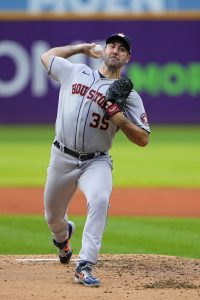
Despite the long layoff, Verlander had plenty of interest based on his previous track record and a spring showcase that demonstrated his health to interested teams. He eventually re-signed with the Astros on a one-year, $25MM deal with a matching $25MM player option for 2023 on the condition that Verlander reached 130 innings pitched this year. Not only did Verlander breeze past that marker, he added yet another excellent campaign to his lengthy track record. He tossed 175 innings, making a brief trip to the injured list for a calf injury. He posted a miniscule 1.75 ERA with a 27.8% strikeout rate, 4.4% walk rate and 37.9% ground ball rate, earning his third career Cy Young award. Based on that excellent campaign, he made the easy decision to decline his option and return to the open market in search of a larger salary. He was not eligible for a qualifying offer due to the fact that he had already received one previously in his career.
This created a free agency that was essentially unprecedented. It’s extremely rare for pitchers to pitch so well this late into their careers, especially after such a lengthy layoff. With Verlander about to turn 40 in February, he was never going to get an incredibly lengthy deal. However, he has previously expressed a desire to pitch into his mid-4os, meaning he could conceivably seek to get a multi-year deal of some kind. The closest reasonable comparison was Max Scherzer, who signed a three-year, $130MM deal to join the Mets a year ago, when he was going into his age-37 season. That came with a $43.33MM annual average value that smashed the previous record of $36MM, which was held by Mike Trout and Gerrit Cole.
Verlander is a few years older now than Scherzer was then, but the AAV was still seemingly a rough signpost for Verlander to aim for. Astros’ owner Jim Crane intimated that Verlander was using the Scherzer deal as a target in free agency, which was apparently beyond their comfort zone. For the Mets, their rotation was significantly impacted by free agency, as Jacob deGrom, Chris Bassitt and Taijuan Walker all his the open market. deGrom is already off the board, having signed with the Rangers in recent days. But they have quickly pivoted and replaced him with Verlander, who will now take deGrom’s spot as the co-ace next to Scherzer. He has reached his target by matching Scherzer with an AAV of $43.34MM, tying the all-time record. MLBTR predicted Verlander to get a three-year deal worth $120MM, an AAV of $40MM. He has instead secured the higher AAV on a shorter deal, though if he ends up triggering the option, he will get to $121.66MM over the three seasons. This is a reunion for Verlander and Scherzer, who were teammates in Detroit from 2010 to 2014.
For the Astros, they have been incredibly aggressive this winter but it seems their priorities have been elsewhere. Even without Verlander, the rotation is in good shape with Framber Valdez, Lance McCullers Jr., Cristian Javier, Luis Garcia, José Urquidy and Hunter Brown all present as solid options. Since they apparently didn’t see eye-to-eye with Verlander, they have dedicated their resources to re-signing reliever Rafael Montero and then signing first baseman José Abreu.
The Mets have become a financial powerhouse in recent years, with new owner Steve Cohen willing to spend at or near the top of the market in order to bolster the club’s roster. Last year, they ran out an Opening Day payroll of $264MM, per Cot’s Baseball Contracts. They are now set to go into 2023 with Verlander and Scherzer combining for over $86MM alone, well beyond the entire payrolls of some entire teams. Roster Resource now estimates the Mets’ payroll for next year to be $277MM, though perhaps more importantly their luxury tax estimate is $289MM. The lowest threshold of the competitive balance tax in 2023 will be $233MM, with three further tiers at $253MM, $273MM and $293MM, with the Mets now just barely under the top line. Since the Mets also paid the CBT in 2022, they will be a second-time payor in 2023 and subject to increasing penalties. All spending over the lowest threshold is subject to a 30% tax for them, with extra surcharges at each subsequent tier: 12%, 45% and 60%. In other words, any spending over the $293MM tier will be subject to a 90% tax. Since they are still looking to upgrade their pitching staff and outfield, it seems almost certain that they will indeed go beyond that line.
All of that spending helped the Mets field a strong team in 2022, winning 101 games. Though that was the second-highest total in franchise history, they still were nudged into Wild Card status by the Braves. The Mets ended up with a bitter first-round defeat, losing their best-of-three series to the Padres. They are now seemingly planning to spend aggressively yet again and hope for better results in 2023. Verlander and Scherzer will take the top two spots in the rotation, with Carlos Carrasco behind them. That still leaves two spots available, with internal options like David Peterson and Tylor Megill candidates for those roles. However, the Mets still have a few months remaining in the offseason to make further moves.
Verlander was one of three pitchers considered to be the aces of this winter’s free agency, alongside deGrom and Carlos Rodón. The Mets lost deGrom to the Rangers but have now replaced him with Verlander. For teams still looking to add to the front of their rotation, they will now have to pivot for Rodon, who is reportedly looking for a six-year deal.
Former ball player Carlos Baerga reported last night on Instagram that the Mets and Verlander were nearing agreement on a two-year deal plus an option. Andy Martino of SNY reported today that an agreement was in place for a two-year deal with a vesting option, with the AAV of the deal near Scherzer’s. Jon Heyman of The New York Post reported Verlander will make $43.3MM in each season, as well as the no-trade clause and the option value of $35MM. Heyman later added the 140 innings required to vest the player option. Ken Rosenthal of The Athletic reported that the AAV is actually $43.33, matching Scherzer’s exactly.
Image courtesy of USA Today Sports.
Mets Looking To Add Third Starting Pitcher, Interested In Ross Stripling
The Mets have already been active in the starting pitching market this winter, adding Justin Verlander on a two-year, $86.6MM deal before bringing in Jose Quintana for two-years, $26MM. Yet they’re not stopping there, with Joel Sherman of the New York Post reporting that the team is telling agents at the Winter Meetings they plan to obtain a third starter this off-season. Sherman cites Japanese star Kodai Senga and Ross Stripling as two players the team is interested in, while also exploring other options on the trade and free agent market.
While the Mets have been linked to a number of starting pitchers this winter beyond the two they’ve signed, their reported interest in Stripling is new. He’s a free agent after a strong platform year in Toronto, where he tossed 134 1/3 innings of 3.01 ERA ball. He struck out batters at a below-average 20.7% clip, but limited the walks at an impressive 3.7% rate. He doesn’t throw the ball especially hard, mixing in a low-90s fastball with a slider and changeup, as well as a curveball on occasion.
While Stripling, 32, certainly showed enough to be offered starting roles, he’s spent much of his career with the Dodgers and Blue Jays in a hybrid role between the bullpen and rotation. Indeed, just this season Stripling was only pushed into a full-time starting role by the injury to Hyun Jin Ryu. He did average just five frames per outing, but he was thrust into a starting role from the bullpen and starters are going shorter nowadays anyway. Nonetheless, with a full pre-season to ramp up towards a starters workload, it’s certainly possible Stripling handles a bigger workload next year.
Senga would represent a higher upside, but also vastly more expensive option should the Mets go down that route. MLBTR predicted a two-year, $18MM deal for Stripling, whereas Senga was tabbed to get a five-year, $75MM contract. While owner Steve Cohen has shown a willingness to spend aggressively to build a contender, their recent moves have taken their luxury tax payroll to an estimated $306MM, and as a second-time offender they’ll pay a 90% tax on any salary over the $293MM mark. Put simply, signing someone like Stripling or Senga would, as things stand, mean the Mets have to pay almost double whatever annual salary is written on their contract.
One option would be to consider ways to lower their payroll, and Sherman does mention that the signing of a third starter could motivate the Mets to trade someone like Carlos Carrasco, who has one-year and $14MM remaining. While the idea of adding a pitching only to subtract another might appear counter-intuitive, the Mets would still be well positioned in their rotation with Verlander, Max Scherzer, Quintana, an external addition and probably David Peterson rounding out the five, with Joey Lucchesi, Tylor Megill and Elieser Hernandez providing depth.
2022 Rule 5 Draft Results
The 2022 Rule 5 draft will begin at 4pm Central time today at the Winter Meetings in San Diego. This will be the first time since 2019 that the meetings will be held in person, as the 2020 edition was virtual because of the pandemic and the 2021 draft was cancelled entirely due to the lockout.
As a refresher, the Rule 5 draft is a way for players potentially talented enough for the big leagues but blocked by their current clubs to find opportunities elsewhere. Any players that were 18 and under at the time of their original signing and were signed in 2018 or earlier, and any players 19 or older and signed in 2019 or earlier, who are not on a club’s 40-man roster are eligible to be selected in the Rule 5 draft.
The clubs will draft in reverse order of the 2022 standings, with no club obligated to make a selection when it’s their turn. If they do make a pick, they will have to pay $100K to the team they select from. The selected players must stay on the active roster (or injured list) for the entire 2023 season or else be placed on waivers. If they clear waivers, they must be offered back to their original team. They cannot be optioned to the minors. The most recent edition in 2020 saw some notable names move around, such as Akil Baddoo going from the Twins to the Tigers while Garrett Whitlock went from the Yankees to the Red Sox.
This post will be updated with the results as they come in…
First Round
1. Nationals: RHP Thad Ward (Red Sox) (hat tip to Jonathan Mayo of MLB.com)
2. A’s: 1B Ryan Noda (Dodgers)
3. Pirates: LHP Jose Hernandez (Dodgers)
4. Reds: OF Blake Sabol (Pirates); Reds later traded Sabol to Giants for cash or a player to be named later
5. Royals: pass
6. Tigers: RHP Mason Englert (Rangers)
7. Rangers: pass
8. Rockies: RHP Kevin Kelly (Guardians); Rockies later traded Kelly to Rays for cash considerations
9. Marlins: RHP Nic Enright (Guardians)
10. Angels: pass
11. D-backs: pass
12. Cubs: pass
13. Twins: pass
14. Red Sox: pass
15. White Sox: RHP Nick Avila (Giants)
16. Giants: pass
17. Orioles: RHP Andrew Politi (Red Sox)
18. Brewers: RHP Gus Varland (Dodgers)
19. Rays: pass
20. Phillies: RHP Noah Song (Red Sox)
21. Padres: LHP Jose Lopez (Rays)
22. Mariners: RHP Chris Clarke (Cubs)
23. Guardians: pass
24. Blue Jays: pass
25. Cardinals:RHP Wilking Rodriguez (Yankees)
26. Yankees: pass
27. Mets: RHP Zach Greene (Yankees)
27. Braves: pass
29. Astros: pass
30. Dodgers: pass
Second Round
- All teams passed
The minor league phase of the Rule 5 draft also occurred this afternoon. Those players will not go onto the selecting teams’ 40-man roster. A few former major leaguers changed uniforms. They include Hector Perez from Baltimore to the Rays, Josh Palacios from the Nationals to the Pirates, Jared Oliva from the Pirates to the Angels, Nick Burdi from the Padres to the Cubs, Peter Solomon from the Pirates to the D-Backs and Jonathan Arauz from the Orioles to the Mets.
The Mets, Brandon Nimmo, And The Luxury Tax
The Mets have remained in contact with agent Scott Boras regarding center fielder Brandon Nimmo throughout his free agency, but MLB.com’s Anthony DiComo reports that there’s a “general pessimism” among many in the organization about the team’s chances of re-signing him. As DiComo points out, manager Buck Showalter was effectively referring to Nimmo in the past-tense last night. Joel Sherman of the New York Post wrote last night that GM Billy Eppler was using terms like “get creative” and “opportunistic” earlier in the week when discussing further transactions.
Of course, since that time, the Mets agreed to a two-year, $26MM deal with Jose Quintana and acquired lefty reliever Brooks Raley from the Rays, both of which represented rather straightforward augmentation of the team’s pitching staff. And even amid reports of pessimism and a shift toward more measured spending, SNY’s Andy Martino tweets that the Mets are at least remaining open-minded about the possibility of an all-in push for both Nimmo and righty Kodai Senga.
The Mets found themselves with a substantial array of needs to address heading into the offseason, with Nimmo, Jacob deGrom, Edwin Diaz, Chris Bassitt, Taijuan Walker, Seth Lugo and Adam Ottavino all reaching the open market. They’ve patched up the rotation by adding Justin Verlander and Jose Quintana to join Max Scherzer and Carlos Carrasco, and the Mets’ first strike was to bring Diaz back on a record-setting five-year, $102MM contract. The recent acquisition of Raley added some needed support in the bullpen.
Those moves, however, have left the Mets with a projected $306MM in terms of luxury-tax obligations. As a second-time offender, they’ll pay a 90% tax on on any expenditures north of $293MM. In other words, one or both of Nimmo and Senga would cost the Mets nearly double whatever annual salary is applied to their contracts — at least this season.
The Mets can certainly explore avenues to lower their luxury number, perhaps shopping for a taker on the remainder of James McCann‘s contract or (less problematically) by gauging interest in veterans like Mark Canha or Eduardo Escobar, each of whom represents a relatively significant luxury expenditure ($13.25MM for Canha; $10MM for Escobar). To that end, Mike Puma of the New York Post suggests the Mets are shopping Darin Ruf in hopes of getting a team to absorb some or all of his $3.25MM he’s still owed, though that would amount to little more than a drop in the bucket for their enormous luxury obligations.
Nimmo is widely expected to command a nine-figure deal of at least five, if not six years in length. Senga’s price tag is a bit tougher to gauge, as while agent Joel Wolfe revealed this week that he’s received offers of five and six years in length for his client, the annual value being discussed on such deals is not publicly known. Speculatively speaking, it’s not all that difficult to imagine the pair combining for something in the $40MM range, AAV-wise, which would mean at least an additional $36MM in taxes on top of their actual contracts. At present, the Mets are tentatively looking at roughly $41MM in luxury penalties, and by being more than $40MM over the luxury line, they’re also slated to have their top pick dropped by 10 places in next year’s draft order.
Further complicating matters is that the Mets are already projected for approximately $201MM of luxury obligations as far out as the 2024 season. Scherzer has an opt-out in his contract that could greatly reduce that number, but that’s hardly a guarantee to be exercised at this time. That $201MM figure also doesn’t include arbitration raises for Pete Alonso (projected by MLBTR contributor Matt Swartz to earn $15.9MM in 2023) or Jeff McNeil (projected for $6.2MM); that pair could combine for more than $30MM in 2024. Again using that speculative $40MM combination of AAVs for Nimmo and Senga, the Mets would be barreling toward the fourth tier of luxury penalization again in ’24, which would then come with a mammoth 110% tax rate in their third consecutive year of exceeding the tax threshold.
The ultimate decision rests in the hands of owner Steve Cohen. It bears mentioning that this type of lavish payroll bonanza is among the reasons that the league’s other owners sought to implement a fourth tier of luxury penalization — colloquially dubbed the “Cohen Tax” — in its recent wave of collective bargaining with the MLB Players Association. It doesn’t appear to be stopping the Mets from taking on upwards of $40MM in luxury penalties, but adding Nimmo and/or Senga to that pile would teeter on unprecedented with regard to the scope of the luxury penalties incurred.
Mets Acquire Brooks Raley
The Mets have acquired left-hander Brooks Raley from the Rays in exchange for left-hander Keyshawn Askew, per Jon Heyman of The New York Post. Both clubs subsequently announced the trade.
Raley, 35 in June, made his MLB debut with the Cubs back in 2012. After a few seasons of mediocre results, he went to Korea and pitched as a starter in the KBO from 2015 to 2019. He came back to MLB in 2020 and signed with the Reds but got designated for assignment after just four relief appearances.
The Reds then traded him to the Astros just before his career took off. He made 17 further appearances with Houston in 2020 and posted a 3.94 ERA in that time. In 2021, he threw 49 innings with a 4.78 ERA but strong peripherals. He struck out 31.7% of batters faced and walked just 7.8% of them, while also getting grounders on 45.3% of balls in play. His incredibly low strand rate of 59.7% surely contributed to that ERA, as he had much lower advanced metrics like a 3.27 FIP and 2.91 SIERA.
Going into 2022, the Rays signed him to a two-year, $10MM deal with a club option for 2024. Raley tossed 53 2/3 frames this year with a 2.68 ERA, 27.9% strikeout rate, 6.8% walk rate and 37.5% ground ball rate. He recorded six saves and 22 holds on the season.
For the Mets, they’re looking to rebuild almost an entire bullpen as Edwin Díaz, Adam Ottavino, Seth Lugo, Trevor Williams, Joely Rodriguez and Trevor May all reached free agency at the end of the most recent campaign. They’ve signed re-signed Díaz and made some other small moves but Raley immediately becomes the club’s top lefty in the bullpen. Like most southpaws, he is better against left-handed hitters, as they hit just .155/.200/.282 against him this year. Raley will add $4.5MM to the Mets’ payroll in 2023 and also has a $6.5MM club option for 2024 with a $1.25MM buyout.
For the Rays, they’re generally not shy about trading players coming off solid seasons, especially if they are making some notable salary. Raley’s contract wasn’t especially onerous but this is fairly standard operating procedure for the club, as they always look to keep a well-stocked farm system by selling high on major league talent. Without Raley, they still have Jalen Beeks, Garrett Cleavinger and Colin Poche as left-handed options for their bullpen.
Today, they’ve added Askew to their system, who was a 10th round selection of the Mets in 2021. He split 2022 between Single-A and High-A, throwing 66 1/3 innings with a 34.2% strikeout rate and 10.4% walk rate. He’ll turn 23 in January.
Coaching Notes: Angels, Dodgers, Mets, Marlins
The Angels are hiring Bill Haselman to be their new third base coach, per general manager Perry Minasian (relayed by Sam Blum of The Athletic). Haselman appeared for the Rangers, Red Sox, Mariners and Tigers during a 13 year big league career. In 589 games, the catcher put together a .259/.311/.409 line with 47 total home runs. After retiring in 2003, Haselman went straight into coaching, working for the Red Sox as a first base coach and then bullpen coach. He took a break from baseball coaching but returned in 2010, taking a managerial job at one of the Texas Rangers’ minor league affiliates.
He continued working with minor league affiliates of the Angels and Dodgers over the next few years, making it up to Triple-A where he took charge of Oklahoma City between 2016-18. He joined the Angels major league staff at the beginning of the year, succeeding Jose Molina as catching coach. Now he’ll take over third base coach duties on Phil Nevin’s staff.
Here’s some other coaching news from around the big leagues:
- The Dodgers are promoting Aaron Bates to hitting coach, where he’ll work alongside Robert Van Scoyoc, president of baseball operations Andrew Friedman revealed (h/t Fabian Ardaya of The Athletic). Bates had a brief stint in the majors in 2009, getting four hits in five games for the Red Sox. He bounced around the minor leagues plenty, but retired after the 2014 season with the Dodgers. While he played just 11 games that year, it was an entrance into the Dodgers organization that Bates hasn’t left. He held a series of jobs at their minor league affiliates before joining the big league team as assistant hitting coach in 2019. His promotion comes on the back of the departure of Brant Brown, who’s joined the Marlins.
- The Mets have extended Glenn Sherlock’s contract through until 2024 as part of his shift from bench coach to catching instructor, according to Mike Puma of the New York Post. Sherlock played seven years in the minor leagues back in the 1980s, making it as high as Triple-A. He’s held coaching positions with the Yankees, Diamondbacks and Pirates. Sherlock initially joined the Mets in 2017, serving as their third base coach and catching instructor before departing for Pittsburgh in 2020. He returned at the start of this year as bench coach, but will make way for Eric Chavez in that position.
- New Marlins manager Skip Schumaker is bringing in former Cardinals hitting coach John Mabry into his team as assistant hitting coach, according to Craig Mish of the Miami Herald. Mabry spent eight years with the Cardinals as part of a 14 year big league career (that also included a stop at the Marlins) that ended in 2007. Mabry worked with the Cardinals between 2012-18 as a hitting coach, but left when then-manager Mike Matheny was fired. He’s since been working for the Royals. Schumaker and Mabry played together on the 2005 Cardinals team.