
Progress Report: Last Winter’s 6 Highest-Paid Relievers
The Cubs made a rare June free-agent splash Wednesday when they agreed to a three-year, $43MM contract with potential Hall of Fame closer Craig Kimbrel. The 31-year-old entered the offseason as the premier reliever available, but interest in Kimbrel was surprisingly tepid and he wound up having to wait seven months for a contract. Kimbrel still hauled in the richest deal of any reliever going back to the opening of free agency last offseason, though that doesn’t make him a lock to thrive as a Cub.
As you’ll see below, all six accomplished relievers who collected at least $20MM over the winter have shown some troubling signs a couple months into the 2019 campaign. Although it’s way too early to pass judgment in any of these cases, it doesn’t augur well when a player’s not performing as expected at the start of his deal. After all, that’s when he’s supposed to be providing his team maximum value.
Zack Britton, LHP, Yankees (three years, $39MM):
Arguably the game’s foremost reliever with the Orioles from 2014-16, injuries helped lead to a bit of a drop-off for Britton over the ensuing two seasons with the O’s and Yankees. That didn’t stop New York from re-signing Britton on the costliest pact any reliever received in the offseason, though, and he has handed them solid results in Year 1 of the contract. The 31-year-old owns a 2.96 ERA/3.60 FIP in 27 1/3 innings thus far. The sinker-throwing Britton’s tremendous groundball rate (75 percent) is right in line with his recent totals, and he’s generating more strikeouts and issuing fewer walks than he did a year ago. On the negative side, the home run woes that began plaguing Britton in 2018 have stuck around. He’s yielding HRs on 25 percent of fly balls for the second straight season.
Jeurys Familia, RHP, Mets (three years, $30MM):
Familia surrendered three earned runs in 2/3 of an inning last Saturday and then sat for almost a week before taking the mound again Thursday. The previously reliable righty, who dealt with shoulder troubles earlier in the season, has now logged a horrid 6.29 ERA/5.26 FIP in 23 1/3 frames. A significant drop in strikeouts and swinging strikes and a sizable spike in walks and homers haven’t helped, though Familia’s inducing plenty of grounders and continuing to throw in the 96 mph range. The 29-year-old’s batting average on balls in play against (.338), strand rate (66.2), and enormous gap between his weighted on-base average/xwOBA against (.383/.321) indicate he has deserved better. However, it’s doubtful any of that is of much consolation to him or the Mets at this point.
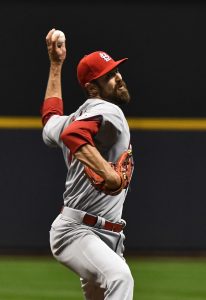
Andrew Miller, LHP, Cardinals (two years, $25MM):
While Miller was a dominant force with the Red Sox, Orioles, Yankees and Indians from 2012-17, he endured an injury-limited, down year with the Tribe in ’18 and still hasn’t returned to form. The towering southpaw has given the Cardinals 20 2/3 innings of 3.92 ERA/5.48 FIP since scoring his contract. Miller is striking out upward of 12 hitters per nine, but he’s walking more than four at the same time (remember, his BB/9 was barely over 1.00 as recently as 2016). The 34-year-old has also already yielded almost as many HRs (five) as he did in 2017-18 combined (six). The good news is that Miller has allowed a mere two earned runs since April 27.
Adam Ottavino, RHP, Yankees (three years, $25MM):
Ottavino’s preventing runs at an elite clip through 28 1/3 frames as a Yankee, having posted a 1.27 ERA so far. However, there are some red flags with the ex-Rockie’s performance. Ottavino’s strikeout, swinging-strike, walk, chase and contact rates have gone in discouraging directions since last season, while his 96.4 percent strand rate isn’t going to hold. There’s not a huge difference between the wOBA (.264) and xwOBA (.276) hitters have mustered against the slider-reliant 33-year-old this season, but both numbers fall short of Ottavino’s .231/.233 combo from 2018.
Joe Kelly, RHP, Dodgers (three years, $25MM):
The flamethrowing Kelly has allowed at least two earned runs in five of 20 appearances, giving him an unsightly 7.91 ERA/5.18 FIP across 19 1/3 innings this season. Kelly’s walks and grounders have trended well thus far, but he has already allowed as many home runs (four) as he did last season – his final year with the Red Sox. The 30-year-old has also seen his swinging-strike rate fall by more than 3 percent and his contact rate climb by a hefty 8 percent since 2018.
David Robertson, RHP, Phillies (two years, $23MM):
Robertson entered 2019 as one of the best, most durable relievers in recent memory, yet he has been neither effective nor healthy in the first season of his contract. The 34-year-old coughed up four earned runs on eight hits and six walks (against six strikeouts) in 6 2/3 innings before going to the 10-day injured list April 16 with a flexor strain in his right elbow. Robertson moved to the 60-day IL on May 25, meaning he won’t return until at least midway through this month.
Photo courtesy of USA Today Sports Images.
Draft Notes: Leiter, Mets, Allan, Cubs, Rutschman
The Yankees called a familiar name with their 20th-round selection, drafting high school pitcher Jack Leiter. The right-hander is the son of former Yankees pitcher and broadcaster Al Leiter, and is considered one of the top arms of the entire draft class. Were it not for the younger Leiter’s commitment to attend Vanderbilt in the fall, he “would have gone [in the] top 10 picks, easy” a scout tells MLB Network’s Jon Heyman (Twitter link). (The consensus among pundits wasn’t quite that lofty, though he was seen as a high-end draft prospect.) It isn’t unusual for teams to take a flier of a pick on such prospects just to see if they could be enticed to begin their pro careers early, and despite the past ties between the Yankees and the Leiter family, both Baseball America’s J.J. Cooper and MLB.com’s Mark Feinsand believe Jack Leiter will indeed head to Vanderbilt. Cooper doesn’t think the Yankees have the bonus pool budget available to offer Leiter anything close to his asking price to forego his college commitment, while Feinsand counters any suggestion of a possible wink-wink deal between Leiter and his dad’s old team by noting that the senior Leiter currently works for the Mets as an advisor in the baseball ops department.
As the draft officially comes to an end for another year, here’s more news and notes from the 2019 class…
- The Mets selected high-school right-hander Matthew Allan with the 89th overall pick, an intriguing part of a strategy by the team to focus their efforts “into largely a three-player draft,” J.J. Cooper writes for Baseball America. Allan is another of the draft’s top high-school arms, but reportedly wanted a $4MM bonus (greater than the slot price for all but the top 14 picks) to turn pro rather than attend the University of Florida. The 89th overall pick only carries a $667.9K recommended price, though the Mets drafted all college seniors (who have less negotiating leverage) in rounds 4-10 to potentially carve out space in their bonus pool. By saving money on those picks and perhaps even on first-rounder Brett Baty, the Mets could have enough to meet Allan’s price. Matt Ehalt of Yahoo Sports also reports that Allan’s actual demand is “not near the $4MM that has been thrown out,” so the team could have even more breathing room.
- The Cubs haven’t had much success in developing their own pitchers in recent years, and their pick of right-hander Ryan Jensen with the 27th overall selection represents how the team is adjusting its thinking in trying to solve this problem, MLB.com’s Jordan Bastian writes. “Ryan Jensen certainly hits the nail on the head in terms of things that I’ve talked about that we probably avoided,” Cubs senior VP of player development and amateur scouting Jason McLeod told Bastian and other reporters. Jensen has had mechanical issues during his time at Fresno State, and at only 6’0″ tall and 180 pounds, the righty doesn’t cut an imposing figure on the mound. The young hurler had two important supporters, however, in Cubs area scout Gabe Zappi and pitching coordinator Brendan Sagara, plus McLeod was himself impressed watching one of Jensen’s starts in person on May 16.
- Reports from the night prior to the draft suggested that the Orioles were still considering multiple options as the first overall pick, and GM Mike Elias indeed told reporters (including MLB.com’s Joe Trezza) that “the first four picks were all under significant discussion from us at one point or another.” Rather than take Bobby Witt Jr., Andrew Vaughn, or JJ Bleday, the O’s instead stuck to expectations and chose top-rated prospect Adley Rutschman. “There are pros and cons with every player profile and every player. We like to work our way through all of that and ultimately decided for the long-range benefit of the organization that this was the right pick,” Elias said. It’s hard to argue with the choice, given that Rutschman was widely seen as the top talent available in this year’s class (and perhaps in many years). Elias praised his new player as “a team leader on and off the field” and “a future fixture for this organization.”
Robinson Cano Re-Aggravates Quad Injury
10:30pm: Cano indicated after the game this isn’t a serious ailment, saying (via Laura Albanese of Newsday): “[The injury is] not even close to what it was. I just have tightness. If it was the same feeling, I would have said it right away…They just wanted to be cautious.”
8:38pm: Mets second baseman Robinson Cano departed the team’s game against the Giants on Wednesday with a left quad problem, Deesha Thosar of the New York Daily News was among those to tweet. Cano suffered the injury while running down the first base line, as video from SNY shows.
This is especially noteworthy because Cano just returned from a left quad strain Wednesday. The 36-year-old went to the injured list May 23 with the issue, which ended up costing him 12 games. Before that, Cano – a much-hyped offseason acquisition for the Mets – got off to a slow start in his return to New York. The former Yankee and Mariner has slashed a career-worst .238/.384/.366 (76 wRC+) with three home runs in 183 plate appearances. That’s a far cry from the star-caliber production Cano has typically offered since his career began in 2006.
Another IL placement could now be in store for Cano, whom the Mets replaced with Adeiny Hechavarria on Wednesday. Excluding Cano, Hechavarria and Jeff McNeil are the only Mets who have started games at the keystone this season.
Mets Activate Robinson Cano From IL, Designate Aaron Altherr
The Mets have activated second baseman Robinson Cano from the 10-day injured list, according to multiple reports. In a corresponding move, the Mets have designated outfielder Aaron Altherr for assignment.
A quad strain went Cano to the IL on May 23, so he’ll miss only a bit of time beyond the 10-day minimum. The veteran was acquired with great fanfare in a blockbuster trade with the Mariners during the offseason, though Cano has yet to take off in a Mets uniform. The 36-year-old has hit just .241/.287/.371 (on pace for his lowest career totals in all three slash-line categories) over 181 PA this season.
Despite the struggles, Cano will resume his regular spot at second base within a Mets lineup that is slowly starting to make its way back to full health. Though the team is still short in the outfield with the absence of Brandon Nimmo, the returning Jeff McNeil and converted first baseman Dominic Smith should factor into the outfield picture, with J.D. Davis also on hand, the Carlos Gomez/Juan Lagares pairing in center field, and Michael Conforto holding down everyday duty in right field.
All of these names made Altherr an expendable piece, less than two weeks after the Mets claimed the 28-year-old off waivers from the Giants. This is now the third time Altherr has been DFA’ed in a little over a month’s time, after going from the Phillies to the Giants on another waiver claim. The constant roster shuffles certainly haven’t helped Altherr’s performance, as he has only an .050/.095/.150 slash over 42 combined plate appearances for Philadelphia, San Francisco, and New York this season.
This is the second consecutive year that Altherr has struggles, though the flashes of breakout potential he showed with the Phils in 2015 and 2017 could be enough to earn him a look on another roster. Altherr is out of options, so he’d have to pass through the DFA period unclaimed for the Mets to keep him at Triple-A.
Poll: Should The Mets Fire Mickey Callaway?
We’ve already been through the let’s-get-serious sit-down and somber-vote-of-confidence stages. The Mets have continued to stumble. Inevitably, the question has moved along the scale from a whisper to a shout: should the Mets fire manager Mickey Callaway?
Tim Britton of The Athletic comes right out and answers it (subscription link), arguing that the club needs to make a change: “But if Callaway is not the problem for the Mets, he’s just as clearly not a part of the solution.” Joel Sherman of the New York Post portrays Callaway as a “nice guy trying gangsta” in panning the sophomore skipper’s recent attempts to drive production from the team. You won’t have to wade far into the deep reaches of Mets Twitter to find fans advocating for Callaway’s departure.
It’s exceedingly difficult to examine a manager’s performance from the outside. Callaway isn’t just operating on his own command; he’s following marching orders from the Wilpon ownership group and GM Brodie Van Wagenen. It’s worth bearing in mind that firing a manager can represent a PR move of its own. And what of the alternatives? As many have pointed out, the Mets have a ready replacement (at least a temporary one) in bench coach Jim Riggleman, but who’s to say he’ll be any more successful at squeezing value out of a roster that obviously isn’t without its flaws?
There have been suggestions at times that the Wilpons would rather not pay Callaway his salary while also ponying up for a replacement skipper. As we’ve discussed previously, that seems unlikely to drive a decision with Callaway earning only $850K for the year. The club already ate quite a bit more than that in cutting loose catcher Travis d’Arnaud. A replacement skipper may or may not cost much extra, depending upon whether the club goes outside for a big name or turns things over to Riggleman or another internal option, but that amount of money is a relative pittance for a major league club.
There are many angles to consider. At the end of the day, it’s a yes or no question. Where do you come down?
(Poll link for app users.)
Should the Mets Fire Mickey Callaway?
-
Yes 67% (8,777)
-
No 33% (4,381)
Total votes: 13,158
Health Notes: Mets, Moreland, Phillies, Blackmon
A few notable health updates from around the majors…
- The Mets activated infielder/outfielder Jeff McNeil from the 10-day injured list Tuesday. Both McNeil (hamstring strain) and Robinson Cano (quad strain) went to the shelf May 23, though the latter’s return date remains “to be determined,” ESPN.com writes. Unlike Cano, who’s amid a tough first season with the Mets, McNeil has thrived in 2019. The contact-hitting 27-year-old has slashed .329/.412/.453 with 16 unintentional walks and 22 strikeouts in 194 plate appearances.
- Red Sox first baseman Mitch Moreland could come off the IL as early as Friday, according to Peter Abraham of the Boston Globe. The lefty-swinging Moreland was put on the list May 29 because of a lower back strain, temporarily halting a powerful start to the season for the 33-year-old. Moreland’s a .228/.320/.550 hitter (121 wRC+) with a Red Sox-best 13 home runs and a team high isolated power mark (.322) through 172 trips to the plate.
- Phillies right-hander Zach Eflin is set for a quick return after landing on the IL on May 31. Eflin, who has been down with mid-back tightness, will start for Philadelphia on Friday, Matt Gelb of The Athletic tweets. Eflin posted an impressive 3.02 ERA and walked fewer than two per nine in 11 starts and 65 2/3 innings before his IL placement. At the same time, though, he struck out fewer than seven per nine and put up a mediocre 4.34 FIP.
- Rockies outfielder Charlie Blackmon could begin a rehab assignment Wednesday, per Thomas Harding of MLB.com. Blackmon last played May 23 because of a right calf problem. Even though he’s one of their cornerstones, the Rockies have stormed to a 9-2 record without Blackmon.
NL East Notes: Nationals, Phillies, Bruce, Cano, Smith
As the Nationals try to claw their way back into contention in the NL East, Barry Svrluga of the Washington Post writes that the team’s lackluster draft results in recent years have been a notable factor in their current struggles. From 2011-15, Anthony Rendon is the lone, established impact player the team managed to draft and develop into a star, and there have only been 18 Nationals draftees to reach the Majors (with any team) in that span — tied for second-fewest in MLB. Looking at those 2011-15 drafts, only four players selected by Washington have more than one career WAR, and those results include the since-traded Lucas Giolito and Nick Pivetta. The Nats have had better success on the international market (Victor Robles, Juan Soto), but Svrluga notes that an organization built on scouting needs to get back to finding more impactful talent in the draft if it hopes to continue its run as a near-regular NL East contender. It’s a well-researched piece that any Nationals fan will want to take in in its entirety.
More from the division…
- This weekend’s Jay Bruce trade is the first of what figure to be multiple deals made by the Phillies between now and July 31, general manager Matt Klentak implied following the completion of the swap (link via Todd Zolecki of MLB.com). Philadelphia’s outfield depth has compromised early in the year, but Bruce will give them some coverage at either corner spot and can be a backup option for Rhys Hoskins (or a replacement in the event of an injury). “He’s excited to come to a contending team and understands that for the next year and a half there may be times when he’s playing regularly and there may be times when he’s playing off the bench,” said Klentak of Bruce. The Phillies, per Zolecki, are paying only $2.75MM of what remains on Bruce’s contract between now and the end of the 2020 season.
- The Mets won’t activate Robinson Cano from the injured list until “at least” Tuesday, tweets Mike Puma of the New York Post. Out since May 23 due to a strained quadriceps, Cano was eligible to be activated for either Saturday or Sunday’s contest but was not reinstated. He’s struggled in his return to New York City, hitting .241/.287/.371 with three homers and 13 doubles while logging a career-worst 19.9 percent strikeout rate as a member of the Mets.
- Newsday’s Tim Healey tweets that Mets fist baseman/outfielder Dominic Smith is headed for an MRI after hyperextending his right thumb on a swing in Saturday night’s game. Smith doesn’t feel it’s a major issue — he ripped a home run even after incurring the injury — but will still be checked out to ensure that there’s no serious damage. The 23-year-old has been red hot for the Mets in a limited role this year, hitting .365/.467/.571 with three homers and four doubles in just 75 plate appearances through 48 games.
Checking In On Last Year’s Toughest Outs
If you’re an offensive player in baseball, there is nothing more important than avoiding outs. Common sense indicates the more you get on base – whether with a hit, a walk or a hit by a pitch – the better your team’s chances are of scoring and ultimately winning. That’s why on-base percentage is more useful than batting average or slugging percentage, two other conventional stats that help define a hitter’s value.
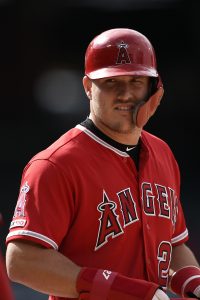
Just six qualified hitters reached the .400-OBP mark in 2018. The group included the best player in baseball, another potential Hall of Famer, each league’s MVP, an elite hitter who helped his team to a championship and a potential star in the making. Let’s take a look at how that six-man club is doing in 2019…
Mike Trout, Angels (2018 OBP: .460):
Here’s the “best player in baseball” mentioned above. The 27-year-old Trout has reached 45.5 percent of the time through 231 plate appearances, putting him right in line with last year’s league-best effort. He’s also on track for his fifth straight season with at least a .400 OBP. Trout was a .312 hitter in 2018 who walked 20.4 percent of the time. His average has noticeably dropped (to .283), but his walk rate is up a bit and opposing pitchers have helped Trout’s cause by already hitting him six times. He wore 10 pitches last year in 378 more PA.
Mookie Betts, Red Sox (2018 OBP: .438):
Betts got on base a bit less than Trout last season, but the Boston superstar led the sport in fWAR en route to AL MVP honors. While Betts hasn’t been quite as sharp this year, he has still avoided outs at a phenomenal clip (.400 in 255 trips to the plate). The 26-year-old has walked 14-plus percent of the time for the second consecutive season, but a 55-point decline in batting average (.346 to .291) and a 54-point BABIP drop (.368 to .314) have hurt his OBP. Plus, Betts isn’t on pace to match the eight HBPs he totaled in 2018, having picked up only two so far.
Joey Votto, Reds (2018 OBP: .417):
Votto’s the “potential Hall of Famer” named in the opening. The hitting savant has managed a remarkable .424 OBP dating back to his 2007 debut, in part because he has drawn nearly as many walks as strikeouts. However, that hasn’t been the case in 2019. Now in his age-35 season, Votto’s walk rate is at a pedestrian-by-his-standards 11.6 percent – down nearly 5 points from his career mark – while his strikeouts have soared. Putting the ball in play less helps explain why Votto, a lifetime .309 hitter, has only mustered a .242 average this season. Worse, Statcast credits Votto with a .229 expected average, indicating a rebound may not be on the way. Despite his newfound woes, Votto has still put up an above-average .340 OBP in 215 PA this year, but it’s nothing to get excited about in the venerable first baseman’s case.
Brandon Nimmo, Mets (2018 OBP: .404):
Nimmo’s far and away the least accomplished member of this list, but that doesn’t take away that the 26-year-old was a stupendous offensive player in 2018. As only a .264 hitter, though, his high OBP came thanks in part to a league-leading 22 HBPs over 433 PA. Nimmo has not been a magnet for pitches this year, however, having taken three in 130 trips to the plate. He’s also batting a mere .200 and has seen his BABIP fall from .351 to .288. Nimmo is collecting walks at a terrific clip (16.1 percent), but his .344 OBP is still a 60-point drop-off from last season.
Christian Yelich, Brewers (2018 OBP: .402):
We arrive at the other MVP on this list. What’s Yelich, 26, doing for an encore? Well, he ranks third in the majors in OBP (.425), in part because his walk rate has climbed from 10.4 percent to 15.1. Yelich has also logged a .314 average even though his BABIP has sunk 87 points since last year.
J.D. Martinez, Red Sox (2018 OBP: .402):
Martinez, described above as “an elite hitter who helped his team to a championship,” has been closer to very good than great this season. A .375 BABIP/.330 average helped drive Martinez’s OBP last season, but he’s at .315/.298 in those categories through 219 PA this season. Consequently, the 31-year-old has “only” reached base 37.9 percent of the time. But Martinez is striking out a lot less, which bodes well, and Statcast puts his expected average at .321. Another .400-OBP season certainly isn’t out of the question for Martinez.
Photo courtesy of USA Today Sports Images.
Mets Notes: Potential Sellers, Alonso, Lugo
The latest out of Queens…
- The Mets started 2019 in solid fashion, sitting a season-high five games over .500 through 13 contests, but have stumbled over the past month and a half. Now in possession of a 27-28 record, the Mets should consider an aggressive teardown if they’re not in contention around the July 31 trade deadline, Buster Olney of ESPN opines. By going in that direction, Olney notes the Mets would mimic the 2015 Padres – a team that tried to contend, wound up failing miserably and then traded away several big-name acquisitions within the next year (Craig Kimbrel, Justin Upton and James Shields among them). San Diego general manager A.J. Preller’s decision to pivot toward a rebuild helped the Padres construct an elite pool of young talent that has begun paying enormous dividends at the major league level. If Mets GM Brodie Van Wagenen takes a similar route sometime soon, Olney names closer Edwin Diaz and the right-handed starter trio of Jacob deGrom, Noah Syndergaard and Zack Wheeler as players he could market in an effort to add more high-end youth to the organization.
- Of course, New York’s not devoid of young, impact talent in the bigs. First baseman Pete Alonso, he of the .264/.338/.624 line (151 wRC+) with 19 home runs in 222 plate appearances, is a testament to that. The 23-year-old may be on his way to top rookie honors in the National League, but his journey to the majors wasn’t easy, as Tim Britton of The Athletic details. Alonso first joined the organization as the 64th pick of the 2016 draft, and Britton – with help from Alonso, his father and multiple Mets scouts – revisits that event and many other moments that led to it.
- The Mets are likely to activate reliever Seth Lugo from the 10-day injured list Friday, Deesha Thosar of the New York Daily News suggests. Lugo went to the IL on May 20 with right shoulder tendinitis, which has left New York’s disappointing bullpen without arguably its best setup man. The 29-year-old Lugo, a former starter, broke out as a late-game force in 2018 and has since pitched to a 2.30 ERA/2.97 FIP with 8.73 K/9, 2.53 BB/9 and a 47.3 percent groundball rate in 78 1/3 relief innings.
Last Season’s 2 Best Closers Have Fallen Off
Right-handers Edwin Diaz and Blake Treinen were unquestionably the two best closers in baseball in 2018. And unless you want to make an argument for dominant Brewers lefty Josh Hader, Diaz and Treinen were likely the game’s top two relievers period. However, a couple months into the 2019 season, they’re no longer running roughshod over their competition.
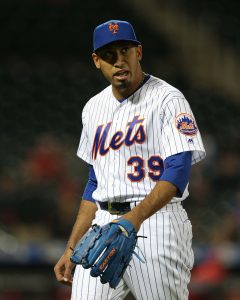
In what proved to be his final season in Seattle, where he burst on the scene in 2016, Diaz tossed 73 1/3 innings and notched a 1.96 ERA/1.61 FIP with an eye-popping 57 saves in 61 attempts. Along the way, the flamethrower ranked fourth among relievers in K/9 (15.22) and 15th in BB/9 (2.09), leading to the league’s fourth-best K/BB ratio (7.29). He also trailed only Hader in swinging-strike percentage (18.9).
Despite Diaz’s incredible performance, the retooling Mariners deemed him expendable in the offseason. Seattle sent the 25-year-old to the Mets in an earth-shattering December trade that saved the M’s a ton of money and improved their farm system.
No doubt, the Mets expected Diaz to be the driving force behind a much-improved bullpen in 2019. To this point of the season, Diaz has perhaps been the Mets’ premier late-game option, but their bullpen has been a weak unit overall. For his part, the 25-year-old Diaz has been closer to the pitcher he was in 2017, when he was good but not otherworldly.
Diaz’s most recent outing, which came Wednesday against the Dodgers, surely counts among the worst of his career. He entered the game with an 8-5 lead in the bottom of the ninth inning and proceeded to allow six straight base runners amid a stunning collapse. Diaz yielded four earned runs on five hits (two home runs) and an intentional walk in what turned into a 9-8 loss for New York. The only batter he retired, Alex Verdugo, hit the game-winning sacrifice fly. The defeat left Diaz with a 3.22 ERA after he entered it with a 1.64 mark.
It’s easy to look at the shiny ERA Diaz had prior to Wednesday and attribute it to one bad performance. Similarly, it doesn’t take a lot of effort to say his .347 batting average on balls in play has been unlucky. However, the reality is that there are concerns across the board.
Diaz’s FIP (3.99) is up almost a run and a half since last year, while his weighted on-base average/expected wOBA against has risen from .214/.215 to .324/.289. It doesn’t help that Diaz’s strikeout rate has plummeted. After fanning 44.3 percent of batters in his Seattle swan song, Diaz has fallen to 36.1 in his introduction to New York. Beyond that, Diaz’s swinging-strike, line drive, hard/soft contact and chase rates have also gone in the wrong direction. He’s not keeping the ball on the ground as much either, which has led to newfound home run troubles. Diaz has already given up as many HRs as last season (five) through 51 fewer innings (22 1/3), and he’s now halfway to 2018 in blown saves (two).
Treinen, who made good on 38 of 43 attempts in 2018, has joined Diaz in failing on two tries so far this season. The 30-year-old may have been even better than Diaz in ’18, when he compiled a ridiculous 0.78 ERA/1.82 FIP across 80 1/3 innings. Treinen’s strikeout and walk rates (11.2 and 2.35 per nine) were excellent, albeit not as great as Diaz’s, as was his 51.9 percent groundball rate. But Treinen, who has significantly cut back his sinker and slider usage, is at 9.55, 3.95 and 40.3 in those categories this season. Meanwhile, Treinen’s ERA/FIP is up to 3.62/3.87 and his wOBA/xwOBA against has shot from .187/.214 to .313/.298.
What are some of the factors behind Treinen’s drop-off? Well, the .230 BABIP batters logged against him a year ago has moved to a more reasonable .306. At the same time, he’s not stranding as many base runners, having gone from an 85.9 percent left-on-base rate to 79.9. Furthermore, the right-hander is generating fewer swinging strikes, getting fewer out-of-zone swings and giving up more hard contact than he did last season. With that in mind, it’s no surprise that Treinen, like Diaz, has had more difficulty keeping the ball in the park. Just two balls left the yard then against Treinen, who has allowed three through 27 1/3 innings in 2019.
While Diaz and Treinen have recorded disappointing numbers this season, the letdown is largely as a result of the utter brilliance they displayed last year. Any team in the majors would still take either hurler, though their current clubs – both of which are playoff hopefuls – may need more from them if they’re going to earn postseason bids.
Photo courtesy of USA Today Sports Images.