
Reds Designate Nick Martini
The Reds have designated outfielder Nick Martini for assignment, MLB.com’s Mark Sheldon was among those to report on Twitter. His roster spot will go to just-signed outfielder Shogo Akiyama.
Martini was added in an offseason waiver claim. He might’ve been given a shot at carving out a reserve or platoon role in camp — and perhaps still could, if he clears waivers and depending upon the remaining course of the Reds’ offseason. But the addition of Akiyama, another southpaw swinging player who can handle center field, largely obviated the team’s need for Martini.
There’s a chance Martini will be claimed again. He has been an unstoppable on-base force at Triple-A in the past two seasons and had quite a nice showing in his 2018 debut with the Athletics. Martini doesn’t have much power and took a step back in limited opportunities last year. It’s important to note, too, that he has mostly been limited to facing right-handed pitching in the majors. But the general profile — a tough out with ample experience at all three outfield spots — holds some appeal.
Jose Miguel Fernandez Re-Signs With KBO’s Doosan Bears
Former big league Infielder Jose Miguel Fernandez has signed on for another season with Korea’s Doosan Bears, per a team announcement (via Yonhap News; h/t to Dan Kurtz of MyKBO). It’s said to be a $450K deal with the potential to double the value via incentives.
Fernandez was among the notable players we highlighted earlier in the offseason in a series checking in on previous affiliated performers who moved to Asia’s top leagues. He had raked at Triple-A and hit well enough in a brief MLB debut in 2018, but evidently didn’t generate much interest on this side of the Pacific last winter.
Now 31 years of age, Fernandez was slow in reaching the professional ranks. He had a harder-than-usual time in navigating the geopolitical minefield facing all Cuban ballplayers. Despite defecting in the fall of 2014, he didn’t sign with the Dodgers until early 2017.
Fernandez is the quintessential professional hitter. He has some power but stands out most for his combination of exceptional plate discipline and ability to hit for average. He led the Korea Baseball Organization last year in hits while recording more walks (61) than strikeouts (54). Fernandez ended his first season in Korea’s top league with an excellent .344/.413/.483 batting line and 15 home runs over 645 plate appearances.
Marlins Focused On Adding Relievers
Now that their deal with left fielder Corey Dickerson has been finalized, the Marlins plan to focus on adding to the bullpen, president of baseball operations Michael Hill indicated on a conference call Tuesday (Twitter link via Jordan McPherson of the Miami Herald). Among the names the team is considering, SiriusXM’s Craig Mish reports, are Pedro Strop, Brandon Kintzler and Hector Rondon.
Miami has already added Dickerson, Jonathan Villar and Jesus Aguilar to a lineup that ranked 29th in the Majors in runs scored, 29th in on-base percentage and 30th in slugging percentage thus far in the offseason. They’ve also signed Francisco Cervelli to back up Jorge Alfaro and made a handful of minor league signings, headlined by Matt Kemp.
The lineup hasn’t exactly been built up into a powerhouse, but there’s little denying that it looks like a more robust collection of bats than the group trotted out in 2019. However, the bullpen has gone largely unaddressed to this point; the Marlins, rather, have subtracted more relievers from the organization than they’ve acquired. Control-challenged relievers like Tayron Guerrero, Tyler Kinley and Kyle Keller have all been jettisoned from the 40-man roster, much as Austin Brice was earlier today when making room for Dickerson.
Miami has added right-hander Yimi Garcia on a big league deal and righty Ryan Cook on a minor league pact, but the organization has otherwise been quiet when it comes to adding to the ‘pen. Current options on the roster include right-handers Drew Steckenrider and Ryne Stanek as well as southpaws Jarlin Garcia and Adam Conley. Last year’s Opening Day starter, Jose Urena, lost his rotation spot and was moved to the bullpen late in 2019, and Hill indicated today that Urena will get another shot at claiming a bullpen role in 2020 (Twitter link via Barry Jackson of the Miami Herald)
Obviously, a grouping of Urena, Steckenrider, Stanek, Conley and both Garcias leaves plenty of room for potential augmentation. But the relief market has also thinned out considerably, with Strop, Kintzler and Rondon shifting from middle-tier options at the onset of free agency to some of the most appealing names yet to sign. This patient approach is often necessary for the Marlins or teams in similar rebuilding situations, as some free agents are hesitant to sign with a non-contending club early in the winter (barring an overpay). But as contending clubs spend their money and fill holes on the roster, the allure of high-leverage innings and a guaranteed salary with a rebuilding clubs only increases.
The Marlins did well to wait out the market and sign Sergio Romo to a $2.5MM contract last winter — a move that ultimately netted them first base prospect Lewin Diaz at the trade deadline. Whether it’s Strop, Kintzler, Rondon or another veteran arm, the Miami organization will be hoping for a similarly beneficial result in the coming weeks as they try to add to their stock of relievers on what’ll surely be a short-term arrangement.
Rangers To Sign Robinson Chirinos
8:44pm: MLB.com’s Mark Feinsand tweets that Chirinos is guaranteed $6.75MM on the deal: a $5.75MM salary in 2020 (which matches his 2019 salary), plus at least a $1MM buyout on a $6.5MM club option for the 2021 season.
8:36pm: Chirinos and the Rangers are in agreement on a one-year deal plus an option, tweets T.R. Sullivan of MLB.com.
8:28pm: The Rangers and free-agent catcher Robinson Chirinos have agreed to a reunion, reports Ken Rosenthal of The Athletic (via Twitter). The new contract is pending a physical. Evan Grant of the Dallas Morning News reported earlier tonight that the two sides were “inching closer” to a deal.
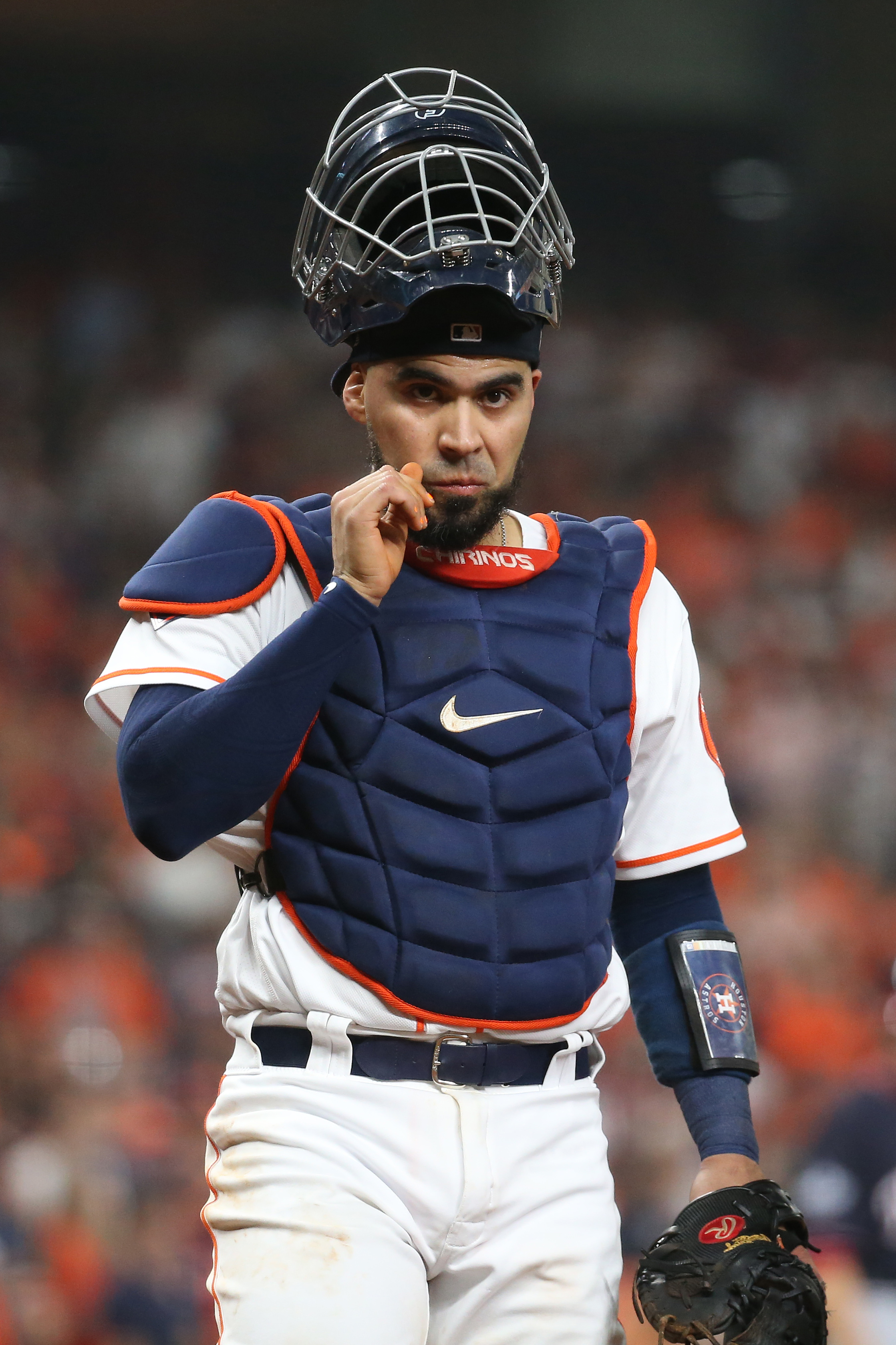
Chirinos, 35, just wrapped up a .238/.347/.443 showing with the Astros, swatting 17 home runs and 22 doubles in a career-high 366 plate appearances. Even if he takes a step back, Chirinos will provide a substantial offensive upgrade to a Rangers club that saw its catchers post a disastrous .193/.241/.298 batting line as a whole in 2019.
Texas made the somewhat surprising decision last winter to buy out a seemingly reasonable $4.5MM option over Chirinos. Texas, placing a greater emphasis on defense, moved to sign Jeff Mathis to a two-year, $6.25MM deal that yielded poor results in 2019. Chirinos, meanwhile, came out ahead from a financial standpoint. Texas paid him a $1MM buyout, and he went on to sign with the Astros for a $5.75MM guarantee. Between that deal and the option buyout, he took home a tidy $2.25MM more than he’d have earned had the Rangers simply picked up his option.
Now, Texas is on the hook for $3MM of Mathis’ salary in 2020 despite the fact that he turned in the worst offensive and defensive season of his career in 2019. Through 244 plate appearances, Mathis posted a stunning .158/.209/.224 batting line (11 OPS+, 2 wRC+). And just one year after leading all MLB catchers in Defensive Runs Saved (17) and Baseball Prospectus’ Fielding Runs Above Average (18.4), Mathis saw those numbers crater at -1 and -2.8, respectively.
The Rangers will have to make a call on what to do with Mathis and his remaining salary, although it’s possible that he could work as a backup to Chirinos. The younger Jose Trevino has a minor league option remaining, so he could be sent to Triple-A to begin the season, particularly considering that he struggled considerably both in the Majors (.258/.272/.383 in 126 plate appearances) and in Triple-A (.226/.263/.336 in 156 plate appearances).
Given the dismal performances of Mathis, Trevino and infielder-turned-catcher-turned-infielder Isiah Kiner-Falefa in 2019, it’s hardly a surprise that the Rangers prioritized catching help this winter. And while Chirinos isn’t exactly a standout defensive backstop, he did show some improvements in 2019 with Houston. He hasn’t excelled at controlling the running game since 2014, and that trend continued last year (21 percent caught-stealing rate), but Chirinos posted improved (albeit still below-average) framing marks and was the league’s best at blocking balls in the dirt, per Baseball Prospectus.
Latest On Josh Donaldson’s Market
7:52pm: MLB.com’s Mark Bowman looks at the situation from the Braves’ standpoint, reporting that there’s some doubt that the Braves have even “come close” to making the top offer to Donaldson.
Similarly, Darren Wolfson of 1500 SKOR North radio in Minneapolis reported today that while the Twins are still in the mix and have made a four-year offer, they’re not believed to be close to Donaldson’s reported $110MM asking price, either (Twitter links). The Twins don’t have the largest offer on the table, per Wolfson, who suggests that Minnesota could be in the $85MM range while cautioning that they’ve not yet been asked for a final offer. The two sides remain in “near-daily” communication.
That pair of reports at least implies that the Nationals might have made the biggest offer, although that’s strictly reading between the lines in speculative fashion. It’s worth noting, of course, that the Nationals have a tendency to bake deferred money into their contract offers, which weighs down the present-day value of said offers. Plus, with their recent bevy of infield signings, there’s a bit less urgency to add another option to the pile — even if Donaldson is easily the best of the bunch.
Today’s reports on Donaldson at least cast some doubt as to just how close — if at all — he’ll be able to get to his reported $110MM asking price. It’s clear that there are multiple staring contests underway at present, and the revelation that Donaldson’s camp hasn’t asked for final offers doesn’t exactly suggest that a resolution is imminent.
7:00am: Even after a run of free agent additions that plug quite a few holes with veteran players, the Nationals do not appear to be shutting the door on top remaining open market star Josh Donaldson — at least, not entirely. The Nats could still make the third baseman fit, but evidently won’t be the team that ups its bid to land him.
After agreeing to terms with Howie Kendrick, Starlin Castro, Asdrubal Cabrera, and Eric Thames, and with youngster Carter Kieboom waiting in the wings, the Nats could in theory have bailed out of the Donaldson auction altogether. But that assembly of pieces hardly makes up for the departure of Anthony Rendon. And the D.C. organization surely doesn’t wish to allow the division-rival Braves a chance at retaining Donaldson without paying full price (and then some) to do so.
After yesterday’s reported deal with Thames, the Nationals remain “in the picture,” Bob Nightengale of USA Today reports (via Twitter). Indeed, the club is “leaving [its] offer on [the] table,” Jon Heyman of MLB Network reports on Twitter. Precisely how that offer matches up to others isn’t known with specificity — reports had suggested the Nats, Braves, and Twins were in the same $100MM ballpark — but it surely helps Donaldson’s cause to keep that avenue open.
Donaldson had been said to be dangling bait to interested teams, indicating he’d sign with the first club to meet an asking price in the vicinity of $110MM. Unless something changes, it seems the Nats won’t take the hook. It remains to be seen whether some other team will. Likewise, unless the defending World Series champs withdraw their bid, the Braves, Twins, and any other pursuers (Dodgers? Rangers? mystery team(s)?) will presumably need to meet or top that number to get a deal done.
There certainly may be some momentum towards a return to Atlanta. The Nationals are at minimum preparing to move forward without Donaldson. The Twins’ hopes are said to be dimming. And it’s largely unclear whether any other team has or will engage Donaldon’s reps in earnest. Numerous observers have cast the Braves as favorites, though as ever it’s inadvisable to view free agent matchmaking as a metaphorical horse race or political contest. Market circumstances can turn on a dime.
Marlins, Ryan Cook Agree To Minor League Deal
The Marlins and right-hander Ryan Cook are in agreement on a minor league contract, USA Today’s Bob Nightengale reports (via Twitter). The Excel Sports client would earn $750K upon making the big league roster and could earn an additional $250K worth of incentives to bring the total value of the deal to an even $1MM.
Cook, 32, spent the 2019 season with the Yomiuri Giants in Japan’s Nippon Professional Baseball but narrowly kept his ERA south of 5.00 and also spent some time with the club’s minor league affiliate. It wasn’t an inspiring season, to be sure, but Cook’s track record nevertheless has its fair share of appeal.
It’s easy to forget that back in 2012, Cook was an All-Star reliever for the Athletics. From 2012-14, he was a vital member of the Oakland relief corps, pitching to a combined 2.60 ERA and a similarly impressive 2.96 FIP. Cook maintained a ground-ball rate north of 46 percent, averaged better than a strikeout per inning and yielded just nine home runs in 190 2/3 innings across that three-year span.
Unfortunately for both Cook and the A’s, injuries began to mount in 2014-15. A forearm strain and shoulder inflammation slowed him over those two seasons, and he underwent Tommy John surgery in 2016. In the five years since the conclusion of that outstanding three-year run, Cook has thrown just 25 2/3 innings at the MLB level — mostly coming with the 2018 Mariners.
The Marlins’ bullpen is anything but settled, which should give Cook a legitimate chance to break camp with the club if he puts together an impressive Spring Training. Drew Steckenrider, Ryne Stanek, Yimi Garcia, Adam Conley, Jarlin Garcia and Jose Urena are all options for manager Don Mattingly in 2020. If Cook can complete his comeback and make it through the season, the Marlins would control him through the 2021 season via arbitration.
Dodgers Sign Jimmy Nelson
6:35pm: The Dodgers have announced the signing.
9:45am: The Dodgers have reached a one-year deal with righty Jimmy Nelson, according to Jorge Castillo of the Los Angeles Times (Twitter link). The contract includes a $1.25MM guarantee and the possibility of greater earnings, including a vesting/mutual option for another season, according to Castillo, Bob Nightengale of USA Today (Twitter links), and MLB.com’s Adam McCalvy (Twitter links).
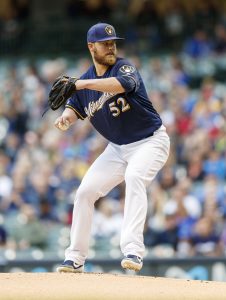
Nelson will reportedly be promised just $750K this year. But he’ll earn $1MM in incentives if he makes the Opening Day roster and $500K apiece if he remains on it for 45 and 90 days. Further incentives could also add $1.5MM to Nelson’s 2020 earnings.
As for the option, it will start out as a $2MM club option with a $500K buyout that makes up the remainder of the guaranteed cash. If Nelson throws sixty innings and/or makes forty appearances, it’ll convert to a $5MM mutual option. That price can reach as much as $9MM if Nelson throws 170 frames for Los Angeles in the coming season.
Once a foundational player in Milwaukee, Nelson was non-tendered by the Brewers in December when the club deemed his projected $3.7MM salary too steep. That decision came on the heels of two injury-ruined campaigns.
Nelson did get back on the hill in 2019 after missing the entirety of the prior season, but allowed 17 runs over 22 frames. While he racked up 26 strikeouts in that span but also coughed up 17 walks and four long balls.
It’s hard to know what to expect out of Nelson, who’s now thirty years of age. He exhibited a fairly significant velocity loss but still sat at around 93 mph in 2019. He dove in both first-strike rate (50.5%) and chase rate (23.6%), suggesting some reduction of command, pitch quality, and/or confidence. But Statcast still identified well-above-average spin on Nelson’s pitches.
It will be interesting to watch whether Nelson can return from the shoulder and elbow woes that derailed his career. It’s equally fascinating to see another upside pitching play from a Dodgers organization that has otherwise remained quiet this winter. While the club continues to explore major additions, it has yet to pull off a big strike this winter.
Photo courtesy of USA Today Sports Images.
Rangers Working On Deal With Robinson Chirinos
The Rangers and Robinson Chirinos are “inching closer” to an agreement on a reunion, Evan Grant of the Dallas Morning News reports. The news comes less than a week after a report that Chirinos, a client of MDR Sports Management, was nearing a decision.
Chirinos, 35, spent the 2013-18 seasons as the primary catcher for the Rangers but took a one-year, $5.75MM pact with the cross-state Astros last offseason. The Rangers, clearly seeking a defensive upgrade behind the plate, went in a different direction by signing veteran Jeff Mathis to a two-year, $6.25MM deal.
But while Chirinos improved his glovework in Houston and slashed .238/.347/.443 with 17 home runs and a career-high 22 doubles, Mathis turned in the worst season of his career at the plate, mustering just a .158/.209/.224 batting line in 244 plate appearances. Not only did Mathis struggle at the plate, though; he also struggled behind the dish in uncharacteristic fashion. As recently as 2018, no catcher in baseball rated better than Mathis in terms of Defensive Runs Saved (+17) or Baseball Prospectus’ Fielding Runs Above Average (+18.4). In 2019, those numbers plummeted to -1 and -2.8, respectively.
Texas still owes Mathis $3MM for the upcoming season after slightly front-loading his contract. However, the Rangers have made a clear shift toward contending in 2020 and may not feel he’s likely to rebound in his age-37 season. Given that their top in-house alternative, Jose Trevino, posted miserable numbers both in the Majors and in Triple-A, an upgrade is a logical next step toward fielding a more competitive roster now that the team has reshaped its rotation. The Rangers have already acquired Corey Kluber from the Indians and signed both Kyle Gibson and Jordan Lyles to multi-year contracts, giving them a trio of new starters to pair with holdovers Mike Minor and Lance Lynn.
Other potential areas of focus surely exist, as Texas could add a corner infielder, find another center field option and look to deepen its bullpen (particularly after moving Emmanuel Clase in the Kluber swap). With a projected $146MM payroll that comes in well shy of the $162MM Opening Day mark they averaged from 2016-17, plus a new stadium on the way, it stands to reason that the Rangers have ample payroll capacity to address multiple remaining needs even if they succeed in bringing Chirinos back aboard.
Following the recent agreement between the Angels and Jason Castro, Chirinos stands out as the last starting-caliber option on the free agent market. If things between him and the Rangers ultimately fail to come together, the organization will be left to rely on internal improvement, bring in another rebound candidate or explore the trade market for alternative options.
Arbitration Breakdown: Mike Clevinger
Over the coming days, I am discussing some of the higher profile upcoming arbitration cases. So far, we’ve previewed Josh Bell, Cody Bellinger, Francisco Lindor and Jonathan Villar. For these pieces, I rely partly on my arbitration model developed exclusively for MLB Trade Rumors, but will also break out some interesting comparables and determine where the model might be wrong. 2020 projections are available right here.
Indians right-hander Mike Clevinger only started 21 games in 2019, but when he was healthy, he was dominant. Despite being limited to 126 innings, the 29-year-old had a 13-4 record and 2.71 ERA with 169 strikeouts — all numbers that will factor strongly into his arbitration case. In his career, Clevinger already has a 41-21 record and a 3.20 ERA in 500 2/3 innings. My model projects him at $4.5MM the first time through arbitration, but finding comparables is tricky due to his missed time in his platform year.
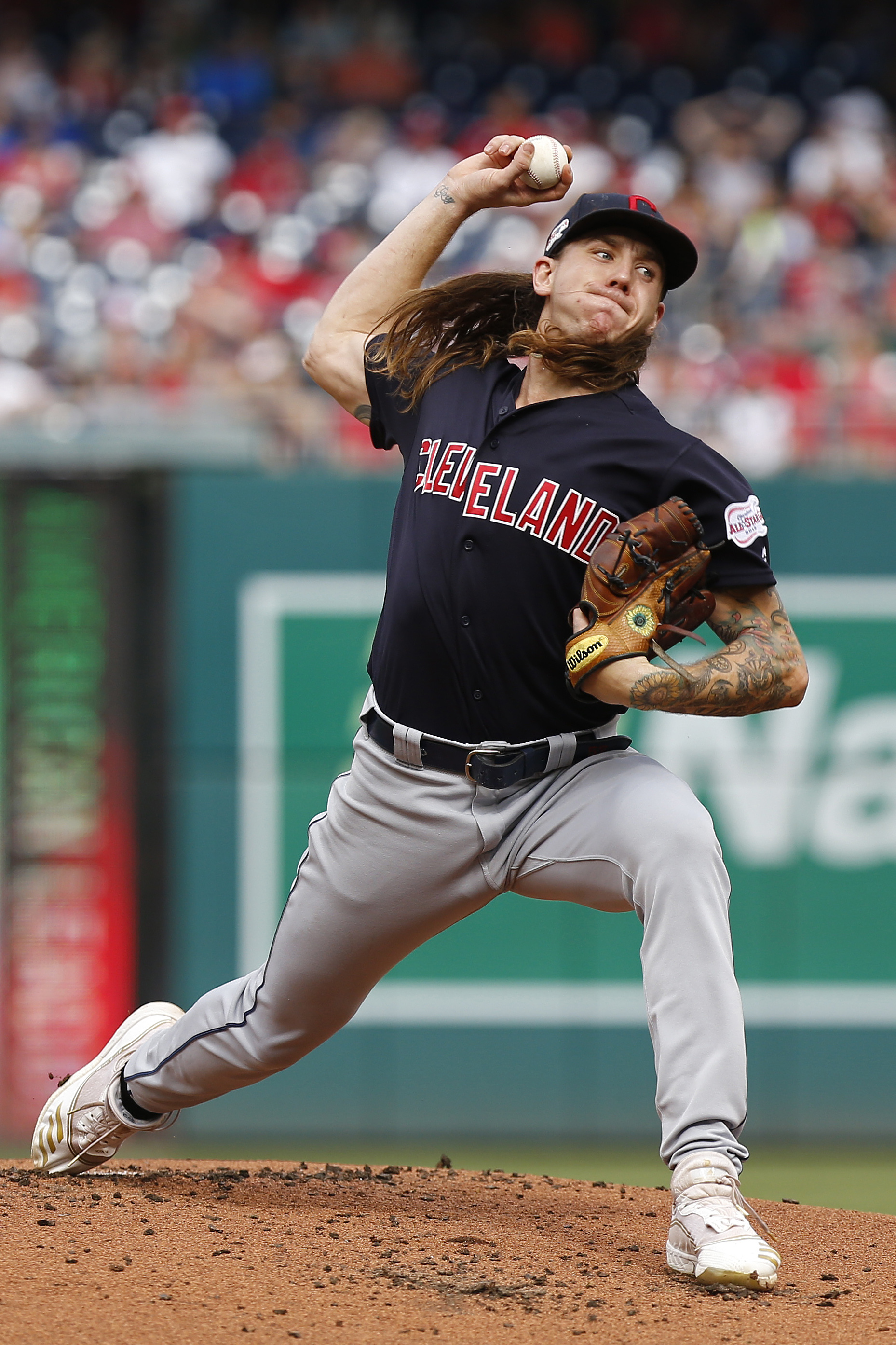
To look for comparables, I focused on a rather narrow scope: first-time eligible pitchers in the past five years who pitched between 75 and 150 innings with a sub-4.00 ERA in their platform year and who had 35-plus career wins.
Gerrit Cole in 2017 and Kyle Hendricks in 2018 were the only two pitchers to match those specifications. The former got $3.75MM, and the latter got $4.18MM. Both of those pitchers only won seven games in their platform season, however. Cole did have 47 career wins, topping Clevinger’s 41, but his platform ERA of 3.88 is clearly worse than Clevinger’s 2.71. Hendricks is more comparable, with a robust 2.94 career ERA that is similar to Clevinger’s 3.20. Hendricks’ 38-22 record favorably compares to Clevinger’s 41-21 mark as well. Hendricks makes for a pretty good comp, and adding two years of inflation onto his first-time arbitration salary would probably put Clevinger right around the $4.5MM that the model projects for him.
Another potential comparable who had fewer career wins and a weaker platform season, but was otherwise fairly similar, is Jacob deGrom back in 2017. He went 7-8 with a 3.90 ERA in 148 innings in his platform year, but he had a 2.74 career ERA and a 30-22 record with 479 1/3 innings. DeGrom got $3.9MM his first time through arbitration. This is a likely floor for Clevinger—it seems clear that he should safely exceed $4MM.
What is tricky about first-time eligible pitchers is that for more than a decade, they have rarely broken the $4.5MM barrier. Three pitchers did as part of multi-year deals: Tim Lincecum in 2010, Clayton Kershaw in 2012, and Lance Lynn in 2015. However, Kershaw had a Cy Young Award on his resume, and Lincecum had two. Lynn was a unique multi-year deal that was extremely flat (three years, $22MM), so the $7MM attributed to the first year is not really a reliable number on which to base any Clevinger predictions. The only first-time eligible pitcher who signed a one-year deal worth more than $4.5MM was Dallas Keuchel, who landed a $7.25MM salary after earning a Cy Young Award.
All told, when you consider Clevinger being limited to 21 starts in 2019, he seems unlikely to be the one who breaks the $4.5MM barrier that has been so difficult for first-time pitchers to surpass. However, it also seems likely that he should hit Hendricks’ $4.18MM salary — and probably exceed it. Viewed through this lens, Clevinger appears likely to get close to his model-projected salary.
Angels Designate Adalberto Mejia For Assignment
The Angels announced Tuesday that they’ve designated left-hander Adalberto Mejia for assignment. His spot on the 40-man roster will go to catcher Jason Castro, whose previously reported one-year deal is now official.
Mejia, incredibly, has been designated for assignment five times in the past five months — including three times by the Angels. The former Top 100 prospect has bounced from the Twins (where he and Castro were teammates), to the Angels, to the Cardinals back to the Angels in a series of summer waiver claims. Mejia cleared waivers when the Halos designated him in August, but he returned to the 40-man roster as a September call-up just a few days later.
The 26-year-old Mejia was unscored upon in 9 1/3 minor league innings across multiple organizations this year but was hit hard in the Majors, logging a 6.61 ERA (4.97 FIP, 5.98 xFIP) with an ugly 30-to-21 K/BB ratio in 31 1/3 innings. He did make 21 respectable starts for the Twins in 2017 (4.50 ERA, 7.8 K/9, 4.0 BB/9) at just 24 years of age, creating some optimism that he could settle in as the fourth starter he’d been projected as in the upper minors. But blister issues and a left wrist injury shortened Mejia’s 2018 season, and he wasn’t able to regain his footing in 2019.
Clubs seeking rotation depth and/or left-handed relief candidates could well take a look at Mejia now that he’s once again available at little to no cost, but he’s also out of minor league options, so he’ll have to break camp with a team or else be designated for assignment for a staggering sixth time in a nine-month span.