
Padres Likely To Pursue Kwang-Hyun Kim
The Padres are planning to take another run at signing lefty Kwang-Hyun Kim now that he’s been posted by the SK Wyverns of the Korea Baseball Organization, Kevin Acee of the San Diego Union-Tribune reports. San Diego won the bidding on Kim when he was posted under the previous blind-bid system back in 2014, and the organization again has its sights set on the now-31-year-old southpaw.
Perhaps of even greater note is that Acee suggests the organization doesn’t intend to pursue either Gerrit Cole or Stephen Strasburg — despite previous reports linking them to the latter — due to that duo’s expected price tag. MLB.com’s AJ Cassavell wrote yesterday that the Padres are “more optimistic” about their in-house options than the rest of the industry, adding that a pursuit of one of the top names is unlikely and that there’s been “no recent movement” to add to the rotation. Acee notes that Kim now stands out as the likeliest rotation addition for the Friars.
At present, sophomore Chris Paddack projects to front a Padres rotation that’ll also include Dinelson Lamet, Garrett Richards (in his first full year back from 2018 Tommy John surgery), recent trade acquisition Zach Davies and Joey Lucchesi. Others such as Adrian Morejon, Cal Quantrill, Michel Baez, Nick Margevicius and Ronald Bolanos represent 40-man alternatives, and uber-prospect MacKenzie Gore is likely ticketed for Double-A to open the 2020 season, thus placing him within arm’s reach of a promotion.
That pitching depth is indeed enviable, but the Padres’ payroll likely plays as much a role — if not a greater role — in their apparent aversion to inking additional free-agent pitchers. San Diego’s acquisitions of Davies and Jurickson Profar put them in line for a 2020 payroll in the $144MM range, per Roster Resource’s Jason Martinez. That number crushes their previous high-water mark, and even tacking on a mid-range starting pitcher would push the Padres beyond the $150MM mark both in terms of actual 2020 payroll and luxury-tax considerations.
The Padres have reportedly been seeking trade partners for Wil Myers for more than a year but, to this point, have unsurprisingly struggled to find a taker. Myers, who’ll turn 29 next week, is still owed a massive $61MM over the next three seasons under the now-regrettable extension he signed back in Jan. 2017, and the glut of first base/corner outfield options available elsewhere in trade or in free agency make him all the more cumbersome an asset to market in trade talks. The remaining six years and $99MM on Eric Hosmer‘s eight-year contract isn’t doing the payroll any favors, either.
None of that is to say that Kim, who could be an affordable rotation option, is unworthy of an earnest pursuit. Kim has established himself as one of the best and most consistent pitchers in the hitter-friendly Korea Baseball Organization over the past decade and is fresh off a pair of sub-3.00 ERA seasons in his return from 2017 Tommy John surgery. Notably, the KBO has provided teams with extensive documentation on Kim’s health at MLB’s request, Jee-ho Yoo of the Yonhap News Agency reported recently.
Over his past 326 1/3 innings since surgery, Kim has pitched to a 2.70 ERA with 310 strikeouts against just 68 walks — demonstrating the best control of his career. He’s walked just 5.1 percent of the hitters he’s faced in that span against a 23.1 percent strikeout rate. Certainly, there’s cause for intrigue and reason to believe that he could be a viable mid-rotation upgrade at a lesser price than remaining second- and third-tier options on the domestic market.
Kim has been formally posted for Major League teams, who have until Jan. 5 to negotiate a contract with the former KBO MVP. Any team is free to sign him for any amount under the new posting system, but the Wyverns would be entitled to a release fee that is dependent on the size of the contract he inks. The Wyverns would receive a sum equal to 20 percent of the first $25MM in guarantees plus 17.5 percent of the next $25MM and 15 percent of any money spent beyond that level. A contract pushing beyond that $50MM mark (or even the $25MM plateau) hasn’t been expected, although the market for Kim is only just taking shape. What seems clear is that the Padres intend to be squarely in the mix as they seek to bolster their starting staff with an eye toward emerging from a lengthy rebuild.
Orioles Sign Dilson Herrera To Minor League Deal
The Orioles announced that they’ve signed infielder Dilson Herrera to a minor league contract. Presumably, he’ll be invited to Spring Training to compete for a roster spot.
Herrera, is still just 25 years of age despite the fact that he’s five years and two notable trades — Marlon Byrd, Jay Bruce — removed from his MLB debut with the Mets back in 2014. Shoulder troubles have derailed the former top prospect’s development and limited his MLB chances, but he did play a full season in Triple-A upon returning to the Mets organization on a minor league deal last year. In 460 plate appearances there, Herrera slashed .248/.330/.501 with 24 home runs but a career-worst 27.6 percent strikeout rate.
Strikeouts haven’t typically been a major detriment for Herrera, who owns a career .280/.344/.471 batting line in parts of five Triple-A seasons. The departure of Jonathan Villar has left the Orioles quite thin in the infield, so Herrera should have a shot to pick up some at-bats if he shows well next spring and makes the club. He’s primarily been a second baseman in his career, but the Mets have him time at first base, third base and in the outfield corners while playing with their Syracuse affiliate in 2019.
Reds Sign Mike Moustakas
Dec. 5: The Reds have formally announced the agreement and confirmed the reported contractual terms. Moustakas has agreed to a four-year, $64MM deal — the largest free-agent signing in Reds franchise history.
Bobby Nightengale Jr. of the Cincinnati Enquirer breaks down the yearly details: Moustakas will earn $12MM in 2020, $14MM in 2021, $16MM in 2022 and $18MM in 2023. There’s also an unannounced club option for the 2024 season that is valued at $20MM and comes with a $4MM buyout.
Dec. 2: The Reds have agreed to a deal with free agent infielder Mike Moustakas, according to Jon Heyman of MLB Network (Twitter links). It’s a four-year, $64MM pact for the Scott Boras client, according to reports from Heyman and Jeff Passan of ESPN.com (via Twitter).
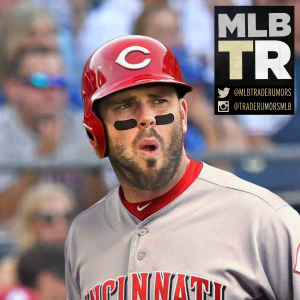
After two disappointing trips through the free agent process, it seems Moose has finally secured a long-awaited long-term agreement. His recently demonstrated ability to line up at second base was a game changer for the long-time third baseman. Moustakas now appears likely to pair up with Freddy Galvis to form a bit of an unlikely double-play combo in Cincinnati.
We predicted a five-year pact for Moustakas after the 2017 season, when he was a high-quality and still youthful third baseman. After he was forced into a pillow deal, we downgraded expectations to a two-year deal entering the 2018-19 winter. Moustakas again settled for a single-season guarantee from the Brewers. On the heels of another solid, but hardly otherworldly season, we doubled down on that two-year guess … only to see Moustakas absolutely smash expectations.
Having seen him up close over the past two seasons, the Reds clearly believe that Moustakas is not only capable of holding down the fort at second base, but doing so well and for some years to come. The corners are already locked up for the foreseeable future with Joey Votto and Eugenio Suarez.
And the Cincinnati front office is also going all-in on the bat of Moustakas. He has now twice exceeded thirty home runs and has topped the .200 mark in isolated power in each of the past four campaigns. The power is real, but so are the on-base struggles. Moustakas’s .329 OBP from 2019 was a career high-water mark but barely topped the league average.
Over the course of his career, Moustakas has reached base at a marginal .310 clip. Can he sustain and even extend his relatively productive 2019 in the OBP arena? Moustakas did carry a personal-best 9.1% walk rate in 2019, though his swinging-strike rate also crept up to a new high-water mark (11.0%). He has never hit much for average, so continued commitment to drawing free passes may be the ticket.
Even at his best, Moustakas has never rated as a true star. He has topped 2.0 fWAR in each of the past three campaigns but hasn’t gone past 3.0 since 2015. While bWAR put him at 3.2 wins above replacement in 2019, it took a dimmer view of his prior three seasons. And at this point, youth isn’t really on Moose’s side. But the Reds obviously feel that Moustakas will continue to be a steady producer and were willing to pay for his consistency. It stands to reason that other teams did as well, since the bidding pushed so far north.
Brewers Acquire Omar Narvaez
11:00am: The Brewers have formally announced the trade.
“Omar has established himself as one of the best offensive catchers in the game,” president of baseball operations David Stearns said in a press release. “We believe his bat will give us an impactful left-handed presence in our lineup.”
9:20am: The Brewers look to have found their replacement for Yasmani Grandal, as they’ve reportedly struck a trade to acquire Omar Narvaez from the Mariners in exchange for minor league right-hander Adam Hill and a Competitive Balance draft pick. The Brewers’ pick this year lands in Round B this year and is currently slotted in at No. 71 overall, although draft forfeitures for free agents who rejected qualifying offers could nudge that selection up a few spots.
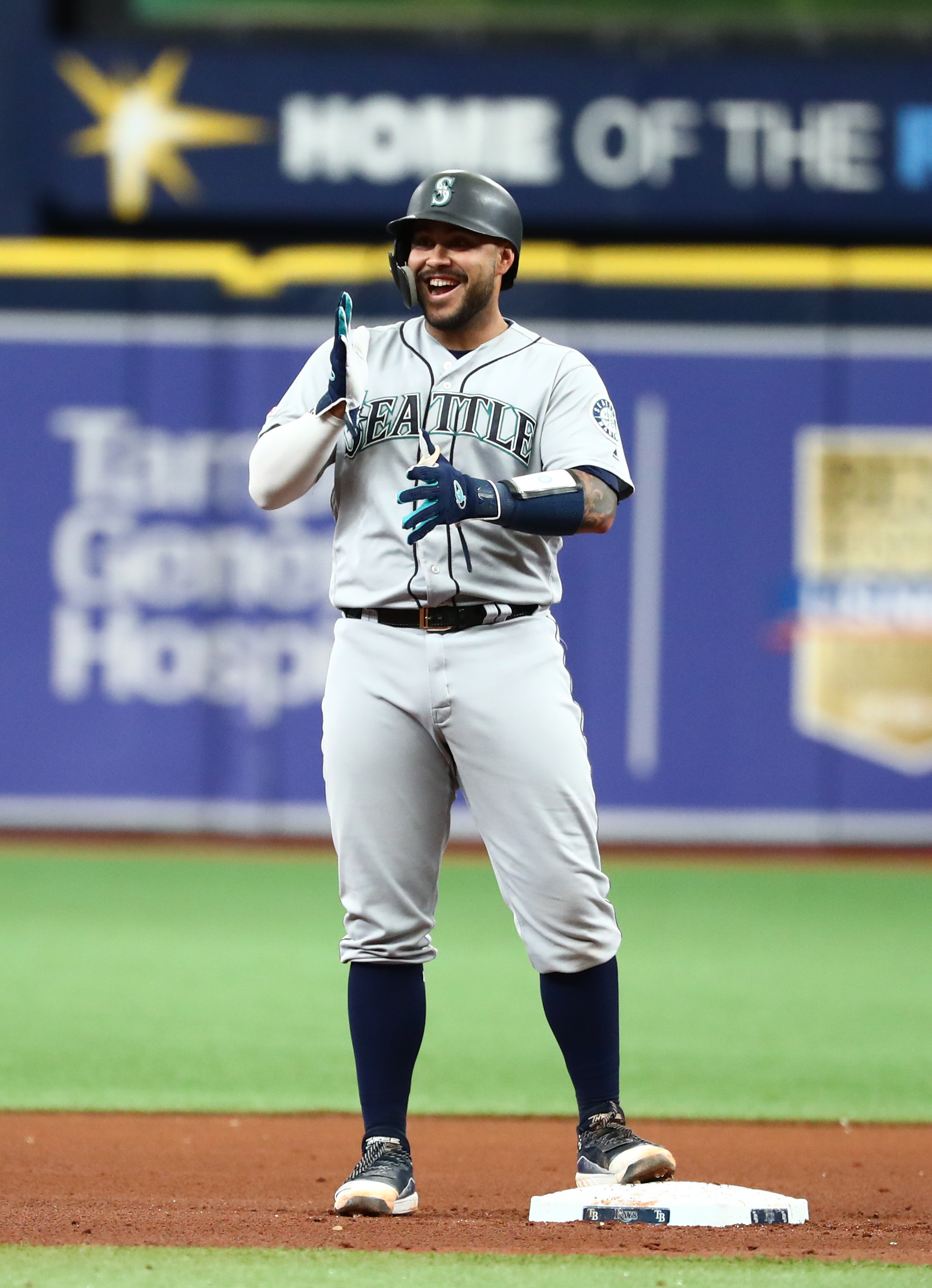 Narvaez is one of the few backstops in baseball that can come close to matching Grandal with the bat. And he’ll cost a whole lot less, bringing three seasons of control that begin with a projected arbitration cost of just $2.9MM. That’s not to say the Brewers won’t miss the outgoing Grandal. He’s a premium defender, especially in the pitch-framing department. Narvaez is considered a work in progress with the glove. He graded as one of the game’s worst framers in 2018 but did make strides to average levels last year.
Though Narvaez is unquestionably a nice addition, there are some risks here for the Milwaukee organization. His .278/.353/.460 slash and 22 long balls from 2019 came despite a decidedly chilly 85.4 mph average exit velocity and 27.5% hard-hit rate. Narvaez can draw a walk, with an 11.3% career rate, but could slip back towards league-average in overall offensive productivity if he can’t sustain the power output.
One other factor here: Most of the damage done by the left-handed-hitting Narvaez last year came against right-handed pitching. The Brewers will presumably task Manny Pina with a larger role than he was allotted last year with Grandal around.
As for the Mariners, this is only the latest in a long line of roster swaps. Consider its place in this strand of the voluminous trade history of Seattle Jerry Dipoto. Narvaez arrived last fall in the swap that sent reliever Alex Colome to the White Sox. Colome had only just landed in Seattle along with Denard Span in a creative mid-2018 arrangement. Now, after one productive year with the M’s and despite several seasons of affordable control remaining, the 27-year-old Narvaez is heading out the door. He stands to be replaced by 28-year-old Tom Murphy, who was himself picked up in a late-spring deal earlier in 2019.
Murphy’s own booming breakout in Seattle last year presumably helped nudge the Mariners into a move here. There’s also a solid prospect on the way in Cal Raleigh, though he’s not necessarily ready for prime time and isn’t a sure thing. The Mariners will presumably now set out looking for a second piece of a new backstop tandem. Since the right-handed-hitting Murphy made his mark almost exclusively against left-handed-hitting pitching last year — he carried a whopping 450-point OPS spread — it stands to reason that the team will prefer to find a player who (like the outgoing Narvaez) profiles as a strong option against opposing righty pitching.
In Hill, the Mariners will acquire a 2018 fourth-rounder who’s already been traded once since being drafted out of the University of South Carolina. The Mets selected Hill with the 110th overall pick in 2018 but traded him to the Brewers in exchange for Keon Broxton last January less than a year after that pick. (Ironically, Broxton landed in Seattle on a waiver claim long after the Mets had cut him.)
Hill spent the 2019 season with Milwaukee’s affiliate in the Class-A Midwest League, tallying 121 2/3 innings of 3.92 ERA ball with 8.1 K/9, 4.1 BB/9, 0.89 HR/9 and a 44.4 percent ground-ball rate in 23 starts (plus another three relief outings). Hill is 6’6″ and listed at 225 pounds, so he has plenty of size to stick as a starter, though reports from FanGraphs and MLB.com note that his questionable command could drop him into a bullpen role despite the potential for three average or better pitches (fastball, slider, changeup). He was ranked in the back half of the Brewers’ top 30 prospects and should fall into similar standing within a rapidly improving Mariners farm system.
Seattle will also pick up an additional pick in the 2020 draft as well as the slot money that accompanies that selection. Draft slot values for next year aren’t yet known, but picks in that general vicinity slotted in around $900K in value last year, so it’s likely the M’s are adding close to a million dollars to next year’s draft pool. Seattle gave up two fairly expensive seasons of Colome to acquire four years of Narvaez in the first place, and they’ve parlayed that deal into a productive year from Narvaez, a decent pitching prospect and some additional capital in the upcoming draft. It’s not an overwhelming return, but the end result moves the needle on the Mariners’ rebuild forward a bit.
Ken Rosenthal of The Athletic reported that the two sides were close to a deal (via Twitter). Greg Johns of MLB.com reported the Mariners’ return and that the deal had been completed (via Twitter).
Mets Acquire Jake Marisnick
10:40am: The Astros and Mets have both announced the trade.
10:27am: Houston will receive left-hander Blake Taylor and outfielder Kenedy Corona in return for Marisnick, ESPN’s Jeff Passan tweets. Taylor was on the Mets’ 40-man roster after having his contract selected last month and will now go on Houston’s 40-man roster.
10:05am: The Mets and Astros are in agreement on a trade that will send outfielder Jake Marisnick from Houston to New York, MLB Network’s Jon Heyman tweets. Ken Rosenthal of The Athletic first (via Twitter) reported that the two sides were close to a deal. Houston will receive a pair of minor leaguers in return for Marisnick, per SNY’s Andy Martino (Twitter link).
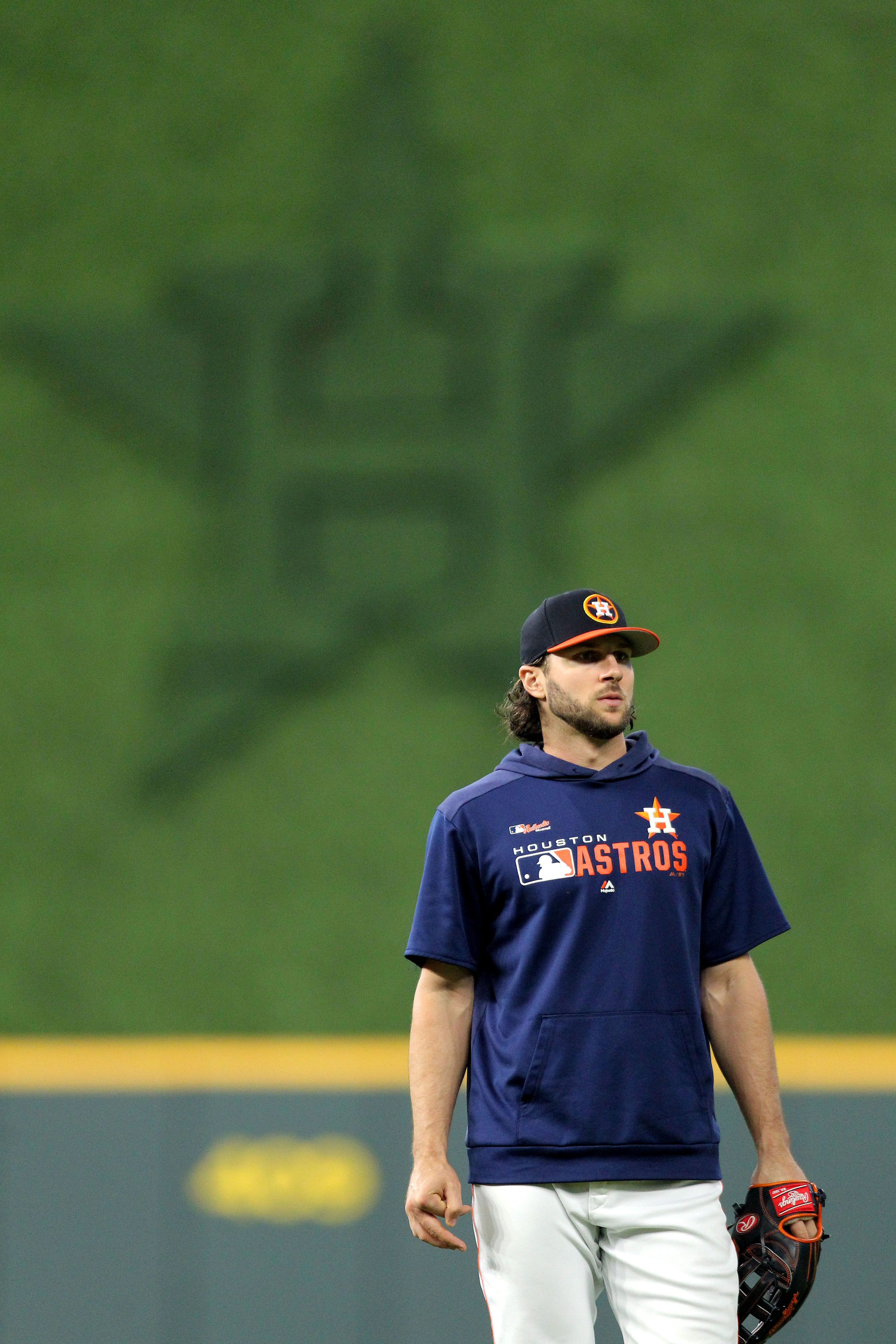
The trade is seemingly a sensible move for both clubs. Houston has an abundance of outfielders on the roster with Michael Brantley, George Springer, Kyle Tucker, Josh Reddick, Myles Straw and Yordan Alvarez all likely ticketed for varying levels of time in the outfield in 2020. Meanwhile, the Mets have a need for a center fielder but also lack payroll flexibility, making Marisnick and his projected $3MM salary an appealing target. The Astros themselves are on the cusp of luxury tax territory, so shedding even a relatively minimal salary is of some help. As noted in our Offseason Outlook on the Astros, looking to move the salaries of Marisnick and/or Reddick was a plausible course of action for Houston this winter. It still seems likely that they’ll at least explore their options with Reddick and his $13MM salary.
Marisnick, 29 in March, will be a short-term acquisition for Mets GM Brodie Van Wagenen and his staff, as he’s entering his final season of club control. He’s been utilized in a part-time capacity in Houston and hasn’t provided much offense in recent years, hitting .224/.283/.406 over the past two seasons combined. But Marisnick runs well and grades out as a terrific outfield defender; over the past two years he’s registered 17 Defensive Runs Saved, a +7.5 Ultimate Zone Rating and 21 Outs Above Average despite only logging 1327 innings in the outfield. For a Mets club that has long struggled on the defensive side of the game, Marisnick’s glove will be a welcome addition even if it comes at the cost of some offense.
In some ways, the acquisition of Marisnick mirrors the Mets’ acquisition of Keon Broxton last January. Like Broxton, Marisnick is a glove-first center fielder with notable strikeout issues and a history of OBP deficiency. His swing-and-miss troubles aren’t as extreme as were Broxton’s, however, and Marisnick has a lengthier track record as a generally useful player. He’s typically been worth between one and two wins above replacement in each of the past five years and could, of course, deliver a bit more overall value if he’s afforded more playing time. Even if he washes out in his new setting (as Broxton did), the financial hit won’t be substantial, and given his limited offensive track record and waning club control, the prospect cost to acquire him was rather minimal.
Neither Taylor nor Corona are considered to be among the Mets’ top prospects. The 24-year-old Taylor did log a 2.16 ERA with 10.0 K/9 and 3.2 BB/9 in 66 1/3 minor league innings of relief, but he did so against much younger competition. Taylor opened the year at Class-A Advanced, despite his age, and only moved up to Double-A midway through the season. Taylor did briefly reach Triple-A in 2018 but struggled both there and in Double-A, leading to the decision to have him repeat multiple minor league levels in 2019. His improved results are encouraging, but he’ll turn 25 next season and has only pitched 50 innings above A-ball, so he’s far from a sure bet to make an impact out of the Astros’ bullpen.
Corona, 19, signed with the Mets as an international amateur less than a year ago. He hit .301/.398/.470 in 63 minor league games this season, but as was the case with Taylor, he was older than the average competition he was facing. Corona, who’ll turn 20 next March, began the season in the Rookie-level Dominican Summer League, though he did top out with four games with the Mets’ short-season Class-A affiliate. He’ll likely be ticketed for A-ball in 2020, where the Astros will get a better idea of how he can handle more experienced competition.
Free Agent Prediction Contest Leaderboard Now Available
6,886 people entered MLBTR’s Free Agent Prediction Contest this year, and the leaderboard is now available. With a dozen players signed off MLBTR’s Top 50 list, five contest participants currently stand at the top with seven correct predictions. You can search to find your own name in the leaderboard, and you can click on anyone’s name to see their predictions. There’s also a Staff Only option, if you’d like to see how MLBTR’s writers are stacking up. Check out the contest leaderboard today!
Atkins On Blue Jays’ Offseason Approach
Blue Jays GM Ross Atkins chatted with reporters yesterday about his club’s place in the offseason transactional carousel, as Kaitlyn McGrath of The Athletic (subscription link) was among those to cover.
Atkins emphasized that the organization has been “aggressive” on the free agent market, especially with regard to starting pitching. While there isn’t a deal to show for it just yet, there’s obviously ample time remaining and a slew of appealing options still on the market.
What of the top options available? “There’s not a free agent that we haven’t touched base with,” he said. It’s tough to see the Toronto organization as a serious player for any of this winter’s super-premium free agents, but Atkins certainly suggested that the front office has at least seen cause to check in on all the possibilities. Whether or not it’ll happen is far from clear — the guess here is it won’t — -but Atkins says the Blue Jays have the capacity to go into nine-figure territory for the right player.
It’s still anyone’s guess which arms the Jays will come away with. But Atkins did strongly suggest the team is likelier to make significant moves via free agency than trade. He expressed a disinclination to part with youthful “players that we’re really excited about” in order to acquire a compelling new MLB hurler.
One possibility: Hyun-Jin Ryu. We haven’t heard much about where the market is headed for the standout southpaw, but Jon Heyman of MLB Network tweets that the Jays are “in” on him. Just how to interpret that isn’t clear, particularly in light of the Atkins declaration that the team has cast an exceedingly wide net, but it sounds as if there’s at least some real interest on the part of the Toronto organization.
There’s still ample opportunity left for the Jays on the market. And the team is offering notable opportunity for free agents — a selling point in and of itself for certain hurlers. Atkins said that the Jays don’t feel fully committed to any starters other than Chase Anderson for 2020. That’s not to say that four more additions will be forthcoming, but it speaks to the team’s internal uncertainty and willingness to compete jobs.
Christian Villanueva Signs With Japan’s Nippon Ham Fighters
Third baseman Christian Villanueva is headed back for a second season in Japan. He has joined the Hokkaido Nippon Ham Fighters, per a club announcement passed along by Jason Coskrey (via Twitter).
Villanueva was one of the former big leaguers we covered recently in rounding up the year’s action in Asia’s top leagues. He struggled in his single-season stint with the Yomiuri Giants of Nippon Professional Baseball, slashing just .223/.325/.386 in 235 plate appearances, but obviously showed enough for the rival Fighters to give him another opportunity.
The 28-year-old Villanueva has demonstrated quite a bit more ability on this side of the Pacific. In 416 plate appearances with the Padres over the 2017-18 campaigns, he produced a .245/.303/.475 batting line with 24 home runs. And he’s a .263/.328/.457 hitter in over twelve hundred trips to the plate at the highest level of the minors.
Offseason Outlook: Chicago Cubs
MLBTR is publishing Offseason Outlooks for all 30 teams. Click here to read the other entries in this series.
The Cubs will consider major trades as they look to improve a team with holes in center field, the rotation, and the bullpen.
Guaranteed Contracts
- Yu Darvish, SP: $81MM through 2023
- Jason Heyward, RF: $86MM through 2023
- Jon Lester, SP: $25MM through 2020. Includes mutual option for 2021.
- Craig Kimbrel, RP: $33MM through 2021. Includes club/vesting option for 2022.
- Anthony Rizzo, 1B: $16.5MM through 2020. Includes club option for 2021.
- Tyler Chatwood, P: $13MM through 2020.
- Kyle Hendricks, SP: $55.5MM through 2023. Includes club option for 2024.
- Jose Quintana, SP: $10.5MM through 2020.
- Daniel Descalso, 2B: $3.5MM through 2020. Includes club option for 2021.
- David Bote, 3B/2B: $15MM through 2024. Includes club options for 2025 and ’26.
Arbitration-Eligible Players (projections via MLBTR contributor Matt Swartz)
- Kris Bryant, 3B/OF – $18.5MM
- Javier Baez, SS – $9.3MM
- Kyle Schwarber, LF – $8.0MM
- Willson Contreras, C – $4.5MM
- Albert Almora, CF – $1.8MM
- Kyle Ryan, RP – $1.1MM
- Jharel Cotton, SP – agreed to $640K salary
- Non-tendered: Addison Russell, Danny Hultzen
Free Agents
- Nicholas Castellanos, Cole Hamels, Addison Russell, Ben Zobrist, Steve Cishek, Brandon Kintzler, Pedro Strop, David Phelps, Derek Holland, Brandon Morrow, Tony Barnette, Kendall Graveman
This year the Cubs failed to reach the playoffs for the first time since their rebuild ended in 2015. Following a disappointing 84-win season, Joe Maddon’s five-year term as manager came to an end. Despite Maddon achieving the impossible with the Cubs’ 2016 championship, the club showed little interest in a new deal. It was a pretty typical progression – the Cubs’ performance had become increasingly disappointing, particularly with 2018’s one-game Wild Card ouster and missing the playoffs entirely in ’19. That’s not a situation where a manager is typically re-signed, even if most of the blame falls on the players and front office. Maddon is famously laid-back, so the team brought David Ross in to light a fire under the players as well to restore camaraderie. Ross seems like he’ll be able to improve those situations, and should be equally adept as Maddon in dealing with the media. Where Ross’ lineup and in-game tactics rank remains to be seen, as he has no prior managerial experience. The Cubs protected against that concern by hiring former Padres manager Andy Green to serve as Ross’ bench coach.
After hiring Ross, Cubs president Theo Epstein kicked off his offseason by making easy calls on club options, retaining Anthony Rizzo and Jose Quintana and moving on from pitchers David Phelps, Brandon Morrow, Kendall Graveman, and Tony Barnette. The team also picked up Jharel Cotton, an affordable righty who can compete for a fifth starter or long relief role. Cotton, 28 in January, looked promising back in 2016 before injuries set in. The Cubs also made the overdue decision to part ways with infielder Addison Russell, oddly accentuating that they did so because his salary was getting too high. That the Epstein regime did not cut ties with Russell due to the domestic violence allegations against him more than two years ago is something that many of the team’s fans will continue to find disturbing.
Looking forward, let’s start with the matter of the Cubs’ payroll. Epstein’s not talking about it, but the Cubs were one of only three teams to exceed the $206MM luxury tax line in 2019. Back in September, the Associated Press projected the Cubs’ penalty for this infraction to be $6.34MM. On the surface, it’s difficult to call the team cheap when they’re running a top-three payroll in baseball. On the other hand, it’s hard to see why a 20% tax on the overage would serve as a real impediment to any major market team. It’s worth questioning what would constitute a reasonable player payroll for these corporations, rather than taking their word for it or accepting the luxury tax threshold as a salary cap.
Back of the napkin, the Cubs have contract commitments of about $135MM for 2020, plus an arbitration class that should run around $44MM. There seems to be enough wiggle room for one premium player or at least several decent ones, right? But the reality is that the team’s competitive balance tax payroll is higher, estimated around $210MM for 2020 already. As the AP explains, “Luxury tax payrolls are based on the average annual values of contracts for players on 40-man rosters and include $14.5 million per team in benefits.” Every dollar the Cubs spend between $208MM-228MM comes with a 30% tax, and every dollar they spend between $228MM-248MM comes with a 42% tax. If the Cubs were to sign Gerrit Cole at a $35MM AAV, it would be more like paying him $48MM in 2020 due to the taxes they’d incur, and it would leave little room for other notable additions without accompanying subtractions.
On the other hand, with Lester, Quintana, and Chatwood off the books in ’21, the Cubs could get under the $210MM base tax threshold in that season, at which point all the taxes would go away. Would it be crazy to go to $247MM in 2020, pay a $14MM tax once, and then reset? I don’t think so, but $248MM represents a harder line in the sand since spending beyond that point would be taxed at 75%, and the Cubs’ top draft pick would move down ten spots. After going down the rabbit hole here, you start to see that there’s almost no chance the Cubs will add more than $38MM in CBT payroll this winter, and they could easily choose to draw the line at $18MM added.
It certainly seems like the Cubs will be sitting out on the major free agents for the second consecutive winter. Obviously, any of the big dogs would greatly increase the team’s chances of returning to the playoffs in 2020. With Cole Hamels having signed with the Braves, the Cubs’ rotation sets up as Yu Darvish, Kyle Hendricks, Jose Quintana, and Jon Lester. With Quintana, Lester, and Chatwood due for free agency after the season, another long-term investment in the rotation in the form of Cole or Stephen Strasburg would be worth considering. Third baseman Anthony Rendon is a tougher fit, as signing the game-changing star would necessitate playing Kris Bryant full-time at an outfield corner, and Bryant has never spent even 500 innings in the outfield in an MLB season. Or, Bryant could be traded this winter.
Bryant is only under team control for two more seasons, with a slight chance of 2020 becoming his walk year if he wins his service time grievance. Though Bryant winning the grievance is considered unlikely, I don’t see why, since the Cubs’ manipulation of his service time to gain a seventh year of control was the most blatant case in recent history. It doesn’t seem crazy to think that an independent arbitrator could rule in his favor. Regardless, if the Cubs are to seriously entertain trading Bryant this winter, it would have to be after the decision is revealed. Moving Bryant generally seems like robbing Peter to pay Paul, as Bryant is a five-win player who should earn around $20MM this winter, and that’s a great deal for the Cubs. Still, it’s possible to trade a five-win player and emerge better for it.
Who might pursue Bryant this winter? We could start with Rendon’s suitors. Bryant is about 19 months younger than Rendon, but Rendon has become better on both sides of the ball and projects to remain a little better in the short-term. The Dodgers, Rangers, and Nationals, as Rendon suitors, could view Bryant as an interesting Plan B, but those same clubs could also look at Josh Donaldson. If we’re assuming Bryant will mostly be deployed at the hot corner, the Angels, Braves, Phillies, Indians, Marlins, Mets, Rays, or Twins could be options. Bryant could be especially interesting for teams that would never be able to sign a player of his caliber in free agency. I can only speculate so much, but I imagine young, controllable starting pitching would be a key part of a Bryant deal for the Cubs. If the Cubs actually do move Bryant and don’t want to replace him with the large salary of Rendon or Donaldson, they could plug in David Bote as his replacement at third base.
Similarly, we’ve seen the suggestion the Cubs could trade catcher Willson Contreras this winter. Contreras, 27, is one of the best-hitting catchers in the game, and he has three years of remaining control. He’s poorly regarded as a pitch framer, so the teams that lost out on Yasmani Grandal won’t necessarily be all over Contreras. The Angels, Astros, Blue Jays, Mets, and Rangers could potentially seek a boost behind the plate and consider Contreras. But the Cubs, much like with any potential Bryant trade, would increase their own exposure by elevating Victor Caratini to regular status, especially with Grandal off the board. “The Cubs are going to make a move,” wrote ESPN’s Jeff Passan, so it seems that after years of threatening a possible position player shakeup, the club will actually do so to some degree this winter.
While the Cubs’ infield could easily be left alone, with Nico Hoerner stepping in as the regular second baseman, the team’s outfield situation seems more unsettled. Heyward has a spot locked down, and has at least settled in as a two-win player who could be used in center field in the short-term. I don’t think the Cubs want to commit to keeping Heyward out of his natural right field position, however, which is one reason a reunion with Nicholas Castellanos seems unlikely. Mike Moustakas, a pretty good but flawed position player without a qualifying offer attached, snagged a four-year, $64MM deal from the Reds. Castellanos, almost three and a half years younger than Moose, seems to have a chance at topping that contract. Given Castellanos’ defensive limitations and their current payroll crunch, that doesn’t seem like a contract the Cubs will find palatable.
Plus, Kyle Schwarber already serves the role as a solid bat-first corner outfielder for the Cubs, and he should clock in at half Castellanos’ salary without a long-term commitment. While Schwarber is certainly a trade candidate, the simplest scenario for the Cubs may be to leave him in left and Heyward in right, importing a quality starting center fielder. That would bump Albert Almora to a fourth outfielder role or trade bait, not that much return would be expected. The Cubs have Shogo Akiyama on their radar as a possible center field solution, according to Patrick Mooney of The Athletic. Jackie Bradley Jr. could be a trade option, though not a game-changer, and his $11MM salary projection is problematic. Starling Marte would be an excellent target if the Pirates are willing to move him in the division, and his $11.5MM CBT hit would be worth it. Aside from Akiyama, the free agent market is sparse at center field, with only Kevin Pillar and Brett Gardner qualifying as potential regulars. Though the Cubs’ center fielder doesn’t necessarily have to be their leadoff hitter, it would be nice to kill two birds with one stone. Akiyama has run an OBP of .385 or better for the Seibu Lions in each of the last five seasons, so the Cubs’ interest makes sense.
We haven’t talked yet about Ian Happ, the Cubs’ first-round pick from 2015. The 25-year-old has a career 112 wRC+ in 1,031 plate appearances, though the switch-hitter’s success has been largely against right-handed pitching. He’s been a man without a position in his big league career, though perhaps 2020 could represent a chance to earn semi-regular playing time in center field if the Cubs don’t make a significant pickup. Happ is also a trade option, though the Cubs could be selling low.
Moving Heyward to center field in the short-term is also palatable. That could allow the Cubs to consider free agents like Avisail Garcia, Yasiel Puig, Kole Calhoun, and Steven Souza. None represent a clear upgrade for the Cubs, however. Mookie Betts remains the crown jewel of the trade market, and of course would be a huge one-year addition for the Cubs. As the GM who drafted Betts, you’d have to think Epstein will at least inquire, but a salary projection near $30MM could be an issue for the Cubs the same way it is for the Red Sox. More down-to-earth trade options could include Trey Mancini or Whit Merrifield (who could also help at second base).
The Cubs would be well-served to think bigger with their open rotation spot than Jharel Cotton, Adbert Alzolay, and Chatwood, but it’s unclear how big they’ll go. I think they’d top out at a $10MM a year type of free agent, and possibly wouldn’t go that far. The decision not to issue a qualifying offer to Hamels showed, if nothing else, they weren’t comfortable risking him accepting a one-year, $17.8MM deal, even though that’s the contract he ended up getting from the Braves. It’s also quite possible the Cubs’ rotation will be addressed with an affordable young arm if they wind up trading a position player.
The Cubs’ bullpen is of greater urgency. Given their commitment to Kimbrel, they’ve got to try to fix him after a disastrous stint in which he posted a 6.53 ERA with nine home runs allowed in 20 2/3 innings. After Kimbrel, Rowan Wick and Kyle Ryan probably have spots locked down. Veterans Pedro Strop, Steve Cishek, and Brandon Kintzler are all free agents, though Strop has expressed a desire to return. Ideally, the Cubs would add a stable veteran who could step into the ninth inning if Kimbrel falters. Reliability is not easily found among free agent relievers, though Will Harris might fit the bill.
Assuming Bryant’s grievance goes the Cubs’ way, their core position player trio of Bryant, Javier Baez, and Anthony Rizzo remains under control through 2021. The three players should be good for 12 WAR at a cost of about $44MM in total in 2020. While that’s obviously not the strong competitive advantage of paying all three players less than $9MM total for 13+ WAR, as they did in each of the 2016 and ’17 seasons, it’s still a great price for the talent and not something to be squandered. Logically, if there’s a time for the franchise to take a step back and reset, it’s after the 2021 season. With the team’s payroll issues still in full force, creativity will be required by Epstein and company this winter.
Pitcher Notes: Hamels, Phils, Wheeler, Twins, Bundy, Lindblom
The latest pitcher-relates news from around baseball…
- Left-hander Cole Hamels said earlier this offseason he’d be open to a return to Philadelphia, where he thrived at the beginning of his career. Hamels wound up accepting the division-rival Braves’ one-year, $18MM offer on Wednesday, but the Phillies were among his suitors before then. They put forth a one-year proposal worth roughly half what Hamels got from the Braves, per Todd Zolecki of MLB.com. With that in mind, it’s no surprise Hamels turned down a return to Philadelphia. Meanwhile, the starter-needy Phillies made a much bigger splash to improve their rotation Wednesday, as they agreed to sign ex-Met Zack Wheeler to a five-year, $118MM pact.
- The Twins were also among the most ardent teams in pursuit of Wheeler, according to La Velle E. Neal of the Star Tribune. They offered Wheeler a five-year, $100MM offer, but the Phillies upended them. Had Wheeler taken the Twins’ offer, it would have been the richest in franchise history. Now, even after Jake Odorizzi accepted a qualifying offer from the Twins, they’re still in clear need of starting help. Odorizzi and Jose Berrios are the only sure things for Minnesota’s 2020 rotation, meaning we probably haven’t seen the last of the team’s starting pursuits this winter. Indeed, the Twins seem to be aggressively going after free-agent left-hander Madison Bumgarner.
- The Angels and Orioles swung a headline-grabbing trade Wednesday, when Los Angeles acquired righty Dylan Bundy from Baltimore. Even after picking up Bundy, the Angels remain “in the market for pitching,” said general manager Billy Eppler (via Rhett Bollinger of MLB.com). As for the non-contending Orioles, in parting with Bundy, they took “a big step toward our stated goals to accumulate and develop as much young talent as possible as the club rebuilds its roster and gets our talent level back to the level needed for consistent playoff contention,” per GM Mike Elias (via Roch Kubatko of MASNSports.com).
- Korea Baseball Organization right-hander Josh Lindblom officially became a free agent Wednesday, the Yonhap News Agency relays. Lindblom was terrific as a member of the KBO’s Doosan Bears from 2018-19, as MLBTR’s Steve Adams recently explained. Before that, he was unremarkable in the majors from 2011-17 with several teams. However, Lindblom’s KBO performance could overshadow his MLB history as he seeks a big league contract this offseason.