
Marlins Reportedly Aiming To Drop Payroll To $90MM
Chief executive officer Derek Jeter suggested at last week’s introductory press conference that the Marlins’ new ownership group may have to make some “unpopular” decisions for the long-term well-being of the franchise, and it appears that a fairly dramatic cut of the payroll is in order. Clark Spencer of the Miami Herald reports that the Marlins are aiming to trim their payroll back to about $90MM — a decrease of $25MM from its 2017 Opening Day mark and nearly $50MM south of where Jason Martinez of MLBTR/Roster Resource projects their 2018 payroll to land at present (once league-minimum players are added to the bill).
A massive cutback in payroll will only further fuel the Giancarlo Stanton rumor mill, as he’s set to earn $25MM next year. However, the Marlins have a number of other well-compensated players that could be reasonable trade targets. Fleet-footed second baseman Dee Gordon has already seen his name floated in trade rumors and will earn $10.5MM next year. He’s owed $40MM in total over the next three seasons. Righty Brad Ziegler, who served as the team’s closer after AJ Ramos was traded, pitched brilliantly to finish the year. He’s owed $9MM next year in the second season of a two-year deal. Martin Prado will make $28.5MM over the next two seasons, including $13.5MM in 2018.
Perhaps chief among the Marlins’ trade candidates when combining desirability, affordability and proximity to free agency, however, is slugging outfielder Marcell Ozuna. While Stanton’s bat would hold widespread appeal throughout the league, taking the remaining $295MM that he’s owed would be a struggle for the majority of teams around the league. Ozuna, on the other hand, hit .312/.376/.548 with 37 homers in 2017 and is projected by MLBTR contributor Matt Swartz to earn $10.9MM in 2017. He’s controllable via arbitration for another two seasons and could fetch a substantial prospect return from clubs in need of help in the outfield.
[Related: Miami Marlins Depth Chart | Projected 2018 Arbitration Salaries]
Right-hander Dan Straily‘s salary won’t be anywhere near the team’s top paid players, but he’s projected to earn $4.6MM in 2018 and could return a decent crop of prospects himself. Over the past two seasons, Straily has made 64 starts and worked to a combined 4.01 ERA with 8.0 K/9 against 3.2 BB/9 in 373 innings. He’s by no means a front-of-the-rotation arm, but he can be controlled at a reasonably affordable rate for another three seasons via the arbitration process. As is the case with Ozuna, moving Straily wouldn’t require eating any salary, and dealing him alone could shave nearly 10 percent of the team’s reported goal.
Christian Yelich is arguably the crown jewel of the Marlins’ trade pieces, as he’s established himself as one of the National League’s best all-around players and is controllable through the 2022 season. Of course, the Marlins only owe him $7MM next year as part of his seven-year, $49.6MM contract, so the team can certainly afford to keep him around and hope that Yelich can be part of a contending club down the line.
Certainly, though, the subtraction of Stanton would be the fastest avenue to reaching that sum in savings. Stanton does have a full no-trade clause (in addition to the $295MM he’s owed), though he’s also plainly stated in no uncertain terms recently that he does not want the Marlins to rebuild. A move to a contending club could be fine with Stanton, though the Marlins and any trading partner would presumably also have to put in an extensive amount of work in order to find a middle ground. The Marlins may very well have to offset some of that $295MM sum, while the other club would likely balk at including multiple top prospects while taking on such an enormous financial commitment. Because that nexus will be difficult to find, a trade of Stanton may not be as logical as many casual observers would anticipate; the logistics of a deal would be extraordinarily complicated.
Speaking from a purely speculative standpoint, a rebuilding club with limited payroll commitments could also seek to “buy” young talent from the Marlins by taking undesirable contracts off their hands. While it’d be a massive ask for any team to pick up the remaining three years and $52MM on Wei-Yin Chen‘s contract, a club like the White Sox, Phillies or Padres could theoretically take Junichi Tazawa and his $7MM contract if the Marlins agree to include some minor league talent. Alternatively, someone like Tazawa could be packaged with a more appealing trade asset such as Ozuna or Straily, though doing so would obviously lower the expected return on an otherwise-desirable trade chip.
It’s not clear exactly which path the Marlins will take under their new ownership group. But the offseason figures to be highly active, and it seems safe to assume that the 2018 Marlins will look substantially different than the group that took the field on Opening Day in 2017.
AL Central Notes: Indians, Twins, Delmonico
Paul Hoynes of the Cleveland Plain Dealer writes that with the Indians‘ season now over after a stunning Yankees comeback, the Cleveland front office now faces the daunting task of determining which players they’ll retain for the 2018 season (and beyond, in some cases). The Indians hold an $11MM club option over oft-injured but supremely talented left fielder Michael Brantley, as well as a $3MM option over right-hander Josh Tomlin. Beyond that, Cleveland will have to gauge whether a middle ground can be found when negotiating possible deals to retain Carlos Santana, Jay Bruce, Bryan Shaw, Austin Jackson and Joe Smith each of whom will be a free agent when the World Series ends. Hoynes spoke to Brantley, Bruce, Santana, Shaw and Tomlin about the possibility of returning, and each unsurprisingly expressed a resounding desire to return. “I started a quest back in 2009,” said Brantley of his debut year in Cleveland. “I want to finish the right way. I don’t want to go out like this if it’s my choice. It’s not.”
A bit more from the AL Central…
- Twins owner Jim Pohlad tells Mike Berardino of the St. Paul Pioneer Press that while there have yet to be any talks of long-term deals for young talents such as Byron Buxton, Miguel Sano or Eddie Rosario, those topics could come up in the near future. “I’d be looking forward to that conversation,” said Pohlad, who generally praised his team’s emerging core. Pohlad also suggested that while Brian Dozier was the focus of trade rumors last offseason and is entering the final season of his contract, it’d be tough to consider trading him this winter. “You would have to believe you’re getting a future core player back,” said Pohlad, going on to stress that it’d need to be a player (or players) that could help the Twins immediately.
- White Sox left fielder/designated hitter Nicky Delmonico will be shut down from offseason activity for up to four weeks due to inflammation and discomfort in his shoulder, the team announced this week. It’s a seemingly innocuous update for the time being, though the situation is worth at least monitoring. Delmonico, once a well-regarded prospect with the Orioles and Brewers, put himself back on the radar in 2017 with a big season in Triple-A and a .262/.373/.482 batting line with nine homers in 166 plate appearances in Chicago this season. If he’s healthy in 2018, he’s likely to play on a near-everyday basis between left field, first base and designated hitter, as the Sox hope to have uncovered a hidden gem.
Phillies Name Larry Bowa Senior Advisor To GM Matt Klentak
The Phillies have moved bench coach Larry Bowa from the dugout to the front office, naming him senior advisor to GM Matt Klentak, per a team announcement. Bowa, it seems, will transition to a role similar to that of Pete Mackanin, who was surprisingly removed from his post as manager earlier this month.
The 71-year-old Bowa spent the first 12 seasons of his playing career with the Phillies from 1970-81. He also managed the Phils from 2001-04 and has been serving as the team’s bench coach and infield instructor since the 2014 season, working under both Ryne Sandberg and Mackanin. He won’t return for a fifth season in his current role, nor will he be considered for the managerial vacancy, but he’ll remain with the organization and continue to have some input on the direction of the club.
“Larry Bowa is a genuine Phillies icon and he has made enormous contributions to this franchise during his 33 years in uniform,” said Klentak in a press release announcing the move. “I have a tremendous amount of respect for what Larry has accomplished throughout his baseball career and I am thrilled that he has agreed to continue to impact the organization in this new role.”
Bowa himself also issued a statement: “Philadelphia has been my home for the last four decades and I bleed Phillies red. Whether it is at the major or minor league level, my number one goal is to help with the Phillies organization bring home another championship for our fans.”
Free Agent Notes: Abad, Holland, Twins, Oh
Left-handed reliever Fernando Abad has changed agencies and is now represented by Octagon, FanRag’s Robert Murray reports (on Twitter). Abad’s shift in representation is particularly notable, as Abad is set to become a free agent once the playoffs come to a close. The 31-year-old lefty (32 in December) enjoyed a solid season out of the Boston bullpen, working to a 3.30 ERA with 7.6 K/9 against 2.9 BB/9 with a 45 percent ground-ball rate in 43 2/3 innings. Abad was shelled in 12 2/3 frames with the Red Sox in 2016 after being acquired in a trade with the Twins, but his 2017 numbers bear a strong resemblance to his quality work in 34 innings with Minnesota prior to the trade. In all, lefties have posted a putrid .186/.240/.304 batting line against Abad in 150 plate appearances across the past two seasons. His change in representation has been reflected in MLBTR’s Agency Database, which contains info on more than 2,500 Major League and Minor League players.
A few more notes on the upcoming free-agent market…
- The Cardinals are expected to pursue right-hander Greg Holland in free agency once he formally declines his player option, USA Today’s Bob Nightengale tweets. It’s hardly a surprise to see the two sides linked, as the bullpen is known to be a focal point for the Cardinals and president of baseball operations John Mozeliak this offseason. Nightengale notes that the Cards “plan to pounce” on Holland once he’s actually a free agent, though certainly the intensity of their pursuit will be tied to the asking price of Holland and agent Scott Boras. Holland had a dreary second half, perhaps in part due to fatigue in his first year back from Tommy John surgery, but he did rack up 41 saves and average 11 strikeouts per nine innings with a 3.61 ERA. Then again, he also averaged 4.1 walks per nine and posted a 1.1 HR/9 mark that doubles his career level of 0.55.
- Despite whiffing on free-agent investments to starting pitchers in recent years (most notably Ricky Nolasco), Twins owner Jim Pohlad tells Mike Berardino of the St. Paul Pioneer Press that he won’t be afraid to add starters via free agency if that’s what his front office recommends to him. “There’s no question we have to work on the pitching,” said Pohlad. “It’s absolutely obvious.” Asked specifically about free agency in the wake of some deals that haven’t panned out, Pohlad stated: “Not everything works. … You can’t be afraid to try.” Those decisions, of course, will be largely up to chief baseball officer Derek Falvey, general manager Thad Levine and the rest of the Twins’ front office. Minnesota figures to be a bit more aggressive in adding pieces this offseason than last now that the team has greater expectations of contending on the heels of a Wild Card berth.
- Right-hander Seung-hwan Oh told reporters in Korea this week that he hopes to return to the Majors for a third season in 2018 (link via Jee-ho Yoo of South Korea’s Yonhap News Agency). While Oh stated that he’ll be open to “all possibilities” in free agency, suggesting that he wouldn’t completely rule out a return to the Korea Baseball Organization or Japan’s Nippon Professional Baseball, he was clear that MLB is his preference. “Pitching in the major leagues was my childhood dream, and I was able to play two years without any serious injury,” said Oh. “I wouldn’t say I am completely satisfied with myself, but I’d still like to give myself a high score. If I have another opportunity to play in the majors, then I’d like to return my fans’ support with a better performance.” While his second season in the Majors didn’t match his first, Oh’s two seasons in St. Louis resulted in a composite 2.85 ERA with 10.2 K/9, 2.1 BB/9 and a 34.3 percent ground-ball rate.
Mariners’ CEO Discusses Offseason Plans
The Mariners are still dead-set on trying to contend in 2018, CEO John Stanton tells Larry Stone of the Seattle Times. While the club didn’t ride a wave of “magic” to the postseason this year, as Stanton said he expected, the team is still committed to expanding and relying upon its existing core.
Stanton, who has been running the organization since its sale was finalized last August, is obviously on board with the approach of GM Jerry Dipoto. The org’s top baseball decisionmaker recently chatted about things from his own perspective, emphasizing the strides the team has made in sustainability, even if it has yet to get over the hump and crack the postseason.
Notably, though, Seattle’s payroll does have some “room for growth,” according to Stanton. The M’s opened at $154MM this year and already have around $113MM committed for 2018 (including a pair of buyouts) with just under $30MM in potential arb payouts still to go.
While Dipoto said he did not expect many fireworks over the winter, it seems there’s at least a little space for some additions. What the team likely won’t do, however, is go wild for a major free agent.
Though Stanton says he likes the prior additions of Robinson Cano and Nelson Cruz, that’s not how he prefers to build a roster. “Bluntly, I’d like to see us be strong in the playoffs for a decade,” said Stanton, “and I think we need to have the payroll dollars spent on players that can be with us for a long period of time.”
Rather, any big contracts in the future could go to younger players that earn extensions, Stanton suggests. He cites the Jean Segura and Kyle Seager deals as models for the team to pursue in the future. Rather than bringing in such players once they have reached or perhaps moved past their prime, he’d rather make large but still more manageable commitments to players that have shown merit earlier in their careers.
Of course, that’s more or less the ideal for any organization. For the M’s, the question remains whether enough of the team’s recent acquisitions — both in terms of younger amateur talent and recent trades — will fully establish themselves as core pieces. If so, it’s possible to imagine this club taking further strides and eventually even challenging the ascendant Astros. But that’s far from a given.
Heyman’s Latest: Royals, Cobb, Hendry, Snitker, Dickey, Werth
Within his latest AL Notes column, FanRag’s Jon Heyman writes that Royals GM Dayton Moore doesn’t appear to be going anywhere despite rumors about him possibly taking over the Braves‘ front office. Moore, who cut his teeth in the front office world as a Braves exec, has been an oft-rumored replacement for John Coppolella in Atlanta following his resignation as general manager.
In other Royals news, the team is planning to give a qualifying offer to center fielder Lorenzo Cain, though the team hasn’t firmly decided on that option just yet, per Heyman. It seems like a no-brainer in my view. Despite the fact that Cain will be 32 next season, he hit .300/.363/.440 season at the plate with15 homers and swiped 26 bases while playing elite center-field defense in 2017. The Royals undoubtedly expect Eric Hosmer and Mike Moustakas to reject QOs, so the minimal risk of Cain accepting would hardly put an exorbitant strain on payroll, though it’d limit their maneuverability for the remainder of the winter. Cain should be able to shatter that mark even with draft compensation attached to him. Heyman also notes that hitting coach Dale Sveum will now be the team’s bench coach, replacing the departed Don Wakamatsu. As such, the Royals are on the hunt for a new pitching coach and a new hitting coach to step into Sveum’s spot.
A few more items of note…
- Though payroll is always an issue for the Rays, they’re nonetheless expected to make righty Alex Cobb an $18.1MM qualifying offer, per Heyman. The 30-year-old logged a career-high 179 1/3 innings in his first full season back from Tommy John surgery, pitching to a 3.66 ERA with 6.4 K/9, 2.2 BB/9 and a 47.8 percent ground-ball rate. Cobb should draw widespread interest, though I’d personally imagine that the fact that he’s yet to ever reach even 180 innings in a single season (to say nothing of 2017’s diminished strikeout rate) will limit his marketability to some extent. Still, Cobb should be able to score a more lucrative multi-year deal, and it’s difficult to imagine him accepting a QO.
- There’s a belief that former Cubs general manager Jim Hendry, currently a special assistant with the Yankees, could be brought over to the Marlins by Derek Jeter, Heyman reports in his NL roundup. He’d work in baseball operations department under president of baseball ops Michael Hill, per Heyman, and while this particular report doesn’t specify a role, MLB Network’s Peter Gammons referred to Hendry as the “anticipated GM” in a column yesterday. Even if Hendry were to assume that title, however, Hill’s status as president of baseball ops would presumably still make him the top decision-maker for the Marlins.
- The Braves were leaning toward a managerial change before last week’s scandal with now-former GM John Coppolella, Heyman reports. Internal candidates Bo Porter and Ron Washington, both former big league managers, were the leading candidates to take over the dugout, and Heyman writes that one of the two would “likely” have been handed that job. Instead, Brian Snitker will keep his post. Meanwhile, with Moore likely to remain loyal to the Royals, some candidates that are “in the mix,” per Heyman, include former Red Sox general manager Ben Cherington, former Marlins general manager Dan Jennings and current Nationals assistant GM Doug Harris.
- Also on the subject of the Braves, Heyman writes in his NL Notes roundup that the team is waiting for R.A. Dickey to determine whether he wants to play in 2018 or retire. Atlanta would be “happy” to pick up his $8MM option for the 2018 season after he ably served as an innings eater and a veteran mentor to the team’s young pitchers.
- Though Jayson Werth is 38 years of age and has dealt with injuries in recent years, the well-respected veteran doesn’t appear to have any inclination to call it a career after his seven-year, $126MM contract with the Nationals expires this season. Per Heyman, Werth has stated that he’d like to play another three or four years, at the least, before retiring from the game. Werth struggled in his return from a left foot injury this season but had hit .262/.367/.446 with eight homers, five doubles, a triple and four steals through 196 plate appearances before landing on the shelf in early June.
MLB Sets 2017-18 Qualifying Offer At $17.4MM
Major League Baseball has set the qualifying offer for the upcoming offseason at $17.4MM, MLBTR’s Tim Dierkes reports (Twitter link).
With the news, teams can now make full assessments of whether to issue qualifying offers to pending free agents. Offers are due five days after the World Series wraps up; players will then have ten days to weigh them.
Prior indications were that the figure would land somewhat higher, with expectations sitting in the range of $18.1MM. Last year, the QO sat at $17.2MM, so this represents only a marginal tick upward. Though the variations here are relatively small relative to the total value, every bit of money adds up for teams that are looking to map out a payroll plan.
When the QO system went into effect in the fall of 2012, the offer price — which is set by averaging the top 125 salaries leaguewide — was set at $13.3MM. For the first five years of its operation, the draft compensation system was relatively simple, but also seemingly operated to create quite a burden for mid-tier free agents. Tim gave an early an excellent account of the impact early in 2013; one year later, I took a lengthy look at the way the offer functioned in practice and explored some concepts for improving it. To that point, no player had accepted a qualifying offer. The market evolved from that point onward, as several players ultimately took the big, one-year salaries. But it remained clear that only a few players each year were disproportionately burdened by the system, which also did not seem to be benefiting smaller-market organizations.
With a new collective bargaining agreement came a new and more complicated rules regime that sought to temper some of those problems. Rather than the one-size-fits-all approach that once governed, several variables are now utilized to determine the draft compensation that results when a player declines a QO and then signs with another organization. You’ll want to review this thorough breakdown of the new system, via MLBTR’s Mark Polishuk, for a full understanding of the procedures that apply for the coming offseason.
Red Sox Notes: Scott, Gardenhire, Ausmus, Swihart
The Red Sox announced on Thursday that southpaw reliever Robby Scott underwent a “left elbow arthroscopy and debridement” procedure but is expected to be back to full strength by Spring Training 2018. As several have pointed out (including CSN New England’s Evan Drellich, on Twitter), it’s rather confounding that president of baseball operations Dave Dombrowski told the media just yesterday that he wasn’t aware of any Sox players that required offseason surgery on the very day on which Scott was undergoing this procedure.
The 28-year-old Scott has emerged as a viable lefty option in the bullpen in the past two seasons with Boston, pitching to a combined 3.24 ERA with a 36-to-15 K/BB ratio across 41 2/3 innings of work. Right-handed batters haven’t had much trouble with Scott (.254/.338/.463), but he’s held lefties to a paltry .141/.227/.295 slash in the big leagues.
A bit more on the Red Sox…
- Charley Walters of the St. Paul Pioneer Press reports (via Twitter) that former Twins skipper and current Diamondbacks bench coach Ron Gardenhire is among the three favorites to succeed John Farrell as the next manager of the Red Sox. Indeed, Walters calls Gardenhire one of the “final three” for the post — a surprising development just over 24 hours after Farrell was dismissed. Yesterday alone, there were six external candidates linked to the Red Sox’ job, for instance (Gardenhire included), though it’s possible that Dombrowski has been crafting his list of top options for awhile now.
- Meanwhile, Peter Gammons of MLB Network and GammonsDaily.com has penned a lengthy and must-read look at Boston’s managerial opening as well as a number of offseason questions they’re facing. Per Gammons, one executive who was on hand for the last time that Brad Ausmus interviewed for Boston’s managerial spot (the 2012-13 offseason) called Ausmus’ interview the best he’d ever seen. Gammons writes that had the Sox not been able to pry Farrell away from the Blue Jays, Ausmus would’ve been the team’s manager years ago. Further in Ausmus’ favor, per Gammons, is that David Price feels that Ausmus is the best manager for whom he’s ever played. Gammons also notes that Alex Cora will be in consideration and that Sandy Alomar Jr. will likely receive an interview as well. Like Ausmus, Alomar has previously interviewed for the Red Sox’ managerial post.
- Within that same column, Gammons reports that Blake Swihart‘s surgically repaired ankle bothered him as late into the season as Labor Day, which would in part explain a disappointing .190/.246/.292 batting line in 53 games at the Triple-A level this year. Swihart, who received just seven MLB plate appearances in 2017, was once one of baseball’s most untouchable prospects but has seen his star fade in the wake of repeated injuries and defensive concerns behind the dish. Nonetheless, one Red Sox exec tells Gammons that with his ability to play catcher, first base, third base and the corner outfield, “Swihart can be a huge part of this team.”
MLBTR Chat Transcript: NLDS, Giants, Brewers, O’s
Click here to read a transcript of today’s chat with host Jeff Todd.
Offseason Outlook: Chicago White Sox
MLBTR is publishing Offseason Outlooks for all 30 teams. Click here for the other entries in this series.
The 2016 Winter Meetings marked the beginning of a new White Sox strategy: a total rebuild. Gone are Chris Sale, Adam Eaton, Jose Quintana, Todd Frazier, David Robertson, Tommy Kahnle, Anthony Swarzak, Dan Jennings, Melky Cabrera, and Miguel Gonzalez. The 2017 team played to their low expectations, but the club’s record was an afterthought as the White Sox continued acquiring top-shelf young talent throughout the season. In terms of trades, most of the heavy lifting has been done as we head into the offseason.
Guaranteed Contracts
- James Shields, SP: White Sox responsible for $10MM in 2018 salary as well as $2MM buyout on 2019 option.
- Nate Jones, RP: $5.2MM through 2018. Includes club options for 2019-21.
- Tim Anderson, SS: $24.15MM through 2022. Includes club options for 2023-24.
Arbitration Eligible Players (service time in parentheses; projections via MLBTR contributor Matt Swartz)
- Al Alburquerque (5.030) – $1.1MM projected salary
- Avisail Garcia (4.167) – $6.7MM
- Zach Putnam (4.135) – $1.4MM
- Jake Petricka (4.044) – $1.1MM
- Jose Abreu (4.000) – $17.9MM
- Danny Farquhar (3.136) – $1.5MM
- Leury Garcia (3.025) – $1.2MM
- Carlos Rodon (2.168) – $2.0MM
- Yolmer Sanchez (2.134) – $2.1MM
- Non-tender candidates: Alburquerque, Putnam, Petricka, Farquhar
Free Agents
[Chicago White Sox Depth Chart; Chicago White Sox Payroll Information]
GM Rick Hahn has executed his plan perfectly so far. The White Sox were able to give fans a glimpse of the future as Yoan Moncada, Lucas Giolito, and Reynaldo Lopez made their team debuts this summer. They’ve got six of the game’s top 100 prospects waiting in the wings with Eloy Jimenez, Michael Kopech, Luis Robert, Blake Rutherford, Dylan Cease, and Alec Hansen. Zack Collins, Dane Dunning, and Carson Fulmer follow on their top prospect list. And don’t forget about Tim Anderson and Carlos Rodon, who have already experienced big league success even if they struggled in 2017. As the rebuild enters its second offseason, what’s left to do on the transaction side?
The White Sox still have two marketable veterans: Jose Abreu and Avisail Garcia. Both were bright spots on a 2017 club that lost 95 games. Abreu, 31 in January, experienced a power resurgence on his way to becoming one of the five best-hitting first basemen in the game this year. The White Sox control him through 2019 as an arbitration eligible player, and MLBTR projects a salary close to $18MM just for 2018. His price tag could be in the $40MM range for 2018-19.
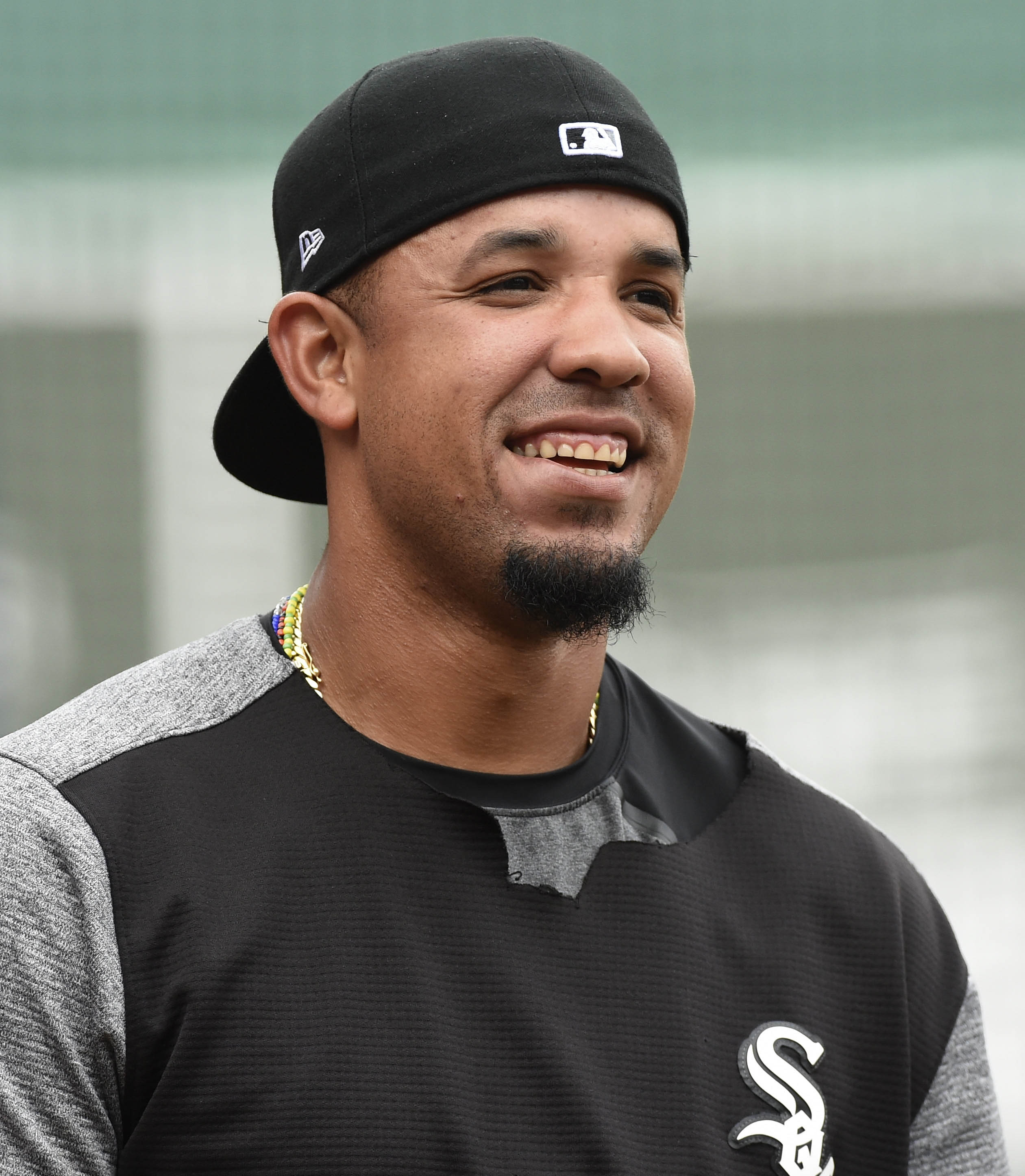
Abreu’s rising salary is not a problem for the Sox, who have next to nothing on the books. If the White Sox entertain trades for Abreu, his salary could take smaller payroll teams out of the mix. Still, he arguably could be the best hitter on the market aside from J.D. Martinez and will require a much smaller financial commitment than Martinez or fellow first baseman Eric Hosmer. Abreu also brings reliability that is unmatched by 2017 breakouts like Logan Morrison or Yonder Alonso.
Hahn will likely treat Abreu as he did Jose Quintana last winter: set a price, listen to offers, and hold him if those offers fall short. Penciling Abreu into the third spot in the order for the 2018 White Sox would likely please fans. An extension would be pushing too far, however, as Abreu is unlikely to provide surplus value in his age-33 season and beyond.
Right fielder Avisail Garcia is also controlled for two more seasons through arbitration. He presents a different calculus following a surprising season in which he hit .330/.380/.506. Garcia, 27 in June, should be in the prime of his career. He’s also less proven than Abreu, having shown a subpar bat until 2017.
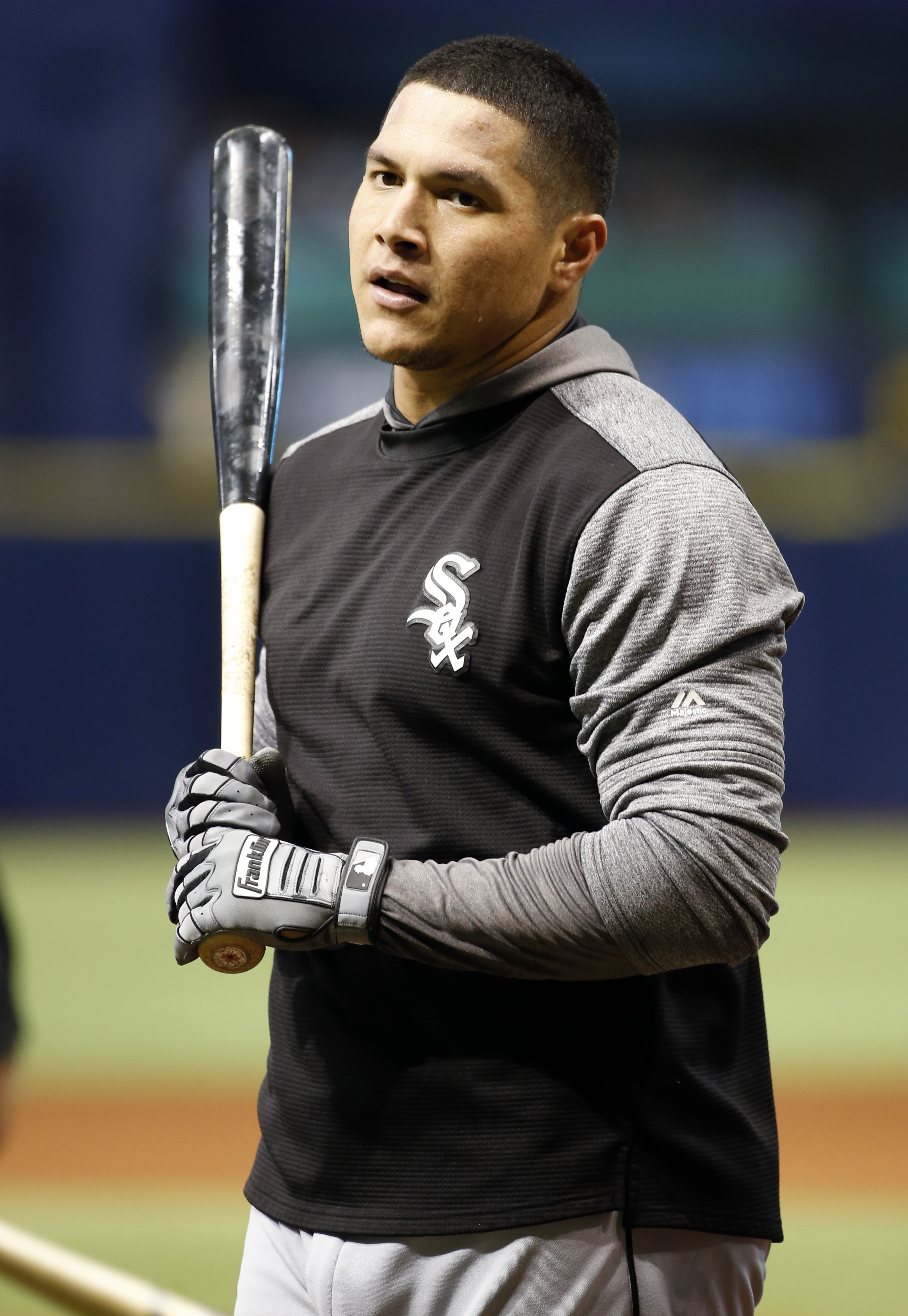
We project Garcia to earn $6.7MM in 2018, so he could be a bargain even though no one expects him to manage a .392 batting average on balls in play again. South Side Sox notes that Garcia’s expected weighted on-base average (found using Statcast data) suggests his new level is that of a well above-average player. Extending Garcia before he proves himself further could result in a discount for the White Sox, if the player is willing. If the numbers don’t add up for Hahn, Garcia becomes a trade candidate.
Trade chips aside, the White Sox must field a Major League team in 2018. While the 2017 season was surprisingly fun in spite of the team’s record, fans will expect progress in the standings with a more respectable product on the field as the rebuild enters its second phase.
The bullpen is an obvious area for Hahn to address this winter. Due to the trades of Robertson, Kahnle, Swarzak, Jennings, and Tyler Clippard, as well as injuries to Nate Jones and Zach Putnam, manager Rick Renteria had to survive with perhaps MLB’s least recognizable bullpen. 27-year-old Juan Minaya, a waiver claim from last year, was an up-and-down guy for the Sox until late June, and by mid-August he became the team’s closer. 30-year-old Gregory Infante signed a minor league deal in January and worked his way into high-leverage innings by season’s end. Most likely, Chicago’s bullpen will continue to present great opportunities to the game’s reclamation projects, especially after helping Swarzak and Kahnle turn around their careers. There’s room for mid-range additions as well, given the team’s sparse payroll commitments. While Hahn won’t be looking at Wade Davis or Greg Holland, the White Sox may add a few veterans in the $3-6MM per year range in addition to a likely significant number of minor league pacts.
The rotation is more settled. Veteran James Shields will retain a spot in the last year of his contract. Reynaldo Lopez and Lucas Giolito are in. Carlos Rodon will claim a spot, but his timetable is wide open currently as he recovers from shoulder surgery. As MLB.com’s Scott Merkin explained in September, Carson Fulmer is a contender for a spot and Michael Kopech will likely make his way up midseason. There seems to be room for at least one veteran addition, perhaps with last year’s $6MM deal with Derek Holland serving as a model. Free agent reclamation projects include Clay Buchholz, Jeremy Hellickson, Francisco Liriano, Wade Miley, Hector Santiago, and Chris Tillman.
The White Sox may also consider minor additions on the position player side. After going with Omar Narvaez and Kevan Smith behind the dish this year, the Sox could make a low-key veteran catcher addition from a list of many options. Leury Garcia showed well as the starting center fielder when he wasn’t battling injuries. Adam Engel and Charlie Tilson will be in the center field mix as well. Nicky Delmonico had a strong 166-plate appearance debut and should see time at left field and designated hitter. Yolmer Sanchez could be penciled in at third base with Moncada getting the nod at second and Anderson at shortstop. While they aren’t expected to contend for big names, the White Sox would benefit from adding both outfield and infield depth for 2018.
As Steve Adams outlined last month, the White Sox should consider taking advantage of their low payroll commitment to further boost their prospect stash. After arbitration raises, the team projects to have around $45MM committed to the 2018 payroll. Steve named bad contract examples such as Matt Kemp, Nick Markakis, Yasmany Tomas, Jacoby Ellsbury, and Wei-Yin Chen. The White Sox could agree to take on a contract like that in order to pry young players away from the club that is currently saddled with said contract. In the process, the Sox would also be supplementing their own 2018 team.
With most of the building blocks of the future already in the organization, the next phase of the White Sox rebuild will hinge on player development. The 2017-18 offseason figures to be much less eventful than the previous one for White Sox fans. Rick Hahn’s work is far from over, but the next White Sox playoff team is starting to come into view.
Photo courtesy of USA Today Sports Images.