
MLBTR Poll: The Jason Heyward Contract
We rarely hear such dramatically opposing takes on players as Jason Heyward has drawn in free agency. His reported signing today — for eight years & $184MM with the Cubs — only ratcheted things up another level.
It’s long been expected that Heyward would command this level of contract. MLBTR’s Tim Dierkes predicted ten years and $200MM. I guessed the same (and profiled Heyward’s free agent case, if you are interested in reading more). And we certainly weren’t out on a limb.
As I noted earlier tonight, Heyward’s deal, which critically includes opt-out rights after both three and four years, is arguably a more valuable compensation package than the $200MM pacts we posited. Regardless whether you think the other offers available were preferable, we can all agree that he was paid like a superstar.
There’s little sense in re-hashing all the arguments for and against Heyward here. The above links contain plenty of information in that regard, and most of our readers have probably already made up their minds.
So, time to make it official: does the MLBTR readership view Heyward as a prime-aged, prime-performing asset or a low-power hitter who just isn’t worth this kind of a deal?
Does Jason Heyward's Contract Properly Compensate Him?
-
No, he's just not worth that kind of money, even in this market. 61% (19,537)
-
Yes, he's a quality young player and was paid accordingly. 39% (12,721)
Total votes: 32,258
Mets Sign Asdrubal Cabrera
FRIDAY: The signing is official, per a team announcement. His option year is valued at $8.25MM, Heyman tweets.
WEDNESDAY, 8:38pm: Jim Duquette of MLB Network Radio on SiriusXM reports that Cabrera will receive $8.25MM in each of the next two seasons, plus a $2MM buyout on his 2018 club option, making a total guarantee of $18.5MM (Twitter link). Ken Rosenthal of FOX Sports tweets that Cabrera will be used mostly at shortstop but will also play some third base and second base in New York.
8:26pm: Jon Heyman of CBS Sports tweets that the Mets are indeed getting Cabrera.
8:19pm: The Mets and infielder Asdrubal Cabrera are finalizing a contract, reports SB Nation’s Chris Cotillo. Considering the fact that the Mets picked up Neil Walker in a trade earlier today, it would seem that Cabrera will take over as the team’s everyday shortstop. Cotillo adds that the deal is “expected to be” for two years with a club option.
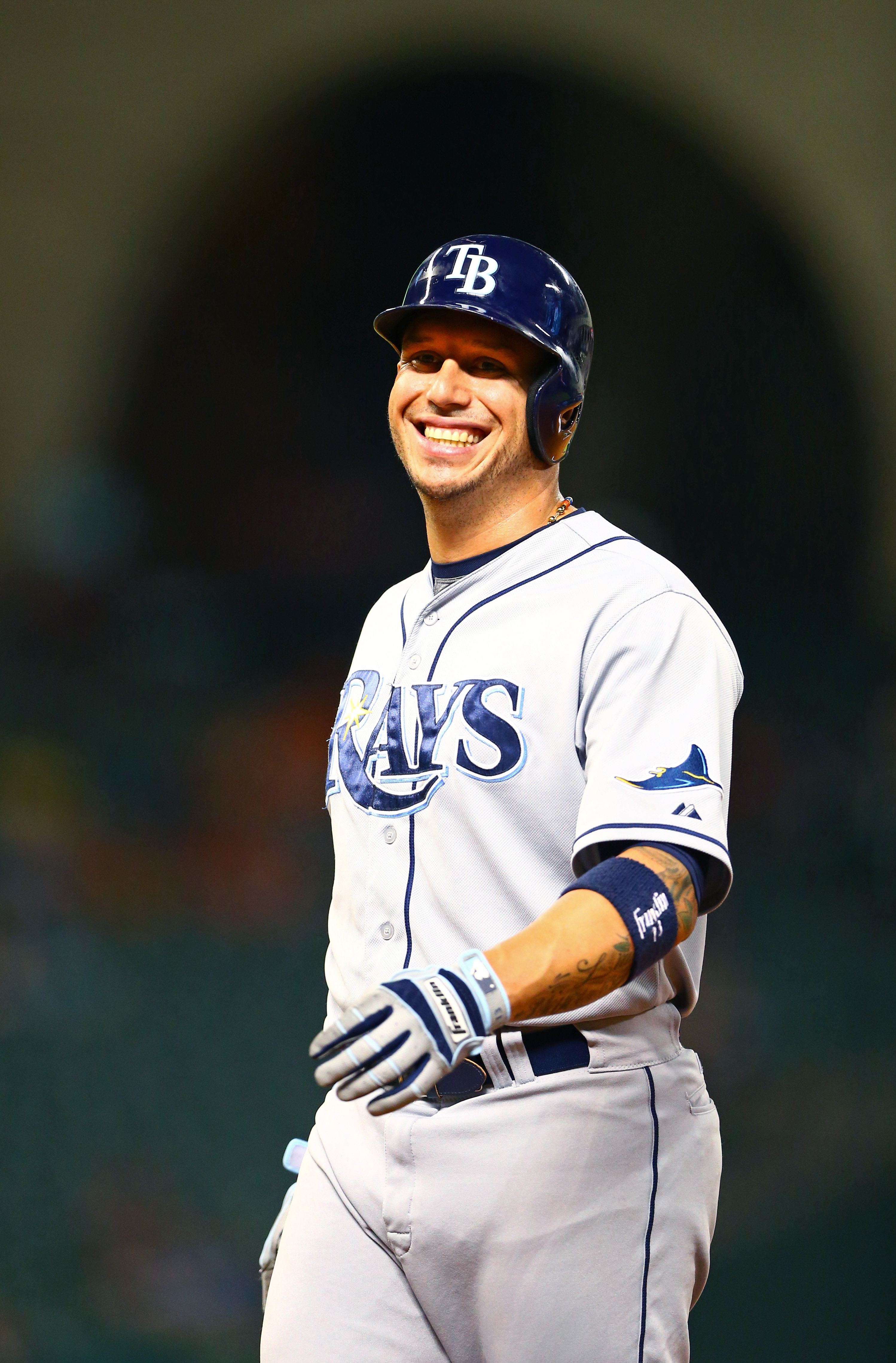
Cabrera, 30, is coming off a quality season with the Rays in which he batted .265/.315/.430 with 15 home runs and six stolen bases while serving as Tampa Bay’s everyday shortstop. The switch-hitter showed little in the way of a discernible platoon split and has indeed handle lefties and righties nearly equally throughout his entire big league career (.737 OPS vs. right-handers, .748 versus left-handers).
Cabrera will team with Walker to form a new double-play tandem, albeit one with considerable defensive question marks. Cabrera has never rated particularly well as a shortstop in the eyes of defensive metrics or in the general consensus of scouts, although the Mets reached the World Series in 2015 with poor overall defense up the middle as well. In 2015, Cabrera posted -7 Defensive Runs Saved and a -6 Ultimate Zone Rating. Though neither of those marks is positive, each represents an upgrade over the Mets’ collective efforts at shortstop from Wilmer Flores and Ruben Tejada last year — especially in the estimation of DRS (where Flores received a -10 and Tejada a -15). If Cabrera can serve as a somewhat below-average defender with above-average offense (especially relative to his peers) as he did with the Rays, he stands to rank as an overall upgrade.
The signing does bring into question the future of both Flores and Tejada, each of whom is recovering from a leg fracture. (Flores’ was suffered in the offseason and Tejada’s, of course, was suffered on Chase Utley‘s now-notorious takeout slide.) The Mets could carry each as utility players, similarly to the way that Kelly Johnson and Juan Uribe were on last year’s second-half roster, though the odds of that outcome would be greater were one or both men experienced in the outfield (as Johnson was). Dilson Herrera, too, figures to be impacted by today’s moves. The top second base prospect is believed by many to be nearly ready for the Major Leagues, but he’ll be blocked at least for the 2016 season (barring injuries) if not for the 2017 campaign (in the event that the Mets slide Cabrera over to second base once Walker is a free agent next offseason).
Any of Tejada, Flores or Herrera could draw trade interest from other clubs. Most will of course remember that Flores was nearly traded to the Brewers in a Carlos Gomez deal that fell through, so it stands to reason that other teams would have interest in acquiring him. However, there’s been nothing thus far to indicate that any of that trio will be shopped, and the Mets could simply head into the year with the whole group, providing the organization with a good deal of versatility.
Cabrera entered the offseason ranked 37th in terms of earning power on MLBTR’s free agent rankings, and his $18.5MM guarantee comes in $500K north of the two-year, $18MM pact projected back in early November.
Photo courtesy of USA Today Sports Images.
Michael Cuddyer To Retire
Mets outfielder Michael Cuddyer has decided to retire, Adam Rubin of ESPNNewYork.com reports on Twitter. Needless to say, that’s a major surprise, particularly as Cuddyer stands to earn $12.5MM this year in the second and final season of his contract.
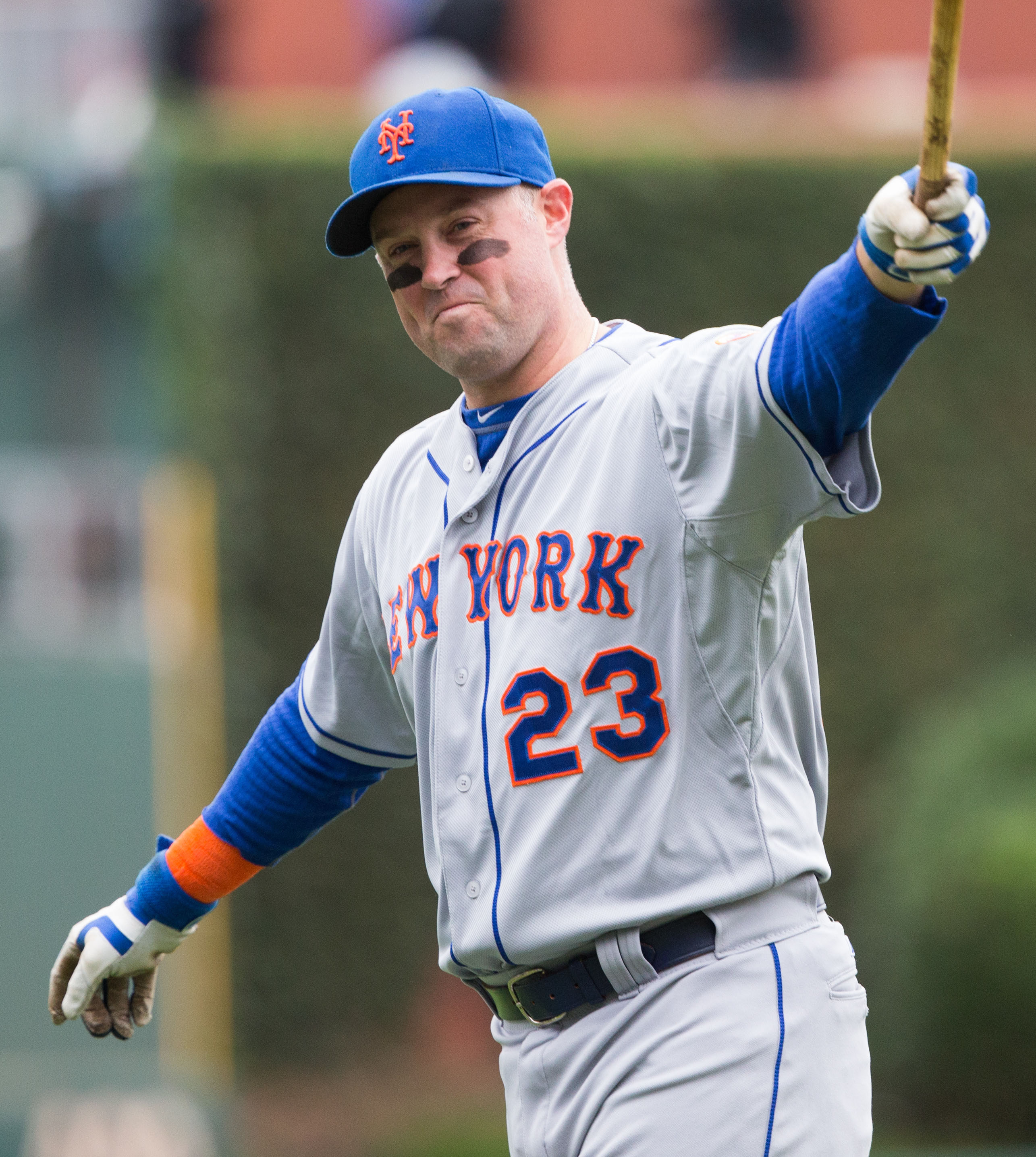
It has not yet been reported whether Cuddyer, 36, will receive any portion of his 2016 salary, though Rubin adds on Twitter that some kind of buyout seems likely. Cuddyer turned down a qualifying offer (then valued at $15.3MM) to sign with the Mets for two years and $21MM.
Cuddyer joined New York after two consecutive seasons of huge offensive numbers with the Rockies. Even after adjusting for altitude, Cuddyer was impressive at the plate, running up a 139 OPS+ over 2013-14. But awful defensive metrics and injury issues — combined with advanced age — limited his appeal.
That all caught up to Cuddyer in 2015, as he managed only a .259/.309/.391 slash line in 408 plate appearances. With his poor glovework counted in the tally, Cuddyer contributed at or just slightly above replacement level last year.
A tough season at the end of the line doesn’t detract from an outstanding career, of course. Over parts of 15 seasons in the majors, all but four of which came with the Twins, Cuddyer put up an excellent .277/.344/.461 batting line and swatted 197 home runs. He earned All-Star nods in 2011 and 2013.
While it would be unfair to lose focus on Cuddyer’s own accomplishments, it’s hard not to consider the impact of this news on the defending NL pennant winners. There was plenty of reason to believe that Cuddyer would have been a useful contributor in 2016, but his hefty salary stood to represent more than 10% of New York’s 2015 Opening Day payroll.
It remains to be seen how much spending capacity the Mets will have to reallocate, but there will surely be some added funds to disburse. And with Michael Conforto joining Curtis Granderson as the presumptive starters in the corners, those dollars won’t necessarily need to go directly to a replacement. Instead, after having already beefed up the team’s infield ranks, the Mets can either up their allocation to a new center fielder (with Juan Lagares becoming an oft-used fourth outfielder) or put the dollars toward another bench bat or reliever.
Photo courtesy of USA Today Sports Images.
Reported Runner-Up Offers For Heyward And Greinke
The most important numbers involved in any free agent scenario are, obviously, the final deal terms. But the offers made by other clubs are not only interesting but also potentially tell us something about the market — both at the time of the signing and even moving forward.
We heard plenty of discussion today about how much cash was dangled in front of two of this year’s three biggest free agent pieces: Jason Heyward and Zack Greinke. Heyward reportedly agreed with the Cubs for eight years and $184MM, with a contract provision allowing him two separate opportunities to opt out of the deal and re-enter the market. Meanwhile, after exercising just such a clause to jump back into the free agent waters, Greinke inked a mind-blowing six-year, $206.5MM deal with the Diamondbacks (which included some very significant deferrals).
Before entering those arrangements, both players considered multiple other arrangements. For Heyward, the elusive $200MM barrier was reportedly met or exceeded by both the Nationals and the Cardinals. (Per Derrick Goold of the St. Louis Post-Dispatch — here and here — and Ken Rosenthal of FOX Sports, on Twitter.) And at least one other team, possibly the Angels, also beat Chicago’s total guarantee with its bid. (That’s per Jeff Passan of Yahoo Sports, Twitter links; see here for the Halos’ late interest.)
Notably, though, we’ve not been told how many years Washington and St. Louis covered in their offers, and Bob Nightengale of USA Today tweets that it seems neither met the $23MM AAV that Heyward will reportedly receive. And as Keith Law of ESPN.com stresses on Twitter, it’s even more important to bear in mind that the opt-out opportunities carry significant value and that Heyward will owe less in state taxes in Illinois than he would have in the other locales.
While acknowledging the opt-out value, Passan notes that it’s nevertheless “uncommon” for a player to turn down a greater overall guarantee, and that’s largely true in the abstract. But it’s important to remember, too, that Heyward’s unique market placement — he hasn’t even reached the halfway point between 26 and 27 years of age — makes his situation quite a bit different from that of most free agents.
For one thing, Heyward’s age arguably increases the worth of those bail-out clauses even further, since he’ll gain the right to re-enter the market in advance of his age-29 season. That’s still early for a free agent, and might give Heyward a chance not only to step up his AAV (if his performance increases and/or salary inflation continues) but also to tack on more years down the line. Greinke pulled exactly that trick despite turning 32 before signing his new deal, and the upside for Heyward is even greater.
Also, gaining two opt-out points will allow Heyward to assess his market timing while keeping the future guarantee in his back pocket. That not only adds to the value going to him in this deal but also increases the uncertainty and risk for the Cubs.
It’s worth noting, too, that even if Heyward does play out the full eight years in Chicago, he’ll stand to hit the market again before he turns 35. That’s exactly the point in his career that Ben Zobrist finds himself as he joins the Cubs on a four-year, $56MM contract. There’s good reason to believe that Heyward will be plenty capable of continuing to earn money on the open market at the end of his deal, which makes it much easier (and arguably wise) to forego another year (or two) of commitment for a relatively marginal bump in the overall guarantee — all at the cost of annual earning power.
Simply put, without knowing whether the other bidders were willing to include similar opt-out terms, and without knowing the length of their proposals, it’s impossible to compare the offers. From my perspective, though, the deal that Heyward ultimately agreed to is a better contract for him than the straight ten-year, $200MM deal that we at MLBTR thought Heyward could command (see here and here).
As for Greinke, the veteran righty said today in his introductory press conference that he was literally minutes away from signing with some unknown other club before Arizona swept in. ESPN’s Molly Knight tweeted that the Giants were actually the runners up, making Greinke a six-year, $195MM offer.
But San Francisco’s president of baseball operations Brian Sabean has said publicly that the club was not comfortable promising Greinke a sixth year. And both Alex Pavlovic of CSN Bay Area (Twitter link) and John Shea of the San Francisco Chronicle (also on Twitter) strongly disputed the notion that the Giants had come anywhere near the D-Backs’ offer.
The Dodgers, too, are said to have balked at going to six years on Greinke, as MLB.com’s Mark Saxon was among those to note recently (Twitter link). It remains unclear how high the Los Angeles offer was, and whether it or another team was the one that nearly struck a deal with Greinke.
Looking at all of those reported offers, it seems clear that there are several clubs that have the capacity and willingness to spend much more money this winter than they have so far. That’s not to say that all will actually put that cash right back into free agency. But the potential is there, and it’s also notable that an unexpected team (the Diamondbacks) put so much cash onto the market.
All said, there’s plenty left to be spent. And that makes sense: more than half of MLBTR’s top fifty free agents — including six of the top ten — remain unsigned at present.
Outfield Notes: Royals, Rockies, Ozuna, Ruggiano, Nava
We’ve been waiting for the outfield market to kick into high gear, and it seems set to do just that with Jason Heyward reportedly going off the board to the Cubs. As ESPN.com’s Jerry Crasnick writes, the action is now on Justin Upton, Yoenis Cespedes, and Alex Gordon. But a solid group of other players — including Dexter Fowler, Denard Span, Gerardo Parra, and Austin Jackson — is also still available. And t
Here’s the latest:
- The Royals have had contact with the Rockies on their three potentially-available outfielders, per Crasnick. It seems that Carlos Gonzalez carries by far the highest asking price, per Crasnick’s report, but the other two Colorado outfielders reportedly on the block — Charlie Blackmon and Corey Dickerson — are cheaper and have greater control rights. In particular, Dickerson has put up some huge offensive numbers and won’t even hit arbitration until next year. While he missed time last year with plantar fasciitis and fractured ribs, he still looks to be a highly intriguing asset.
- Kansas City still is looking at Gordon as its first option, though, Crasnick adds. The club would probably turn to the next tier of free agency if it can’t pull off a Gordon re-signing or a trade. MLB.com’s Jeffrey Flanagan notes on Twitter that the team has “cast a wide net” in its search for outfield help.
- It seems less and less likely that the Marlins will end up dealing center fielder Marcell Ozuna this winter, as Crasnick tweets that the club has “aimed high” in its negotiations on the youngster. Miami has sought quality, young MLB pitchers — he mentions Yordano Ventura, Taijuan Walker, and Danny Salazar — and it’s not clear whether it will be amenable to settling for less.
- The Rangers have interest in free agent outfielder Justin Ruggiano as a right-handed depth piece, Evan Grant of the Dallas Morning News reports. Ruggiano is a very tough out for opposing southpaws, creating a potential fit with the heavily left-handed Texas lineup.
- Outfielder/first baseman Daniel Nava appears close to striking a deal with a team other than the Rays, despite Tampa Bay’s interest, according to Marc Topkin of the Tampa Bay Times. Nava, soon to turn 33, had a tough season last year, but at his best is a high-OBP switch-hitter.
Angels Sign Craig Gentry
FRIDAY: The $1MM is not actually guaranteed, according to Jeff Fletcher of the Orange County Register (Twitter links). Gentry’s contract is a major league deal but its full value isn’t promised, Jon Heyman of CBSSports.com explains on Twitter.
WEDNESDAY: The Angels have signed center fielder Craig Gentry to a one-year, Major League deal, per J.P. Hoornstra of the L.A. News Group and Mike DiGiovanna of the L.A. Times (links to Twitter). Gentry, a client of RMG Baseball, will earn $1MM and can net an additional $250K via incentives, tweets SB Nation’s Chris Cotillo.
Gentry, who turned 32 last week, will give the Angels a defensive-minded fourth outfielder with a history of solid offensive production against left-handed pitching, although he’s struggled at the plate in limited action over the past two seasons. Gentry is a career .274/.354/.366 hitter against lefties (.256/.321/.311 vs. righties) but has slumped dating back to 2014, hitting a combined .230/.297/.273 in 314 Major League plate appearances.
Gentry’s most valuable asset is his glove, as defensive metrics offer glowing reviews of his work in the outfield. In 1860 innings as a center fielder, Defensive Runs Saved pegs him at +40 runs, while Ultimate Zone Rating is similarly impressed at +37. He can also offer the Halos plenty of value on the basepaths, where he’s been successful in 77 of his 90 career attempts in stolen bases. Gentry’s career-high of 24 stolen bases came back in 2013 despite the fact that he received just 287 plate appearances that season.
By signing with the Halos, Gentry remains in the American League West — the only division he’s ever known. The Rangers took him in the 10th round of the 2006 draft, and he’s spent his entire career prior to this point in the Rangers and Athletics organizations.
Cardinals Expected To Pursue Alex Gordon
With Jason Heyward set to join the division-rival Cubs, the Cardinals are expected to make a push to add fellow free agent outfielder Alex Gordon, Bob Nightengale of USA Today reports on Twitter. Of course, Gordon has also reportedly drawn interest from deep-pocketed clubs like the Giants, Angels, and others, so his market promises to be robust.
St. Louis has also been rumored to have some interest in slugger Chris Davis, who might not be seen as an outfielder but could still fit in St. Louis, and Ken Rosenthal of FOX Sports posits on Twitter that he could still be an option. Going for Gordon, meanwhile, might also leave the team with some free capacity to add a starter, Rosenthal suggests.
It should be noted that it remains entirely unclear whether the Cards will plan to reallocate any cash that might have gone to Heyward (or to David Price) directly back into free agency. After all, the organization has not traditionally been one of the biggest factors in free agency. And while, owner Bill DeWitt Jr. has said that the Cards will “stretch” in the right situation, it’s not clear whether any such opportunities remain.
Of course, Gordon promises to command a far more limited commitment than did Heyward and Price. MLBTR’s Tim Dierkes predicted a $105MM commitment over five years, which is a hefty sum for a player who’ll soon turn 32 but is nowhere near the overall outlay needed to land the other two. It also still seems likely he’ll fall shy of Justin Upton and Yoenis Cespedes, the other top outfielders remaining on the market.
Cubs Exploring Trades For Rotation Upgrades
The addition of Jason Heyward has solidified the Cubs’ lineup top-to-bottom, more or less, and with his acquisition nearly complete, the Cubs are turning their focus to the trade market for starting pitchers, tweets Jon Morosi of FOX Sports. Morosi notes that the Cubs have had talks with the Padres about Tyson Ross and the Indians about both Danny Salazar and Carlos Carrasco.
The Cubs have plenty of prospect depth to dangle in trades, and the names of Jorge Soler and Javier Baez figure to be featured prominently in rumors as the team explores its options. Gordon Wittenmyer of the Chicago Sun-Times tweets, though, that the idea behind the Heyward signing is that he’ll play center field, with Kyle Schwarber manning left field and Soler playing right. That obviously doesn’t preclude a Soler trade, but it also indicates that the Cubs don’t necessarily feel the need to move Soler in order to open right field, as they did at second base when they traded Starlin Castro to the Yankees to clear a spot for Ben Zobrist.
Moving Soler in a trade would again create a hole in center field, although the free agent market has options such as Denard Span and familiar face Dexter Fowler (the latter of whom shares an agent with Heyward) that could be brought in to fill that role if need be.
Chicago’s rotation currently figures to include Jake Arrieta, Jon Lester, John Lackey, Kyle Hendricks and Jason Hammel, though one idea that we’ve kicked around in talking about trade scenarios here at MLBTR has been to include Hendricks as one of multiple pieces that could net the team an upgrade (that’s just speculation, of course). To this point in the offseason, the Cubs have been connected to the names mentioned by Morosi as well as the since-traded Shelby Miller, Jose Fernandez and many other arms. Names like Sonny Gray and Chris Sale are popular speculative targets, but neither is likely to be moved this winter.
Jason Heyward Makes Decision; Cardinals Out, Nats Pessimistic
11:54pm: Heyman tweets that the Nationals are believed to have offered about or exactly $200MM to Heyward.
11:52am: Ken Rosenthal of FOX Sports tweets that the Cardinals are “out” on Heyward.
11:50am: Jason Heyward has made a decision on which team he’ll sign with, a source tells Derrick Goold of the St. Louis Post-Dispatch (Twitter link). Goold writes that while the Cardinals were aggressive, it doesn’t sound like Heyward chose them. Jon Heyman of CBS Sports tweets that the Nationals aren’t optimistic about a deal, either. The Cubs are “very much in play,” says Goold, though no report has indicated that Chicago has agreed to terms with Heyward just yet.
Heyward was said recently to be nearing a decision, with the Cubs, Cardinals and Nationals as finalists. The Angels were, at one point, said to be a finalist also, and the Giants have been linked to him, though they reportedly never made a formal offer.
Astros Re-Sign Tony Sipp
Tony Sipp will officially be returning to the team with which he established himself as a bullpen weapon, as the Astros on Friday announced that he has re-signed with the club on a new three-year contract. Sipp, a client of the Bledsoe Agency, will reportedly receive an $18MM guarantee that will pay him an even $6MM per year from 2016-18.
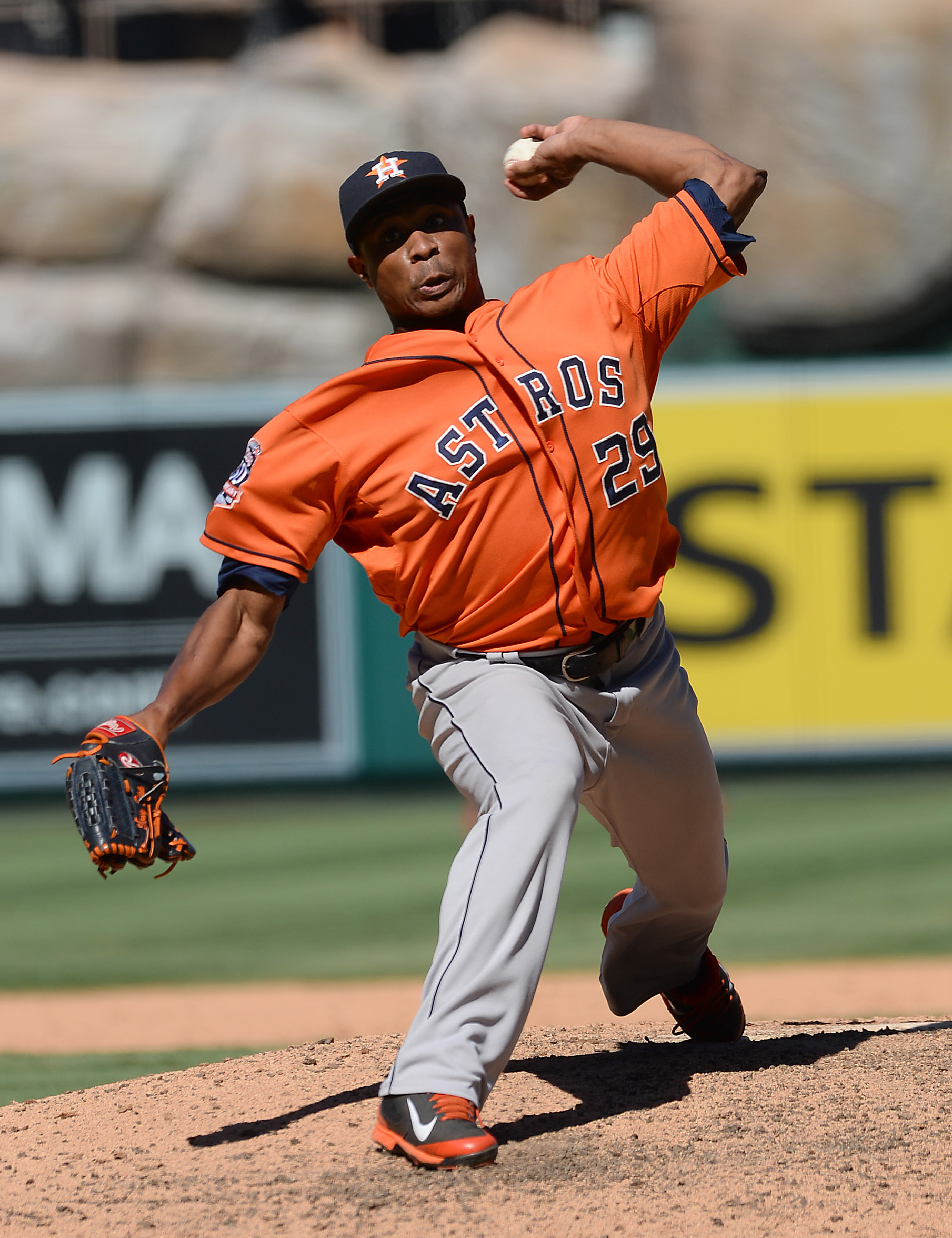
The 32-year-old Sipp began his career with the Indians and, for parts of five seasons, showed promise but wasn’t able to string together consecutive strong performances. That changed once he got to Houston, where he rattled off a pair of outstanding seasons in the bullpen from 2014-15.
Over the past two years, Sipp has worked to a combined 2.66 ERA with 10.7 K/9, 2.7 BB/9 and a ground-ball rate of roughly 35 percent. Sipp has shown a mastery over both right- and left-handed hitters, holding batters of each variety to a collective OPS mark south of .600 during his tenure with the Astros to date.
That represents a rare blend for a southpaw, and explains how Sipp was able to take down such a substantial commitment. While MLBTR’s Tim Dierkes correctly assessed that Sipp would command three years, his prediction was light on the cost as we’ve seen an explosion of interest in pen arms. Sipp’s contract lands at the top of the established range for quality free agent lefties. Some of the recent three-year southpaw comparables include Zach Duke ($15MM), Boone Logan ($16.5MM), and Jeremy Affeldt ($18MM).
For Houston, this year’s Winter Meetings ended up representing an opportunity to solidify the back of the bullpen, continuing a project that started last offseason. In addition to Sipp, of course, the ‘Stros added closer Ken Giles via trade. Those two will presumably join Luke Gregerson and Pat Neshek — last year’s key additions — among the options at the back of the Houston pen.
Mark Berman of FOX 26 Houston first reported the deal (Twitter link). Evan Drellich of the Houston Chronicle reported that it was a three-year deal, and Ken Rosenthal of FOX Sports tweeted that Sipp would be guaranteed $18MM. Drellich later tweeted the yearly breakdown.
Photo courtesy of USA Today Sports Images.