
Rays Sign Coco Montes To Minor League Deal
The Rays have agreed to a minor league contract with infielder Coco Montes, reports Marc Topkin of the Tampa Bay Times. The deal comes with an invitation to spring training. Montes last played for the Yomiuri Giants of NPB. He is a client of O’Connell Sports Management.
Selected by the Rockies late in the 2018 draft, Montes worked his way up through Colorado’s farm system. Though he was never a highly-rated prospect, he produced above-average offensive numbers every season in the minors while splitting his time between second base, third base, and shortstop. Amidst a strong 2023 season at Triple-A Albuquerque (.317/.400/.550, 128 wRC+), Montes earned his first promotion to the majors. However, his minor league success failed to translate to the MLB level. He went 7-for-38 (.184) with a 38 wRC+. To add insult to injury, he managed to accumulate -3 Outs Above Average in a minuscule 93-inning sample size at second base. He was designated for assignment and outrighted to Triple-A in September.
Montes earned an invitation to big league spring training in 2024, but he failed to make the team out of camp. Undeterred, he continued hitting well at Triple-A in 2024. In fact, it was arguably the best season of his career. In 297 trips to the plate, he slashed .335/.414/.551, good for a 140 wRC+. Yet, the Rockies never gave him another chance to test his righty bat in Colorado. Rather, they granted him his release in June, allowing him to sign with the Yomiuri Giants in Japan.
In 46 games with the Giants, Montes slashed .272/.308/.391 with a .699 OPS. That might not seem as impressive as his Triple-A slash lines, but keep in mind that he was playing in a completely different offensive environment. Indeed, Montes outperformed the Central League averages in all three triple-slash categories. His 13.2% strikeout rate was also much better than the 18.8% league average. That low strikeout rate helped him produce above-average offensive numbers despite drawing just seven walks and hitting only one home run.
Now entering his age-28 season, Montes will look to make his way back to MLB with the Rays. His defensive versatility is his main asset; Topkin suggests he could cover left field in addition to playing all around the infield. If the Rays can help him translate some of his offensive success from Triple-A and NPB to the majors, even better.
Topkin also points out that Montes will have opportunities to opt out of his contract if he does not make the big league roster. In addition, he will have the choice to elect free agency at the end of the 2025 season.
Rangers Sign Patrick Murphy To Minor League Deal
The Rangers have signed right-handed pitcher Patrick Murphy to a minor league contract, the team announced. The deal comes with an invitation to spring training. Murphy last appeared in the majors in 2022.
Over parts of three seasons with the Blue Jays and Nationals from 2020-22, Murphy pitched 39 2/3 innings across 35 games. He put up a 4.76 ERA and 4.31 SIERA, thanks in large part to a 48.0% groundball rate that helped him limit opposing batters to just three home runs. However, that wasn’t enough to keep either Toronto or Washington interested in having him around for long. The Blue Jays, who drafted the righty in 2013, designated him for assignment in August 2021. The Nationals, who had picked him up off of waivers, sent him outright to Triple-A in April 2022. He elected free agency at the end of the season.
Murphy spent the 2023 campaign in the Twins system. He pitched relatively well at Triple-A, putting up a 3.69 ERA and 4.40 FIP in a hybrid reliever/long reliever/starter role. Unfortunately, he failed to earn a promotion to the big league squad at any point during the year. However, his performance drew the attention of the Hokkaido Nippon-Ham Fighters of NPB, who signed him to a one-year contract with a team option for 2025.
Murphy had a serviceable 2024 campaign for the Fighters. His 3.26 ERA in 38 2/3 innings looks impressive by MLB standards, but it’s important to keep in mind that the league-average ERA in the Pacific League this past year was 3.04. What’s more, his 9.5% walk rate was notably worse than the 7.3% league average. Murphy also made a handful of starts for the Fighters’ minor league affiliate in the Eastern League, pitching to a 4.29 ERA in 21 innings; the league average was 3.28.
At the end of the season, the Fighters chose not to exercise Murphy’s option for 2025. The Rangers, however, must have seen something to like in his arm. The team has made several additions to the big league bullpen this winter, and they might not be finished, but there still could be a couple of spots available for the taking this spring. Murphy won’t be a favorite to make the Opening Day roster, but his ability to pitch multiple innings in an outing means he is an appealing depth option for the team to stash at Triple-A.
Rangers Interested In Re-Signing Kirby Yates
The Rangers have already added four relievers this offseason: Robert Garcia, Jacob Webb, Shawn Armstrong, and Hoby Milner. However, they’re still lacking a proven high-leverage arm; Webb, Garcia, Armstrong, and Milner have a total of 15 career saves among them. With that in mind, president of baseball operations Chris Young still has work left to do. He acknowledged as much, telling Evan Grant of The Dallas Morning News, “We’re going to need to continue to pursue leverage arms.”
To that point, The Athletic’s Ken Rosenthal recently described re-signing Kirby Yates as “a priority” for Texas. Similarly, Grant wrote that they would “absolutely love” to re-sign their All-Star closer. Yates was phenomenal for the Rangers in 2024. The veteran right-hander pitched to a 1.17 ERA and 2.85 SIERA in 61 appearances, saving 33 games in 34 chances. He was just as successful at inducing whiffs as he was at limiting hard contact, thanks to a highly effective four-seam and splitter pairing. Despite his 37 years of age, he was one of the most dominant closers in the game, vastly outperforming the one-year, $4.5MM contract he signed ahead of the season.
It’s easy to see why the Rangers would love to reunite with Yates, even though he’ll come with a much higher price tag this time. MLBTR put Yates at no. 38 on our Top 50 Free Agents list, predicting he’d sign a one-year, $14MM deal. Young might have to get creative to find room in the budget for a contract like that – Texas is reportedly trying to drop beneath the luxury tax threshold in 2025 – but his recent decision to trade Nathaniel Lowe shows he’s not afraid to do just that. RosterResource currently puts the Rangers’ luxury tax payroll at approximately $229MM, which is $12MM below the first tier of the tax. Signing Yates could push them over, but not so far over that Young wouldn’t be able to find a way to bring them back down.
The Rangers bullpen finished 26th in ERA and 23rd in SIERA in 2024. To make matters worse, they lost their four most experienced, high-leverage arms to free agency: Yates, David Robertson, Andrew Chafin, and José Leclerc. Arms like Webb, Garcia, Armstrong, and Milner will be much-needed reinforcements, but none can quite replace what the team lost at the back end of the ‘pen. Thus, bringing back Yates makes perfect sense. A.J. Minter, another veteran arm who has been linked to the Rangers, could potentially fill that hole instead.
Astros DFA Grae Kessinger
After officially announcing the Christian Walker signing earlier today, the Astros have designated infielder Grae Kessinger for assignment to open a spot for Walker on the 40-man roster (per Chandler Rome of The Athletic).
Kessinger, 27, was Houston’s second-round pick in the 2019 draft. The grandson of six-time All-Star Don Kessinger, he showed off excellent bat-to-ball skills in college, hitting .330 with a .904 OPS in his junior year at Ole Miss. However, evaluators had concerns about his ability to keep up against major league pitching. There were also rumblings he wouldn’t be able to stick at shortstop. Indeed, Kessinger struggled at the plate over his first few years in the Astros farm system, and he played all around the infield as the organization looked to maximize his versatility.
After his promotion to Triple-A in 2023, Kessinger seemed to take a step forward at the plate. He improved his walk-to-strikeout ratio and put up an .832 OPS and a 107 wRC+. It was enough to earn him a call-up to the big league club that summer. However, he failed to make an offensive impact at the major league level, going 8-for-40 with 12 strikeouts, good for a .614 OPS and 73 wRC+ in 26 games.
Despite his big league struggles in 2023, Kessinger made the Astros’ Opening Day roster in 2024. Unfortunately, he continued to come up short against MLB pitching. In 25 plate appearances, he didn’t manage a single hit. He walked thrice, reached once on a hit-by-pitch, and struck out seven times. To make matters worse, he regressed at Triple-A as well. His OPS dropped by more than 100 points from the year before, while his wRC+ fell to a well-below-average 83.
Considering all his struggles at the plate, it’s hardly surprising to see Kessinger DFA’d. However, he can still provide value with his versatility – he’s played all four infield positions at the MLB level – and there could certainly be a team that sees enough potential in the former second-round pick to claim him off of waivers. If not, the Astros will have the option to send him outright to the minors and keep him in the organization.
Phillies Sign Joe Ross
The Phillies and Joe Ross have agreed to a one-year contract, the team confirmed. Matt Gelb of The Athletic, who was first to report the signing, adds that Ross will receive a $4MM salary. The right-hander, who has experience as a starter and a reliever, is expected to take on a swingman role in Philadelphia. To free up a space for Ross on the 40-man roster, the Phillies have designated fellow righty José Cuas for assignment.
Ross, 32 in May, spent the 2024 season with the Brewers. He opened the year in Milwaukee’s rotation, making nine starts with a 4.50 ERA and 4.65 SIERA through mid-May. Unfortunately, a lower back strain landed him on the IL for more than two months in the middle of the year. He made one poor start upon his return before moving into the bullpen.
It was there that Ross thrived, pitching to a 1.67 ERA and 3.89 SIERA in 27 innings of work. Although his fastball velocity didn’t increase by much, he raised his strikeout rate from 18.7% as a starter to 24.1% as a reliever. He also did an excellent job limiting extra-base hits. While the righty gave up more fly balls and fewer grounders, he dropped his opponents’ isolated power from .134 to .060. In addition, Ross provided the Brewers bullpen with valuable length; he threw more than one inning in 10 of his 15 relief appearances.
Ultimately, the sample size of Ross’s 2024 season is relatively small. He pitched 47 innings as a starter and 27 out of the bullpen. Meanwhile, the sample size of his 2022 and ’23 seasons is non-existent. He landed on the IL with a UCL injury in August 2021, underwent his second career Tommy John surgery in May 2022, and did not pitch in the majors again until this past year.
From 2015-21, Ross was a capable pitcher when healthy. In 76 starts and 22 relief appearances for the Nationals, he put up a 4.26 ERA and an identical 4.26 SIERA. In 2024, he showed he could still be that arm. Across 74 innings, he produced a respectable 3.77 ERA and 4.38 SIERA. He went at least five innings in seven of his 10 starts and held his opponents scoreless in 12 of his 15 relief appearances. It’s easy to see what the Phillies like in a guy who can provide depth for the rotation and length for the bullpen. At the same time, it’s easy to see why fans might be nervous. Ross has a lengthy injury history that has prevented him from ever pitching more than 27 games or 108 innings in a season. That upside is why he landed a major league deal; his injury history is why it’s only a $4MM guarantee, pocket change for a Phillies team with a projected $289MM payroll (per RosterResource).
In a media availability last week, Phillies president of baseball operations Dave Dombrowski said he was looking for a swingman type who could pitch out of both the rotation and the bullpen. However, after the team’s surprise acquisition of starter Jesús Luzardo, it was unclear if Dombrowski was still seeking another pitcher. With a projected rotation of Zack Wheeler, Aaron Nola, Cristopher Sánchez, Ranger Suárez, and Luzardo, the Phillies could have opted to use Taijuan Walker as their swingman. The veteran lost his starting job this past year amidst a career-worst season. In 19 appearances (15 starts) he pitched to a 7.10 ERA and 5.25 SIERA in 83 2/3 innings of work.
With Ross in the fold, it’s hard to guess what Walker’s role will be with the Phillies in 2025 – if he’ll have one at all. The seven locks for the 2025 bullpen are José Alvarado, Matt Strahm, Jordan Romano, Orion Kerkering, José Ruiz, Tanner Banks, and Ross. That only leaves one spot left on the pitching staff. The Phillies could give that spot to Walker, but they might prefer to go with a higher-upside young arm rather than carrying two long men. Max Lazar, whom Dombrowski mentioned in his media availability last week, is one name on the 40-man roster to keep in mind. As for any further outside additions, the POBO suggested he’s likely done supplementing to the bullpen (per Gelb). For now, Walker will prepare to compete for a bullpen job and provide additional starting depth in case of injury. Still, one has to presume the Phillies are looking for any way to offload his contract this winter. He is set to earn $36MM over the next two seasons.
Cuas did not appear in a game with the Phillies in 2024. After beginning his career with the Royals in 2022, he was traded to the Cubs at the deadline in 2023. Chicago DFA’d him this past June, and the Blue Jays claimed him off of waivers. Toronto would DFA him as well before the end of the year, and although the Phillies claimed him in September, they optioned him to Triple-A and never called him up. The right-hander has a career 4.37 ERA and 4.43 SIERA in 119 1/3 innings. He also has two option years remaining. That should help him find a new club to sign him as a depth arm for 2025.
Rays Sign Eloy Jimenez To Minor League Deal
3:13 pm: Jimenez will earn a guaranteed $2MM salary if he makes it onto the team, reports Héctor Gomez of Z101 Digital. He can earn an additional $2MM in playing time incentives.
12:13 pm: The Rays are in agreement with designated hitter Eloy Jimenez on a minor league deal, per a report from Jesse Rogers of ESPN. The deal presumably includes an invite to major league Spring Training.
Jimenez, 28, signed with the Cubs out of the Dominican Republic as an international amateur and made his pro debut in 2014. He quickly rocketed up prospect rankings and was eventually included alongside Dylan Cease in the crosstown trade that brought Jose Quintana to Wrigley Field. Jimenez’s top prospect star continued to shine with the White Sox, and they eventually signed him to a long-term deal prior to his big league debut in 2019. The $43MM guarantee gave Chicago control over Jimenez for eight seasons in a record-setting deal for a prospect who had not yet made his big league debut.
The deal initially looked like something of a coup as the slugger burst onto the scene in the majors with a fourth-place finish in AL Rookie of the Year voting in 2019 before Jimenez slashed .295/.332/.559 (138 wRC+) with 14 homers in just 55 games during the shortened 2020 season. Jimenez’s excellent offense helped to lead the White Sox to their first playoff appearance since 2008, and while they fell to the A’s in three games it seemed as though the South Siders were in position to compete for years to come with Jimenez as a key part of the core.
Things didn’t turn out that way, unfortunately. Jimenez was limited to just 139 games and 558 trips to the plate over the next two seasons due to a myriad of injuries, and while he posted a 125 wRC+ during that time the missed time combined with Jimenez’s lackluster defense in the outfield led Chicago to make him more or less a full-time DH going forward. While Jimenez stayed healthy enough to play 120 games in 2023, his offense left much to be desired as he slashed just .272/.317/.441 with 18 homers in 489 trips to the plate. That was good for a 105 wRC+ which, while above average, left him as a roughly replacement level DH (0.6 fWAR).
After losing 101 games in 2023, the White Sox were surely hoping Jimenez would rebound enough in 2024 to build up his trade value and bring in an interesting piece or two for the rebuild they had kicked off by trading away Dylan Cease and declining Tim Anderson‘s club option during the offseason. Unfortunately, the slugger did anything but as he turned in by far the worst performance of his career in 2024. In 98 games with the White Sox and Orioles, Jimenez hit a paltry .238/.289/.336 and was worth -0.9 fWAR. That below replacement level production made it an easy decision for Baltimore to cut him loose this winter, making him a free agent for the first time in his career.
That’s led him to the Rays, who are coming off a disappointing 2024 season in large part thanks to a lackluster offense. Given Jimenez’s own offensive struggles, he’s hardly a guarantee to help with that. But adding a bat with his potential upside on a minor league deal can’t hurt the club’s efforts to but forth a stronger lineup in 2025, and even if Jimenez only manages the 105 wRC+ he posted 2023 that would still be an upgrade over the 97 wRC+ the Rays got out of their DH slot last year. Should Jimenez make the roster out of camp, he’d join youngsters like Christopher Morel, Jonathan Aranda, and Jonny DeLuca in vying for playing time in the outfield and at DH.
Rangers Sign Shawn Armstrong To Major League Deal
The Rangers announced this afternoon that they’ve signed right-hander Shawn Armstrong to a one-year, major league deal. In order to make room for Armstrong on the 40-man roster, catcher Sam Huff was designated for assignment.
Armstrong, 34, is a veteran of 10 major league seasons. He bounced between Cleveland, Seattle, Baltimore, and Miami as a roughly league average (99 ERA+) middle reliever before finally establishing himself with the Rays in 2022. The right-hander posted a 3.60 ERA with a 3.25 FIP in 55 innings of work for Tampa that season, with a 26% strikeout rate against a 5.4% walk rate. His strong walk rate was particularly notable given that Armstrong had struggled a bit with his command earlier in his career and entered the 2022 campaign with a career 9.2% walk rate.
That solid work earned Armstrong a role in the club’s bullpen the following year as well, and 2023 proved to be a career year for the righty. He pitched to a sparkling 1.38 ERA in 52 innings of work to go along with a 2.54 FIP, though he didn’t break into the club’s group of top high leverage options and instead was used more frequently as a multi-inning option. 16 of his 39 appearances saw him record more than three outs, including 12 where he recorded two full innings or more. Unfortunately, Armstrong did not manage to keep up those strong results in 2024. The right-hander bounced between the Rays, Cardinals, and Cubs this year but posted a below-average 4.86 ERA (84 ERA+) despite a solid 3.57 FIP. Despite that solid peripheral figure, there were some signs of regression for the right-hander as his strikeout rate dipped to just 22.4% against an 8.5% walk rate.
Now that he’s latched on with the Rangers, Armstrong will join a bullpen that the needs a major retool after losing Jose Leclerc, David Robertson, and Kirby Yates to free agency last month. He’s the fourth addition to the relief corps GM Chris Young has made this winter, joining Hoby Milner, Robert Garcia, and Jacob Webb. That quartet of signings should help to raise the floor in the bullpen, and Garcia in particular is a Statcast darling who profiles as a potential late-inning arm. With that being said, it seems likely the club will need to make at least one more addition with late-inning experience after losing its top three relievers simultaneously.
As for Huff, the 26-year-old was a seventh-round pick by the club back in 2016 and received some top-100 prospect buzz early in his career after tearing through the minors and hitting an incredible .355/.394/.742 in a ten-game cup of coffee during the shortened 2020 season. Impressive as that first taste of the majors was for Huff, he posted a roughly league average .244/.299/.409 in 65 games over the next three seasons and in 2024 made it into just three games. Huff’s numbers also took a major step backwards in Triple-A this past year, as he hit just .246/.310/.416 in the inflated offensive environment of the Pacific Coast League.
With Jonah Heim and the newly-signed Kyle Higashioka seemingly locking up playing time at the big league level for the Rangers for the foreseeable future, the Rangers clearly felt Huff was expendable given that he’ll be out of options in 2025 and need to either be carried on the big league roster or passed through waivers. Typically the Rangers would have one week to either work out a trade involving Huff or attempt to pass him through waivers. With that said, that clock has put on pause over the holidays in previous seasons, so it’s possible that a resolution for Huff won’t ultimately be announced until the new year. Should Huff clear waivers, the Rangers would have the opportunity to outright him to the minor leagues as non-roster depth.
Astros Sign Christian Walker
December 23: The Astros have officially announced Walker’s signing. According to Chandler Rome of The Athletic, the deal includes a limited no-trade clause and will pay Walker an even $20MM annually per season.
December 20: A new-look Astros club will have a new first baseman in 2025, as the team has reportedly agreed to terms on a three-year, $60MM contract with free agent Christian Walker. The CAA client’s deal is still pending a physical.
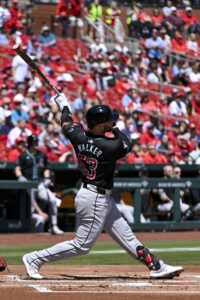
Walker’s deal with Houston seems to shut the door on the possibility of a reunion with Alex Bregman. Houston recently acquired Isaac Paredes from the Cubs as part of the trade sending Kyle Tucker to Chicago, and while Paredes could’ve played first base with Bregman in the fold, he’ll be slotted in at third base with Walker now on board. Similarly, this effectively eliminates any chances of Nolan Arenado landing in Houston — an outcome that was all but at the finish line before Arenado invoked his no-trade clause to nix the deal.
Walker, 34 in March, has been a target of the Astros for some time now, dating back to the trade deadline when was reportedly at the top of their wishlist. A deal didn’t get done then, obviously, but Houston still has a need at first base after their three-year deal with Jose Abreu almost immediately imploded on them. Houston first basemen — led by Abreu and Jon Singleton — turned in an awful .226/.291/.360 batting line on the season in 2024. Walker, meanwhile, hit .251/.335/.468 — almost an exact match for the .253/.333/.464 line he carries through 3171 plate appearances dating back to the 2019 season.
On top of his quality results at the plate, Walker has emerged as arguably the premier defensive first baseman in MLB. He’s won three straight Gold Glove Awards in the National League and leads all first basemen in Defensive Runs Saved (33) and Outs Above Average (39) over the past three seasons. Matt Olson (27) and Carlos Santana (20) are second in those respective metrics. Walker’s defensive excellence at his position has essentially been unmatched.
Both Walker and the recently acquired Paredes are strong fits for the Astros, given the short left field porch at the newly renamed Daikin Park. That’s more true of Paredes, who’s one of the game’s most dead-pull and prominent fly-ball hitters. Walker has more of an all-fields approach, but when isolating his splits on pulled batted balls, he ranks 15th among qualified hitters in fly-ball rate (32.2%). Put more simply, Walker may spray the ball around a bit more than Paredes, but when he does pull the ball, he lifts it far more often than the vast majority of big league hitters. For a right-handed hitter with plenty of pop in his bat, that should play quite nicely with a 314-foot left field porch.
It’s been a bull market for free agents this offseason, and Walker had accordingly been hoping to land a four-year deal. He’ll “settle” for a year less than that on a deal that aligns with early expectations. His three-year, $60MM deal is an exact match for our predicted contract back on MLBTR’s annual ranking of the offseason’s top 50 free agents.
The $20MM annual salary on the contract puts the Astros north of the luxury tax threshold for what would be a second straight season. RosterResource now projects them at $244MM of luxury obligations — $3MM north of the $241MM tier-one threshold for the coming season. Their bottom-line payroll will depend on how that $60MM is divided over the three years of the deal, but if it’s evenly distributed, Houston would be just over $225MM in terms of actual player salary. (The luxury tax is calculated separately and based on the average annual value of all the team’s contracts.)
It’s still possible the Astros could duck back under the tax threshold. They’re reportedly telling teams they don’t intend to trade top starter Framber Valdez, but they’ve been exploring the trade market for reliever Ryan Pressly, who’s set to earn $14MM in 2025. More speculatively, they could also gauge interest in backup catcher Victor Caratini and his $6MM salary, then turn that role over to Cesar Salazar, who hit well in Triple-A and the majors this past season.
Dropping back under the tax line, however, doesn’t appear to be any kind of mandate. Owner Jim Crane said earlier in the winter that he “had the wherewithal” to cross that line and match his 2024 levels of spending if the right scenario presented itself. At the time, few envisioned that would entail trading Tucker and letting Bregman walk, but the Astros have been averse to the types of long-term megadeals both players — Tucker in particular — are expected to command. Houston hasn’t given out a contract longer than Yordan Alvarez‘s six-year, $115MM contract or Jose Altuve‘s six-year, $157.5MM extension under Crane’s ownership, the latter also being the largest guarantee in franchise history.
As a result, the Astros will give out their second three-year deal to a mid-30s first baseman in the past three years. Houston signed the aforementioned Abreu to a $58.5MM deal in the 2022-23 offseason and will still be paying Abreu $19.5MM this coming season after releasing him at the contract’s halfway point. That deal was negotiated by Crane himself and senior advisor Jeff Bagwell, as it came in the lull between the team’s dismissal of former GM James Click and the hiring of current GM Dana Brown. Astros fans may feel some trepidation about another multi-year deal for a first baseman well past his 30th birthday, though it bears mentioning that Abreu was 36 in year one of his contract; Walker will be 36 in the final season of this deal.
Walker declined a $21.05MM qualifying offer from the D-backs at the end of the season. As such, he’ll cost the Astros their second- and fifth-highest picks in the 2025 draft, as well as $1MM of space from their league-allotted bonus pool for international amateur free agency. That’s the steepest penalty possible for signing a qualified free agent, but the Astros find themselves in that tier as a result of exceeding the luxury tax threshold in 2024. The fact that they exceeded the tax threshold also means they’d only receive a compensatory pick after the fourth round in the now-likely event that Bregman signs elsewhere.
As for the D-backs, they’ll receive a comp pick after the first round, because Walker’s agreement is for more than $50MM guaranteed. It’ll be a nice parting gift, but Walker’s production will be tough to replicate with in-house options. Former top-10 draft pick Pavin Smith hit well in 158 plate appearances last season, but that was his first big league success in parts of five seasons and came in a small sample. The Snakes can hope for a similar late-bloomer trajectory to the one taken by Walker, but odds are against that. They could look to affordable alternatives in free agency (e.g. Carlos Santana, Justin Turner, a Josh Bell reunion) or sift through a deep trade market of first base options that includes Yandy Diaz, Josh Naylor, Nathaniel Lowe and perhaps Triston Casas (though the asking price on Casas would be extreme and surely cost the D-backs some coveted young pitching).
Robert Murray of FanSided first reported that the two sides were in advanced talks and closing in on a deal. Jim Bowden of The Athletic and MLB Network Radio reported that an agreement was in place, pending physical. USA Today’s Bob Nightengale reported the terms.
Pirates Re-Sign Andrew McCutchen
1:12pm: The Pirates have officially announced the deal.
9:05am: The Pirates are in agreement with veteran outfielder Andrew McCutchen, per the team’s social media account. The deal came together this morning. MLB.com’s Alex Stumpf and the Pittsburgh Post-Gazette’s Andrew Destin were the first to report the terms of the contract: it’s a one-year deal that guarantees McCutchen $5MM.
McCutchen, 38, returns to Pittsburgh for his 12th season with the club and 17th season in the majors. Selected by the Pirates eleventh overall in the 2005 draft, McCutchen debuted with the club in 2009 and quickly established himself as a franchise player. He was the face of the Pirates throughout the 2010s until he was traded to the Giants prior to the 2018 season, and enjoyed an otherworldly five-year run in Pittsburgh where he slashed .302/.396/.509 (151 wRC+) en route to an MVP award, four Silver Sluggers, a Gold Glove, and five All-Star appearances.
In his five seasons away from the Pirates, McCutchen was no longer the impactful bat he was at his peak but nonetheless remained a solid, steadying presence in the lineup for the Giants, Yankees, Phillies, and Brewers. In 549 games for those clubs from 2018 to 2022, McCutchen hit a respectable .242/.343/.423 with a 110 wRC+. While he lacked the consistent power and high batting averages of his days in Pittsburgh, the veteran still provided value by getting on base at a strong clip thanks to a fantastic 12.7% walk rate during that span.
After the first below-average offensive season of his career with Milwaukee in 2022, he returned to Pittsburgh on a one-year, $5MM contract prior to 2023. He’s since signed identical contracts in the 2023-24 and now the 2024-25 offseasons, and the year-to-year arrangement seems to be working out quite well for both sides as the Pirates inch closer to a return to contention for the first time since McCutchen’s first stint with the team came to an end. Meanwhile, McCutchen has continued to age gracefully with solid production as the club’s regular DH over the past two seasons. His overall numbers in that time are remarkably similar to the five years he spent playing for other clubs, as he’s hit .243/.352/.403 with a wRC+ of 110. Since returning home to Pittsburgh, McCutchen has also reached a number of impressive career milestones including 2,000 hits, 1,000 walks, and 300 home runs.
Looking ahead to 2025, McCutchen figures to provide the Pirates with his typical steady production at DH. It’s the club’s second major move of the offseason after swapping Luis Ortiz to the Guardians in order to land Spencer Horwitz. McCutchen and Horwitz by themselves aren’t likely to dramatically alter an offense that finished third from the bottom in wRC+ with a figure of 86 that bested only the Rockies and White Sox, but there’s reason to believe the club plans to make additional moves as the offseason continues. Previous reports have connected the club to the corner outfield and bullpen markets this winter, and plenty of interesting players remain available in free agency and on the trade market at those positions. While the Pirates are hardly ever particularly big spenders, the club’s $79MM payroll projection for 2025 from RosterResource is $8MM below the club’s 2024 payroll, suggesting that there’s at least some room for additional moves even after bringing back McCutchen.
Red Sox Sign Patrick Sandoval
The Red Sox announced the signing of lefty Patrick Sandoval to a two-year free agent deal. The Wasserman client is reportedly guaranteed $18.25MM. He’ll make $5.5MM in 2025 and $12.75MMM in 2026. Boston’s 40-man roster is now full. Sandoval is currently recovering from Tommy John surgery, performed in June. He’ll miss at least the first half of the 2025 season, if not a bit more, but could be a late-season option in Boston and should be a member of their 2026 rotation.
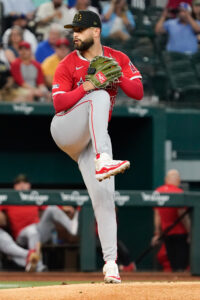
Sandoval’s two-year guarantee makes the Angels’ decision to non-tender him and his $5.9MM projected salary (via MLBTR contributor Matt Swartz) look all the more dubious. Even if Sandoval had missed all of the 2025 season, he’d have been in line to merely repeat that $5.9MM salary — a total of $11.8MM. There’s no way he would’ve secured a nearly $6.5MM raise on that projected 2025 salary heading into the 2026 season.
The Angels presumably shopped Sandoval around prior to cutting him loose, and market circumstances have changed since that time. Still, recent two-year deals for Tommy John rehabbers on similar timelines (e.g. Tyler Mahle, German Marquez) show that there could eventually have been trade interest in the lefty, but the Halos instead opted for immediate salary flexibility. Perhaps that made it easier for them to sign Yusei Kikuchi on a three-year pact, but Sandoval’s deal with the Red Sox shows that he’d very likely have had at least modest trade value had the Halos tendered him a contract and continued to explore the market for his services.
Though his exact timetable for a return to a big league mound can’t be known this far along in the rehab process, Sandoval is a quality arm who’ll slot into the middle of the Boston rotation whenever he’s cleared. Just days prior to his injury, I took a look at the statistical similarities between Sandoval and another lefty — popular trade target Jesus Luzardo. Dating back to 2021, Sandoval carries a 3.80 ERA with roughly average strikeout numbers (22.6%) and somewhat heavy 10.2% walk rate.
Sandoval’s command isn’t great and never has been, but that number is skewed a bit by an 11.3% mark from 2023 that looks like a clear outlier. Sandoval posted a 9.3% walk rate in 2021, 2022 and 2024. It’s still not good, but it’s only about one percentage point north of league average. He sits 93-94 mph with his four-seamer and sinker alike, complementing those fastballs with a slider that misses bats and a changeup that helps him keep righties at bay. He does still carry a notable platoon split, but right-handed hitters haven’t exactly crushed him (.263/.344/.391) and lefties practically shouldn’t bother swinging (.195/.274/.324).
Sandoval isn’t a star but has proven himself to be a capable third or fourth starter, even in a contending rotation. He’ll obviously open the season on the injured list but will eventually give Boston another arm to join a starting mix that includes Garrett Crochet, Tanner Houck, Kutter Crawford, Brayan Bello and, at some point, Lucas Giolito. Like Sandoval, Giolito is on the mend from UCL surgery, but his was performed last March so he should be back a few months sooner. Garrett Whitlock gives the Sox another potential rotation arm who’s on the mend from a Tommy John procedure, though he could factor into either the ‘pen or the rotation.
The Red Sox could very well add another starting pitcher. They’ve been tied to Corbin Burnes on the free agent market and have also reportedly looked into the availability of Mariners righty Luis Castillo and Padres righty Dylan Cease. With several arms on the mend from surgery and a number of starters with only one full season of rotation experience under their belts (Crochet, Houck, Crawford, Bello), another arm feels prudent — even if it’s not a front-of-the-rotation type.
With Sandoval now in tow, RosterResource projects the Red Sox for a $155MM payroll and about $191MM worth of luxury tax obligations. They’re nowhere close to the $241MM tax threshold, thanks in no small part to going the trade route for their first impactful rotation addition of the winter (Crochet). That leaves ample opportunity for the Sox to bring in another arm and continue to poke around the markets for Alex Bregman, Teoscar Hernandez and other high-profile targets.
ESPN’s Jeff Passan first reported the Red Sox and Sandoval had agreed to a two-year, $18.25MM contract. The Boston Globe’s Alex Speier had the salary breakdown.