
AL Notes: Cora, Red Sox, Indians, Blue Jays
Ex-Red Sox manager Alex Cora was just suspended for 2020 thanks to the role he played as the Astros’ bench coach during their 2017 sign-stealing scandal. Red Sox chief baseball officer Chaim Bloom and president Sam Kennedy made it sound earlier this week as if they wouldn’t bring Cora back at the end of his ban, but Kennedy may be open to it after all (via Chris Cotillo of MassLive.com). Kennedy told “Ordway, Merloni & Fauria” of WEEI that Cora’s “a great baseball manager.” As for whether the Red Sox would rehire him, Kennedy said: “We’ll talk about that down the road. We just removed Ron Roenicke’s interim tag and he’s going to lead our club going forward. I think a lot of Alex’s future depends on how he approaches this suspension period.” For at least this season, Roenicke – Cora’s former bench coach – will manage the team.
More on a couple other American League franchises…
- The Indians have taken a step to compensate the majority of their employees for the foreseeable future during the COVID-19 pandemic. They’ve committed to paying their full-time staff their entire salaries through at least the end of June, Jeff Passan and Kiley McDaniel of ESPN.com report. Forty of the Indians’ senior staff members took pay cuts so the rest of the full-time staff could receive their typical salaries. The Indians have furloughed part-time workers and interns, on the other hand, but they could make the same amount of money or even more by way of unemployment benefits, according to Passan. While most of the league’s teams have committed to paying their non-player employees through May, the Indians are among the few that we know will extend beyond that point.
- As a result of the season postponement, two fans recently filed a lawsuit against all 30 MLB teams and ticket companies StubHub, Ticketmaster, Live Nation, and Last Minute Transactions because they haven’t been able to get a refund for tickets purchased for 2020. The Blue Jays are not among the teams that have refused to give fans their money back, however, president Mark Shapiro told Gregor Chisholm of the Toronto Star. “We have fielded every single call and whenever there has been a hardship, or a circumstance, that has necessitated a refund, we have refunded those tickets,” said Shapiro, who added, “We have not fought any of those and will continue to do that.” Shapiro’s under the impression that the league’s “very close” to announcing “a broader policy on refunds and exchanges.”
Quick Hits: Cora, Mize, Minors, Cubs, Nats
Former Red Sox skipper Alex Cora is suspended for all of the 2020 season as a result of the role he played as the Astros’ bench coach in their 2017 sign-stealing scandal, but it may not be long before he’s in a prominent position again. If the World Baseball Classic takes place in 2021, Cora may be in line to manage or perhaps serve as the GM of the Puerto Rican team. On potentially hiring Cora, president of the Puerto Rican Baseball Federation Jose Quiles told Primera Hora (via Chris Cotillo of MassLive.com): “Of course we would consider it. We already know the work he does. He would be considered as much for general manager as he would be for manager.” Cora was the GM of the 2017 Puerto Rican club that lost just one game – the championship round against the United States.
Here’s more from around the game…
- High-end Tigers pitching prospect Casey Mize is holding out hope that he’ll make his major league debut in 2020, as Chris McCosky of the Detroit News writes. “It is very frustrating,” Mize told McCosky the coronavirus-forced shutdown. “This is the year I’d hoped to spend a lot of quality time in the big leagues and make my debut. And if there is a season, that is still my goal. That is still something I want to accomplish.” The 22-year-old Mize is keeping in shape by throwing five days a week, including a 40-pitch bullpen session every Wednesday. The No. 1 pick in the 2018 draft, Mize further proved himself as one of the best prospects in baseball last year when he threw 78 2/3 innings of 3.20 ERA ball during his Double-A debut.
- Contraction of minor league teams seems to be on the way, but the Cubs won’t be among the franchises affected, Gordon Wittenmyer of NBC Sports Chicago details. They’re not in position to lose any of their affiliates, which Cubs senior director for player development Matt Dorey told Wittenmyer is “not surprising at all.” The Cubs have been impressed with the work that all of their lower level teams have put in, Dorey explained to Wittenmyer, and they believe those partnerships will continue. “It’s amazing how much investment in resources they’ve made to put our players in the best position to develop,” Dorey said.
- Changes to the minor league setup may allow the St. Paul Saints of the independent American Association to become an affiliated team, J.J. Cooper of Baseball America reported earlier this week. But the Saints are content in their current position. They’ve “had very little to do with this other than our name being mentioned,’’ executive vice president and general manager Derek Sharrer told Jim Paulsen of the Star Tribune. Sharrer added: “We’re a member of an independent league, and we’re very happy with it. Our heritage, our DNA, is tied into being independent. We’ve had success both on and off the field. We provide a brand of entertainment with a certain renegade independent feel to it, but we’re certainly flattered to be in the discussion.”
- The Nationals are the latest team that has committed to paying their non-player employees through the end of May, Ken Rosenthal of The Athletic tweets. They join most of the league’s other clubs in that regard.
Alex Cora Issues Statement On Suspension; Red Sox Unlikely To Rehire Him
It took months to announce a decision, but Major League Baseball finally handed down its punishment Wednesday for Boston’s sign-stealing violations in 2018. Former manager Alex Cora, whom the Red Sox parted with in January, received a suspension for the entire 2020 campaign. However, Cora’s ban came as a result of his wrongdoing as the Astros’ bench coach in 2017 – not anything he did in Boston.
We don’t even know if a season will occur because of the coronavirus pandemic, so Cora may not miss much this year. The onetime World Series-winning skipper reacted to the league’s decision after it came down, though, and the entire statement is available on Twitter by way of his agency, MDR Sports Management.
“I am relieved that these MLB investigations are concluded and that Commissioner Rob Manfred has released his finding that I did not violate any MLB rules as a member of the Red Sox organization in 2018 or 2019,” said Cora. He added that he takes “full responsibility” for his part in the Astros’ 2017 violations and called them “unacceptable.”
Cora won’t be eligible to manage again for another season, but he was rather successful in that role in his two years with the Red Sox. The team went 192-132 during that span and, as mentioned, won a championship. They’ve since committed to Cora’s former bench coach, Ron Roenicke, as their manager for at least a year. But would the Red Sox consider pivoting back to Cora when his suspension expires? That doesn’t seem likely.
“All the reasons that we parted ways with him there are still the case,” chief baseball officer Chaim Bloom said Wednesday (via Peter Abraham of the Boston Globe).
Red Sox president Sam Kennedy said they “wish him well,” but “nothing’s changed“ in regards to why the club let go of Cora.
Still just 44 years old, Cora may well resurface as a major league manager, but it doesn’t appear that will happen in Boston.
MLB Announces Findings Of Investigation Into 2018 Sign-Stealing Allegations Against Red Sox
Major League Baseball has concluded its investigation into 2018 sign-stealing allegations against the Red Sox and imposed the following disciplinary measures:
- The Red Sox are stripped of their second-round pick in the 2020 amateur draft
- Red Sox advance scout/replay coordinator J.T. Watkins has been suspended without pay for the 2020 season and is prohibited from holding his previous role for the 2021 season
- Former manager Alex Cora, fired by the Red Sox earlier this year, has been banned through the 2020 postseason — although only for his role in the Astros’ 2017 sign-stealing scandal.
Those penalties pale in comparison to what many felt was a light Astros punishment in response to their 2017 trash can scheme; Houston GM Jeff Luhnow and manager A.J. Hinch were both suspended one year (and subsequently fired by the team), while the organization was fined the maximum permissible $5MM and stripped of first- and second-round picks in each of the next two drafts.
Red Sox CEO Sam Kennedy issued the following statement via press release:
As an organization, we strive for 100% compliance with the rules. MLB’s investigation concluded that in isolated instances during the 2018 regular season, sign sequences were decoded through the use of live game video rather than through permissible means. MLB acknowledged the front office’s extensive efforts to communicate and enforce the rules and concluded that Alex Cora, the coaching staff, and most of the players did not engage in, nor were they aware of, any violations. Regardless, these rule violations are unacceptable. We apologize to our fans and Major League Baseball, and accept the Commissioner’s ruling.
The league announced the findings of what it terms an “exhaustive investigation into allegations of improper use of the video replay room.” Within, commissioner Rob Manfred offered the following breakdown of his findings:
- “I find that J.T. Watkins, the Red Sox video replay system operator, on at least some occasions during the 2018 regular season, utilized the game feeds in the replay room, in violation of MLB regulations, to revise sign sequence information that he had permissibly provided to players prior to the game.
- I find that unlike the Houston Astros’ 2017 conduct, in which players communicated to the batter from the dugout area in real time the precise type of pitch about to be thrown, Watkins’s conduct, by its very nature, was far more limited in scope and impact. The information was only relevant when the Red Sox had a runner on second base (which was 19.7% of plate appearances league-wide in 2018), and Watkins communicated sign sequences in a manner that indicated that he had decoded them from the in-game feed in only a small percentage of those occurrences.
- I do not find that then-Manager Alex Cora, the Red Sox coaching staff, the Red Sox front office, or most of the players on the 2018 Red Sox knew or should have known that Watkins was utilizing in-game video to update the information that he had learned from his pregame analysis. Communication of these violations was episodic and isolated to Watkins and a limited number of Red Sox players only.
- I find that the Red Sox front office consistently communicated MLB’s sign-stealing rules to non-player staff and made commendable efforts toward instilling a culture of compliance in their organization.”
Manfred goes on to emphasize that while he has previously granted players immunity in exchange for truthful testimony in both the Astros and Red Sox investigations, the findings of his Red Sox inquiry would not have led him to consider disciplining players anyhow (which surely would not have been the case with regard to the Astros). The loss of the draft pick, per the commissioner, stems from the fact that he still felt the organization should be held accountable for benefiting from data that was obtained improperly.
Manfred’s report on the investigation details that every player who spent time with the 2018 Red Sox was interviewed in some capacity and provided what were deemed truthful testimonies. A total of 65 witnesses were interviewed during the course of the investigation, and MLB’s department of investigations (DOI) reviewed “tens of thousands of emails, text messages, video clips and photographs,” per the report.
Watkins, the employee on whom the entirety of the wrongdoing is blamed by commissioner Manfred, was an advance scout tasked with using video to decode signs before and after Red Sox games — a permissible act that falls within MLB’s guidelines on the implementation of technology within the game. However, he was also the team’s replay reviewer, responsible during games for coordinating with Cora on whether to challenge a call or not. The report notes that other clubs had that same setup, but an investigation into the Red Sox found that Watkins would, at times, alter pre-game sign sequencing information in the middle of an active game. While most players who were interviewed said they had no knowledge of any wrongdoing by Watkins, others acknowledged that they had suspicions after the data coming from Watkins changed over the course of a game.
Watkins, per Manfred, has “vehemently denied” any such practice, although clearly based on the punishment levied by the league, Manfred and the DOI felt sufficient evidence to the contrary was present. Moreover, the commissioner’s report highlights that Watkins was a “key participant” in the 2017 Apple Watch incident that led to a fine for the Red Sox and helped bring questions about improper use of technology to light on a national basis.
With regard to any potential postseason wrongdoing, Manfred adds that the commissioner’s office positioned “full-time, in-person monitors in replay rooms to prevent the improper use of video equipment.” Such measures were not in place throughout the regular season.
It’s not yet clear precisely why the investigation was so prolonged in the first place and perhaps never will be. Major League Baseball was initially planning to release its findings before the end of February. When the investigation lingered into March, the COVID-19 pandemic obviously and understandably took precedence, thus bringing about a delay of nearly two months that only seems to have heightened the general public reaction that the Boston organization escaped mostly unscathed. But the initial delay into March was never fully explained.
The loss of that second-round pick will give the Sox one less selection in an already shortened draft and dock $1,403,200 from Boston’s pool (the would-be value of that vacated second-rounder). Previously, they’d been slated to have a $6.514MM pool in the event of a five-round draft and a $7.482MM pool for a 10-round format. Put another way, they’ll lose anywhere from 18.8 percent to 21.6 percent of their 2020 draft budget due to the league’s ruling.
Unexplained within Manfred’s report is just why the punishment for Cora, who was called out as an architect of the trash-can-banging setup with the 2017 Astros, is lighter than those which were brought upon Luhnow and Hinch. Cora’s rank within the organization was lower, but his role in the team’s transgressions appears to have been much more integral. Yet Luhnow and Hinch were banned for one year, beginning Jan. 13, 2020 and running through Jan. 13 of 2021, while Cora is only barred through the end of postseason play in 2020. Technically, he could have a job in baseball again before the bans on Hinch and Luhnow have been lifted — despite a pivotal role in the Astros’ scandal and, if not a direct role in the Red Sox’ 2018 infractions, then some negligence or a lack of oversight that one would think should be deemed alarming.
Ultimately, the light punishment for the Sox boils down to the fact that Manfred and his charges are convinced that the wrongdoing was more limited in scope than that of the Astros and largely fell on the shoulders of one employee. Fans and onlookers will, of course, draw their own conclusions about the legitimacy of that finding the the pervasiveness (or lack thereof) of similar setups throughout the league. At this point, however, that’s all largely rendered moot; the commissioner’s punishment has been set, and the matter has been put to bed.
The Red Sox announced not long after Kennedy’s statement that they’ll host a conference call with reporters tonight at 7pm ET, at which point they’ll surely field additional questions on the investigation and its ramifications.
Ken Rosenthal and Evan Drellich of The Athletic first reported the findings of commissioner Manfred’s investigation, minutes prior to the official announcement.
Latest On Red Sox Managerial Search
10:15 pm: The Red Sox have considered Mets’ bench coach Hensley Meulens for the position, reports Jon Heyman of MLB Network (via Twitter). It’s unclear if the sides have yet arranged for a formal interview. As Heyman points out, Meulens might find himself in consideration for the top job in New York as well.
8:45 pm: The Red Sox are one of three teams surprisingly on the hunt for a manager in January. Unlike the Astros and Mets, to whom some early names have been tied, Boston’s search for a skipper has been quiet the past few days.
It seems Boston may not name a replacement for Alex Cora any time soon. Speaking to reporters (including Chris Cotillo of MassLive), Red Sox CEO Sam Kennedy allowed that Boston could enter spring training without a manger in place. The Sox “would like” to have the position settled by then, Kennedy said, but it’s not a mandate. Indeed, as of Friday, the Red Sox had yet to reach out to other clubs to seek permission to interview external candidates (via Cotillo). Boston is vetting its internal candidates first, Kennedy explained (Twitter link), but the club plans to cast a wide net in its search.
If the Red Sox were to hire from within, bench coach Ron Roenicke seems a logical option. The former Brewers’ skipper has been Cora’s bench coach the past two seasons. He’s no doubt familiar with much of Boston’s current roster. (The 2018 Red Sox are themselves under investigation related to sign stealing allegations, of course, but there’s no reason to believe at this point that Roenicke will be implicated). Red Sox coaches, in fact, seem to believe Roenicke would be the frontrunner if Boston stays internal, notes Pete Abraham of the Boston Globe (Twitter link).
Former Red Sox third baseman Mike Lowell would have interest in the position, he tells Rob Bradford of WEEI, but only under a unique circumstance. Lowell’s interest would be conditional on his serving as a bridge to a Cora return in 2021. “I would love to (manage) if I knew it was just for a year and Cora was guaranteed to come back,” Lowell told Bradford. Of course, such a scenario seems far-fetched at the moment. Cora hasn’t yet been disciplined by Major League Baseball for his role in the respective sign stealing scandals, but a suspension is almost certainly forthcoming. Further, there’s no indication the organization would have interest in exploring such an arrangement.
The situation is no doubt a difficult and unexpected one for first-year chief baseball officer Chaim Bloom. The next steps for the Red Sox (and the Astros and Mets, as well) will be fascinating to follow. It seems Bloom and the rest of Boston’s front office are prepared to take their time sorting things out.
Red Sox Fire Alex Cora
The Red Sox announced Tuesday evening that manager Alex Cora will not return as their manager in 2020. The news comes one day after MLB commissioner Rob Manfred announced the results of his investigation into the Astros’ sign-stealing scandal, wherein Cora was revealed to be one of the architects of Houston’s trash-can system. The Red Sox organization issued the following statement:
Today we met to discuss the Commissioner’s report related to the Houston Astros investigation. Given the findings and the Commissioner’s ruling, we collectively decided that it would not be possible for Alex to effectively lead the club going forward and we mutually agreed to part ways.
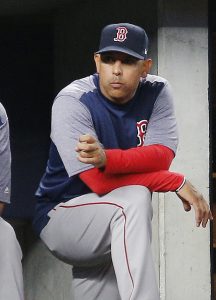
The Red Sox’ usage of “mutually agreed to part ways” notwithstanding, there’s no way that Cora would’ve been ousted as manager were it not for his role in the sign-stealing scandal. It’s been extraordinarily difficult to fathom a scenario in which Cora would’ve stayed on as manager after Houston GM Jeff Luhnow and manager A.J. Hinch were fired by the Astros yesterday, given his involvement in the Astros’ scandal as well as the current investigation of the Red Sox’ 2018 . The now-former manager issued a statement of his own:
“I want to thank John, Tom, Sam, the players, our coaching staff and the entire Red Sox organization. I especially want to thank my family for their love and support. We agreed today that parting ways was the best thing for the organization. I do not want to be a distraction to the Red Sox as they move forward. My two years as manager were the best years of my life. It was an honor to manage these teams and help bring a World Series Championship back to Boston. I will forever be indebted to the organization and the fans who supported me as a player, a manager and in my efforts to help Puerto Rico. This is a special place. There is nothing like it in all of baseball, and I will miss it dearly.”
As was the case when Houston let go of its GM-manager tandem, this represents a stunning turn of mid-winter events for Boston. In terms of wins and losses, the two-year Cora era was especially fruitful for the Red Sox. As Cora mentioned, he helped the club to a championship in 2018 – his first year on the job and one in which it piled up a whopping 108 regular-season victories before steamrolling the Yankees, Astros and Dodgers in the playoffs. Of course, now that the league’s investigating Cora, there are perhaps questions about the legitimacy of that title.
Last season was far less successful for Cora and the Red Sox, though they were still an above-average team that won 84 games. Now, depending on how MLB disciplines Cora, that could go down as his final season as a manager in the league. Cora’s reportedly facing “harsh” punishment for his misdeeds, so the end of his Red Sox tenure seems likely to serve as a forerunner to a significant suspension.
The Boston organization, like Houston, now finds itself in the once-unimaginable position of suddenly having to find a new manager just weeks before pitchers and catchers report to camp. The responsibility rests with new chief baseball officer Chaim Bloom, who inherited Cora from ousted president of baseball operations Dave Dombrowski.
This post was originally published on 1-14-20.
Check out our new video below (app users click here), as MLBTR’s Jeff Todd lays out the implications of Cora’s dismissal as well as the Twins’ signing of Josh Donaldson.
Photo courtesy of USA Today Sports Images.
MLB To Suspend Jeff Luhnow, A.J. Hinch For One Year; Astros Stripped Of Draft Picks
Major League Baseball commissioner Rob Manfred announced an unprecedented level of discipline against the Astros organization Monday in the wake of the sign-stealing scandal that many feel has called into question the legitimacy of their 2017 World Series victory. President of baseball operations/general manager Jeff Luhnow and manager A.J. Hinch will both be suspended, without pay, for one year — beginning today and running through Jan. 13, 2021.
[RELATED: Astros Fire Jeff Luhnow, A.J. Hinch]
The Astros will also lose their first- and second-round picks in each of the next two seasons and be fined the maximum $5MM that is allowable under the league’s constitution. If the team does not have a first- or second-round selection in either draft — due to draft forfeitures for signing a free agent, for instance — they’ll lose that pick in the subsequent year’s draft. Per Manfred’s report on the investigation, the Astros “will forfeit two regular first round selections and two regular second round selections in total,” whether they come in 2020-21 or in later seasons.
Punishment stemming from the 2017 sign-stealing scandal won’t stop with the Astros organization, either. ESPN’s Jeff Passan reports that “harsh” punishment will be levied against Red Sox manager Alex Cora as well for the role he played in the now-infamous “trash can” setup. Cora was the Astros’ bench coach at the time but was hired by the Red Sox in the 2017-18 offseason, and Manfred’s report leaves little doubt that he’ll be sanctioned heavily.
Manfred’s report outlines the role that Luhnow, Hinch, Cora and the Astros’ players had not only in the trash-can scheme but also in improperly utilizing the reply review room to decode opponents’ signs. Manfred’s report also explains the rationale for the punishment (or, in Cora’s case, the surely forthcoming punishment).
Beginning with Luhnow, Manfred details that the president/GM was “adamant” in denying knowledge of the ongoing sign-stealing scheme. However, the report cites “both documentary and testimonial evidence” which indicates that Luhnow had “some” knowledge of the operation but “did not give it much attention.” Manfred makes clear that he holds Luhnow accountable for the action of all employees, both in the front office and in the dugout, and he goes out of his way to explain that Luhnow largely neglected the memo sent out by the Commissioner’s Office regarding further disciplinary measures for improper use of technology:
Luhnow did not forward the memoranda and did not confirm that the players and field staff were in compliance with MLB rules and the memoranda. Had Luhnow taken those steps in September 2017, it is clear to me that the Astros would have ceased both sign-stealing schemes at that time.
Manfred’s report goes on to suggest that under Luhnow, the Astros’ baseball operations department has developed a “problematic” and “insular” culture that has lacked “sufficient oversight” — all of which is reflected in Luhnow’s punishment:
[W]hile no one can dispute that Luhnow’s baseball operations department is an industry leader in its analytics, it is very clear to me that the culture of the baseball operations department, manifesting itself in the way its employees are treated, its relations with other Clubs, and its relations with the media and external stakeholders, has been very problematic. At least in my view, the baseball operations department’s insular culture – one that valued and rewarded results over other considerations, combined with a staff of individuals who often lacked direction or sufficient oversight, led, at least in part,to the Brandon Taubman incident, the Club’s admittedly inappropriate and inaccurate response to that incident, and finally, to an environment that allowed the conduct described in this report to have occurred.
As far as Hinch is concerned, Manfred indicates in his report that the manager was aware but not supportive of the trash-can system. That system, it seems, was largely put into place by Cora and newly hired Mets skipper Carlos Beltran. Hinch, according to the league’s investigation, actually expressed frustration with the operation and damaged the hallway monitor to the point of needing replacement on two occasions, but he also never brought the issue to the attention of Luhnow or anyone in the Commissioner’s Office. “As the person with responsibility for managing his players and coaches, there simply is no justification for Hinch’s failure to act,” the report reads.
Furthermore, the report leaves little doubt that harsh punishment indeed is nigh for Cora. Manfred indicates that it was Cora who “arranged for a video room technician to install a monitor displaying the center field camera feed immediately outside of the Astros’ dugout.” Says Manfred of the impending discipline for Cora:
Cora was involved in developing both the banging scheme and utilizing the replay review room to decode and transmit signs. Cora participated in both schemes, and through his active participation, implicitly condoned the players’conduct. I will withhold determining the appropriate level of discipline for Cora until after the DOI completes its investigation of the allegations that the Red Sox engaged in impermissible electronic sign stealing in 2018 while Cora was the manager.
As for the players themselves, the Commissioner’s Office will not be seeking out punishment against them. That seemingly includes Beltran, who is being treated as a player (as he was in ’17) rather than his newfound role as a Major League manager. Manfred explains that in 2017, he made the decision that he “would hold a Club’s General Manager and Field Manager accountable for misconduct of this kind” and has no plans to deviate from that line of thinking. He’s also clear to note that multiple players acknowledged they were keenly aware that they were crossing a line and would have stopped had Hinch or another authority figure cracked down on the behavior — a reality that surely factored into the decision to suspend Hinch.
As for owner Jim Crane, the report indicates that he was “unaware” of any wrongdoing and will not face punishment outside of the reported $5MM fine and loss of two years’ worth of first- and second-round draft selections.
Ken Rosenthal and Evan Drellich of The Athletic first reported the news.
Sign-Stealing Punishment For Astros Expected In Coming Weeks
It’s widely accepted at this point that the Astros impermissibly utilized technology to steal signs and then conveyed the information gleaned to hitters in the batters’ box during regular-season games. According to a report from Jeff Passan of ESPN.com, the subjects of the resulting investigation have copped to the bad acts.
With the investigative work nearing a conclusion, Passan says that commissioner Rob Manfred will likely mete out discipline within the next two weeks. Several notable figures are reportedly potential suspension targets: GM Jeff Luhnow, manager A.J. Hinch, and former bench coach/current Red Sox skipper Alex Cora.
Notably, per the report, players that participated in the elaborate-yet-ham-fisted scheme are not expected to be disciplined. But the team could end up paying a massive fine. There’s no indication yet whether a loss of draft picks or other competitive sanction might be applied. In handing down punishment for improper use of technology in 2017, Manfred promised that such penalties were on the table, saying: “[A]ll 30 Clubs have been notified that future violations of this type will be subject to more serious sanctions, including the possible loss of draft picks.”
It would never be acceptable for the product of baseball — individual contests and the overall regular/post-season championship schedule — to be compromised by teams acting outside of the rules, especially in a scheme as devious and concerted as the one allegedly put into action by the Astros. The stakes are raised yet higher by the fact that MLB is wading into murky waters in the gambling arena. And it probably doesn’t help that the league is currently facing major pushback for its plans to dramatically curtail minor league ball.
It’s a major decision for Manfred, who already watched as the Astros bungled a self-inflicted scandal involving since-fired assistant GM Brandon Taubman just months ago. He’ll certainly need to create precedent that serves as a legitimate deterrent. But doing so with respect to a marquee roster could prove challenging.
The complexities deepen when one considers the potential entanglements. Cora is one major instance. Reporting earlier today implicates the Red Sox in a less-egregious but nevertheless impermissible act of signaling espionage. The skipper could conceivably be at fault in both episodes. The Boston organization may not be alone in its manner of harnessing technology.
Untangling all of this could prove tricky. Andy Martino of SNY.tv even seems to suggest (Twitter link) that the Astros have claimed or could claim that such actions on the part of competitors might justify or at least mitigate their own rule-breaking. A source suggests, rather bizarrely, that the Houston club was simply making up for the fact that it was not able to mis-use its own replay room because it “was far away” from the dugout, unlike most other teams. If this strained logic is any indication of the thinking around the game — not to mention the actual and/or perceived pervasiveness of cheating — then the MLB rules and enforcement regime is badly in need of re-working, beginning with the imposition of clear and effective disincentives relating to this incident.
Latest On Pirates’ Managerial Search, Front Office
The acquisition of a new club manager promises to be the first order of business on the schedule of new Pirates GM Ben Cherington, but it appears as if the Pittsburgh exec may be given a bit of a running start from an HR perspective. Cherington is apparently happy with the work done by Pittsburgh staffers in search of a manager to this point and may simply re-interview several of the club’s existing candidates, according to a tweet from Jon Heyman of MLB Network (link).
The Pirates reportedly interviewed Twins bench coach Derek Shelton, Cardinals first base coach Stubby Clapp, Dodgers first base coach George Lombard, Athletics bench coach Ryan Christenson, and Rays bench coach Matt Quatraro for the job earlier in the offseason before their search was “paused” with the ouster of former GM Neal Huntington. Interestingly, Heyman also indicated that Pirates bench coach Jeff Banister, former Pirates third base coach Joey Cora, and Athletics quality control coach Mark Kotsay also interviewed with the club this offseason. Cora’s name is a new entry into public knowledge of the proceedings; Bannister and Kotsay were know to be under some consideration, but it wasn’t clear whether they had interviewed.
Besides being a former player and the older brother to Red Sox manager Alex Cora, the 54-year-old Cora carries previous experience as the manager of Pittsburgh’s Double-A affiliate in 2016. He has served as the club’s major league third base coach and infield coach since being hired in advance of the 2017 season. Bannister would also represent something of a familiar face to Pittsburgh fans, as the former Rangers manager has recently served the club in both bench coach and special advisor capacities.
If familiarity is key to Cherington’s hiring process, however, it may appear that Kotsay and Shelton would have something of an advantage. Kotsay spent time as a player with the Red Sox when Cherington was a Boston exec from 2008 to 2009, while Shelton was a coach with Toronto in 2017 while Cherington was a Jays VP. Further helping matters for Kotsay and Shelton may be Heyman’s indication that both were among those to interview “very well” for Pittsburgh’s managerial opening earlier this offseason (link).
Regardless of which direction the club goes with regard to their managerial search, it appears that Cherington will be doing so without the aid of Kyle Stark, who was relieved of his post as assistant GM today. The club’s announcement of Stark’s exit continues a general house cleaning that has followed a rather bizarre 69-93 campaign in the Steel City. Stark, who had served as the club’s assistant GM since 2007, will join Huntington, former team president Frank Coonelly, and former manager Clint Hurdle as a recent departee of the Pittsburgh organization.
Latest On Alex Cora, Red Sox Front Office
With former president of baseball operations Dave Dombrowski now out of the organization, the Red Sox are on the hunt for a new front office chief. Dombrowski’s successor won’t have the right to choose a manager, though, as Red Sox president and CEO Sam Kennedy confirmed Tuesday on WEEI’s “Ordway, Merloni and Fauria” that Alex Cora will return in 2020, as Chris Cotillo of MassLive.com relays.
It was already surprising enough that Boston fired Dombrowski on Sunday just under a year after winning its latest World Series title. And although Dombrowski hired Cora, it perhaps would have been even more stunning had the club moved on from the latter. The well-respected Cora has helped the Red Sox to a record of 184-122, including a 76-69 mark this season, during almost two years at the helm of their dugout. The club won’t return to the playoffs this year, though, which is surely among the reasons it ousted Dombrowski.
Kennedy on Tuesday wasn’t wiling to delve into why the Red Sox moved on from Dombrowski, however (per Cotillo). Rather, he complimented Dombrowski on his performance with the organization, saying, “We won a world championship, a couple division championships. On a personal level, I enjoyed working with him.” But Kennedy did add, “Obviously, you don’t make a change unless you’re ready for new leadership in that specific department.”
Unsurprisingly, there were issues behind the scenes, as Evan Drellich of The Athletic and Buster Olney of ESPN detail (subscriptions required). Dombrowski sought a contract extension multiple times in the wake of the team’s championship season, but its higher-ups wouldn’t oblige, according to Drellich. Ultimately, it doesn’t seem as if the Red Sox believed the aggressive Dombrowski was capable of putting them on a path toward sustained success. Dombrowski’s former bosses even wondered whether he was the right person for the job late during the 2018 regular season, when the Red Sox were on their way to a 108-win campaign, Olney reports.
Thanks to Dombrowski’s exit, the Red Sox are currently operating with a group consisting of a few of his former underlings – Eddie Romero, Zack Scott, Brian O’Halloran and Raquel Ferreira – atop their baseball department. It’s possible they’ll end up replacing Dombrowski from outside, though, with Olney naming Diamondbacks general manager Mike Hazen as a speculative successor. Hazen’s a Boston native who worked for the Red Sox for 11 years before joining the Diamondbacks, who have been generally successful since he began running the ship in October 2016.
While it’s easy to see the appeal of a Hazen-Boston reunion on paper, the Diamondbacks aren’t concerned they’ll lose him, as CEO Derrick Hall told Nick Piecoro of the Arizona Republic via text message: “I have no reason to think they are going to ask. He is under contract.”
Hazen seems to have another two years left on his deal, though it’s unclear whether the D-backs have added more seasons to the pact, Piecoro notes. Regardless, because he’s under contract, Arizona would be able to stop Hazen from speaking to the Red Sox should they express interest in him.