
Giants Close Spring Facility Over COVID Concerns
The Giants are the latest MLB team to shutter a Spring Training facility due to concerns over the spread of the coronavirus. Andrew Baggarly of The Athletic reports on Twitter that the organization is taking the precaution while awaiting test results.
It’s important to understand that there’s no confirmed infection from a person associated with the team. But “one person who had been in the facility and one family member exhibited mild symptoms,” per president of baseball operations Farhan Zaidi.
Hopefully, the tests on those two individuals will come back negative. The team has also recommended testing for anyone else that had been through the facility. Regardless of the outcome, the fact that these steps were required serves to highlight the magnitude of the challenges still facing Major League Baseball.
We heard earlier today about worrisome developments at spring facilities in Florida, a state that has seen a notable uptick in infections. But the virus is tearing through Arizona, the locus of the other half of the league’s primary training sites, at an even faster rate.
Giants Agree To Above-Slot Bonus With 3rd-Rounder Kyle Harrison
The Giants have agreed to a $2.5MM bonus with third-round selection Kyle Harrison, according to Marc Delucchi (via Twitter). If indeed a contract is finalized, Harrison will forego his commitment to UCLA.
That’s a big number for a player chosen with the 85th overall selection, which came with a $710,700 slot allocation. But the Giants will evidently find a way to free up some funds by inking below-slot deals with other draft choices.
Harrison, a Bay Area high school southpaw, wasn’t generally graded as a top-end prospect entering the draft. But MLB.com (63rd) and Baseball America (71st) did rate him among the hundred best players available.
The lefty will enter the San Francisco organization with high hopes given the big bonus. Reports generally frame him as a fairly polished and crafty hurler rather than a high-upside power arm. It seems evident that the Giants see a clear path to a big league rotation, if not alaso some front-of-the-rotation potential.
Team Plans For Signing Undrafted Amateurs
Now that MLB’s abbreviated 2020 draft is in the books, we can move along to the next phase of this one-off amateur signing season. Undrafted amateur players will now be free to sign with any team of their choosing, though they are capped with a signing bonus of $20K. Thus, the setup here presents a fascinating situation for amateur ballplayers and for us, those interested in parsing the ins-and-outs of roster-building. Here we have a unique situation where money will not necessarily be the driving factor for players choosing their first professional team. As players start to sign, we’ll likely hear stories that shed light on player perspective, which could paint an interesting picture of how young players view different franchises around baseball. For now, we’re starting to hear from teams themselves about spending limits for this class of amateur free agents. We’ll use this post to update those strategies as they trickle in…
- The Giants have no apparent limits when it comes to signing amateur free agents now that the draft is completed. John Shea of the San Francisco Chronicle provides a primer for this period of amateur free agents, writing, “The process starts at 6 a.m. Sunday, and the Giants will compete with the other 29 teams for the best available talent. But rather than outspending the others, all they can do is try to outsell them and offer appealing opportunities.” Given the Giants’ current position as a team looking to infuse as much young talent as possible, one would expect them to be aggressive in their attempts to add players from this pool. Obviously, more players than usual will be returning to college or committing to school as high school graduates, but given the volatility of the MLB draft under normal circumstances, it’s fair to expect a quality player or two to emerge from this pool of undrafted amateurs.
- The Marlins are planning on limiting their pool of undrafted amateur free agents to 10 signings or less, per Jordan McPherson of the Miami Herald (Twitter links). Along with their six drafted players, all of whom are expected to sign, the Marlins can expect an influx of 16 players max.
- Similarly, the Mariners don’t expect to go hog wild with this year’s class of undrafted amateur. Per MLB.com’s Corey Brock, the Mariners’ Scouting Director Scott Hunter said the Mariners will only be signing between five and ten amateur free agents.
- The Royals, meanwhile, are ready to shop, tweets Jeff Rosen of the Kansas City Star. The Royals could be big-time players in this sphere, as they’ve generated some goodwill recently because of their treatment of minor league players. Kansas City might not typically be a major free agent draw, but for amateur players, it’s a different story. The Royals have the opportunity and a long track record of highly valuing their own players. For players looking for their first professional contract, the Royals have a lot to offer. Among other things, they’re ready to be aggressive. GM Dayton Moore has the green light to “sign as many of those guys as we can,” per Lynn Worthy of the Kansas City Star.
Quick Hits: Harvey, Torkelson, Giants
While free-agent right-hander Matt Harvey has drawn the attention of teams in the Korea Baseball Organization, a KBO match may not be all that likely. KBO clubs are currently wary of adding new players to their roster because those individuals would need at least six weeks from debuting, per Daniel Kim of MBC. There would be a few notable hoops for someone like Harvey to jump through, including a two-week quarantine, acquiring a work visa and getting into game shape. There’s also the fact that KBO teams are only allowed to carry two foreign-born pitchers, Jay Jaffe of FanGraphs points out. Beyond that, Jaffe explains that Harvey may have a difficult time boosting his stock enough in the KBO even if he does land there. The former ace, 31, is coming off a mostly disastrous run over the past few seasons, thanks in part to major injuries and a serious dip in velocity, so it’s unclear whether he’ll get another MLB opportunity.
More from around baseball…
- The Tigers made what most have deemed the right call in selecting Arizona State slugger Spencer Torkelson with the No. 1 pick in this year’s draft. However, the team caught many off-guard when commissioner Rob Manfred announced Torkelson, a college first baseman/outfielder, as a third baseman. Even Torkelson didn’t see it coming. “The first time I knew they were drafting me as a third baseman was when the commissioner said, ‘Spencer Torkelson, third base,'” he revealed Thursday (via Cody Stavenhagen of The Athletic; subscription link). But Torkelson’s a former high school third baseman who has taken reps at third at ASU, so the position’s not foreign to him. Even if he’s unable to stick at the hot corner as a professional, the Tigers are confident the big hitter will make a significant impact at either first or in the outfield.
- The Giants now have two premium catcher prospects in 2018 first-rounder Joey Bart and their No. 1 pick this year, Patrick Bailey. In a best-case scenario, both players will evolve into impact big leaguers within the next few years. But will there be enough room for Bart and Bailey on the same roster? The Giants believe so, Alex Pavlovic of NBC Sports Bay Area relays. In the wake of the Bailey pick, president of baseball operations Farhan Zaidi said that, if their development goes according to plan, “there are going to be times when you want both guys in the lineup.” Zaidi also noted a potential universal DH could help the Giants achieve that goal, adding the club wants “all the guys in the system to be able to play a different position.”
- More on the Giants, who have now committed to paying all of their minor leaguers a $400 weekly stipend through the end of the season (Sept. 7), according to Henry Schulman of the San Francisco Chronicle. In all, the organization will pay out roughly $1MM to its 270 minor leaguers, Schulman reports. The Giants had previously agreed to pay those players through June.
Denard Span Discusses His Decision To Walk Away
Denard Span has played 11 seasons at the big league level, totaling 1359 games and 5956 plate appearances, but the former Twins, Nationals, Giants, Rays and Mariners outfielder confirmed to MLBTR this week that he’s suited up for the final time.
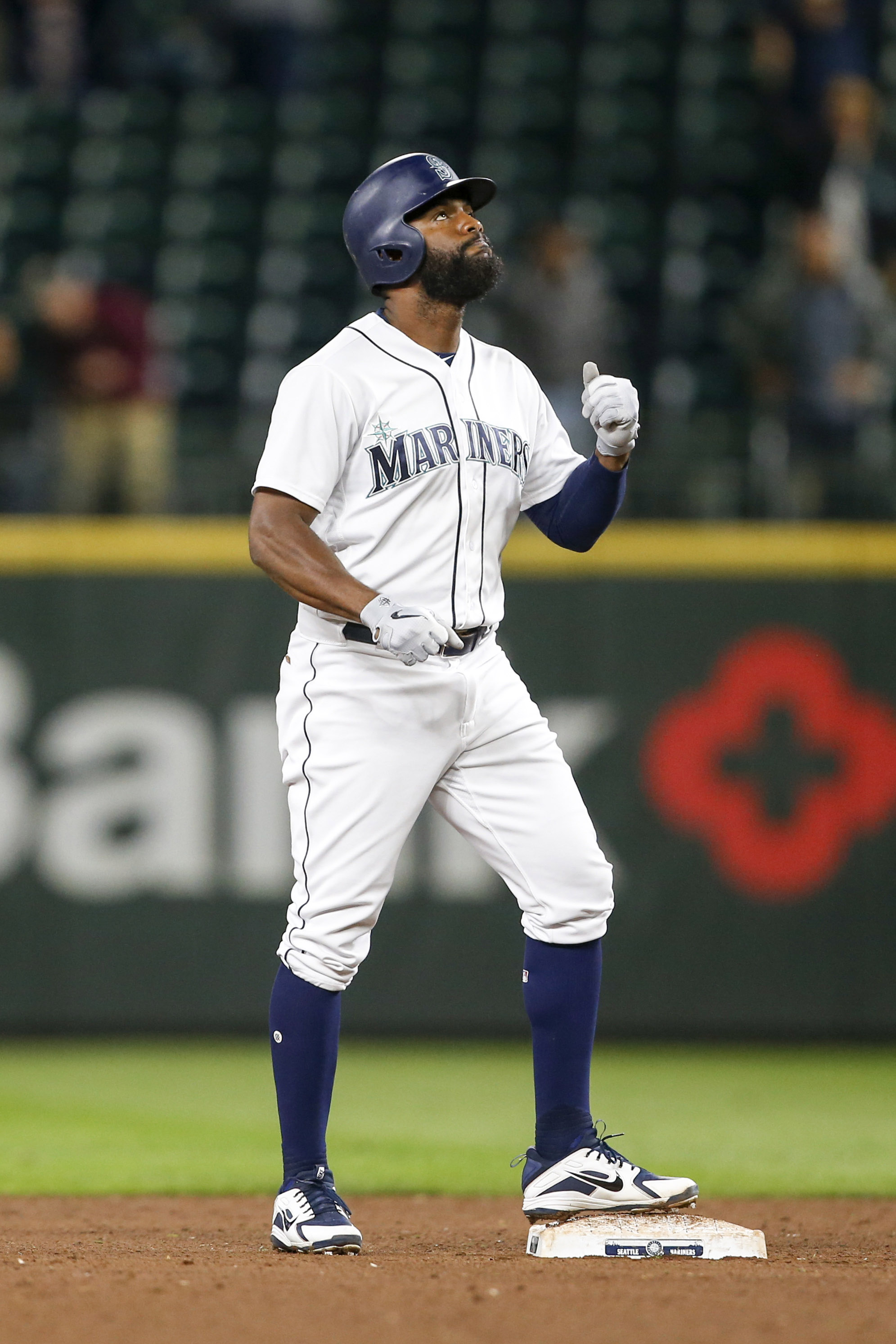
“I would say, in my heart, once I didn’t sign a contract going into the 2020 season, that was it for me,” said Span. Retirement, however, is a bittersweet step for the 36-year-old, who’d have preferred to walk away from the game on his own terms. Instead, changes to the free-agent landscape and the manner in which teams evaluate players left Span feeling conflicted as he sought a new team in the 2018-19 offseason.
“I’m a man of principles, and when those principles aren’t met, I can’t go along with it,” Span explained. “…I honestly recognize that I’m not the player that I was when I was in D.C. or when I was in Minnesota. But, I still know that I have value. I’m not a center fielder or premier player anymore, but that doesn’t mean I can’t help a ballclub win a championship or win games. I’m not the $12MM player anymore, but from what I did [in 2018], that doesn’t tell me I’m worth $1MM or worth $1.5MM or worth league minimum. I got an offer for league minimum. It was just unreal.”
Span indeed put together a solid campaign in 2018, tallying 501 plate appearances between the Rays and Mariners with a combined .261/.341/.419 batting line. He connected on 11 home runs, 22 doubles and seven triples while swiping nine bases in 13 tries. Both OPS+ and wRC+ agreed that his bat was 12 percent better than that of a league-average hitter. Through 137 games, Baseball-Reference pegged him at 2.1 wins above replacement — FanGraphs at 1.5.
“For me, how do you go from 500 at-bats, being a productive player — you look over the course of my career, I’ve never been a problem in the clubhouse, either — how do you equate that to $1.5MM or all the way down to league minimum?” Span asked rhetorically.
The timing of the offers was difficult on Span and his young family as well, ranging from late January through the first week of the regular season. Any offers received were of the “take it or leave it” variety, Span added, as opposed to a few years ago when there was more negotiation. Once Spring Training was underway, he finally received offers from multiple clubs at once — on minor league deals.
“It just was like, ‘How did I get to this point where now I have to prove that I can play when I just had 500 at-bats last year?'” Span continued.
Span’s comments strike a similar tone to those recently expressed by former Reds second baseman Scooter Gennett. The 30-year-old Gennett, who didn’t sign a contract this winter, spoke to Doug Fernandes of the Sarasota Herald-Tribune last month about “not conforming” to what he “[doesn’t] think is right.” Gennett set a value on his skills and on the trade-off of being “220 days away from family,” ultimately opting not to compromise. Span viewed the decision similarly.
“I just couldn’t see myself at this point in my career giving in or compromising myself — especially where I’m at in my life, being a husband and a father,” said Span, who is married and has two children under three years old. “It’s already hard enough to be away from my family, and now they want me to play for less than what I humbly feel I deserve. I’m not saying I’m worth $10MM. I’m saying I’m worth more than what they offered me.”
Span and Gennett are hardly the only big leaguers frustrated by the changes to the free-agent landscape in recent years. We’re not far removed from a 2017-18 offseason that proved to be one of the most frigid in recent memory for free agents. The lack of activity on the middle and lower tiers of the free-agent market that winter helped to set the stage for much of the league/union tension that has negatively impacted the currently ongoing return-to-play talks and will certainly impact the next wave of collective bargaining in 2021.
While it’s true that the game’s top stars — particularly those still shy of 30 — have generally been able to secure considerable free-agent contracts, the 2017-18 and 2018-19 offseasons also featured an erosion of the “middle class” of free agents. (There’s a reason Adam Jones is preparing to play in Japan, after all.) Span himself noted that not long ago, veterans at the same point in their careers as he was following the 2018 season could even reasonably expect to find two-year deals. Rajai Davis, David DeJesus and Chris Young are among the numerous outfielders who signed two-year deals in the $10MM range from 2013-16.
In today’s game, comparable veterans like Kevin Pillar, Brock Holt and Asdrubal Cabrera have begun to settle for one-year pacts, and those who do find multi-year guarantees typically take a smaller salary. Wilmer Flores (two years, $6.25MM this offseason), Austin Jackson (two years, $6MM in 2018) and Howie Kendrick (two years, $7MM in 2018) are a few examples. With teams now suddenly experiencing unprecedented revenue losses, and with a likely aggressive wave of non-tenders on the horizon, it seems unlikely that the trend will change anytime soon. It’s eminently possible that other veterans will feel obligated to follow the same path as Span.
All told, Span will officially walk away from baseball with a lifetime .281/.347/.398 batting line, 71 home runs, 265 doubles, 72 triples, 185 stolen bases, 773 runs scored, 490 runs batted in and 28 wins above replacement. The 2002 first-round pick walked in 8.6 percent of his plate appearances, struck out at just a 12 percent clip and was a positive contributor on the bases and with the glove for the vast majority of his time in the big leagues. Between his draft bonus, his first extension with the Twins and his three-year deal with the Giants, Span earned more than $58MM as a player. His 2018 production suggests that he could likely have added to those totals, but Span will instead turn his full focus to his family, taking solace in the fact that he stuck to his convictions:
“At the end of the day, I want people to get that I didn’t play because of principles. Point blank.”
Each NL Team’s Top Recent Draft Class
With the MLB draft scheduled for next week, let’s take a look at each National League team’s most successful draft class in recent memory. Using Baseball Reference’s draft tracker, we can sum the combined career bWAR of each player selected by each team in a given year. It’s a simple shorthand, not a perfect measure, but it’ll give some insight into which teams have really hit on their picks in certain years.
First, a quick note on the methodology. For simplicity, we’re limiting this search to the 2006-2015 classes. A player’s value is only included if he signed with the club, although he needn’t have actually played for his drafting team in the majors. (So, the 2008 Yankees don’t get credit for drafting but failing to sign Gerrit Cole, while the 2007 Red Sox do get credit for drafting and signing Anthony Rizzo, even though he was traded before ever playing an MLB game for Boston). Of course, a player drafted in 2006 has had more time to rack up value than one drafted in 2015, so we’ll note in each team’s capsule if a more recent class is on the verge of taking over from an older class. On to the results…
- Braves: 2007 (76.6 bWAR) – Hitting on Jason Heyward and Freddie Freeman in the first two rounds goes a long way. Heyward has been a disappointment with the Cubs but had some electrifying seasons in his early days in Atlanta (and his year in St. Louis), while Freeman has emerged as a fixture in the Braves’ lineup as one of the best hitters in baseball over the past decade.
- Brewers: 2009 (30.7 bWAR) – This was period of some underwhelming draft returns for Milwaukee. The 2009 class tops the list thanks to Khris Davis, Mike Fiers and Scooter Gennett, all of whom are better known for their play (or whistleblowing, in Fiers’ case) elsewhere.
- Cardinals: 2006 (56.3 bWAR) – By virtue of putting up baseball’s best record in 2005, the Cardinals sat at the back of every round in 2006. No matter, as they managed to find a handful of highly productive big leaguers. First-rounder Adam Ottavino didn’t work out in St. Louis but went on to a strong career as a reliever in Colorado. Tommy Pham (16th round) and Jon Jay (2nd round) have each carved out strong careers, while Allen Craig (8th round) had a brief but productive peak.
- Cubs: 2007 (54.4 bWAR) – Unfortunately for the Cubs, this class is almost all about Josh Donaldson, who did none of his damage in a Chicago uniform. Perhaps Javier Báez (2012 draft) or Kris Bryant (2013 draft) will match or exceed Donaldson’s stellar career in time.
- Diamondbacks: 2009 (73.1 bWAR) – Paul Goldschmidt (8th round) went on to become the top position player in franchise history. First-rounder AJ Pollock had a couple star-level seasons of his own before injuries knocked him off track, while Chase Anderson (9th round) has emerged as a solid back-of-the-rotation starter.
- Dodgers: 2006 (70.6 bWAR) – The Dodgers only signed two big leaguers from the 2006 class. When one of them goes on to become arguably the best pitcher of his generation, you can more than get away with it. Clayton Kershaw’s Hall of Fame plaque will boast at least three Cy Young Awards and an NL MVP.
- Giants: 2008 (65.6 bWAR) – The late-2000’s draft classes set up the crux of the Giants’ three World Series titles the first half of the next decade. None was more impactful than 2008, when SF grabbed Buster Posey and Brandon Crawford in the first and fourth rounds, respectively.
- Marlins: 2010 (56.1 bWAR) – Christian Yelich and J.T. Realmuto have matured into two of the best players in baseball, so the Marlins’ 2010 class (which also boasted late-blooming A’s slugger Mark Canha) has a chance to be really special. Of course, none of those players are still in Miami.
- Mets: 2010 (50.5 bWAR) – Seventh overall pick Matt Harvey was briefly the ace the Mets hoped they were adding in 2010. As it turns out, Jacob deGrom (9th round) had a lot more staying power atop their rotation.
- Nationals: 2009 (44.9 bWAR) – First overall pick Stephen Strasburg has more than made good on that selection, culminating in a World Series MVP effort in 2019. The 2009 class also brought in a handful of role players, including Drew Storen and Michael Taylor.
- Padres: 2007 (38.9 bWAR) – Another team for whom the top player simply got away, the crown jewel of the Padres’ 2007 class was Corey Kluber (4th round). Obviously, even San Diego didn’t him expect him to go on to win a pair of Cy Young Awards.
- Phillies: 2014 (24.2 bWAR) – There were some tough results for the Phillies on draft day in recent seasons, but 2014 looks to be a notable exception. Aaron Nola went seventh overall and has emerged as a high-level starter, while Rhys Hoskins (fifth round) looks like the Phils’ long-term answer at first base.
- Pirates: 2011 (29.7 bWAR) – The Pirates’ 2011 class is almost exclusively about the contributions of first overall pick Gerrit Cole, but he obviously reached his peak after being traded to Houston. Josh Bell (2nd round) looked to have turned the corner at the plate in the first half of 2019.
- Reds: 2007 (43.1 bWAR) – The Reds found three future everyday players in the 2007 class. Todd Frazier (supplemental first-round), Zack Cozart (2nd round) and Devin Mesoraco (1st round) all went on to become productive players in Cincinnati.
- Rockies: 2009 (47.4 bWAR) – The Rockies graduated six players from the 2009 class to the big leagues, although only one proved a smashing success. Finding a player of Nolan Arenado’s caliber in the second round makes for a great draft even if the rest of the players taken underwhelm.
Latest News, Notes On Minor League Pay
The manner in which teams are — or, in some cases, aren’t — continuing to pay their minor league players has drawn increased attention as the end of the month draws near. Major League teams agreed back in March to pay minor league players $400 per week through the end of May, but most minor league players now face ongoing financial uncertainty. The Dodgers have already committed to continue that $400 weekly stipend through the end of June, but veteran left-hander David Price is stepping up to add a helping hand, pledging $1,000 to each non-40-man Dodgers minor leaguer, according to a report from Francys Romero (Twitter link). That includes more than 220 minor leaguers, per MassLive.com’s Chris Cotillo. It’s a similar gesture to the one Shin-Shoo Choo made with the Rangers back in April.
Of course, the very fact that veterans such as Choo and Price even feel it necessary to step up to help out minor leaguers speaks to the manner in which minor league players are under-compensated. While some clubs — the Marlins and Padres — are reportedly set to pay out that $400 weekly stipend through the end of the minor league season, the Athletics are cutting off the stipend at month’s end. Others have extended the stipend through June but have not committed further.
Here’s how a few other clubs are handling the matter…
- The Mets, Rays, Brewers, Cardinals, Giants and Indians are all extending the $400 weekly stipend through the month of June, per reports from MLB Network’s Jon Heyman (tweet), the Tampa Bay Times’ Marc Topkin, the Milwaukee Journal-Sentinel’s Todd Rosiak (tweet), the St. Louis Post-Dispatch’s Derrick Goold, Alex Pavlovic of NBC Sports Bay Area (tweet) and Kyle Glaser of Baseball America (tweet). “This money right now, especially for guys who aren’t as well off, this is a huge deal,” Rays minor league catcher Chris Betts tells Topkin. “…I’m beyond excited about it, and I’m honestly just more stoked and proud that the organization I play for took this route more than anything.”
- The Athletics have, unsurprisingly, drawn a wide array of harsh criticism for their wide-ranging furlough and the full cutoff of minor league payment, Susan Slusser of the San Francisco Chronicle writes. Slusser notes that owner John Fisher repeatedly used the word “family” in his letter to fans explaining the cutbacks, but many impacted by the cuts don’t feel the effects of that word. “It’s very hard to preach family and then not act like it when times are difficult,” Class-A pitcher Aiden McIntyre tells Slusser. Triple-A outfielder Jason Krizan added: “…[I]t hurts to see the Marlins continue to pay their players when they made the least in baseball last year,” though he noted he’d rather remain an Athletic and receive benefits than otherwise. Other players, past and present, voiced similar criticisms to Slusser, as did a big league agent and an executive with another club. Sports Illustrated’s Stephanie Apstein writes that termination of the stipend saves the Athletics an approximate $1.3MM.
Denard Span On His Future
It’s been nearly 20 months since Denard Span suited up in a big league game, and the former Twins, Nationals, Giants, Rays and Mariners outfielder suggests in an interview with Patrick Reusse of the Minneapolis Star-Tribune that he may not do so again. Span reveals that he received offers in the 2018-19 offseason, although they clearly weren’t compelling enough to leave his young family. Span adds that he worked out this winter with an eye toward a 2020 return and received “two or three” minor league offers — but they came from clubs without much of a path to the Majors even in the event that he played well in Triple-A.
“I haven’t announced it, officially, but maybe this is it,” Span said when asked about retirement. “…I still would have the ability to help a team. But 36-year-old outfielders who haven’t played in two years … not happening. I’m very satisfied pouring my life into our family, to Anne, a wonderful person, and our two boys.”
If this is indeed it for the amiable Span, it’s been quite a strong career. A first-round pick out of high school by the Twins back in 2002, Span took nearly six years to ascend to the big leagues, but he made an immediate impact upon arrival. Twenty-four years old at the time, Span finished sixth in AL Rookie of the Year voting in 2008 and hit .294/.387/.432 (122 OPS+ and wRC+ alike) through 487 plate appearances, helping push the Twins to a dramatic Game 163 showdown with the White Sox. Minnesota fell in a crushing 1-0 loss to the South Siders, but Span had announced his presence in the big leagues and would never look back.
Over the next four seasons, Span was the consummate leadoff man in Minnesota, hitting a combined .283/.351/.381 with a nine percent walk rate and just an 11.5 percent strikeout rate. In addition to a knack for working counts and putting the ball in play, Span showed off well above-average baserunning skills and the ability to play plus defense wherever he was slotted into the outfield (center field, more often than not). Heading into the 2010 campaign, Span signed a five-year, $16.5MM contract extension that contained an option for an additional $9MM.
Span provided excellent value over the course of that contract, but he only spent half of it in a Twins uniform. As the Twins fell from their status as a perennial AL Central contender and moved into a rebuild, Span had two guaranteed years and the club option remaining on that highly appealing deal. Minnesota flipped him to the Nationals in a straight-up swap for then-vaunted pitching prospect Alex Meyer — a deal that proved regrettable for Minnesota after repeated shoulder injuries torpedoed Meyer’s career.
The Nats had no complaints, though, and that may have been the case even if Meyer had eventually developed into a quality big leaguer. Span hit .292/.345/.404 in three seasons with Washington, continuing to add value on the bases and in the field along the way. By the time he reached free agency, Span was solidified enough to command a three-year, $31MM contract from the Giants. Even as his glovework deteriorated — San Francisco didn’t help matters by continuing to play him in center for lack of a better option — Span remained solid at the plate. However, he played out the final year of that deal between his hometown Rays and the Mariners after the Giants sent him to Tampa Bay in the Evan Longoria trade.
All told, Span has logged 11 seasons in the Major Leagues and batted a combined .281/.347/.398 with 71 home runs, 265 doubles, 72 triples, 185 stolen bases (in 244 tries — 76 percent), 773 runs scored and 490 RBIs. He was never an All-Star despite a strong career that checked in at 28 wins above replacement per both FanGraphs and Baseball Reference — a likely result of the understated manner in which he brought value to his teams (on-base percentage, baserunning, defense).
Clubs clearly saw the value in Span, though, as he was a regular from the moment he debuted up through the end of the 2018 season, and he inked a pair of multi-year deals that helped propel his career earnings north of $58MM (including his draft bonus). Best wishes to Span moving forward, whatever the future holds.
Wilmer Flores Changes Representation
Infielder Wilmer Flores has new representation. Flores, 28, will now be repped by Cesar Suarez of the Beverly Hills Sports Council, per MLB Network’s Jon Heyman. Flores’ change in representation will soon be reflected in MLBTR’s Agency Database. Flores had previously been repped by the McNamara Baseball Group.
Suarez is a former player himself, though he never reached the majors after signing with the Yankees as a 16-year-old, per his bio on the BHS Council’s website. He hails from Flores’ native Venezuela, as do other notable Suarez clients such as Rougned Odor and Salvador Perez. Heyman did not mention any specific impetus behind Flores’ decision to make a change at this time.
Flores, 28, is coming off a one-and-done year in Arizona. The utility infielder made the most of his time in the desert. After signing a one-year, $4.25MM guaranteed deal with the Diamondbacks, he appeared in 89 games, slashing a robust .314/.361/.487, good for a career-best 120 wRC+. Flores also missed more than a month of playing time after a foot contusion in late May pushed him to the injured list. Arizona declined a $6MM player option, making him a free agent for a $500K buyout instead.
When he was on the field, Flores performed. If you’re looking to poke holes in Flores’ 2019 output, a .332 BABIP is a good place to start, but Flores has long been a strong offensive contributor, so it’s not totally a smoke show. Still, career norms of a .268 BA and .277 BABIP point to some regression. Statcast credits Flores’ 2019 with a .329 xwOBA (league average is .318 xwOBA).
As for his new agent, there’s no immediate contractual work pending after Flores signed a two-year deal with the Giants this offseason. He made back the $6MM he was in line for in Arizona, only it’s spread out across two seasons. Flores will make $3MM in each of 2020 and 2021, while the Giants hold a $3.5MM option for 2022. If Flores can flourish in San Francisco, he should have the opportunity to net another major league contract either before his age-30 or age-31 season.
The Giants haven’t been all that active in free agency recently, so their signing of Flores was notable, especially since there’s not an obvious place to put the contact-oriented infielder. Veterans like Evan Longoria, Brandon Crawford, and Brandon Belt are entrenched around the infield on big-money deals that run concurrently to Flores’. There should be at-bats for Flores at second base, but he’s not alone there either, as Mauricio Dubon offers the Giants a higher ceiling with more team control as a pre-arb player, and Donovan Solano is coming off a mini-breakout of his own (.330/.360/.456 in 81 games last year). The presence of local hero Pablo Sandoval also muddies the waters for Flores – if Kung Pu Panda ends up making the team.
The potential for a Universal DH should give Flores some hope for grabbing a few extra PAs, but the Giants are actually pretty set on that front after bringing back the hugely popular Hunter Pence. Fans will be happy to see Pence’s name back on the lineup card, but even from a baseball standpoint, Pence is coming off a year when he unexpectedly put together an All-Star campaign at age-36. Pence finished the year hitting .297/.358/.552 with 18 home runs in 83 games as the Rangers’ DH. Like Flores, Pence also missed a fair amount of time due to injury. Given the ages of Longoria (34), Pence (37), Crawford (33), Belt (32), Sandoval (33) and even Solano (32), Flores is actually one of the young guys in the infield mix, despite his status as a 7-year MLB veteran. It’s not obvious where his playing time will come from, but there are many paths that lead to Flores seeing time as a regular infielder.
Scooter Gennett On Why He Didn’t Sign Anywhere This Winter
Former Reds, Brewers and Giants second baseman Scooter Gennett remains unsigned, and the 2018 All-Star chatted with Doug Fernandes of the Sarasota Herald-Tribune this week about his decision not to accept an offer over the winter. Gennett details that he did receive some offers, but they were either non-guaranteed or not to his liking from a financial standpoint. The top offer he received was a $1.5MM guarantee with incentives, but he’d been targeting a deal in the $5MM range. That offer also came from a club with an everyday second baseman, it seems, so he’d likely have been viewed as a bench piece.
Many fans will bristle at Gennett’s candid comments on free agency and compensation, particularly given the current economic crisis that has been brought about by the COVID-19 pandemic. Gennett, though, has earned more than $19MM in his career to date and has clearly set a personal valuation both on his abilities and the level of compensation he’d require to spend another season on the road and away from his wife and family, as any player would. “You’re 220 days away from your family,” says Gennett.
The 2019 season was a tough one for Gennett, who tore a muscle in his groin during Spring Training and now acknowledges that he came back before he was ready. That was his own decision, he emphasizes, and his results clearly suffered. After hitting a combined .303/.351/.508 with 50 home runs for the Reds in 2017-18, Gennett limped to a .226/.245/.323 slash in 139 plate appearances last year. The Reds traded him to the Giants just prior to the trade deadline, receiving only cash consideration in return. San Francisco released him less than a month later.
Over the winter, Gennett reportedly drew interest from as many as six teams, with the Cubs known to be one suitor. The Cubs, however, have avoided major free agent signings over the past two offseasons and were looking for more of a low-cost pickup. Not long after being linked to Gennett, they instead signed Jason Kipnis to the same type of minor league contract to which Gennett expresses aversion in his interview with Fernandes.
Gennett is still just 30, so there’s certainly time for him to stage a comeback if he chooses to play again. He’s still working out, but he’s also frank in telling Fernandes that he is “fine with not playing.” If salary is the sticking point, it’s hard to envision his earning power on his next contract being higher than it was over the winter. A club doesn’t seem likely to top that offer once play resumes, given the revenue losses throughout the league, and sitting out for a year would surely limit him to a minor league deal if he did decide he wanted to return to the game.