
Dodgers Acquire Eric Lauer
May 18: Shi Davidi of Sportsnet reports that the Jays are sending around $2.5MM in cash to cover the bulk of Lauer’s salary. The Dodgers are picking up around $600K, though that’s only a marginal amount above the roughly $550K that a minimum salary player would have made the rest of the year. Davidi adds that the Jays will not receive a player to be named later, so it’ll be Lauer and cash for a nominal cash consideration.
May 17: The Blue Jays announced they’ve traded left-hander Eric Lauer and cash to the Dodgers for a player to be named later or cash considerations. Los Angeles transferred reliever Brusdar Graterol from the 15-day to the 60-day injured list to open a spot on the 40-man roster.
Toronto designated Lauer for assignment earlier in the week. They’re paying down some portion of the approximate $3.1MM remaining on Lauer’s $4.4MM arbitration salary, though the precise amount hasn’t been reported. The Dodgers will pay a 110% tax on whatever amount of Lauer’s salary they’re assuming.
Lauer posted solid numbers as a starter and swingman with the Padres and Brewers from 2018-22, but his career was at a crossroads after a rough 2023 campaign. The left-hander didn’t pitch in the big leagues at all in 2024, as he spent his time in the minors with the Astros and Pirates and also had a stint in the KBO League with the Kia Tigers. Toronto inked Lauer to a minor league contract in the 2024-25 offseason, and he ended up being one of the unsung heroes of the Jays’ run to the American League crown.
Initially called up as a long reliever and bulk pitcher, Lauer was moved into a full-fledged starting role by June before being shifted back into bullpen work in September and throughout the postseason. Lauer posted a 3.18 ERA, 23.9% strikeout rate, and 6.1% walk rate across 104 2/3 regular-season innings and then delivered a 3.12 ERA in 8 2/3 playoff frames.
Despite these solid numbers, the Jays still viewed Lauer as a swingman or depth option heading into 2026, as Toronto addressed the rotation by signing Dylan Cease and Cody Ponce, and then reuniting with Max Scherzer. However, fate intervened again with a swath of injuries that quickly thinned the Blue Jays’ pitching depth, leaving Lauer again in a starting job.
This time, Lauer came back to earth. He posted a 6.69 ERA over 36 1/3 innings and eight outings this season, and his 16K% and 9.9BB% also went in the wrong direction from 2025. Lauer wasn’t entirely healthy himself as he battled through a bad case of the flu, but there also seemed to be some discord between the left-hander and the team over his usage. Lauer went public with his displeasure over first his lack of starting opportunities, and then the Jays’ decision to use an opener for some of Lauer’s outings.
Ironically, Lauer now finds himself on a team known for non-traditional pitcher deployment, so it wouldn’t be a shock if the Dodgers again use an opener if Lauer is lined up to face a team with several tough right-handed batters atop a lineup. That assumes Lauer will start at all, though that is probably the likeliest scenario given the team’s rotation needs.
Tyler Glasnow and Blake Snell are both on the injured list, leaving Los Angeles with two holes in its preferred six-man rotation model. Roki Sasaki‘s starting job is also less than stable given the right-hander’s shaky start to the 2026 campaign, though Sasaki might retain his rotation role just by dint of a lack of other options. Lauer could be inserted alongside Sasaski, Shohei Ohtani, Yoshinobu Yamamoto, Justin Wrobleski, and Emmet Sheehan. Down on the farm, River Ryan might be approaching readiness for a return to the majors as well, so the Dodgers again find themselves in the odd position of both technically having a rotation surplus, yet also a shortage of arms.
Katie Woo of The Athletic first reported the Dodgers were acquiring Lauer.
Gio Urshela Announces Retirement
Infielder Gio Urshela has announced his retirement as a player in a post on his Instagram page. In the post, he thanks the people who contributed to his career, including his family, friends, fans, baseball organizations, coaches, the people of Colombia and more.
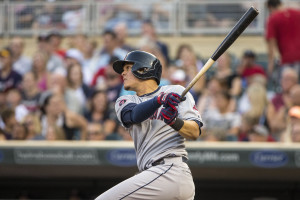 Urshela, now 34, was signed by Cleveland back in 2008. An international amateur out of Colombia, he secured a signing bonus of $300K. He quickly developed a reputation as a plus defender at third base while also dabbling at the other infield positions. His bat was a bit more questionable. He didn’t strike out much in the minors but also didn’t draw many walks and it wasn’t clear how much thump he could produce with his contact approach.
He cracked the majors in 2015. His initial big league opportunities matched his profile. He could pick the ball at third and didn’t strike out a lot but also didn’t produce offensively. He was eventually designated for assignment in 2018 and flipped to the Blue Jays in a cash deal. The Jays put him on waivers later that year and the 29 other clubs all declined a chance to claim him. At that time, he had 499 major league plate appearances and a .225/.274/.315 line.
The Jays traded Urshela to the Yankees for cash late in 2018. He began the following season as non-roster depth for Miguel Andujar, who had just finished a solid rookie campaign, finishing second in American League Rookie of the Year voting behind Shohei Ohtani. Early in the 2019 campaign, Andujar suffered a torn labrum in his right shoulder, an injury that would eventually require season-ending surgery. Though that was unfortunate for Andujar, it turned out to be the opportunity for Urshela to break out.
Urshela took over the third base job in the Bronx that year with a big step forward offensively. He hit 21 home runs and slashed .314/.355/.534 for a 132 wRC+. FanGraphs credited him with 3.1 wins above replacement. He may have hit his personal zenith that year with some help from external forces. His .349 batting average on balls in play was well above average. That was also the juiced-ball year, with home run records set all around the league.
Regardless, Urshela still proved to be a viable major league hitter in subsequent seasons. Over the shortened 2020 season and the 2021 campaign, he hit 20 homers in 159 games and slashed .275/.320/.438 for a 108 wRC+. He was credited with 2.4 fWAR for that span.
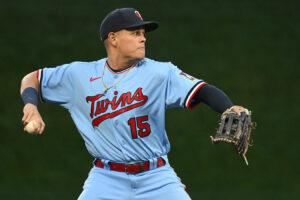
Going into 2022, Urshela was part of a big trade. He and catcher Gary Sánchez were flipped to the Twins for third baseman Josh Donaldson, infielder Isiah Kiner-Falefa and catcher Ben Rortvedt. Urshela had a solid campaign in Minnesota, hitting 13 home runs and putting up a .285/.338/.429 line, translating to a 118 wRC+. FanGraphs put another 2.6 WAR on his ledger that year.
Ahead of the 2023 season, Urshela was traded to the Angels for pitching prospect Alejandro Hidalgo. That was unfortunately just before things started to turn sour for Urshela. He hit a respectable .299/.329/.374 for the Halos but went on the injured list in June due to a pelvic fracture. He didn’t require surgery but he missed the second half of that season and was never really able to get back on track after that.
He became a free agent and signed a $1.5MM deal with the Tigers going into 2024. He got into 92 games for Detroit but hit .243/.286/.333 for a wRC+ of 74. He was designated for assignment and released that August. He latched on with Atlanta and finished on a slightly higher note, slashing .265/.287/.424 in 36 games.
That strong finish was enough to get him a $2.15MM deal with the Athletics for 2025. He hit .238/.287/.326 in 59 games for the A’s before getting designated for assignment and released in August. He returned to the Twins on a minor league deal this past offseason. He hit .192/.250/.231 in spring training and was released at the end of camp.
Urshela finishes his career having played in 851 games with 3,028 plate appearances. He only walked in 5.9% of those but also limited his strikeouts to an 18.3% pace. He collected 759 hits, including 147 doubles, nine triples and 73 home runs. He scored 312 times, drove in 352 runs and stole seven bases. His career slash line finishes at .270/.314/.407. That leads to a subpar 97 wRC+ but is dragged down by his slow start and soft finish. From 2019 to 2022, he hit .290/.336/.463 for a 118 wRC+. Both FanGraphs and Baseball Reference credit him with about eight wins above replacement, mostly from that four-year peak. Baseball Reference pegs his career earnings over $25MM.
We at MLB Trade Rumors congratulate Urshela on a fine career and wish him the best for his post-playing days.
Photos courtesy of David Butler II, Jesse Johnson, Nick Wosika, Imagn Images
Blue Jays Place Tommy Nance On 15-Day IL, Recall Adam Macko
The Blue Jays announced that right-hander Tommy Nance has been placed on the 15-day injured list due to discomfort in his right forearm. Left-hander Adam Macko was called up from Triple-A in the corresponding 26-man roster move, and Macko is already on Toronto’s 40-man roster.
Nance threw an inning of relief work in the Jays’ 2-1 win over the Tigers yesterday, so it would seem as if his injury only surfaced in the aftermath of that outing. That said, Macko was part of the Blue Jays’ taxi squad yesterday, and manager John Schneider hinted that Macko could be officially added to the roster depending on the state of some unnamed relievers who were less than 100 percent. It could be that Nance was one of those pitchers, though teams generally proceed with caution with any sort of forearm-related issues.
Over 21 innings this season, Nance has a 3.86 ERA and a significantly better 2.81 SIERA, as his real-world ERA hasn’t reflected his 29.4% strikeout rate and 9.4% walk rate. Now in his third season with Toronto, Nance has a 3.13 ERA, 25K%, and 7.9BB% over 74 2/3 bullpen frames, with this solid production earning him a few looks in higher-leverage roles.
Nance now becomes the eighth pitcher on the Blue Jays’ injured list, though the rotation has been hit harder than the pen as the Jays continue to try and get through this swarm of health issues. Losing Nance is another blow to the relief corps, but it now opens the door for Macko to get his first taste of Major League action.
The 25-year-old southpaw was a seventh-round pick for the Mariners in the 2019 draft, and he came to Toronto along with Erik Swanson in the November 2022 trade that sent Teoscar Hernandez to Seattle. MLB Pipeline ranks Macko as the 21st-best prospect in the Blue Jays’ farm system, while Baseball America has him 25th.
A starter for most of his minor league career, Macko got some looks at a multi-inning reliever in 2025 and he has pitched exclusively out of the pen at Triple-A Buffalo this year. The door may not be entirely closed on Macko’s future as a starter, but working as a long reliever or bulk pitcher may be a nod to Macko’s injury history, which includes a meniscus surgery last year. Macko has a four-pitch arsenal that lacks a true plus pitch, with Pipeline and BA differing on whether his curveball or his slider is his best offering.
Jose Berrios To Undergo Elbow Surgery
Jose Berrios will undergo surgery on Wednesday to repair a stress fracture in his right elbow, as Blue Jays manager John Schneider told Sportsnet’s Hazel Mae and other reporters. Dr. Keith Meister will perform the procedure, and it is possible the surgery could be more complicated since “there is some concern about [Berrios’] ligament,” Mae writes. A recovery timeline (or whether or not Berrios will pitch at all in 2026) therefore won’t be known until the surgery is complete, and a further assessment is made for any ligament damage.
Surgery is perhaps the natural endpoint to what has been an injury-marred nine months for a pitcher once known for his durability. Right elbow inflammation sent Berrios to the 15-day injured list at the end of the 2025 season and kept him from participating in the Blue Jays’ postseason run. As he prepared to pitch for Puerto Rico in this spring’s World Baseball Classic, tests revealed more inflammation and then a stress fracture in Berrios’ right elbow.
Toronto placed Berrios on the 15-day IL to begin the season, and he appeared to be on track before more elbow discomfort arose during his minor league rehab assignment. Berrios had an MRI and a previous visit with Dr. Meister last week, and Schneider told reporters yesterday that surgery was now a possibility, as Berrios could be dealing with loose bodies in his elbow area.
It is possible that Berrios’ 2026 season could be over even if he is “only” dealing with loose bodies and the initial stress fracture, given how the recovery timeline for such procedures can vary greatly. A best-case scenario probably has Berrios making his 2026 debut after the All-Star break, though anywhere from mid-July to mid-August is a realistic window.
If ligament damage is found, the question then becomes how much of Berrios’ 2027 season could be in jeopardy. An internal brace procedure would put the right-hander in line to return by May or June of next season. A full Tommy John surgery would require 13-15 months on the shelf, so any sort of setback within that rehab process could threaten Berrios’ ability to return before the 2027 season is out.
Turning first to contractual matters, Berrios has an opt-out clause in his contract that can be triggered this offseason, allowing him to walk away from the final two years and $48MM remaining on his seven-year, $131MM extension. It already didn’t seem likely that Berrios would exercise that opt-out, and the fact that he’ll now miss most or even all of the 2026 campaign means that he’ll remain with the Jays beyond the season.
In the shorter term, Berrios’ continued absence (even for 2-3 more months) is more bad news for a Toronto rotation that has already been drastically thinned. Shane Bieber is throwing to live batters but has yet to begin a minor league rehab assignment, and Max Scherzer has started throwing in the first steps of his recovery from forearm tendinitis.
These two veterans are probably a month away at best, but that still puts them ahead of several other Blue Jays pitchers. Cody Ponce‘s season has been ended by a torn ACL, depth starter Bowden Francis‘ season is also over due to a Tommy John surgery, and swingman Lazaro Estrada has missed about a month due to a shoulder impingement. Eric Lauer didn’t suffer a traditional injury but was hampered by a bad case of the flu, and he pitched so poorly that the Jays designated Lauer for assignment.
Kevin Gausman and Dylan Cease have been the only stable members of the rotation, and Trey Yesavage only recently returned from a shoulder impingement of his own. Patrick Corbin was signed to a one-year, $1MM contract in early April and he has a respectable 3.93 ERA while covering seven starts and 34 1/3 innings. To find a fifth starter, the Jays may have to look outside the organization for at least another Corbin-esque addition, or dig further into their depth chart to either minor league signings (i.e. Josh Fleming) or pitchers with little to no MLB experience.
Rule 5 Draft pick Spencer Miles has pitched well in a relief role, and the Jays may be leaning towards stretching Miles out as a de facto fifth starter, even if Miles might work behind an opener or be used in a piggyback capacity. Miles is pitching today behind opener Mason Fluharty.
On the bullpen front, Adam Macko is in Detroit today as a member of the Jays’ taxi squad, Schneider told Sportsnet’s Ben Nicholson-Smith and other media that Macko may be activated depending on the status of other relievers who aren’t 100 percent, so Macko could join the 26-man roster tomorrow as a fresh arm. Macko will be making his MLB debut whenever he appears in his first game for Toronto.
Blue Jays Notes: Berríos, Kirk, Barger
Among the many Blue Jays starters currently on the injured list, José Berríos‘ health situation might be the most perplexing at the moment. Berríos suffered a stress fracture in his throwing elbow during intake physicals for the World Baseball Classic, and that injury flared up again during a minor league rehab stint. Although an update was expected yesterday on Berríos’ condition, there was no clear answer on the current severity of the stress fracture.
If anything, the picture is even murkier now. Ben Nicholson-Smith of Sportsnet relays comments from manager John Schneider, who says that “surgery is on the table” for Berríos. Schneider doesn’t believe there is any ligament damage, but there may be “loose bodies” in Berríos’ elbow in addition to the stress fracture, according to Keegan Matheson of MLB.com. The latter injury comes with a range of outcomes for recovery. The Braves’ Spencer Schwellenbach and Hurston Waldrep both underwent surgery to remove loose bodies in the spring. Schwellenbach is on the 60-day injured list and hasn’t thrown yet, while Waldrep avoided the 60-day IL. In the last month, Tarik Skubal and Edwin Díaz have also undergone surgery for loose bodies, and they’re expected to miss two to three months.
It’s difficult to predict a timeline for Berríos from that range of outcomes. Given his long layoff and the lingering stress fracture, the Jays will understandably proceed with caution. At the moment, that leaves a four-man rotation of Dylan Cease, Trey Yesavage, Kevin Gausman, and Patrick Corbin. That obviously won’t hold up long-term, and it’s further complicated by the Jays’ hectic schedule in the next two weeks. The team does not have an off day until June 1st, with 17 games between now and then, including tonight. Schneider has said the club will use a spot starter tomorrow, leaving three additional turns through the rotation that need to be covered by a spot starter or bullpen games.
As hectic as their rotation seems, the Jays’ offense got some positive injury updates today. Alejandro Kirk is progressing in his rehab and has responded well to catching, per Nicholson-Smith. According to MLB.com’s injury report, Kirk will catch injured starter Shane Bieber‘s next bullpen session. That bodes well for the health of Kirk’s left thumb, which fractured on April 3rd on a foul tip and necessitated surgery a few days later. At the time, he was projected for a six-week recovery timeline. It remains to be seen how Kirk will fare against live pitching, but for now, the signs point to him being back within or not too far beyond that time frame.
In Kirk’s absence, Toronto’s offense has been a bottom 10 unit in the Majors. Entering play today, the team ranks 23rd with a 93 wRC+. Kazuma Okamoto and Vladimir Guerrero Jr. are hitting 15-20% better than average by wRC+. However, Andrés Giménez, Davis Schneider, and George Springer are all hitting at least 11% below average. Meanwhile, Kirk has a 110 career wRC+ and an 11.5% career strikeout rate. His eventual return will add a tough out to the lineup and lengthen the group overall. If the Blue Jays elect to keep Brandon Valenzuela on as Kirk’s backup catcher, that could also benefit the offense by limiting playing time for the weak-hitting Tyler Heineman.
Nicholson-Smith also provides an update on Addison Barger. Schneider feels that Barger is “doing better” and will ideally be hitting and throwing by next week. If all goes well, Barger could be back “pretty soon” after that. This current IL placement is Barger’s second of the year, as he previously missed a month due to an ankle sprain. He played one game before injuring his elbow on May 11th and landing back on the IL.
The Jays may understandably be concerned after that succession of injuries, though it’s perhaps a good sign that Barger can be back pretty soon after hitting and throwing drills. Barger has only had 28 plate appearances this year, but he had a 107 wRC+ in 502 plate appearances last year. His underlying metrics suggest that performance is sustainable. Barger’s average exit velocity and hard-hit rate were in the 86th and 91st percentiles, respectively. Assuming he stays healthy this time, Barger would add depth to Toronto’s lineup, albeit not as impactfully as Kirk.
Photo courtesy of Brian Fluharty, Imagn Images
Latest On Blue Jays’ Rotation
The Blue Jays’ rotation has been slammed by injuries this season, and poor performance from Eric Lauer, whom Toronto recently designated for assignment, has only compounded matters. The only healthy starters for manager John Schneider right now are Dylan Cease, Kevin Gausman, Trey Yesavage and Patrick Corbin — the latter of whom was a midseason signing to help patch things over amid the rash of injuries. The Jays will go with a spot starter this Saturday, manager John Schneider said last night (link via the Canadian Press), but the organization is still determining who that’ll be.
Toronto currently has Shane Bieber (elbow inflammation), Cody Ponce (ACL tear) and Bowden Francis (Tommy John surgery) on the 60-day IL. José Berríos (stress fracture in elbow), Max Scherzer (forearm tendinitis) and Lazaro Estrada (shoulder impingement) are on the 15-day injured list. Yariel Rodriguez and Rule 5 pick Spencer Miles are long options in the bullpen. There’s no clear help on the horizon in Triple-A — at least not on the 40-man roster. Adam Macko has been working in relief, former top prospect Ricky Tiedemann is still injured (and last pitched in 2024), and Jake Bloss is only just beginning to build back up in Rookie ball after last year’s UCL surgery.
Non-roster depth options include prospects CJ Van Eyk and Chad Dallas, as well as journeymen Austin Voth and Josh Fleming. All four have pitched decently, though Dallas hasn’t gone five innings in any appearance yet and Van Eyk has only done so twice. Dallas is currently listed as the probable starter for tonight’s game in Triple-A Buffalo. Voth and Fleming would either need to stick on the big league roster once added or else be designated for assignment. Both are out of minor league options.
Schneider mentioned Miles, specifically, as one possible option, but that hinges on whether he’s needed in the interim. The skipper also acknowledged that Saturday’s starter could be someone who’s not even in the organization currently. Trades of any real significance are rare this time of year, of course, and the Jays are hopeful of getting some more established arms back from the injured list before too long. They’re unlikely to acquire a prominent name in a trade over the next 48 hours, but a minor swap is possible. Free agency and the waiver wire don’t have much to offer at the moment.
One name the Jays don’t seem likely to get back anytime soon is Berríos. The 31-year-old learned of a stress fracture in his right elbow during an intake physical for the World Baseball Classic. It wasn’t causing him any discomfort at the time, but the Jays played things cautiously and placed him on the IL to begin the season. He made four rehab starts but went for an MRI after a notable velocity dip during the last of those four minor league appearances. That new round of imaging revealed some inflammation but also “changes” to his existing stress fracture.
The Jays have been opaque when it comes to updates on the right-hander in the days since. Last week, they indicated that an update would likely be available Tuesday, following an in-person meeting with Dr. Keith Meister. That update never came. Schneider said yesterday (via Sportsnet’s Shi Davidi) that Berríos, the Blue Jays and medical experts were still talking through possible next steps.
“[T]here’s going to be some downtime,” Schneider said. “You just don’t know how long and how it affects everyone else in the rotation, everyone else depth-wise, things like that. So, not ideal.”
Health uncertainty is a new phenomenon for Berríos, who entered the season as the game’s most durable arm. From 2018-25, he led Major League Baseball in both games started (234) and innings pitched (1367 2/3). Berríos started a full slate of 12 games during the shortened 2020 season and, prior to 2026, had started 30 or more games in every 162-game season dating back to 2018. He’s in the fifth season of a seven-year, $131MM contract extension that allows him to opt out and test free agency following the ’26 campaign. Given the injury, it’s hard to imagine Berríos opting out of the remaining $48MM on his contract, though that’s a conversation for down the road. For now, the Jays are doing what they can to get the veteran righty back on the mound as they try to piece the rotation together.
There ought to be an update both on Berríos and the weekend rotation plans before too much longer, but the entire situation seems very much up in the air as things stand.
Blue Jays Designate Eric Lauer For Assignment, Place Addison Barger On IL
The Blue Jays announced that left-hander Eric Lauer has been designated for assignment. His roster spot goes to right-hander Yariel Rodríguez. It was reported yesterday that the Jays would be selecting Rodriguez to the roster. The Jays also placed infielder/outfielder Addison Barger on the 10-day injured list, retroactive to May 10th, with right elbow inflammation. Outfielder Yohendrick Pinango has been recalled to take Barger’s spot.
It’s been quite a rollercoaster ride for Lauer and the Blue Jays. He signed a minor league deal with the club heading into the 2025 season. He was added to the major league roster in late April as the Jays were dealing with some injuries and some poor performances.
Lauer ended up sticking around and played a notable role in the club’s strong season. Often getting shuffled between the rotation and the bullpen, Lauer made 15 starts and 13 relief appearances. On the whole, he logged 104 2/3 innings with a 3.18 earned run average, 23.9% strikeout rate and 6.1% walk rate. He added another 8 2/3 innings in the postseason with a 3.12 ERA, as the Jays went all the way to Game Seven of the World Series.
From there, things have turned sour, both in terms of performance and Lauer’s relationship with the club. The Jays retained him for 2026 via arbitration but the two sides couldn’t agree on a salary, eventually going to a hearing. It was a unique case because Lauer had been in arbitration before and raised his salary to $5.075MM in 2023. But he struggled and lost his roster spot, spending 2024 in the minors and in Korea, before having a bounceback with the Jays in 2025.
He filed at $5.75MM and the Jays at $4.4MM. The club won. He appeared to be frustrated by that outcome, telling Hazel Mae of Sportsnet that he felt his earning power was damaged by getting bumped to the bullpen late in the year when the Jays acquired Shane Bieber and called up Trey Yesavage.
Coming into 2026, there was a time where it looked like Lauer would again be pushed to a bullpen role. The Jays had signed Dylan Cease and Cody Ponce, in addition to re-signing Max Scherzer. With those three joining Kevin Gausman, José Berríos, Yesavage and Bieber, it looked like quite a crowded group. Lauer again seemed less than enthused, telling reporters that he preferred to be a starter.
In the end, he got his wish. Berríos, Bieber and Yesavage started the season on the IL. Yesavage has since been activated but the Jays have also lost Ponce and Scherzer to the IL. The injuries were enough for Lauer to get a rotation spot, even with Patrick Corbin being signed to jump into the mix.
But Lauer’s results haven’t been nearly as good as last year’s. He has made eight appearances this year. Technically, only six of those were starts, as he pitched behind an opener twice. That was something he also wasn’t happy about, per Keegan Matheson of MLB.com. “To be real blunt, I hate it. I can’t stand it,” he said. He added that the switch messed with his habits as a starter.
Whether it’s due to his routine being messed up or residual effects from batting the flu earlier this year, Lauer has a 6.69 ERA on the season. His 16% strikeout rate and 9.9% walk rate are both significantly worse than last year. His fastball has only averaged 90.4 miles per hour on the year. That’s a big drop from last year’s 91.7 mph, which was on the low end to begin with.
Perhaps the combination of the poor numbers and Lauer repeatedly going public with his frustrations has prompted the Jays to move on, even though they don’t have an obvious rotation solution and the schedule is about to get tricky. Subtracting Lauer leaves them with Gausman, Cease, Yesavage and Corbin in four spots. It doesn’t appear as though any of the guys on the IL are close to returning, so the club will need to figure out something by next week. They start a series against the Rays tonight, with Gausman, Corbin and Cease lined up. They are off on Thursday but then play 17 in a row after that.
Perhaps they will opt for some sort of bullpen game and/or piggyback situation. Spencer Miles has been pitching reasonably well and went three innings in front of Lauer yesterday, though that would be risky since he is so inexperienced. Miles came into this year as a Rule 5 guy with only 14 2/3 minor league innings under his belt, none above Low-A. Rodríguez has starting experience and pitched two innings in his most recent minor league outing. They could call up someone else from Triple-A, with Josh Fleming, Austin Voth, CJ Van Eyk, Chad Dallas and Grant Rogers all pitching in the Triple-A rotation at the moment, though no one in that group is currently on the 40-man roster. They could scoop up an external addition, with Chris Paddack being one starter who just became a free agent.
Lauer heads into DFA limbo, which can last as long as a week. The waiver process takes 48 hours, so the Jays could take as long as five days to explore trade interest. Given his salary and recent performance, he probably doesn’t have a lot of trade value.
If he were to clear outright waivers, he has enough service time to reject an outright assignment and elect free agency while keeping his money. The Jays might skip that formality and simply release him. If that comes to pass, they would remain on the hook for the contract. Any other club could sign him and pay him the prorated league minimum, which would be subtracted from what the Jays pay.
Barger’s IL placement is frustrating, since he just came off the IL due to a separate issue. He got out to a slow start this year and hit the IL due to a left ankle sprain. He was reinstated off the IL and was only able to play one game before this elbow inflammation has put him right back on the shelf. That’s less than ideal for the Jays as injuries have played a big role in their season so far. In addition to the aforementioned pitching issues, they have seen Barger, George Springer, Alejandro Kirk, Nathan Lukes and Anthony Santander miss time. Those injuries have surely contributed to a lackluster 18-22 start this year.
Now that Barger is out again, the Jays will return to having an outfield group consisting of Daulton Varsho, Myles Straw, Davis Schneider, Jesús Sánchez and Pinango. They just optioned Pinango when Barger got healthy but he has quickly come back. Position players normally have to wait ten days after being optioned before being recalled but an exception is made when someone goes on the IL. Pinango has a .423/.444/.462 line this year but with an unsustainable .478 batting average on balls in play, so he’s surely due for some regression.
Photo courtesy of Nick Turchiaro, Imagn Images
AL East Notes: Contreras, Suarez, Barger, Rogers, Cole
X-rays were negative on Willson Contreras‘ right hand after the Red Sox first baseman was hit by a 94mph pitch from Nick Martinez. The bruised hand forced Contreras out of the game after the first inning, and Sox interim manager Chad Tracy told reporters (including the Boston Globe’s Tim Healey) that it isn’t yet known if Contreras will undergo an MRI or more in-depth testing. The Red Sox don’t play on Monday, so Tracy said the team will use the off-day to “kind of reevaluate and see how he feels.”
Contreras is off to a flying start in his first season in Boston, hitting .259/.380/.467 with eight homers through 166 plate appearances. The veteran first baseman has been one of the few bright spots in an underachieving Red Sox lineup, so the offense will be further hampered if Contreras has to spend any time on the injured list.
More from around the AL East…
- In other Red Sox news, Tracy said the teams plans to start Ranger Suarez on Thursday against the Phillies, Suarez’s former team. Suarez hasn’t pitched since a hamstring strain forced him out of his last start on May 3, but it appears as though the left-hander has avoided the injured list. After something of a dicey start to the season, Suarez has a sparking 1.17 ERA over his last five starts and 30 2/3 innings.
- Just one game after being activated from the Blue Jays‘ 10-day injured list, Addison Barger was scratched from today’s lineup and will undergo an MRI on his right elbow, Jays manager John Schneider told Sportsnet and other media. The elbow issue may have arisen from Barger’s tremendous throw from right field that nabbed Jorge Soler at the plate in Saturday’s game. That contest was just Barger’s ninth game of the season, as an ankle sprain sidelined the outfielder/third baseman for over a month.
- Trevor Rogers won’t come off the 15-day IL when first eligible tomorrow, but the left-hander believes he could be back Tuesday or Wednesday during the rest of the Orioles’ series with the Yankees. Rogers was placed on the IL while dealing with a rough case of the flu, and he told MLB.com’s Jake Rill that he doesn’t believe he’ll need a rehab start after throwing a “simulated bullpen” session on Saturday. In another Baltimore injury update, Heston Kjerstad started a minor rehab league assignment this weekend. The outfielder has yet to play this season due to a hamstring strain suffered in Spring Training.
- Gerrit Cole allowed two earned runs on four hits and a walk over five innings in today’s rehab start with Double-A Somerset. Cole recorded eight strikeouts over the 77-pitch outing, which was the fifth start of Cole’s rehab assignment. Greg Joyce of the New York Post writes that Cole is expected to make one or two more rehab starts before being activated from the Yankees’ injured list, which would make it a little over 14 month since Cole underwent a Tommy John surgery in March 2025.
Blue Jays To Select Yariel Rodriguez’s Contract
The Blue Jays will be selecting the contract of right-hander Yariel Rodriguez from Triple-A Buffalo, according to reporter Francys Romero. Sportsnet’s Ben Nicholson-Smith and Shi Davidi note that Rodriguez will be added to the roster prior to Monday’s game with the Rays. Toronto has only 39 players on its 40-man roster, so only a 26-man move will need to be made as the corresponding move for Rodriguez’s arrival.
After signing a five-year, $32MM contract with the Jays prior to the 2024 season, Rodriguez debuted in the Show by posting a 4.47 ERA, 23.1% strikeout rate, and 10.9% walk rate over 86 2/3 innings. While Rodriguez technically started all 21 of his games in 2024, he was used as an opener or piggyback starter on several occasions. Rodriguez then made just one “start” as an opener in 2025, and otherwise worked in a relief role while posting a 3.08 ERA, 22.1K%, and 11.4BB% over 73 innings and 66 appearances.
The poor walk rates are the most obvious red flag from Rodriguez’s first two MLB seasons, and his strikeout rates have sat only around league average. His 4.27 SIERA from the 2025 season is a better reflection of his performance than the 3.08 ERA, as Rodriguez benefited from a .228 BABIP and an 81.2% strand rate. On the plus side, the move to the bullpen helped Rodriguez bump his fastball up to 95.7mph (from 93.9mph in 2024), and he did a good job of limiting hard contact, though the righty allowed eight homers in his 73 frames.
The Blue Jays made the decision to outright Rodriguez to Triple-A back in December, removing him from the 40-man roster. The Jays probably wouldn’t have been too upset if another club had claimed Rodriguez off waivers and removed the $17MM in remaining salary off Toronto’s books, yet that same salary may have been the reason the Blue Jays felt confident in outrighting Rodriguez just to clear a 40-man slot.
After delivering a 1.50 ERA over six relief innings for Cuba during the World Baseball Classic, Rodriguez has a 2.63 ERA and a whopping 43.1% strikeout rate over 13 2/3 innings for Buffalo this season. These standout numbers are undermined, however, by a 15.5% walk rate, as Rodriguez’s control has become an even bigger concern. This makes Rodriguez an interesting addition to a Jays bullpen that entered Sunday’s action leading the majors in strikeout rate (26.1%) while also tied for the second-lowest walk rate (8.3%) for any relief corps in the sport.
Mason Fluharty hasn’t pitched well and he has two minor league options, though optioning Fluharty to make room for Rodriguez would leave Joe Mantiply as the only left-hander in Toronto’s bullpen. Among the right-handers, Tommy Nance is out of options, and Rule 5 pick Spencer Miles can’t be optioned to the minors without first being offered back to the Giants. (Miles is also pitching so well that the Jays are surely keeping him around.) Unless there is an unknown injury impacting the pitching staff, it will be interesting to see what the corresponding move is when Rodriguez is officially selected.
Bobby Cox Passes Away
The Braves announced that longtime manager Bobby Cox passed away at age 84. Cox led the Braves to the 1995 World Series title, and his 2504 wins rank fourth on the all-time list for managerial victories. As per the team’s official release to media….
“Bobby was a favorite among all in the baseball community, especially those who played for him. His wealth of knowledge on player development and the intricacies of managing the game were rewarded with the sport’s ultimate prize in 2014 – enshrinement into the Baseball Hall of Fame.
And while Bobby’s passion for the game was unparalleled, his love of baseball was exceeded only by his love for his family. It is with the heaviest of hearts that we send our sincerest condolences to his beloved wife, Pam, and their loving children and grandchildren.”
Before starting his journey to Cooperstown as a manager, Cox spent 12 seasons as a player, spending time in the farm systems of the Dodgers, Cubs, Yankees, and Braves. He broke into the majors for 220 games with the Yankees over the 1968-69 seasons, and the end of his playing career transitioned right into the start of his post-playing career — Cox appeared in four games with the Yankees’ A-ball affiliate in Fort Lauderdale in 1971 while also becoming the team’s manager. After six years of managing in the minors, Cox was the Yankees’ first base coach in 1977 when the team captured the World Series, earning Cox his first championship ring.
The Braves came calling with Cox’s first MLB managerial assignment, but Cox’s initial stint in Atlanta resulted in just one winning record over four seasons from 1978-81. Fired following the 1981 campaign, Cox landed in Toronto as the Blue Jays’ new manager, helping lead the recent expansion team to its first run of success. The peak was the AL East title in 1985, and yet after the Jays fell just shy of their first AL pennant, Cox opted to return to Atlanta, this time as the club’s general manager.
Cox’s five years as GM is an often overlooked chapter of his long tenure in Atlanta, in part because John Schuerholz took over following the 1990 season and was himself eventually elected to the Hall of Fame for his outstanding track record as an executive. But, while the Braves continued to sit below .500 during the 1986-90 seasons, Cox’s front office saw the team draft and acquire many of the players that would become franchise staples during the Braves’ forthcoming glory years.
Cox returned to the dugout partway through the 1990 season, and relinquished GM duties to Schuerholtz to focus solely on managing. With many of the pieces now in place, the Braves went from last place in the NL East in 1990 to NL champions in both 1991 and 1992.
As the media release simply put it, Cox’s “Braves managerial legacy will never be matched.” The 1991 campaign marked the beginning of 14 NL East titles over the next 15 seasons. The only interruption in this astonishing streak was the 1994 season, as the Braves were in second place behind the Expos when the players’ strike prematurely ended the season in August.
The World Series appearances in 91-92 were followed by three more pennants in 1995, 1996, and 1999. Championship glory came in 1995 when Atlanta outlasted Cleveland in six games, highlighted by a 1-0 win in the clinching Game Six that was powered by eight one-hit innings from Tom Glavine.
Atlanta’s NL East title streak finally ended in 2006 when the team went 79-83. Cox’s final five seasons as manager saw the Braves still post three winning records, and they made one final playoff appearance as a wild card team in 2010, falling in the NLDS to the eventual world champion Giants. Cox announced prior to the season that 2010 would be his final year in the dugout, and he remained involved with the Braves in an official and unofficial advisory role for years before health issues arose in the later years of his life.
Beyond his 2504-2001 managerial record, Cox also set an all-time benchmark that is unlikely to be topped — 162 career ejections, the most of any manager in history. Cox’s fiery personality and willingness to stand up for his teams made him both a beloved manager and even a mentor to many of his players, and the clubhouse cohesion (along with tremendous talent, of course) was a key factor in the Braves’ sustained success.
Between Cox’s passing and the passing of longtime Braves owner Ted Turner earlier this week, Atlanta has lost two baseball icons within a matter of days. Their legacies are intertwined amongst one of the greatest runs of sustained success in baseball history, and even after Cox and Turner were no longer directly involved with the organization, a clear path can be drawn between Cox’s teams and the successful Braves teams of recent years.
We at MLB Trade Rumors send our condolences to Cox’s family, friends, and many fans.