
Last summer’s Troy Tulowitzki deal seemed to promise the launch of a rebuilding effort, but the Rockies didn’t act as a seller this winter.
Major League Signings
- Gerardo Parra, OF: Three years, $27.5MM
- Jason Motte, RHP: Two years, $10MM
- Chad Qualls, RHP: Two years, $6MM
- Mark Reynolds, 1B: One year, $2.6MM
- Total spend: $46.1MM
Trades and Claims
- Acquired LHP Jake McGee, RHP German Marquez from Rays in exchange for OF Corey Dickerson, 3B Kevin Padlo
- Acquired LHP Wander Cabrera from Cubs in exchange for LHP Rex Brothers
- Acquired RHP Yency Almonte from White Sox in exchange for RHP Tommy Kahnle
- Claimed IF/C Tony Wolters off waivers from Indians
Extensions
- Adam Ottavino, RHP: Three years, $10.4MM
- DJ LeMahieu, 2B: Two years, $7.8MM (arb-only)
Notable Minor League Signings
- Yohan Flande (re-signed), Brock Huntzinger, Ryan Raburn, Brian Schlitter, Jackson Williams, Rafael Ynoa (re-signed)
Notable Losses
- John Axford (non-tendered), Rafael Betancourt (retired), Brothers, Brooks Brown, Dickerson, Christian Friedrich, Kahnle, Kyle Kendrick, Michael McKenry, Justin Morneau (declined option), Wilin Rosario (non-tendered)
Needs Addressed
GM Jeff Bridich and his front office surely feel they’ve significantly upgraded the team’s bullpen with a series of veteran additions. Jason Motte and Chad Qualls — whose signings were announced in tandem — were added to bolster the back of the pen from the right side, while Jake McGee delivers premium K:BB rates from the left. They are the key new arms that will help to gobble up relief frames, hopefully in a more productive fashion than many of the outgoing arms. While last year’s overall unit was probably more below-average than terrible, Colorado bid adieu this winter to John Axford (55 2/3 innings in 2015), Christian Friedrich (58 1/3), Rafael Betancourt (39 1/3), Tommy Kahnle (33 1/3), Brooks Brown (33), and LaTroy Hawkins (22 1/3 before his summer trade and eventual retirement).
With righty Justin Miller and lefty Boone Logan also providing late-inning options, there’s certainly hope for improvement — though it doesn’t help that the club just lost Jairo Diaz, a fairly interesting power arm, to Tommy John surgery. The question, though, is whether the price was right. Spending $16MM in total for two years apiece of Motte and Qualls isn’t a huge investment, at least for most of the league, but both come with real questions (including age) and neither deal seems to represent a screaming value. The real eye-opener was McGee, who is a legitimately excellent reliever but who comes with some injury questions and required the sacrifice of four years of Corey Dickerson and his rather impressive bat.
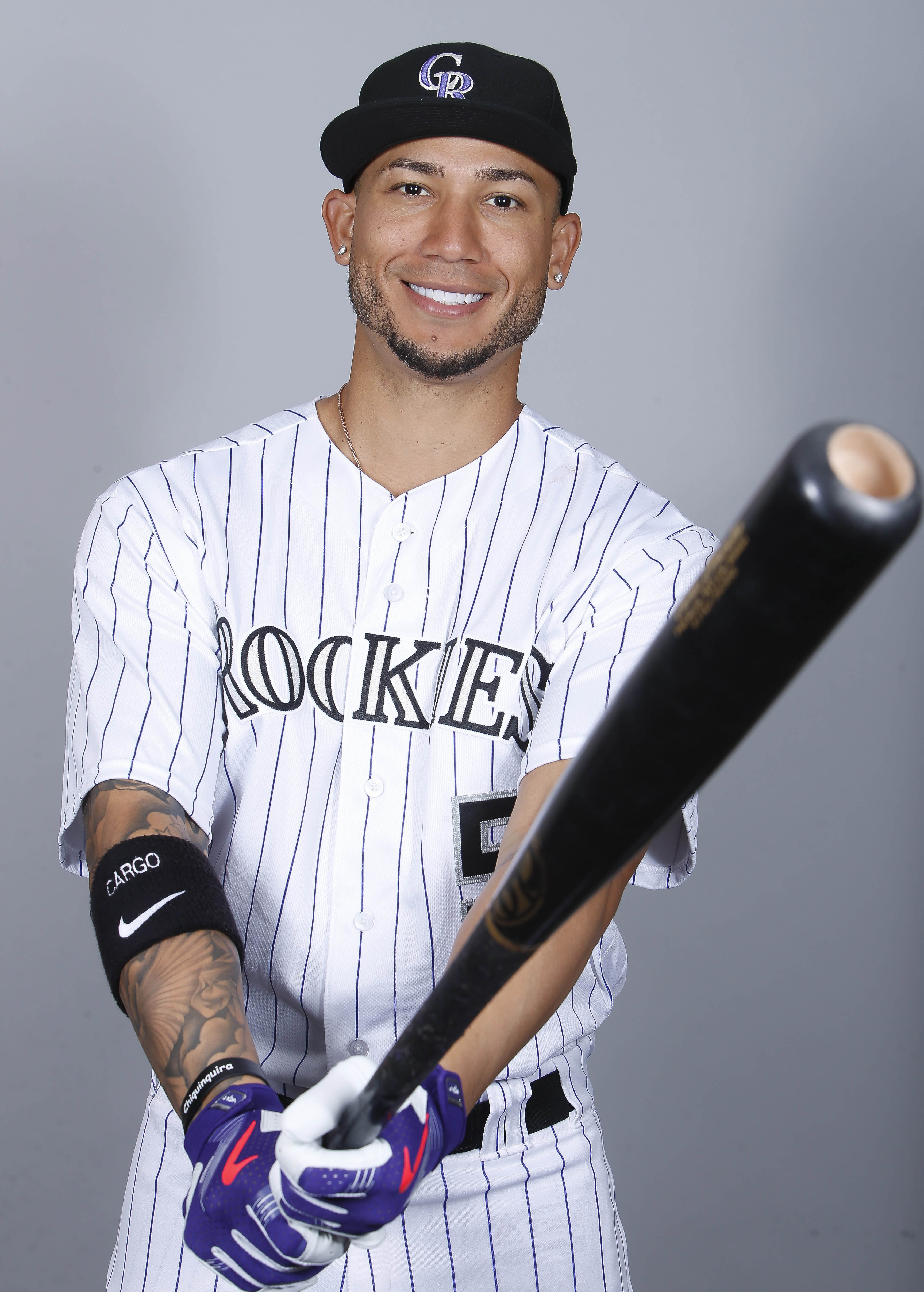 Of course, Dickerson was only shipped out after the Rox added Gerardo Parra. He unquestionably represents an upgrade defensively, though he doesn’t seem to possess near the offensive upside of the younger and cheaper player he’s replacing. The everyday outfield alignment — also including Carlos Gonzalez and Charlie Blackmon, either one of whom could also have been traded — is entirely left-handed, which obviously creates some questions. But Colorado tendered Brandon Barnes and added Ryan Raburn on a minors deal, so there will be some options against opposing southpaws.
The only other significant major league acquisition was slugger Mark Reynolds, whose power will be a sight to behold in Coors Field even if his on-base percentage isn’t. He’s a low-cost add who figures to split time with the southpaw-swinging Ben Paulsen at first while contributing some pop off of the bench. That pairing will step in for Justin Morneau, who missed much of last season and received a $750K buyout when the club declined its end of a $9MM mutual option.
Questions Remaining
The questions in Colorado always seem to begin with the rotation, and at first glance it’s hard to fathom that the organization did not add any MLB-level starters over the winter. After all, last year’s revolving-door staff threw less innings than any other and produced at a level rivaled only by the Phillies.
To be fair, though, the Rockies figure to welcome back several pitchers who missed all or most of 2015, and as I posited at the offseason’s outset, it never made much sense to plow money into marginal free agent hurlers to convince them to come to Coors. Injury rehabbers Jordan Lyles and Tyler Chatwood figure to slot directly into a rotation led by last year’s two best performers: veteran lefty Jorge De La Rosa and surprisingly productive righty Chad Bettis. There’s ample uncertainty not only within, but also behind that foursome, but there are plenty of options floating around. Certainly, Colorado will hope that at least one of its advanced younger arms — among them, Jon Gray, Eddie Butler, Jeff Hoffman, Tyler Anderson, and Tyler Matzek (if he can overcome his anxiety issues) — will make some real strides in 2016.
While the pen has been bolstered with the three aforementioned additions, that doesn’t mean it’s an unquestioned strength. There are plenty of arms in camp, but not many of the depth pieces have demonstrated MLB track records. Beyond the core five noted above, the most experienced pitchers on hand are righties Christian Bergman and Gonzalez Germen and southpaw Chris Rusin (who has mostly worked as a starter). Scott Oberg threw nearly sixty frames in the majors last year, though the results were not promising, and Miguel Castro — a big part of the Tulo deal — could force his way into the picture. Of course, the club will be looking forward to the return of quality righty Adam Ottavino, who signed a multi-year pact while rehabbing from a UCL replacement and could make his way back by the middle of the year.
The biggest single uncertainty in the Colorado organization, though, may be shortstop Jose Reyes, who is set to stand trial after being charged with assaulting his wife over the offseason. There’s a real prospect of jail time, if not also immigration consequences, not to mention the near-certainty of a significant suspension. (Yankees reliever Aroldis Chapman just took a thirty-game ban for an incident in which he was neither arrested nor charged.) Reyes has already been placed on administrative leave by commissioner Rob Manfred.
While the matter obviously carries far broader import than a typical player-contract issue, it has also created something of an odd situation from the team’s perspective. It’s an unquestioned loss on the field, as the 32-year-old had been a solid 3-WAR type of player in recent years before a tough 2015. Certainly, Reyes is much more established than potential replacements Cristhian Adames and Trevor Story, and if nothing else could in theory have generated some trade value. But from a broader perspective, it could well be that an extended absence will actually be a net positive for the Rockies. After all, he’s still owed $48MM — for the next two seasons and a buyout on his option — and the club will pocket any amount that he doesn’t earn due to his reprehensible alleged crimes.
Players like Adames and Story — and the above-mentioned Paulsen — are among the newer names that are likely to receive at least a look at some point in 2016. Behind the dish, relative newcomers like Dustin Garneau and Tom Murphy will fight for opportunities to back up (and, perhaps, eventually supplant) veteran Nick Hundley. But the real excitement on the young position player front — represented by outfielders David Dahl and Raimel Tapia, as well as third baseman Ryan McMahon — may be another year or so away.
Deal Of Note
Dealing away hitters for arms has long seemed an intriguing strategy for an organization that has had trouble not only in attracting free agent pitching, but in developing its own. (Indeed, Bridich discussed just that in his appearance on the MLBTR Podcast.) In that sense, then, the decision to sign Parra and ship out an incumbent option (Dickerson) for a pitcher (McGee) holds immediate interest.
Dickerson represents an intriguing but hardly flawless asset as a player. He’s a lightly-regarded fielder and was limited to just 65 games last season due to plantar fasciitis. There’s no question his value is lower than his batting line would suggest due to those considerations. That being said, the 26-year-old has done nothing but hit since cracking the bigs. Over 925 plate appearances, he owns a .299/.345/.534 slash with 39 home runs. While that obviously must be adjusted to account for Coors, it still works out to an excellent 125 OPS+ and 124 wRC+. The Rays will get four years of control over Dickerson, including one at the league minimum.
To be sure, the 29-year-old McGee is a top-tier reliever who has consistently turned in premium results. Since his first full season in 2012, he has provided 226 2/3 innings of 2.58 ERA pitching with an outstanding 11.4 K/9 against 2.3 BB/9. Like Dickerson, he has some limitations — most notably, the simple fact that he works from the pen rather than the rotation. McGee is controlled for just two more seasons — not at super-cheap rates (beginning with $4.8MM this year) — and carries a somewhat risky Tommy John profile given his time missed last year (and other factors).
Ultimately, perhaps, the main concern with the deal isn’t so much the overall value proposition as it is the side of the equation taken by the Rockies. McGee is one of the best pen southpaws in the game, but it’s unclear how many winnable games he’ll be handed by an underwhelming Colorado starting staff. And while he could certainly be flipped for even greater value than the Rox gave up to get him — assuming the team will be willing to entertain a mid-year sell-off — a half season at Coors Field probably isn’t an optimal platform for a trade.
All that being said, the decision on Dickerson can’t be understood in isolation. In a perfect world, a Colorado bat-for-arms scenario would probably involve sending out a few relatively expensive years of a hitter in exchange for a controllable starter. The 30-year-old Gonzalez (who is owed $37MM for two more seasons) represented a plausible centerpiece in such a swap, particularly after he finished with a huge second half. His uneven recent performance and concerning injury history make him a fairly risky asset for a club like the Rockies, despite his evident ability, and there seemed to be a decent bit of plausible demand.
But the club decided to hold onto CarGo rather than pursuing a strategy like that taken with regard to Tulowitzki. Of course, adding a strong young rotation piece for the veteran may or may not have been an achievable goal this winter, but in many respects his non-trade is an even more notable event than was the move to get McGee for Dickerson.
Overview
It’s certainly still possible that Gonzalez could change hands at the trade deadline, and he will be a closely-watched name if Colorado isn’t keeping up in the NL West come July. (The same holds true of McGee.) CarGo’s health will go a long way toward determining the club’s competitiveness as well as his trade value, of course, but the overall complexion of this offseason could change if there’s a future fallback plan in place.
The overall situation poses a difficult and ongoing balancing act for Bridich, who is trying to build for the future while maintaining some near-term competitiveness with a bottom-third payroll. It is ultimately difficult to criticize the Rockies too harshly for trying to put some pieces around players like Gonzalez and rising superstar Nolan Arenado, who along with solid regulars such as D.J. LeMahieu and Charlie Blackmon make for a nice core on the position-player side of the equation. Of course, the same rationale could have led the organization to hold onto Tulowitzki, who was instead cashed in for prospects and cost savings. And it’s fair to wonder if Colorado would have been better off taking bolder action this winter in one direction or the other after parting with its homegrown star.
At the end of the day, the bottom line seems the same as ever: unless and until the organization can entrench some quality starters at the major league level — whether or not a fully-committed rebuild is undertaken to make that possible — it may continue to confront the same kinds of hard-to-win dilemmas with regard to its best players.
With all of this said, we’ll open up critique of the club’s offseason to readers via poll (link to poll for mobile app users)…
How Would You Grade the Rockies' Offseason?
-
D 38% (1,291)
-
C 32% (1,089)
-
F 21% (714)
-
B 8% (254)
-
A 1% (34)
Total votes: 3,382
Rockies should have offered David Price $300M.
Keep dreaming. They could have offered David Price more and he likely would still not have signed with Colorado. He wouldn’t have made the Rockies a much better bet as a contender in 2016 and he might have blemished his great resume as one of the premier starting pitchers in all of MLB. pitching at Coors Field. Price clearly preferred to remain in the A.L. and pitch for a team that does have a legitimate shot at the postseason this year.
Any great pitcher with hopes of one day reaching the HOF is NOT going to go to the Rocks. Ask Mike Hampton, Daryl Kile (If he were alive) and Denny Nagel how Coors reduced very good pitchers to their knees. If you’re a veteran hurler, you only go there if you have no choice.
He seems to care about his legacy quite a bit. I bet he would have turned down any offer they made. Greinke and Samardzija are different stories entirely. I bet Samardzija would have signed for $50 bucks more than the Giants gave him. All he has talked about the last couple of years is getting as much as he possibly can out of free agency. Greinke left a pitchers park and a team that is all about winning every year for a hitters park and a team that has a 2-3 year window plus the worst GM in professional sports.
Not to mention the loss of Padlo, who wasn’t a scoff off prospect
He wasn’t a scoff off prospect, but he was definitely a superfluous one. The Rockies not have Nolan Arenado at third, but they also have Ryan McMahon who is a much better prospect than Padlo. Padlo was never going to breakthrough in Denver. I hope he can in Tampa though, because I always liked him as a player.
*not only have
The main problem I see with the Rockies approach this offseason is that they seem to view themselves as a player in the N.L. West or for a wild card birth…something few others believe.
Instead of signing mid-level veteran free agent talent like Gerardo Parra, along with others of lesser note, the Rockies should have just kept a younger and controllable player like Corey Dickerson. They should have embarked on a full fledged rebuild similar to what the Cubs and Astros did and continued their sell-off of prime veteran players such as Troy Tulowitzki for young MLB talent and prospects. Carlos Gonzalez would have been the next logical player to be moved in this endeavor but instead the front office and ownership hold on to the foolish notion they might somehow contend in 2016.
There were a couple of problems with keeping Dickerson. First was his injury history. Plantar fascitiis has a very good chance of becoming a recurring problem. Not a guarantee, but enough of a chance to warrant parting company. Second, and more importantly, was his defense. The outfield at Coors is HUGE and Dickerson is not even half the defender of Parra. Personally, I would have signed Parra and tried Dickerson at first base, but maybe they decided that the bullpen was a bigger priority than upgrading a Reynolds/Paulsen platoon at first. It’s definitely an argument that could be made.
As far as the Cubs and Astros comparison. There are more ways than that to rebuild. I don’t care how successful the Astros rebuild was, their absolute sell off of anyone with a name value was the complete antithesis of sportsmanship and quite frankly just as damaging to the integrity of the game as the Black Sox scandal. You can successfully get rid of AIDS by testing everyone on Earth and executing everyone with the virus, but that doesn’t make it the right thing to do. The Cubs rebuild was not nearly as reprehensible because they at least tried to win games. They just weren’t good at it.
Either way, the Cubs major rebuild and the Astros tank job are not the only ways to succeed. I would even argue that with the Reds, Brewers, Phillies, Braves, and Padres all NL teams trying similar rebuild strategies, then the Rockies doing it also makes even less sense. With those 5 rebuilding, then there are only 10 teams fighting for 5 playoff spots. A couple of key injuries to contending teams and good health for themselves and the Rockies are right in the mix for a Wild Card spot. Yes the WC spots were dominated in 2015, but this isn’t 2015 anymore. Anything can happen if you actually try to win.
If you’re going to suck….then go ahead and SUCK big time. Why spend a lot of money on mediocre players? Take your lumps and move on. The Phillies and Reds were awful last year and they were both loaded with big contracts. What good is that? The Astros suffered because their farm system was so poor that when Berkman, Oswalt, Bagwell, Biggio got old….they had no one to replace them. The new ownership had to make business decisions about their future and decided that picking up someone like a Matt Garza or Austin Jackson type wasn’t going to make a difference.
It’s one thing to be bad, that is excusable, it is another to not even try to be good. If you don’t want to pay for players, then why buy the team at all? They didn’t lower ticket prices when they were not spending money on “mediocre” players, did they? They basically stole money from anyone that bought a ticket for the three years they were tanking. If you think it is okay, then by all means, buy a ticket and a jersey from someone that doesn’t even try to be good. I’d much rather spend my money on someone just not good enough to win like my Rockies instead of someone that doesn’t try anytime.
for the Cubs to go out and spend big money on a 260 hitting OF with no power, or a 36 year old utility player or a 37 year old pitcher is one thing. The Cubs figure that after last year, the future is now and mixed with their collection of players that won 97 games they can win it all. But for the Rocks, Brewers or Reds to go out and buy those same players for 300 million or more over the next few years would be stupid because those players aren’t going to make them better enough to make a difference. Would you really be happy about your chances if the Rocks had those players the Cubs signed? No one “stole” any money. The fans in Houston knew exactly what the Astros did and didn’t have and knew they would be bad—and attendance dropped off a great deal as a result. But that was a business decision that made economic sense at that time. Now, the farm system is producing and last year, they made the playoffs and the attendance went up to over 2-milion for the first time in several years. It makes sense for Houston to start spending on FA’s .
Problem with your comparison to the Astros rebuild is that the Astros had a plan, and they expected to contend around this time. In fact, Houston is about a year early, since they made the postseason last year and had a very realistic shot at winning the AL West. In any case, Houston stated that they were rebuilding, that they weren’t going to contend, that they were rebuilding from the ground up, starting with the farm system. They ranked near the bottom in attendance during their rebuild.
The difference is, Houston committed to the rebuild and it’s now starting to pay off. Colorado can’t commit. They give the appearance of contending. They’re a garbage organization. They put the likes of Tulo, CarGo, Arenado, Cuddyer, and Blackmon on the field…and they can’t win. They can’t develop pitching; their prospects are invariably released or become lifelong minor leaguers. I mean, this is a team that signed Jamie Moyer and Roy Oswalt. Dallas Keuchel, on the other hand, whom Houston developed? 2015 Cy Young.
Not a Houston fan, but I’d take their rebuild strategy over whatever Colorado is doing. The Rockies are trash, probably the worst organization in baseball. It’s not like they had one bad offseason or one bad trade deadline. This has been going on for years. Colorado’s tankjob has lasted years longer than Houston’s, and there’s no sign this tankjob is ever going to stop.
Uhhh I think it might be apples and oranges when you compare getting rid of baseball players to help the organization with exterminating everyone with AIDS.
It’s an analogy not an exact parallel.
Getting Jake McGee made no sense they need starting pitchers not closers
100% wrong. The bullpen has been the Rockies undoing since Brian Fuentes left. The starters haven’t been great, but they have been passable. And they have 15 candidates for the rotation, so getting another one shouldn’t be a priority. They need someone in the bullpen that can hold a lead because they blew at least 10-15 wins every year since their playoff runs. 2010 stands out in my memory as particularly bad, but every year of this decade has featured very poor relief pitching with just a couple of exceptions like Huston Street and occasionally Raffy Betancourt and Matt Belisle,
I would have preferred not losing Dickerson to get him, but when you look at the cost of Ken Giles and Craig Kimbrel, only losing Dickerson and a superfluous prospect like Kevin Padlo should be considered a victory.
At the deadline they should try to trade CarGo for a controllable young starter or starters. They possess the greatest value to an organization with the issue of altitude.
I would love to see them trade for a knuckleball pitcher. That would be something to see at Coors on a regular basis. Also, I think they should move all of their minor league teams to cities at high altitudes. Get their prospects used to it from the very beginning.
They did that this year. AAA Albuquerque is about the same altitude as Coors. There aren’t really any other minor leagues that have teams in the Rocky Mountain area, other than the short season Northwest League (the Rockies are affiliated with Boise), so they pretty much already have that covered.
As far as the knuckleball goes, No…just no.
Why not? Nothing else is working in Coors. Should of got R.A Dickey instead of Reyes. Might have been able to work that out. Would have been interesting to see!
There is only one knuckleball pitcher in baseball right now and RA Dickey was born when Carter was POTUS, so the point of the Rockies picking up a knuckleball pitcher is moot. BTW, Dickey never pitched at Coors….Tim Wakefield pitched twice at Mile High and gave up 10 runs in 9 innings. EVERY organization wants pitching. The Rocks have had more trouble than most developing it. I suspect it’s because that park simply gets into pitchers heads and getting a successful FA pitcher was tried several times and failed horrible. Guys like Grienke and Price won’t go there no matter what they paid because it’s just not worth it—-and it would basically ruin any chance at the Hall of Fame.
Research “the effects of thin air on off-speed pitches” before you wish for a knuckleball to be thrown at Coors. The thin air reduces the friction between the ball and the atmosphere, negating some of the ability of the ball to “drift” as it does closer to sea level. Ask a curveball pitcher how he likes throwing at Coors.
Rockies are probably one of the 5 Poorest run Ballclubs in MLB. They do “just enough signings” to make them look like they’re trying, but most of us see through the veil. The owners are just pocketing the cash and really have no intention to build a winner.
“Actions Speak Louder Than Words”
Sure, there will be a bunch of Rockies fans that will come forward and defend the actions of a mediocre team that makes minor adjustments, and “tries to compete” every spring……but the fact remains, the Rockies will never be a quality club until they get new owners who have the desire to “Build a Team”.
Of course the owners are horrible, arguably among the three worst in MLB, but they are there until they decide to leave. And if you can see through veils so well, why don’t you understand that EVERY owner is pocketing more than enough cash or they wouldn’t be in the business to begin with? I know the Rockies are mediocre, and I don’t care. I am not a fair weather fan, I will root for my Rockies whether they win 100 games or 60 games. Of course I would rather have a winning team, but they cant afford to buy the entire country of Cuba like the Dodgers. I would rather root for an MLB player like Carlos Gonzalez instead of trading him for a couple of Class A players might help out in the big leagues in 2020. If you don’t like it, you are not required to cheer for the Rockies, but that doesn’t make their way of doing things wrong.