
Rays, Logan Forsythe Agree To Two-Year Deal
The Rays and second baseman Logan Forsythe are in agreement on a two-year contract that contains a club option for a third season, reports Jon Heyman (links to Twitter). Forsythe will receive a $2.5MM signing bonus and earn just $1MM in 2016 before earning $5.75MM in 2017. The 2018 club option is for $8.5MM and comes with a $1MM buyout, he adds, also tweeting that Forsythe’s option can escalate in $500K increments, up to $2.5MM based on plate appearances. That would bring the maximum value of the deal to $20.25MM over three years.
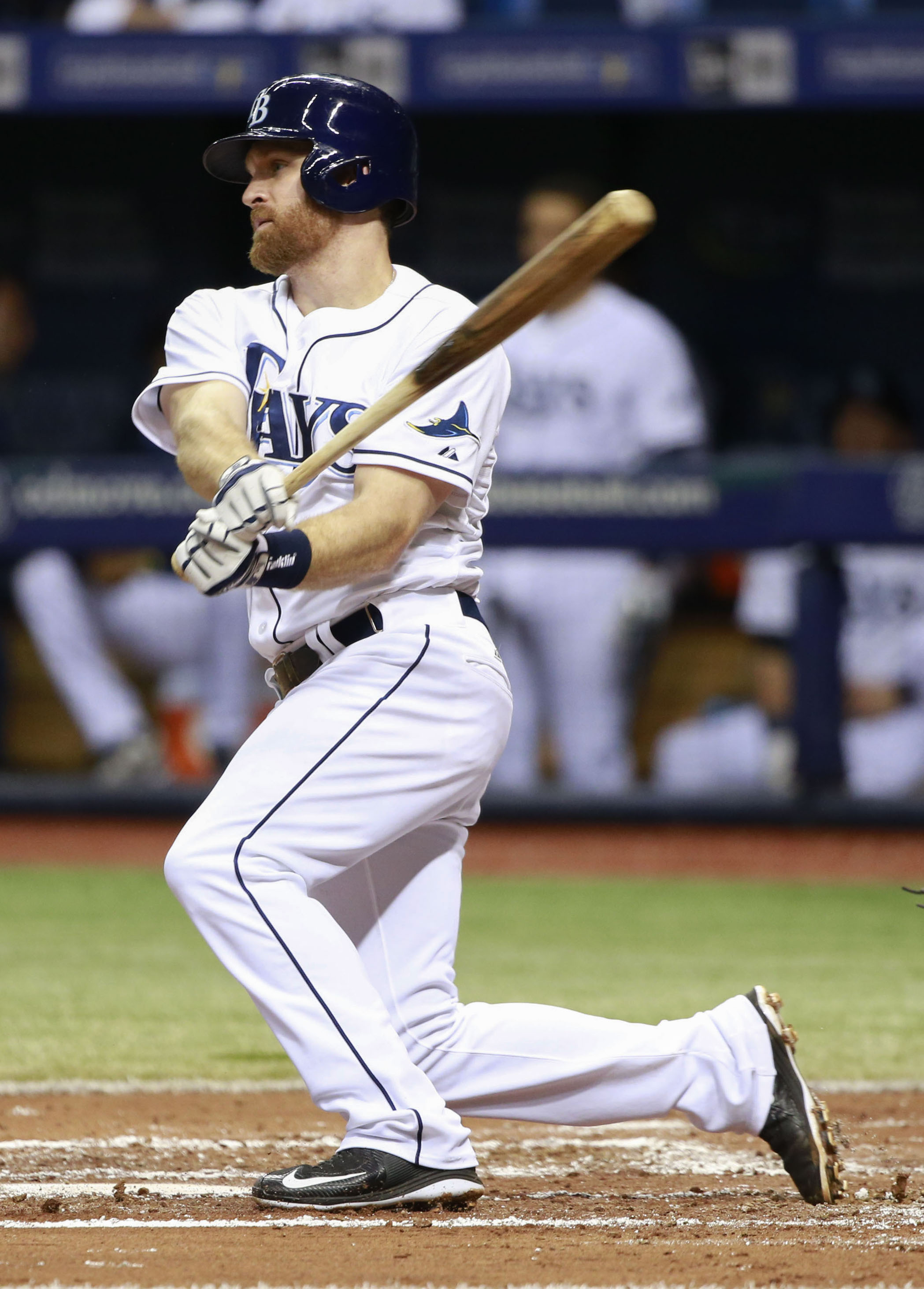
Forsythe, a client of PSI Sports Management, was first said to be nearing a two-year deal with the Rays by Marc Topkin of the Tampa Bay Times last night. SB Nation’s Chris Cotillo added word of the club option and the $10.25MM guarantee. Forsythe was arbitration eligible this winter and had beenprojected by MLBTR contributor Matt Swartz to earn $3.3MM in 2016. In other words, this new contract will buy out his remaining two seasons of arbitration, and the club option will extend Tampa Bay’s control of Forsythe by one season. He’s now on track to hit free agency entering either his age-31 or age-32 season, depending on the outcome of the option.
Forsythe, who turned 29 years old yesterday, emerged as one of the Rays’ best overall players with a breakout 2015 season that saw him bat .281/.359/.444 with 17 home runs, nine stolen bases and solid defensive contributions at second base. While Forsythe had been a utility player for much of his career prior to last season, primarily providing value against left-handed pitching, he took a major step forward against right-handers in 2015, slashing .273/.353/.375 even without the benefit of the platoon advantage. If he’s able to sustain that type of production against righties in the future, it’ll pair quite well with his lifetime .280/.349/.478 slash against left-handed pitchers and allow Forsythe to serve as a quite valuable piece at second base for Tampa Bay.
The Rays initially picked up Forsythe in a seven-player trade that also netted the team Brad Boxberger, Matt Andriese, Maxx Tissenbaum and Matt Lollis in exchange for right-hander Jesse Hahn and left-hander Alex Torres.
Photo courtesy of USA Today Sports Images.
Arbitration Breakdown: Dallas Keuchel, Shelby Miller, Matt Harvey
Over the next few days, I will be discussing some of the higher profile upcoming arbitration cases. I will rely partly on my arbitration model developed exclusively for MLB Trade Rumors, but will also break out some interesting comparables and determine where the model might be wrong.
Just like last year, our arbitration model expects three pitchers to break the decade-old record for starting pitchers reaching their first-year of eligibility for arbitration. As is generally the case, these pitchers are excellent extension candidates, and extensions are a big part of the reason why Dontrelle Willis’ $4.35MM arbitration salary from 2006 has stood this long as the record.
In reality, the record really should have been broken several times already. Most notably, Tim Lincecum was offered $8MM in 2010 when he requested $13MM upon exchanging figures with the Giants. He ultimately earned $9MM as part of a multi-year deal, but Willis’ record technically still stood, because Lincecum had not signed a one-year deal. Clayton Kershaw in 2012 was offered $6.5MM when requesting $10MM and ultimately signed a multi-year deal, giving him $7.75MM his first year. Just last year, one of the three pitchers projected to break Willis’ record, Lance Lynn, made $7MM as part of a multi-year deal, although it is less clear he would have earned that much had he not signed his three-year deal.
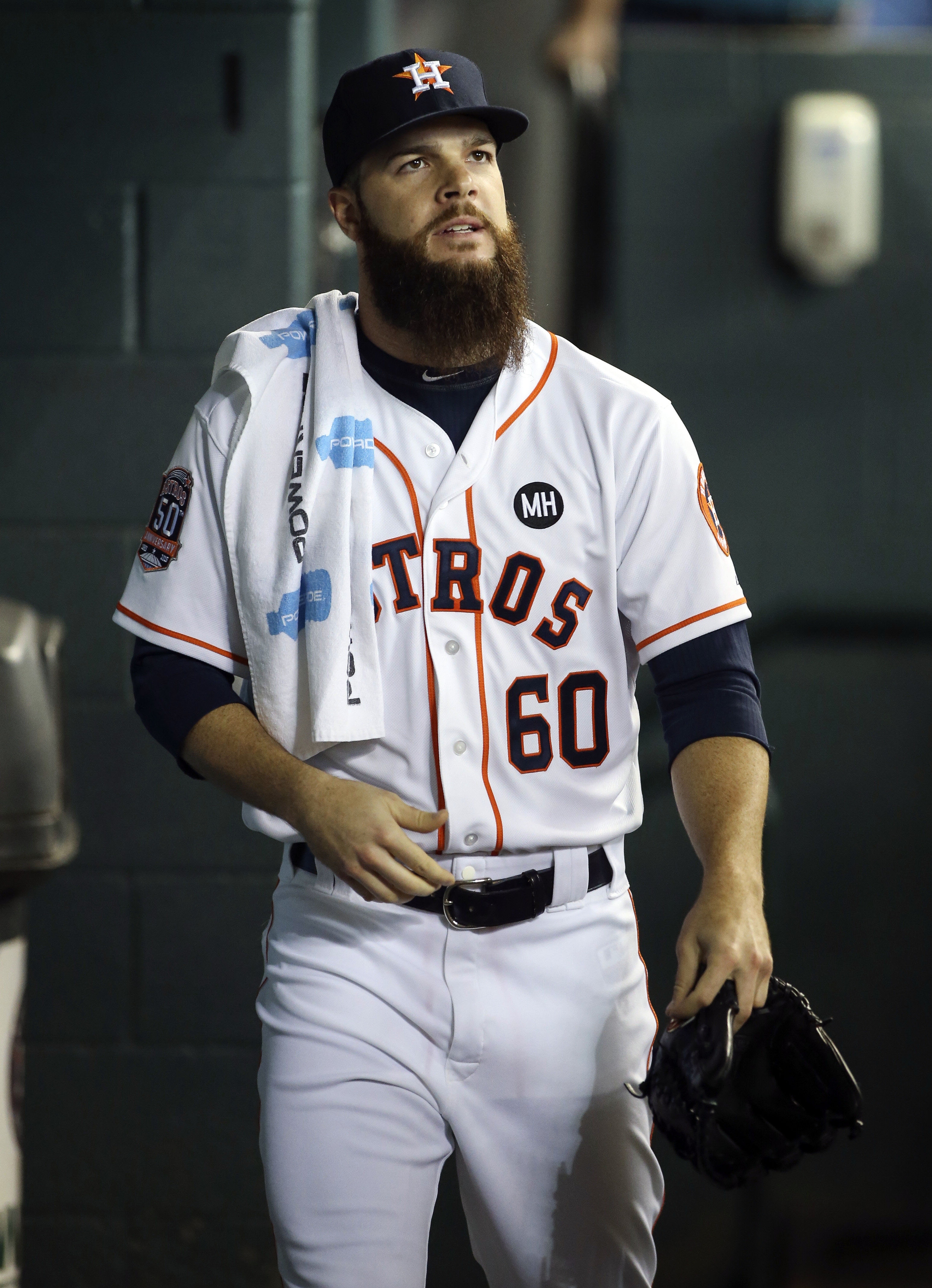
The strongest of the three cases this year is that of the reigning American League Cy Young Award winner, Dallas Keuchel. He went 20-8 in 2015 with a 2.48 in 232 innings. The only other two platform-year Cy Young winners in recent history have been Lincecum and Kershaw, but both of them clearly had stronger careers than Keuchel before winning their Cy Young Awards. Lincecum had a 2.90 career ERA and Kershaw’s career ERA was 2.88, while Keuchel only has a 3.58 career ERA and was at 4.16 before his Cy Young season. Similarly, Lincecum was 40-17 career at the time, and Kershaw was 42-28, while Keuchel is only 41-35.
In addition to Keuchel, two other pitchers are projected to top the $4.35MM record for first-time eligible starting pitchers. Shelby Miller only went 6-17 in 2015, but his 3.02 ERA in 205 1/3 innings in his All-Star platform year, along with his 3.22 career ERA in 575 1/3 innings give him a strong projection anyway. Matt Harvey went 13-8 with a 2.71 ERA in 189 1/3 innings in his platform year, and he has a 25-18 career record with a 2.53 career ERA in 427 innings. While Keuchel is projected to earn $6.4MM, Miller is projected to earn $4.9MM, and Harvey is projected to earn $4.7MM .
Despite no hurler topping Willis’ $4.35MM record, a number of pitchers have gotten very close in recent years. Five players in the last six years have landed between $4MM and $4.35MM on one-year deals, and many more have received multi-year deals. Comparing Keuchel, Miller, and Harvey with these five hurlers, along with a few other players who fell just short of $4MM will help figure out whether our projection for these pitchers is appropriate.
Keuchel seems like a safe bet to break the $4.35MM record if he does have a one-year award or goes to a hearing. David Price, who tied Willis’ $4.35MM record, was 14-10 with a 3.09 ERA in 224 1/3 innings in his platform year, which Keuchel bested in each category. Keuchel also has the same number of wins as Price did for his career at the time (41) and a similar ERA (3.38 for Price, 3.58 for Keuchel). Strengthening Keuchel’s argument is the fact that Price had nearly 100 fewer career innings when he tied Willis’ record.
Chris Tillman, who earned $4.32MM last year, did so after a 13-6 record with 3.34 ERA in his platform year and only a 4.00 career ERA with 45 career wins. Keuchel clearly should out-earn Tillman, Price and Willis handily, although he is likely to fall short of the respective $8MM and $6.5MM figures that were offered to Kershaw and Lincecum prior to their multi-year deals. I suspect Keuchel will miss the $6.4MM projection, but could easily get close to $6MM — comfortably establishing a new record.
Shelby Miller may have a harder time hitting his projection. I suspect that the model is struggling to find pitchers with an ERA as good and with as many innings who did not have many wins. A couple of recent comparables emerge, both of which had single-digit wins in their platform year with low ERAs. Stephen Strasburg in 2014 earned $3.97MM a couple years ago after going 8-9 with a 3.00 ERA in his platform year, but his 183 innings that year are short of Miller’s 205, and Miller’s 575 career innings handily top Strasburg’s 434.
Travis Wood earned $3.9MM two years ago with a 9-12 platform year record, 200 platform year innings and 564 career innings, although his career ERA was 3.83. Miller easily bests that mark with 3.22. Their platform year ERAs were similar, however, with Wood at 3.11 and Miller at 3.02. Miller also struck out a few more hitters than Wood had. Overall, both Strasburg and Wood getting just shy of $4MM two years ago with worse pre-platform performances suggests that Miller should get over $4MM, even if his $4.9MM projection will be harder to land. Most likely, he will end up between $4MM and the $4.35MM record, unless Keuchel or Harvey re-sets the market and pushes his number upward.
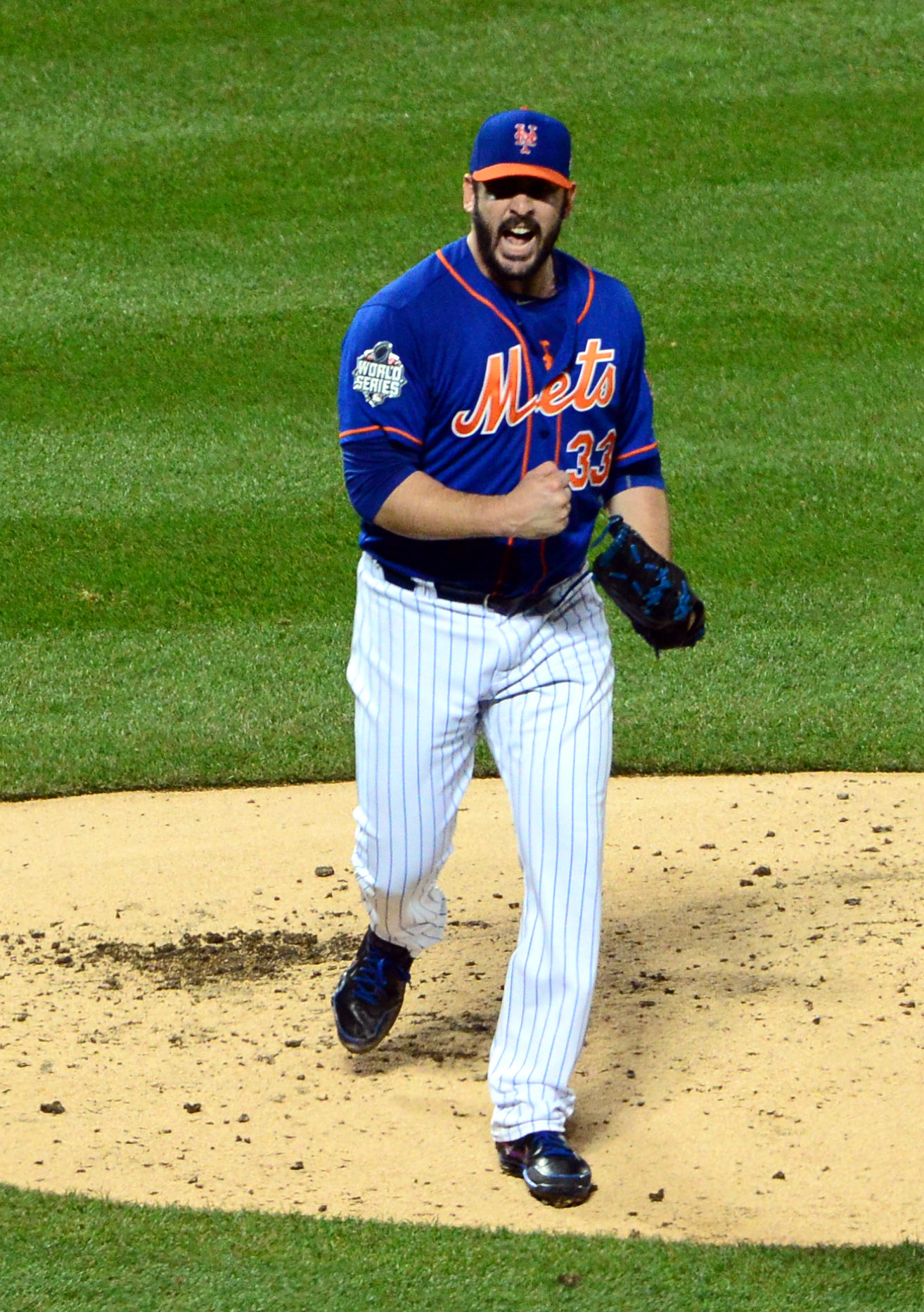
It’s difficult to find comparables for Harvey, partly because of his injuries and partly because his playoff performance in 2015 could help his case. Cole Hamels’ case after his 2008 playoff success (although he was the World Series MVP) would have been a good match, even though it is stale, but he signed a multi-year deal instead. He did earn $4.35MM in a multi-year deal that could be a useful comparison. Hamels similarly did not have many platform year wins despite a strong ERA — he went 14-10 with a 3.09 ERA, which compares somewhat favorably to Harvey’s 13-8 with 2.71. Hamels did have 227 innings though, compared with Harvey’s 189. On the other hand, Harvey’s 2.53 career ERA clearly outdoes the 3.43 ERA held by Hamels at the time.
Mike Minor got a one-year deal for $3.85MM a couple years ago after going 13-9 with a 3.21 ERA in 204 2/3 innings, although his 3.90 career ERA is clearly worse than Harvey’s. However, his 507 1/3 career innings at the time exceed Harvey’s 427.
It is not too challenging to make a case that David Price’s numbers when he got $4.35MM are similar to Miller and Harvey. Both Miller and Harvey possess superior ERA marks, although they each also had fewer innings. Harvey’s record was better (13-8 versus 12-13) but Miller’s was worse (6-17). Price’s 3.38 career ERA was similar to Miller’s 3.22, but Harvey’s 2.53 is better. On the other hand, Price and Miller had matching innings totals, while Harvey was about 150 innings short.
It does not seem obvious that Harvey or Miller can top the Price/Willis record, so I suspect both of them will end up in the $4MM to $4.35MM range. Obviously, if Keuchel shatters Price’s record in advance, Harvey or Miller could have a better opportunity to top that figure themselves, but I would bet the model’s projections for this pair ultimately proves to be too high.
Photos courtesy of USA Today Sports Images.
Royals, Ian Kennedy Making Progress On Deal
The Royals and free-agent right-hander Ian Kennedy are “said to be making progress” on a contract, reports Jon Heyman (Twitter link). Talks between the Scott Boras client and the Kansas City front office are ongoing, per Heyman.
Kennedy, who turned 31 in December, would give the Royals some much-needed stability in the rotation. While Kansas City can currently trot out a combination of Yordano Ventura, Edinson Volquez, Danny Duffy, Chris Young and Kris Medlen in 2016 (with Jason Vargas on the mend from Tommy John surgery), that collective group comes with some question marks. Ventura has never topped 183 innings in a season and threw just 172 2/3 between Triple-A and the Majors last season. Likewise, Duffy’s career-high is 155 1/3 innings, and Young hasn’t tossed more than 165 innings in a season since 2007. Medlen totaled just 88 2/3 innings last year in his first season back from his second Tommy John surgery.
The Royals have been said to be on the lookout for additional starting rotation depth, although a deal with Kennedy would certainly qualify as more than merely “adding depth.” The right-hander turned down a qualifying offer from the Padres this past November, meaning the Royals would need to part with what currently lines up as the No. 24 overall pick in the draft in order to sign him. That’s a steep price to pay for any free agent, especially considering the fact that Kennedy is coming off a down season overall with San Diego, although it’s worth noting that he pitched quite well over the season’s final four months after a brutal start to the year.
Kennedy recorded a ghastly 7.15 ERA over his first eight starts, yielding a jarring 12 home runs in 39 innings in that stretch. But, from June 1 through season’s end, he righted the ship, working to a tidy 3.41 ERA with a 137-to-38 K/BB ratio and a more reasonable (but still lofty) 19 home runs allowed in 129 1/3 innings. His 2015 struggles notwithstanding, Kennedy has been a durable arm throughout the course of his career and showed no problems with the long ball as recently as 2014 with the Padres, when he posted a 3.63 ERA across 201 frames in one of his stronger overall campaigns in the Majors. While he’s never matched a dominant 2011 season in which he pitched to a 2.88 ERA with 8.0 K/9 against 2.2 BB/9 in 222 innings for the D-backs in their hitter-friendly home park (earning him a fourth-place vote in the NL Cy Young race), Kennedy has a track record of durability and strikeouts.
As a fly-ball pitcher who has, at times (specifically in 2013 and 2015) struggled with the long ball, the Royals seem, on paper, to be an excellent fit for Kennedy due to their expansive park and elite outfield defense, which features Alex Gordon, Lorenzo Cain and Jarrod Dyson (left to right). Additionally, the Royals have a very strong relationship with Scott Boras, having recently negotiate free-agent deals with Boras clients Kendrys Morales (though he has since switched agents), Alex Rios and Franklin Morales, to say nothing of homegrown talents like Mike Moustakas, Eric Hosmer, Luke Hochevar and Christian Colon — all of whom are Boras clients as well.
Players Avoiding Arbitration: Thursday
Here are the day’s lower-value arbitration deals, with all projections coming via MLBTR contributor Matt Swartz:
- The Padres and southpaw Drew Pomeranz have avoided arb by agreeing to a one-year, $1.35MM deal, tweets Ken Rosenthal of FOX Sports. That’s a near-match with Swartz’s projection of $1.3MM. Acquired in an offseason trade with the A’s, Pomeranz will slot into the San Diego ‘pen this season and look to build on last season’s 86 innings of 3.66 ERA, during which he averaged 8.6 K.9 and 3.2 BB/9 to complement a 42.2 percent ground-ball rate.
- Fernando Salas and the Angels are in agreement on a one-year, $2.4MM deal, thereby avoiding a hearing, per Rosenthal. The 30-year-old Salas, who will be a free agent next winter, posted a 4.24 ERA in 63 2/3 innings this past season but had more encouraging peripherals; Salas averaged 10.5 K/9 against 1.7 BB/9 with a 35.1 percent ground-ball rate, prompting FIP (3.15) xFIP (3.23) and SIERA (2.65) to forecast markedly better results.
- Right-hander Jeanmar Gomez and the Phillies have avoided arb with a one-year, $1.4MM agreement, Rosenthal tweets. The soon-to-be 28-year-old posted a strong 3.01 ERA with 6.0 K/9 against 2.1 BB/9 and also recorded a sound 48.8 percent ground-ball rate in 74 1/3 innings of relief across 65 appearances. He’ll again provide some valuable innings for the rebuilding Phillies.
Padres Notes: Rodney, Free Agents, Maurer
The Padres haven’t yet shut the door on free agent right-hander Fernando Rodney, according to Dennis Lin of the San Diego Union-Tribune (Twitter link). The Friars may, in fact, try to lure Rodney to San Diego by offering him the opportunity to close games. San Diego has been connected to Rodney on and off for the past couple of weeks. While the 38-year-old Rodney had disastrous results in Seattle last season — he logged a 5.68 ERA with 7.6 K/9 against 4.4 BB/9 and lost the closer’s role before being designated for assignment — he had a nice turnaround following a trade to the Cubs. While it was only a sample of a dozen innings, Rodney yielded just one earned run and recorded a 15-to-4 K/BB ratio in that time. Although the “Fernando Rodney Experience” certainly wore out its welcome in Seattle, the right-hander has drawn interest from the Blue Jays and Cubs as of late (though the Toronto connections pre-dated their acquisition of Drew Storen).
A couple more notes on the Padres…
- Specifics of Alexei Ramirez‘s reported one-year deal with the Padres have yet to emerge, but Lin reports that the contract allows San Diego to at least consider making further free-agent upgrades. While the Padres are reluctant to pursue players with draft pick compensation attached, according to Lin, the club could look for upgrades in the bullpen or in the outfield. Lin also notes that GM A.J. Preller has long been a fan of Ramirez and was dispatching scouts to keep an eye on him as early as April of this past season.
- Right-hander Brandon Maurer will report to Spring Training with the opportunity to win a job in the starting rotation, Preller told MLB.com’s Corey Brock earlier this week. “One of the things is he wants to do it,” Preller explained. “You put a lot of stock in that.” Maurer, of course, came up through the Mariners’ system as a starting pitcher but struggled in multiple big league auditions before dominating upon a transition to the bullpen. While Maurer is striving for a starting role, offseason pickup Drew Pomeranz will probably work in relief, according to Brock.
Arbitration Breakdown: Aroldis Chapman, Mark Melancon, Kenley Jansen
Over the next few days, I will be discussing some of the higher profile upcoming arbitration cases. I will rely partly on my arbitration model developed exclusively for MLB Trade Rumors, but will also break out some interesting comparables and determine where the model might be wrong.
As young fireballers have gotten more opportunity to close, more arbitration cases with few comparables have emerged. Last year, I wrote about such a foursome of closers who had reached second-year arbitration eligibility, and this year I am writing about two of those closers, Aroldis Chapman and Kenley Jansen, along with Mark Melancon (who I wrote about separately last year). My arbitration model projects each of these pitchers to get raises between $4MM and $4.85MM this winter, each of which would break Jim Johnson‘s current record of a $3.88MM raise for a third-year eligible closer.
Depending on how different statistics are weighed, they all have a compelling case to break this record. Johnson’s $3.88MM raise came after he had a 2.49 ERA and 51 saves in 68 2/3 innings, but Johnson struck out just 41 batters that season. He also only had 72 total saves at that point in his career. Although pre-platform performances generally do not matter outside of first-time-eligible arbitration salaries, one large exception I have found is career saves for closers. It is clear that having a history of being a closer matters, which means that Chapman’s 146 career saves, Melancon’s 121 saves, and Jansen’s 142 saves will all help them have better arbitration cases than Johnson did with 72 career saves.
Melancon also had 51 platform-year saves, matching Johnson’s 51 in his platform year in 2012. Along with his 2.23 ERA in 76 2/3 innings, he should have little trouble topping Johnson’s $3.88MM raise after his 2.49 ERA in 68 2/3 innings. Melancon’s $4.6MM projected raise seems about right.
Although Chapman only had 33 platform-year saves, his 1.63 ERA and aforementioned 146 career saves have led him to get an even bigger projected raise than Melancon. His projection actually slightly exceeded the Kimbrel Rule maximum, which is why he is projected for $12.9MM instead of the $13MM figure that was actually forecast by the model. In spite of the lower platform-year save total, Chapman’s vastly superior ERA and greater bulk of career saves give fair reason to assume he will probably get a bigger raise than Melancon, whose case is a straightforward improvement over Jim Johnson’s 2013 case. Both pitchers are likely to get raises between $4MM and $4.85MM.
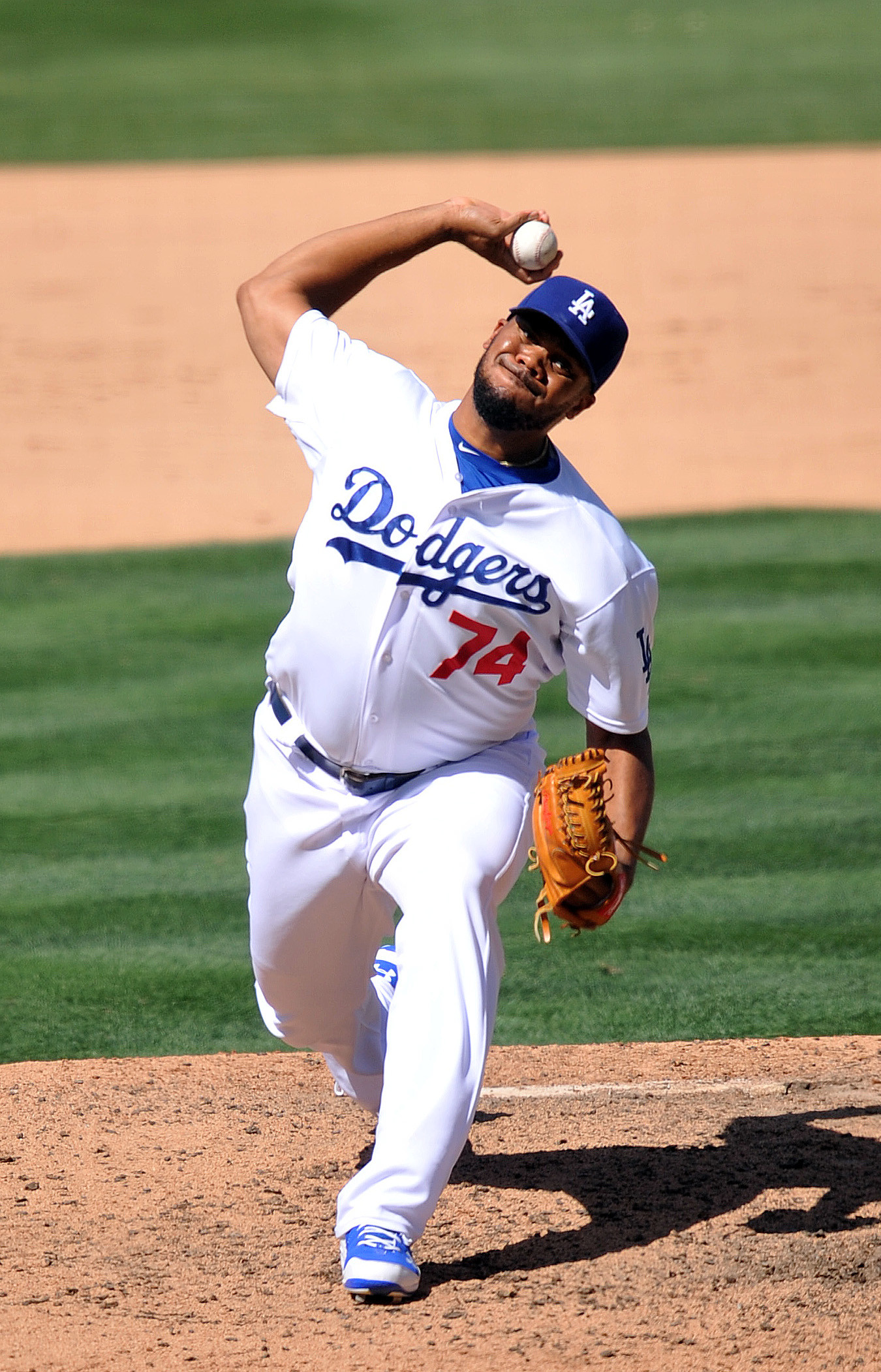
Kenley Jansen is projected to land a $4MM raise, which would just barely top Johnson’s record. Jansen had 36 platform-year saves, but 142 career saves, so he has fewer platform-year saves but almost double Johnson’s career saves. His platform-year ERA (2.41) is a bit better than Johnson’s was, although it came in fewer innings (52 1/3 versus 68 2/3) due to the fact that Jansen opened the season on the disabled list with a foot injury. I could see Jansen failing to make the case that he should get a larger raise than Johnson did, although if Melancon or Chapman set new records, he could easily argue that those are more applicable comparisons.
It is difficult to find pitchers other than Johnson that would apply to this trio of players. Jose Valverde had 44 platform-year saves going into his 2009 case, in which he earned $3.3MM, and he did have 142 career saves. However, his ERA was 3.38. A year prior to that, Francisco Rodriguez had a $2.95MM raise with similar numbers, but that case would be even more stale than Valverde’s. Joel Hanrahan got a $2.94MM raise with 36 saves going into his 2013 case, but he only had 96 career saves at that point. Johnson’s case against appears more applicable for all three of these closers.
Each of these three players could set the market for each other, so their raises are likely to be highly interdependent. They are also likely to set the market for future closers, now that more players will presumably reach their third year of arbitration eligibility with a career of closing behind them. I think that my model probably has appropriately guessed their salaries for 2016, but if it is wrong, it will probably be either too high on all three, or too low on all three.
Photos courtesy of USA Today Sports Images.
NL East Notes: Fernandez, Yelich, Vizcaino, DePodesta
With Dee Gordon now extended through the 2020 season (and possibly 2021 by way of vesting option), MLB.com’s Joe Frisaro gets the sense that the Marlins hope to hammer out a long-term deal for Jose Fernandez, possibly in advance of tomorrow’s exchange of arbitration figures (Twitter link). That’s an ambitious goal for a number of reasons — lack of time, Fernandez’s stock being low after an injury-shortened season, Scott Boras’ aversion to long-term deals, etc. — and Frisaro himself notes that he hasn’t confirmed long-term contract talks are taking place. Jon Heyman, meanwhile, tweets that there’s “no word” that the Marlins are hopeful of coming to terms on an extension with their young ace. With Fernandez already eligible for arbitration, the urgency to sign a deal isn’t as pressing, as he’ll begin earning notable salaries as soon as 2016, when MLBTR has him projected at $2.2MM. Given his excellence when healthy, that number should rise rapidly, as he’ll be arb-eligible three more times before qualifying for free agency.
Here’s more on the Marlins and the NL East…
- Miami’s agreement with left-hander Wei-Yin Chen should put to rest the trade rumors swirling around Fernandez and Marcell Ozuna, writes Frisaro in a full column. By adding Chen (and extending Gordon), the Marlins sent the message that their goal is to contend in 2016. Adding Chen lessens the temptation to add a young arm by trading Ozuna, which would’ve simply created another hole in the outfield anyhow, Frisaro notes.
- Within that piece, Frisaro reports that the Nationals made a run at Christian Yelich this offseason, floating a concept involving left-hander Gio Gonzalez going to the Marlins. He’s the second reporter to say as much, as Jon Heyman first mentioned the scenario about a month ago While I’d imagine that other pieces were involved in the Washington’s scenario, Frisaro hears that the inquiry “didn’t go anywhere,” which isn’t necessarily a surprise. The Marlins took Yelich 23rd overall back in 2010 and rewarded him with a hefty $49.75MM contract extension with a little more than one year of service time under his belt last offseason; the team is quite high on Yelich’s potential.
- The Braves could end up going to an arbitration hearing with right-hander Arodys Vizcaino tomorrow, writes MLB.com’s Mark Bowman. Atlanta cemented itself as a “file-and-trial” team (one that does not negotiate one-year salaries after arbitration figures are exchanged) last season when it went to a hearing with left-hander Mike Minor. With figures set to be exchanged tomorrow at 1pm ET, there’s little time for the two sides to work out a deal, although GM John Coppolella voiced a desire to work something out. “Our hope is always to settle before numbers are filed, but we showed last year that we have no problem going to a hearing if we are unable to reach a number that works for our club,” Coppolella explained. Vizcaino is projected by MLBTR to make $1.1MM next season, although as a Super Two player, establishing a more significant base in his first trip through the process would make the right-hander exponentially more costly in his next three arbitration-eligible offseasons.
- In a piece for Vice Sports, Mike Vorkunov spoke to former Mets vice president of player development/amateur scouting about his decision to jump ship to the NFL’s Cleveland Browns and the journey that brought him to baseball in the first place. DePodesta recalls some influential lessons he learned while interning for George H.W. Bush’s deputy assistant, Jim Pinkerton — an experience that changed the way he approached his understanding not only of baseball but life in general. Vorkunov spoke to DePodesta’s former colleague, Josh Byrnes (now a senior VP working under Andrew Friedman in L.A.) as well as former Harvard football teammates/coaches and current/former Browns employees. DePodesta explained to Vorkunov that he’s tried to learn about as many other industries as possible (healthcare, finance, etc.). “I’ll say this: the last 20 years in baseball, much what I’ve done is try to learn as much as I can about other industries, especially ones that I thought shared common characteristics to what we were doing in baseball,” said DePodesta. “Because I was always trying to learn how they dealt with similar interests to what we had.” Vorkunov’s lengthy piece gives an excellent look into DePodesta and what he and his unique background will bring to the NFL. To read more about DePodesta’s career change from a football perspective, check out MLBTR’s sister site, Pro Football Rumors.
Rays Nearing Two-Year Deal With Logan Forsythe
7:06pm: SB Nation’s Chris Cotillo tweets that the two sides are discussing a two-year, $10.25MM contract that contains an option for a third season. With that information now coming to light, it appears that the Rays will indeed secure an extra year of control over Forsythe if the deal is finalized. Cotillo noted back in November that there was mutual interest in working out an extension of sorts.
6:37pm: The Rays and second baseman Logan Forsythe are closing in on a two-year contract, according to Marc Topkin of the Tampa Bay Times (Twitter link). Per Topkin, the contract would guarantee Forsythe, a client of PSI Sports Management, more than $9MM (Twitter link). Forsythe was arbitration eligible this winter and had been projected by MLBTR contributor Matt Swartz to earn $3.3MM in 2016. A two-year deal would buy out the remaining two years of his arbitration eligibility.
If completed, the contract would serve as a birthday gift for Forsythe, who turns 29 years old today. Acquired from the Padres alongside Brad Boxberger in a seven-player trade that sent Jesse Hahn to San Diego, Forsythe struggled considerably in his first season with Tampa Bay before breaking out in 2015. This past season, he batted .281/.359/.444 with career-highs in virtually every category, including games played (153), plate appearances (615) and home runs (17).
The contract in question wouldn’t extend the Rays’ control over Forsythe, but it would provide the team with cost certainty going forward — an element that is more crucial to a budget-conscious club like Tampa Bay than to many others. From Forsythe’s vantage point, he’ll gain the security of a larger payday now at the cost of some potential earning capacity in the event that he repeats his 2015 breakout. However, if he’s able to replicate last year’s stellar production, he’ll be poised to hit the open market as a highly desirable infield option following the 2017 season, at which point he’d be compensated quite well heading into his age-31 season.
MLBTR Live Chat: 1/14/16
Click here to read a transcript of today’s live chat with host Jeff Todd.
MLBTR Podcast: Marlins’ Moves, Opt-Outs, And Outfielders
MLBTR’s Steve Adams joins host Jeff Todd to talk about a variety of topics. In a wide-ranging discussion, Steve and Jeff chatted about the Marlins’ extension of Dee Gordon and signing of Wei-Yin Chen, creative uses of opt-out clauses, and the still-developing free agent market for outfielders.
Click here to subscribe to the podcast on iTunes, and please leave a review! The podcast is also available via Stitcher at this link.
The MLB Trade Rumors Podcast runs weekly on Thursday afternoons.