
Giants To Sign Hector Sanchez, Chase d’Arnaud, Jose Valdez
The Giants have struck a minors pact with catcher Hector Sanchez, according to Alex Pavlovic of NBC Sports Bay Area. He’ll be expected to take up a spot on the depth chart but not open the season on the MLB roster, as the Giants have already re-signed Nick Hundley to pair with stalwart regular Buster Posey.
In other news, San Francisco has agreed to terms with infielder Chase d’Arnaud and righty Jose Valdez, according to SB Nation’s Chris Cotillo (via Twitter). Like Sanchez, both players saw time with the Padres in 2017.
Sanchez, 28, is no stranger to the Giants organization. He broke into the majors in San Francisco in 2011 and played there through 2015. In 637 total MLB plate appearances thus far with the Giants, Sanchez carries a .240/.274/.345 batting line.
Since departing, Sanchez has mostly plied his trade for the division-rival Padres. As Pavlovic notes, the otherwise light-hitting backstop turned into a slugger when stepping into the box against his former mates. Sanchez slashed just .219/.245/.423 over 143 plate appearances on the year, but he did launch four long balls against the Giants.
As for d’Arnaud, who’ll soon turn 31, he suited up for three MLB teams in 2017 but received just 61 total plate appearances. The shortstop-capable utilityman carries a .223/.278/.306 batting line in 499 total MLB plate appearances.
Valdez, meanwhile, will reach his 28th birthday before the 2018 season. He has a 5.72 ERA over 50 1/3 total MLB innings spread over the past three seasons. Valdez does own a mid-to-upper-nineties heater and managed an 11.2% swinging-strike rate during his time in the majors in 2017.
Dodgers Acquire Scott Alexander In 3-Team Swap With Royals, White Sox
Three teams have announced a swap that will send lefty Scott Alexander from the Royals to the Dodgers. Infielder Jake Peter will also end up in Los Angeles, by way of the White Sox.
Meanwhile, Kansas City will pick up righty Trevor Oaks and infielder Erick Mejia in the deal. The White Sox will end up with veteran relievers Joakim Soria and Luis Avilan, the former from the Royals and the latter from the Dodgers. Kansas City is sending $1MM to the White Sox, the Kansas City Star’s Rustin Dodd tweets. Chicago will also receive $2MM from the Dodgers, per Ken Rosenthal of The Athletic (via Twitter).
For the Dodgers, the move is all about bolstering a relief unit that lost Grant Dayton to injury (and a subsequent waiver claim) and midseason acquisition Tony Watson to free agency. While Tony Cingrani remains on hand, Los Angeles was obviously interested in adding another southpaw to the pen.
[RELATED: Updated Dodgers Depth Chart]
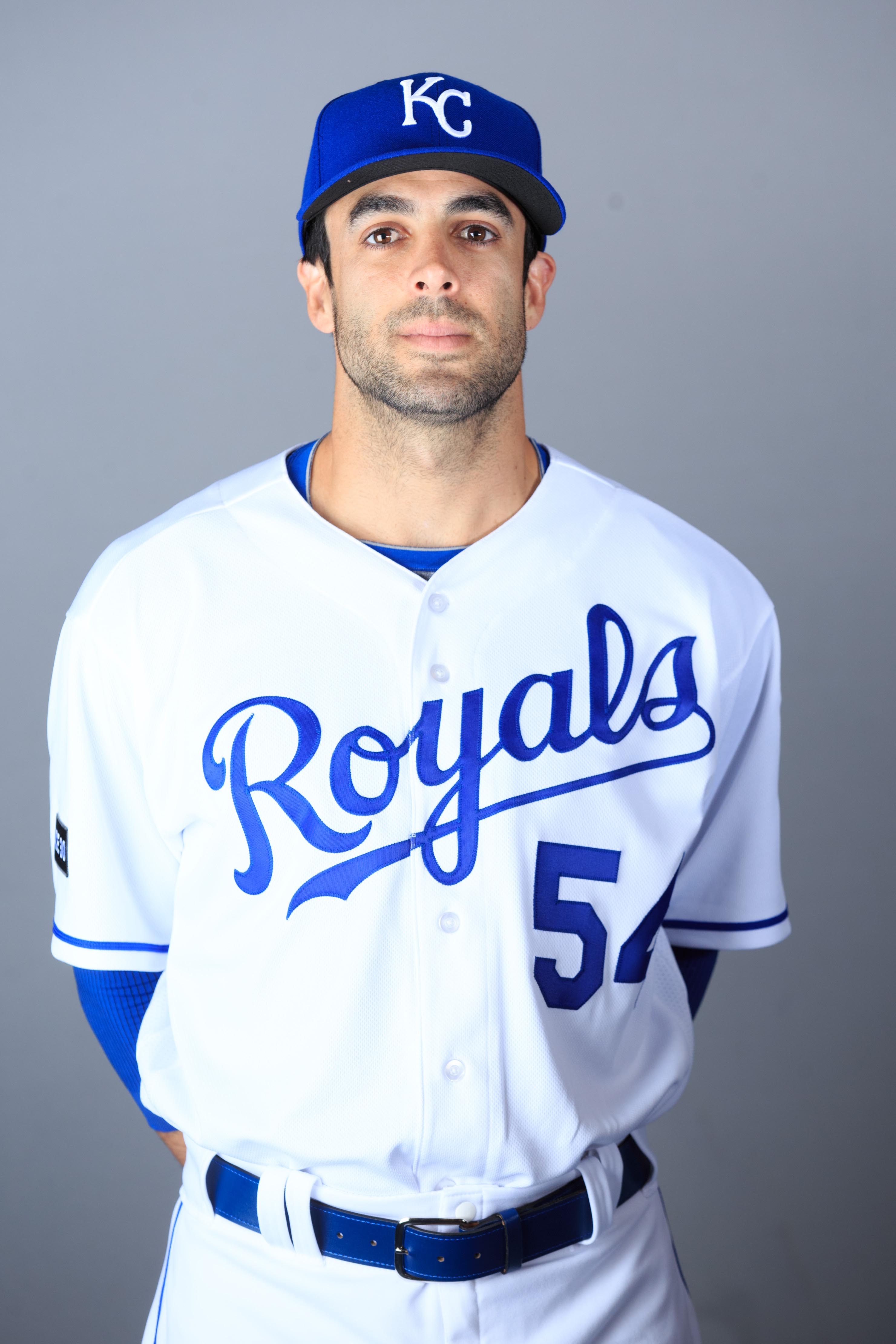
Alexander, 28, has accrued just over one year of MLB service, so he’s not even slated to reach arbitration eligibility until 2020. While he’s hardly a household name, he did turn in 69 innings of 2.48 ERA ball in 2017, his first full season at the game’s highest level.
While he recorded just 7.7 K/9 against 3.7 BB/9 on the year, Alexander generated an eye-popping 73.8% groundball rate (and an above-average 12.8% swinging-strike rate, too). Despite relying almost exclusively on his power sinker — he utilized a breaking ball less than ten percent of the time — Alexander generated excellent results against hitters on both sides of the plate. In fact, he spent most of his time dominating righties, who strode to the plate against him 202 times and managed only a .240/.313/.317 batting line.
The move also delivers a young, upper-level infielder to the Dodgers system. The 25-year-old Peter split time at the two highest levels of the minors over the past two years. He thrived in particular upon earning his way back to Triple-A in 2017, slashing .292/.351/.506 over 194 plate appearances.
For the Royals, meanwhile, this is mostly about shedding salary obligations. The club will move all of Soria’s $9MM salary for 2018, while covering the $1MM buyout on a 2019 mutual option. While doing so will entail parting with a quality, affordable young reliever, the team will at least pick up some prospect assets as well.
[RELATED: Updated Royals Depth Chart]
Oaks is the highest-rated young asset in the deal; he could even compete for a rotation spot in camp. Last year, he worked to a 3.64 ERA in 84 Triple-A frames, carrying 7.7 K/9 against 1.9 BB/9 along with a 50.8% groundball rate. (Typically, the sinkerballer has induced even more worm burners than that.) Oaks will head onto the K.C. 40-man roster; he had been added by the Dodgers in November to protect him from the Rule 5 draft.
The switch-hitting Mejia, 23, slashed a useful .289/.357/.413 in his 403 Double-A plate appearances in 2017. He also contributed seven home runs and 25 stolen bases on the year while spending time at short, second, and third. Mejia originally signed with the Mariners organization out of his native Dominican Republic; he landed with the Dodgers by way of a 2016 trade that sent righty Joe Wieland to Seattle.
The involvement of the White Sox is geared mostly toward securing some veteran relief pieces at reasonable prices. Avilan projects to earn $2.3MM in his second-to-last season of arbitration eligibility, but most of that will be covered by the Dodgers. (Of course, that characterization depends upon perspective; L.A. essentially passed through Soria’s contract in the deal, so part of the money could be considered as allocated to his 2018 guarantee.)
[RELATED: Updated White Sox Depth Chart]
Having dealt and acquired a whole host of relievers in 2017, the White Sox will now secure two experienced hurlers to bolster an unproven unit and perhaps also provide the organization with some new trade chips. The right-handed Soria rang up 10.3 K/9 and allowed only a single home run in his 56 innings in 2017, ending the year with a 3.70 ERA. He could now be the favorite to step into the White Sox’ closer role. As for Avilan, a 28-year-old southpaw, he managed a 2.93 ERA in his 46 frames while carrying 10.2 K/9, 4.3 BB/9, and a 53.8% groundball rate.
Rustin Dodd of the Kansas City Star reported (Twitter links) that Alexander was going to the Dodgers and Soria to the White Sox. Andy McCullough of the Los Angeles Times (Twitter link) and ESPN.com’s Jerry Crasnick (in a tweet) had other components of the deal.
Photo courtesy of USA Today Sports Images.
Angels To Sign Eric Young, Jose Miguel Fernandez
The Angels have agreed to a minor-league deal with outfielder Eric Young, according to Jeff Fletcher of the Orange County Register. Likewise, the Halos struck a minors pact with infielder Jose Miguel Fernandez, Chris Cotillo of SB Nation tweets.
Young may be aging — he’ll turn 33 in May — but he has rarely been as useful as he was for the Angels in 2017. In 125 trips to the plate, the switch hitter compiled a .264/.336/.418 batting line with four home runs and a dozen steals. He also had a strong run during his time at Triple-A. As things stand, he’ll enter camp with a chance to earn his way onto the roster as a reserve.
Over parts of nine MLB campaigns, Young has compiled a lifetime .248/.316/.334 slash across 1,809 trips to the plate. His father, Eric Young Sr., made it through fifteen major league seasons before hanging up his spikes in 2006 — not long before his namesake debuted in 2009.
Meanwhile, Fernandez will come from the cross-town Dodgers, who released him after just one season in the organization. A star in his native Cuba, where he displayed unbelievable plate discipline, Fernandez had not played much competitive ball of late while trying to make his way stateside.
Fernandez ended up slashing a healthy .306/.366/.498 with 16 home runs and 24 walks against 33 strikeouts over 369 Double-A plate appearances. Evidently, though, the Dodgers did not see enough to warrant a longer look. While the Angels appear to have a fully loaded infield mix at present, Fernandez will presumably take up a spot on the depth chart.
MLBTR Chat Transcript: Yelich/Realmuto, Nats, Reds, Hosmer
Click here to read a transcript of today’s chat with host Jeff Todd.
Eric Hosmer Has Reportedly Received Multiple 7-Year Offers
9:43am: Sam Mellinger of the Kansas City Star reports that the Royals have not made an offer worth $147MM over seven years to Hosmer, though they remain interested in re-signing him. Mellinger’s report doesn’t specifically refute the length of the offer or that one has been made. Nightengale did stress in yesterday’s report that the length of the offer was confirmed by at least one “high-ranking” member of the Royals, though it’s certainly possible that the overall guarantee has been overstated.
Jan. 4, 9:20am: Boras dismissed Nightengale’s numbers as “inaccurate” when speaking to Ken Rosenthal of The Athletic (subscription required and highly recommended), though he offered no further detail beyond that point. Rosenthal agrees with Nightengale’s assessment that Hosmer is seeking a larger contract both in length and total guarantee, noting that Hosmer is younger than the bulk of free agents that have received contracts of seven or more years in length.
Jan. 3, 1:25pm: San Diego’s offer is at seven years but has not reached $140MM, a source tells Dennis Lin of the San Diego Union-Tribune (via Twitter).
8:25am: The market for Eric Hosmer appears to be heating up, according to a report from Bob Nightengale of USA Today. He cites sources “close to Hosmer” that say the first baseman has received nine-figure offers from both the Padres and the Royals.
San Diego, per the report, has dangled a seven-year deal at a healthy $140MM price tag — about $20MM more than had previously been suggested. But the incumbent Kansas City club is said to have topped that bid with a contract that would include a $147MM guarantee. Notably, Nightengale says he was able to confirm the length of the proposed contract terms with both organizations.
Entering the offseason, MLBTR predicted that Hosmer would only be able to secure a six-year guarantee at a $132MM price tag. That said, we noted that the 28-year-old was seeking more and could drive bidding northward if he found a few organizations that placed a particularly high value on his services.
It seems that’s just what has happened, as Hosmer is now evidently sitting on two appealing offers from two small-market teams that aren’t even expected to contend in 2018. The Royals, of course, are quite familiar with the first baseman and obviously feel his value outstrips the assessment of measures such as wins above replacement. And it seems that’s an opinion shared by the Pads, who must see Hosmer as a potential building block for a young roster that’s expected to bloom in the coming seasons.
For Kansas City, bringing back the team’s core star would not necessarily mean pushing the pedal down for 2018. Rather, the club has indicated throughout the winter that it’ll be drawing back payroll and looking to reload. But such a move would surely impact the team’s overall planning for the coming seasons and might impact its willingness to trade longer-term assets such as Danny Duffy.
Meanwhile, the Padres — whose interest has long been known — would clearly need to bump Wil Myers back into the outfield to make room for Hosmer. Making this deal might also mean dealing away some other assets to make the roster work, though again a signing wouldn’t necessarily be accompanied by other win-now moves. San Diego did recently pick up a short-term veteran at shortstop in Freddy Galvis, though that move is hardly a committing one and the team has mostly endeavored to fill its gaps with low-cost signings. It’s doubtful the organization would drastically alter its timeline in other areas, though certainly adding such a significant salary to the payroll would have a major impact on the options moving forward.
Notably, Hosmer is not just assessing which of these two contracts to take at this point. Rather, Nightengale says that Hosmer and his agent, Scott Boras, are “seeking at least an eight-year or nine-year deal.” Whether or not there’s further room for those offers to grow is not immediately clear, and it’s not entirely evident whether any other teams will enter the bidding in earnest. (The Cardinals have recently been suggested as having ongoing interest, though.) Regardless, it seems that Hosmer is in position to secure a massive contract that meets or exceeds most expectations.
Minor MLB Transactions: 1/3/18
We’ll use this post to track the day’s minor moves:
- Nate Rowan, the PR director for the Twins‘ Triple-A affiliate in Rochester, announced today that Minnesota has agreed to a minor league deal with outfielder Nick Buss (Twitter link). Buss, 31, has made cameos with the Dodgers and Angels over the past four years, totaling a .180/.229/.300 slash in a tiny sample of 110 plate appearances. However, he mashed at a .348/.395/.541 clip in Triple-A this past season and is a lifetime .307/.364/.461 hitter in parts of five seasons at that level. He can play all three outfield spots and picked up a handful of games at first base in 2017 as well.
- Right-hander Dylan Floro has agreed to a minor league deal with the Reds, per SB Nation’s Chris Cotillo (Twitter link). Floro was twice designated for assignment by the Cubs in 2017 and claimed off waivers by the Dodgers following that second DFA. However, the Dodgers designated him for assignment themselves just a few weeks later upon acquiring Curtis Granderson. Floro became a minor league free agent at season’s end and will bring to Cincinnati a career 5.11 ERA with a 20-to-7 K/BB ratio in 24 1/3 MLB innings. In 242 2/3 innings of work in Triple-A, Floro has a 4.38 ERA with 5.9 K/9 against 1.5 BB/9. A ground-ball specialist, Floro has regularly posted ground-ball percentages in the upper 50s and low 60s throughout his minor league tenure and has a career 52.8 percent mark in his brief MLB tenure.
Earlier Moves
- The Nationals have added a pair of hurlers on minor-league deals, according to Cotillo (also via Twitter). Righty Roman Mendez and lefty Logan Darnell will both join the D.C. organization, though it’s unclear at this point whether either will receive an invitation to MLB camp. Both have seen some MLB action, though neither has an extensive track record and the pair hasn’t touched the bigs for a few seasons. Mendez spent some time with Japan’s Hanshin Tigers in 2017, but only threw 9 2/3 innings. In 2016, he worked to a 3.38 ERA in 64 Triple-A frames. As for Darnell, who’ll soon turn 29, he spent the ’17 campaign outside the Twins organization for the first time. The long-time minor-league starter appeared with the Rays’ Double-A affiliate, the indy ball Somerset Patriots, and in the Venezuean winter league, allowing between 3.81 and 3.98 earned runs per nine at each of those stops. In 359 1/3 lifetime innings at Triple-A, Darnell owns a 3.51 ERA with 6.3 K/9 and 3.3 BB/9.
AL Notes: Rangers, Darvish, Povse, Sisco
Thus far, the Rangers have mostly focused on open-market additions to their pitching staff. A turn to the trade market shouldn’t be expected, GM Jon Daniels tells MLB.com’s T.R. Sullivan. While there are a variety of enticing possible trade candidates floating around, Daniels says the organization is “making a concerted effort to be more disciplined and stay away from” moves that cost the team its “best young players.” Though the team’s top baseball decisionmaker wouldn’t rule out the trade avenue entirely, he said the team won’t be giving up notable future value for a short-term addition. Speaking of the Rangers’ moves to this point, Gerry Fraley of the Dallas Morning News solicited a scouting breakdown of the new arms brought onto the staff.
Here’s more from the American League:
- The Twins are “still trying to match schedules” to schedule a sit-down with free agent Yu Darvish, according to Darren Wolfson of 1500 ESPN (via Twitter). That’s somewhat odd to read at this stage of the winter; Darvish has already met with other teams, Minnesota has long labeled him a “priority,” and spring camp is just six weeks away. Nevertheless, at this point it seems little has changed in the situation: the Twins are still interested in the top-flight righty, though it’s difficult to determine a favorite in the Darvish sweepstakes. To that end, it’s worth noting that Jim Bowden of The Athletic wrote today that Minnesota “appears … prepared to offer a market deal” for Darvish (though it stands to reason that an in-person meeting would precede such an offer). Bowden also notes that the Astros are still in the Darvish mix, in part due to concerns over their ability to sign Dallas Keuchel long term, and he cites multiple sources in reporting that the Rangers are still alive in the bidding for Darvish as well.
- Mariners righty Max Povse is heading back to a rotation role in 2018, as Greg Johns of MLB.com writes. While there had been some expectation that Povse would thrive as a multi-inning reliever, GM Jerry Dipoto says that the youngster’s move to the pen didn’t come with “the uptick in the stuff” the team hoped. That said, the organization still likes him as a starter. Dipoto says he was encouraged by Povse’s work in the AFL — he worked to a 4.56 ERA with 8.8 K/9 and 2.1 BB/9 in 25 2/3 innings — and takes the blame for pushing Povse into the upper minors and ultimately the majors as a reliever.
- Rich Dubroff of PressBoxOnline.com examines whether the Orioles might roll with young catcher Chance Sisco out of camp. Baltimore is still looking at veterans, though it seems the organization is resolved to rely primarily upon Caleb Joseph if Sisco doesn’t run away with the job. Assuming that any players acquired from outside the organization are mostly reserve/depth options, it could well come down to a camp battle. As Dubroff writes, the MLB coaching staff has not yet had an extended opportunity to see Sisco in action.
Padres Reportedly Agree To Minors Pact With Tyson Ross
JAN. 3: Ross’s base salary would be $1.75MM, Jon Heyman of Fan Rag tweets. He can earn up to $4.25MM in incentives, per the report, and has opt-out dates on May 15th and June 15th. Unsurprisingly, the deal includes a spring invite.
Regarding the incentives, Ross will need to hold down a rotation spot for virtually the entire season to max them out. Beginning with his fifth game started, he’d receive $150K; upon starting his twentieth outing (and ending at his 29th), Ross can earn $200K per start.
DEC. 29, 8:55pm: Ross would earn between $1MM and $2MM in base salary if he makes the club, tweets Dennis Lin of the San Diego Union-Tribune (via Twitter), with additional incentives available based upon the number of games he starts.
5:24pm: The Padres have agreed to terms on a minor-league deal with righty Tyson Ross, according to SB Nation’s Chris Cotillo (via Twitter). Presumably, he’ll receive an invitation to MLB Spring Training.
Ross, 30, found success in his prior tenure with the Padres, compiling 522 innings of 3.16 ERA ball over four seasons. But he was non-tendered after missing virtually all of the 2016 campaign and eventually required thoracic outlet surgery.
While the hope was that Ross could bounce back after signing a one-year deal with the Rangers, he struggled badly in the 2017 season after a long rehab process. He averaged just 92 mph on his four-seam fastball — two or more clicks below his typical rate — and limped to a 7.71 ERA in 49 innings. Ross walked 37 batters while generating only 36 strikeouts and sported a meager 6.2% swinging-strike rate that was only about half of his typical level in San Diego.
Should the Padres find a way to get Ross back on track, he could conceivably represent quite a value. But there clearly wasn’t a great deal of optimism around the game, given that Ross had to settle for a non-roster accord just two years removed from a string of successful campaigns.
The Friars have had some success of late at finding rotation innings at bargain rates. If Ross is to crack the roster, though, he’ll have to earn his way on in camp. Presumably, he’ll compete with pitchers such as the just-acquired Bryan Mitchell and injury returnees Robbie Erlin, Colin Rea, and Matt Strahm.
Padres Avoid Arbitration With Carter Capps
The Padres have avoided arbitration with righty Carter Capps, according to Jon Heyman of Fan Rag (via Twitter). Capps will play at a $1,062,500 rate for the 2018 season.
That’s a bit less than the $1.3MM payday that MLBTR projected him to earn via arbitration, though Capps did not have a strong case for much of a raise. Last year, in his first season of eligibility, he earned $987,500, but did not pitch much in the ensuing season. He can be controlled for one additional campaign through the arb process.
Capps, 27, came to the Friars in the complicated 2016 Andrew Cashner deadline swap. At the time, Capps was recovering from Tommy John surgery. He finally made it back to the hill late in the 2017 campaign, though only in time to throw 12 1/3 innings. And his season ended with another procedure, this time to address thoracic outlet syndrome.
The latest surgery came after Capps showed diminished form in his return to the majors. He managed only seven strikeouts against two walks in his 11 appearances late in 2017. Of greater concern, perhaps, he worked in the 93 mph range with his fastball, over five miles per hour less than his peak.
Still, the Padres are obviously willing to stake a fairly minor bet on a rebound; the hope, perhaps, is that he can show renewed life after the thoracic outlet procedure. The upside is undeniable: Capps was utterly dominant in a breakout 2015 campaign, when he ran a 25.4% swinging-strike rate, 16.8 K/9 against 2.0 BB/9, and 1.16 ERA over 31 innings.
Extension Records: Pre-Arbitration
While it’s true that we haven’t yet seen all of the anticipated activity in the trade and free agent markets, that likely won’t stop teams and players from considering extensions. This is around the time of year that it’s typical to begin seeing deals.
Last year was no exception, with players such as Danny Duffy, Wil Myers, and Kole Calhoun among those inking extensions in January and others following throughout the spring. In some cases, the pressures of arbitration agreements help to spur broader talks; the Cardinals, for instance, locked up Carlos Martinez for the long run rather than just nailing down a single-season salary.
With another extension season perhaps soon to be underway, it seems like an opportune time to look at some of the top such contracts ever agreed upon. (We did something similar last year with some arbitration records.) Of course, we utilized MLBTR’s extensive extension tracker to produce the results.
All of the above players were at least eligible for arbitration. But some of the most interesting deals occur in situations where a player has yet even to reach the stage in which their salary will begin to rise significantly. In such cases, teams often possess quite a bit of leverage, though the relative lack of MLB track record of those players can perhaps also increase the risk.
Here are a few important market markers for pre-arb extensions:
Earliest Extension
Jon Singleton, Astros: Zero days of service
At some point, this’ll likely become a shared record. For now, though, Singleton is the only player who has ever signed an extension prior to (or, in his case, at the point of) his first MLB promotion. While the contract promised Singleton only $10MM, it gave him both protection and some earning upside, as I explained at the time. While Singleton is still young enough to turn things around, he has not yet panned out at the MLB level, so the deal has worked out quite well for him.
Biggest Contract, Less Than One Year Of MLB Service
Tim Anderson, White Sox: 6 years, $25MM (plus two options)
This contract type was once almost exclusively in the domain of the Rays, who locked up Evan Longoria (link), Matt Moore (link), and Chris Archer (link) to early deals. (Salvador Perez of the Royals is another key example.) But the Sox came through with the most recent, and most lucrative, deal for a player with less than one year of MLB service. Anderson had played for most of a season at the game’s highest level, so it wasn’t as if he had yet to put down any track record there. But it still seemed like a not-insignificant risk for a player with some definite kinks to iron out. Anderson struggled in the first year after signing the deal, though there’s plenty of time for him to make good on it.
Biggest Contract, Between One And Two Years Of MLB Service
Andrelton Simmons, Braves: 7 years, $58MM
Though Simmons never seemed likely to draw massive arbitration salaries, since so much of his value came from his glovework, he still holds the record for the largest deal for a player with less than two years of MLB service. That deal topped Ryan Braun‘s longstanding record of $45MM. Most recently, Christian Yelich of the Marlins comes in just behind Simmons with a deal that promised him just under $50MM and also included a club option for an eighth season. While the Simmons contract has since been dealt to the Angels, it continues to be an appealing asset — all the more after his outstanding all-around 2017 season.
Biggest Contract, Between Two And Three Years Of MLB Service (Non-Super Two)
Mike Trout, Angels: 6 years, $144.5MM
This deal stands out, and for good reason: Trout is the greatest player of his generation. No other 2+, non-Super Two players have landed in his stratosphere, though some have secured major guarantees. Carlos Gonzalez ($80MM, Rockies), Hanley Ramirez ($70MM, Marlins), Matt Carpenter ($52MM, Cardinals), Andrew McCutchen ($51.5MM, Pirates), Justin Upton ($51.25MM, Diamondbacks), and Rougned Odor ($49.5MM, Rangers) are among them. Since signing, Trout has continued to reel off otherworldly seasons. The 26-year-old almost certainly would have secured his third MVP award in 2017 had he not been limited to 114 games due to a thumb injury.
Biggest Pre-Arb Pitching Contract
Corey Kluber, Indians: 5 years, $38.5MM (plus two options)
Fair to say there’s some added risk discount baked into pitching deals. Kluber became the latest highly accomplished pre-arb hurler to ink a contract with this same essential structure. The dollars have slowly crept upward over the years, but the early-2009 Jon Lester deal with the Red Sox remains the model. Over the years, Yovani Gallardo (link), Trevor Cahill (link), and Chris Sale (link) are among the starters that took this sort of agreement with over two years of MLB service (but not enough to reach arbitration as a Super Two). It’s not really worth treating the 1+ service class any differently; we’ve seen the same apply there, with Madison Bumgarner earning the largest such deal ($35MM) and pitchers like Julio Teheran (link) and Ricky Romero (link) also checking in with similarly structured contracts. Kluber’s age likely prevented him from truly breaking out of the mold, as he was coming off of a Cy Young campaign when he put pen to paper. Since, he has turned in 640 2/3 innings of 2.98 ERA pitching, locking up his second AL Cy Young nod last season.
Biggest Pre-Arb Reliever Contract
Sean Doolittle, Athletics: 4 years, $10MM (plus two options)
It’s not all that surprising to learn that not many pre-arb relievers have signed extensions at all, let alone that none rank among the largest in the game. Perhaps that will begin to change, though, with the bullpen taking on an increasingly prominent role in game management and top-end arms securing rather massive payouts via free agency (and, in some cases, through saves-fueled arbitration cases). The Doolittle contract has worked out quite well despite his injury struggles and the A’s own disappointments on the field. Oakland swapped the contract to the Nationals last summer, cashing in on the high-powered southpaw at a point when he was in good health and throwing well.
Longest Guaranteed Term, Pre-Arb Extension
Ryan Braun, Brewers: 8 years
Unless there’s a longer prior deal that pre-dates our database and isn’t known to this author — if so, let us know in the comments! — the first Braun extension contained the longest fully guaranteed term given to a pre-arb player. (As noted above, its $45MM guarantee also once held the record for money promised to a 1+ arb class player, but it has since been eclipsed.) There are a few other deals that contemplate potential eight-year terms — utilizing 7+1, 6+2, or 5+3 guarantee/option structures — but this appears to be the only one that gives the player such extensive security for such a long time frame. Astute readers will note that one contract appears to provide for a potential nine-year term: Jose Tabata‘s extension with the Pirates, which has widely been discussed as a six-year contract with three options. But that deal was signed in August of 2011 — the same season that must be counted as the first to accept that characterization. While Tabata did receive a modified salary for the season he was then in the middle of playing, the deal covered only eight future campaigns. (As things turned out, of course, the options never even came into play as Tabata’s career fizzled out.)
Photo courtesy of USA Today Sports Images.